Small finger tats can stay readable for years when you choose clear linework, realistic placement, and patient aftercare. I learned that after rushing my first tiny piece and watching the detail soften. These ideas keep the designs personal, practical, and easy to discuss with your artist. Start with the symbol, then choose the ink style.
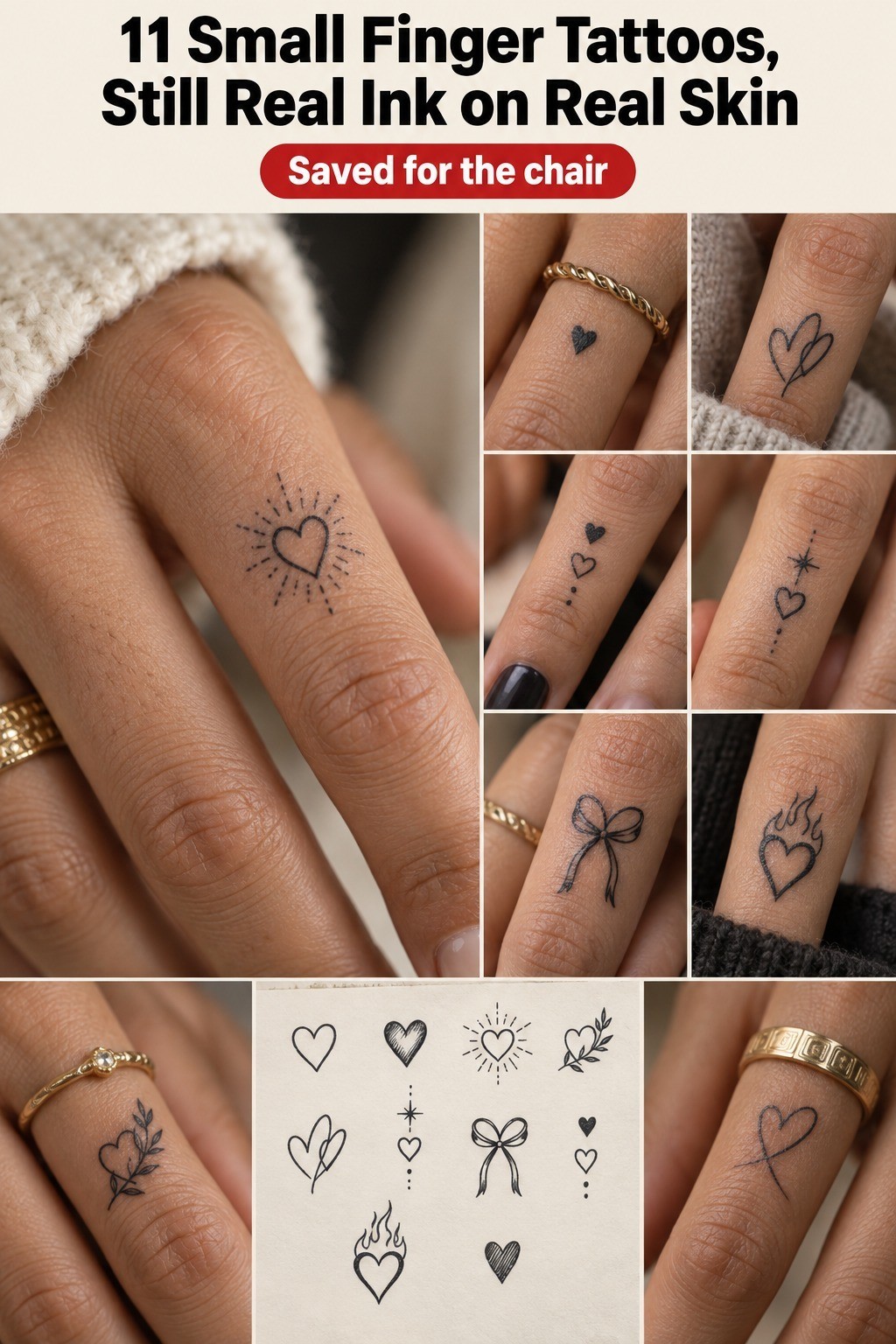
- Tiny Heart Finger Tattoo Ideas
- Trace Initials Along the Finger
- Unique Snake Wrap Finger Tats
- Does a Crescent Moon Need More Than One Star?
- Bold Black Band Finger Tattoo
- Follow a Floral Sprig Down the Finger
- Matching Marks, Separate Meanings
- Playful Tiny Star Finger Ink
- Choose Ring-Finger Script With Care
- Skull or Symbol? Keep the Silhouette Clear
- Birthstone Ink With a Personal Code
1Tiny Heart Finger Tattoo Ideas
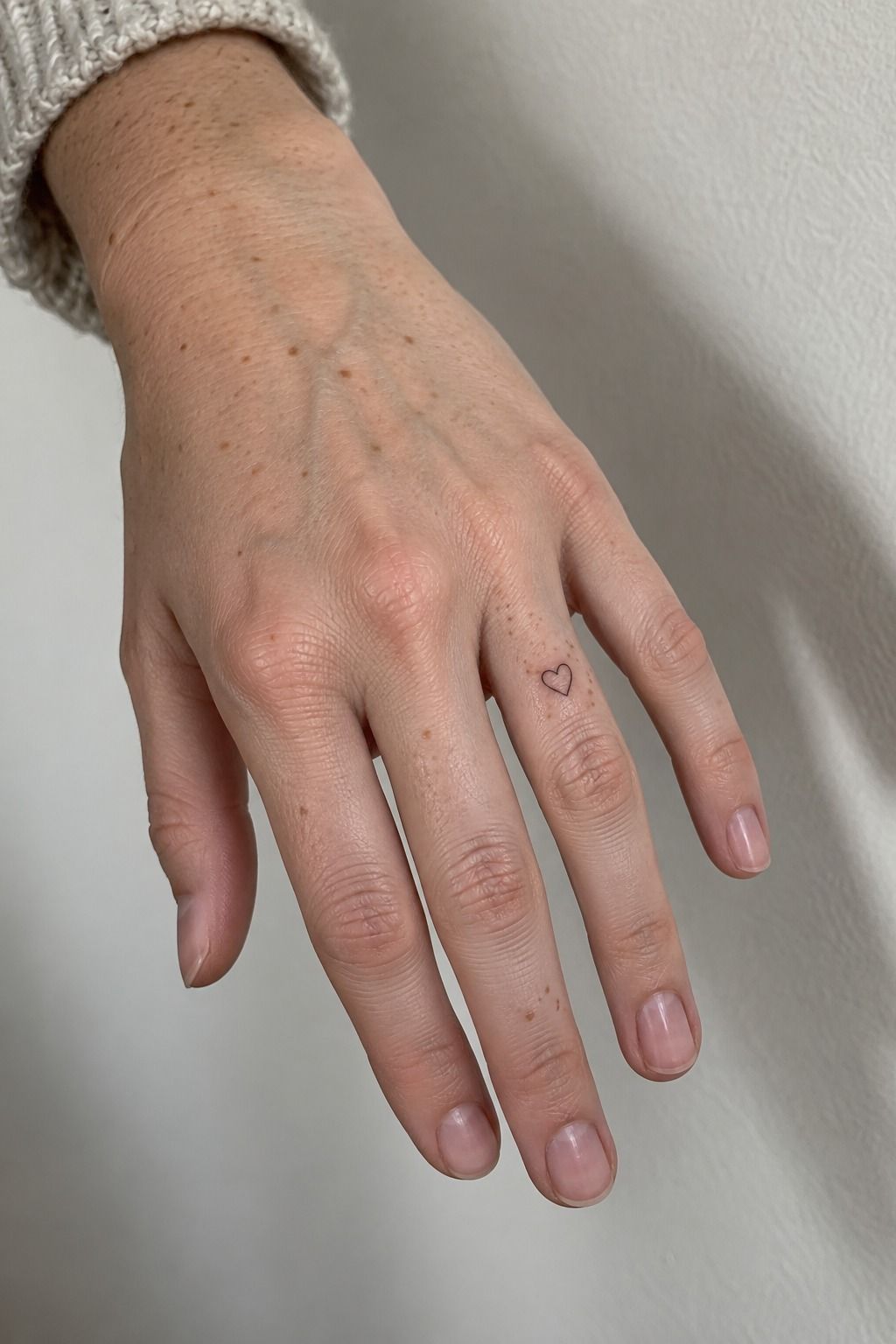
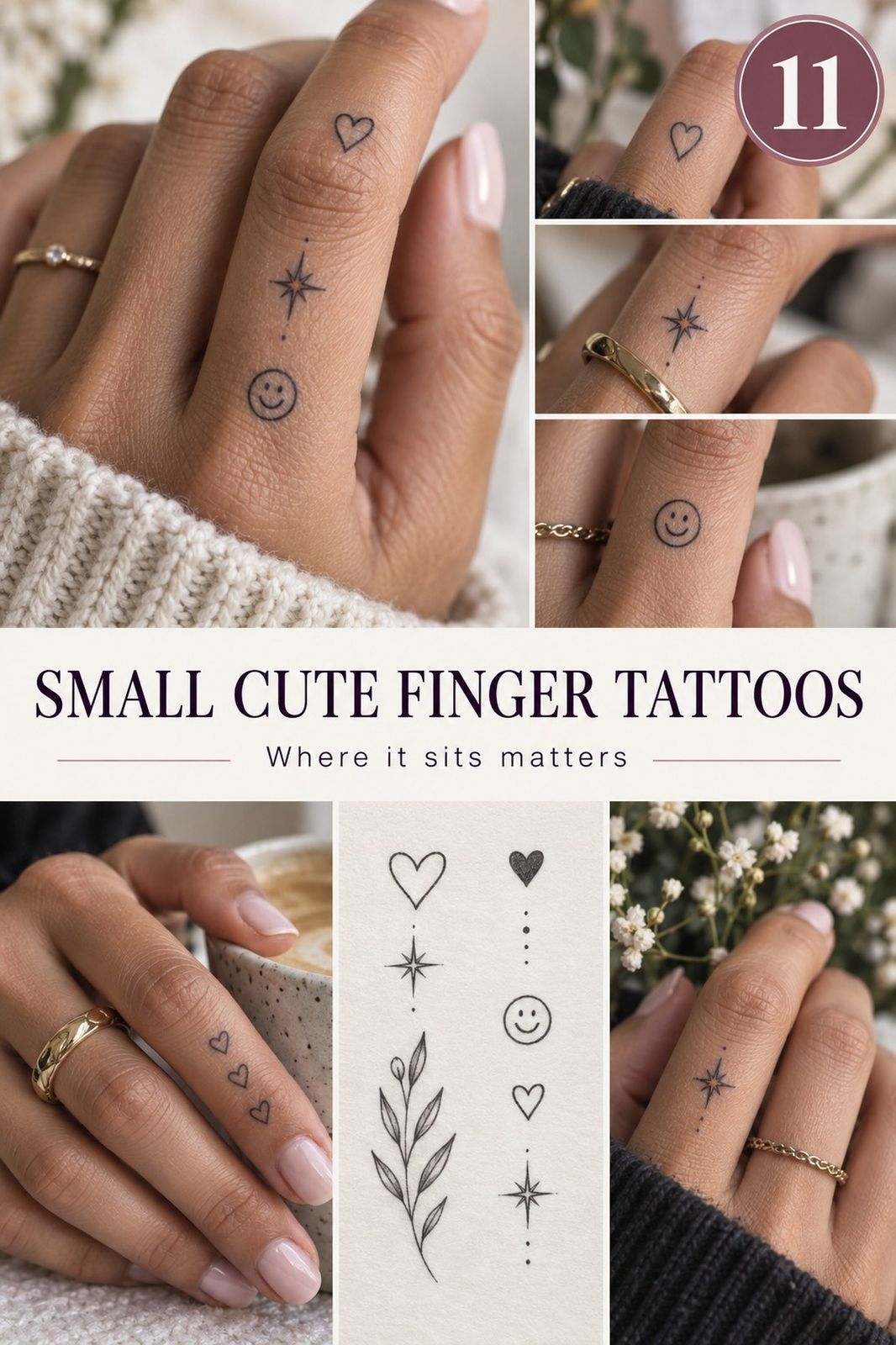
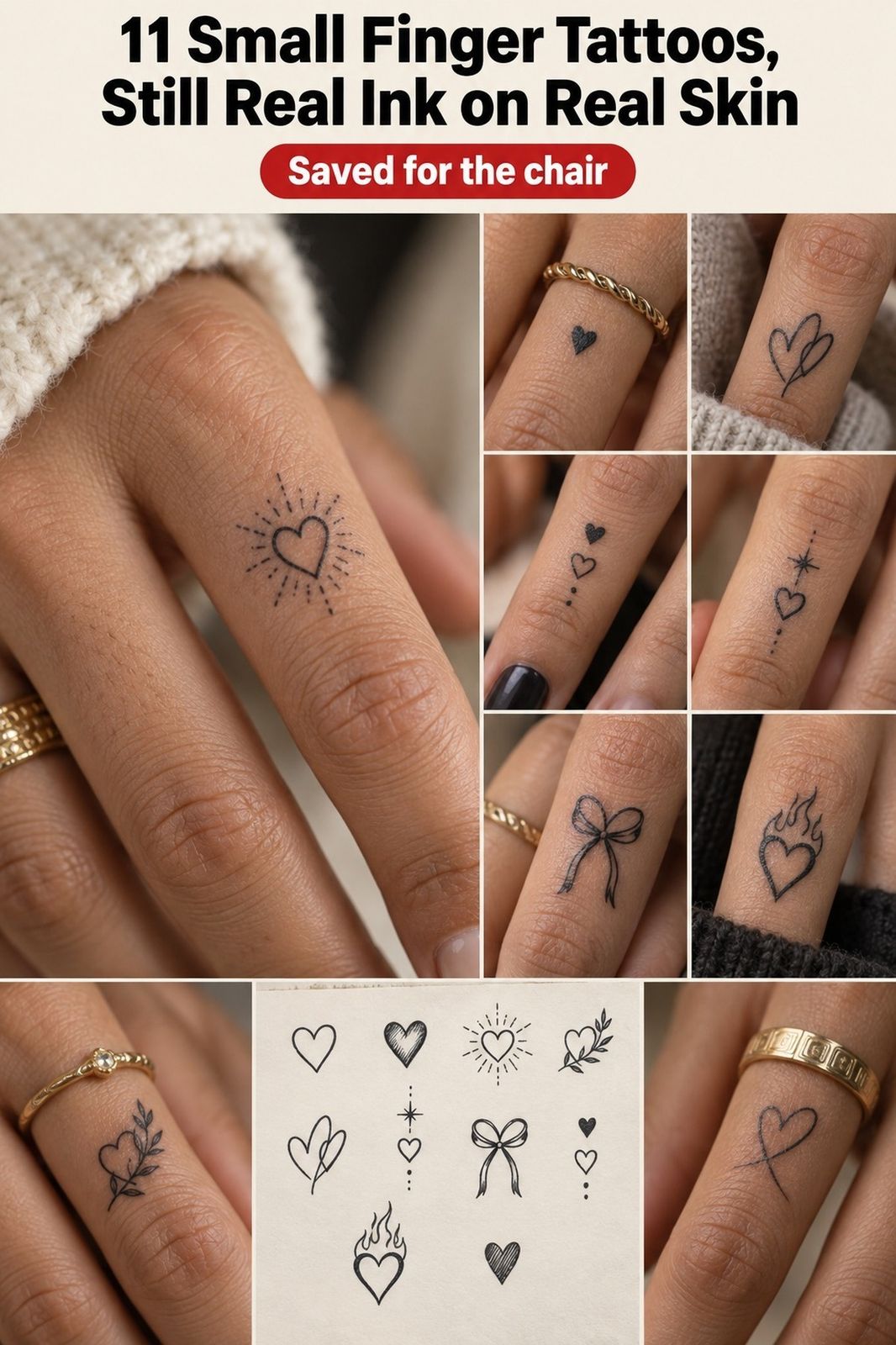
A small heart in clean outline is a striking choice when you want something personal without a heavy visual statement. You can keep the shape hair-thin with single-needle linework, or ask for a stronger outline so the heart remains readable as the skin changes. A simple open center gives the design a delicate and timeless quality.
Your artist should check the finger’s natural folds before placing the design. I’d skip dense shading because the tiny area can turn muddy, and you’ll lose the open center that makes the symbol work. If you’re wondering whether a tiny heart is worth it, compare placement before you book.
Use black tattoo ink with no grey wash, one tapered point, and enough space around the outline. The final heart can be meaningful without looking overworked.
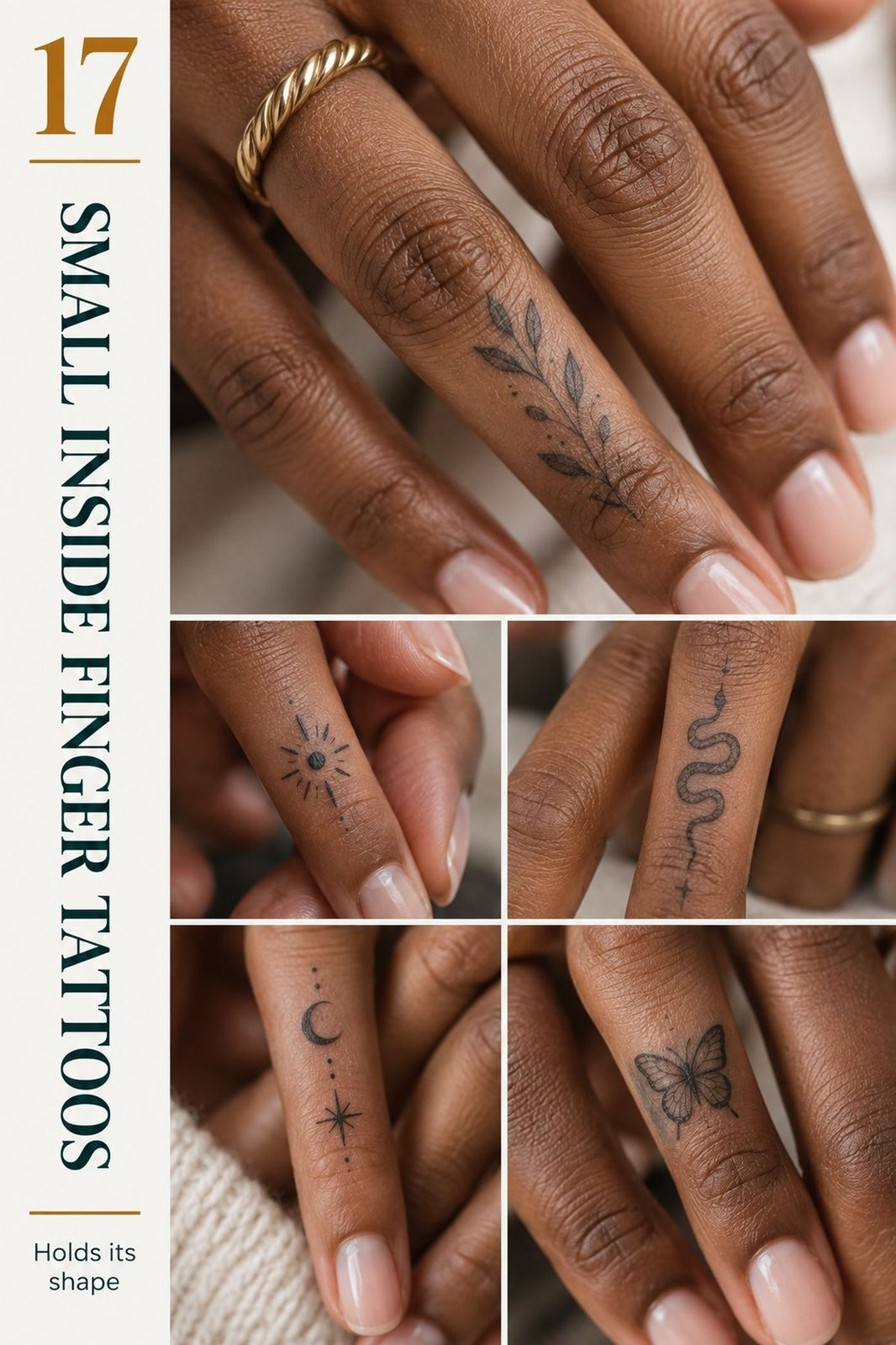
And if you’re comparing placements, browse these small inside finger tattoos before your consultation. You’ll see how a heart changes on the side, top, or inner edge of the finger. That detail matters!
Bring a reference showing the line thickness you want. Ask whether your artist would use a 3RL grouping or another fine configuration, because you don’t want the needle choice decided by guesswork. The 3RL needle grouping should support the shape instead of competing with it.
2Trace Initials Along the Finger
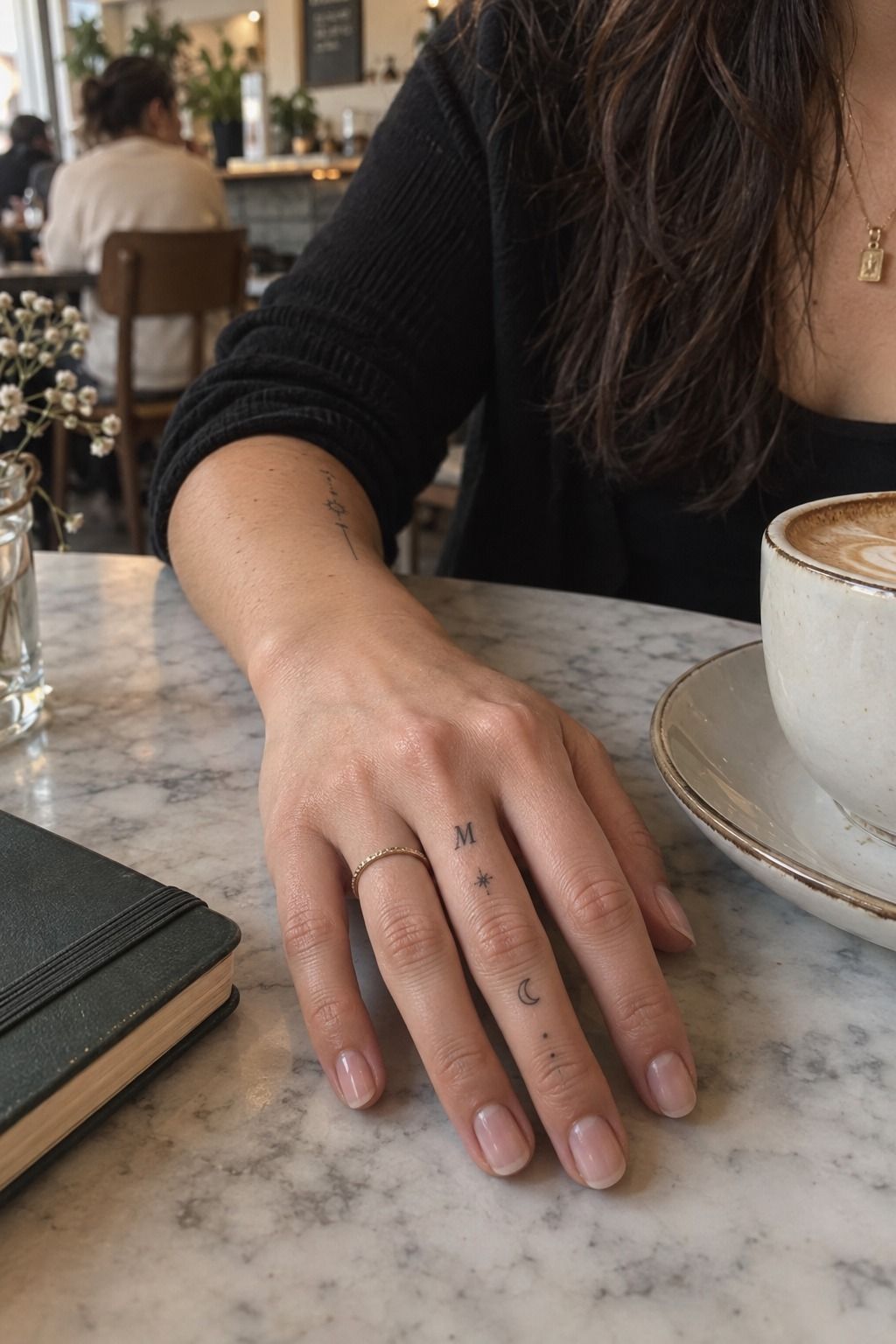
Initials can feel more intricate than a symbol because every curve carries a person’s identity. Along the finger, one or two letters can follow its length in a narrow handwritten style. A clean serif can look elegant when the counters stay open.
You’ll want to choose a letterform that survives at a tiny scale. I’ve seen ornate script collapse when loops sit too close together, so I’d choose a restrained alphabet with visible spacing. Your initials should read as letters first, decoration second.
Ask for healed lettering examples before you decide. A fresh stencil may look graceful, while settled ink can become harder to read if the strokes are too fine. That long-term value is worth discussing with your artist.
Don’t approve the stencil until you’ve seen it on your own finger. Skin bends, fingerprints create texture, and a letter that looks flowing on paper can feel cramped once it wraps around the side. Compare it with more small finger tattoo ideas before settling on a final shape.
A good artist will show you how the letters behave after healing. You’re looking for open counters, controlled curves, and spacing that remains legible. The result can be understated without feeling unfinished.
3Unique Snake Wrap Finger Tats
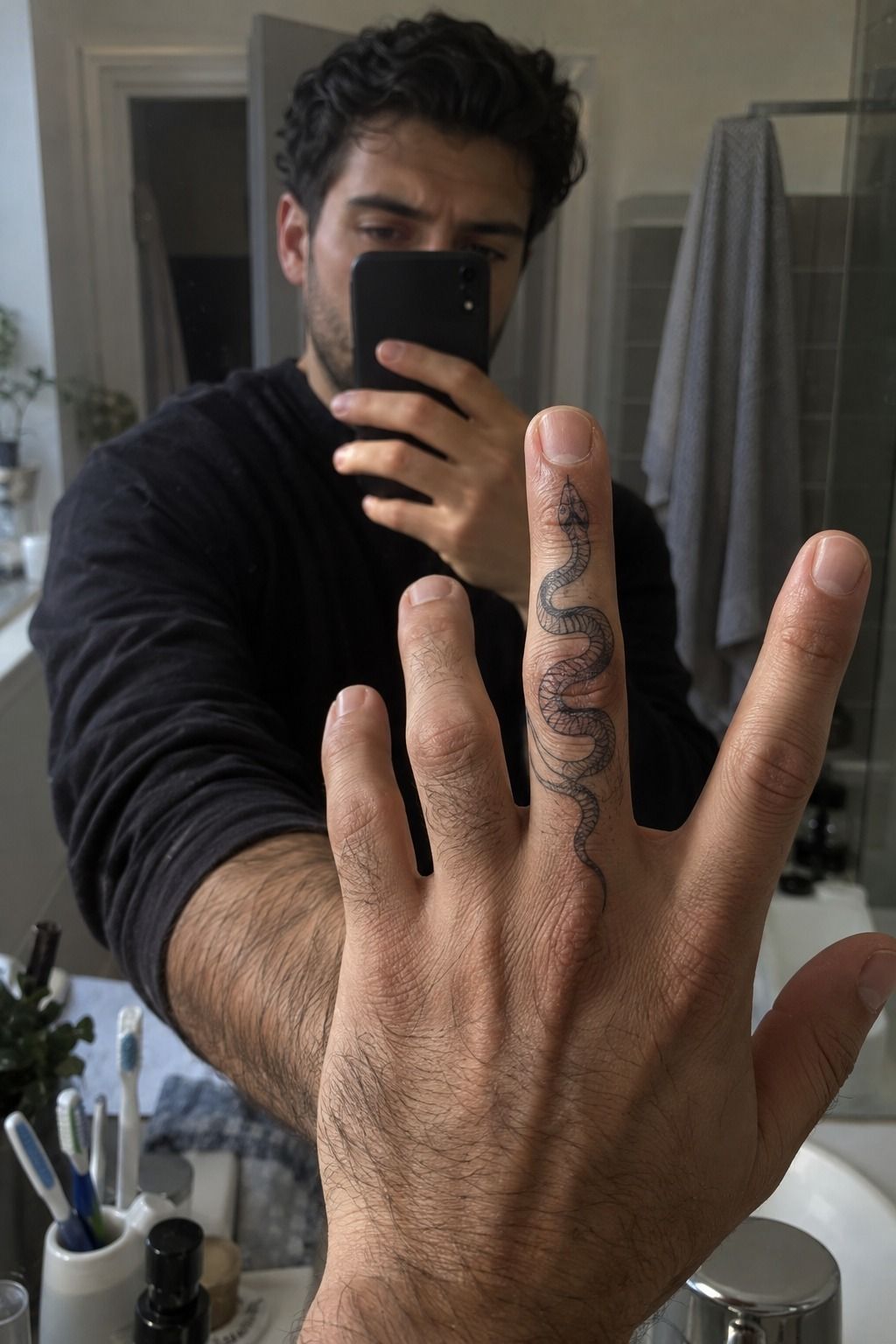
A slim serpent can follow the finger’s shape in a way that feels fierce and fluid at once. You can ask for a side-facing head, a hidden head, or a simple loop that keeps the design more abstract. A clear silhouette will carry more impact than a pile of tiny scales.
I’d choose fewer scale lines than you think you need. A snake becomes more expressive when the main curve stays clear, and too many marks may blur as the ink settles. Your artist should leave breathing room between the coils.
Use a slim serpent silhouette, selective scale marks, and one pointed head. If you’re working with a tight budget, simplify the body before reducing the artist’s time or the quality of the consultation.
Why force every scale into a design this small? Ask for a stencil wrapped around your actual finger, because your knuckle movement matters more than a flat drawing. You’ll get a sharper result when each mark supports the curve.
If you want extra length, look through small hand tats for related placements. You can keep the finger version edgy and controlled, or let it continue slightly toward the hand if your artist says the placement will age cleanly.
4Does a Crescent Moon Need More Than One Star?
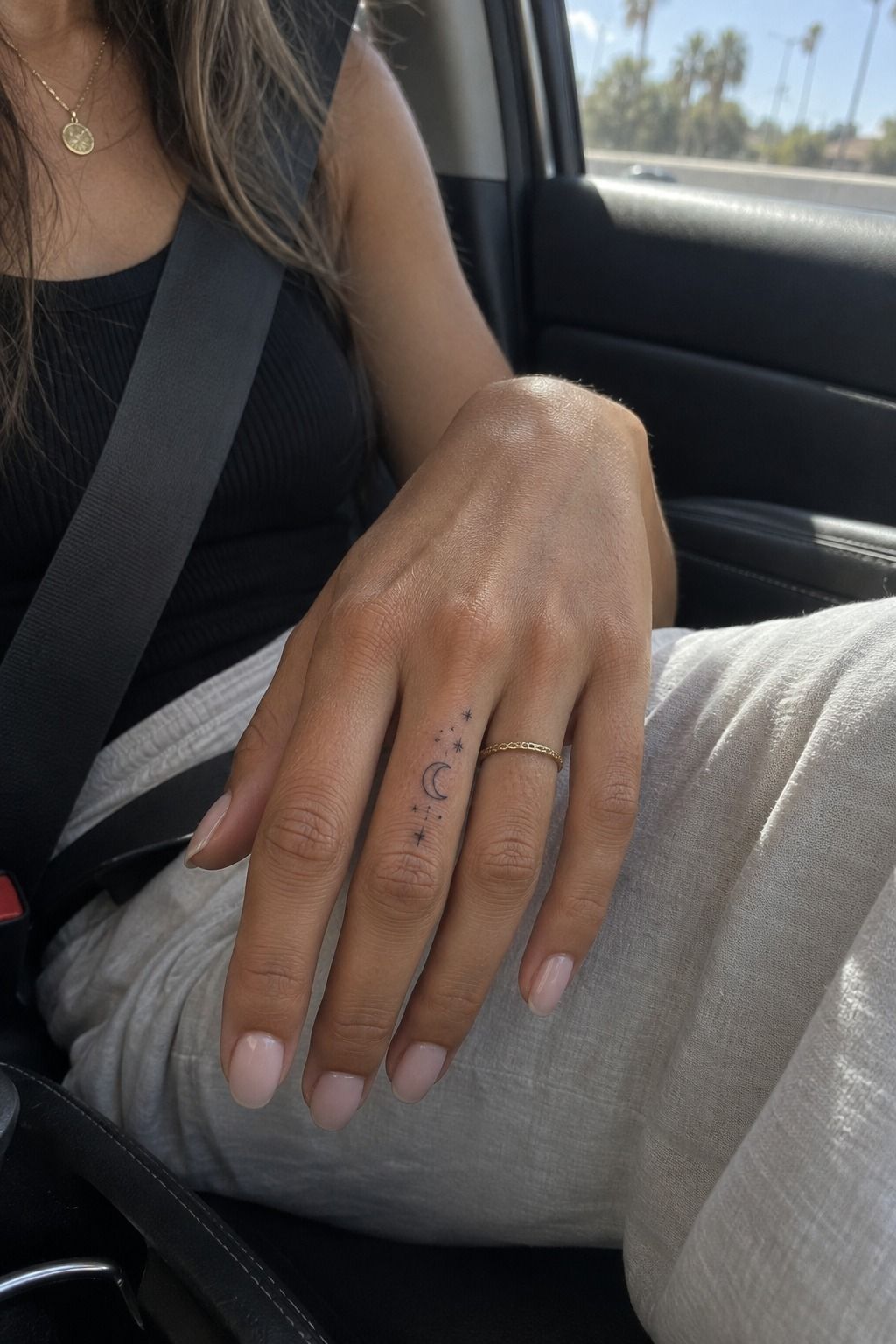
A crescent moon gives you a sacred symbol without filling the whole finger. One or two stars can add an ethereal touch while leaving enough untouched skin around the main curve. You can place the moon near the nail, along the side, or just below the first joint.
I’d avoid adding a face, clouds, and several star clusters to the same tiny area. The strongest version usually has one crescent and two or three varied stars. That keeps the meaning visible when the finger bends.
Choose a fine crescent outline, uneven star spacing, and hair-thin black ink. You can connect the moon to renewal, memory, or quiet confidence without making the design overly literal.
Ask how your artist handles high-friction zones. Fingers are washed, rubbed, and exposed to sunlight constantly, so placement affects how long the tiny stars stay crisp. A slightly protected side position may be smarter than the most visible spot.
For symbolic directions, see the spiritual symbol finger tattoo meaning guide. The design can stay minimal while your reason for choosing it gives the mark depth.
5Bold Black Band Finger Tattoo
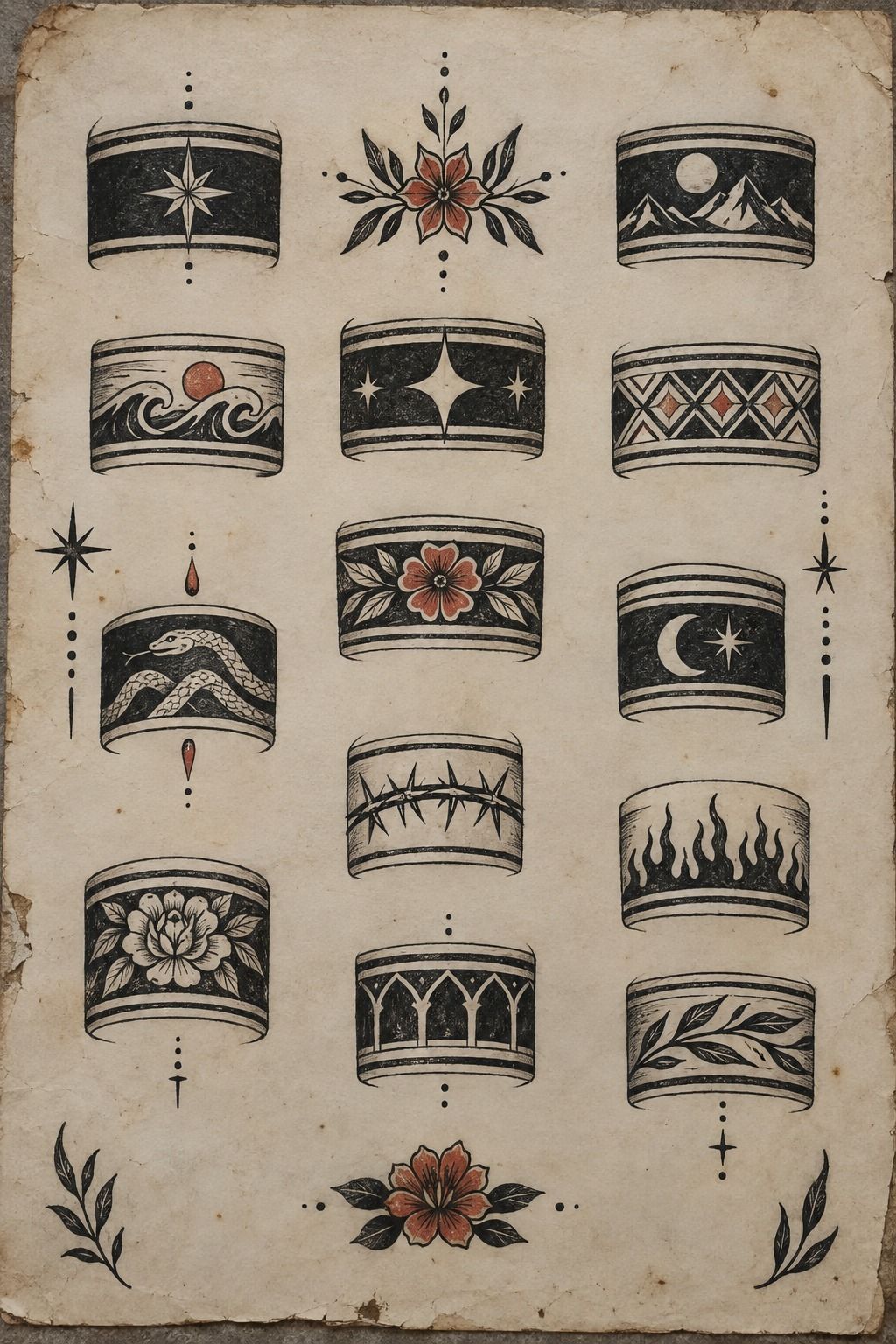
A black band creates a bold graphic statement that reads quickly from a distance. You can choose one narrow stripe, two parallel lines, or a broken band with a small section of untouched skin. The simplest version often has the strongest presence.
Your artist should show you how the band sits around the finger, not only how it looks in a drawing. I’d skip an extremely thin ring if you’re focused on longevity. Solid pigment may offer better readability in a high-friction location.
Ask about solid blackwork and how much width the artist recommends. A careful discussion can prevent a band from spreading into nearby folds. It’s also the right moment to ask about the likely cost of a design that needs extra stencil work.
You’ll want to discuss whether the band will cross a joint. A ring-like tattoo can distort when you bend your finger, and you don’t want the line to look uneven every time you move. The negative-space break should remain intentional from several angles.
If you like traditional flash, compare this idea with small trad tattoo ideas. A slightly softened edge can add a classic feel, while a clean boundary keeps the result powerful.
6Follow a Floral Sprig Down the Finger
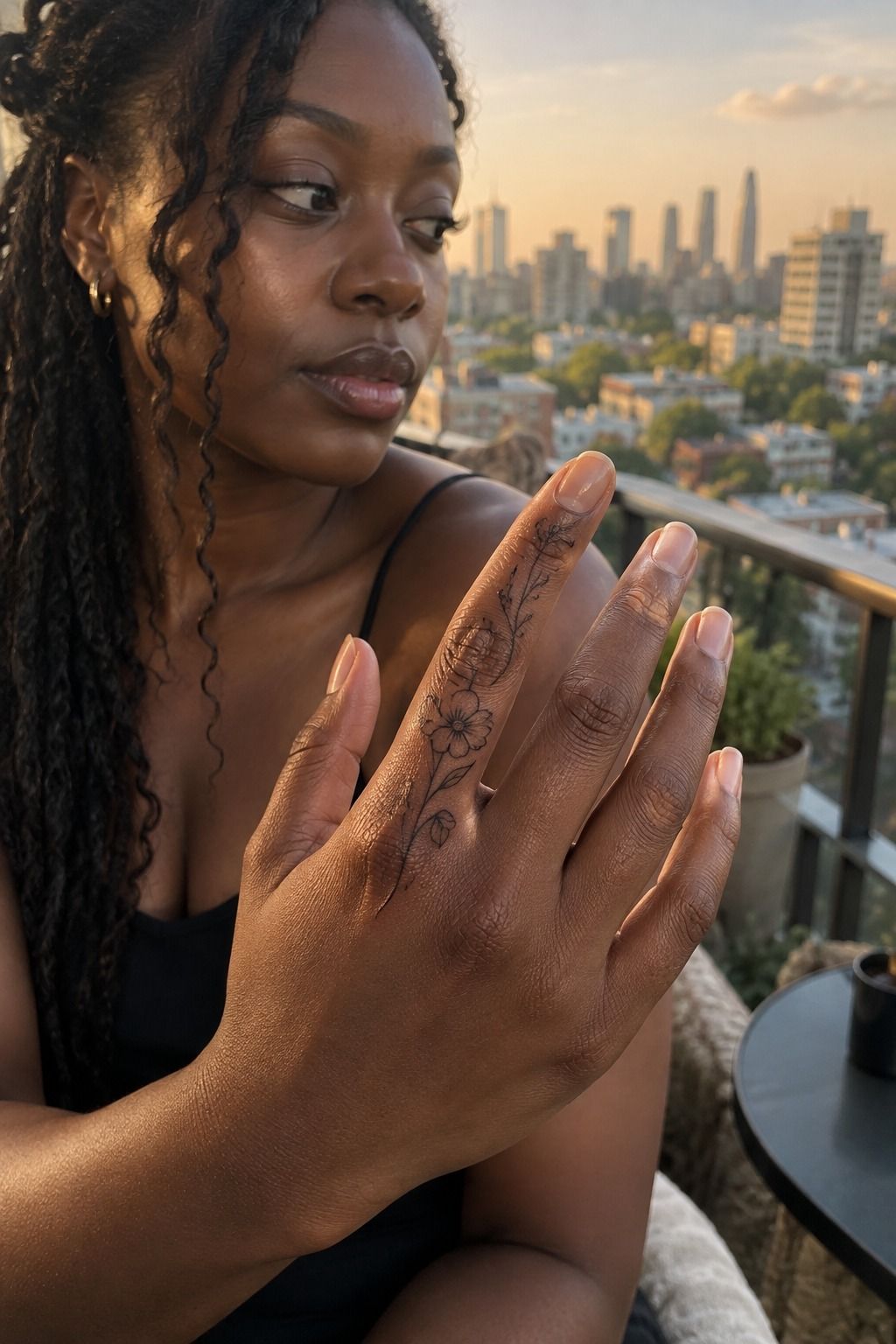
A wildflower sprig can feel delicate without looking generic. Choose one recognizable stem with two or three blossoms instead of a crowded bouquet. The direction of the stem should follow the finger and guide the eye toward the hand.
I’d adapt the line weight to your skin rather than copying a design blindly. Clear stems and separated petals matter more than adding every botanical detail. A fine floral stem needs enough pigment to settle clearly.
The graceful version has one curved sprig, narrow leaves, and open flower centers. A darker stem can make the idea more feminine, while angular leaves and a shorter composition can give it a more masculine edge.
Don’t assume that finer always means better. You’re asking the artist to balance a light appearance with enough pigment for the design to heal well. A 3RL configuration may suit the outline, while a slightly stronger grouping could define one key petal.
For more simplified petals, browse small cute finger tattoos. You’ll find useful ideas for turning a detailed flower into a readable mark with lasting value.
7Matching Marks, Separate Meanings
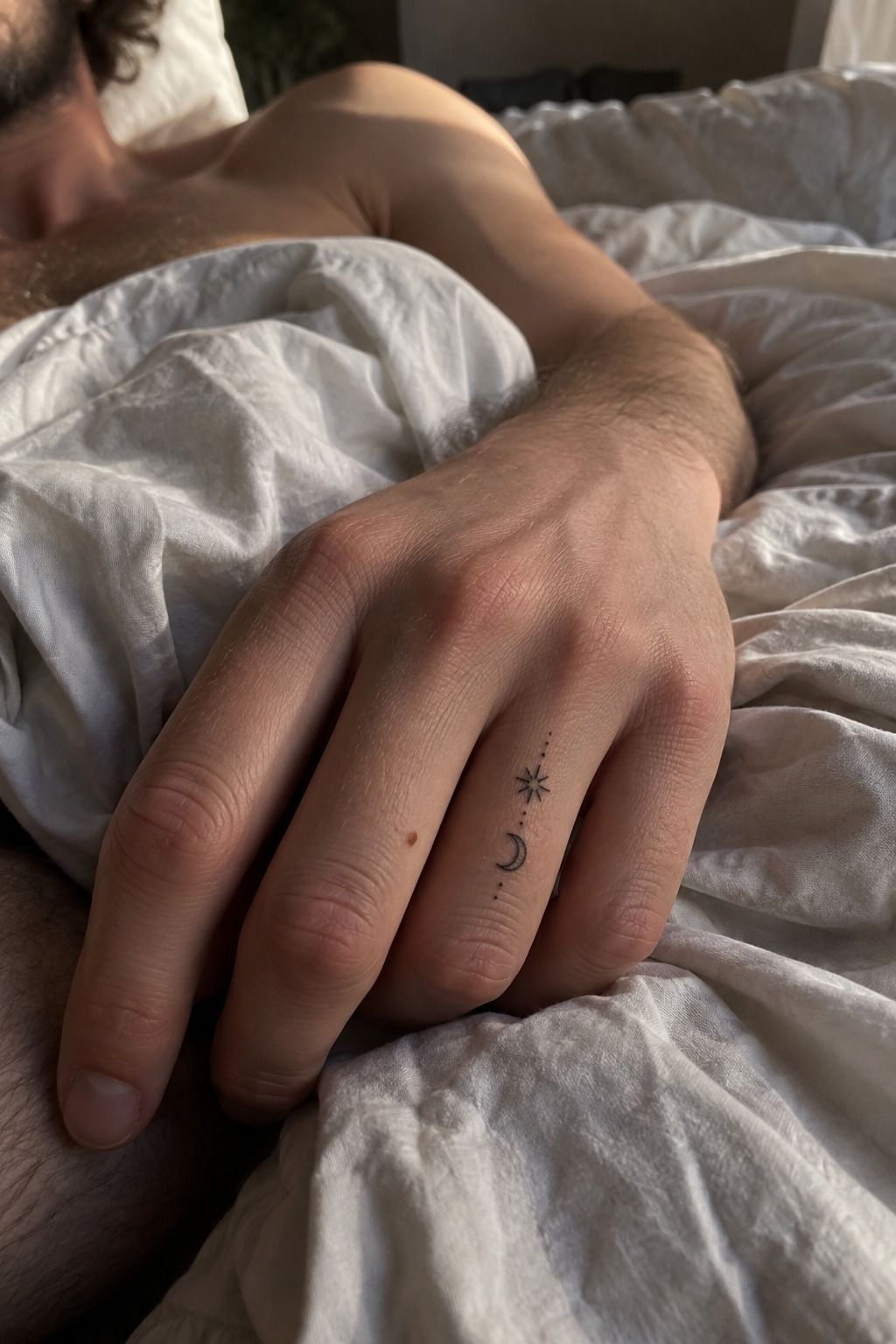
Matching tattoos work best when they share a visual language while leaving room for two individual stories. This symbolic approach could use paired dots, mirrored arcs, or a short line that completes another person’s mark. Matching doesn’t require identical placement.
Agree on the meaning before you agree on the exact drawing. I’d avoid names unless both people feel fully comfortable with permanent text. A related symbol can remain personal if circumstances change.
Use separate finger stencils, matching line weight, and open negative space. Your fingers may have different folds, widths, and friction points, so your artist should position each tattoo individually.
A shared appointment can be exciting! Still, each person needs a design that fits their own hand. That approach gives the pair an empowering quality without making either tattoo feel copied.
If you need ideas beyond initials or hearts, explore this small tattoos meaning guide together. You can choose a compass point, an open circle, or two marks that only make full sense side by side. Keep your budget focused on skilled placement and healed results.
8Playful Tiny Star Finger Ink
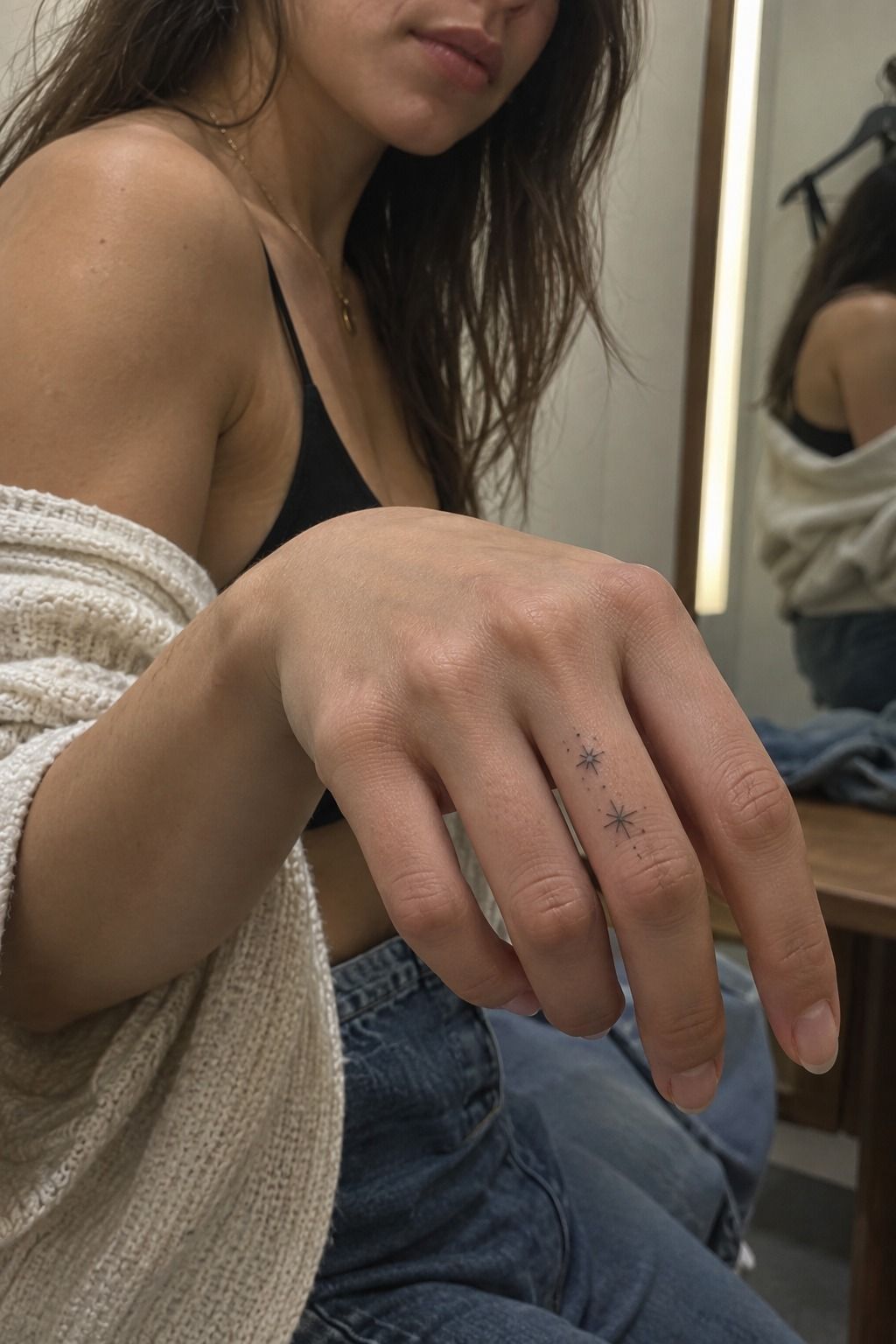
A few stars of different sizes create a playful pattern that feels intentional. You can use three stars, five stars, or a tiny cluster that follows the natural length of the finger. Varying the shapes keeps the design from looking stamped.
I’d place a four-point star beside a smaller open star and one dot. That combination can feel whimsical without needing glitter effects or heavy shading. Your artist should keep enough space between each mark.
Use black star linework, uneven but balanced spacing, and a clear scale difference. If you want the idea to feel more mature, choose crisp geometric points and consistent line weight.
Don’t add detail just because the design has room. The charm comes from restraint, and you’ll notice the difference when the finger bends. A few vibrant marks can carry more energy than a dense cluster.
For more variations, compare these with small finger tattoos and save healed examples. Ask whether the stars will remain readable after regular washing and sun exposure before you commit.
9Choose Ring-Finger Script With Care
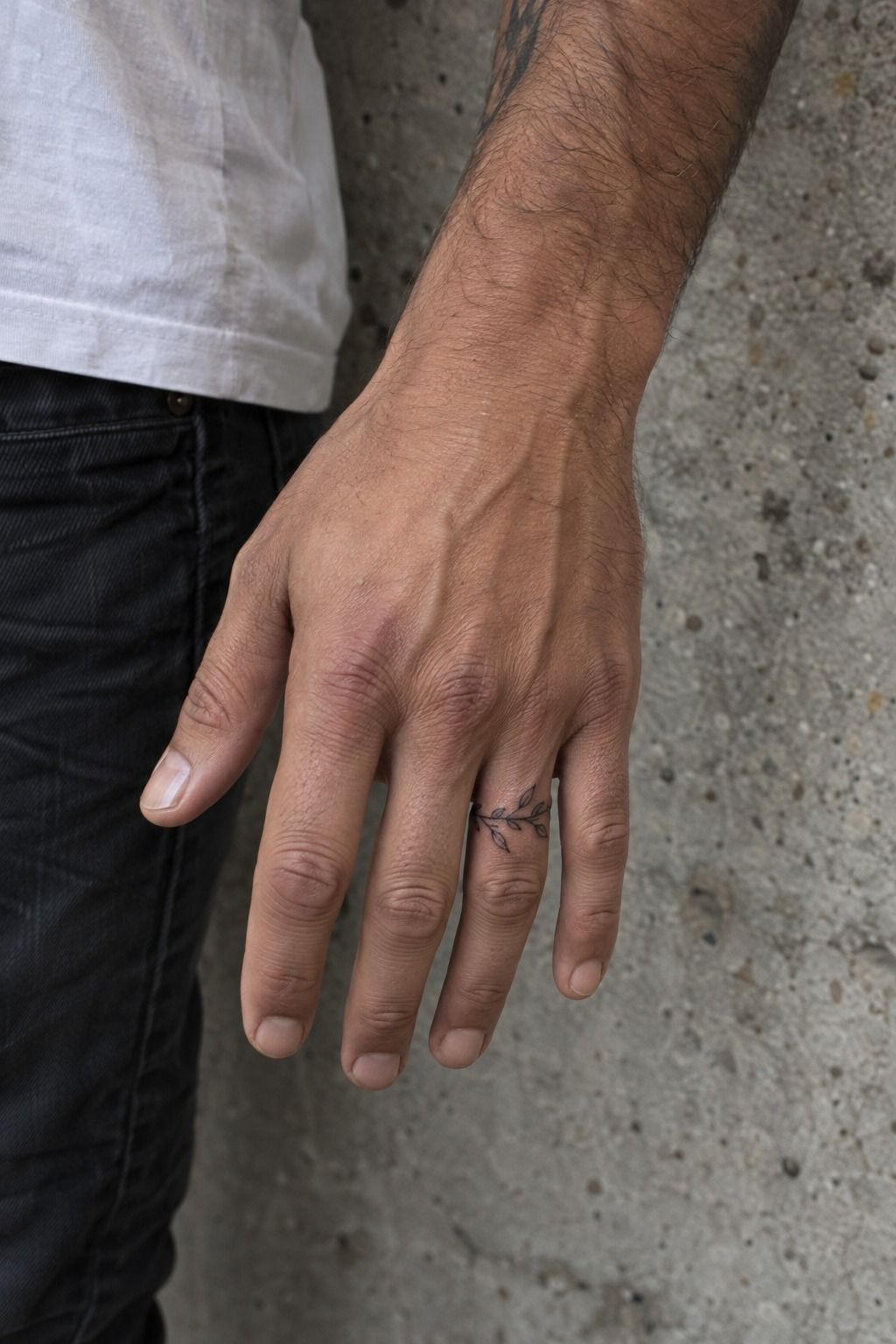
A ring-finger script tattoo can feel romantic when the lettering stays narrow, legible, and close to the finger’s natural line.
10Skull or Symbol? Keep the Silhouette Clear
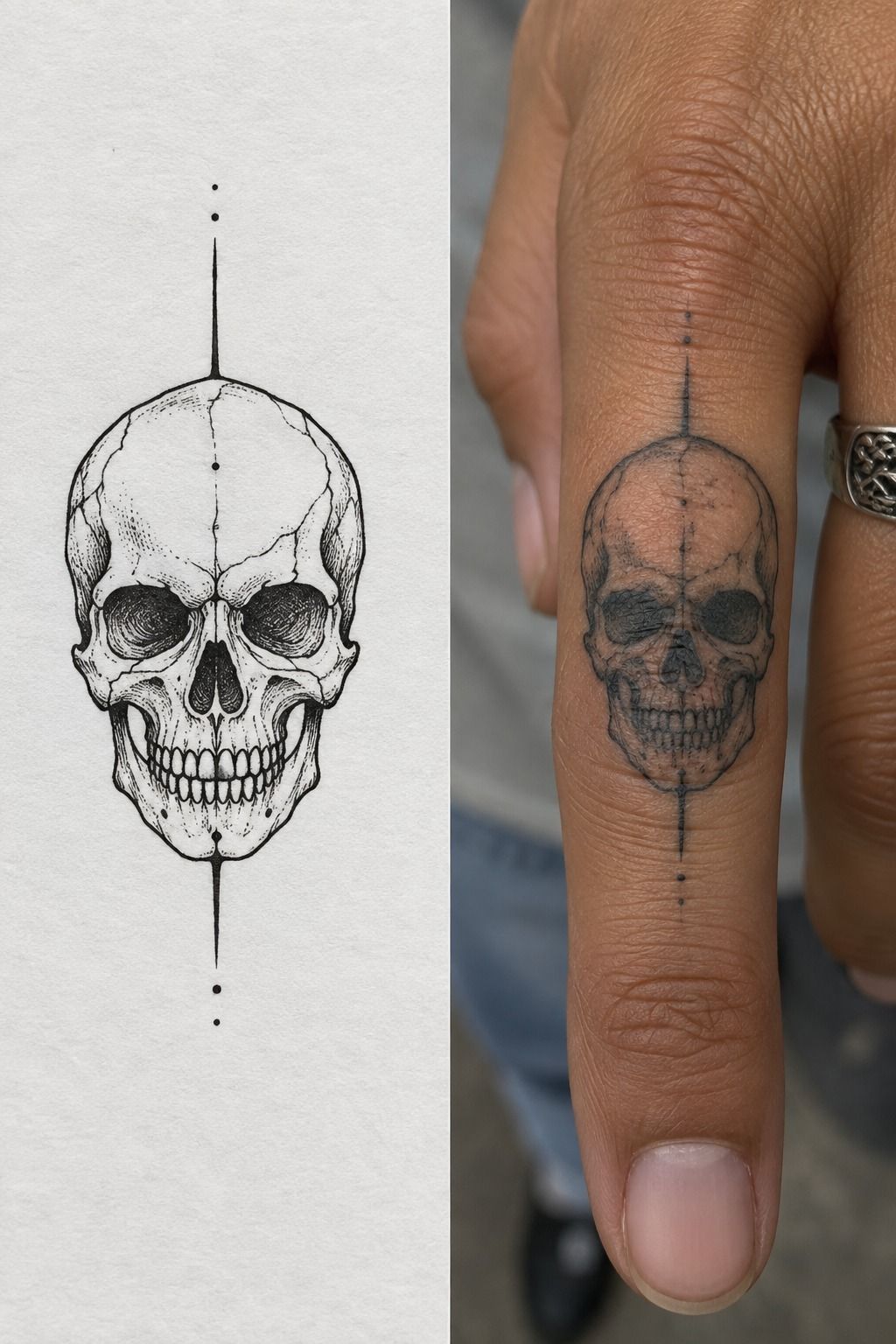
A small skull can be edgy without becoming cartoonish when the artist relies on clean anatomy and controlled negative space. You can use visible eye sockets, a short jaw, and a few deliberate teeth. The silhouette should remain readable at a glance.
I’d avoid packing every hollow with dark shading. A fine skull outline needs untouched skin around the teeth and enough contrast to survive healing. More detail won’t automatically give the design more character.
Ask how the artist handles healed texture on different skin tones, and request examples in the same style. A skull can be haunting and polished at once when the main shape stays simple. That conversation is more useful than judging a fresh appointment photo.
If you’re deciding between a skull and another traditional symbol, review small trad tattoo ideas for compact compositions. A thoughtful artist will help you protect the silhouette while keeping the result gritty.
11Birthstone Ink With a Personal Code
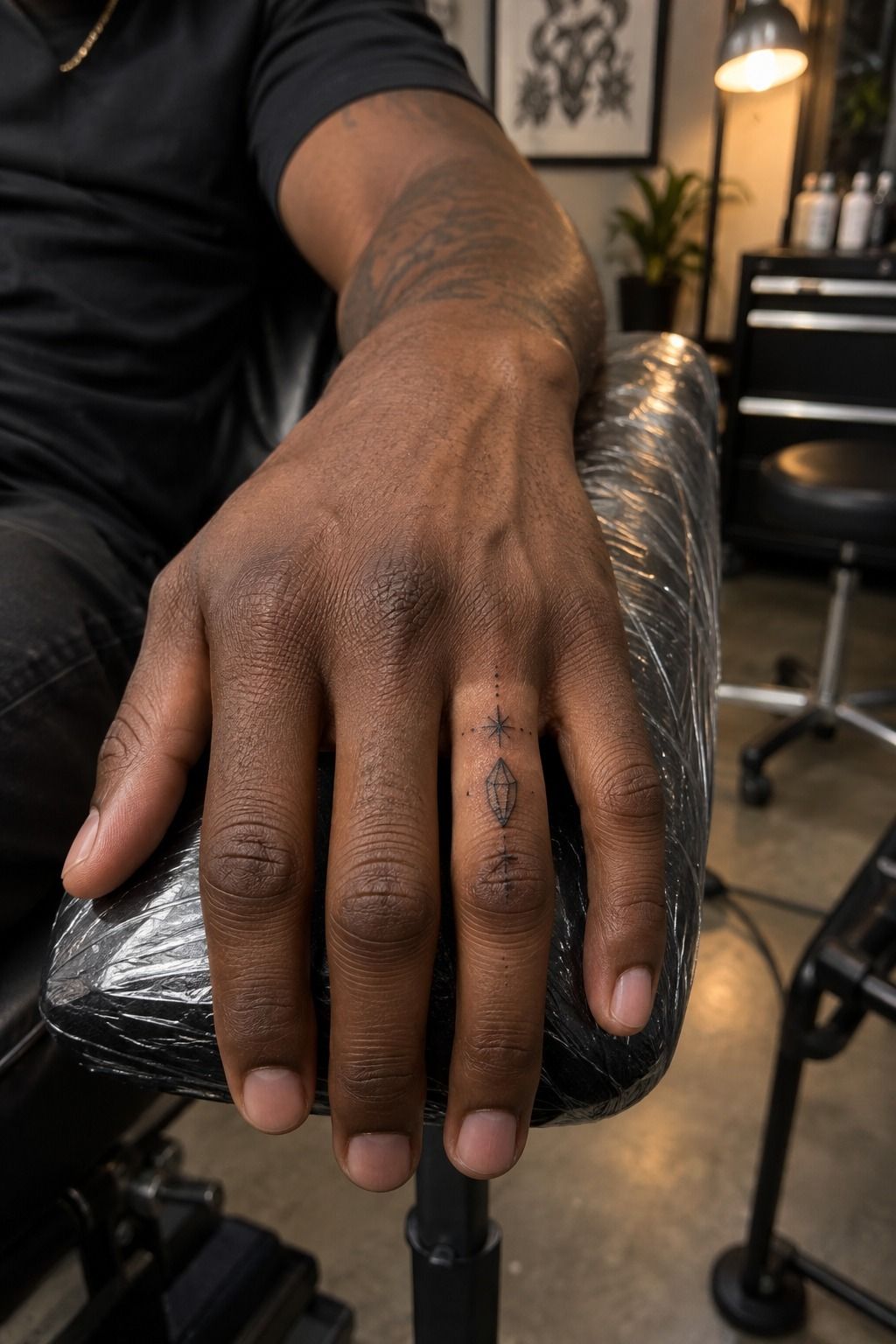
A birthstone concept can become a meaningful finger tattoo without relying on a literal jewel illustration.
How Finger Ink Ages
Finger tattoos are exposed to washing, friction, sunlight, and constant movement, so you’ll need realistic expectations before booking. Very fine lines can widen as they settle, while solid blackwork with thoughtful placement often stays more readable. Your artist should explain what may soften instead of promising that every mark will look unchanged.
The surface usually settles in about two to three weeks, while complete healing can take roughly two to three months. You’ll want gentle washing, light moisturizing, and no swimming or direct sun during the early stage. Follow your artist’s instructions if they differ from general guidance.
Ask for healed portfolio photos, especially if the design uses fine lines or color. The result depends on placement, line weight, skin response, and daily care. A tiny design can remain iconic, but it still needs practical handling.
A touch-up may be useful, though it isn’t guaranteed or always necessary. If your artist explains the likely healing process clearly, you’ll be able to make a better decision about timing and maintenance.
When Is a Tiny Finger Tattoo Worth It?
A tiny finger tattoo can be worth it when the symbol matters to you and you understand the maintenance involved. It may need a touch-up sooner than ink on a less active part of the body. That tradeoff should be part of your decision before you reserve an appointment.
I’d consider the artist’s healed work, your daily habits, and your comfort with visibility. If you wash your hands frequently or work with tools, a protected side placement may offer better durability than a top-facing design.
The artist’s healed tattoo portfolio tells you more than a fresh social media post. Look for readable outlines, consistent spacing, and examples photographed several months after the appointment.
You don’t need a complicated symbol to make the tattoo feel daring. A heart, band, star, or initial can carry enough meaning when the shape is chosen carefully.
Placement Changes the Result
Top-of-finger ink is easy to see, while side or inner placement can feel more private. Knuckles bend, folds catch friction, and the area near the nail can experience regular contact. Your artist should test the stencil while your finger is relaxed and bent.
Ask to see placement stencils from several angles. A design that looks centered from above may shift when your hand turns. That small adjustment can make a major difference to the final result.
If visibility matters, think about work, family, and how often you want the tattoo noticed. If privacy matters more, the inner edge may suit you better. Neither choice is automatically superior.
You can compare placement examples in small finger tattoos before your consultation. Save examples that show the actual finger position rather than a drawing separated from the hand.
What to Ask Before You Book
Your consultation should cover placement, line weight, healing, and whether the artist regularly tattoos fingers. Ask to see healed examples on varied skin tones. You’re not being difficult by asking; you’re protecting the result you’ll live with.
I’d choose an artist whose portfolio shows consistent single-needle work rather than one lucky photograph. A skilled portfolio will show clean starts, controlled curves, and designs that still read after the first brightness fades.
Ask about hygiene, stencil changes, aftercare, and touch-ups. You’ll also want to know whether the quote includes the consultation and how the studio handles rescheduling. Clear answers can prevent stress later.
Don’t buy a tattoo procedure from a marketplace or let a friend copy a downloaded design without training. A safe professional studio matters more than a low price. You want the final choice to feel sophisticated, not rushed.
For more placement comparisons, see small hand tats and bring only the references that genuinely fit your idea.
The Small Finger Tattoo Cost Snapshot
In the United States, a small finger tattoo often falls around $100 to $300, depending on the artist, region, design, and placement. Some studios use a minimum of about $50 to $100, while hourly rates may land around $100 to $250. Ask for the studio’s pricing structure before your appointment.
You’ll save yourself confusion by asking whether the quote includes a consultation, stencil changes, and a possible touch-up discussion. I’d rather pay for careful placement than choose the lowest price and regret the linework.
The best tattoo consultation gives you a clear estimate and realistic expectations. A lower quote may offer less time for stencil adjustments, while a higher quote may reflect experience with difficult placements.
For additional pricing context, review small tattoo prices before you contact a studio. Bring a clear idea of size and placement so the estimate is useful.
My Rule for Choosing Finger Ink
I’ve made the mistake of choosing a symbol because it looked good in a saved image, then realizing the design had no connection to my own life. For finger tattoos, I’d start with the meaning and remove details until the symbol still works at its smallest honest form.
Your second decision is longevity. Fine linework can be gorgeous, but your hand gets washed, rubbed, and exposed every day. I’d choose a timeless outline over crowded micro-detail and accept a little less drama for a cleaner healed shape.
The third decision is visibility. A top-of-finger tattoo will be noticed quickly, while a side or inner placement can feel more private. Ask yourself whether you want strangers to read the design or whether you want to see it only when you turn your hand.
And I don’t think every finger tattoo needs to look delicate. A small band, skull, or serpent can be raw and expressive when the silhouette is clear. Choose the design you’ll still recognize in five years, then let your artist adjust the details for your skin and movement.
If you’re still collecting ideas, browse small American traditional tattoos for stronger silhouettes and simplified symbols. Start there!
A Few Things Worth Answering
How much does a small finger tats usually cost?
A small finger tattoo typically costs about $100 to $300 in the United States, though a studio minimum may be around $50 to $100 and hourly rates may reach $100 to $250. I’d ask about the artist, placement, design detail, and possible touch-ups before booking.
Are small finger tats a good idea for a first tattoo?
Yes, they can be a good first tattoo if you choose a simple design and understand hand placement. You’ll get a personal tattoo in a small area, but fingers experience friction and sun. I’d start with clear linework, realistic expectations, and an artist who shows healed work.
How do I choose a tattoo artist for small finger tats?
Review healed photos, clean linework, and finger tattoos on varied skin tones. I’d also confirm studio hygiene, consultation practices, and aftercare instructions. A polished portfolio matters more than a large follower count, especially when your design depends on tiny curves.
How much do small finger tats hurt?
Finger tattoos can feel sharper than tattoos on more padded areas, especially near bone and joints. I’d expect a short but noticeable session, although discomfort varies by person. Your artist can explain the likely sensation based on placement and duration.
How long does a small finger tats take to heal?
The surface usually heals in about two to three weeks, while complete healing may take around two to three months. I’d use gentle washing, light moisturizing, and avoidance of swimming and direct sun during early healing. Follow your artist’s specific plan.
What’s the best placement for small finger tats?
The best placement depends on how visible you want the tattoo and how much movement or friction you’ll accept. I’d choose the side or inner finger for more privacy, while the top is easier to see. Your artist can show how each option may affect aging.
Can I buy a small finger tattoo design online?
You can buy reference art, but I wouldn’t buy a tattoo procedure online or rely on an untrained person to apply it. Choose a licensed professional studio, bring your saved references, and ask for a custom stencil. Your safety matters more than a low upfront price.
Where I’d Start First
If I had to pick one, I’d start with the tiny heart. Its open outline stays readable, the symbol carries real feeling, and you won’t need heavy shading to make it work. Pin the idea for later and compare it with small cute finger tattoos before booking.
The heart gives you a clean way to test visibility, line weight, and placement. If you still love the shape after considering healing and daily friction, it’s a strong first choice.
A small tattoo doesn’t need to explain your entire story. It only needs to remain recognizable to you.