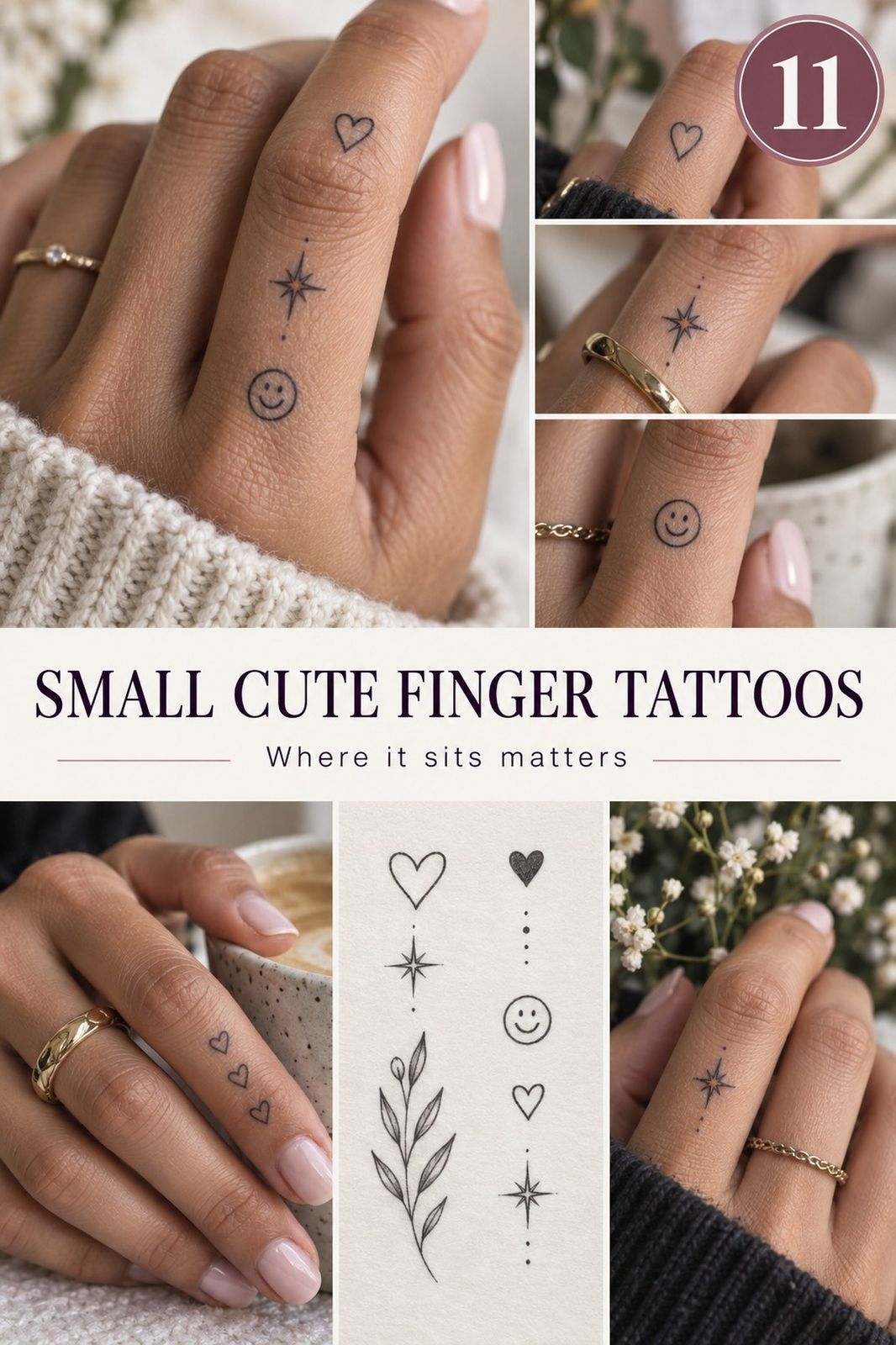
Small cute finger tattoos can suit first ink when you keep the symbol readable, choose an artist with healed linework, and plan for touch-ups. I learned that after watching a clean heart outline blur where a ring rubbed it every day. A first tattoo can feel striking without becoming complicated. This guide walks you through 11 decisions, from the first sketch to aftercare. Start small, but don’t guess.
Before You Start: The Three-Check Rule
Before you save a design, check meaning, visibility, and aging. Your tattoo should still make sense while you’re typing, washing your hands, or holding a coffee. A 3RL needle can create an intricate outline, but no needle can rescue a symbol that’s too crowded for your chosen spot.
Set aside time to compare healed work, not only fresh tattoos. Your artist’s portfolio should show black ink after the skin has settled, with edges that remain crisp instead of feathering outward. If you’re collecting small cute finger tattoo ideas, browse these small finger tattoos for placement references before you book.
Your artist should also explain how finger skin behaves. A healed-work portfolio tells you more than a feed filled with fresh, vibrant ink. Look for softened edges, stable spacing, and symbols that remain recognizable after months of movement.
Typical US pricing varies by artist and region, so treat these as planning ranges rather than a promise. Your budget may need room for a later touch-up.
Your finger moves constantly, and that matters more than the drawing’s size. A delicate mark may need maintenance later, especially on a side surface that meets soap, friction, and sunlight.
That’s normal, not a design failure. Choose an artist who explains that honestly.
The Finger Tattoo Budget Test
Ask what the appointment includes before you pay a deposit. The lowest price isn’t always the best value if the artist has little healed work or charges separately for a necessary touch-up. A slightly higher cost can be worth it when the consultation, stencil adjustments, and aftercare instructions are thoughtful.
Keep a small amount aside for maintenance. Finger tattoos live through more friction than tattoos on many other areas, so a future touch-up isn’t automatically a sign of poor work. If your touch-up budget is already accounted for, you can choose with less pressure.
Read the studio’s policies carefully. Some artists charge a flat minimum, while others quote by time or design complexity. Ask whether a tiny heart and an intricate symbol cost the same, and find out how long they expect the appointment to take.
That’s the point!
A tattoo can be affordable and still feel personal. I wouldn’t choose the cheapest artist for a visible mark if their healed results look inconsistent. Ask what the quote covers, how long the stencil consultation lasts, and whether a shop minimum applies even when the appointment is brief.
- Start with tiny hearts, stars, and smiley faces
- Pick playful symbols with personal meaning
- Choose crisp linework for lasting clarity
- Place designs along natural finger curves
- Match paired tattoos across both hands
- Keep details minimal for small spaces
- Plan delicate tattoos around existing rings
- Select whimsical motifs with expressive faces
- Balance bold ink against dainty scale
- Consider finger movement before committing
- Protect fresh ink through careful healing
1Start with tiny hearts, stars, and smiley faces
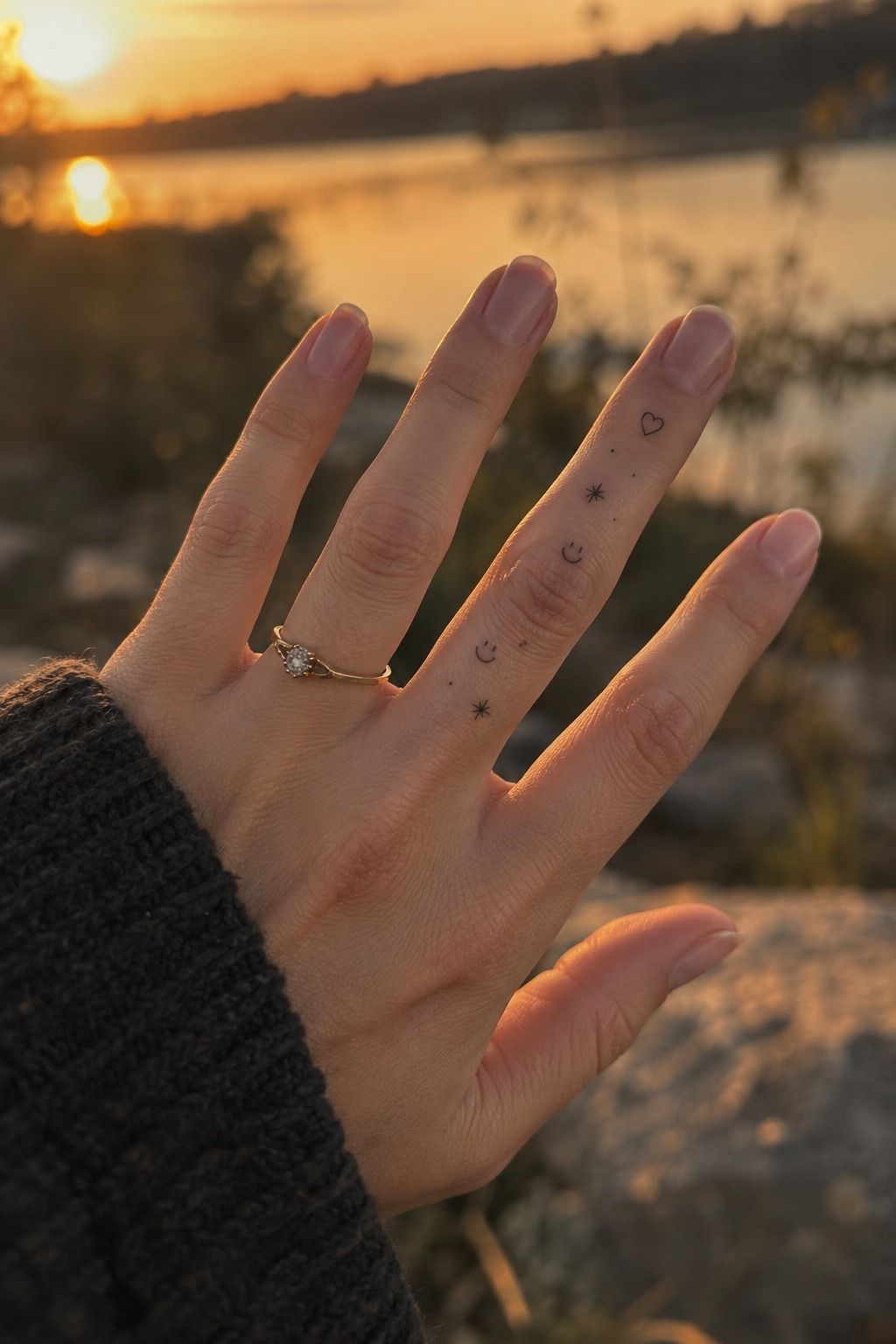
Begin with one clear symbol on a finger with enough uninterrupted skin to read at a glance. A heart, star, or smiley face can feel striking without demanding a complicated story. Your first tattoo doesn’t need a dramatic explanation to feel personal.
Ask your artist to sketch the heart at the actual size on transfer paper. A fine-line black ink outline can look crisp on the stencil, but your artist should show you how the point will follow the finger’s natural bend. I’d choose a heart over a tiny phrase here.
Letters close together can become muddy faster than one graceful symbol.
Try a paper version for a full day. Put it near the knuckle, then along the side, and watch how your hand changes while you move.
Would you still like the design when your finger is curled? That small test gives you more useful information than staring at a digital mockup.
Keep the first choice striking and delicate. You can compare more ideas in this small finger tattoo ideas guide, but don’t collect twenty references and ask your artist to combine them all. One heart, star, or smiley face will give your first ink a cleaner beginning.
If you’re comparing designs by price, remember that complexity affects appointment time more than the symbol’s physical size. A simple outline can offer better value and a more timeless result. One readable symbol usually ages better than five competing details.
2Pick playful symbols with personal meaning
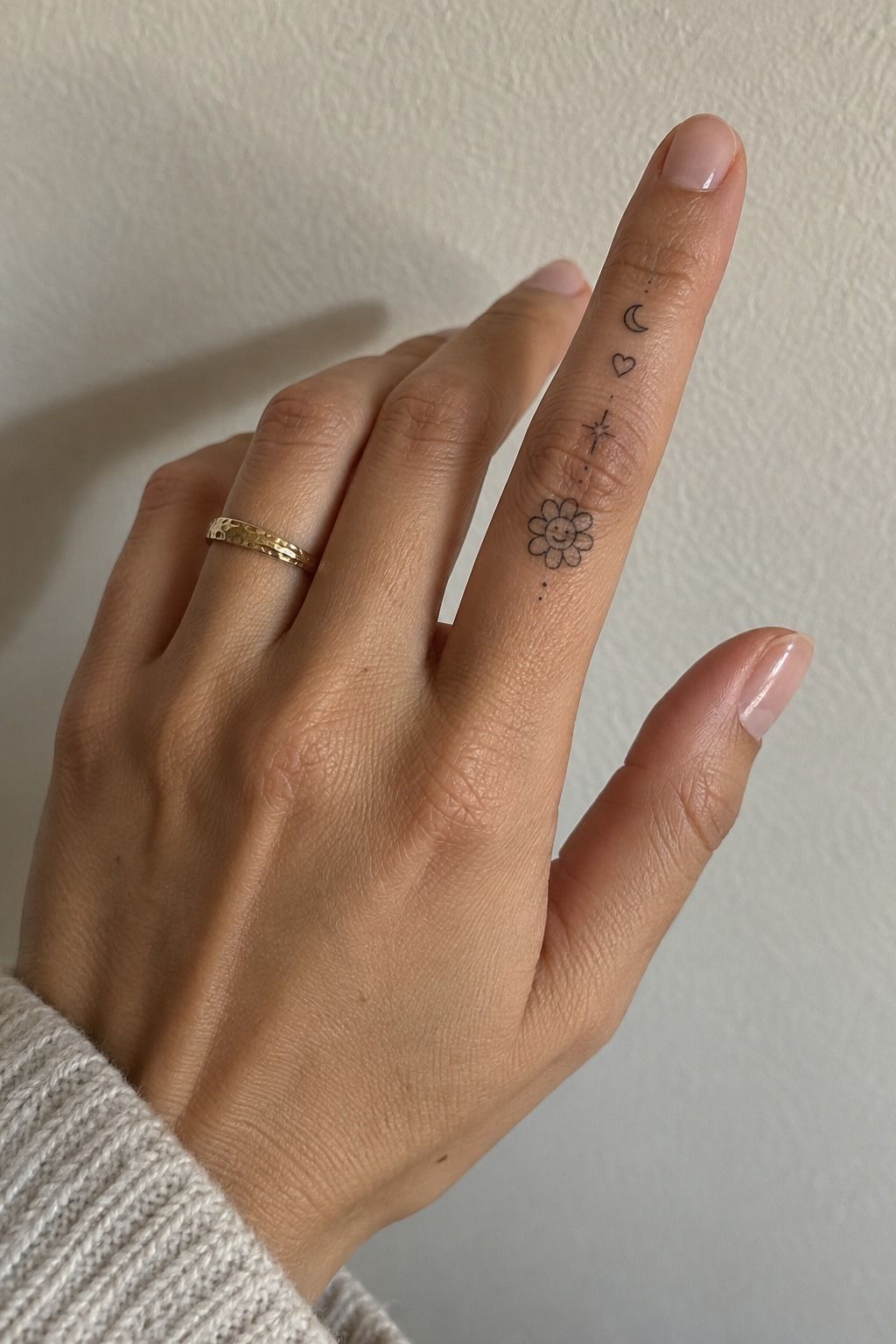
Choose a symbol that reminds you of a real person, place, habit, or private joke. A tiny sun could represent a morning walk, while a small strawberry might connect to a family garden. The strongest designs are playful, meaningful, and personal at once.
Write down three memories before you choose the final design. Your artist can turn one into a simple transfer stencil without forcing every detail into the tattoo.
I like this step because it keeps the result meaningful without making it overly serious. A playful mark can still carry weight.
And don’t assume a symbolic tattoo must look solemn. A smiling cloud, tiny bow, or miniature lucky charm can feel expressive when the proportions are right. If you’re unsure what your symbol means to you, explore this small tattoos meaning guide and notice which ideas keep returning.
Use one visual feature as the anchor. It might be a curved smile, two small eyes, or one bright negative-space opening.
The result can be whimsical and personal without becoming crowded. That’s the difference between a charming reference and a tattoo you’ll still recognize years later.
A meaningful design is usually worth the cost when you still connect it to your life after the trend has passed. I wouldn’t spend money on a symbol you only like because it appeared repeatedly in your saved folder. A private memory gives a tiny tattoo more staying power than a passing trend.
3Choose crisp linework for lasting clarity
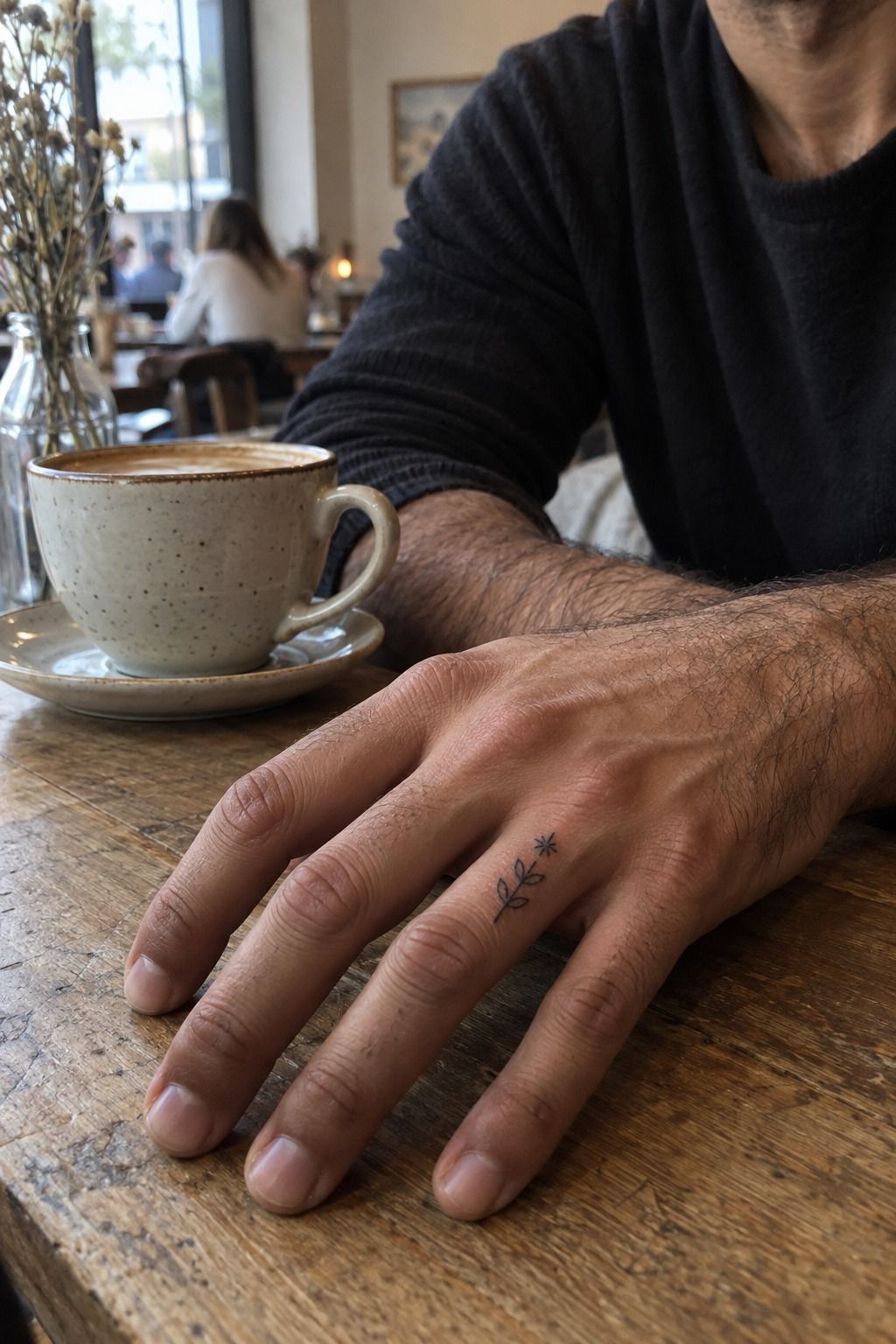
Look for an artist who controls pressure, spacing, and line weight instead of promising that every mark will stay hair-thin forever. Your goal is clarity, not the thinnest possible line. A crisp outline can remain understated while still feeling polished.
Ask to see healed examples in natural light. A single-needle liner can create a sharp contour, but very fine lines may soften or widen as skin ages.
I’d skip an artist who only shows fresh work. Fresh ink is bold and polished; healed ink tells you whether the technique suits your finger.
But don’t confuse crisp with harsh. Your design can stay understated while using slightly stronger black on the outer contour and lighter detail inside. That contrast helps the eye understand the symbol when your hand is moving.
And if your skin is olive, ask how the artist adjusts the stencil and ink depth for your undertone.
Keep the design simple enough to survive a quick glance. A tiny face with two eyes and a curved mouth may age more clearly than a miniature portrait. For more examples of clean scale, compare these small cute tattoos with meaning before your appointment.
The best value comes from technique that matches your skin and placement. You aren’t paying only for the few minutes the needle touches your finger; you’re paying for judgment, sanitation, placement, and a result that has a fair chance of aging well. Ask about the artist’s line-weight choices before you approve the stencil.
4Place designs along natural finger curves
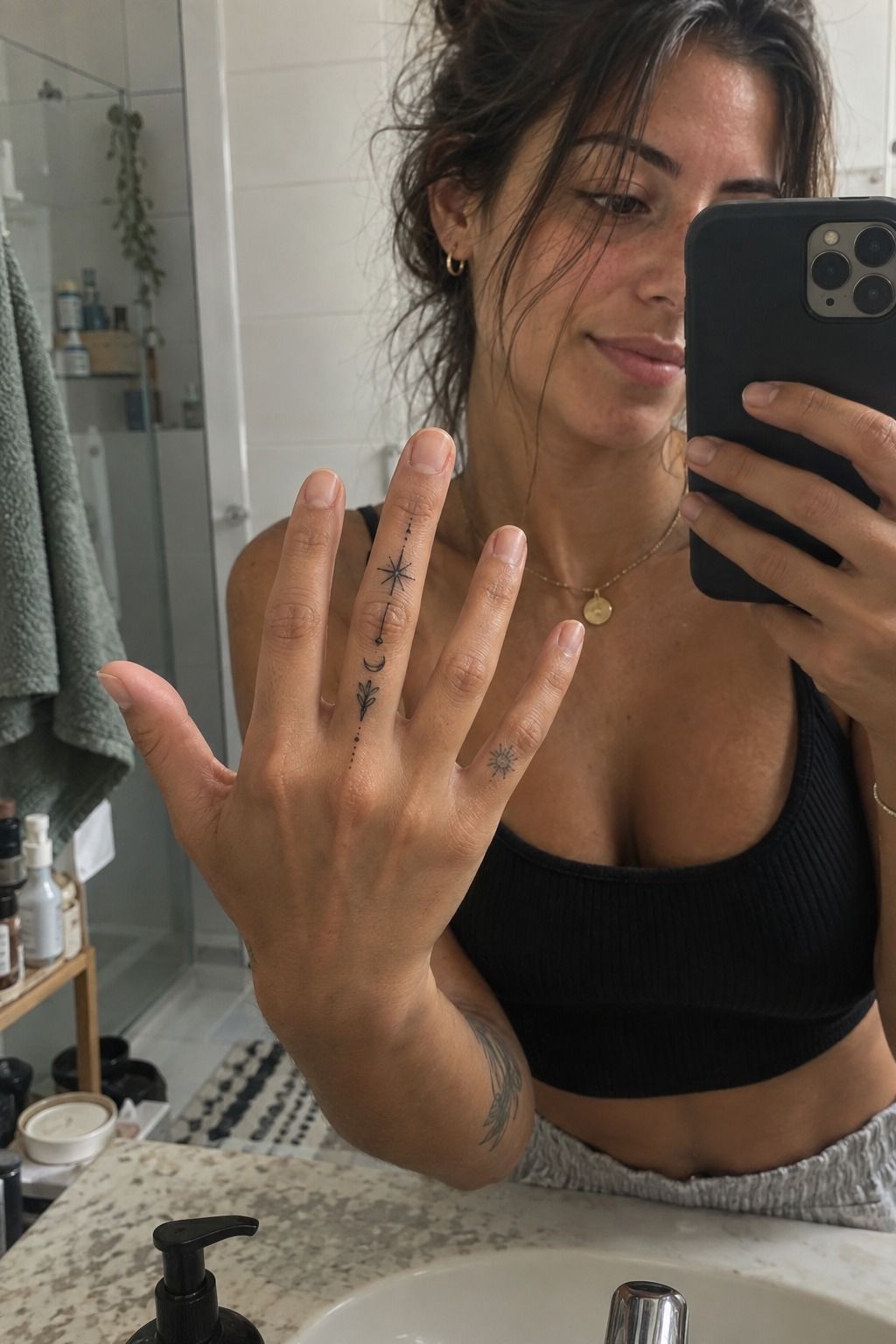
Study your hand at rest, half-curled, and fully bent before choosing the final spot.
5Match paired tattoos across both hands
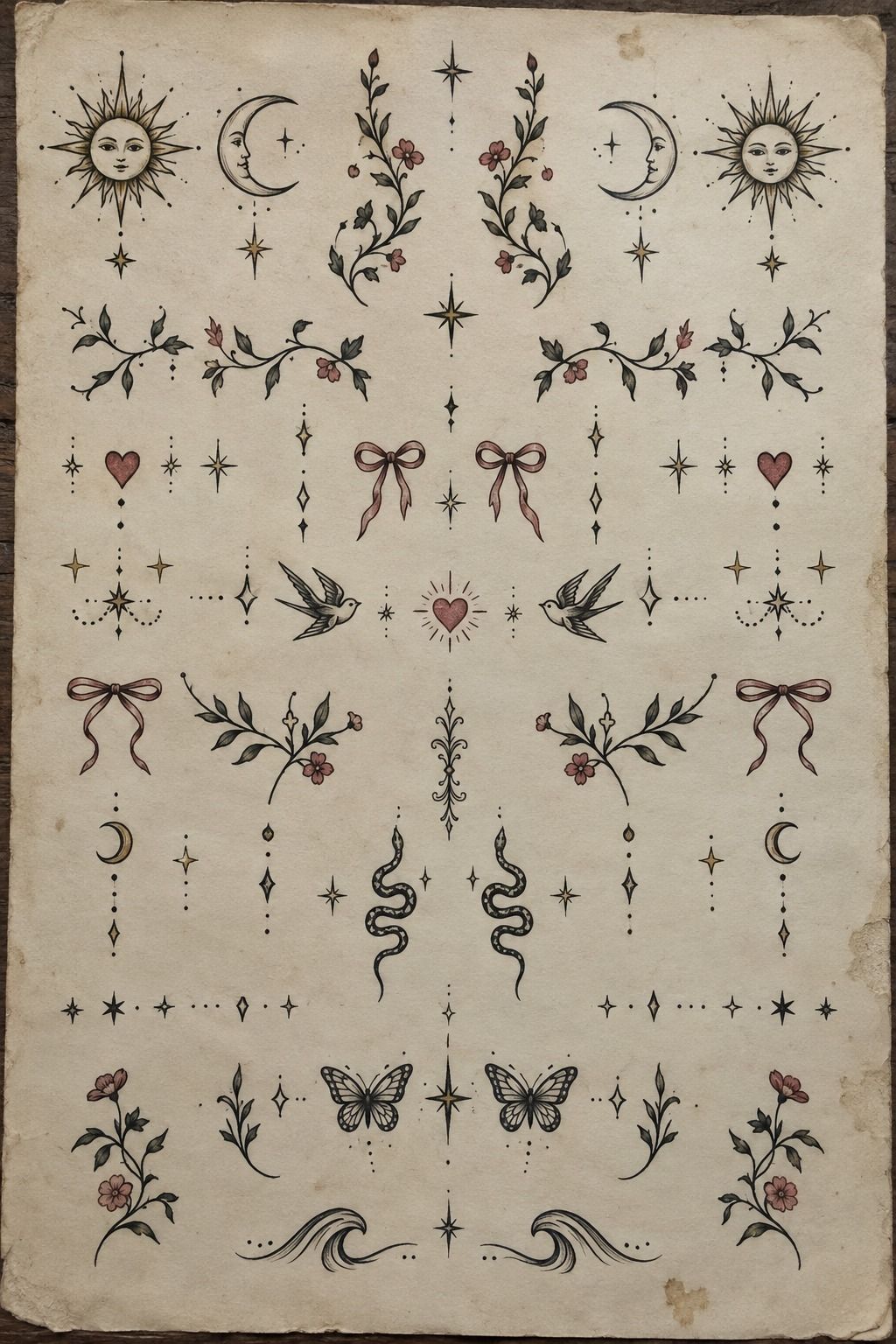
For a pair, decide whether your designs should mirror, complement, or simply share one visual language. Matching line weight, a shared outline shape, or the same black tattoo ink can make two different symbols feel connected.
Create a paired set with one repeated feature. Matching stars, a heart and a moon, or two tiny faces can feel romantic and iconic without looking copied. I wouldn’t duplicate a detailed design on both hands unless you’re certain you want the symmetry every day.
Leave room for each tattoo to stand alone. One hand could carry a heart while the other carries a star, with similar scale and linework. That approach feels balanced and meaningful without turning your fingers into a crowded collection.
Lay a paper stencil beside your own hand and mark the intended fingers with removable tape. Check whether rings, knuckles, and natural creases interrupt the pair. If you want more paired references, this small finger tattoo collection can help you compare mirrored and mismatched options.
Ask about the long-term cost of matching tattoos before booking both in one session. If one finger heals differently, you may eventually choose a touch-up for only one side.
That isn’t a reason to avoid the idea, but it belongs in your decision. A paired tattoo plan should allow each mark to age independently.
6Keep details minimal for small spaces
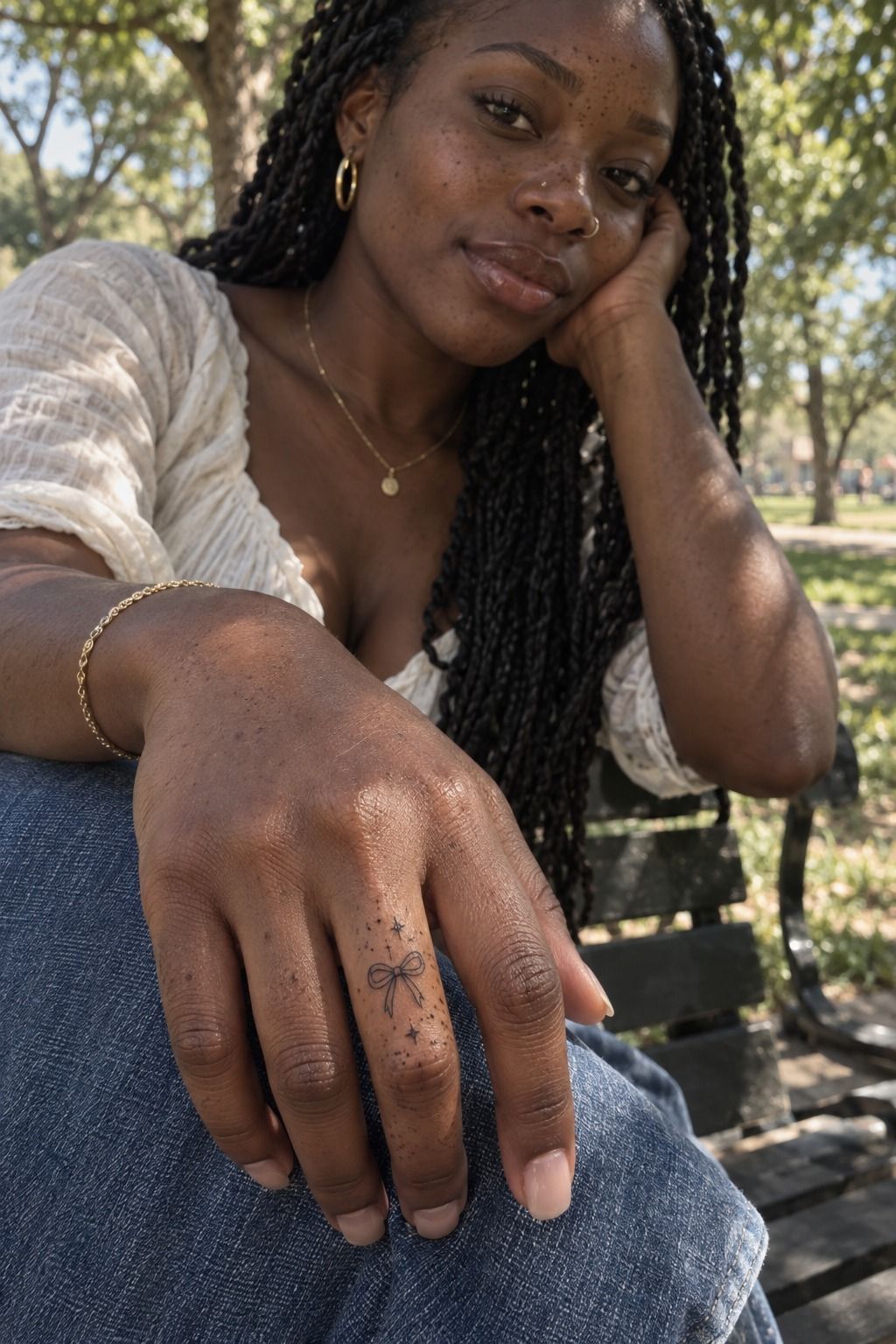
Remove every line that doesn’t help the symbol read.
Minimal Lines, Maximum Personality
A minimalist tattoo doesn’t have to feel plain. One sharp curve, expressive eye, or symbolic opening can give it a fierce personality. I like designs that reveal their meaning slowly, especially when the mark looks dainty from a distance but remains recognizable up close.
Use contrast instead of clutter. A single dark point can make an otherwise delicate outline feel bold, while open skin keeps the result sleek. This is where restraint becomes expressive rather than empty.
Your artist may simplify your sketch more than you expect. That can feel disappointing for a moment, but the edit often protects the design’s clarity. A tattoo that ages cleanly has more value than one that preserves every detail from the original drawing.
A small mark can also be ornate in spirit without being crowded in execution. Choose one graceful feature, then let the rest stay quiet. That balance creates a polished result with a clear focal point.
7Plan delicate tattoos around existing rings
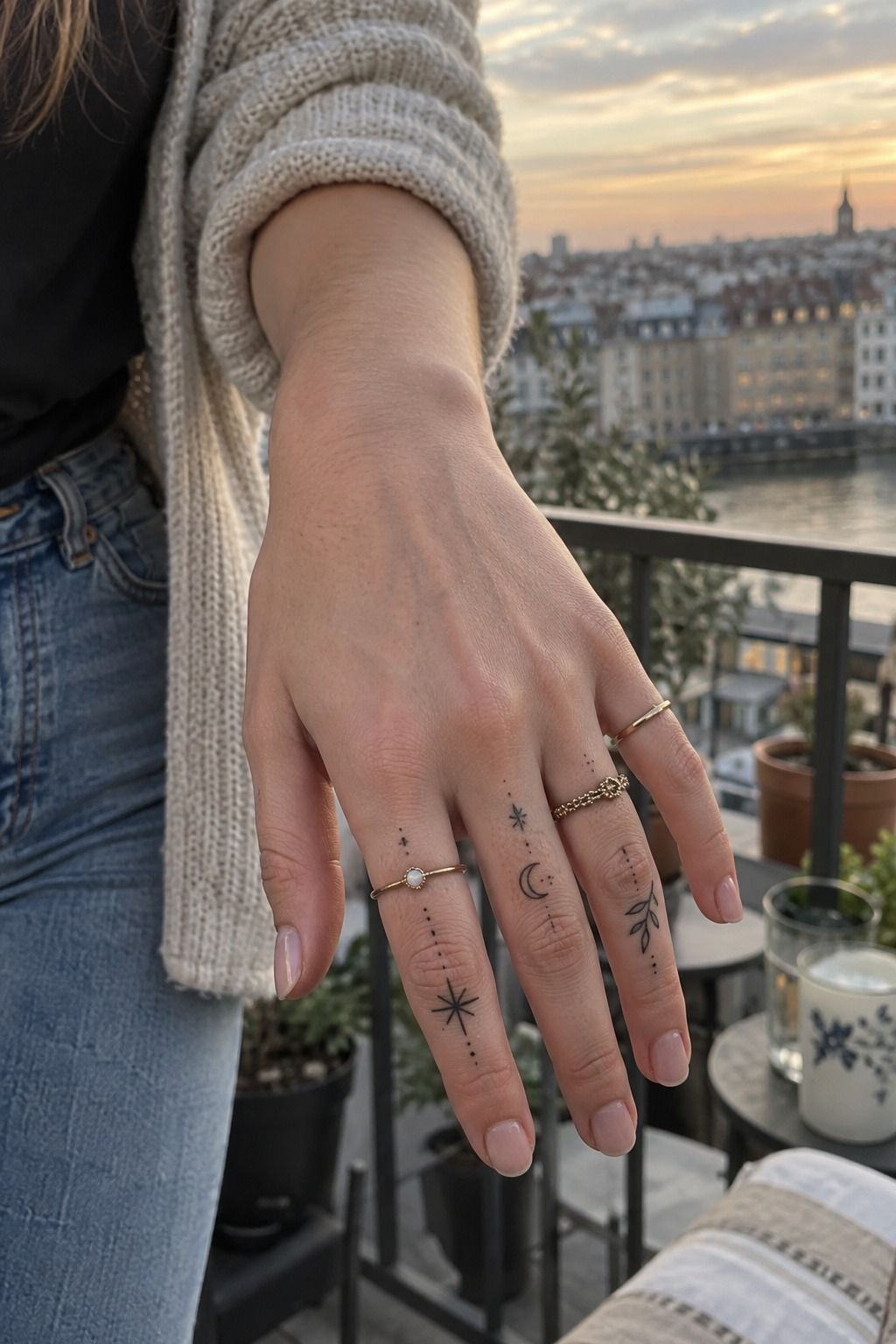
Take off every ring you usually wear and study your hand without it. Then put the rings back on and observe where metal edges touch your skin. A delicate placement can work beside jewelry, but only if your habits are considered first.
Bring your actual rings to the consultation. Your artist can position a paper stencil beside the band and check whether the design feels cramped.
I made the mistake of planning a finger tattoo without accounting for a raised setting. The ring looked harmless on paper, but it rubbed the tattoo’s edge every day.
Choose a gap, not a collision. A small symbol can sit above the band, below it, or on a side surface that stays visible when your hand is open. Your placement may be feminine and polished, but comfort should decide the final millimeter.
Don’t tattoo beneath jewelry until your artist discusses friction and healing. You may need to leave the ring off while the surface settles.
That’s inconvenient, but it beats trapping moisture against fresh ink. For additional placement references, see these small female arm tattoos and compare how jewelry-free spacing changes the visual balance.
If removing a ring for several weeks feels unrealistic, choose a location that doesn’t sit under the band. A slightly less obvious design can be a smarter investment than a highly visible tattoo that stays irritated. Your jewelry habits matter as much as your preferred look.
8Select whimsical motifs with expressive faces
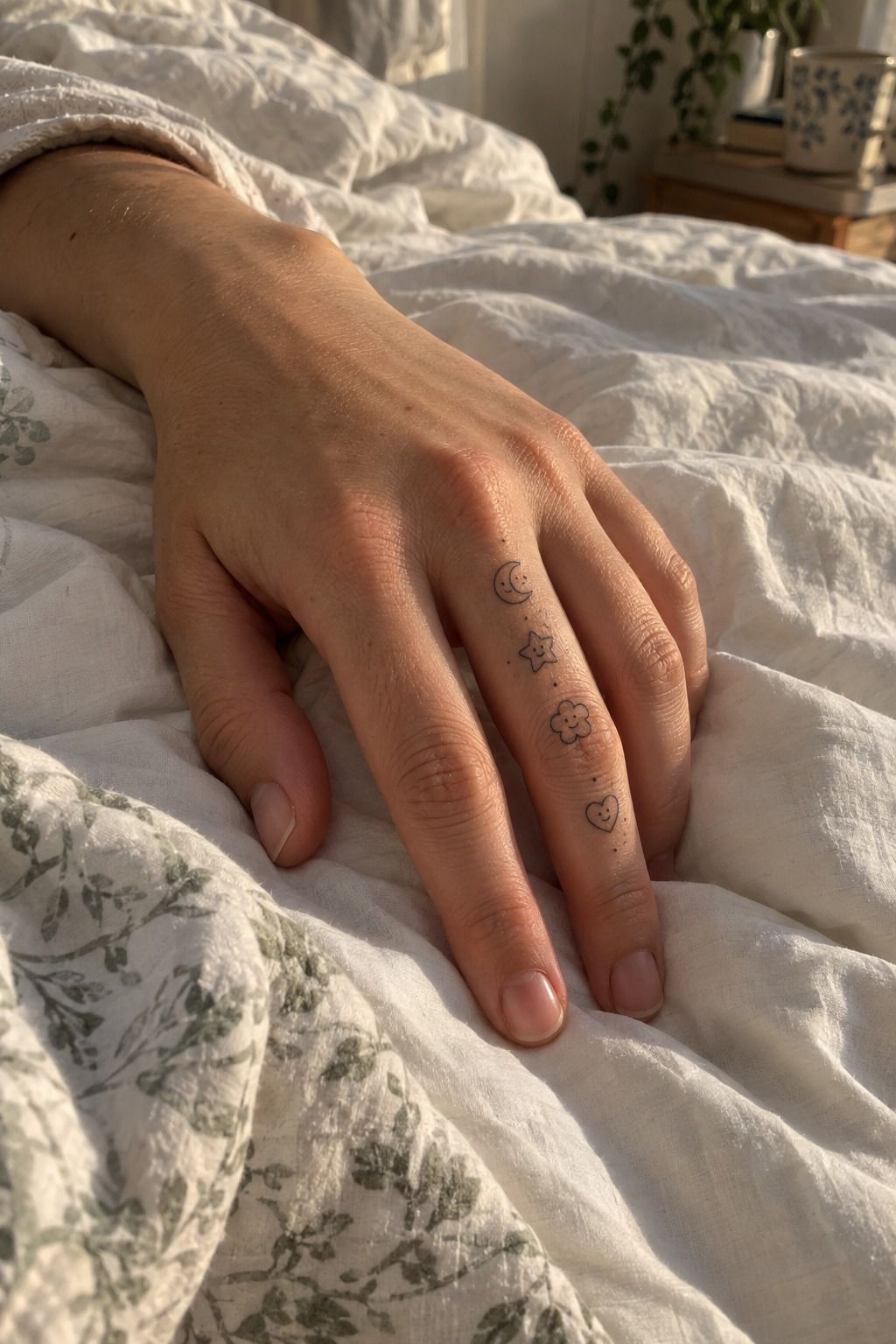
Give your tiny character one readable expression. A moon with a sleepy curve, a fruit with a grin, or a tiny creature with two dots can feel whimsical without becoming childish. The face needs only one memorable feature.
Sketch three expressions at the same size before you choose. A fine-point tattoo needle can draw a small smile, but the spacing between the eyes matters just as much as the line itself. I like a slightly uneven expression because it feels human, not generic.
Keep the face front-facing if you want the clearest read. A side profile can feel graceful, but it needs enough space for the nose and chin to remain distinct. Don’t add eyelashes, blush marks, and miniature lettering just because the larger sketch has room.
Your final tattoo can be playful and expressive while still feeling personal. That balance is why tiny motifs work so well for first ink. If you want more ideas, browse these cute small tattoos with meaning and notice which faces still read when viewed small.
A whimsical design is worth it when the expression makes you smile months later, not only when it looks striking in a saved reference. Ask yourself whether you’d still pay the quoted price for the same symbol without the trend attached. A single expressive feature is usually enough.
9Balance bold ink against dainty scale

Use contrast carefully. A small tattoo can be dainty in size and still use one bold element, such as a filled star, a dark heart center, or a strong outer curve. The idea is to create hierarchy, not visual noise.
Ask your artist which part should receive the strongest ink. A solid black fill may age more reliably than a cluster of nearly invisible strokes, but it can dominate a very small symbol. I’d choose one dark point and leave the rest open rather than making every line equally heavy.
Bold doesn’t mean oversized. Your design can feel fierce, edgy, and powerful when the contrast has a purpose. And if you’re choosing between a tiny shaded picture and a simple outline with one filled detail, I’d pick the second for a first tattoo.
Compare the design against your natural skin tone in daylight, not only studio lighting. Your artist may adjust the fill or spacing after seeing the stencil. For alternatives on larger placements, look through these small forearm tattoos for men with meaning and notice how scale changes the balance.
Ask whether the heavier detail changes the quote. More saturated ink may require extra time, but it can also improve readability. A modest increase in price may be worthwhile if it protects the focal point.
The ink saturation level should serve the symbol, not overpower it.
Fresh Ink vs. Healed Reality
Fresh tattoos often look crisp, vibrant, and darker than they will after the skin settles. That first impression can be misleading. A design that looks delicate and perfect on appointment day may soften into something more understated later.
Ask your artist to show healed examples with similar line weight and placement. You want to see how the edges, spacing, and negative space behave after several months. This is one of the most important questions in the whole process.
Don’t judge healing too quickly. A tattoo may look dull, tight, or uneven during the first weeks.
Give the skin time before deciding whether the result needs a touch-up. Good sign! Patience is part of the design process.
A raw, newly tattooed surface doesn’t reveal the final character immediately. The color may settle, the skin may calm, and a crisp line may become softer without losing its meaning. Ask about the healing timeline before you interpret every change.
10Consider finger movement before committing
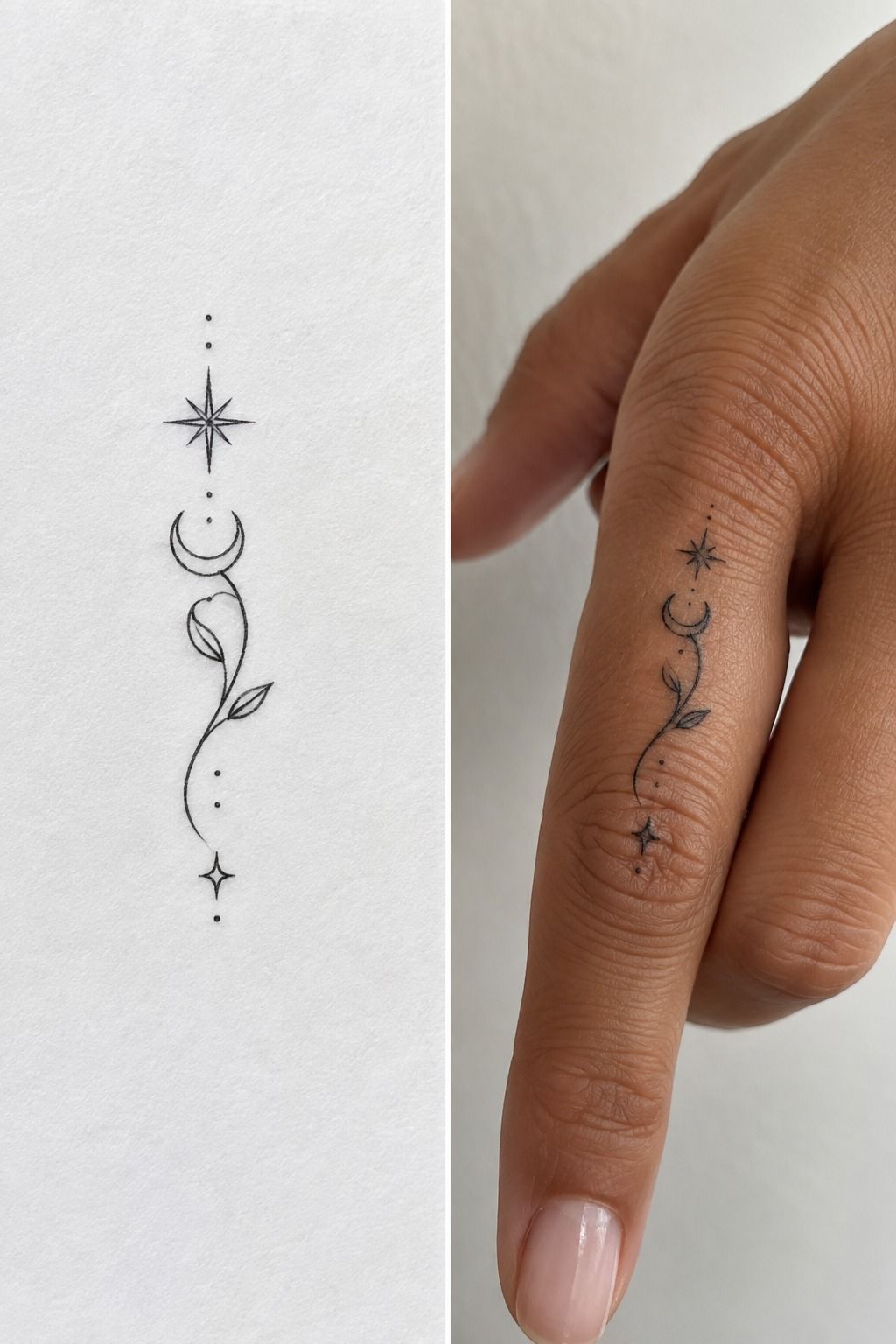
Study both the stencil and the placement while your hand is open, relaxed, curled, and gripping something.
11Protect fresh ink through careful healing
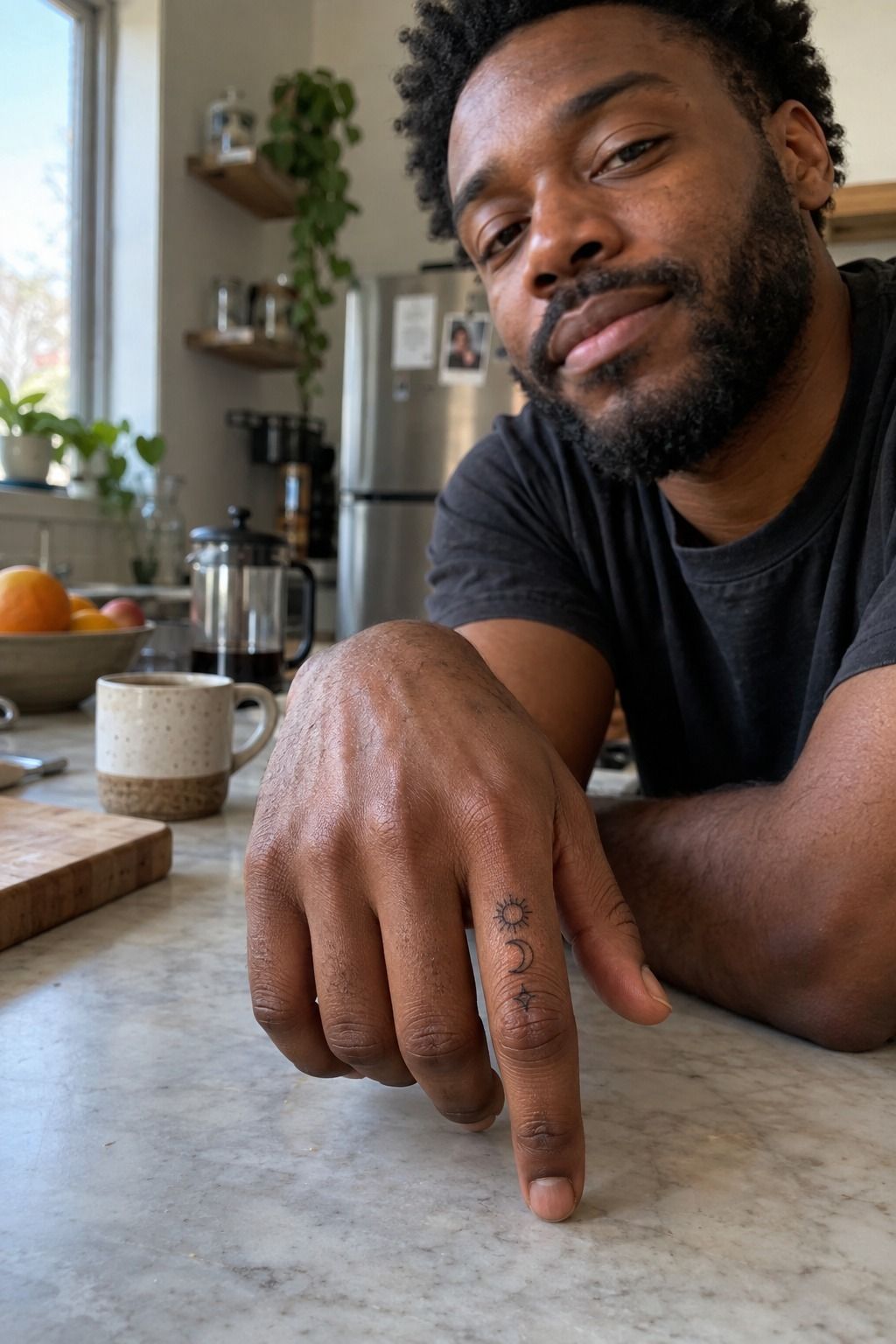
Follow your artist’s aftercare instructions first, especially if they use a particular wrap or healing film. Your job is gentle care, not constant touching. Clean healing gives a delicate mark its best chance of staying readable.
Wash with a mild, fragrance-free cleanser and clean hands. A fragrance-free moisturizer can help once your artist says the surface is ready, but use a thin layer rather than covering the finger in grease. Avoid picking flakes, soaking in a pool, and exposing fresh ink to direct sun.
The surface usually settles in about 2 to 3 weeks, while complete healing can take about 2 to 3 months. Your tattoo may look dull, tight, or slightly uneven during that process.
That’s not a reason to panic. Let the skin finish its work before judging the result.
Keep rings, gloves, and friction in mind during the first days. If you work with your hands, ask your artist how to protect the area without trapping moisture. A polished result depends on patient care, and your future self will be grateful!
For more healing and placement ideas, compare these small tattoos with meaning and these small finger tattoos. Don’t copy a placement without checking whether your daily routine creates the same friction.
Maintenance is part of the real cost. If the tattoo fades or spreads sooner than expected, discuss the touch-up price, timing, and likely cause with your artist. A clear maintenance plan protects both your skin and your investment.
The First-Ink Aging Rule I Trust
I’ve become less interested in the thinnest possible tattoo and more interested in the clearest possible tattoo. Those aren’t always the same thing.
A hair-thin line can look exquisite on day one, especially under bright studio light, but your finger bends, rubs, washes, and meets the sun all day. The best design respects that daily life before it tries to impress you.
My favorite first-ink choice is a small symbol with one strong contour and enough open skin around it. A heart, star, tiny face, or simple charm can be meaningful without explaining itself to everyone who sees your hand.
I’d rather give a symbol room to breathe than add five details that only look good in the stencil. That choice feels refined, but it’s also practical.
I’d put healed portfolio photos above social media popularity. An artist can have a stylish feed full of fresh tattoos and still struggle with placement on fingers.
Ask for healed examples, ask how they handle touch-ups, and ask what they’d simplify in your drawing. Those questions aren’t fussy.
They show that you’re treating your skin as part of the design.
Finally, accept that finger tattoos may need maintenance. That doesn’t make them a bad idea. It means you’re choosing a visible, high-movement placement with honest tradeoffs.
If you want more inspiration before booking, compare these small finger tattoo ideas and save only the references that still appeal after you’ve considered size, movement, and healing.
A stylish tattoo can be personal, timeless, and affordable enough for your plans when the design stays focused. Choose the artist for their healed work, choose the symbol for its meaning, and choose the placement for the hand you actually use.
What People Always Want to Know
How much does a small cute finger tattoo usually cost?
A small finger tattoo typically falls around $50 to $100 for a shop minimum or about $100 to $250 for an hourly rate, depending on the artist and region. Your final price may rise with custom drawing, filled areas, or a longer consultation.
Your design may take little time, but the shop minimum still applies. Ask for the studio’s current policy before booking, and don’t choose an artist only because the quote is low. A higher price can offer better value when healed work and placement judgment are strong.
Are small cute finger tattoos a good idea for a first tattoo?
Yes, they can be a good first tattoo when you choose a simple design and understand the placement’s upkeep. A simple black outline gives you a readable, meaningful starting point.
Your finger is visible and relatively small, so you’ll want an artist who works cleanly at that scale. If you’re nervous, discuss the design, pain level, and possible maintenance before paying a deposit. Good planning makes the choice feel far less dramatic.
How do I choose a tattoo artist for small cute finger tattoos?
Choose an artist with healed, close-up linework in their portfolio. Look for healed tattoo photos, clean edges, consistent spacing, and designs on hands or fingers.
You should also check the studio’s hygiene practices and ask how the artist handles touch-ups. If they avoid questions about aging, placement, or aftercare, keep looking. A confident artist should be able to explain both the strengths and limits of finger tattoos.
How much do small cute finger tattoos hurt?
Finger tattoos can feel sharper than tattoos on the forearm, thigh, or shoulder because hands have less padding and many sensitive areas. A clean disposable needle won’t remove discomfort, but a short appointment may make it manageable.
Your experience will vary by placement and tolerance. Ribs, feet, hands, and sternum often feel more painful than the forearm, thigh, or shoulder. Ask your artist how long the appointment should take so you can prepare realistically.
How long does a small cute finger tattoo take to heal?
The surface usually heals in about 2 to 3 weeks, while complete healing can take about 2 to 3 months. Gentle aftercare helps the skin settle without unnecessary irritation.
Your artist may tell you to wash gently, moisturize lightly, avoid pools, and protect the tattoo from sun. Don’t pick peeling skin, even if the design looks uneven for a few days. Be patient!
What’s the best placement for small cute finger tattoos?
The top of the finger offers strong visibility, while the side can feel more discreet. Top-of-finger placement usually makes a small symbol easier to see when your hand is open.
Your best spot depends on rings, creases, movement, and how often you use your hands. Ask your artist to test the stencil in several positions before you commit. The most visible option isn’t always the most comfortable or durable.
Where I’d Start First: The Clean-Outline Rule
If I had to pick one step, I’d start with a clean outline and healed portfolio check. You can’t fix a crowded symbol after it spreads into finger creases. Save one simple design, ask hard questions, and give your artist room to refine it.
Compare the design’s meaning, placement, price, and maintenance before you book. If the symbol still feels striking after that filter, it may be the right first ink for you. Worth it!
A personal tattoo doesn’t need to be loud to be memorable. Choose a meaningful symbol, a skilled artist, and a placement that fits the hand you actually have.