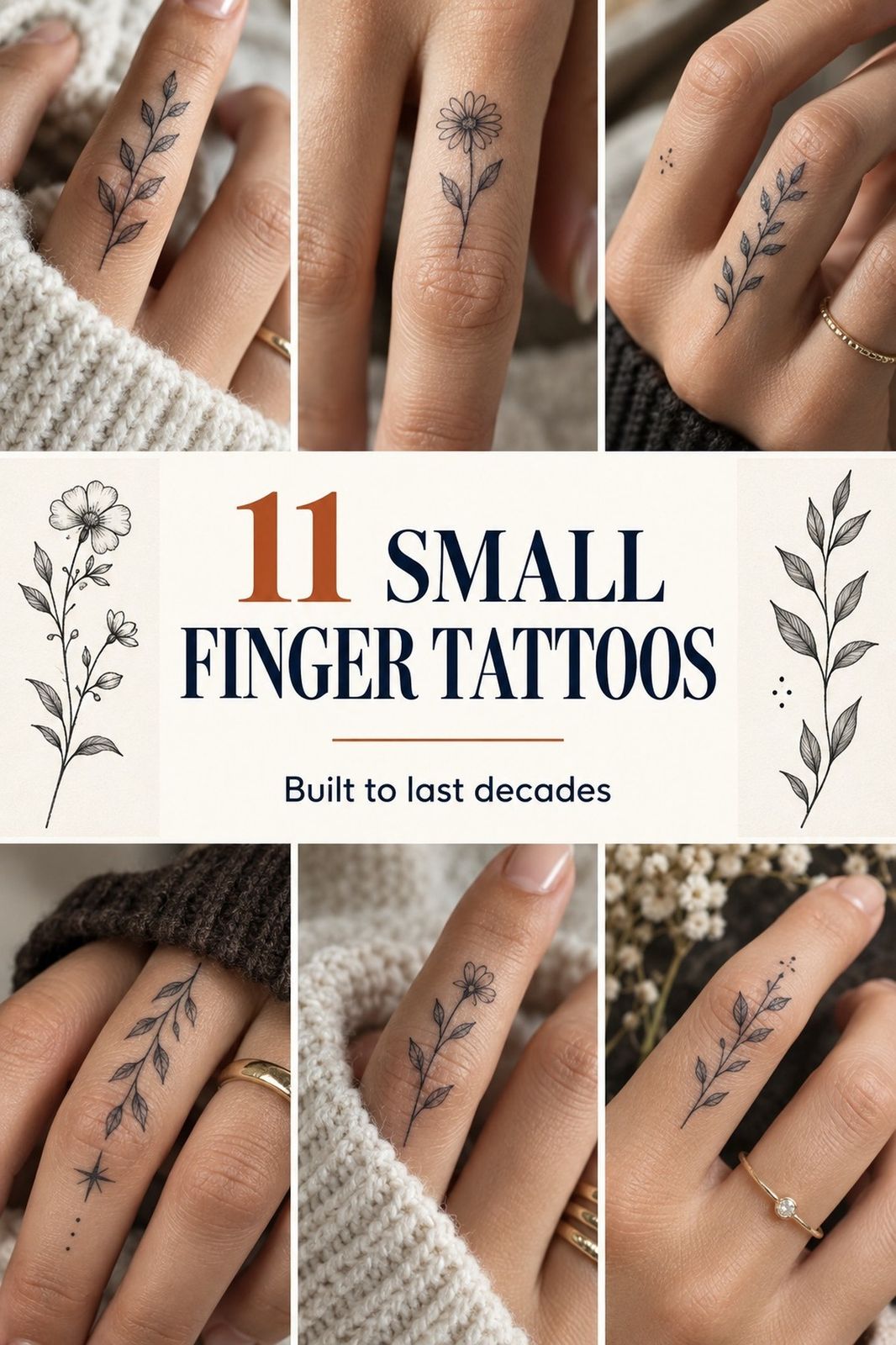
Small finger tattoos can heal clean and age well when you choose a readable shape, sensible placement, and an artist who photographs healed work. I learned that after placing a delicate mark too close to a knuckle. It blurred sooner than expected. These ideas keep the linework crisp, personal, and wearable.
- Tiny Botanical Linework Finger Tattoos
- Matching Initials for a Couple: Keep the Letters Open
- What Celestial Symbol Will You Keep?
- Let a Snake Follow the Finger
- Birth Flowers: Keep the Outline Readable
- Can a Blackwork Band Stay Even?
- Write a Tiny Script Tattoo on the Finger Side
- A Constellation With One Clear Story
- Skull, Simplified: Keep the Edge
- Trace an Animal Silhouette Along the Finger
- Sacred Symbols Near the Knuckles
1Tiny Botanical Linework Finger Tattoos
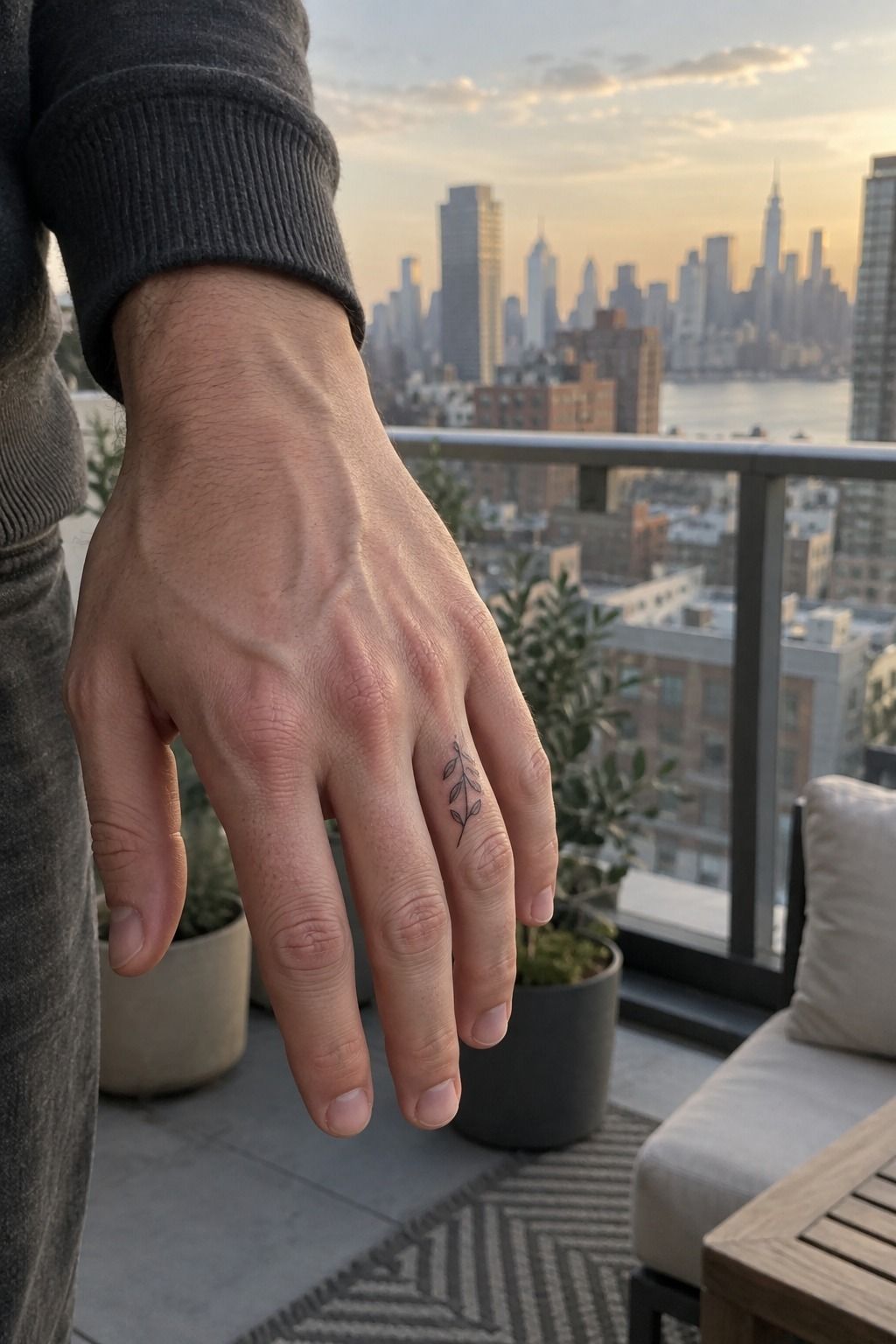
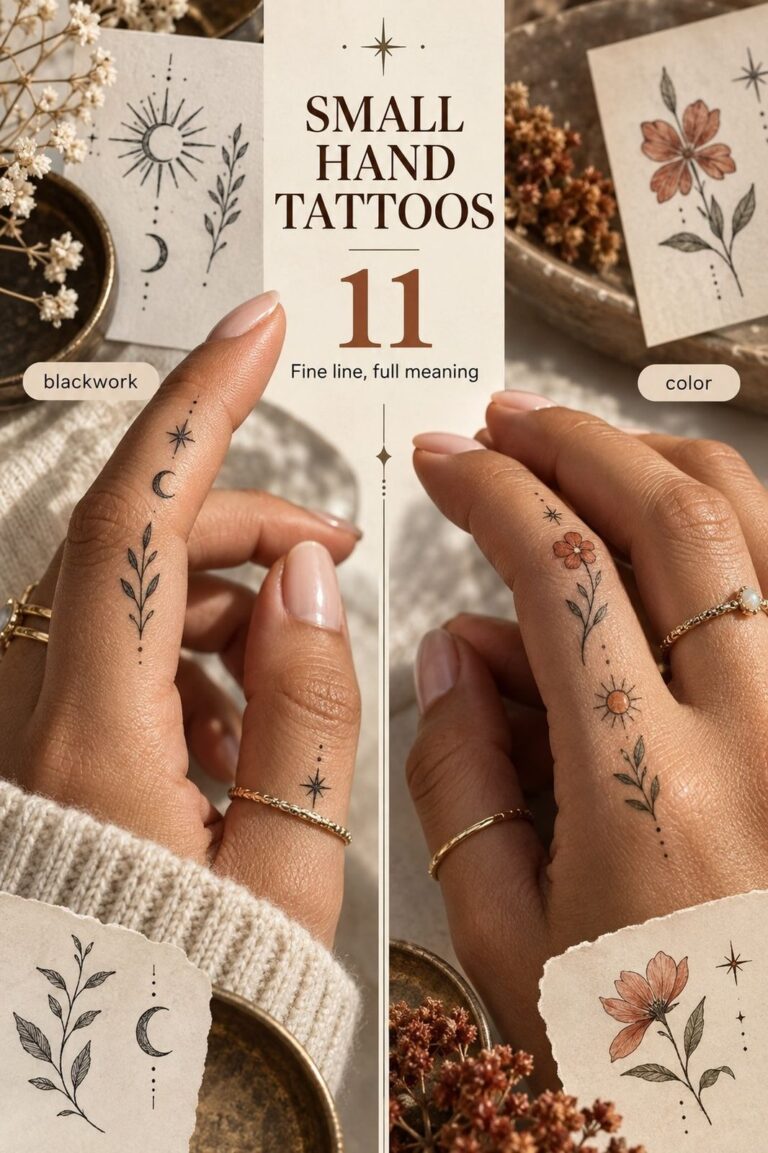
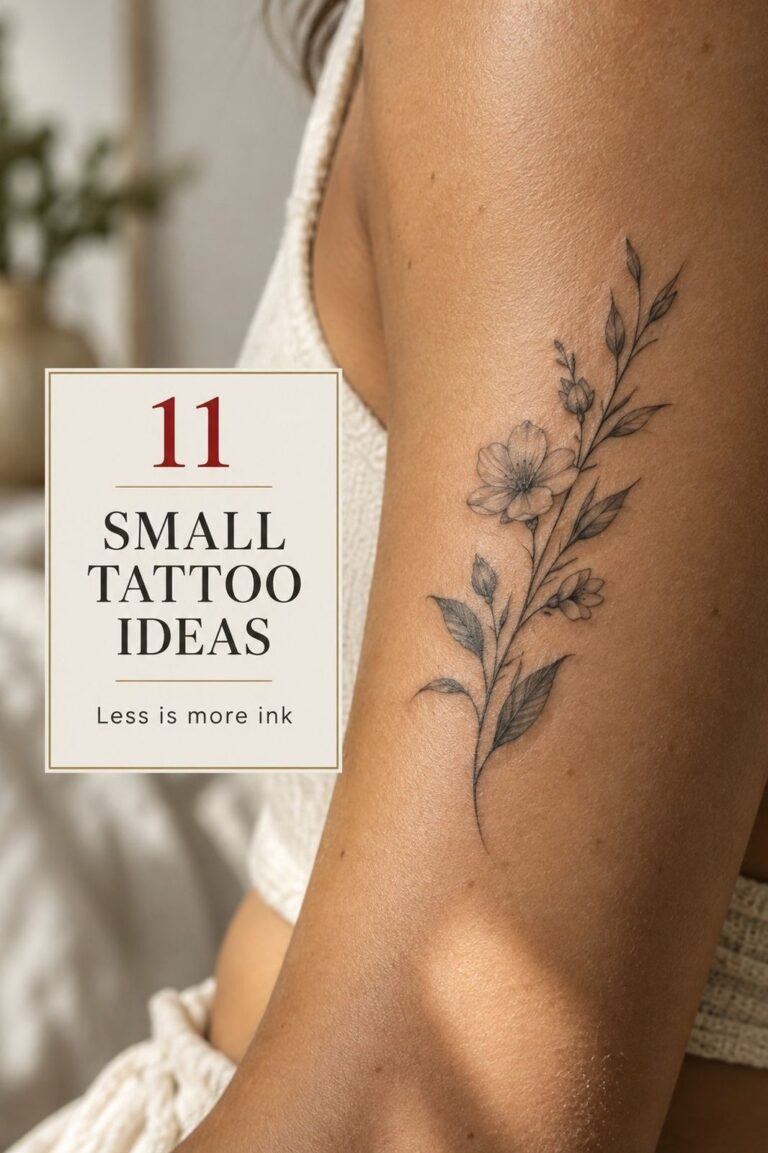
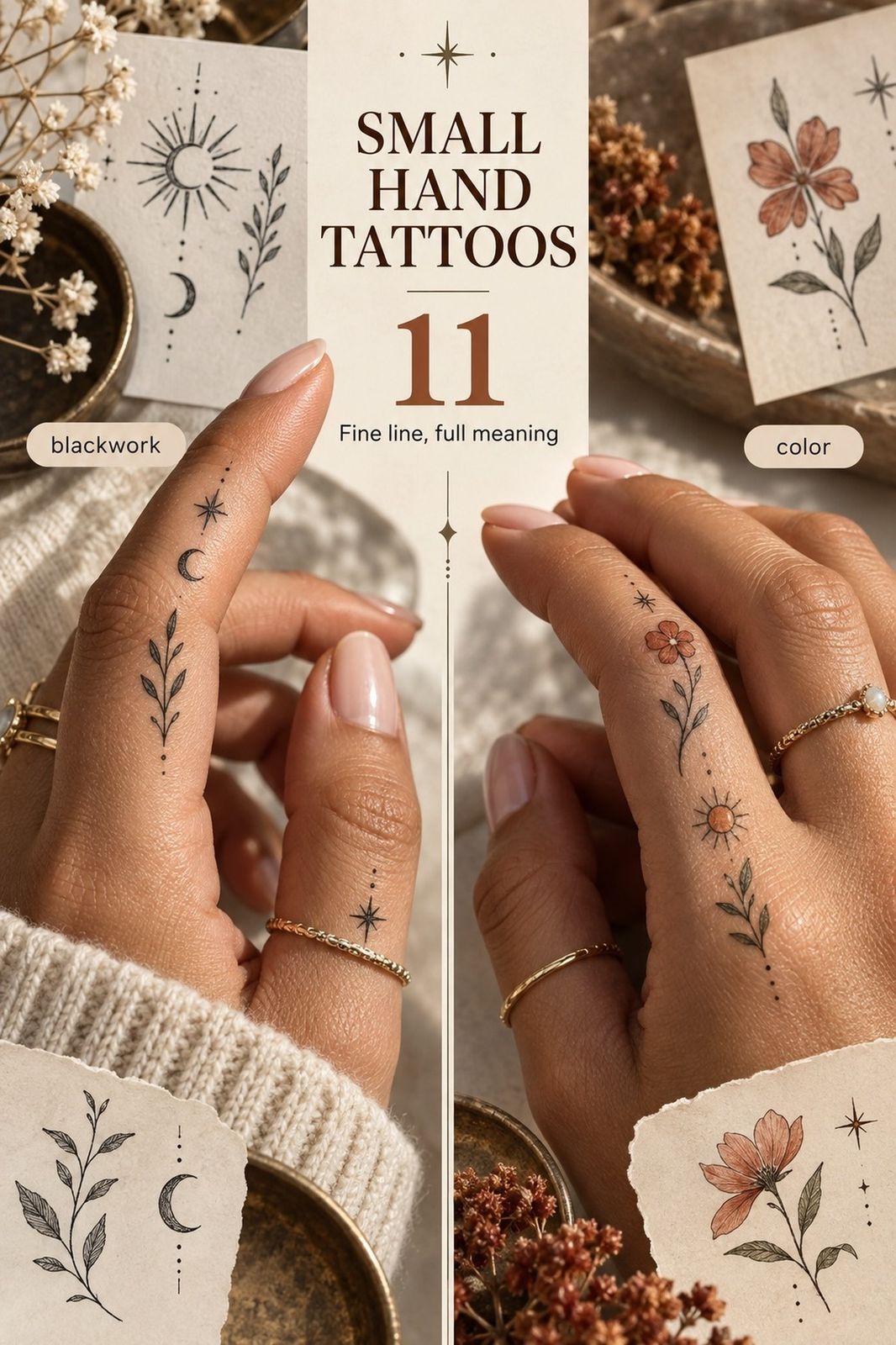
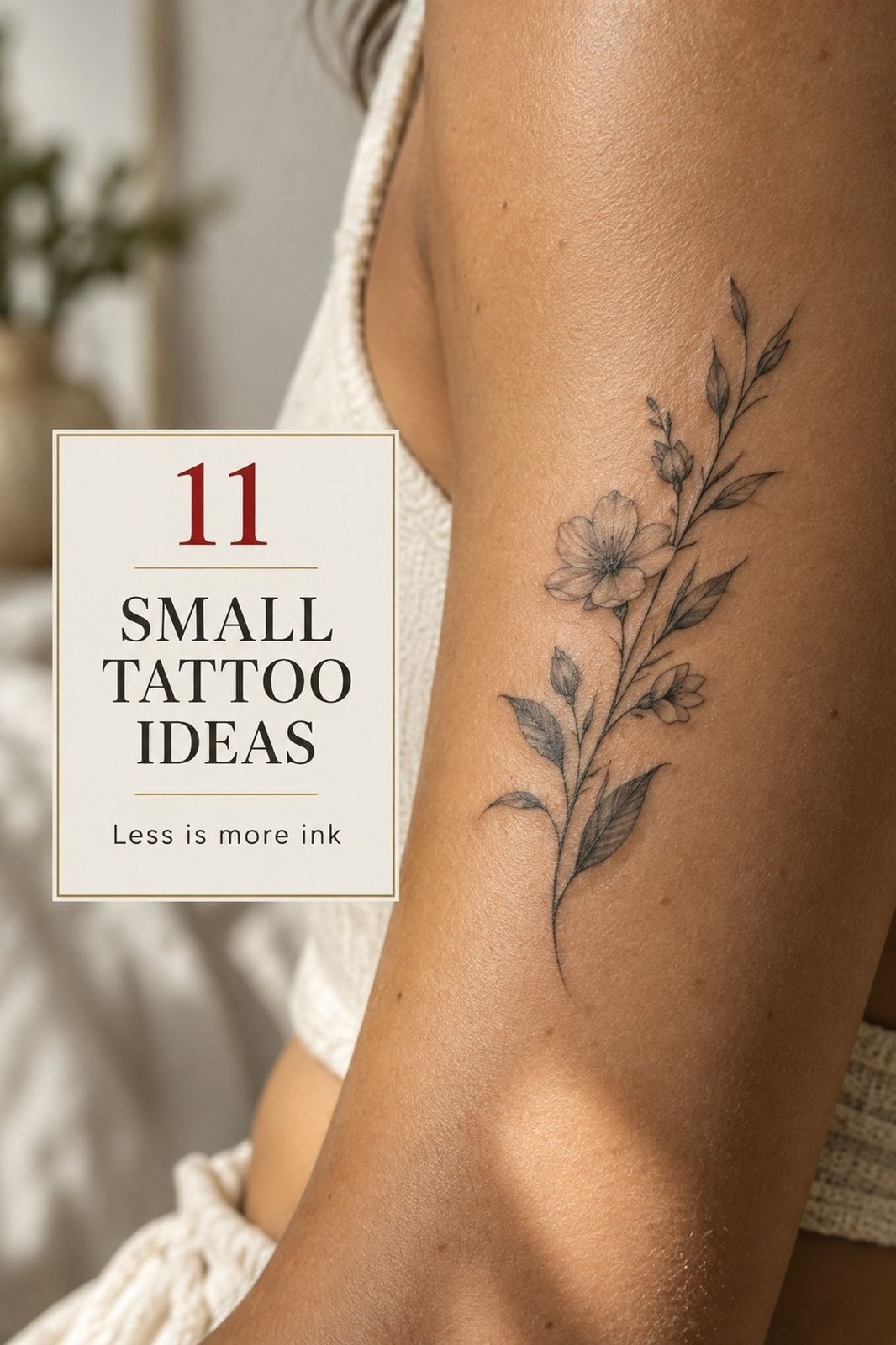
A tiny botanical design gives you a graceful starting point without crowding the finger. On fair cool-pink skin, hair-thin single-needle linework can make one stem, leaf, or sprig look delicate and symbolic. Keep the shape flowing along the finger instead of wrapping tightly over the joint.
You’ll get a more readable result as your hand moves.
I’d choose one plant with a clear silhouette, such as an olive branch, fern, or wildflower. A crowded bouquet can become muddy on a small surface.
Your artist should leave visible breathing space between the leaves, because intricate detail needs room to settle during healing. Browse this small tattoos meaning guide if you want the plant to carry a personal story.
The strongest version uses crisp black ink with a single graceful curve. A little vibrant contrast helps the design stay expressive, while too much shading can make it heavy.
I’d skip watercolor color on the finger. It’s romantic in a sketchbook, but black linework usually stays more legible as the skin changes.
Before your appointment, bring a reference showing the exact scale you want. Ask for a stencil on the side, top, or front of your finger, then look at it while bending your hand.
Does the stem still read? That tiny test matters!
If it doesn’t, your placement needs work. The design should feel personal, understated, and easy to recognize from a short distance. You can compare other compact concepts in these cute small tattoos with meaning.
2Matching Initials for a Couple: Keep the Letters Open
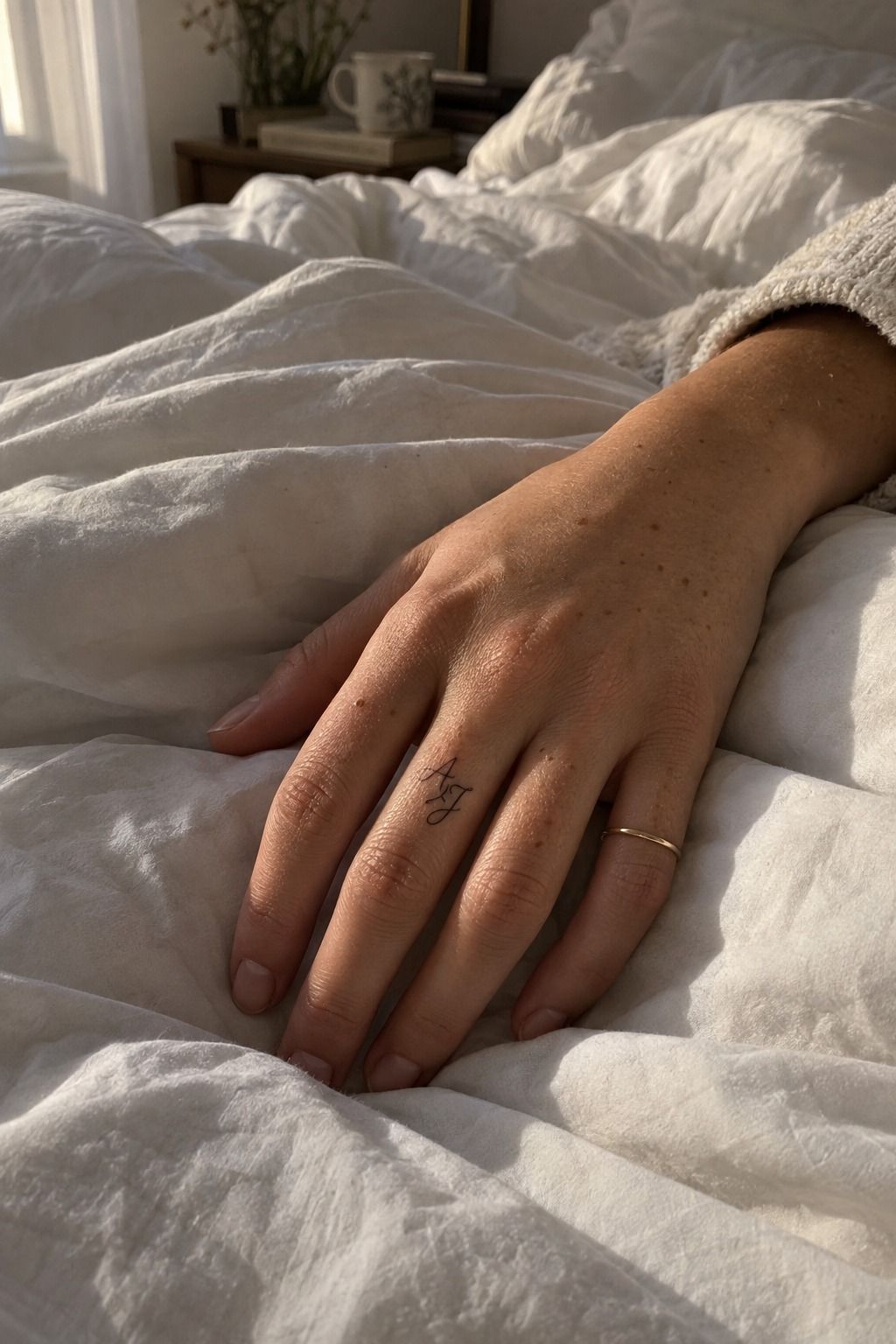
Matching initials work best when each letter has a simple structure and enough open skin around it. On medium warm ivory skin, hair-thin single-needle lettering can make a romantic mark feel intimate without turning it into a loud declaration. You and your partner don’t need identical placement, but the scale and visual weight should relate.
I’d use one crisp initial in a classic serif or restrained handwritten style. A complicated script may look stylish on the stencil and lose its identity after the first few weeks. Your artist can test uppercase and lowercase versions, then show you how each one sits beside the nail, along the side, or near the knuckle.
There’s also a practical choice here. Your initials can honor another person, but a personal letter gives you more independence if life changes. I prefer a meaningful initial paired with a tiny dot or short line, rather than two names squeezed into one narrow space.
The result feels bold and personal without becoming ornate.
Ask your artist to compare both hands under natural light before committing. Finger skin moves, folds, and sees frequent washing, so you’ll want an elegant shape with strong edges. For more relationship-inspired references, explore these small tattoos with meaning, then simplify the idea until your own letter remains the focus.
3What Celestial Symbol Will You Keep?
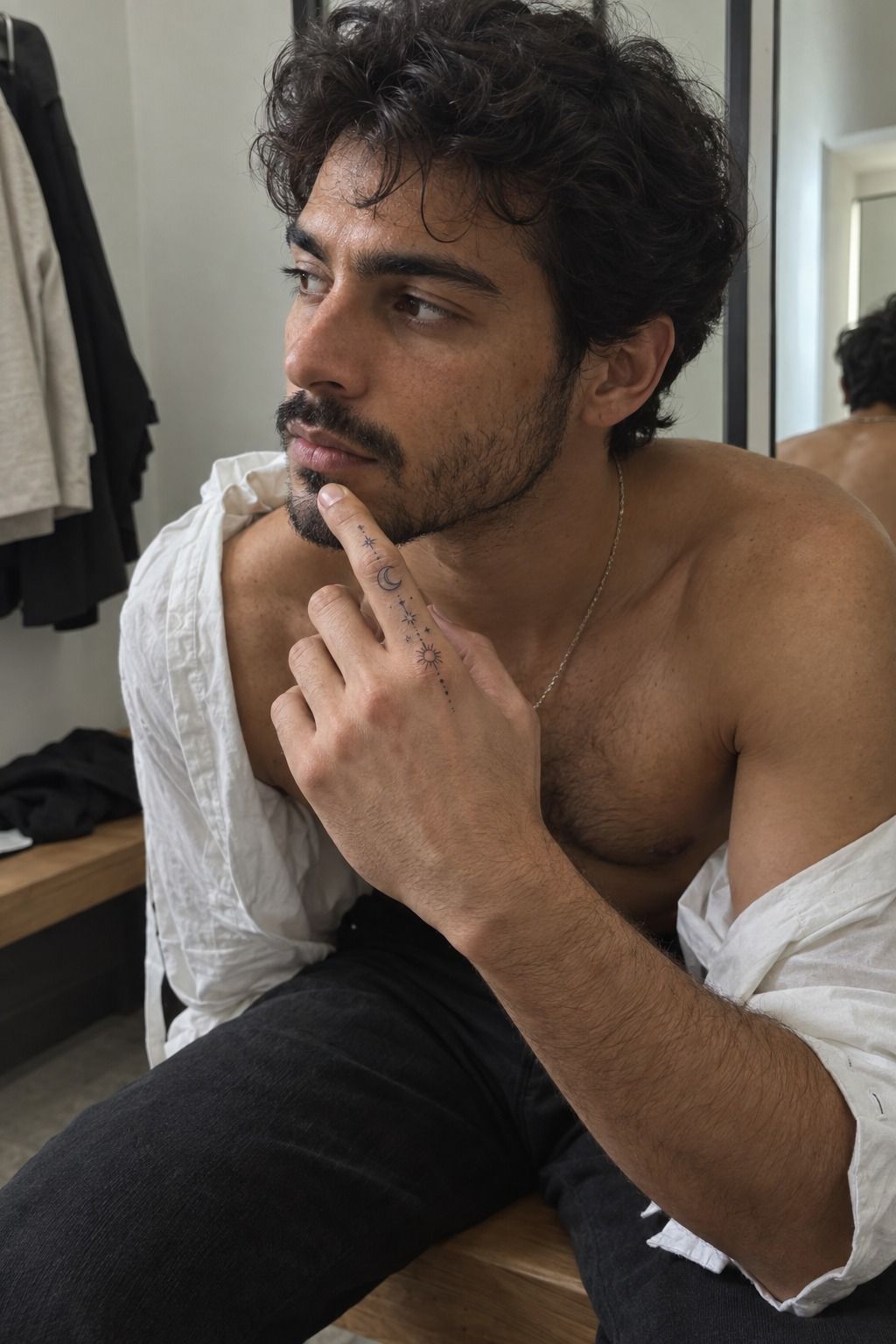
Tiny celestial symbols can look striking on olive skin when the marks stay sharp and restrained. A small crescent, four-point star, or sun symbol gives you a meaningful design without requiring a large composition. Hair-thin black ink suits the fingertip, but the symbol needs a clear center and a silhouette that won’t disappear when your finger bends.
I’d choose one symbol per fingertip rather than building a crowded constellation across every finger. The minimal approach looks more polished, and you can add another mark later if you still want more. Your first stencil should be tested with your hand relaxed and clenched, because a perfect crescent can look distorted across a fingertip.
This is where negative space does the heavy lifting. Leave the center of the moon or star open instead of filling it with soft grey shading.
The understated result feels ethereal and timeless, while a dense fill may look gritty as the ink spreads. If you’re drawn to symbolism, this meaning guide for small tattoos can help you choose a sign that matters beyond its shape.
A fingertip is visible, but it’s also a demanding placement. You’ll need to follow aftercare closely, avoid unnecessary friction, and accept that a touch-up may be part of the process. I’d rather have one crisp, expressive star than five faint symbols competing for attention.
That choice is more empowering in the long run.
4Let a Snake Follow the Finger
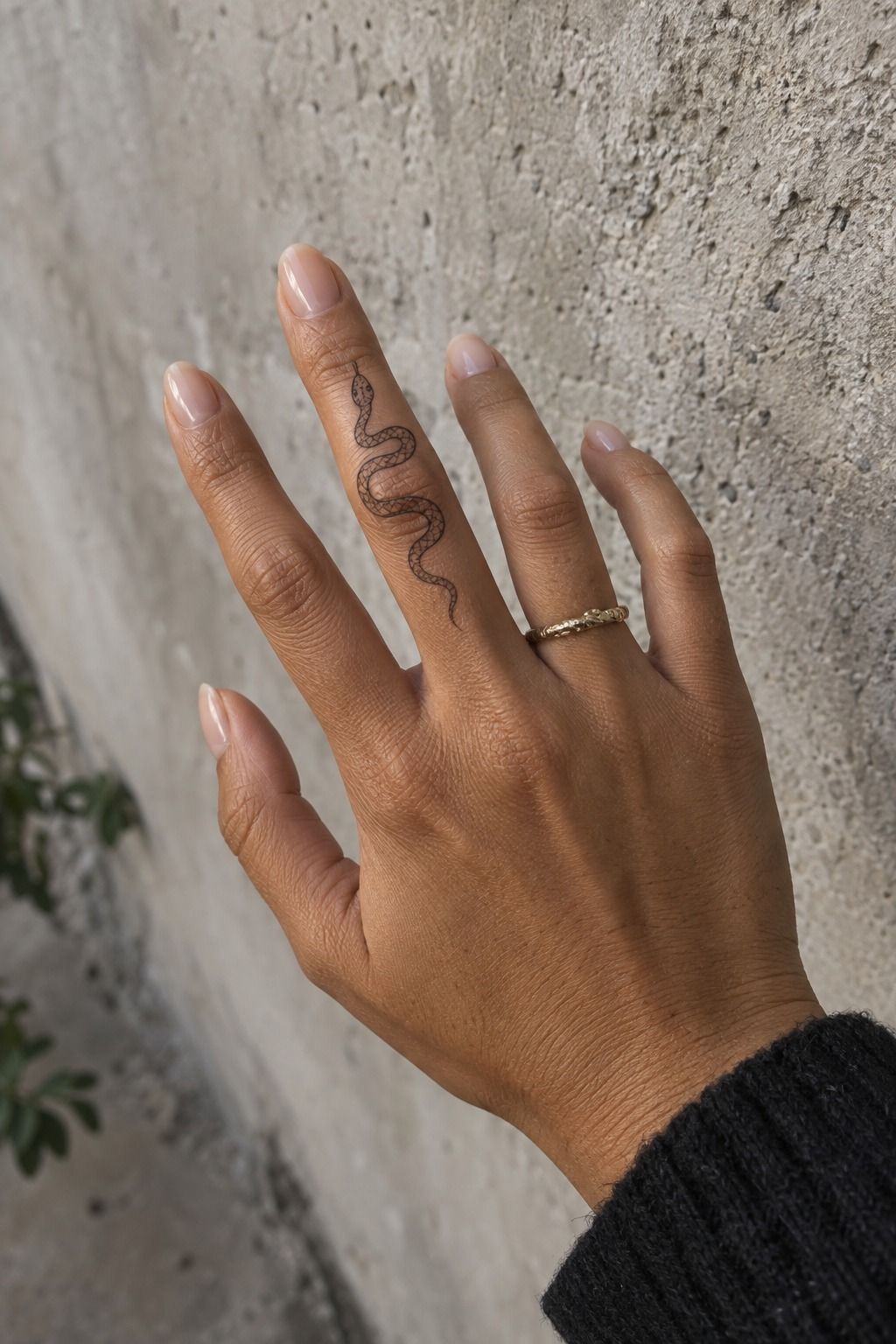
A slim serpent can follow the natural length of your finger in a way that feels fierce, flowing, and slightly edgy. A narrow head, one clean curve, and a small pointed tail often say more than a fully scaled design. A simple serpent outline also gives your artist room to protect the silhouette.
For a sleek result, keep the body mostly linear and place the head where the finger remains relatively stable. The bend near a joint can break the rhythm, especially if the snake’s eye or jaw lands directly in the crease. You don’t want the most expressive feature sitting where skin folds repeatedly.
I’d avoid packing every scale into the design. One expressive eye or a single angular marking gives the tattoo identity while preserving open skin. The strongest version feels daring without becoming visually noisy.
If you like traditional symbolism, compare these small American traditional tattoos before reducing the reference to its clearest shape.
5Birth Flowers: Keep the Outline Readable
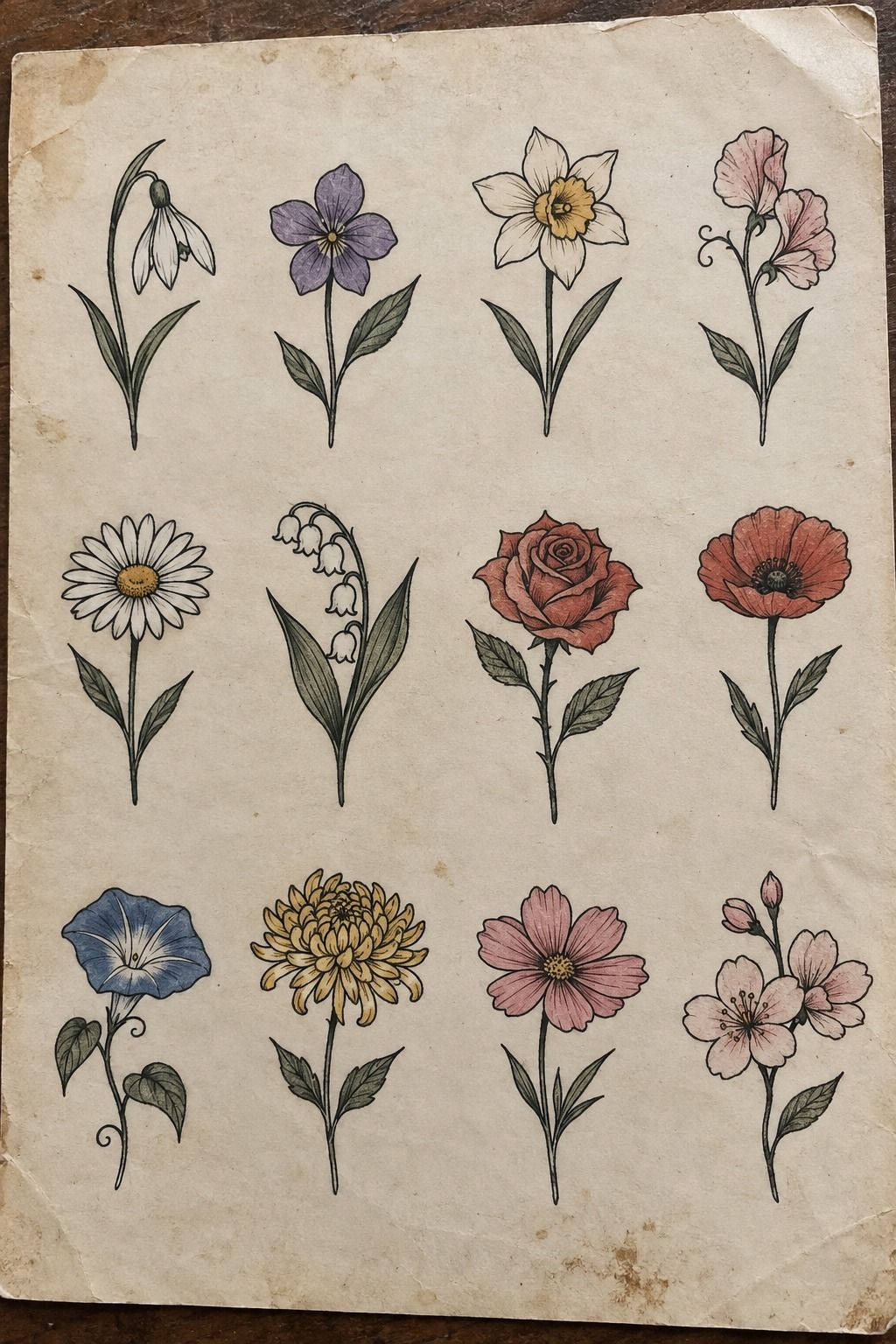
A birth flower gives you a personal subject with a naturally elegant outline.
6Can a Blackwork Band Stay Even?
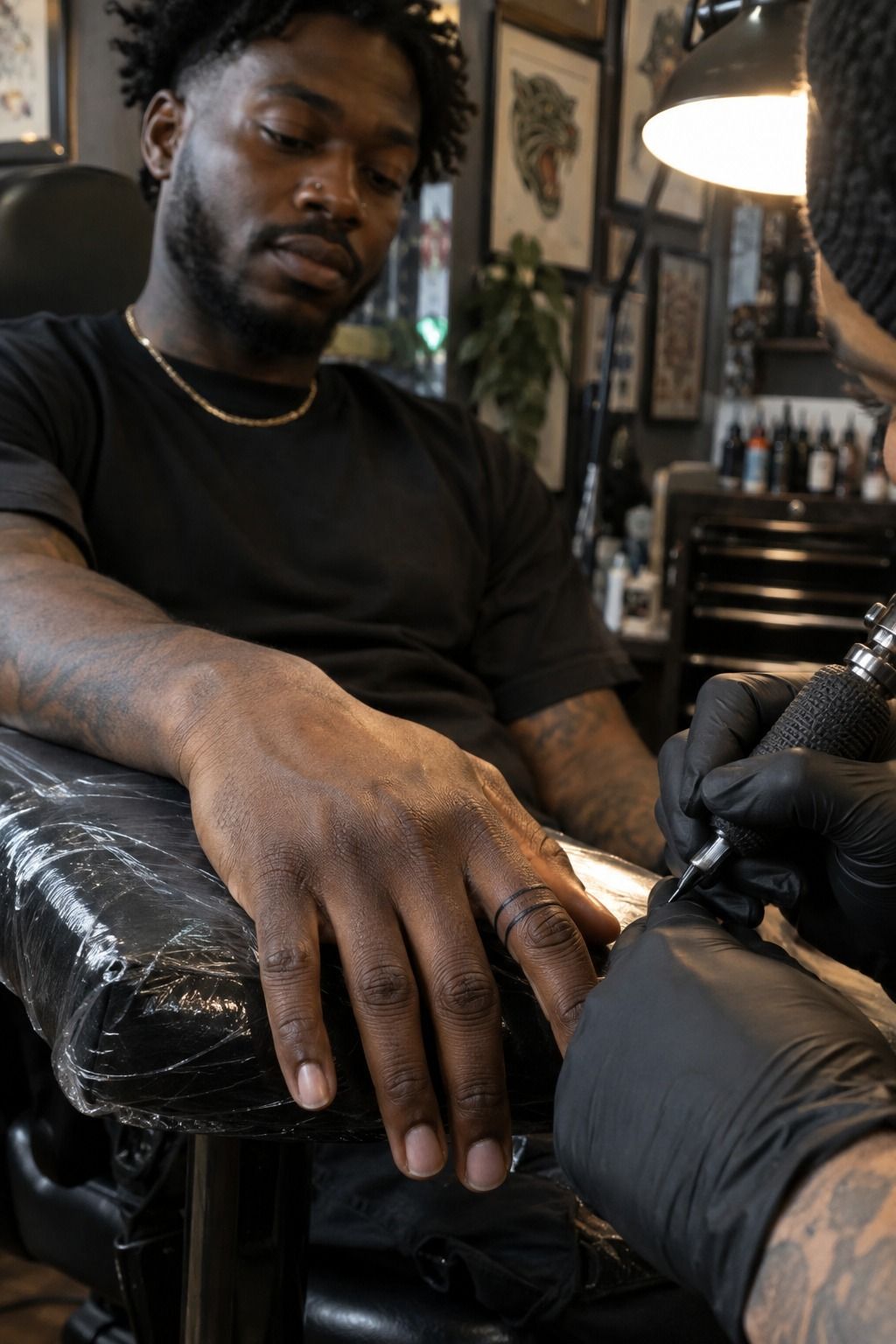
A blackwork band can look bold on deep ebony skin when the artist uses deliberate strokes and a shape that follows the finger evenly. The band needs a clean beginning and ending, especially if it sits near a moving joint. Solid black ink should be applied with consistency rather than rushed into a narrow ring.
Ask for several stencil widths before choosing the final version. A narrow band may look understated, while a wider one creates a more powerful statement but can feel heavier as the ink settles. The right value depends on visibility, comfort, and how much solid ink you actually want.
Check the ring from every angle with your hand relaxed, curled, and spread. A band that looks even from above may taper or break along the side.
A little restraint wins here! Choose consistent spacing over decorative edges. If you’re weighing a band against a larger symbolic mark, these small arm tattoo ideas can help you compare how different placements carry visual weight.
7Write a Tiny Script Tattoo on the Finger Side
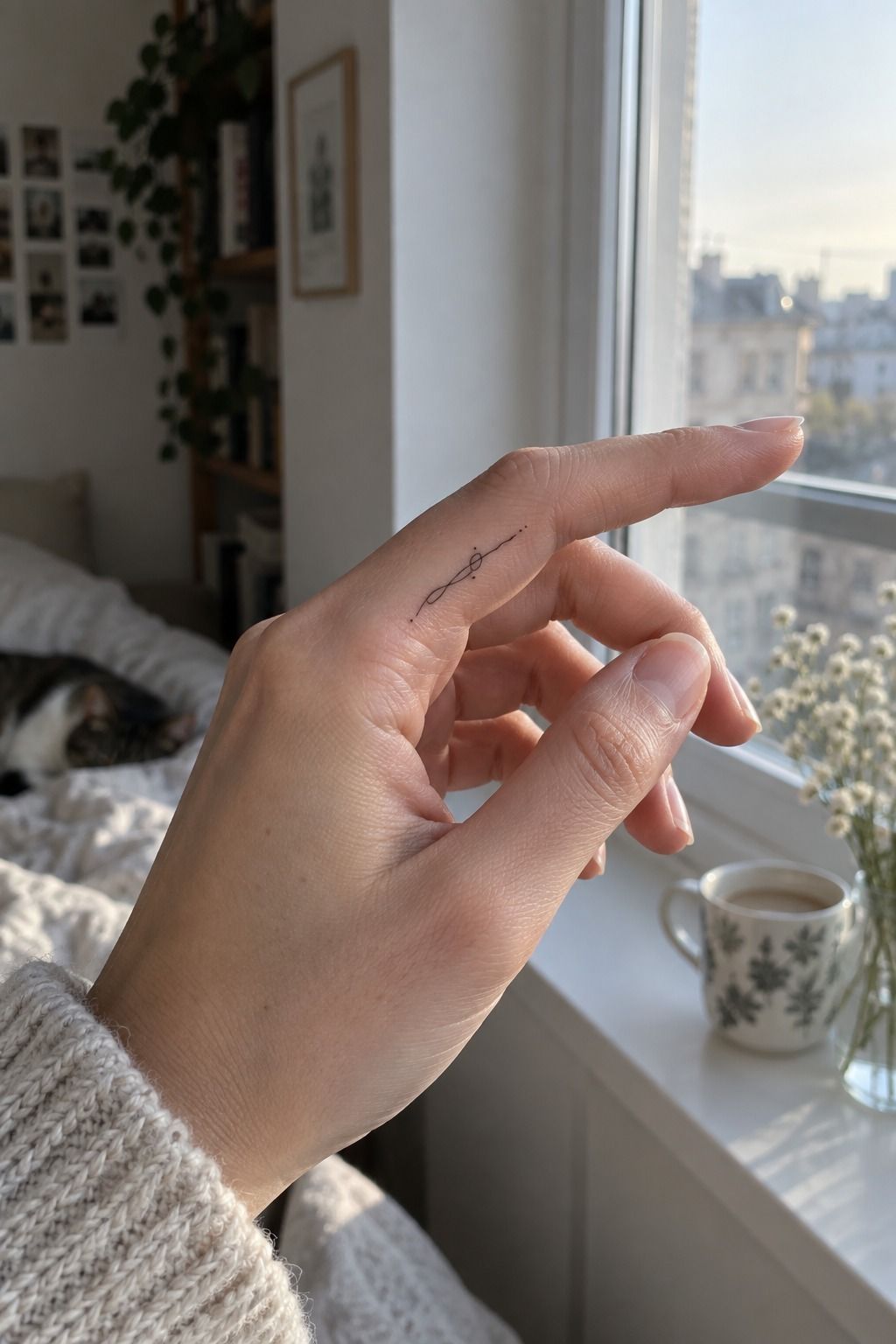
Tiny script on the side of a finger can feel intimate, meaningful, and understated.
8A Constellation With One Clear Story
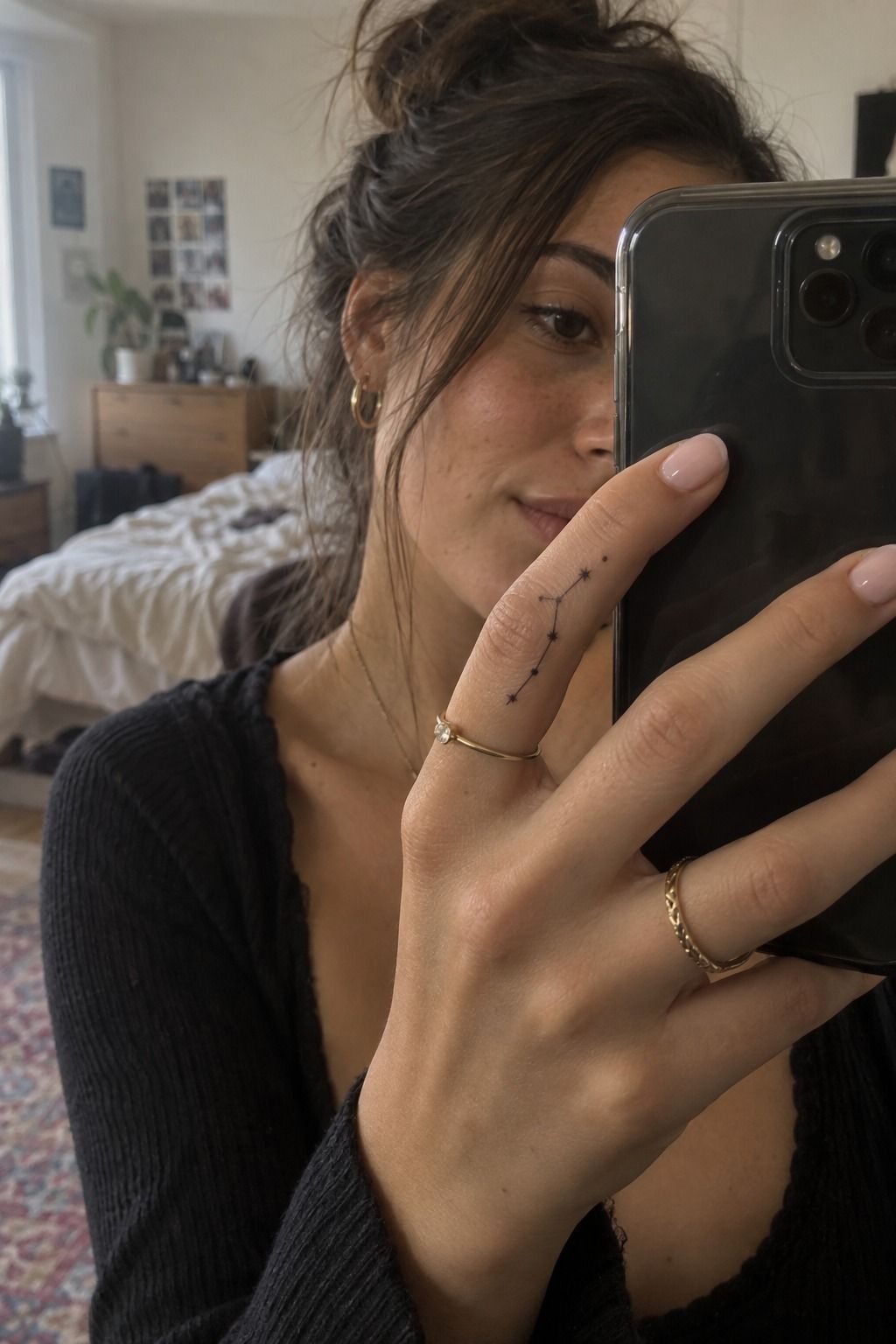
A constellation design gives you a symbolic map with a clean, modern structure. A few connected points can feel delicate and iconic when the spacing remains generous. Small constellation dots should have enough separation that they don’t merge into a dark patch.
Choose stars that relate to one personal idea instead of filling the whole finger with random points. You might use a birth constellation, a travel memory, or a pattern connected to someone you love. Meaning gives the design more staying power than decoration alone.
The lines should remain sharp enough to read but light enough to preserve the open skin around each point. A tiny filled star can become the focal point.
The rest should support it without competing. You don’t need every star from the reference, and a minimal edit can make the final tattoo feel more expressive.
9Skull, Simplified: Keep the Edge
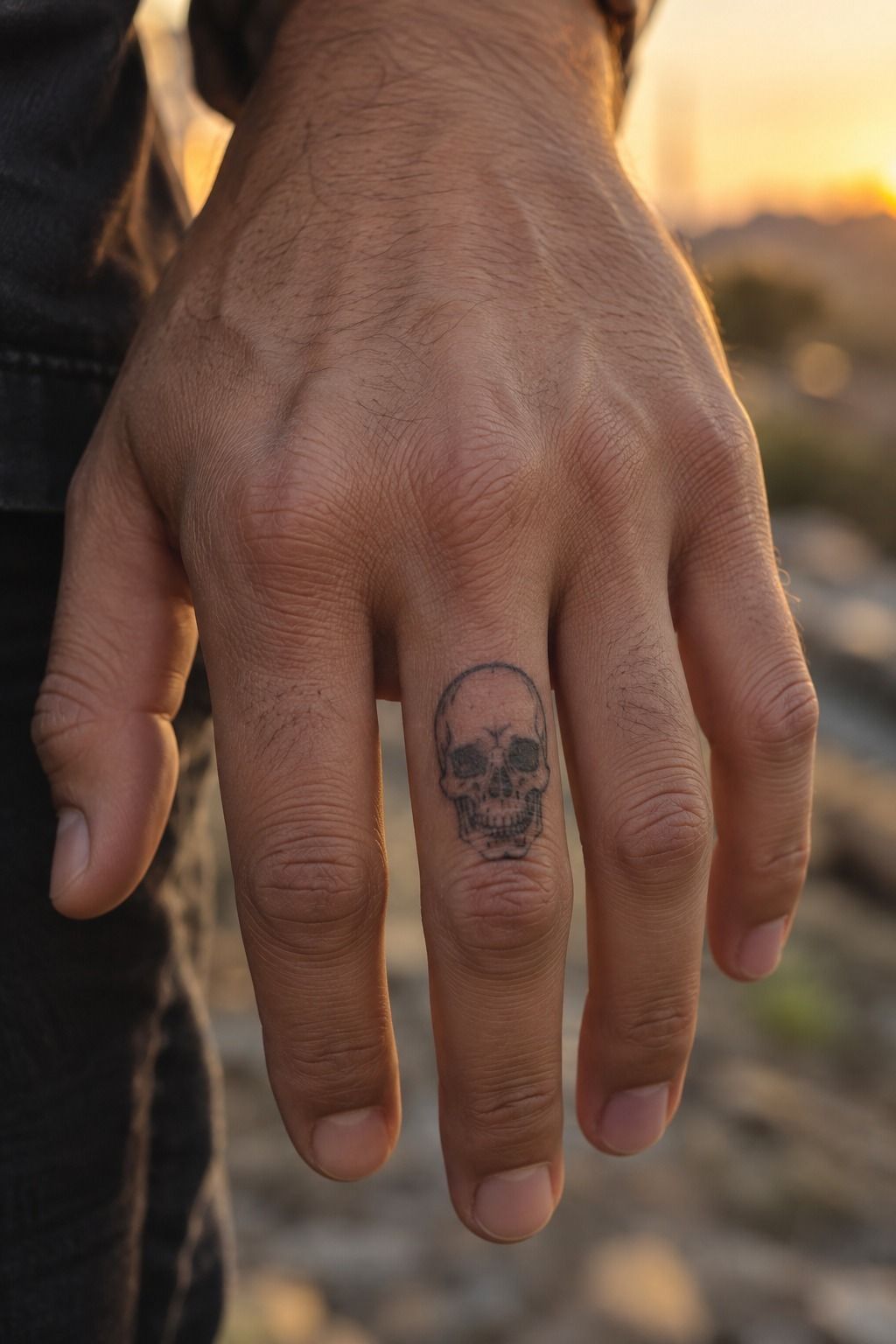
A micro skull can be edgy and expressive without becoming cartoonish. It needs a defined jaw, two readable eye sockets, and enough open space around the forehead. On medium olive skin, fine-line black tattoo ink can keep the design sharp if the artist resists adding every tiny bone detail.
I’d simplify the skull before making it smaller. Your artist can suggest a clean outline, two dark sockets, and one short nose mark. That gives the design a bold identity while keeping the face legible.
A skull with too many teeth may look intricate on paper, but the details can merge during healing.
Placement changes how intense the piece feels. Near the fingertip, it reads as a visible statement.
Along the side, it becomes more personal and slightly haunting. I’d choose the side if you want the symbol to feel less performative.
For compact designs with a more classic edge, browse these small American traditional tattoo references.
A skull doesn’t have to mean darkness. It can mark change, survival, humor, or a refusal to take life too seriously. That’s why your expression matters more than adding decorative flourishes.
Keep the jaw crisp, leave the surrounding skin open, and let the tiny face carry the meaning.
10Trace an Animal Silhouette Along the Finger
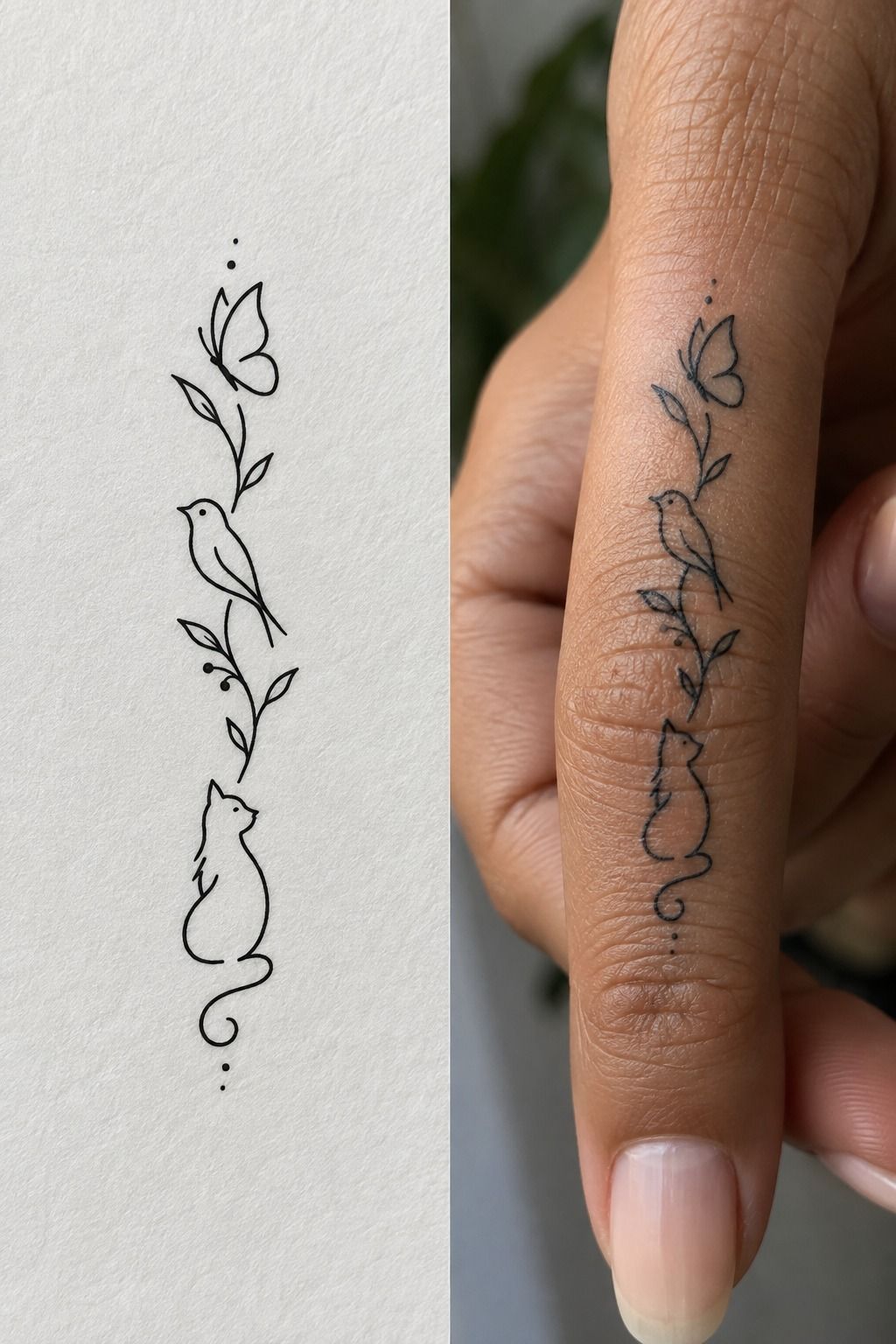
An animal silhouette can be one of the most personal small finger tattoo choices because the outline does most of the work.
11Sacred Symbols Near the Knuckles
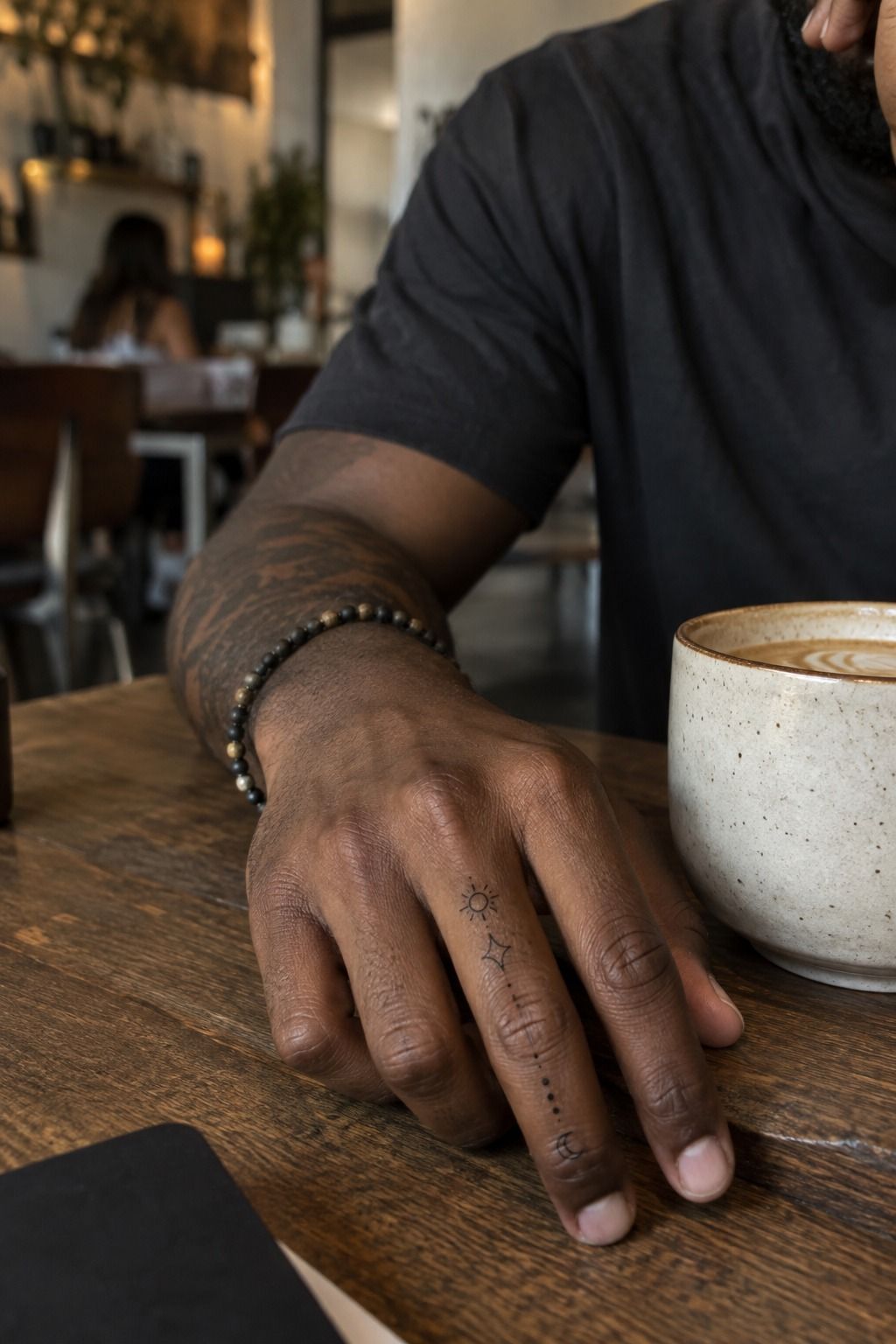
A small sacred symbol near the knuckle can feel powerful, personal, and understated. On deep brown skin with a warm undertone, hair-thin single-needle tattooing needs strong contrast and careful spacing. A tiny halo, cross, eye, lotus, or protective mark can work, but the design should have a simple outer shape.
I’d place the symbol just below the knuckle rather than directly across the fold. Your hand will move constantly, and a symbol divided by a crease may look broken when relaxed. Ask your artist to show the stencil while you flex, make a fist, and spread your fingers.
The right placement should remain recognizable through all three positions.
This idea works best when the meaning comes before decoration. An ornate sacred symbol may feel elegant on paper but too dense on a small finger. I prefer one crisp outline, a small filled point, or a single negative-space center.
That creates a sacred and timeless impression without overworking the skin.
Aftercare is part of the design decision. Surface healing usually takes about 2 to 3 weeks, while complete healing can take about 2 to 3 months.
You’ll need gentle washing, light hydration, and protection from sun and swimming during the early period. For more meaningful placements, explore these small arm tattoo ideas.
Before You Book: A Budget Check
A tiny tattoo isn’t automatically cheap. Many artists charge a studio minimum, even when the design takes only a short appointment. In the United States, that minimum may be around $50 to $100, while hourly rates can sit near $100 to $250.
Ask whether the quoted price includes stencil changes, a touch-up policy, and the artist’s preferred aftercare. That conversation helps you judge value instead of chasing the lowest price.
If you want a detailed finger tattoo with delicate lettering, the extra cost may be worth it. You can also compare more stable placements in this small forearm tattoo guide.
Your budget should also include the possibility of a touch-up. Finger skin sees washing, friction, and sunlight every day. Paying for a skilled placement can be a better investment than saving money on a design that needs early correction.
The Three-Check Linework Rule
Before choosing any small finger tattoo, I use three checks: silhouette, placement, and healed evidence. The silhouette asks whether you can identify the design without zooming in.
Placement asks whether the shape still works when your hand bends. Healed evidence asks whether the artist’s older work still looks crisp, balanced, and readable. Healed portfolio evidence should be part of your decision.
I’ve made the mistake of trusting a beautiful stencil more than the actual anatomy of the hand. The design looked delicate in the appointment chair, but the joint movement changed the spacing.
Now I bend my fingers before approving the final position. It takes two minutes, and it can prevent months of wishing I’d moved the mark slightly.
Small finger tattoos are also more demanding than their size suggests. Hands see washing, friction, sunlight, and constant motion. Fine lines may spread, and touch-ups can happen.
Line weight should suit your skin, placement, and longevity rather than copying a reference exactly.
That doesn’t mean every tattoo needs heavy blackwork. It means your artist should choose a deliberate balance between open skin and ink.
A striking design can still be dainty when its silhouette is clean. You’ll usually get a more polished result from one strong feature than from six intricate ones competing for space.
If you’re comparing a finger tattoo with a less exposed placement, look through this small forearm tattoos meaning guide. The forearm gives fine linework more stable space, while the finger offers visibility and intimacy.
Neither is automatically better. Your best choice depends on how often you want to see the mark and how carefully you’ll protect it.
For cost, typical US pricing varies by artist and region. A studio minimum may run about $50 to $100, while hourly rates may sit around $100 to $250. Ask for the artist’s current quote instead of assuming a tiny tattoo will be priced by size alone.
What Healed Work Really Tells You
Fresh ink can look sharper, darker, and more dramatic than the finished tattoo. Healed work shows whether the artist’s line weight remains readable after the skin settles.
It also reveals how carefully they handle knuckles, creases, and narrow side placements. Healed hand tattoos tell you more than a fresh appointment photograph.
Ask for several healed examples in the same style you want. A bold symbol, delicate botanical stem, and tiny script don’t age in exactly the same way. You’re looking for consistency, not one lucky result.
Good evidence is worth the wait!
If the artist can’t show healed hand tattoos, consider whether the price is worth the uncertainty. A polished social feed isn’t enough evidence. Your best value comes from technical skill that still looks good months later.
These small tattoos with meaning can help you judge whether a simpler concept would suit the placement better.
When Black Ink Beats Color
Black ink is usually the most practical choice for a small finger tattoo because it offers strong contrast and a crisp edge. Pale color can look romantic and playful at first, but fingers receive sunlight and friction that may soften subtle tones. High-contrast black ink gives the artist more room to preserve recognition.
A controlled accent can still work. A tiny red heart, blue star, or muted green leaf may feel personal if the design remains readable without the color. Ask to see healed examples on skin with a similar undertone before making the investment.
I’d choose color only when it adds meaning or improves recognition. If it’s there simply because the reference looked vibrant, blackwork may provide better long-term value. This is where restraint pays off!
For more compact color references, browse these small tattoos with meaning.
What I’d Do Differently After Three Finger Tattoos
I’d start with the least complicated idea, even if the ornate reference gets more attention online. My first instinct was to chase detail because detail felt impressive.
But the strongest healed tattoos I’ve seen are often the ones with one clear shape, one confident line weight, and enough untouched skin around the mark. That restraint is what keeps a small design elegant.
Untouched skin is part of the composition.
I’d also ask for healed photos before booking. Fresh ink can look crisp, dark, and dramatic, while healed work shows the real relationship between line thickness and skin.
If you’re choosing a single-needle style, ask whether the artist has healed examples at least several months old. Your decision should be based on evidence, not only a perfect appointment-day photograph.
The other lesson is emotional. A finger tattoo is visible during ordinary moments, from holding a coffee to typing a message.
That visibility can feel empowering, but it can also make a rushed choice hard to ignore. Pick a symbol you’ll still understand when the trend shifts.
A personal initial, botanical mark, or sacred sign usually has more staying power than a random decorative shape.
And don’t bargain with placement just because the design is small. If the artist says a certain line will blur across a crease, listen.
You can move the stencil, simplify the detail, or choose a nearby area. Your tattoo doesn’t need to prove that you can tolerate a difficult placement.
It needs to remain meaningful, crisp, and comfortable to live with. This small forearm tattoo guide is useful when you’re deciding whether the finger is worth the extra maintenance.
The Questions I Get Asked Most
How much does a small finger tattoo usually cost?
A small finger tattoo typically costs about $50 to $100 at a studio minimum, or around $100 to $250 per hour when the artist bills hourly. The final quote varies by artist, region, design detail, and placement. A clear tattoo reference helps you ask better questions before booking.
You’ll want to confirm the current price directly with the artist and ask whether touch-ups are included. A related small tattoo meaning guide can help you narrow the concept before requesting a quote.
Are small finger tattoos a good idea for a first tattoo?
Yes, small finger tattoos can be a good first tattoo if you understand the visibility, movement, and possible touch-up needs. The placement is direct and the appointment may be brief, but hands can be more painful than an upper arm or thigh. A simple readable design is the safest starting point.
You won’t need a complicated subject to make the tattoo meaningful. Choose a shape you won’t outgrow quickly, and make sure you’re comfortable seeing it during ordinary daily tasks.
How do I choose a tattoo artist for small finger tattoos?
Choose an artist who shows healed hand tattoos, consistent linework, clean studio practices, and a style that matches your reference. Ask how they handle creases, side placement, and touch-ups. Healed portfolio evidence matters more than follower count or a dramatic social media feed.
You can compare broader placement ideas in these small arm tattoos for guys with meaning, then ask the artist what should be simplified for a finger. They’ll know which details won’t survive the location.
How much do small finger tattoos hurt?
Small finger tattoos can hurt more than tattoos on the forearm, thigh, or shoulder because hands have less cushioning and more sensitive, bony areas. Ribs, feet, hands, and sternum are commonly more painful zones. A short appointment doesn’t guarantee a painless one, but sensitivity varies from person to person.
You’ll do better with a rested body, a clear aftercare plan, and realistic expectations. Pain is only one part of choosing the placement, and a skilled artist can help you understand what to expect.
How long does a small finger tattoo take to heal?
Surface healing usually takes about 2 to 3 weeks, while complete healing can take about 2 to 3 months. Wash gently, use light hydration as directed, avoid picking, and keep the tattoo away from sun and swimming during early healing. Consistent aftercare protects crisp linework.
Your artist’s instructions should come first because ink depth, placement, and your skin can change the process. Don’t judge the final softness or color until the skin has fully settled.
What’s the best placement for a small finger tattoo?
The side of the finger offers a more private, intimate placement, while the top or near the knuckle gives stronger visibility. Avoid placing important details directly across a crease when possible. A stable stencil position helps the design remain readable as you bend your hand.
You’ll want to test the stencil in relaxed and bent positions before approving it. A nearby forearm placement may hold ultra-fine detail more predictably, especially if the concept includes lettering or multiple tiny marks.
What tattoo color is best for small finger tattoos in 2026?
Black ink remains the most practical choice for small finger tattoos because crisp black linework and solid black details usually stay more readable than pale color. A subtle accent can be meaningful, but your artist should consider skin tone, sun exposure, and placement first. Readable contrast beats novelty.
If you’re planning a colorful concept, ask to see healed examples on similar skin before deciding. A timeless black symbol may be the more expressive choice. For additional meaning-led references, explore these small tattoos with meaning.
Where I’d Start First
If I had to pick one, I’d start with the tiny botanical linework. One clear stem gives you movement and meaning without crowding the finger, and it’s easier to simplify if your artist spots a placement problem.
Pin that idea for later, then compare it with these small tattoos with meaning. The most graceful version is the one you’ll still recognize after the skin has healed.