You want delicate small spine tattoos that still read clean years from now. I once chose a design because it looked striking at a tiny scale, then learned that spacing matters more than size. Your best pick should feel personal, crisp, and wearable. Start with the linework, not the trend!
- Follow the Fine Botanical Vine
- Which Celestial Constellation Fits Your Spine?
- “Enough”: A Vertical Script With Meaning
Editor’s note: the most meaningful design isn’t always the smallest or most ornate. Check the placement, healed work, and tattoo artist pricing before you decide.
- Follow the Fine Botanical Vine
- Which Celestial Constellation Fits Your Spine?
- “Enough”: A Vertical Script With Meaning
- Let the Moon Phases Move Downward
- Wildflower Chain, Kept Playful
- Sacred Geometry Versus Soft Linework
- Watch the Dainty Butterfly Trail Lift
- The Serpent’s Quiet Edge
- Hide Initials Inside Abstract Lines
- Sun and Stars: One Bright Anchor
- The Vintage Locket Question
1Follow the Fine Botanical Vine
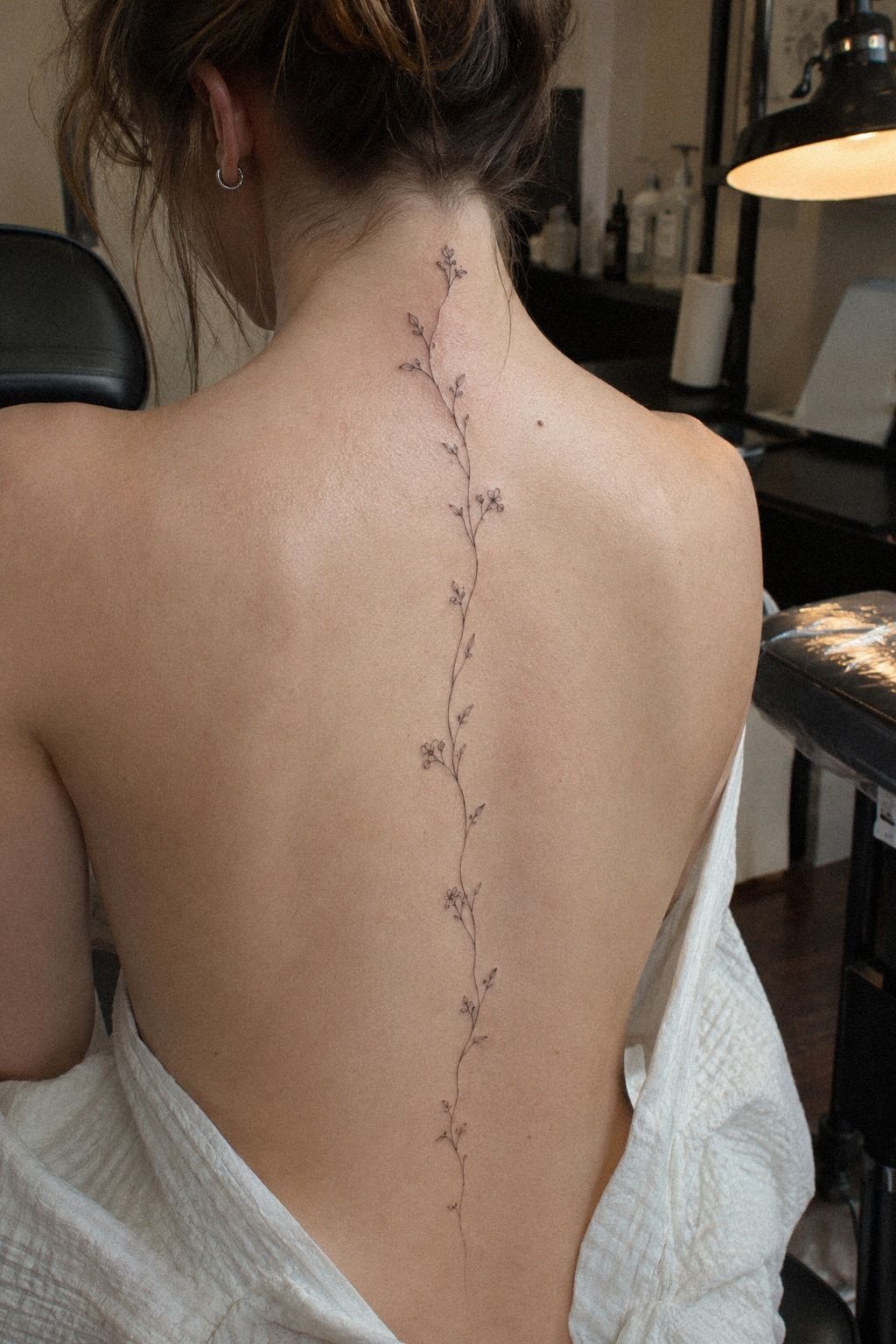
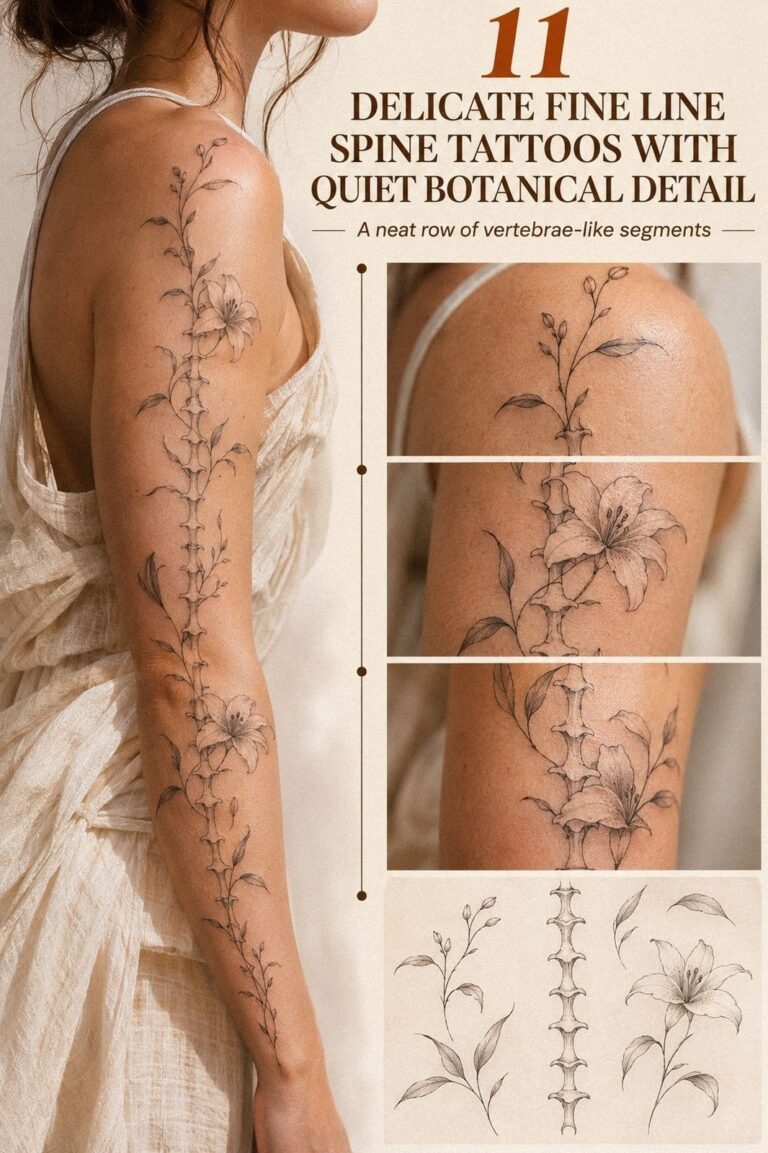
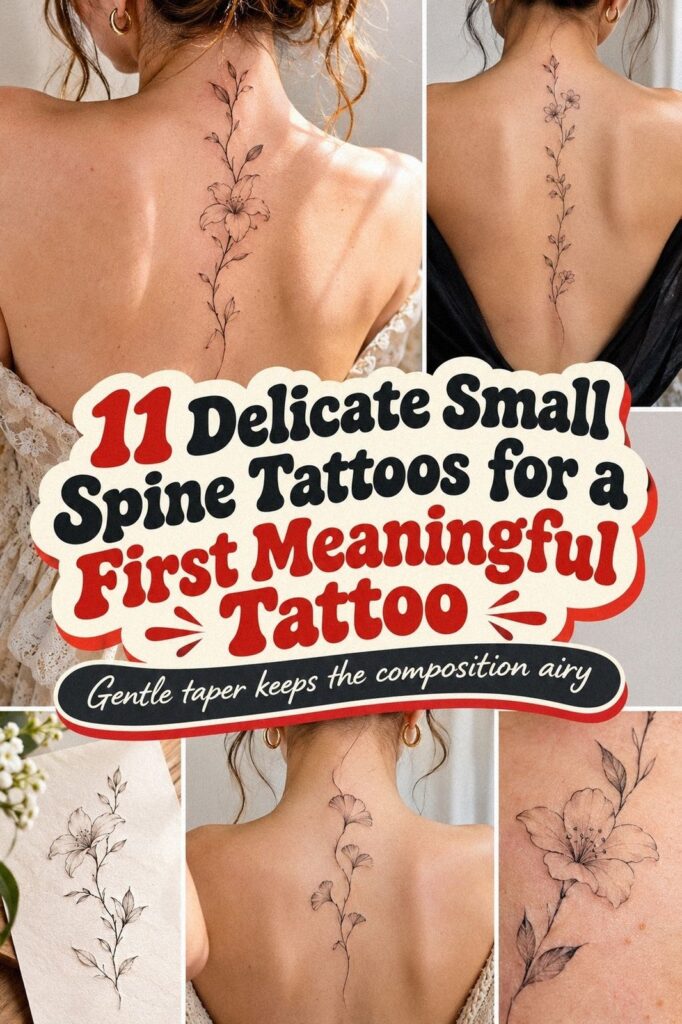
A fine vine can follow your centerline without looking stiff. Choose flowing stems, two or three tiny blooms, and enough open skin between each shape.
The result feels botanical, expressive, and personal, but it won’t become visually crowded when you move. You’ll want your artist to keep the curve natural from the neck toward the lower back.
For a cool-pink complexion, black pigment can look sharp against the skin, especially when the stems stay light and narrow. Ask for a single-needle cartridge and a stencil that shows every bend before the appointment. I’d skip dense leaf clusters because they can blur into one dark strip over time.
Your meaning might be growth, a private garden, or one flower for each person you carry with you. Keep the blooms uneven rather than perfectly mirrored.
That small irregularity makes the piece feel expressive and meaningful, not copied from a flash page. If you’re comparing proportions, browse these tiny small spine tattoos for useful placement references.
Keep aftercare simple. Wash gently, pat dry, and follow your artist’s instructions instead of layering heavy products.
The surface usually settles in about 2 to 3 weeks, but your lines need longer before you judge them. It’s an understated idea with a surprisingly powerful edge.
2Which Celestial Constellation Fits Your Spine?
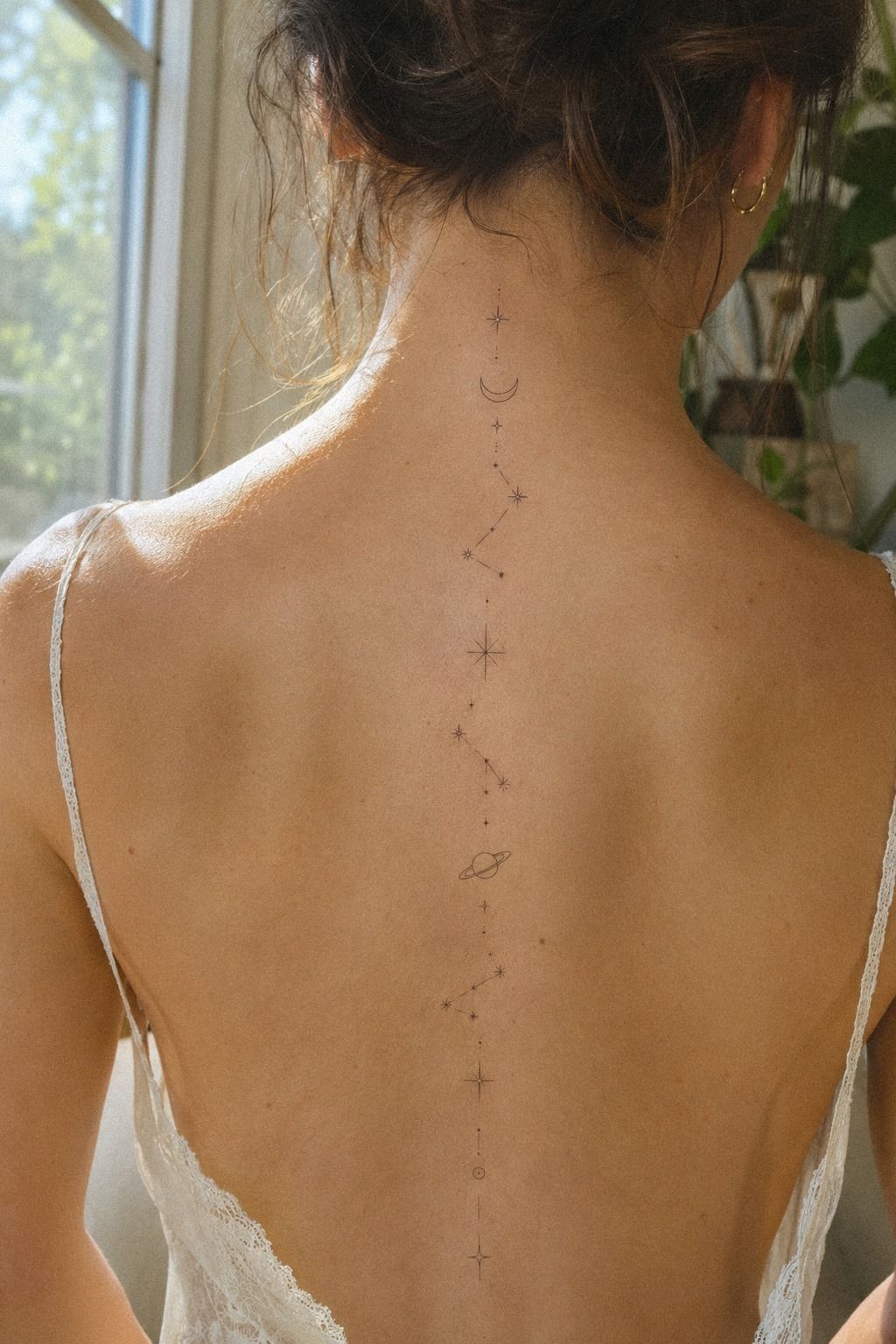
A celestial constellation tattoo gives you a delicate structure without demanding a large image.
3“Enough”: A Vertical Script With Meaning
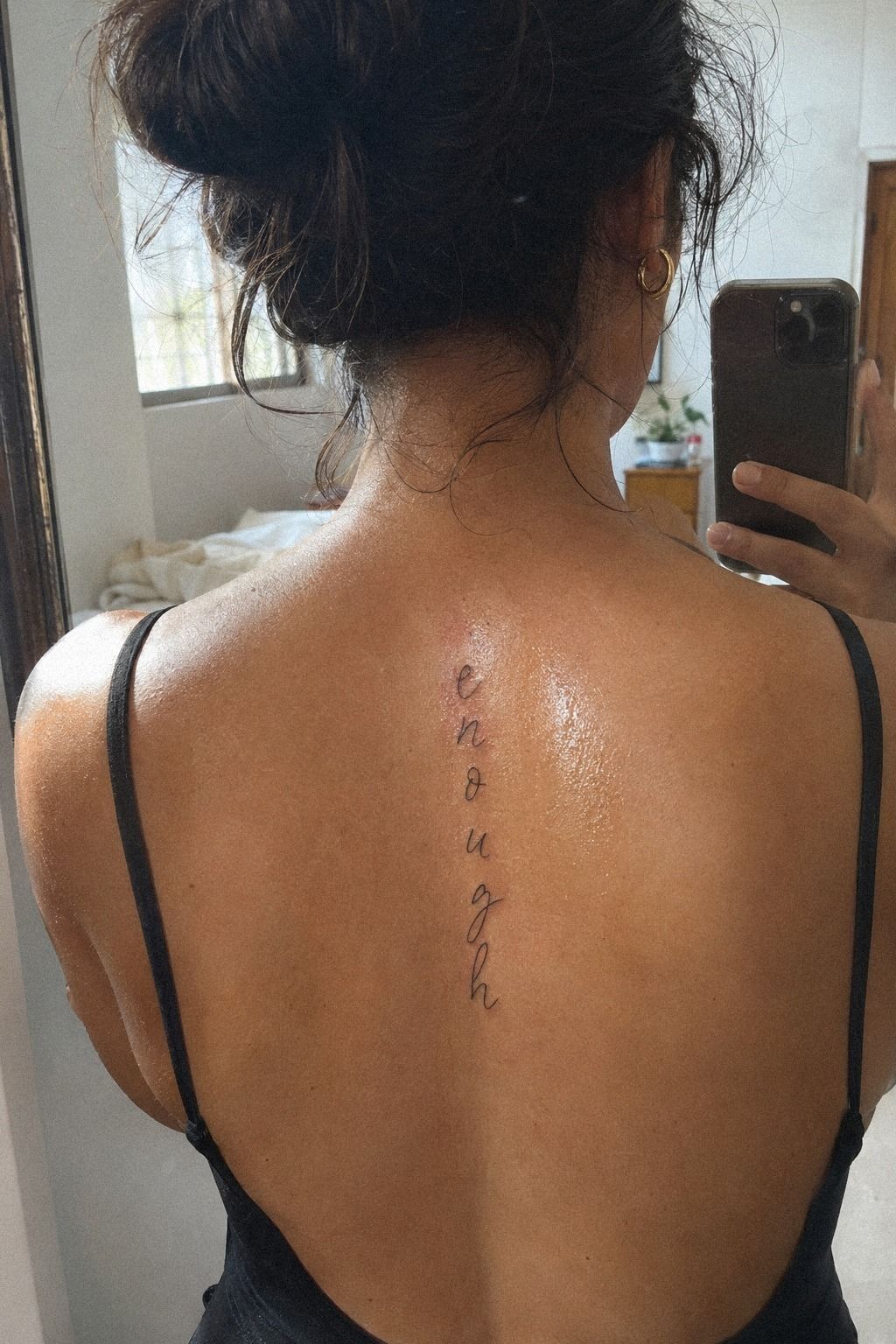
The word “enough” works because it’s short, direct, and quietly powerful. Set it vertically down the spine with generous spacing between the letters.
Your version should feel meaningful without reading like a slogan. A thin script can be romantic, but it needs room to breathe.
On medium olive skin, ask your artist to test the lettering in black greywash before committing to the stencil. I’d choose a clean handwritten form over ornate calligraphy. Overly decorative curls may look elegant on the day, yet they can make a small word harder for you to read later.
You’ll want to consider whether the word should face upward or downward. If you want to read it in a mirror, orient it for your own eye.
If the meaning belongs mainly to you, the placement can follow the spine naturally. That choice makes the tattoo intimate rather than performative.
A script piece needs especially careful spacing. Your artist should show the full word at the planned size, not just one enlarged letter.
The long-term value is in readability, not in squeezing the design smaller to lower the cost. If you’re still deciding between text and symbols, this small tattoos meaning guide can help you narrow the emotional direction.
4Let the Moon Phases Move Downward
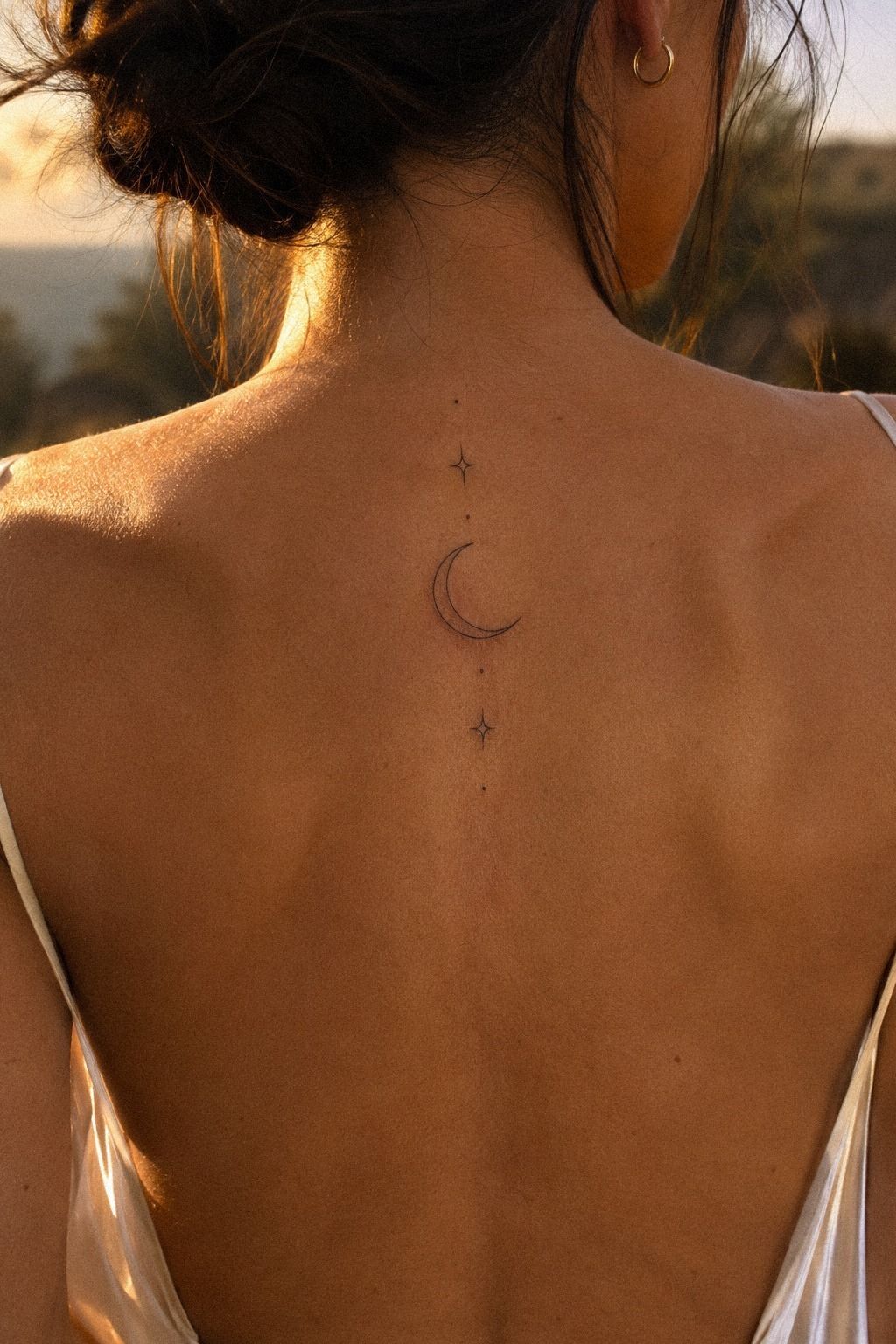
Moon phases suit a small spine placement because the sequence already creates movement. A crescent, two tiny stars, and a few simple phase marks can feel sacred without becoming ornate. Your design might represent change, recovery, or the fact that you’re allowed to become someone new.
On golden tan skin, a clean crescent in black fine-line ink will give the piece a sharp anchor. Keep the stars smaller than the moon so the eye knows where to land. I’d skip grey shading inside the crescent because a solid shape will usually stay more readable than a faint wash.
You can place the moon high between the shoulder blades or lower along the spine. Higher placement feels more visible with open-back clothing, while lower placement feels more private. If you’re choosing for a first tattoo, think about how often you want to see it and how comfortable you’ll be showing it.
Spacing matters more than the number of symbols. Give each phase enough skin around it, and your tattoo won’t look like one compressed mark. You’ll find more restrained comparisons in these tiny small wrist tattoo ideas, especially if you’re weighing a smaller alternative.
It’s a calming concept with a timeless shape!
5Wildflower Chain, Kept Playful
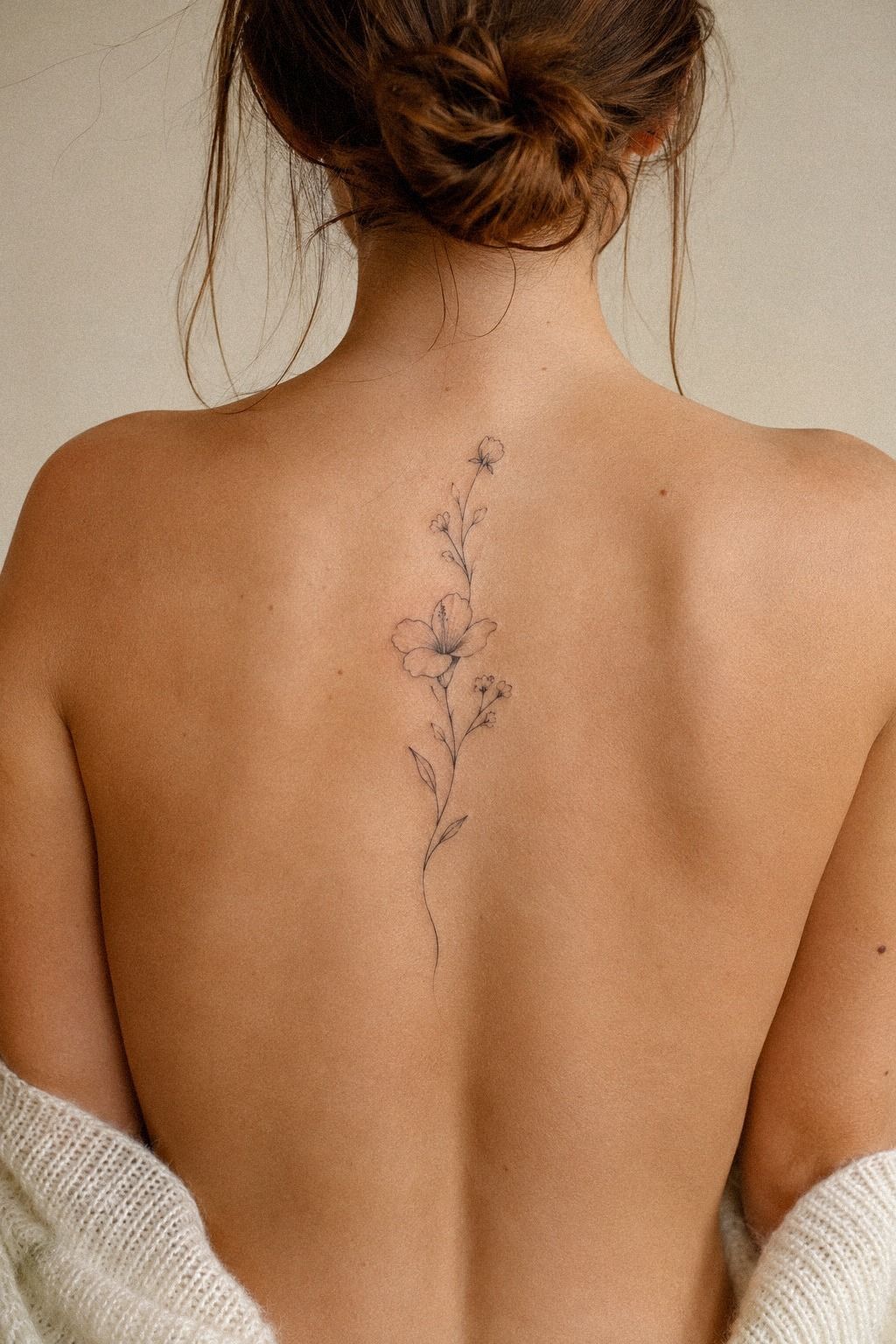
A wildflower chain can look playful on paper and still feel personal on skin.
6Sacred Geometry Versus Soft Linework
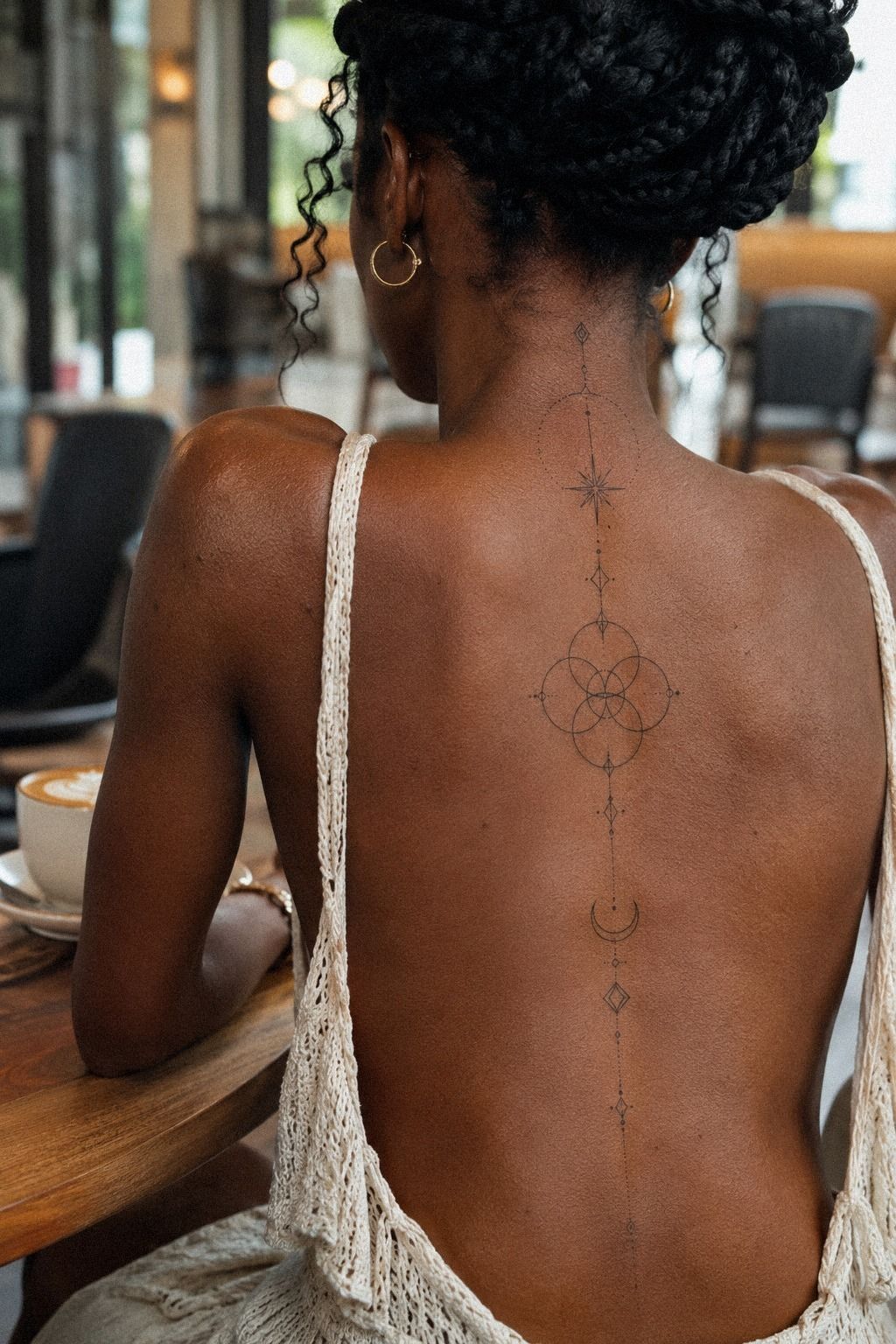
Sacred geometry can look intricate without becoming oversized. Use a central diamond, small circles, and repeated angles that follow the spine in a measured rhythm. On deep ebony skin, strong contrast will help the design stay visible, while open skin keeps it from looking heavy.
Ask for blackwork line weight only on the structural points, with fine lines connecting the geometry. Your artist may suggest slightly stronger outlines than you expected, and that’s often wise for long-term clarity. I’d skip a fully shaded geometric column because it can overpower the delicate intention.
The design can represent balance, faith, ancestry, or a personal system you’ve built for yourself. You’ll want to decide which shape carries the meaning before your appointment. A symbol chosen only because it looks ornate may feel empty once the novelty fades.
I made the mistake of treating symmetry as the entire goal in an earlier design. The tattoo looked polished, but it didn’t feel like mine.
Your version should have one meaningful interruption, perhaps a tiny open circle or a shifted point. See these small spine tattoo ideas for women for more placement variety, then ask whether the proposed price matches the custom work.
7Watch the Dainty Butterfly Trail Lift
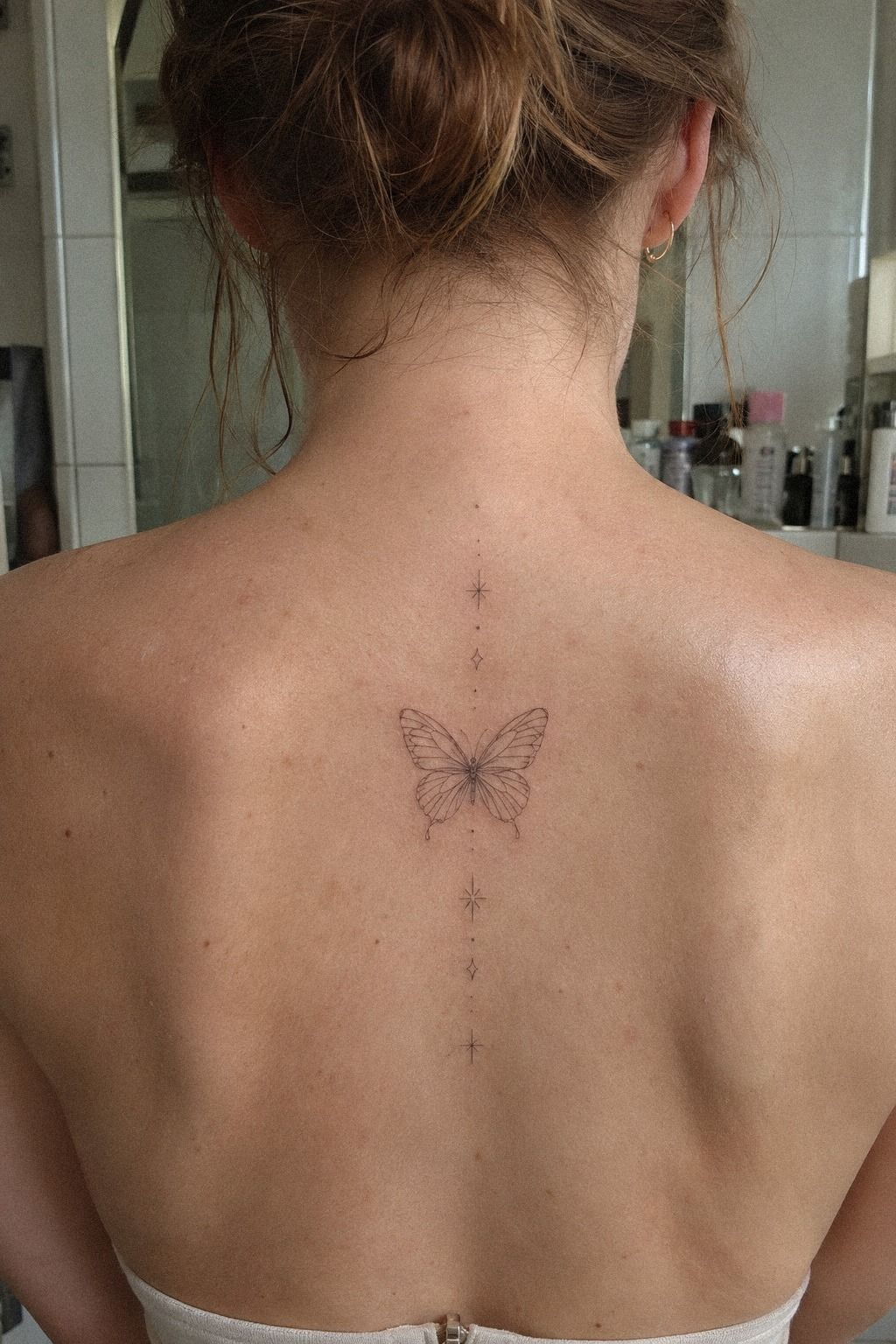
A dainty butterfly trail can be graceful when the insects change size as they move.
8The Serpent’s Quiet Edge
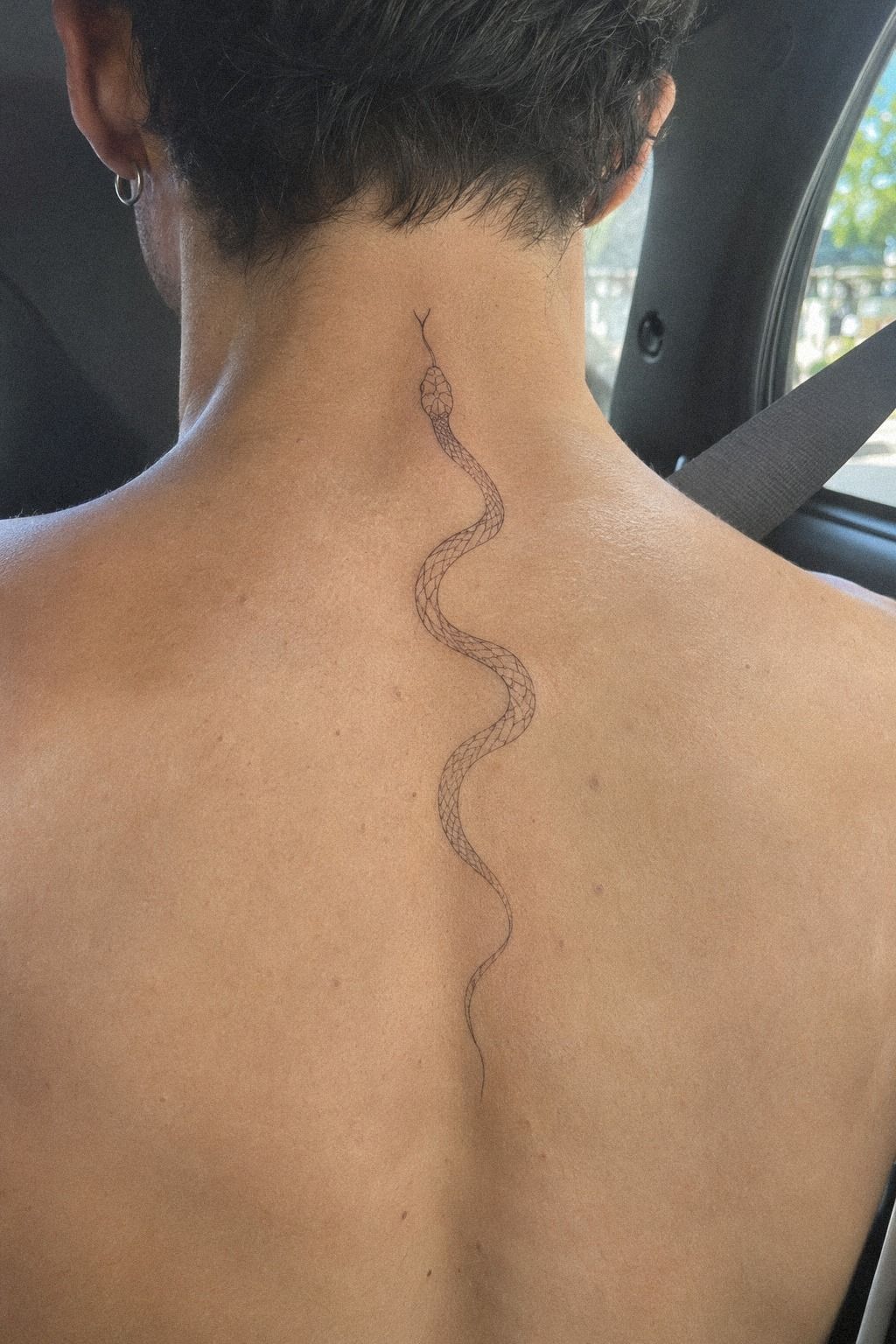
A slim serpent can follow the spine with a quiet, edgy energy. Keep the body narrow, let the coils breathe, and use the head as the only strong focal point. Your tattoo might represent renewal, protection, wisdom, or a boundary you’ve finally learned to defend.
For medium warm ivory skin, fine scale linework can suggest texture without filling the entire snake. Ask your artist to simplify the scales near the smallest curves. I’d skip a hyper-detailed serpent if the design is very short, because compressed detail can lose its sharpness.
The placement works best when the snake’s movement follows your natural centerline. You’ll want to stand, bend, and rotate during the stencil check so the coil doesn’t look accidental. A slightly asymmetrical body can feel raw and expressive rather than mathematically perfect.
Your artist may recommend a little more weight in the outline than you expected. That isn’t a failure of delicacy; it’s protection against fading and spreading. If the budget is tight, simplify the scales before shrinking the whole design.
Browse these small tiny hand tattoos if you’re comparing the snake’s visual impact with a smaller exposed placement.
9Hide Initials Inside Abstract Lines
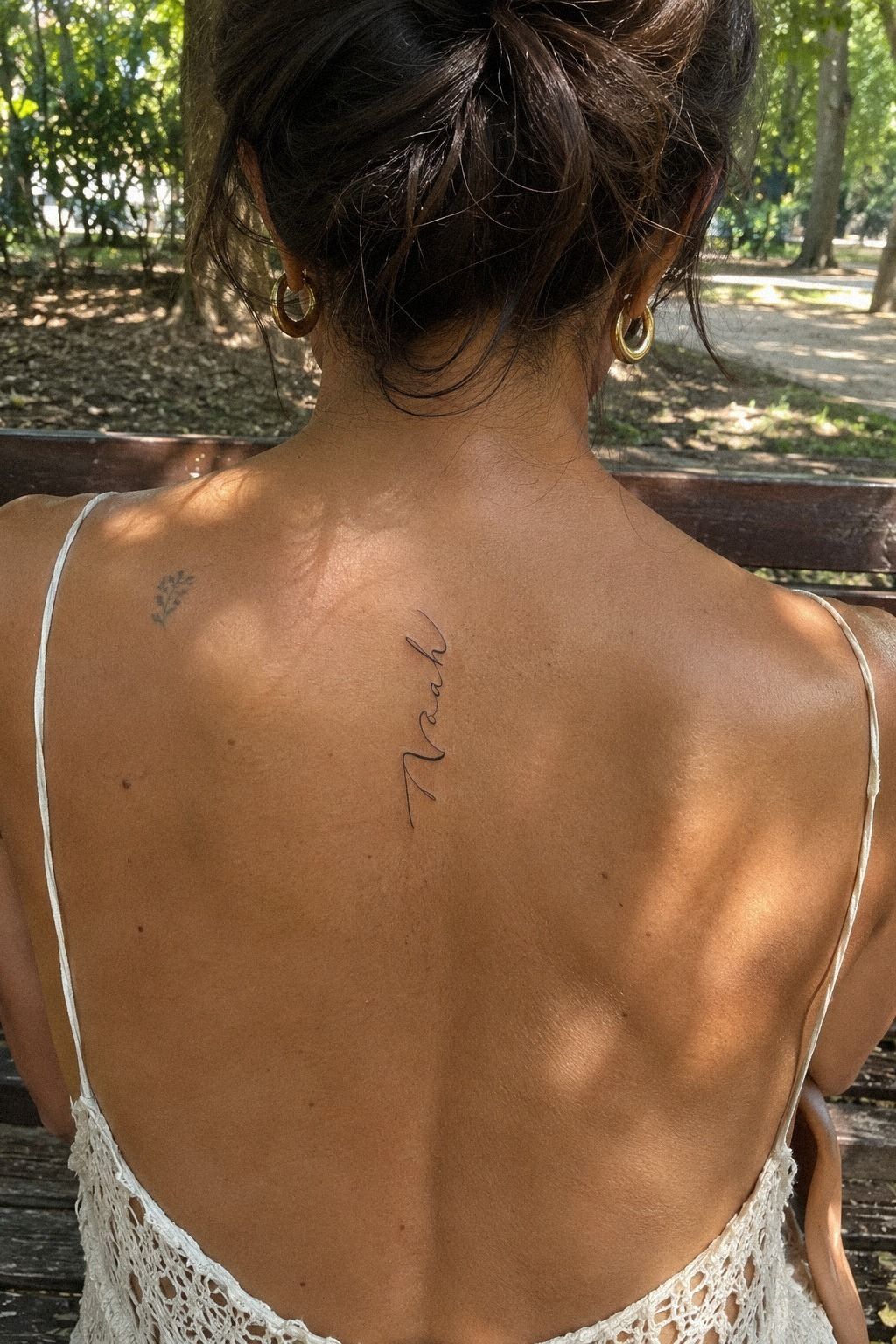
Your initials can disappear inside graceful abstract lines, making the tattoo meaningful without announcing their subject.
10Sun and Stars: One Bright Anchor
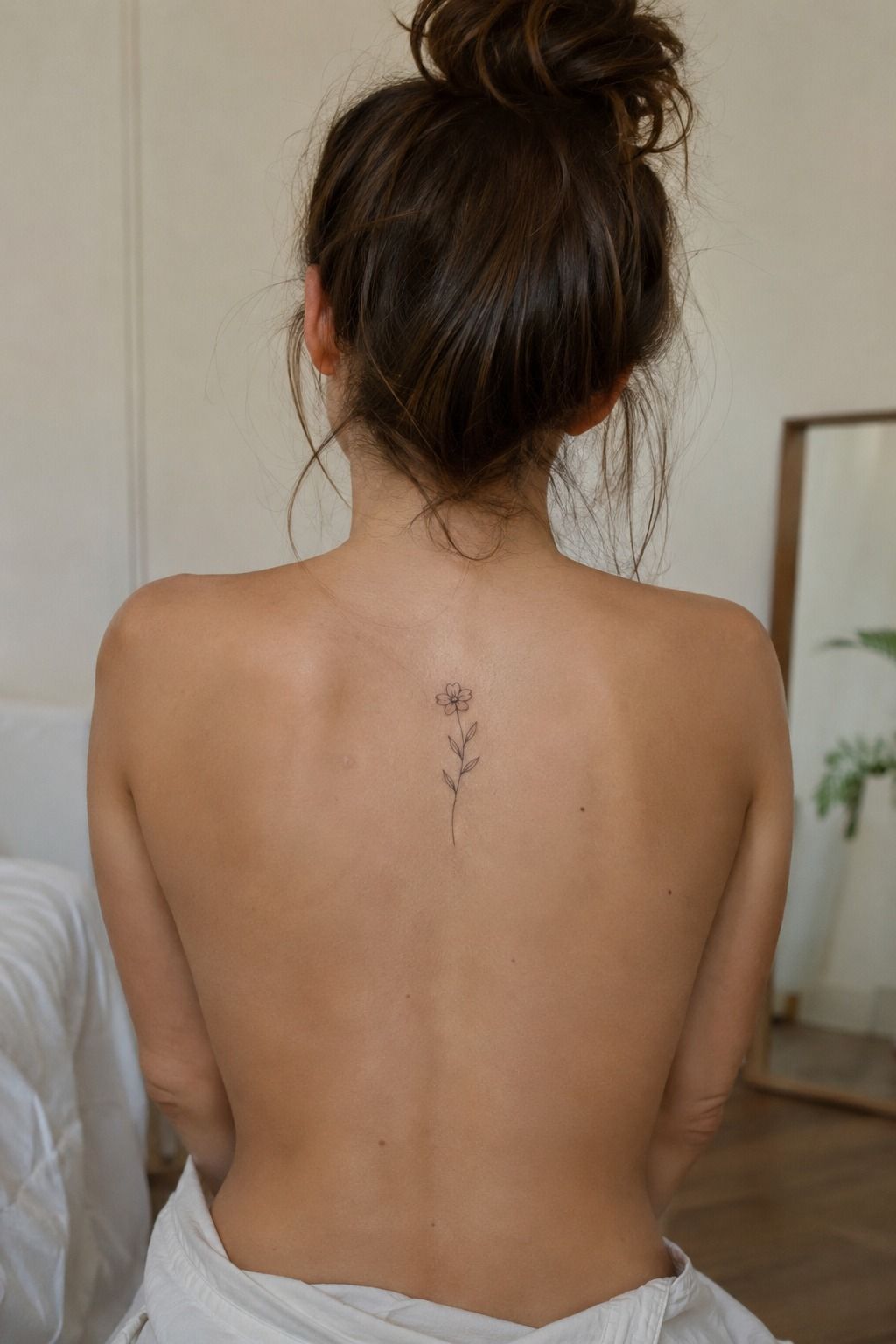
A tiny sun with scattered stars creates a bright, symbolic centerline. Keep the sun simple, perhaps a small circle with short rays, then place the stars unevenly around it. Your design can reference hope, guidance, family, or a private reminder to keep moving.
A comparison between fresh and healed pigment is useful because it reveals how the design behaves after the appointment. Ask for healed examples, not only fresh ones. I’d choose a crisp sun over a heavily shaded one because the open center will remain easier for you to read.
The stencil should show whether the rays are balanced and whether the stars have enough breathing room. The healed result should show softened edges without losing the central symbol. That comparison is especially valuable for your first tattoo and can tell you whether the artist’s rate is worth it.
Healing usually takes about 2 to 3 weeks on the surface and 2 to 3 months to settle completely. You’ll need gentle washing, light hydration, and protection from sun and swimming during the early stage. For another sun-centered idea, save these small sunflower tattoos for comparison.
11The Vintage Locket Question
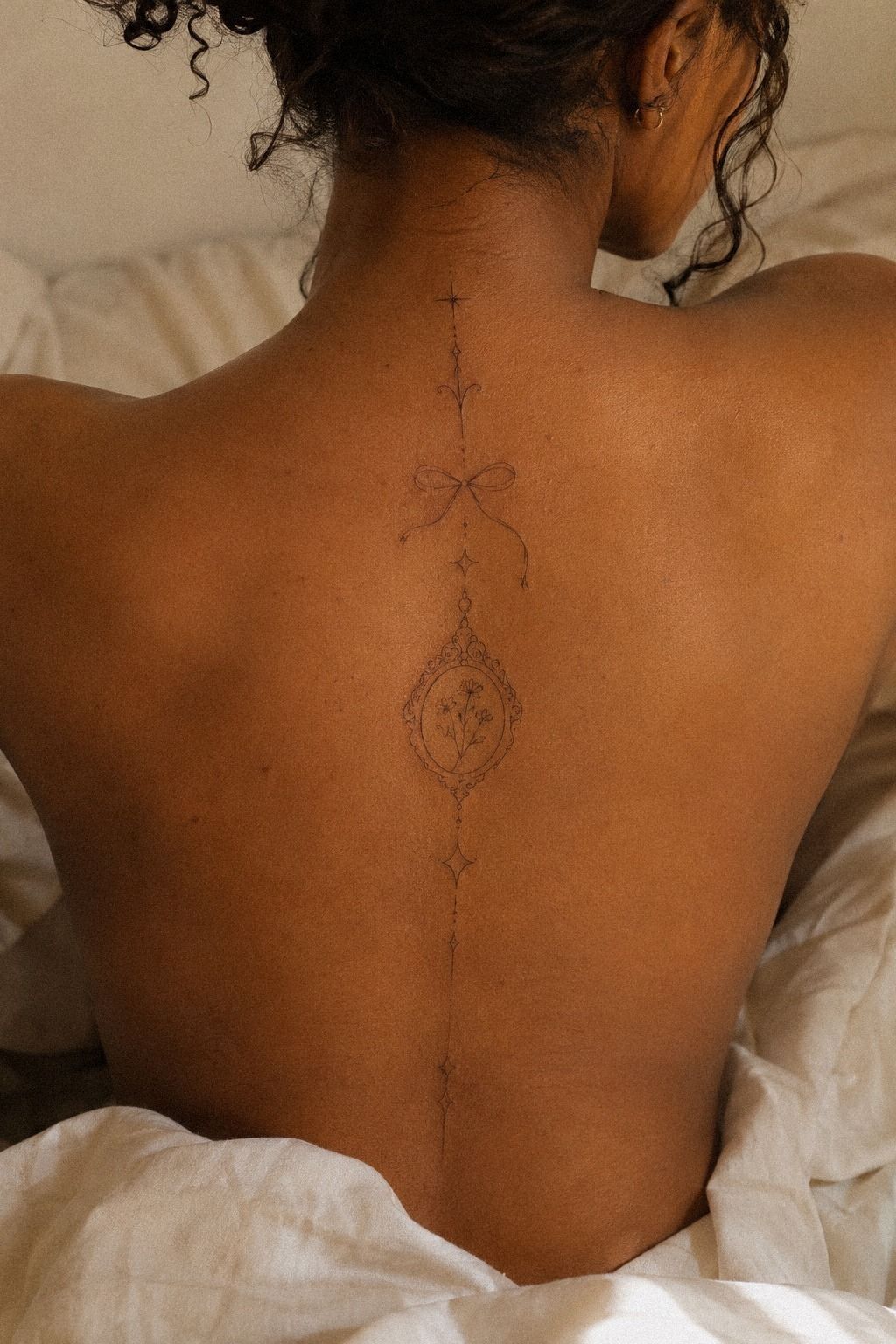
A vintage locket can be delicate if you reduce it to the outer border, hinge, and one tiny interior symbol.
Placement Is a Personal Decision
The upper spine between the shoulder blades is usually more visible, while the lower spine can feel private and understated. Neither choice has more meaning by default. You’ll want the placement to match your clothing, work routine, and comfort with showing the tattoo.
A centered design can look iconic and balanced, but a slight shift may feel more natural for a vine, snake, or abstract curve. Ask your artist to check the stencil while you’re standing, sitting, and relaxing your shoulders. That quick test can protect both the design and your budget.
Fine Line Versus Long-Term Value
Fine line tattoos can be striking, but the thinnest possible line isn’t always the best value. Skin changes, sun exposure, friction, and natural spreading all affect the final result. A slightly stronger line may keep a symbolic or intricate design readable for longer.
Your artist should explain what needs more space and what can remain delicate. That answer is more meaningful than a promise that every tiny detail will stay identical. If the design is worth it, you’ll want to understand its likely aging before you pay a deposit.
What I Would Keep Out of the Design
I’d keep out cramped lettering, dense shading, and too many tiny symbols. They may look daring in a reference sketch, but they can turn into a dark, indistinct mark when placed along a narrow centerline.
I’d also avoid copying a popular flash design without adding a personal detail. One shifted star, open circle, or meaningful flower can make the tattoo feel personal rather than generic. The strongest designs usually have one clear idea and one memorable interruption.
A Simple Budget Check Before You Book
Tattoo cost depends on the artist’s experience, location, minimum charge, detail, and appointment length. A small design may take less time, but custom drawing, stencil adjustments, and careful placement still carry value. Ask for the shop minimum and an estimate before you book.
A lower price isn’t automatically a better deal, and the highest price isn’t automatically worth it. Compare healed work, hygiene practices, communication, and design judgment. You’re paying for the artist’s hand as well as the minutes under the needle.
The Three-Anchor Method I Trust
I’ve learned that a delicate spine tattoo succeeds when three decisions agree: the meaning, the placement, and the line weight. If one of those feels forced, the finished piece can look polished but still feel wrong.
Your first anchor is emotional. You should be able to explain what the symbol means to you in one honest sentence, even if you never tell anyone else.
That sentence keeps you from choosing an intricate image simply because it looked striking at first glance.
The second anchor is anatomical. Your spine isn’t a ruler, and your skin moves when you breathe, bend, and turn.
I always want the stencil checked while standing, then checked again from a relaxed position. A graceful curve often beats perfect symmetry.
If you’re choosing between a centered design and a slight drift, I’d usually pick the centered one for text and the freer one for vines, snakes, or abstract work.
The third anchor is longevity. Fine lines can spread as they age, and ultraviolet exposure won’t help them. Strong placement, clean black pigment, and sensible spacing matter more than chasing the thinnest possible mark.
Your artist should show healed examples, explain aftercare, and tell you when a design needs to be larger. That honesty is empowering.
It may save you from a delicate tattoo that looked impressive for one brief moment.
I once wanted every detail reduced to the smallest possible scale. It sounded refined, but the result would have needed cramped lettering and crowded symbols.
I changed direction and kept one bold anchor instead. That choice made the design more expressive, more timeless, and easier to live with.
Your best tattoo won’t be the smallest one in the portfolio. It’ll be the one that still feels meaningful after the excitement settles.
The Questions Worth Answering First
How much does a delicate small spine tattoo usually cost?
In the US, a small tattoo may cost about $100 to $300, depending on the artist, region, size, and placement. Many shops have a minimum of about $50 to $100, while hourly rates commonly sit around $100 to $250.
You’ll want to ask for the shop minimum and an estimate before booking. Your design’s detail matters more than its tiny footprint, so don’t assume small means inexpensive. Clean work, healed references, and a sterile studio are worth prioritizing.
Are delicate small spine tattoos a good idea for a first tattoo?
Yes, they can be a good first tattoo if you’re comfortable with the placement and choose a readable design. Your piece can stay small, meaningful, and discreet, while clean linework gives you a clear direction.
The spine includes more sensitive, bony areas than the forearm or thigh. You’ll want to discuss the exact placement with your artist and choose a design that won’t require cramped details. If the design feels worth it after that conversation, the choice is easier.
How do I choose a tattoo artist for delicate small spine tattoos?
Choose an artist whose portfolio shows clean fine-line work, healed examples, and designs on different skin tones. Your artist should explain needle groupings, placement, aftercare, and realistic aging without making guarantees.
Look for sterile single-use cartridges, a clean studio, and calm communication. You’ll want someone who can tell you when a design needs more space, not someone who agrees to every tiny detail. That judgment is part of the value you’re buying.
How much do delicate small spine tattoos hurt?
Pain varies by person, but the spine can feel sharper than areas with more padding. Ribs, feet, hands, and sternum are often more painful, while the forearm, thigh, and shoulder tend to feel more tolerable.
You’ll want to eat beforehand, hydrate, and tell your artist if you need a pause. A short session can feel manageable, especially when your design has a clear stencil and limited shading. Don’t choose an artist based on price alone if communication makes you uneasy.
How long does a delicate small spine tattoo take to heal?
The surface usually heals in about 2 to 3 weeks, while complete healing can take roughly 2 to 3 months. Your artist’s aftercare instructions should guide the process.
Gentle washing, light hydration, no picking, and avoiding direct sun or swimming early on are standard precautions. You’ll need patience before judging the final softness of the lines. Don’t scratch, even if the skin feels itchy.
What’s the best placement for delicate small spine tattoos?
The upper spine between the shoulder blades gives you a visible, centered placement, while the lower spine can feel more private. Your choice should match how often you want to see or show the tattoo.
A centered design often ages more predictably because the spacing is easier to control. You’ll want to compare the stencil standing and sitting, then ask your artist whether the lines need more room. These tiny small spine tattoos can help you compare proportions.
Where I’d Start First
If I had to pick one, I’d start with the tiny sun and stars. The sun gives your artist one readable anchor, while the open stars protect the design from becoming a dark strip as it ages.
Pin that idea for later and compare it with these delicate small spine tattoos before booking. Keep the choice personal, readable, and worth living with!