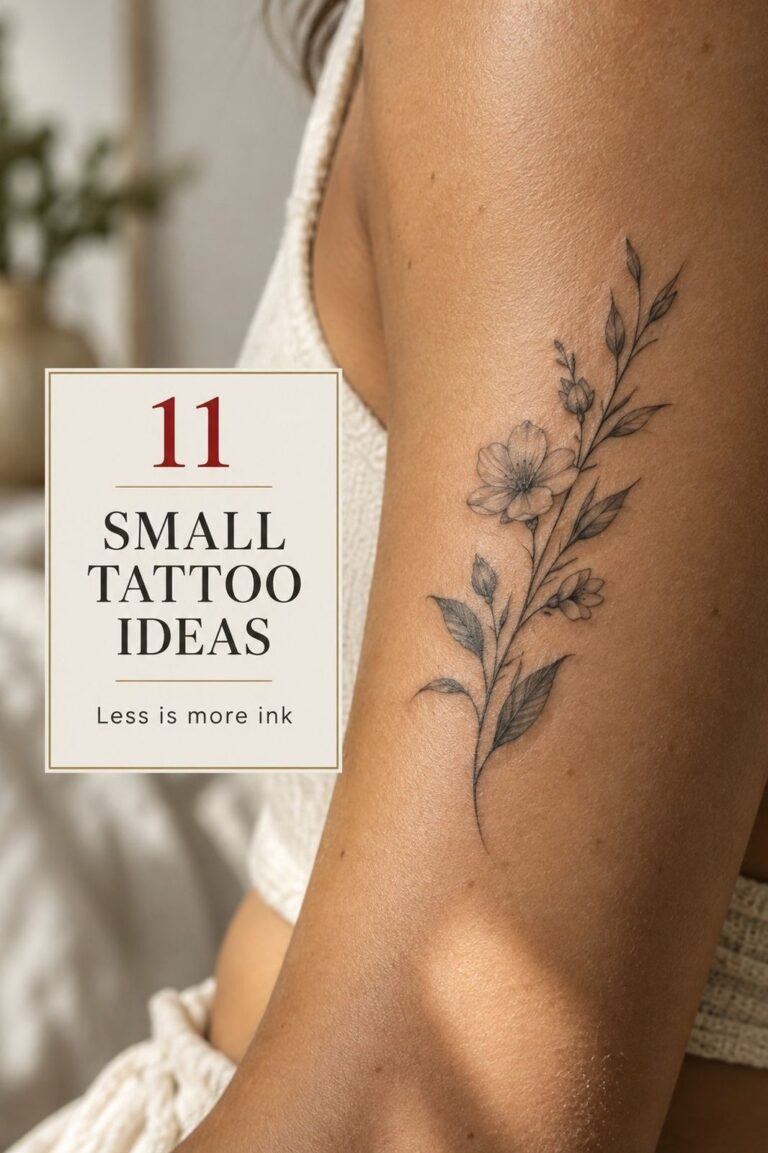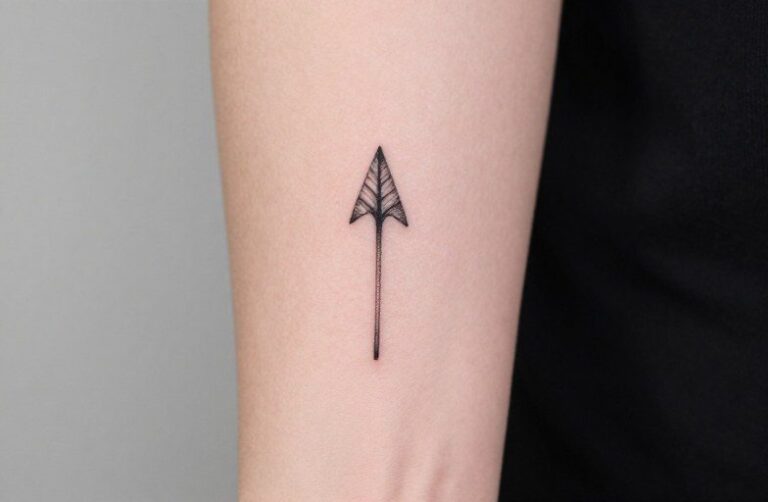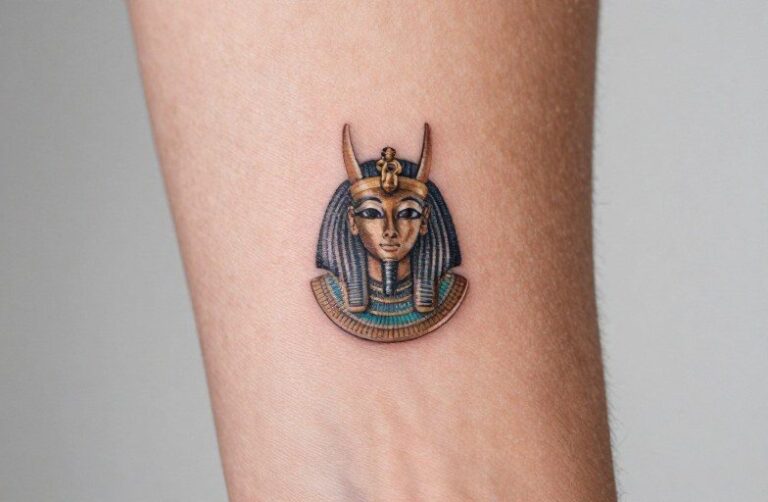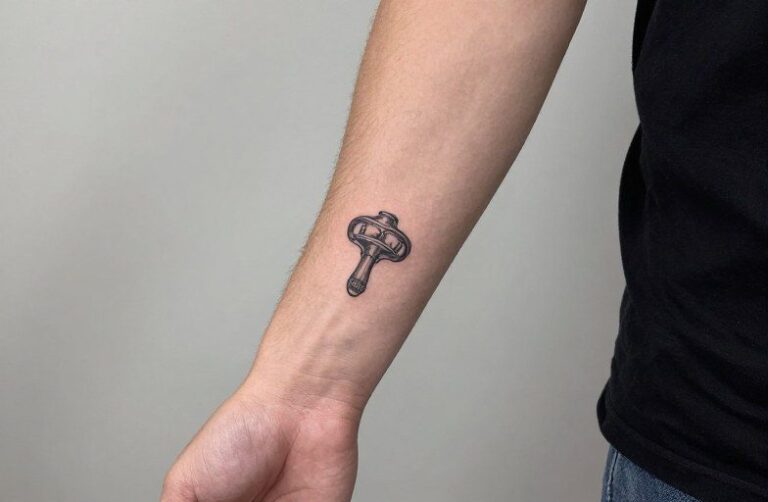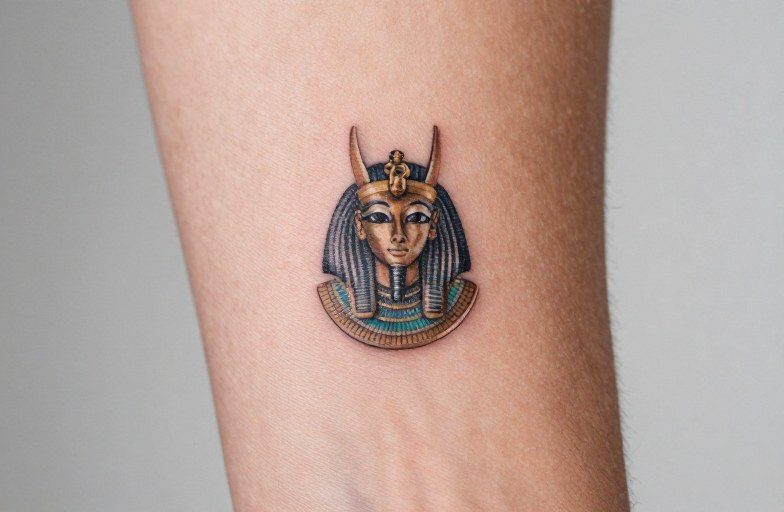
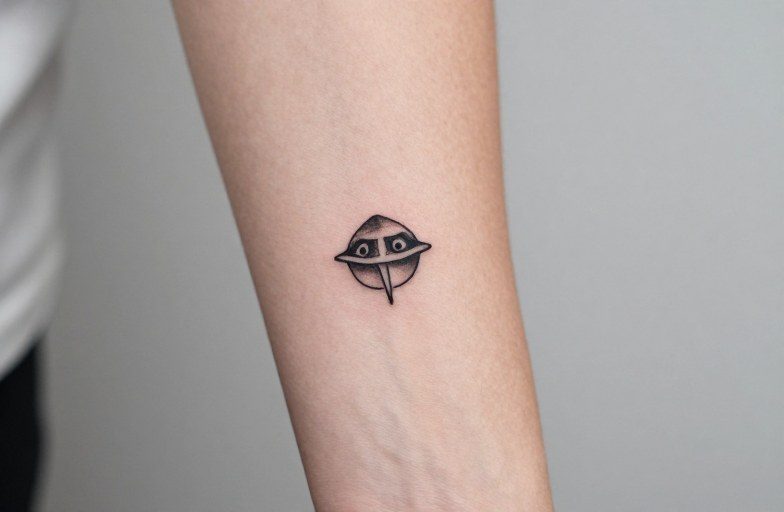
Small trad tattoos take the bold outlines, flat color fields, and iconic imagery of American traditional work and shrink them down without losing punch. The style was built for readability from across a room, which means even at palm-size, a swallow or dagger stays legible for decades. What changes at smaller scale is placement flexibility, session length, and how much detail you can pack in before the design starts to muddy. This guide covers what works, where it works, and how to keep it trad.
Matching & Pairing Ideas
Traditional flash has always been designed in sets, swallows in pairs, matching ships on forearms, symmetrical daggers on calves. At small scale, pairing becomes more accessible and less of a commitment.
Classic Pairs That Translate Down
Swallows facing each other on collarbones or behind each ear read instantly as trad without needing much real estate. Matching anchors on wrists or forearms work for couples or friends without drifting into cheesy territory because the imagery predates the trend. Paired roses, one on each hand, each knee, each hip, create balance without demanding identical placement.
- Two small clipper ships, mirror images, on calves or thighs
- Matching dice showing different numbers, inner biceps or wrists
- Serpent heads facing each other, upper arms or sides of ribs
- Small hearts with banners, split phrases, on forearms
Asymmetrical Sets
Not every pair needs to mirror. A small dagger on one forearm and a heart pierced by a similar blade on the other creates dialogue between the pieces. A single swallow on the left hand, a spiderweb on the right elbow, both trad, both small, but different enough to feel collected rather than purchased as a set.
Trending Variations
The trad revival of the last decade has pushed classic imagery into tighter spaces and weirder combinations. Some of these will age into the canon; others will date themselves. The ones that stick tend to keep the technical rules: bold black lines first, color inside those boundaries, minimal shading.
Micro-Trad and Single-Needle Work
Single-needle or very tight three-round-liner trad has gained traction, especially for finger tattoos, side-of-hand pieces, and inner-ear placements. The risk: lines that thin can blow out or fade to nothing within a few years. A skilled artist will compensate by keeping outlines slightly heavier than true micro-realism, by limiting detail, and by placing these tattoos where sun exposure and friction are minimal. Ask to see healed photos of small trad work before committing.
Mashups and Subculture Twists
Punk and hardcore scenes have long borrowed trad frameworks for their own iconography, straight-edge X’s in bold outline, band logos rendered as ship figureheads, coffins with scene-specific details. These work at small scale because the trad structure carries them. What fails: adding so much subculture-specific detail that the trad bones disappear and the tattoo becomes illegible at two inches.
Best Placements
Small trad tattoos excel where the skin is relatively stable, minimal stretching, moderate sun exposure, not too much friction. The style’s bold outlines forgive some aging, but placement still determines how crisp the piece looks at year five versus year fifteen.
- Upper arms, outer biceps: Classic, stable, easy to show or hide. Small trad here reads as intentional, not filler.
- Forearms, inner and outer: High visibility, moderate aging. Inner forearm fades faster from sun and washing; outer holds better.
- Calves: Excellent for small pieces that need a bit of height, lighthouses, pin-up legs, daggers. Skin stays relatively stable with age.
- Behind the ear, side of neck: Bold enough for trad to read at this size. Healing is tricky; sleep carefully for two weeks.
- Fingers, hands: High blowout risk, fast fading, but trad imagery, spiders, dice, small hearts, has lived here for decades. Plan for touch-ups.
- Ribs, hip bones: Painful, but the canvas is flat and stable. Small trad pieces here age well if weight stays relatively consistent.
What to avoid: directly over joints (knuckles, elbows, knees) for intricate small trad, since constant movement distorts lines over time. Simple imagery, stars, small crosses, can survive; detailed clipper ships cannot.
Standout Design Ideas
The best small trad tattoos distill an image to its most recognizable elements. A full-ship tattoo at four inches needs rigging, sails, waves. At two inches, you get the hull, one mast, a few clouds. The skill is in choosing what to keep.
Imagery That Reads at Small Scale
- Swallows, sparrows, eagles: Wing shape carries the design. Even tiny, the silhouette is unmistakable.
- Hearts, daggers, coffins: Simple geometry with bold outline. Add a banner if space allows.
- Snakes, panthers, wolves: Curved forms that wrap small areas well, wrists, ankles, sides of fingers.
- Roses, lotus, chrysanthemums: Petal structure must simplify. Too many lines and the flower becomes a blob.
- Anchors, lighthouses, compasses: Nautical trad staples. The anchor especially works almost anywhere at almost any size.
Color vs. Black and Gray
Traditional color, red, yellow, green, navy blue, was chosen for stability and contrast. At small scale, solid color fields hold better than gradients. A small red heart with a black banner ages cleaner than a “realistic” heart with modeled shading. Black and gray trad can work small but risks looking like generic flash if the line weight isn’t assertive. When in doubt, more black, less gray wash.
For First-Timers
Small trad tattoos are a common entry point, and for good reason: the style is legible, the sessions are short, and the imagery is familiar enough that you won’t surprise yourself with something unrecognizable in six months.
What to Expect in Session
A small trad piece, under three inches, usually takes thirty to ninety minutes depending on complexity and color. The outline dominates; color fills are quick. Pain varies by placement, but the brevity helps. Bring a book or podcast. The artist will likely stencil the design, adjust placement with you standing and sitting, then work from the outline inward.
Choosing Your First Piece
First-timers often overthink meaning. Trad imagery has accumulated associations, swallows for travel, anchors for stability, but the style itself was built for walk-in clients picking from flash on the wall. Choose an image you want to look at, in a placement that fits your life, from an artist whose small trad healed work you can inspect. The rest is less important than the technical execution.
Size & Scale
There’s a floor below which trad stops being trad. Single-needle micro-tattoos can reference the style, but true trad needs enough space for bold lines and color separation. As a practical rule: the main outline should be at least as thick as a standard sewing needle (roughly 0.7mm), and color fields need enough area to hold pigment without bleeding into adjacent lines.
Minimum Viable Dimensions
A simple star or cross can work at one inch. A swallow needs at least two inches for wing detail. A ship with sails needs three to four inches minimum, or it becomes a generic boat. A rose with leaves and a banner needs similar space. When artists show you a design, ask: “What happens to this at half the size?” If the answer is “it loses the leaves” or “the banner becomes illegible,” that’s honest. If the answer is “it’ll be fine,” push for specifics.
Scaling Existing Flash
Flash sheets were drawn at specific sizes. Photocopying down rarely works, lines get too thin, detail vanishes. Good artists redraw small trad from reference rather than shrink, simplifying as they go. This is the difference between a small trad tattoo and a small tattoo that used to be trad.
The Bottom Line
Small trad tattoos work because the style was engineered for durability before durability was a marketing angle. Bold lines, flat color, iconic imagery, these elements survive shrinking better than realism, fine-line ornamental work, or heavy blackwork. The constraints are real: less detail, tighter placement requirements, a harder floor on minimum size. But within those boundaries, trad offers first-timers and collectors alike a way to wear something timeless without committing half a limb. Find an artist whose healed small work you can see in person. Pick an image that reads at the size you’re getting, not the size it was drawn. Then sit still, let the lines go in bold, and walk out with something that’ll look like itself for longer than most trends last.
Frequently Asked Questions
How small can a traditional tattoo be before it stops aging well?
Most trad imagery needs at least two inches to maintain legibility over time. Simple shapes like stars or crosses can go smaller, but anything with detail, wings, sails, lettering, needs room for bold lines and color separation.
Do small trad tattoos cost less than larger ones?
Often yes for single-session pieces, but many artists charge a minimum rate regardless of size. A two-inch trad piece might take an hour and cost that minimum, while a four-inch version with more color could be only slightly more.
Can small trad tattoos be covered up or reworked later?
Bold black lines make trad coverups challenging but not impossible. Small pieces can sometimes be expanded into larger trad designs, or blasted over with heavier blackwork. Plan placement with future options in mind.
What’s the difference between small trad and micro-realism?
Small trad uses bold outlines, flat color, and simplified forms. Micro-realism uses fine lines, shading, and detail to mimic photographs. Trad ages better at small sizes because the bold structure holds as skin changes.