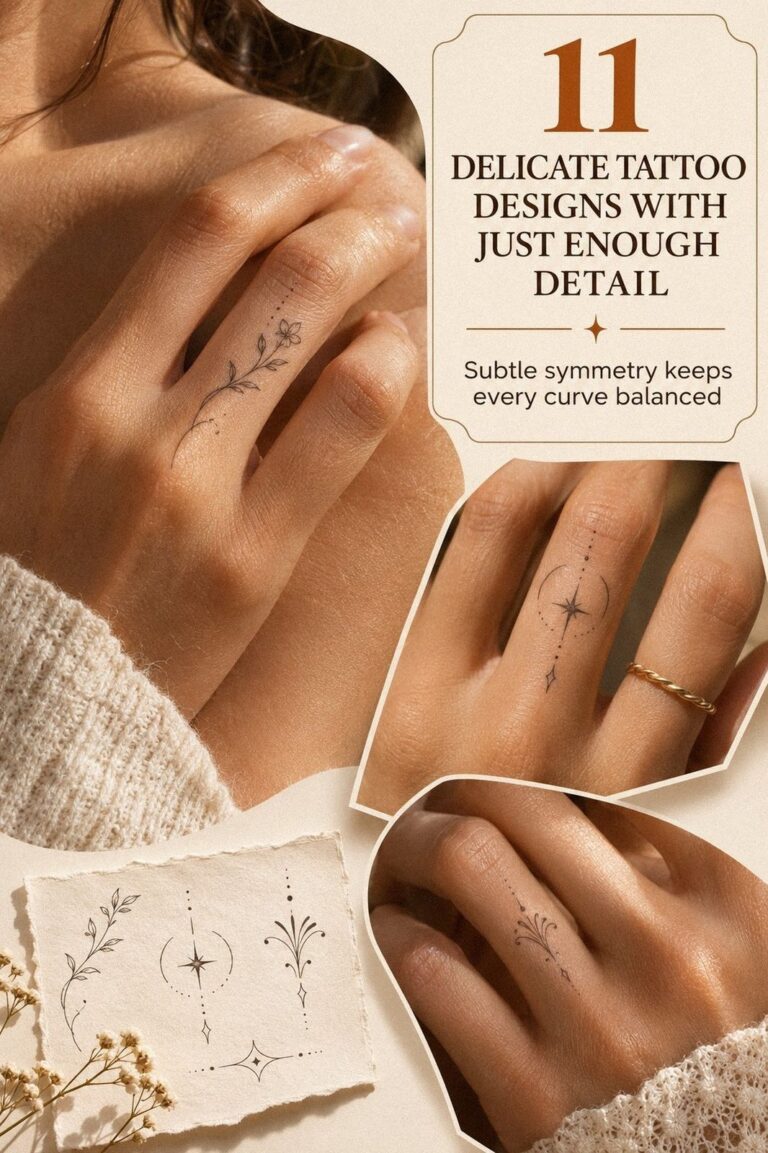
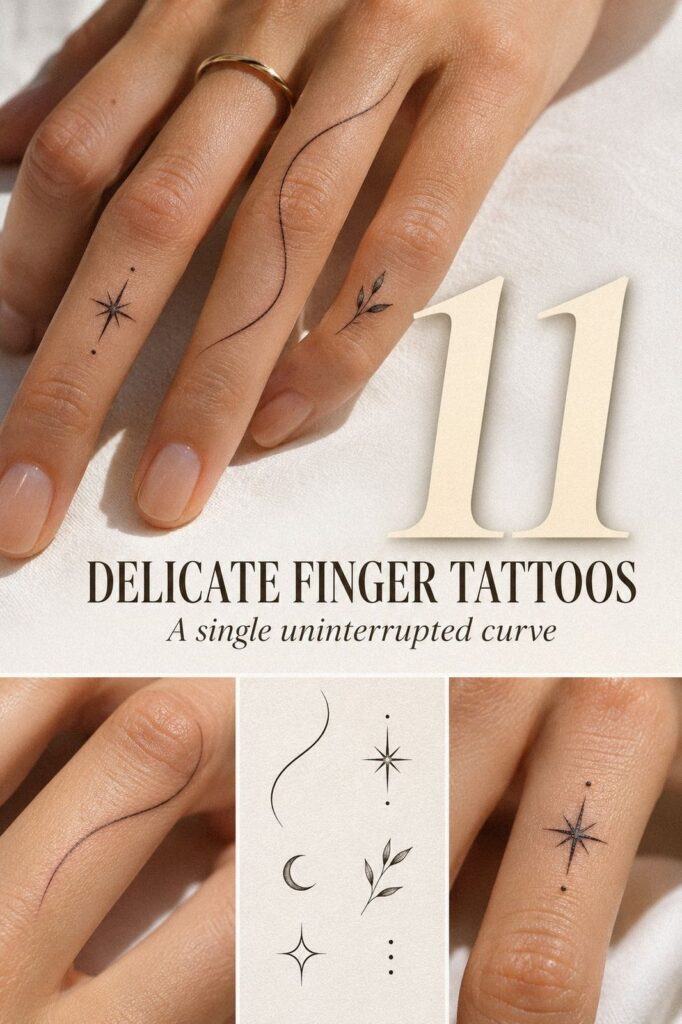
Delicate finger tattoos can say more with less, but lasting visibility depends on placement, line weight, and aftercare. I once chose a fine mark because it looked elegant fresh, then learned the hard way that hands work constantly. The myth is that tiny ink needs no planning. It does. These 11 ideas keep your design personal, crisp, and wearable!
Editor’s note: I’ll always choose a meaningful silhouette over crowded detail. If you’re comparing value, cost, and long-term visibility, your best decision is usually a design your artist can heal cleanly.
- Start With Fine Linework
- Let Botanical Sprigs Follow the Finger
- What Makes a Constellation Feel Personal?
- Hide a Symbol Along the Side
- Choose Crisp Black Ink
- Turn a Micro Animal Into a Signature
- Share a Bond Without Matching Exactly
- Let Negative Space Do the Work
- Keep Script Short and Graceful
- Why Sacred Symbols Need Context
- Make Lasting Visibility the Priority
1Start With Fine Linework
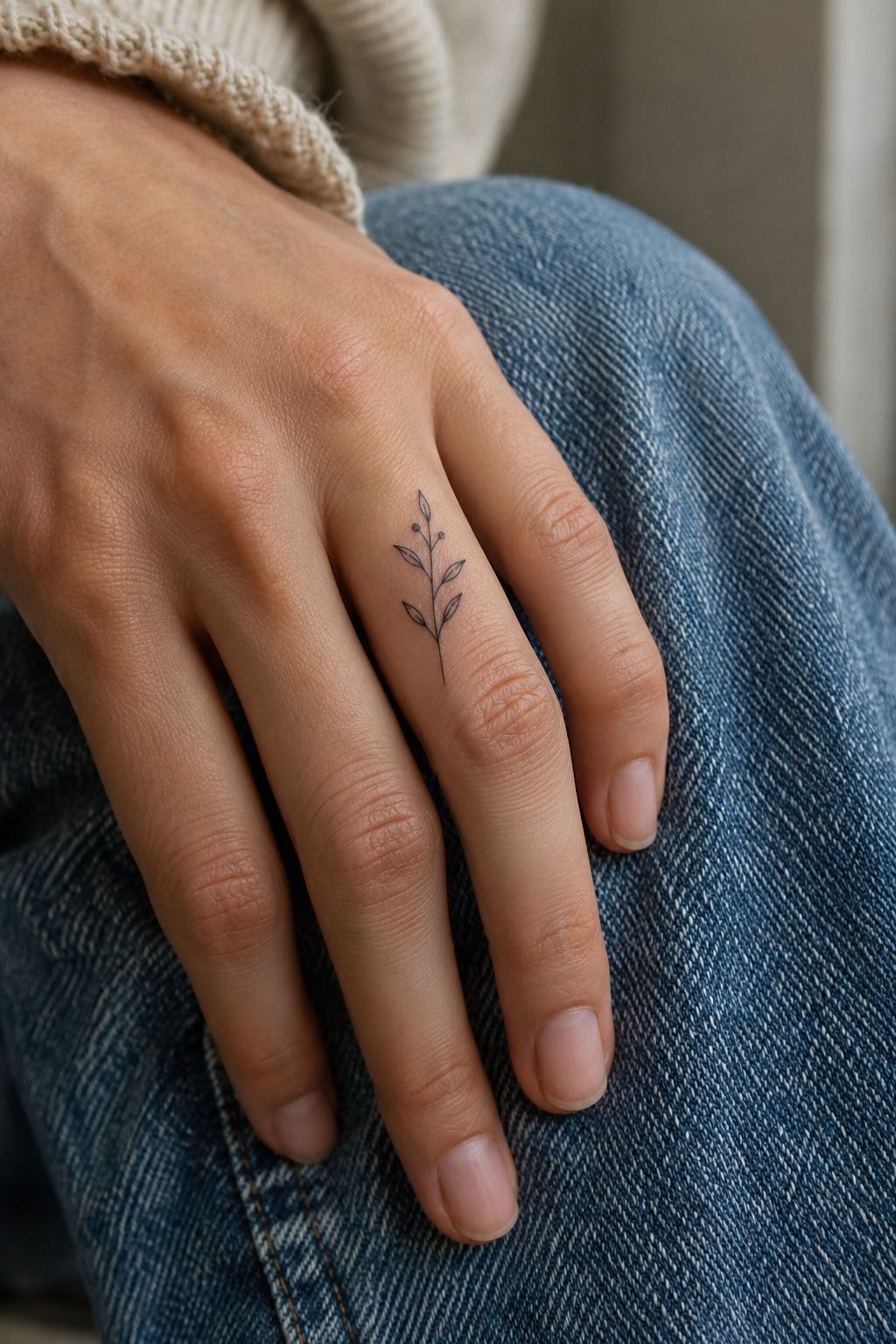
Let the silhouette breathe
A hair-thin line on fair cool-pink skin can look remarkably understated. You might choose a narrow crescent, tiny open heart, or short botanical curve that follows your finger instead of fighting it. Single-needle linework keeps your mark graceful, but your artist still needs enough spacing for it to remain readable after healing.
I’d skip a miniature portrait here. It may look intricate in a stencil, but facial details can blur quickly on a busy hand.
A crisp symbol with one expressive turn will age more calmly. If you’re comparing scale and placement, browse these small finger tattoo references before you commit.
The strongest version has breathing space around the mark. Your skin tone will influence contrast, and your artist may adjust the pigment so it reads clearly without looking heavy. Carbon-black pigment usually gives the strongest outline, while a softer grey can make the result more ethereal.
Don’t judge the finished piece on the first day. Fresh skin can look sharp, swollen, and darker than expected. Follow your artist’s aftercare instructions, keep the area clean, and avoid making a second decision before the surface settles.
2Let Botanical Sprigs Follow the Finger
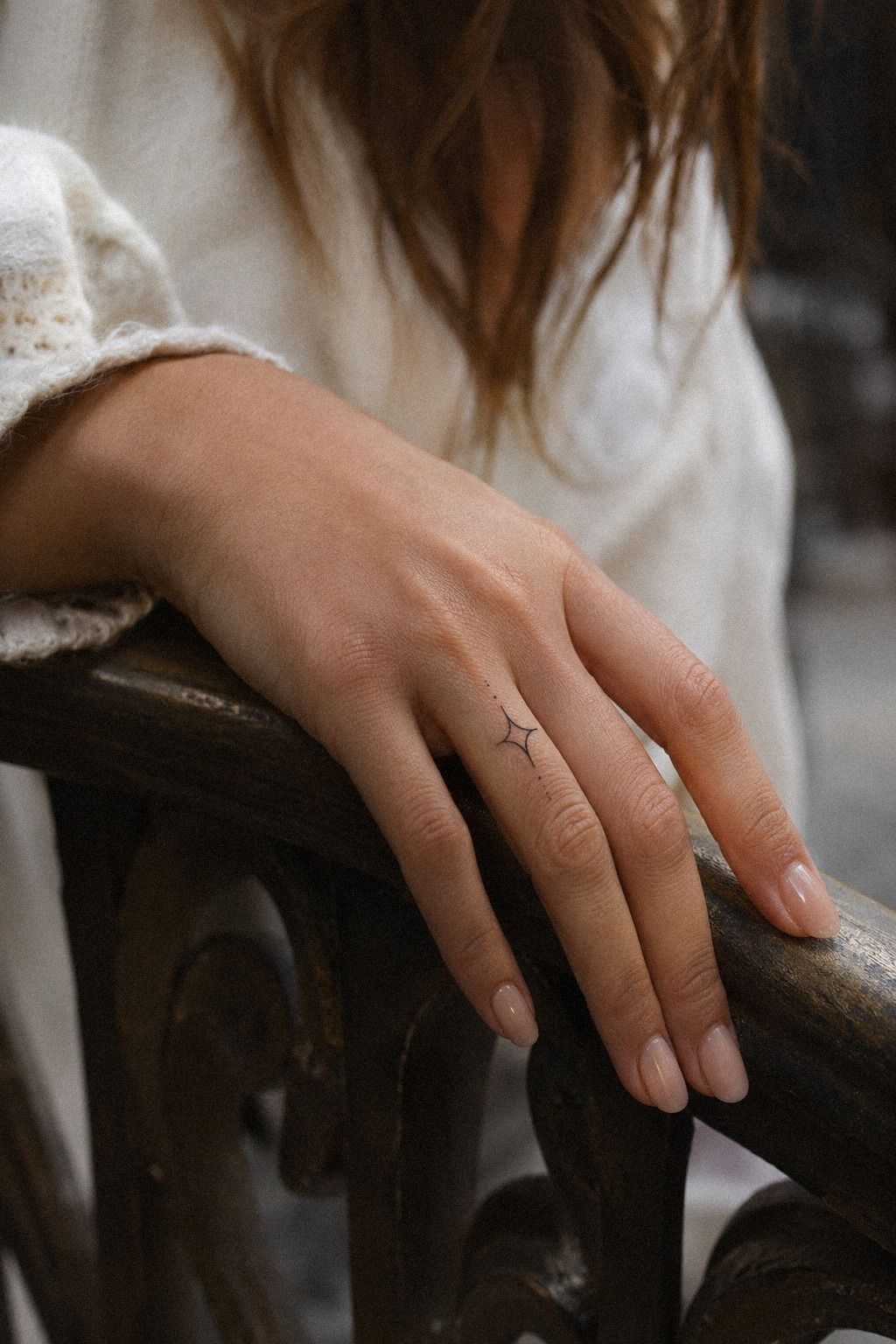
Tiny botanical sprigs suit medium warm ivory skin because their flowing stems can follow the natural length of your finger. A single olive branch, lavender stem, or fern-like sprig feels organic without becoming ornate. Fine botanical linework gives you an elegant shape that still looks personal from a distance.
I’d choose one stem over a crowded bouquet. The crowded version sounds romantic, but every extra leaf needs room to heal cleanly. If you’re drawn to a shorter design, the collection of small cute finger tattoos gives you useful proportions to compare.
Your artist can use a slightly darker stem and lighter leaf details, creating a quiet visual rhythm. Deep black ink makes the central line more visible, while delicate grey accents can soften the smaller leaves. Ask how your design will read once your skin’s natural texture returns.
Don’t treat a botanical tattoo like a sticker that can sit anywhere. The side of your finger bends, rubs, and sees frequent washing. I’d place the stem where your finger stays relatively flat, then let the leaves point toward your hand for a more graceful finish!
3What Makes a Constellation Feel Personal?
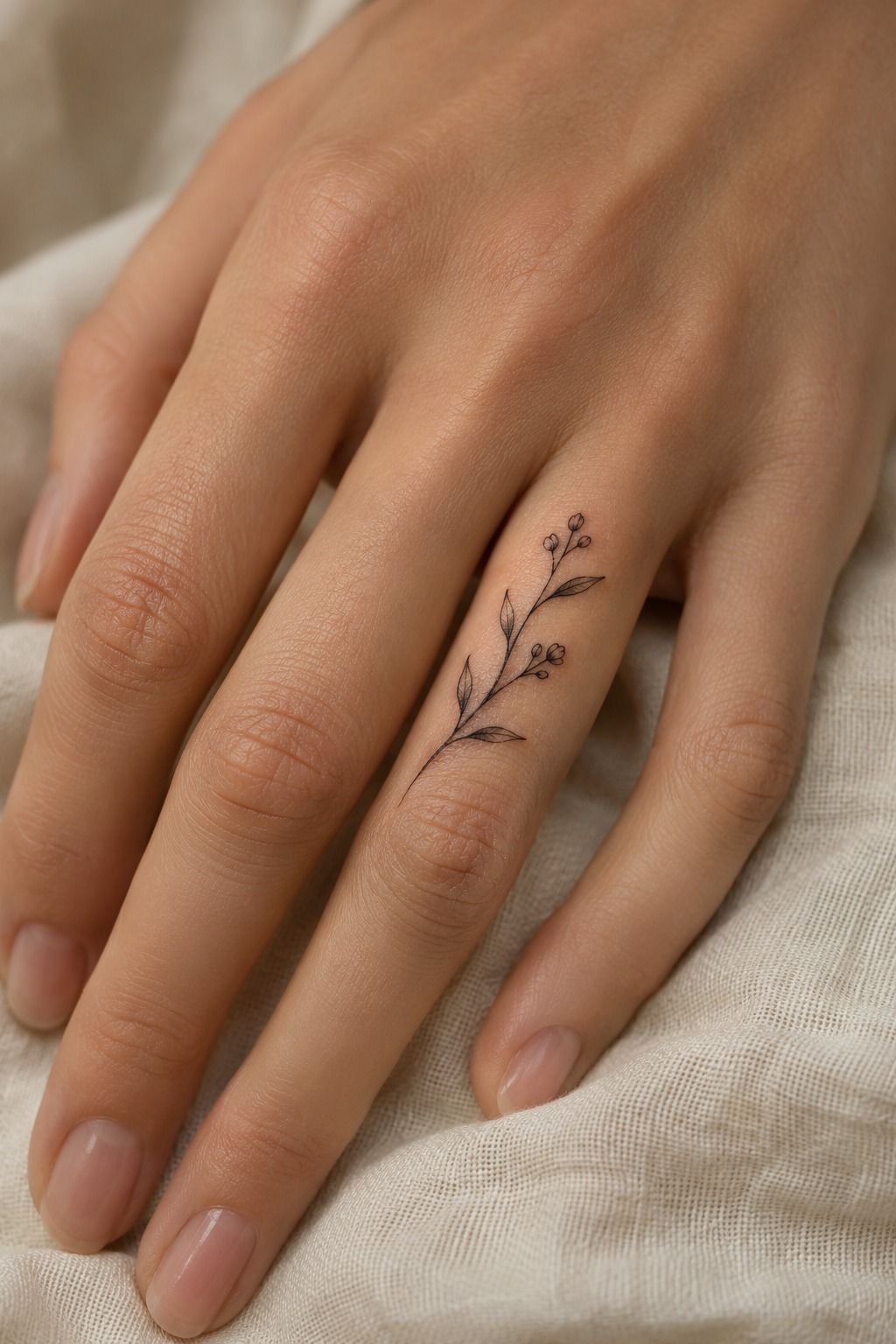
Choose the stars that matter
A small constellation on medium olive skin can feel symbolic without explaining itself. Three or four clean points connected by delicate lines create a striking design, especially when the pattern follows your finger’s natural direction. Black dotwork gives the stars enough presence without turning the mark into a heavy band.
Your constellation can represent a birth month, private memory, or direction you keep returning to. I’d avoid copying a famous star map unless it matters to you. A personal arrangement will feel more meaningful, and your artist can make the spacing more balanced for the available skin.
The strongest version uses a clear hierarchy: one larger star, a few smaller points, and one fine connection. Round shader ink can create tiny dots, but your artist should keep them distinct rather than packing the area. If you’re considering a hidden placement, compare these small inside finger tattoos for scale.
What’s the point of choosing a constellation if every line is crammed together? Give your design room to breathe. Your tattoo will look more polished, more timeless, and easier to recognize after the initial brightness fades.
4Hide a Symbol Along the Side
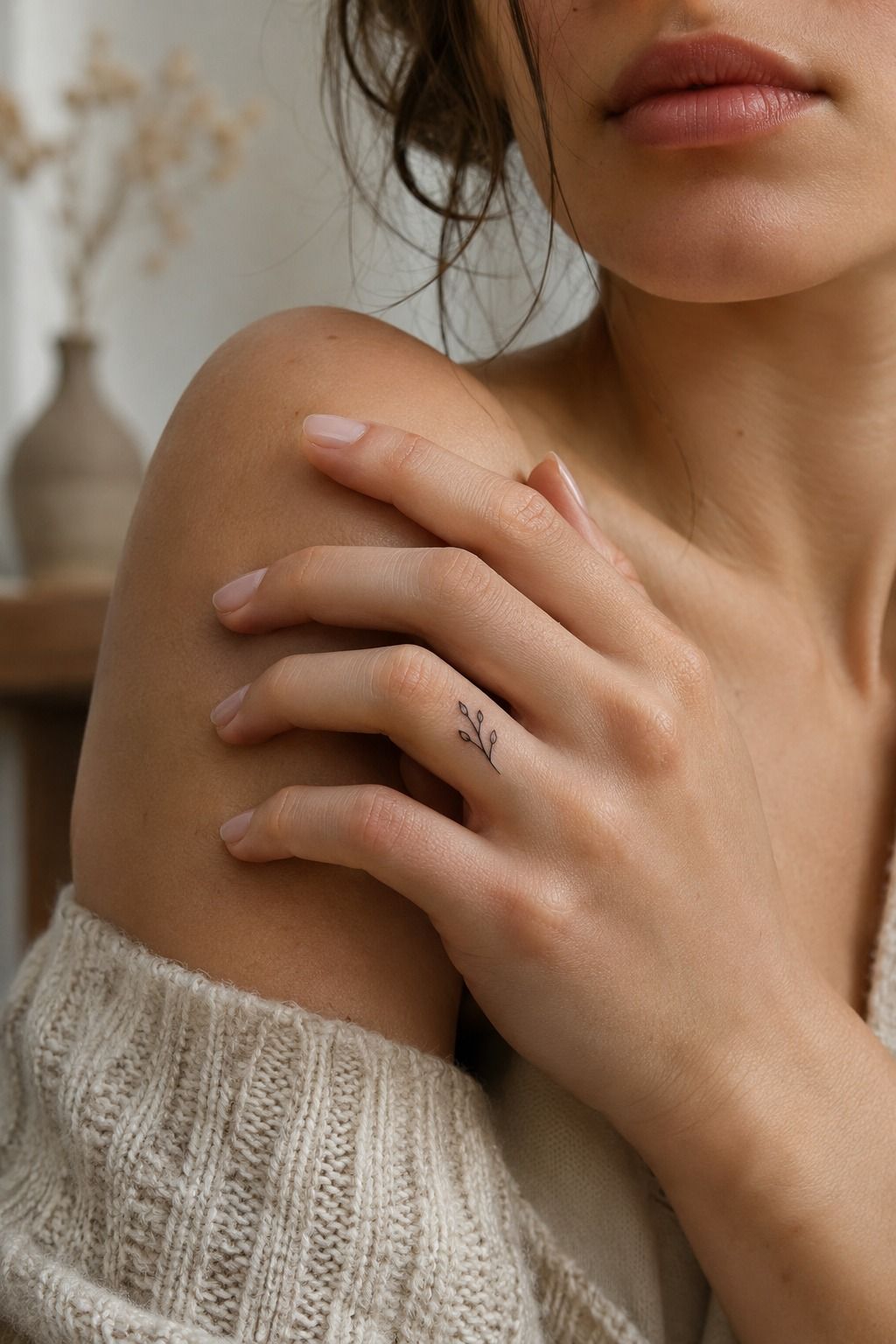
Side-finger placement feels intimate because your design appears only when your hand turns. On golden tan skin, a hair-thin crescent, wave, or narrow leaf can look sleek without demanding attention. Side-finger placement is a smart choice if you want a personal mark that isn’t visible at every moment.
I’d choose a compact symbol instead of a long sentence. The side of your finger bends and receives friction, so excessive detail can lose its crispness. Your artist may recommend a slightly bolder outline than the stencil shows, and that adjustment is worth listening to.
The side can also work for a paired motif, such as one half of a sun and one half of a moon. Black pigment with clean negative space keeps your design readable and gives your skin an active role. For more placement comparisons, see these delicate side finger tattoos.
Visibility is part of your decision. If you’re using your hands all day, your tattoo may face soap, sunlight, and constant movement. I’d rather have a simpler, fierce mark that stays legible than an intricate piece that becomes a soft blur.
5Choose Crisp Black Ink
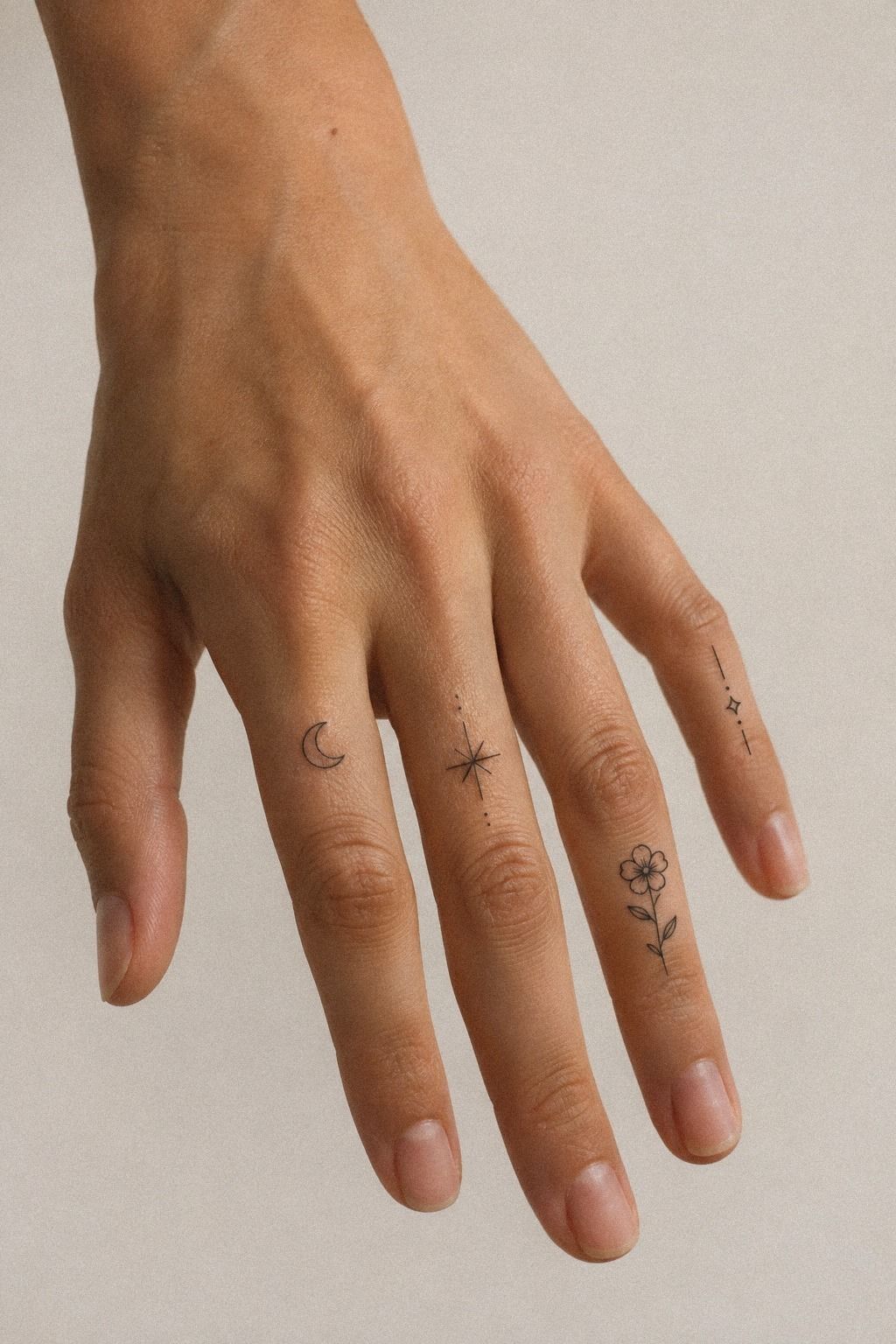
Test the shape before the mood
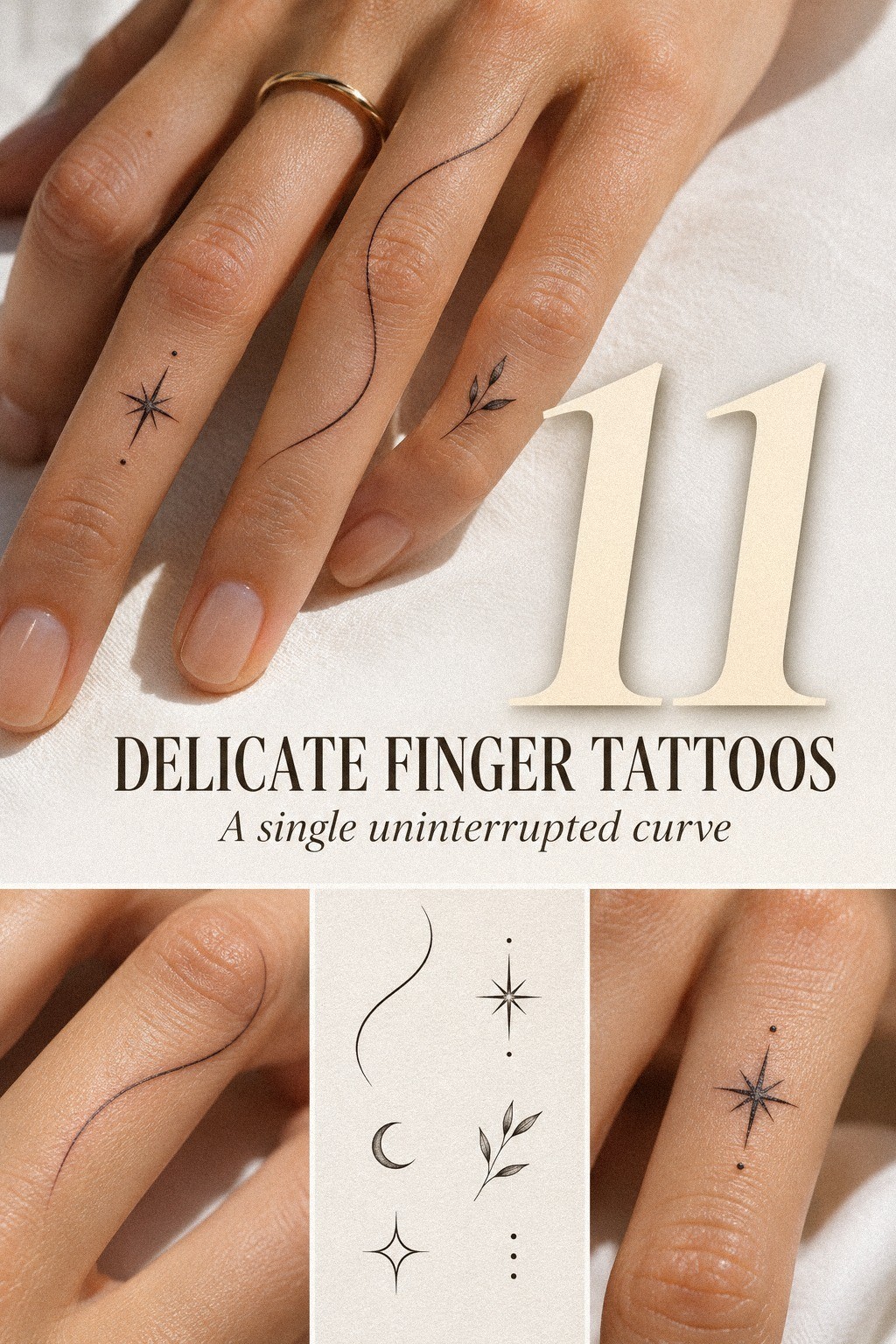
A tiny bow, narrow dagger, star, simple eye, or curved botanical emblem can all feel bold when the silhouette is clear. Each design benefits from enough open skin around it so you can judge the shape before committing. Traditional flash paper helps you compare proportions without rushing your choice.
I’d pick the design that still reads when you squint at it. That test removes decoration and reveals whether the silhouette works. Your artist can adapt the drawing to your finger’s width, but the underlying shape should remain clear.
Fine-line tattoos don’t need pale ink to feel delicate. Solid black pigment can look surprisingly refined when the mark is small and your negative space is generous. Ask whether a single-needle pass or fine 3RL configuration makes more sense for your chosen symbol.
Minimal doesn’t mean careless. Bring your artist a reference, explain what the symbol means to you, and ask to see the stencil at the intended placement.
A polished, understated mark can give you more confidence than a fashionable design you chose in a hurry. If you’re weighing cost against value, clarity is worth paying for.
Compare more proportions in these minimalist finger tattoo ideas.
6Turn a Micro Animal Into a Signature
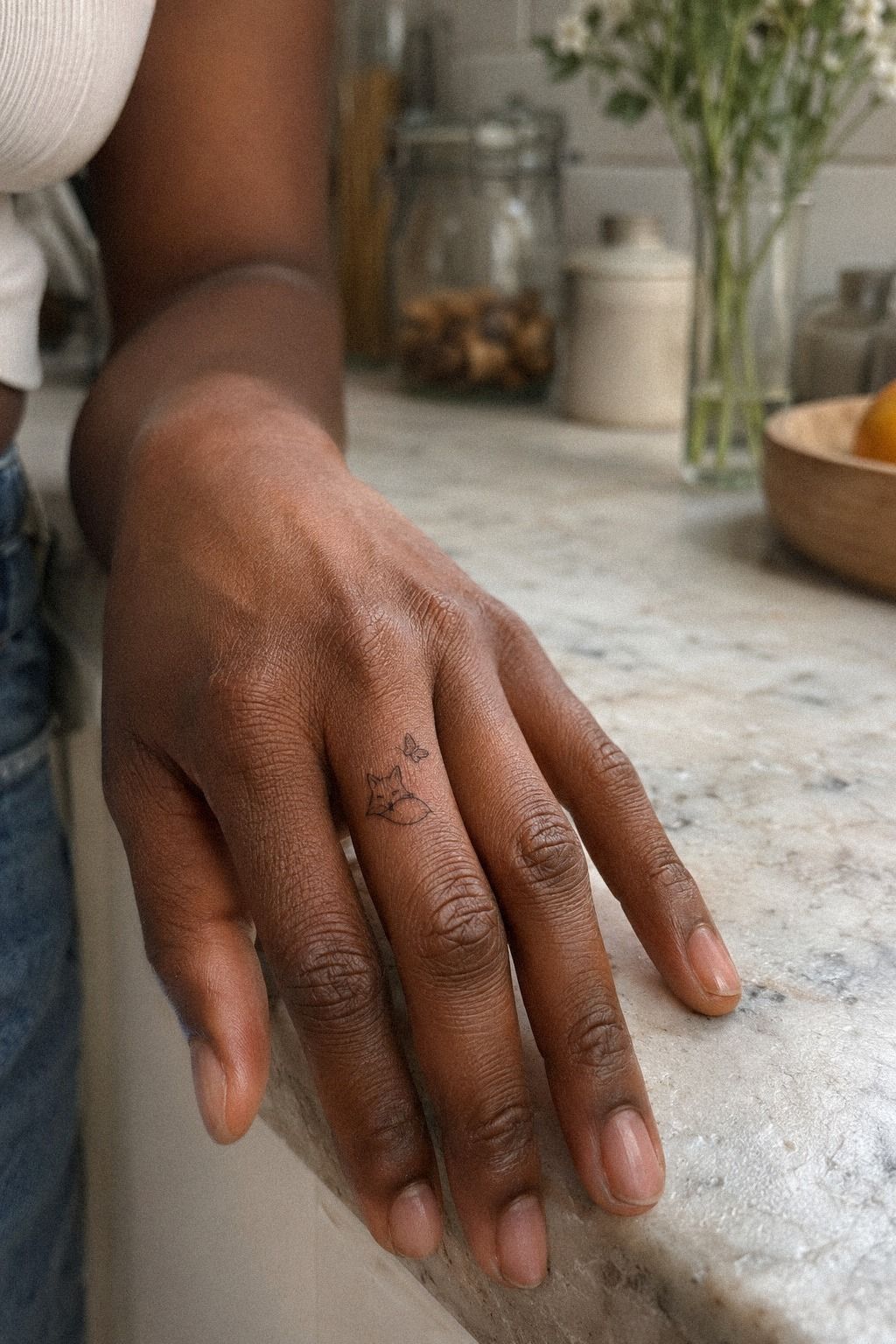
Reduce the animal to one gesture
A tiny animal on deep ebony skin can be playful, personal, and wonderfully expressive. Think of a small swallow, curled cat, fox face, or moth with only the lines needed to identify it. High-contrast black ink can make the silhouette clear while respecting the compact area.
I’d avoid squeezing fur, feathers, or scales into a finger-sized design. Your artist should reduce the animal to its strongest gesture: the curve of a tail, angle of ears, or shape of wings. That keeps your tattoo whimsical instead of muddy.
A micro animal can carry private meaning without looking solemn. Smooth black linework gives your mark a polished edge, while one small dot or open eye can make it feel more daring. If you prefer a shorter, cuter proportion, look through these small cute finger tattoo ideas.
Your skin tone, hand movement, and chosen placement all matter. Ask for healed examples on comparable skin when possible, and don’t assume a fresh result tells the whole story. The right design will feel playful now and still recognizable later!
7Share a Bond Without Matching Exactly
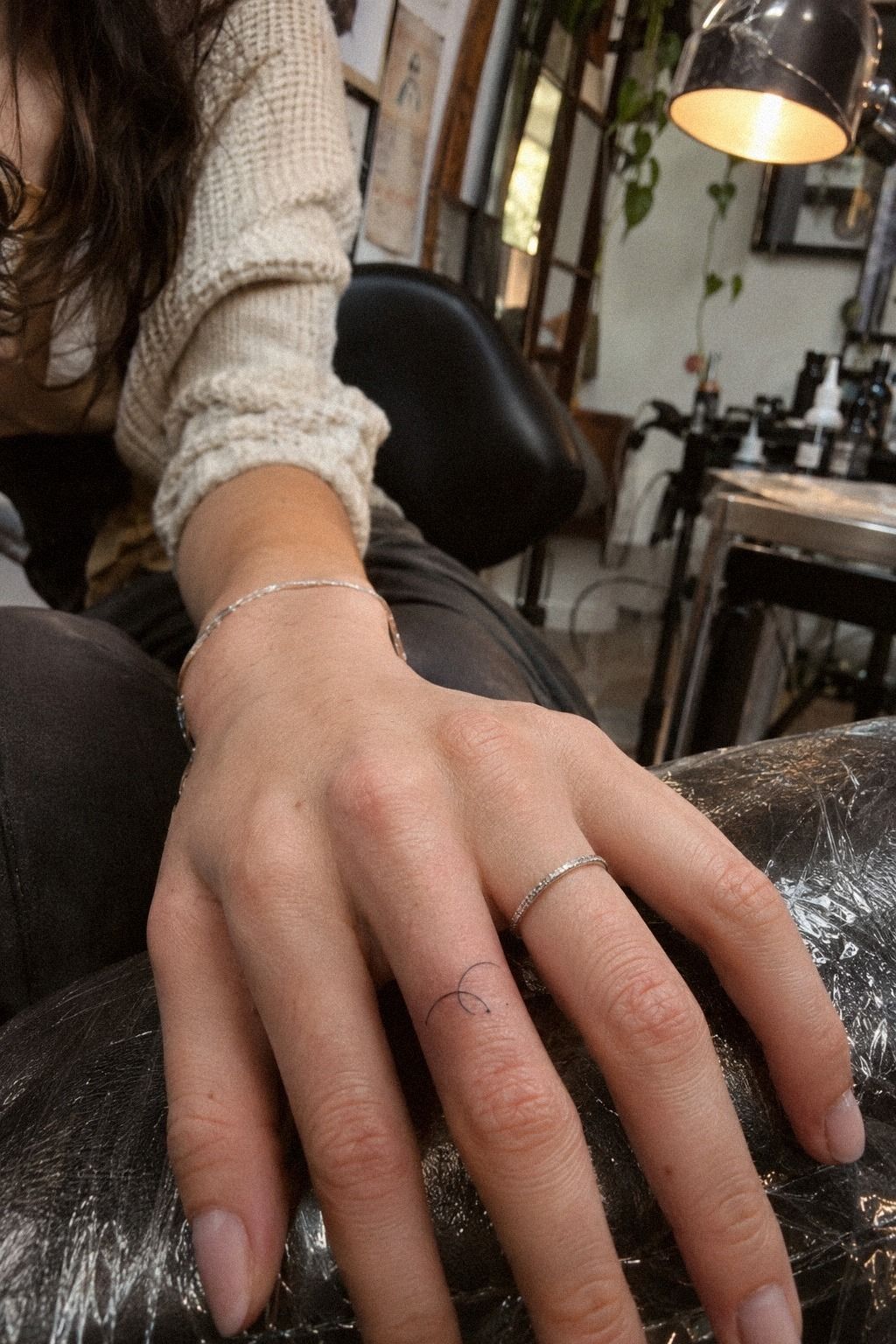
Keep the connection, change the detail
Matching tattoos work best when they share a visual language rather than becoming identical stamps. Two people might choose matching stars, mirrored leaves, or tiny initials drawn with the same line weight. Matching fine-line symbols can be intimate without looking overly coordinated.
I’d avoid selecting a design only because it looks coordinated beside someone else’s. Your hands, habits, and preferred placement may differ.
One person might need a side placement, while the other prefers the inside of a finger. The bond remains meaningful even when your final marks aren’t carbon copies.
Consider a matched pair with one small variation. Black ink symbols can repeat the same outline while changing one dot, leaf, or direction. That gives each person a personal detail, which feels more expressive than forced symmetry.
You can compare placement options in these minimalist hand finger tattoos for women.
Talk about aftercare before your appointment. You’ll want the same basic instructions, but your skin may respond differently. A meaningful tattoo should leave room for individuality, especially when your relationship is strong enough to stand without visual proof.
8Let Negative Space Do the Work
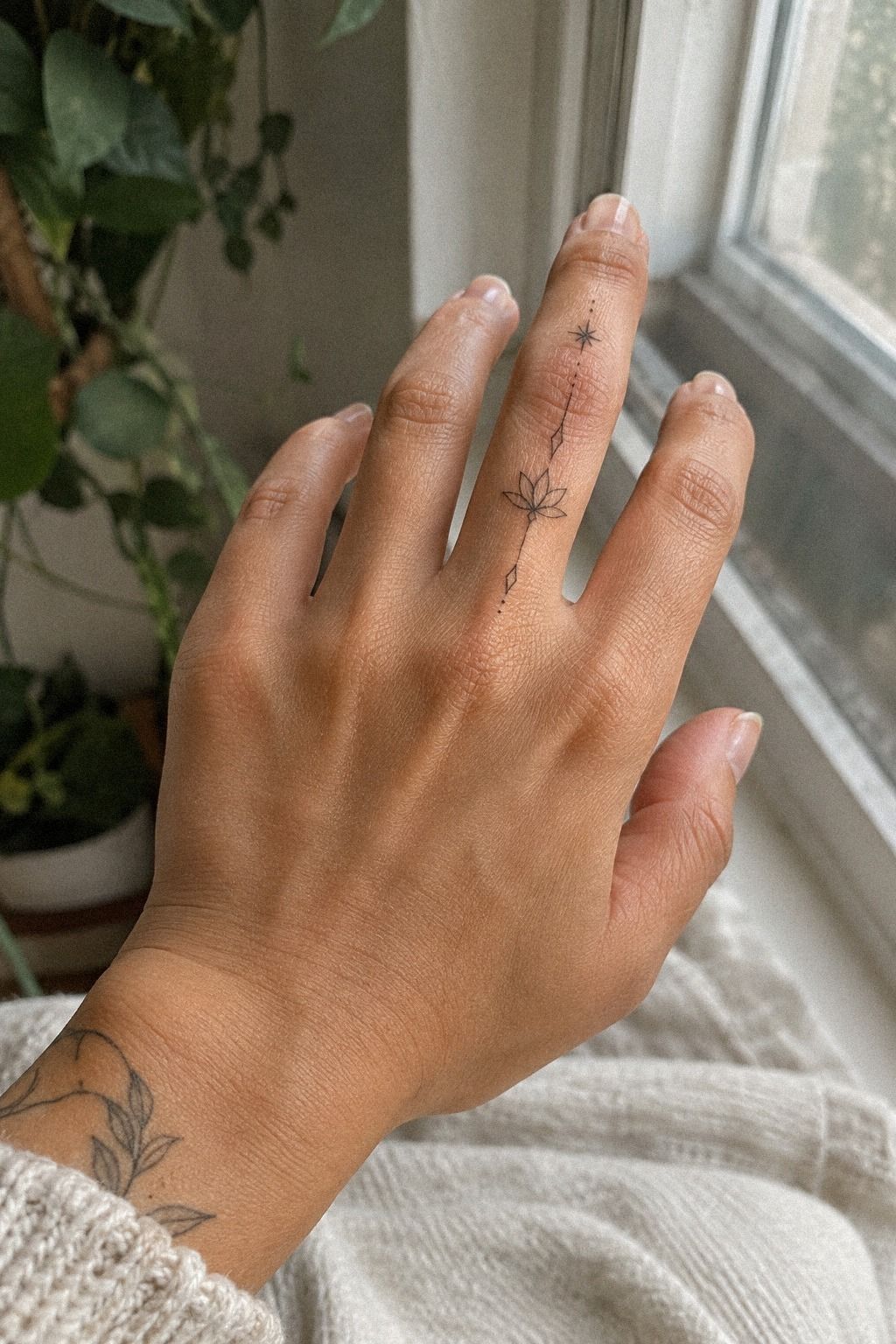
Protect the open skin
Negative space can make a delicate design look more polished because your skin becomes part of the symbol. A crescent, outlined heart, tiny eye, or open leaf can feel crisp without filling every available millimeter. Open-skin design gives the mark contrast and helps the idea stay readable.
I’d be careful with very small filled shapes beside one another. They may look bold in a stencil but merge after healing, especially on the sides of fingers. Your artist can simplify the arrangement while keeping the personal meaning intact.
Negative space also helps a symbolic design feel understated rather than unfinished. Uninked skin can separate stars, petals, initials, or geometric turns. If you’re studying small proportions, compare these small hand finger tattoos for women before deciding how much detail you really need.
The best test is simple: cover part of the sketch and see whether the remaining shape still communicates. If it does, your design has a strong foundation. If it doesn’t, remove detail until the silhouette can speak on its own.
9Keep Script Short and Graceful
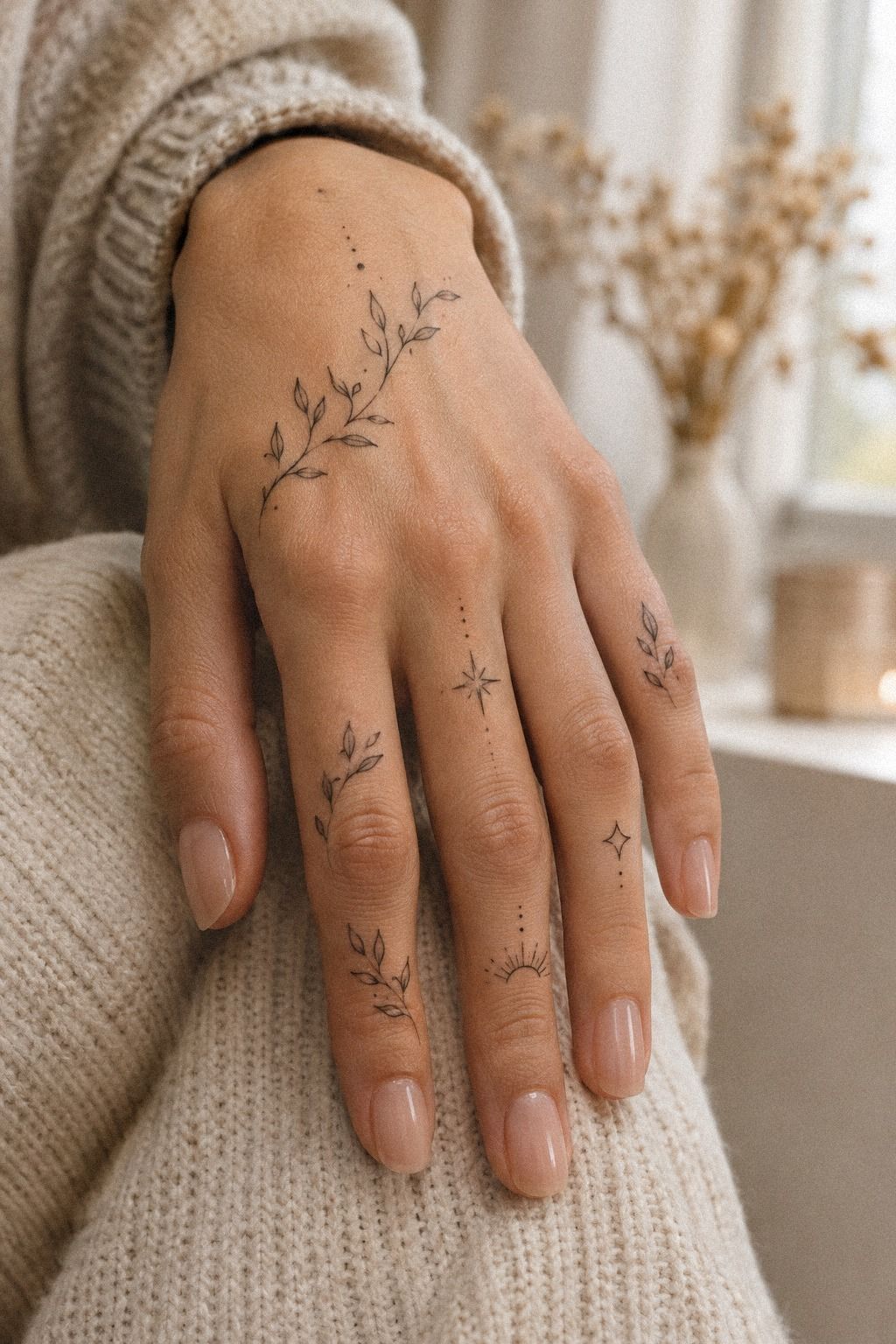
Graceful script can hold a name, initial, date, or one short word, but your lettering must be treated as a drawing. On medium olive skin, a flowing handwritten mark can look feminine, personal, and quietly powerful. Fine script lettering needs enough separation between letters to remain readable.
I’d skip a long phrase. Finger skin doesn’t offer much uninterrupted length, and tiny letters can merge as the tattoo settles. Choose one word that still matters when nobody asks what it means.
Your artist may redraw the script several times before the curves feel natural.
A small serif initial or loose handwritten letter can be more timeless than a trend-heavy phrase. Carbon-black lettering gives the shape clarity, while a slightly thicker downstroke creates contrast without making your mark feel heavy. If you like smaller placements, compare these small inside finger tattoo ideas.
Check the spelling twice. Then check it again.
I’d rather see a simple, polished initial than a rushed sentence that needs explanation every time someone notices it. That small spelling check can protect the value of your tattoo for years.
10Why Sacred Symbols Need Context
Research the meaning before booking
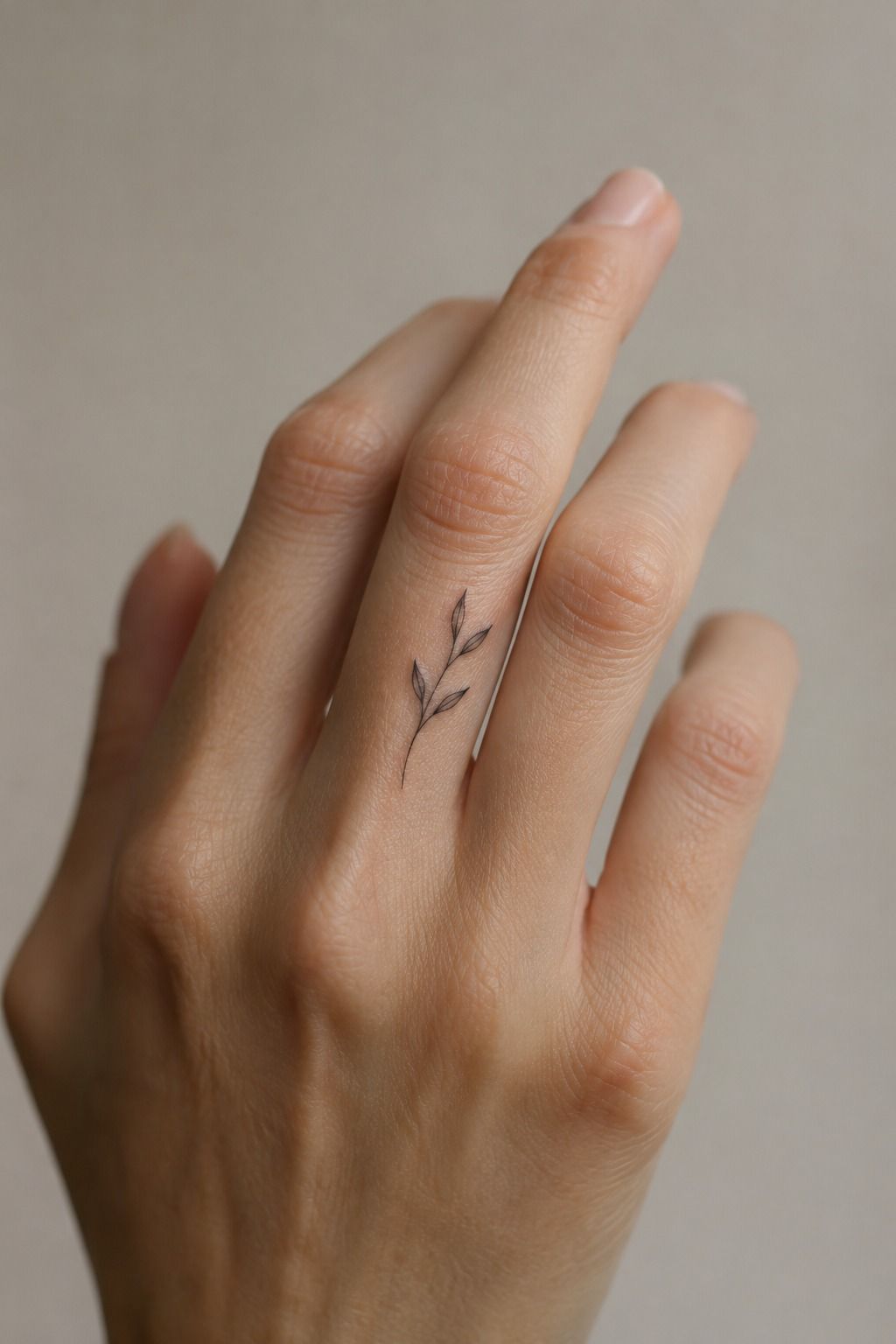
Sacred symbols deserve more than a fashionable treatment. A religious icon, protective sign, or inherited motif may carry history that isn’t obvious from a quick reference image. Cultural context should come before placement, styling, or personal adaptation.
Ask where the symbol comes from, who traditionally uses it, and whether altering its orientation changes the meaning. If you’re unsure, speak with someone connected to that source tradition rather than relying on a caption or trend page.
A meaningful sacred design can remain minimal while still being respectful. Symbol research might lead you toward a less literal shape, a family-associated mark, or a placement that feels private. That choice can make the tattoo more personal and less performative.
I’d also avoid combining several sacred motifs simply because they look visually compatible. Each one deserves room for its own meaning. A single carefully considered symbol can feel more iconic than a crowded arrangement.
11Make Lasting Visibility the Priority
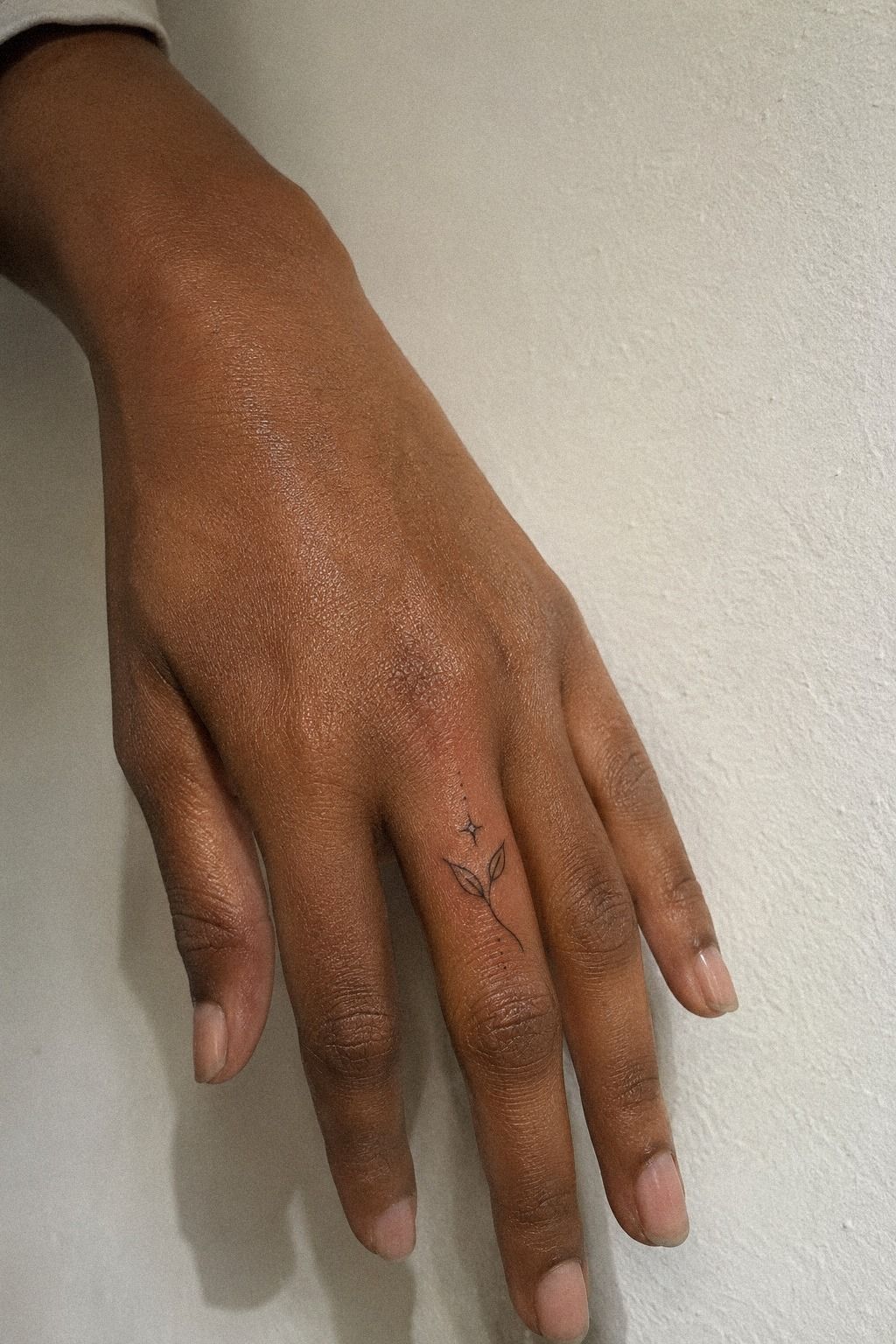
On deep brown skin with a warm undertone, lasting visibility starts with contrast, placement, and a design that isn’t too crowded. A small black crescent, clean star, or narrow botanical curve can remain striking when your artist leaves enough open skin around it. Rich black pigment gives the design a clear foundation.
I’d choose a slightly bolder contour over an ultra-faint line if longevity is your top concern. Very fine lines can spread as they age, especially where fingers bend and rub. Your artist can help you balance a delicate appearance with enough structure to keep your symbol readable.
Keep ultraviolet exposure in mind after healing. Broad-spectrum sunscreen and sensible aftercare can help protect the appearance, while frequent friction may still affect finger tattoos over time. For more scale ideas, see these small hand finger tattoos for women, and compare the small finger tattoo references before your consultation.
Here are practical US reference points to discuss with your artist:
These are broad references, not a quote. Your artist, region, design size, and placement will affect the final cost, so ask for a clear cost estimate before booking. A realistic budget helps you judge whether the artist’s value matches the work you want.
Why Finger Ink Needs a Smaller Promise
I’ve learned that finger tattoos reward restraint more than ambition. The first design I wanted had too many tiny details, and I kept trying to save it by shrinking everything.
That was the wrong direction. A finger isn’t a miniature graphic.
It’s moving finger skin that bends, washes, rubs, and catches sunlight every day.
The best delicate tattoo usually has one job. It might mark a person, hold a private symbol, or give you a small reminder that feels empowering when you notice it. I’m drawn to designs that are personal without being loud, because you get to decide when the meaning is shared.
That privacy is part of the appeal!
I also think artists should be honest about fine lines. A hair-thin mark can look elegant and intricate, but it may soften with time.
Solid black shapes often hold their presence better than faint grey marks, and placement matters as much as the drawing. If you’re choosing between a charming detail and a clearer silhouette, I’d choose clarity.
The table above is the conversation I wish more people had before booking. Healing timelines take weeks, complete settling takes months, and the price depends on your artist and region. None of that removes the romance.
It makes your decision more thoughtful, which is exactly what a meaningful tattoo deserves.
Finger tattoos can be fierce, dainty, timeless, or playful, but they shouldn’t be treated as disposable. Look at healed portfolios, ask about aftercare, and let your artist tell you when a design needs more breathing room. That advice may change your sketch, yet it can protect the feeling you wanted in the first place.
What People Always Want to Know
How much does a delicate finger tattoo usually cost?
A delicate finger tattoo typically costs about $50 to $100 at a shop minimum or about $100 to $250 per hour in the US. A clear estimate depends on your artist, region, placement, and design complexity.
Your artist may charge the minimum even if your appointment is brief. I’d ask what’s included, whether touch-up policies differ, and whether the final stencil changes the quote. That makes the budget easier to judge.
Are delicate finger tattoos a good idea for a first tattoo?
Yes, delicate finger tattoos can be a good first tattoo if you understand the placement and aftercare. A personal symbol with clean lines may feel approachable, but hands can be more sensitive than forearms or thighs.
If I were nervous, I’d compare the finger with a more tolerable area first. You’ll make a better choice when your design and placement both feel right, rather than choosing only because the tattoo looks small.
How do I choose a tattoo artist for delicate finger tattoos?
Choose an artist with healed examples of clean linework, consistent spacing, and work on a range of skin tones. A healed portfolio tells you more than fresh results. You can also review these small finger tattoo references to compare line density.
I’d check the studio’s hygiene practices, ask how the artist handles finger placement, and bring references that show the scale you want. Don’t book from a single perfect-looking image. Your confidence is part of the value.
How much do delicate finger tattoos hurt?
Pain varies, but hands, feet, ribs, and sternum are often more sensitive, while the forearm, thigh, and shoulder are usually more tolerable. A short appointment may feel manageable, though everyone’s experience differs.
Your artist can explain the expected sensation and pacing. If you’re tense, tell them before starting so you can agree on breaks and communication. I’d rather ask early than pretend I’m comfortable.
How long do delicate finger tattoos take to heal?
The surface usually heals in about 2 to 3 weeks, while complete healing can take about 2 to 3 months. Gentle aftercare means following your artist’s instructions, washing carefully, and avoiding pools and direct sun while your skin settles.
Don’t pick or over-moisturize the area. Your artist may recommend a specific cleanser or moisturizer, so use their guidance rather than copying a random routine. I’ve found that simple, consistent care is easiest to maintain.
What’s the best placement for delicate finger tattoos?
The side or inside of a finger can offer a more discreet placement, while the top of the finger gives greater visibility. A flatter placement may help fine lines remain readable, but hand movement and friction still matter. For another comparison, browse these delicate side finger tattoos.
Think about your work, jewelry, washing habits, and how often you want to see the mark. I’d ask your artist to position the stencil while your hand is relaxed, then check it again when you move.
Where I’d Start First
If I had to pick one, I’d start with the tiny botanical sprig. Its single stem stays readable, the leaves can follow your finger, and the design feels personal without needing a caption. Pin the delicate side finger tattoo guide and compare it with these minimalist finger tattoo ideas before bringing one clear reference to your artist.
I’d also save a few small cute finger tattoos and one minimalist inside finger tattoo guide so you can compare scale, line weight, and placement before your appointment. A small tattoo can carry a powerful meaning when the design has enough room to remain itself!