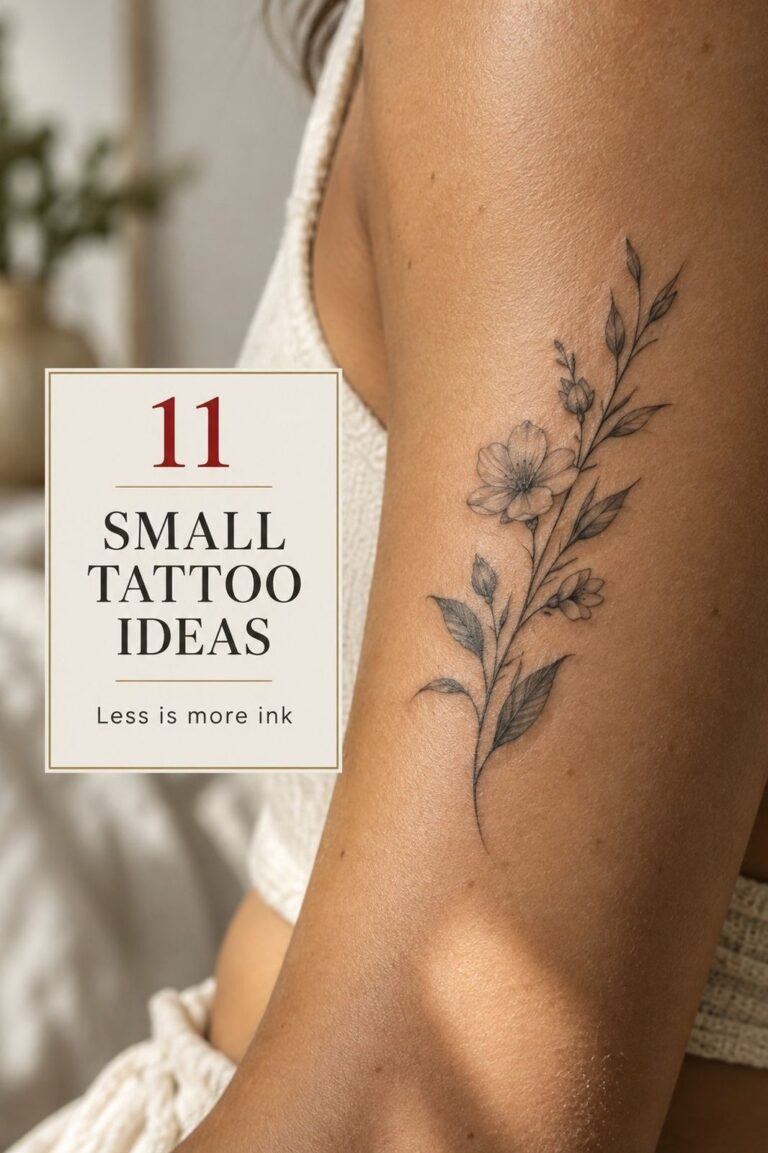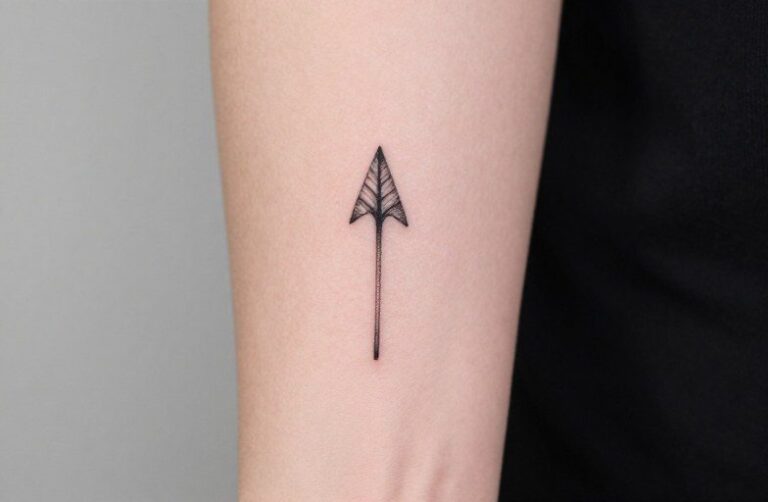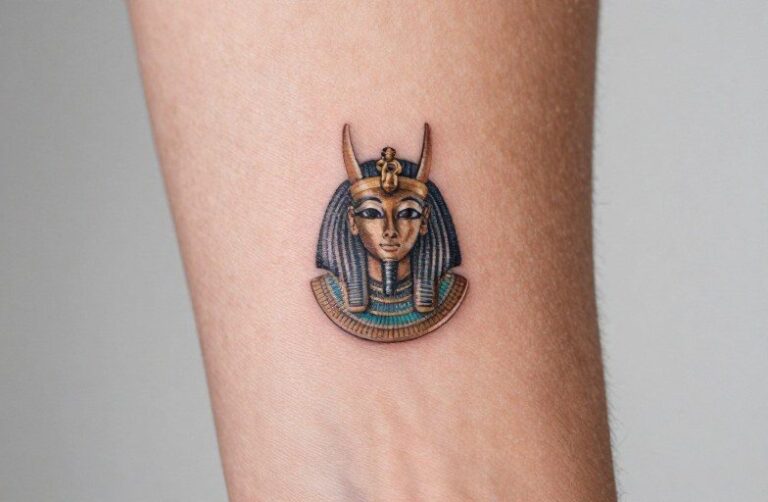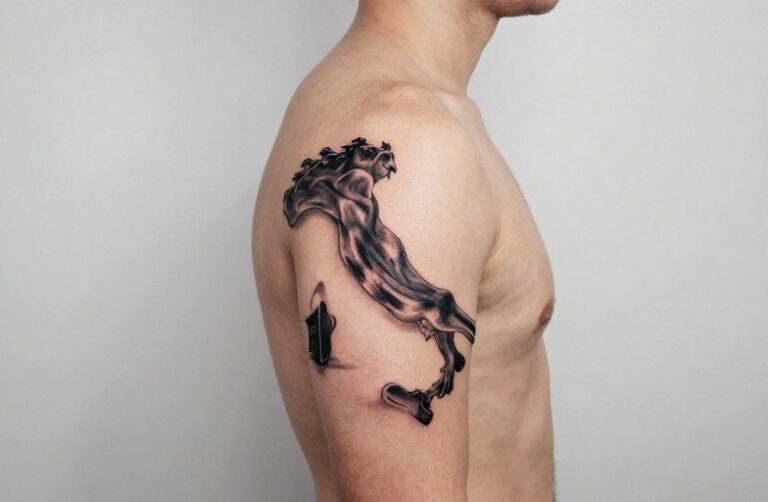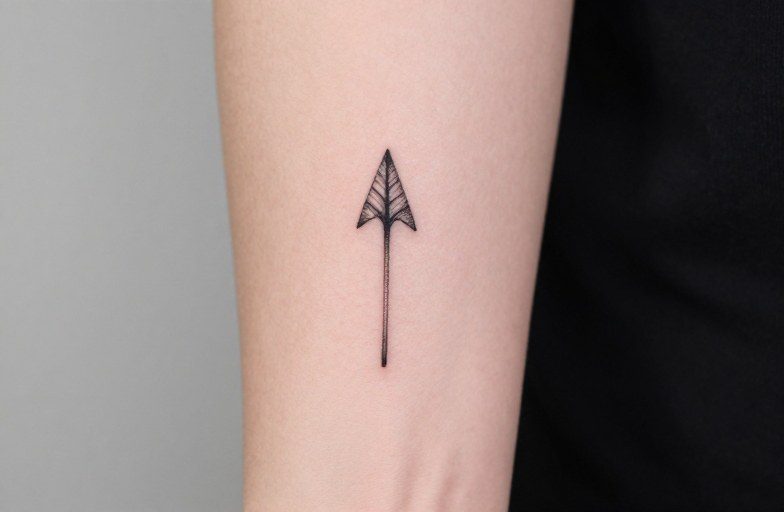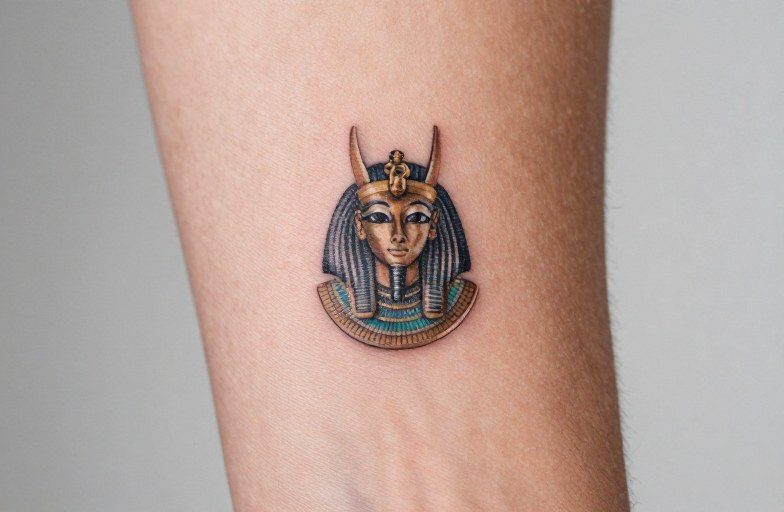
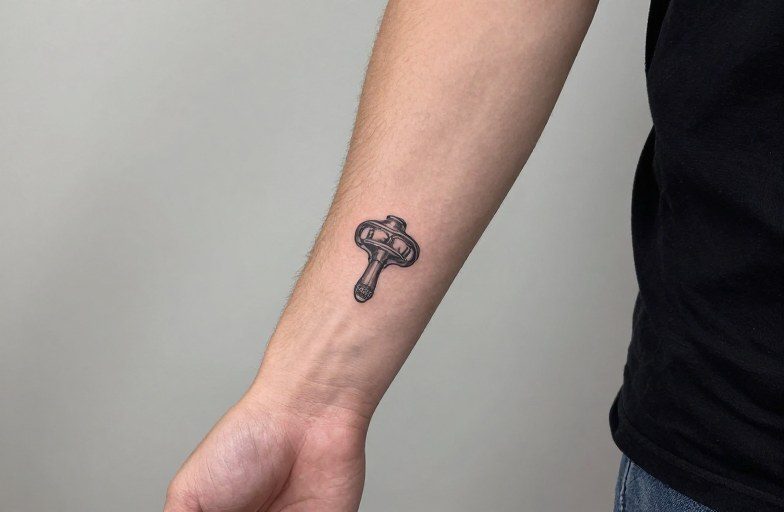
Small forearm tattoos occupy a sweet spot. Visible enough to matter, restrained enough to stay professional. For men, the forearm offers flat, predictable canvas that heals relatively well and ages slower than spots like the inner bicep or sternum. The trick is choosing something small that doesn’t look like a sticker slapped on, imagery that holds enough density or structure to read clearly at palm-sized scale, with meaning that doesn’t require a paragraph to explain.
Tips for Choosing
What Actually Reads at Small Scale
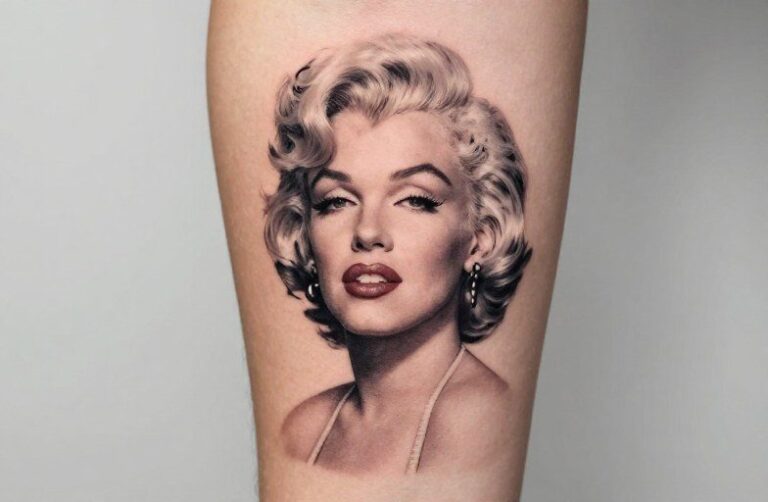
Not every design shrinks gracefully. Intricate Celtic knots, photorealistic portraits, and heavy geometric mandalas tend to muddy up when compressed to under three inches. Bold silhouettes, clean line work, and high-contrast imagery hold their edges. Think ship anchors, single roses, animal heads in profile, Roman numerals, or minimal mountain ranges. These shapes have recognizable outlines even when simplified.
Line weight matters enormously here. Single-needle tattoos can look crisp on day one but often blur into fuzzy nothingness within five years on the forearm, where sun exposure and movement are constant. A slightly heavier outline, think 7RL or 9RL needle groupings, gives the tattoo structural bones that survive aging. Shading should be strategic, not atmospheric. Black-and-gray wash backgrounds on a small piece tend to age into gray blobs; discrete black fills and negative space preserve readability.
Meaning That Sticks
Skip the generic. A compass rose works if you actually navigate, travel for work, or grew up sailing. Otherwise it’s wallpaper. Arrows have a similarly mixed record. If the directional symbolism genuinely applies to your situation, small arrow tattoo meaning breaks down what the orientation and pairing actually communicate. Better anchors for meaning: coordinates of a specific place (birth, death, marriage), a parent’s handwriting traced small, a tool from an actual trade, or an animal you’ve got genuine history with. The forearm’s visibility means you’ll see this daily. Choose something that prompts a specific memory, not a vague aspiration.
- Family: Birth years in parent’s script, small dog tags with actual service numbers
- Place: Simplified skyline of one city, not a generic “wanderlust” arrow
- Work: Carpenter’s square, chef’s knife in profile, microphone silhouette
- Loss: Dates, small hourglass with actual significance, specific flower from a funeral
Color Choices
Black and Gray: The Practical Default
Most small forearm tattoos for men stay black and gray for good reason. Black ink has the highest pigment load and the most stable chemistry. It fades to charcoal gray, not weird green or blue. On the forearm’s outer surface, where UV hits hardest, color reds and yellows degrade fastest, sometimes within three years without religious sunscreen use. Blues and greens hold better but still require more frequent touch-ups than black.
If you want color, limit it to one accent hue against a black foundation. A small red rose with black leaves and stem. A blue eye in an otherwise black-and-gray wolf. This approach gives you the pop without the maintenance burden of full color saturation in a small area.
White Ink: Know the Limitations
White ink highlights on blackwork can look striking fresh. Over time, white tends to yellow or disappear entirely into surrounding pigment. On forearm skin, which sees more sun than most body areas, white ink’s lifespan is particularly short. If your design depends on white for its structure, reconsider. Use white as occasional accent, not load-bearing architecture.
Best Placements
Outer Forearm: The Classic
Flat, stable, easy to show or cover with a long sleeve. The outer forearm’s skin is relatively uniform in thickness, which means consistent needle depth and more predictable healing. Tattoos here age slower than inner forearm work because the skin is slightly tougher and less prone to moisture buildup. Downside: maximum sun exposure. You’ll need SPF 50+ on this spot for the life of the tattoo.
Small pieces work best on the outer forearm when placed with intention, centered on the muscle belly, aligned with the wrist or elbow as a visual anchor, or tucked slightly toward the inner edge for partial concealment. Random placement looks accidental.
Inner Forearm: Intimate but Tricky
More private, softer skin, more pain. The inner forearm also moves more with wrist rotation, which can distort imagery over time. Small text or numbers work well here because they follow the arm’s natural line. Avoid heavy solid black fills on the inner forearm, this skin is thinner and more prone to blowout, where ink spreads beyond the intended line.
The inner forearm’s visibility depends on your lifestyle. Office with rolled sleeves? It’s basically public. Construction or outdoor work? Often hidden. Consider your actual daily wardrobe, not your ideal one.
How to Personalize It
Customization doesn’t require complexity. A standard design becomes specific through small modifications. Take the classic swallow: traditionally nautical, symbolizing distance traveled. Add your actual miles sailed, or change the bird’s direction to match your home country’s orientation. A basic tree becomes yours through the correct number of branches for family members, or a specific leaf shape from your childhood backyard.
Typography is underrated for personalization. A single word in your grandfather’s actual handwriting, traced from a letter, carries more weight than any font download. Numbers in old ledgers, dates in your mother’s script, these connect to specific sources rather than tattoo culture’s visual shorthand.
Consider negative space as active design element. The outline of your home state, left empty inside, with one small filled star at your actual town. A silhouette of your dog’s breed, recognizable to you, abstract enough to intrigue strangers. The gap between what’s shown and what’s known creates the personal layer.
For First-Timers
What the Process Actually Feels Like
Forearm tattooing sits at a 3-4 out of 10 for most people, noticeable, not traumatic. The outer forearm near the wrist bone and the inner forearm near the elbow crease hurt more. A small piece takes 45 minutes to two hours, depending on detail. Bring a book, not your phone, you can’t scroll comfortably with one arm in position.
Healing Reality
Days 1-3: Red, swollen, plasma weeping. Wrap comes off after a few hours. Wash gently with unscented soap, pat dry, thin layer of recommended aftercare. Days 4-10: Peeling, itching, looking terrible. This is normal. Do not pick. Do not soak. Weeks 2-4: Surface heals, deeper layers still settling. The tattoo will look dull before it settles to final brightness. Full settling takes 6-8 weeks.
Forearm placement means constant exposure to sleeves, desks, and sunlight. Plan your timing, winter is ideal for healing without sun and sweat complications. Budget for a touch-up at 6-8 weeks; most reputable shops include this in the initial price.
Matching & Pairing Ideas
Small forearm tattoos pair well with existing work or future plans. If you’re building a sleeve eventually, place small pieces with negative space between them, don’t pack them tight. A small compass near the wrist leaves room for a map fragment above, a ship below. Think modular.
For matching tattoos with brothers, fathers, or close friends, avoid identical copies. Same motif, different orientation or detail. Symbol-based designs hold up especially well for this: a guide to small Egyptian tattoo ideas shows how ancient symbols like the ankh and Eye of Horus translate into clean paired designs. One gets the anchor facing left, the other right. Same coordinates, different handwriting sources. The variation respects individual identity while maintaining connection.
Couples’ small forearm tattoos are risky but workable if designed for individual meaning first, relationship second. Matching halves that only complete together become liabilities if things end. Better: parallel imagery, two different birds that share a migration route, two trees from the same forest, same word in each person’s native language.
The Bottom Line
Small forearm tattoos for men succeed when they’re specific enough to resist trend cycles and simple enough to age gracefully. The forearm’s visibility is a feature, not a bug, choose something you’d explain to a curious stranger without embarrassment in ten years. Prioritize line weight and placement precision over intricate detail. Let the meaning come from your actual life, not tattoo mythology. And accept that every tattoo, however meaningful, becomes part of your skin’s landscape rather than a permanent billboard. That’s the honesty of it: the ink settles, the story stays, and both change texture over time.
Frequently Asked Questions
How small can a forearm tattoo be before it starts to blur?
Generally, keep the main readable element no smaller than two inches in its longest dimension. Fine lines below that threshold tend to spread and blur within five to seven years, especially on the outer forearm where sun and movement are constant factors.
Do small forearm tattoos hurt more than larger ones?
Pain level depends on placement and duration, not size. A small tattoo on the outer forearm muscle is relatively mild. The same size near the wrist bone or inner elbow crease hurts significantly more. Longer sessions numb out somewhat; quick jobs don’t give you that adaptation.
Can I get a small forearm tattoo if I need to hide it for work?
The forearm is moderately easy to conceal with long sleeves or a watch band for very small pieces near the wrist. Inner forearm placement hides more naturally in standard business attire. Avoid the outer forearm if your workplace has strict visible tattoo policies and you wear short sleeves regularly.
How much should a small forearm tattoo cost?
Quality work from an experienced artist typically runs $150-$400 for a small piece, depending on detail and city. Shops with minimums often charge $100-$150 even for tiny work. Extremely low prices usually indicate inexperience or corner-cutting on equipment and hygiene standards.