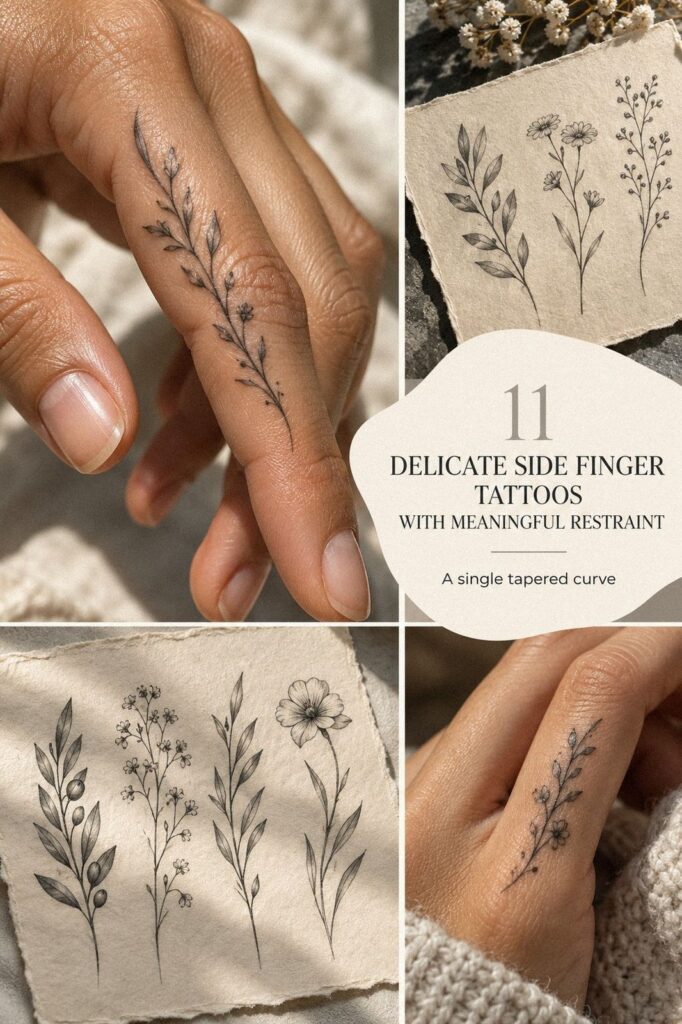
Delicate side finger tattoos can look crisp for years, but placement matters more than size. I once chose a tiny mark without checking how my hand moved, and it softened fast. You’ll want a design that follows the finger’s edge, respects friction, and still feels personal. These eleven ideas keep the linework striking and intentional!
Editor’s note: Side-finger tattoos reward restraint. I’d choose one meaningful shape, check healed work, and keep your budget realistic before you book. A tiny tattoo still deserves a thoughtful appointment!
- Start With a Tiny Botanical Side-Finger Sprig
- Could a Fine-Line Crescent Moon Fit the Finger Edge?
- Delicate Script Along the Finger Edge
- Birth Flower or Bare Stem? A Minimal Side-Finger Choice
- What Makes a Finger-Spine Symbol Read?
- Let an Elegant Snake Follow the Side
- Meaningful Tiny Wave: Tide, Memory, Motion
- Build an Intricate Celestial Side-Finger Hierarchy
- Bold Blackwork, Soft Edge: A Side-Finger Contrast
- Match Two Romantic Side-Finger Marks With Intention
- Is Graceful White Ink Right for Your Finger?
1Start With a Tiny Botanical Side-Finger Sprig
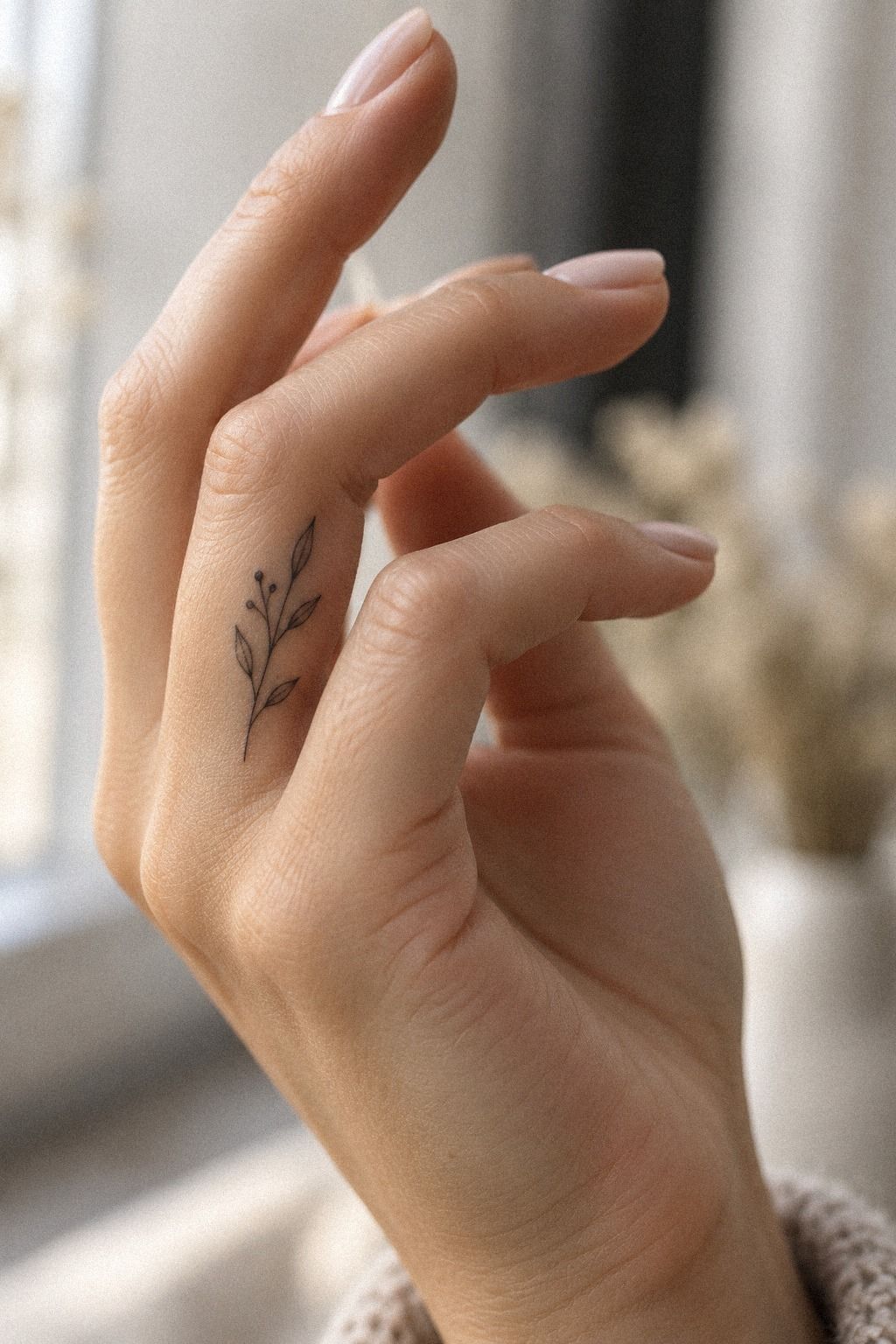
A tiny botanical sprig gives you a meaningful design without crowding the side of your finger. Think one curved stem, two leaves, and enough open skin around the mark for every line to breathe. A terracotta stem with stone-gray and olive details can feel vibrant without becoming visually heavy.
I’d choose a single-needle line only when your artist has healed examples to show you. Fresh work can look intricate and delicate, but very fine lines may spread as they settle.
You don’t need five leaves to make the idea readable. One pointed leaf and one rounded leaf will look elegant rather than crowded.
For a warmer palette, terracotta pigment can soften the contrast while olive gives the stem a more expressive finish. Your artist may adjust the spacing if your finger bends heavily. That small decision matters because movement can pull a graceful stem into an awkward hook.
– One slender stem – Two uneven leaves – A tiny bud – Open skin around the base
If you’re collecting more small pieces, compare this placement with these small side finger tattoos. I’d also browse these small finger tattoo ideas before you decide. A dense bouquet may seem romantic, but a single expressive stem usually offers better long-term value on a moving finger.
2Could a Fine-Line Crescent Moon Fit the Finger Edge?
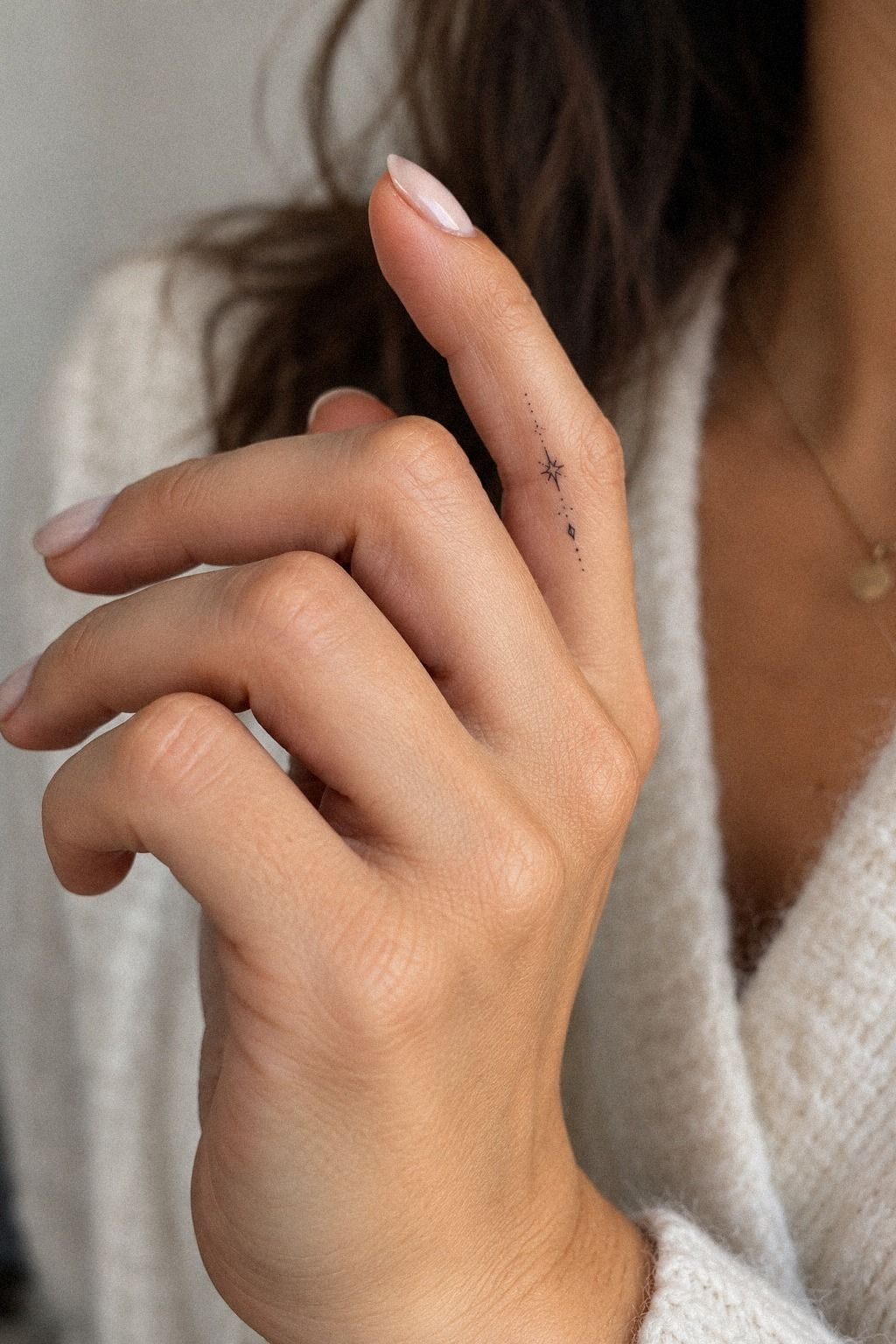
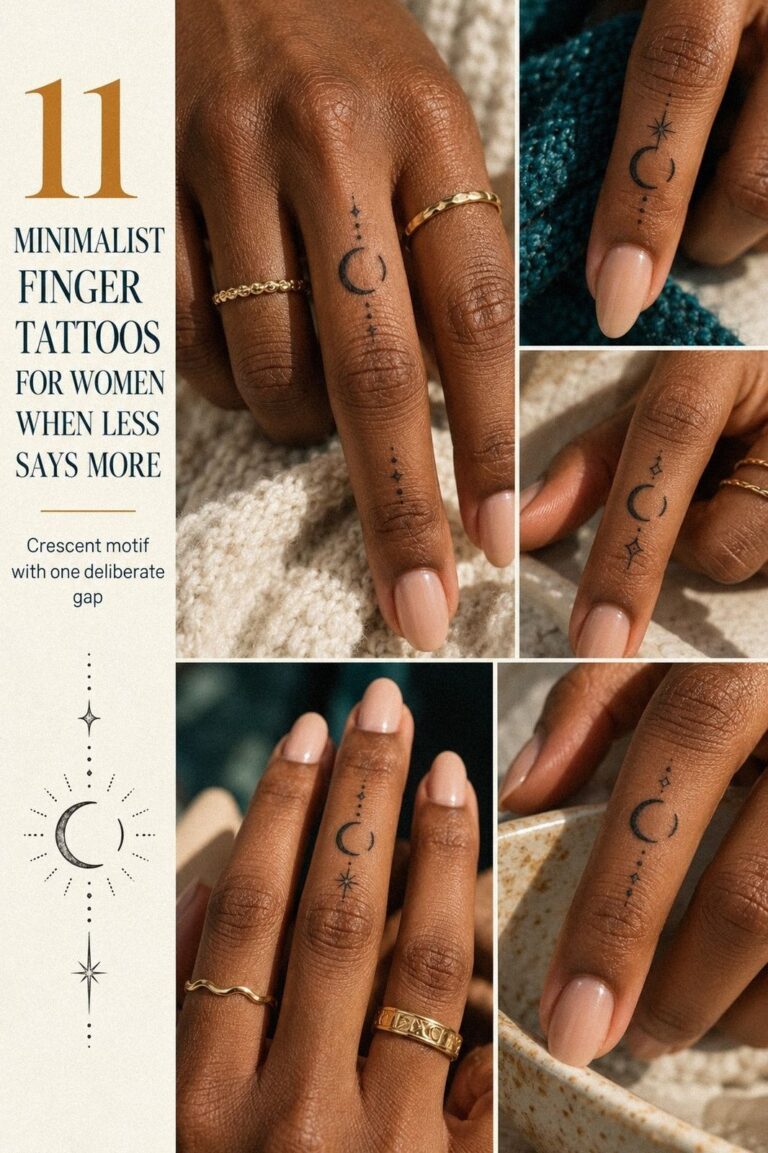
A crescent moon works beautifully along the finger because its curve can echo the natural bend of your hand. Keep the moon narrow, with the open side facing toward your knuckle or fingertip depending on the movement you want. A clay-colored outline with an aged-brass dot can feel graceful, symbolic, and quietly romantic.
Your fine-line crescent should have enough breathing room around it. Two tiny stars or three dots can create a celestial reading without turning the design into a crowded constellation. I’d avoid heavy shading inside the moon because a slim outline usually feels timeless.
You’ll want to decide whether the moon faces you or the person looking at it. Both choices are personal, but they don’t carry the same feeling. If you’re unsure, ask your artist to stencil both directions so you can judge the shape while your hand is relaxed and moving.
– Narrow curved moon – Two tiny stars – One dot cluster – Open skin between marks
For restrained celestial references, browse these minimalist finger tattoos. You might also compare the scale with these minimalist inside finger tattoos. A crescent can be a worthwhile choice when you want something expressive without committing to a large design.
3Delicate Script Along the Finger Edge
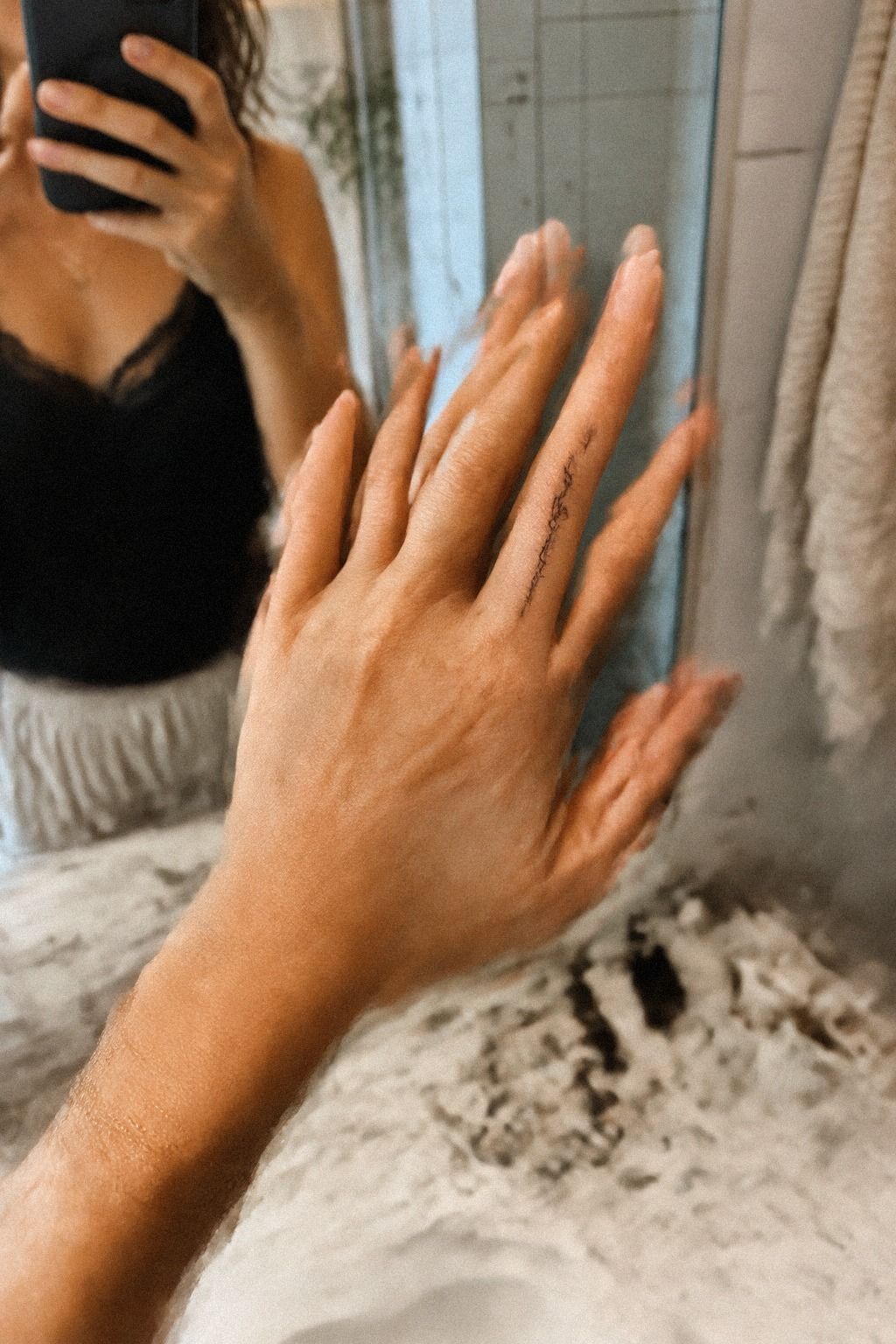
Script along the finger edge feels personal because the message stays close to your hand instead of announcing itself. Choose one short word, a date, or a single initial. Plum lettering with a soft gray note or rose-gold accent can feel stylish while remaining understated.
The best script for this placement has an open rhythm. Rounded lowercase letters, generous gaps, and modest stroke variation will age more gracefully than tightly packed calligraphy.
You’ll want to see the stencil at full scale before the needle touches skin. If the letters already look cramped on paper, they won’t improve once they wrap around a moving finger.
I made the mistake of treating tiny script like miniature handwriting. It wasn’t. The artist had to simplify two letters, and that made the finished word clearer.
Your tattoo should keep its emotional meaning, but it doesn’t need every flourish from the original reference.
– One short word – A softly curved baseline – Clear letter spacing – No filled flourishes
If you’re comparing placements, these small inside finger tattoos show how visibility changes when the design moves inward. I’d also look at these small finger tattoo ideas for shorter lettering references. A word can feel intimate and symbolic here, but a long quote usually isn’t worth the cramped result.
4Birth Flower or Bare Stem? A Minimal Side-Finger Choice
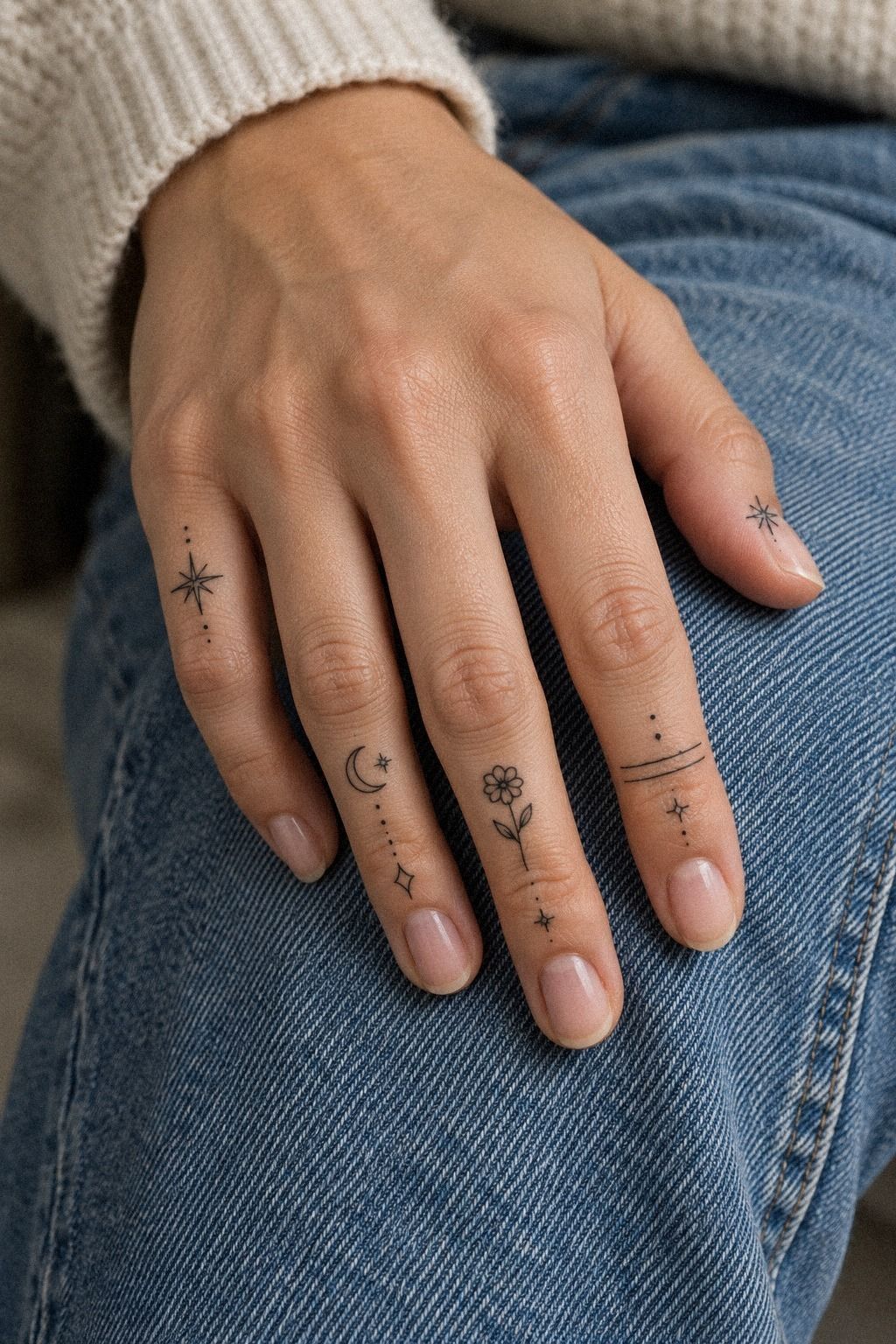
A single birth flower gives you a symbolic idea with a recognizable silhouette. A navy outline, a white highlight, or a small walnut-brown accent can keep the design personal without crowding the finger.
I’d simplify the flower until its petals remain clear at a tiny scale. A dainty bloom with one curved stem usually feels more meaningful than a detailed botanical cluster. If your birth flower has many narrow petals, your artist may reduce the count or open the center.
– One recognizable bloom – A navy outline – One white highlight – A short curved stem
If you want a more delicate variation, compare these small side finger tattoos with these small finger tattoo ideas. A minimal flower can look romantic and timeless when the silhouette does most of the work!
5What Makes a Finger-Spine Symbol Read?
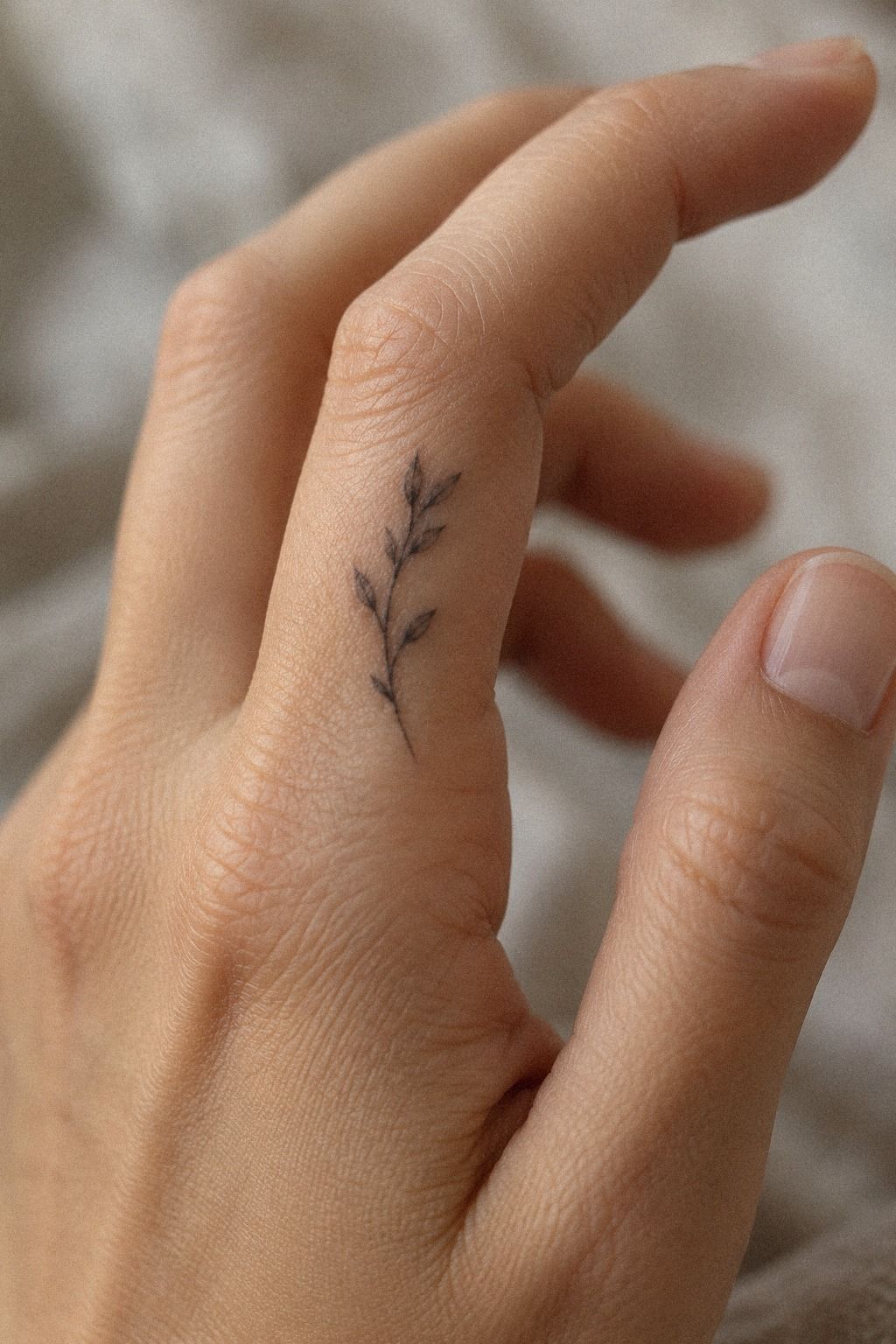
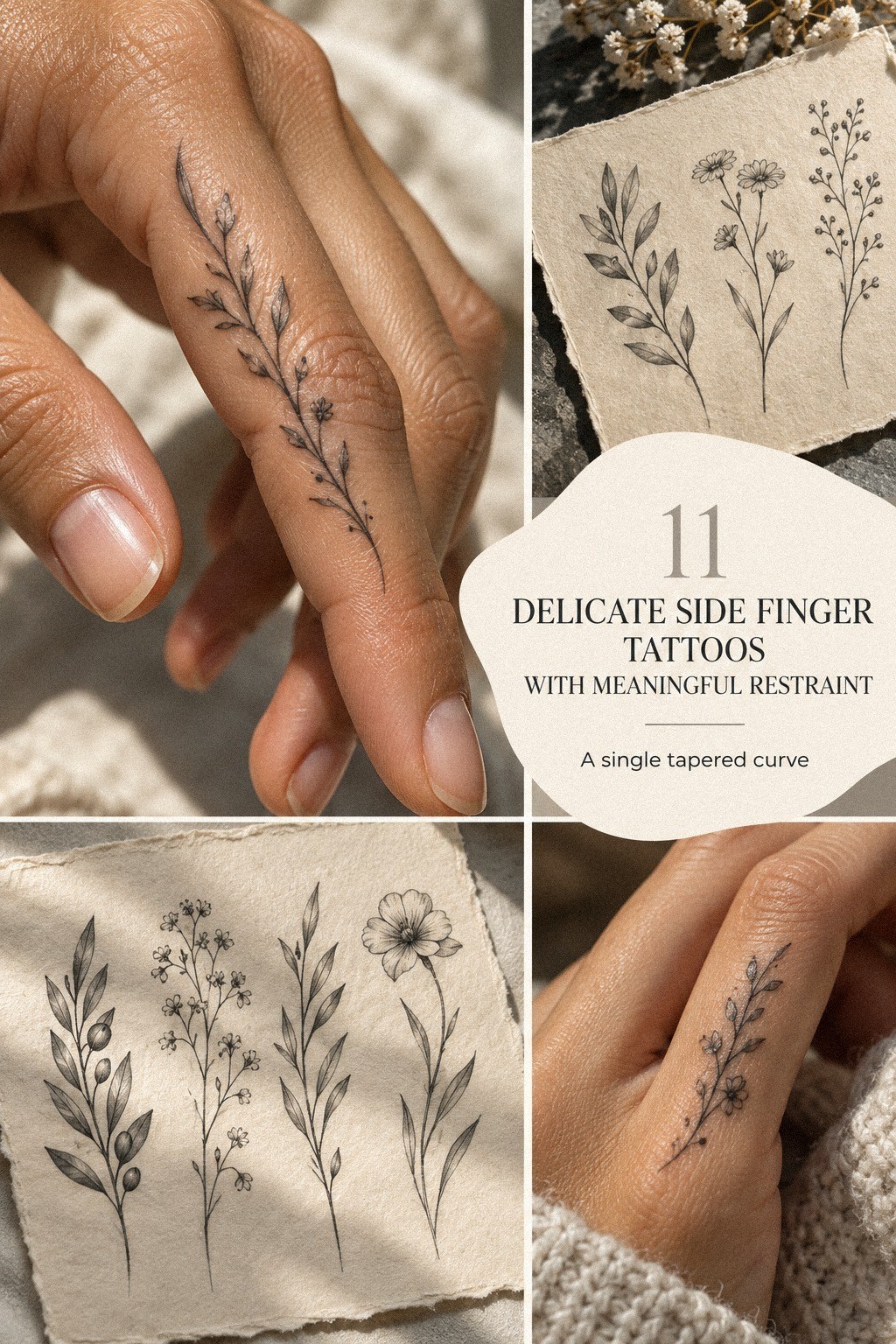
This idea works when you choose one dominant silhouette instead of trying to fit a whole story on the finger. A sharp eye, small key, sun mark, or geometric charm can work along the finger spine if the outer contour stays readable. The best symbol feels iconic without becoming loud.
Your emerald pigment emblem may need to be redrawn for your exact finger. A small gold or cream accent can add meaning, but too many internal details will disappear as the tattoo settles. Don’t copy every detail from a reference automatically.
Your artist might remove a border, open a shaded pocket, or thicken one line. That isn’t ruining the design.
It’s making the mark survive contact with skin. I’d rather pay for thoughtful simplification than chase a complicated design that loses its meaning.
– One strong outer contour – A small gold accent – A clear symbol shape – Open negative space
If you like symbol-led ideas, these unique delicate side finger tattoos offer compact references. You might also compare them with these small side hand tattoos if you need more surface area. A flash-sheet symbol can be intricate and striking, but your finger needs room for the meaning to remain legible.
6Let an Elegant Snake Follow the Side
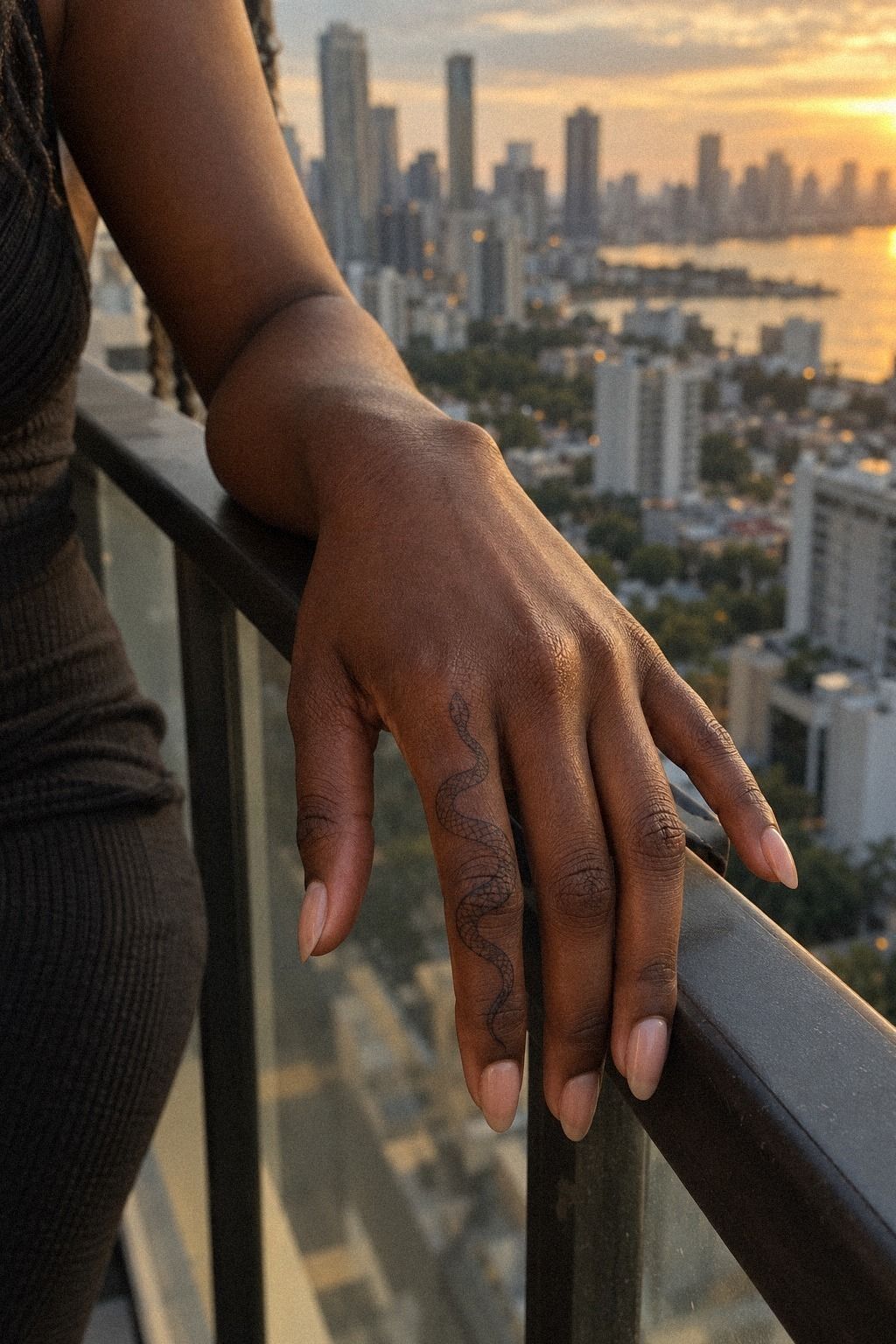
A slim serpent can follow the length of your finger with a natural, flowing motion. Forest-green ink with a restrained rust accent can make the shape feel fierce without turning it into a heavy design.
Keep the head small and let the body carry the movement. One graceful curve is usually enough. If you add scales, your artist should use only a few expressive marks near the head or tail.
– One flowing body line – A small pointed head – A rust-colored accent – Open space around the curve
For more compact ideas, browse these small side finger tattoos. A snake can feel edgy, symbolic, and powerful when its silhouette stays clean!
7Meaningful Tiny Wave: Tide, Memory, Motion
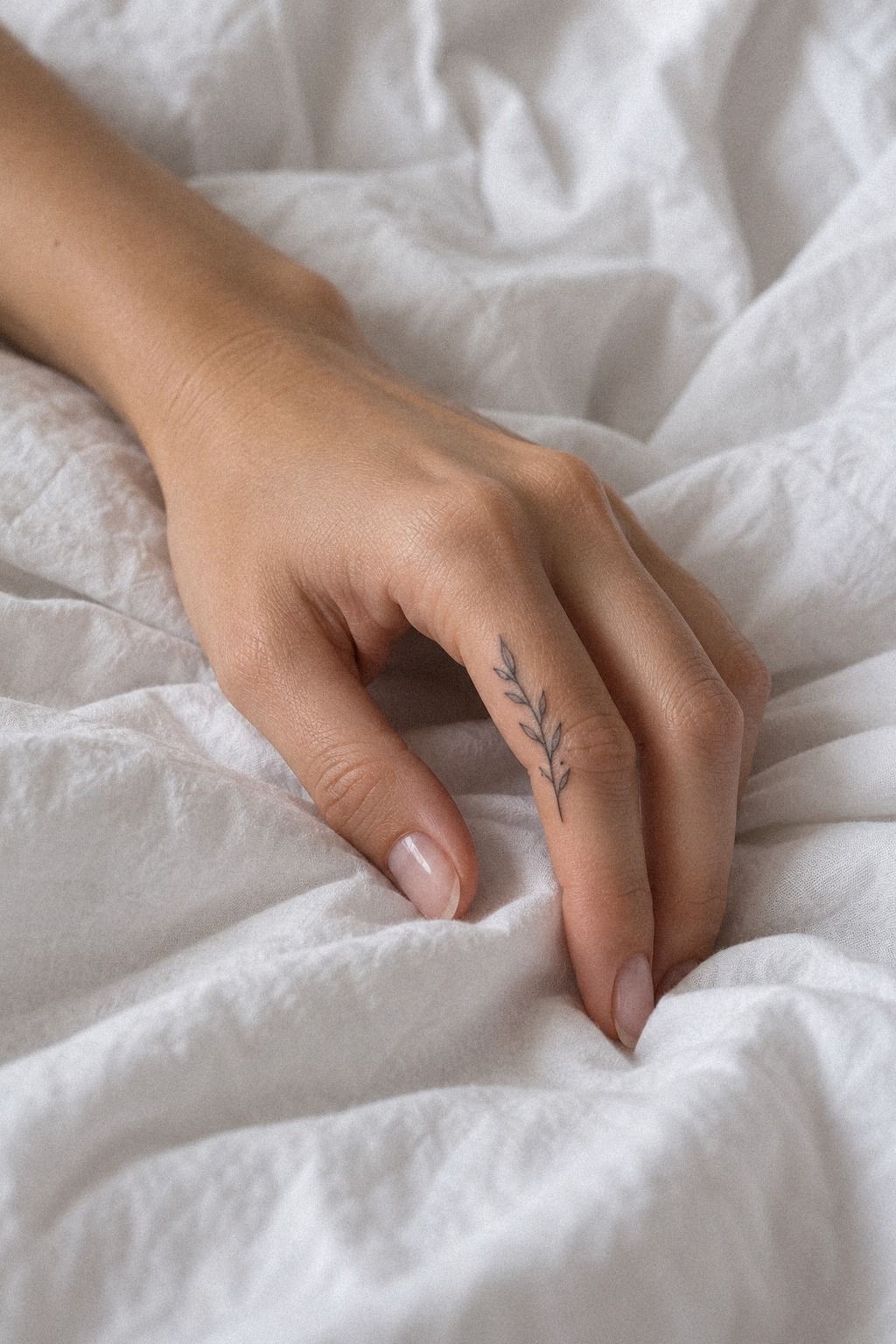
A curling ocean wave gives you motion without requiring a large composition. A dusty-rose curve with charcoal and brass details can feel soothing, expressive, and meaningful, especially when the shape follows the side of your finger instead of fighting it. I like this idea for someone who wants a personal symbol that still looks crisp from a distance.
Keep your curving wave outline simple. Two or three short foam marks can suggest movement, while a dozen little lines will create visual noise. I’d choose one charcoal anchor at the crest so the eye has somewhere to land.
You’ll want to think about what the wave means before choosing its direction. A rising curl may feel energetic and hopeful; a descending curve can feel quieter and more reflective. Neither is objectively better, but your choice should match your memory or idea.
– One rising curl – Fine foam marks – A weighted charcoal crest – Clear skin around the tail
If you’re considering a more hidden placement, these minimalist inside finger tattoos can help you compare visibility. You can also revisit these small inside finger tattoos before booking. A wave is a meaningful and affordable concept when you want a personal mark without paying for unnecessary complexity.
8Build an Intricate Celestial Side-Finger Hierarchy
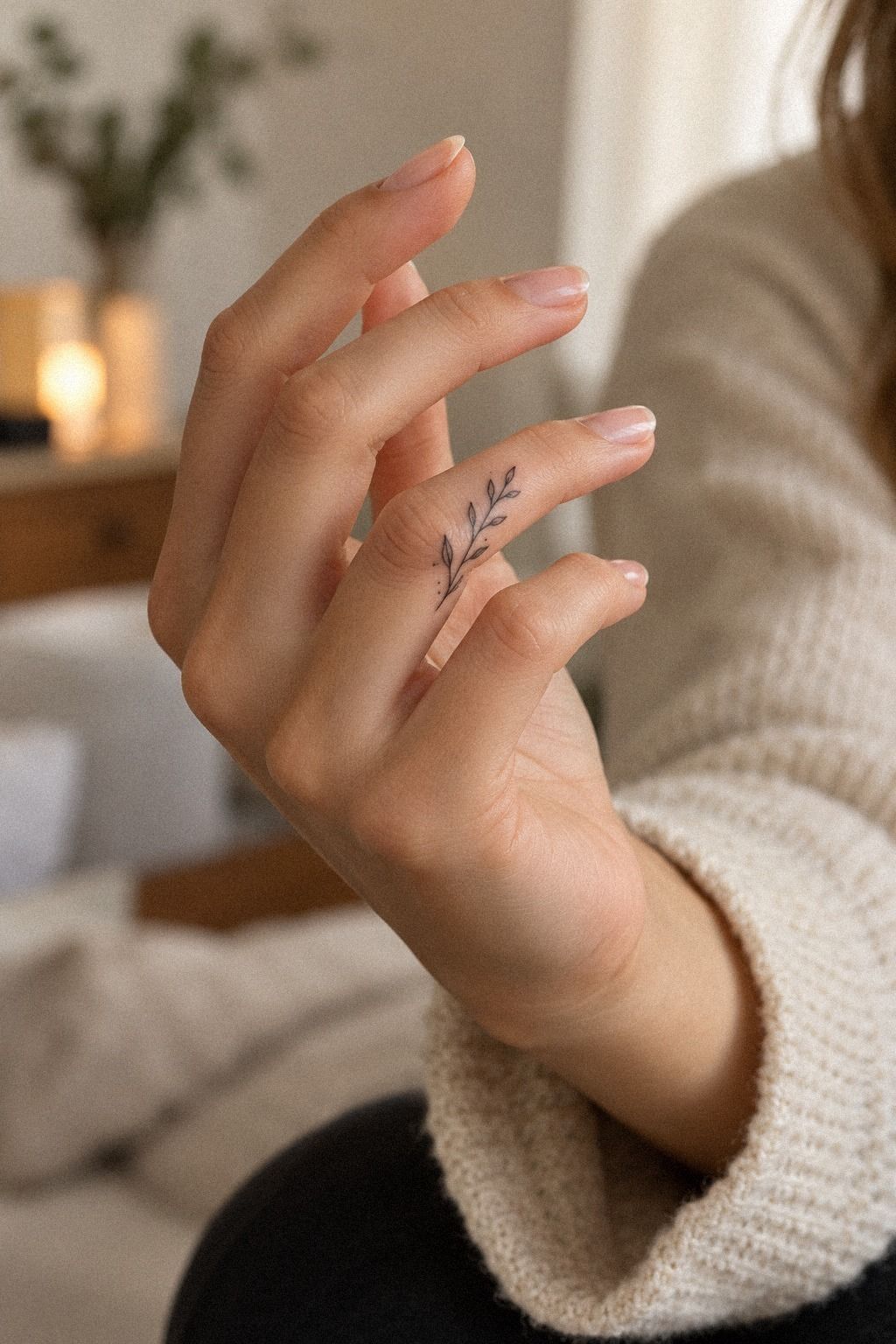
A celestial side design can combine a tiny sun, moon, star, or orbit line, but your composition needs hierarchy. Warm-white pigment, camel shading, and one black accent can give the design an ethereal but crisp identity.
Start with one dominant shape. A small moon should lead, while the star or orbit line supports it. If every element has equal weight, the design may look busy instead of intricate.
– One central moon – A single orbit line – Two tiny stars – One black accent
For a more restrained approach, explore these minimalist finger tattoos. Celestial work can feel whimsical and meaningful when the spacing stays generous.
9Bold Blackwork, Soft Edge: A Side-Finger Contrast
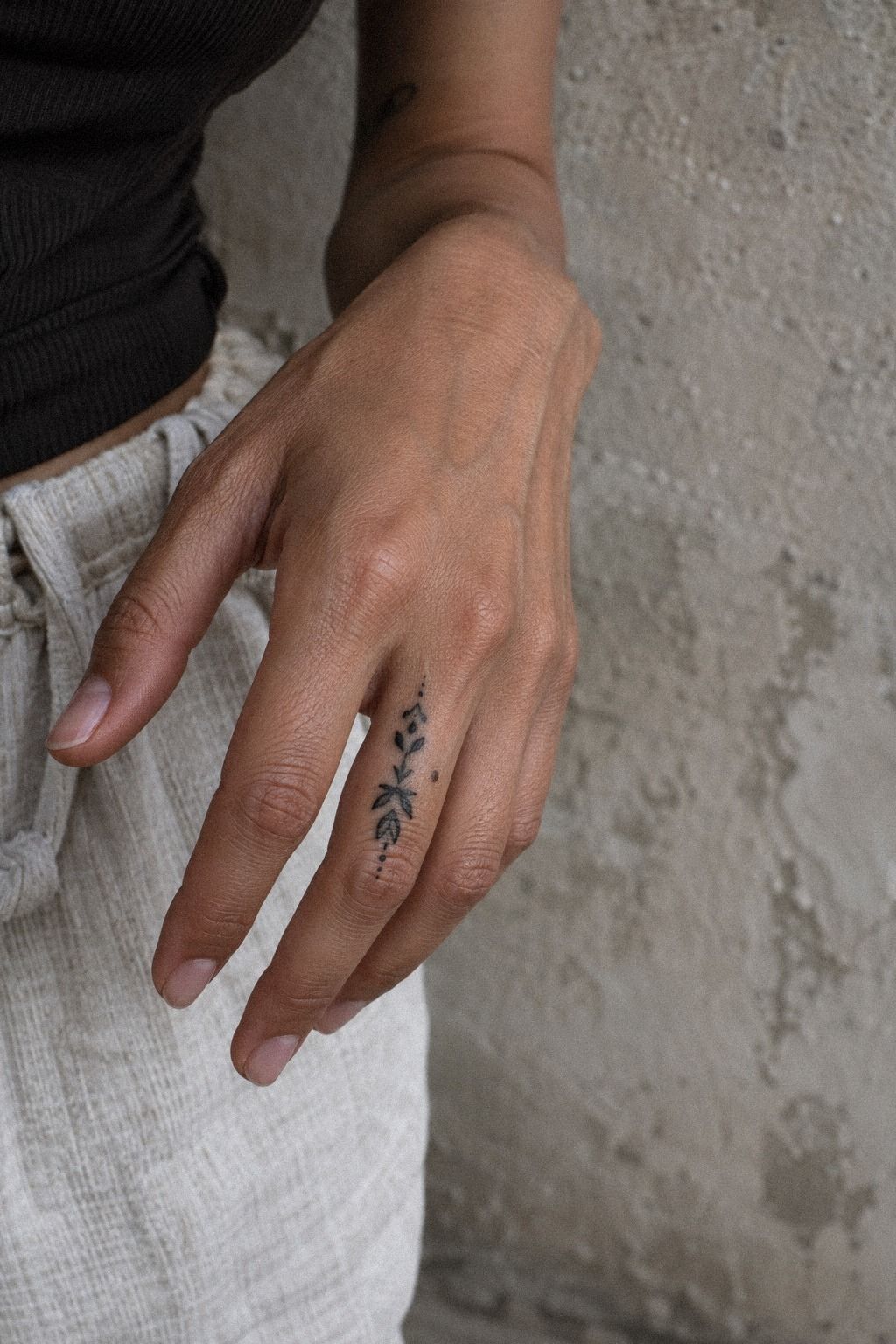
Bold blackwork gives you the strongest visual anchor of these eleven ideas. A midnight-blue bar, copper detail, or ivory break can feel sharp, daring, and iconic when the edges remain controlled. The tattoo doesn’t need to be large to make an impression.
Your midnight-blue accent should have enough pigment to stay readable. Your artist may recommend a slightly wider mark than a fine-line reference because saturated color needs room to settle evenly. That’s where the design becomes crisp instead of blotchy.
I’d place the darkest section away from the most active crease whenever possible. Hands experience constant movement, and a saturated mark can lose its clean boundary if it sits directly inside a fold. You’ll want to ask about the exact side plane before approving the stencil.
– One midnight-blue wedge – A narrow copper bar – An ivory dot – A sharp edge
If you like stronger contrast, compare these small side hand tattoos for placements with more stable skin. You can also review these small hand tattoos for women for scale. Blackwork can be a smart budget choice when you want one decisive mark instead of several fragile details.
10Match Two Romantic Side-Finger Marks With Intention
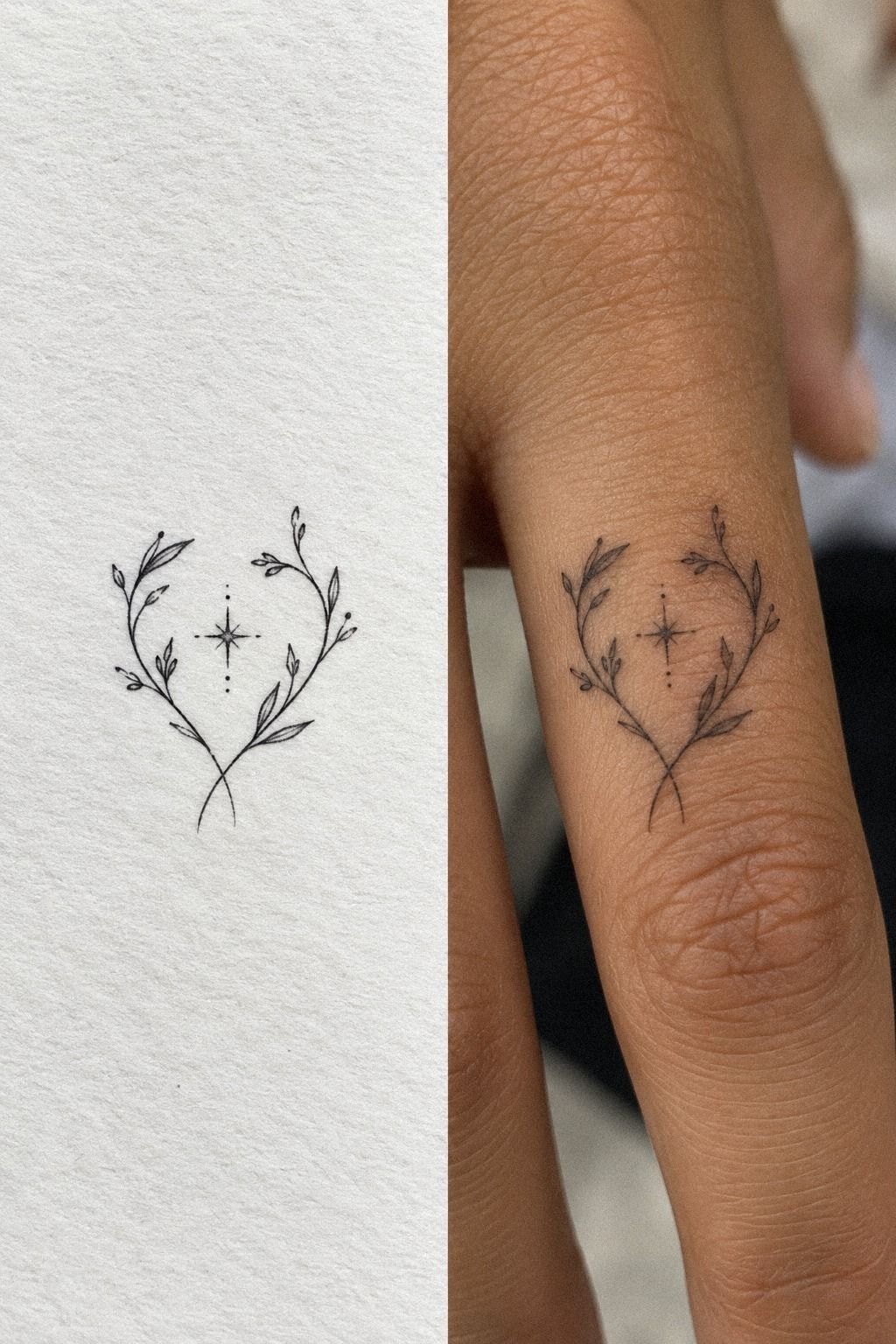
Matching tattoos can be romantic, playful, and deeply personal, but identical doesn’t always mean meaningful. Sage-green lines, warm-cream details, or a small natural-brown accent can make two related marks feel graceful without making them identical.
I’d give each person a slightly different version of the same idea. Two leaves can point in opposite directions, or two tiny symbols can complete one another when the hands meet. That makes the pair feel personal rather than copied.
– One shared symbol – Two related variations – Sage-green pigment – A small cream accent
If you’re comparing paired concepts, browse these small finger tattoo ideas. Matching work can feel empowering and timeless when both people genuinely want the design!
11Is Graceful White Ink Right for Your Finger?
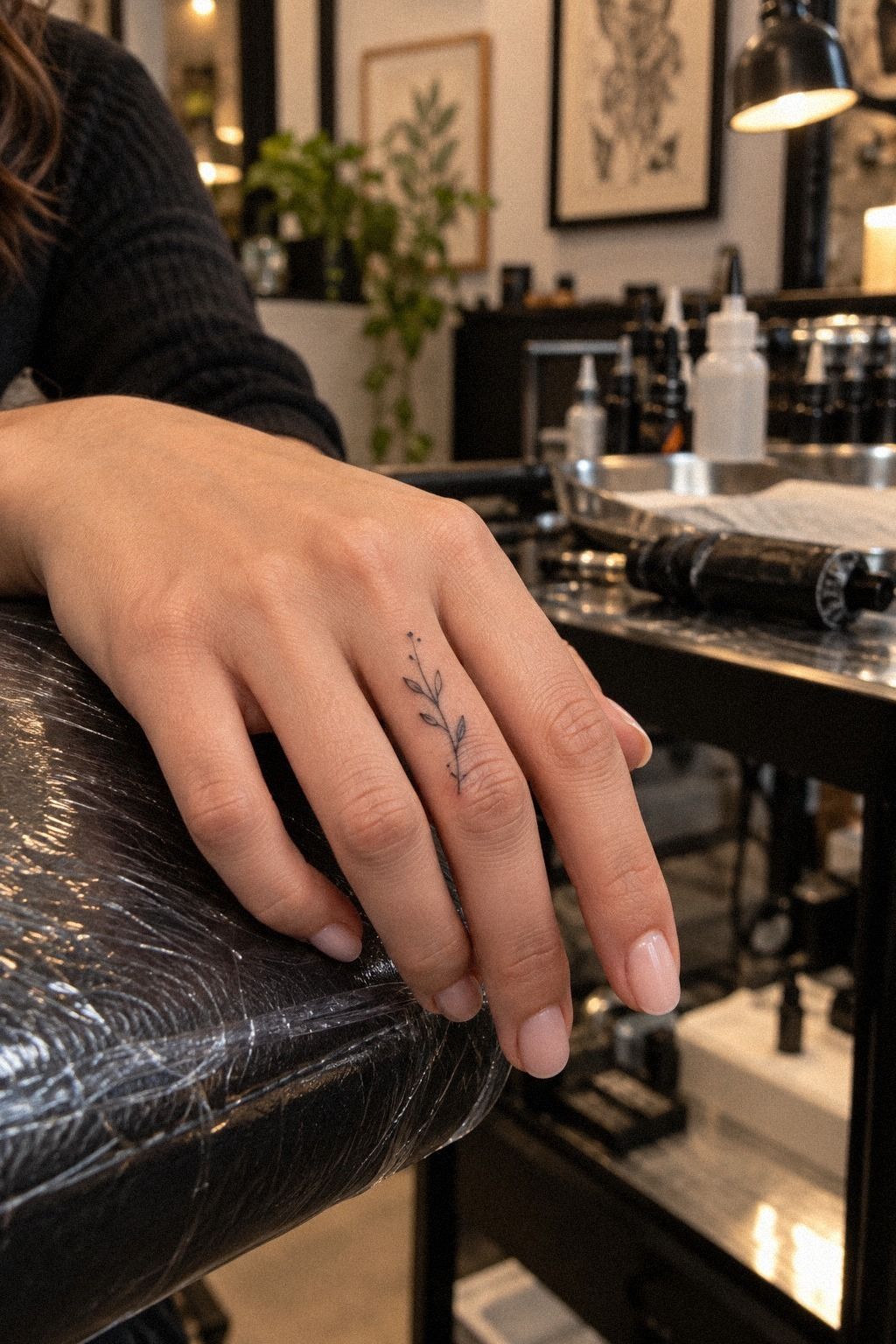
White ink can create a subtle design on warm olive skin, especially when the mark uses a simple contour and enough spacing. A white line with terracotta or stone-gray support can feel understated, graceful, and slightly mysterious. It also requires realistic expectations.
Your white pigment design may look bright at first, then soften as your skin heals. The final result can vary with undertone, placement, and aftercare. I’d choose a simple leaf, tiny star, or curved symbol rather than delicate lettering that could become difficult to read.
Your artist may recommend a slightly stronger line than your reference shows. That’s sensible.
White pigment needs enough presence to remain visible after healing, and a fragile outline can disappear faster than expected. Ask to see healed white-ink examples on skin close to yours.
– Soft white pigment – A simple curved symbol – Open negative space – No crowded lettering
For a black-ink comparison, explore these small hand finger tattoos for women. You can also compare the scale with these small side finger tattoos. White ink can look ethereal and elegant, but it may not offer the best value if you want a highly visible, long-lasting contrast.
The Honest Finger Tattoo Decision
I’ve learned that a small tattoo isn’t automatically an easy tattoo. The surface is limited, your skin moves constantly, and the side of a finger meets friction every day.
That combination rewards restraint. You’ll get a more timeless result from one clean symbol than from a miniature scene packed with lines, shading, and lettering.
My strongest advice is to judge a healed portfolio before choosing an artist. Fresh ink can look crisp, striking, and almost impossibly delicate. Healed work tells you whether the artist understands spacing, pigment weight, and the way finger skin changes.
I’d rather choose a simple design from someone with excellent healed examples than a complicated design from someone who only shows fresh work. You’re paying for judgment as much as the mark itself. That’s where the real value sits.
What Finger Skin Changes Over Time
Finger skin is exposed to friction, washing, sunlight, and constant movement. Your design may soften sooner than one on a forearm or thigh. That doesn’t mean every side-finger tattoo fails, but it does mean you should choose a design with realistic expectations.
A stable placement zone gives your artist more control. The outer edge may be visible but active, while the inside edge can feel more private and receive different friction. Ask what your artist thinks will hold up best on your exact hand.
You’ll want to discuss touch-ups before you book. A lower shop minimum may make the first appointment seem affordable, but a future touch-up affects the true cost. I’d factor that into your budget instead of treating it as an unexpected problem.
How I’d Choose Between Fine Line and Blackwork
Fine line can feel delicate, feminine, understated, or romantic. Blackwork can feel fierce, bold, masculine, and iconic.
Neither style is automatically better. The right choice depends on your skin, the location, and how much visual weight you want.
Your line-weight decision should follow the design, not the trend. A simple crescent may suit fine line, while a geometric wedge needs stronger pigment. Your artist can explain what is likely to remain readable after healing.
If you’re choosing between two references, ask which one gives you more value at the same price. The prettiest fresh result isn’t always the most durable option. I’d choose the mark that still feels personal after the novelty fades.
The Budget Question: Is a Tiny Tattoo Worth It?
Cost matters, especially when a shop minimum applies. A tiny tattoo can still require setup, sterilization, drawing time, and careful placement. The smallest mark isn’t always the cheapest appointment, and you shouldn’t pressure an artist to rush because the design takes only a few minutes.
Your shop minimum may cover more than tattooing time. It can include consultation, stencil preparation, setup, sterilization, and the artist’s minimum booking value. Ask what’s included so you can compare prices fairly.
A cheap appointment may not be the best investment if the artist has no healed finger work to show you. I’d rather pay a reasonable price for clean judgment than chase the lowest quote. If your budget is limited, simplify the design instead of choosing an inexperienced artist.
Aftercare That Protects the Choice
Your first few days of aftercare still matter. Wash gently, moisturize as directed, and avoid soaking the tattoo in pools or baths while it heals. Keep it away from unnecessary sun exposure.
Follow your artist’s aftercare instructions rather than copying a random routine online. Your skin, ink choice, and bandage method may require different advice. If something looks unusual, contact your artist or a medical professional instead of guessing.
You’ll also want to protect the area from excessive friction. Fingers touch everything, so small habits can affect the result. Be patient while the surface settles, and don’t judge the final design while it’s still fresh.
The Shortlist I’d Actually Keep
If I were narrowing these ideas for myself, I’d keep the botanical sprig, crescent moon, tiny wave, and simple symbol. Each one has a clear silhouette, personal potential, and enough flexibility for your artist to adapt the design.
My final shortlist would depend on your priorities. Choose the botanical mark if you want something natural, the crescent if you want something symbolic, the wave if you want movement, and the blackwork accent if you want maximum contrast.
You don’t need to force a decision today. Save your references, compare healed examples, and notice which idea keeps returning. That repeated feeling is often more useful than a trend list.
What People Always Want to Know
How much does a delicate side finger tattoo usually cost?
A delicate side finger tattoo usually costs about $50 to $100 at a shop minimum, or around $100 to $250 per hour in the US. The final amount varies by artist and region. A healed portfolio matters more than chasing the lowest price.
Are delicate side finger tattoos a good idea for a first tattoo?
Yes, they can be a good first tattoo if you understand the limits of finger skin. The placement is small and personal, but hands experience friction and fading. A simple symbol with clear spacing is a more forgiving choice than tiny script or dense shading.
How do I choose a tattoo artist for delicate side finger tattoos?
Look for clean linework, healed work, strong hygiene practices, and a portfolio that includes hands or fingers. You’ll want an artist who can simplify a reference when needed. Healed examples on similar skin are the most useful evidence.
How much do delicate side finger tattoos hurt?
Finger and hand tattoos can feel sharper than tattoos on the forearm, thigh, or shoulder because the skin is close to bone and receives frequent movement. Pain varies by person. A short session may be manageable, but you should still plan for sensitivity.
How long do delicate side finger tattoos take to heal?
The surface usually heals in about 2 to 3 weeks, while complete healing can take about 2 to 3 months. Wash gently, moisturize as directed, and avoid sun, pools, and soaking. Patient aftercare helps the lines settle cleanly.
What’s the best placement for delicate side finger tattoos?
The outer side or finger edge can work well for a visible design, while the inside edge feels more private. Avoid placing intricate details directly in a deep crease when possible. Stable skin and clear spacing usually matter more than choosing the trendiest finger.
Where I’d Start First
If I had to pick one, I’d start with the tiny botanical side tattoo. One stem and two leaves stay readable, personal, and graceful without cramming detail into moving skin. Pin the botanical idea for later and compare it with these small finger tattoo references before booking your appointment.
You’ll know the choice is ready when the design still feels meaningful after you consider placement, healing, price, and visibility. I’d choose the simplest version that makes you feel confident. That’s usually where the most timeless result begins!