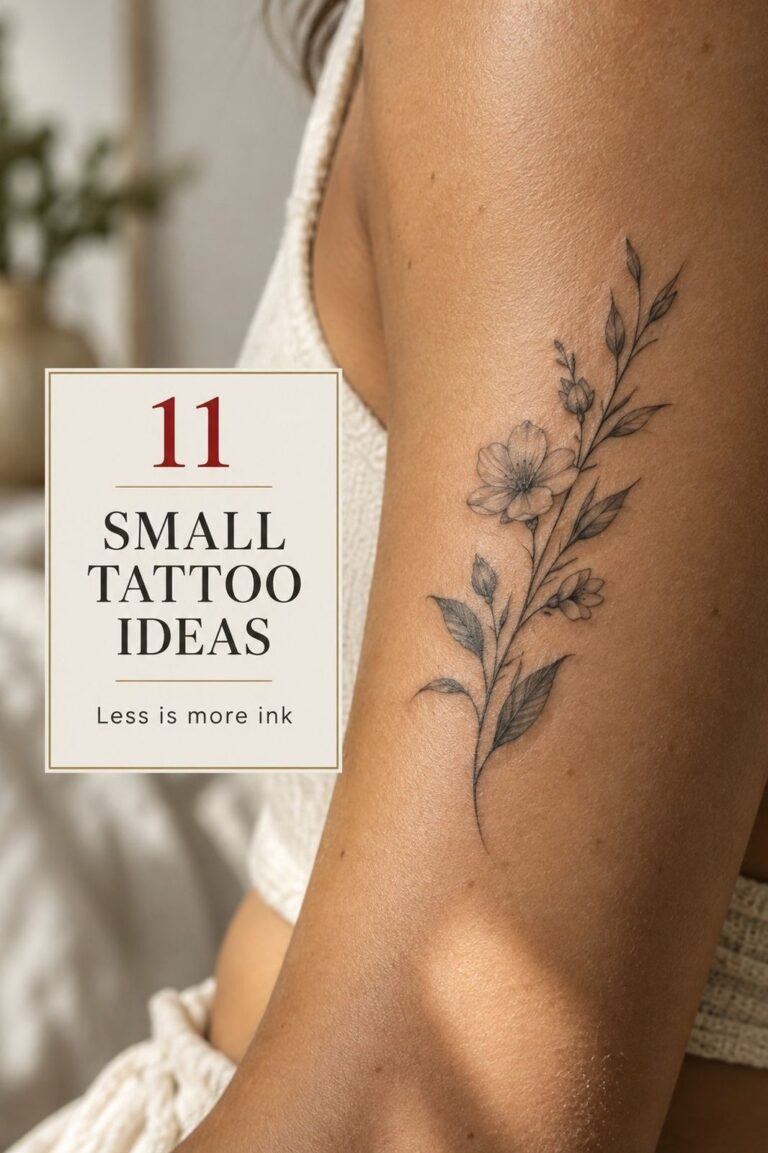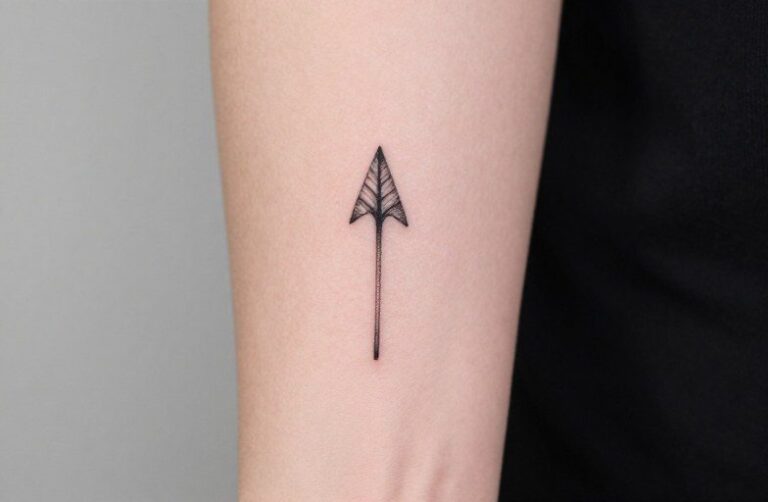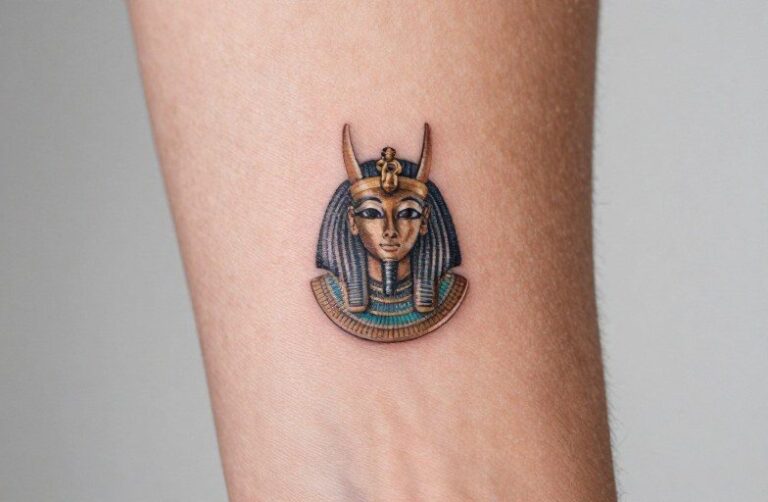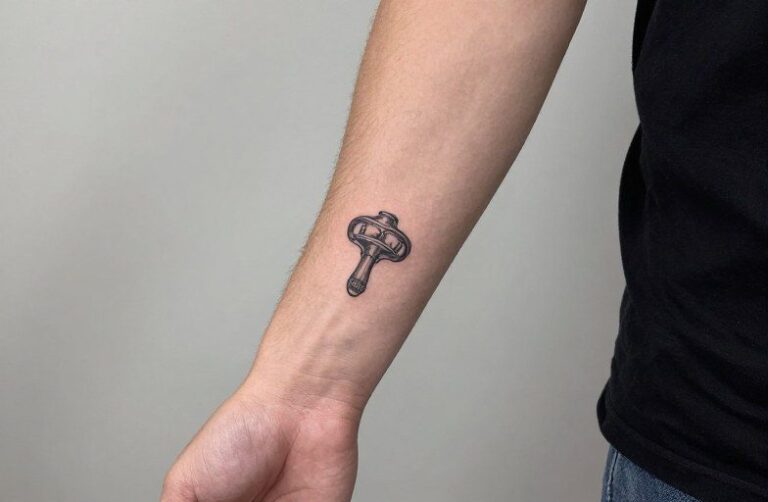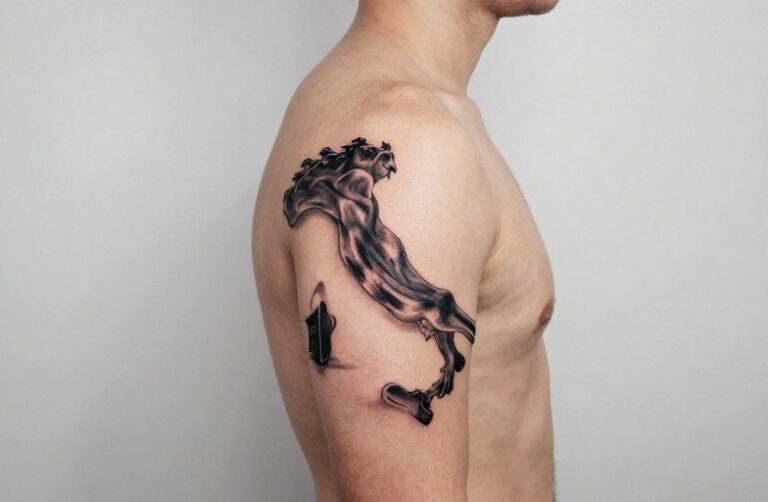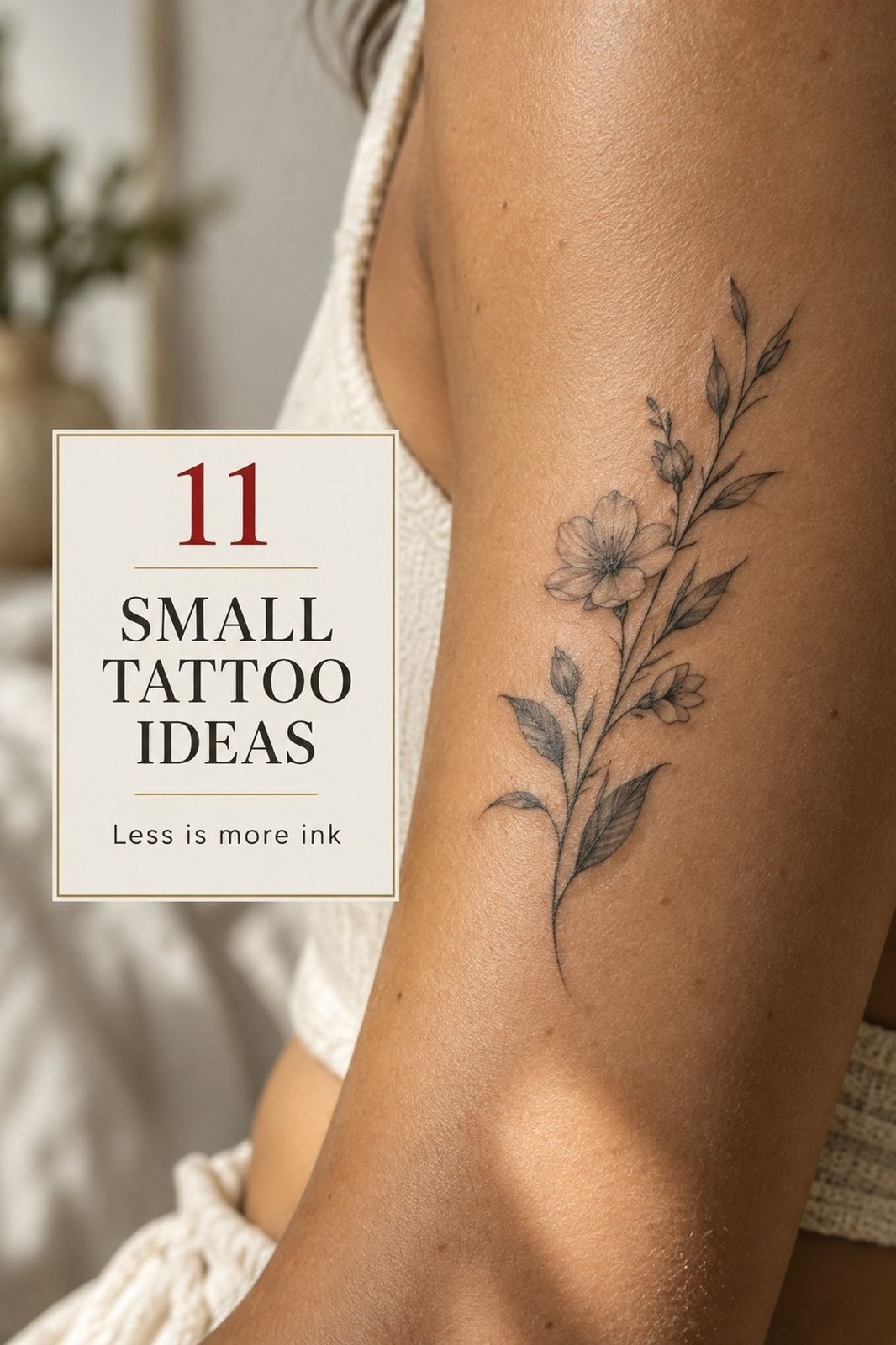
A half sleeve tattoo with meaning is exactly what it sounds like: a collection of images, symbols, or scenes that occupy roughly half the arm, chosen deliberately to represent something specific to the wearer. Unlike a single small piece, the half sleeve format demands coherence, either a unified theme or a curated timeline of symbols that speak to identity, survival, growth, or memory. The meaning lives in the arrangement as much as the individual images, and the commitment required to sit for one signals something serious about the person’s relationship to their own story.
Best Placements
The half sleeve breaks cleanly into two territories, and the choice between them changes how the tattoo functions in daily life.
Forearm Half Sleeve
This is the visible option. From just below the elbow to the wrist, everything shows in a t-shirt. Forearm half sleeves often carry meaning the wearer wants acknowledged, family portraits, memorial dates, religious iconography, or professional pride (military insignia, trade symbols). The flat planes of the inner and outer forearm take line work crisply, though the inner wrist softens and blurs faster due to constant flexing and thinner skin. For meaning-driven pieces, the forearm placement says: this matters enough to explain.
Upper Arm Half Sleeve
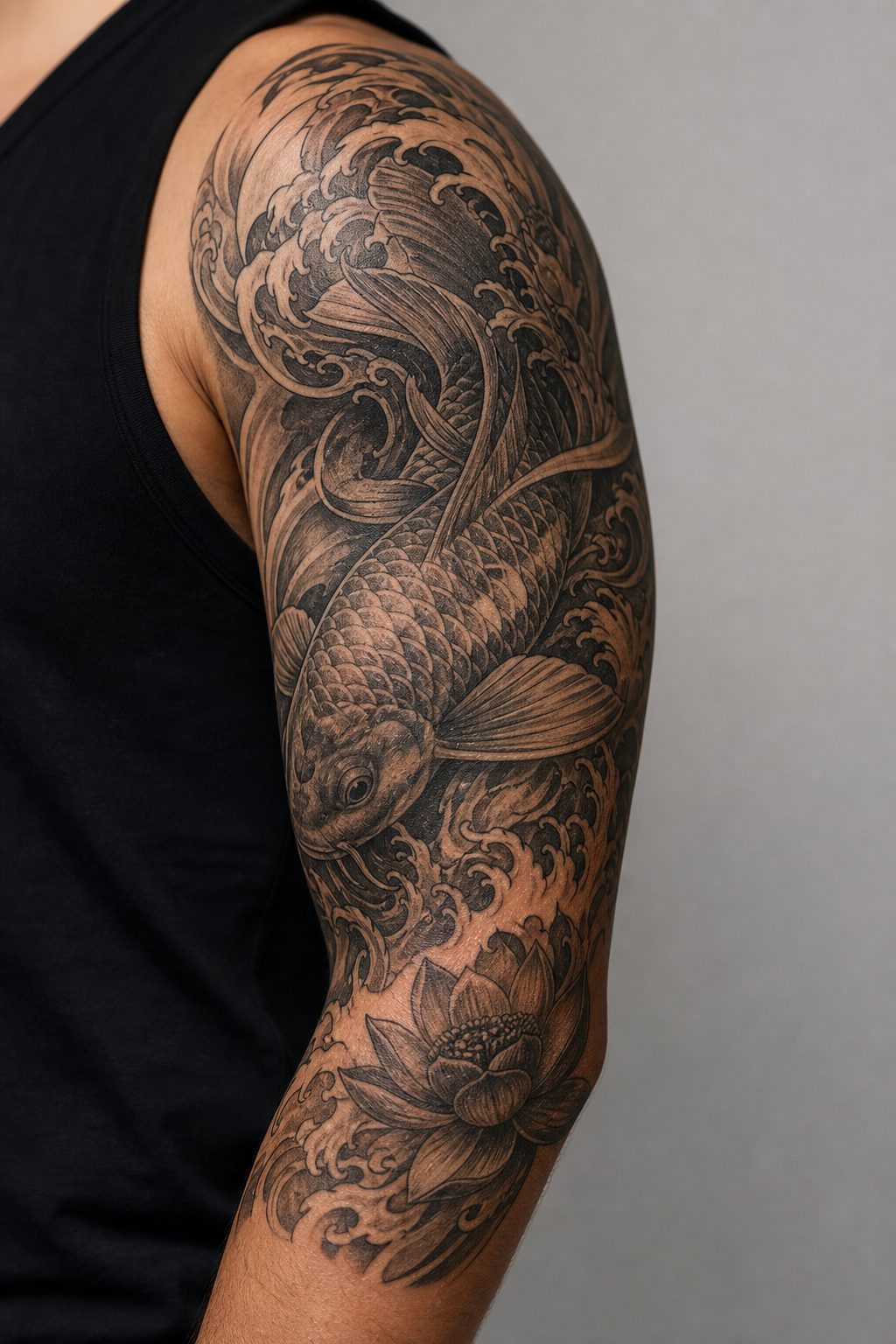
From shoulder to mid-bicep, this hides under short sleeves. Upper arm placements suit private meaning, grief, trauma survived, spiritual transformation, that the wearer references personally rather than publicly. The rounded muscle structure creates natural framing for circular compositions: mandalas, clocks, roses, or all-seeing eyes. Ink here ages slower than the forearm; less sun exposure, less abrasion from desks and doorframes. The upper arm also allows for heavier saturation without the “muddy” look that dense black can develop on thinner forearm skin.
Common Variations & Styles
Meaning in half sleeves emerges from how styles handle symbolism. A Japanese tebori dragon carries different weight than a neo-traditional dragon in the same placement.
Japanese (Irezumi) Influence
Wind bars, waves, and cherry blossoms frame central figures, koi climbing waterfalls (perseverance), tigers warding off evil, phoenixes rising from specific ashes. The half sleeve format in Japanese work traditionally tells a compressed narrative: the koi’s journey, the samurai’s loyalty, the monk’s detachment. These pieces read left-to-right or bottom-to-top with intentional flow. The background isn’t filler; it’s the environment the meaning exists within.
Black and Grey Realism
Portrait half sleeves, deceased relatives, children at specific ages, pets, dominate this style. Meaning here is literal: this face, this moment, this exact expression. The limitation is technical. Portraits require large scale to hold detail; a forearm half sleeve can manage one strong face plus contextual elements (roses, dates, religious medals). Upper arm allows more breathing room. Without proper spacing, realism portraits age into unrecognizable grey blobs. Good artists build in contrast buffers, darker backgrounds, sharper edges, that sacrifice some softness for longevity.
Neo-Traditional and Illustrative
Bold outlines, limited but saturated color palettes, and symbolic objects stacked or overlapping. Anchors (stability), swallows (safe return), hourglasses (mortality), snakes (rebirth through shedding). The meaning is conventional, readable, almost language-like. These half sleeves communicate quickly, to other tattoo people, to strangers who recognize the vocabulary. The style’s clarity makes it durable; thick lines hold, simple color fields don’t muddle.
History & Cultural Roots
The half sleeve as a meaningful format has specific lineages, though origins are often contested.
Japanese tattooing developed full-body narratives for centuries, but the visible forearm half sleeve, kote, emerged among working-class urban populations in Edo-period cities, often linked to firemen and laborers who wore their identities publicly. In Polynesian traditions, arm tattooing (pe’a variants for men, malu for women) carried genealogical and social meaning, though these were typically more extensive than “half sleeve” as modernly understood. Some trace the specific Western format to 1980s California street shop culture, where bikers and rock musicians accumulated enough forearm work that artists began designing for the space intentionally rather than piecing it together randomly.
What matters: the half sleeve’s meaning draws power from these traditions of public identity-marking, whether the wearer knows the history or not. The form itself carries weight.
Who Chooses This Tattoo
Demographics here are observable but not rigid. Military veterans often choose upper arm half sleeves with unit insignia, deployment coordinates, and memorial names, meaning tied to collective experience rather than individual expression. Parents of children with disabilities or medical conditions frequently select forearm placements: visible advocacy, meaning worn openly. People in recovery from addiction use half sleeves to mark time, sobriety dates, phoenix imagery, broken chains, often upper arm initially, then extending to full sleeve as years accumulate.
There’s a practical pattern too. The half sleeve is the gateway to full commitment. People who’ve outgrown scattered small tattoos but aren’t ready for chest, back, or leg work use the half sleeve to test their tolerance for large-scale meaning. The choice says: I have enough to say that it won’t fit in palm-sized pieces anymore.
Similar & Related Symbols
Meaning in half sleeves often incorporates or references these companion images:
- Full sleeve: The obvious extension, same themes, more room for chronological or spatial narrative. Where a half sleeve might show the climb, the full sleeve includes the summit and descent.
- Chest panel connecting to half sleeve: Common in Chicano black and grey work, where religious meaning flows from sacred heart on chest to praying hands or rosary on arm. The connection itself means integration of faith and action.
- Japanese back piece with arm continuation: The munewari (open chest) or full back tattoo with sleeves creates a body-as-temple meaning that half sleeves alone can’t achieve.
- Single large forearm piece (not full sleeve): A wolf, a woman’s face, a clock. Less narrative, more iconic. Meaning concentrated rather than developed.
- Leg half sleeve (half pant): Same format, different visibility rules. Often carries meaning the wearer reveals selectively, intimate, sexual, or simply personal in a different register.
Color vs Black and Grey
This choice fundamentally alters how meaning reads and how long it lasts.
Color Half Sleeves
Bright, readable, emotional. Red roses (love, blood), blue waves (travel, change), green serpents (envy, renewal, medicine). Color meaning is culturally coded but immediate. The trade: color fades. Yellows and light greens disappear into skin tone within five to ten years. Blues and blacks last longer. A meaningful color half sleeve requires maintenance, touch-ups every few years, or acceptance that the meaning will soften, become more impressionistic, like memory itself. Some wearers choose this; others don’t realize until it’s too late.
Black and Grey
Subdued, timeless, funereal. The Chicano tradition of black and grey religious imagery, Virgins, crosses, clown faces, uses tonal variation to create emotional depth without chromatic distraction. Memorial pieces almost default to this. The meaning reads as serious, permanent, slightly melancholic even when celebratory. Black and grey ages more predictably: it softens uniformly, doesn’t surprise you with pinkish faded spots. For meaning meant to outlast trends, it’s the conservative choice.
Mixing both, color focal points in black and grey backgrounds, is increasingly common but technically demanding. The color pops, but the grey must be light enough to contrast, dark enough to hold. Poorly executed, these look muddy within years. Well done, they create layered meaning: the vivid memory against the settled past.
The Takeaway
A half sleeve with meaning succeeds when the symbolism survives explanation. If you need a paragraph to tell someone what your tattoo means, the visual language has failed. The best pieces operate on multiple levels: recognizable symbols for strangers, private references for intimates, personal associations for the wearer alone. The half sleeve format enforces discipline, you can’t include everything, so what you choose matters more. Placement determines visibility, style determines readability, color determines longevity. None of these are afterthoughts; they’re the meaning’s container. Choose the container as carefully as the content, and the tattoo will still signify something twenty years after the original impulse.
Frequently Asked Questions
How long does a half sleeve tattoo take to complete?
Most meaningful half sleeves require 15-25 hours across multiple sessions, typically 3-5 hours each. Complex color work or dense black and grey shading extends this. Forearms often heal faster between sessions than upper arms due to better circulation.
Can I add to a half sleeve later without ruining the meaning?
Yes, but planning helps. Leave negative space or design “continuation points”, flowing elements that can extend logically. Japanese wind bars, water backgrounds, and ornamental filigree adapt well. A disjointed collection of unrelated small tattoos resists coherent expansion.
How much should a quality half sleeve cost?
Custom half sleeves from experienced artists typically run $1,500-$4,000 depending on location, complexity, and artist reputation. Hourly rates vary widely ($150-$400+). Meaningful work deserves budget priority; this isn’t the place for discount hunting.
Will a half sleeve affect my job prospects?
Forearm half sleeves remain visible in most professional attire; upper arms hide easily. Some fields, corporate finance, law, medicine, still carry bias, though this diminishes annually. Consider your specific industry and career stage before choosing placement.