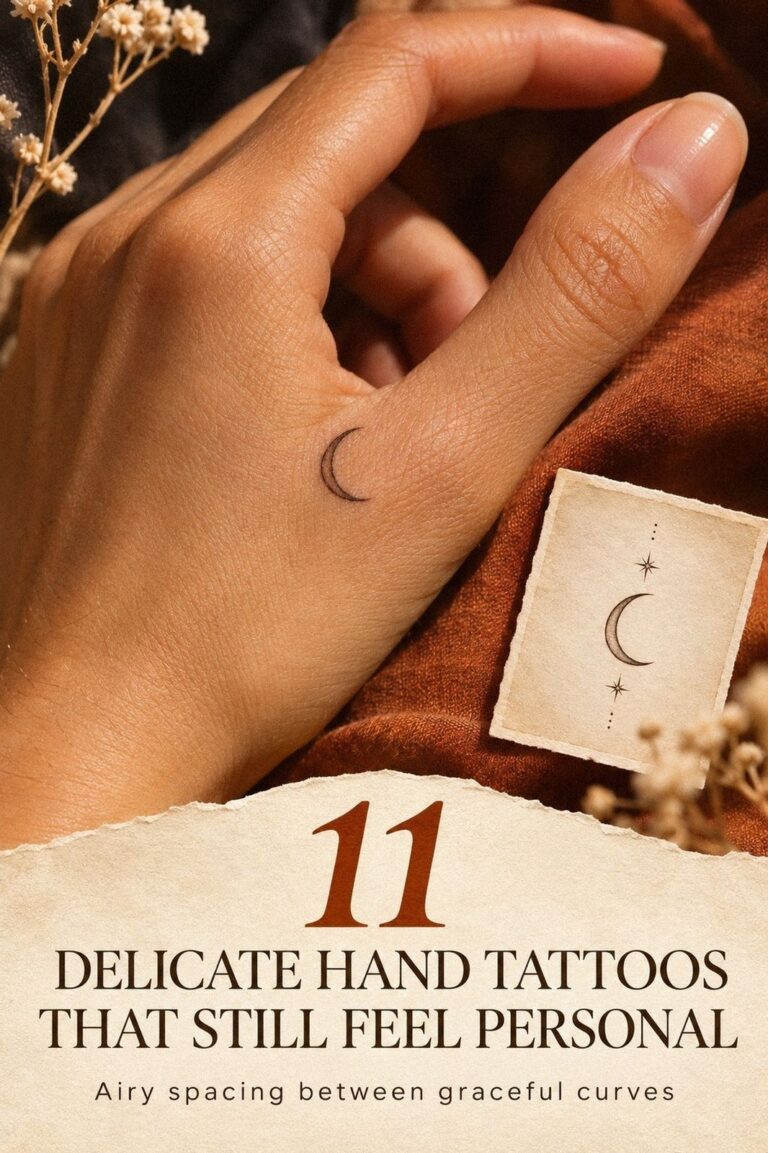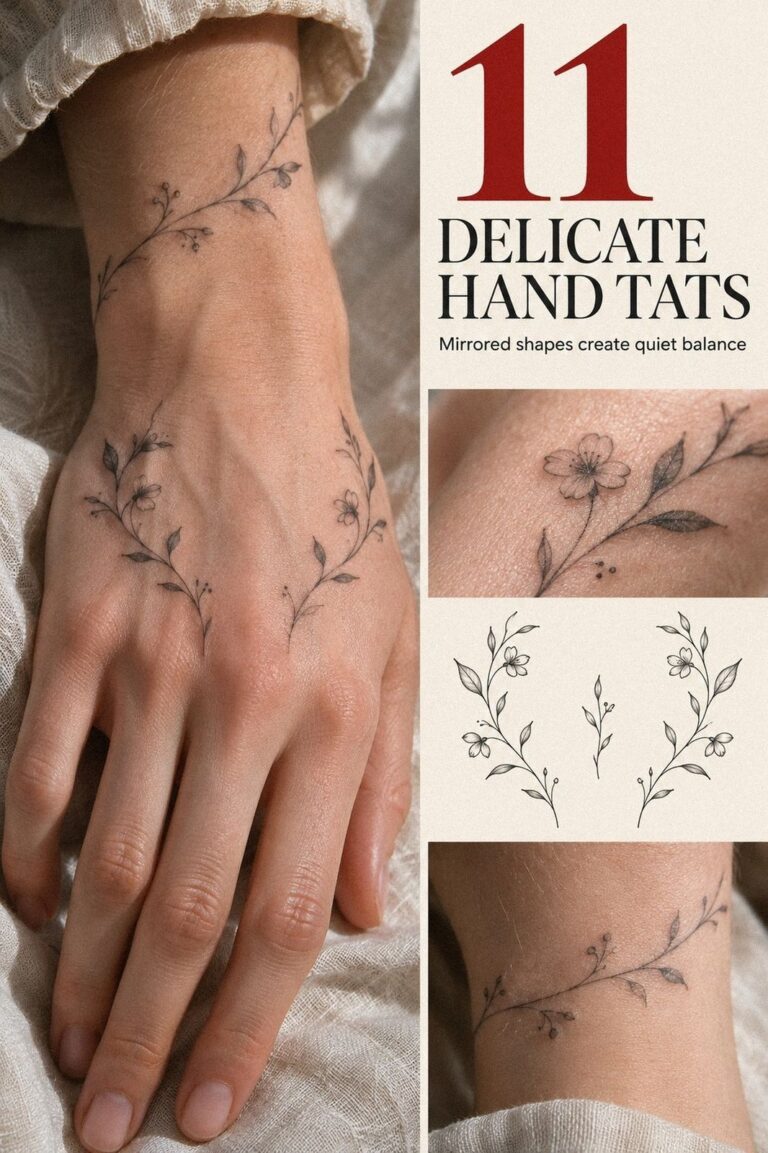

Cute delicate finger tattoos can stay readable and surprisingly tolerable when you choose a small symbol, place it thoughtfully, and protect it while it heals. I’ve learned that the hard part isn’t finding a charming idea. It’s keeping fine-line tattooing crisp on skin that moves, washes, bends, and sees sunlight every day.
The strongest designs feel personal without becoming busy. They can be striking, dainty, symbolic, or quietly expressive, depending on the shape you choose and the way it sits on your hand.
- Start With Small Delicate Cute Finger Tattoos
- Which Playful Symbol Will Still Matter Later?
- Fine-Line Direction Along the Finger
- Minimal Details Keep Cute Tattoos Crisp
- Plan Unique Delicate Cute Finger Tattoos
- Soft Hearts or Sharp Choices?
- Sketch Whimsical Stars for a Dainty Accent
- Which Finger Placement Fits Your Routine?
- Protect Fresh Ink During Finger Healing
- The Personal Mark: Make the Design Yours
- When Should You Refresh Faded Finger Ink?
1Start With Small Delicate Cute Finger Tattoos

Begin with a design that fits the natural width of your finger, such as a tiny star cluster, a bow, or one little heart. Varied sizes keep the piece playful without making it feel crowded. For your first consultation, ask whether single-needle linework can hold the smallest detail clearly at your chosen placement.
I’d keep the largest symbol modest unless your artist recommends otherwise. A design that looks delicate on paper may need slightly more design spacing on skin. You’ll want each point to remain distinct, and you won’t get that effect if the shapes are pressed together.
Think about the symbol at normal speaking distance, not with your hand inches from your face. Your fingers are expressive, so a black tattoo pigment should read as a crisp accent when your hand rests naturally. If you’re collecting references, browse these small cute finger tattoos before you book.
Your skin undertone can change how much contrast the tattoo has. That doesn’t limit your choices. It simply means your artist should discuss line weight, placement, and healing before committing to a dainty design.
A small tattoo can still feel fierce, romantic, empowering, or iconic. The scale doesn’t decide the emotional impact. The symbol, spacing, and reason behind it do.
2Which Playful Symbol Will Still Matter Later?

Choose one playful symbol before you start collecting ten unrelated references. A moon, bow, spark, fruit, or little talisman can be whimsical and stylish, but it should still matter after the trend moves on. Your tattoo symbol needs a reason to stay.
Ask yourself what you’d explain if someone noticed it tomorrow. If the answer is a person, place, habit, or private joke, you’ve got a stronger starting point than a random shape. I’ve seen tiny symbols feel more powerful than elaborate pieces because the wearer knows exactly why they’re there.
Your artist can simplify a complicated reference into three or four essential marks. That’s where the design becomes charming instead of cluttered.
Don’t copy every curl from a flash design if your finger doesn’t have enough essential marks space for it. You’ll want the symbol to breathe around the knuckle.
For restrained references, compare these minimalist cute finger tattoos with your saved images. A warm black pigment may soften slightly as the skin settles, so your artist should leave enough separation between lines.
A personal tattoo doesn’t need to announce its meaning. It can be understated, sacred, haunting, or quietly meaningful. If the design still feels right when nobody else understands it, that’s a strong sign for a personal tattoo.
3Fine-Line Direction Along the Finger

Follow the length of your finger when you want a delicate design to look longer and more intentional. A vertical vine, flowing constellation, or narrow flame can create graceful movement without taking up much width. That direction gives your piece a sleek rhythm when your hand opens.
Before you choose the exact spot, bend and straighten your finger several times. You’ll notice the skin folds, stretches, and shifts. Your artist can use a fine-point stencil to show how the design behaves in both positions.
The side of the finger can feel less exposed than the top, but it still sees friction from daily movement. If you’re comparing placements, this guide to delicate side finger tattoos can help you notice how side finger placement changes the look.
Keep your reference simple if you’re placing it beside a joint. A tiny wave or vertical constellation can work beautifully, while a dense portrait usually loses its character. And if your artist says the placement needs more spacing, listen.
Their opinion protects the linework you came to get!
A flowing design may look delicate, but it still needs structure. Your stencil placement should account for the way your finger curls, grips, and relaxes.
4Minimal Details Keep Cute Tattoos Crisp

Keep the smallest details clean by choosing fewer marks, not by shrinking every mark until it disappears. Crisp black linework can stay gentle without becoming muddy when the central shape is easy to identify.
I’d skip micro-text on a finger unless the lettering is large enough to age with dignity. Tiny words often blur into a dark strip, especially where skin flexes and rubs. You’re better off using one symbol that suggests the meaning than forcing a full phrase into a narrow area.
Give your design one focal detail and one supporting detail. A heart with a single glint, a star with two dots, or a bow with one loose loop can feel playful without looking unfinished. Your eye needs a quiet place to land, and negative space creates that effect.
If you’re unsure, compare your sketch with these delicate finger tattoos and look at the distance between marks. That mark spacing matters more than adding another flourish.
Don’t confuse minimal with timid. A bold outline can look more striking than a crowded miniature scene. Sometimes a raw, sharp shape says more than ornate detail ever could.

5Plan Unique Delicate Cute Finger Tattoos

Plan your design from a physical reference, not only from a polished digital image. A paper flash sheet helps you compare related options before choosing one.
Place the stencil beside a ruler, then hold your hand naturally rather than spreading your fingers unnaturally. If the design is very small, tiny differences in stencil size will matter. Your artist can explain what needs to grow for clarity.
I’d choose one visual family across several fingers rather than mixing every style you like. Small stars, hearts, and curved sparks can feel harmonious when they share the same line weight. You don’t need identical symbols, but you do need a reason they belong together.
You’ll find more starting points in these unique delicate cute finger tattoos. Bring three references and one sentence about what you like in each. Your artist isn’t reading your mind, and a clear note about scale, mood, and placement can save both of you a frustrating revision.
A thoughtful plan is worth it when you’re working with limited space. The design consultation may take longer than the actual tattoo, but that time can protect your budget and the final result.
6Soft Hearts or Sharp Choices?

Match a tiny heart to the natural softness of your hand instead of making it overly ornate. A clean outline can create a powerful, elegant contrast on every skin tone when the line weight is chosen carefully. Your artist should explain how black tattoo ink will read against your skin.
Ask for a heart with a shape you’ll still recognize when your finger bends. A very narrow point can fold into the crease, while an overly round version may lose its sweet character.
I’d place the point away from the deepest fold whenever possible. The heart shape matters.
The best heart designs usually need less decoration than people expect. One open outline, one tiny break, or one subtle asymmetry can make the symbol feel personal. You’ll want to avoid stacking dots, flowers, and initials around it unless your artist confirms there’s enough room.
Let the open outline lead.
If you’re exploring different silhouettes, look through these small hand finger tattoos for women for placement ideas. Your skin tone doesn’t limit delicate tattoos, but your artist’s healed portfolio matters.
A heart can look feminine, masculine, edgy, or classic depending on its proportions. The most stylish version is the one that feels like your hand shape, not a copied template.
7Sketch Whimsical Stars for a Dainty Accent

Sketch stars with different sizes when you want a dainty accent that feels lively rather than stamped on. A star cluster can stay whimsical while giving each mark enough breathing space.
8Which Finger Placement Fits Your Routine?

Compare the inner and outer finger before you commit, because visibility, friction, and daily use all change with placement. Your lifestyle should guide the choice more than a single reference. The finger placement needs to work with your actual routine.
The outer side is easier for you to see, but it may catch more sunlight and contact. The inner side can feel more discreet, though bending and washing may affect how the piece looks while it heals. Start with the outer side only if that visibility suits you.
For more examples, compare small finger tattoos with small hand finger tattoos for women. Similar symbols can look bold, refined, or almost hidden depending on the side. These placement examples can help.
If you work with your hands, wash them often, or play an instrument, tell your artist before the stencil goes down. That information can change the best placement. Your daily routine matters more than a trend.
The right location can make the tattoo feel worth it for longer. You’re choosing how often you’ll see it, how much maintenance it may need, and how visible it’ll be at work. Think about long-term wear before booking.
9Protect Fresh Ink During Finger Healing

Protect fresh ink with a simple aftercare routine and a little patience.
10The Personal Mark: Make the Design Yours

Personalize the design by comparing the stencil with the healed result you want. Your goal isn’t to preserve the stencil forever.
It’s to plan for change. The healed tattoo result is what you’re really buying.
Ask your artist how the lines may soften, especially if your design uses ultra-fine marks. Very fine lines can widen over time, and finger tattoos experience plenty of motion, washing, and exposure. A slightly clearer outline may look less fragile at first but age more gracefully.
You can personalize a tiny design through proportion, not extra decoration. Make one star larger, tilt a heart, leave a deliberate gap, or place a symbol toward the side you naturally show. I’d rather see one personal adjustment than five random details competing for attention.
If you want more references, browse minimalist cute finger tattoos and mark the choices that feel like you. Your artist can combine the strongest parts into a new sketch.
A good personalized piece should look natural on your hand even when you aren’t posing. Hold a cup, text, turn a key, and relax your fingers while checking the stencil. That real-life test is worth the extra minute.
You can also ask for an iconic detail that belongs only to you. A tilted star, an uneven loop, or a tiny gap may be more personal than an elaborate addition.
11When Should You Refresh Faded Finger Ink?

Refresh faded ink only after you understand why it changed.
The Finger Tattoo Rule I Actually Follow
I’ve come to believe the best delicate finger tattoo isn’t the tiniest design you can tolerate. It’s the smallest design that still has enough structure to survive real life.
Your fingers bend, wash, grip, sweat, and meet sunlight, so a fragile-looking sketch needs more planning than its size suggests. That’s my rule for a delicate finger tattoo.
I’ve also changed my mind about pain. Finger tattoos can feel sharp because the skin is close to bone and full of movement, but the session is often brief. I wouldn’t call every placement comfortable, and I wouldn’t promise that “barely hurt” means nothing.
Pay attention to your finger skin.
The decision I care about most is whether the design will still look like itself after the first excitement fades. A bold outline may age more clearly than a whisper-thin mark, even when the finished piece still looks delicate. That’s the balance I’d ask your artist to explain.
I’ve seen people spend more time choosing a symbol than choosing placement, and that order causes trouble. Start with your hand, your work, your sun exposure, and your tolerance for upkeep.
Then choose the charming detail. The placement choice comes first.
You don’t need a dramatic collection of symbols to make your hand feel personal. One small heart, one uneven star, or one quiet mark can carry plenty of meaning.
The strongest pieces look intentional from a short distance and intimate when you look closely. Let one meaningful mark do the work!
What People Always Want to Know
How much does a delicate cute finger tattoo usually cost?
A delicate cute finger tattoo typically costs about $100 to $300 in the US, though a shop minimum may run around $50 to $100. Your final tattoo cost depends on the artist, region, size, placement, and studio minimum. Ask for the full estimate before booking so there are no surprises.
Are delicate cute finger tattoos worth it for a first tattoo?
Yes, they can be a thoughtful first choice because the session is often short and the design can stay personal. Your best value comes from clear linework, realistic scale, and a symbol you won’t outgrow. Finger skin still needs careful aftercare and sun protection.
How do I choose a tattoo artist for delicate cute finger tattoos?
Review healed portfolio examples, not only fresh work, and look for clean fine-line examples on varied skin tones. A specialist should explain placement, aging, hygiene, and aftercare clearly.
You’ll also want a licensed studio with strong sanitation practices and a calm consultation. Ask for a healed portfolio.
How much do delicate cute finger tattoos hurt?
Pain varies by placement, but fingers can feel intense because they’re close to bone and have less padding. Your short session may feel sharp, but it usually doesn’t last long. Ask your artist how long the specific placement should take before you finalize your budget.
How long do delicate cute finger tattoos take to heal?
The surface usually heals in about two to three weeks, while complete settling can take about two to three months. Your aftercare should include gentle washing, light moisturizing, and avoiding sun, pools, and prolonged soaking until surface healing is complete.
What’s the best placement for delicate cute finger tattoos?
The outer finger is more visible, the inner finger feels more private, and the side finger creates a narrow, graceful look. Your best placement depends on friction, work, sun exposure, and how often you want to see the design. Ask your artist to test the stencil while your hand moves.
Where I’d Start First
If I had to pick one step, I’d start with the symbol and keep it small enough to breathe. A single clear heart or star will age more gracefully than crowded micro-detail on a moving finger. Save your favorite reference, ask for a healed portfolio, and let the stencil decide.
The best result doesn’t need to be ornate or expensive. It needs to be personal, readable, and planned around your real life.
If the design still feels right when your hand is relaxed, you’re probably close. Keep that standard, and you can make a confident personal result!