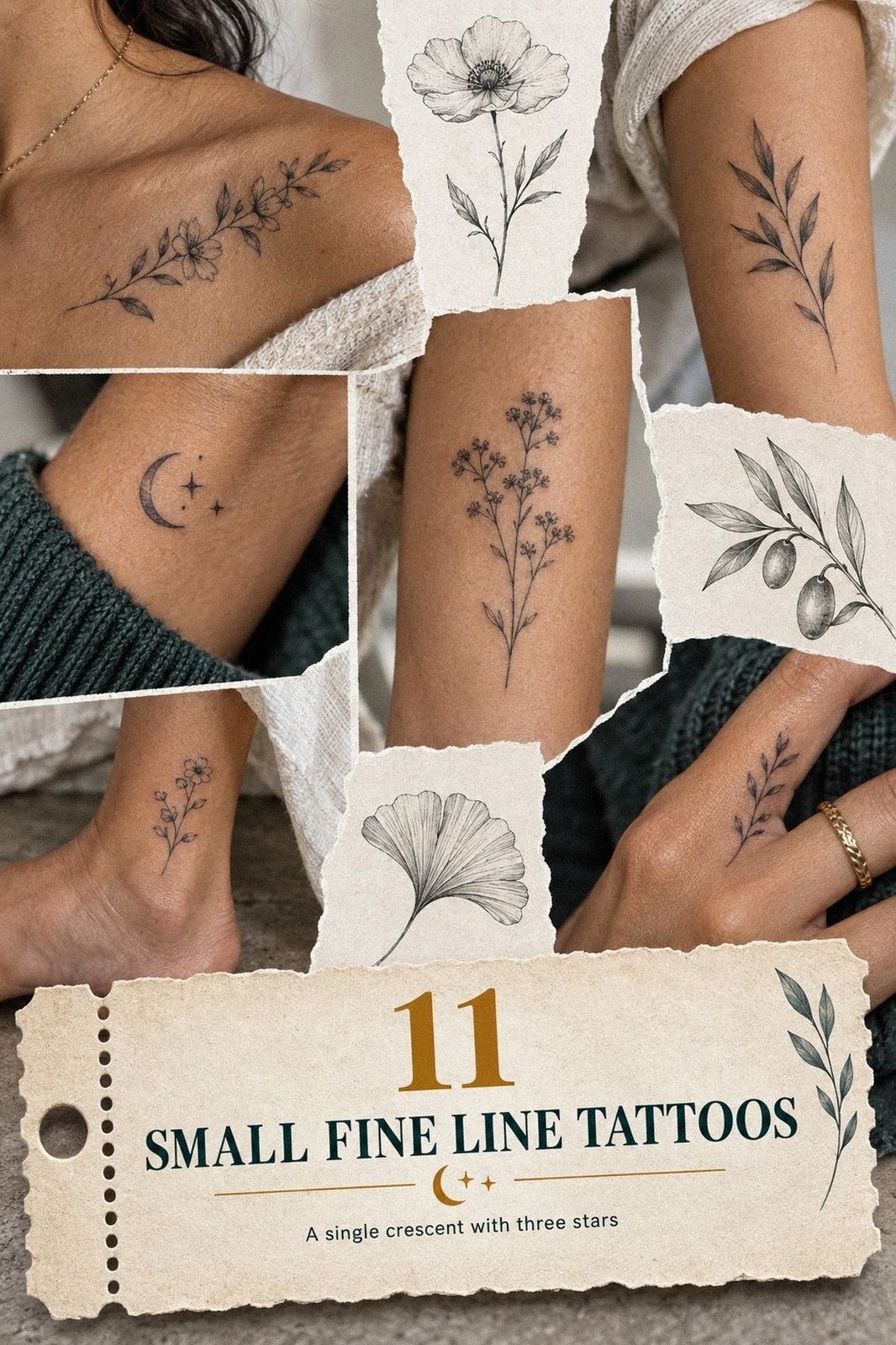
Small fine line tattoos can stay discreet at work when you choose the placement before the design, keep the linework crisp, and plan around your usual clothes. You don’t need a large wardrobe of cover-ups. You need a thoughtful, personal map for visibility, healing, and long-term wear!
- Start with delicate botanical small fine line tattoos
- Pick meaningful symbols for small fine line tattoos
- Choose unique celestial small fine line tattoos
I’ve learned that a tiny tattoo isn’t automatically hidden. A collarbone star can peek above a shirt, while a rib design can disappear under a fitted blouse.
Start with skin, fabric, and your actual workday. That’s where the plan gets practical.
- Start with delicate botanical small fine line tattoos
- Pick meaningful symbols for small fine line tattoos
- Choose unique celestial small fine line tattoos
- Place tiny linework tattoos on visible skin
- Match tattoo placement with your daily style
- Keep small tattoos crisp with minimal detail
- Plan symbolic designs around personal milestones
- Compare playful animals with graceful floral motifs
- Balance intricate details in tiny tattoo ideas
- Prepare for pain across sensitive tattoo placements
- Protect fine line ink during healing
1Start with delicate botanical small fine line tattoos

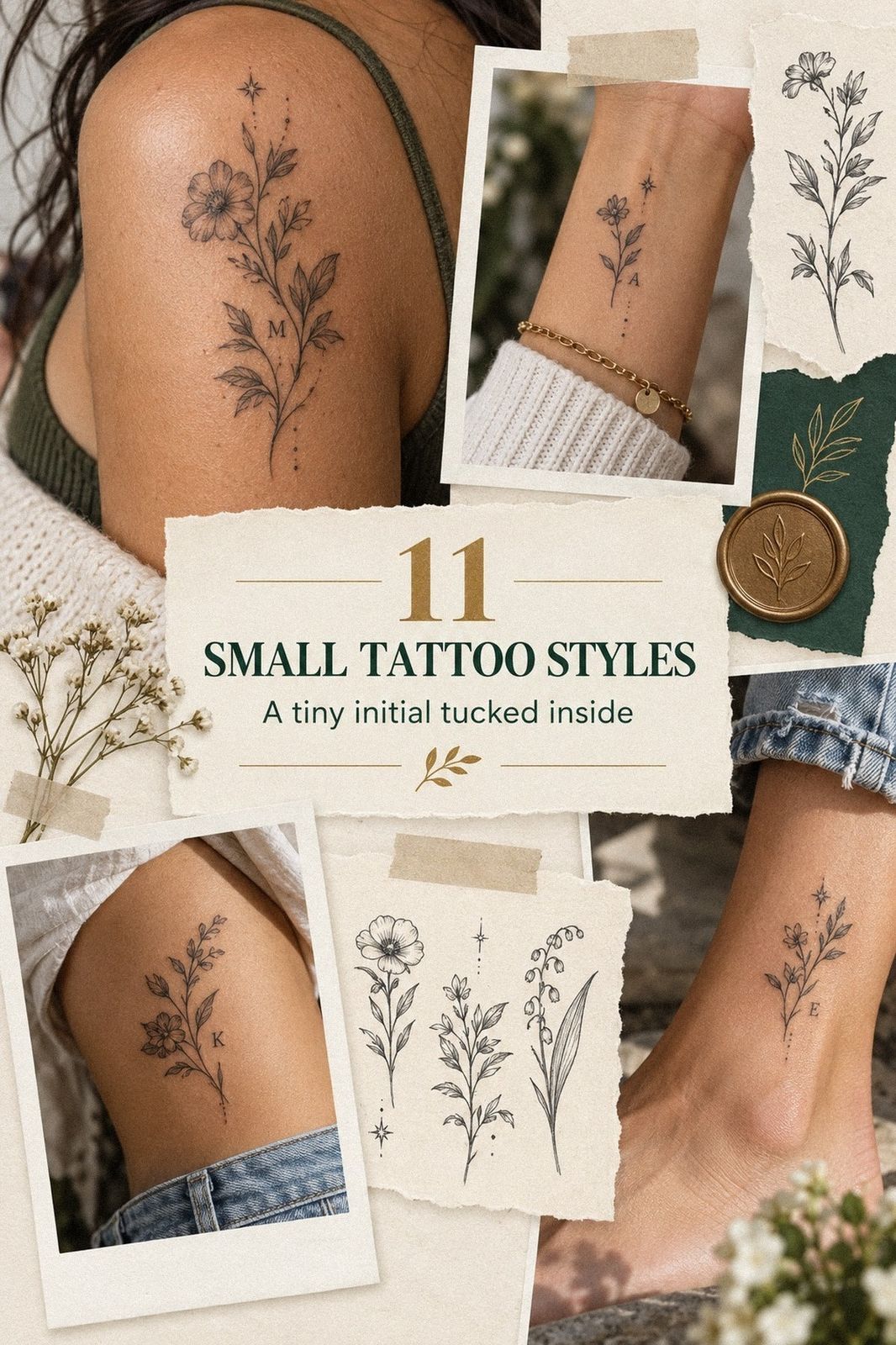
Begin with a shape that can shrink gracefully. A collarbone placement should sit below your usual neckline, not directly beneath its edge. A small sprig with two stars can look intricate without becoming visually loud.
Your artist should place the stencil while you stand, sit, and move your shoulders. If you’re checking it only in the chair, you won’t see how the design rises above a scoop neck. I prefer a location that stays personal without making every meeting a reveal.
For a discreet result, choose a delicate branch, tiny star cluster, or narrow leaf shape rather than a dense black patch. Botanical linework has a graceful rhythm, and open negative space helps each mark stay readable as the tattoo ages.
Ask whether the smallest version will still be worth it after the lines settle. A design that looks striking at the appointment can lose its charm if every leaf is squeezed together.
– Two or three small stars – One curved stem with restrained leaves
Read what fine line tattoo means before your appointment, then bring one reference and one placement example. Don’t copy every detail. Your skin, shoulder movement, and neckline will change the final result.
2Pick meaningful symbols for small fine line tattoos
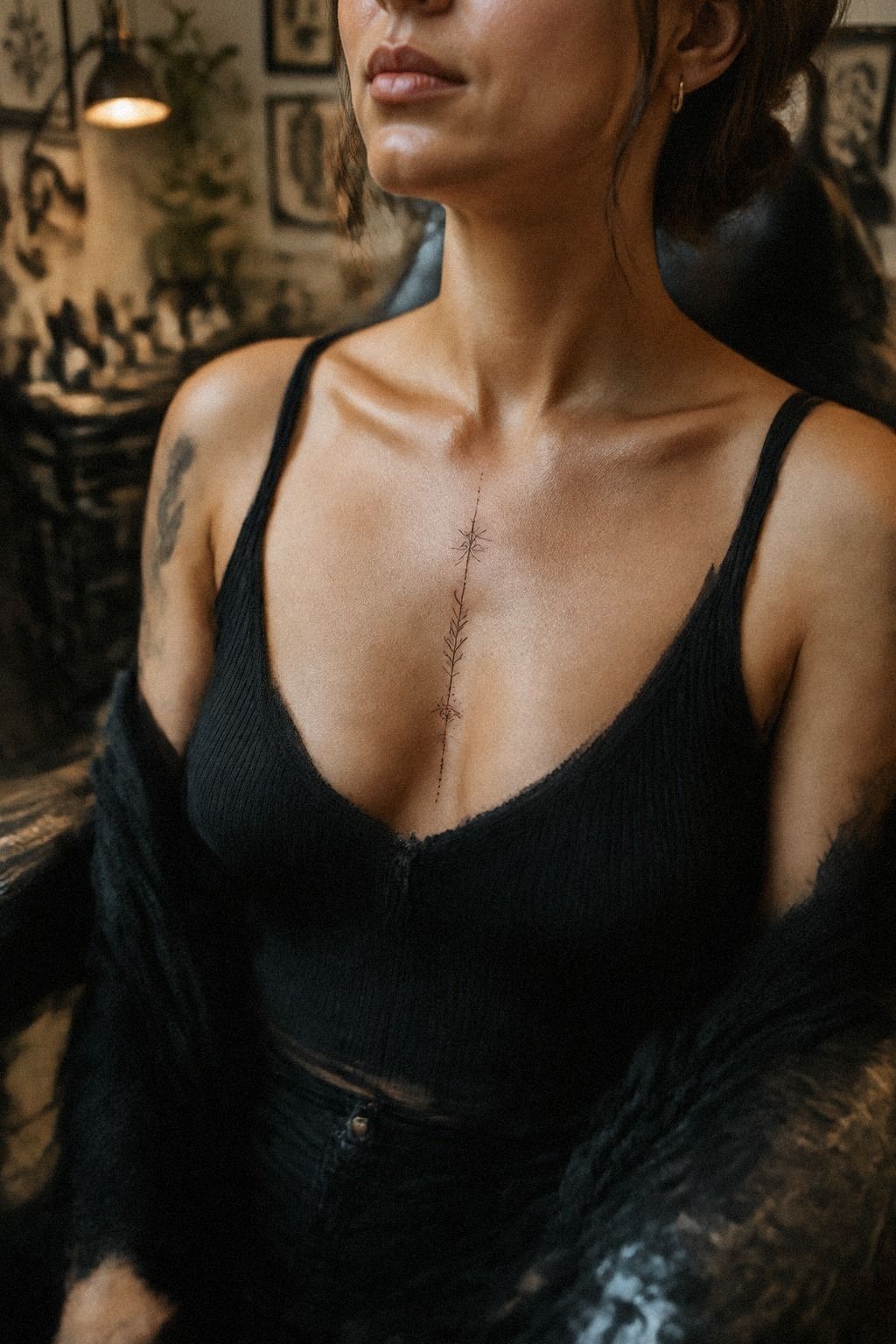
Use the sternum area as a lesson in proportion. A center-chest placement can look elegant, but it needs enough spacing to remain readable when the design is reduced to a few centimeters.
A tiny moon, initial, constellation, or personal emblem can feel symbolic without becoming obvious to coworkers. I wouldn’t choose a paragraph of lettering here. Fine text often closes up visually, especially when the design is small.
One clear mark has more staying power than five cramped ones.
Ask your artist to test the design at the intended size on transparent stencil film. Look at it under normal office lighting, not only under bright studio lamps. You’ll notice whether the symbol feels bold, understated, or too faint before any ink reaches your skin.
Think about the emotional value as well as the visual result. A private reference can be more empowering than a symbol everyone recognizes, and it may be worth the cost if you still connect with it years from now.
– One meaningful icon – Two small points of supporting detail
If the meaning matters more than the image, compare your options with this small tattoos meaning guide. You don’t need a dramatic story for a tattoo to matter.
3Choose unique celestial small fine line tattoos
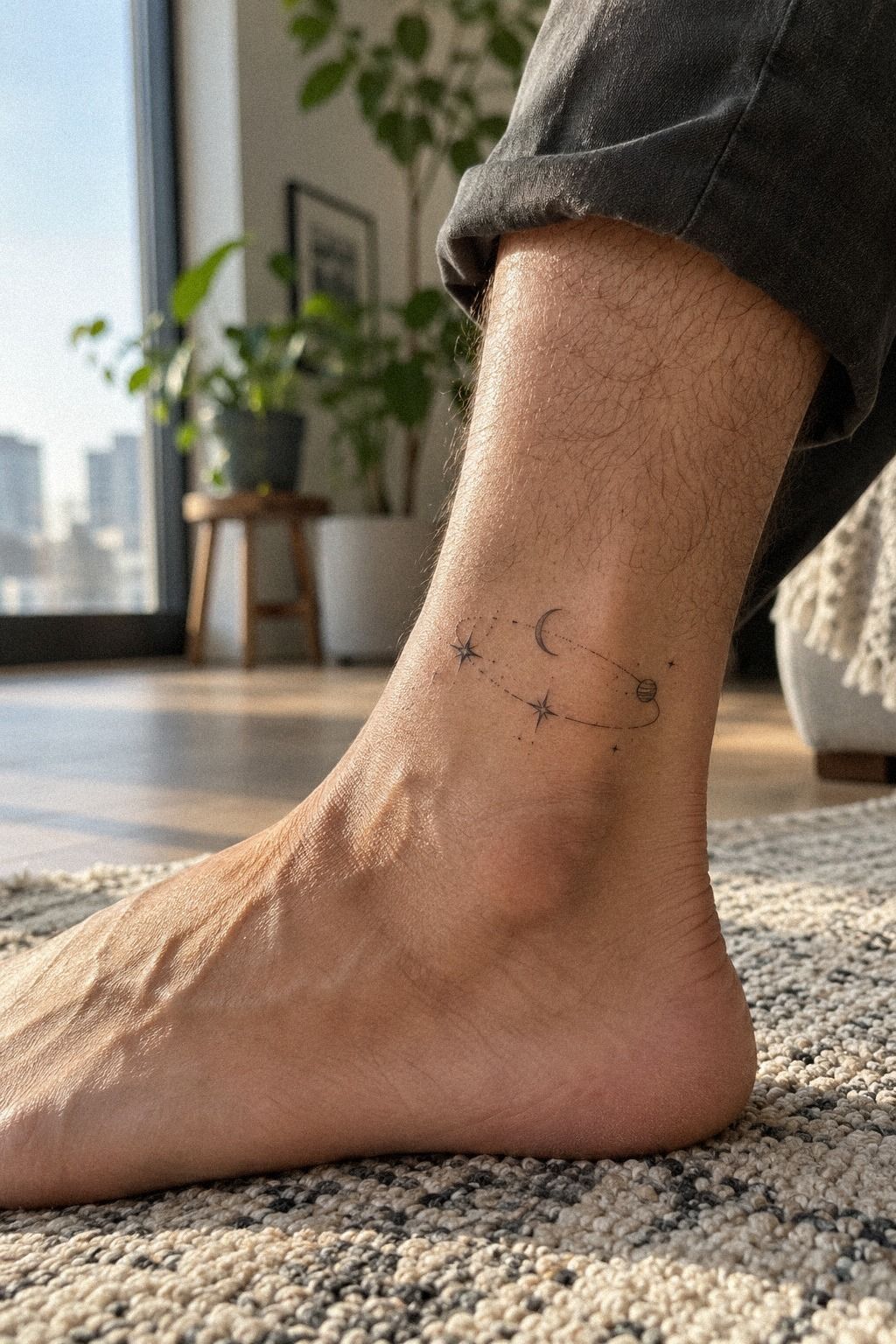
Use the ankle placement to control visibility. A high-ankle position can sit below a trouser hem while remaining easy for you to reveal outside work. A tiny orbit, crescent, or star map gives you an expressive idea without demanding attention.
I like celestial designs when the artist leaves a quiet pocket of skin between each mark. Black tattoo ink gives the stars enough contrast, while an open circle or fine crescent keeps the result ethereal.
I’d skip a crowded galaxy scene. At a small scale, it can turn into a dark knot instead of a sharp design.
Before you approve the stencil, wear the shoes and trousers you use most often. A low ankle sock may hide the design, but cropped trousers may expose it every time you sit down. You’re planning for motion, so check the placement while standing, walking, and crossing your legs.
A crescent with two separated stars can feel playful, timeless, and personal. That check matters!
– Crescent with two separated stars – Small orbit line with one dot
A celestial piece can be personal without explaining itself. If you’re considering a more visible location later, look through small tiny hand tattoo ideas for contrast, then place your first design somewhere easier to cover.
The Workday Coverage Audit
Start with your actual dress code, not your ideal outfit. Mark every area that stays covered during presentations, commuting, reaching, bending, and washing your hands. A workday visibility checklist makes the decision less emotional and more useful.
Test the placement in three positions: standing, seated, and reaching forward. If a sleeve lifts or a waistband shifts during normal movement, that area isn’t reliably hidden. You’ll want coverage that works without constant adjustment.
Ask someone you trust to check the placement from several angles. You might miss a small reveal near the collar, wrist, or ankle because you’re viewing it from above. A second opinion can save you from an expensive correction later.
4Place tiny linework tattoos on visible skin
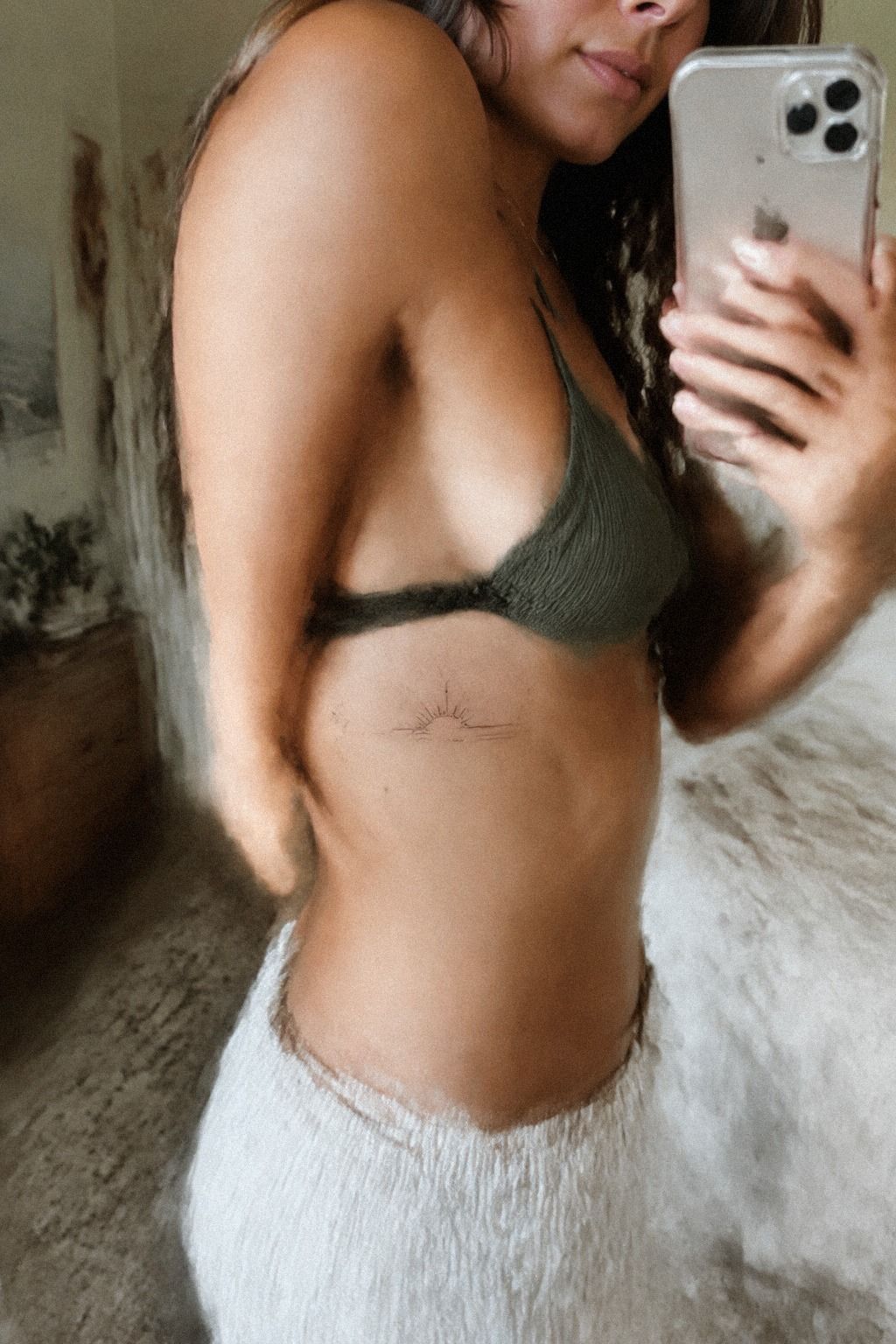
Treat visible skin as a visibility decision, not an afterthought. A predictable coverage zone should match the clothing you wear during a normal week, including uniforms, client meetings, and warmer days.
A rib placement can be hidden under a cotton camisole and a buttoned shirt, while a wrist or hand design may show during every gesture. I wouldn’t begin with the hand if your workplace has strict appearance rules. Hands wash often, catch sunlight, and receive constant friction.
If you want a discreet tattoo near visible skin, choose an edge that fabric covers naturally. The upper rib, inner upper arm, and high ankle usually give you more options than the fingers. You’ll still get a bold personal detail without monitoring it through every presentation.
Check the exact upper-rib position while seated and reaching. A location that looks covered when you stand may appear briefly when you bend forward. Those small moments matter if privacy is part of the plan.
– Shirt hem tested while seated – Sleeve cuff checked with arms extended
For more placement references, browse small simple hand tattoos and compare how much of each design stays exposed. Your choice should match your employer’s policy, your clothing, and your comfort level.
5Match tattoo placement with your daily style
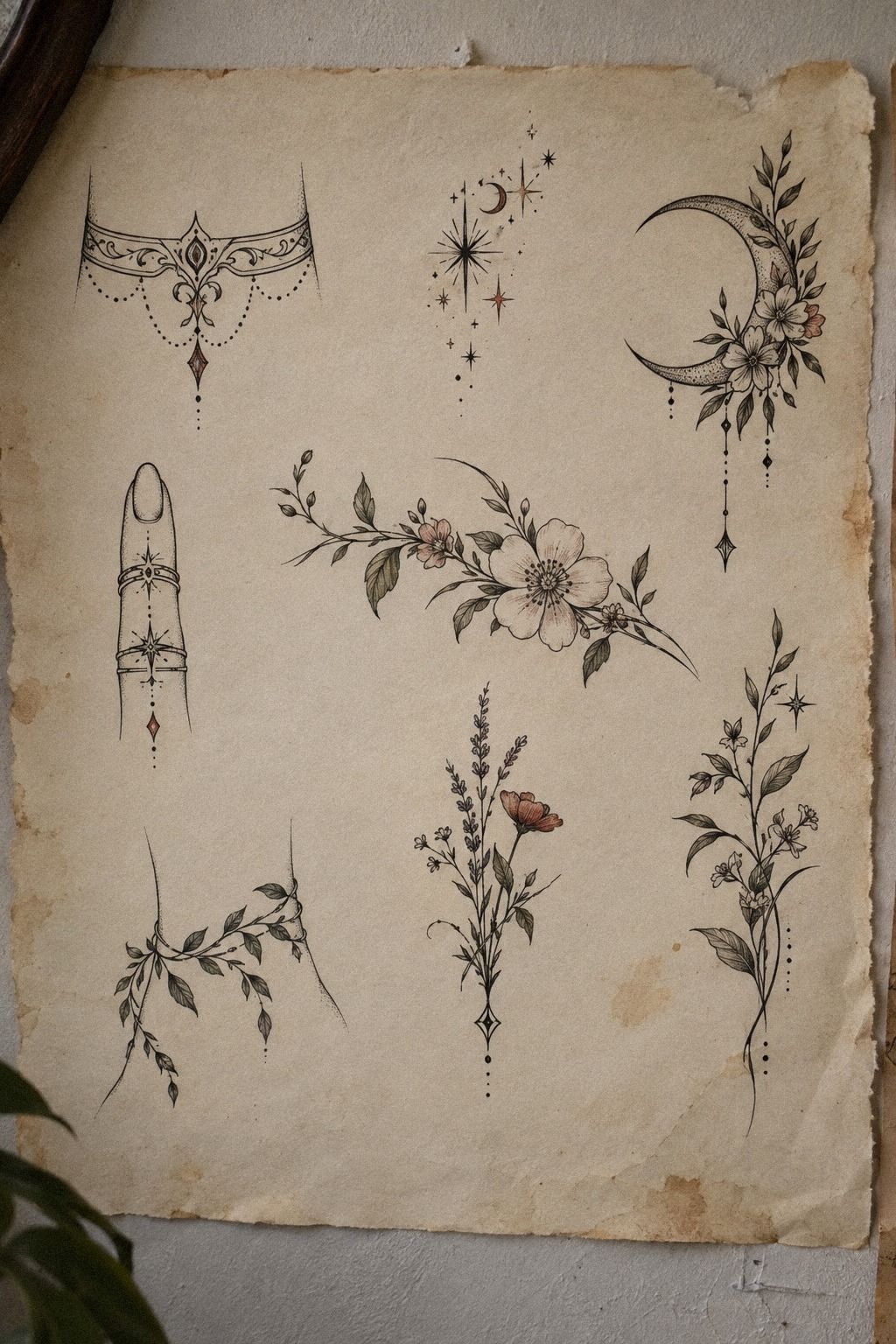
Start with your wardrobe, then choose the tattoo. Lay out your usual work outfits and identify the areas that remain covered. Your work-clothing rotation is better evidence than one dramatic outfit you may wear twice a year.
A black stencil marker can help your artist test scale, but the final stencil should be made in the studio with proper products. If you’re wearing short sleeves every day, a high rib or upper thigh may offer more privacy than the outer forearm.
I made the mistake of choosing a placement around one favorite outfit. That was a bad plan. The shirt disappeared from my rotation, while the tattoo stayed.
Your daily clothes need to guide the choice.
Three-quarter sleeves can cover an inner-arm design, while high-waisted trousers may cover a rib placement. The best value comes from a location that works across several outfits, not just one carefully styled look.
– High-waisted trousers over rib placement – Three-quarter sleeves over inner-arm placement
For hand visibility, compare small side hand tattoos with small side finger tattoos. Those areas can look delicate and stylish, but they aren’t reliably hidden in most offices.
Cost, Value, and Your Tattoo Budget
Small doesn’t always mean inexpensive. A shop minimum, artist experience, location, and placement can affect the final cost more than the amount of ink. Ask about the shop minimum before you send a deposit.
These are planning ranges, not promises. A lower quote isn’t automatically better value if the artist lacks healed fine-line work. Compare the portfolio, hygiene standards, communication, and expected result before deciding.
If your budget is limited, simplify the design before choosing a less experienced artist. Removing three interior details may keep the tattoo affordable while making it more durable. That’s worth knowing!
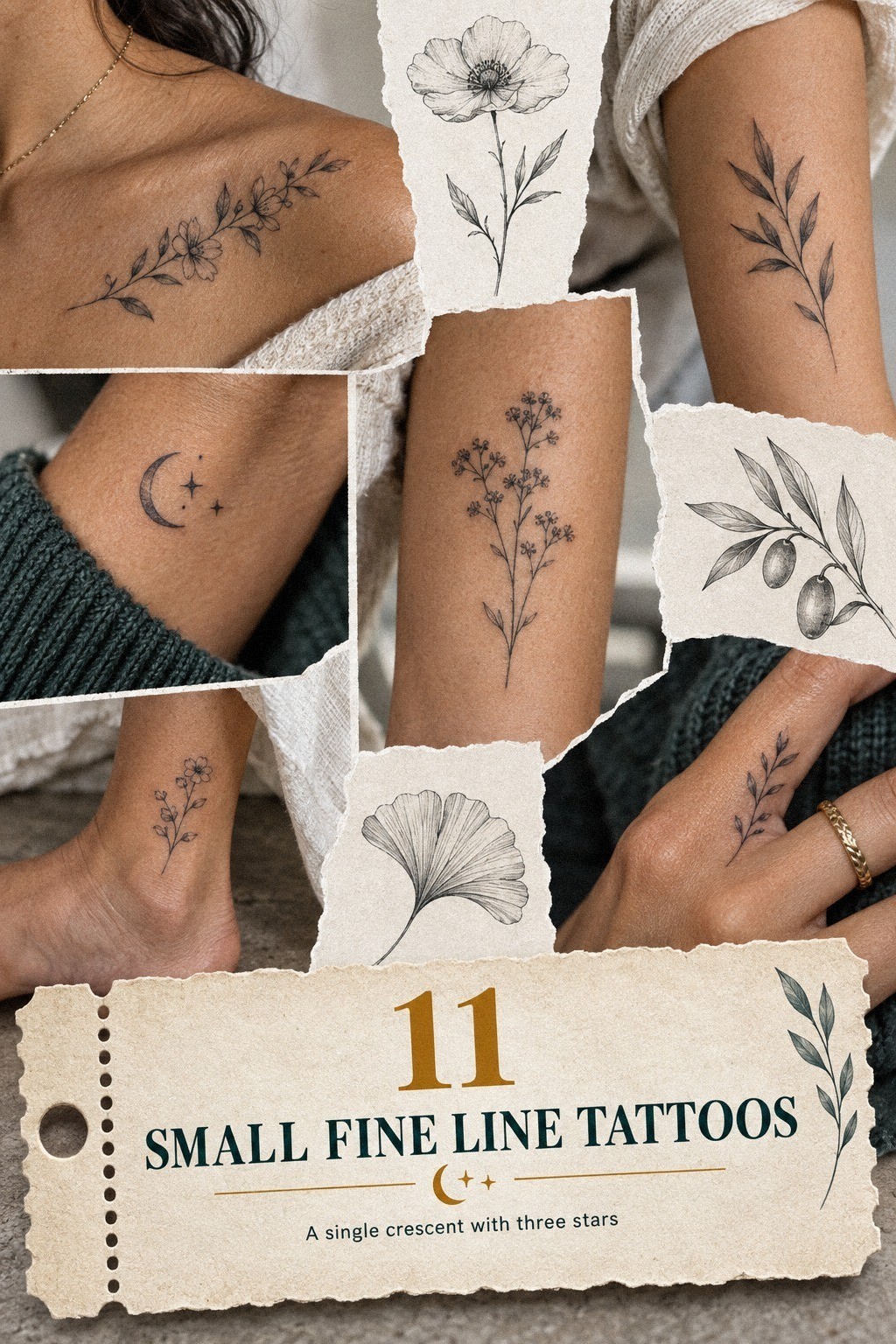
6Keep small tattoos crisp with minimal detail
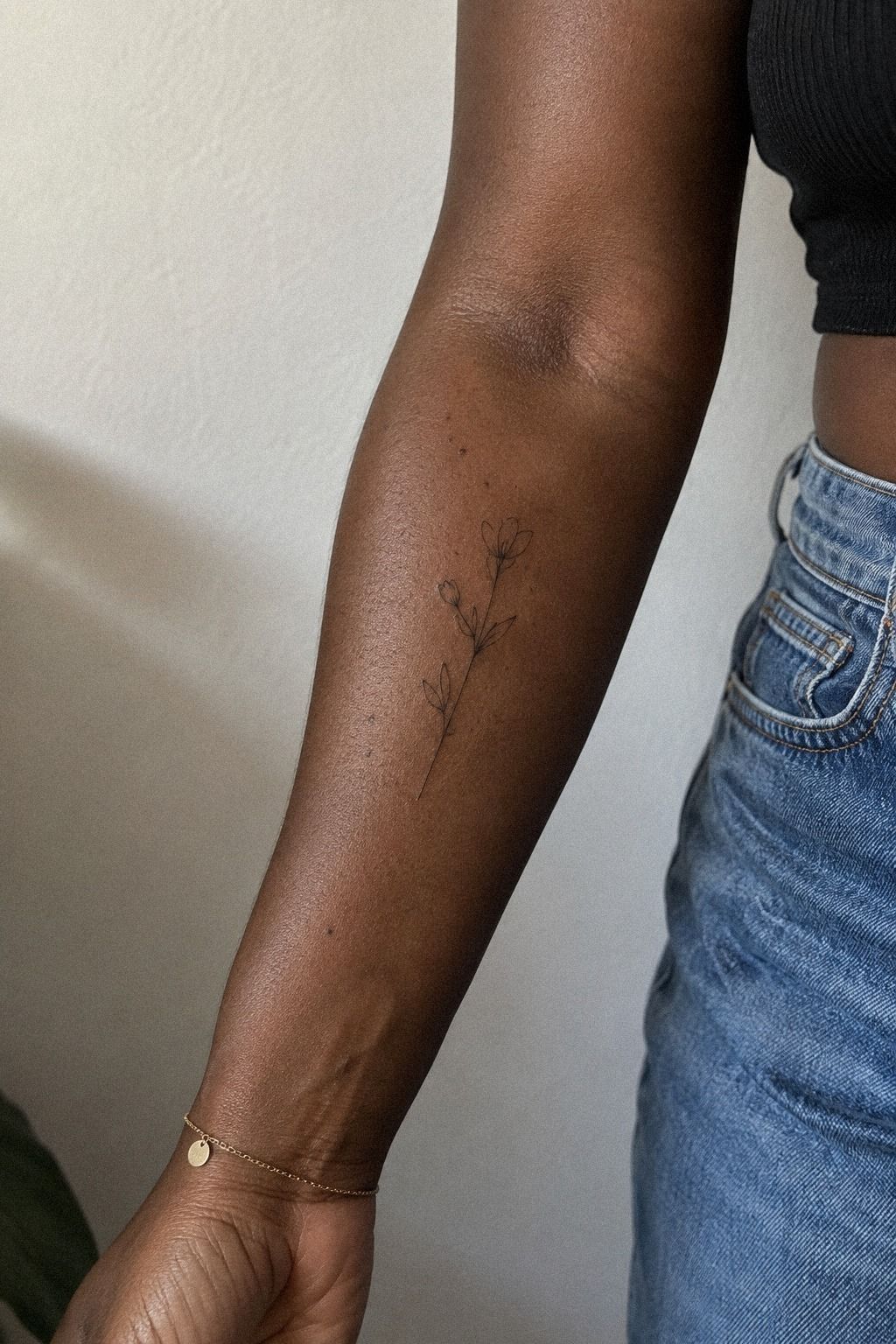
Simplify before you shrink. A small tattoo needs a strong silhouette because every extra dot competes for the same limited area. Clear outer structure gives the design a better chance of staying recognizable.
Ask for solid black ink where the design needs definition and leave open skin around the main shape. Fine lines can soften or spread over time, especially with sun exposure and repeated friction. That doesn’t make the style fragile, but it does mean your artist needs to design for the future.
I wouldn’t approve a miniature portrait, dense lace pattern, or tightly packed script just because it looks impressive on a phone screen. At four inches, the detail may be expressive. At one inch, it may become muddy.
A one-inch scale test can reveal whether the design still feels polished before the stencil is applied. Removing one layer now may offer better long-term value than paying for a touch-up later.
– Clear outer contour – Open negative-space gaps
Use small inside finger tattoo ideas to see how restraint works at a tiny scale, even if you choose the forearm instead. Your artist should show healed examples when possible.
The Healed-Line Check
Fresh ink can look crisp, sharp, and vibrant before the surface settles. Ask to see healed portfolio examples made several months earlier, preferably at a similar size and with comparable detail.
Look for lines that remain distinct instead of merging into a grey blur. You don’t need every mark to stay razor-thin, but the main silhouette should remain readable and balanced.
Ask about the artist’s touch-up policy before booking. A free or reduced-cost correction may sound like good value, but prevention is still better. The best result begins with appropriate spacing and realistic expectations.
7Plan symbolic designs around personal milestones
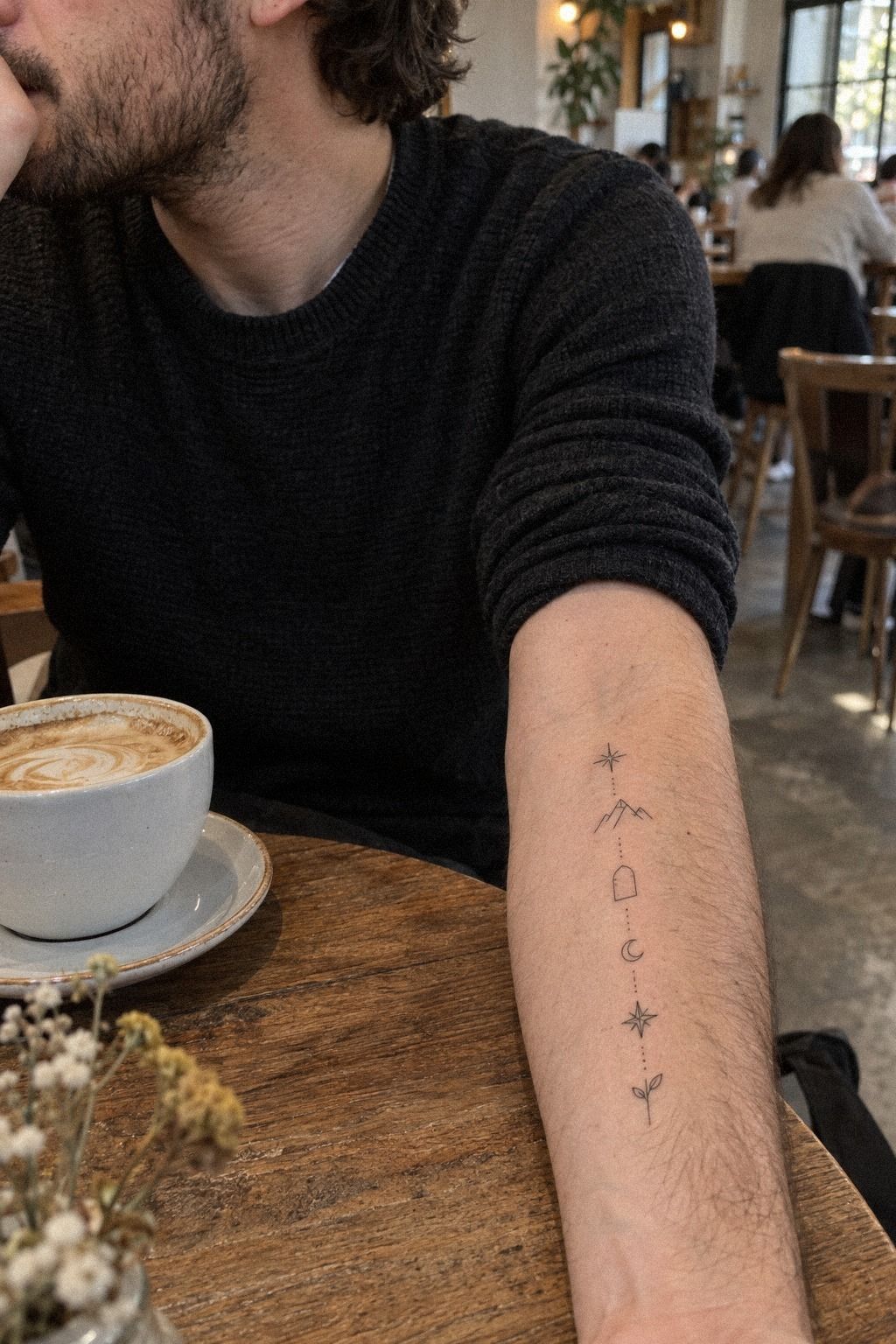
Build the meaning into one visible shape. An inner-forearm symbol can work well when you want to see the tattoo privately without displaying it constantly. A date, small object, or personal mark can carry a lot of emotional weight.
Use carbon transfer stencil paper to test the symbol at two sizes. One may look delicate, while the other may remain readable after the lines soften. If you’re marking a graduation, move, recovery, or relationship, you don’t need every detail of the story.
This is where I get opinionated: don’t let an important milestone force you into a complicated design. A meaningful tattoo should still function visually. You’ll be looking at it years from now, so choose a form that feels personal and timeless.
A clean numeral layout may communicate more than a full quote. One emblem often feels more powerful than a collection of literal references, and a simpler design may be more affordable too.
– Small date in clean numerals – Single object with one supporting dot
If you want help separating emotional meaning from visual clutter, revisit the small tattoos meaning guide. Your idea can remain sacred and personal without being recognizable to everyone in the room.
8Compare playful animals with graceful floral motifs
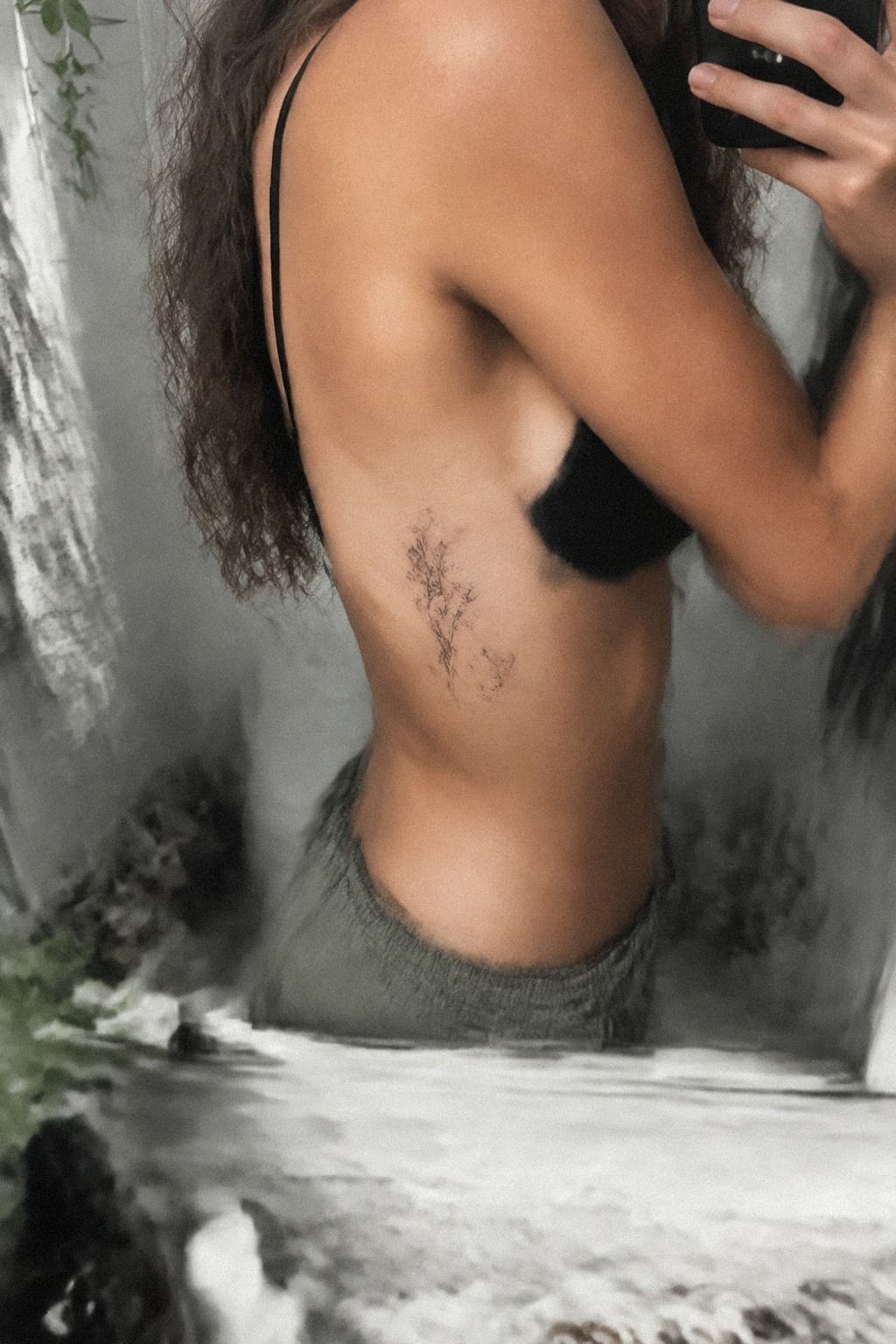
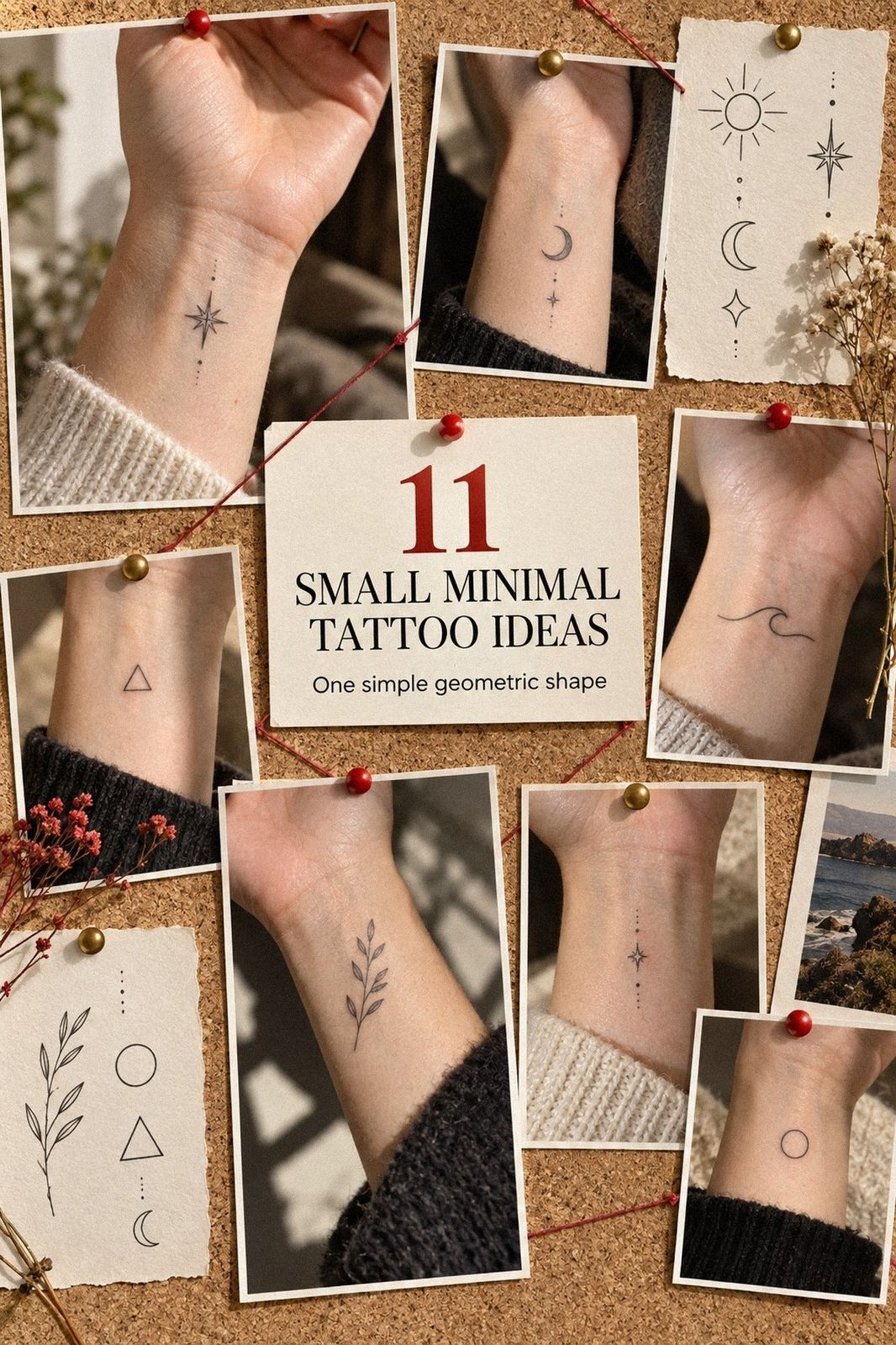
Compare the mood before you choose the subject. A tiny animal can bring playful energy, while a flower can feel graceful and romantic. Their silhouettes behave differently when you need the tattoo to stay discreet.
A flower can follow the curve of the ribs, and fine cotton transfer paper lets you test whether the stem sits naturally under clothing. An animal usually needs a stronger outline so its face or posture remains readable.
I prefer the floral option for a hidden work tattoo because it can be expressive without looking like a logo. A small fox may feel fierce and personal, while a wildflower may feel feminine, masculine, or quietly symbolic depending on the styling.
Ask yourself what you want to feel when you see it. Your emotional goal should come before the Pinterest shape. That usually leads to a more meaningful tattoo.
– Tiny fox profile with open ears – Three-flower sprig with separated petals
You can compare feminine, masculine, playful, and delicate references through small hand tattoos for women, even when your final placement is on the ribs. Save only references with clear line spacing.
The Fine-Line Value Test
Before booking, ask three questions: Will I still like the subject in five years? Will the placement stay hidden during work?
Will the artist’s experience justify the price? That value test can prevent an impulsive appointment.
A striking concept isn’t useful if it conflicts with your employer’s rules. A cheaper appointment isn’t useful if the design needs immediate correction. You want the strongest combination of meaning, craftsmanship, coverage, and realistic maintenance.
If the answer is yes across all four areas, the tattoo may be worth it. If one answer feels uncertain, pause and simplify before spending your budget.
9Balance intricate details in tiny tattoo ideas
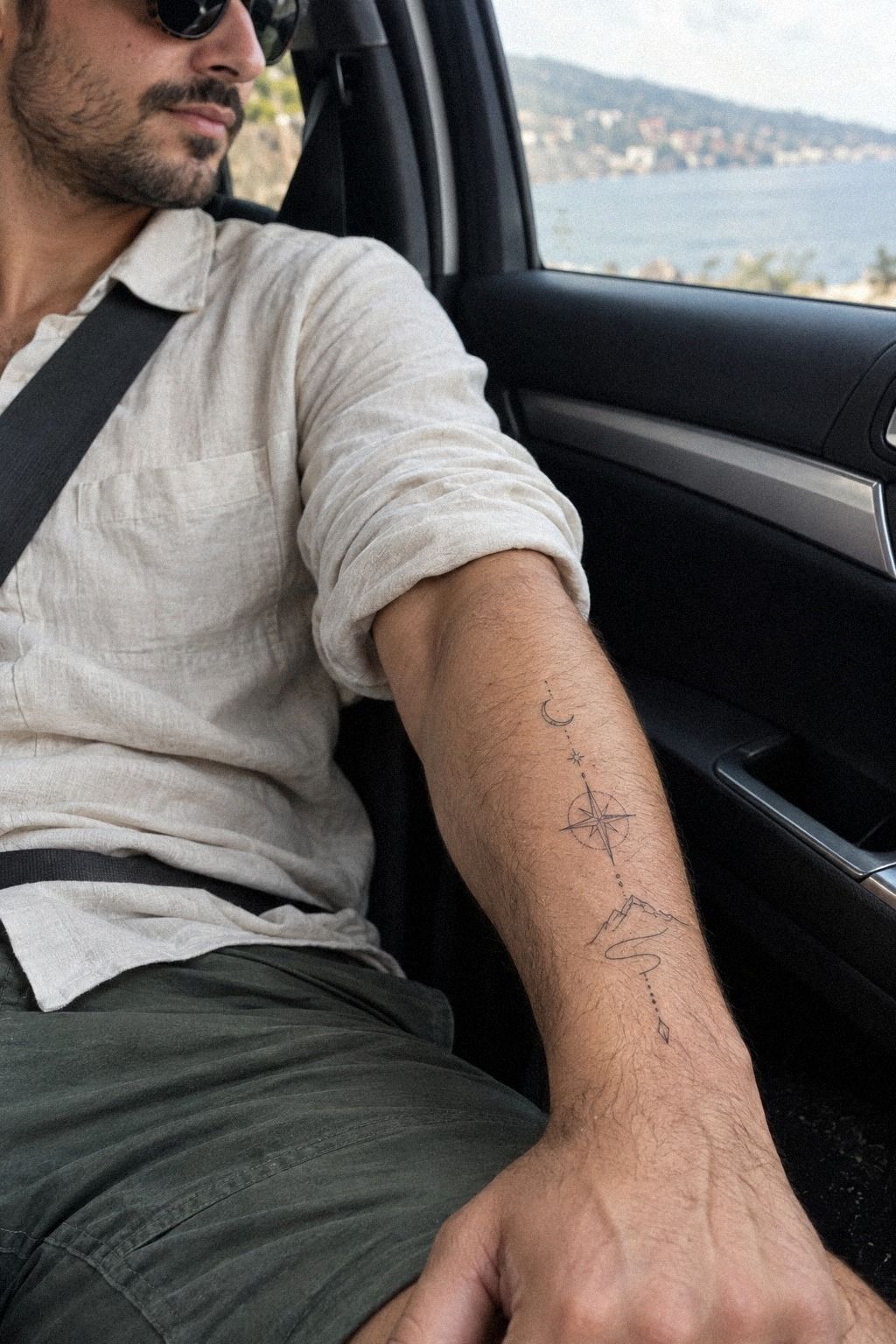
Keep intricate details where they can survive. A flatter area such as the forearm surface makes it easier to control a small design than a highly curved location. If you’re adding dots, stars, or interior marks, decide which detail matters most.
A 3RL tattoo needle configuration may create very fine lines, but the tool doesn’t rescue an overcrowded concept. Your artist will choose the setup, depth, and technique. The useful decision you can make is to remove anything that doesn’t improve the main silhouette.
I’d rather see one crisp window in a tiny house, one clean feather, or one sharp crescent than six compressed details. It feels polished and intentional. You’ll also have a better chance of recognizing the design after the surface has fully settled.
Ask whether each interior mark earns its place. One dominant accent can look more elegant than several competing details, especially when the tattoo needs to stay discreet at work.
– Main outline with one interior accent – Two details separated by visible skin
If you’re tempted by a tiny hand design, compare small inside finger tattoos with your forearm plan. Finger skin experiences more movement and friction, so a forearm may give your fine line tattoo a steadier surface.
The Sensitivity Map
Pain varies by person, but location still matters. Create a personal sensitivity map before you choose a discreet placement. Ribs, sternum, feet, hands, and some ankle areas can feel more intense than the forearm or upper arm.
A short appointment may be easier to manage than a long session, especially if you’re nervous. You can ask whether the artist can divide a larger custom idea into two appointments, although that may change the overall cost.
Your sleep, stress, skin condition, and expectations all affect the experience. A daring placement isn’t automatically the right one. Choose the area you can sit through calmly and care for properly.
10Prepare for pain across sensitive tattoo placements
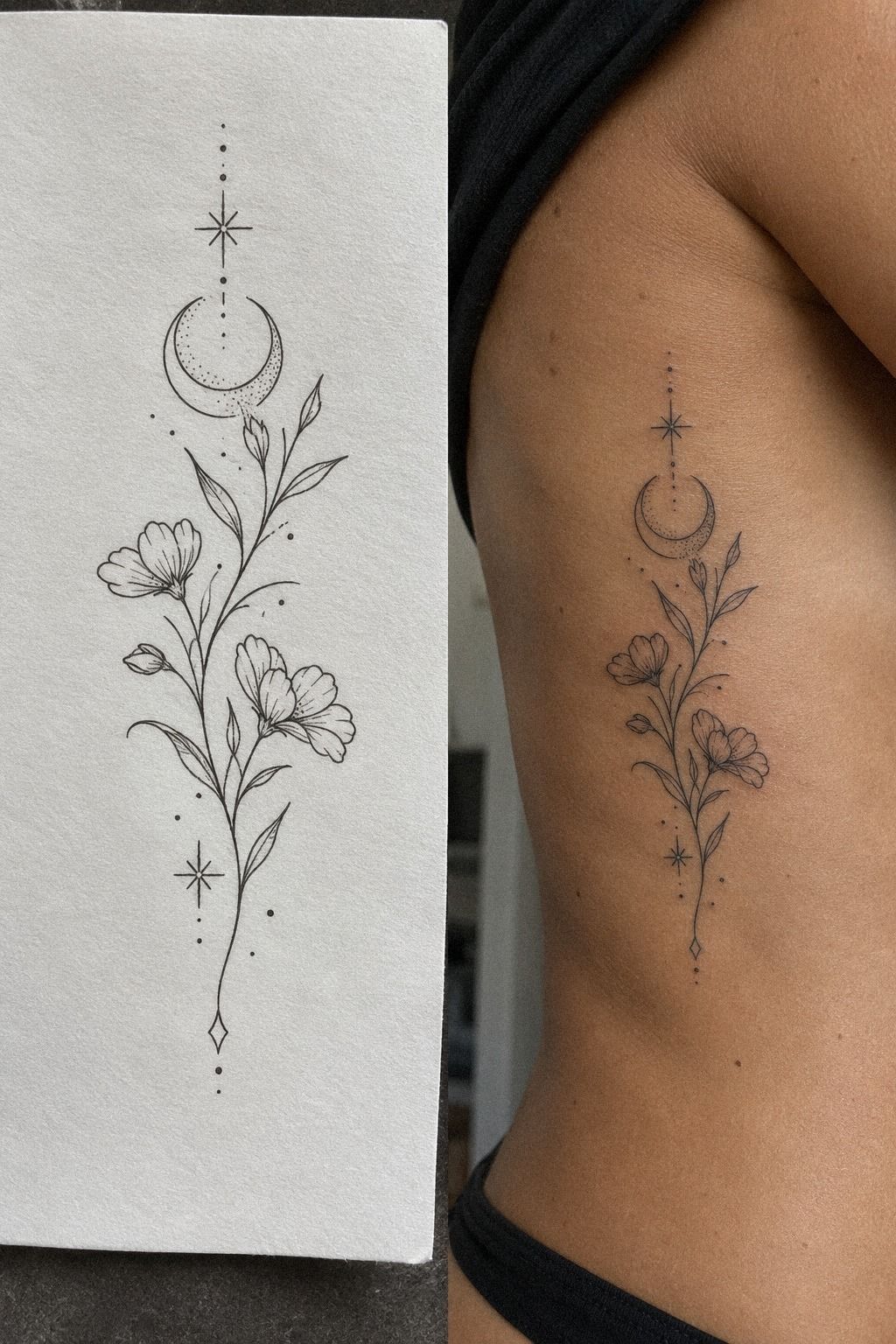
Prepare by ranking the placement, not by guessing from someone else’s story.
Ink on Your Terms
Privacy is part of the design brief. A private-placement consultation should cover your work rules, clothing, movement, healing, and future visibility before you discuss tiny decorative details.
You can choose something bold without choosing something exposed. You can choose something daring without making it visible during every handshake. The goal is control.
A hidden tattoo may feel sacred because only you know it’s there. An ankle design may feel playful because you can reveal it on your own terms. A covered upper-arm piece may feel empowering when you choose who sees it.
11Protect fine line ink during healing
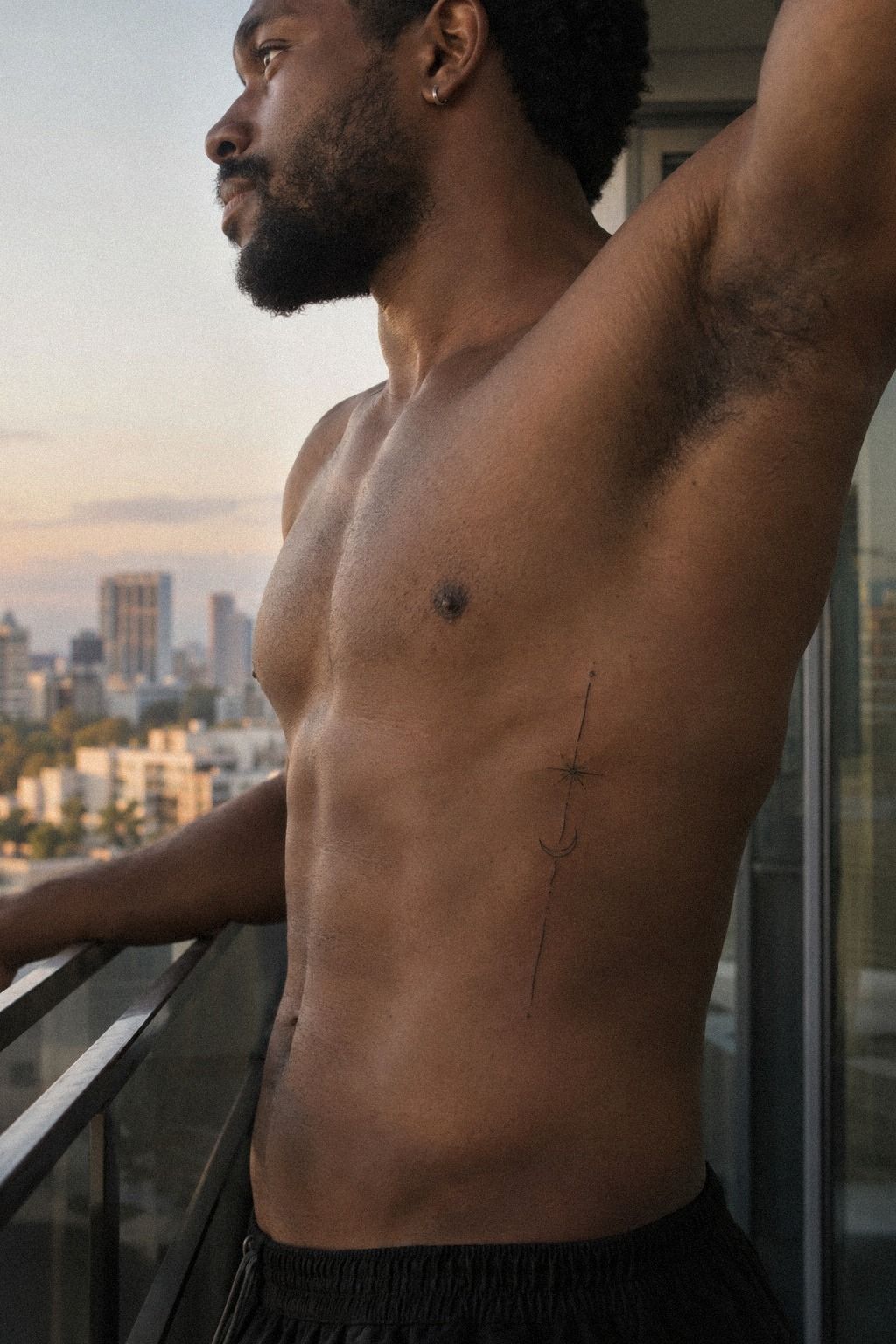
Protect the tattoo as carefully as you planned it. Healing care matters across every skin tone and placement. Follow your artist’s instructions for washing, moisturizing, covering, and returning to normal clothing.
Use a gentle cleanser, pat dry, and apply the amount of fragrance-free moisturizer your artist recommends. Don’t soak fresh ink in a pool, and don’t expose it to direct sun while the surface is healing. Surface healing usually takes about 2 to 3 weeks, while complete settling can take about 2 to 3 months.
I prefer loose, clean fabric over anything that rubs the ribs or catches on a fresh design. A breathable shirt can keep your workday manageable, but you’ll still need to avoid picking, scratching, or over-moisturizing.
The tattoo may look dry or uneven for a while. That’s part of the process. Artist-approved aftercare matters more than a random product recommendation.
– Gentle washing with lukewarm water – Sun protection after the skin has healed
For future placement ideas, browse small tiny hand tattoos and small simple hand tattoos, then remember that exposed areas need more sun awareness. Your fine line tattoo can remain crisp, but UV exposure can accelerate fading.
My Private Placement Rule for Work Tattoos
I don’t think a work-friendly tattoo has to be timid. It can be bold, edgy, meaningful, and completely private at the same time. The move is deciding what privacy means for your actual day.
My favorite approach is to choose the clothing first, then the body area, then the design. That order sounds less romantic than falling for a flash image, but it saves you from owning a tattoo that fights every outfit.
I once focused so hard on the symbol that I ignored how often the placement would show when I reached across a desk. The design was right. The location wasn’t.
I also think small tattoos age better when the artist is allowed to simplify them. People often ask for more detail because the reference looks intricate on a screen.
Skin isn’t a screen. A line needs room, and a symbol needs a silhouette that still reads after the surface settles.
You don’t have to explain your choice to coworkers, relatives, or strangers. Your work identity and your tattoo identity can share your body without sharing every detail!
A Few Things Worth Answering
How much does a small fine line tattoo usually cost?
A small fine line tattoo usually costs about $100 to $300 in the US, though a shop minimum may be about $50 to $100 and hourly rates may run about $100 to $250. The final price depends on the artist, region, size, and placement. Ask for a quote before booking.
Are small fine line tattoos a good idea for a first tattoo?
Yes, they can be a manageable first tattoo when the design is simple and the placement suits your comfort level. The forearm, upper arm, thigh, and shoulder are often more tolerable than ribs, feet, hands, or sternum. Choose a design that still feels personal after the novelty fades.
How do I choose a tattoo artist for small fine line tattoos?
Review healed portfolio photos, not only fresh tattoos, and look for clean spacing and consistent lines. Ask whether the artist regularly creates fine line work, follows studio hygiene practices, and can explain how the design may age. You can also compare references through what fine line tattoo means.
How much do small fine line tattoos hurt?
Pain varies, but ribs, feet, hands, and sternum are commonly more sensitive, while the forearm, thigh, and shoulder are often more tolerable. A shorter appointment can feel easier to manage, but your sleep, stress, skin, and personal sensitivity will affect the experience too.
How long does a small fine line tattoo take to heal?
The surface usually heals in about 2 to 3 weeks, while the tattoo can take about 2 to 3 months to settle completely. Gentle washing, light moisturizing, and avoiding sun and pools during healing are common aftercare principles, but your artist’s instructions should lead.
What’s the best placement for small fine line tattoos?
The upper rib, upper thigh, inner upper arm, and high ankle can offer useful coverage, depending on your clothes. The best placement matches your work wardrobe and your pain tolerance. If your job requires constant hand visibility, compare discreet areas before considering small side finger tattoos.
Where I’d Start First
If I had to pick one step, I’d start with the clothing test. A hidden placement is only useful if your real work outfits cover it while you move. Mark the spot, sit and reach, then choose the design.
Bring one clear reference to your artist and ask for a healed-work example. If the placement, design, cost, and aftercare all make sense, you can book with more confidence. Save this guide for the planning stage!