Small hand tattoos for women can stay crisp when size, placement, line weight, and healing are planned together. I learned that after watching a delicate star soften because it was squeezed too close to a knuckle. Your best design won’t be the tiniest one. It’ll be the one your skin can carry clearly for years!
The strongest ideas usually have a crisp line structure, a clear silhouette, and enough open skin to age well. You’re choosing something visible, personal, and often costly, so the smallest detail deserves a real decision.
Before You Start
Start with a healed portfolio, not only fresh work. You’ll want to see how an artist’s healed black ink looks after several months, especially on fingers, knuckles, and the side of the hand. Fresh lines can look sharp and glossy, while healed work shows whether the artist understands spacing, pressure, and natural ink spread.
Write down the meaning, approximate size, preferred hand, and your tolerance for visibility. A 1-inch symbol on the wrist reads differently from a 1-inch mark between knuckles. If you’re comparing placements, this small tattoos meaning guide can help you separate personal symbolism from a passing trend.
Your references should include varied skin tones and healed results. Ask about single-needle linework, solid black accents, and designs that still read after healing. You don’t need to copy one design exactly.
You need enough information to explain what you want without asking your artist to guess.
Think about the budget before you book. A studio minimum can make a tiny tattoo cost more than expected, and a skilled artist may charge a premium because hand placement demands accuracy. The question isn’t only whether the tattoo is affordable.
It’s whether the clarity and experience will be worth it.
For a first appointment, bring clean references and arrive hydrated. Don’t schedule the session immediately before swimming, intense exercise, or a long day in direct sunlight. Your skin needs a quiet healing window afterward, and you’ll be glad you planned for it.
- Start With Dainty Finger-Side Symbols
- Pick Meaningful Tiny Botanical Linework
- Place Small Ink Between Knuckles
- Choose Unique Minimal Wrist Motifs
- Keep Fine Lines Crisp And Legible
- Plan A Feminine Moon Phase Tattoo
- Match Bold Symbols To Your Style
- Consider Pain Across Hand Placement
- Protect Fresh Ink During Healing
- Explore Playful Miniature Animal Designs
- Personalize Elegant Initials With Meaning
1Start With Dainty Finger-Side Symbols
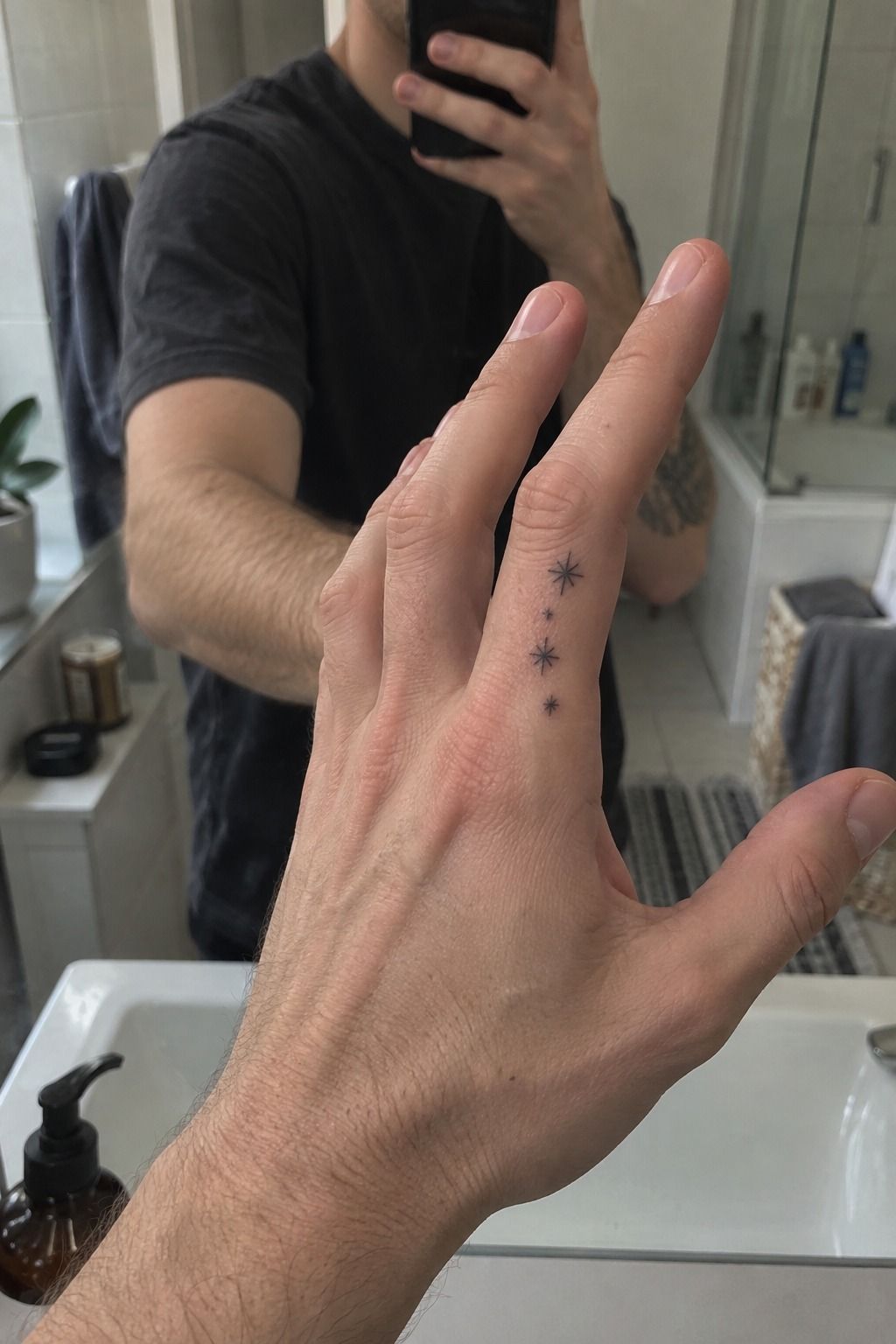
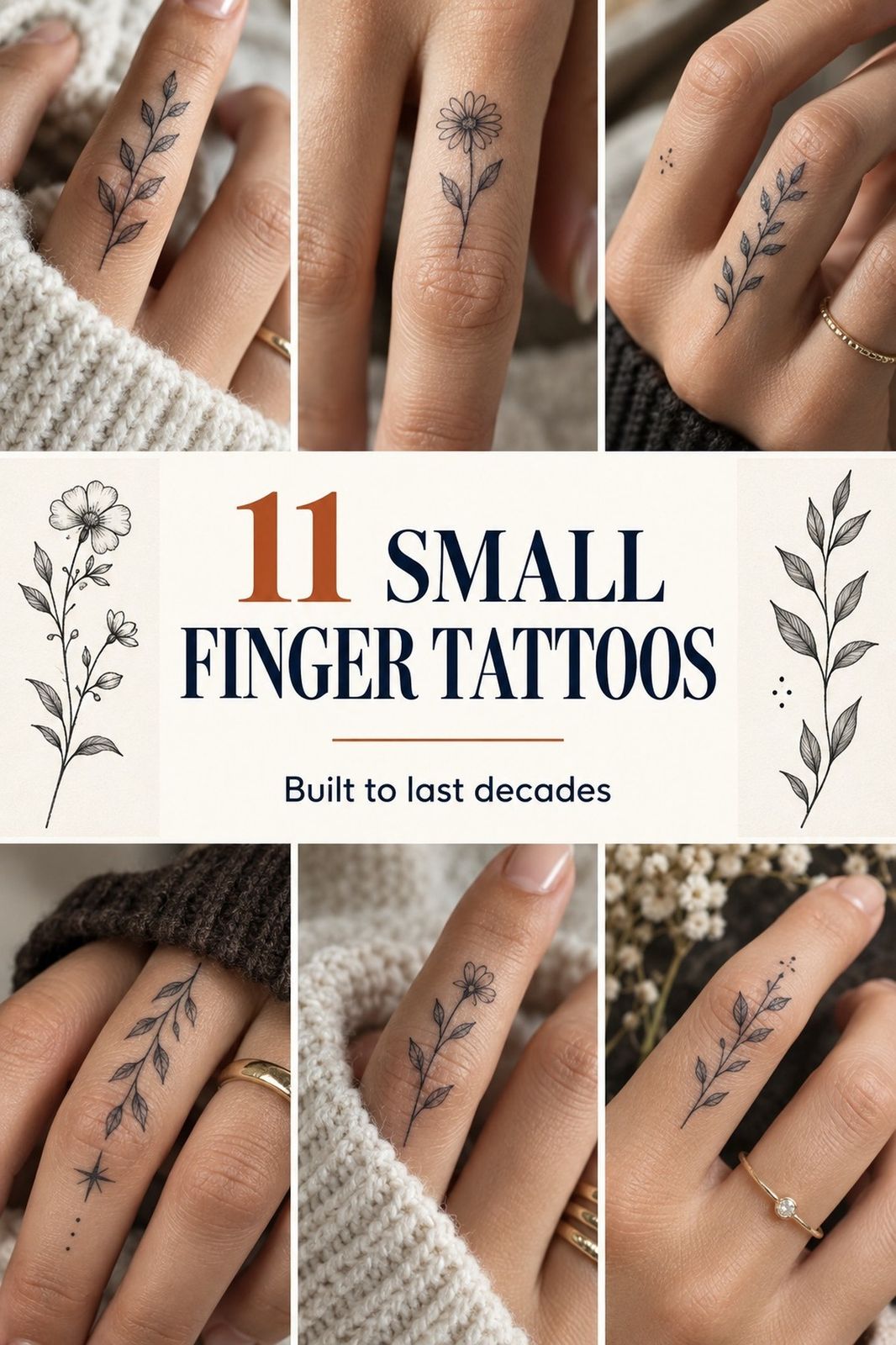
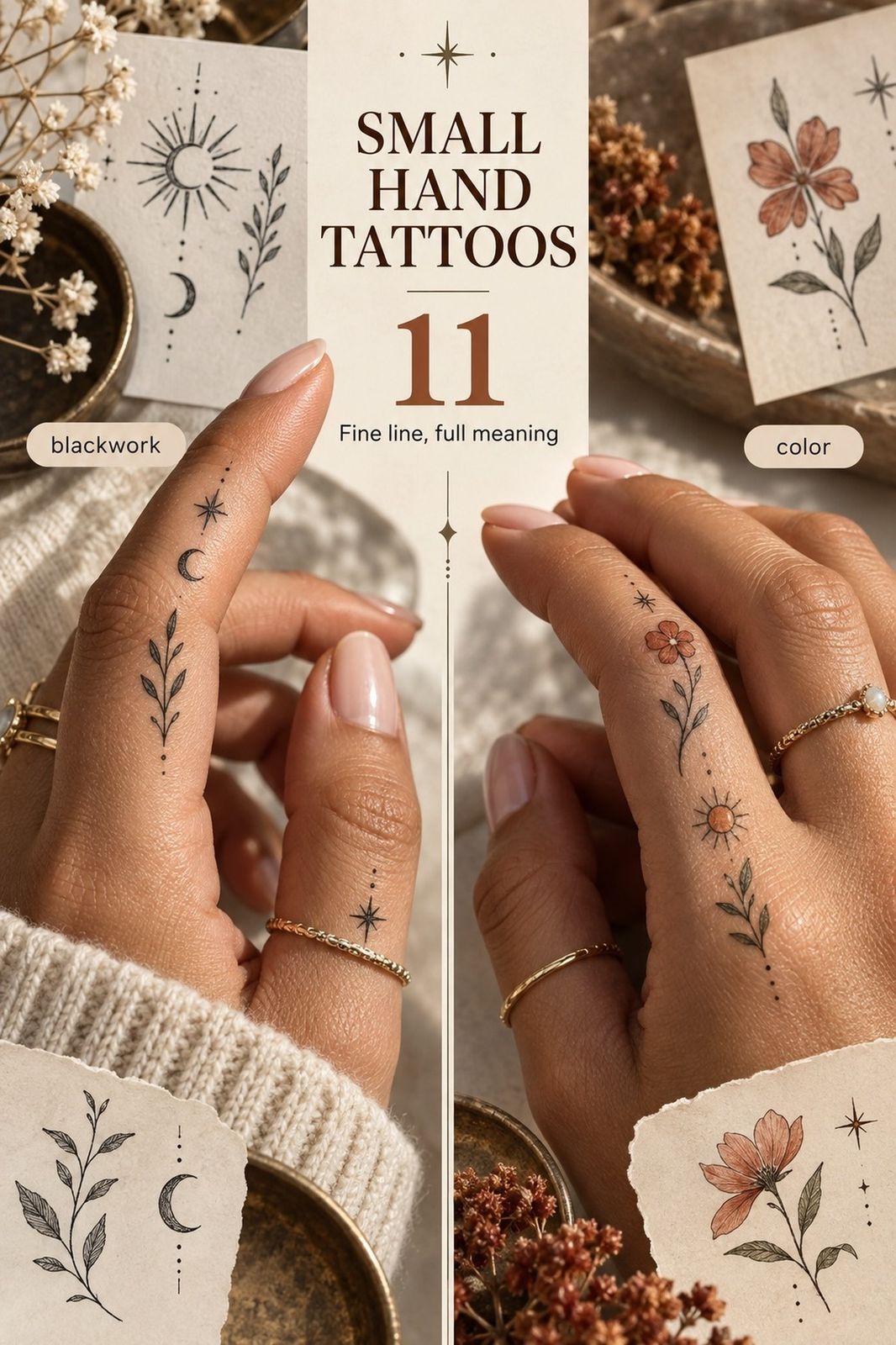
Finger-side symbols work best when the design follows the narrow vertical space instead of fighting it. A line of stars can feel delicate and personal when each mark has enough separation to remain recognizable.
Ask your artist to vary the star scale while keeping the smallest mark large enough to heal legibly. A tiny four-point star can lose its corners if it’s reduced too far. You’ll want open skin between each point, especially near a crease where movement can blur the shape.
A useful concept here is the Finger-Side Constellation Rule: one anchor symbol, two supporting marks, and enough breathing room to read each shape. I’d skip a full galaxy of six or seven micro-stars. It can look whimsical on paper, but the spacing often collapses once your hand bends.
Keep the ink black or very dark rather than adding pale color that may fade unevenly. Black tattoo ink gives the design stronger contrast, while a soft gray wash can make the smallest star disappear first. If you’re collecting tiny symbols, compare this placement with these small finger tattoo ideas.
Think about visibility before you book. You’ll see this design constantly, and other people may see it too.
If you want something understated, place the stars along the side facing your other fingers rather than the outer edge. That choice keeps the symbolism close without making it the first thing everyone notices.
A tiny symbol can still be a meaningful purchase when the artist’s healed work is strong. You’re paying for placement judgment, not just the few minutes under the needle. That difference can make the cost worth it!
Finger-Side Constellation Rule
A finger-side constellation should have one dominant mark, two supporting marks, and clear skin between them. Open spacing matters more than adding another star.
Your artist should stencil the design while your hand is relaxed and while it’s gently curled. A placement that looks balanced with straight fingers may shift toward the crease when you make a fist. You’ll want to know how the design behaves before you commit.
For more symbolic directions, browse these cute small tattoo ideas with meaning, then simplify anything that depends on tiny interior detail. The best reference is one you can explain in your own words.
2Pick Meaningful Tiny Botanical Linework
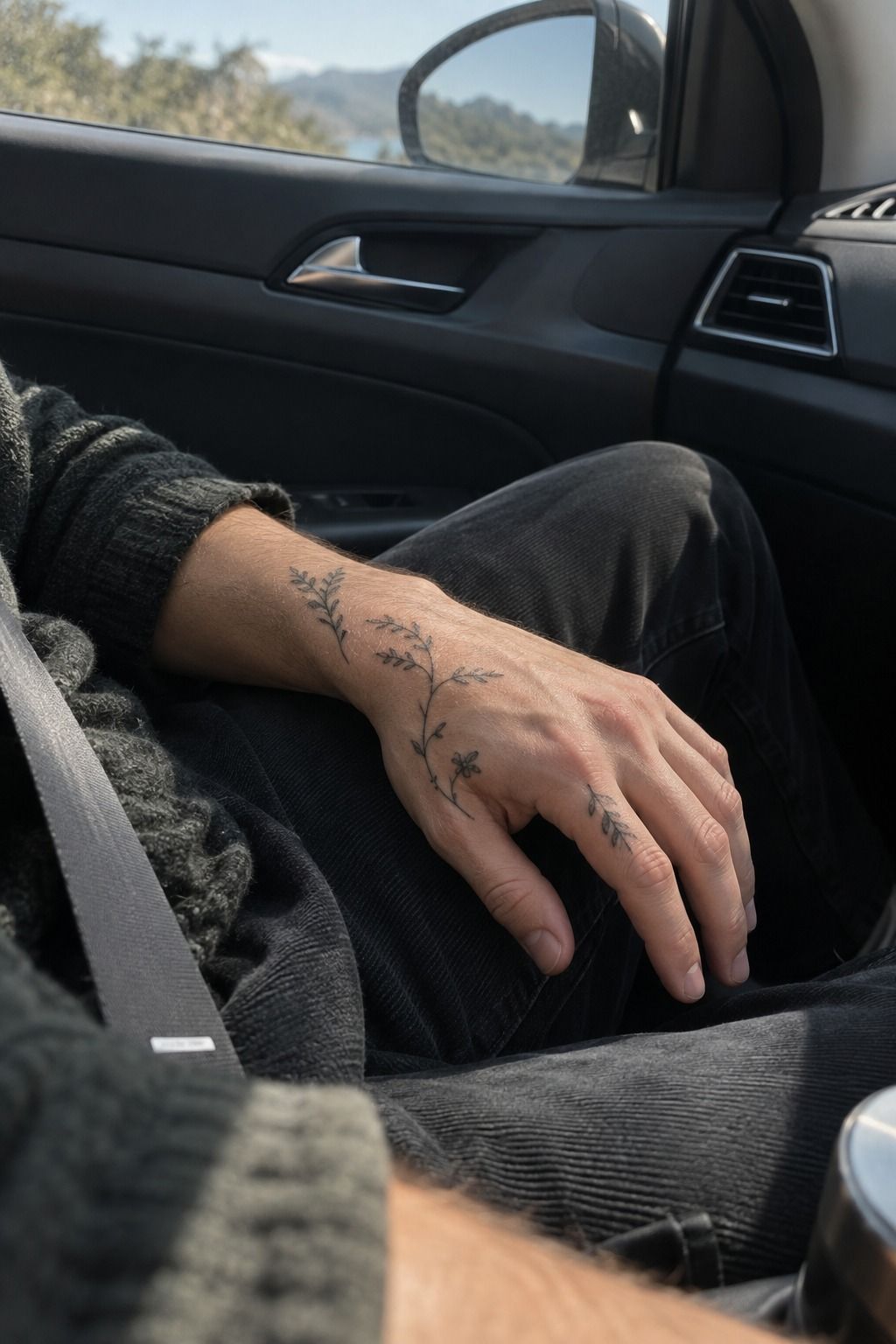
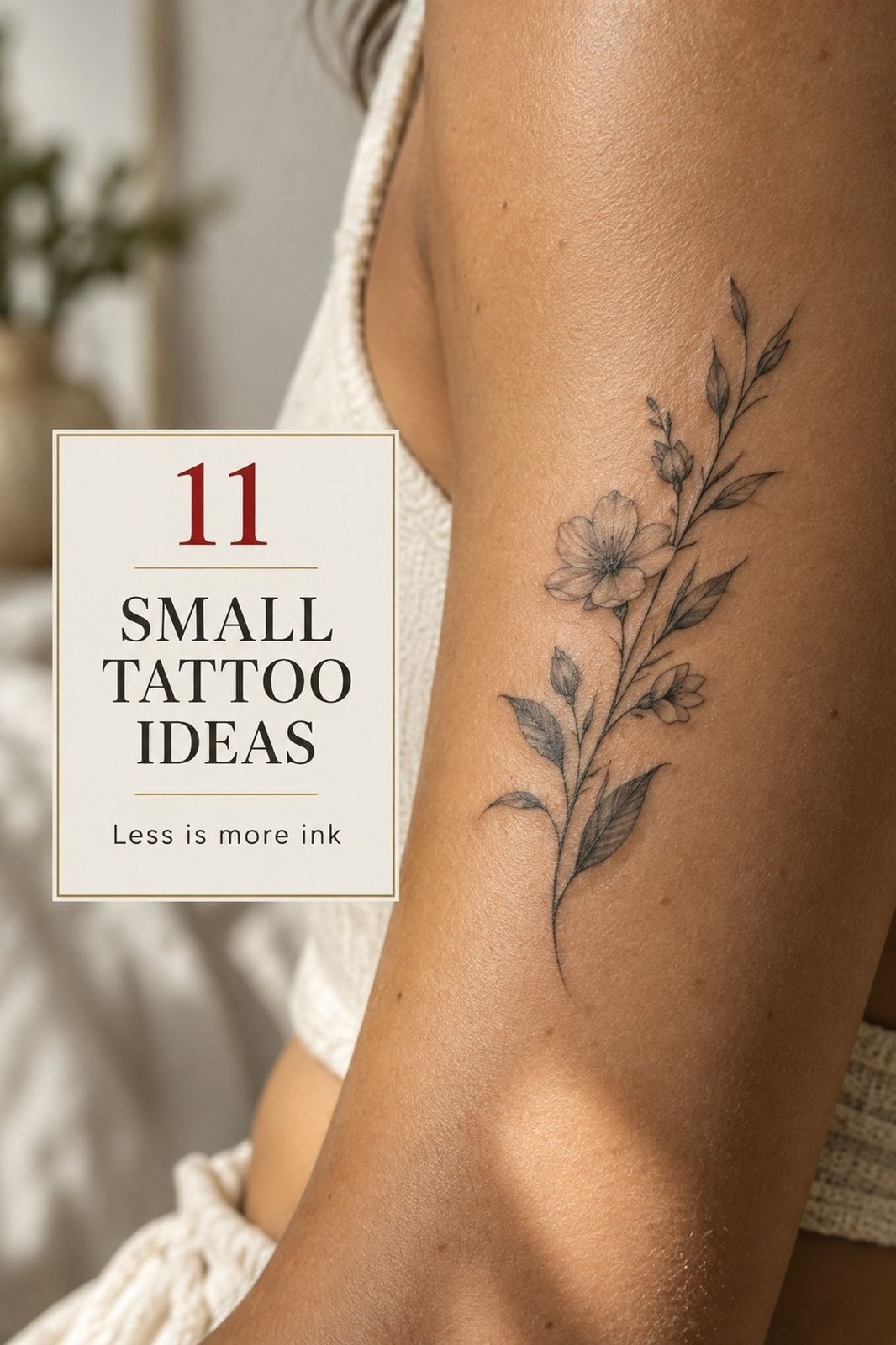
Botanical linework gives you a recognizable subject without requiring heavy shading. A stem, leaf, sprig, or tiny wildflower can feel graceful while remaining readable at a modest size.
Begin with the silhouette, not the texture. One curved stem and two leaves may communicate more clearly than a dense miniature bouquet. You’ll want the outer contour to survive even if the finest veins soften.
Ask whether the plant has personal meaning or whether you simply like its shape. A birth flower, olive branch, fern, or lavender stem can carry a symbolic meaning without becoming literal. If you’re comparing themes, this small arm tattoo meaning guide can help you narrow the idea.
Avoid packing multiple species into one tiny design. Fine botanical details may look ornate at the appointment but become crowded as the ink settles. Your artist should be comfortable removing decorative marks that won’t earn their place.
The budget question matters here because detail drives price. If you want a botanical tattoo with several leaves, ask what size would make the linework worth paying for. A slightly larger design may offer better value than an ultra-small version that loses its identity.
3Place Small Ink Between Knuckles
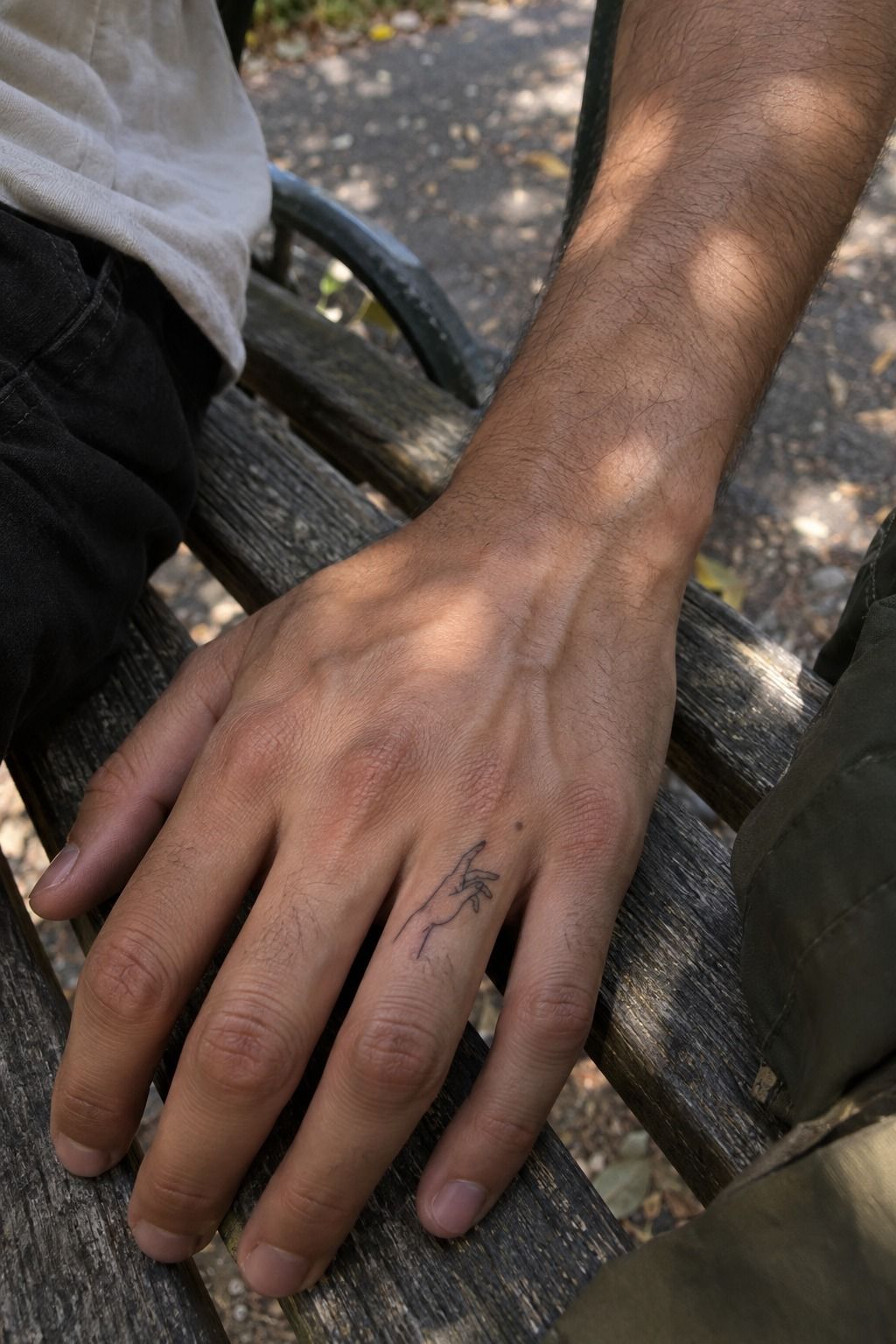
Between-knuckle placement looks edgy because the design appears and disappears as your fingers move.
4Choose Unique Minimal Wrist Motifs
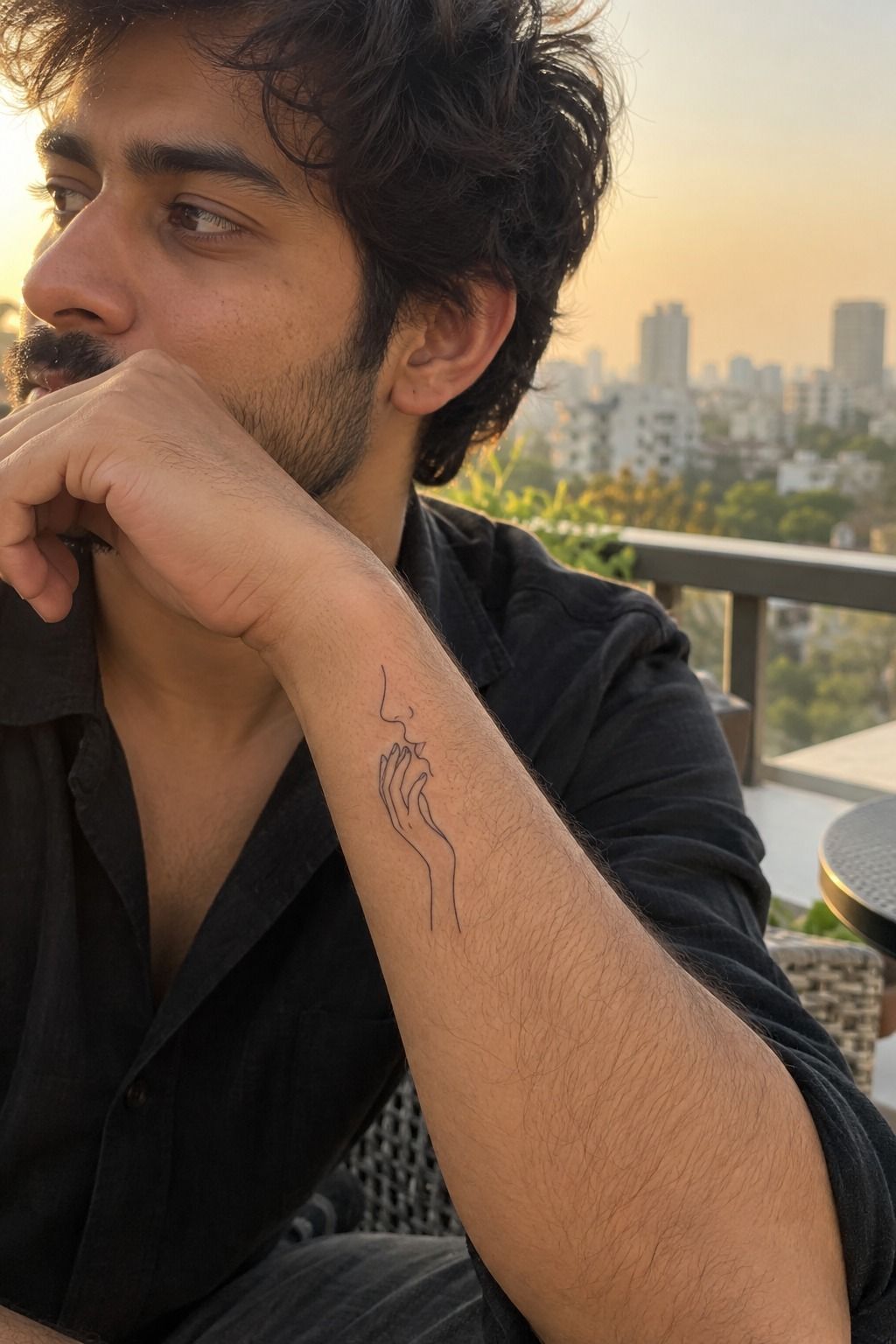
The wrist gives you more room than a finger while keeping the tattoo visible and personal. An open motif with clear contrast can feel sleek rather than crowded.
Start by choosing the direction of the design. A vertical crescent, tiny branch, or narrow symbol follows the arm naturally, while a horizontal mark can act like a bracelet.
Your choice changes how the tattoo reads with sleeves, jewelry, and hand gestures. You’ll want to test both directions with a temporary marker.
Use the Wrist Flow Rule: the design should have one dominant movement, not several competing ones. A flowing line can look timeless when it follows the wrist bone, but a complex image may feel cramped. I’d skip a detailed portrait or miniature scene at this size.
Ask for deep black pigment in the main contour and lighter detail only where it earns its place. A strong outline gives your eye something to hold onto after the softer marks settle. If you’re weighing wrist versus forearm, this guide to small arm tattoos with meaning offers useful placement comparisons.
The wrist is visible during work, travel, and ordinary errands. That can feel empowering, but it’s also a commitment to seeing the image every day. Choose something meaningful enough to remain interesting after the first week, not merely something cheap to book.
Wrist Flow Rule
A wrist design should have one clear direction. A crescent can curve inward, a branch can climb toward the forearm, and a narrow symbol can follow the bone. Fine black outlines usually give the eye enough structure without excessive shading.
Before approving the stencil, bend your wrist, hold your phone, and let your arm rest naturally. If the design becomes confusing in normal movement, ask for fewer details. You’re buying long-term clarity, not just a dramatic appointment moment.
A vertical motif can also feel feminine without relying on tiny decoration. Browse these small arm tattoos for ladies if you want to compare the same concept at a more forgiving scale.
5Keep Fine Lines Crisp And Legible
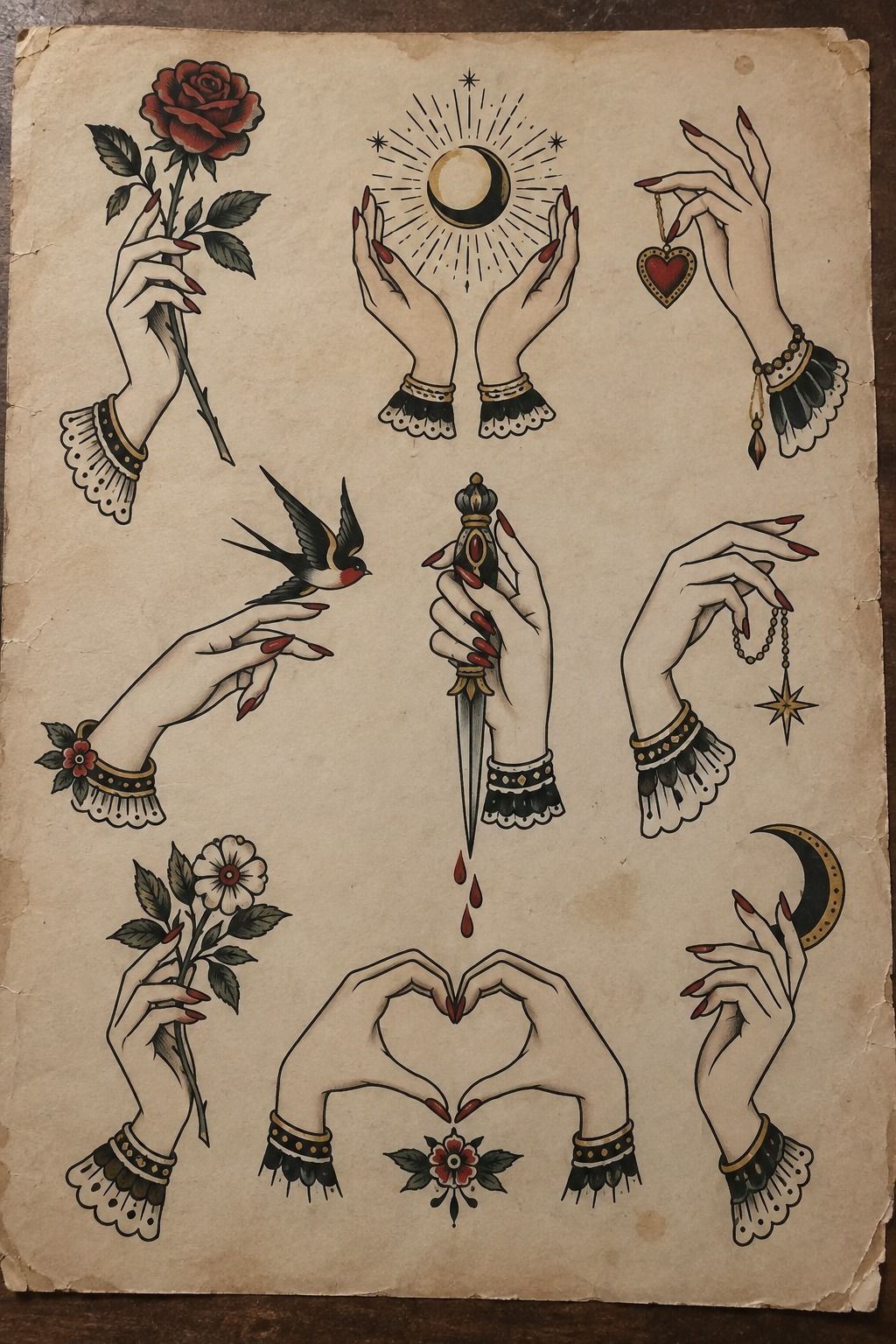
Fine-line tattoos stay readable through proportion, spacing, and a design that respects how skin changes. The word “fine” shouldn’t mean impossibly small.
Your artist should explain how line weight affects healing. A hair-thin line may look refined, but a slightly stronger contour can remain more legible over time. You’ll want enough ink to support the design without turning it into a heavy block.
Avoid designs that depend on five tiny interior marks to make sense. A strong outer silhouette and one meaningful detail often create a more powerful result than a crowded miniature drawing.
If you’re comparing artists, ask what size they’d recommend for the same concept. The best professional may tell you to enlarge it or remove a detail. That advice can protect the value of your tattoo more than chasing the lowest price.
Look for healed work that still has clean contrast, especially around knuckles and finger sides. A portfolio full of fresh tattoos can’t show you how the smallest decisions age.
Fine Lines or Bold Symbols?
Fine lines can feel dainty, while a bold symbol may remain more visible through natural fading. Neither approach is automatically better; the right choice depends on your skin, placement, and tolerance for maintenance.
Choose fine detail when the design has generous spacing and a clear outer shape. Choose stronger marks when the tattoo sits near a knuckle, receives friction, or needs to be recognized quickly.
A practical compromise is a bold primary contour with delicate secondary marks. Solid black accents anchor the design while leaving enough softness for a feminine or personal finish.
For another reference point, compare small tattoos with meaning before deciding whether your idea needs more room or stronger contrast.
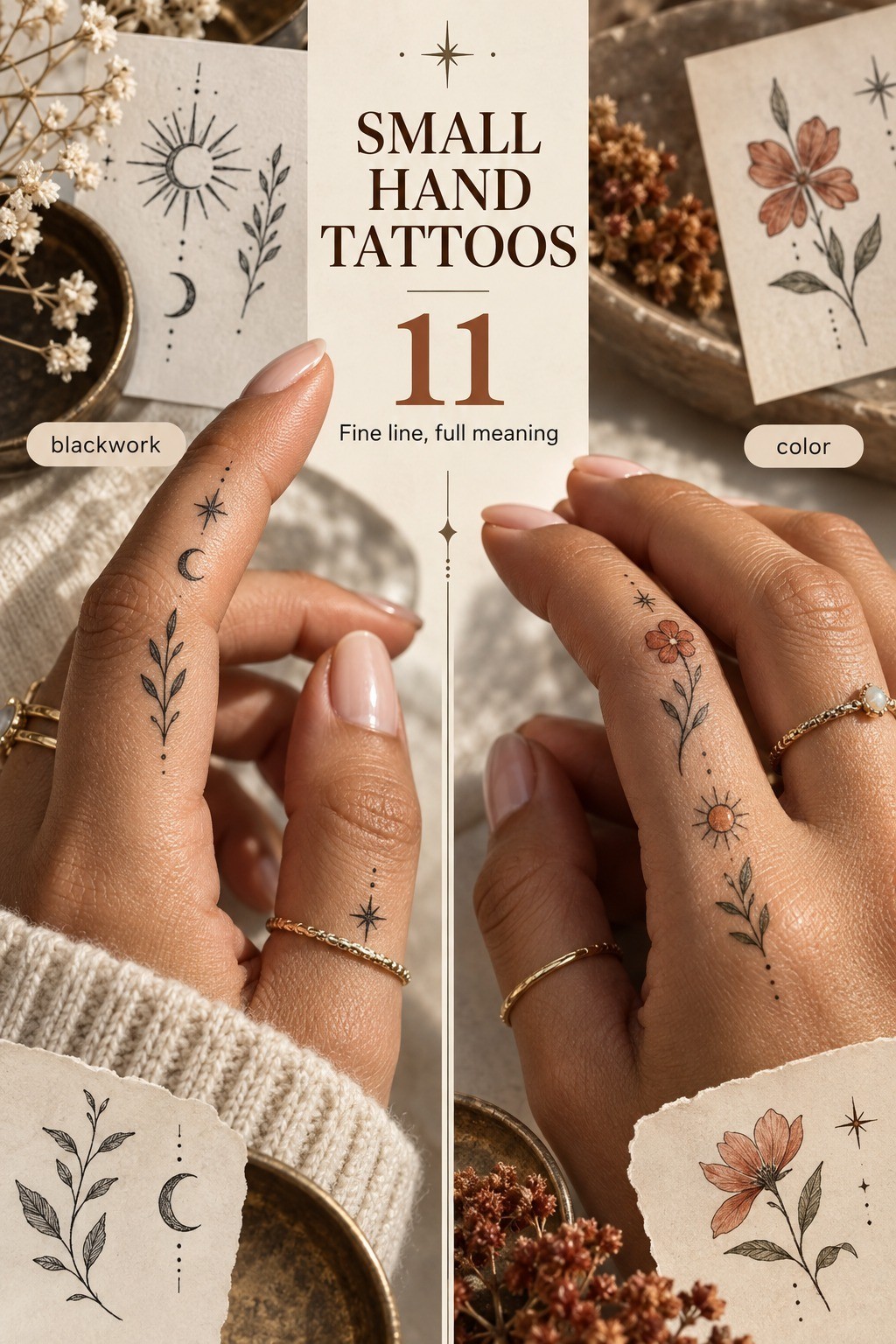
6Plan A Feminine Moon Phase Tattoo
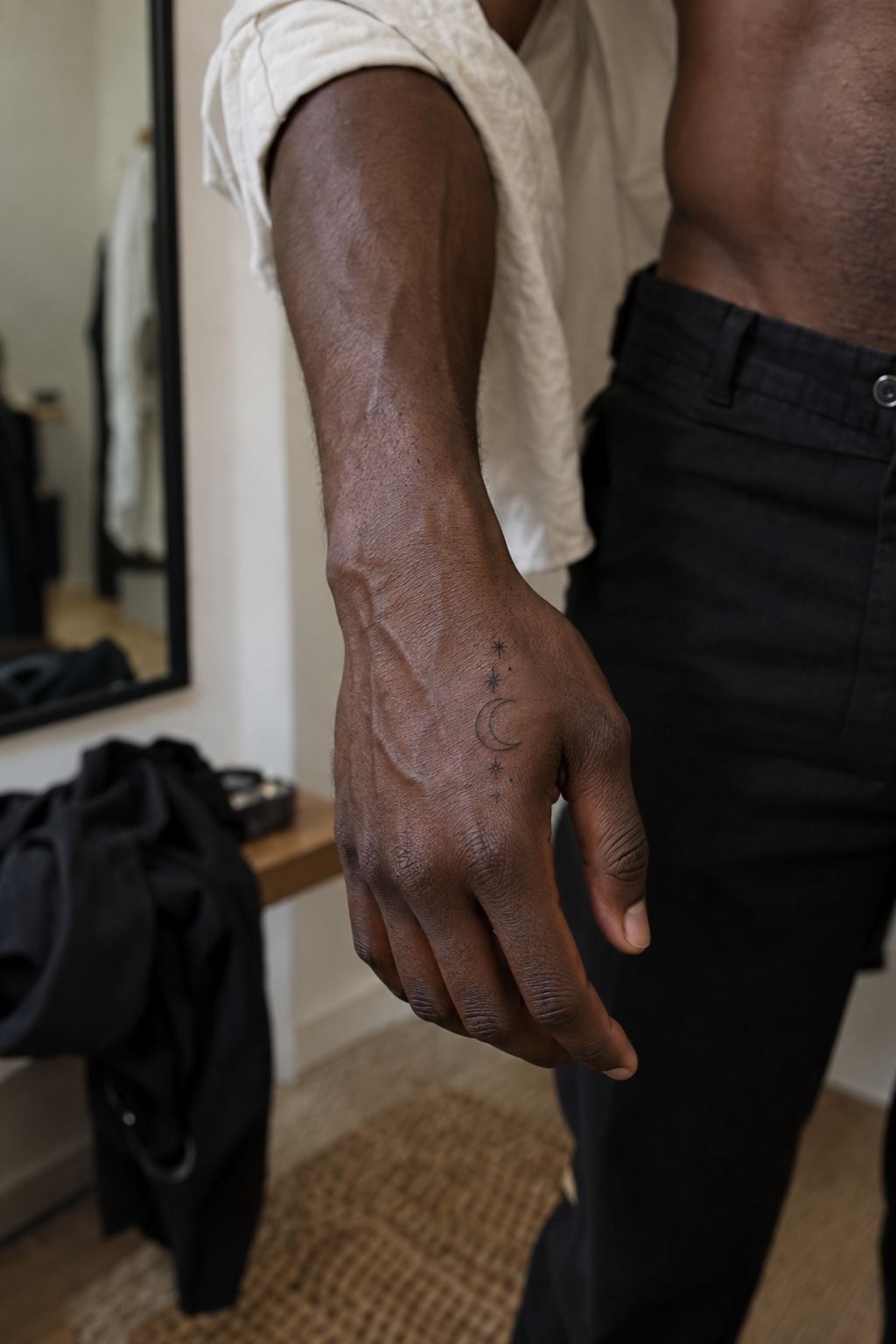
A moon phase design can feel sacred and quietly powerful without becoming overly detailed. Strong contrast and open spacing should guide the plan.
Decide whether the moon should face inward toward your fingers or outward toward other people. Inward placement can feel more personal, while outward placement makes the symbol easier to read.
Neither is automatically better. You’ll want to choose based on how you want to see the design during ordinary gestures.
Use one crescent, two supporting phases, and no unnecessary filler. I’d avoid squeezing all five lunar stages into a very small hand tattoo. The result may look ornate in the reference drawing, but narrow gaps can close as the lines soften.
Use solid black crescent ink for the main moon and reserve fine lines for the stars. That contrast helps the design remain visible across different lighting conditions. If your skin has deeper undertones, ask to see healed examples with similar skin.
Keep the stars varied but limited. Three well-spaced stars can look ethereal rather than crowded. If you want additional symbolic options, read this small tattoos with meaning guide before choosing a direction.
Moon Phase Balance
A balanced moon tattoo needs one visual center. The crescent should carry the meaning, while the surrounding phases support it. Black crescent pigment can preserve that hierarchy as the smaller marks settle.
Consider the long-term value before adding filler. Every extra dot takes time, money, and healing space, but not every dot makes the tattoo clearer. You’ll get a stronger result when each mark has a reason.
A moon can remain meaningful without showing every phase. Ask your artist to test the smallest version at full size, then look at it from arm’s length before approving the stencil.
7Match Bold Symbols To Your Style
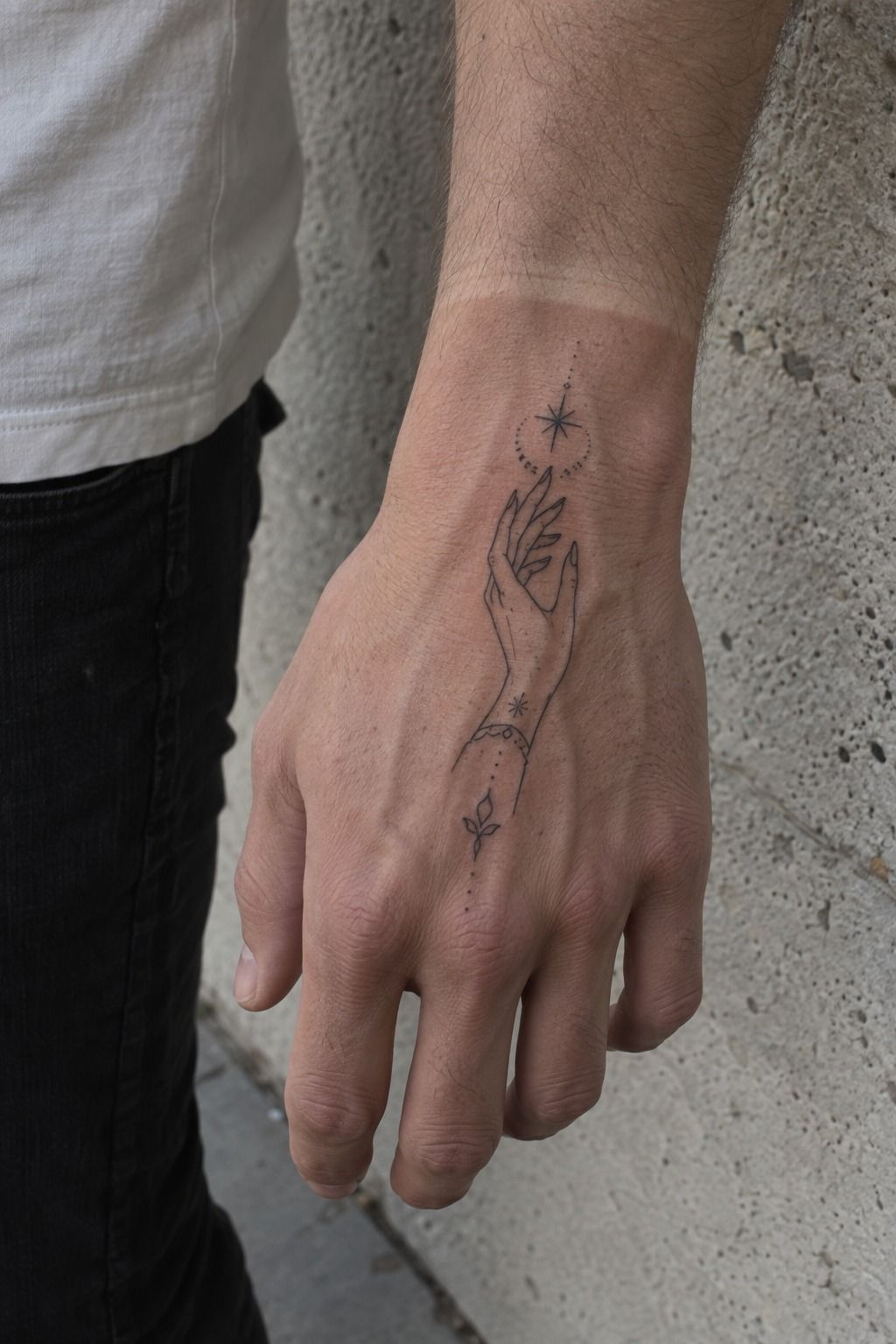
A small tattoo doesn’t need to be faint to feel refined.
Visible or Private?
An outer-hand tattoo is expressive and easy to see, while a finger-side or inner-wrist design can feel more private. Decide whether you want to notice it constantly or discover it during specific gestures.
Visibility can affect work, family expectations, and future appointments. You’ll want to check those practical concerns before spending your budget. A tattoo can be personally meaningful and still require careful timing.
A private placement may suit an understated design, while the outer hand can support something more noticeable. If you’re comparing options, review small forearm tattoo meaning ideas before choosing a location.
8Consider Pain Across Hand Placement
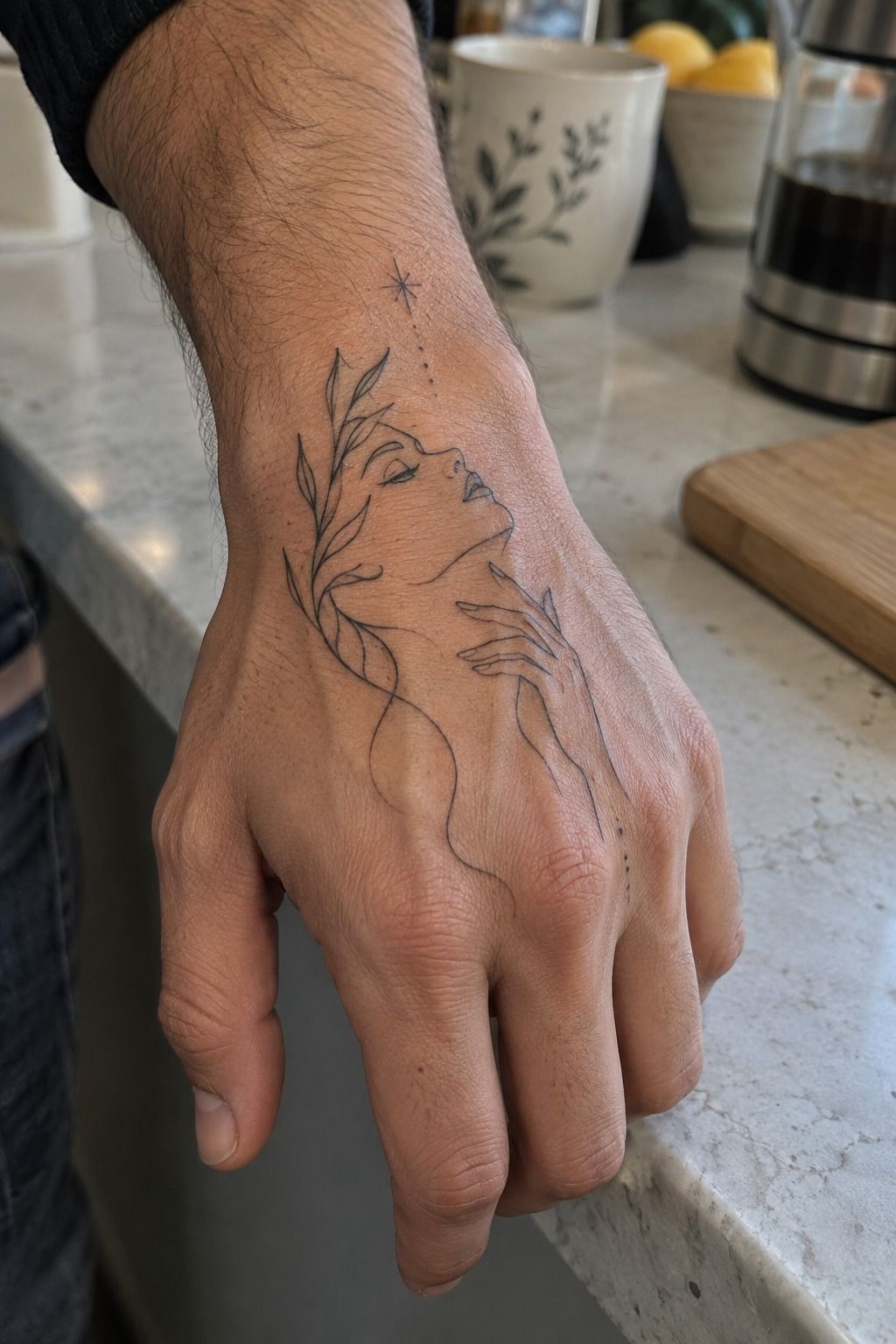
Hands, fingers, feet, ribs, and sternum are commonly more painful areas because the skin is thin and close to bone. Forearms, thighs, and shoulders are usually more tolerable. Your experience can differ.
Fine-line equipment doesn’t make every placement painless. Knuckle movement, palm pressure, and the side of the finger can create a raw sensation. You’ll want to tell your artist if you need pauses instead of trying to prove you can sit perfectly still.
Use the Hand Pain Map: start with the most tolerable visible area you genuinely like, then consider smaller riskier placements later. I’d skip the palm for a first hand tattoo because friction and fading create a difficult combination.
Bring water, eat beforehand, and wear clothing that leaves your arm easy to access. Unscented aftercare balm should be waiting at home, but don’t apply products before the appointment unless your artist tells you to.
Pain is only one part of the decision. Visibility, healing, work requirements, and how often you wash your hands matter too. If you’re unsure whether a hand tattoo fits your routine, compare it with this small forearm tattoo meaning guide.
A manageable session often comes from good preparation, honest communication, and a design that doesn’t take longer than necessary. You don’t have to prove anything by choosing the most sensitive spot.
9Protect Fresh Ink During Healing
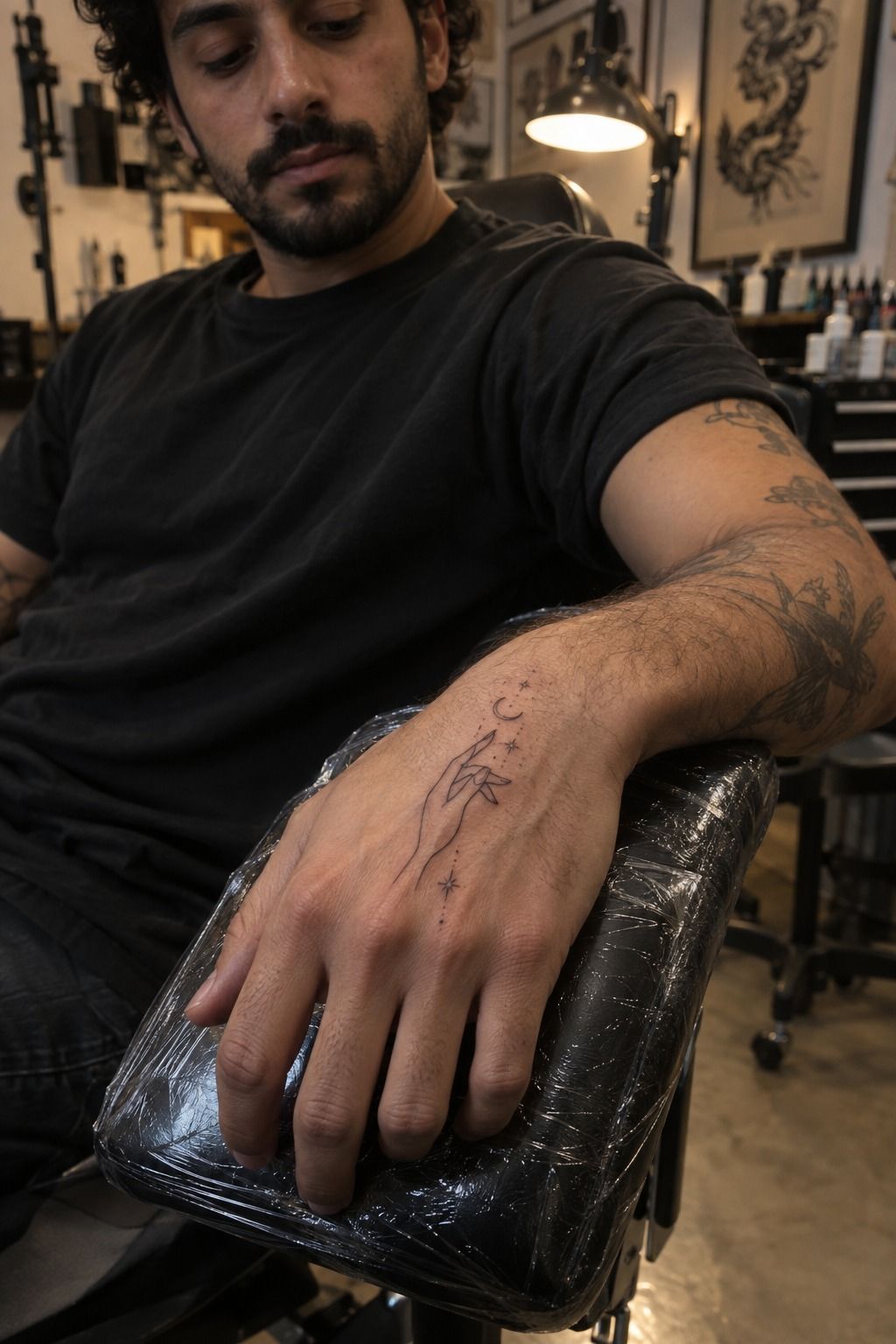
Fresh hand ink needs gentle care because your hands meet soap, water, friction, sunlight, and shared surfaces all day. The design may look vibrant at first, then peel or appear dull before it settles.
Follow your artist’s instructions first. In general, gentle washing, light moisturizing, and avoiding swimming or direct sun are common aftercare principles. You’ll want clean hands before touching the area.
The surface usually takes about 2 to 3 weeks to settle, while complete healing can take roughly 2 to 3 months. Your artist may adjust that advice based on placement, skin, and how your body heals.
Use a thin layer of fragrance-free moisturizer, not a heavy coating that leaves the area wet. Avoid pools, oceans, and prolonged sun during the early healing period.
Don’t judge the final result during the first few days. I’ve watched people panic over temporary dullness, then love the healed clarity a month later. Your job is simple: keep the area clean, resist touching it, and ask your artist before changing the routine.
Sun protection matters after healing too. A tattoo can stay more vibrant when you protect it from repeated exposure and follow your artist’s maintenance advice.
10Explore Playful Miniature Animal Designs
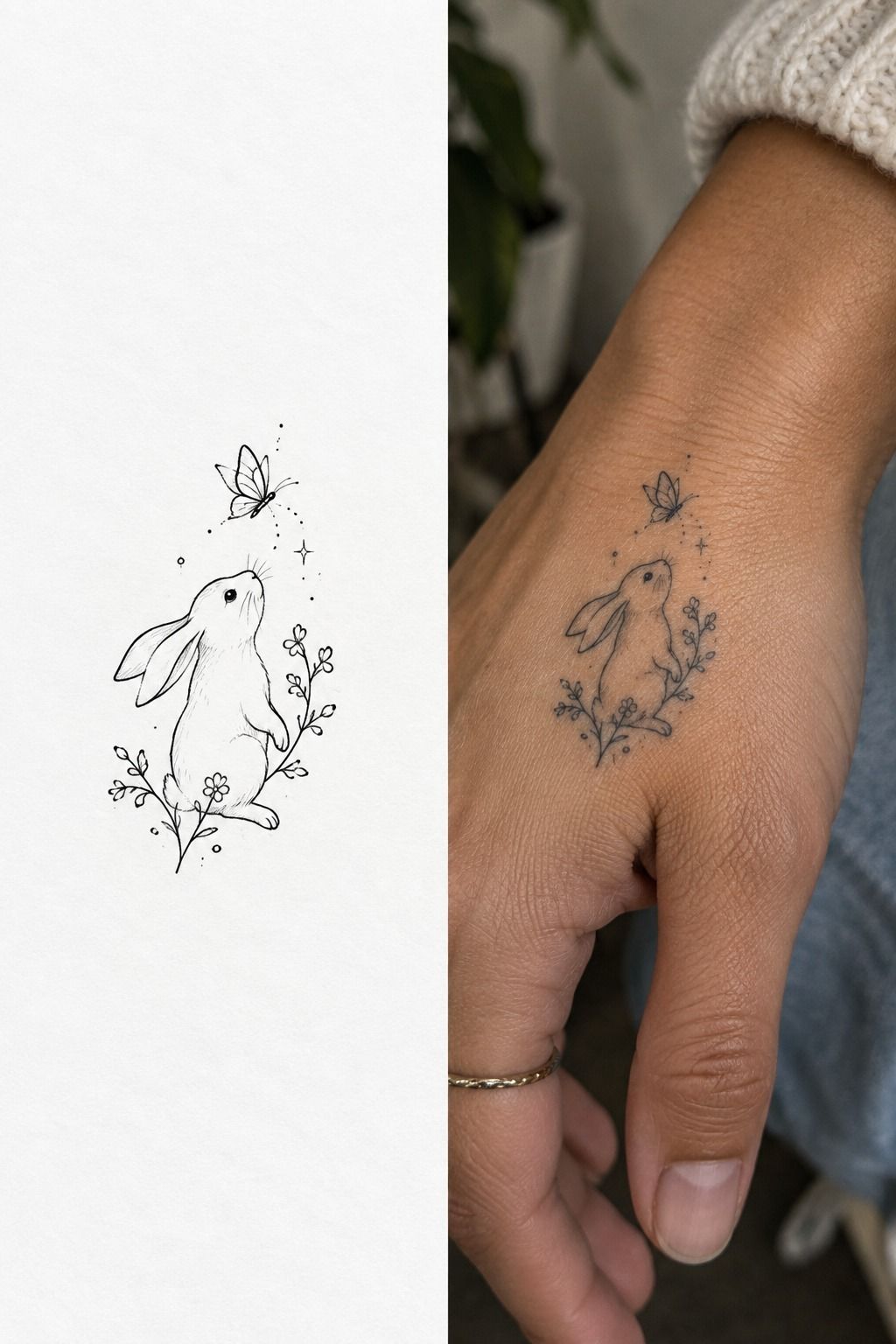
Miniature animals can be playful and meaningful without looking childish. Choose an animal with a clear outline and one memorable feature.
Start with the silhouette before adding texture. A cat’s ears, a moth’s wings, a bird’s beak, or a fox’s tail can identify the subject quickly. You’ll want the design to read from a distance, especially on the outer hand.
The One-Feature Animal Rule keeps the drawing legible: one face detail, one contour detail, and one symbolic accent. A black ink animal outline can look expressive without whiskers, fur lines, and tiny shading competing together.
Ask for a stencil test at the actual size. The paper version may seem charming, but your artist can show you where the smallest eye or paw will land. If a feature is too small, remove it rather than shrinking the entire animal.
Choose placement according to the animal’s movement. A bird can point toward the fingers, a snake can follow the side of the hand, and a moth can sit centered above the wrist. Your design should look intentional from the angle you’ll see most often.
Before you pay a deposit, ask what details are likely to fade first. A simpler animal may be the better value, especially if you want the tattoo to remain vibrant without frequent touch-ups. Exactly!
Animal references can also become more iconic when you remove texture and keep one recognizable feature. That edit usually helps the tattoo age with more clarity.
11Personalize Elegant Initials With Meaning
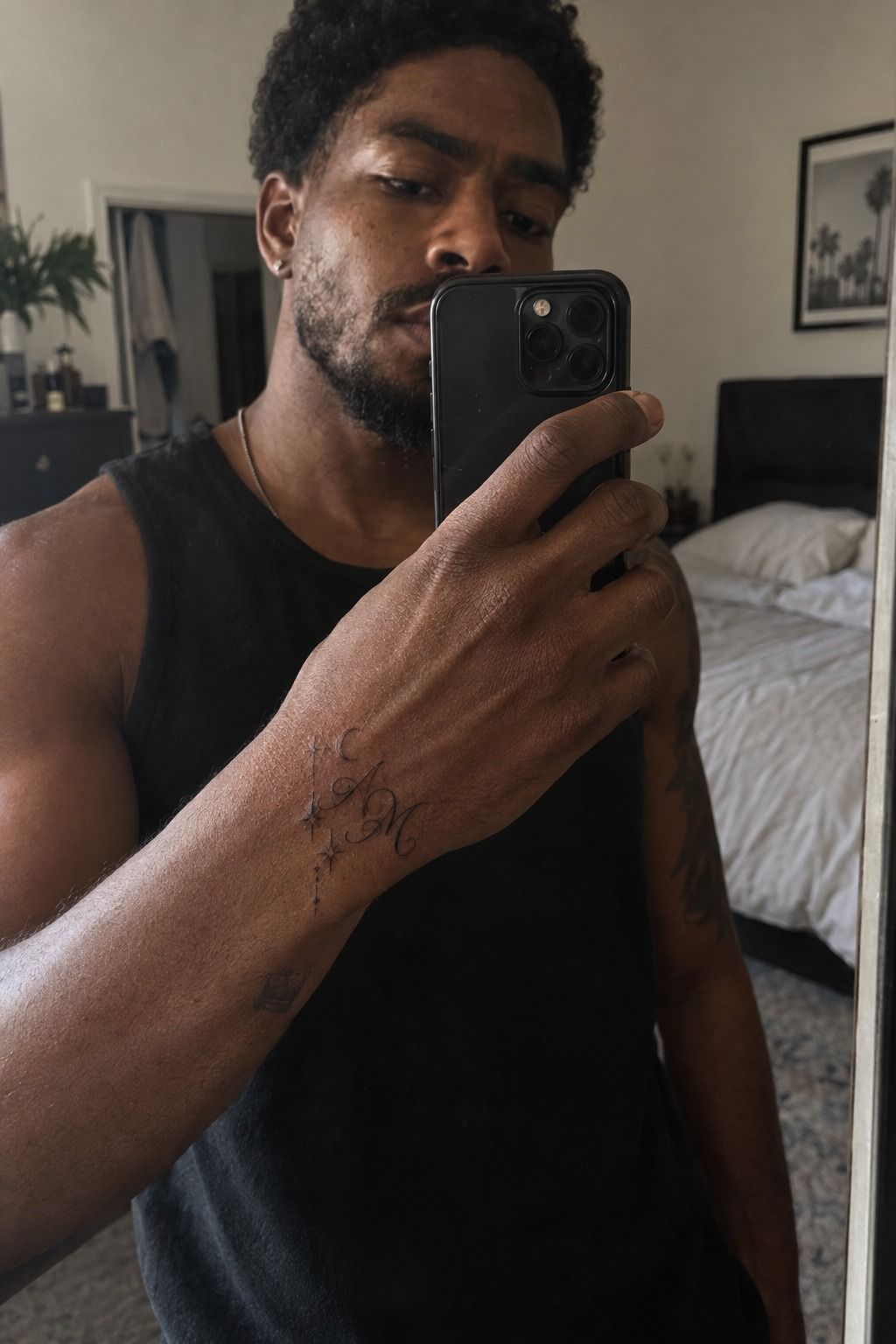
Initials are small, readable, and deeply personal when you give them enough room.
Tattoo Planning Numbers to Keep Nearby
These are broad US references, not a quote for your appointment. Your artist, region, design complexity, placement, and studio minimum can change the total. A short appointment can still meet a minimum charge, while a larger custom design may be priced by the hour.
The lowest price may not offer the best value for hand work. Look at healed results, communication, hygiene, and whether the artist explains what can realistically fit. Paying more can be worth it when the design has a better chance of staying legible.
A studio minimum can apply even when the tattoo takes only a short time. Ask about deposits, touch-ups, and payment expectations before you confirm the appointment.
What Changes the Price?
The main factors are size, detail, placement, artist experience, and studio minimum. Custom design time can affect the cost even when the final tattoo is small.
Hand tattoos may require more planning because the surface bends, moves, and receives friction. A careful consultation can add value before the needle ever touches your skin.
Ask for a clear quote and confirm whether a touch-up is included. You’ll want to know the expected budget before you approve the stencil, especially if you’re comparing several artists.
A cost-conscious choice isn’t always the cheapest choice. Reducing unnecessary detail, choosing a slightly larger design, and selecting a skilled artist may be the most cost-effective path.
A polished result can also come from a precise stencil, a realistic size, and an artist who knows when to simplify. More detail isn’t automatically more value.
What I’d Decide Before Booking
I’ve changed my opinion about small hand tattoos over time. At first, I thought the most delicate design would be the most refined choice.
Then I saw how quickly an overworked micro-image can lose its identity. Now I’d rather choose a slightly clearer symbol with confident spacing than chase a line so faint it disappears in ordinary light.
The hand is demanding because it’s always in motion. You wash it, bend it, expose it, and use it without thinking. That makes a hand tattoo intimate, but it also means you need to respect the limits of the placement.
A healed fine-line tattoo tells the truth better than fresh work.
I’m especially cautious with tiny lettering, crowded botanical details, and pale decorative marks. They can be stylish at the appointment, yet the design may depend on precision that skin can’t preserve forever. A bold outline, open spacing, and a meaningful silhouette give you more room for natural aging.
Your artist should be able to explain what will happen if the lines soften. That conversation isn’t negative.
It’s part of choosing well. If you want a larger reference point before committing to the hand, compare your idea with these small arm tattoos for ladies and ask what would survive at a more forgiving scale.
The tattoo I’d choose for myself would be simple, black, and easy to recognize without explanation. That doesn’t mean it would be plain. A single-needle black design can still be intricate, expressive, and deeply personal when every mark has a reason.
I’d also save a reference from a healed portfolio and one from a fresh portfolio. The contrast can be striking, especially when you realize how much spacing matters after the first few weeks.
The Questions I Get Asked Most
How much does a small hand tattoo for women usually cost?
A small hand tattoo usually costs about $100 to $300 in the US, though a studio minimum may be around $50 to $100 and hourly rates often fall near $100 to $250. Clear pricing depends on your artist, region, placement, and design detail.
Are small hand tattoos for women a good idea for a first tattoo?
Yes! They can be a good choice if you’re comfortable with visibility and choose a design with enough spacing. A simple symbol can be easy to understand and meaningful, but hands can be more sensitive than forearms or shoulders.
How do I choose a tattoo artist for small hand tattoos for women?
Choose an artist with healed linework, clean studio practices, and experience tattooing hands. Ask to see healed portfolio work on varied skin tones, then discuss size, aging, and whether your smallest details should be removed before booking.
How much do small hand tattoos for women hurt?
Hands and fingers can hurt more because they have thin skin and sit close to bone. Forearms, thighs, and shoulders are often more tolerable. Your session may feel manageable with breaks, so tell your artist if you need to pause.
How long do small hand tattoos for women take to heal?
The surface usually heals in about 2 to 3 weeks, while complete healing can take roughly 2 to 3 months. Gentle washing, light moisturizer, and avoiding sun and swimming support cleaner healing while the skin settles.
What’s the best placement for small hand tattoos for women?
The wrist and outer hand are practical starting points because they offer more room than finger sides and may age more predictably. Finger and knuckle tattoos are more visible and can be more tender. Open spacing matters more than choosing the trendiest spot.
For additional placement ideas, browse these small finger tattoo ideas and compare them with a wrist or forearm concept before making a deposit.
Where I’d Start First
If I had to pick one step, I’d start with the healed portfolio. Fresh ink can hide weak spacing, but healed work shows whether your artist protects clarity. Save one symbol, one placement, and one healed example, then book from there.
Your design will feel personal because you made the hard edit. Choose the idea that remains meaningful after you remove the extra stars, leaves, letters, or shading. That’s usually the design worth carrying.
For one final comparison, review small tattoos with meaning beside small finger tattoo ideas. A clear concept, realistic size, and healed reference will give you the most confident place to begin.