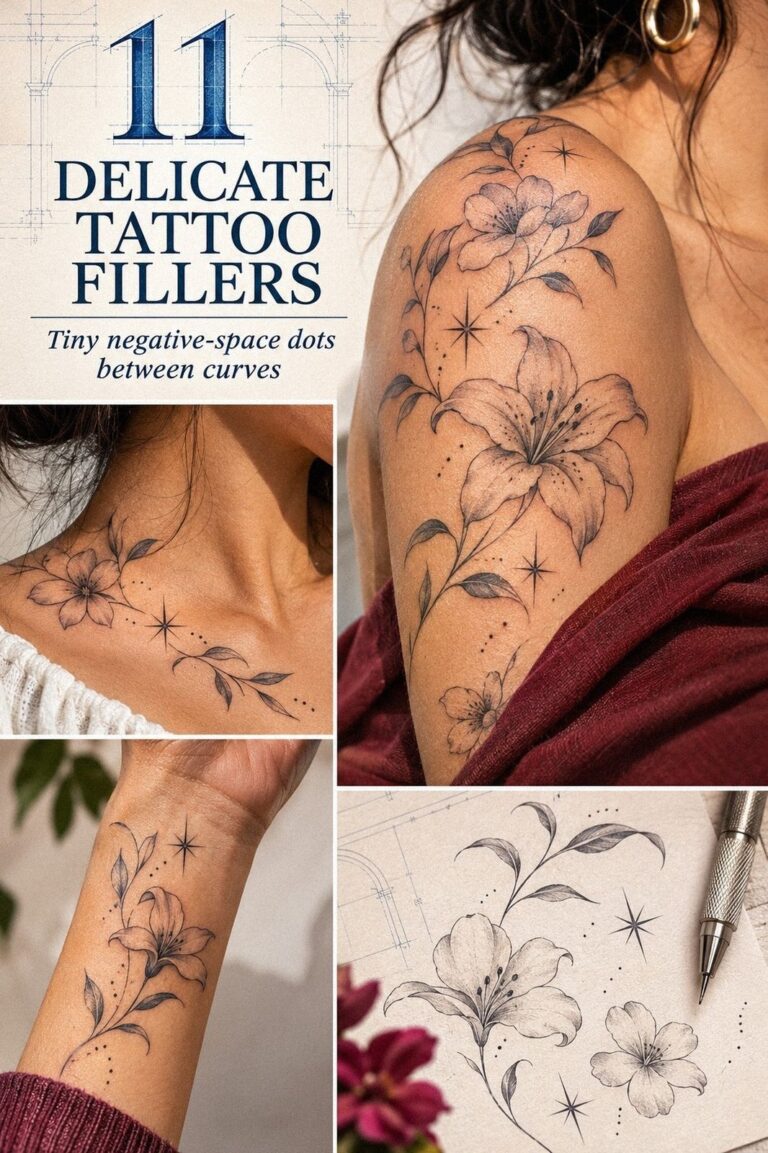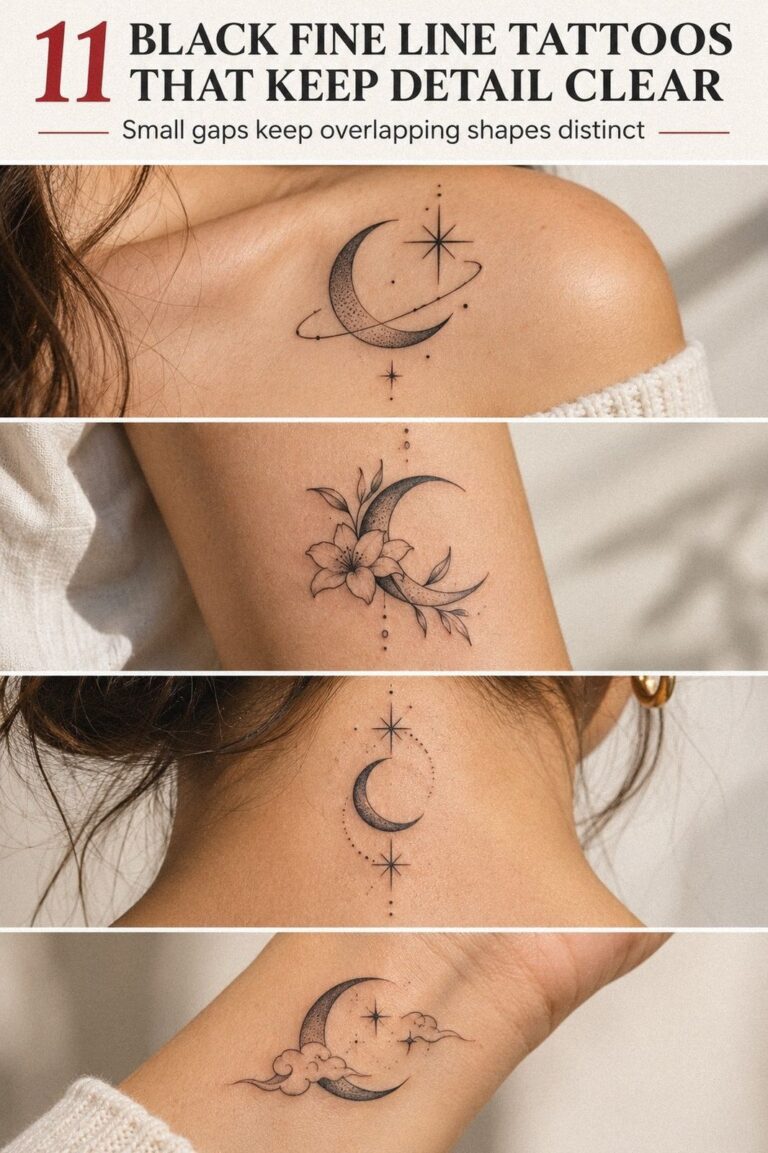
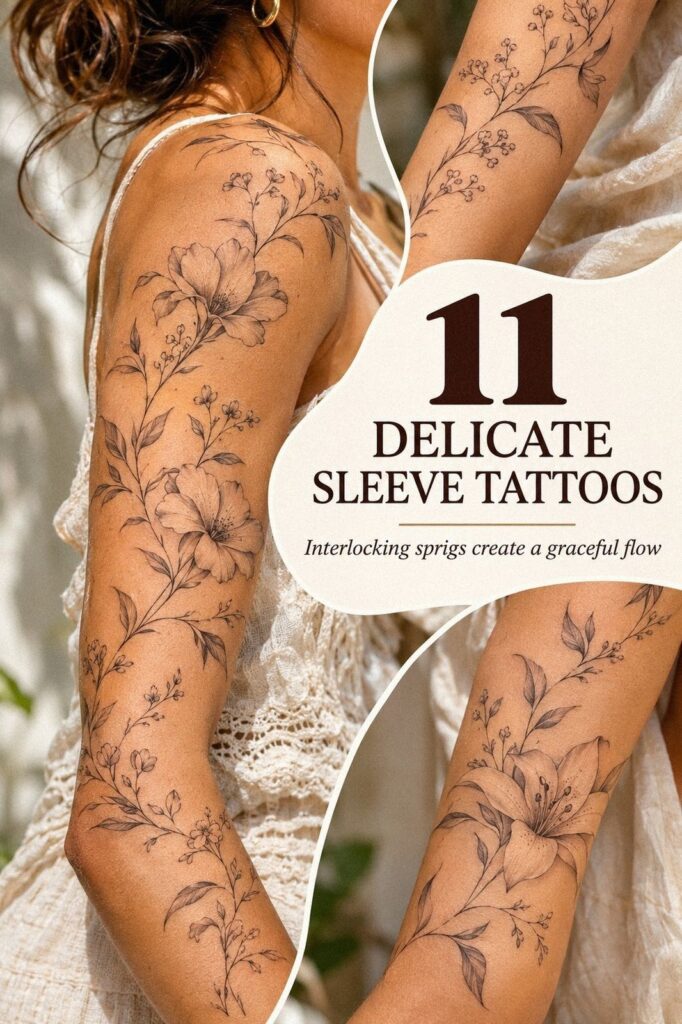
Delicate sleeve tattoo ideas can look crisp linework years later when placement, spacing, and line weight work together. I learned that after crowding my first design near the wrist, where friction blurred the smallest details. You’ll find 11 striking tattoo concepts here, plus honest notes on pain, healing, cost, and concealment. Small choices matter!
- Botanical Fine Line Delicate Sleeve Tattoo
- Celestial Wrist To Shoulder Sleeve Design
- Tiny Wildflower Sleeve With Negative Space
- Geometric Lacework Delicate Arm Sleeve
- Meaningful Birth Month Flower Sleeve
- Watercolor Hummingbird Delicate Sleeve Tattoo
- Dainty Botanical Forearm Wrap Sleeve
- Fine Line Ocean Inspired Sleeve
- Ornate Sacred Symbols Half Sleeve
- Whimsical Miniature Animal Sleeve Tattoo
- Elegant Blackwork Vine Sleeve Design
1Botanical Fine Line Delicate Sleeve Tattoo
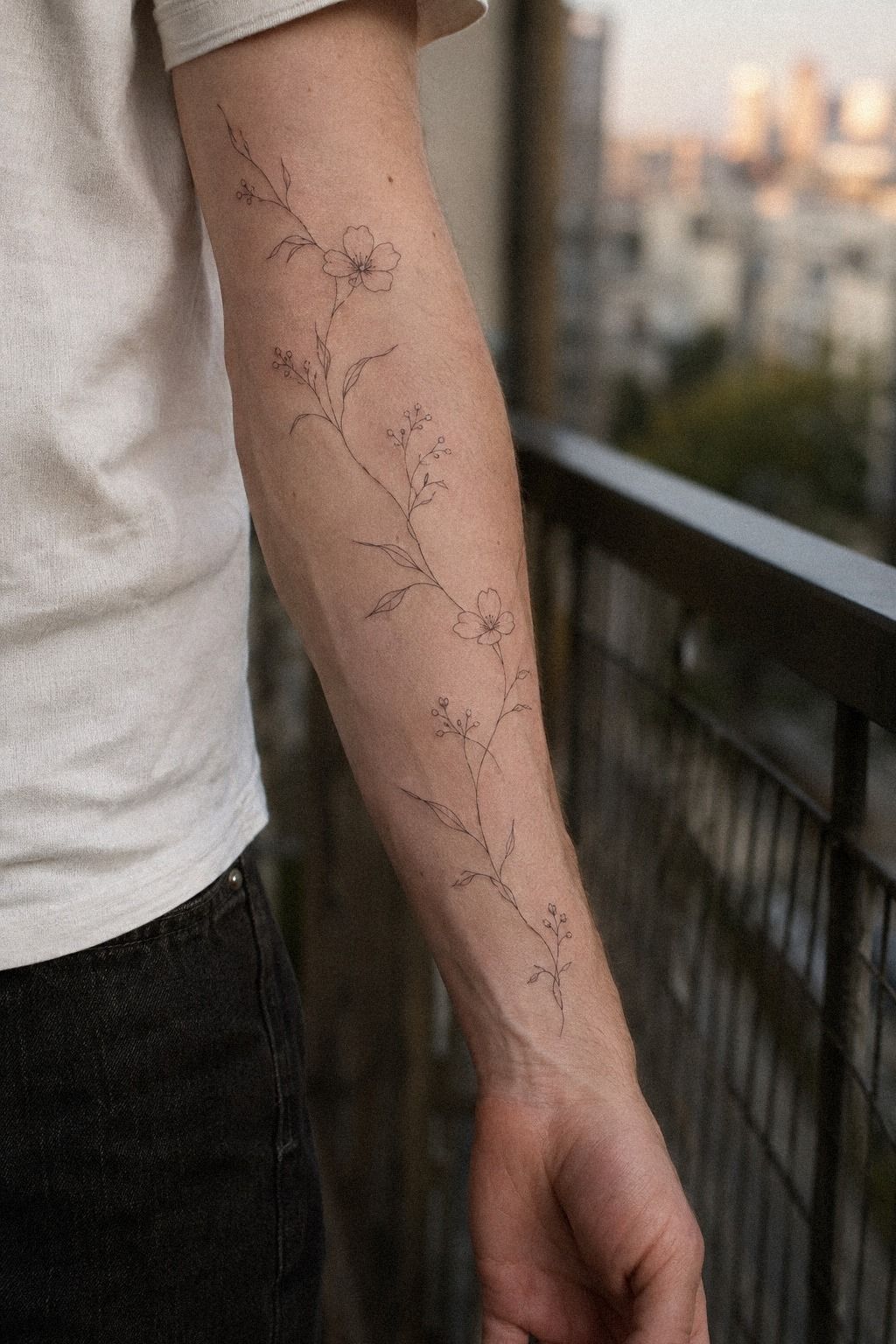
A botanical fine line sleeve works especially well when the hair-thin lines stay understated beneath a shirt cuff. I’d choose one single-needle stem with leaves that climb toward the elbow, rather than filling every gap with extra petals. You’ll get a more graceful result when the design has room to breathe.
The narrow forearm placement keeps the pattern easy to cover. Your artist can vary leaf sizes from tiny to medium, creating a flowing leaf rhythm without turning the sleeve into a solid block. I call this the Botanical Margin Rule: leave visible skin around every major stem.
Use a meaningful plant, but don’t force symbolism into every leaf. A fern can feel timeless, while a thorned branch reads more fierce and personal. I’d skip ultra-tiny lettering beside the flowers because it competes with the intricate botanical lines and may soften as the tattoo heals.
If you’re comparing placements, this quarter sleeve tattoo meaning guide can help you decide how far the design should travel. Your best version will probably stop several inches above the wrist, where a watch or long sleeve can cover it without rubbing directly across the flowers.
2Celestial Wrist To Shoulder Sleeve Design
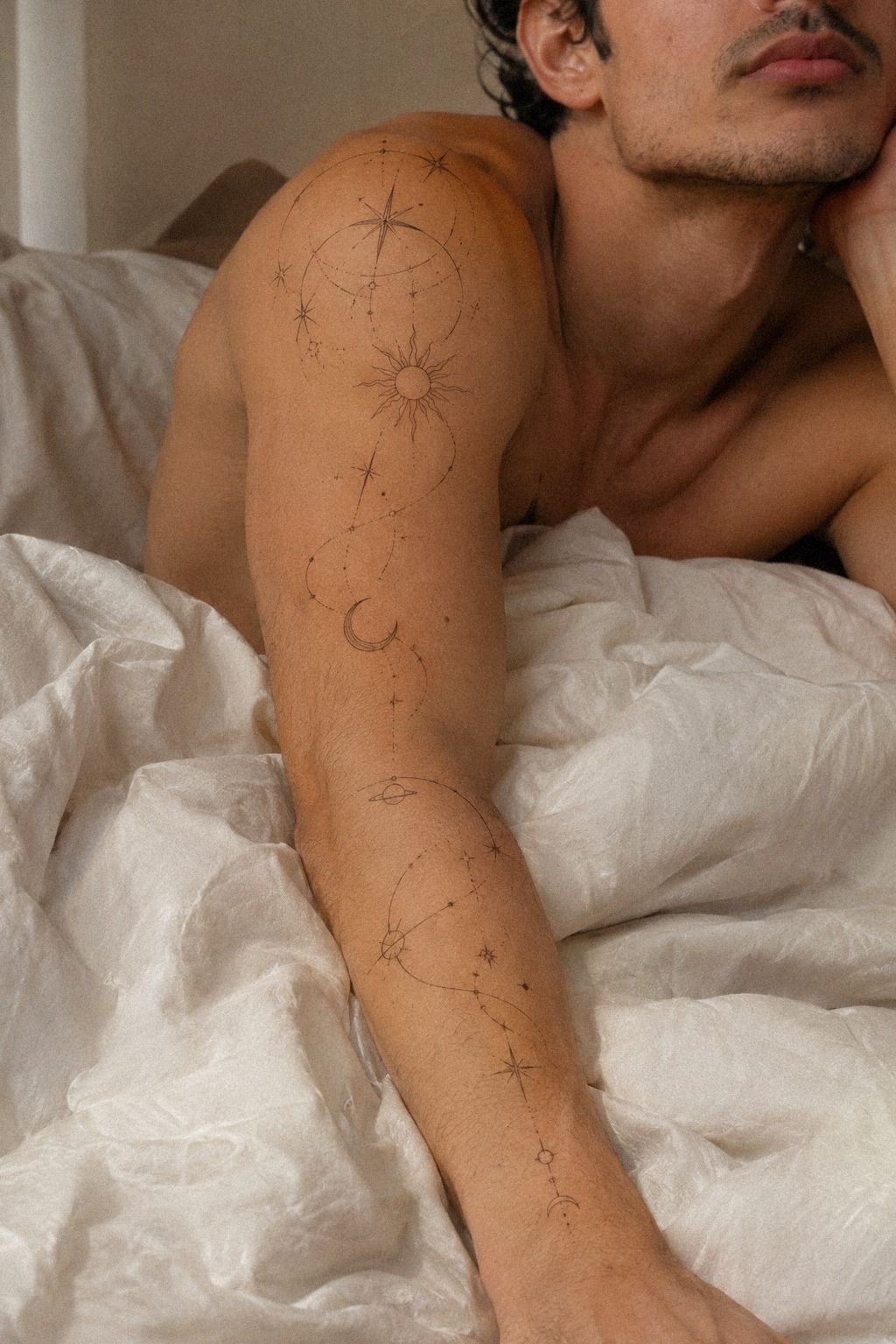
This celestial sleeve moves from the wrist toward the shoulder with small moons, stars, and fine orbit lines. Fine black ink creates a sleek celestial contrast without requiring heavy shading. You’ll want each symbol spaced clearly, because crowded stars can make the whole design look muddy from a distance.
The strong idea here is the Celestial Ladder Method. Begin with one larger crescent near the forearm, then let smaller stars guide your eye upward. I’d keep the shoulder end slightly quieter, since a dense cap can become difficult to conceal under a fitted short sleeve.
A tiny sun, an open circle, and a few four-point stars give the design symbolic depth. Your artist might add faint dotwork, but I wouldn’t ask for watercolor clouds in the same piece. The contrast between delicate geometry and saturated color could make the original concept less sleek.
You’ll find more placement guidance in these minimalist sleeve tattoo ideas. And if your workplace requires full concealment, ask for the upper section to remain below your usual sleeve line. It’s easier to hide a restrained shoulder ending than to disguise a design that reaches the collarbone.
3Tiny Wildflower Sleeve With Negative Space
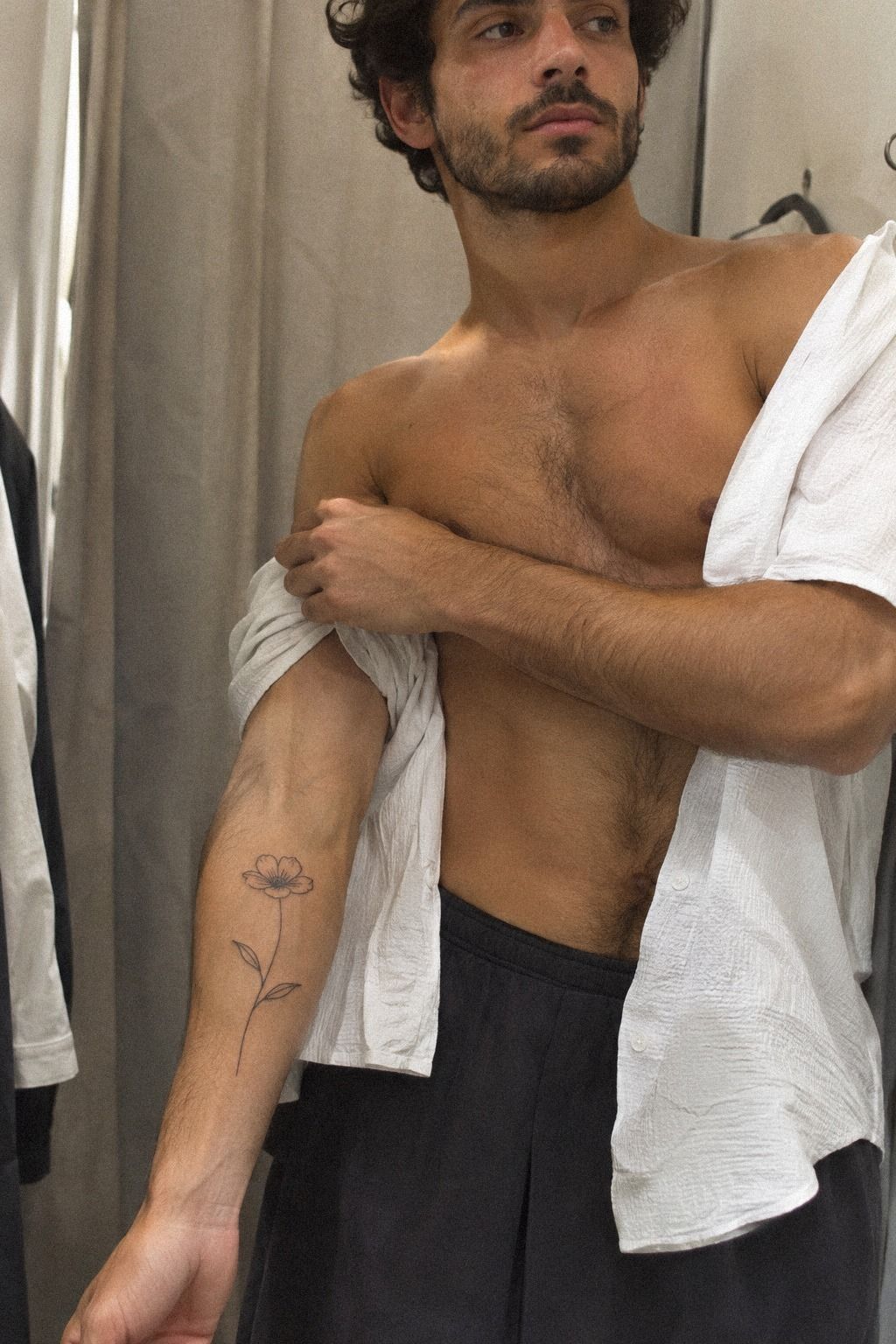
A single-stemmed wildflower creates one of the most understated delicate sleeve tattoo ideas in this list. The narrow flower and open skin around it create a sharp contrast without relying on heavy pigment. Your design should feel intentional from every angle, not unfinished.
The Negative-Space Stem Rule keeps the delicate flower silhouette readable: one main stalk, several small leaves, and generous skin between each detail. I’d choose greywash ink only for the smallest shadows, because deep filling would overpower the delicate shape.
You can make the flower personal through its season, color, or family connection. A violet feels romantic, a poppy feels bold, and a tiny daisy can look playful without becoming childish. What would you rather see every day, a symbol with a story or a crowded collection of trendy marks?
But don’t let the artist shrink the flower below a useful scale just because you want it concealed. Your forearm still needs enough space for the petals to heal cleanly. For more ideas, browse these small sleeve tattoo ideas and compare how much negative space each design uses.
4Geometric Lacework Delicate Arm Sleeve
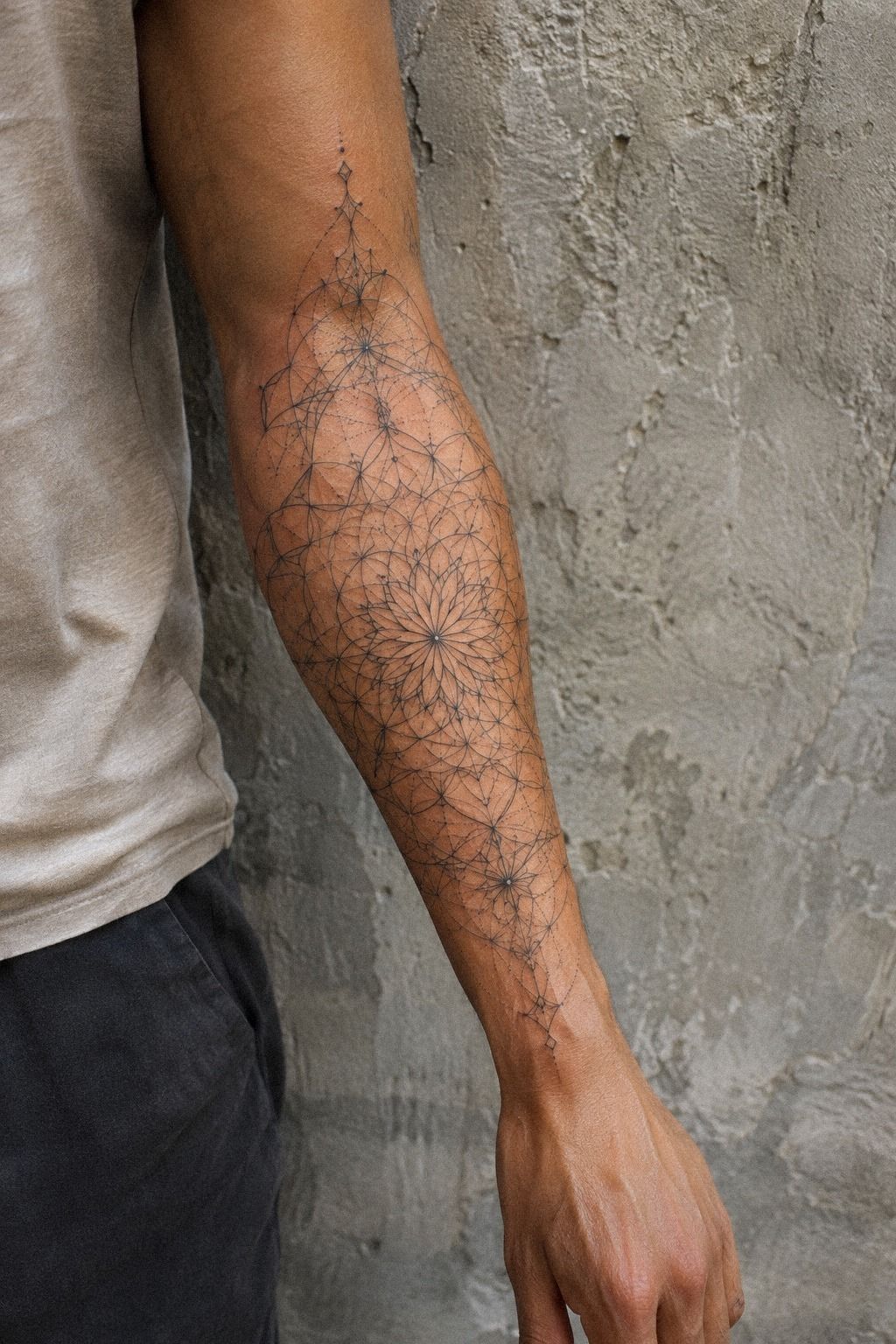
Geometric lacework brings a more ornate direction to a delicate sleeve. Repeating arches, fine diamonds, and thin connecting lines can create an elegant geometric pattern while leaving enough open skin for concealment. Keep the smallest shapes large enough to remain readable after healing.
5Meaningful Birth Month Flower Sleeve
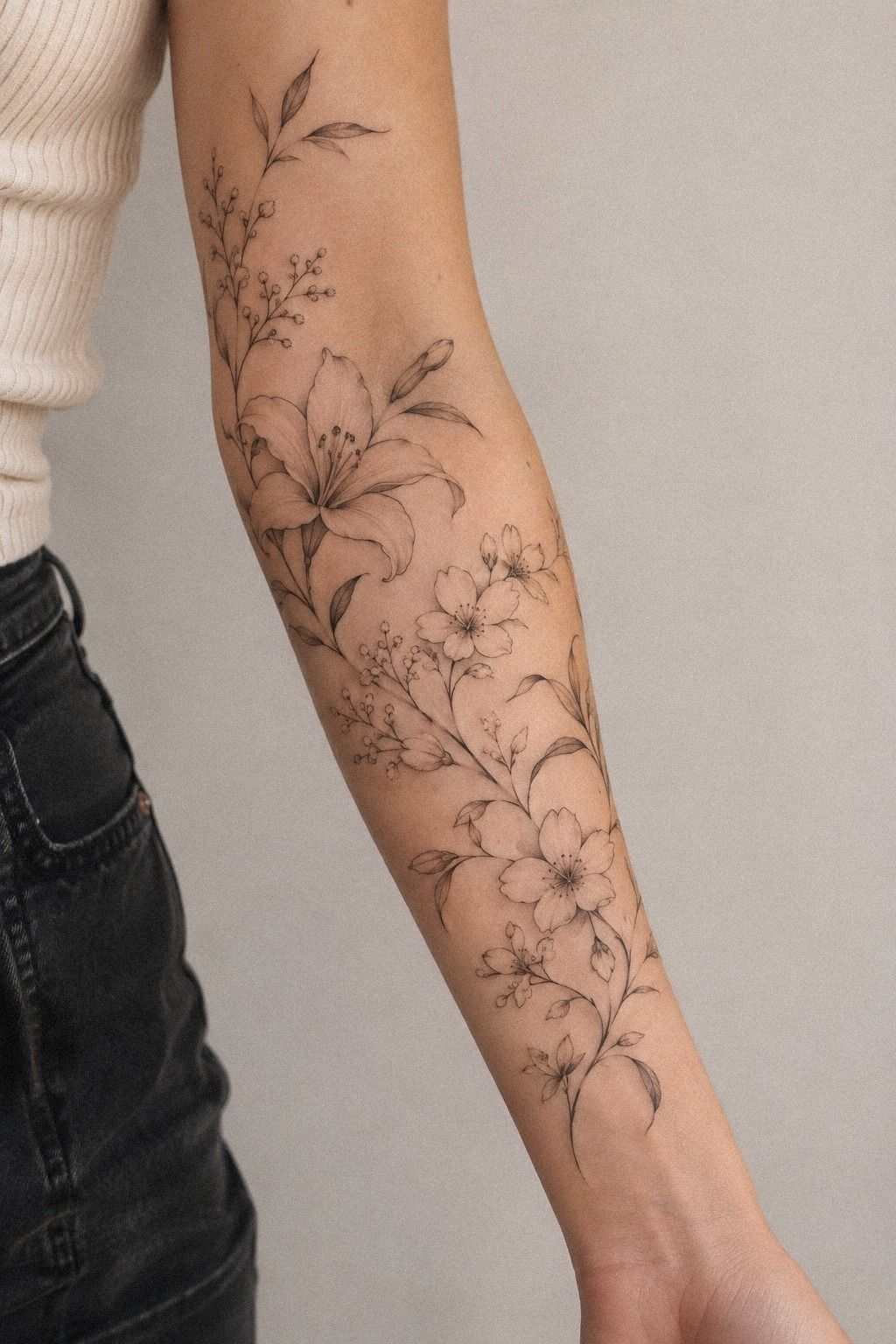
A birth month flower sleeve can begin with one meaningful bloom and several smaller supporting marks. You’ll see the strongest result when the anchor flower receives the most detail and the secondary flowers remain quieter. An ornate birth flower can feel vintage without becoming visually crowded.
The Birth Flower Hierarchy is simple: one meaningful bloom gets the most detail, while secondary flowers receive fewer leaves and lighter lines. I’d avoid giving every month equal visual weight, because the sleeve can lose its emotional center and start looking like a catalog of unrelated symbols.
Your artist can keep the design personal through initials, a date, or one tiny symbolic mark. Choose a placement that lets you see the flower without turning your forearm into a full black panel. The style can be feminine, masculine, or completely neutral depending on the stem shape and line density.
For more symbolism, read this guide to women’s forearm sleeve tattoo meaning, even if you’re not choosing a traditionally feminine design. The important part is that your flower connects to a person, season, or memory you won’t resent carrying later.
6Watercolor Hummingbird Delicate Sleeve Tattoo
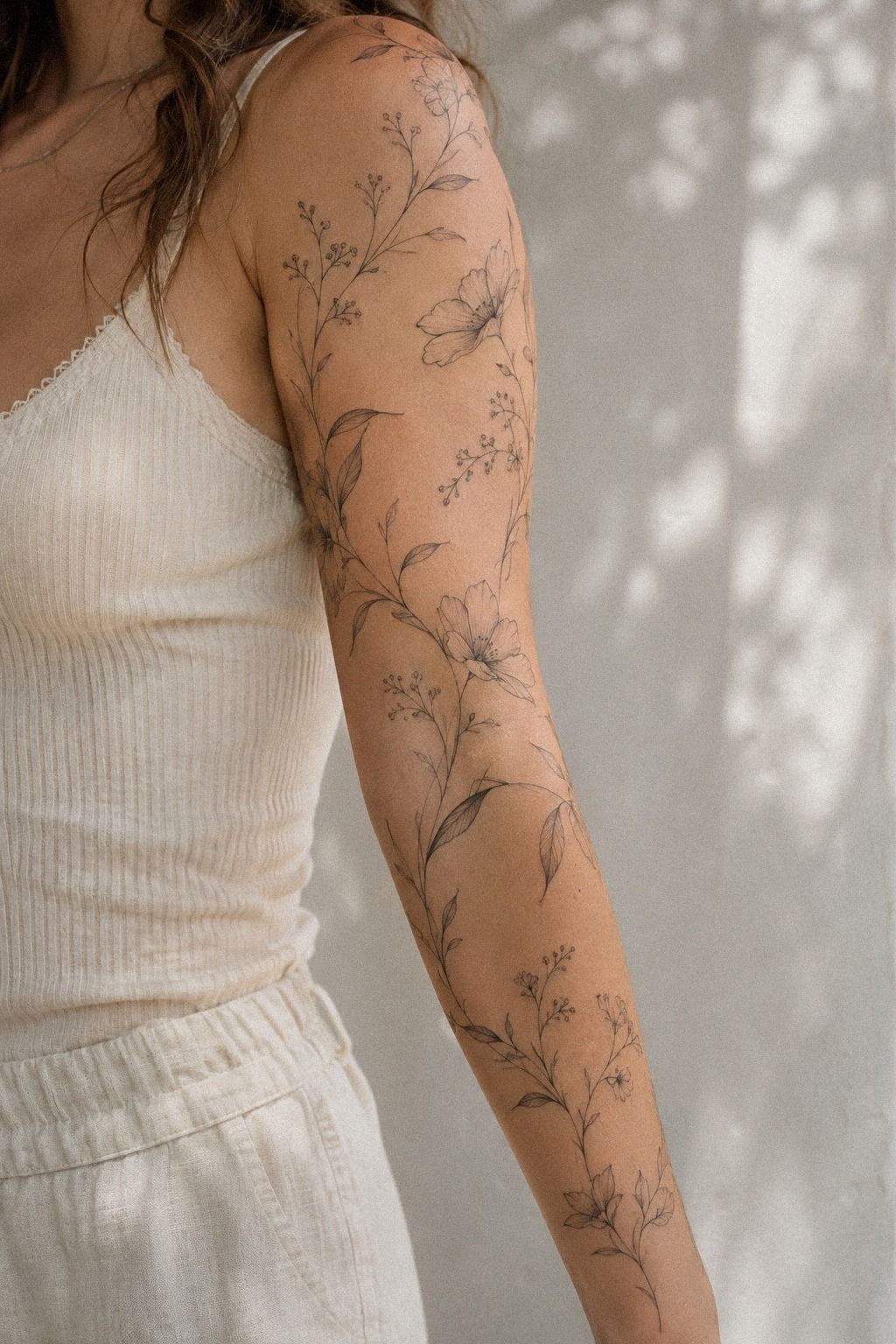
A small hummingbird in mid-flight gives a delicate sleeve a more vibrant, expressive edge. Ask your artist how the watercolor pigment will be balanced against your skin tone. You’ll want the silhouette to read before the color details do.
The Floating Motion Rule keeps the bird from looking like it’s stuck on the arm. Place the body on a slight diagonal, leave breathing space around the wings, and use only a few color notes near the throat or tail. I’d skip a full rainbow wash because the bird’s shape should remain crisp.
Your piece can feel empowering without becoming overly dramatic. A hummingbird suggests movement, persistence, and energy, while the small scale keeps it understated enough for work. But watercolor tattoos need thoughtful planning, and your artist should show healed examples rather than relying only on fresh work.
If you want a smaller direction, pair the bird with one minimalist sleeve tattoo idea instead of surrounding it with many unrelated symbols. Your sleeve will look more refined when every mark supports the same flight path. That restraint is what makes the design memorable!
7Dainty Botanical Forearm Wrap Sleeve
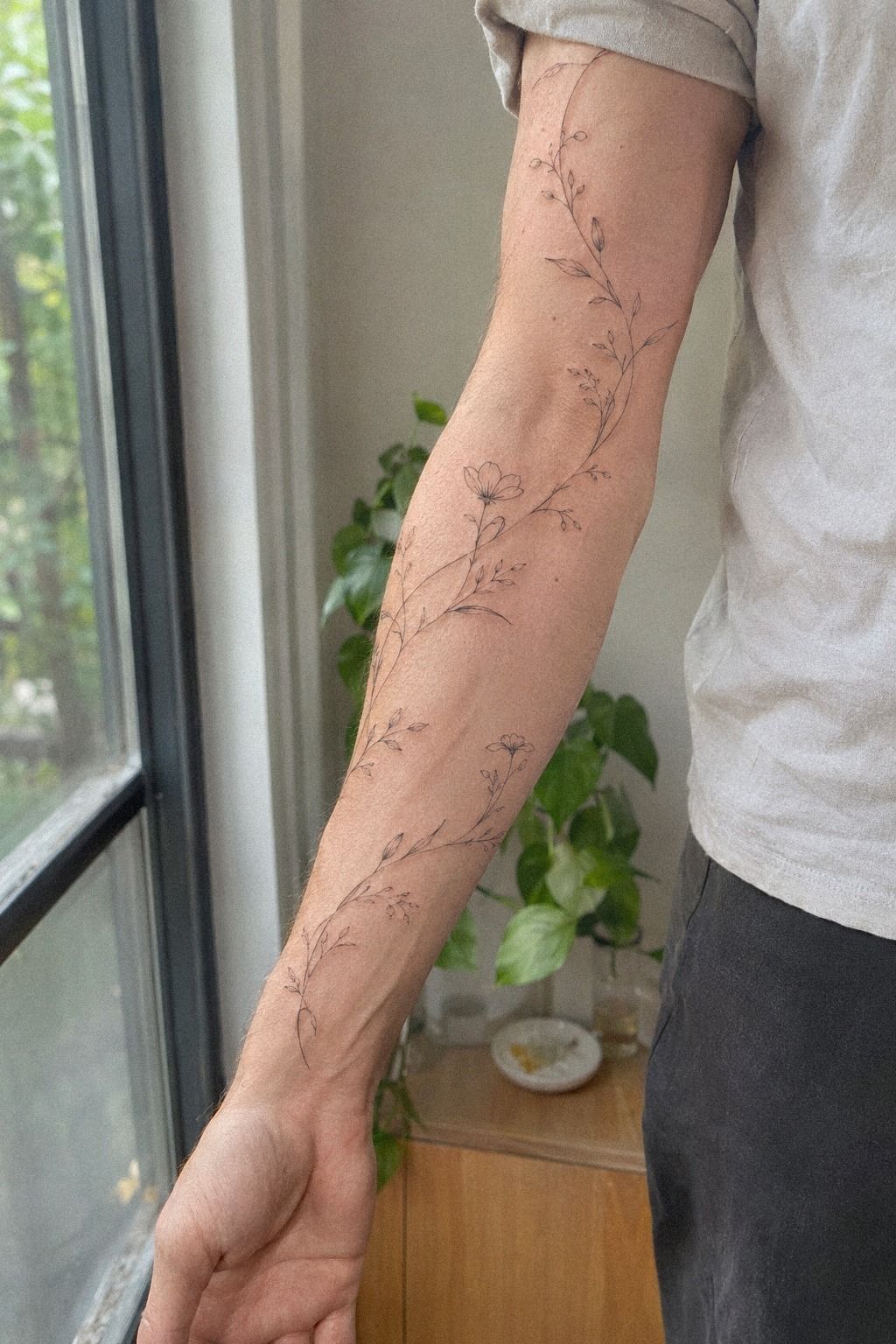
This dainty botanical wrap uses hair-thin lines to travel around the forearm without becoming a dense band. Keep the leaves slightly varied in size and leave a clear break near the wrist so a cuff can cover the tattoo without pressing across every detail.
8Fine Line Ocean Inspired Sleeve
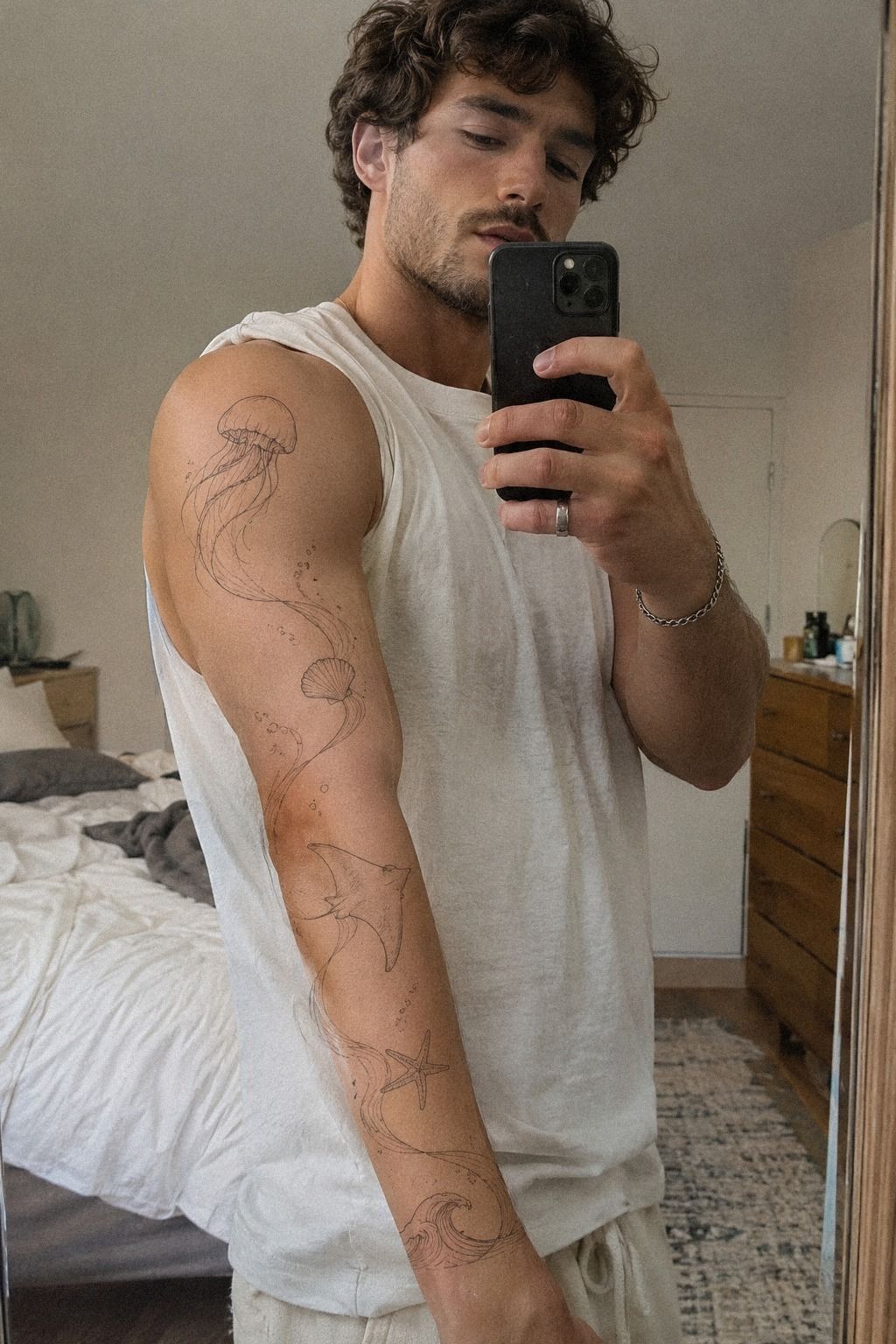
An ocean-inspired fine line sleeve can combine a narrow wave, shell, crescent horizon, and small constellation without losing its delicate character. Black fineline ink gives the flowing wave design a crisp outline while leaving enough skin visible between each element. You’ll get more impact from spacing than from extra detail.
The Tidal Line Sequence starts with one flowing wave near the wrist, then adds a shell or compass shape higher on the forearm. I’d avoid filling the ocean with blue wash if concealment is your priority. A mostly black design slips under a sleeve more easily and remains more timeless.
Your meaning might come from a coastline, a loved one, or the feeling of starting over. A small shell can feel sacred, while a wave can look raw and powerful without becoming loud. And yes, one strong curve often says more than five tiny marine icons.
For additional placement ideas, compare these small sleeve tattoo ideas before your consultation. Ask your artist to show the design at one inch and two inches wide, because a wave that looks charming on paper may need more space to stay readable after healing.
9Ornate Sacred Symbols Half Sleeve
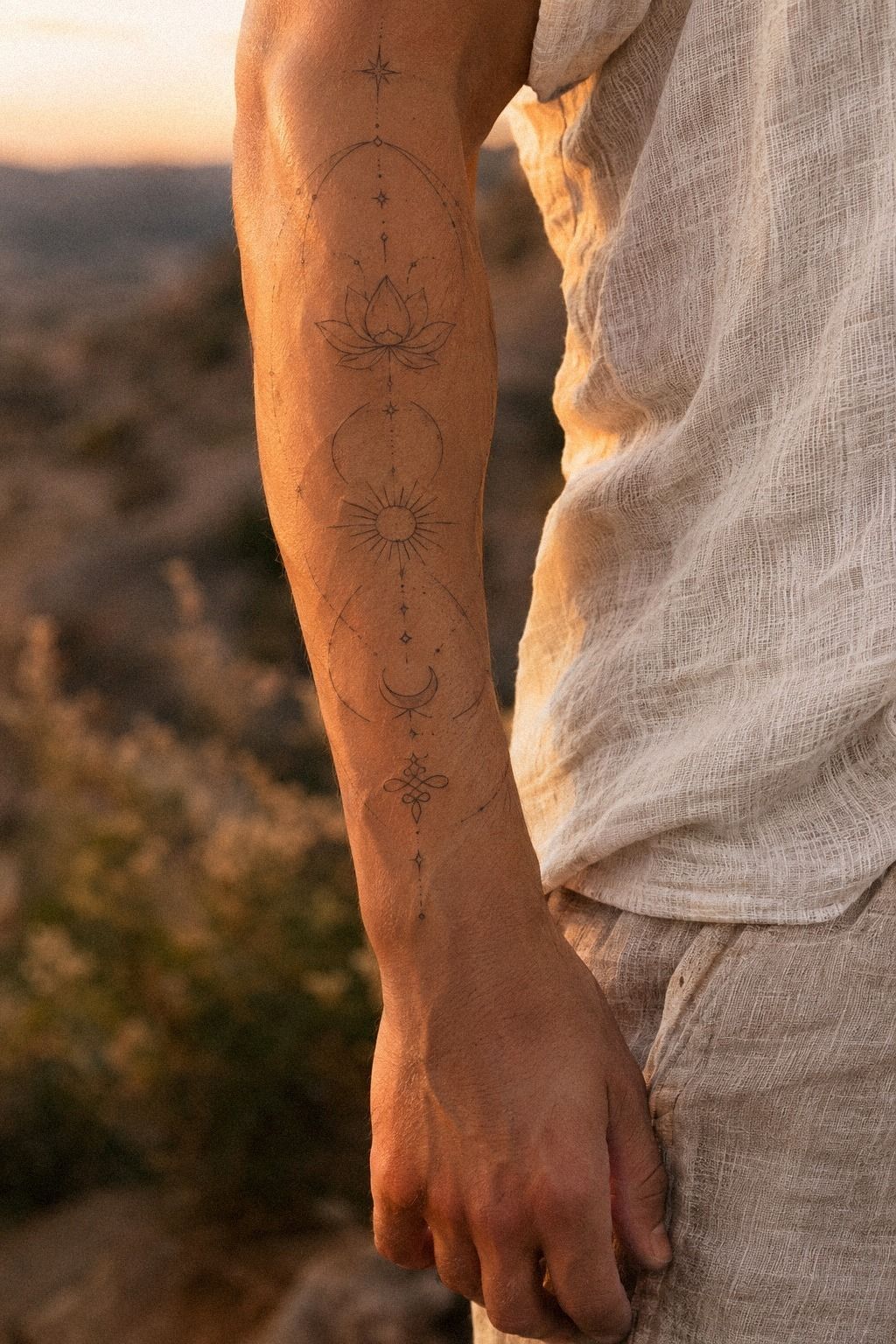
This half sleeve combines sacred symbols with hair-thin lines. A small eye, sun, crescent, or geometric halo can create an ornate sacred composition when each mark has a clear role. You’ll want to research the meaning before choosing a symbol simply because it looks striking.
The Sacred Center Method places one meaningful emblem near the outer forearm, then uses smaller dots and arcs to support it. I’d choose black ink with restrained dot shading rather than heavy fill, since the open skin is what keeps the design delicate and work-friendly.
Your artist should also discuss cultural context if the symbol belongs to a living religious tradition. Personal meaning matters, but respectful research matters too. A sacred design can be empowering when you understand what you’re carrying, not when you borrow a visual without its history.
If you’re weighing a full sleeve against a half sleeve, this sleeve artist tattoo meaning guide may help you think through commitment and symbolism. Your final piece should feel timeless to you, not merely fashionable for one season.
10Whimsical Miniature Animal Sleeve Tattoo
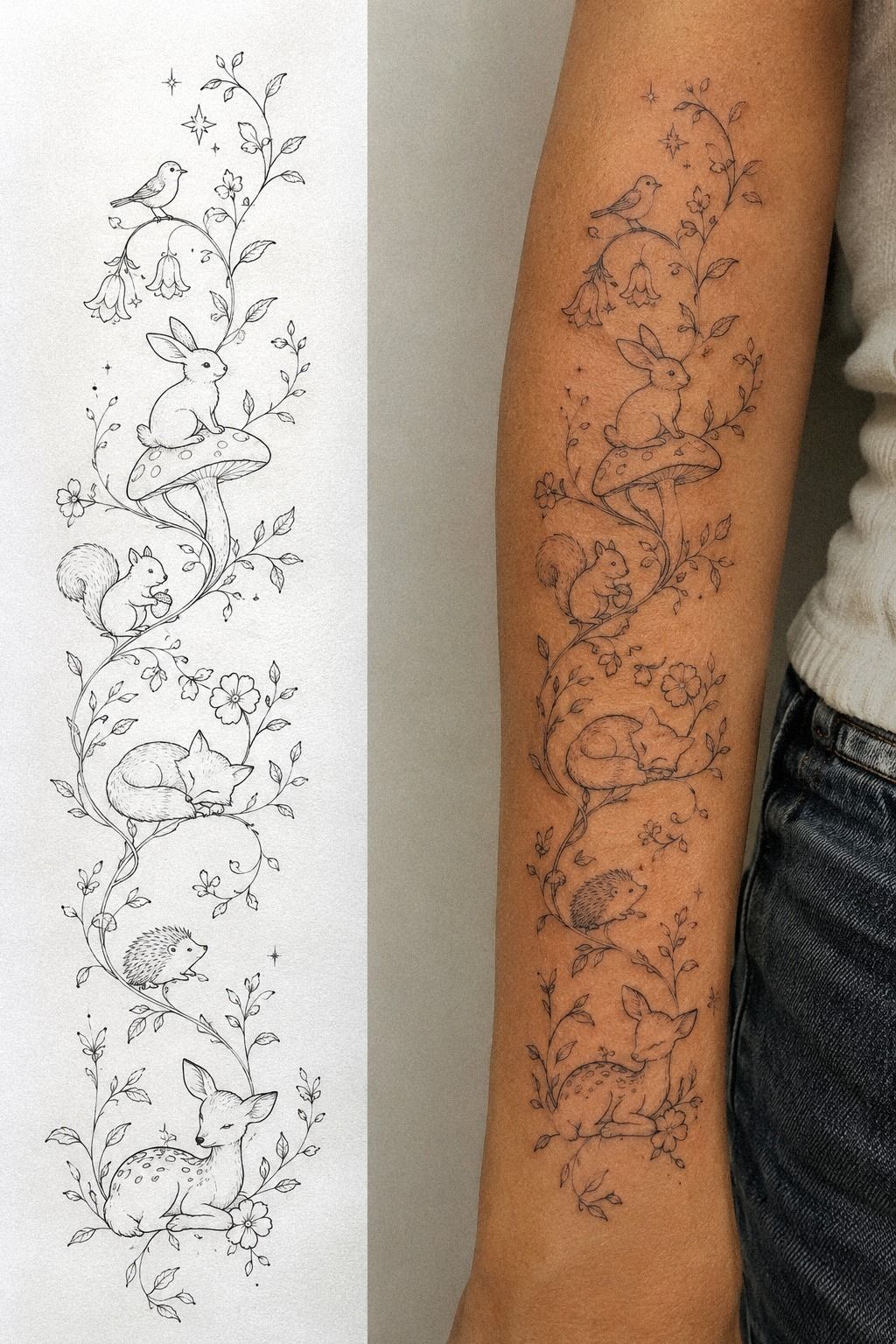
A fine line animal can become a whimsical miniature tattoo when its silhouette stays clear and the surrounding marks remain restrained. Choose one creature with personal meaning, then give it enough scale for the eyes, paws, or fur pattern to remain readable after healing.
11Elegant Blackwork Vine Sleeve Design
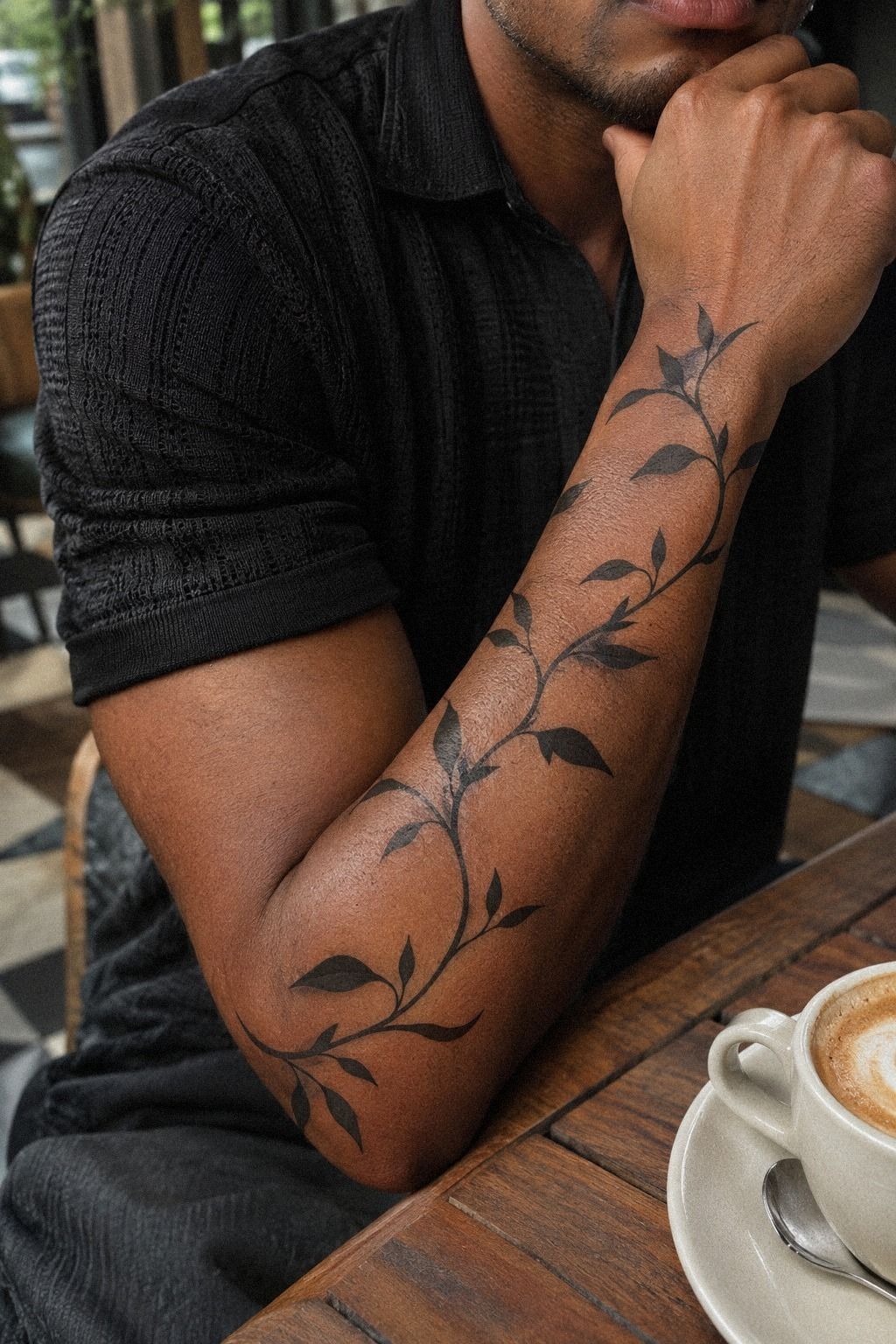
An elegant blackwork vine brings stronger contrast while keeping the overall shape delicate. Solid blackwork ink can create a bold vine silhouette, especially when the artist uses open skin between leaves. You’ll want the bold sections placed strategically, not scattered without purpose.
The Blackwork Vine Anchor gives the sleeve one confident line from wrist toward elbow. I’d choose one larger leaf cluster and let the rest taper into thinner branches. That contrast feels polished and timeless, while a fully solid vine can become harder to conceal and less flexible over time.
Your vine can look sacred, romantic, or fierce depending on the leaves and direction. Thorn shapes add an edgy note, while rounded leaves feel more graceful. But the blackest section should sit away from the areas that receive constant friction from a watch or tight cuff.
For a larger planning framework, read this how to design a sleeve tattoo guide. Ask for healed blackwork examples on similar skin tones, and discuss sunscreen once the tattoo is fully healed. UV exposure can fade contrast, while thoughtful placement helps your linework stay crisp.
What I’d Consider Before Choosing Delicate Linework
I’ve changed my opinion about delicate sleeves after seeing how differently fresh ink and healed ink can read. A fresh tattoo looks crisp, dark, and almost deceptively precise.
Months later, the skin settles, the contrast softens, and the thinnest lines may spread slightly. That doesn’t make the style a poor choice. It means your decision should include time, friction, sun exposure, and scale.
The most important choice is placement. Forearms, thighs, and shoulders are usually more tolerable than ribs, feet, hands, or sternum areas. If you need a design that’s easy to conceal at work, the outer forearm gives you useful control, but a wrist-heavy piece may rub against watches and cuffs.
I’d rather see you choose a slightly larger flower with open spacing than a microscopic design that loses its identity. That approach keeps the meaningful tattoo scale readable as the lines settle.
Line weight matters too. A single-needle look can feel intricate and understated, but it shouldn’t become an excuse to request details below a practical size. Solid blackwork generally holds contrast better than extremely pale shading, although your artist should assess your skin and show healed examples.
You’re choosing a future tattoo, not only a fresh result. A timeless linework design needs enough room to age without losing its central shape.
Cost varies by artist and region. A typical US shop minimum is about $50 to $100, while hourly rates often fall around $100 to $250.
Larger sleeves may need several sessions, so ask for an estimate instead of treating one number as universal. Here’s a useful starting table:
You’ll also want to protect the tattoo after the appointment. Follow your artist’s instructions, wash gently, moisturize as directed, and avoid swimming and strong sun while the surface heals. Gentle aftercare protects the clarity of the design.
And if your job requires concealment, discuss sleeve length and uniform rules before you commit. A striking design should fit your actual life. Start small, but think boldly!
A Few Things Worth Answering
How much does a delicate sleeve tattoo usually cost?
A delicate sleeve tattoo often starts around a shop minimum of $50 to $100, while many US artists charge about $100 to $250 per hour. Your final cost depends on size, detail, artist, and region.
Typical budget factors: line density, session length, placement, healed-work experience. You’ll get a better estimate when you bring references and explain your full concept.
Are delicate sleeve tattoos a good idea for a first tattoo?
Yes, a delicate sleeve can work well for a first tattoo if you choose a tolerable placement and a design with enough scale. Forearms, thighs, and shoulders are often easier for many people than ribs, feet, hands, or sternum areas.
Good starting signs: meaningful subject, clear spacing, realistic size. I’d avoid beginning with microscopic lettering or an overly intricate wrap you can’t evaluate from every angle.
How do I choose a tattoo artist for delicate sleeve tattoos?
Choose an artist whose portfolio shows clean linework and healed examples, not only fresh tattoos. You should also review their hygiene practices, consultation process, and experience with your preferred skin tone.
Portfolio checks: consistent lines, readable healed designs, thoughtful spacing. If you’re uncertain, this sleeve artist tattoo meaning guide can help you prepare questions for the consultation.
How much do delicate sleeve tattoos hurt?
Pain depends on your body and the placement. Forearms, thighs, and shoulders are often more tolerable, while ribs, feet, hands, and sternum areas can feel more intense.
Pain planning: shorter sessions, breaks, hydration, comfortable clothing. You don’t need to prove anything by choosing the most sensitive area for your first piece.
How long does a delicate sleeve tattoo take to heal?
The surface usually heals in about 2 to 3 weeks, while complete healing can take around 2 to 3 months. You’ll need to wash gently, moisturize as directed, and avoid swimming and strong sun during early healing.
Aftercare basics: clean hands, gentle washing, limited friction. Your artist’s instructions should guide the specific products and timing you use.
What’s the best placement for delicate sleeve tattoos?
The outer forearm is often a practical choice because you can see the design, conceal it with a long sleeve, and avoid some of the sharper sensitivity found on ribs, feet, hands, and sternum areas.
Placement priorities: visibility, friction, pain tolerance, future expansion. Browse these minimalist sleeve tattoo ideas before deciding how much skin you want to reserve for later work.
Where I’d Start First
If I had to pick one, I’d start with the botanical fine line sleeve. It has enough open skin to age gracefully, and the forearm placement makes concealment simple without hiding the meaning. Pin it for later, then bring one flower reference and one healed example to your artist.