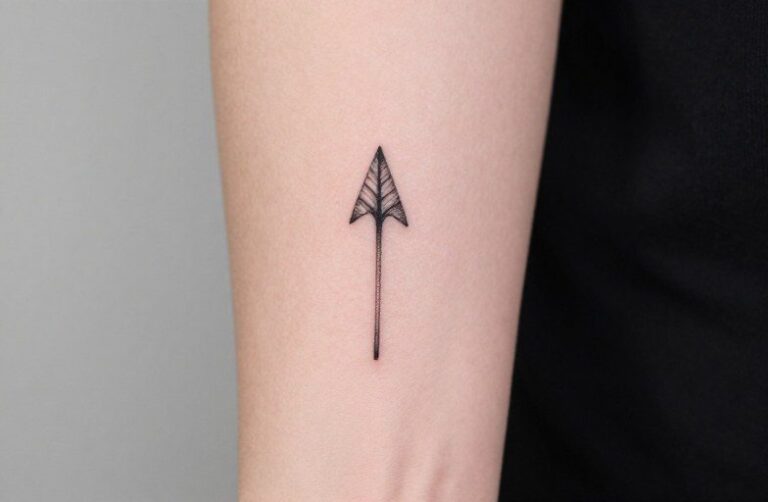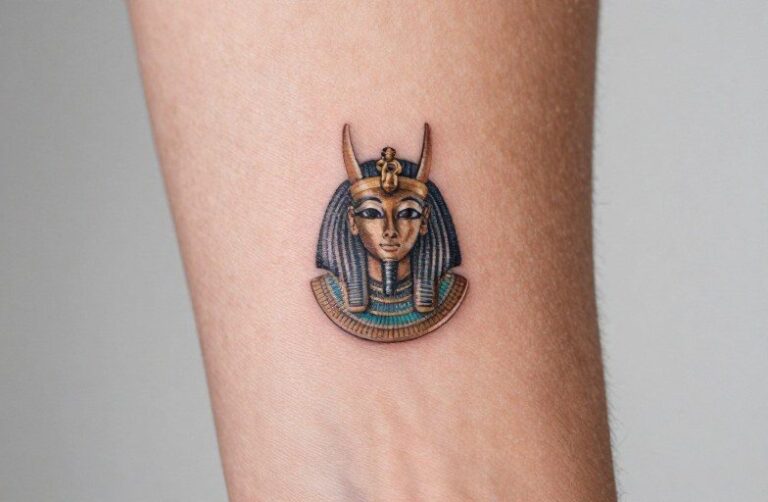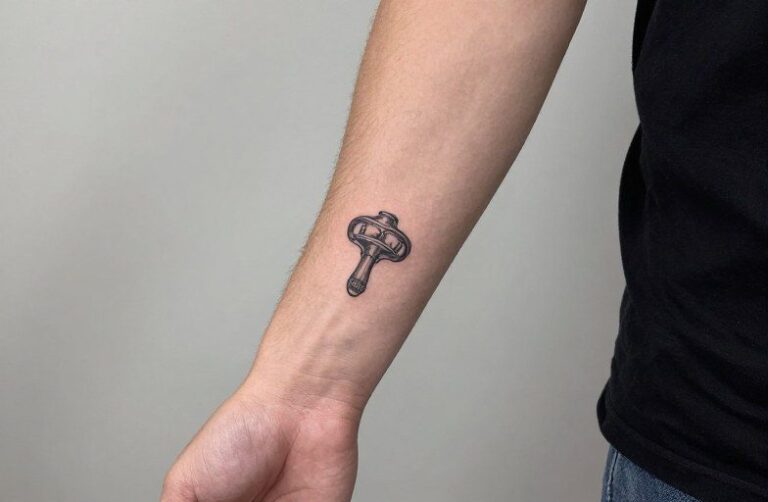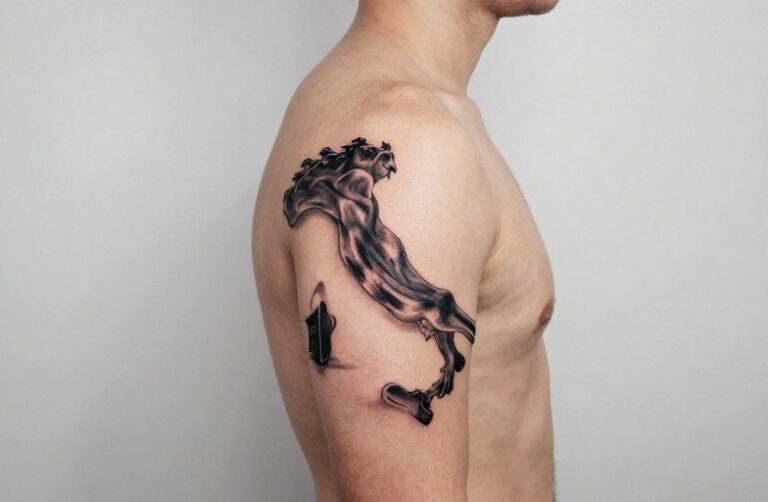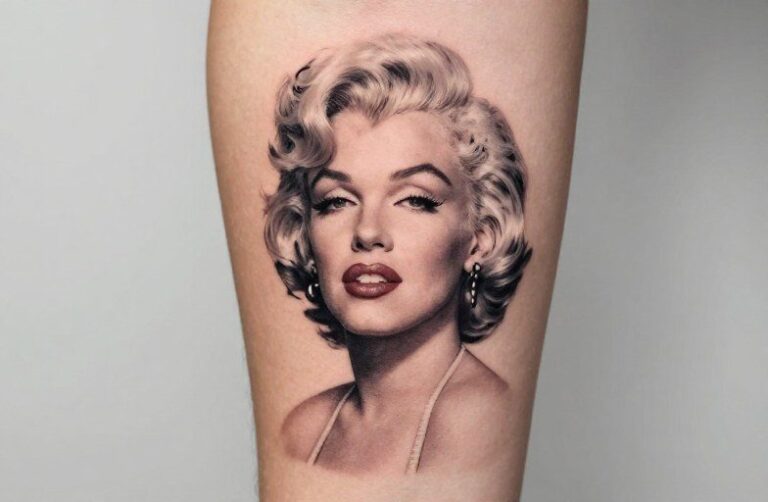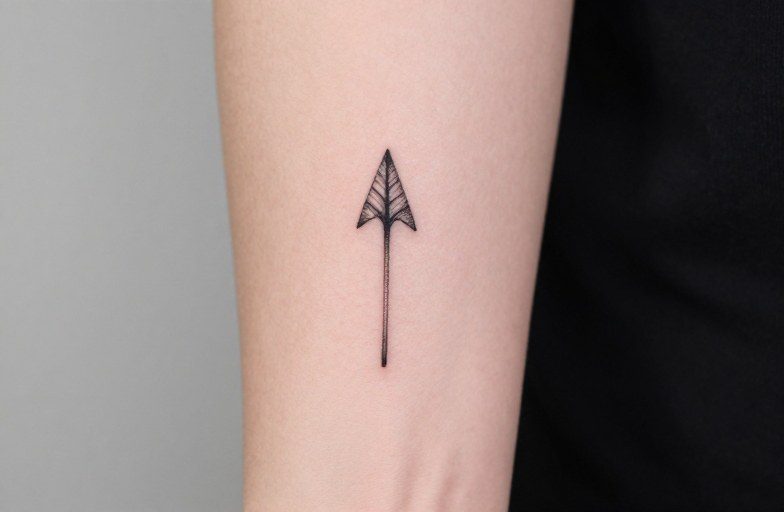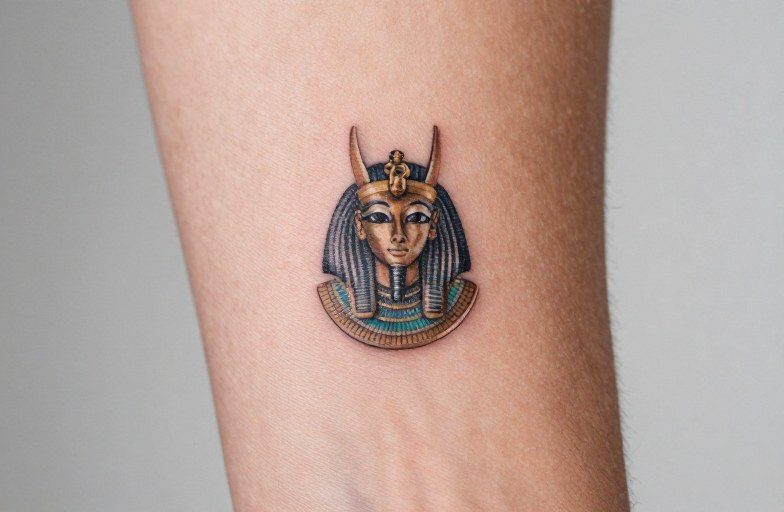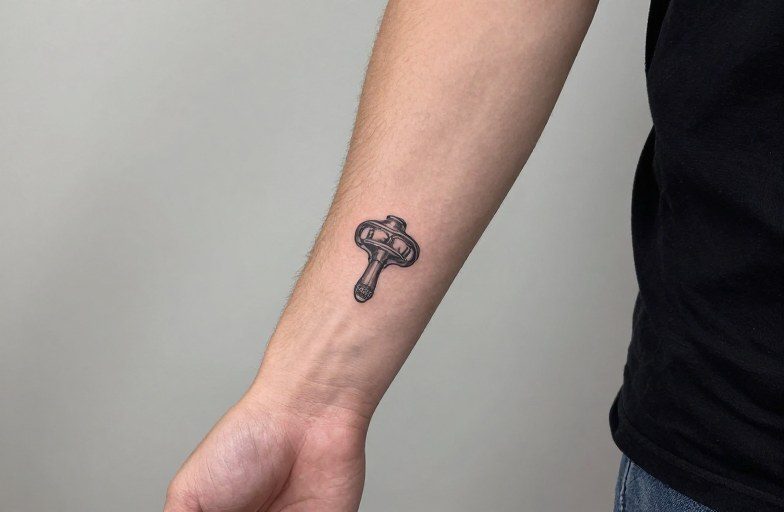

A quarter sleeve tattoo covers either the upper arm from shoulder to elbow, or the lower arm from elbow to wrist. The rest stays bare. That partial coverage is the point: it signals commitment without full coverage, a deliberate choice to leave something unfinished or to keep room for later chapters. Most people choose this placement for its balance, visible enough to matter, easy enough to hide.
What the Format Communicates
The quarter sleeve carries tension between revelation and concealment. Unlike a full sleeve that demands attention, this format invites curiosity. The symbolism often centers on transition, partial truths, and chapters of life that are complete enough to commemorate but not closed enough to finalize.
The Unfinished Narrative
Stopping at the elbow or starting from it creates a natural break. Many wearers treat this as metaphor: the tattooed portion represents lived experience, the blank skin what remains unwritten. This pattern appears among people marking recovery, career changes, or parenthood, milestones that rarely feel like endpoints.
Related reading: quarter sleeve tattoo meaning | chicano sleeve tattoo meaning | forearm sleeve tattoo female | arm sleeve tattoo womens
Intentional Restraint
Choosing less coverage than a half or full sleeve communicates discipline. It says: I know what I want, and I do not need excess to prove it. In shop culture, quarter sleeves sometimes read as the one serious piece for people who otherwise keep their skin clean, less collector, more singular statement.
- Upper arm placement: traditionally read as strength, protection, masculinity; increasingly gender-neutral now
- Lower arm placement: more public, often associated with craft, labor, or creative identity
- Wrap-around versus front panel: full wrap suggests completeness; front-facing only keeps meaning private, shared face-to-face
Personal and Modern Meanings
Contemporary quarter sleeves rarely follow rigid symbolic codes. Instead they cluster around specific life architectures. Memorial pieces dominate: dates, portraits, symbolic objects rendered large enough to read from a distance but contained enough to avoid overwhelming daily life.
Professional Compromise
For people in corporate, medical, or education fields, the quarter sleeve functions as negotiated identity. Upper arm placement hides under short sleeves; lower arm stays visible but feels less aggressive than hand or neck work. The meaning becomes: I am this person, and I participate in your world too.
First Big Piece Anxiety
Many quarter sleeves start as just this one and expand later. The format lets someone test pain tolerance, employer reaction, family response. That experimental quality becomes part of the meaning, this was where I learned what my skin could hold.
Who Chooses This Tattoo
Demographics here have shifted. Years ago, quarter sleeves skewed heavily toward military and trades: upper arm eagles, flags, pin-up girls. Now the placement crosses professions, genders, and ages. What unifies choosers is specific circumstance rather than identity category.
- People returning to tattooing after years away: the quarter sleeve feels manageable, not overwhelming
- Those with existing small tattoos wanting cohesion: the format connects scattered pieces into intentional composition
- Athletes and fitness-focused wearers: the upper arm placement accentuates muscle structure without competing with it
- Parents marking children’s births: the contained format mirrors the bounded, intensive nature of early parenthood
Pain tolerance varies by location. The outer upper arm ranks among the easiest sessions; the inner bicep and ditch (inner elbow) test most people. Lower arm bone proximity near the wrist sharpens sensation. This physical reality shapes who completes the piece. Someone with one difficult session behind them values the quarter sleeve’s relative speed.
How Placement Shapes Meaning
Quarter sleeve geometry determines how the meaning reads. The classic upper arm cylinder emphasizes the bicep peak, historically associated with power and display. Lower arm placements draw the eye toward the hands, tools of labor, creation, or communication.
Upper Arm: The Shield
Covers the deltoid and bicep, sometimes wrapping to the tricep. Historically protective; modern wearers often choose family crests, animal guardians, or abstract armor patterns. Muscle movement animates the image, flexing transforms a static lion into something living.
Lower Arm: The Display
From elbow to wrist, this placement refuses hiding. Meanings trend toward public identity: profession, philosophy, aesthetic allegiance. The forearm’s flat planes suit lettering and geometric work; the cylindrical shape challenges continuous imagery, requiring skilled design to prevent distortion when the arm rotates.
Healing realities differ by placement. Upper arm stays cleaner, less contact with surfaces, less sun exposure. Lower arm suffers more abrasion from desks, keyboards, and clothing. Both locations require careful aftercare to prevent blowout in the thin skin near elbows and wrists, where ink migration shows most obviously.
Religious and Spiritual Angles
Sacred quarter sleeves follow two patterns: devotional single images scaled to dominate the available space, or narrative sequences that trace spiritual journeys. The partial coverage itself sometimes symbolizes incomplete earthly pilgrimage.
Christian Traditions
Crosses, Virgin Mary images, and saint portraits occupy this space with centuries of precedent. The upper arm placement echoes the location of medieval pilgrimage tattoos, often linked to Coptic Christian practice. Some wearers choose the quarter sleeve specifically to leave room for complementary pieces on the forearm, creating a full spiritual narrative only when both arms are visible.
Buddhist and Hindu Adaptations
Mandalas and deity portraits translate well to the quarter sleeve’s bounded format. The circular composition mirrors the arm’s cylinder. Some practitioners avoid certain images below the waist; the upper arm quarter sleeve satisfies this while remaining visible in devotional contexts.
Contemporary spiritual wearers increasingly mix traditions: sacred geometry, text from multiple sources, personal visionary imagery. The quarter sleeve contains this eclecticism without requiring systematic theological coherence.
History and Cultural Roots
Arm tattooing carries deep histories, though the specific quarter sleeve format is largely modern. Japanese irezumi developed full bodysuits; partial arm coverage emerged from practical constraints and Western contact. Polynesian traditions often linked arm tattooing to rank and genealogy, with extent indicating status.
Western military tattooing popularized the upper arm format. Sailors and soldiers received identification marks, commemorative dates, and protective symbols, often stopping at the elbow for uniform compliance. This practical origin persists: many modern quarter sleeves still respond to dress code requirements.
The lower arm quarter sleeve gained prominence more recently, often linked to rock and roll culture, then skate and streetwear aesthetics. Its visibility made it a marker of subcultural participation before mainstream acceptance diluted that signal.
What to Remember
A quarter sleeve tattoo means deliberate partiality. It commits to something without claiming completeness. The format suits people marking specific chapters, negotiating professional visibility, or testing their relationship with body modification. Its symbolism lives in the boundary, the line where ink stops and skin continues, where story pauses and life keeps going.
Technical execution matters enormously. Poorly planned quarter sleeves look like abandoned full sleeves, not intentional compositions. The best designs use the natural stopping point: the elbow becomes a frame, not an interruption. Line work near joints requires experienced hands; shading in these locations ages faster from movement and sun. Choose an artist who has solved these specific problems before, not just one who executes beautiful flash elsewhere.
Upper or lower, wrapped or frontal, the quarter sleeve remains a negotiation between self-expression and social participation. Its meaning is never just the image chosen, but the choice of containment itself.
Frequently Asked Questions
How long does a quarter sleeve tattoo take to complete?
Most quarter sleeves require 8-15 hours across multiple sessions, depending on complexity, color versus black and grey, and your pain tolerance. Dense Japanese-style work takes longer than bold traditional lines. Plan for 3-5 sessions spaced several weeks apart for healing.
How much does a quarter sleeve tattoo cost?
Pricing varies widely by region and artist reputation. Expect roughly $800-$2,500 for quality work from an experienced artist. Major cities and sought-after specialists run higher. Complex color pieces cost more than black and grey. Always prioritize artist skill over bargain rates for this visible, permanent work.
Can a quarter sleeve be extended to a half or full sleeve later?
Yes, though planning helps. Artists can design with future expansion in mind, choosing compositions that grow naturally. Extending a quarter sleeve typically requires reworking existing edges to blend old and new. The best results come from returning to the same artist or finding someone skilled at integrating others’ work.
Will a quarter sleeve affect my job prospects?
Upper arm quarter sleeves hide easily under short sleeves, making them compatible with most professional environments. Lower arm placements are harder to conceal and may still trigger bias in conservative fields. Consider your specific industry, local climate (sleeve length norms), and if you are willing to wear long sleeves consistently.
How do I choose between upper and lower arm placement?
Consider visibility goals, pain tolerance, and your existing tattoos. Upper arm hurts less and hides better; lower arm makes a bolder statement and shows more. Think about how you use your arms in daily life, desk work, manual labor, fitness, and which placement complements your movement and muscle structure.