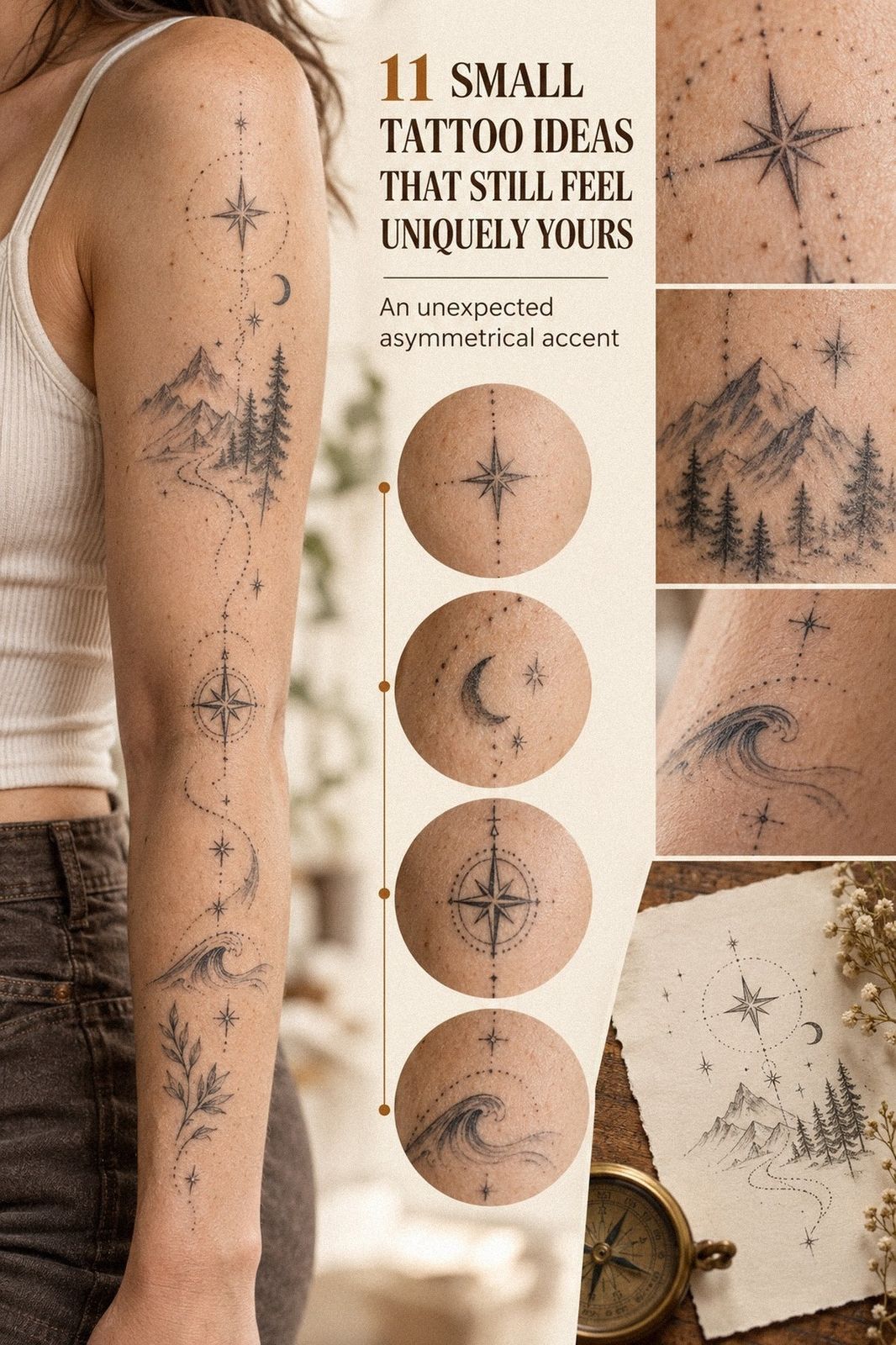
Small tattoo ideas unique can stay personal, crisp, and affordable in one appointment. I spent longer choosing the symbol than I did sitting for the tattoo, and that surprised me. The right placement mattered more than size. My final piece felt meaningful, delicate, and completely mine.
- Grandfather’s North Star
- Why Did I Keep the Moon Open?
- The Crooked Branch
- I Compared Botanical Small Tattoo Ideas
- Where Would a Shell Stay Hidden?
- My Fine-Line Style
- I Tested a Bold Minimalist Design
- Can the Wrist Handle It?
Here’s what it looked like before:
Before I chose anything, I had a clear patch of skin and no clear direction. I kept saving fierce symbols, intricate moons, botanical shapes, and tiny animals, then deleting half of them the next morning.
You may know that loop. Every idea looks right until you imagine seeing it on your body for years.
My forearm was bare except for a faint freckle near the center. I measured the usable area at about 2 inches, then checked it in daylight and under a bathroom bulb.
That small test helped me see which concepts would stay readable. I wasn’t searching for the biggest design.
I wanted a personal mark with enough breathing space to age cleanly.
I also wrote down what I didn’t want: a copied trend, crowded shading, or an ornate symbol with no connection to me. That list made the choice feel less overwhelming. I started with small first tattoo ideas, then narrowed everything to designs I could explain in one honest sentence.
- Grandfather’s North Star
- Why Did I Keep the Moon Open?
- The Crooked Branch
- I Compared Botanical Small Tattoo Ideas
- Where Would a Shell Stay Hidden?
- My Fine-Line Style
- I Tested a Bold Minimalist Design
- Can the Wrist Handle It?
- Before the Stencil: Skin Prep
- I Watched My Small Tattoo Heal Beautifully
- I Made My Small Tattoo Meaningful
1Grandfather’s North Star
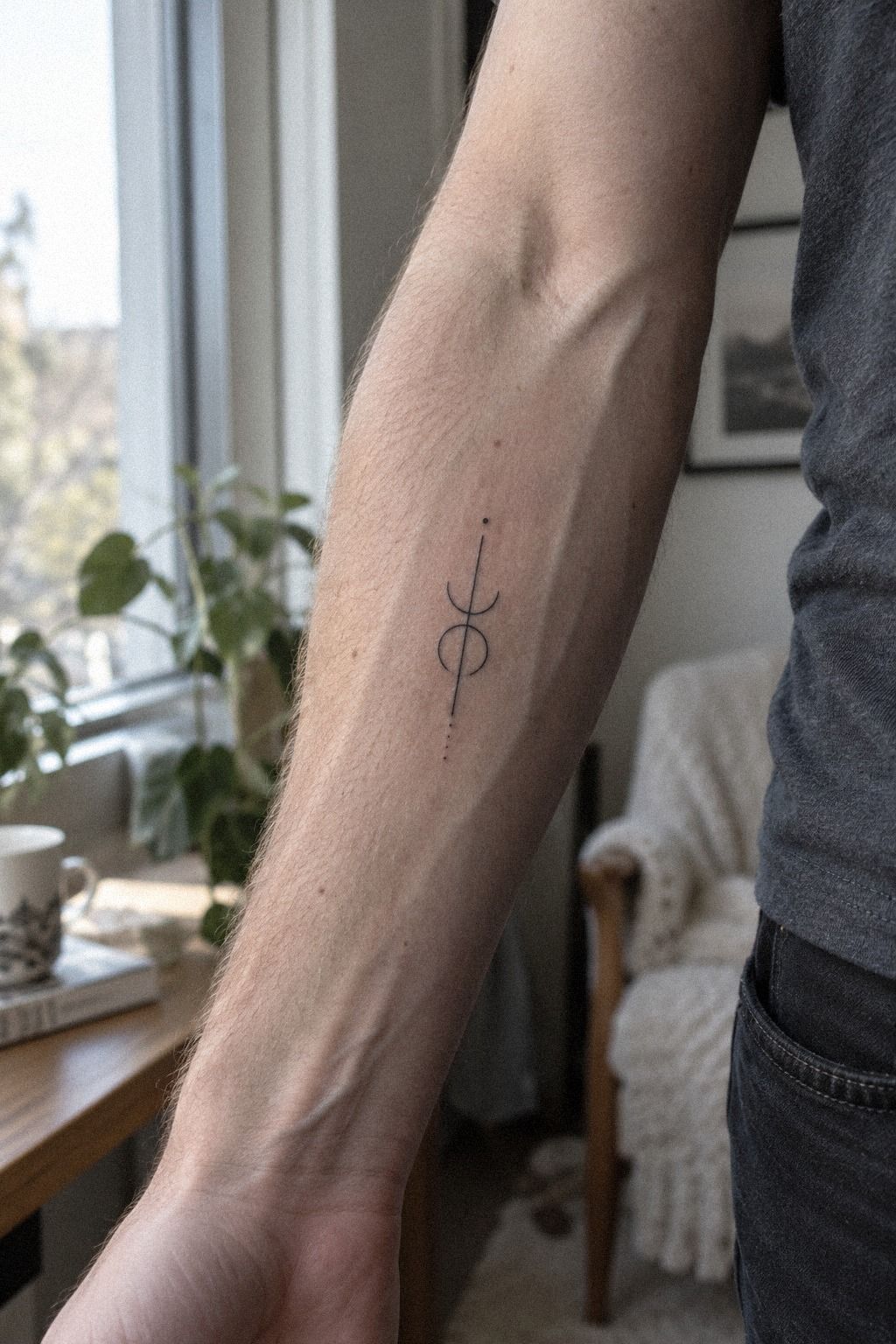
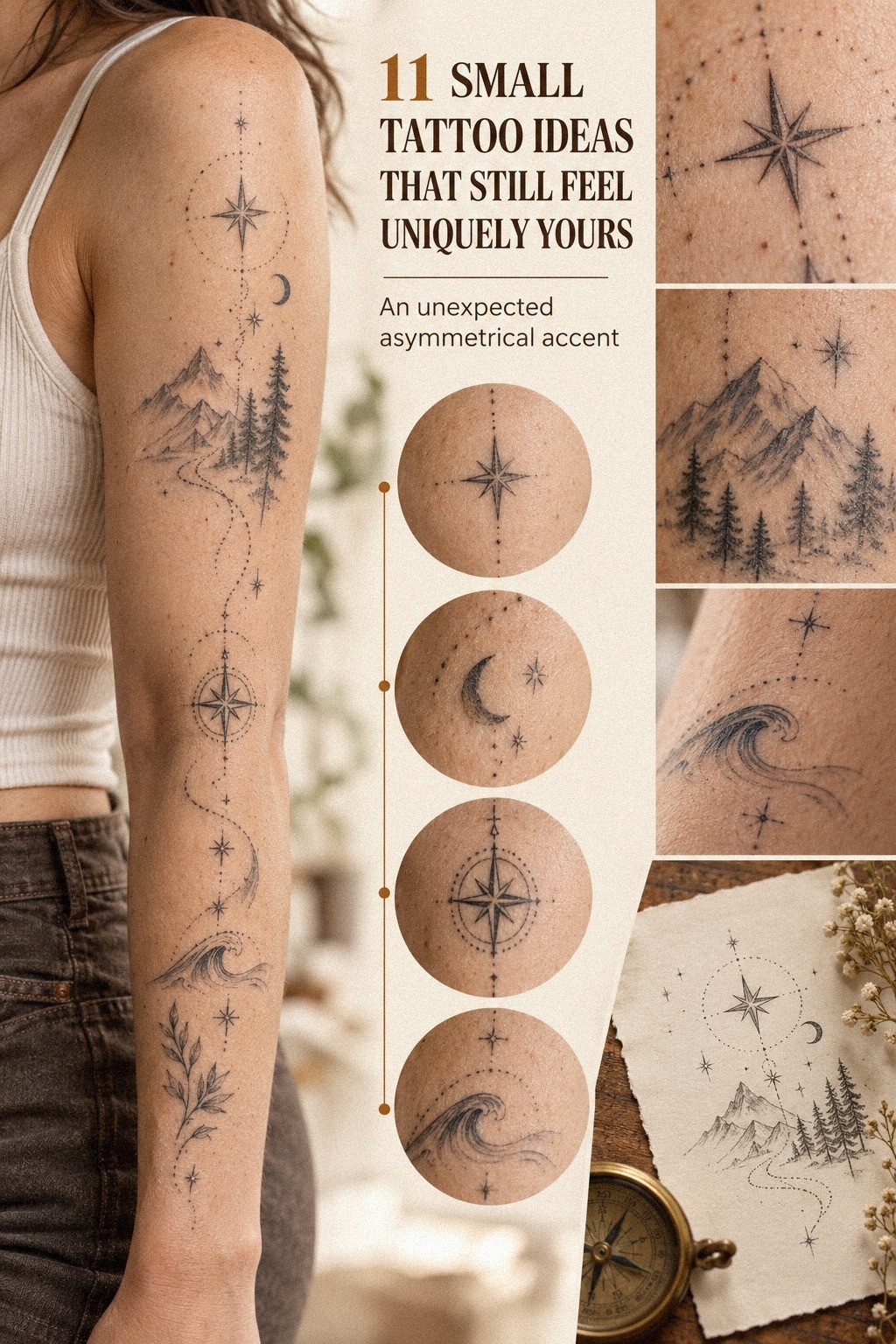
I started with a symbol tied to a specific memory, not a trend. Mine came from a small compass charm my grandfather carried, so I asked for a simplified north star rather than a literal compass.
The result was single-needle linework, with four fine points and one short curved detail. It looked understated from a distance and expressive up close.
You don’t need a dramatic story for your symbol to matter. You might choose a tiny key, an initial, a shell, or a shape connected to a place you can still picture clearly.
I rejected a generic crown because it felt polished but empty. The star won because I could explain its meaning without forcing a speech.
The artist drew three versions on paper before we settled on the cleanest one. I preferred the black ink outline with one small filled point, because a fully shaded version looked heavy at that size. If you’re collecting small tattoo ideas unique to you, let the personal detail lead and let decoration stay secondary.
My favorite part was the pause before the stencil touched my skin. I wasn’t nervous about the symbol anymore.
You can browse small first tattoo ideas for more personal starting points, but you should still ask yourself what you’d miss if the design disappeared tomorrow. That answer usually points somewhere useful!
2Why Did I Keep the Moon Open?
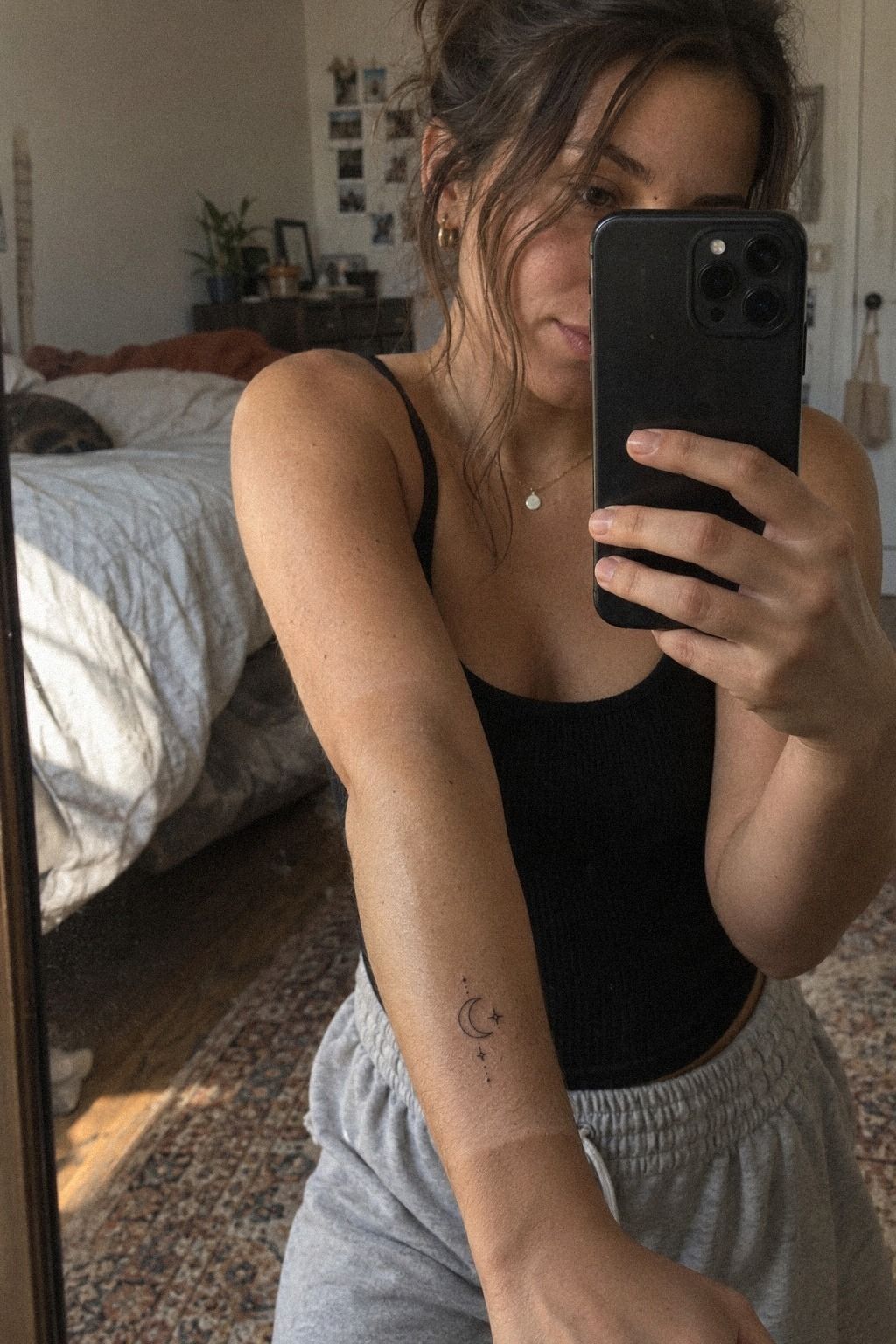
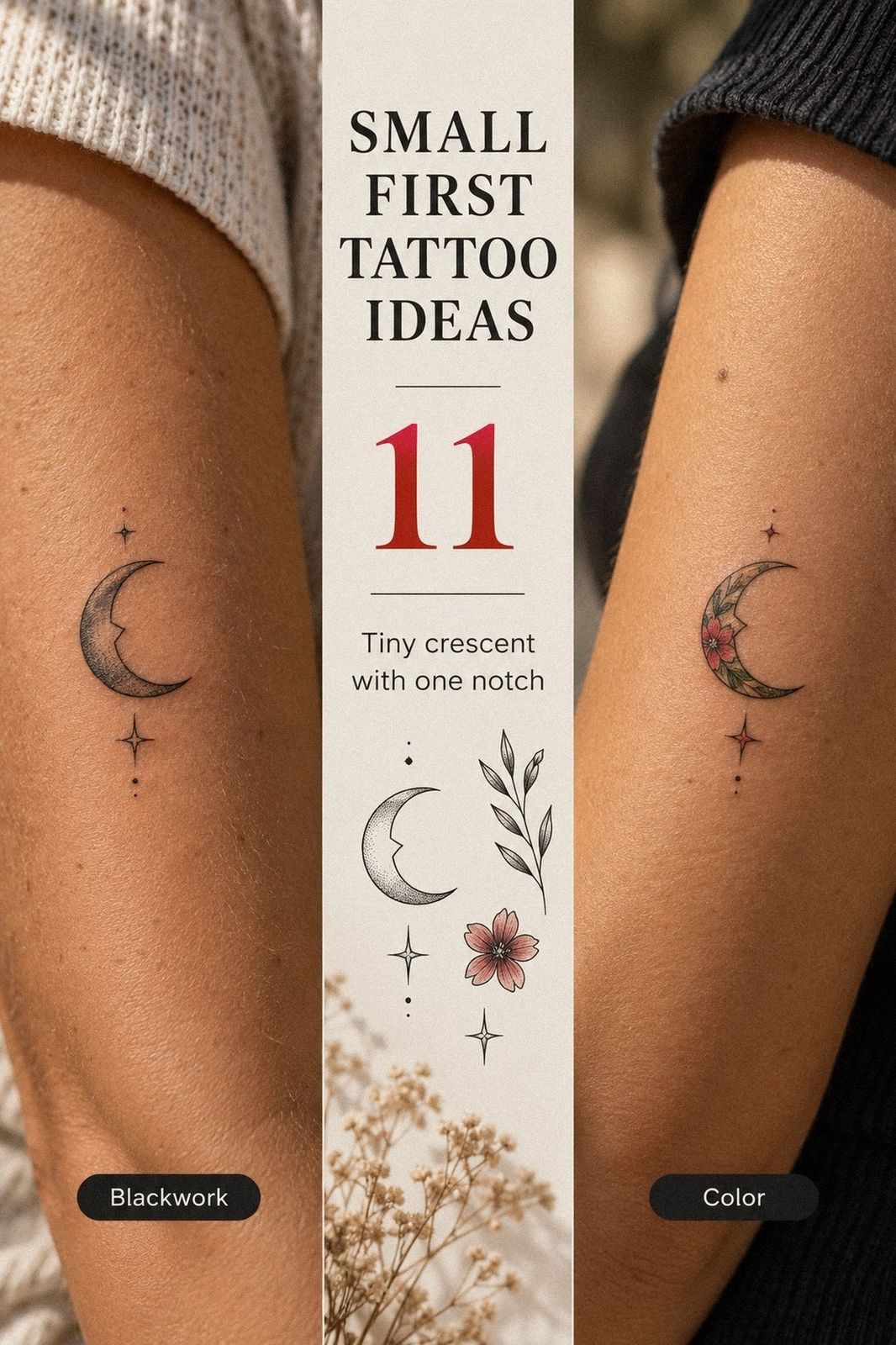
For the moon idea, I drew a crescent in the margin of my notebook and added three stars around it. The first version was too ornate. I removed the tiny dots inside the crescent and kept the open center, which made the crescent moon feel sharper and more delicate.
A tiny moon needs room around it. You may want to squeeze in clouds, flowers, initials, and a constellation, but your artist will often get a cleaner result by protecting the negative space.
I chose a narrow curve with uneven tips because a perfectly symmetrical moon looked manufactured. The slightly strange shape gave it a playful edge.
The placement sketch used a 1.5-inch height, which gave the stars enough separation to remain visible. My artist used graphite transfer paper for the stencil, then shifted it twice before I approved it.
You shouldn’t rush this part. A five-minute adjustment can save you years of staring at an angle you never liked.
If you want more celestial references, compare unique moon tattoo ideas with small moon tattoo designs. I’d skip a cluster of five or six micro-stars unless your artist has healed examples.
One or two crisp stars can look iconic. Too many may blur into dots over time.
It matters!
3The Crooked Branch
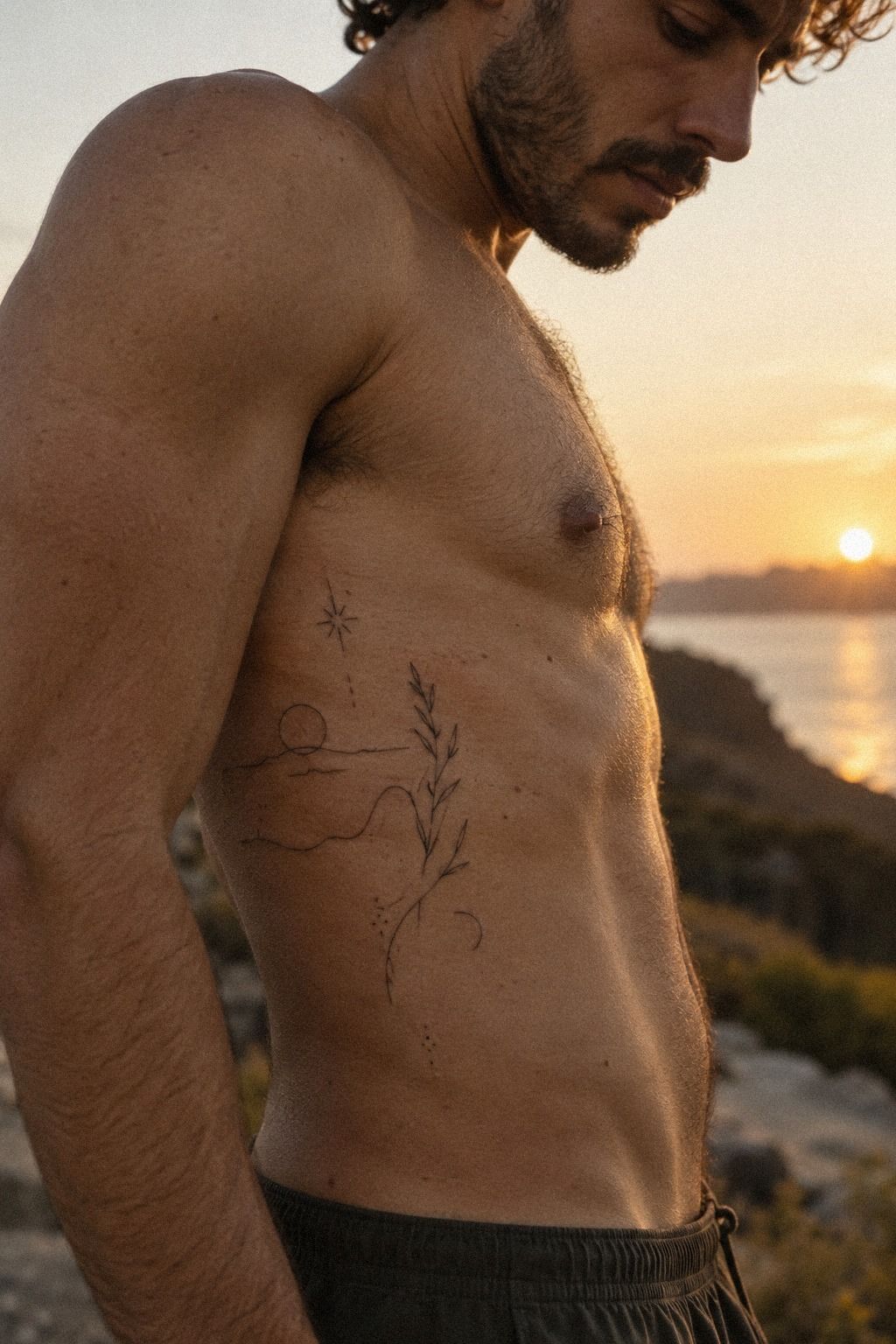
The strongest design came from a memory I could describe with sensory detail. I remembered a narrow trail, a bent branch, and the silver edge of a lake at dusk. The artist reduced that scene to hair-thin contour lines, with no panorama and no block of shading.
That reduction was harder than drawing the full image. You may think a meaningful tattoo needs every object included, but the opposite can be more powerful.
I removed the water, then the mountain, and kept one crooked branch. It became symbolic instead of illustrative, which made the final mark feel more intimate.
The ribs were tempting because the placement stayed hidden under a shirt, yet I knew that area could be less tolerable. My artist suggested the upper side of my torso and showed me a stencil at about 2 inches wide. I chose the ribs anyway, but I wouldn’t call it the easiest first placement.
The olive skin reference helped us judge contrast before the session.
I went back and forth for nearly a week. That hesitation wasn’t a problem.
It told me the design needed another edit. You can study small tattoo designs for structure, but your memory should still sound like your memory.
A generic mountain would have been stylish. The crooked branch was personal.
4I Compared Botanical Small Tattoo Ideas
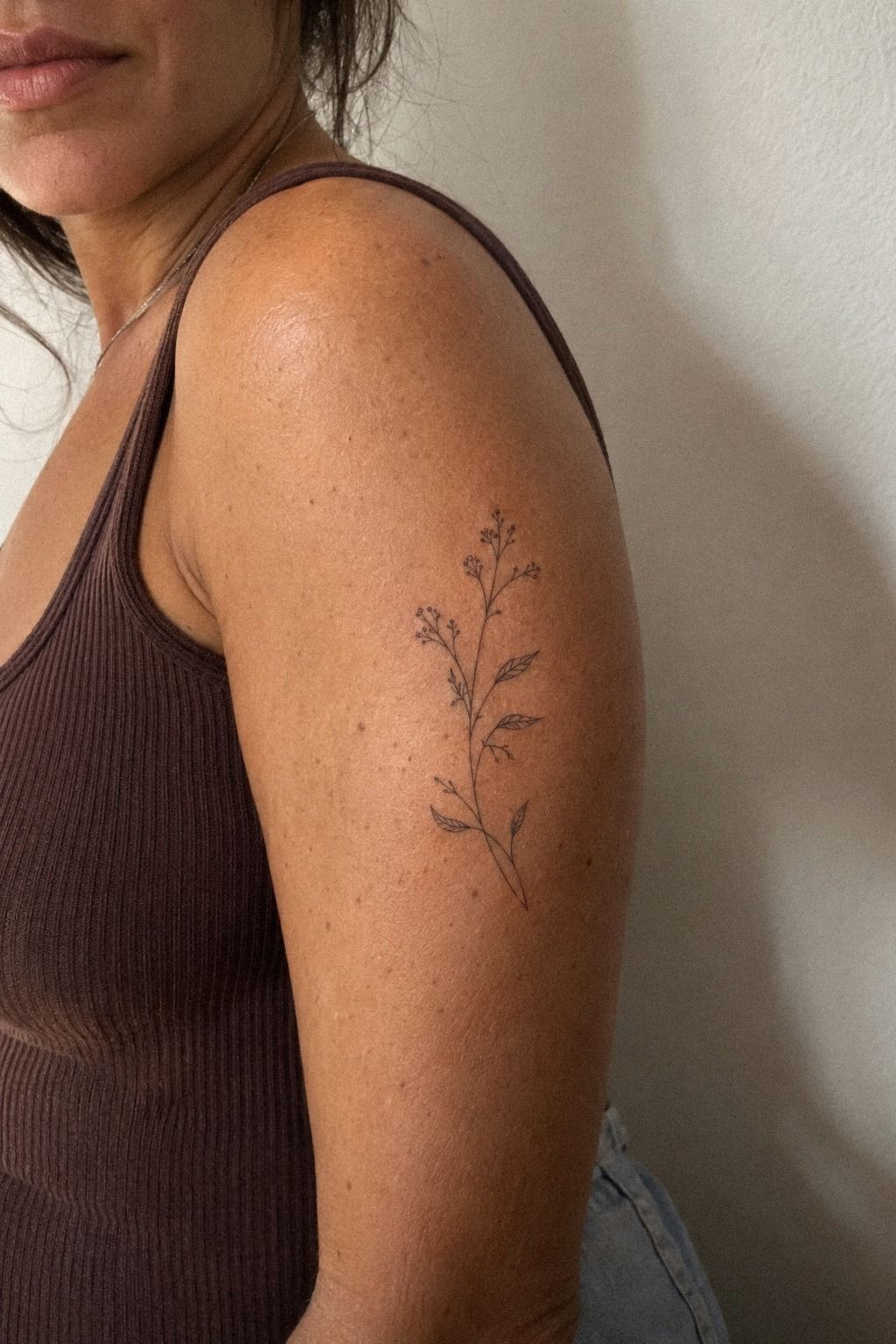
Botanical designs gave me the widest range of small tattoo ideas unique enough to feel collected rather than copied.
5Where Would a Shell Stay Hidden?
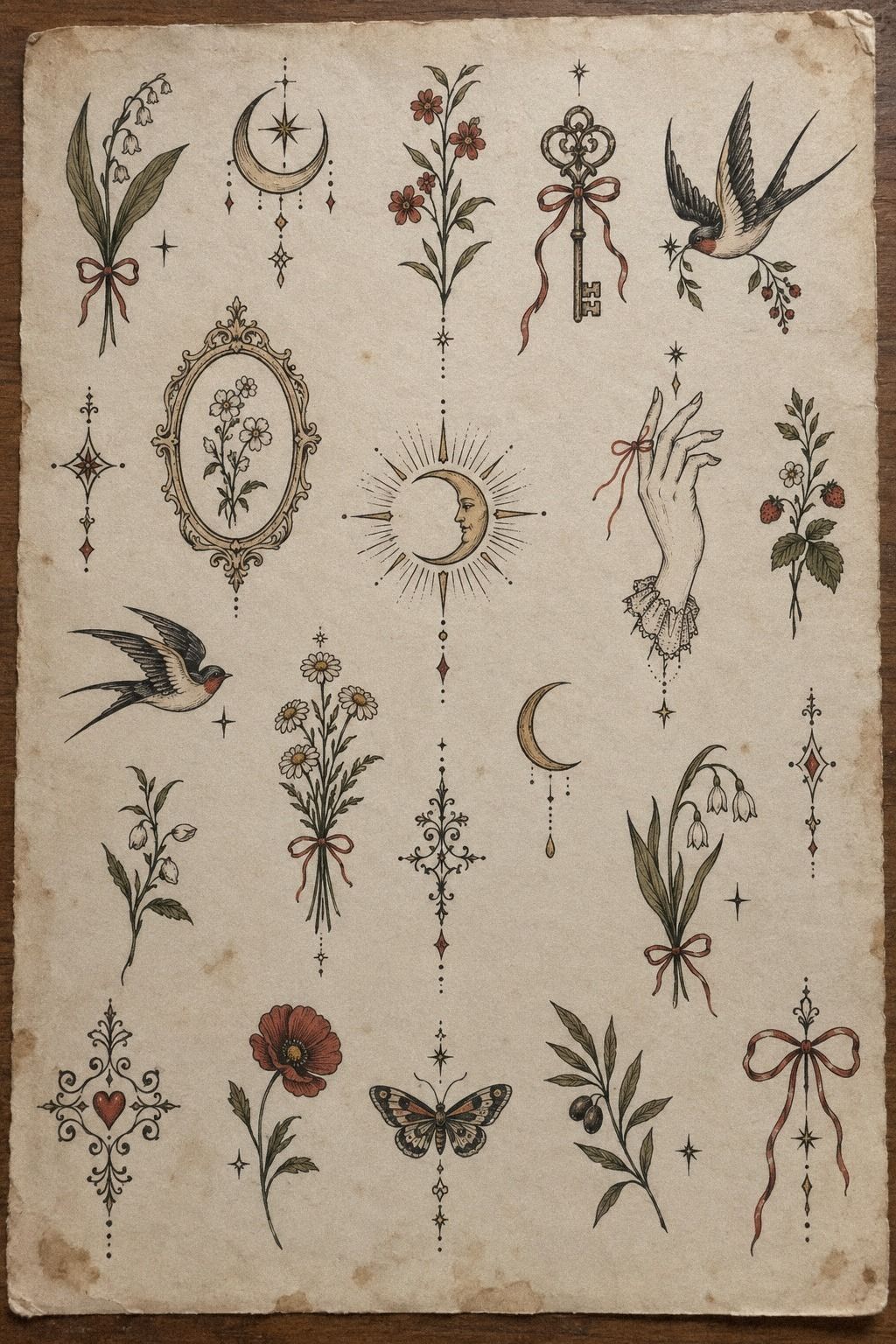
The hidden placement started with a flash sheet, not a final decision. I circled a tiny key, a curved shell, a flame, and a little eye, then left the page overnight.
The next day, the shell still caught my attention. That was enough of a signal for me.
The artist’s traditional flash sheet used aged paper and black sketches, but I asked for the shell in a cleaner fine-line style. You can borrow a subject from flash without copying every mark. I wanted the shape to feel delicate and slightly mysterious, with one curved ridge instead of dense interior detail.
I considered the back of my upper arm because it could stay private under short sleeves. My second choice was the ankle, but the artist warned me that sun, friction, and movement could make aftercare more annoying there.
I chose the upper arm. It felt hidden without making the tattoo impossible for me to see.
For more placement references, browse small hand tattoo ideas, then think honestly about visibility. A visible tattoo can be empowering, but a hidden one may feel more sacred when it marks something just for you. I rejected the wrist because the shell looked less graceful there and the skin moved more than I expected.
6My Fine-Line Style
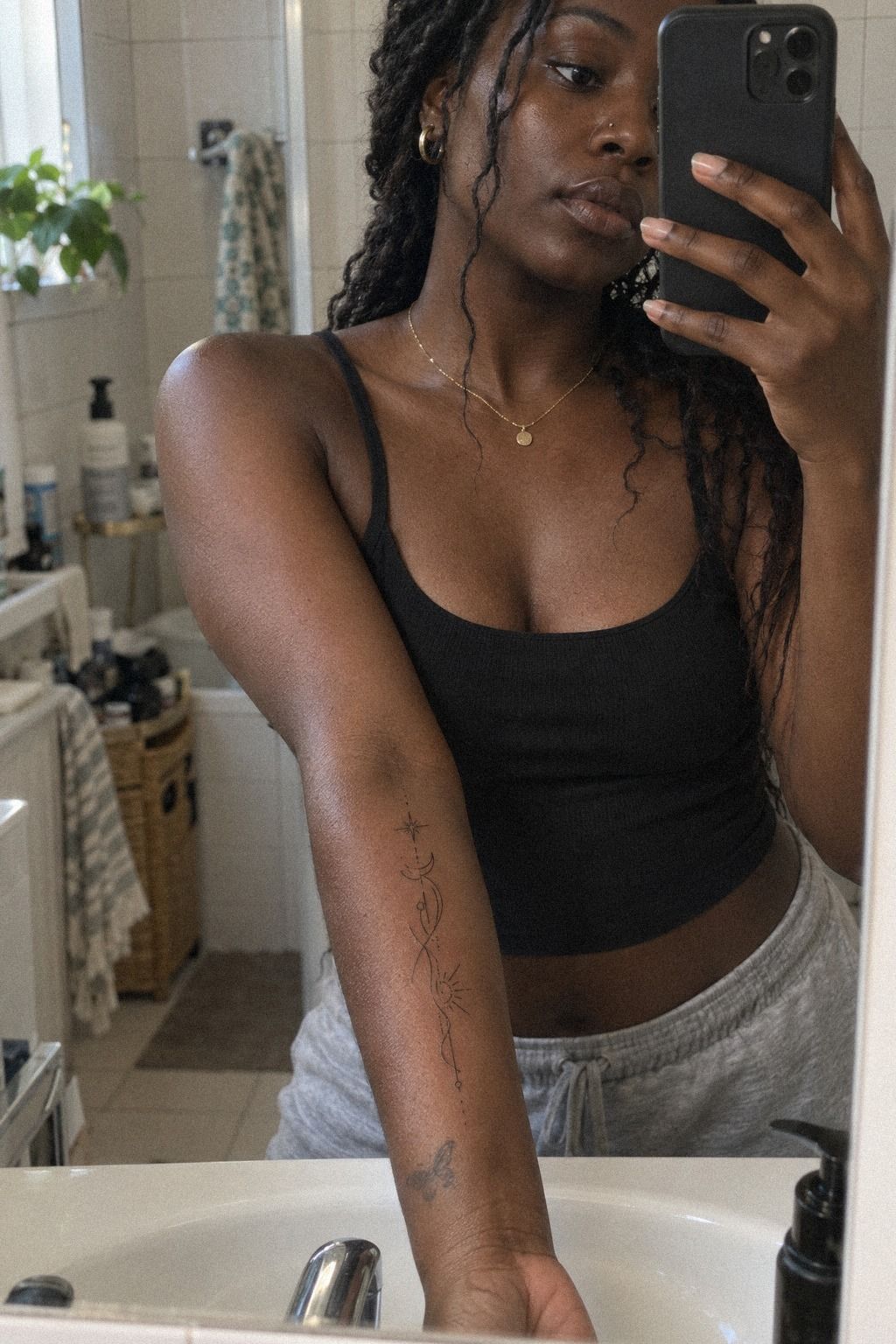
I wanted the tattoo to feel like me, and that meant admitting I don’t dress in one consistent style. Some days I like sharp black clothing and graphic shapes.
Other days I choose soft fabrics and a more feminine silhouette. The answer wasn’t to mix every influence.
It was to choose one confident line style.
The artist showed me clean fine-line ink beside a heavier blackwork version. The bold option looked powerful on paper, but it overwhelmed the small symbol on my forearm. I chose the fine version with one dark accent, because it felt polished without pretending I was someone who wanted a large statement piece.
You can match a design to your personality through shape, not just subject. Straight lines often read more masculine or architectural, while curved stems, moons, and ribbons can feel more graceful.
Neither choice is fixed. My decision came down to how the mark moved with my arm.
I also looked at healed portfolios instead of trusting fresh work alone. A crisp tattoo can look gorgeous, but you need to see how the line settles after time. The small tattoo designs guide can help you compare styles, though your artist’s healed work should carry more weight than a saved reference.
7I Tested a Bold Minimalist Design
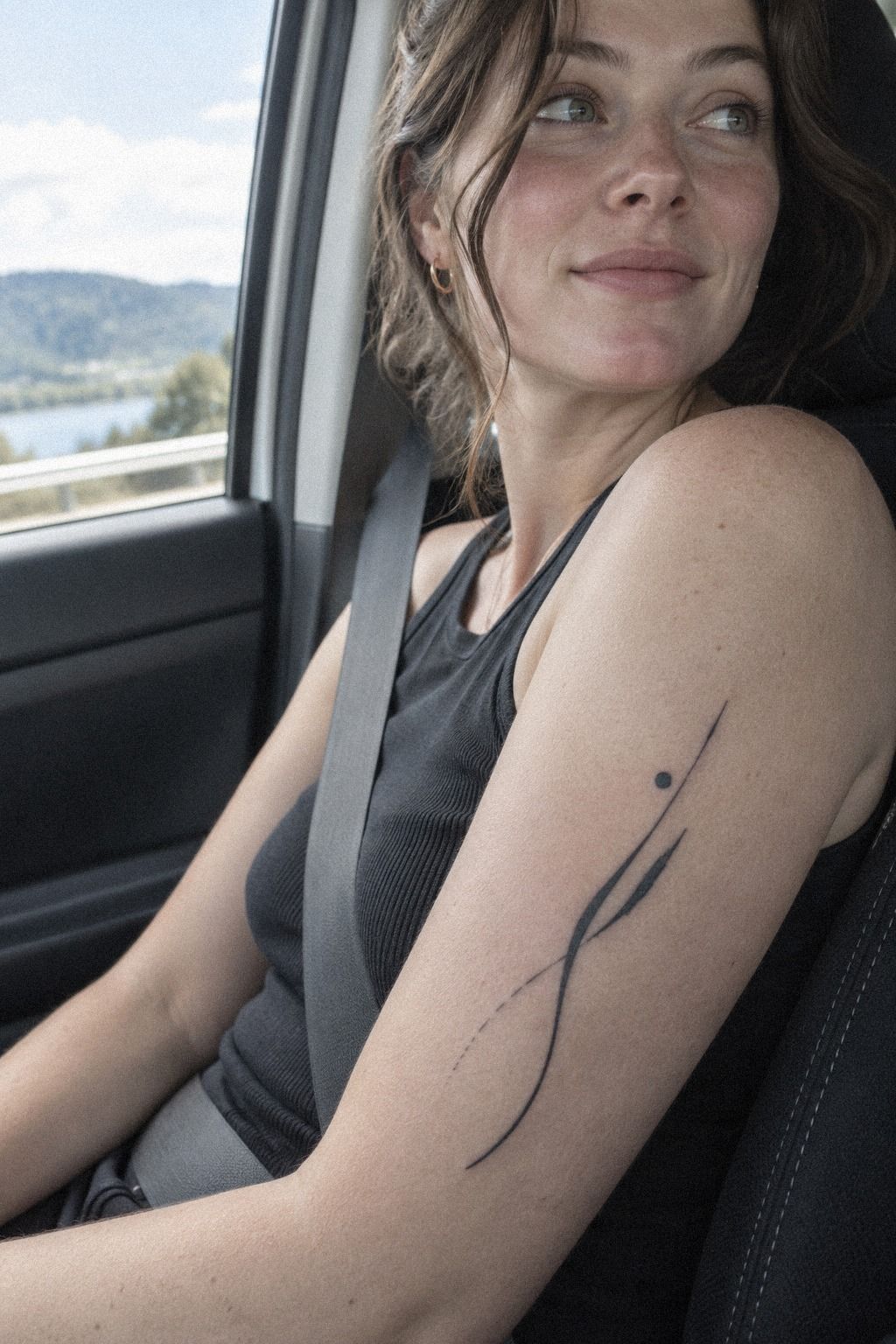
The bold minimalist option was a small pair of deliberate strokes, almost like a broken bracket. It looked simple until I tried placing it on the upper arm.
Then I noticed the spacing, angle, and thickness became the entire design. Minimal doesn’t mean careless.
Every mark has nowhere to hide.
My artist used solid black accents rather than gray wash. You may prefer a softer result, but gray can lose definition faster in a tiny tattoo, especially if the design has only three or four strokes. I asked for one thicker line and two narrower ones, then checked the stencil while moving my arm naturally.
The first stencil sat too close to the shoulder curve and looked accidental. We moved it lower by about half an inch, and the shape immediately looked more intentional.
What a difference! You should always view your stencil standing, sitting, and with your arm relaxed.
I liked the bold version, but I wouldn’t choose it over the symbol I finally received. It was edgy and stylish, yet it didn’t carry a memory. If you’re building a list of small tattoo ideas unique, ask whether the design still matters without its visual punch.
Mine didn’t.
8Can the Wrist Handle It?
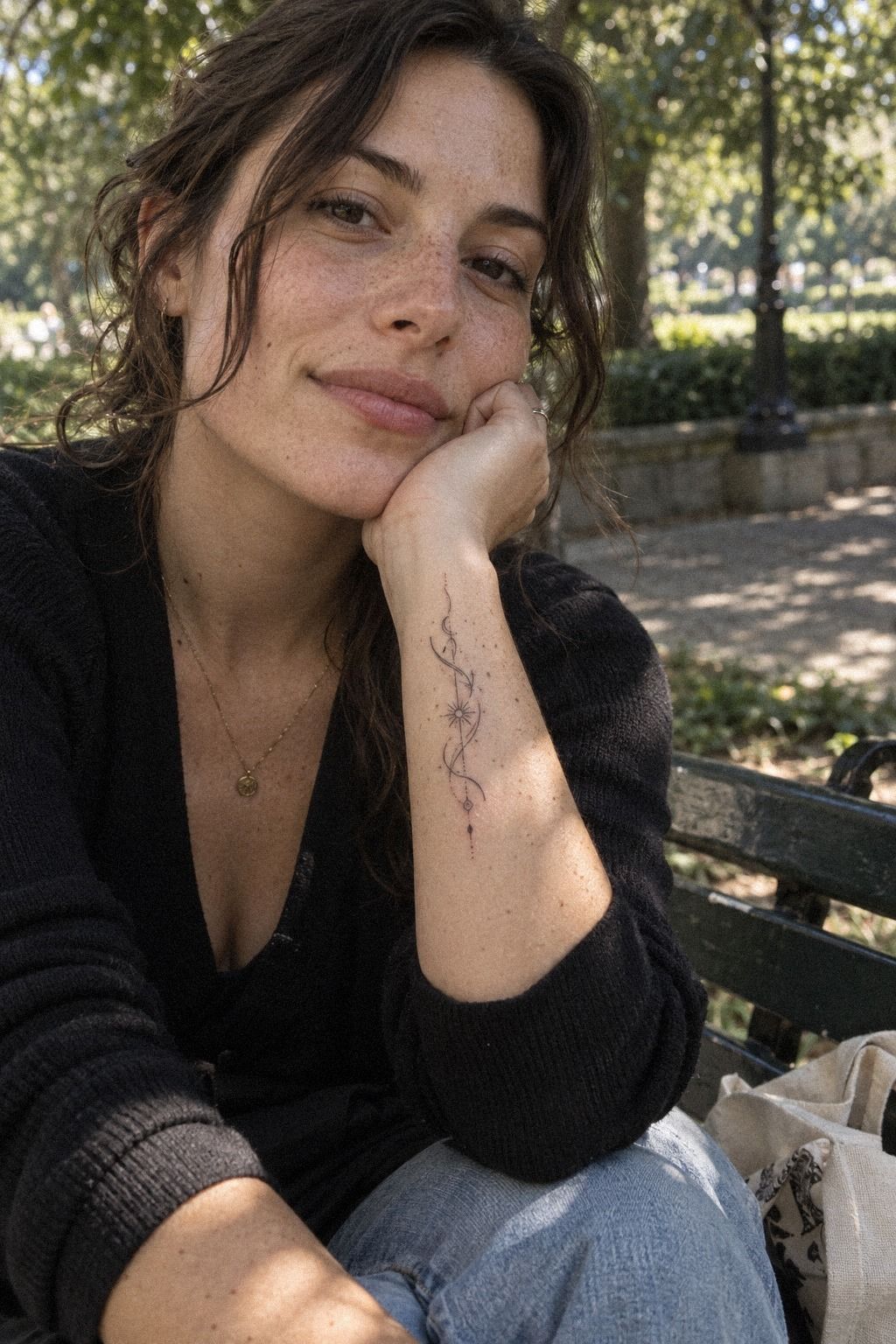
Pain was part of my decision, and pretending otherwise wouldn’t help you. The wrist can feel sharp because the skin is thinner and the area has less cushioning near bone and tendons. I chose a nearby forearm placement instead, where the tattoo still showed but felt more tolerable.
The artist used a fresh sterile needle cartridge and worked in short passes. You may feel heat, scratching, or a quick sting, but the sensation varies with your skin, the design, and the artist’s hand. Ribs, feet, hands, and sternum tend to feel more intense, while the forearm, thigh, and shoulder are often easier starting points.
I kept the appointment short by choosing an open symbol rather than packed shading. The session lasted under one hour, though your timing can change with setup, stencil adjustments, and the artist’s pace. I brought water and avoided arriving hungry.
Basic preparation made me feel more in control.
Would I choose the wrist someday? Maybe, but not for a design with hair-thin detail.
You can compare options through small tattoo placement ideas, then ask your artist how movement and sun exposure may affect that exact spot. A tolerable placement is a smart decision, not a timid one.
9Before the Stencil: Skin Prep
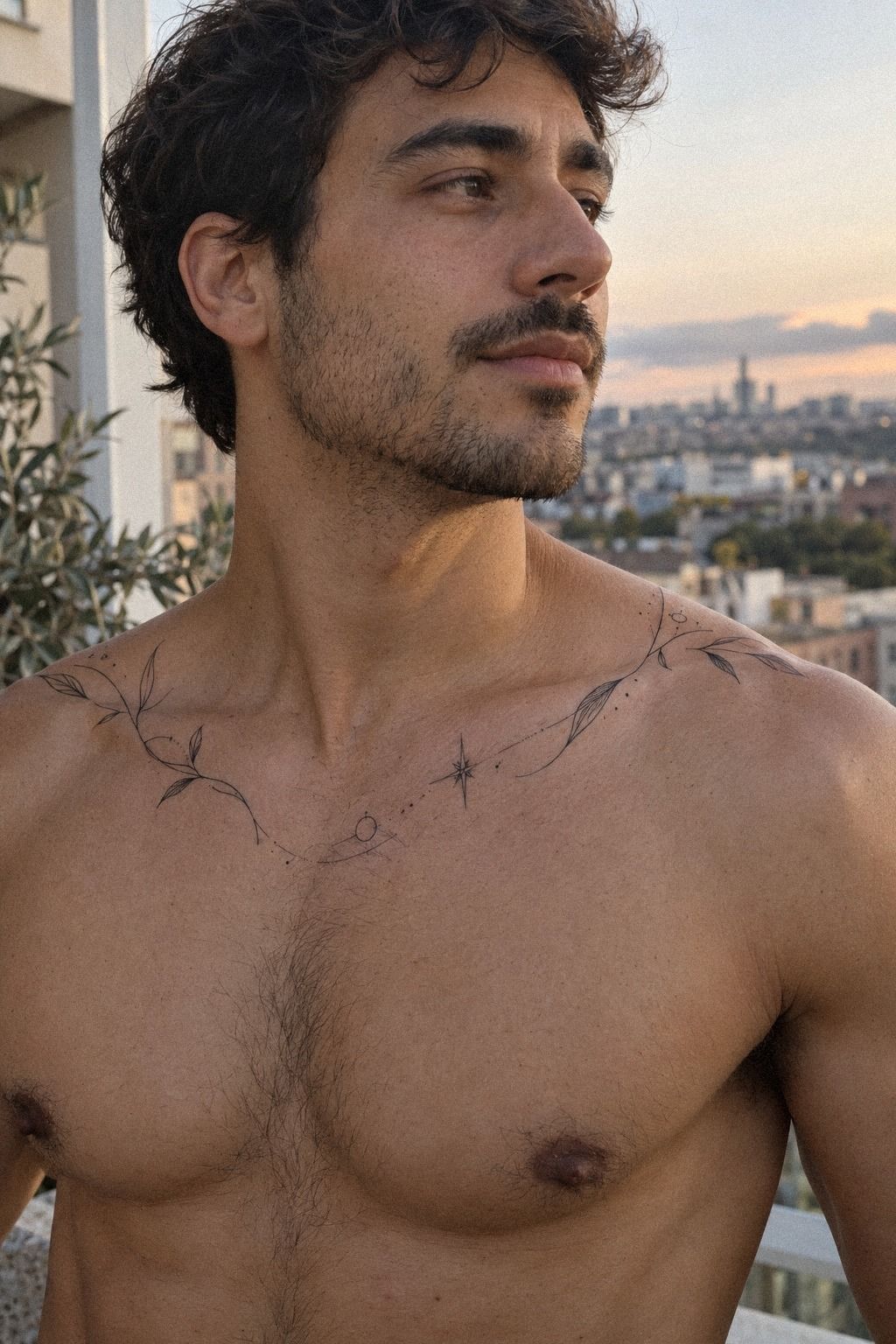
Preparation began the day before. I kept the collarbone area clean, skipped fragranced lotion, and wore a loose shirt that wouldn’t rub the fresh tattoo afterward. The skin looked ordinary before the stencil, but the placement made every fold and angle more noticeable.
My artist chose black ink with crisp saturation for the collarbone design. You should arrive with healthy, unbroken skin and tell your artist about irritation, recent sun exposure, or products you’ve used.
I didn’t exfoliate aggressively or try to make the skin look different. Calm skin was the better starting point.
The stencil needed to follow the collarbone without making the design look tilted. I stood naturally while the artist checked it from the front and side.
That took longer than I expected, and I’m glad we didn’t rush. A tattoo can look level on a table and shift when your body is upright.
Afterward, I washed gently and used a thin layer of the recommended moisturizer. I avoided soaking the area, swimming, and direct sun while it settled.
The surface usually heals in about 2 to 3 weeks, while complete healing can take roughly 2 to 3 months. Your aftercare instructions matter as much as the linework.
10I Watched My Small Tattoo Heal Beautifully
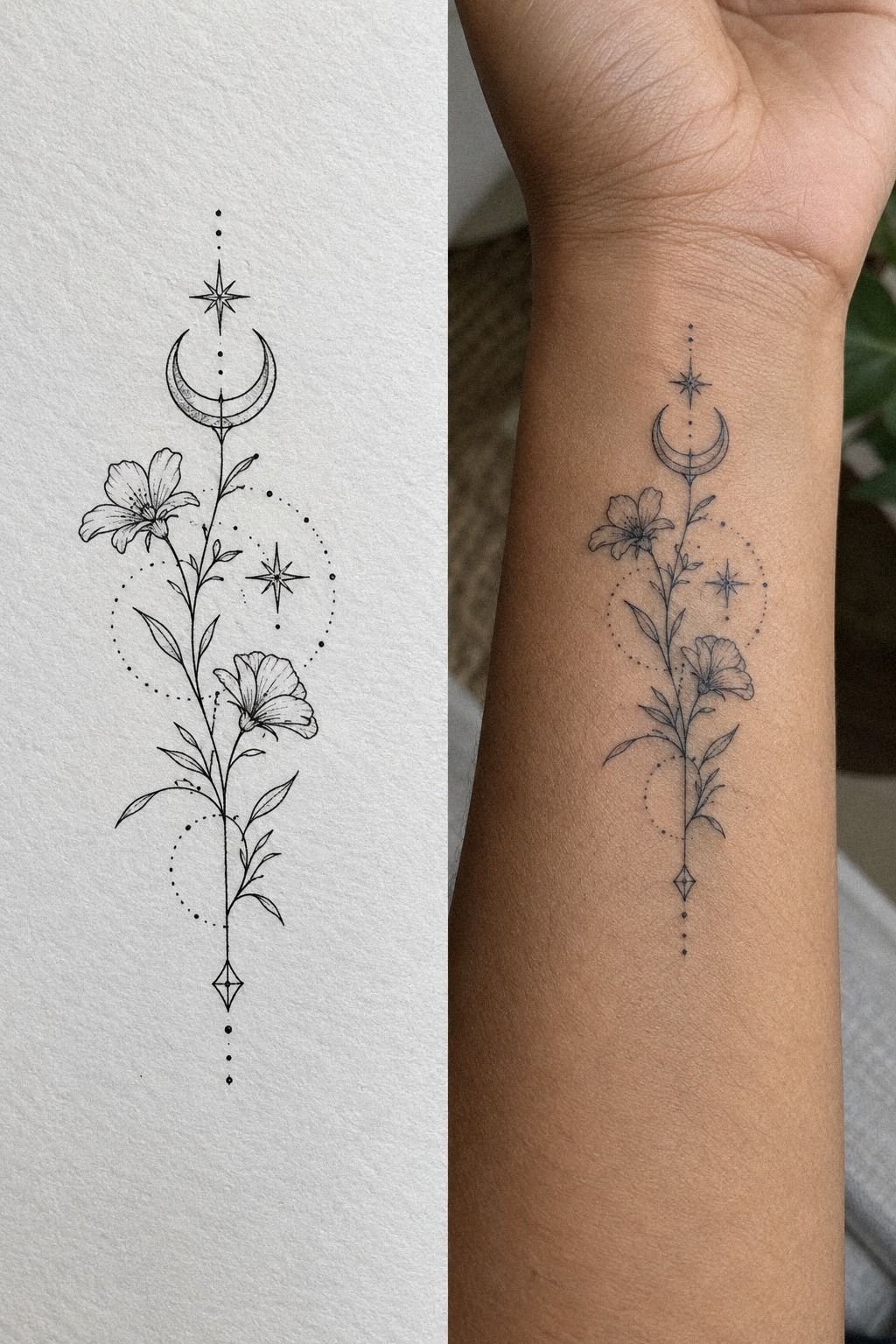
The healing process made me appreciate the difference between a fresh tattoo and a finished one. The stencil looked darker and sharper at first, while the healed wrist version looked softer but still readable. That change was expected, not a sign that anything had gone wrong.
I checked the healed fine-line result at one week, three weeks, and three months. You can learn more from those stages than from fresh studio work. Fine lines may spread slightly as they settle, and strong placement plus solid black can help a design age more clearly.
For the first days, I washed gently with lukewarm water and fragrance-free soap, then patted the area dry. I didn’t scratch flakes or cover the tattoo with heavy product. You should avoid pools, long baths, and direct sun while the surface closes.
My artist also stressed sun protection once the tattoo had healed. I use broad-spectrum SPF 30 on exposed ink because ultraviolet light can soften contrast over time.
A tiny tattoo doesn’t need constant panic, but it does need ordinary care. The result stayed crisp, delicate, and more natural than it looked on day one.
11I Made My Small Tattoo Meaningful
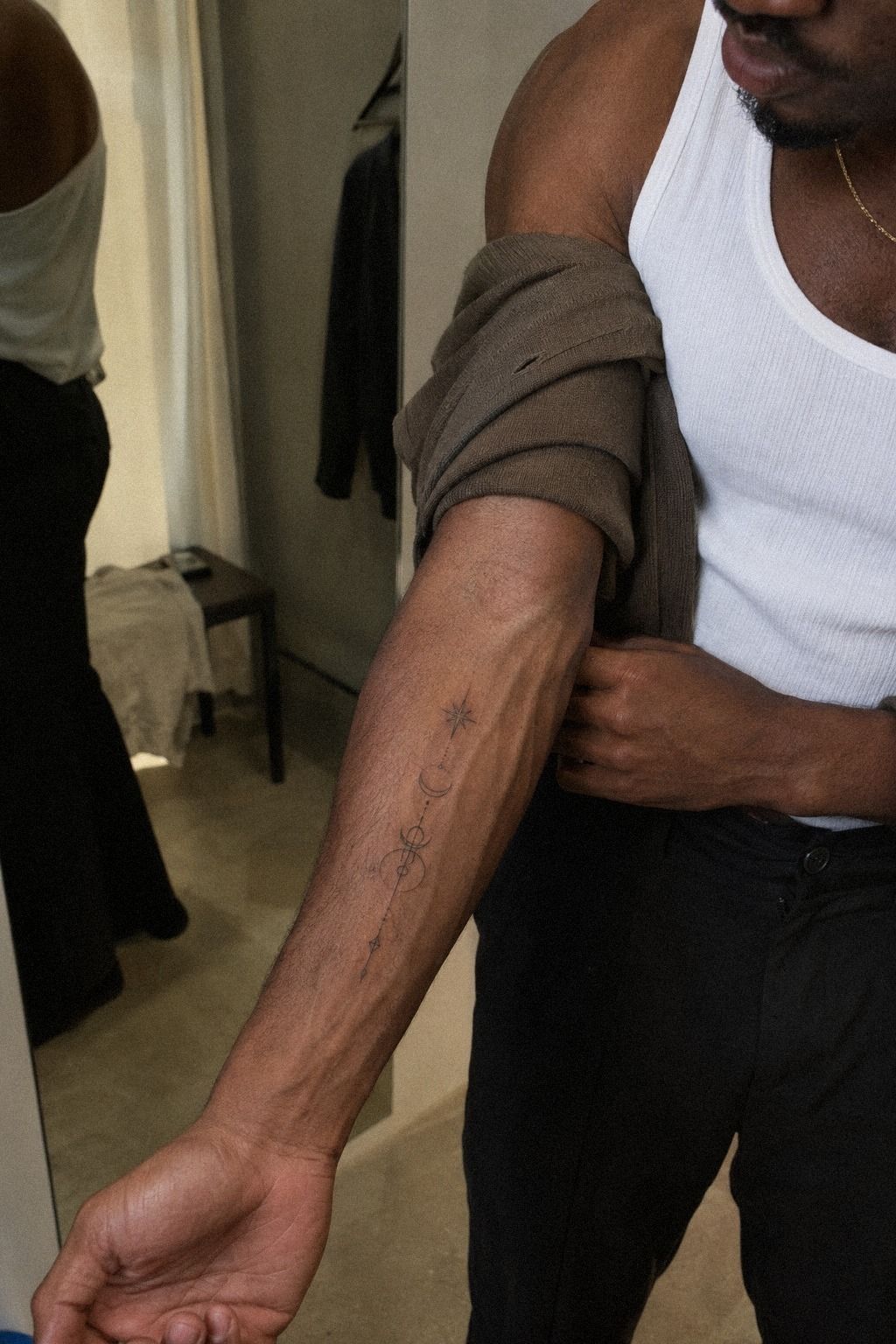
Meaning became clearer after I stopped trying to explain it to everyone.
The One-Session Filter
Before booking, I asked whether the design could remain readable at its intended size. That question removed several romantic ideas that were too crowded for one appointment.
A one-session concept usually needs a clear silhouette, limited shading, and enough separation between small elements. If your idea requires a paragraph to explain, it may need another edit.
I also asked whether I’d still want it after a week without saving new references. That pause helped me separate a vibrant first impression from a meaningful decision.
For another starting point, compare unique moon tattoo ideas with small tattoo designs. Your favorite may not be the most striking design on the page. It may be the one you keep returning to.
How much it cost
I planned for one short appointment instead of assuming a tiny tattoo would be priced only by its size. In the United States, a typical studio minimum often lands around $50 to $100, while hourly rates commonly fall near $100 to $250. Your artist, city, reputation, placement, and setup time can shift the final number.
My $150 planning budget gave me room for a common studio minimum and a brief appointment without chasing the cheapest option. I treated that as a planning total rather than a promise. You should ask for the studio’s minimum before sending a deposit, then confirm whether a consultation or touch-up is separate.
I wouldn’t choose an artist only because the quote is low. Healed portfolio work, safe practice, and a style that suits your idea matter more than saving a few dollars. For more cost guidance, see small tattoo prices, then ask direct questions before you book.
Small Tattoos, Larger Meaning
The most successful small designs usually have one visual idea instead of five competing ones. My north star had four points, one filled detail, and a memory behind it. That restraint made it feel polished without making it generic.
Your artist can help you decide whether a line should be removed, thickened, or moved. I liked having an outside opinion because my first drafts were too busy. A focused design brief made the final choice easier.
If you’re unsure, make three versions: one minimal, one detailed, and one somewhere between them. Then leave them alone overnight. The version that still feels personal the next day deserves your attention.
Why I Stopped Chasing Bigger Ink
I used to believe a tattoo needed a large area to feel legitimate. That idea faded after I saw how one fine line could carry more emotion than a crowded sleeve concept. Small work asks for editing.
Every curve, gap, and dark mark has a job, so you notice decisions instead of hiding them under detail.
The biggest lesson was that price and meaning aren’t linked. A one-session tattoo can be personal, expressive, and polished when the concept is clear.
I still admire intricate large pieces, and I may choose one someday, but I no longer treat size as proof of commitment. My small symbol changed how I think about permanence.
I also learned to respect the practical side. You need a licensed tattoo artist, clean equipment, healed portfolio photos, and honest advice about placement. You need to understand that delicate lines can soften, especially with sun exposure or high-friction areas.
Those facts don’t make the idea less romantic. They make the decision more informed.
Would I make every tattoo tiny? No.
A bold sleeve, an ornate back piece, or a vibrant traditional design can be remarkable when the artist and subject deserve that scale. But for my first piece, small was the right constraint.
It gave me time to choose a meaningful symbol, keep the session manageable, and leave with a mark that still feels personal months later.
The Questions Worth Answering First
How much does a small tattoo unique usually cost?
A small tattoo usually costs about $100 to $300 in the United States, although a studio minimum may be closer to $50 to $100 and hourly rates may reach $250. Your artist and region matter most. Ask about the minimum before booking.
Are small tattoo unique a good idea for a first tattoo?
Yes, small tattoos can be a strong first choice because the appointment is often shorter and the placement can feel manageable. Choose clean linework and a subject that means something to you, rather than copying a symbol you may outgrow.
How do I choose a tattoo artist for small tattoo unique?
Review healed portfolio photos, not only fresh work. Look for consistent line quality, a style that matches your idea, clear hygiene practices, and direct answers about aftercare. You can compare small first tattoo ideas before contacting artists.
How much do small tattoo unique hurt?
Pain depends on your skin and placement. Ribs, feet, hands, and sternum often feel more intense, while the forearm, thigh, and shoulder are commonly more tolerable. Placement changes the experience, so ask your artist about your exact area.
How long does a small tattoo unique take to heal?
The surface usually settles in about 2 to 3 weeks, while complete healing can take roughly 2 to 3 months. Wash gently, moisturize as directed, and avoid swimming and strong sun during early healing. Simple aftercare protects clarity.
What’s the best placement for small tattoo unique?
The forearm, upper arm, shoulder, and thigh are often practical choices because they can be easier to tolerate and protect from friction. Your best placement depends on visibility, movement, and aging. Browse small tattoo designs before deciding.
Where I’d Start First
If I had to pick one, I’d start with the meaningful symbol. It gives a small tattoo a reason to stay interesting after the novelty fades, and you can usually keep the design within one short session. Save the idea for later, then see if you still want it next week.
Start there!