Tattoo designs and meanings for guys generally center on strength, loyalty, transformation, or personal codes. The symbolism shifts with the specific image, an anchor isn’t a wolf, a clock isn’t a compass, but certain threads run through masculine tattoo tradition: protection, endurance, and marking a life phase.
Similar & Related Symbols
Many masculine designs share DNA with older protective imagery. Understanding these connections helps you choose something that resonates rather than following a trend.
Shared Ground With Traditional Motifs
- Animals: Wolves, bears, lions, and eagles all carry dominance and guardianship associations, but differ in social coding, wolves for brotherhood, lions for solo authority.
- Nautical: Anchors, ships, and compasses connect to stability and direction, though anchors lean toward “staying grounded” while compasses suggest active searching.
- Skulls and timepieces: Both memento mori traditions, but skulls read more confrontational, clocks more contemplative.
- Religious and spiritual: Crosses, praying hands, Buddhist imagery, and Eastern deities often serve as commitment markers or family tributes.
Design Families That Blend
Serpents and dragons share transformation symbolism across cultures. Daggers and swords both signal readiness, though daggers carry more intimate, personal-defense connotations while swords read broader and more public. Choosing between close cousins depends on what you want to project at conversational distance versus close inspection.
Best Placements
Where a design sits changes how people read it and how it ages. Masculine placements tend toward visibility control, show when you want, hide when needed.
High-Visibility Areas
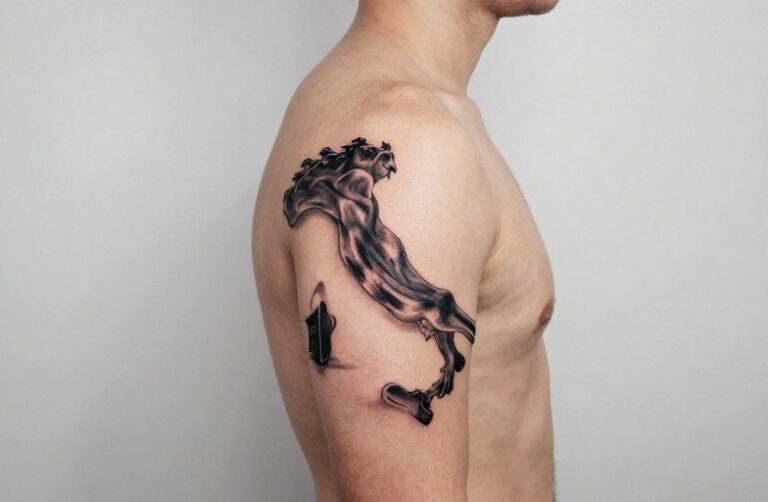
- Upper arm/shoulder: Classic canvas for bold imagery. Round designs (mandala, clock face, compass) sit well here. Muscle movement adds life to animal portraits.
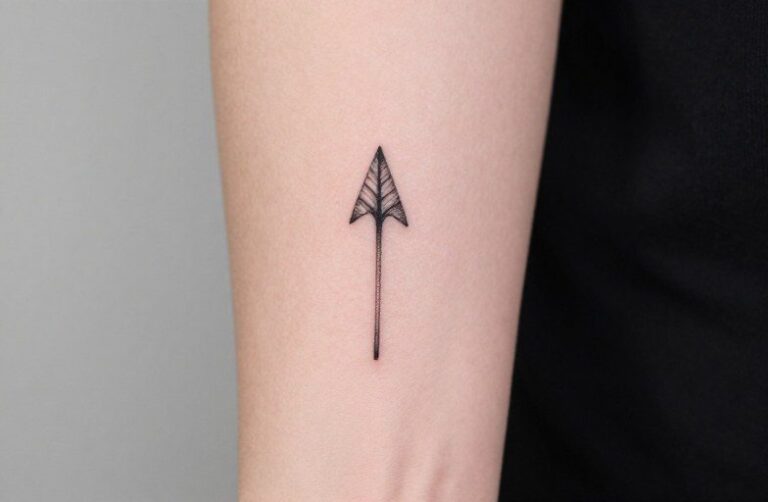
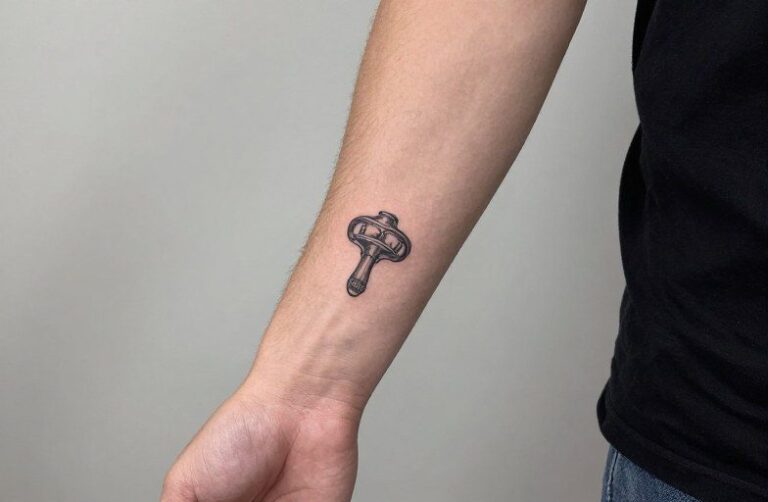
- Forearm: Immediate visibility for professional settings. Long vertical designs (dagger, ship, script) work naturally. Expect this to be your most-seen piece.
- Chest: Centerpieces with personal weight. Symmetrical designs dominate; asymmetrical work fights the body’s natural centerline. Sternum pain is significant but brief.
Controlled or Concealed Areas
- Upper back: Large, flat skin for complex compositions. Wings, koi swimming upward, or full back pieces. Aging stays relatively even.
- Ribs/side: Painful, private. Script and vertical designs follow the body’s lines. Often chosen for meanings you reference intentionally, not display casually.
- Thigh: Growing acceptance for men. Accommodates large scale; easily hidden. Round designs and Japanese-inspired work sit well on the curved surface.
Hand, neck, and face placements remain commitment markers in most shop cultures. The work needs to be excellent, there’s no hiding a mediocre hand tattoo.
Who Chooses This Tattoo
Men selecting symbolic tattoos span ages and backgrounds, but patterns emerge. Military and first responders often gravitate toward unit insignia, memorial dates, or protective imagery. Athletes frequently choose animals representing their position mentality, lions for solo competitors, wolves for team players. Men marking sobriety, survival, or major loss often select dates, semicolons, or phoenix imagery. Younger guys in their first shop visit commonly default to whatever their social circle validates; the ones who return for second and third pieces usually develop more personal criteria.
There’s no single “guy tattoo” personality. The difference between a meaningful choice and a regretted one often comes down to whether the wearer sat with the design for several months before booking.
History & Cultural Roots
Masculine tattooing carries deep roots in specific working traditions, not a generic “ancient practice.”
Western Military and Maritime
Sailor tattoos from the 1700s-1800s established the vocabulary still used: anchors for Atlantic crossings, swallows for nautical miles logged, pigs and roosters for drowning protection (often linked to wooden crates washing ashore). Military service tattoos expanded this into unit pride and memorial work. The bold lines and limited palettes of American traditional style emerged partly from shipboard conditions, artists needed reliable, fast-healing work with available pigments.
Japanese Irezumi and Yakuza Tradition
Full-body Japanese work, often associated with organized crime membership, carries specific rules: koi swimming upstream for perseverance, cherry blossoms for life’s transience, dragons for wisdom and power. These designs were historically full-body or large-scale, not isolated small pieces. Western adoption has separated the imagery from its social context, though some Japanese artists still refuse certain work for non-Japanese clients.
Polynesian and Maori Ta Moko
Patterns encoded genealogy, status, and achievements. The designs were traditionally carved, not punctured. Modern appropriation remains contentious; many Polynesian artists now offer consultation to ensure non-Polynesian wearers understand boundaries.
Mythology & Folklore
Symbolic weight often comes from stories that predate tattooing itself.
Norse and Celtic Strands
Valknut, Vegvísir, runic bands, and Celtic knotwork have surged with popular media. The Vegvísir (often called “Viking compass”) is actually Icelandic magical stave material from much later than the Viking age. Runic tattoos frequently contain spelling errors or anachronistic combinations, worth researching with primary sources rather than Pinterest. Wolves in Norse context reference Fenrir (destruction) or Odin’s companions Geri and Freki (loyalty to a specific patron), significantly different meanings.
Eastern Traditions
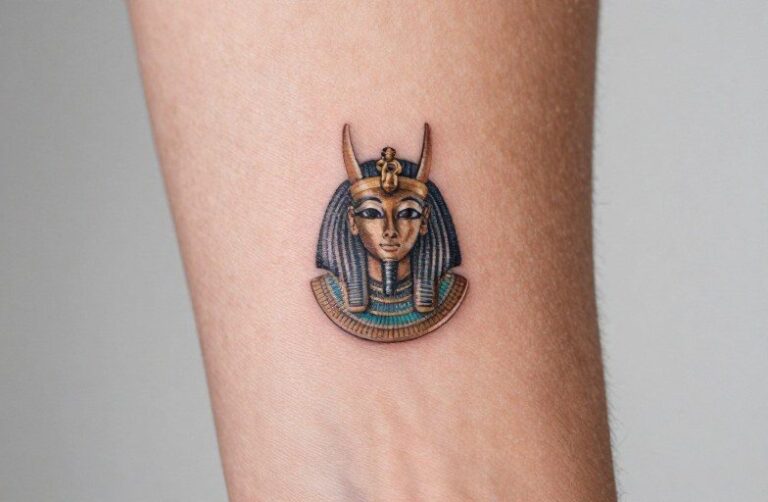
Foo dogs (Chinese guardian lions) protect thresholds, traditionally placed as pairs with specific gender positioning. Koi and dragon gate mythology, koi transforming into dragon after swimming upstream, supports perseverance narratives. Phoenix and dragon pairings represent marital harmony in Chinese tradition, not individual strength; solo dragon or phoenix carries different weight.
Modern Mythmaking
Semicolon tattoos for mental health awareness, coordinates for meaningful locations, and DNA or heartbeat lines represent recent symbolic invention. Their power comes from community recognition rather than ancient lineage, valid, but different.
Common Variations & Styles
Style choice affects how symbolism reads and how the piece ages.
Line-Dominant Approaches
- American traditional: Bold black outlines, limited color saturation, iconic readability. Ages excellently; still legible at twenty years. Best for straightforward symbolism.
- Blackwork and tribal: Heavy saturation, geometric or patterned. Polynesian-inspired, Nordic knotwork, or abstract patterns. Requires confident commitment to large dark areas.
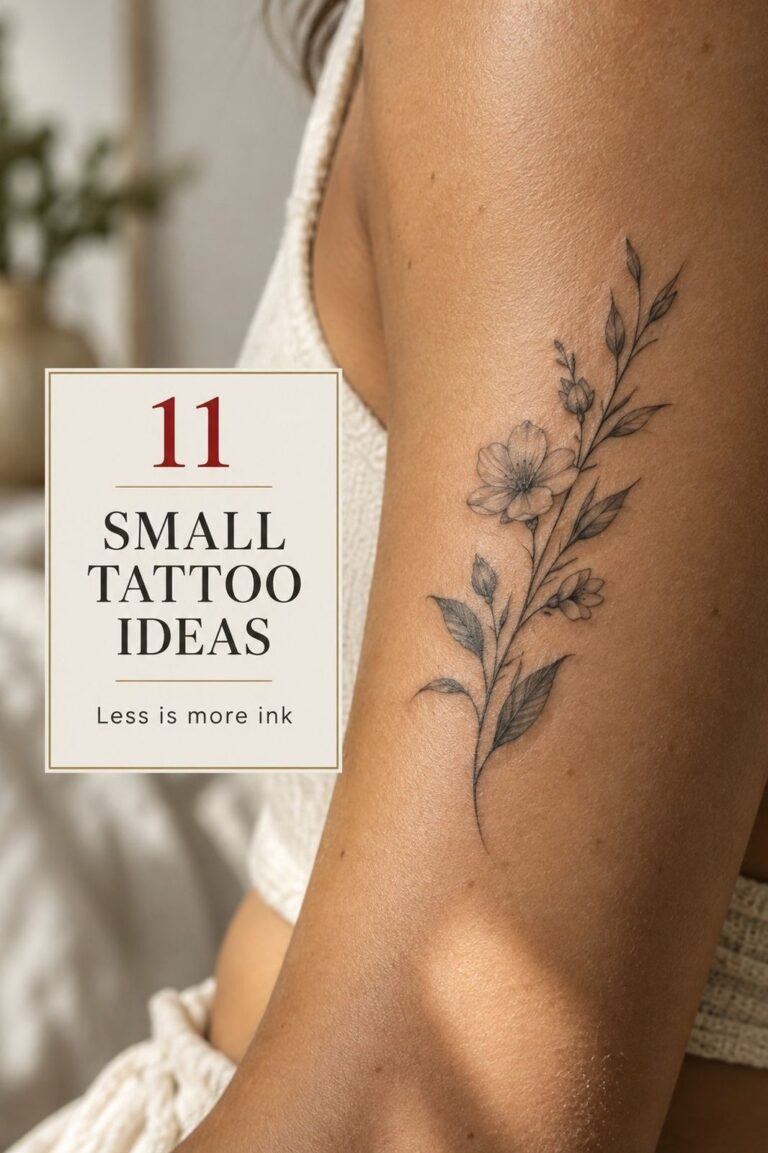
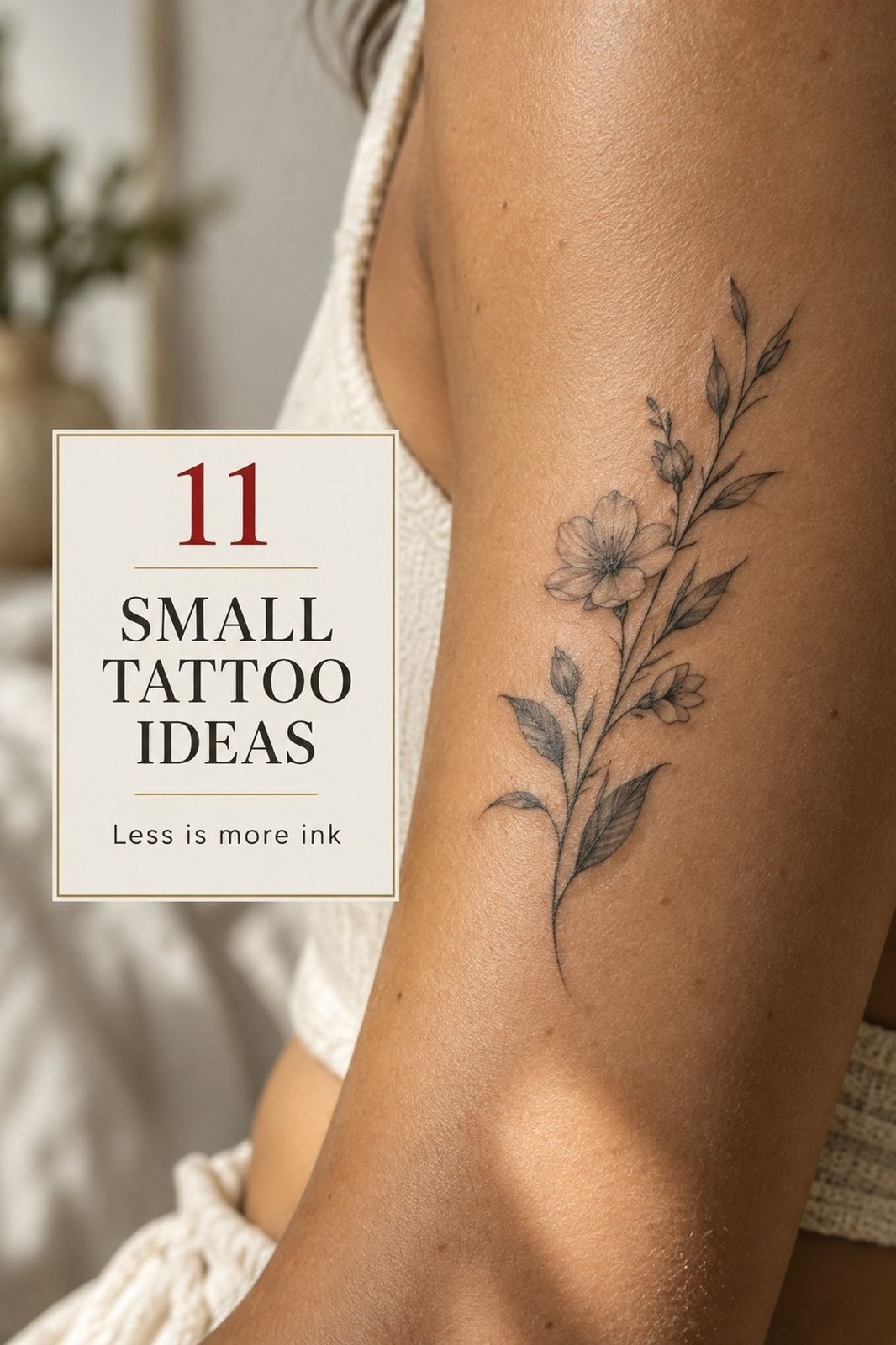
- Fine line: Increasingly popular, especially for botanical, geometric, and single-needle portraits. Higher risk of spreading and fading; touch-ups more likely.
Shading and Color Approaches
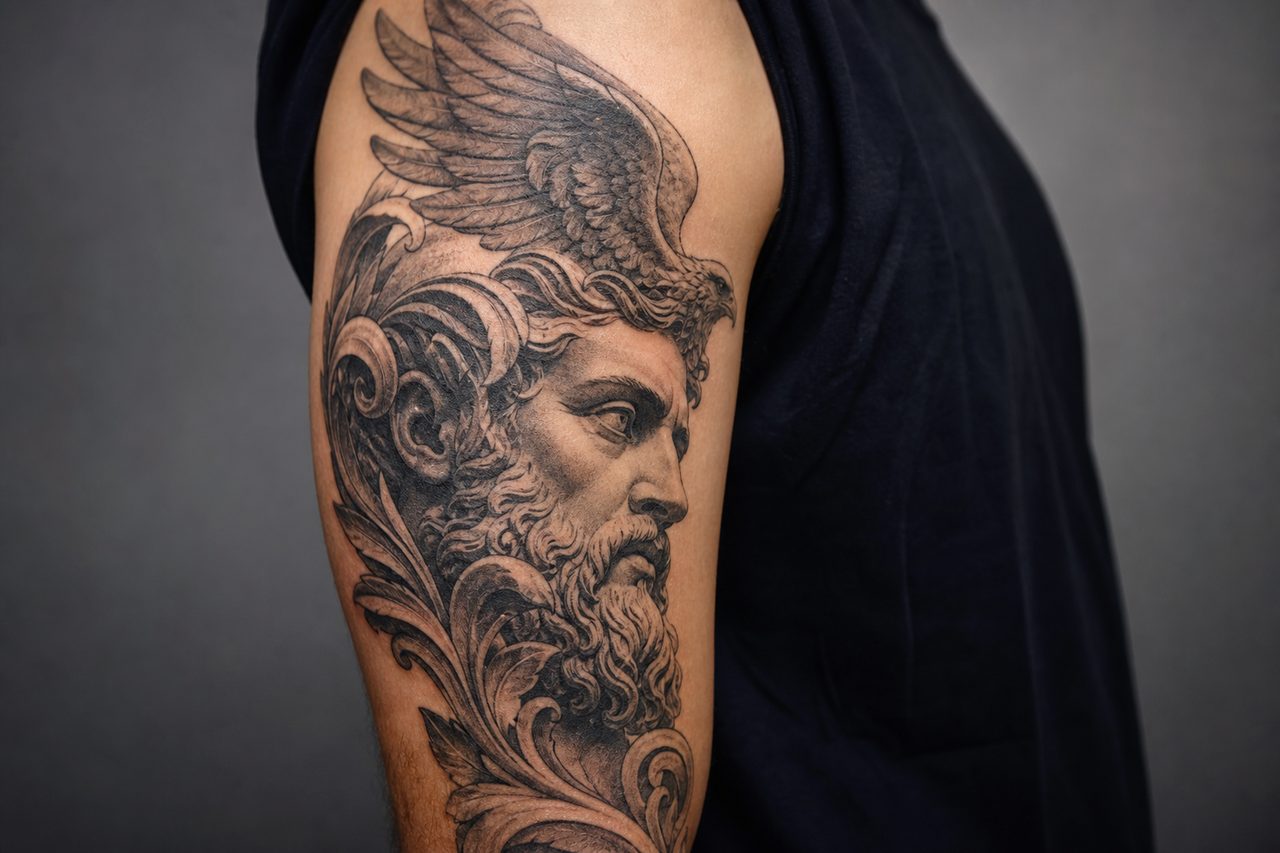
- Realism: Photographic portraiture, often of family, animals, or religious figures. Demands excellent artist selection; mediocre realism ages poorly into muddy ambiguity.
- Japanese: Background elements (wind, water, clouds) unify large compositions. Color palettes are traditional and specific. Requires artists trained in the style’s rules.
- Neo-traditional: Expanded color range and subject matter from traditional roots. Good middle ground for guys wanting boldness with more personalization.
Single-needle black and grey realism offers subtlety but sacrifices longevity. Areas with thin lines and soft grey wash often blur within five to ten years. Heavier saturation lasts; plan accordingly if you want the piece readable at fifty.
The Takeaway
Tattoo designs for men carry whatever weight you invest in choosing them, but the investment shows. Research the actual history of symbols that interest you, not the Instagram caption version. Match style to your maintenance tolerance and aging expectations. Place the work where it serves your actual life, not an imagined one. The best masculine tattoos combine personal significance with technical appropriateness: the right image, in the right style, on the right canvas, done by the right hands. Everything else is just decoration.
Frequently Asked Questions
Do certain tattoo designs hurt more on specific body parts?
Yes. Ribs, sternum, inner arm, and anywhere over bone or thin skin register significantly more pain. Fleshier areas like outer arm and thigh are more manageable. Pain doesn’t vary by design, but large complex pieces on sensitive areas require longer sessions, compounding the experience.
Will bold traditional tattoos age better than fine line work?
Generally, yes. Heavy black lines and saturated color hold definition longer. Fine lines and subtle grey wash tend to blur and fade within five to ten years, often needing touch-ups to maintain readability.
Is it disrespectful to get Japanese or Polynesian designs if I’m not from those cultures?
It depends on the specific imagery and your approach. Some symbols carry restricted religious or status meanings. Research thoroughly, consider consulting artists from those traditions, and avoid sacred or family-specific motifs. Many artists appreciate genuine interest over casual appropriation.
How do I know if a symbolic tattoo idea will still matter to me in ten years?
Wait six months to a year after conceiving the idea before booking. If the symbol still resonates without active social media reinforcement, it likely has personal rather than trend-based roots. Avoid designs tied to current relationships, employers, or temporary life phases.