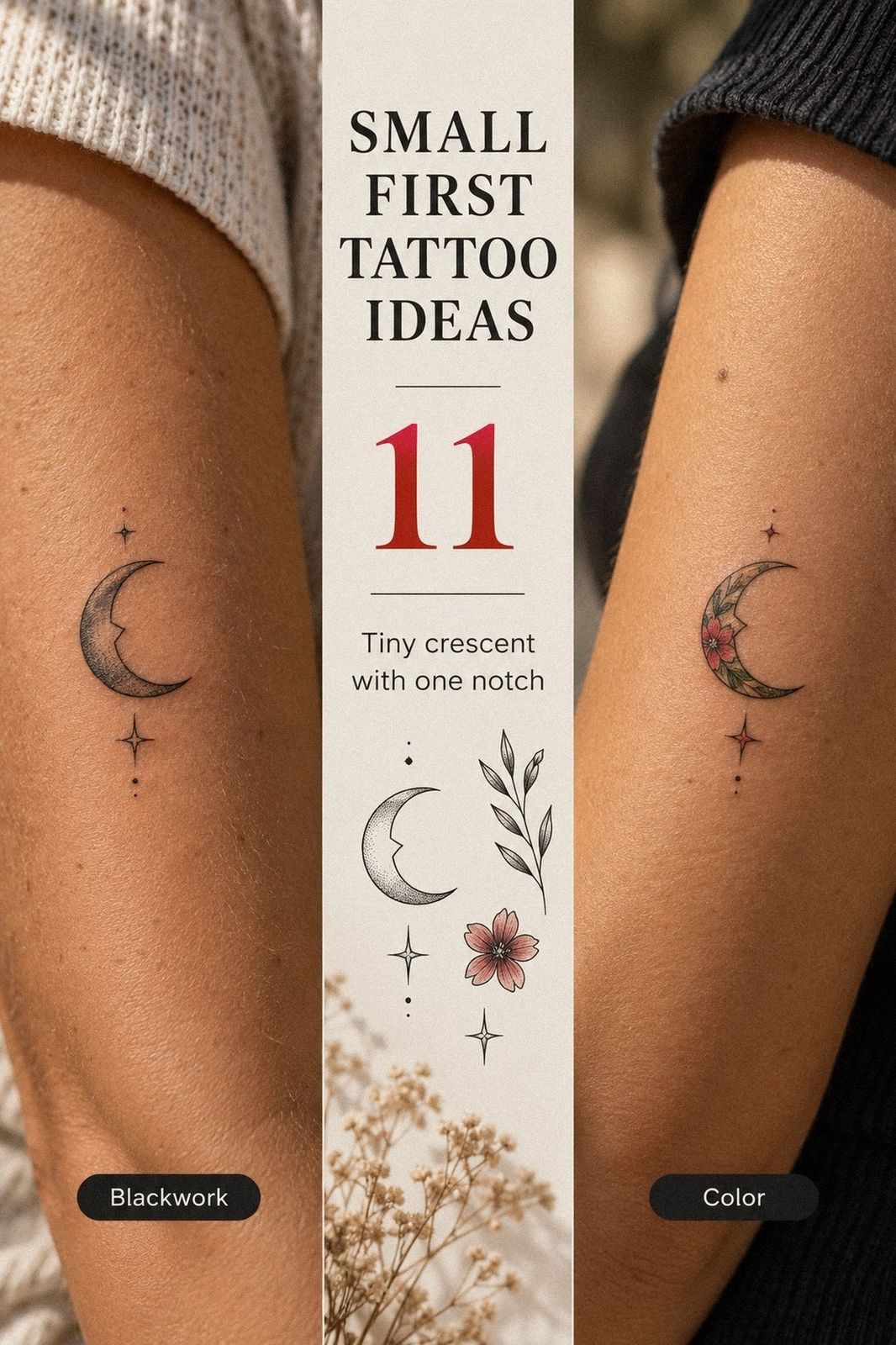
Small first tattoo ideas work best when the symbol is personal, the linework is readable, and the placement suits your daily life. I learned that after nearly choosing a design I liked but couldn’t explain. This guide helps you turn private meaning into clear artwork, with realistic healing, cost, and placement advice.
- Start With A Tiny Meaningful Symbol
- Could Crisp Linework Be Your Best First Choice?
- Choose Unique Small First Tattoo Ideas
My one rule: start with one memory, then let the design stay small without making the idea feel small.
Before You Start
Bring one private memory, not ten unrelated references. You might choose a date, a star pattern, a plant, a small animal, or a mark connected to someone you love. Your artist can turn that feeling into black tattoo ink with shape and spacing that still reads clearly on skin.
Save three to five references, then write what you like about each one. Is it the scale, the negative space, the curve, or the mood?
You don’t need to copy any image. You need to show your artist the visual language you want, whether that’s delicate, crisp, symbolic, or bold.
Cost varies by artist, region, and studio minimum. In the United States, a shop minimum may sit around $50 to $100, while an hourly rate may fall around $100 to $250. You’ll want to ask about the studio minimum before booking, especially if your first tattoo is very small.
Your skin, schedule, and tolerance matter too. If you’re nervous, choose a placement you can care for easily and ask how long the session may take.
A good consultation should feel specific and personal. If it feels rushed, keep looking.
Don’t rush it!
- Start With A Tiny Meaningful Symbol
- Could Crisp Linework Be Your Best First Choice?
- Choose Unique Small First Tattoo Ideas
- Where Should Delicate Ink Go?
- Keep Your First Tattoo Minimal And Personal
- The Dainty Botanical Mark
- Match Symbolic Ink To Your Story
- How Should You Compare Small First Tattoo Ideas?
- Bold Shapes Versus Hairline Detail
- Position A Playful Tattoo On Your Wrist
- Protect Intricate Ink Through Proper Healing
1Start With A Tiny Meaningful Symbol
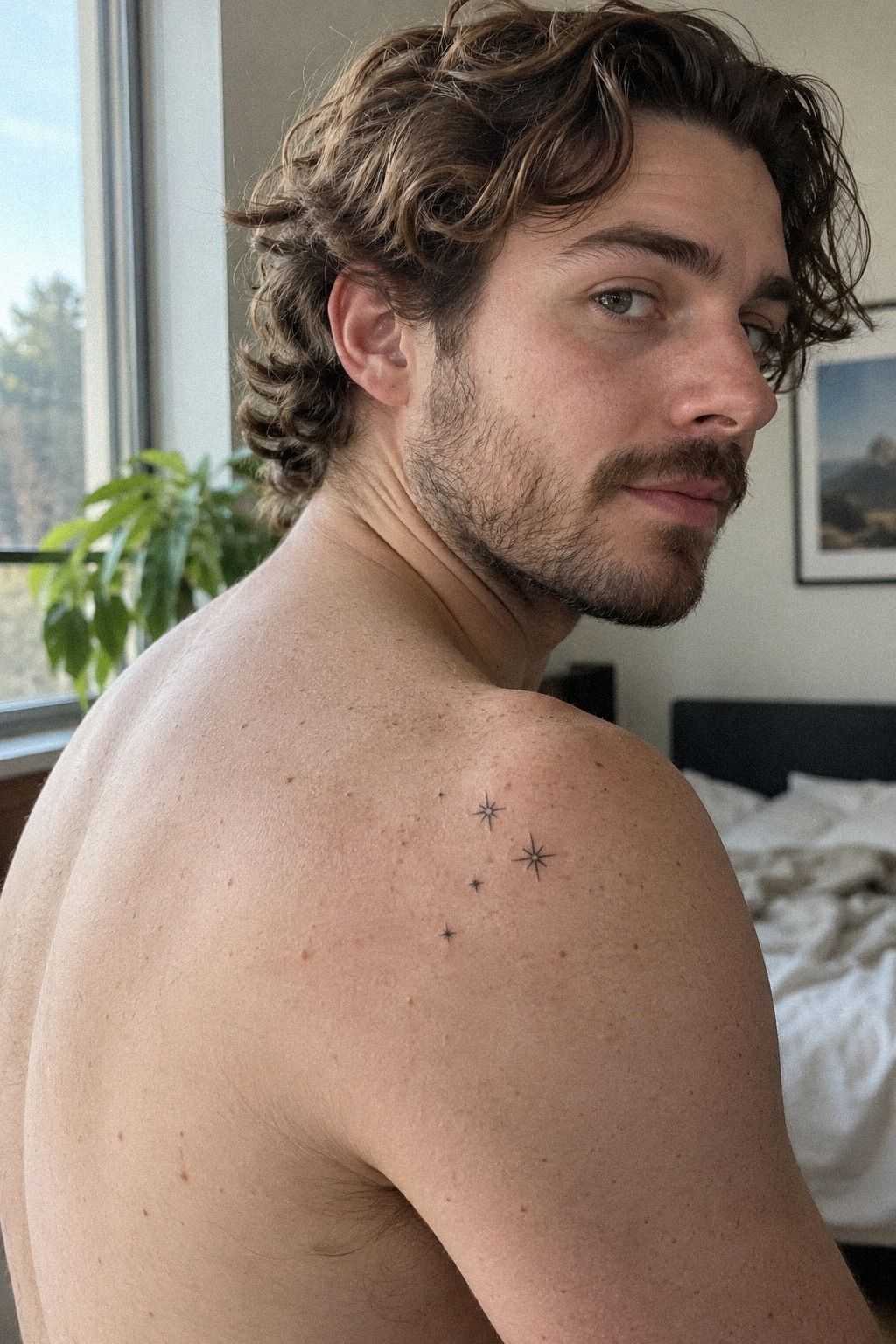
Begin with the feeling you want to carry, then reduce it to one image. A star can represent a person, a place, or a moment that changed your direction. One star may feel sacred, while three marks can create a private rhythm without explaining the whole story.
Keep the largest star slightly more dominant, with smaller marks fading around it. Ask your artist to test the design on paper first, then compare it beside your body in a mirror. A fine-line star grouping can feel delicate and personal without becoming overly literal.
I’d skip adding a quote beneath it, because tiny lettering often competes with the symbol. If words matter, consider one initial, a date, or a single mark hidden inside the star shape. That keeps the design understated while preserving the part only you understand.
Your artist may suggest a 3RL needle or another fine configuration for the points. Needle choice belongs to the professional, but you can ask how the lines may soften as they age. You don’t need technical vocabulary to participate in the decision.
For you, the strongest first tattoo may be the one nobody else understands immediately. That’s the appeal.
A tiny constellation can feel empowering without announcing its entire story. If you’re collecting references, compare this idea with these small tattoo designs before you book.
2Could Crisp Linework Be Your Best First Choice?
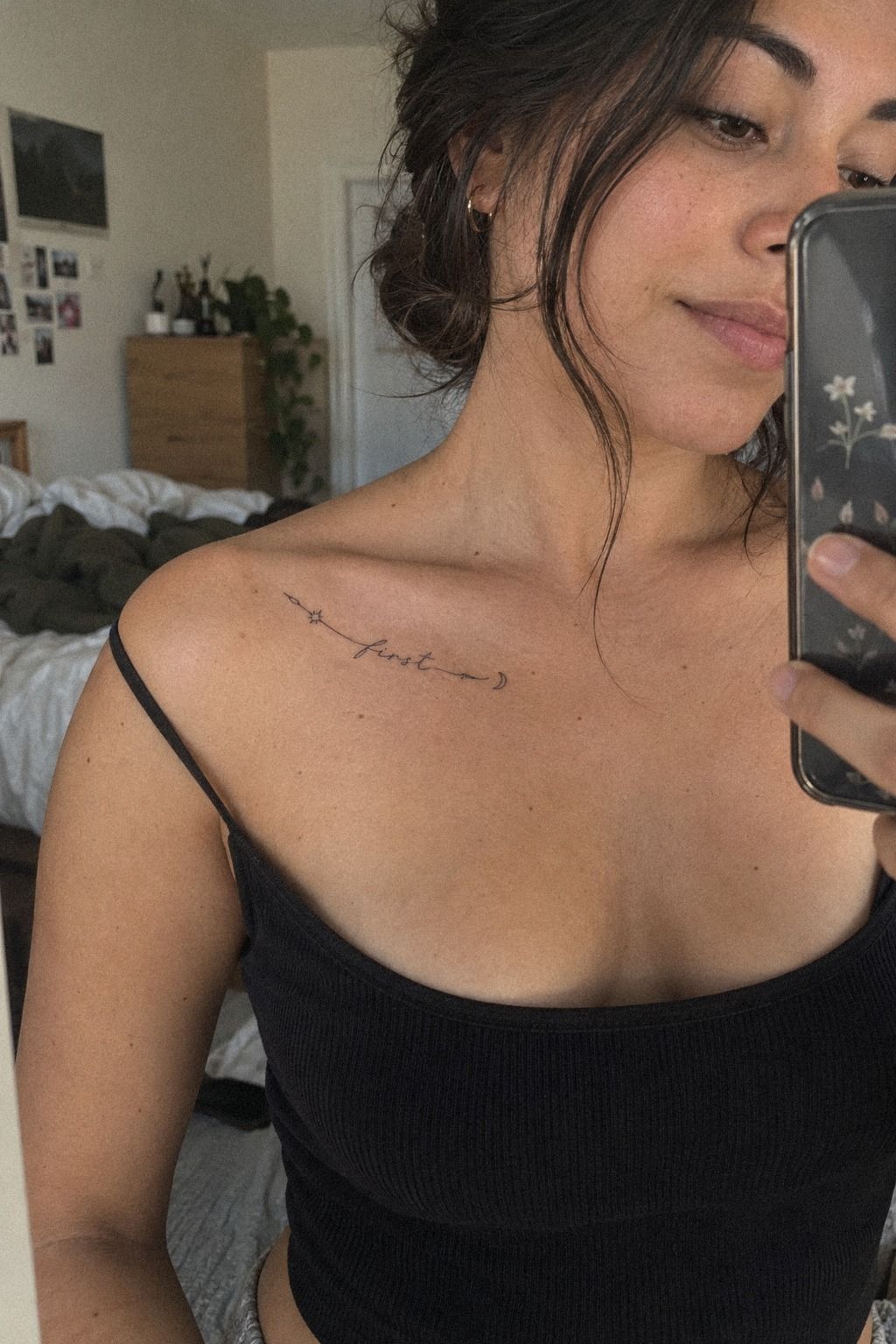
Choose an outline that leaves enough breathing space between marks for each shape to remain crisp after healing. A collarbone design can look sleek because the body’s natural line gives the tattoo a visual path. Your artist can angle the collarbone placement so it follows your structure instead of sitting like a sticker.
Bring a printout at the actual size you’d like to discuss, not only a phone image. Your artist can adjust the stencil once it’s on your body. A single-needle design may look incredibly refined on paper, but it still needs enough separation to survive normal skin movement and everyday exposure.
I’d choose a simple outline over a miniature scene for your first tattoo. Tiny scenes can become cramped when every detail is reduced to a few millimeters.
If you’re drawn to something intricate, ask which one or two details carry the meaning. Remove the rest.
That choice often makes the finished tattoo more expressive. Your design doesn’t need dramatic shading to feel memorable, and open line spacing can help it remain readable as the years pass. If you’re comparing styles, these small traditional tattoo ideas show how heavier shapes create a different visual effect.
Think about clothing and sunlight before you commit. You may want your tattoo visible with an open neckline but covered for work. Take a photo of the stencil from several distances, then decide with your full posture in view.
3Choose Unique Small First Tattoo Ideas
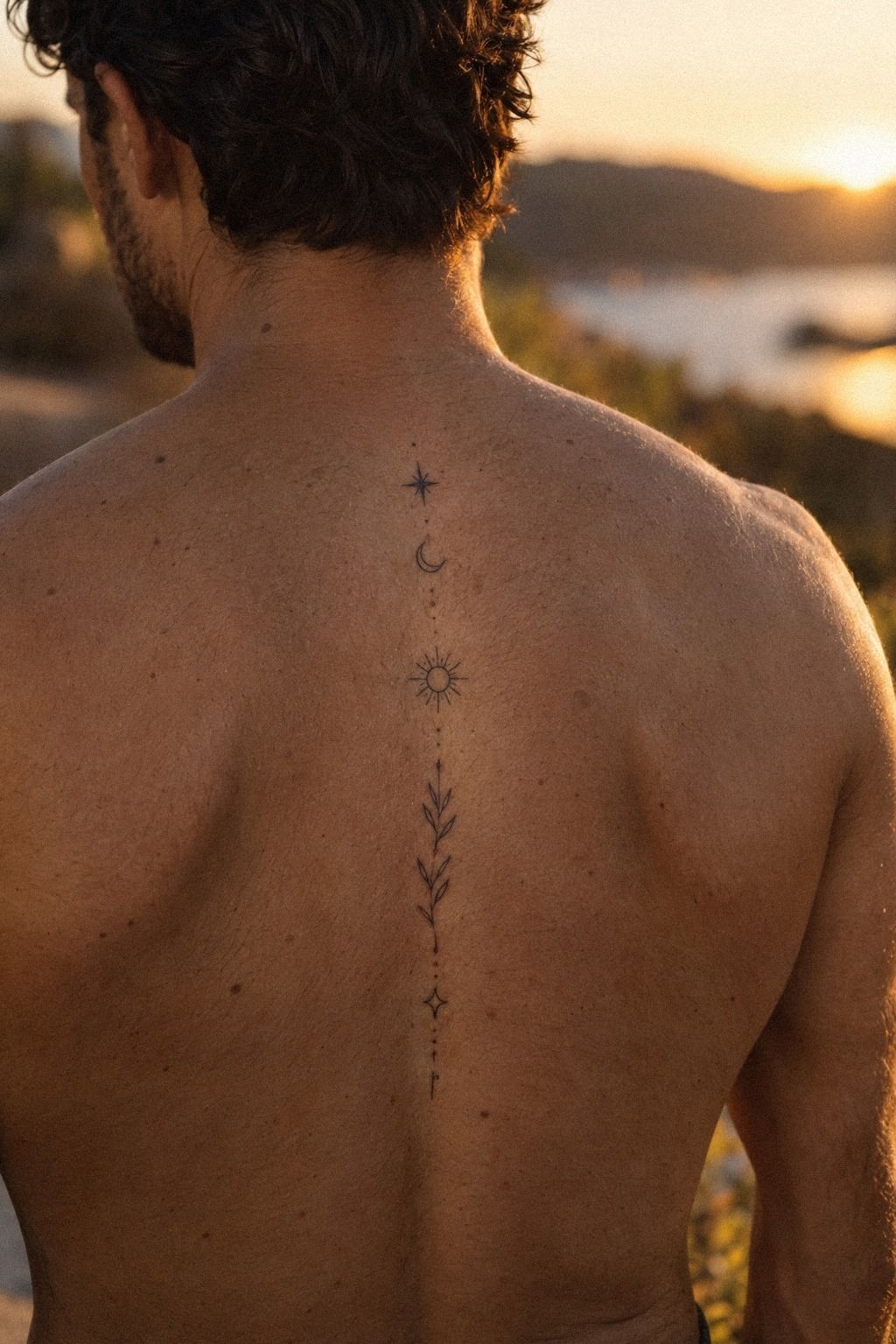
A vertical format lets you build a symbolic mark from top to bottom, perhaps using a tiny sun, a short botanical stem, or a sequence of personal shapes. Your design should follow the body’s natural route without trying to cover too much. A vertical stencil can look graceful and distinctive when the spacing is intentional.
Ask for a stencil that shows the full flow before any work begins. You don’t want the top symbol to feel disconnected from the lower detail. Avoid squeezing several unrelated icons into one column, because the eye needs a clear route through the design.
Some placements may feel more sensitive than an outer shoulder or thigh, especially where skin sits close to bone. Your artist can talk through the likely sensation and session length.
If you’re worried, say so early. You can still choose a daring placement without pretending you’re fearless.
Your unique small first tattoo ideas should come from your life, not from a trend list alone. Maybe the line represents a hiking trail, a family habit, or a private promise. Write that explanation for yourself before your appointment.
If the story still feels meaningful a month later, you’ve probably found a stronger starting point. Trust that pause!
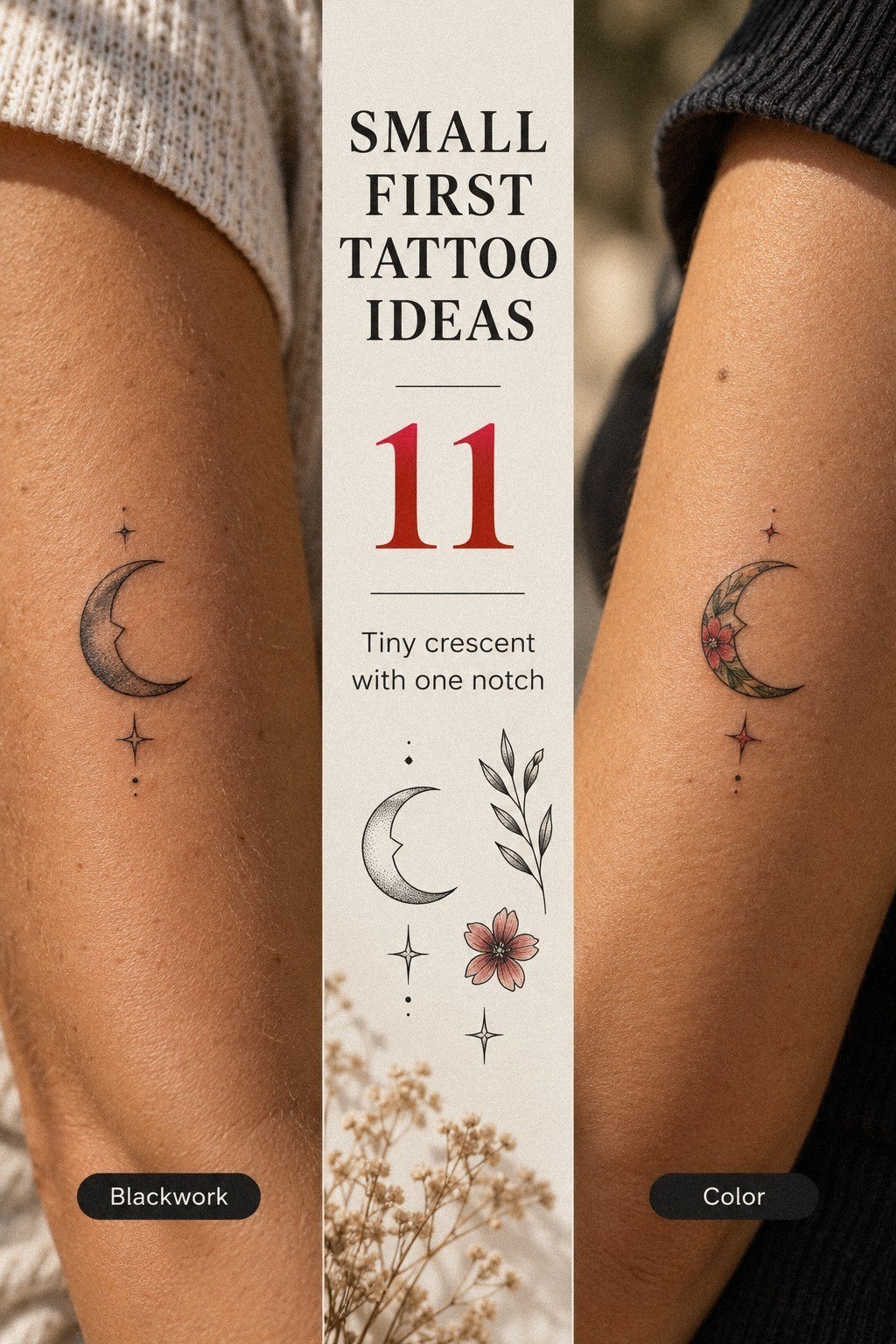
4Where Should Delicate Ink Go?
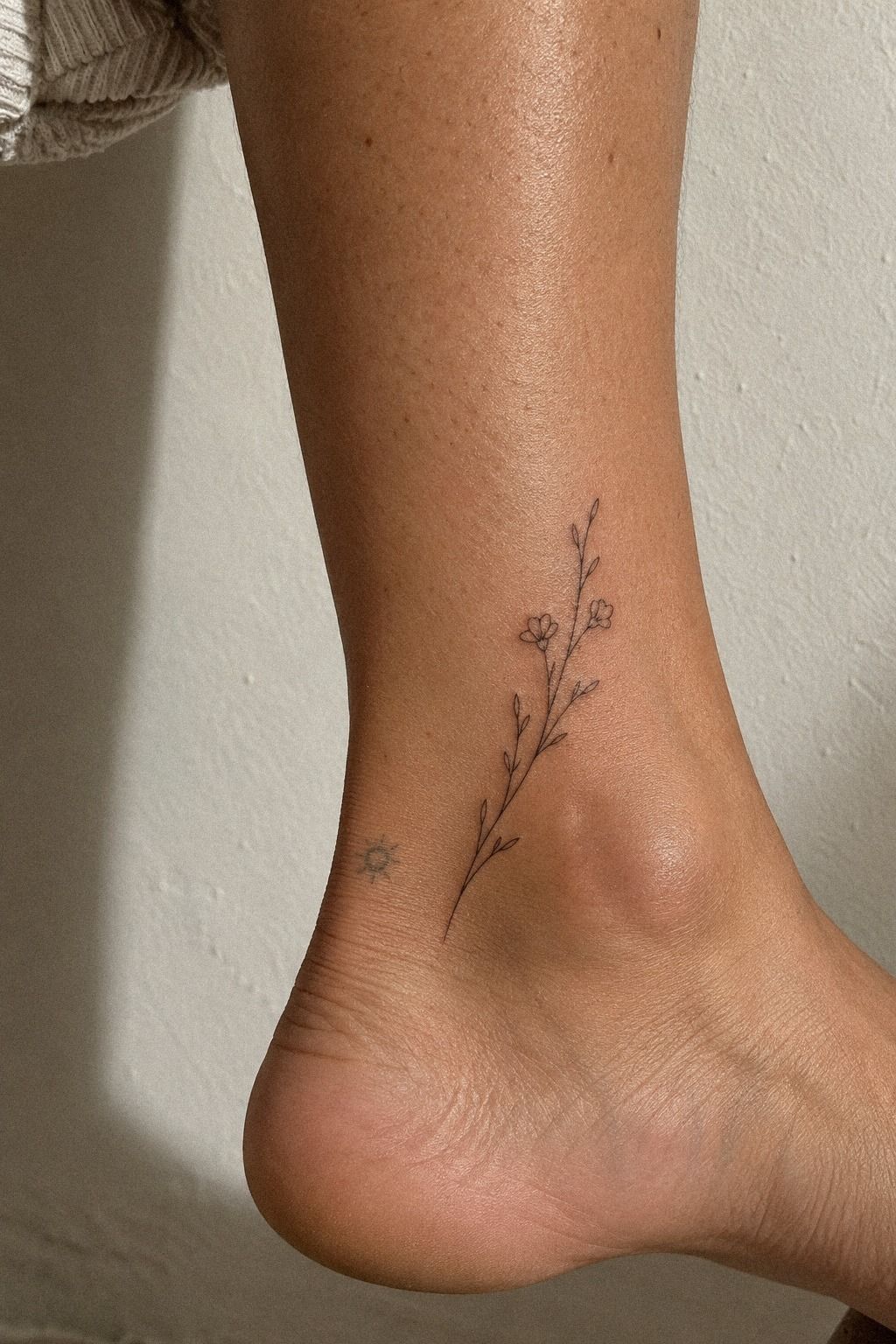
Choose a location you can see easily if daily visibility helps you feel connected to the design.
5Keep Your First Tattoo Minimal And Personal
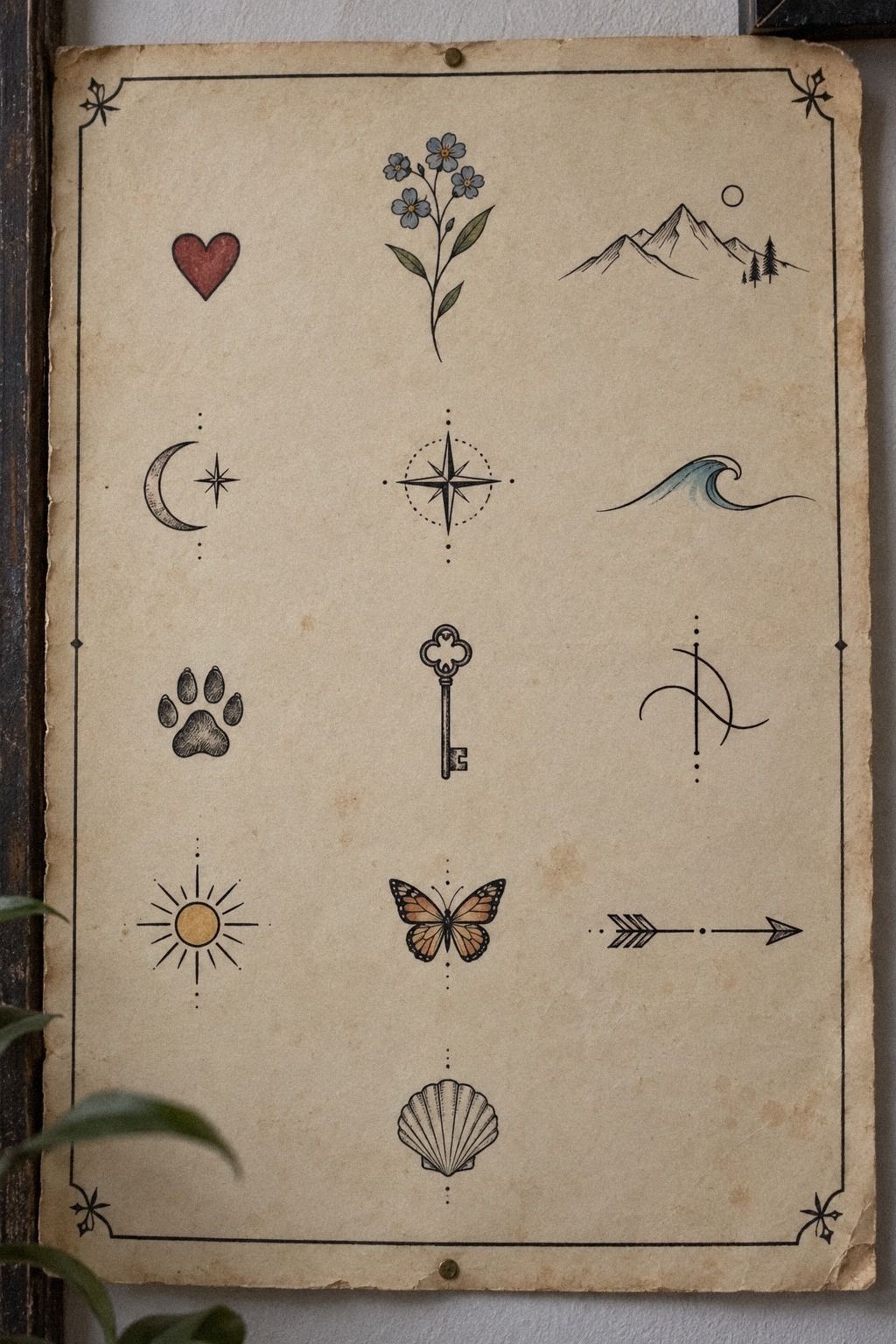
Use a flash sheet as a starting point, not a menu you must copy. Circle the symbols that feel personal, then ask your artist to redraw one so it belongs to your story. A minimal tattoo can still be ornate in meaning.
Look for a design with one clear focal shape and a small amount of supporting detail. A hand-drawn tattoo flash sheet gives you options without forcing you toward a popular symbol. If you choose a moon, flower, or animal, add one private alteration, such as a missing point or unusual angle.
I wouldn’t combine every idea you like into one first piece. That’s how a meaningful tattoo becomes visually crowded.
Pick one central symbol, then decide whether a second detail truly adds meaning. If it only fills empty space, remove it.
Understated work often feels more personal because it leaves the viewer less to decode. Your artist can make the outline sharper or the spacing more distinctive without turning the design into a complicated composition. If you’re browsing, compare these small tattoo designs with your notes before you settle.
Save the sheet, your notes, and the final stencil together. You’ll appreciate having a record of the original idea later.
Traditional references can also help you understand how bolder silhouettes differ from fine-line structure. See these small traditional tattoo ideas for that comparison.
6The Dainty Botanical Mark
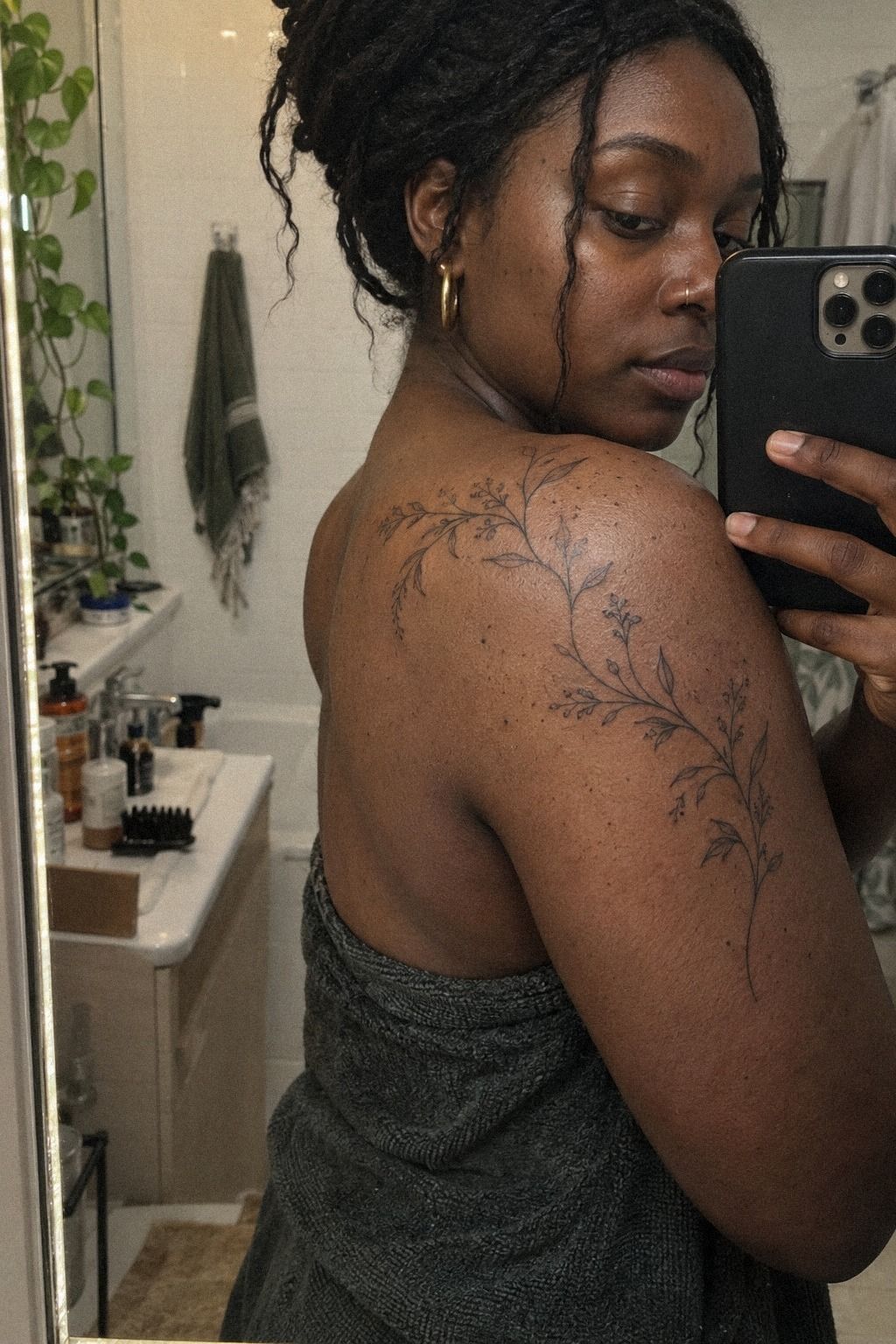
A botanical tattoo can carry a memory without copying an entire garden.
7Match Symbolic Ink To Your Story
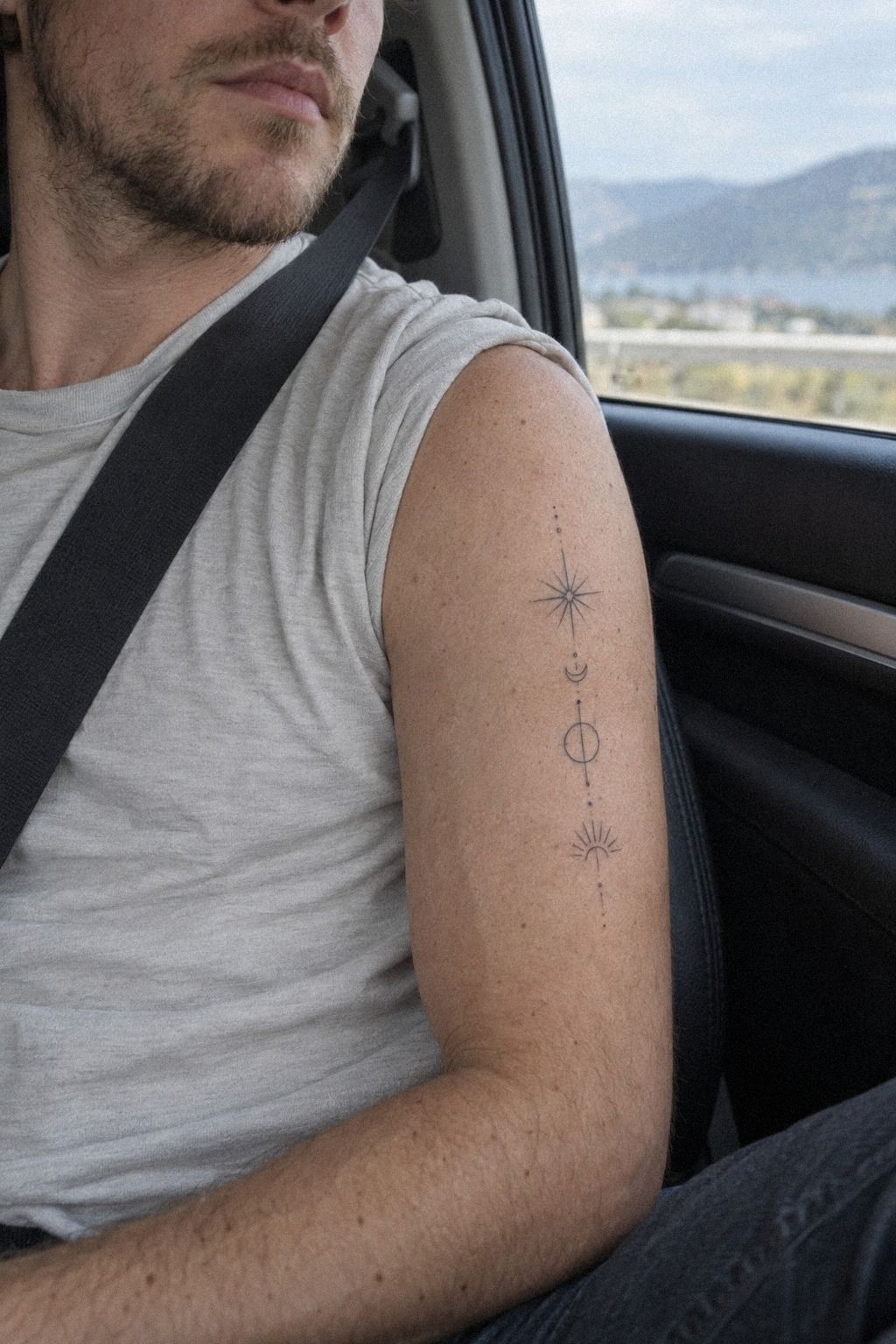
Start by writing the story in one sentence. Then ask what image could carry that sentence without spelling it out. A personal symbolic tattoo works best when the visual metaphor is clear to you.
A small key might represent access, a wave might represent return, or a star might mark direction. Your artist can refine the shape, but you need to decide which interpretation feels true. Don’t choose a symbol only because people online call it meaningful.
Show your artist the references you like, then explain what you don’t like about them too. Maybe you want sharp points but no shading, or a raw outline rather than a polished emblem. That detail helps your artist create something original.
Would you still want the image if nobody ever asked about it? That’s a useful question.
If your answer is yes, you’re working from a powerful place. If you’re unsure, wait a week and revisit your notes.
Your first tattoo doesn’t need to impress strangers.
A private symbol may be romantic, fierce, or quietly personal without becoming obvious to everyone around you. If you need more visual prompts, browse these small traditional tattoo ideas and notice which shapes still feel right after the first glance.
8How Should You Compare Small First Tattoo Ideas?
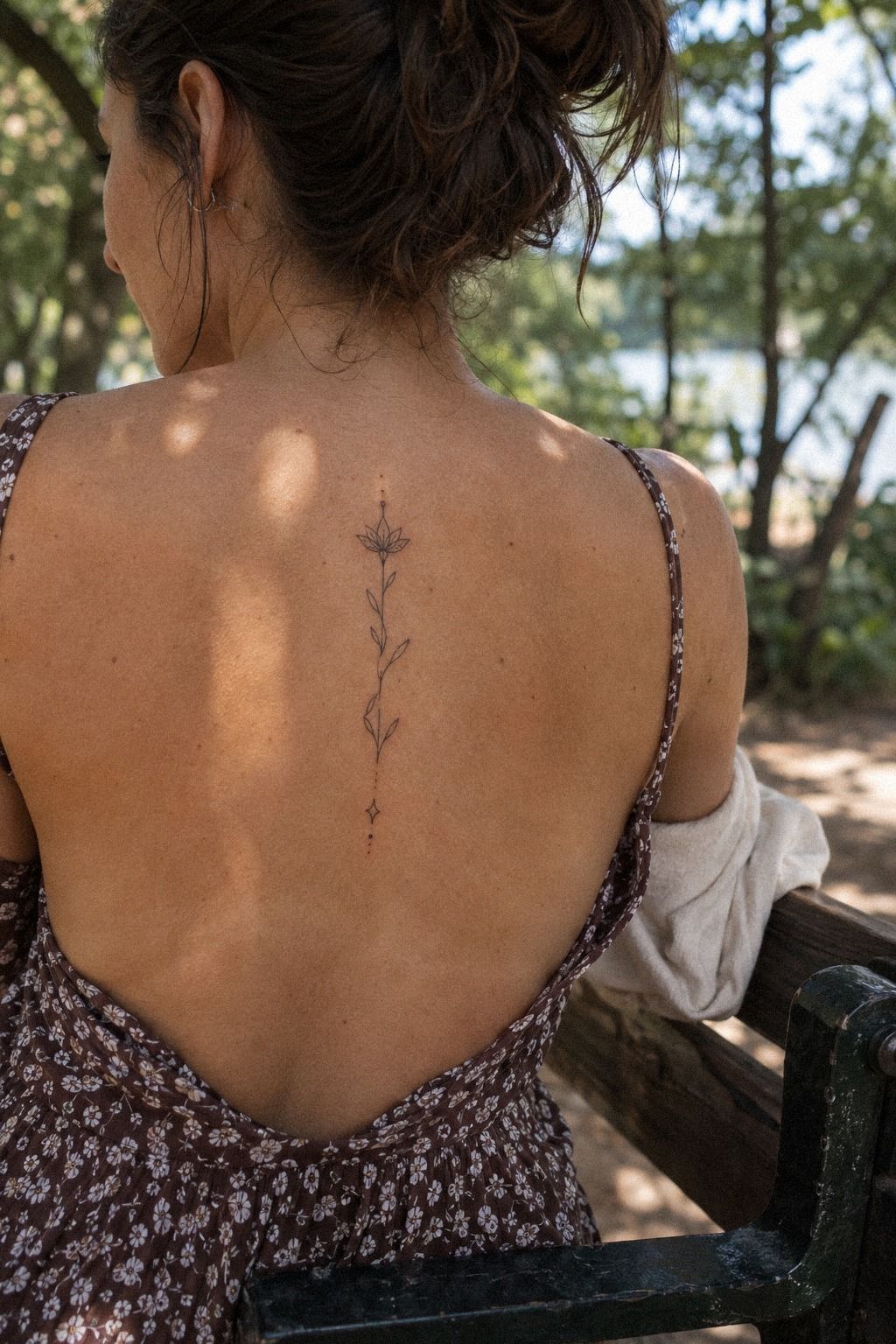
Compare ideas by shape, placement, longevity, and emotional weight, not only by how attractive they look in a feed. A healed tattoo reference tells you more than a fresh studio photograph because it shows how the lines settled. Look for healed tattoo examples whenever possible.
Create a simple comparison page with three columns: design, placement, and reason. Under each choice, write what you like and what worries you. You might find that the moon is visually elegant but the hand placement doesn’t suit your work.
I’d choose a slightly clearer design over an extremely tiny one. Fine lines can look crisp at first and soften as years pass, especially with repeated ultraviolet exposure. Black ink and thoughtful spacing tend to age more clearly than crowded micro-detail.
Use this comparison step to check your budget too. Review typical small tattoo prices before you message a studio, and ask whether its minimum applies to a brief session. You’ll sound prepared, and you’ll avoid building your decision around a number that doesn’t fit your region.
If one idea looks polished but feels emotionally empty, don’t force it. If another looks simpler but keeps returning to your thoughts, pay attention. That distinction matters!
9Bold Shapes Versus Hairline Detail
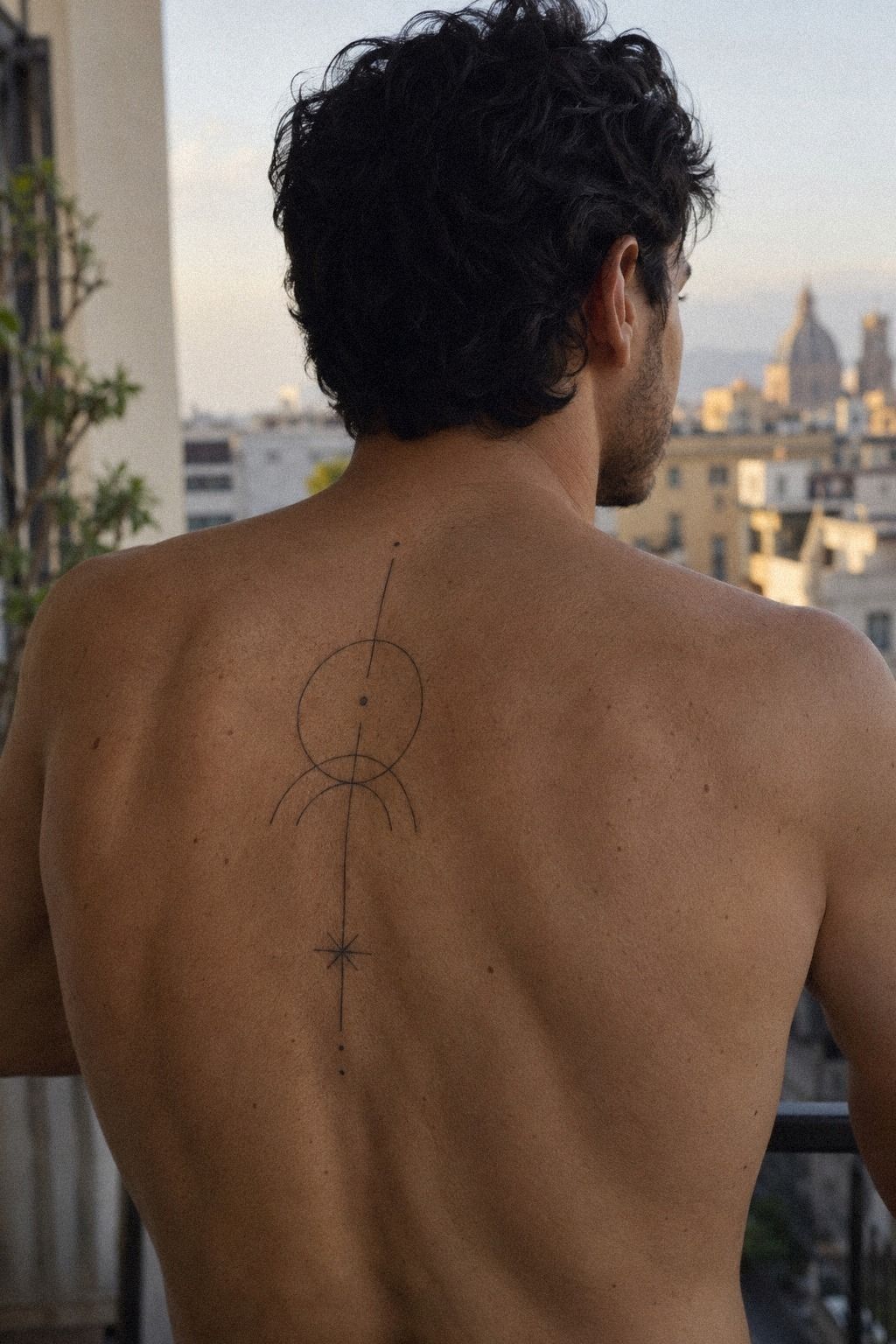
A bold outline can remain striking when a tiny design needs strong visual clarity.
10Position A Playful Tattoo On Your Wrist
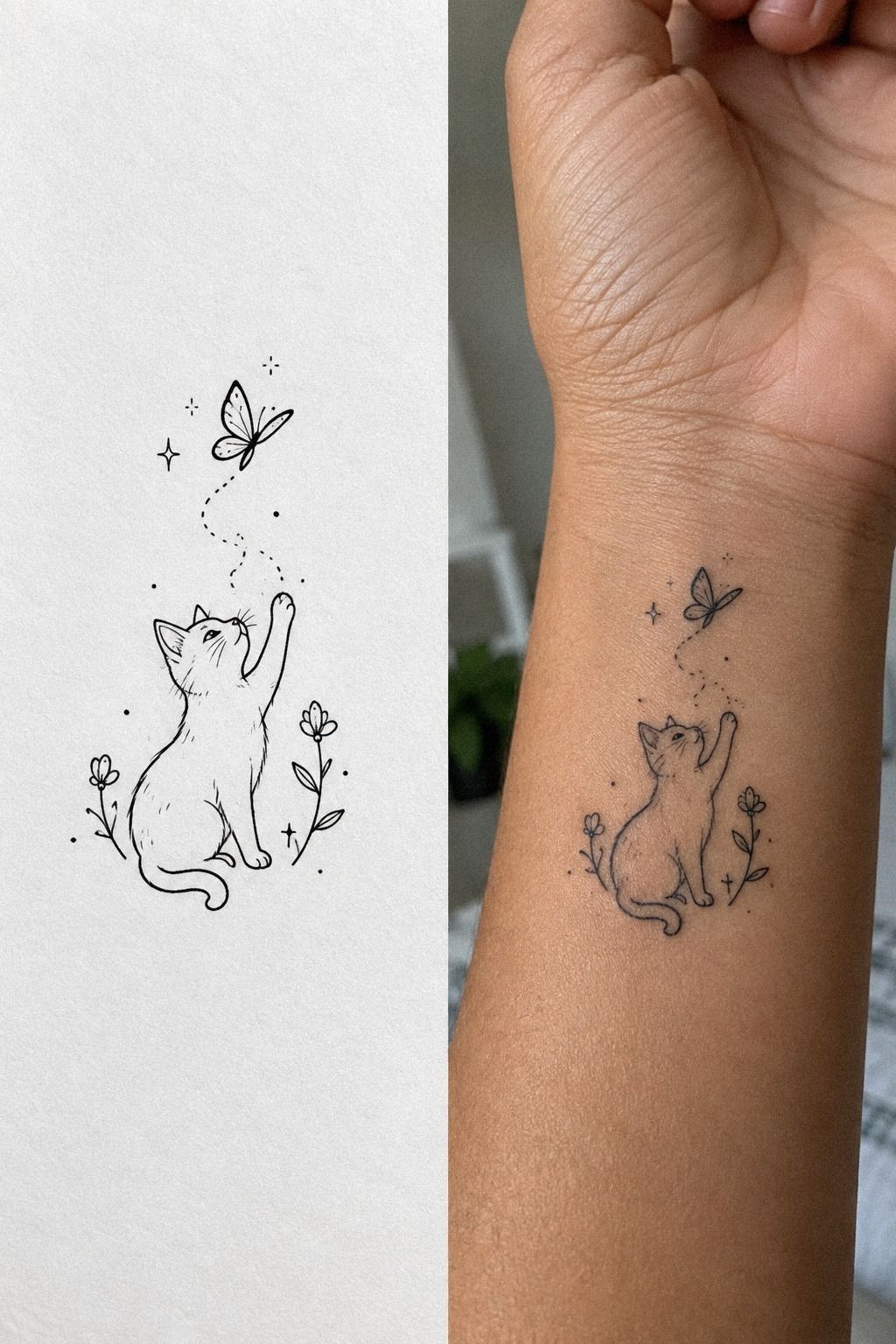
Choose a playful symbol with a simple outer shape, such as a tiny fruit, charm, animal, or abstract mark. The wrist gives you frequent visibility, so you should enjoy seeing the design repeatedly. A wrist tattoo stencil lets you compare the inner and outer wrist before committing.
Your artist can place the stencil on both sides and help you compare movement, clothing contact, and sun exposure. Stand, bend your wrist, and let your hand rest naturally. The placement should still feel balanced when you’re not posing for it.
I’d avoid packing tiny words into this location. Wrist skin moves, and letters can lose separation when the design is too small. If you want text, ask whether one initial or a single short mark could carry the same meaning.
A playful idea can still be vibrant and personal. You might choose a fruit connected to summer, a charm from childhood, or a whimsical mark that makes you smile without needing an explanation. If you’re considering a higher-wear location, compare these small finger tattoo ideas first.
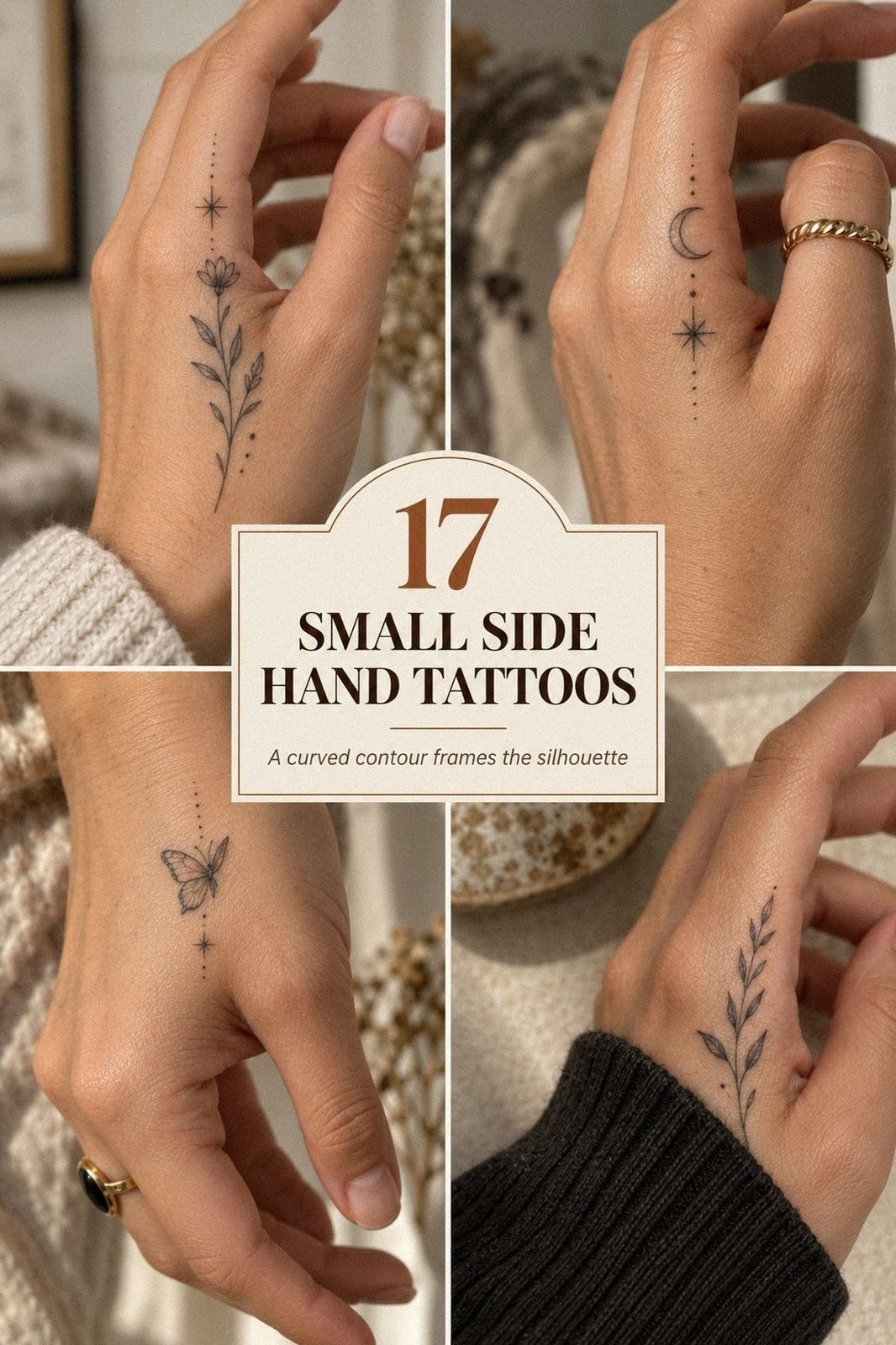
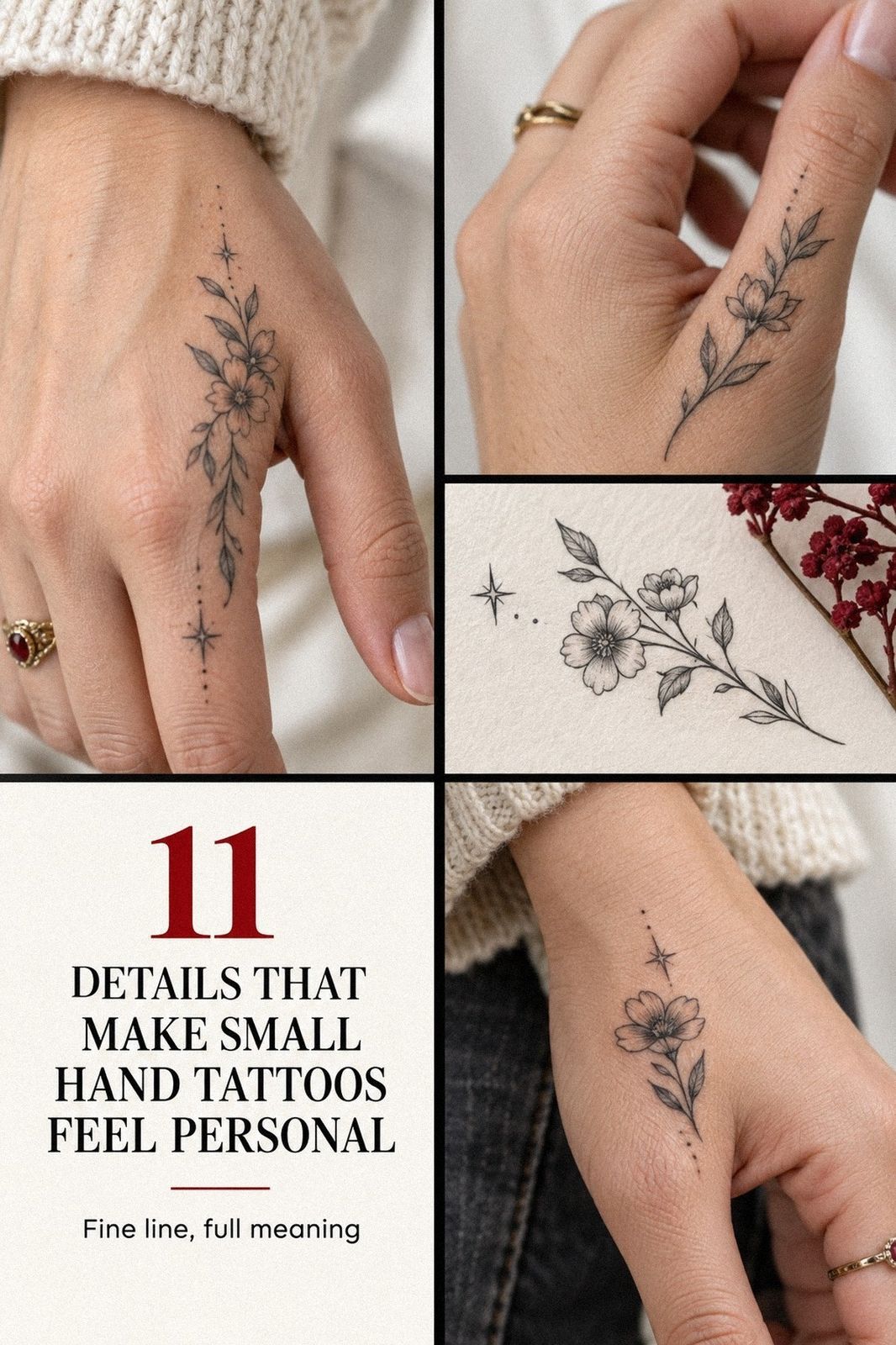
Follow the studio’s care instructions carefully, especially around washing, hydration, and sun. The surface may look healed in roughly two to three weeks, while complete healing can take around two to three months. Check small hand tattoo ideas if you want to understand how much more visible that choice can be.
11Protect Intricate Ink Through Proper Healing
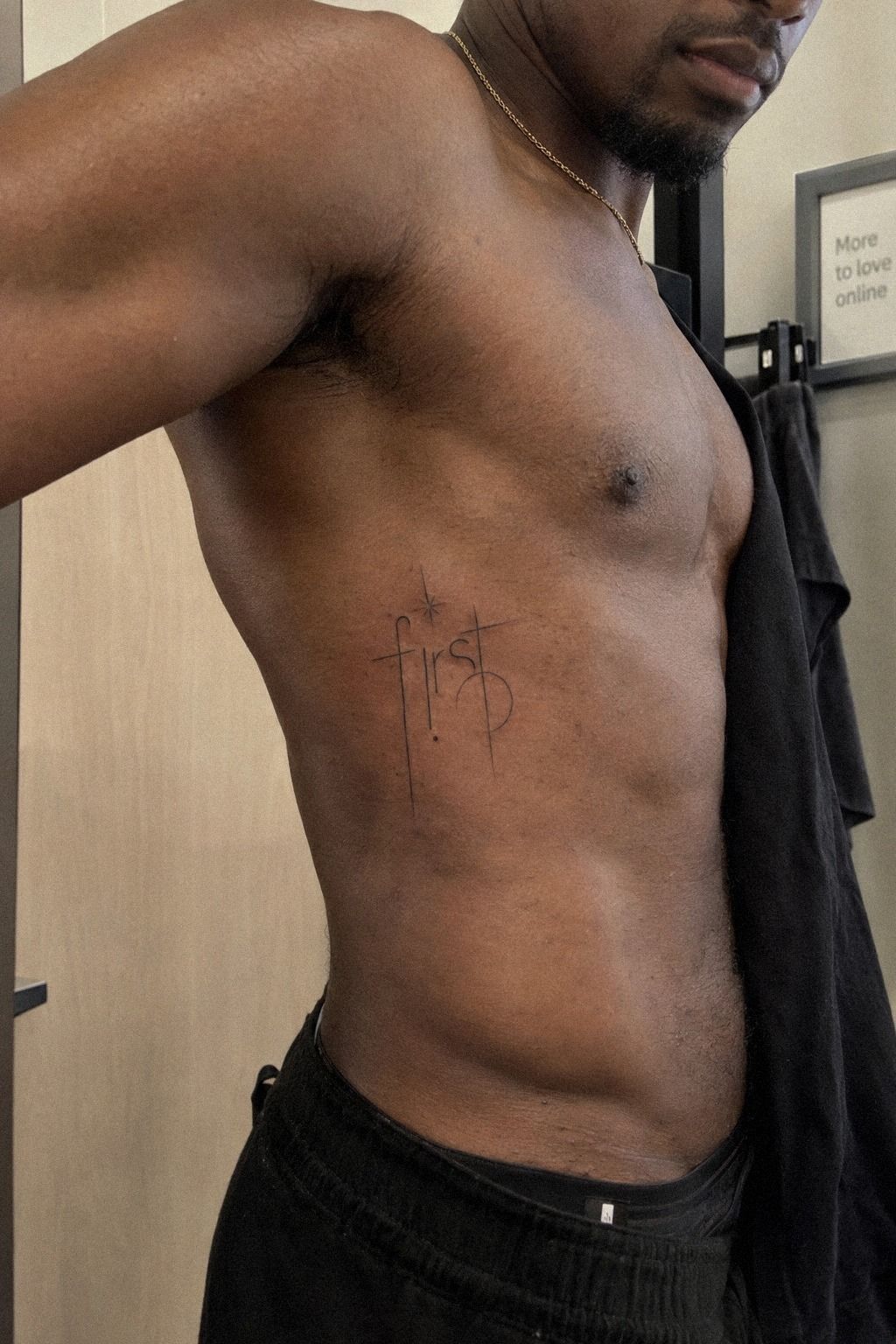
Some placements are more sensitive because the skin sits close to bone or moves constantly. Ask your artist how the stencil should follow your body, and plan clothing that won’t rub the area during the first days. Your placement-specific aftercare begins before the appointment.
Your studio may cover the tattoo initially with a bandage or protective film, depending on its method. Follow the instructions you receive rather than mixing advice from several artists. A gentle wash and clean hands matter more than collecting a cabinet full of products.
Keep the area clean, moisturized as directed, and away from pools and unnecessary sun. Peeling, mild dryness, and changes in brightness can happen during the process. You shouldn’t pick at flakes or scratch the area.
A surface often settles in about two to three weeks, while complete healing may take two to three months. Intricate designs need patience because fine details can look uneven before the skin finishes settling. Don’t judge the result on day three.
Take a photo after the surface calms, then compare it with the stencil. Proper aftercare won’t stop every natural change, but it gives your tattoo the strongest start.
If something looks unusual or painful, contact your artist or a medical professional. Worth the wait!
Why Private Meaning Makes Better First Ink
I used to think a first tattoo needed an explanation everyone could understand. That made me collect symbols instead of memories.
The better choice was smaller and quieter: one mark tied to a private moment, with enough open skin around it to let the design breathe. A personal tattoo concept doesn’t need a dramatic backstory to matter.
Your meaning can be ordinary. It might come from a bus route you took every day, a phrase your grandfather used, or the exact shape of a plant outside your childhood home. Those details can feel more honest than a broad symbol chosen because it photographs well.
I also learned that the most impressive reference isn’t always the most useful one. A tattoo can be haunting in a photograph and still be wrong for your body, your work, or your comfort with visibility. I’d rather see you choose a crisp, personal design in an easy placement than copy an ornate piece that makes you hesitate.
There is no prize for making your first appointment quickly. Save references, speak with an artist, and let the idea sit.
You can be daring without being reckless, and you can choose something feminine, masculine, playful, or raw without needing permission. The strongest first tattoo is the one you’ll still recognize as yourself years later.
The Questions I Get Asked Most
How much does a small first tattoo usually cost?
A small first tattoo often costs about $50 to $100 at a shop minimum, while some artists charge around $100 to $250 per hour in the United States. Your final price depends on the artist, region, placement, and design detail, so ask before booking. See these small tattoo prices for planning context.
Are small first tattoos a good idea for a first tattoo?
Yes, small tattoos can be a strong first choice because you can test visibility, placement, and your comfort with the process. Clear linework and a personal symbol can feel meaningful without overwhelming you. Choose an artist with healed work, not only fresh photos, and avoid squeezing too much detail into a tiny space.
How do I choose a tattoo artist for small first tattoo ideas?
Review portfolios for clean linework, healed photographs, and designs similar to your reference. A style-specific portfolio is more valuable than a famous name alone. Ask about hygiene, consultation, needle choices, and how the artist adapts designs to different skin tones before you schedule.
How much do small first tattoos hurt?
Pain varies by person and placement. Ribs, feet, hands, and the sternum are often more sensitive, while the outer forearm, thigh, and shoulder are commonly more tolerable. Your comfort level matters, so tell your artist what concerns you instead of trying to act fearless.
How long does a small first tattoo take to heal?
The surface commonly settles in about two to three weeks, while complete healing can take around two to three months. Directed aftercare includes gentle washing, hydration, and avoiding pools and strong sun. Follow your artist’s written instructions, since coverings and products vary by studio.
What’s the best placement for a small first tattoo?
The best placement depends on your desired visibility, pain tolerance, work needs, and how much wear the tattoo will receive. A practical location might be the shoulder, outer forearm, or thigh, while hands, feet, and fingers may fade or soften sooner. Compare small hand tattoo ideas before deciding.
Where I’d Start First
If I had to pick one step, I’d start with the private meaning. A small star, leaf, or personal mark can carry more weight than a crowded design chosen for attention. Write the story first, then let your artist build the clearest shape around it.
Save that idea and give it a week.