Moon tattoos saturate the market. Walk into any shop and you’ll find flash sheets crowded with crescent outlines and basic full moons. The trick isn’t avoiding the moon entirely, it’s pushing past the obvious so your piece doesn’t read like a Pinterest screenshot from 2014. Here’s how to get something that holds up and actually feels like yours.
Color Choices
Working With Black and Gray
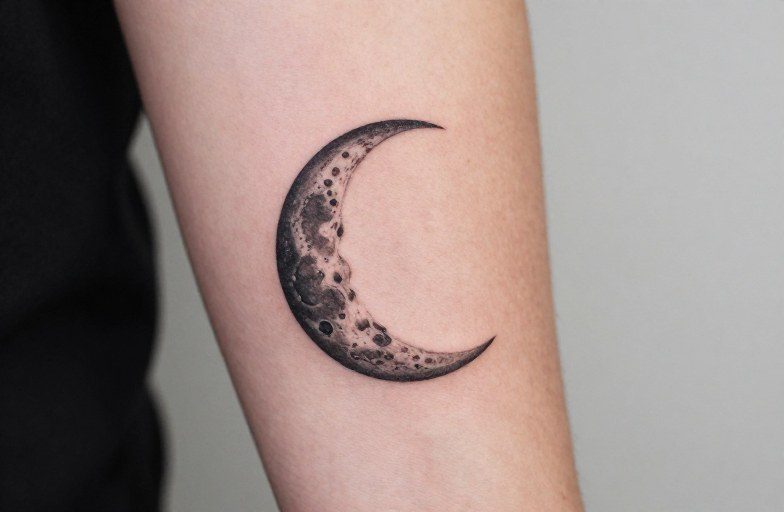
Most moon tattoos live in black and gray, and for good reason. The moon is grayscale in the sky. Solid black for the darkened portions, smooth gray wash for the lit curve, that’s the classic read. The real variation comes in how your artist handles the transition. A hard edge between black and gray reads graphic and bold. Blown-out, atmospheric gradation feels softer, more photographic. For something genuinely different, ask for stippled texture in the gray areas; tiny dots build tone without the flatness of a smooth fill.
When Color Actually Works
Color moons can be striking if you’re specific. A blood moon in deep rust and burnt orange. A teal harvest moon against a dark background. The danger is defaulting to a pastel watercolor wash that’ll fade to muddy gray in five years. If you want color, commit to saturation. Deep purples, blood reds, forest greens, pigments with enough density to survive sun and time. Avoid the temptation to float a “galaxy” behind your moon in neon blues and pinks unless you’re prepared for touch-ups every few years.
Best Placements
Curved Surfaces That Echo the Shape
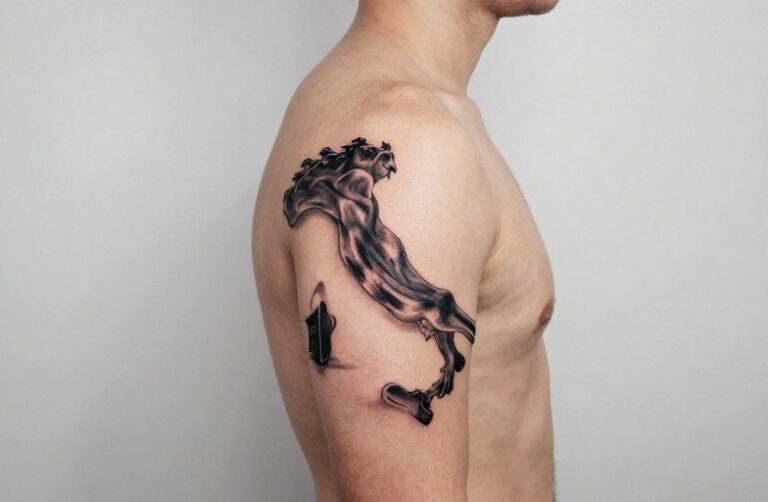
The shoulder cap, the outer thigh, the side of the calf, these curves let a crescent or gibbous moon sit naturally. The body becomes part of the composition. A full moon centered on a flat plane like the sternum or upper back can look like a sticker. On a rounded surface, the same design integrates. Consider the underside of the upper arm, too: the moon’s curve follows the muscle’s hang, and it’s visible in tank tops without being hand-stamped obvious.
Small and Hidden
Behind the ear, the inner wrist, the ankle bone, these spots suit tiny moons but demand precision. Lines spread faster in these high-movement, thin-skin areas. A micro crescent behind the ear will blur sooner than the same design on the ribs. If you’re set on a small placement, keep the design simple: clean outline, minimal interior detail. Let the shape do the work.
Tips for Choosing
Start with phase, not style. New moon, waxing crescent, first quarter, waxing gibbous, full, waning gibbous, third quarter, waning crescent, each carries different visual weight. A thin crescent reads delicate, almost calligraphic. A gibbous moon, more than half-lit but not full, offers that interesting asymmetry most people skip. The full moon is the default; going gibbous or crescent immediately separates you from the majority.
Think about what accompanies the moon. Empty space around it can be powerful, just the shape, floating. But most people want something else: stars, clouds, a landscape silhouette, botanical elements. The pairing matters more than the moon itself. A crescent cradling a single flower reads feminine in a way that may or may not suit you. A moon rising behind a mountain ridge feels different, starker, more expansive. A moon dissolving into geometric lines or dotwork pushes toward contemporary rather than traditional.
- Reference actual lunar photography, not other tattoos
- Consider the moon’s orientation: waxing vs. waning faces opposite directions
- Decide if you want the “dark” portion filled black, left skin-tone, or patterned
- Ask your artist about negative space approaches, the moon as absence, not presence
For First-Timers
Pain Reality by Placement
Ribs and sternum hurt. The moon is a popular first tattoo, and first-timers often choose these central placements for visibility. Know what you’re signing up for. The outer upper arm, the thigh, the calf, these are manageable. The closer to bone or the thinner the skin, the sharper the sensation. A small moon behind the ear is quick but intense. A larger piece on the thigh is longer but duller.
Healing Considerations
Moon designs with heavy black fill take longer to settle. The saturated areas scab thicker. During healing, you’ll see the gray tones look lighter, almost ashy, that’s normal. The true values emerge after three to four weeks. Don’t panic and assume the ink fell out. Moisturize lightly, don’t pick, and keep it out of direct sun. Sun is the enemy of black and gray work; UV degrades the pigment and blurs edges faster than aging alone.
Size & Scale
Tiny moons, under an inch, age poorly. Lines thicken, details merge. What reads as a delicate crescent at fresh becomes a smudged comma at ten years. For any moon with interior detail (craters, texture, a face), two inches minimum is safer. Larger pieces allow for the visual interest that makes a moon unique: actual crater mapping, shadow depth, the terminator line where light meets dark.
At larger scales, the moon becomes a landscape itself. A full back piece can treat the lunar surface as terrain, with shadowed valleys and highlighted ridges. This is where photorealism or heavy blackwork both shine. The question becomes whether you want the moon as symbol or as subject, icon or actual celestial body.
Popular Styles
Linework and Etching
Fine parallel lines, crosshatching, the vocabulary of copperplate engraving, this treatment turns the moon into something archival. It references old astronomical prints, the age of telescopic discovery. The style demands a steady hand and a patient session. Hatching that looks precise at two inches becomes a blur at half that size. Scale up or simplify down.
Blackwork and Ornamental
Heavy black fill, patterning in the negative space, geometric frames, this is the moon as motif rather than realism. The dark portion of the moon becomes a field for dotwork, mandala elements, or solid black with skin-break stars. It’s bold, graphic, and holds up well over time because there’s less subtle gradation to lose. The tradeoff is less “moon” and more “design containing a moon shape.”
Single Needle and Delicate
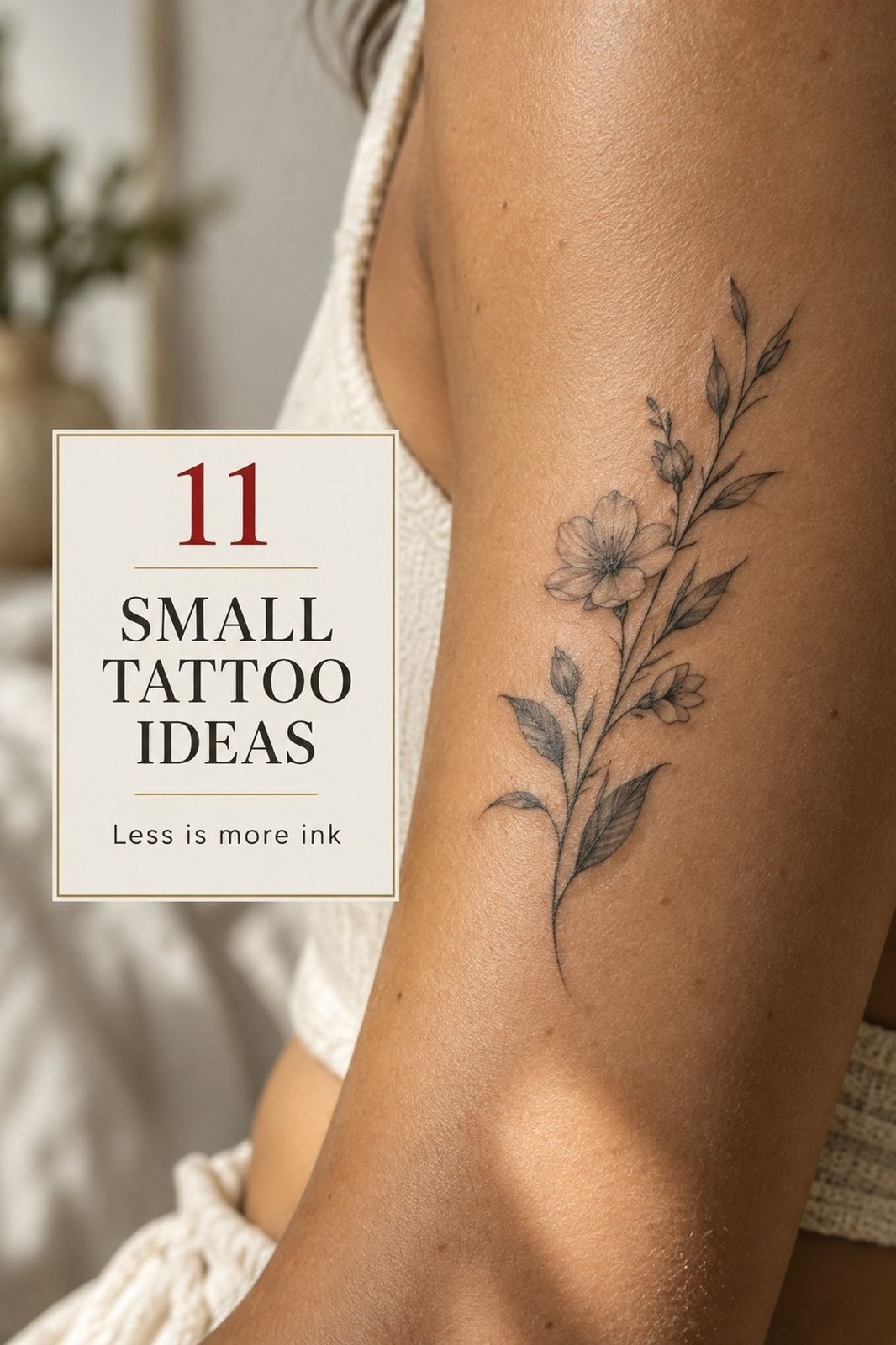
Single needle work can achieve ethereal, almost glowing edges. A moon rendered in hair-fine lines with whispered gray wash feels like it might fade into skin. The risk is real fading, single needle deposits less ink, and sun or poor aftercare hits harder. This style suits people who want the tattoo to feel like part of their skin’s texture, not a declaration. Commit to touch-ups and sunscreen if you go this route.
Final Word
The moon doesn’t need reinvention. It needs specificity. Pick your phase, commit to a scale that allows detail, choose a placement that works with your body’s shape, and find an artist whose technical strengths match your vision. The difference between a moon tattoo you’ll cover in ten years and one you’ll still show is the difference between defaulting to the symbol and actually designing for your skin.
Frequently Asked Questions
How do I make sure my moon tattoo doesn’t look like everyone else’s?
Start with a less common lunar phase like gibbous or waning crescent. Add specific personal elements, actual crater patterns, a particular orientation, or an unusual pairing like botanical linework or architectural framing. Avoid the floating crescent with a few default stars.
Will a moon tattoo with a lot of gray wash fade faster than solid black?
Gray wash does soften faster than solid black, but a skilled artist packs the tone properly and the difference is manageable. The bigger threat is sun exposure. Keep it protected, and the gradation will hold for years.
Can you do a realistic moon with actual crater detail in a small size?
Not really. Crater detail needs scale to read as texture rather than blur. Below two inches, you’re better off with stylized suggestion, simple shadows, a few implied circles, rather than attempting photorealism that won’t age.
Is there a meaning difference between waxing and waning moon phases in tattooing?
Some people associate waxing with growth and beginnings, waning with release and endings, but these associations are personal rather than universal. Choose based on which shape and orientation appeals to you visually; meaning follows preference, not the other way around.