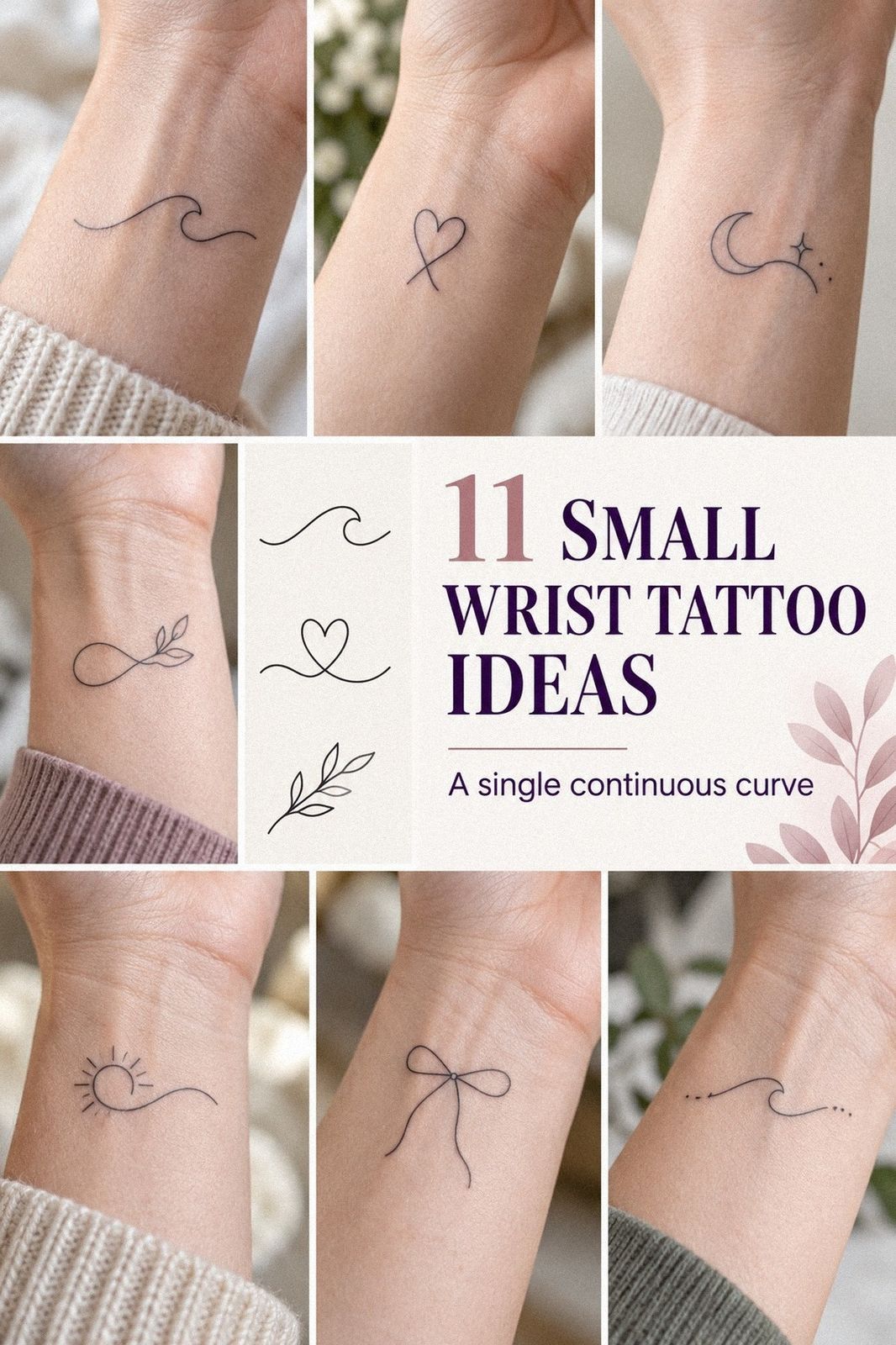
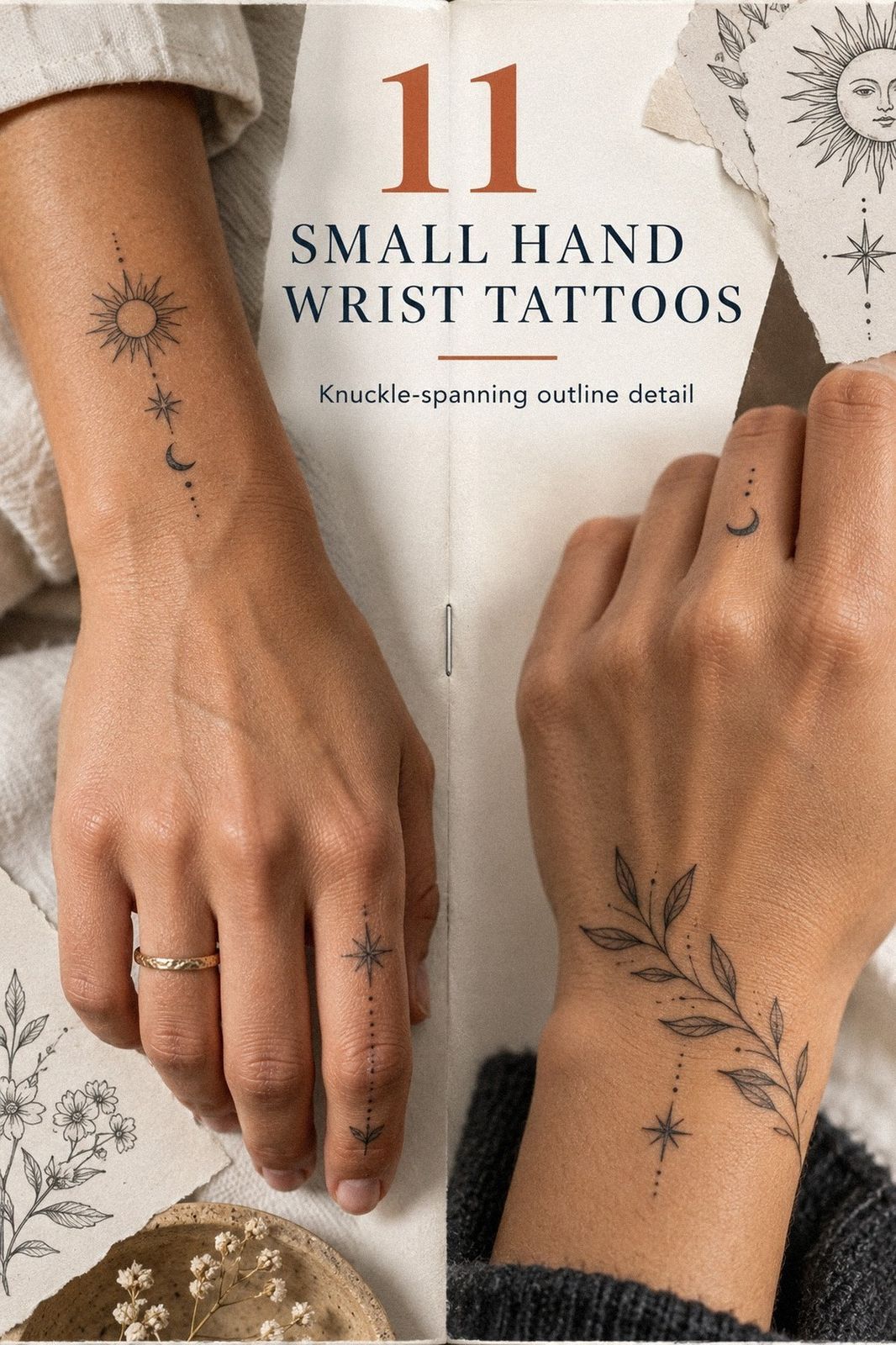
Small hand wrist tattoos can cost about $100 to $300 in the US, depending on the artist, region, and shop minimum. I used to hide mine under sleeves until a fine-line mark became part of how I dressed, not something I had to explain. The change was quiet. Then it felt empowering!
Don’t overthink: I Compared Small Hand Tattoo Sketches.
Here’s what it looked like before:
Before the appointment, I had a clear patch of skin and too many saved sketches. The area looked ordinary, almost unfinished, but I’d been protecting it for the right idea.
I wasn’t looking for a loud statement. I wanted something personal that could disappear beneath a cuff and still feel expressive when I rolled my sleeve back.
I also didn’t understand how visible the wrist can be. Your hand moves constantly, so your tattoo won’t sit still like ink on an upper arm. I kept comparing small wrist tattoo ideas because I needed to see how shapes behaved during movement, not just how they looked in a polished photograph.
And I had one rule: the design couldn’t feel random five years later. That meant I needed a meaningful symbol, a placement I could live with, and linework that wouldn’t depend on tiny decoration to make sense.
- I Chose a Delicate Wrist Placement
- I Compared Small Hand Tattoo Sketches
- I Matched Ink With My Style
- I Tested Unique Symbol Ideas
- I Placed Fine Linework Near My Thumb
- I Checked The Design From Every Angle
- I Prepared For Hand Tattoo Pain
- I Selected Crisp Black Ink
- I Protected My Fresh Wrist Tattoo
- I Watched The Linework During Healing
- I Loved My Meaningful Finished Tattoo
1I Chose a Delicate Wrist Placement
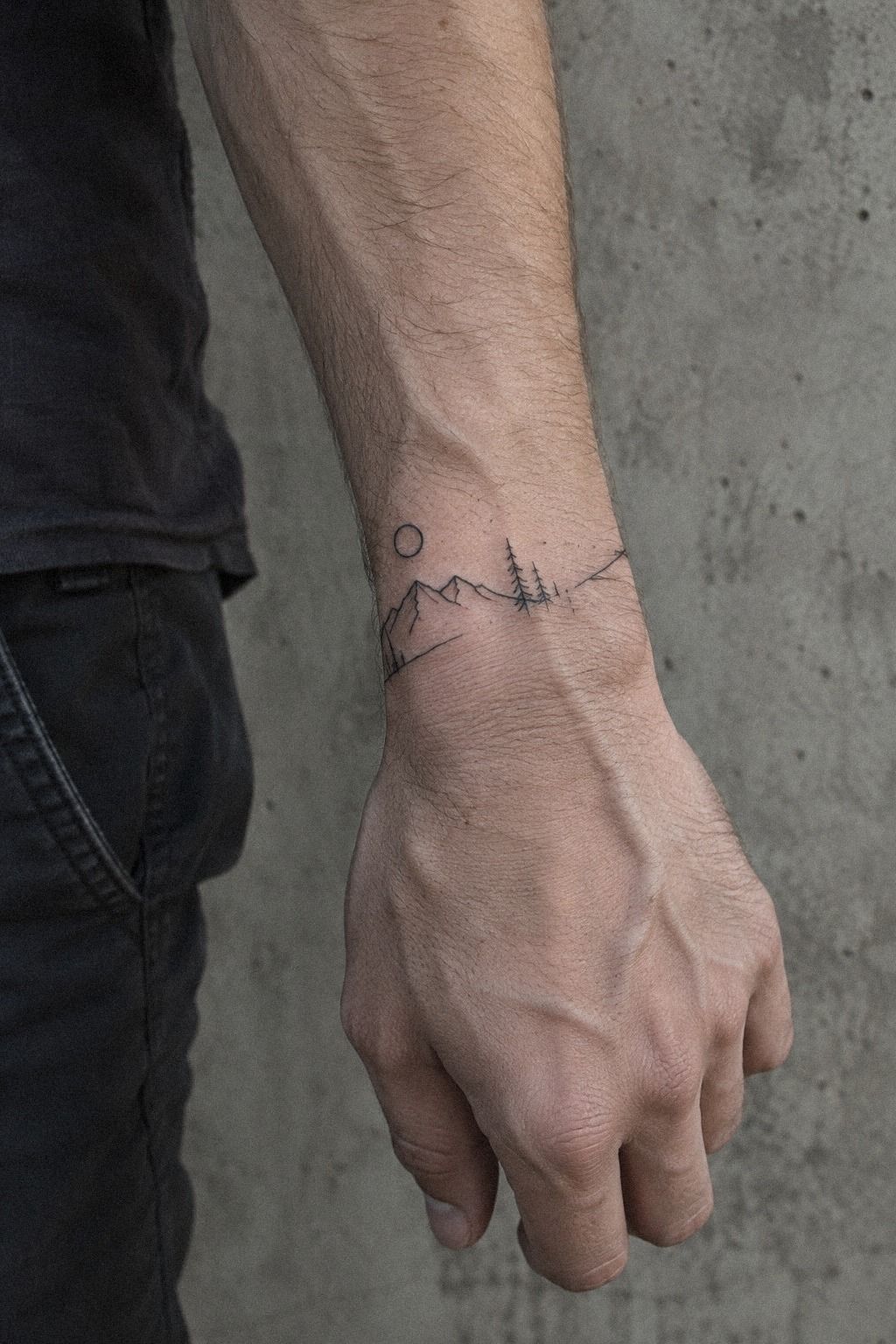
I chose the inside wrist because I wanted a discreet placement that I could reveal on my own terms. The reference photo shows a man with fair, cool-pink skin and hair-thin single-needle lines, and that detail matters. Fine marks look delicate there because the wrist gives the design a narrow visual lane without forcing it into a heavy block.
Your placement should follow your daily movement. If you type, lift weights, wash dishes, or wear a watch, you’ll want to notice where the band touches. I traced the idea with a pen and wore it for a full day.
It rubbed against my cuff, but it didn’t feel distracting, so I kept it.
For your consultation, bring a photo of the exact wrist angle you like. A design that looks understated from the front may look too exposed from the side. I’d skip placing fine details directly under a tight watchband because friction can make the area annoying while it settles.
I also compared small simple hand tattoos before choosing. They helped me see that a minimal shape can still look iconic when the spacing is intentional.
2I Compared Small Hand Tattoo Sketches
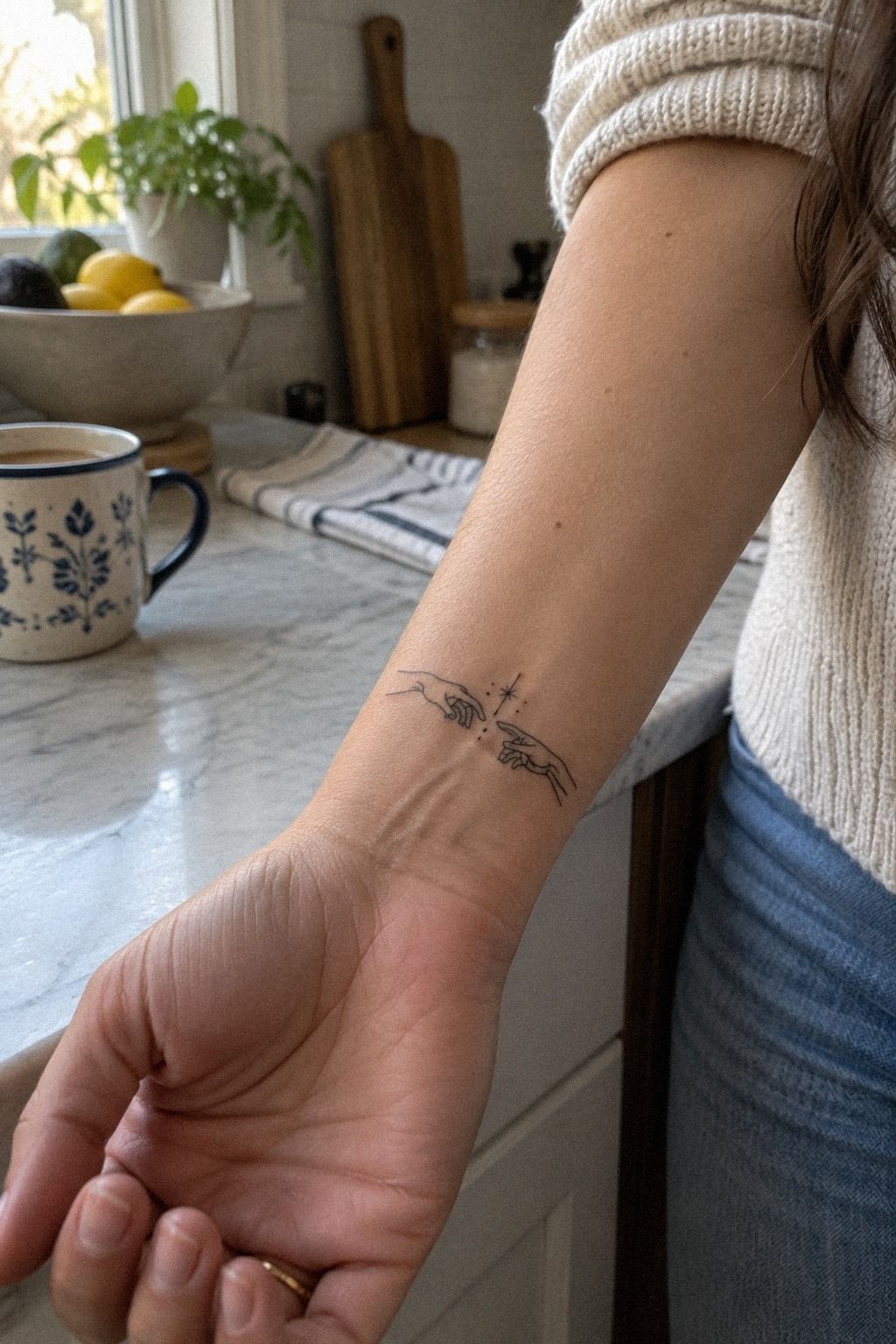
I started with six sketches, then narrowed them to two.
3I Matched Ink With My Style
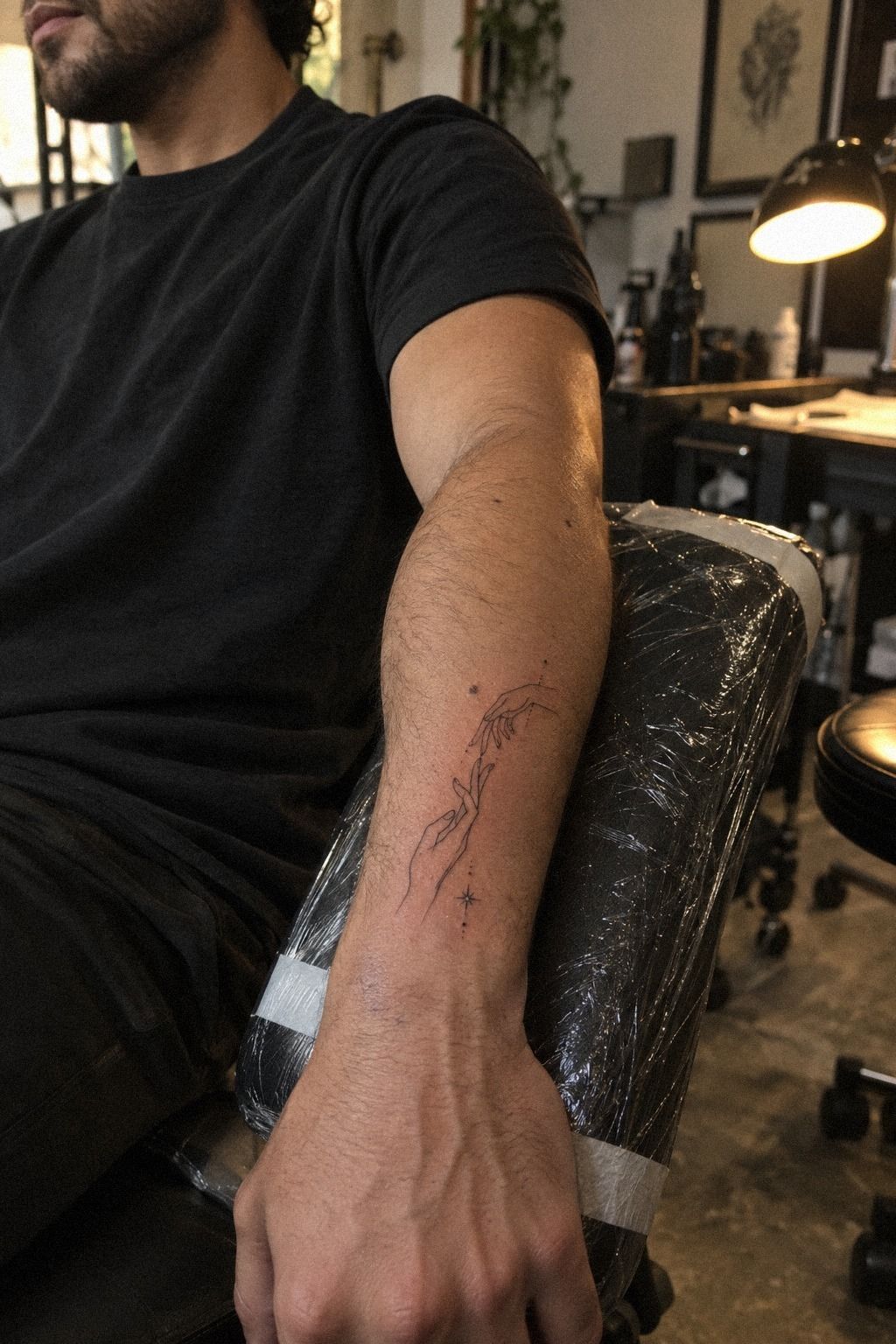
My clothing is mostly clean, dark, and slightly sharp, so I didn’t want a whimsical mark that fought everything else I wear. The reference photo shows a man with medium olive skin, hair-thin single-needle lines, and no shading. That restraint gave the tattoo a sleek quality without making it feel cold.
You can match your tattoo to your style without turning it into an accessory. I looked at the jewelry I already wear, the cuffs I reach for, and the symbols I’d kept returning to. A polished line suited me more than rough blackwork, although I still wanted one edgy angle to keep the piece from becoming too sweet.
I asked the artist to keep the line weight consistent and leave open skin around the design. Your artist may suggest a slightly larger drawing so the marks don’t crowd each other.
Listen to that advice. A small tattoo needs breathing room, and the empty skin is part of the composition.
I also compared examples on small hand tattoos for women because the placement photographs differently across wrists and skin tones. The point wasn’t to copy a gendered style. It was to study how elegant linework stays readable.
4I Tested Unique Symbol Ideas
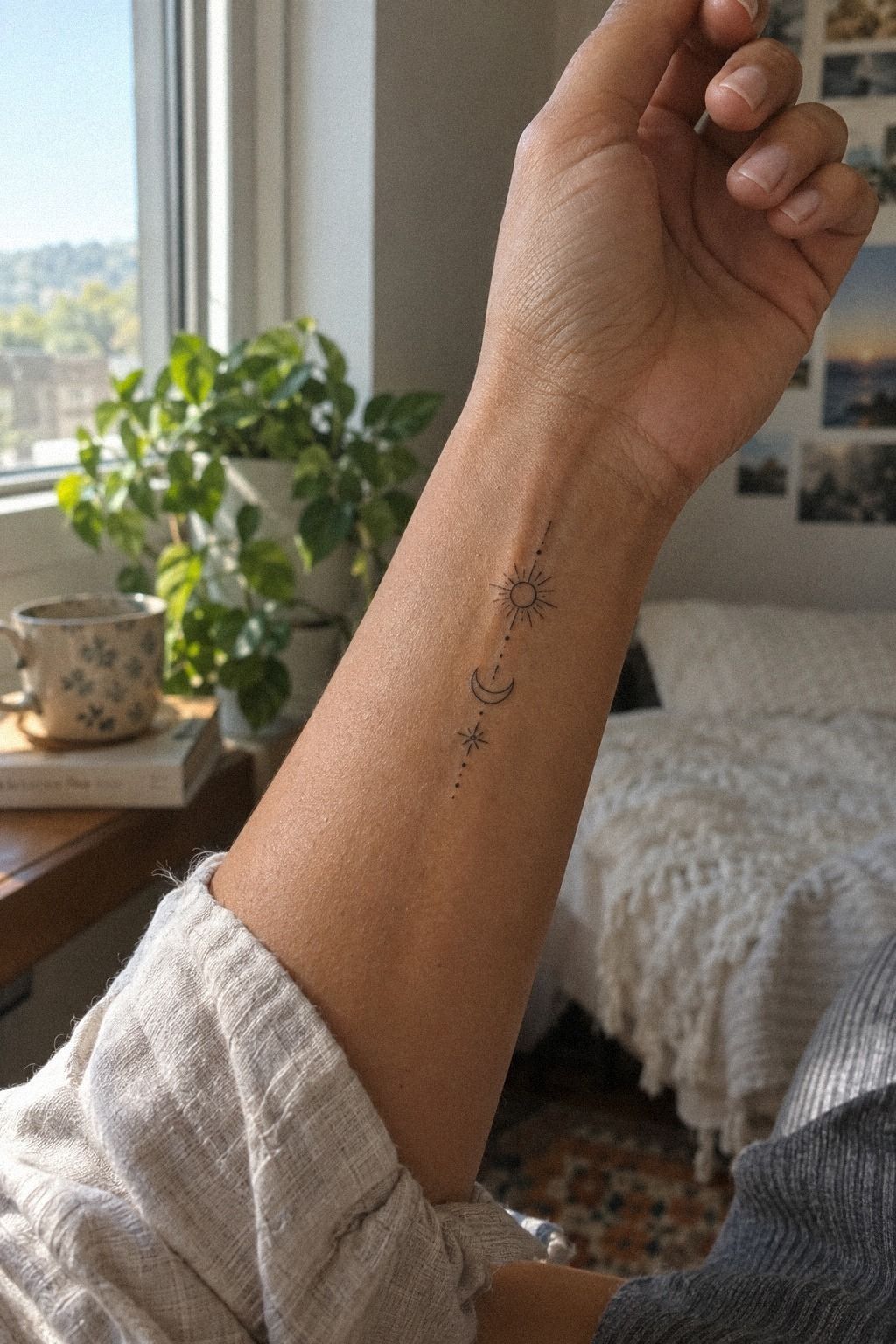
I tested a star, a tiny key, a botanical curve, and a symbol from a family story. The photo shows a woman with golden tan skin and hair-thin lines without shading, so the symbol has to carry the image through shape alone. That made the decision more symbolic than decorative.
You should ask what remains if the tattoo is reduced to its outline. If the answer is nothing, the idea may rely too heavily on texture. I wanted a mark that could be small and still feel powerful, even when someone couldn’t identify it immediately.
The emotional test helped. I wrote one sentence about each option, then read the sentences aloud.
The botanical idea sounded fashionable. The family symbol sounded like me. That difference settled it.
Your meaningful choice may be less obvious, less searchable, and far more durable emotionally.
But I didn’t turn the symbol into a literal illustration. I removed two small details and kept the central shape.
The result felt raw without looking unfinished, which is a difficult balance with fine linework. A symbol should give you a reason to keep looking, not require a paragraph of explanation.
For more context before choosing, I checked this small tattoos meaning guide. It helped me separate a meaning I lived from a meaning I merely liked.
5I Placed Fine Linework Near My Thumb
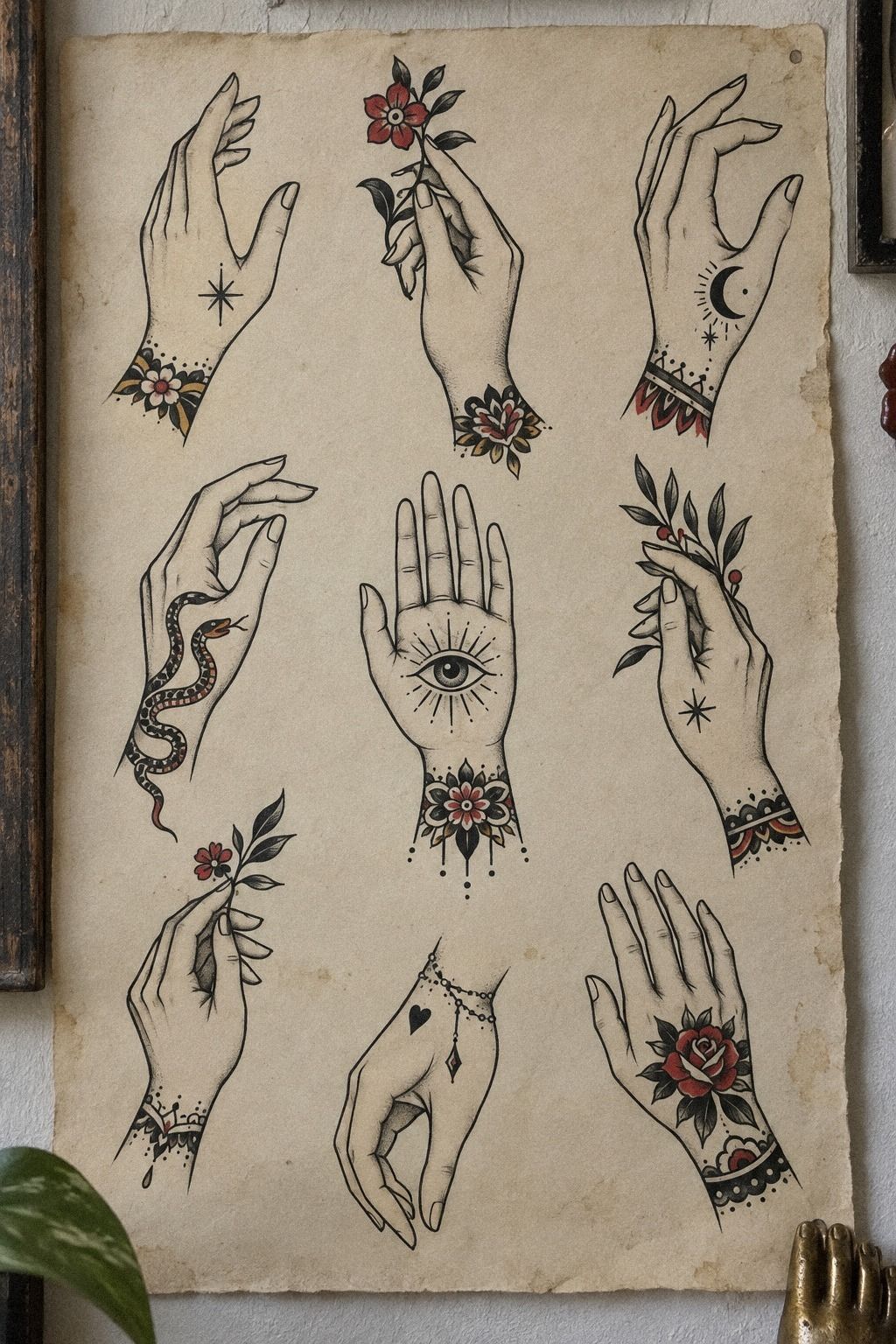
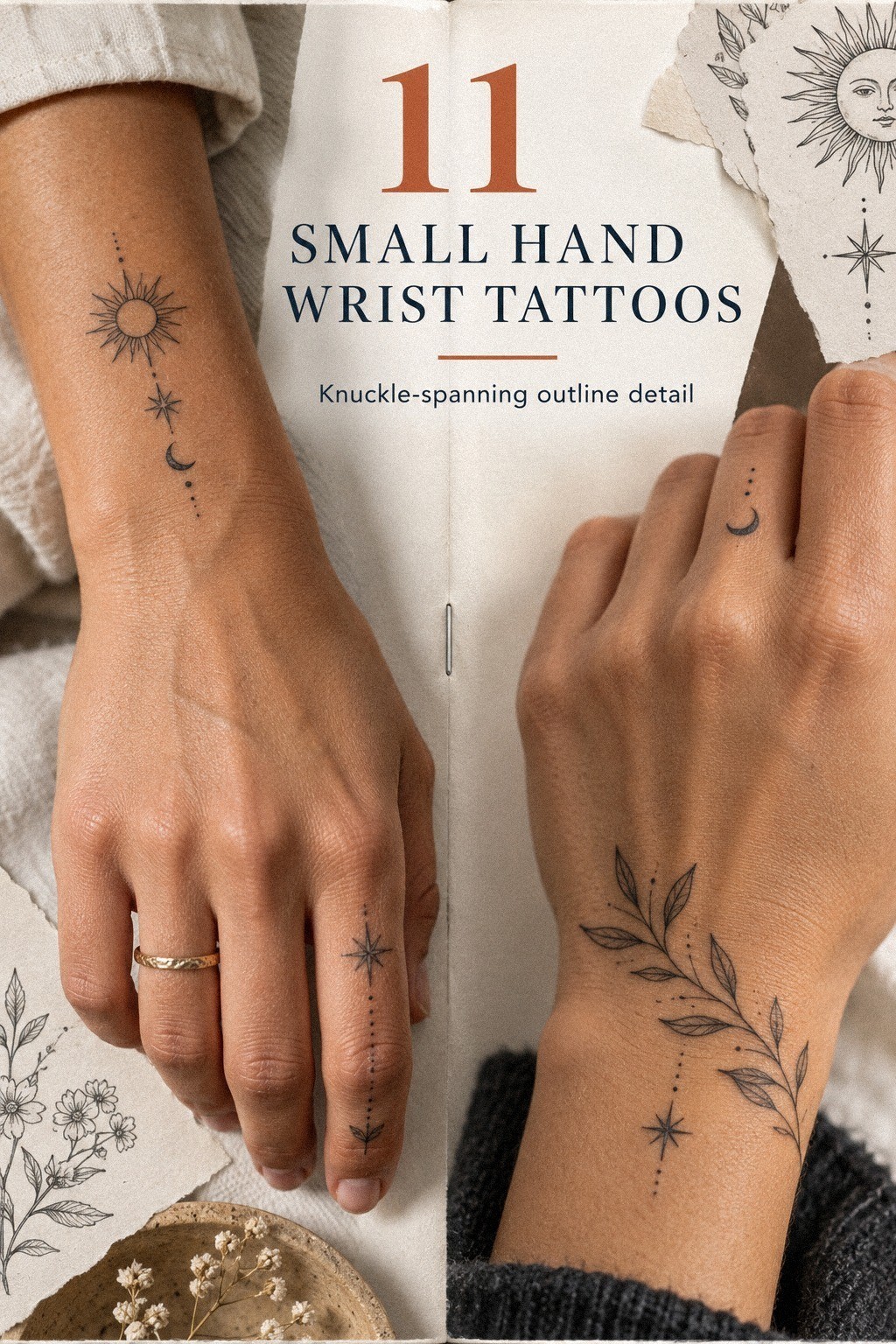
This section began with a flash sheet on aged off-white paper.
6I Checked The Design From Every Angle
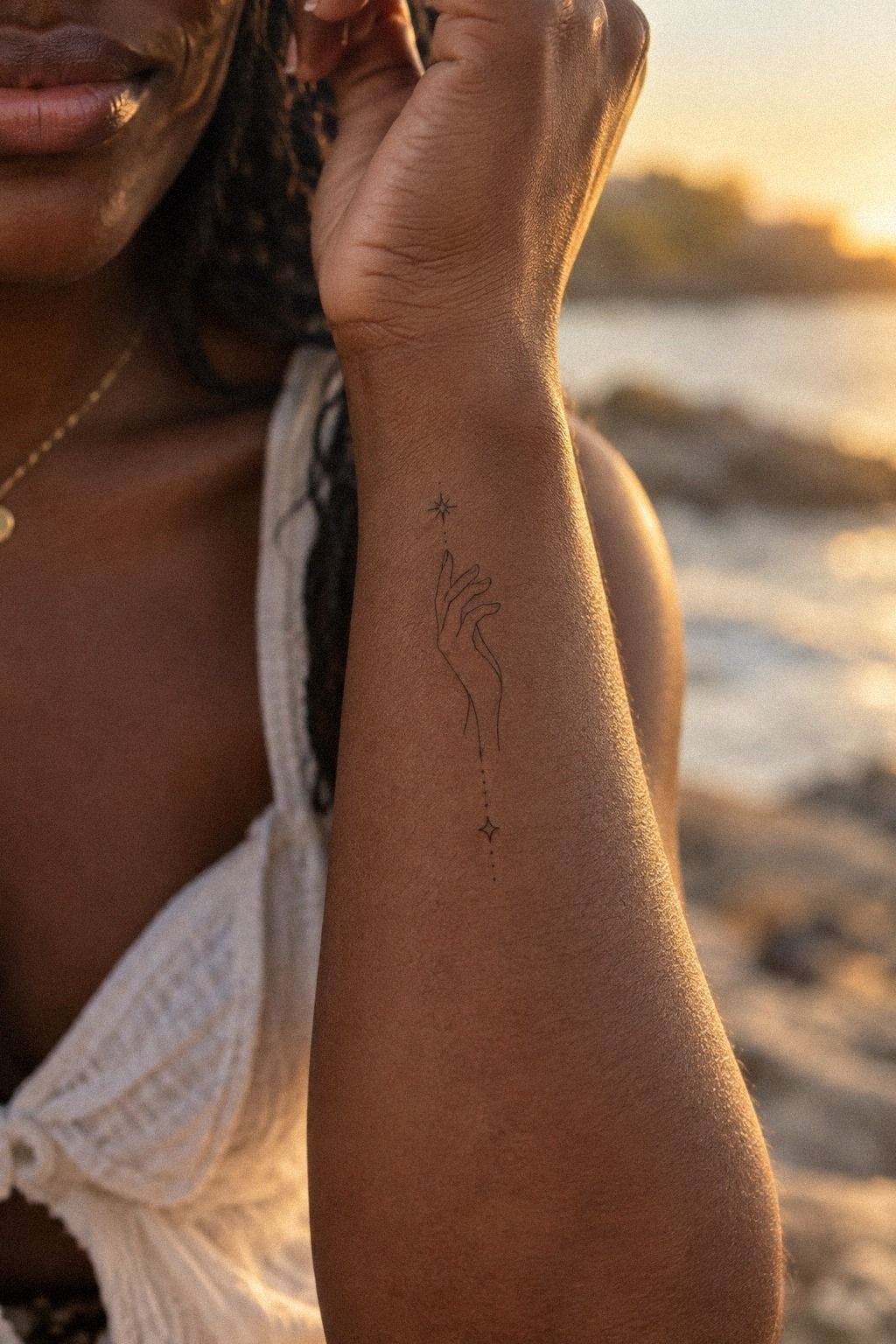
I checked the design standing, sitting, holding my phone, and resting my hand flat. The reference photo shows a woman with deep ebony skin and hair-thin single-needle linework, which reminded me that contrast and placement must work together. A vibrant idea can still look quiet if the angle hides its main line.
You should ask your artist to show the stencil from the front, side, and relaxed wrist positions. I took quick phone photos because the mirror can reverse what you see. Your tattoo will be viewed by other people from odd angles, especially when you reach, wave, or hold something.
The side view exposed my first mistake. The lower curve vanished when my wrist bent, so I moved the stencil slightly and opened the gap.
That small change made the design more graceful. I’d rather spend ten extra minutes adjusting a stencil than spend years wishing I had.
What about darker skin tones? The design should be chosen with the skin’s undertone and the artist’s healed-work portfolio in mind, not based on a stock photograph.
Ask to see healed examples. A clean stencil proves very little if the artist’s healed lines lose their clarity.
I saved more small hand tattoos female references to study angles, but I made my decision from my own wrist. Your body is the final reference image.
7I Prepared For Hand Tattoo Pain
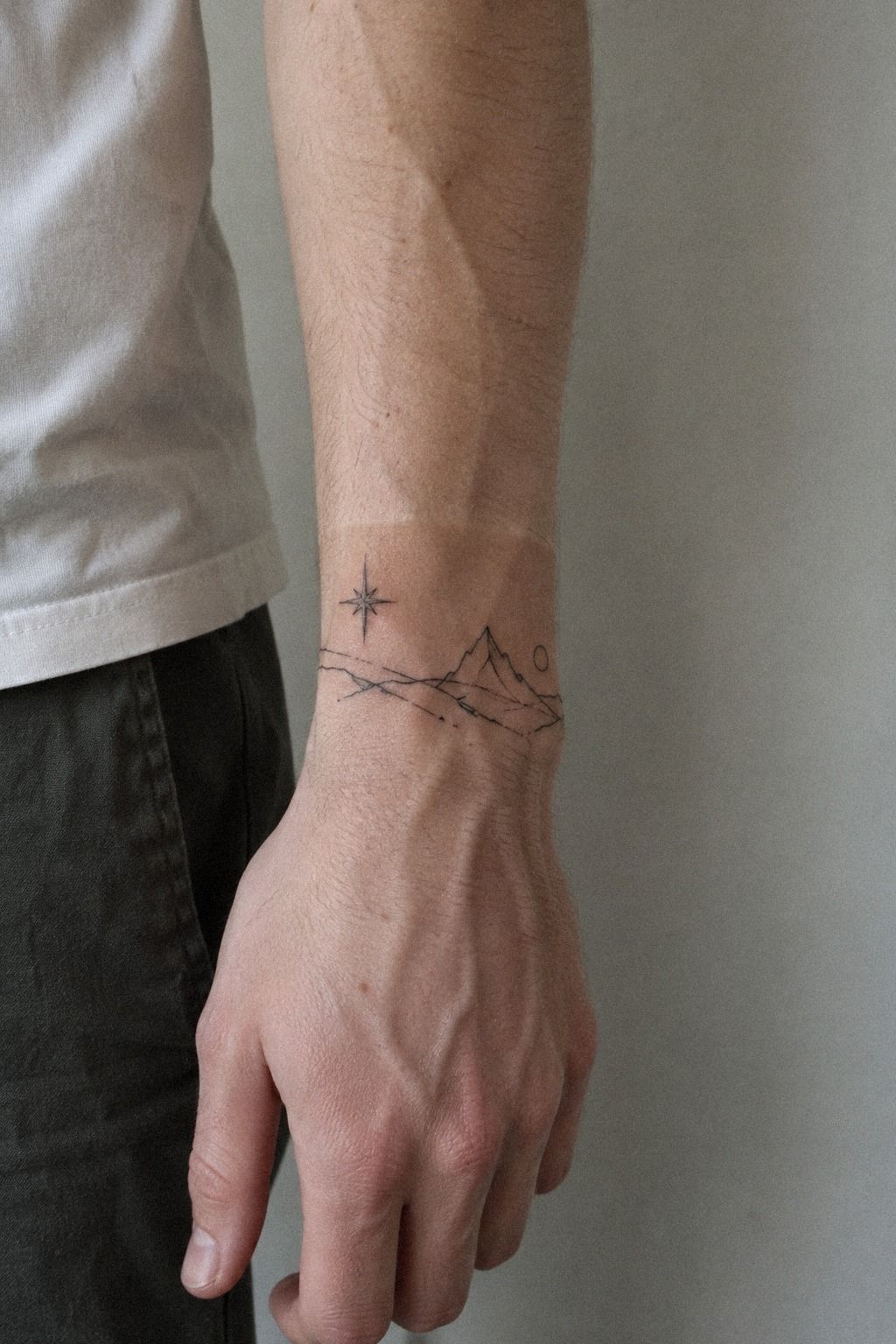
I prepared for pain without making it dramatic.
8I Selected Crisp Black Ink
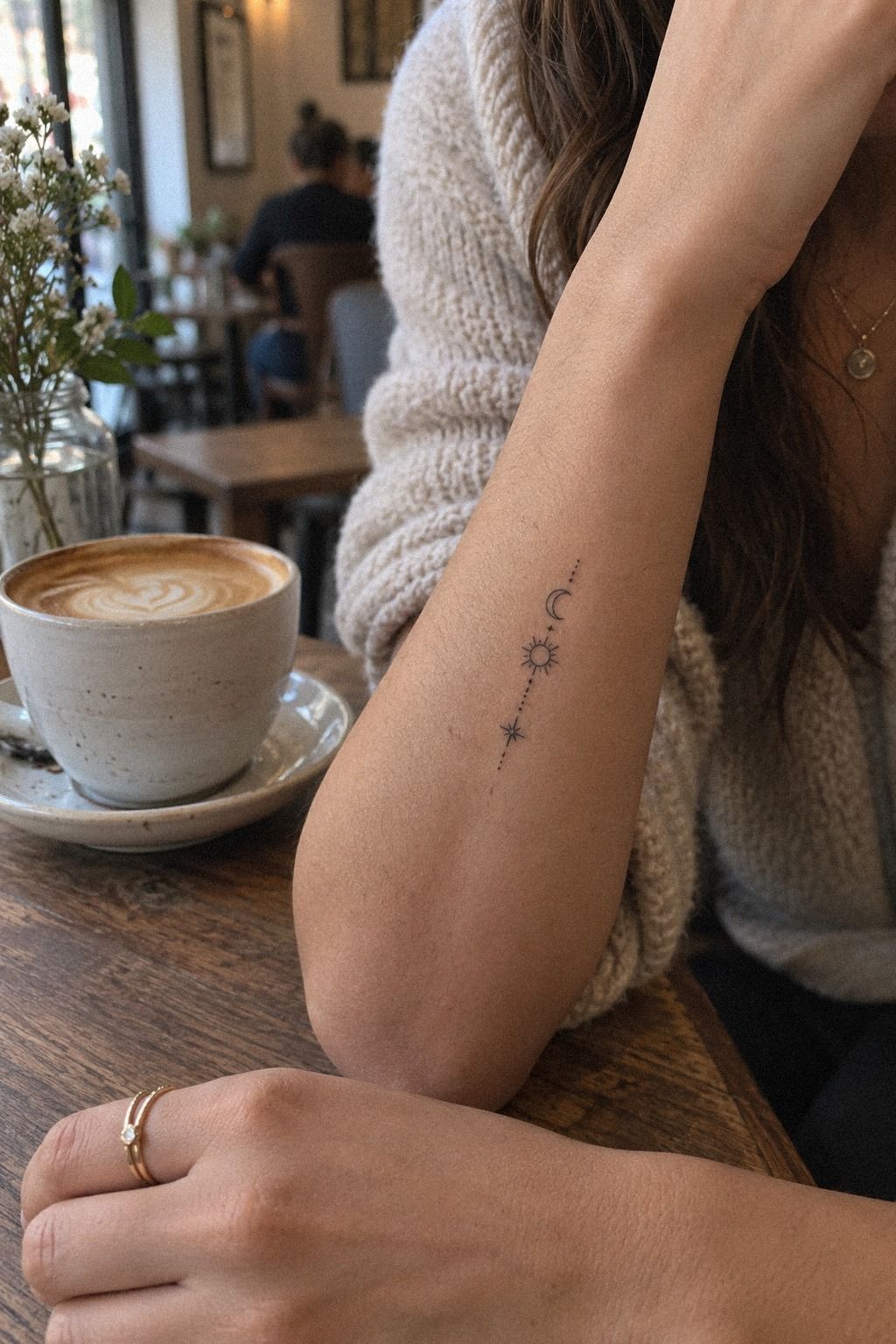
I selected black ink because I wanted the design to stay clear against my skin and clothing. The reference shows a woman with medium warm ivory skin, hair-thin lines, and no shading. That creates a classic look, but crisp black doesn’t mean the line should be thick or aggressive.
Your artist should explain how the chosen line weight suits the placement. Fine-line tattoos can soften or spread over time, especially when they sit in areas exposed to friction and ultraviolet light. I wanted strong outer marks, open gaps, and no tiny cluster that would blur into a dark spot.
I compared a soft gray option with black. Gray looked ethereal in the stencil, but it lost definition from a distance.
Black gave the small symbol more authority. I’d choose a clean black line over a fashionable pale tone when the design depends on a readable outline.
The final ink looked polished without looking glossy. That distinction mattered to me. Your tattoo can be refined and still have a little grit, especially if the artist leaves enough skin visible around the marks.
I also reviewed small hand tattoos for examples of black ink that weren’t overloaded. The best references had fewer marks than I expected, and those marks had somewhere to land.
9I Protected My Fresh Wrist Tattoo
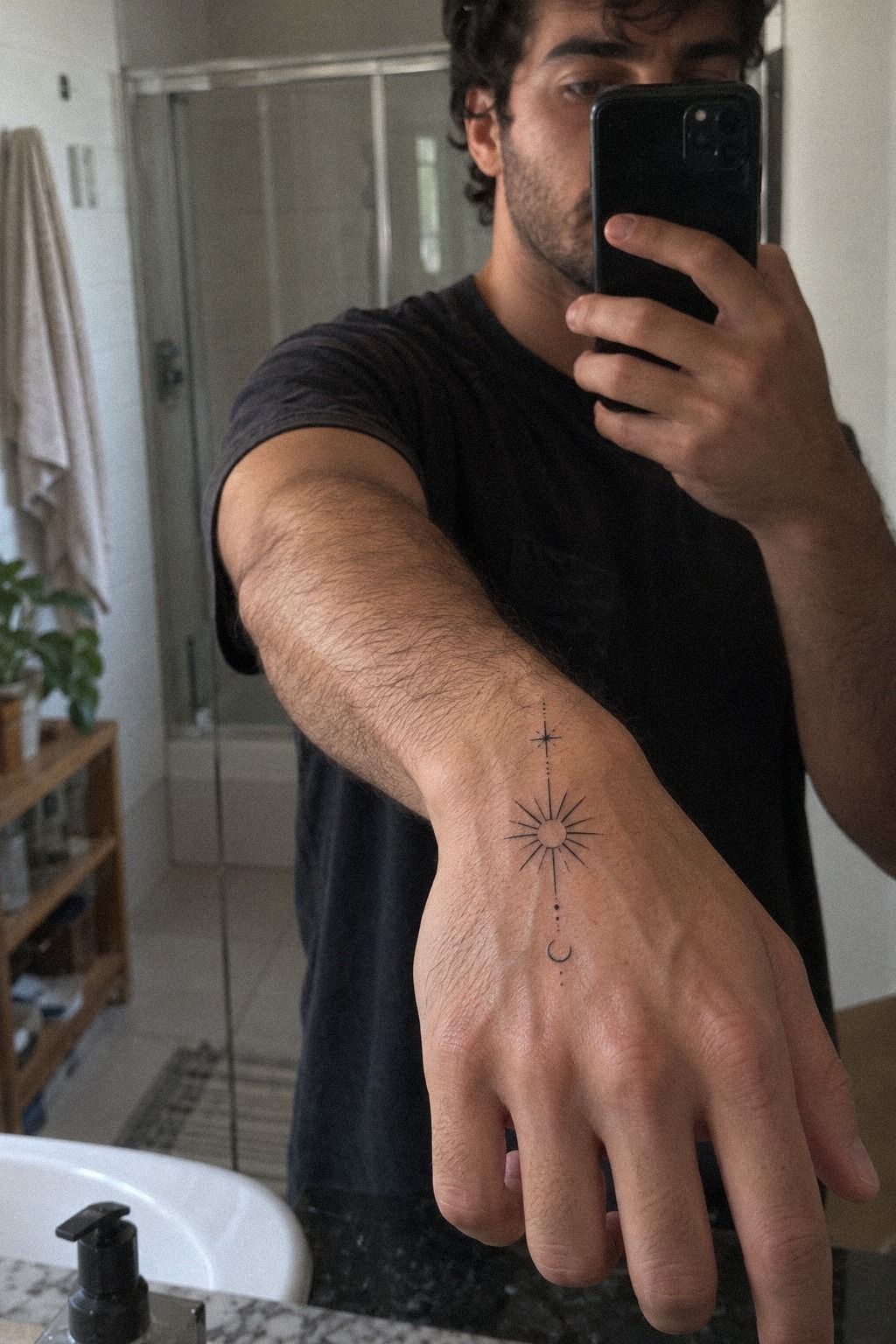
After the appointment, I treated the tattoo like a fresh wound, not a finished accessory. The reference photo shows a man with medium olive skin and hair-thin lines, and the clean result depends on what happens after the needle leaves. I followed my artist’s instructions for washing, drying, and moisturizing with a gentle touch.
You’ll want to keep the area clean and avoid picking at flakes. I used mild soap, patted the skin dry, and wore loose fabric over it when I needed coverage. Your artist may give different instructions based on the covering used, so their directions come first.
I avoided direct sun and swimming while the surface settled. Those habits sound basic, but the wrist gets exposed without you noticing. A sacred little mark still needs practical care, especially when you wash your hands several times a day.
And I didn’t cover the tattoo with a tight watch or bracelet. Friction made the skin feel irritated, so I left the wrist bare.
The first few days looked less dramatic than I expected, then the area became dry and slightly itchy. That was normal for my experience, but your artist should answer any concern that feels unusual.
For more placement comparisons, I revisited small simple hand tattoos. It reminded me that a restrained tattoo needs restrained aftercare too.
10I Watched The Linework During Healing
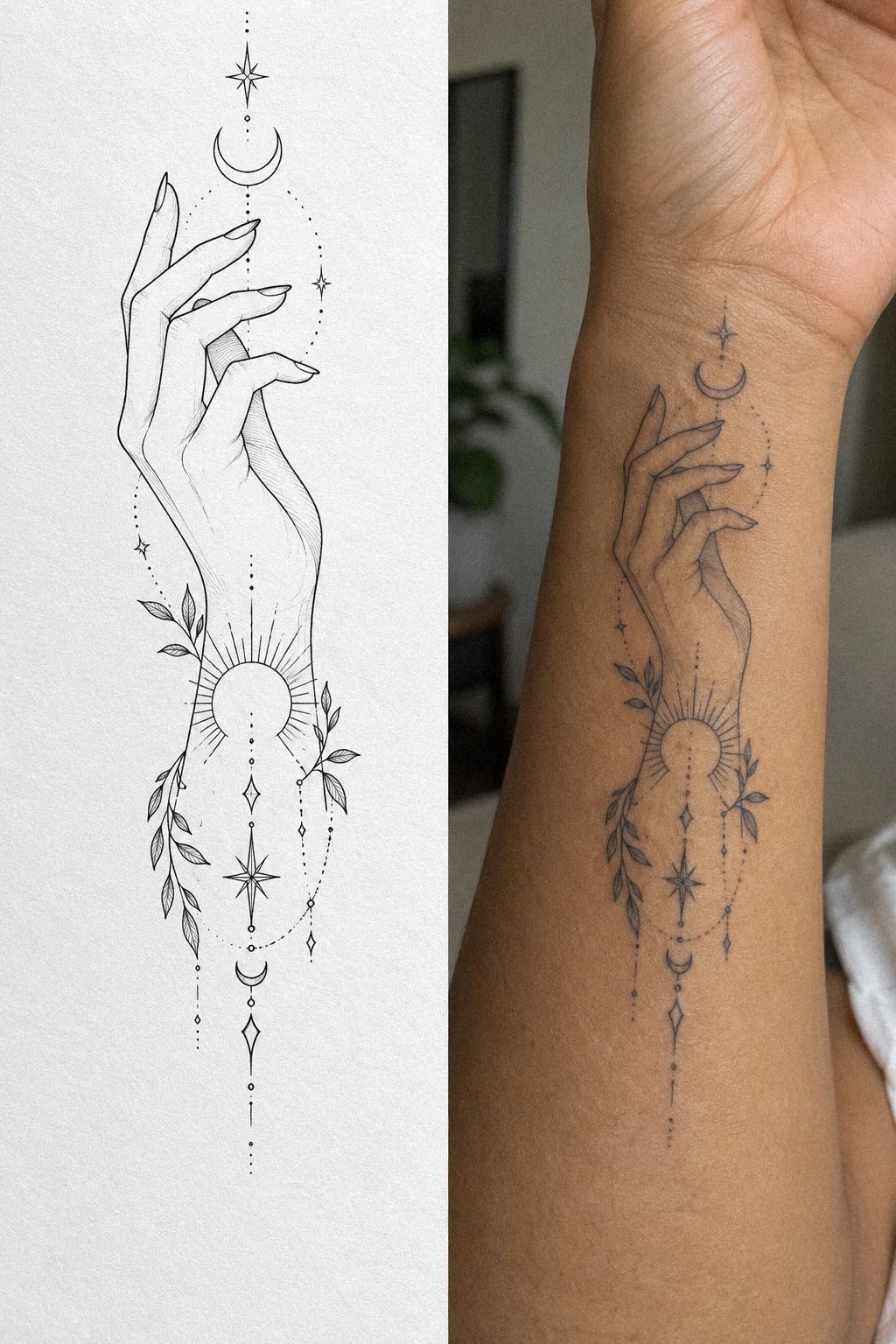
The split image shows a stencil on the left and the healed design on the right. That comparison is useful because fresh ink can look darker and sharper than settled ink.
I watched for the main curve, the spacing, and the symbol’s identity instead of judging every tiny line. The healed result looked timeless because the structure remained clear.
Surface healing often takes about 2 to 3 weeks, while complete healing can take about 2 to 3 months. Your wrist may look settled before the deeper layers finish recovering. I kept taking occasional photos in the same light, which helped me see gradual changes without obsessing over the mark.
The line softened slightly, but it didn’t lose its meaning. Fine lines can widen with time, and ultraviolet exposure can speed visible fading.
I used sleeves and sunscreen once the skin was fully healed, following my artist’s advice. A striking tattoo doesn’t stay striking by accident.
I also resisted the urge to compare my skin with someone else’s photograph. Your healing pattern, undertone, placement, and artist all affect the result. One friend’s tattoo settled quickly; mine took longer to look comfortable.
The small hand tattoos for women gallery gave me more healed references, but the most useful evidence came from my own progress photos. They showed the design becoming quieter, not weaker.
11I Loved My Meaningful Finished Tattoo
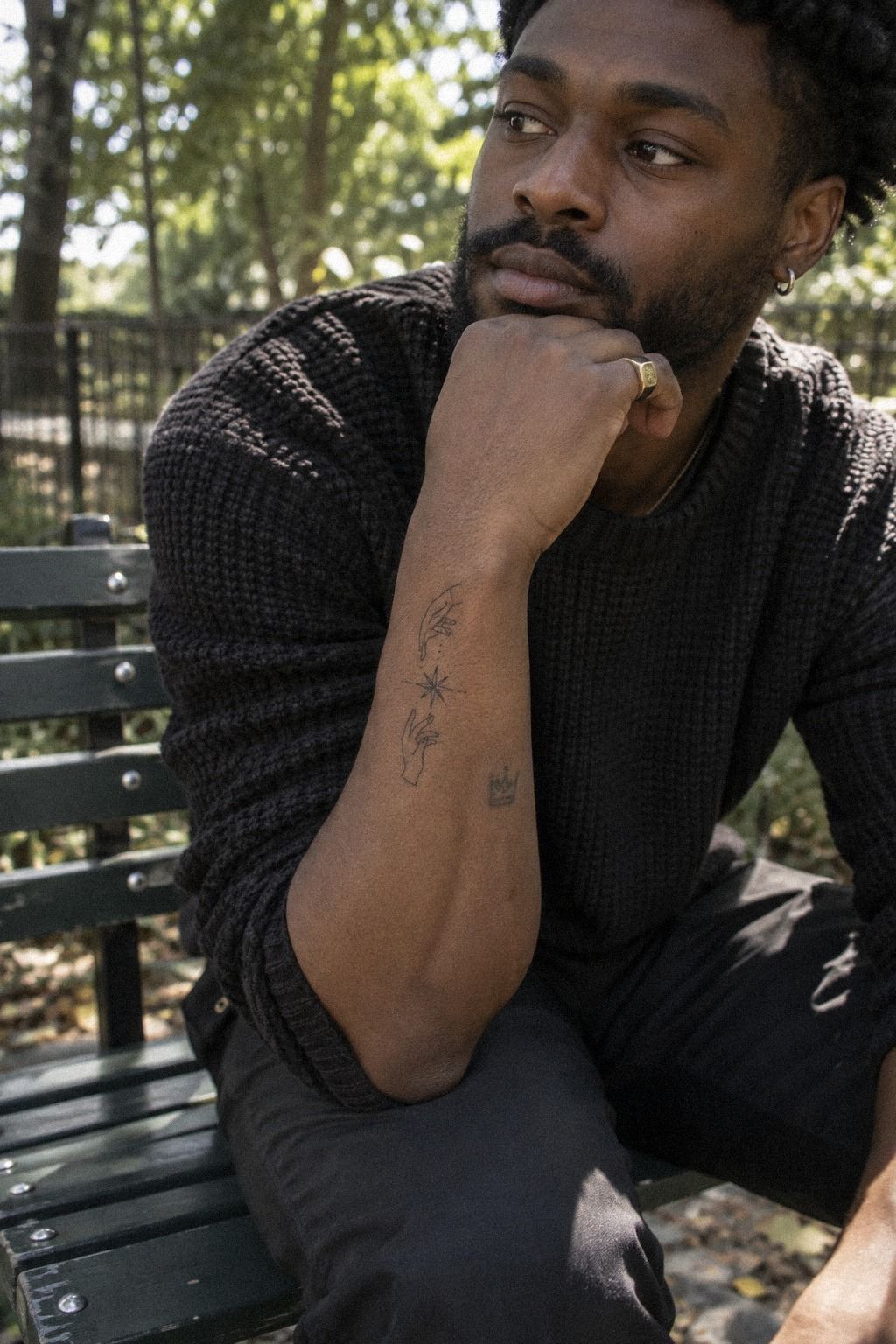
The finished tattoo sits on a man with deep brown skin and a warm undertone, with fine hair-thin lines that remain readable without heavy shading. That final look felt empowering because I no longer saw the mark as something I needed to hide. It had become part of my gestures, my sleeves, and my ordinary mornings.
You may expect a big emotional moment when the bandage comes off. Mine was smaller. I noticed it while reaching for a glass, then again while fastening a cuff.
The design looked personal because it belonged to a memory I had carried before it belonged to my skin.
I’m glad I didn’t choose the loudest reference. A smaller symbol gave me room to live with it.
You can still choose something daring without making it visually heavy. The strongest choice is often the one that keeps speaking after the first week of excitement.
But I know I’ll protect the lines from hard sun and unnecessary friction. Fine-line ink needs realistic expectations.
It may soften, and that doesn’t automatically mean it failed. A tattoo can age and remain meaningful.
If you’re collecting ideas, compare small hand finger tattoos for women with wrist placements before booking. Your final choice should feel like a decision you made, not a design you borrowed.
How much it cost
The typical US range for a small hand wrist tattoo is about $100 to $300, but that isn’t a promise or a fixed quote. A shop may charge a minimum of about $50 to $100, while an hourly rate may sit around $100 to $250. Your artist, region, design detail, and appointment length all change the number.
I asked for the artist’s minimum before sending a deposit, and you should do the same. A tiny tattoo isn’t always priced by size because the setup, drawing, sanitation, and booking time still matter. My design stayed within the short-session category because it used single-needle linework without dense shading.
The exact total belongs to your quote, not a generic article. If you’re comparing artists, look for clean healed work, clear communication, and hygiene before chasing the lowest number. I’d choose a reputable artist over a bargain appointment every time, especially for a visible placement.
The Three-Check Ink Rule
I learned to judge a small wrist tattoo with three checks: meaning, movement, and aging. Meaning asks whether I still care about the symbol without needing other people to approve it.
Movement asks whether the drawing works when my hand turns, bends, grips, and disappears under a sleeve. Aging asks whether the line structure has enough room to soften without losing its identity.
That framework sounds simple, but it stopped me from choosing a design only because it looked good in a saved image.
My first mistake was treating the reference photo like a finished answer. I nearly chose an intricate symbol with several tiny interior marks because the screenshot looked captivating.
On my wrist, those marks crowded the central curve. I removed them, and the tattoo became more honest.
The lesson was uncomfortable: more detail didn’t make the idea more meaningful.
I also underestimated visibility. A wrist tattoo isn’t hidden just because you own long sleeves.
Your hands appear in every conversation, photograph, commute, and meal. I wanted discretion, but I didn’t want shame.
The final design gave me both options, and that balance felt understated rather than timid.
If you’re choosing between two sketches, make the smaller decision on paper first. Wear it for a day. Look at it in daylight and under indoor light.
Ask whether you’d still want it if nobody complimented it. That question helped me choose a graceful line instead of a fashionable one.
The Visibility Ladder for Hand Ink
I think of wrist visibility as a ladder. The inner wrist sits lower on the ladder because a cuff can cover it quickly. The side hand sits higher because it appears during ordinary gestures.
The fingers sit highest because almost every movement reveals them. Your preferred rung depends on your work, wardrobe, and comfort with questions.
I chose a middle position. It’s visible when I want it seen, but it doesn’t announce itself before I do. That made the tattoo feel feminine in one outfit, masculine in another, and neither when I wore a plain sleeve.
The mark changed with me instead of forcing one identity.
You’ll want to think about future changes too. Watches, bracelets, uniforms, and workplace expectations can affect how often the design is covered. I don’t believe visibility makes a tattoo less personal, but I do believe you should choose it knowingly.
For alternatives, compare small side hand tattoos with a traditional inner-wrist placement. The difference isn’t just visual. It changes how often you see the ink, how much sun it receives, and how much explanation you may be asked to give.
The Wear-In Test
A fresh tattoo can look vibrant, crisp, and almost louder than expected. I waited for the surface to settle before deciding how I felt about the final linework. That patience mattered because the first photograph was not the finished story.
Your tattoo will change as the skin recovers. Surface healing may take about 2 to 3 weeks, while complete healing may take about 2 to 3 months.
During that period, gentle washing, light moisturizing, and avoiding sun and swimming can support the process. Follow your artist’s instructions if they differ.
I used the wear-in test by asking three questions: Can I still identify the symbol? Does the line remain balanced?
Would I choose this mark again today? The answer stayed yes.
That was more useful than chasing a frozen image of fresh ink.
And I’ve stopped expecting permanence to mean visual stasis. Fine lines may soften, but a well-placed black design can age with character. I wanted something classic, not something trapped in the day it was made.
The Questions I Get Asked Most
How much does a small hand wrist tattoos usually cost?
A small hand wrist tattoo usually costs about $100 to $300 in the US, though a shop minimum may be around $50 to $100 and hourly rates may run $100 to $250. Your artist’s quote depends on region, experience, detail, and placement.
Are small hand wrist tattoos a good idea for a first tattoo?
Yes, small hand wrist tattoos can suit a first tattoo because the placement is manageable for many people and the design can stay visually restrained. A meaningful symbol with clean lines lets you start small without choosing something forgettable.
How do I choose a tattoo artist for small hand wrist tattoos?
Choose an artist by checking healed portfolio photos, consistent linework, relevant style experience, and visible studio hygiene. Ask to see wrist or hand work on varied skin tones. Healed examples tell you more than a fresh appointment photograph.
How much do small hand wrist tattoos hurt?
Pain varies, but hands, feet, ribs, and sternum are often more painful than the forearm, thigh, or shoulder. A wrist can feel sharp near bone and milder over softer areas. A short session may still feel intense, so eat, hydrate, and speak up if you need a pause.
How long does a small hand wrist tattoos take to heal?
The surface often heals in about 2 to 3 weeks, while complete healing may take about 2 to 3 months. Wash gently, moisturize as directed, and avoid sun and swimming during early healing. Patient aftercare helps you judge the settled line fairly.
What’s the best placement for small hand wrist tattoos?
The inner wrist is easier to cover and often gives a discreet look, while the side hand is more visible during daily movement. Choose based on your work, habits, and comfort with exposure. A tested stencil can show how the design behaves before you commit.
Where I’d Start First
If I had to pick one, I’d start with the inner wrist placement. It gives you control over visibility, and a clean symbol can stay readable without heavy fill.
Save the stencil, check the healed portfolio, and let your artist adjust the line for your skin. Then wear it proudly!