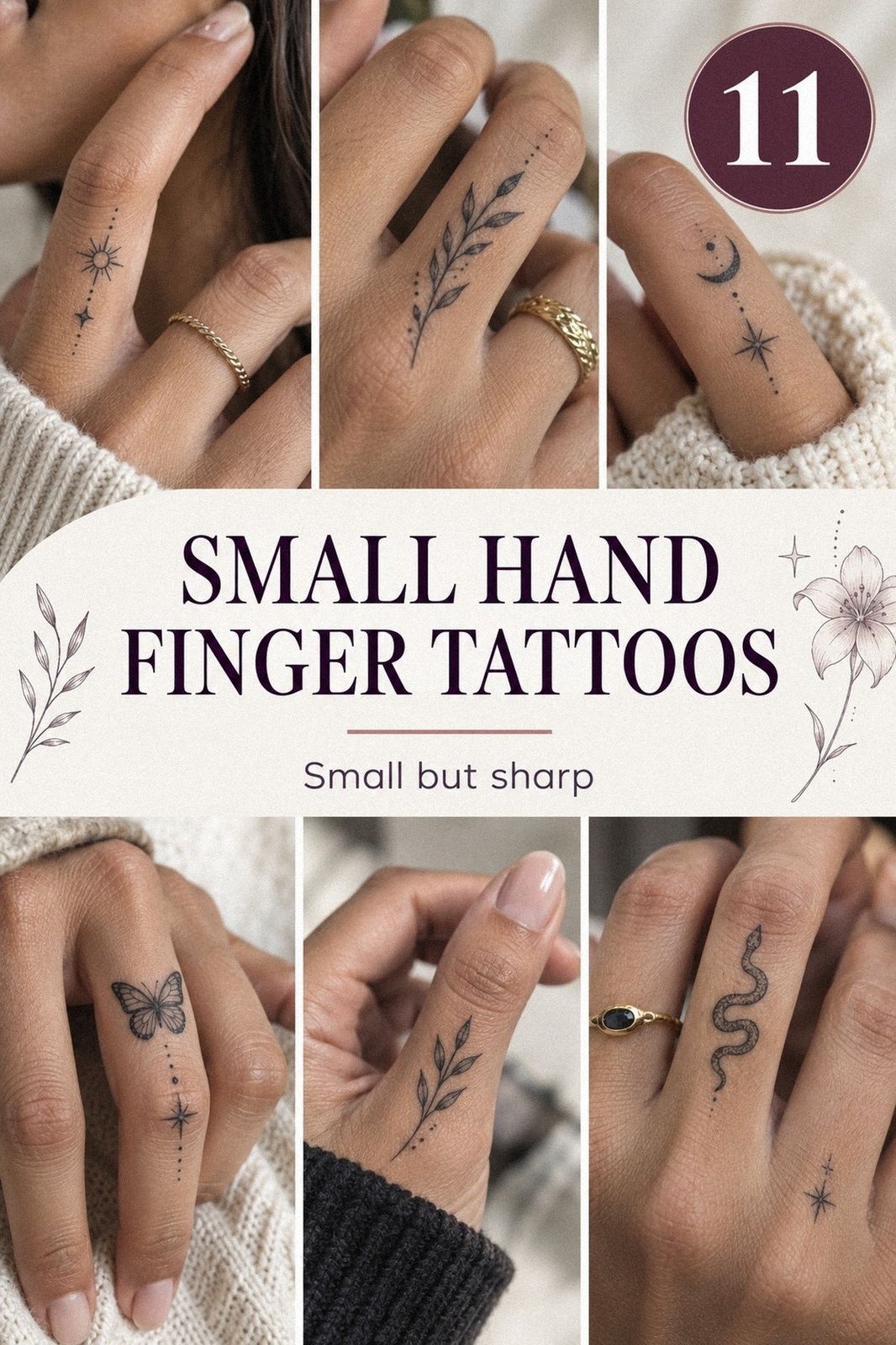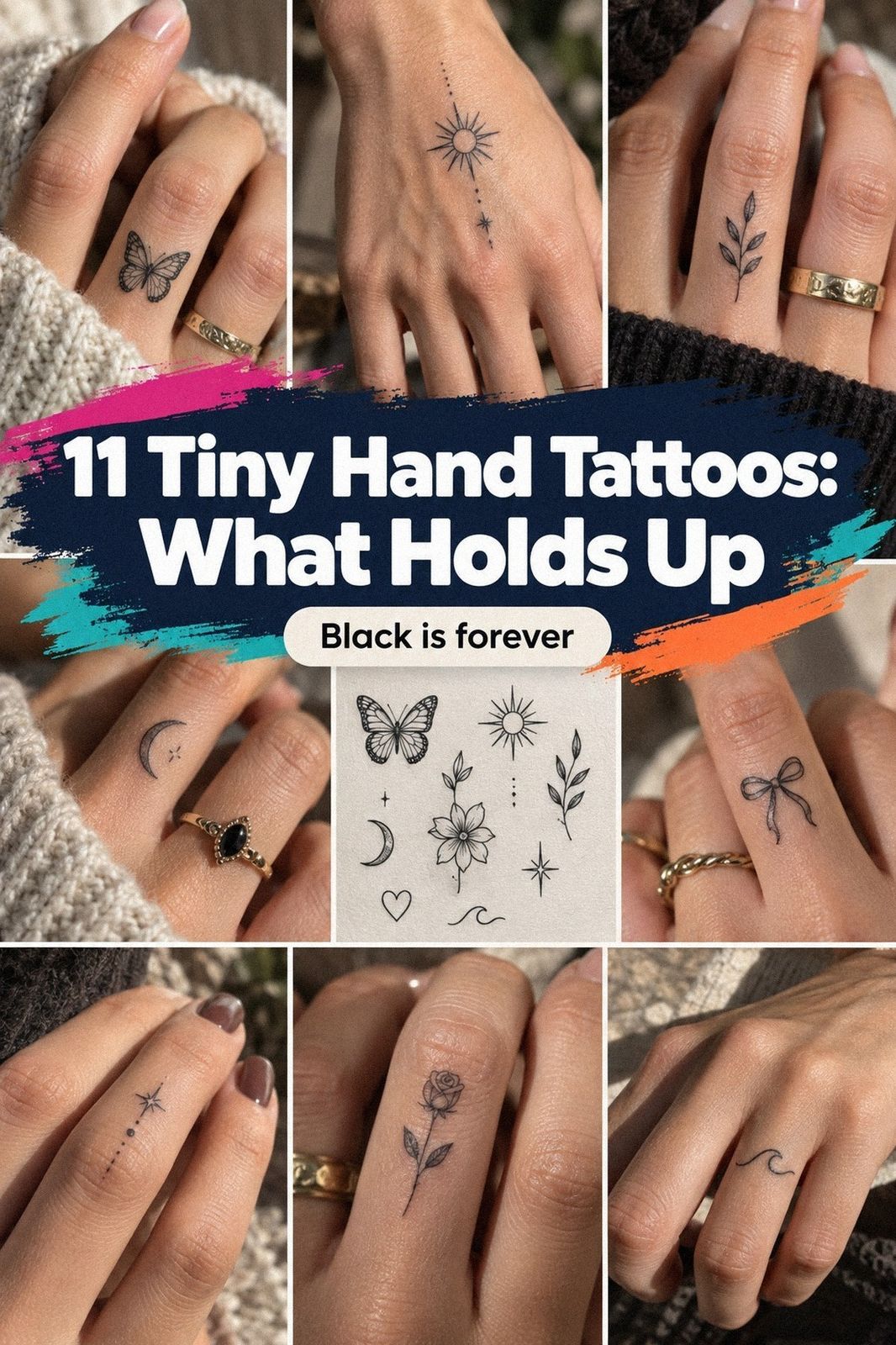
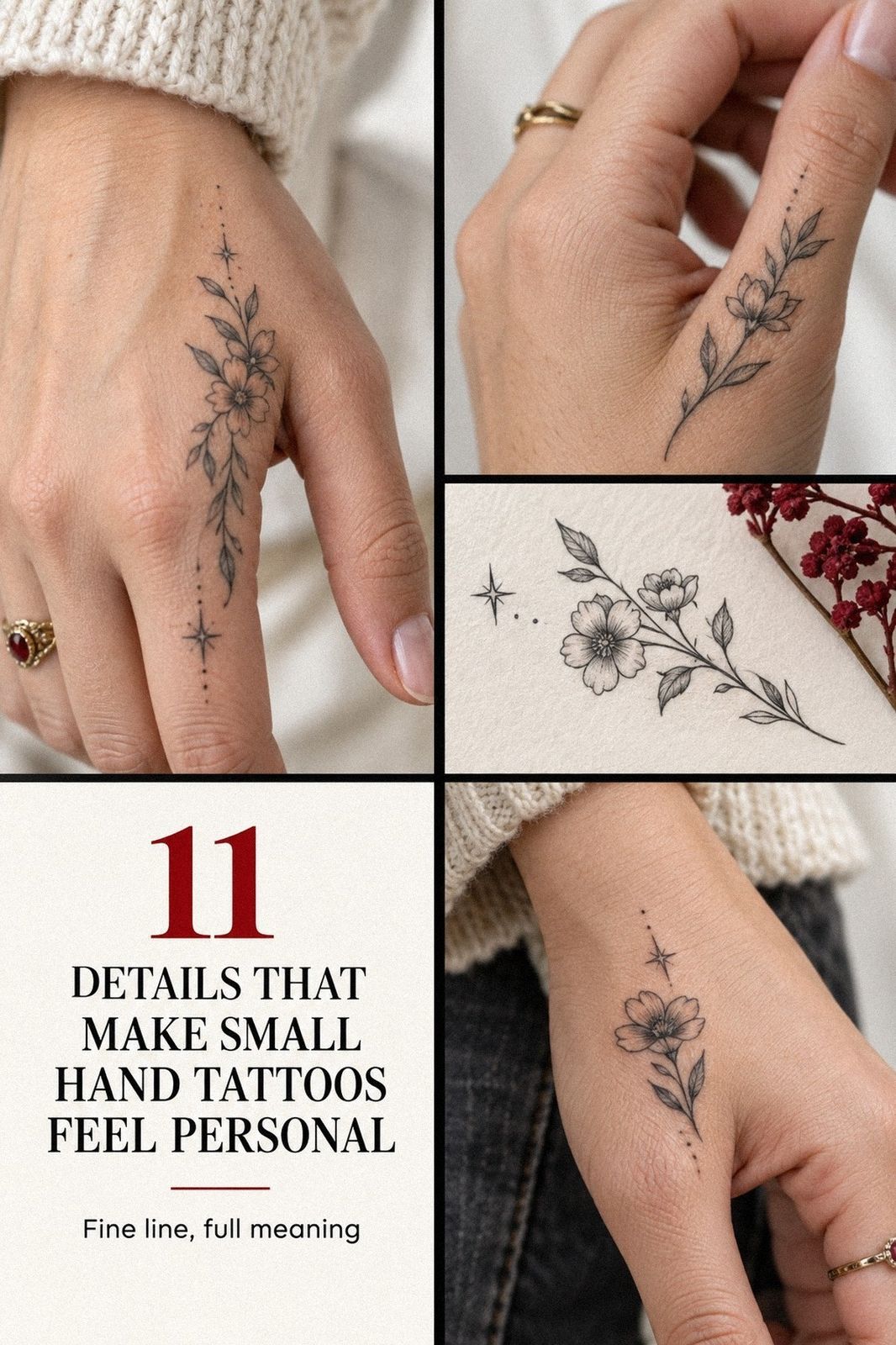
Small hand tats for women can cost about $50 to $300 in the US, depending on the artist, region, placement, and session length. I once chose a design that was too detailed for its size, and the healed lines lost their crisp shape. A small hand tattoo can still feel striking when its idea is clear and its spacing is generous.
Your hand is visible, active, and personal. Before booking, think about how often you want to show the mark, how much daily wear it can handle, and whether it will still feel meaningful after the first rush fades. That choice matters!
Honest take
The best compromise is a symbolic design with open spacing, a placement you can cover naturally, and enough scale for the lines to heal cleanly. A delicate tattoo can be understated without becoming forgettable.
I’d choose a simple mark over an ornate miniature scene every time. One graceful flower, glyph, heart, or crescent usually ages more convincingly than a crowded composition that looks intricate only when viewed up close.
- Start With Tiny Floral Linework
- Combine a Tiny Symbol, Heart, or Wrist Mark
- Let Side-Hand Script Breathe
- Keep Zodiac Signs Readable
- Choose a Birth Flower Between the Fingers
- Use Open Geometry Instead of Crowded Detail
- Simplify a Playful Animal
- Give Moon Symbols One Clear Meaning
- Add Color With Restraint
- Choose the Placement Before the Design
- Protect Readability as the Tattoo Ages
1Start With Tiny Floral Linework
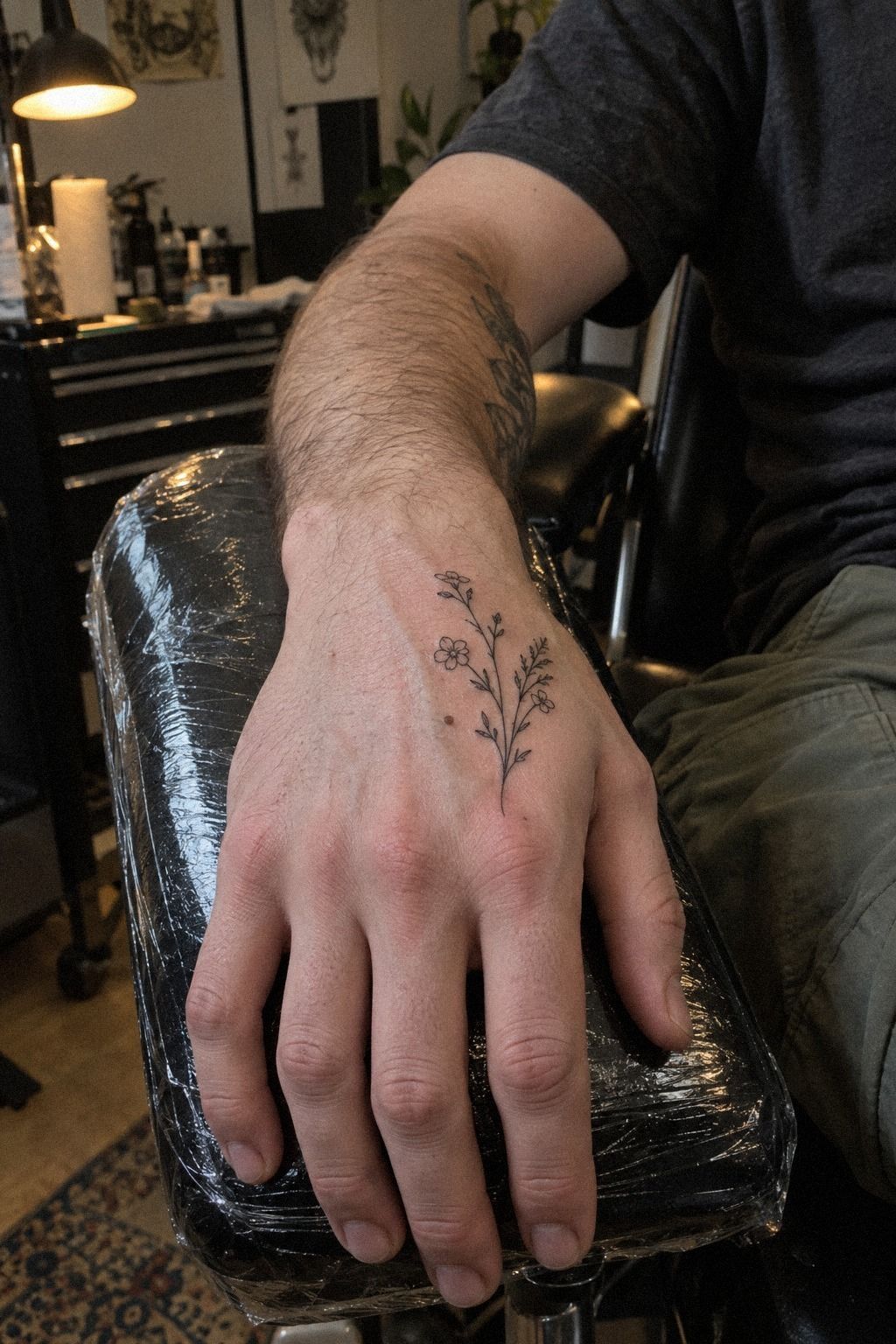
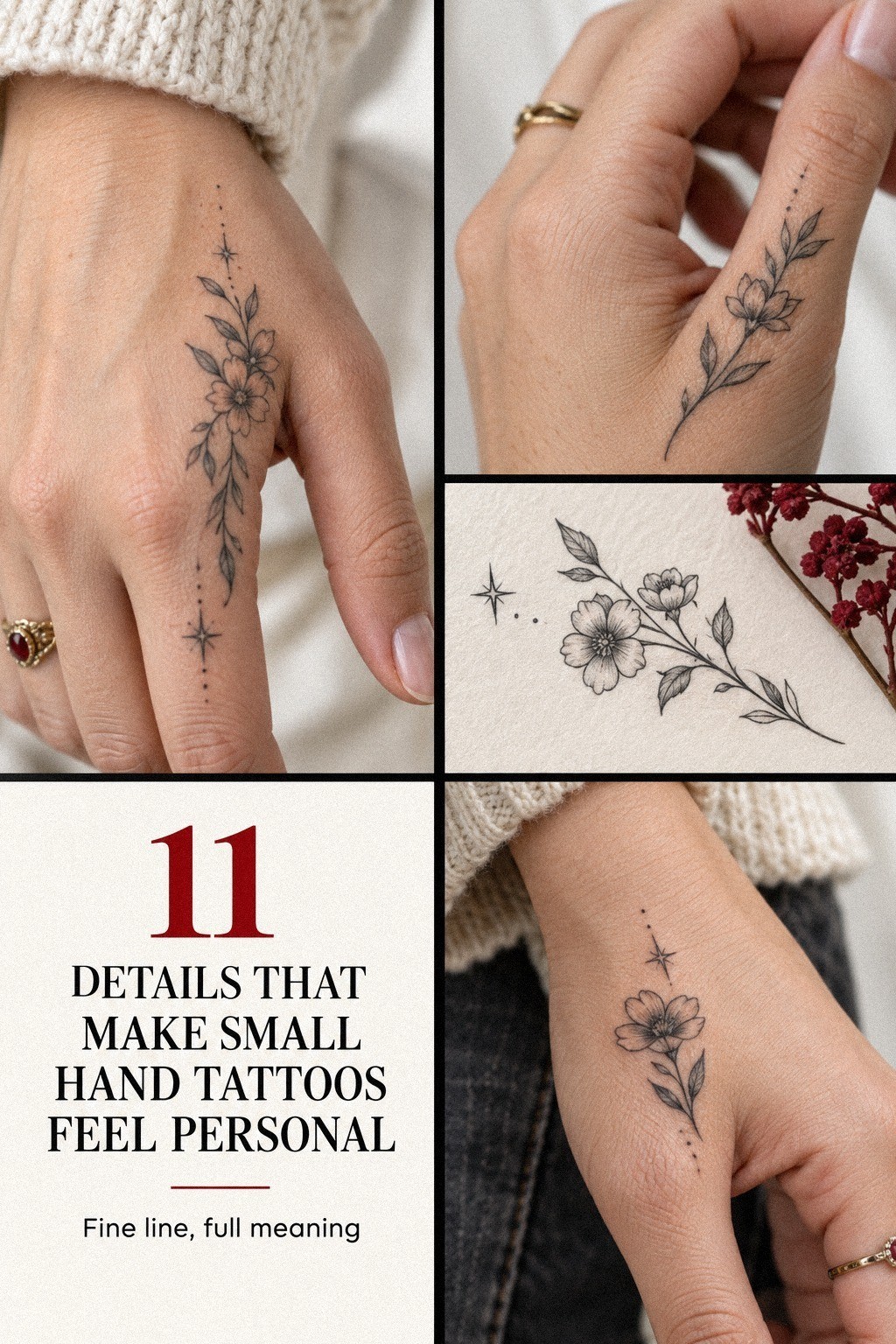
A tiny wildflower sprig works when you want something delicate, flowing, and easy to keep discreet. The stem can follow the side of your hand, while the petals sit near the base of one finger. A linework tattoo gives the idea room to breathe.
Cool black ink can create crisp contrast without making the design feel heavy. Choose two or three open petals rather than a dense bouquet, especially if the tattoo will sit near a crease or knuckle.
Have your artist separate every stem and petal clearly. When fine marks are pressed together, they can soften into one dark patch after healing. A single floral gesture often feels more timeless than a miniature arrangement.
You can compare related references through these small hand tattoos for women. Look for designs that remain readable without relying on excessive detail. Small does not mean invisible!
2Combine a Tiny Symbol, Heart, or Wrist Mark
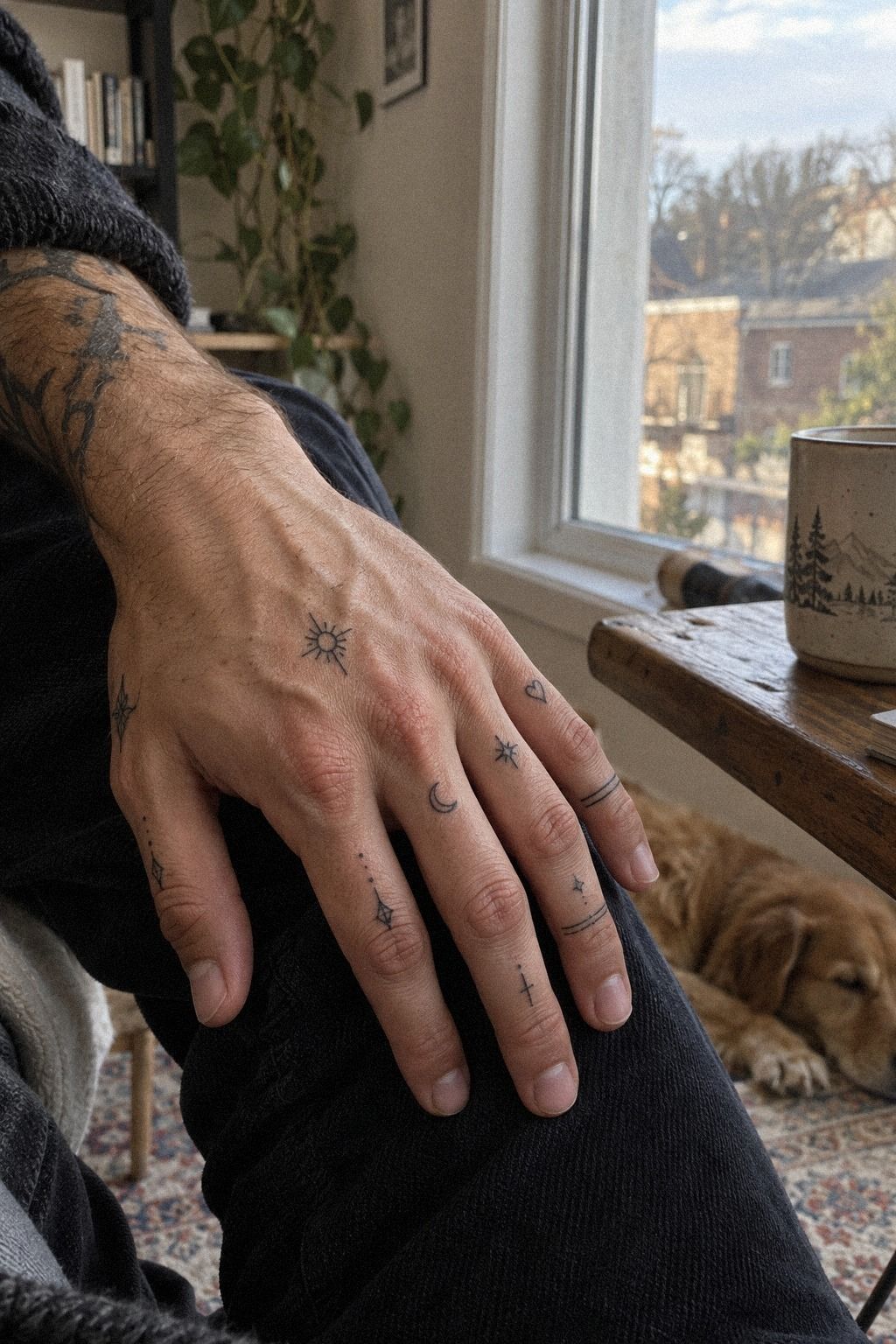
A tiny symbol between the fingers can feel meaningful, understated, and deeply personal without announcing itself. It might be a star, initial, tiny heart, or abstract mark that only you understand.
An outlined blackwork heart can look fierce or romantic depending on its shape. A narrow heart feels dainty, while a heavier contour gives the mark a sharper, edgier character.
The wrist edge gives you a little more visual control than the palm or finger pads. A symbol placed there can stay hidden beneath a bracelet or sleeve, yet it remains easy for you to see when your hand turns.
Think about the direction of the finger placement before settling on the symbol. A vertical mark may follow the length of a finger, while a small horizontal shape can sit more naturally across the wrist edge.
Leave enough skin around the design for the symbol to remain distinct. Negative space is part of the tattoo, not wasted room. That restraint is the point!
Browse these small hand tattoo ideas if you’re deciding between a heart, glyph, or personal emblem. The right mark should feel expressive without needing a long explanation.
3Let Side-Hand Script Breathe
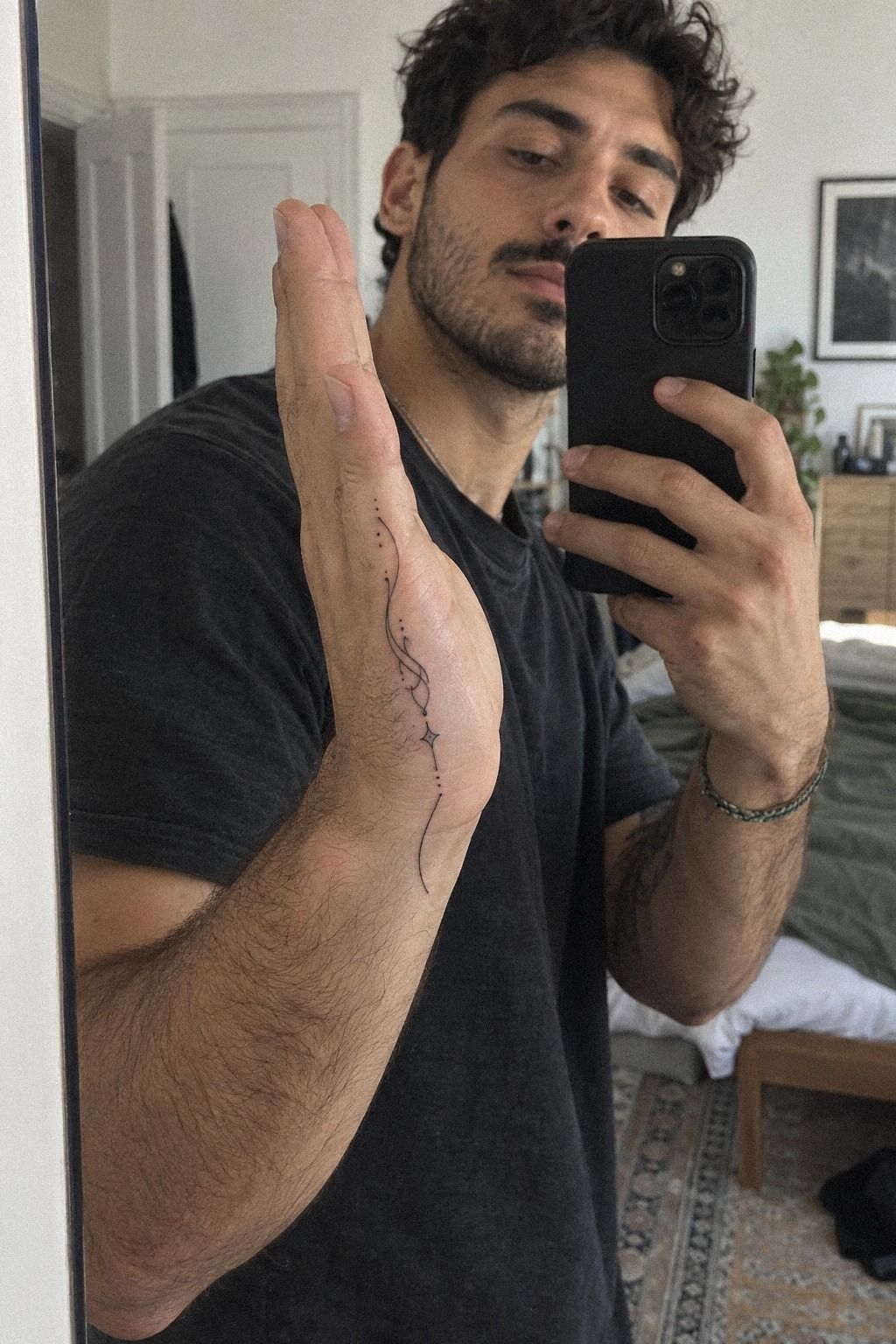
Side-hand script looks elegant when the wording is short, spaced, and drawn for your actual hand. A name, date, or one-word reminder can follow the outer edge below the little finger.
The script lettering should be sized for healed readability, not just for the stencil. Ultra-thin cursive may look polished on appointment day, but connected strokes can soften as the tattoo matures.
Consider the letter spacing as carefully as the word itself. A little room between letters keeps the phrase readable when your hand bends and prevents the mark from becoming a dark line.
Have the stencil placed while your hand is relaxed and naturally resting. A phrase that looks centered on a flat hand may shift when your fingers curl. That small check can prevent a surprisingly large regret.
For more understated references, explore these small hand tats. Placement changes the mood: a mark near the thumb feels more visible, while one along the side edge can feel private.
4Keep Zodiac Signs Readable

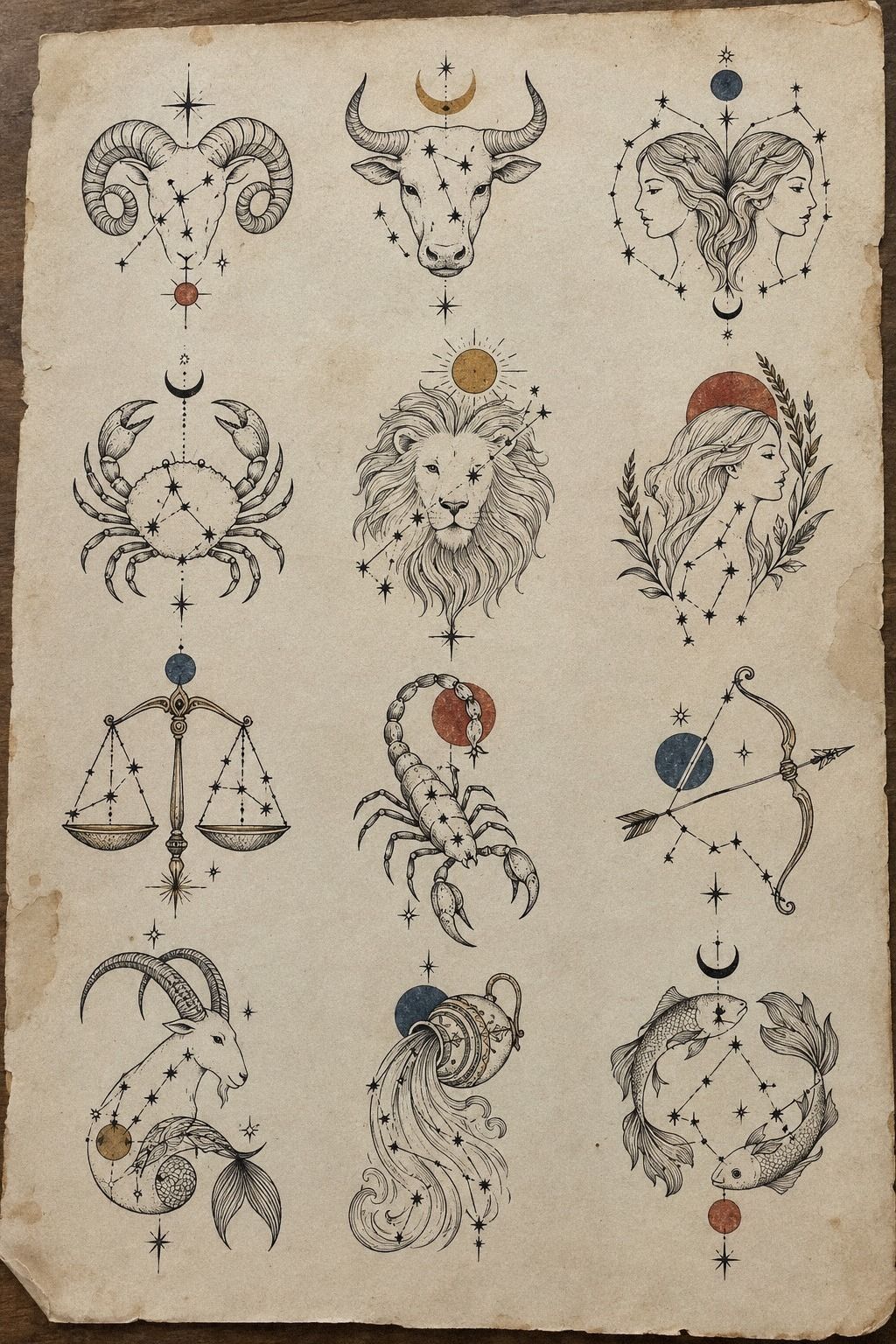
A zodiac glyph, constellation, or celestial symbol gives you an iconic and symbolic direction without requiring a large illustration. The idea can feel sacred, personal, or even a little haunting, depending on the mark you choose.
Traditional tattoo flash can provide useful inspiration, but don’t copy every surrounding star or decorative detail. One sign usually communicates more clearly than several symbols competing in a tiny area.
A simple constellation tattoo needs enough separation between dots and connecting lines. If the points are too close, the healed design may lose its crisp pattern.
Let the line weight match the available skin. A bolder contour can work near the wrist, while a finer approach may suit the side of a finger. Your artist can adjust the symbol without changing its meaning.
Hand movement matters here. A symbol that looks perfectly centered while your fingers are flat may appear tilted when you relax them. Check the moving hand from several natural positions before approving the stencil.
You can compare symbolic references through these small hand tattoos with meaning. The most personal choice is often the one you can explain in one honest sentence.
5Choose a Birth Flower Between the Fingers
A single birth flower between the fingers can feel dainty, graceful, and intimate. Layered petals add structure, while one stem keeps the birth flower tattoo from becoming crowded.
More petals don’t automatically make the flower more recognizable. I’d rather see three carefully spaced layers than a busy bloom where every line touches.
Use deliberate skin breaks between the petals and stem. Those small gaps help the design retain its shape as the ink settles and the hand continues to bend.
The angle matters, too. A flower that follows the natural gap between your fingers can look more intentional than one forced into a perfectly upright position.
Hands wash, grip, type, and brush against surfaces all day. Careful tattoo aftercare matters from the first hour, so follow your artist’s instructions instead of improvising with heavy products.
The surface may heal in about two to three weeks, while complete healing can take roughly two to three months. During that period, avoid swimming, picking, and unnecessary friction.
For more compact references, save these small tiny hand tattoos. A small flower can still feel empowering when the placement belongs completely to you.
6Use Open Geometry Instead of Crowded Detail
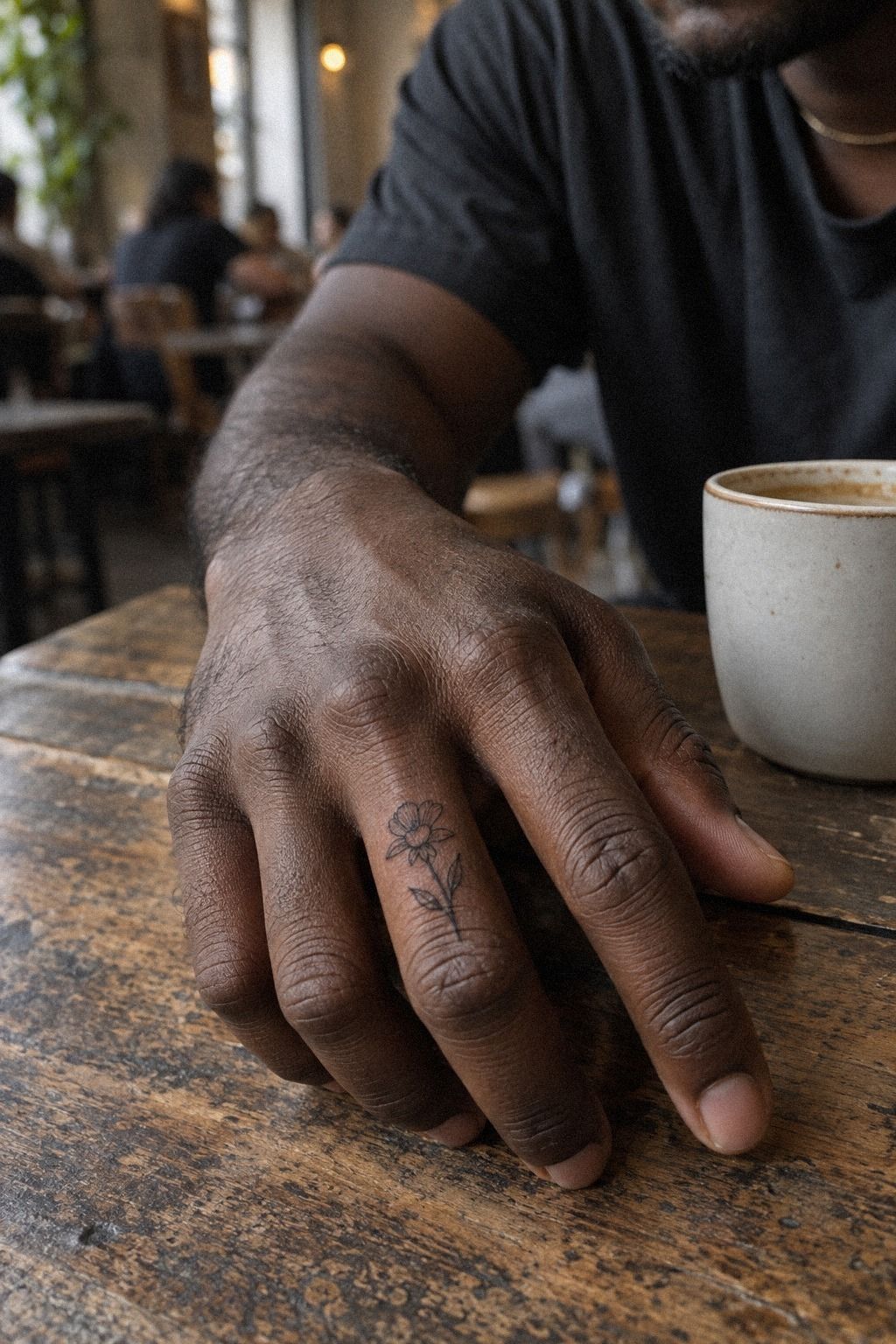
Geometric shapes give you a sharp and daring look without needing a large design. Try a triangle, open square, tiny diamond, or two intersecting arcs.
A geometric tattoo design depends on measured spacing. Every corner should remain distinct, especially when the mark sits near a knuckle or joint.
I’d avoid stacking several shapes unless there’s enough skin to separate them. Fine lines can spread slightly over time, and crowded geometry loses its edge faster than an open design.
A clean stencil, controlled contour, and visible skin between shapes can create a powerful result. The design doesn’t need to shout to feel bold.
Hands can be more sensitive than the forearm, thigh, or shoulder because the skin is close to bone and the area moves constantly. Hand tattoo pain varies by person, placement, session length, and technique.
Budget for the shop’s minimum as well as the tattoo itself. A simple mark may still fall under the studio’s shop minimum, often around $50 to $100 in the US.
Typical references include:
These small hand tattoos for women show how much the result changes when the shape has room to breathe. One precise mark can offer better value than several rushed details.
7Simplify a Playful Animal
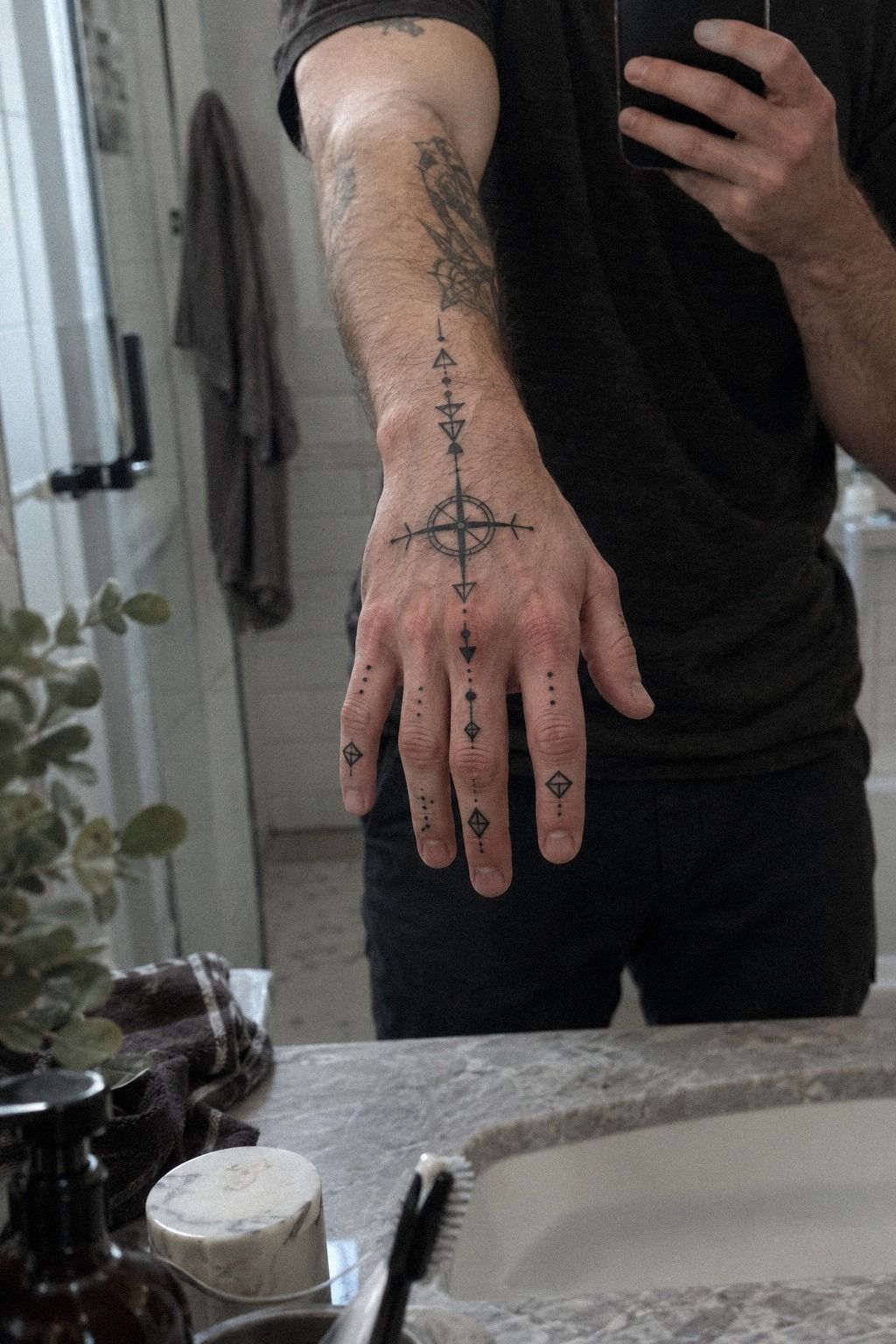
A miniature animal can be playful, whimsical, and expressive without looking childish. Consider a tiny cat profile, bird, rabbit, moth, or fox with one distinctive feature.
The animal outline should do most of the work. A recognizable tail, ear, wing, or nose is often more effective than a miniature drawing packed with anatomy.
Choose one pose and keep the face simple. A small animal silhouette can remain charming when the body, legs, and head have enough separation.
Scale matters before you fall in love with a reference. A tiny animal needs room for its essential features, and enlarging it slightly may create a more durable tattoo.
You can preserve the idea while removing unnecessary detail. That’s where the design becomes personal rather than merely copied.
Look through this geometric hand tattoos guide for additional examples of simplified shapes and controlled outlines. The lesson applies to animals, too: clear structure usually outlasts decorative complexity.
8Give Moon Symbols One Clear Meaning

A moon symbol can feel sacred and ethereal without needing a complicated composition. Choose a crescent, eclipse shape, or single lunar phase according to the available skin.
A moon tattoo has a strong silhouette when its points remain open and distinct. A crowded row of tiny moons may look interesting at first, but a single crescent often stays more readable.
Think about the lunar phase you’re choosing and why it appeals to you. It might represent renewal, grief, intuition, change, or simply a shape you’ve always liked.
Direction changes the mood. Points facing the fingers can feel upward and energetic, while points turned toward the wrist may seem quieter and more inward.
Your tattoo meaning doesn’t need to sound dramatic to be real. Some marks carry a private memory, and that’s enough.
For a more vintage or classic direction, compare these small traditional tattoo ideas. A simple moon can remain personal without becoming overly ornate.
9Add Color With Restraint
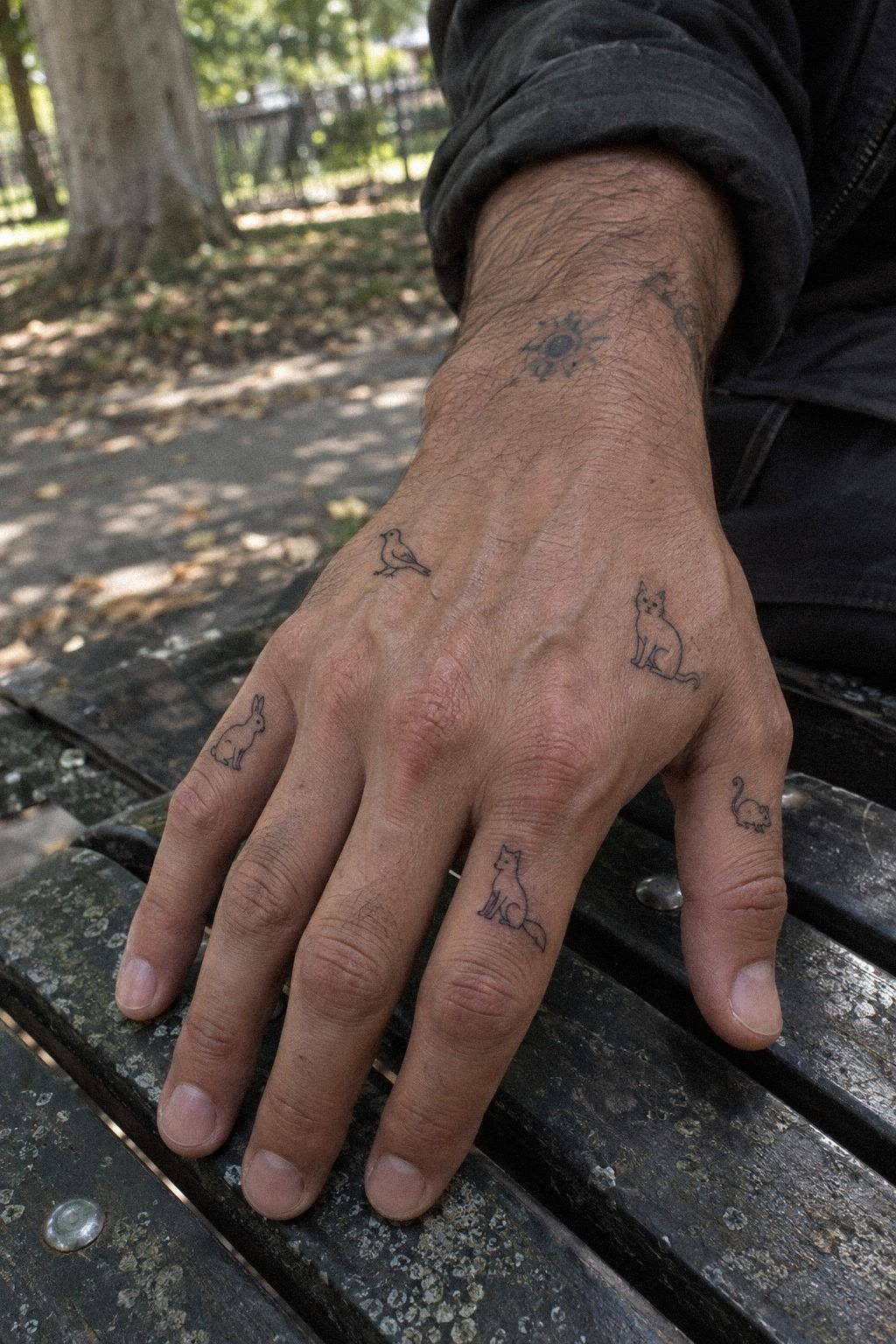
A tiny color accent can make fine-line work feel vibrant and expressive. A berry red, warm gold, or deep blue may read differently on skin than it does on a screen.
Choose the color pigment with your skin tone, placement, and expected fading in mind. Your artist can explain which hues are likely to remain visible and which may soften sooner.
I’d keep the colored area small. One accent inside a flower, star, fruit, or heart gives the eye a focal point without turning a miniature mark into a busy composition.
A black outline can give the color structure. The result may feel daring while remaining crisp enough for everyday wear.
Hands receive frequent sunlight, washing, and friction. UV exposure can accelerate fading, especially after the tattoo has fully healed and the skin is regularly uncovered.
You may need a future touch-up, particularly if the tattoo sits on a finger or a high-friction area. That isn’t a failure; it’s part of understanding hand ink honestly.
For more placement comparisons, explore these small tattoo ideas with meaning. A vibrant accent works best when the eye can clearly see where the ink ends.
10Choose the Placement Before the Design
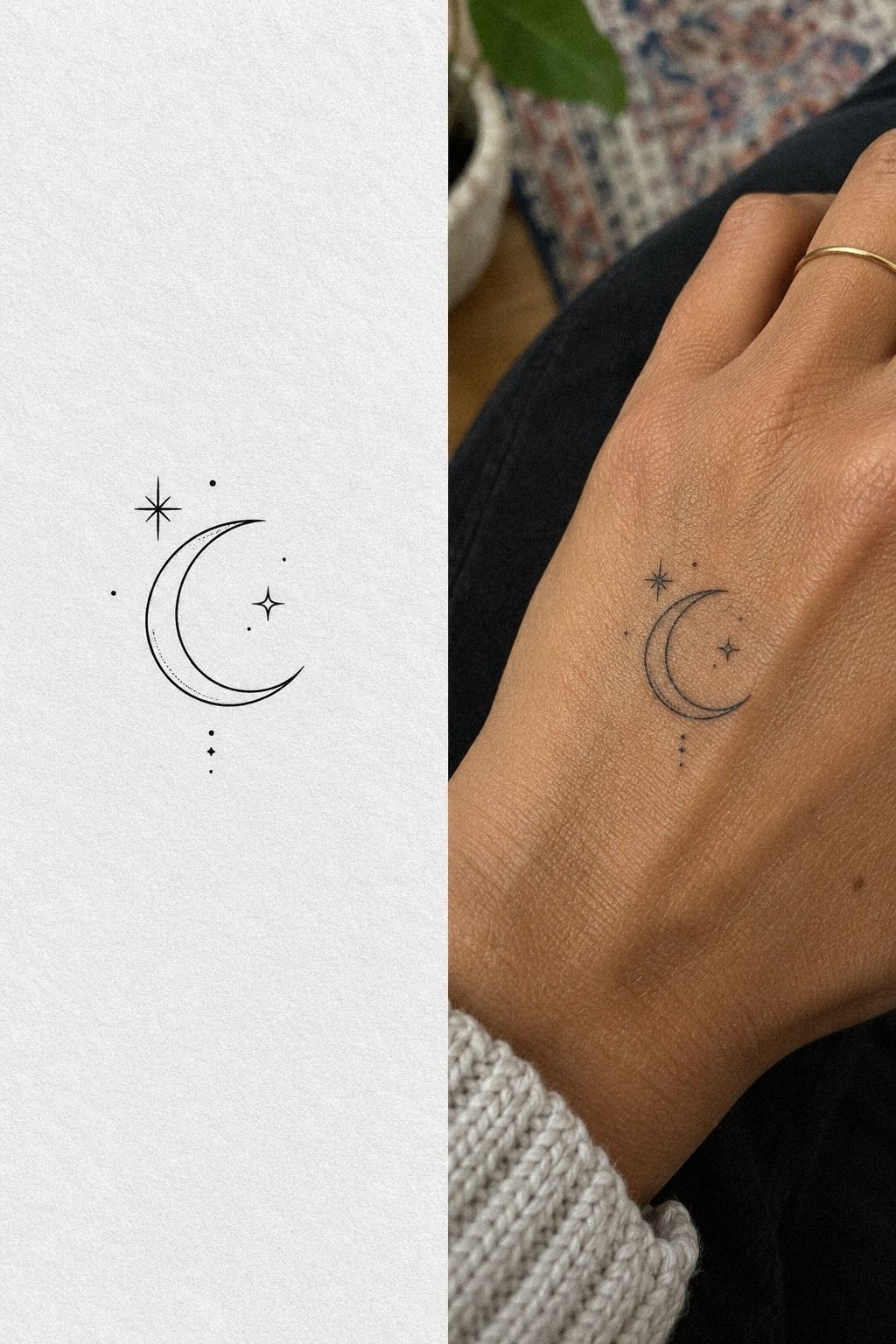
Your hand has several distinct zones, and each one changes how a small mark behaves. Finger sides can be discreet but prone to fading, while knuckles are more visible and constantly moving.
Your preferred tattoo placement should guide the design’s width, direction, and line weight. Don’t force a horizontal symbol into a narrow vertical area just because you love the reference.
The finger side tattoo can stay hidden when your hand is relaxed, but it may experience more rubbing than you expect. Rings, pockets, tools, and repeated handwashing can all affect the area.
A knuckle mark has a stronger visual presence. Knuckle placement suits symbols that you’re comfortable seeing often and showing without much effort.
The palm is especially demanding because of friction and skin turnover. A palm tattoo requires realistic expectations about fading and possible refresh work.
Visibility also depends on your work, family, and daily habits. A personal tattoo can still deserve a practical hiding strategy.
Test two possible spots with a temporary marker for a day. Notice whether the design catches on clothing, feels too visible, or disappears when your hand moves.
Use these small hand tattoo ideas while comparing locations. The right placement can make an ordinary symbol feel iconic.
11Protect Readability as the Tattoo Ages
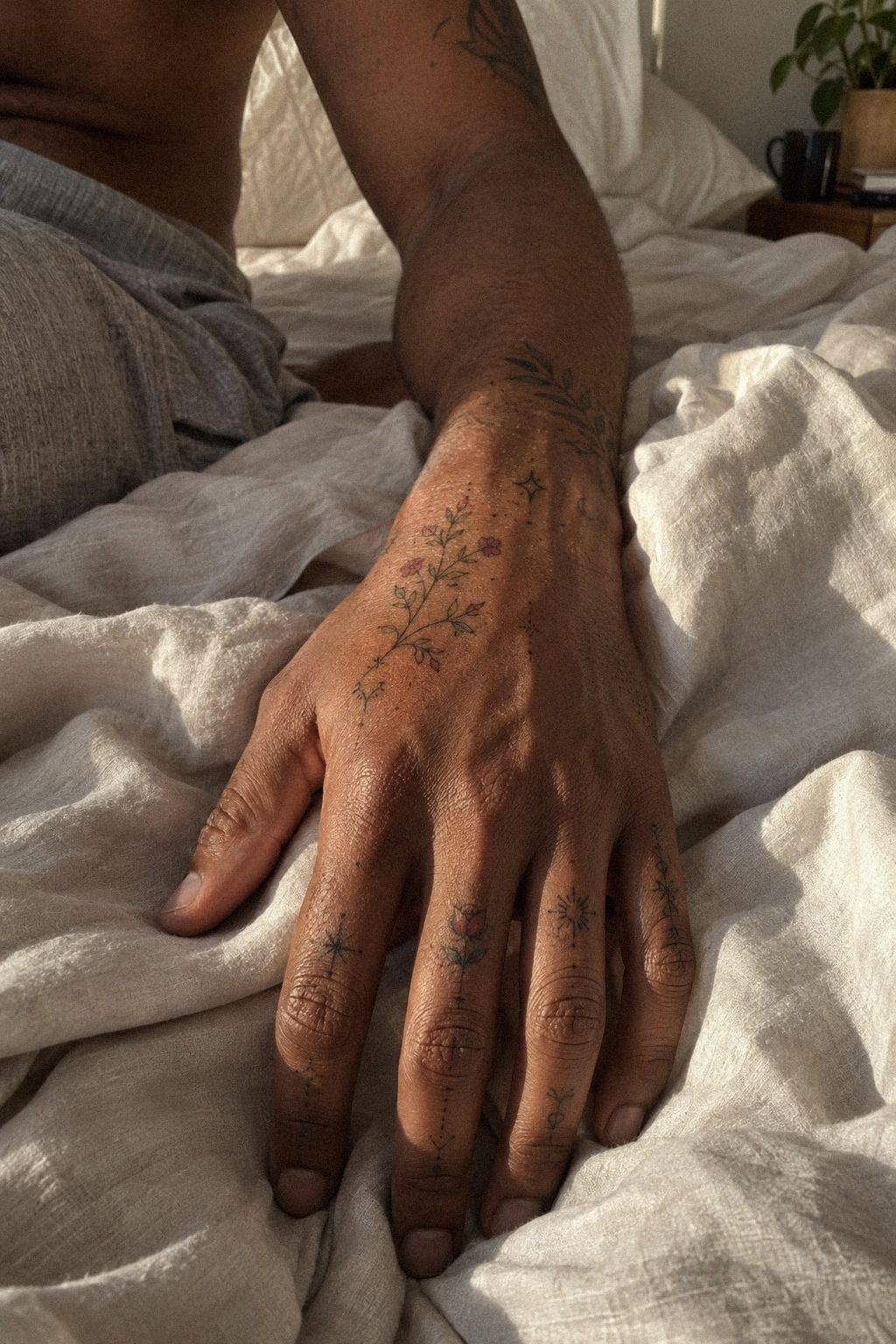
Tiny doesn’t always mean delicate. Sometimes it means there isn’t enough room for the lines to remain separate as the tattoo ages.
Have your artist show you the smallest workable stencil test. If the letters merge, the animal loses its face, or the petals touch, enlarge the design before the appointment.
A durable hand tattoo usually has a clear silhouette, controlled detail, and enough contrast to remain recognizable after the initial sharpness softens.
Think about what you’re paying for. If your budget covers a short session, a simpler mark may give you more value than an intricate concept squeezed into too little skin.
The extra planning is worth it! Hands have limited space, constant movement, and high visibility. A few minutes of editing can protect the tattoo’s identity for years.
How Hand Movement Changes the Result
Your hand rarely stays still. You grip, type, wash, gesture, and curl your fingers throughout the day, so the design can look different from one moment to the next.
A hand movement check should include an open hand, a relaxed hand, a curled hand, and a sideways view. That sequence reveals whether the symbol drifts, folds, or becomes visually crowded.
Flowing shapes often suit moving areas, while sharper geometry can work better on flatter sections. Neither choice is automatically right; the placement decides.
Don’t reject an intricate idea immediately. First, ask whether removing one or two details would protect the design’s identity without changing its character.
What to Discuss in Your Consultation
A skilled artist should examine your skin, creases, knuckles, and natural movement before placing the stencil. They’ll also consider whether your chosen line weight can remain readable after healing.
Bring one main reference and one backup direction. Your artist may recommend a larger scale, a bolder contour, or a different angle, and that advice can save the tattoo.
Review healed work from artists who regularly tattoo hands. Fresh ink can look crisp on everyone, but healed tattoo work tells you much more about technique and judgment.
Talk openly about cleanliness, gloves, single-use supplies, and the studio’s process. Strong hygiene practices should be easy to explain and never treated as an inconvenience.
Take your time! A polished consultation should leave you informed rather than rushed. You’re allowed to pause if the artist dismisses your concerns or promises impossible permanence.
How to Plan for Fading
Hand tattoos often fade faster because they face washing, friction, sunlight, and movement. That doesn’t make them a bad choice, but it does make maintenance part of the decision.
Your aftercare routine should follow the artist’s instructions exactly. Wash gently, avoid picking at peeling skin, and don’t cover the area with products that haven’t been recommended.
A healed hand tattoo still needs protection once the skin has recovered. Apply sunscreen when your hands will be outdoors, and remember that repeated exposure can soften both black and colored ink.
Black ink usually gives small designs strong structure. Color can work beautifully as a restrained accent, but your artist should explain how the pigment may behave on your skin.
Plan for the possibility of a tattoo touch-up later. Finger sides, palms, and areas that rub against objects may need more attention than a protected wrist edge.
What to Put in Your Consultation Notes
Write down the approximate size, preferred placement, colors, meaning, and visibility concerns before you meet your artist. Clear notes make it easier to discuss the idea without forgetting the detail that matters most.
Include whether you want the design to face you or other people. Direction changes the experience, especially for lettering, animals, arrows, and symbols.
Bring questions about healing, touch-ups, deposits, and the studio’s hygiene policy. Your consultation notes don’t need to be elaborate; they just need to reflect your priorities.
Ask how the design may change on your skin rather than requesting a guarantee. A thoughtful answer about aging is more valuable than a confident promise that every line will stay identical.
The Three-Pass Hand Ink Test
I judge a hand tattoo in three passes. First, I look at the stencil from close range and check whether the lines feel clean.
Second, I hold my hand naturally and see whether the design still reads when my fingers bend. Third, I imagine the healed version after the early sharpness has softened.
The three-pass tattoo test prevents a screen reference from controlling the entire decision. Images reward detail, but skin rewards spacing, contrast, and a shape that survives movement.
I used to choose references because they looked intricate on a phone. That was my mistake. Now I ask whether the tattoo still has a clear silhouette without zooming in.
The second pass is where many choices change. A mark can look graceful on a flat hand but feel strangely placed when you reach, grip, or turn your wrist.
Check the stencil position in several natural poses. You shouldn’t feel rushed by the appointment schedule, especially when a small adjustment can change how visible the tattoo feels.
I also think about aging honestly. Very fine lines may widen, while solid black ink and thoughtful placement often hold their structure better.
My preference is understated linework with one memorable idea. It’s a personal choice, but it usually gives a small hand tattoo the best balance of clarity and character.
My Editorial Take on Small Hand Tattoos
Visibility is the first tradeoff, and it deserves more attention than it usually gets. A hand tattoo can be hidden by posture, jewelry, or a sleeve, but it can’t disappear as completely as ink on the upper arm. My preference is to choose a mark that feels good when I see it and calm when someone else notices it.
A visibility choice should match your real routine, not an imagined version of your life. If you type, wash your hands constantly, work with tools, or meet clients daily, a finger side or wrist edge may serve you better than a knuckle.
Aging is the second tradeoff. The most intricate reference is rarely the wisest small tattoo because fine details need room to remain separate. I’d rather wear a crisp crescent, open flower, or single glyph than watch a crowded miniature lose its identity.
The aging process isn’t something to fear, but it should shape the design from the beginning. Strong spacing, sensible line weight, sun protection, and a skilled hand can make a meaningful difference over time.
Placement is where the emotional and practical decisions meet. A mark may feel romantic near the finger, fierce over the knuckle, or private along the wrist edge, even when the symbol itself never changes.
My own placement decision would favor a spot I can see easily but cover without effort. That balance gives the tattoo a daily presence without making it the first thing everyone else sees.
There’s also a financial tradeoff. Paying for a careful artist and a durable scale may feel less exciting than collecting several cheap ideas, but the better decision is usually the one you won’t need to correct later.
Finally, don’t let trends overrule recognition. A personal tattoo can be classic, stylish, or edgy, but it should still make sense when the trend disappears. If you keep returning to the same simple symbol, pay attention to that instinct.
The Questions Worth Answering First
How much does a small hand tats for women usually cost?
A small hand tattoo typically costs about $100 to $300 in the US, though a shop minimum may be around $50 to $100. The artist, region, placement, and complexity affect the final tattoo cost, so request the complete quote before booking.
Are small hand tats for women a good first tattoo?
They can be a good first tattoo if you understand the visibility, sensitivity, healing, and fading involved. Choose an artist with relevant hand tattoo experience, and select a design that doesn’t depend on fragile details.
How do I choose an artist for small hand tats for women?
Review healed work, hand placements, line control, hygiene standards, and the artist’s explanation of aging. A strong artist portfolio should show judgment as well as attractive designs.
How much do small hand tats for women hurt?
Hands can hurt more than the forearm, thigh, or shoulder because the skin is close to bone and contains sensitive areas. Hand tattoo pain varies by person and placement, so eat beforehand and keep your expectations realistic.
How long do small hand tats for women take to heal?
The surface usually heals in about two to three weeks, while complete healing can take roughly two to three months. Follow the recommended healing process, avoid swimming early on, and don’t pick at peeling skin.
What color works best for small hand tats for women in 2026?
Black is usually the most reliable choice for small designs because it offers strong contrast and structure. A restrained red, blue, or gold accent can work, but your artist should assess the color ink against your skin and placement.
Can I do small hand tats for women myself on a budget?
No. Don’t tattoo your own hand or use an unlicensed kit to save money. You risk infection, scarring, uneven depth, and poor healing, so wait and use a licensed tattoo studio instead.
Where I’d Start First
If I had to pick one, I’d start with a tiny floral sprig. It stays readable without feeling loud, and the open spacing gives fine ink a better chance as it ages.
Save these cute small tattoos with meaning while you compare references. A floral sprig can feel romantic, personal, and quietly empowering without needing extra decoration.
My second choice would be a single zodiac glyph or moon crescent. Both can feel iconic and understated, especially when the shape has enough space around it.
You can also review these small hand tattoos before your appointment. Choose the zodiac glyph or symbol that still feels right after the novelty wears off.
A small hand tattoo can be worth the cost when the design, artist, and placement work together. Keep the concept crisp, give the lines room, and let the personal meaning stay yours.