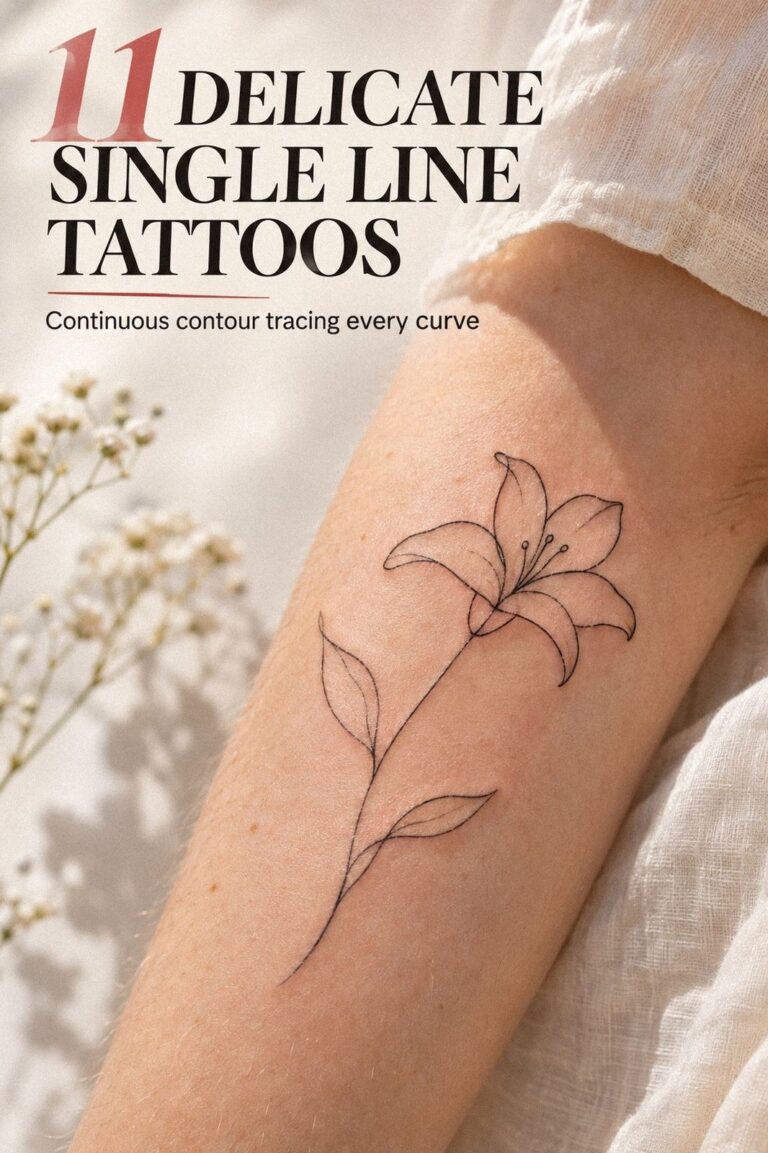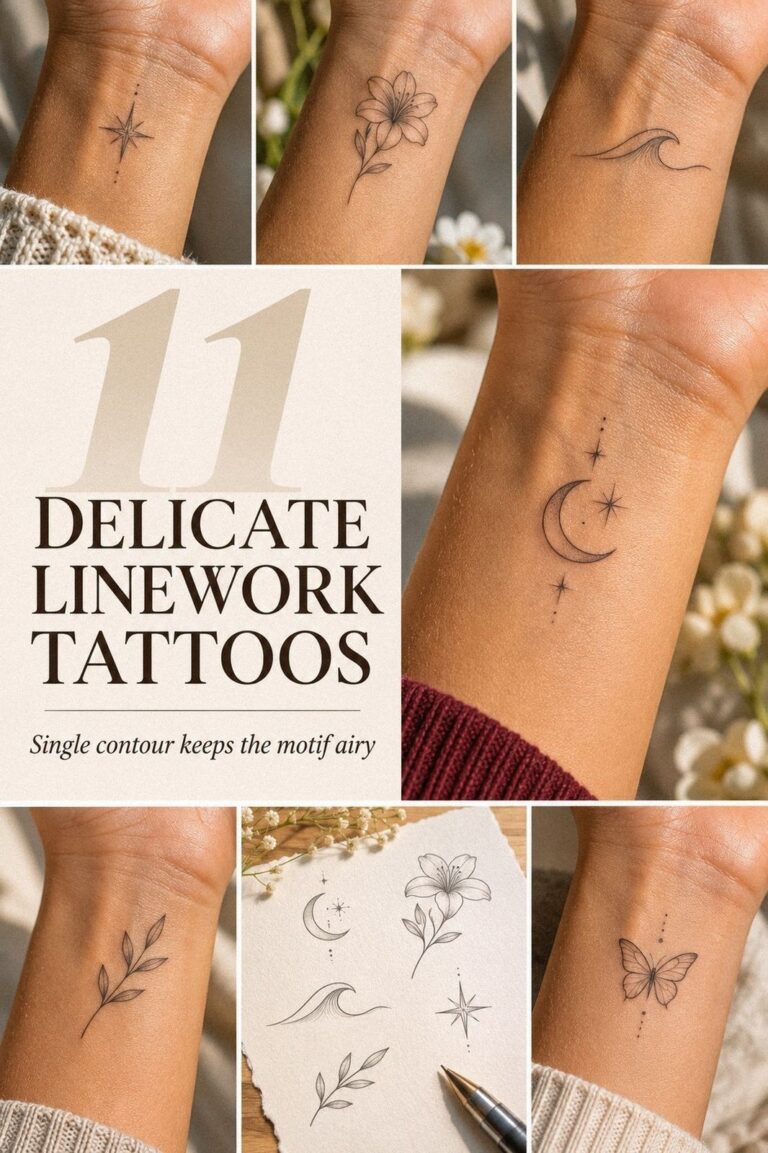
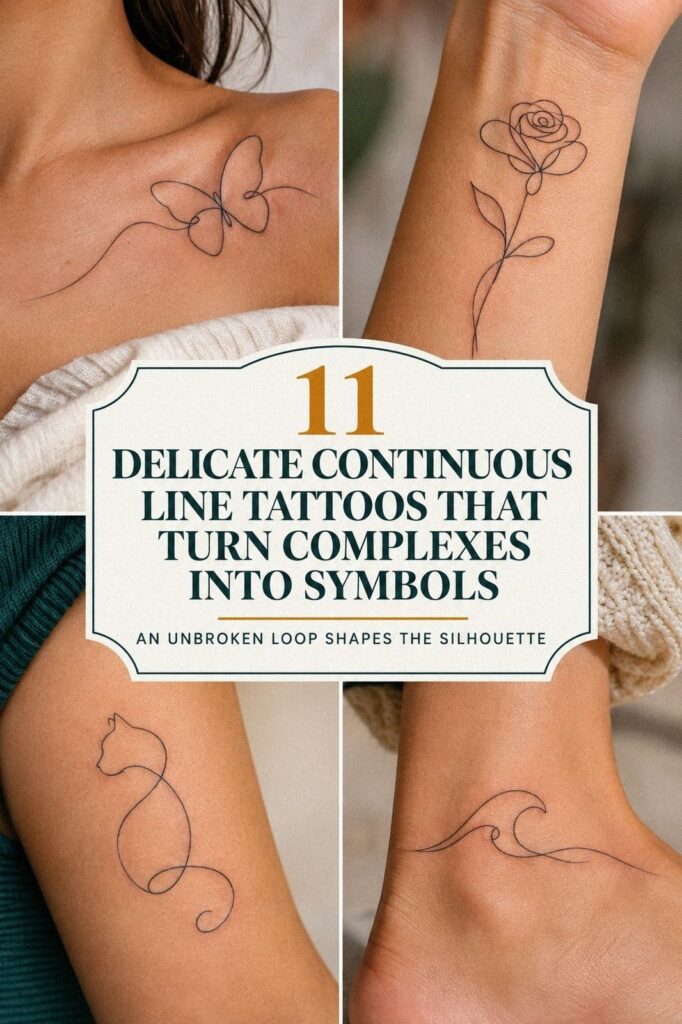
*Delicate continuous line tattoos can be quick, personal, and easier to tolerate than large shaded pieces. Placement matters as much as the design itself. Your artist, skin, and body zone still matter, but smart scale can make the experience far less intimidating. Start small!
- ✓ Start Small With Delicate Continuous Line Tattoos
- ✓ Why Botanical Curves Work Along the Collarbone
- ✓ Which Wrist Symbol Feels Personal Enough?
Editor’s note: Your best tattoo isn’t necessarily the tiniest one. It’s the one whose scale, placement, price, and meaning still make sense after the excitement fades.
- Start Small With Delicate Continuous Line Tattoos
- Why Botanical Curves Work Along the Collarbone
- Which Wrist Symbol Feels Personal Enough?
- Let One Face Carry the Emotion
- Choose a Minimal Behind-the-Ear Mark
- Give Animal Silhouettes a Fierce Edge
- Ribs or Outer Arm?
- Mark a Personal Journey With One Flowing Line
- Matching Tattoos, Separate Meaning
- Treat Sacred Symbols With Care
- Keep Ankle Ideas Playful
1Start Small With Delicate Continuous Line Tattoos
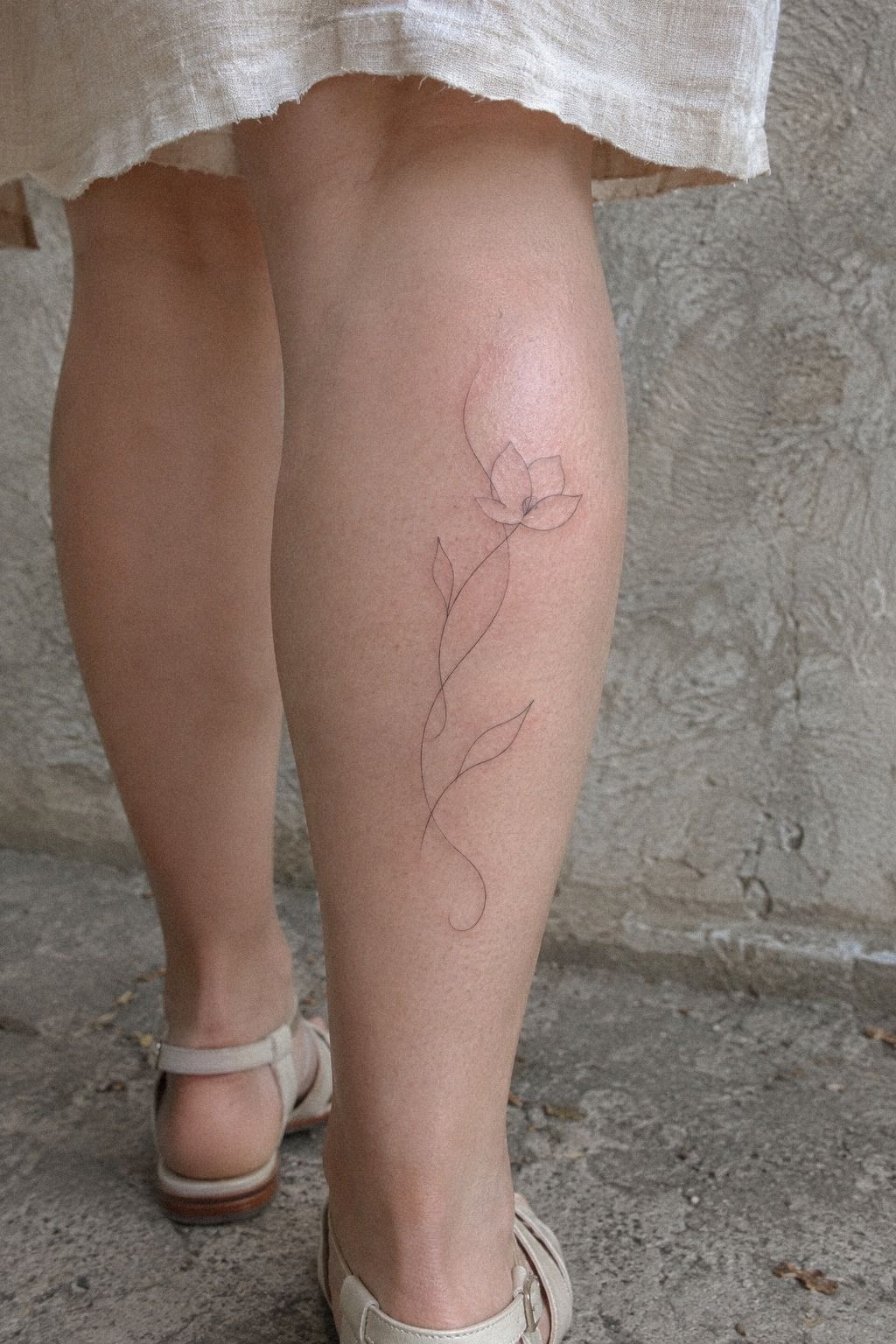
A small calf design gives you a clean starting point without asking your skin to carry a heavy block of ink. Think one fine terracotta or olive line that stays readable from a few feet away, perhaps following a profile, leaf, or simple curve. The calf usually offers more cushioning than ribs, feet, or sternum.
You’ll want the design to stay simple. A single face, crescent, or abstract curve can look striking without extra shading. A minimal silhouette gives your eye more breathing space and reduces the chance of crowded lines.
For planning, bring a screenshot and a coin-sized paper mock-up. Hold it against your calf while you walk, sit, and bend your leg. You’ll notice whether the design still feels specific or whether it has become visual noise.
Calf placement is often worth considering when pain is your main concern.
Ask your artist whether a single-needle configuration is appropriate for the scale and your skin. A small needle setup may look subtle on paper and almost disappear on some skin once healed. The equipment matters, but technique, spacing, and experience matter just as much.
You can compare scale with this small continuous line tattoo guide. A dainty design can still be expressive, symbolic, and powerful when the line has a clear beginning and end. Less ink doesn’t mean less meaning!
2Why Botanical Curves Work Along the Collarbone
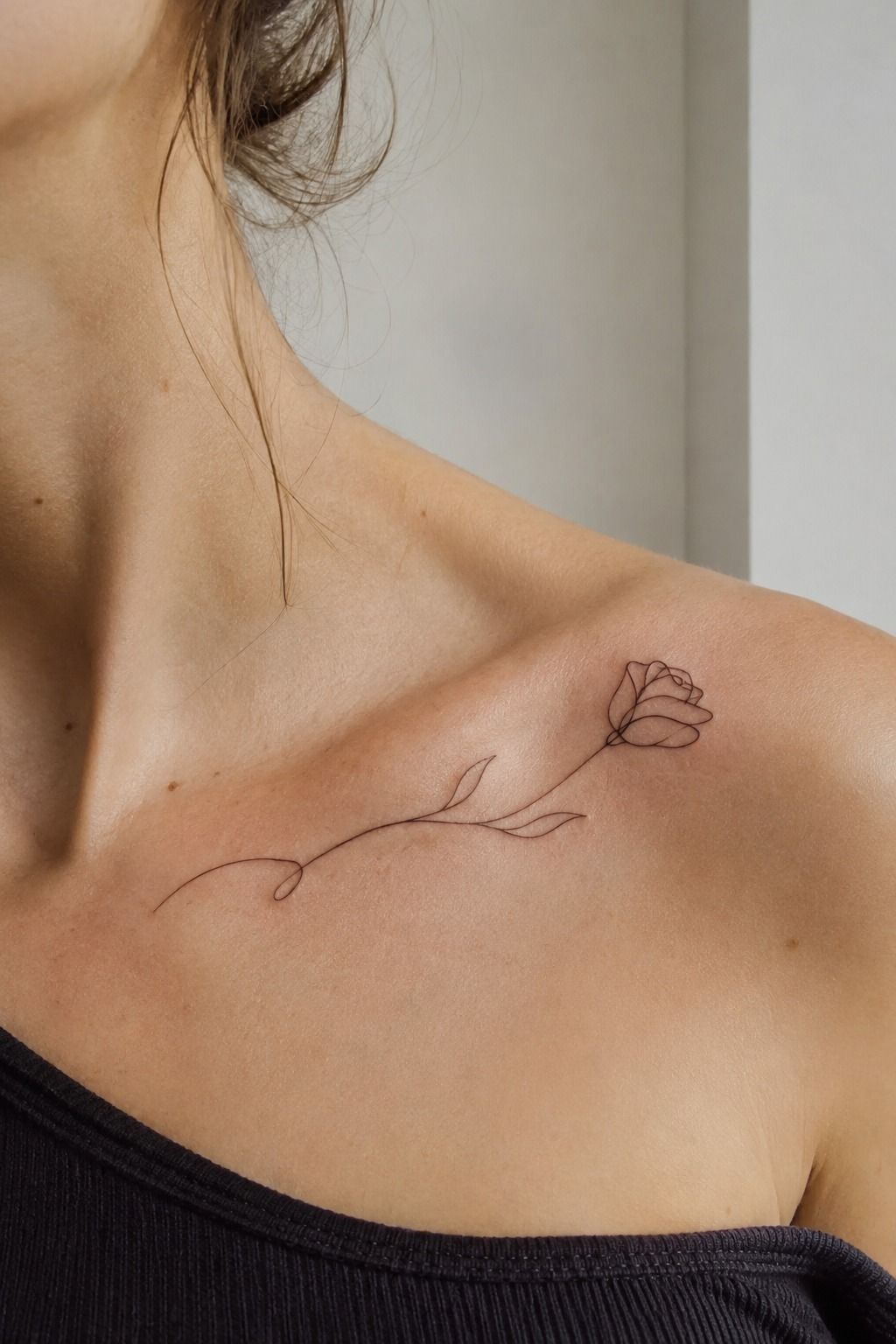
Botanical curves suit the collarbone because the body already gives the design a graceful clay-toned path.
3Which Wrist Symbol Feels Personal Enough?
The wrist works well for a personal plum-toned symbol because you’ll see it often. A small star, initial, wave, or abstract mark can stay easy to admire while remaining simple enough for a shorter appointment. Check how the design looks with your hand relaxed, turned palm-up, and angled beside your body.
4Let One Face Carry the Emotion
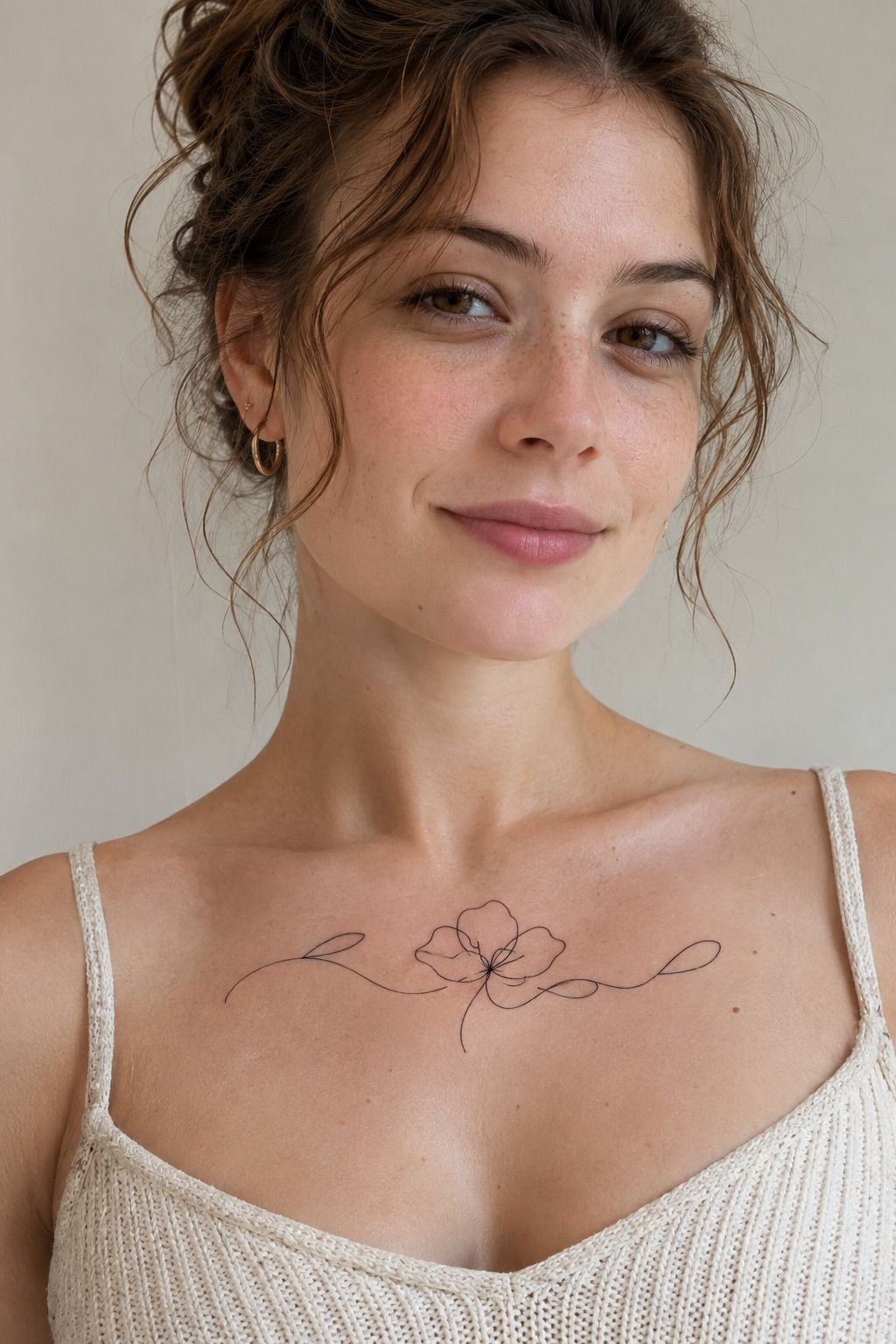
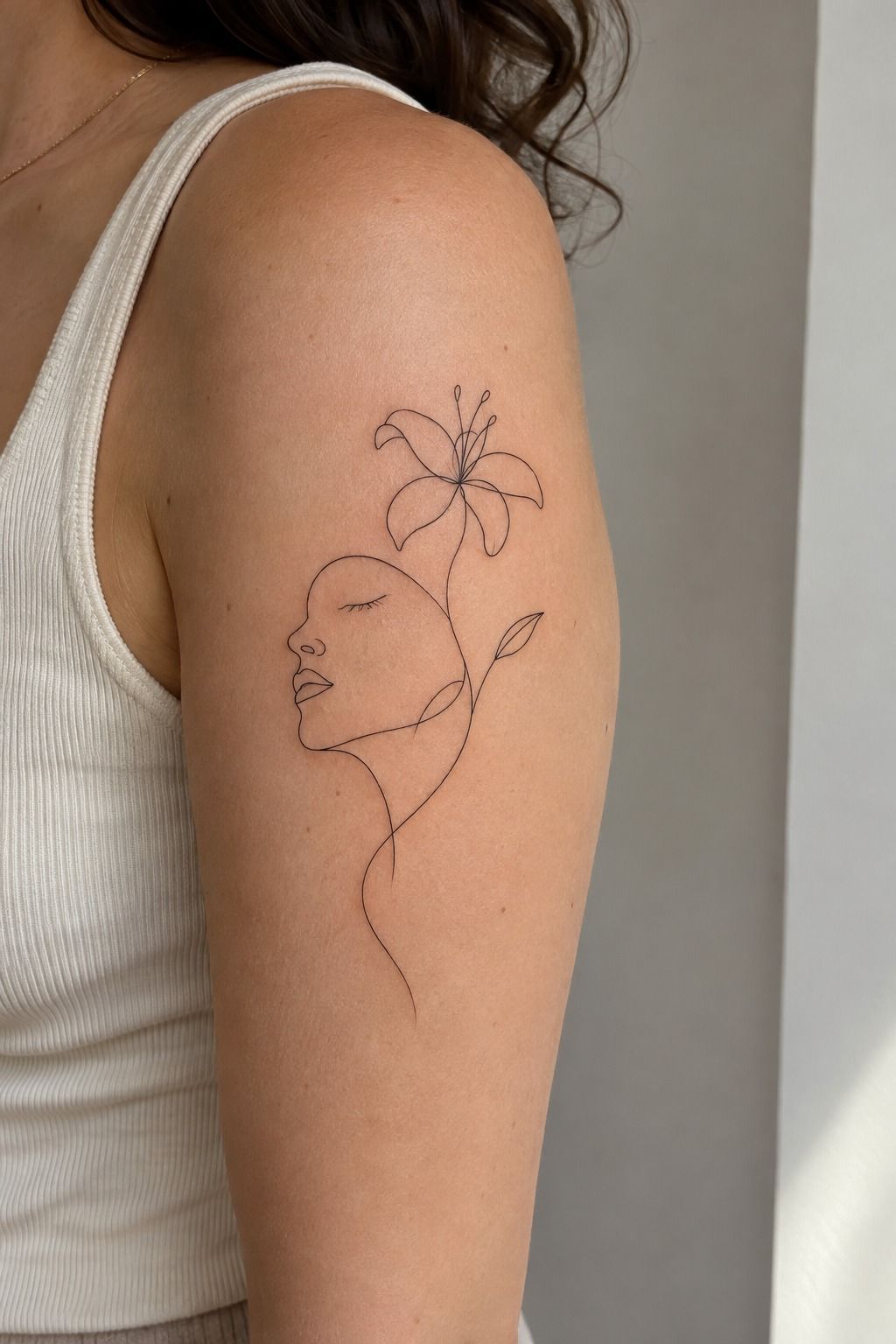
A continuous face design has an intimate, almost haunting quality because one line can suggest an entire expression. The sternum gives the artwork a private center, while deep navy contour ink creates a bold contrast against the skin. This placement feels personal without requiring a large image.
You’ll want to discuss the sternum placement honestly before booking. Bone-forward areas such as the sternum, ribs, feet, and hands tend to feel more painful than the outer thigh, upper arm, or calf. A short appointment can still feel intense, so your artist should explain the expected pace and likely cost.
I’d avoid adding eyes, lips, and hair texture to a tiny face. Those details sound expressive, but they can turn a sleek contour into a cramped sketch. Choose the emotional gesture instead: a tilted chin, a closed eye, or one sweeping cheek line.
A custom facial contour also gives you room to make the image yours. You might borrow the posture of someone you love without copying their entire portrait. Your artist can adjust the brow, neck, or shoulder until the line feels recognizable.
Don’t confuse emotional weight with visual complexity. The most meaningful version may be the quietest one, and the most powerful version may need only one uninterrupted curve. If you’re unsure about scale, browse these minimalist continuous line tattoos and notice which designs remain readable at a glance.
5Choose a Minimal Behind-the-Ear Mark
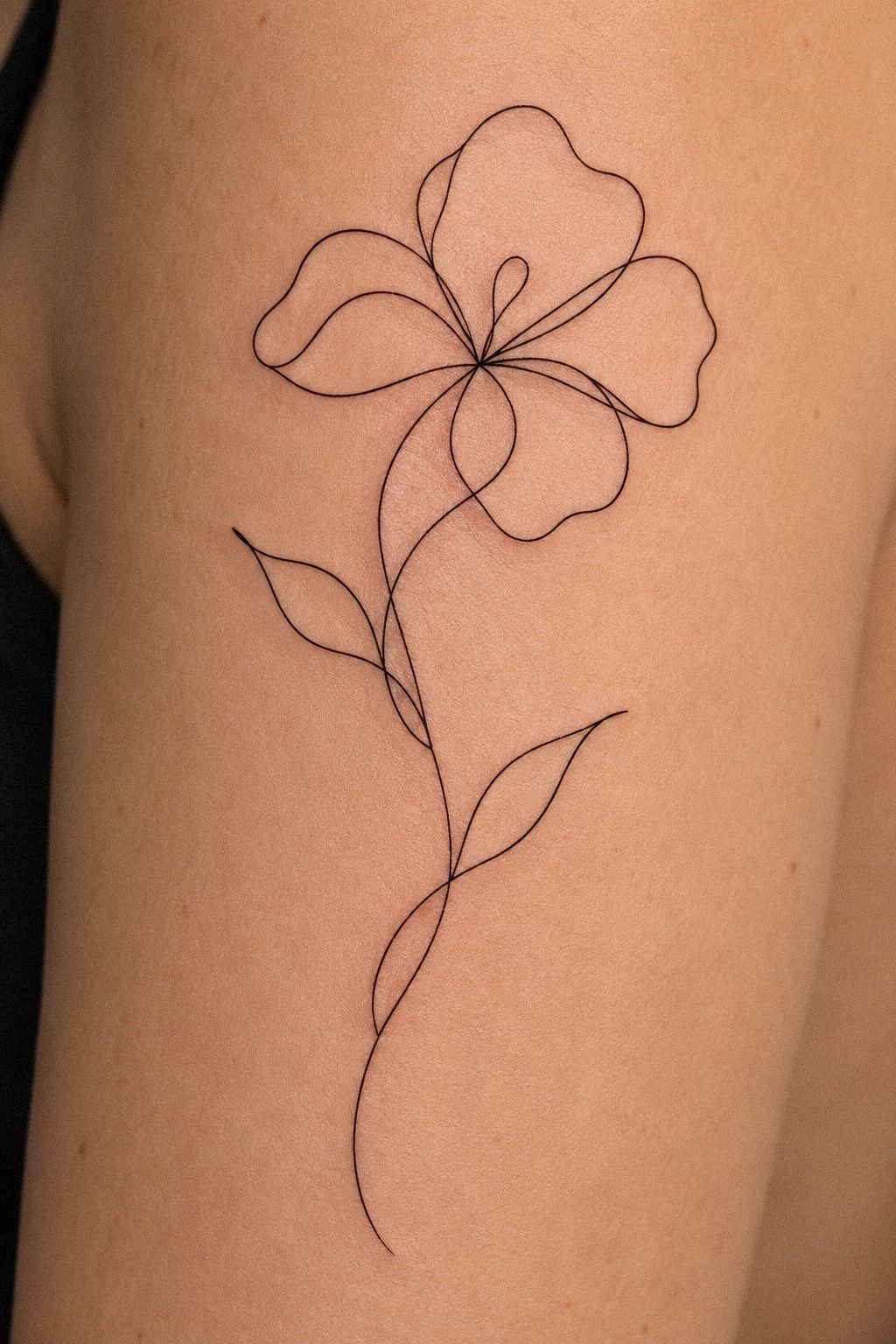
Behind-the-ear designs are discreet, sleek, and easy to keep private. Tiny stars, leaves, profiles, and abstract curves can all work, but the skin’s curve matters more than the original drawing. Behind-the-ear placement often needs careful resizing before the stencil reaches your skin.
A symbol that looks clear on flat paper may need wider spacing once placed behind your ear. Your artist should resize the design for the body, not simply shrink the original file. A body-scaled stencil can protect the line’s long-term clarity.
Pain can feel sharper here because the skin is thin and the bone is close. The appointment may be brief, but brief doesn’t always mean painless. I’d choose an open shape with one strong gesture rather than intricate dots that require repeated passes.
A small mark can also fade faster with regular sun exposure, especially when you wear your hair up. Ask your artist about healed examples and sunscreen once the tattoo is fully healed. Deep emerald pigment can offer character, though your artist should explain how colored ink may change over time.
Choose your side with intention. Your right ear may feel more visible in photographs, while the left can remain a private detail. You’ll find useful scale lessons in these fine line hand tattoos, even though the placement differs.
6Give Animal Silhouettes a Fierce Edge
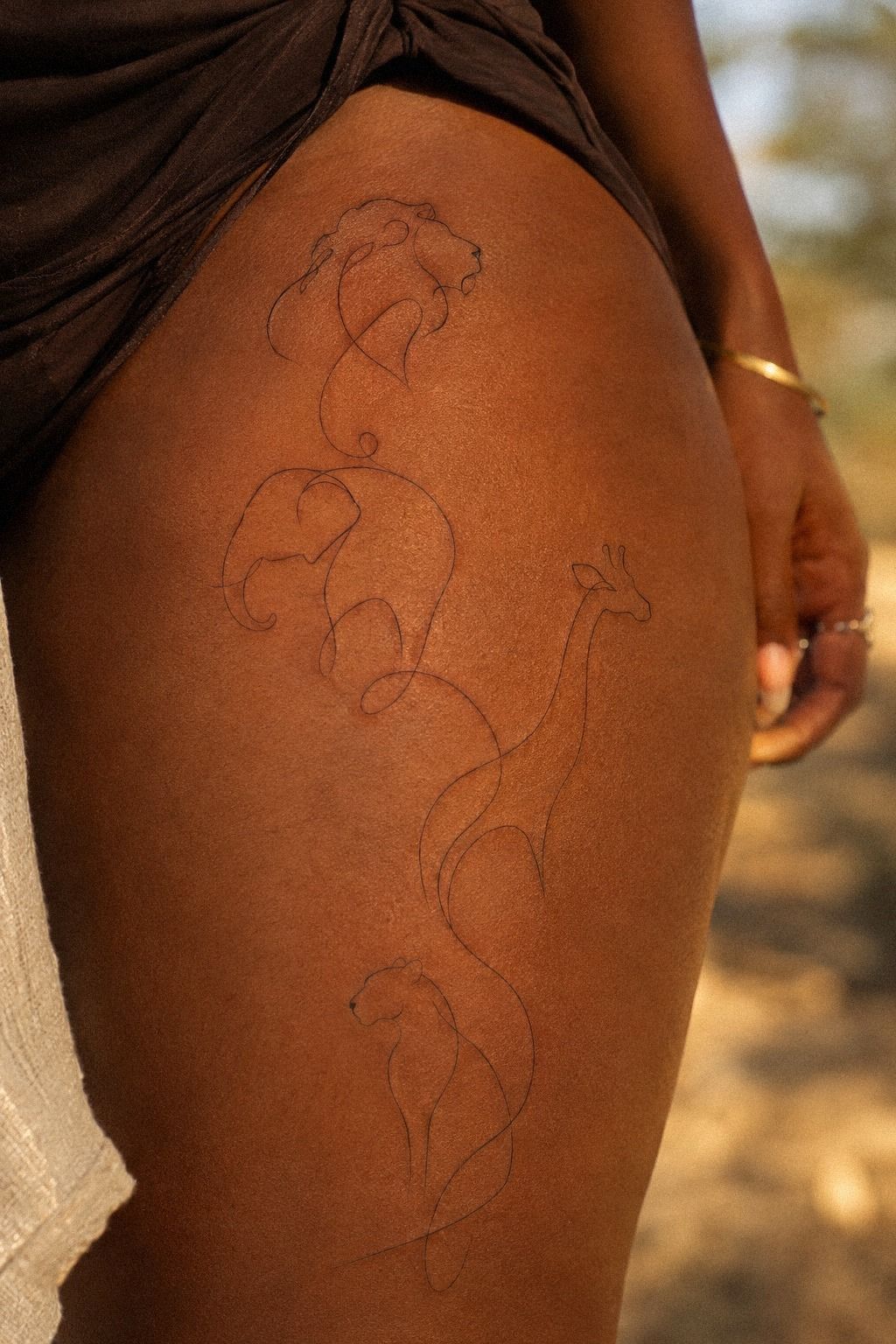
An animal silhouette can carry a fierce story without becoming loud. The thigh gives you enough space for a fox, bird, cat, or running hare drawn with one continuous contour. Deep forest-green linework can look especially bold when the design leaves generous skin around the shape.
You’ll want to ask your artist how the line will be placed for your chosen skin tone and scale. A design that relies on extremely pale shading may lose clarity, while a clean outline can remain readable. Your body deserves a plan made for you, not a copied template.
I’d skip a hyper-detailed animal face if this is your first fine-line piece. Fur marks, whiskers, and tiny eyes can demand more passes and more patience. A strong ear shape, tail curve, or back line often says more with less.
The thigh is usually more tolerable than ribs, hands, feet, or sternum, though everyone’s pain response differs. You’ll still feel pressure, heat, and vibration. Bring water, eat beforehand, and wear clothing that gives your artist clear access without rubbing the area afterward.
Thigh placement may make the appointment easier to manage.
A single-contour animal can become a marker for a pet, place, or season of your life. Browse these small fine line tattoos if you’re deciding whether your animal should be tiny or slightly larger. The larger option may be worth the cost if it protects the details you care about.
7Ribs or Outer Arm?
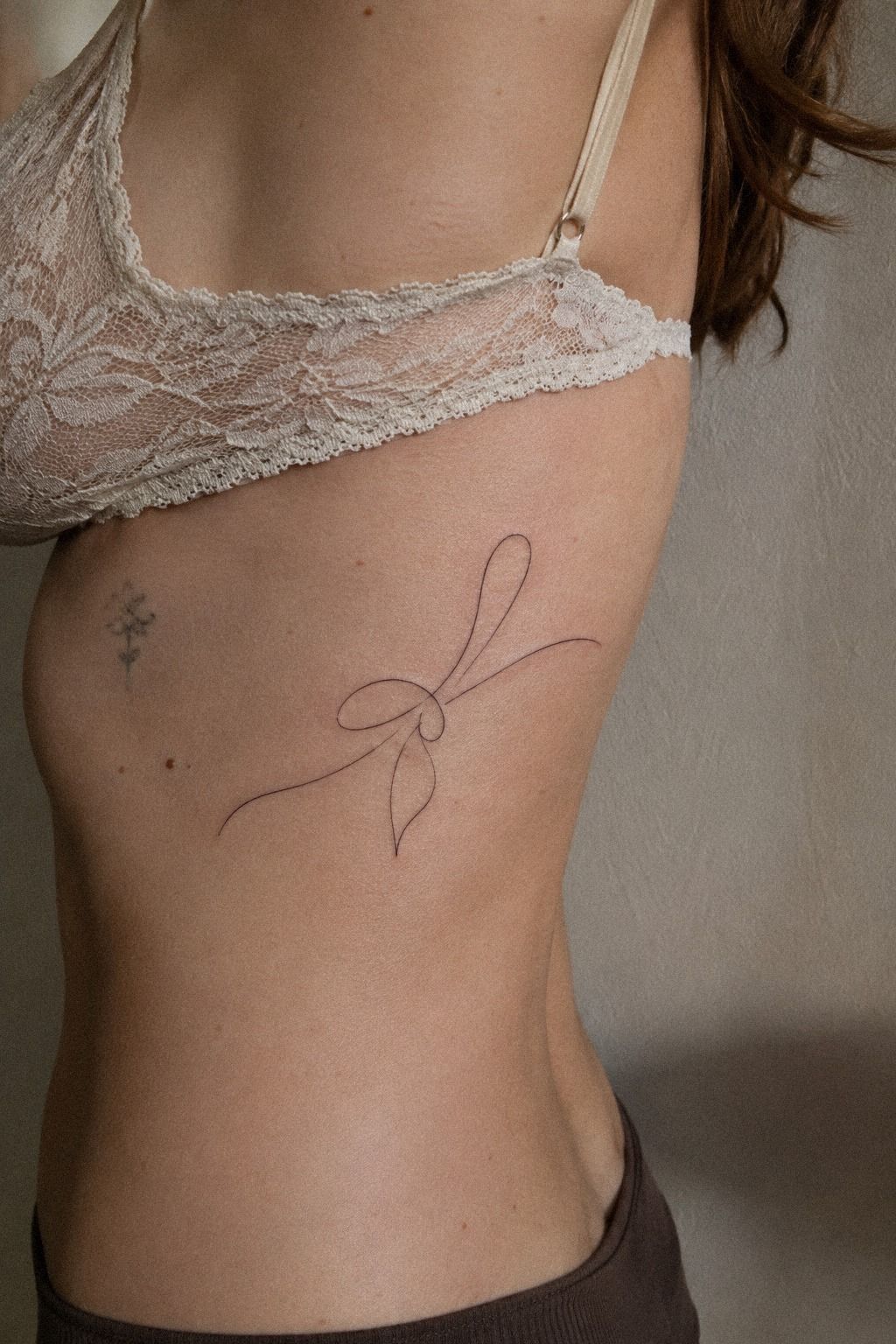
Rib tattoos can look incredibly graceful because the line follows the body’s natural length. A wave, branch, or abstract figure can feel refined and daring in this placement. Charcoal rib linework stays easy to hide while remaining striking when revealed.
Ribs are one of the more sensitive areas. There’s limited cushioning, and breathing moves the skin while your artist works. If pain is your main concern, choose a short rib design and ask whether the session can be divided.
A smaller outline is often a wiser value than forcing yourself through a large composition.
Test the placement with a temporary marker. Stand upright, twist, and raise your arm. Your body changes shape, and a line that looks level while seated may curve differently when you move.
A temporary placement test can reveal that before the stencil becomes permanent.
Avoid packing the area with symbols. An open, flowing contour feels more elegant and is easier for your eye to read. The result can be delicate, intimate, and quietly daring without relying on extra decoration.
If you’re comparing placements, these minimalist single line tattoos show how much emotion a simple contour can hold. Your artist should also explain aftercare, since loose clothing and sleeping positions can affect comfort during the first few days.
8Mark a Personal Journey With One Flowing Line
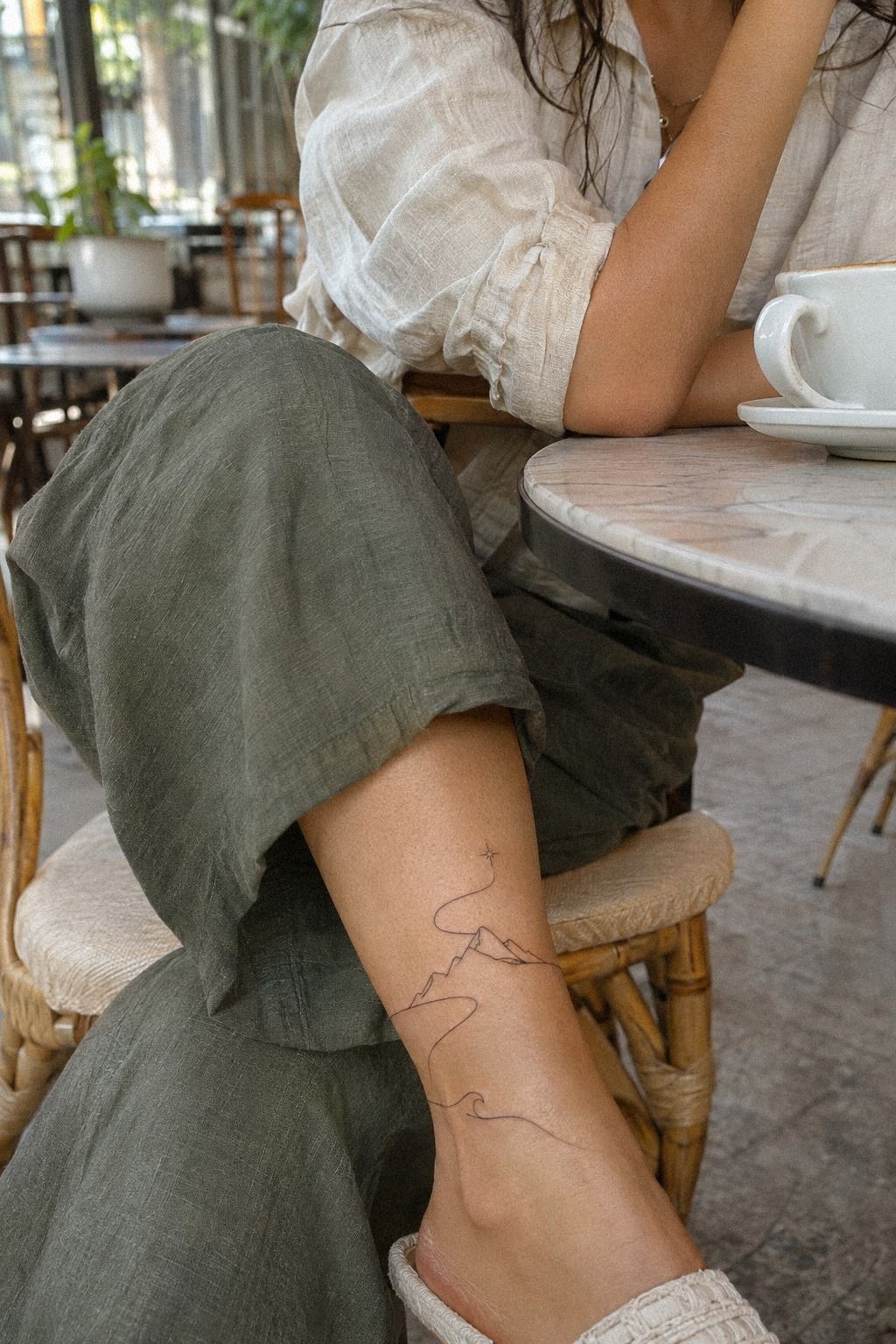
An ankle design can mark a transition without announcing it to everyone. A winding path, small horizon, or continuous loop can symbolize movement, recovery, travel, or a new chapter. Camel-toned ankle contour ink looks personal and graceful while remaining easy to cover.
Keep the symbol specific to your own story. A generic arrow may look stylish, but a personal route line based on a real path or handwritten initial can feel more meaningful. I’d choose one imperfect curve over a polished symbol that could belong to anybody.
The ankle has less padding than the thigh, and the skin experiences friction from socks and shoes. Ask your artist whether your preferred position will sit under a shoe edge. You don’t want your fresh tattoo pressed against shoe-edge friction while it heals.
Surface healing usually takes about 2 to 3 weeks, while complete healing can take about 2 to 3 months. Your instructions may include gentle washing, light moisturizing, and avoiding pools and direct sun. Follow the artist who worked on your skin, since their guidance should match the process.
A personal journey deserves a design that won’t feel dated when the moment passes. That’s why I’d favor a timeless contour over a trendy phrase.
Your ankle can carry something quiet and empowering for years. If you’re watching your budget, a focused line can also deliver strong value without unnecessary detail.
9Matching Tattoos, Separate Meaning
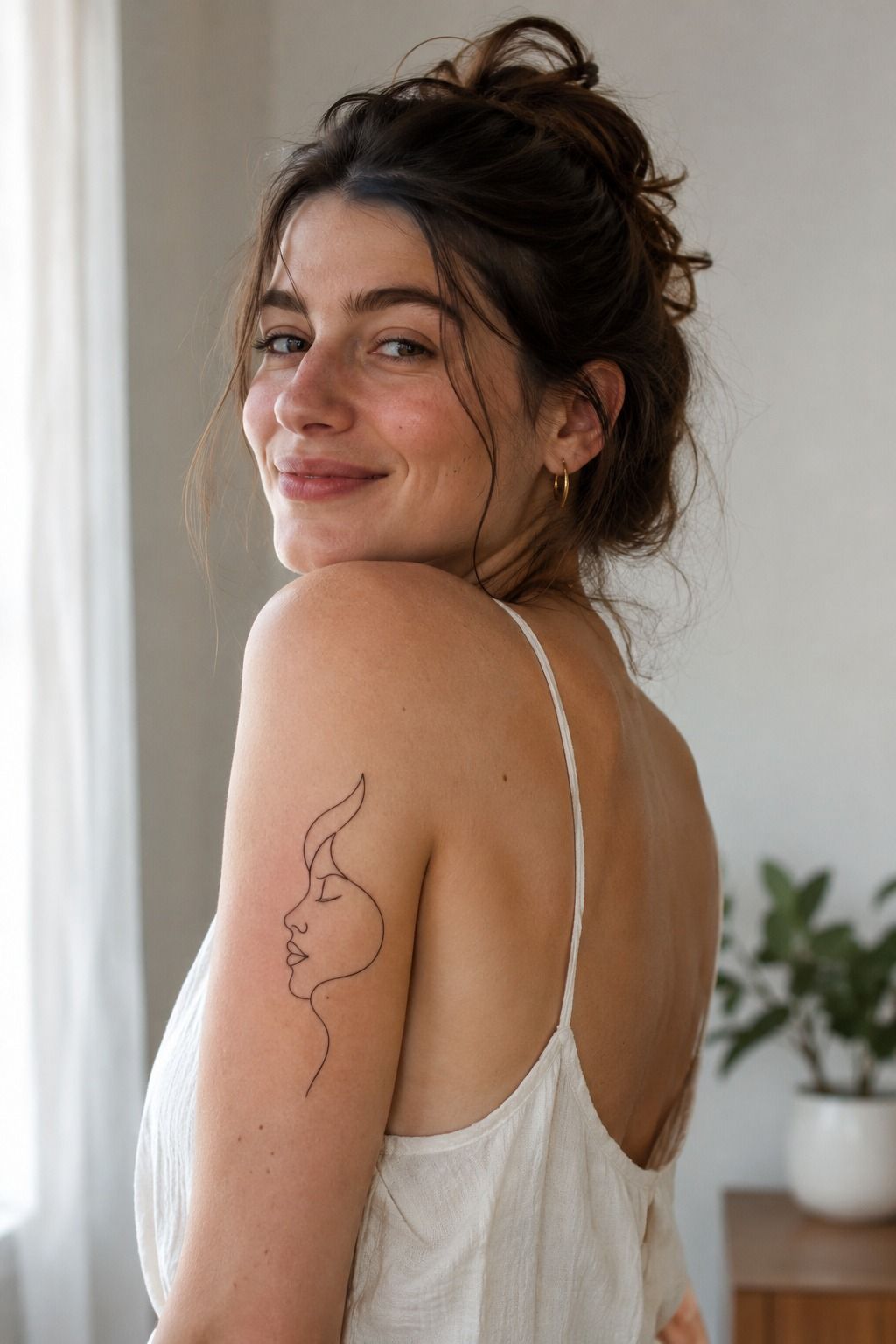
Matching tattoos work best when they feel related rather than identical. A pair of linked curves, two halves of one symbol, or separate lines with the same rhythm can create a clean visual connection. Midnight-blue contour marks don’t need to look overly formal.
Each person should approve their own version. Bodies differ, and the same design may need a different orientation or individual scale on each person. I’d avoid placing half of a complete image on one partner and the other half on the second unless you’d still love your tattoo standing alone.
The sternum can be a more painful placement, so your shared appointment should include realistic breaks. You don’t have to prove commitment by choosing an uncomfortable zone. A small outer arm, shoulder, or thigh version may be more tolerable while keeping the emotional link.
Choose a design with a clear meaning beyond the relationship itself. A shared wave can represent a place, while two separate botanical curves can represent growth. That gives each person separate meaning even if circumstances change.
You can compare fine line simple hand tattoos for ideas about paired symbols and scale. Keep your linework crisp, expressive, and personal. Matching doesn’t mean surrendering your individual taste!
10Treat Sacred Symbols With Care
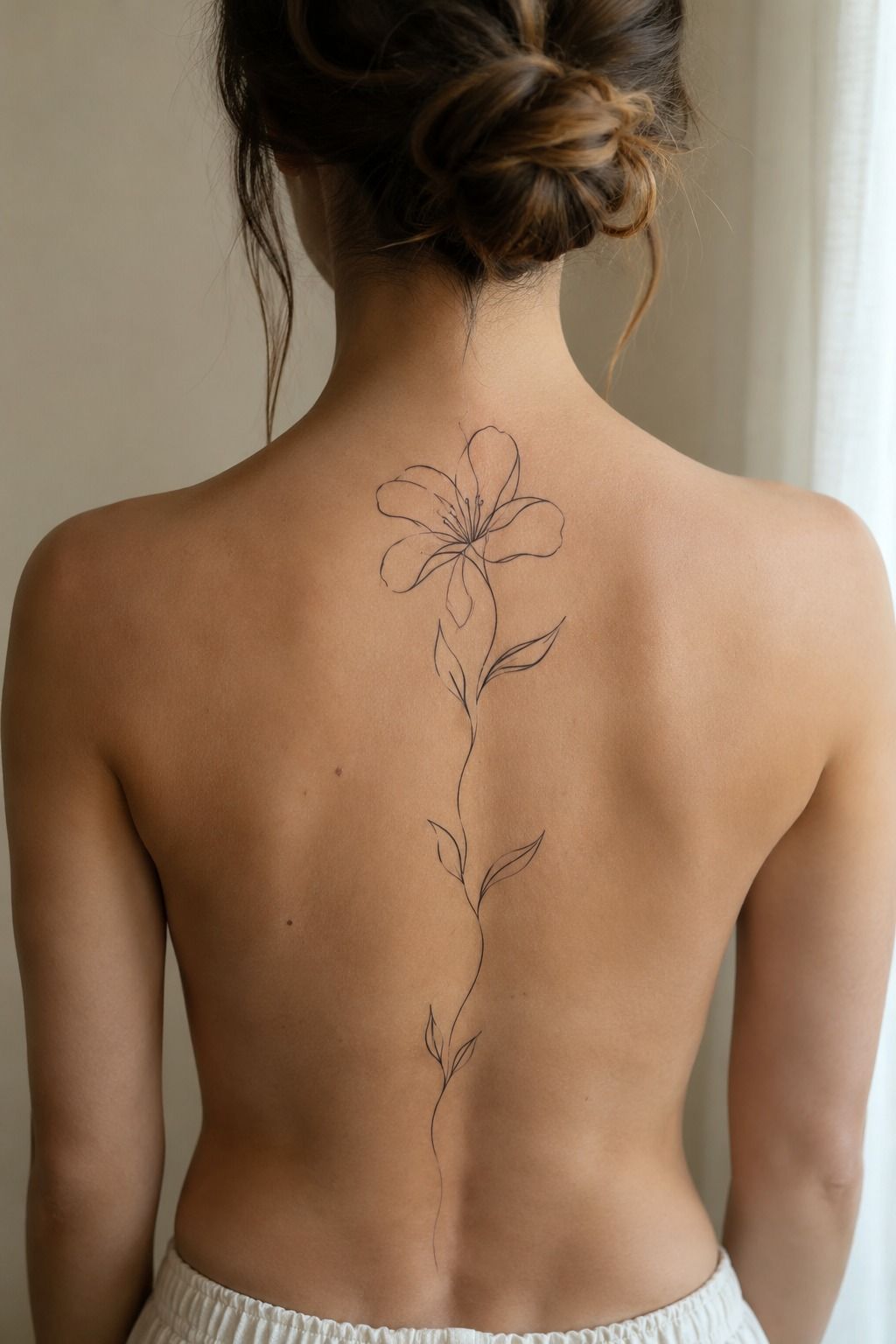
Sacred symbols need extra care because their meaning may be cultural, religious, or personal. A sage-green stencil transfer lets you study spacing, orientation, and proportion before the appointment. It also gives you time to notice whether the mark still feels right at the chosen scale.
Research the symbol before committing. Ask whether the direction, surrounding marks, or placement changes its meaning. I’d never choose a design simply because it looks elaborate.
A symbol should be treated with respect, especially when it comes from a tradition outside your own.
The sternum or upper chest can give the mark a strong, centered presence, but those zones may feel more intense. If you’re concerned about pain, consider the upper-arm placement or outer thigh. The symbol will still carry its meaning, and you may have a more manageable appointment.
Keep the line weight strong enough to age clearly. Extremely delicate marks can spread or fade, particularly with repeated sun exposure. Your artist can explain whether solid sage pigment or a slightly larger design will protect the symbol’s readability.
For a quieter reference point, review geometric tattoo references before your consultation. The best sacred designs are respectful, clear, and understated. Paying for thoughtful custom work can be worth it when the symbol carries lifelong meaning.
11Keep Ankle Ideas Playful
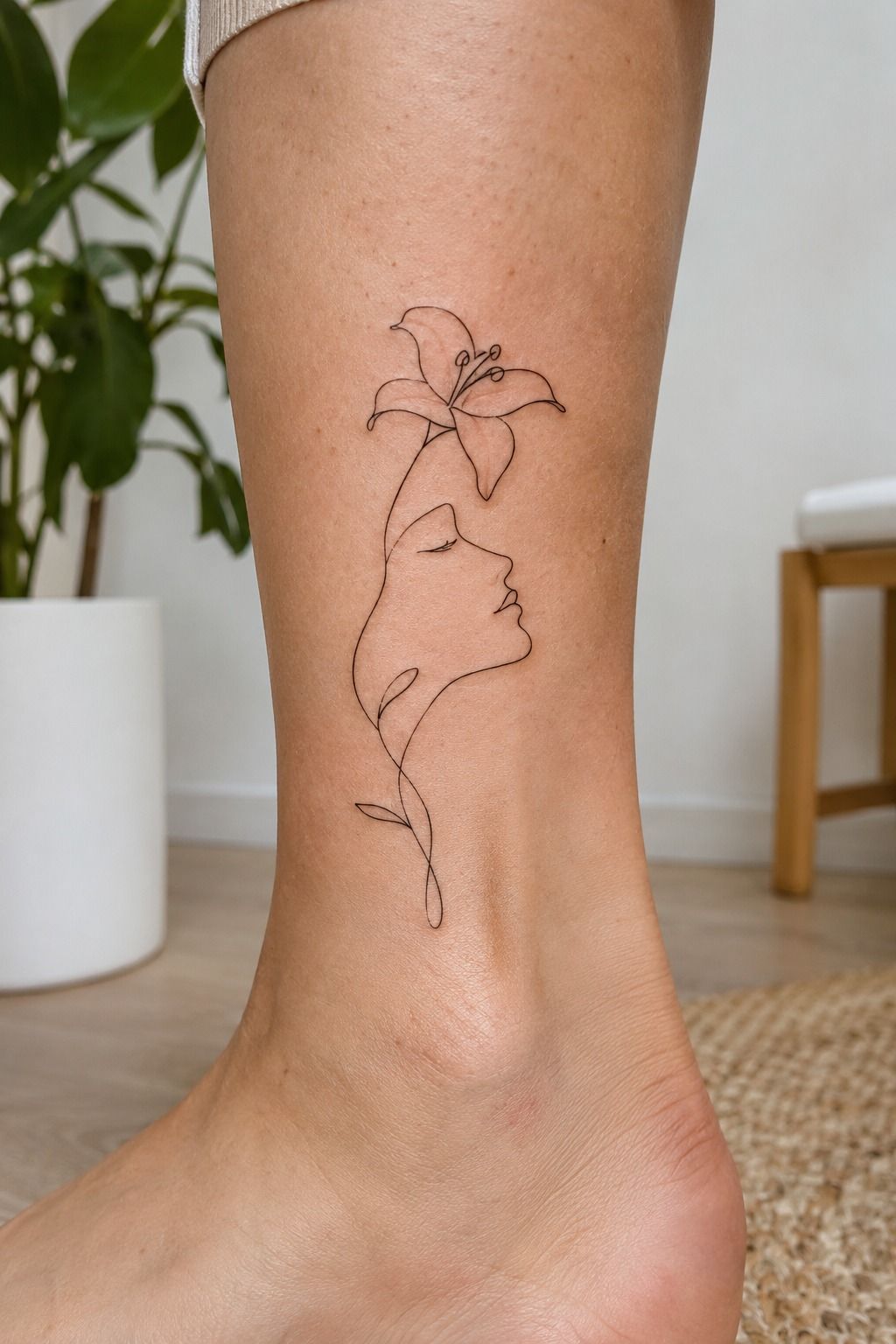
A lighthearted ankle tattoo can use a dancing line, tiny sun, smiling face, or abstract creature without becoming childish. Terracotta playful linework can look vibrant and confident when the design has a clear silhouette. The ankle keeps the mark visible in sandals and easy to cover in sneakers.
Choose a shape that survives movement. Ankles bend, rub against socks, and see plenty of sunlight during warmer months.
I’d keep the design open and avoid tiny interior details that could blur as the line settles. Ankle movement should influence the final scale.
This is a good place for an offbeat idea you’ve been saving but don’t want to make enormous. A small curve can feel daring when it has a clear silhouette. Your artist may suggest enlarging it slightly so the line remains readable after healing.
Treat the playful ankle idea as a shape first, not a collection of tiny details.
Pain varies, but the ankle can feel more intense than the calf or outer thigh. Bring a comfortable shoe for the trip home and follow your ankle aftercare instructions carefully. You’ll want to avoid rubbing, soaking, and direct sun while the surface heals.
If your reference folder is full of tiny ideas, compare it with these small continuous line tattoos. Choose the small continuous line tattoos that still make you smile after the novelty wears off. That’s the part worth keeping.
The Line I’d Trust With My Own Skin
Fine tattoos deserve more thought than their size suggests. The finest possible line isn’t always the best choice.
Healed pieces can soften, widen, or lose small details. The lesson isn’t that fine linework fails.
It’s that scale, placement, pigment, and the artist’s hand have to agree.
For your first decision, I’d rank placement above trend. Outer thigh, calf, and upper arm are generally more tolerable than ribs, feet, hands, and sternum.
That doesn’t make one choice universally right. It means your pain concern deserves to shape the design from the beginning. Outer-thigh placement can be a practical starting point.
I’d also choose a healed portfolio over a dramatic social media image. Ask to see work after the surface has settled, not only fresh examples taken under bright lights. Look for lines that remain legible, curves that haven’t become muddy, and spacing that still feels intentional.
My preferred direction is a simple black continuous contour with enough spacing around it to breathe. I don’t need every idea included in one tattoo. A clear curve can feel more lasting than a dense design packed with symbols, and a small mark can carry more emotional weight than a large image selected in a rush.
You should also ask about aftercare instructions, touch-ups, and how the artist handles your skin tone. A polished consultation is part of the tattoo, not an annoying delay. If you’re still comparing references, save the continuous line tattoo references that make you pause, then bring only your strongest three.
Start With Placement, Not the Trend
Pain concern should influence the design before you choose the final shape. A delicate idea on the outer thigh may be easier to tolerate than the same idea on ribs or sternum. Placement comfort has real value because it can shorten the appointment and make you less likely to rush through the consultation.
The outer arm, calf, thigh, and shoulder are often practical starting points. Hands, feet, ribs, and sternum can feel sharper because of bone, movement, or thinner skin. Nobody can promise an identical experience, so treat general guidance as a starting point rather than a guarantee.
Outer-arm placement is one option to discuss.
Think about visibility, friction, and daily habits too. A wrist may be easy to admire but harder to conceal. An ankle may suit your style but rub against shoes.
A shoulder may be tolerable while still giving the line enough surface to stay readable. Consider daily friction before you commit.
Compare minimalist finger tattoo ideas with larger placement examples before deciding. The most budget-friendly tattoo isn’t always the smallest one. If extra scale prevents muddy details and avoids an early touch-up, it may be the better value.
What Will the Appointment Cost?
A small continuous line tattoo often starts at the artist minimum rather than being priced purely by size. The final cost depends on the artist, location, placement, design complexity, and whether you need a custom drawing. Ask for a written estimate after showing the intended scale.
In the United States, a boutique minimum may sit around $50 to $100, while hourly rates often range from $100 to $250. Those numbers are only planning markers. Your local artist may charge more for a detailed, symbolic, or highly custom design.
Don’t choose solely by the lowest price. Clean healed work, clear hygiene practices, and a thoughtful consultation are part of the purchase. Paying more can be worth it when the artist has consistent healed work at the exact scale you want.
These small tattoo prices are useful for early budgeting, but your artist’s quote should control your decision. A clear budget protects you from adding details impulsively during the appointment.
Read a Healed Portfolio Before You Book
Fresh tattoos can look crisp, dark, and dramatic. Healed tattoo work tells you much more.
Look for consistent curves, readable spacing, stable line weight, and designs shown after the skin has settled. That’s where you’ll see whether the artist’s style fits your expectations.
Ask how long the examples have healed. A portfolio with several healed examples is more useful than a page filled only with same-day work. You can also ask whether the artist has experience with your skin tone and the placement you’re considering.
Pay attention to restraint. A skilled artist may recommend enlarging a design, removing interior details, or changing the placement. That advice can feel less exciting in the moment, but it may protect the tattoo’s long-term appearance and overall value.
You’re not looking for flawless sameness. You’re looking for a consistent hand, clean hygiene, and honest communication. Compare black fine line tattoo references with the artist’s healed portfolio, then ask direct questions.
When Should You Choose a Larger Line?
A larger design may be the smarter choice when the concept depends on facial expression, animal anatomy, lettering, or several connected curves. More scale gives the artist space to separate details. It can also make the tattoo easier to read years later.
That doesn’t mean a larger tattoo is automatically better. It may cost more, take longer, and feel more intense depending on the placement. You’ll want to weigh the emotional importance of the design against your pain concern and budget.
I’d enlarge a design when shrinking it would erase the detail that makes it specific. I’d simplify it when enlargement would add size without adding meaning. This is where a clear consultation can save money and disappointment.
If you’re uncertain, start with the strongest single gesture. A profile, flowing leaf, or animal contour can remain expressive without becoming complicated. The final choice should feel intentional, not like a compromise you made at the last minute.
The Questions I Get Asked Most
What does a continuous line tattoo usually cost?
A continuous line tattoo usually costs about $50 to $100 at a boutique minimum or about $100 to $250 per hour in the United States. Your final price depends on the artist, region, placement, and detail.
Ask for a quote after showing the size and reference. A clear estimate protects your budget.
Are continuous line tattoos a good idea for a first tattoo?
Yes, they can be a strong first choice because a small design may mean a shorter appointment and less visual commitment. Choose a more tolerable placement such as the outer thigh, calf, or upper arm. Your artist should still explain how fine lines age before you book.
How do I choose a tattoo artist for continuous line tattoos?
Choose an artist with clean linework, healed examples, and strong hygiene practices. Look for consistent curves rather than only fresh, heavily edited work. You’ll want someone who can explain needle choice, scale, and aftercare in plain language.
Healed linework matters more than follower count.
How much do continuous line tattoos hurt?
Pain varies by person and placement. Ribs, feet, hands, and sternum are often more painful, while the forearm, thigh, calf, and shoulder are usually more tolerable.
Tell your artist about your concern before the session. You can request breaks, and a shorter appointment may help.
How long do continuous line tattoos take to heal?
The surface usually heals in about 2 to 3 weeks, while complete healing takes about 2 to 3 months. Wash gently, moisturize as directed, and avoid direct sun and swimming during early healing. Your artist’s instructions should guide your healed tattoo care.
What’s the best placement for continuous line tattoos?
The best placement depends on your pain tolerance, visibility needs, and desired longevity. The calf, outer thigh, upper arm, and shoulder are practical starting points.
Ribs, feet, hands, and sternum are more exposed to bone and movement. Ask your artist whether the chosen placement will protect the line.
Where can I find ideas without buying a specific design?
Start with reputable tattoo portfolios and save references that show the placement, scale, and line quality you want. You don’t need to purchase a copied design.
Your artist can create a custom version from your ideas, and a consultation should be free of pressure or paid product promotion. Choose a custom tattoo concept that belongs to you.
Where I’d Start First
If I had to pick one, I’d start with the small calf design. It’s easier to tolerate than ribs or sternum, gives a continuous line enough space to read, and won’t disappear into crowded detail. Pin the small continuous line tattoo guide for later and bring your favorite reference to a consultation.
That choice is simple, personal, and practical. It gives you a clear sense of how your skin responds without forcing you into an intense placement. Worth pinning!