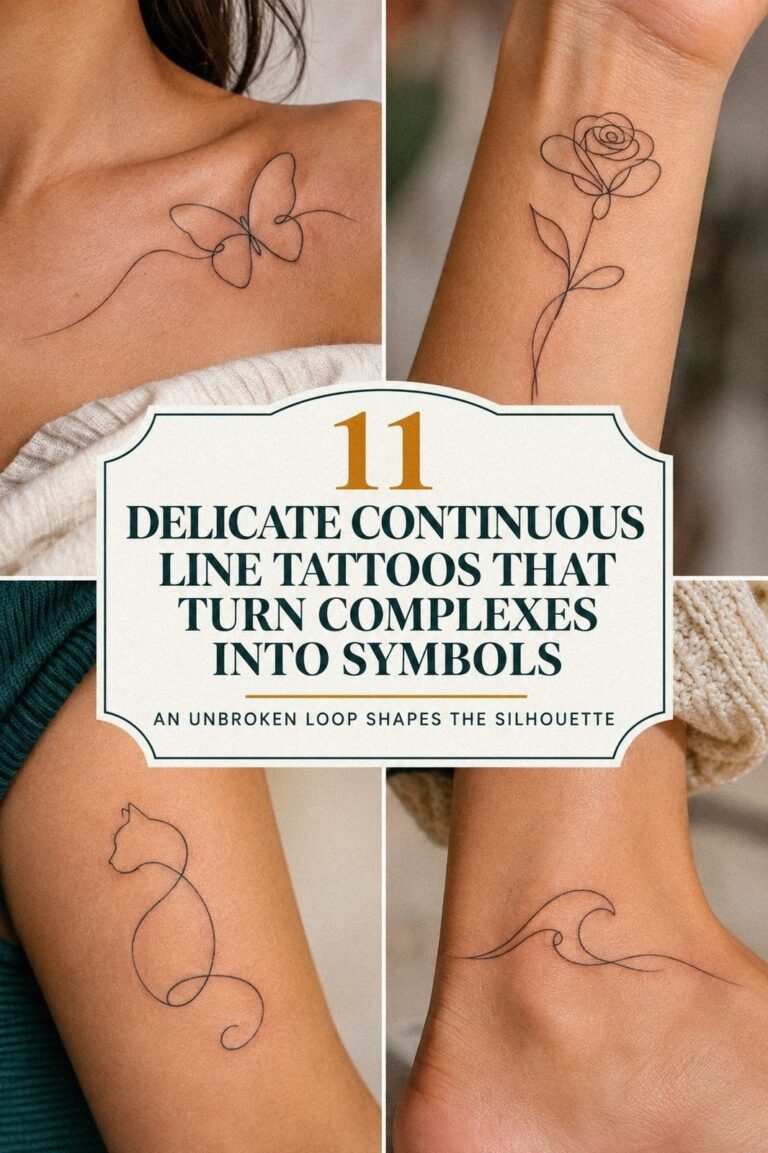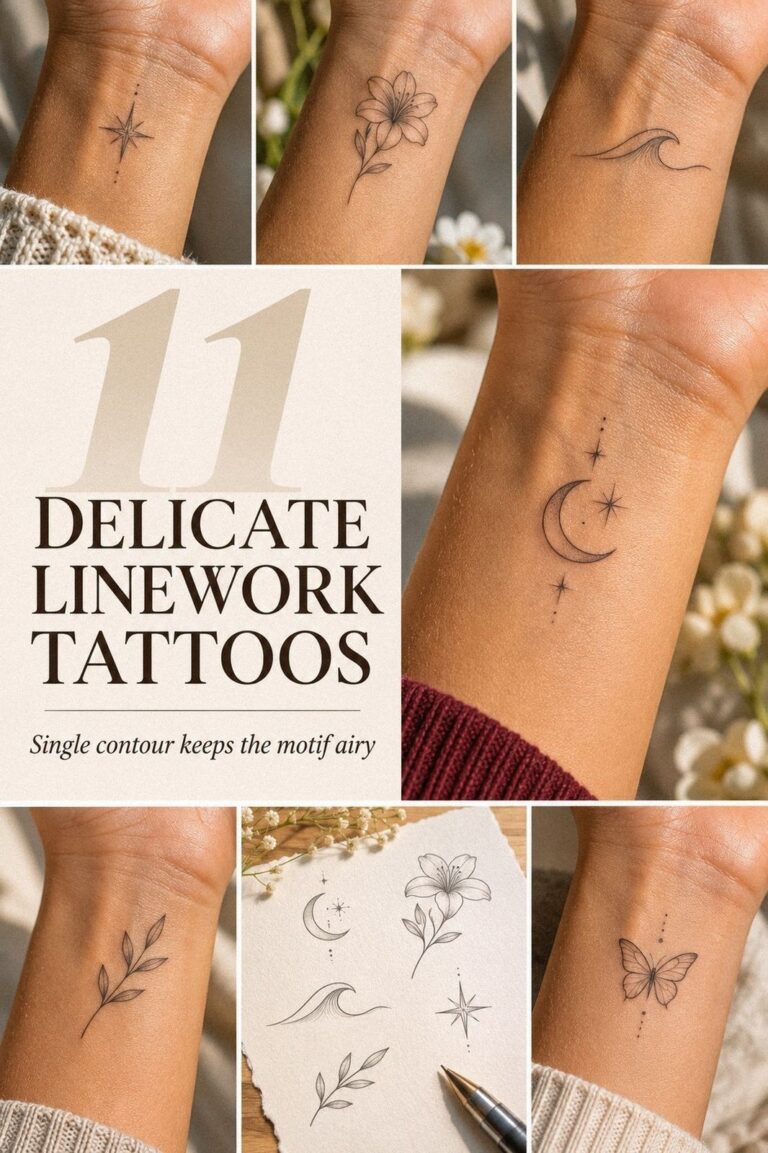
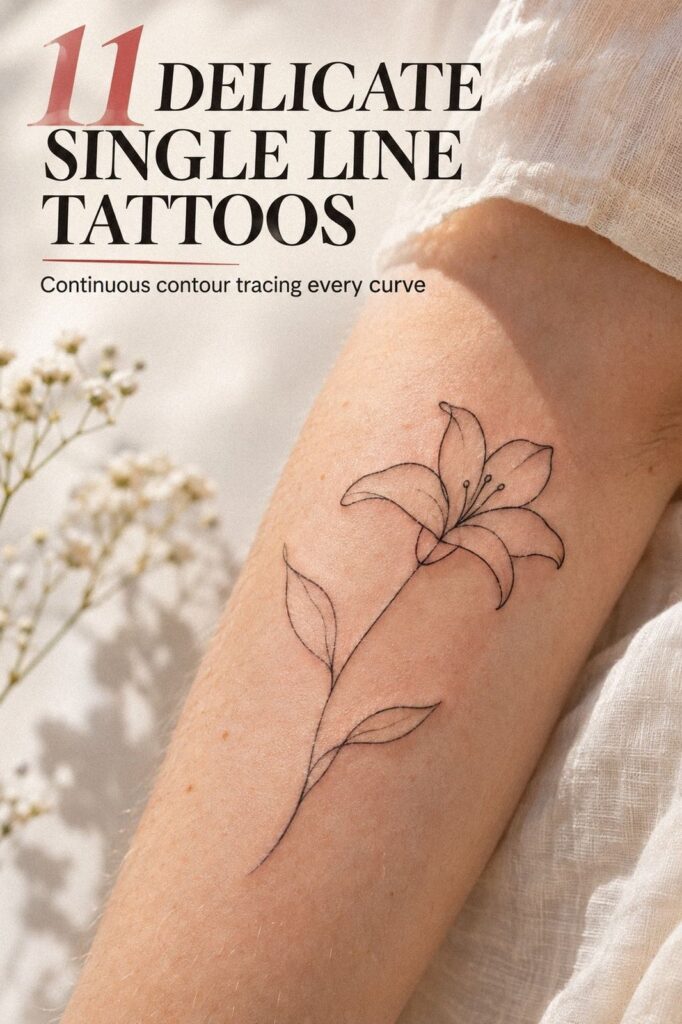
You want delicate single line tattoos that still read clean in five years. The hard part isn’t choosing a meaningful shape; it’s matching line weight, placement, and aftercare to your skin. I’d start with one clear idea, test it at its real size, and let the tattoo stay personal.
Short Version: Keep One Idea
Choose one symbol, one placement, and one line quality. You don’t need a crowded constellation, an elaborate quote, and three hidden initials to make the tattoo personal. A single tattoo concept can feel symbolic, elegant, and quietly striking when the spacing gives it air.
Your budget matters, but so does the value of work that remains readable. If you’re comparing delicate fine line tattoos, look for healed examples at the actual size you want. Fresh ink can look crisp while hiding how its smallest details may settle.
A realistic tattoo budget should include the studio minimum, consultation time, aftercare products, and possible touch-up costs. The cheapest quote isn’t always worth it if the artist has no healed portfolio to show.
Before You Start: What Will You Protect?
Your first decision is privacy. You’ll want a placement that disappears under ordinary clothing but still feels personal when you see it, such as the upper back, inner arm, rib area, or thigh. A hidden tattoo can be understated and bold at once.
Think about your real routine before you choose the private placement. Do you work outdoors? Do you wear watches, tight sleeves, or athletic clothing?
Will your tattoo rub against a waistband, shoe, or bracelet every day?
These are typical US references, not promises. Your artist, region, size, placement, and level of detail will change the cost. You’ll also need clean water, gentle unscented cleanser, fresh clothing, and aftercare supplies.
Before you book, compare small fine line tattoos at several scales. You’ll see how a one-inch design behaves differently from a three-inch design, even when the outline looks identical. The actual scale matters more than a large digital preview.
A realistic tattoo budget should include the studio minimum, consultation time, aftercare products, and possible touch-up costs. The cheapest quote isn’t always worth it if the artist has no healed portfolio to show.
- Start With Small Botanical Single Line Tattoos
- Pick Meaningful Symbols For Delicate Linework
- Place Tiny Designs Along Natural Body Curves
- Keep Fine Lines Crisp And Uncluttered
- Plan A Graceful Wrist Tattoo Composition
- Choose Unique Celestial Single Line Tattoos
- Match Linework To Your Personal Style
- Balance Intricate Details With Minimal Strokes
- Consider Pain Before Sensitive Placement
- Protect Delicate Ink During Healing
- Refresh Faded Single Line Tattoos Carefully
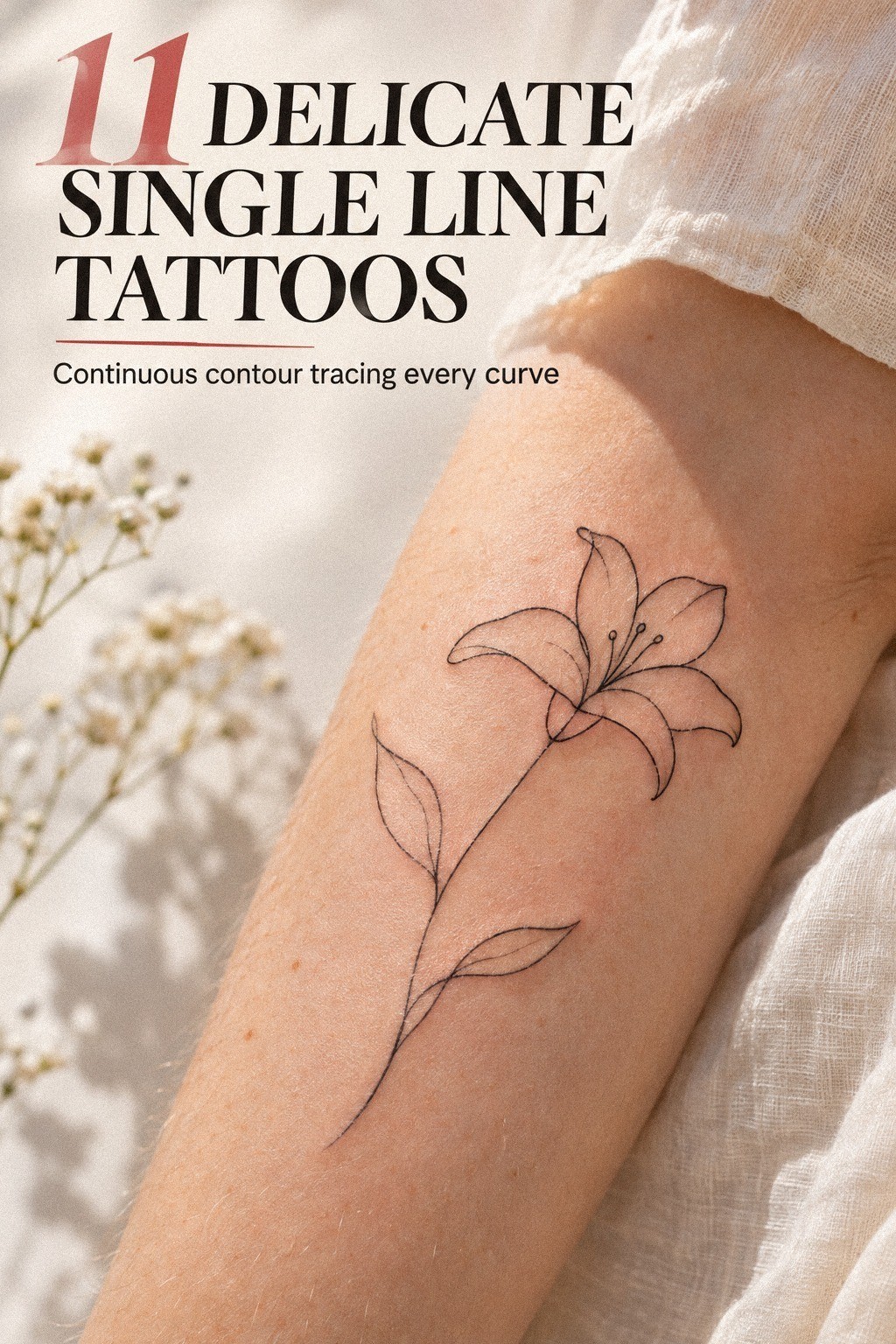
1Start With Small Botanical Single Line Tattoos
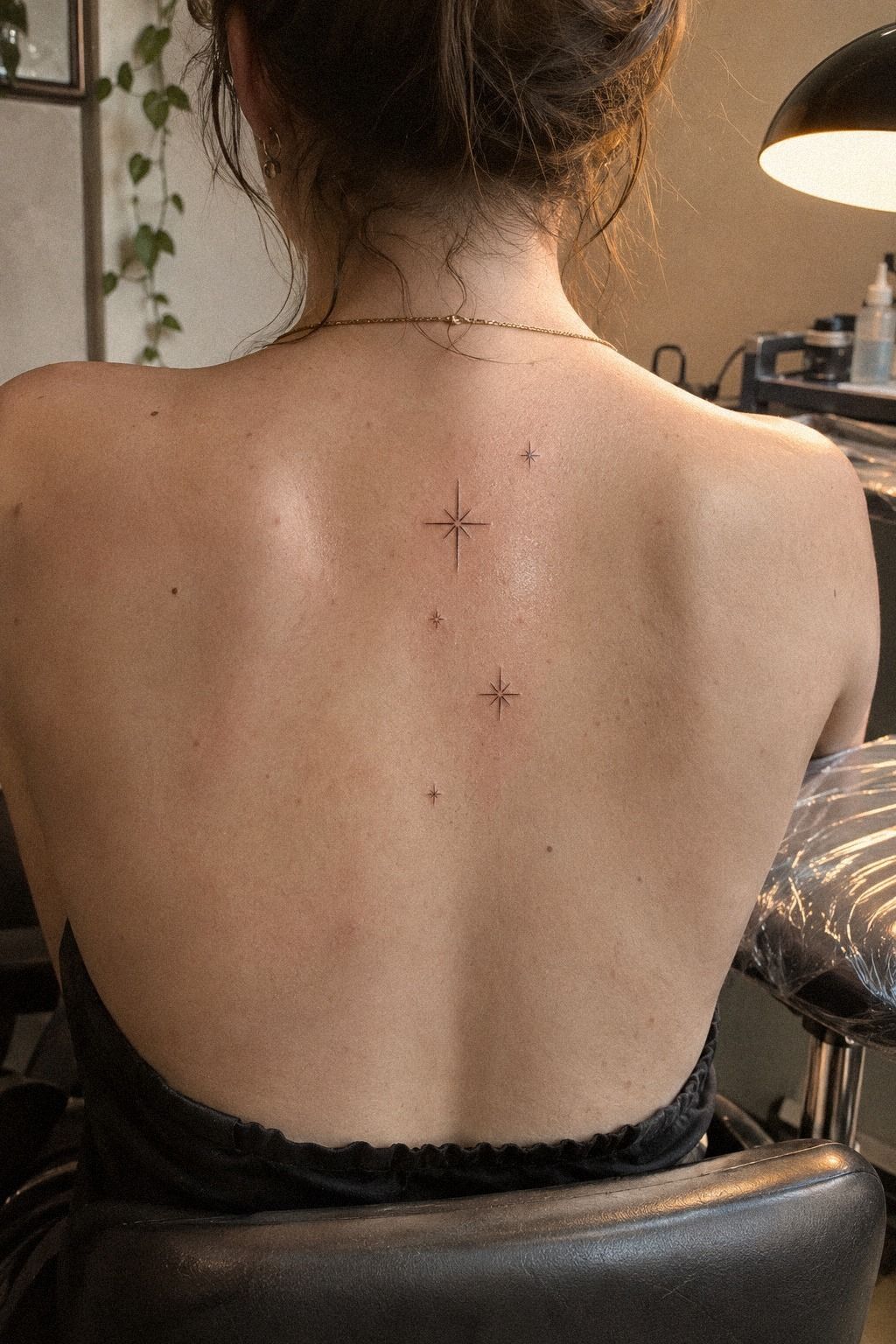
Begin with a botanical idea that has a readable outer shape. Your first thought might be a tiny stem, a crescent leaf, or a few stars above a fine branch. That restraint makes the result delicate, but it doesn’t make it weak.
A single olive branch can feel graceful and symbolic, while a tiny fern may look more organic and flowing. You’ll want to skip a crowded bouquet if you’re asking for hair-thin work. Every extra leaf steals open skin from the main line.
Your reference should show the design at the size you’re considering, not enlarged digitally. Ask your artist to print or stencil it at the intended scale. You’ll notice quickly whether the smallest leaves still read as leaves.
For compact inspiration, compare botanical single line tattoos with simpler stem designs. Save two or three favorites, then tell your artist what you’d remove. That conversation can create a more personal tattoo than copying a finished reference set.
A botanical design can feel feminine or masculine without needing a predictable style label. The same stem may feel dainty on one person and bold on another, depending on its scale, direction, and placement.
2Pick Meaningful Symbols For Delicate Linework
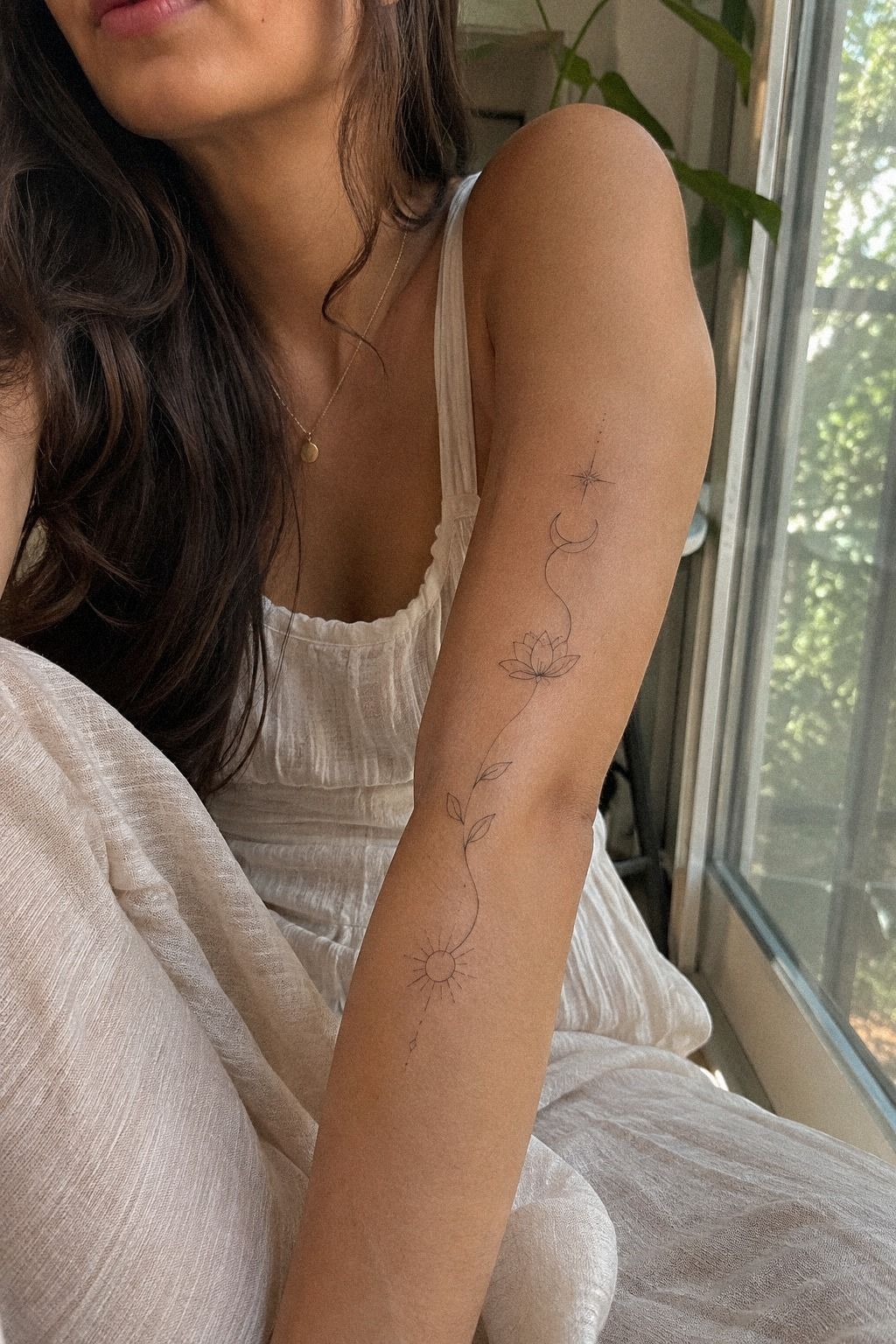
Choose one symbol that carries weight for you, then decide what part of it needs to remain visible. A tiny moon, open eye, initial, shell, or star can be meaningful without spelling out your entire story.
The single symbol should still matter when the trend disappears. You’ll want to ask whether the shape connects to a memory, person, place, or belief, rather than simply looking stylish in somebody else’s post.
Ask for a stencil before you commit. Move your arm naturally, sit down, bend your wrist, and check whether the shape twists. A symbol can look sleek while still becoming awkward when your skin moves.
I’d be cautious with an iconic design you’ve only admired on someone else. If you’re drawn to minimalist single line tattoos, mark the examples where the symbol remains clear from several feet away.
A minimalist design can be sacred, timeless, or quietly romantic without becoming ornate. You don’t need every detail to explain the meaning. Sometimes the most personal part is what you leave out.
3Place Tiny Designs Along Natural Body Curves
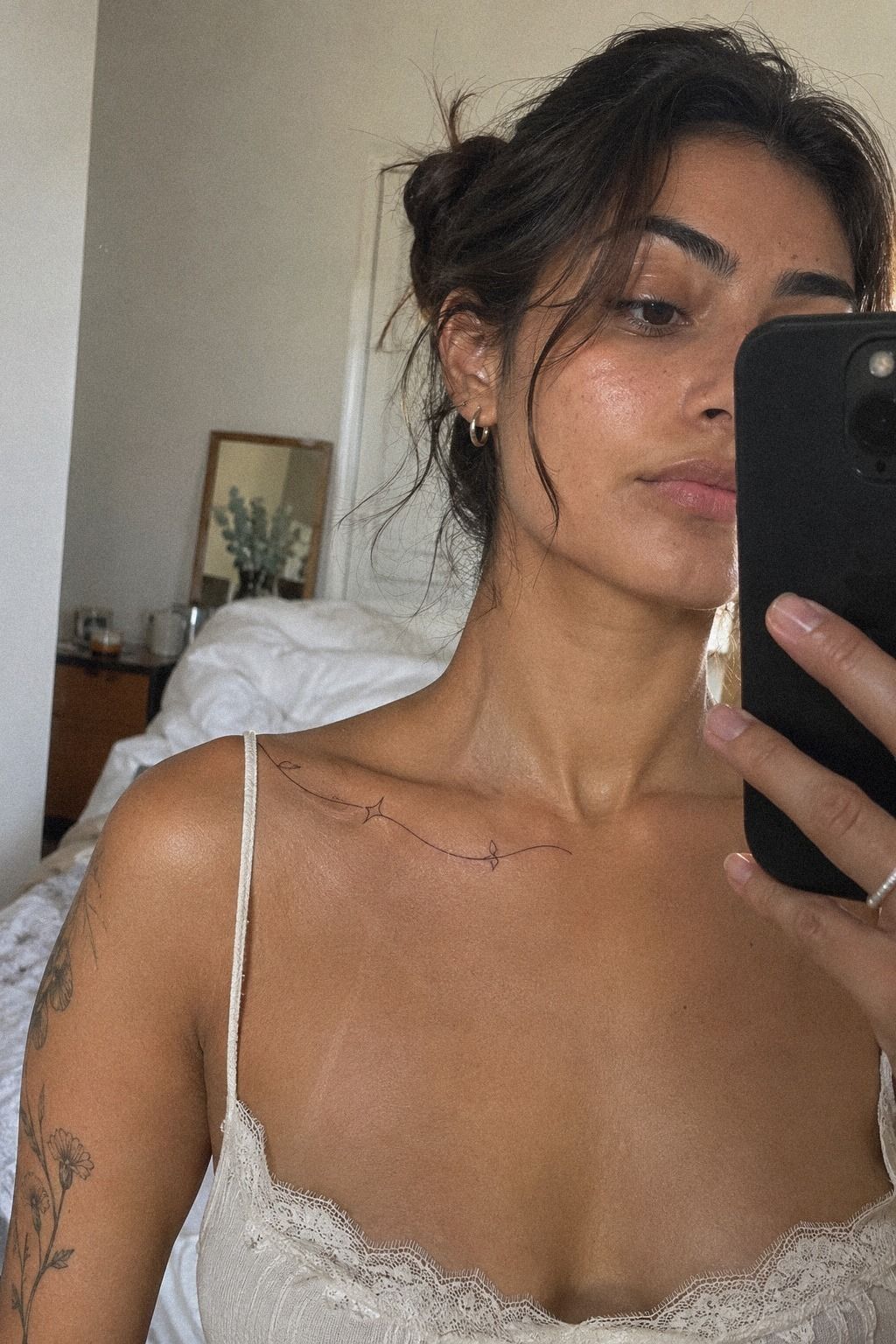
Study the body curve before you choose the final location. Your tattoo won’t live on a flat page, so your artist should check how the line changes when you stand, sit, bend, and relax.
The body movement matters most around wrists, ribs, ankles, shoulders, and collarbones. You’ll want the main contour to follow the area naturally instead of fighting every crease.
Try the stencil transfer with your ordinary posture and clothing. If the design shifts dramatically when you raise your arm, you’ll know before the needle starts. That small test can save you from an expensive correction later.
A thigh, upper back, or inner arm may offer more privacy than a hand or wrist. You can compare options through small tattoo placement ideas before you decide which location suits your daily life.
Natural curves can make a flowing design feel graceful, but they can also distort a straight line. Ask your artist whether the design direction should rotate, widen, or become slightly shorter for your chosen area.
4Keep Fine Lines Crisp And Uncluttered
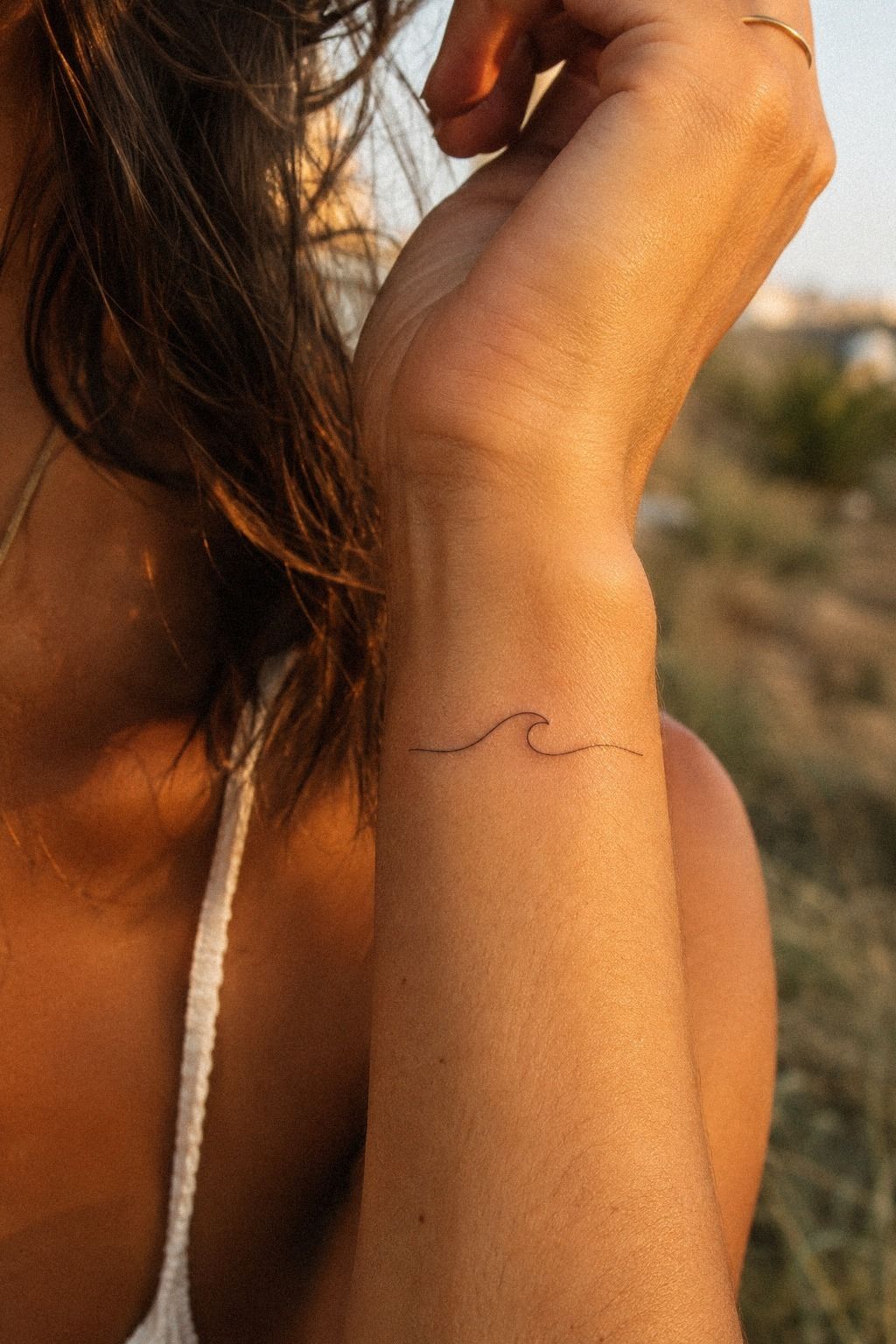
Protect the main contour first. A fine-line tattoo stays readable when it doesn’t pack tiny dots, heavy shading, and overlapping curves into one narrow area.
Ask about line weight rather than saying only, “Make it fine.” A slightly stronger black line may heal more reliably than an ultra-thin mark, especially where your skin bends or receives regular friction.
The result can still look crisp, sharp, and refined. You’ll get a more polished finish by keeping one detail large enough to survive ordinary viewing.
I’d skip intricate micro-details that only appear when your phone is inches away. They often become visual noise as the tattoo settles. If you’re comparing black fine line tattoos, inspect the spaces between marks as carefully as the marks themselves.
Before you book, request healed work from the artist. Look for clean curves, even spacing, and edges that haven’t spread into gray shadows. That evidence is more useful than a perfect fresh result from a portfolio of black fine-line work.
A clear healed portfolio is part of the price. You’re paying for judgment, technique, and restraint, not simply the minutes spent holding the machine.
5Plan A Graceful Wrist Tattoo Composition
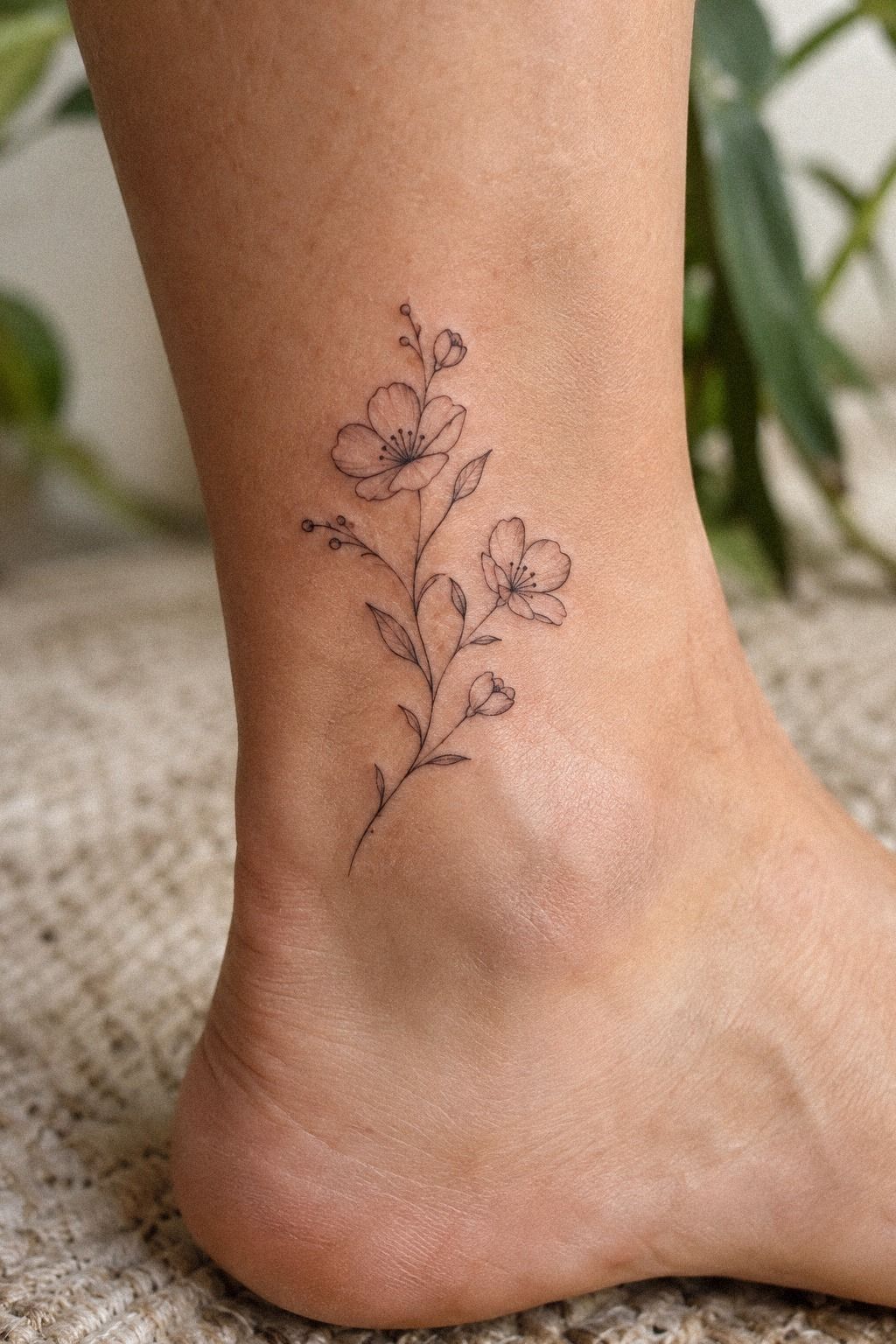
Use a wrist design to compare scale, direction, and negative space. Your wrist turns constantly, so a shape that looks perfect from one angle may become compressed from another.
The wrist placement should support the line’s direction. A small branch may follow the forearm vertically, while a crescent may sit better across the wrist with enough open skin around it.
You’ll want to test the line direction while rotating your hand. If the design becomes unreadable whenever your palm faces upward, ask whether the artist can simplify the curve.
Wrist tattoos can be visible, discreet, or easy to cover with a watch. Consider your workplace, accessories, and sun exposure before deciding whether that visibility is worth it.
For more comparisons, browse small tattoo ideas and save examples with similar proportions. Don’t save only the most striking design. Save the one that still looks balanced when it’s small and judge the small tattoo proportions honestly.
6Choose Unique Celestial Single Line Tattoos
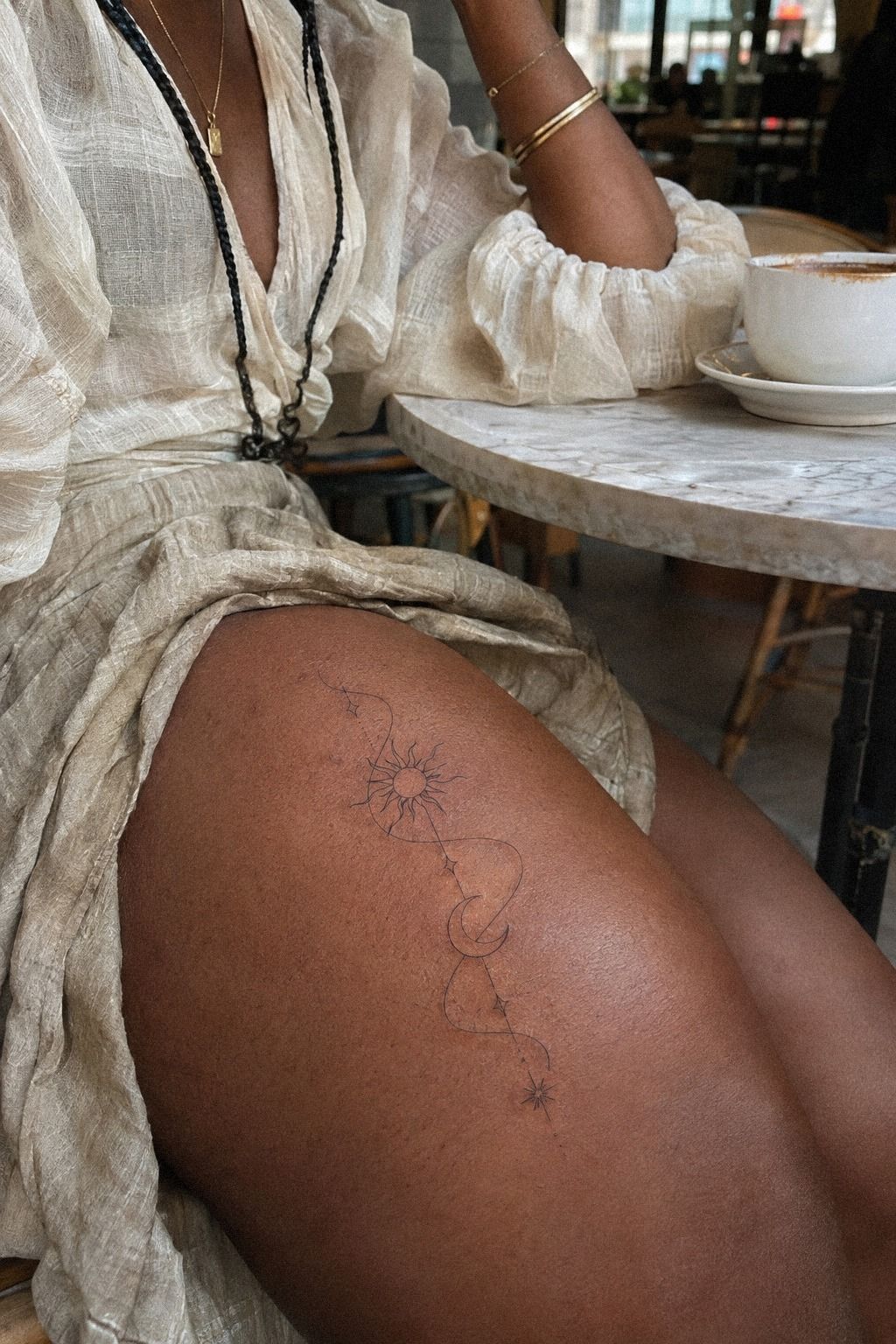
Start with one celestial shape, not an entire sky. A crescent, small star, eclipse, or fine orbit can feel expressive without turning into a crowded collection of symbols.
Consider whether the shape should be black, lightly shaded, or left as a clean outline. A simple celestial tattoo can feel haunting, playful, or timeless when the silhouette remains readable.
You’ll want to decide whether the symbol faces inward or outward on the chosen placement. That small choice can make the tattoo feel more personal and connected to your movement.
7Match Linework To Your Personal Style
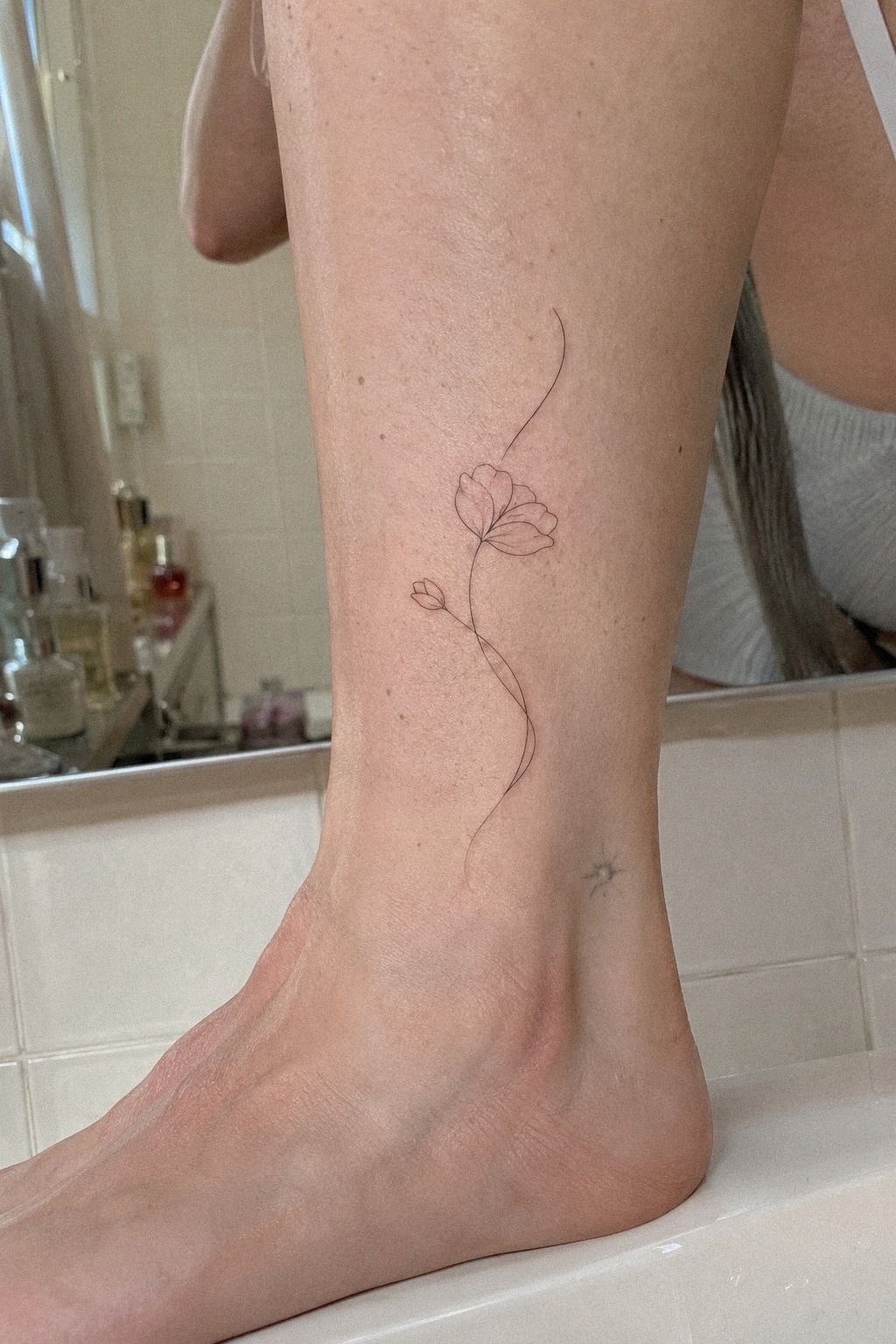
Name the feeling you want before naming the object. You might want something raw and expressive, polished and elegant, or classic with a slightly edgy edge.
Your style brief can be only three words. Try “quiet, symbolic, flowing” or “sharp, personal, minimal.” Your artist can respond to a feeling more usefully than to a vague request for something unique.
Consider whether you prefer clean black ink, a softer outline, or a tiny touch of shading. You’ll want to make that decision before the stencil, because changing direction halfway through can create unnecessary detail.
A romantic design doesn’t have to include a heart. A daring design doesn’t have to be large. The most meaningful choice may be a small shape that only you recognize.
Save personal single line tattoo ideas that match your actual wardrobe and comfort level. If every reference belongs to a different style, your artist won’t know what to preserve.
8Balance Intricate Details With Minimal Strokes
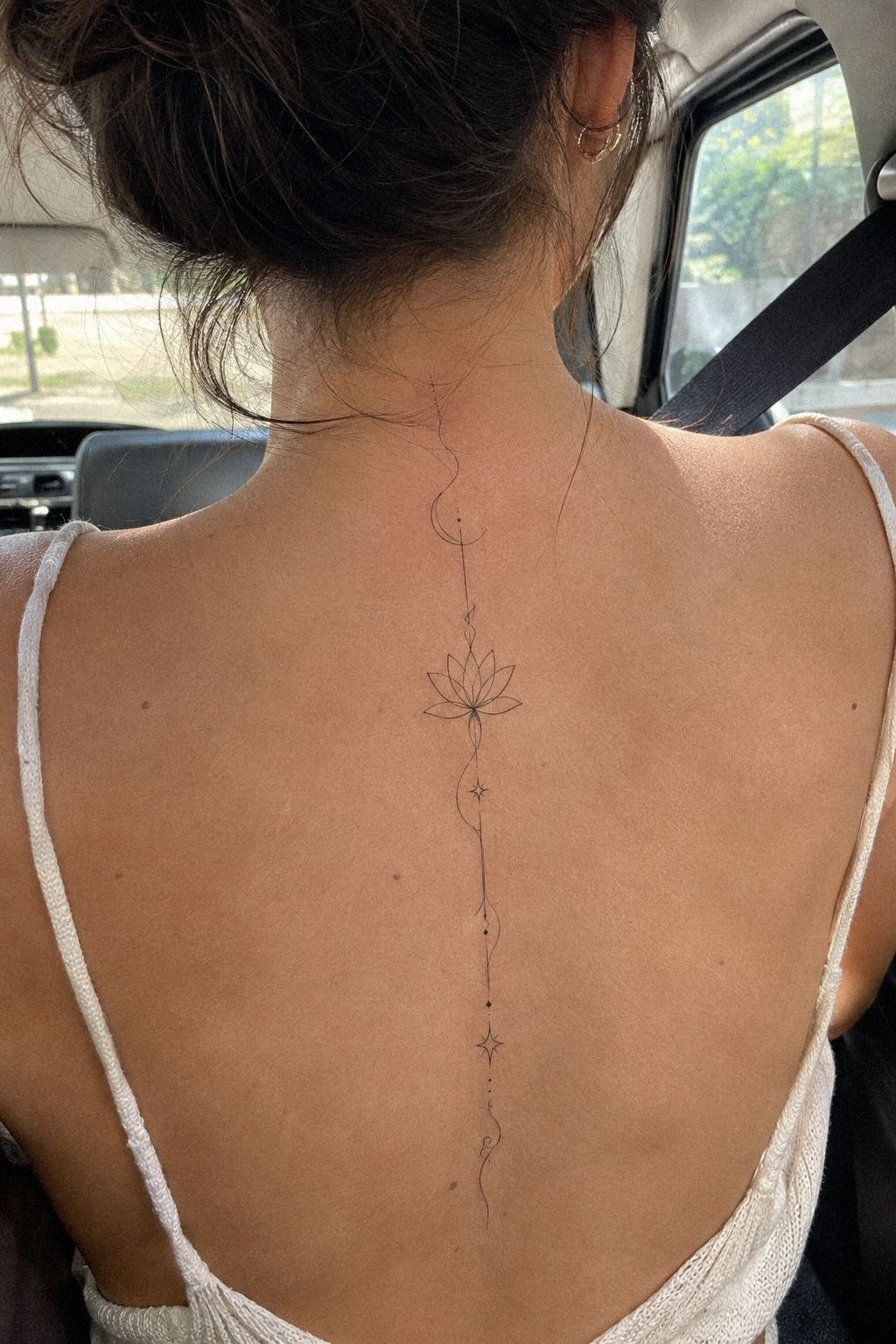
Use the spine as a lesson in spacing. A narrow placement can support an intricate design, but only when the marks are separated enough to remain clear after healing.
An intricate detail should earn its place. One tiny feather, leaf, or star can make a minimal tattoo expressive; five competing details may turn the same design muddy.
Ask your artist which marks should remain and which can disappear. The strongest result may be a sharper outline with fewer decorative strokes.
9Consider Pain Before Sensitive Placement
Treat pain as information, not a bravery contest. Ribs, feet, hands, and sternum are commonly more sensitive because the skin is thinner, the area moves often, or bone sits close beneath it.
Your placement choice should account for your own pain history and appointment length. You don’t have to choose the most sensitive location to prove that the design matters.
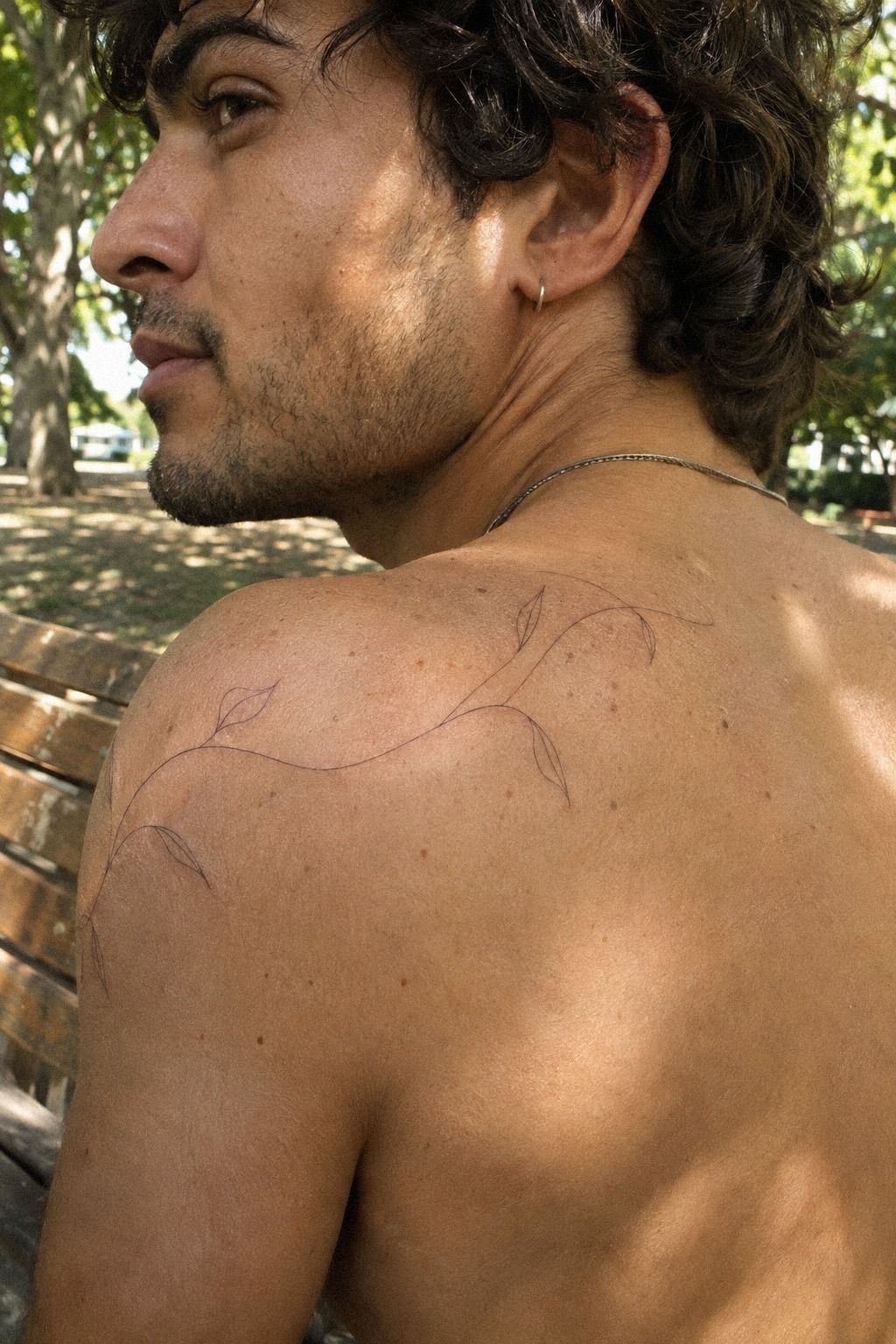
The shoulder placement can be a strong middle ground. It may remain visible in a tank top while feeling more tolerable for many people than the ribs or sternum.
You’ll want to move your arm during the stencil check so the design doesn’t land in an awkward crease. A clean stencil transfer can shorten uncertainty before the session begins.
I’d skip a painful placement just because it looks popular online. Your comfort affects how still you can remain, and stillness helps the artist keep the line controlled.
Browse small fine line placement ideas if you want options with more control. A smaller tattoo may feel dainty, raw, or quietly daring without becoming a test.
10Protect Delicate Ink During Healing
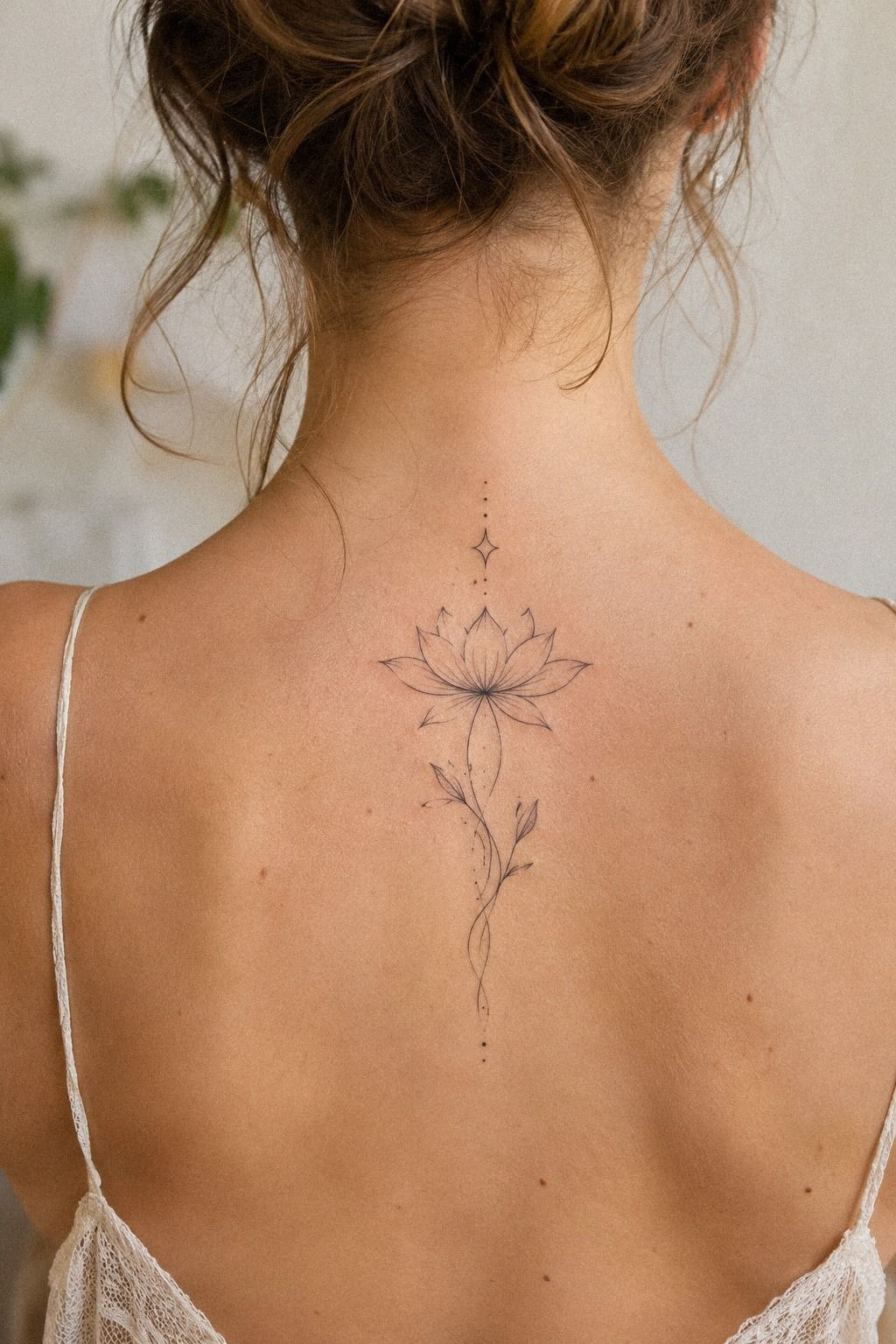
Follow your artist’s aftercare instructions first. In general, the surface heals in about two to three weeks, while complete healing can take about two to three months.
Your job is simple but important. Wash gently, moisturize as directed, avoid picking, and keep fresh ink away from unnecessary sun and swimming.
The tattoo may look darker, drier, or less even during the early stage. You’ll want to resist judging the final result before the skin has settled.
Use clean hands and a gentle cleanser. Don’t cover the area with tight clothing if your artist tells you to leave it open, and don’t add random products because a friend swears by them.
A thin layer of the recommended healing product is usually easier to manage than repeated heavy applications. You’ll protect the line by following one clear routine instead of experimenting.
Avoid direct UV exposure after healing too. Sun can accelerate fading, especially in delicate work. The cleanest healed line is still vulnerable to neglect.
Treat your fresh black ink with patience. That’s when the tattoo’s timeless quality gets a chance to appear.
For another aftercare comparison, review fine line tattoo references alongside your artist’s written instructions. The artist’s guidance should always win.
11Refresh Faded Single Line Tattoos Carefully
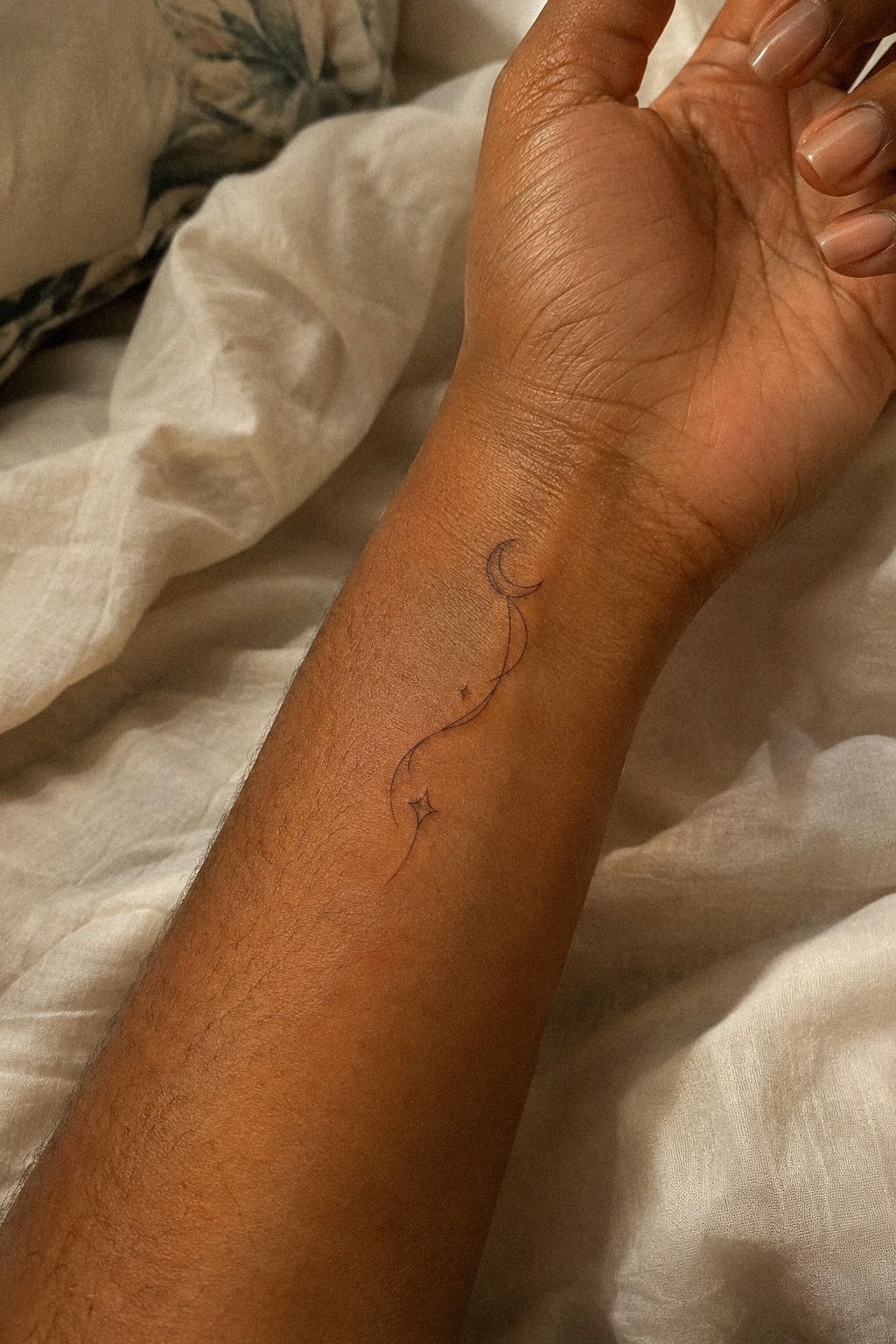
Wait until the tattoo has reached complete healing before deciding it needs a refresh. Early dryness or uneven color isn’t enough evidence that the line has faded permanently.
A touch-up may sharpen a softened contour, but it shouldn’t become an excuse to add unnecessary detail. Ask your artist whether the existing design needs reinforcement, simplification, or more time.
The Line Has to Survive Real Life
A private tattoo should work with your actual habits, not an imaginary version of your life. You’ll want to consider sun, friction, exercise, clothing, and how often the area moves.
The daily-wear factors matter because a beautiful design can become frustrating when it catches on clothing or receives constant UV exposure. Think about the ordinary week, not only the appointment day.
If you work with your hands, a wrist or finger may demand more maintenance than an upper arm. If you spend weekends outside, a covered placement may offer better long-term value.
A bold idea doesn’t have to be large. You can make a personal choice feel striking through placement, proportion, and one memorable contour.
Your tattoo should also fit how visible you want to be at work, with family, or during formal occasions. Privacy is easier when you plan it before the stencil.
That practical thinking doesn’t make the design less romantic. It makes the choice more durable.
Make a Private Design Brief Before You Book
Write down the symbol, the reason it matters, your preferred placement, approximate size, and three words describing the mood. A design brief gives your artist something clear to interpret.
You’ll also want to list what you don’t want. Maybe you don’t want shading, text, color, heavy contrast, or a crowded composition.
Bring two or three references, not twenty. Too many saved designs can blur your preferences and encourage the artist to combine unrelated ideas into one reference set.
Your brief can mention whether you want a sleek outline, flowing curve, sharp angle, or soft botanical shape. You don’t need to know every technical term.
A strong brief saves consultation time, which can improve the overall cost. It also helps you see whether the artist understands your intention before you commit.
If you’re still collecting ideas, start with minimalist tattoo designs and remove anything that doesn’t belong to your own story.
What to Ask a Fine-Line Artist
Ask to see healed work in the size and placement you’re considering. You’ll learn more from a healed artist portfolio than from a page filled with fresh, high-contrast tattoos.
Ask how the artist adjusts line weight for movement, skin texture, and long-term readability. A thoughtful answer should include trade-offs, not a promise that every hair-thin line will remain unchanged forever.
You can also ask about the studio minimum, hourly rate, deposits, touch-up policy, and aftercare. Clear pricing is part of professional value.
Ask whether the artist has worked with your skin tone and chosen placement. This isn’t an awkward question. It helps you understand how they evaluate contrast and spacing.
You’ll want to know what happens if you change your mind during the stencil revision. A good consultation leaves room for adjustment before the machine starts.
Review fine line artist examples before your appointment, but let the consultation decide the final scale. Worth it!
Why I Keep Choosing the Line Before the Trend
I like single-line tattoos because they can hold a private memory without demanding attention from everyone around you. The appeal isn’t only that the work looks modern or discreet.
Still, I don’t think every small design deserves a needle. I’d wait when the symbol feels borrowed or when the placement only works in one carefully posed photograph.
The most personal tattoos usually survive a boring week, a change of outfit, and the end of a trend. If you only love the reference digitally, you may not love carrying it.
I also trust restraint more than wishful thinking. Very fine lines can spread with UV exposure, friction, or crowded detail, so you’ll want an artist who understands spacing.
A well-spaced tattoo has a better chance than a tiny drawing packed with symbols. Keep it simple!
My rule is straightforward: choose the placement for your real life, then choose the symbol for your real history. If the tattoo still feels meaningful, elegant, and quietly empowering after you’ve waited, book the consultation!
A Practical Cost and Value Check
A delicate tattoo may cost around $50 to $100 at a boutique minimum or around $100 to $250 per hour in the US. Your final price will depend on the artist, region, size, placement, and session length.
The studio minimum often matters more than the number of minutes required. A tiny tattoo can still cost the minimum because setup, sterilization, consultation, and cleanup take time.
You’ll want to compare value, not only price. An artist with healed results, careful consultation, and clear hygiene practices may be worth a higher budget.
Ask about the touch-up policy, how long it lasts, and what conditions apply. Don’t assume every studio handles refreshes the same way.
Your budget should leave room for quality aftercare and possible travel. Spending every dollar on the appointment can create avoidable stress afterward.
If the cost feels uncomfortable, wait. A meaningful tattoo is rarely improved by rushing into a price that doesn’t fit your finances.
A clear quote is a good sign! You should know what you’re paying for before you approve the stencil.
The Questions I Get Asked Most
How much does a delicate single line tattoo usually cost?
I’d expect about $50 to $100 at a boutique minimum or about $100 to $250 per hour in the US. The final quote varies by artist, region, size, placement, and detail. I’d ask about deposits, minimums, and touch-up policies before booking.
Are delicate single line tattoos a good idea for a first tattoo?
I think they can be a good first tattoo when you choose a readable design and a placement you can tolerate. A clear stencil keeps planning simple. I’d still review healed work and discuss your comfort level with the artist first.
How do I choose an artist for delicate single line tattoos?
I’d review a portfolio containing healed tattoos, not only fresh work. Healed linework shows whether the artist understands spacing and ink behavior. I’d also choose someone who explains trade-offs clearly and follows consistent studio hygiene practices.
How much do delicate single line tattoos hurt?
Pain varies by person and placement. I’d expect ribs, feet, hands, and sternum to feel more sensitive than the forearm, thigh, or shoulder. The exact placement matters more than the word delicate, so I’d ask about your chosen area before booking.
How long do delicate single line tattoos take to heal?
I’d allow about two to three weeks for surface healing and two to three months for complete healing. A consistent aftercare routine helps the skin settle. I’d wash gently, avoid picking, limit sun, and follow the artist’s instructions about swimming.
What’s the best placement for delicate single line tattoos?
I’d consider the forearm, thigh, shoulder, upper back, or collarbone, depending on visibility, friction, pain, and design direction. A protective placement is usually better than one selected only because it looks striking in a reference.
Are delicate single line tattoos worth the cost?
I think they can be worth it when the design is personal, the artist has healed results, and the placement suits your routine. The long-term value comes from clarity and confidence, not simply from choosing the smallest possible tattoo.
Where I’d Start First
If I had to pick one step, I’d start with the healed portfolio check. Fresh ink can hide weak spacing, but healed photos show whether the artist’s delicate lines stayed readable.
Save your favorite references, write a short design brief, and ask direct questions about line weight, placement, healing, and price. You’ll make a more confident choice when you know what you want to protect.
For final inspiration, compare small fine line tattoos with delicate geometric tattoos, then remove anything that feels borrowed. The strongest private tattoo is the one you’d still choose when nobody else is watching.