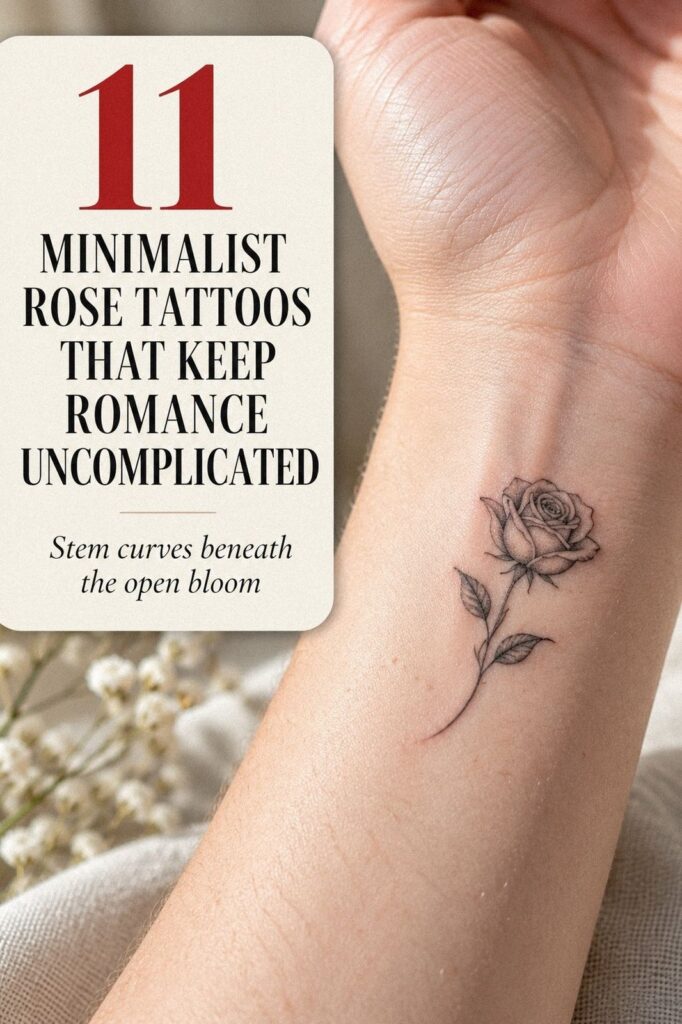
Minimalist rose tattoos can stay crisp, meaningful, and easy to cover when you choose placement before decoration. I’ve learned that after putting a delicate design too close to constant friction, where the lines softened sooner than expected. Now I check skin movement and sun exposure first. That balance is personal!
- Start with a Tiny Minimalist Rose on the Wrist
- Behind the Ear: An Intricate Rose That Stays Quiet
- Would a Single-Stem Rose Work Along the Spine?
- Place a Small Rose on the Finger
- The Botanical Flash Sheet: Small Details, Big Meaning
- Frame the Collarbone with a Minimalist Rose
- Can an Ankle Rose Stay Delicate and Coverable?
- Hide an Initial Inside the Rose
- Geometric Shapes or Soft Petals?
- Moon and Stars: An Ethereal Rose Pairing
- Choose a Bold Minimalist Rose for the Forearm
1Start with a Tiny Minimalist Rose on the Wrist
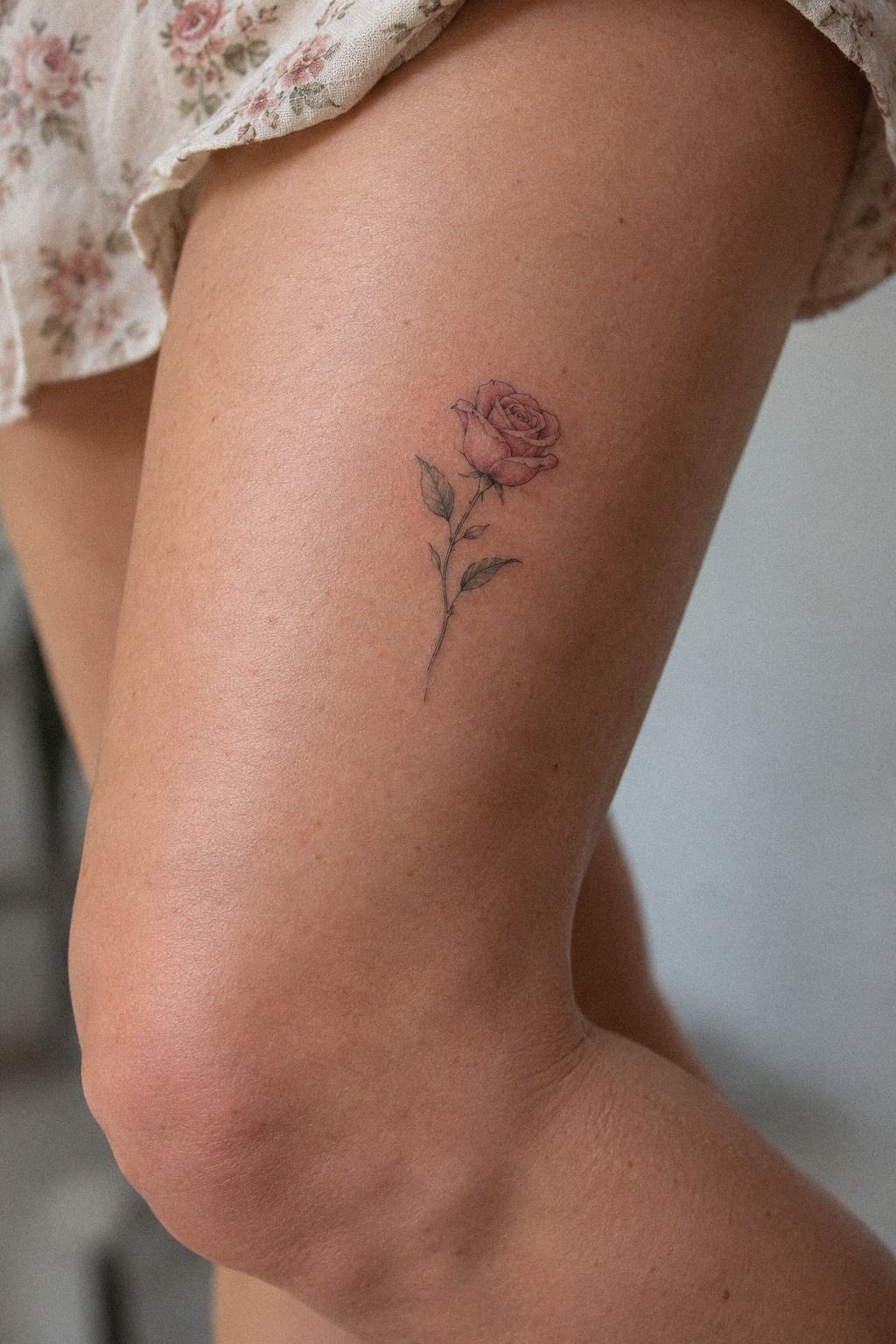
A tiny wrist rose gives you a meaningful symbol without demanding attention every minute. I’d keep the profile simple, with three or four fine terracotta lines forming the petals and one short stem. Your artist can place it on the inner wrist for a discreet look or slightly toward the side for easier coverage.
The wrist moves constantly, so your design needs a clear structure rather than tiny decorative marks. A dainty rose under 2 inches can look elegant beneath a watch or bracelet. You’ll want enough open skin between the petals, though.
I’d skip crowded shading here because it can make a minimal rose look muddy. Use negative space as part of the design. It keeps the flower readable and timeless.
A terracotta ink tone can give the rose a softer contrast than true black. A single muted olive accent can work, but it isn’t necessary. Your final price may change with color, detail, and studio minimums.
The wrist is easy to show and easy to conceal. A long sleeve can hide it quickly, while a watch or slim bracelet can cover part of the design without making the placement feel forced.
I’d still think about sun exposure. The inside wrist may receive less direct sun than the outer arm, but repeated movement, washing, and jewelry friction can affect delicate lines. Your artist should show you healed examples in a similar scale.
2Behind the Ear: An Intricate Rose That Stays Quiet
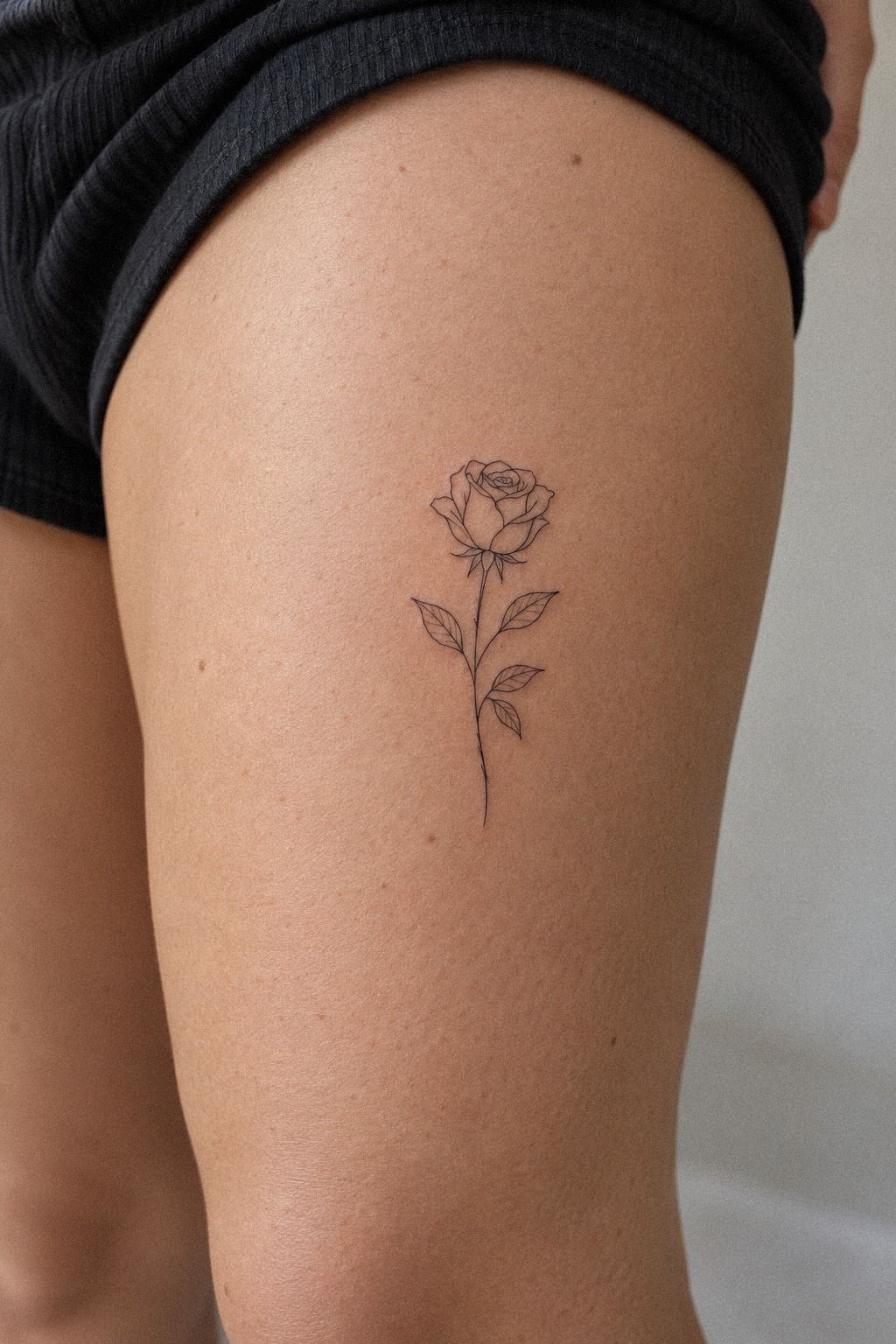
Behind the ear creates an intimate placement for an intricate rose. It feels delicate, slightly mysterious, and personal without becoming overly visible.
A behind-the-ear placement works best when the rose has a clean silhouette and limited interior detail. You might choose one open bloom, a short stem, or a small leaf that follows the curve beneath the ear.
The skin is close to the hairline, so your artist should check how the stencil sits when your head is upright and turned. A graceful design can look awkward if it is placed too close to the neck crease.
Hair can help with coverage, but it can also create daily friction. Pay attention to hairline contact, headphones, glasses arms, and products that touch the area. Those small habits matter more than the rose’s exact size.
I’d avoid a heavy fill behind the ear. A crisp outline with one expressive petal turn usually survives the scale better than a crowded, ornate miniature.
Because the placement is small, ask to see healed work rather than relying only on fresh photographs. Fresh lines can look sharp before the skin settles. Your goal is a readable rose after healing, not only a striking appointment-day result.
3Would a Single-Stem Rose Work Along the Spine?
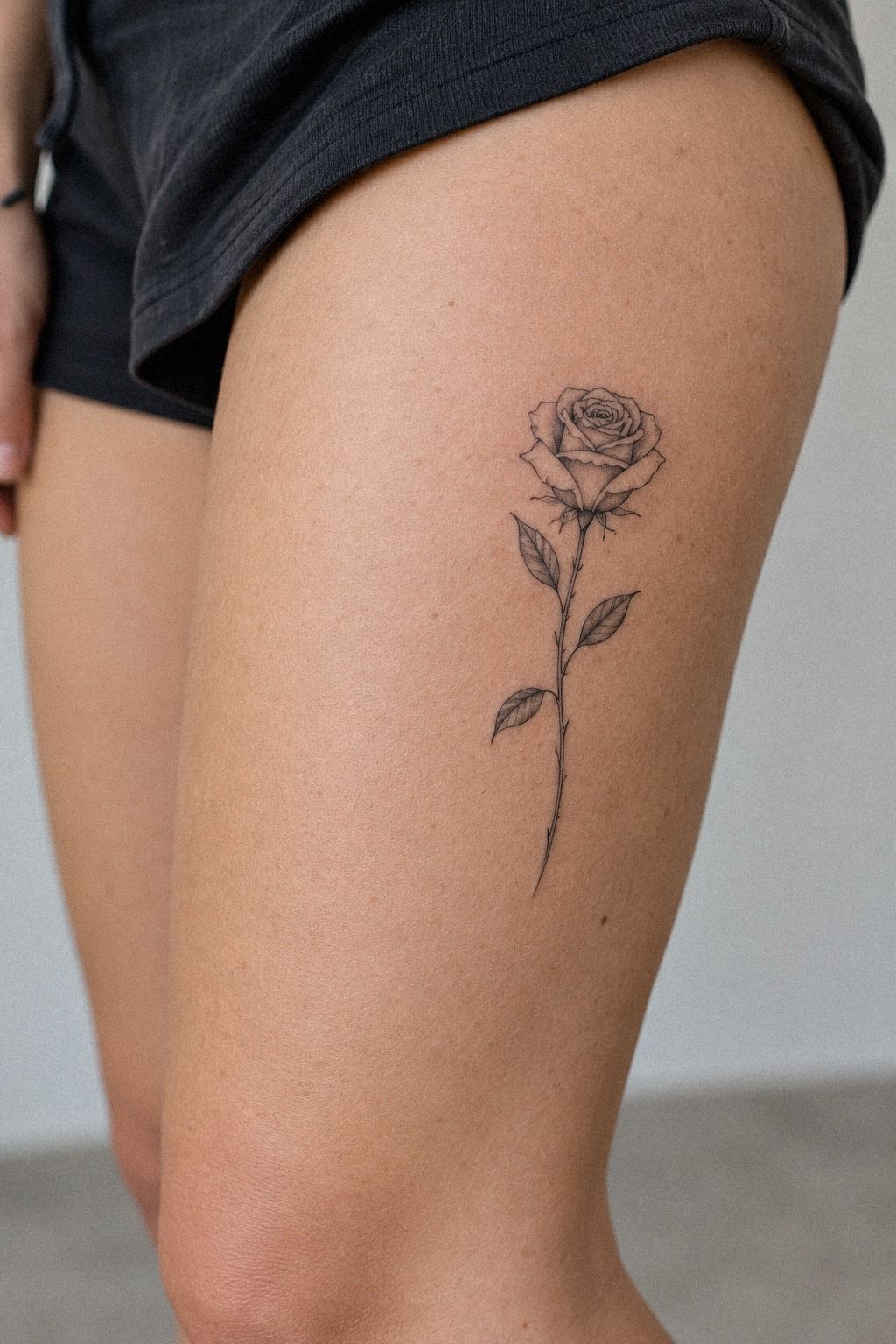
A single-stem rose running along the spine feels graceful, symbolic, and dramatic without becoming ornate. It’s a strong choice when you want a vertical design that stays easy to hide.
I’d keep the bloom near the upper spine or between the shoulder blades. That gives the stem a natural path and leaves enough open skin around each petal.
A narrow rose can follow the body’s center line, while a slightly angled stem feels less formal. Your artist should check how the stencil sits when you stand, bend, and relax.
The upper spine gives a flowing rose a clear direction. You can use one bloom at the top, two smaller leaves below it, or a longer stem that stops before the lower back.
The spine may feel more intense than the forearm. Still, a simple design can keep the session shorter. I’d choose this placement for the vertical movement, not because the tattoo needs more decoration.
Sun exposure is usually lower beneath clothing, but the area still moves constantly. Ask your artist whether the chosen line weight suits the length of the design. A fragile stem can lose its clarity if it’s stretched too far.
4Place a Small Rose on the Finger
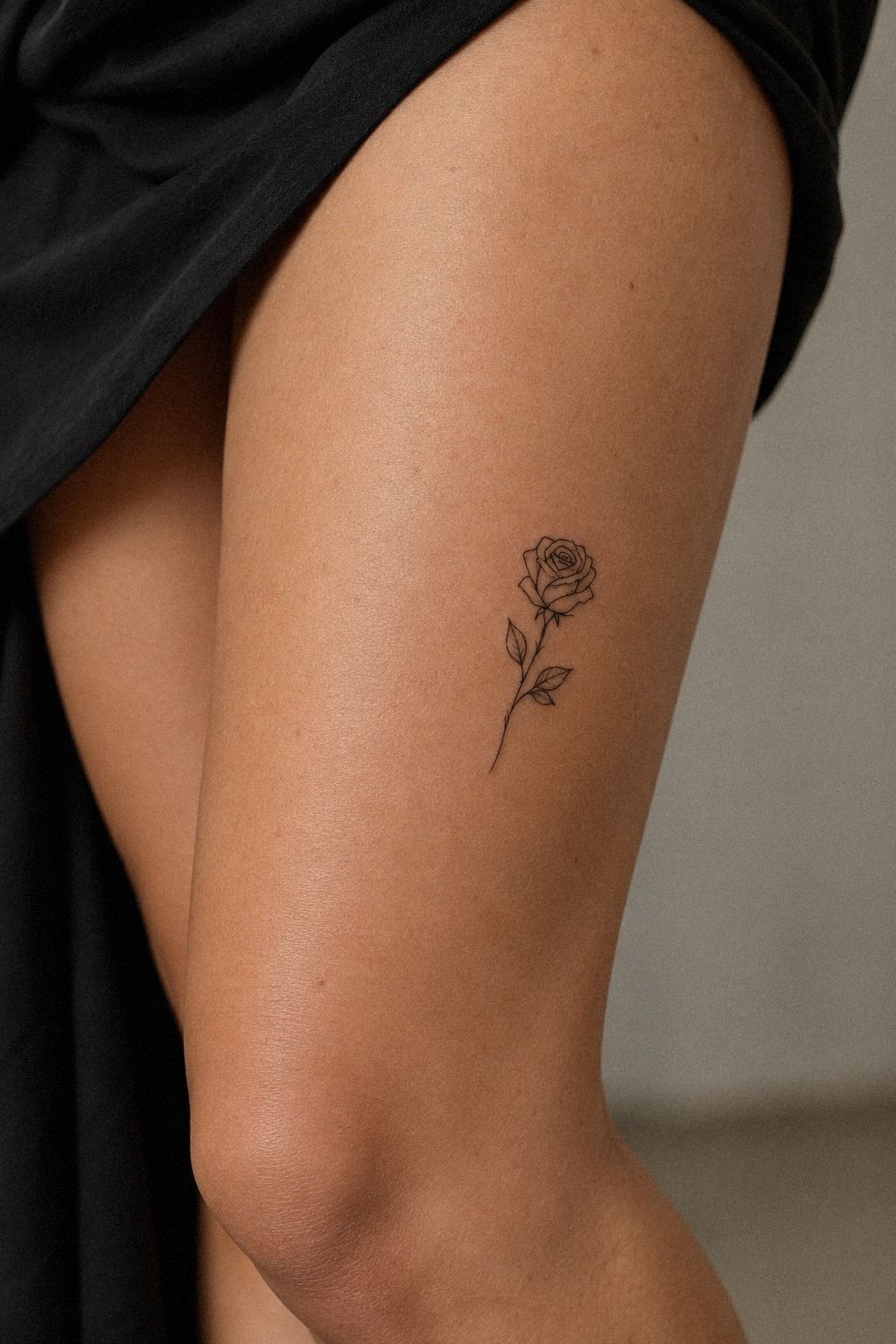
Finger roses are bold in a very small format. They can feel fierce, stylish, and unexpectedly expressive.
The best location may be along the side of the finger, where the design gets slightly less direct friction than the palm-facing surface. Even then, hands wash often, touch rough materials, and receive regular sunlight.
I’d keep the flower extremely simple. One open bloom, a short stem, or three petals may be enough. Trying to fit a complete botanical study into this area can leave the tattoo looking crowded.
A bold contour usually reads better than several thin interior lines. Your rose can remain delicate in mood while using a stronger outline to protect its silhouette.
Finger tattoos can fade or soften sooner than tattoos on the forearm or upper arm. That doesn’t make them a bad choice, but you should expect maintenance to be more likely.
Covering a finger rose is also difficult. Finger coverage usually means gloves, a bandage, or keeping your hand positioned carefully, so choose this placement only if daily visibility is acceptable.
That is the whole challenge! The design can be dainty, but the placement itself is daring.
5The Botanical Flash Sheet: Small Details, Big Meaning
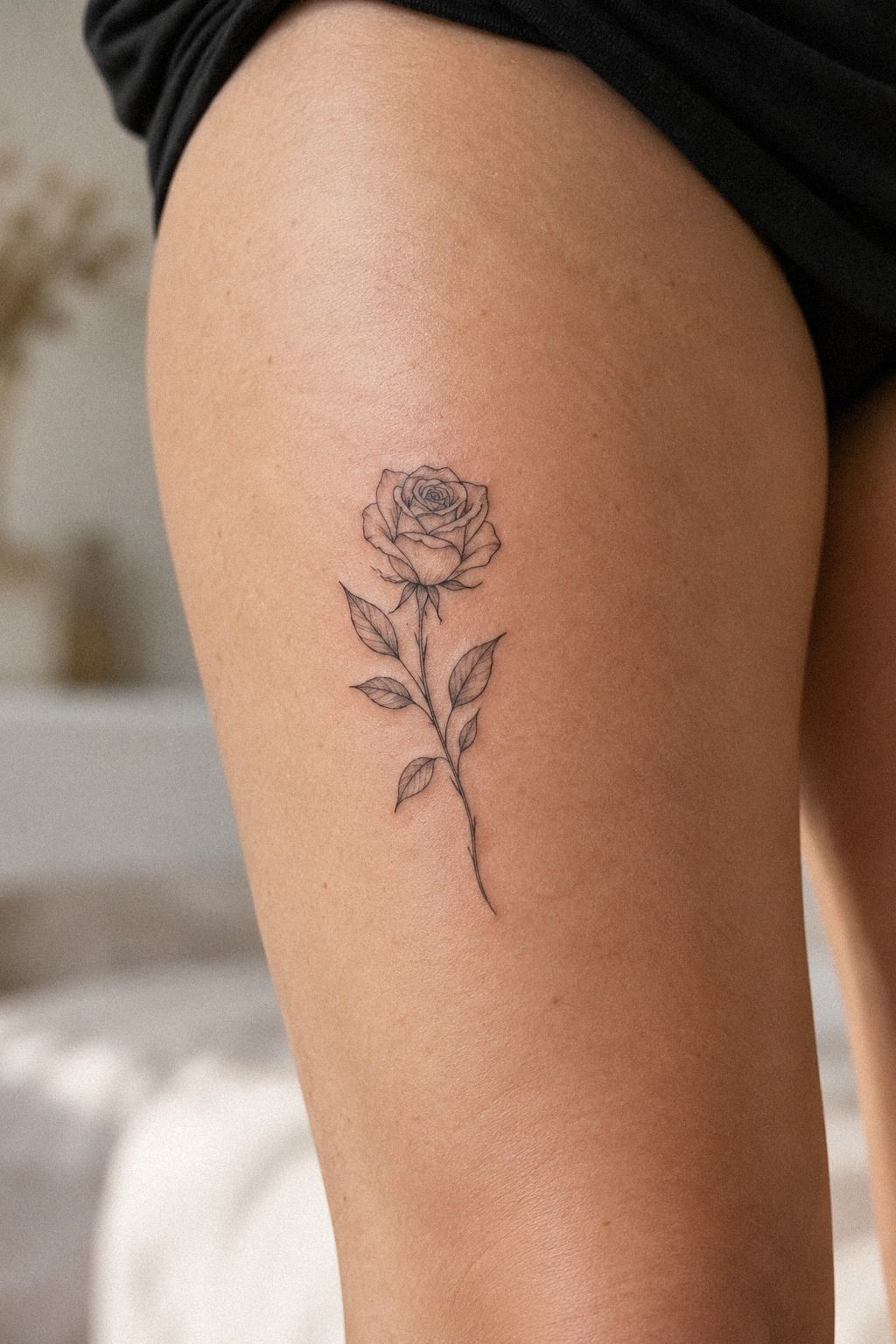
A flash sheet lets you compare several minimalist rose designs before you settle on one. I’d look for a clear silhouette, balanced stem, and botanical linework that won’t become crowded.
You might prefer a single bloom, a rose with one leaf, or a small group of stems. The most meaningful option isn’t always the most detailed one. Sometimes a simple petal turn carries more feeling.
Ask yourself what you want the rose to hold. It might represent remembrance, romance, resilience, or a sacred private milestone. A personal choice should still feel right after the novelty fades.
A custom redraw can improve the result without making the design ornate. Your artist can adjust the stencil scale to your anatomy instead of copying a reference that only works on someone else’s skin.
Look for differences in petal spacing, stem length, and line weight. A vintage-inspired rose may need a stronger outline, while a sleek modern rose can rely on open skin and a single continuous contour.
I’d also compare how each design behaves at actual tattoo size. A polished reference can lose its delicate character when reduced. The right version remains crisp, expressive, and recognizable without every petal being described.
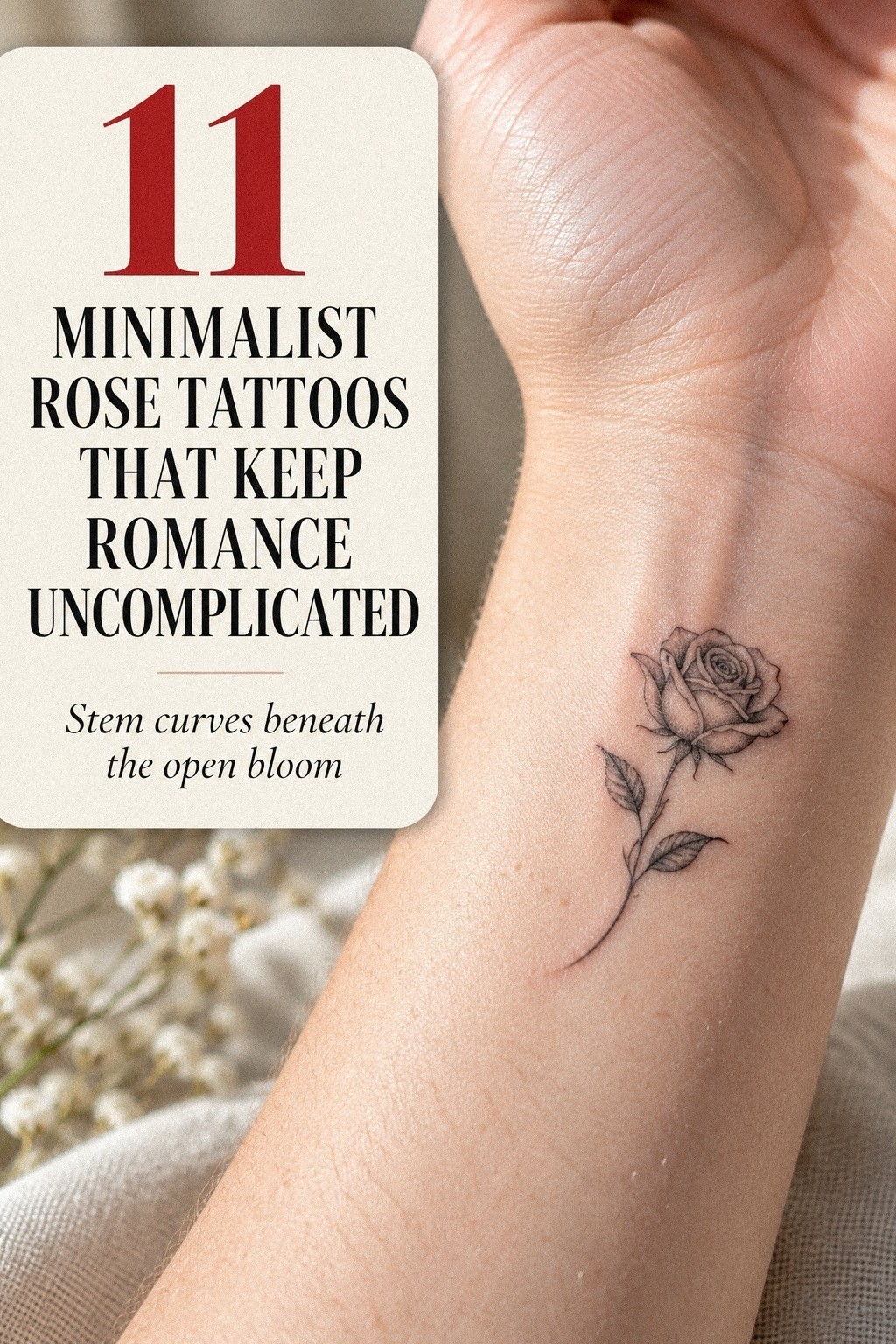
6Frame the Collarbone with a Minimalist Rose
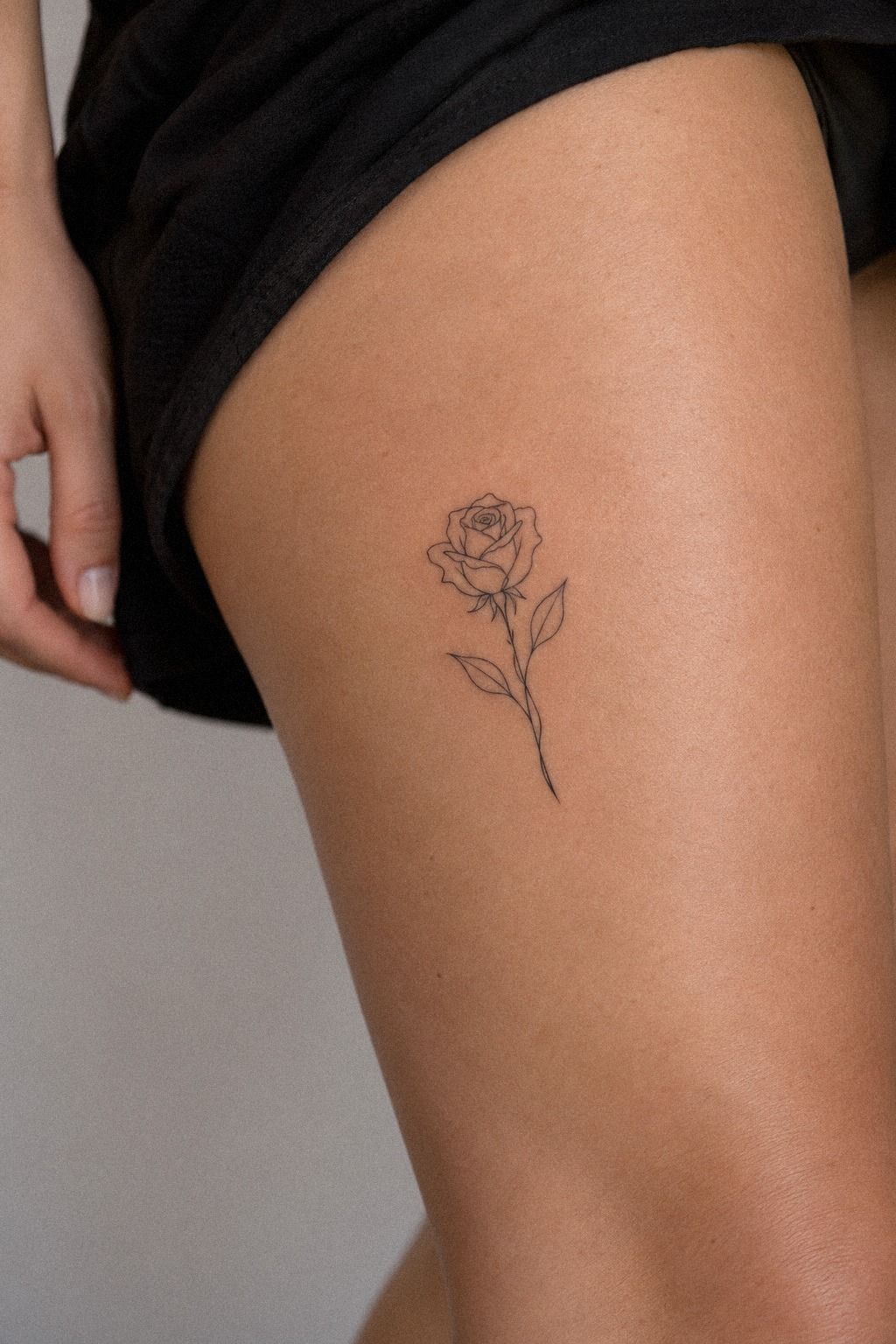
A collarbone rose can look elegant and quietly empowering when the stem follows the natural slope of your bone. The placement feels feminine on some bodies, masculine on others, and personal on everyone.
Your artist should test the collarbone slope while you’re standing naturally. A stencil that looks balanced while you’re lying down may shift when your shoulders relax.
I’d avoid forcing the flower directly over the highest point of the bone. A slight offset can make the rose more comfortable and give the stem a graceful direction.
The collarbone moves with your shoulders, clothing, and posture. Use negative space between the petals and the bone so the tattoo doesn’t become visually compressed.
A romantic rose with one leaf can work beautifully here. I’d keep the overall shape narrow if you want higher necklines or an open collar to cover it.
The area can feel sensitive, especially near the bone. Your artist should explain the placement clearly before beginning, including how much of the design will remain visible beneath your usual clothing.
7Can an Ankle Rose Stay Delicate and Coverable?
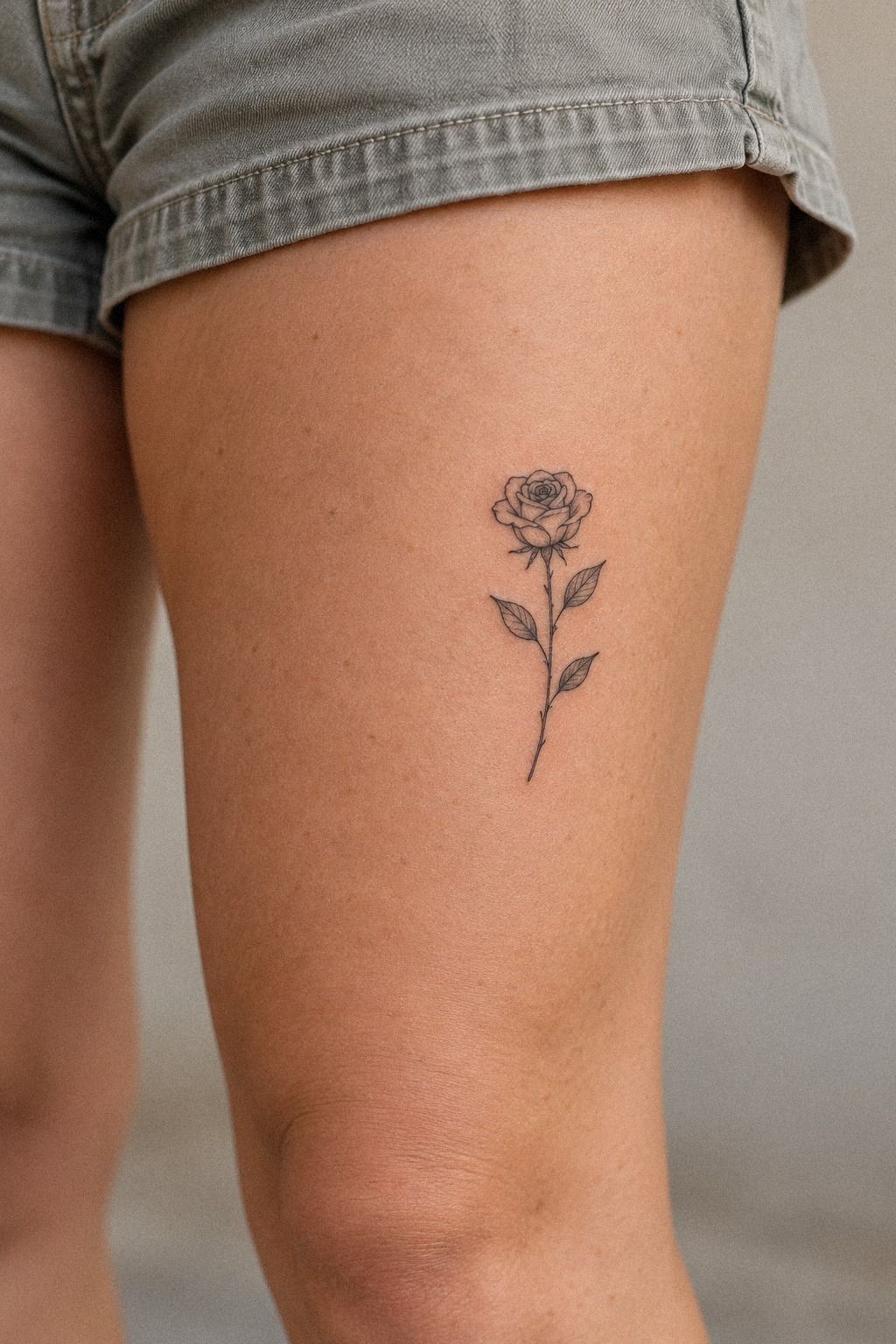
An ankle rose has a classic, feminine quality, especially when the bloom sits just above the ankle bone. The stem can follow the leg without needing a large footprint.
I’d avoid placing the finest detail directly over the bone. Shoes and socks can create friction there, so keep the ankle outline open and easy to read.
A small rose on the outer ankle may receive more sun, while a placement slightly higher on the leg can be easier to protect. Your daily footwear matters more than a generic placement rule.
Ankle tattoos can hide under trousers, boots, or long socks. They’re also visible with sandals, so think about your usual clothing before choosing the exact position.
The placement can feel understated while still carrying a classic floral meaning. A crisp stem and one sharp leaf usually create more longevity than several tiny leaves.
Ask to see healed examples from similar ankle placements. A fresh ankle rose may look delicate and vibrant, while healed lines can soften where shoes repeatedly touch the skin.
8Hide an Initial Inside the Rose
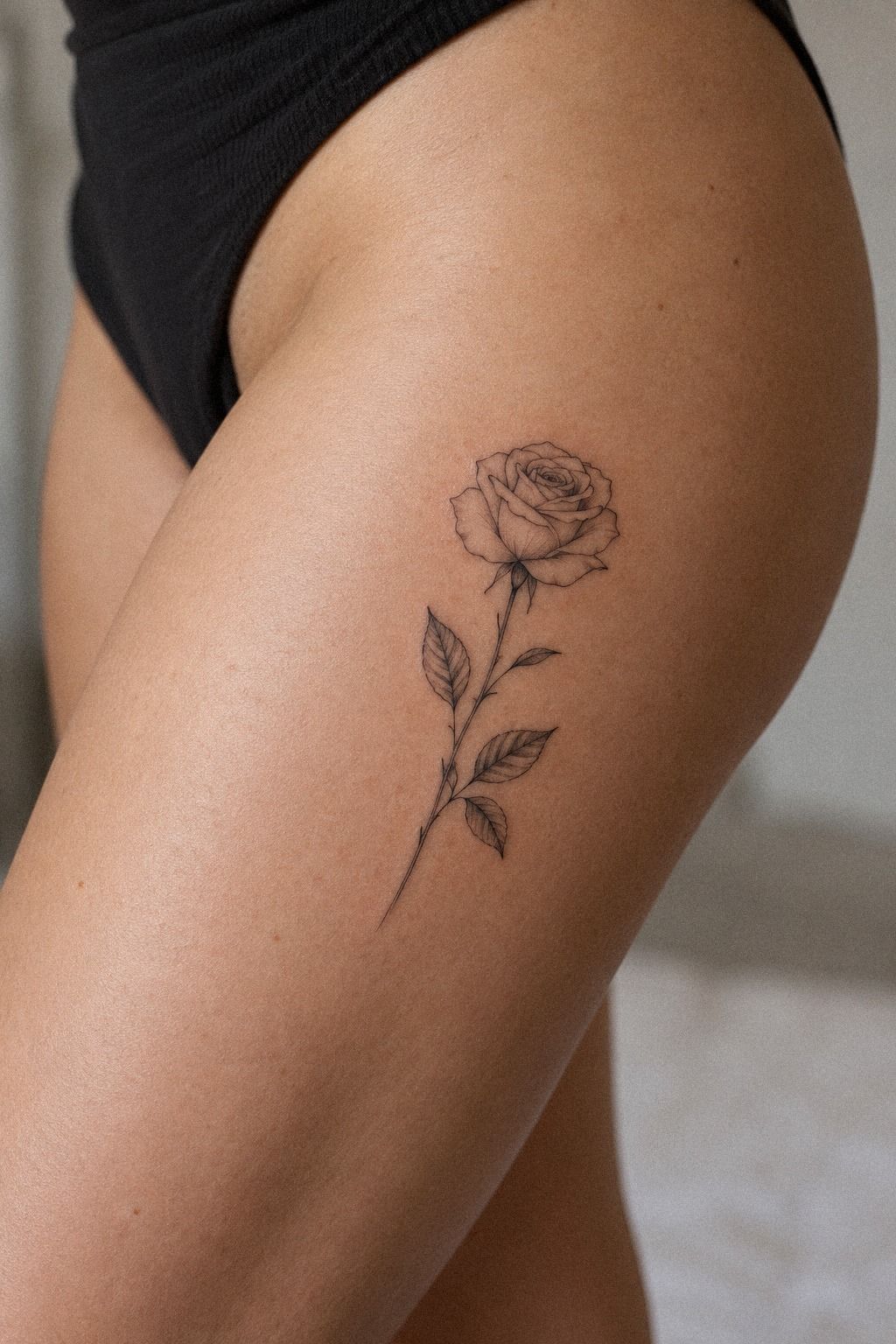
A hidden initial turns a simple rose into a meaningful private mark. Your artist can tuck one letter into the stem, shape it inside a leaf, or place it between two petals.
Keep the letter large enough to remain readable. A micro-lettered stem may look clever in a reference but disappear when reduced to skin.
I’d choose a simple serif or clean handwritten form instead of ornate lettering. A vintage letter can feel romantic, but it still needs enough openness to survive healing.
On warm ivory skin, solid black usually gives the hidden initial enough contrast. Your artist may adjust the thickness slightly depending on your undertone and the selected location.
You could add a tiny dot, thorn, or birth flower reference, but I’d stop before the design becomes crowded. The rose should remain the emotional center.
What makes this idea work is restraint. The meaning sits underneath the visual, not on top of it. A polished letter keeps the rose graceful, powerful, and personal.
9Geometric Shapes or Soft Petals?
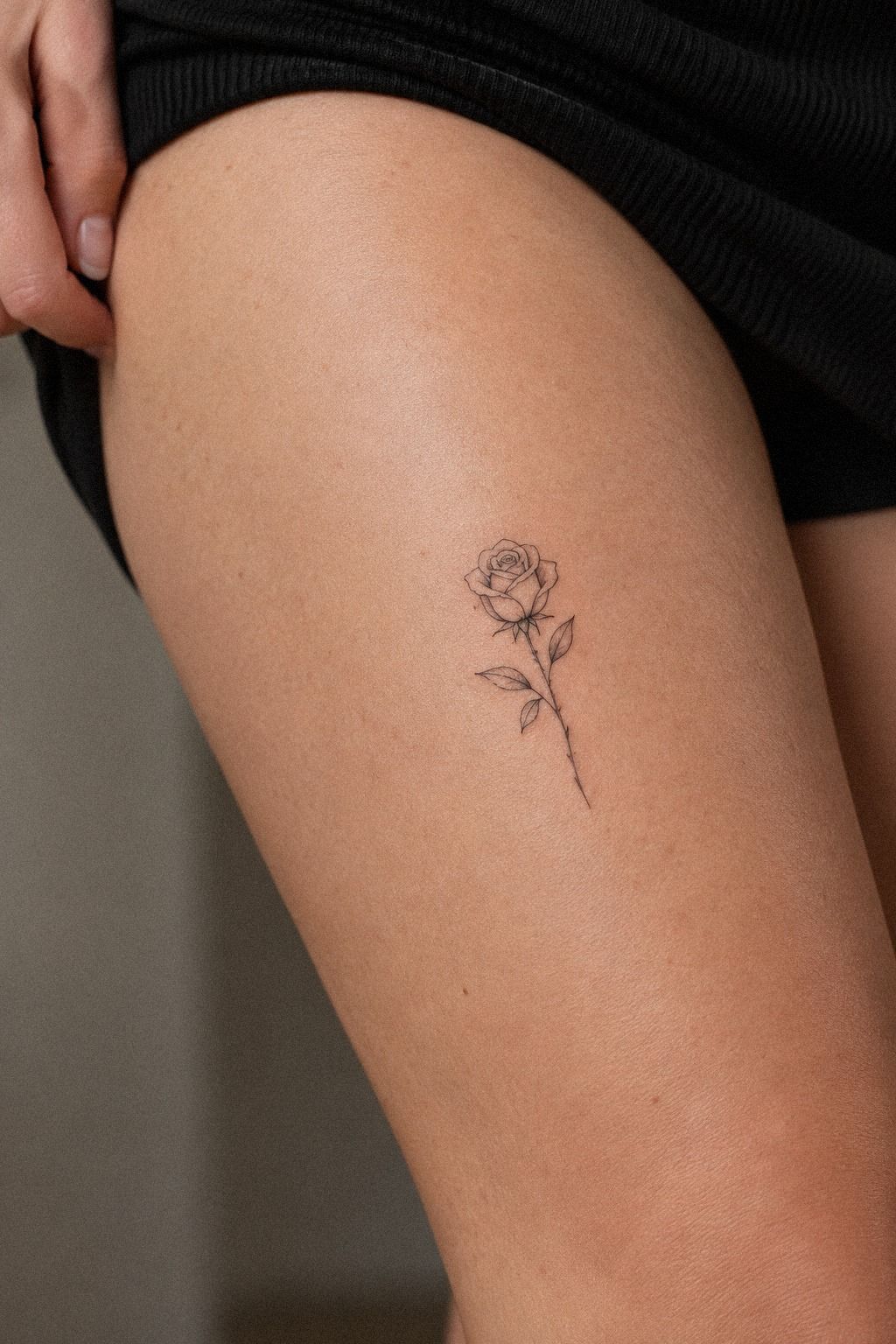
A geometric frame gives a minimalist rose a sharper direction. Your bloom can sit inside a circle, triangle, arch, or narrow diamond, with the shape creating contrast against the soft petals.
The pairing feels edgy but elegant when the lines remain open. On the calf, a thin geometric circle can follow the muscle without competing with the flower.
I’d avoid too many intersections behind the petals. One frame, one rose, and one small leaf are enough for a crisp result.
The calf gives you room for a design around 2 to 4 inches. Clothing can hide it easily, and the placement is often more tolerable than the ribs.
A circle can make the rose feel timeless, while a diamond gives it a more daring, graphic quality. Choose the shape according to the flower’s silhouette rather than adding geometry just to make it different.
Leave visible skin breaks around both elements. If the petals and frame touch everywhere, the design may lose its sharpness after healing.
Don’t force geometry into a rose that already has a strong profile. The frame should support the flower, not make your tattoo feel rigid.
10Moon and Stars: An Ethereal Rose Pairing
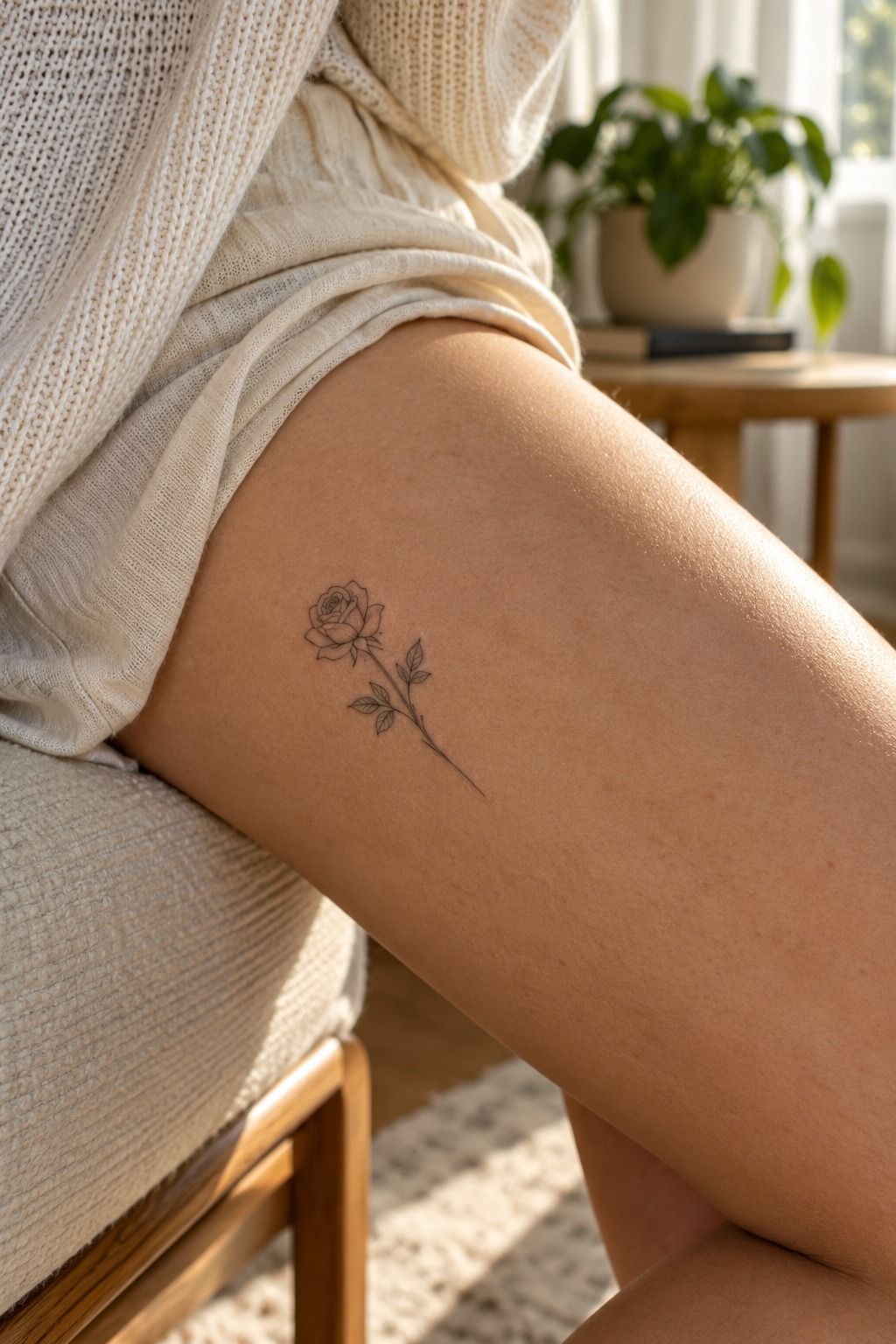
Moon and stars can give a rose an ethereal, symbolic quality without turning it into a crowded night-sky scene. The rose should remain the largest element.
Use one crescent moon and two or three small stars around it. Your composition will feel more graceful when the empty skin does some of the work.
Ask for sage-green ink with soft grey shading only where it improves clarity. I’d skip pale stars if you want the tattoo to stay visible over time.
A playful version could use one star tucked beside the stem. A haunting version might place the crescent behind the bloom. Both can remain understated if the symbols stay limited.
This idea works on the forearm, collarbone, ankle, or upper back. A forearm version can hide beneath a sleeve, while a collarbone version feels more romantic and visible.
For small-scale references, compare minimalist hand and finger tattoo ideas with the designs you’ve saved. Your moon can be tiny, but it shouldn’t become an indistinct dot.
Keep the moon strong contrast against the skin, the stars sparse, and the rose bold enough to remain the emotional center. That balance keeps the design whimsical without making it childish.
11Choose a Bold Minimalist Rose for the Forearm
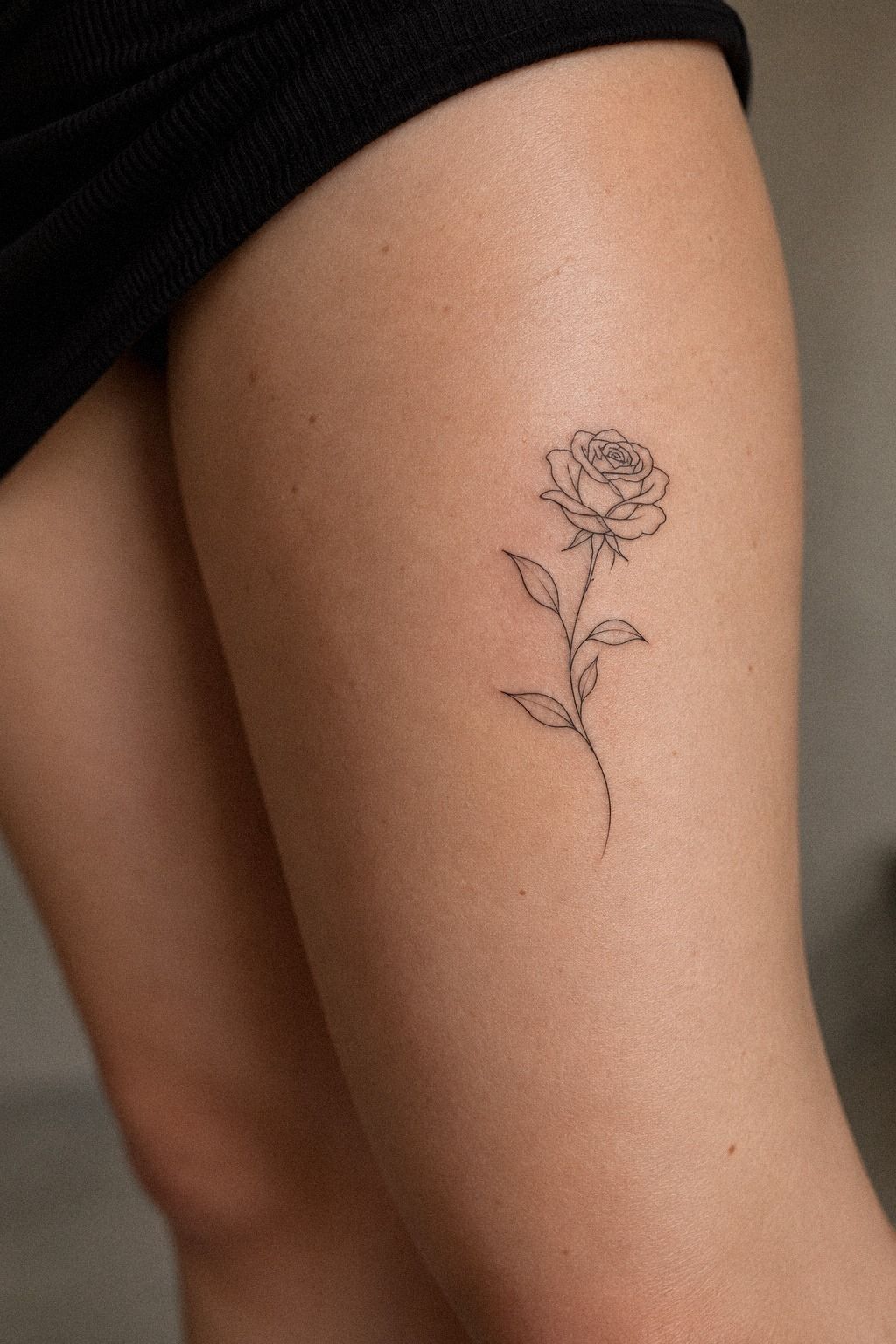
A bold minimalist rose on the forearm gives you a strong balance of visibility, readability, and coverability. It can feel iconic without becoming oversized.
The forearm gives your artist more flexibility with the forearm placement. You can choose the inner arm for a private orientation, the outer arm for stronger visibility, or the side plane for a discreet angle.
I’d give the bloom enough width for every petal to remain distinct. A rose that is technically small can still use confident contours and generous spacing.
The right line weight depends on your skin, the design scale, and the artist’s method. Fine lines can look delicate, but they need enough strength to remain readable after the skin settles.
A sleeve can cover the tattoo quickly, which makes the forearm practical for changing work requirements. You’ll still want to check how much of the design shows above short sleeves.
The outer forearm receives more sun than many covered placements. Regular sun protection matters after healing, especially if you want the terracotta ink to stay crisp.
Your artist should show you healed tattoo examples with a similar rose size. Fresh work can make every line look sharper than it will after several months.
I’d choose a bold redraw over a crowded miniature. You can keep the rose romantic, delicate, and feminine while giving it enough structure to remain clear.
What Actually Makes a Rose Easy to Cover?
Coverability starts with placement, not size. A wrist rose can disappear beneath a watch, while a collarbone rose needs a higher neckline. Clothing coverage should match your real routine.
Think about work, family events, sports, and warm-weather clothing. You don’t need to hide a tattoo every day, but you should know how quickly you can do it when needed.
A small tattoo isn’t automatically easy to cover. Finger tattoos can be tiny and still visible almost all the time. A larger forearm rose may offer better control because one sleeve handles it.
Check your workplace rules before choosing a visible location. If the tattoo needs to disappear quickly, a forearm, ankle, upper arm, or collarbone may give you more options than a finger or hand.
Your usual accessories matter too. Watches, rings, bracelets, socks, and shoes can conceal some placements, but they can also create repeated friction. Coverability shouldn’t come at the cost of constant irritation.
How Placement Changes the Design
The same rose can feel completely different when it moves from the wrist to the spine. A vertical stem may look graceful along the back but awkward around the small curve of a finger.
Pay attention to friction points before you choose the design. Hands, fingers, feet, and ankles experience more contact than the upper arm or shoulder.
A placement with less daily wear can support finer lines and lighter detail. High-contact areas usually benefit from stronger contours, simpler petals, and more visible breaks between marks.
Your artist can also adjust the angle to follow your anatomy. A rose should look intentional when your arm hangs naturally, your wrist bends, or your ankle moves.
What to Ask Before You Book
Before booking, ask about the studio minimum, hourly rate, deposit, estimated time, and touch-up policy. A clear studio minimum helps you understand the expected price without turning the consultation into a sales pitch.
Ask how the artist approaches small roses on your chosen skin area. You’ll learn more from their explanation of line weight and spacing than from a large collection of untouched references.
If the design feels crowded, simplify the concept before choosing a less experienced artist. Fewer petals, one stem, and strong spacing can reduce session time and design risk.
A custom design may cost more because it requires consultation and redraw time. That decision makes sense when the placement is unusual or the rose needs to follow a specific curve.
Read the deposit policy carefully, especially if you’re still comparing artists. You should know what happens if the stencil needs revision or the appointment has to move.
Care That Protects Crisp Lines
Fresh ink needs gentle care while the surface settles. Wash as advised, moisturize lightly, avoid soaking, and protect the area from strong sun during healing.
Your artist’s instructions should guide the routine. Aftercare instructions can differ by placement, skin response, and the covering method used.
Friction matters after healing too. Shoes, watchbands, rings, and repeated sun exposure can affect how a rose looks. Notice those habits before choosing a high-wear spot.
Avoid picking at flaking skin, even when the tattoo feels itchy. Let the surface settle naturally, and contact your artist if something looks unusual or doesn’t match the care instructions.
Long-term sun protection is especially useful for terracotta linework. A small rose may remain recognizable for years, but its crispness depends on placement, skin, exposure, and the strength of the original design.
The Trade-Off I’d Actually Make
I’ve come to prefer minimalist roses because they leave room for the person wearing them. A rose can mean love, grief, resilience, remembrance, or fascination with the flower’s shape. That flexibility makes it timeless, but execution still matters.
My biggest mistake was assuming that smaller always meant easier. It doesn’t. A tiny tattoo needs more discipline because every mark carries weight.
I once chose a reference with too many interior petals, and the artist simplified it before the stencil. That edit made the final design cleaner, sharper, and more personal.
The important detail was petal spacing. Once the petals had enough separation, the rose looked delicate without looking weak. The change was subtle on paper, but obvious on skin.
You’ll want an artist who can make that call without treating your reference as untouchable. Artist judgment matters when the design has to fit a curved, moving, or high-friction area.
I also think people over-focus on pain while underestimating friction and sunlight. A forearm may feel manageable during the session, but daily exposure can affect ink over time.
Hands, fingers, feet, and ankles deal with more wear. Your aftercare matters too: wash gently, moisturize as advised, avoid soaking, and keep fresh ink away from strong sun.
The best rose isn’t the most ornate one. It’s the one whose scale matches your placement and whose line weight suits your skin. Those are practical differences, not rules about taste.
A striking collarbone rose may need stronger contours than a delicate wrist rose. A bold forearm design can hold more detail than a finger tattoo.
There’s also a difference between a raw, gritty rose and a polished, vintage one. The mood should guide the linework, but the placement still sets the limits.
If you’re choosing between a delicate reference and a slightly bolder redraw, I’d usually pick the bolder redraw. You can keep it romantic and expressive while giving the design a better chance to remain readable!
That compromise is the part I’d take seriously: finesse creates the mood, placement controls daily wear, and aging rewards clear structure. A personal tattoo doesn’t need to stay frozen in time. It needs to remain recognizable and meaningful as your skin changes.
A Few Things Worth Answering
How much does a minimalist rose tattoo usually cost?
A minimalist rose tattoo often costs about $100 to $300 in the United States, depending on the studio minimum, artist, color, and placement. I’d ask about deposits, estimated time, and touch-ups before confirming the appointment.
How do I choose a tattoo artist for minimalist rose tattoos?
I’d choose an artist with clean linework and healed tattoos in their portfolio, not only fresh work. Check their hygiene standards, consultation process, and experience with your skin tone. Ask to see examples with similar line weight and scale.
How much do minimalist rose tattoos hurt?
Pain varies by placement. I’d expect ribs, feet, hands, and sternum to feel more intense, while the forearm, thigh, and shoulder are often more tolerable. In my experience, placement affects comfort more than the small size of the rose.
How long does a minimalist rose tattoo take to heal?
The surface usually heals in about 2 to 3 weeks, while the tattoo can take 2 to 3 months to settle completely. I’d follow the artist’s instructions, avoid soaking, and use gentle washing during the healing stage.
What’s the best placement for minimalist rose tattoos?
I’d start with the forearm, shoulder, upper arm, ankle, collarbone, or wrist, depending on visibility and coverability. The best placement balances friction, sun exposure, comfort, and clothing coverage. If you need daily discretion, choose an area your usual clothing can hide easily.
Where I’d Start
If I had to pick one, I’d start with the bold minimalist rose on the forearm. It gives fine lines enough space to stay readable, and a sleeve can cover it when needed.
For me, that balance of meaning, clarity, and coverability makes the forearm rose the strongest starting point. It can remain personal when you want privacy, visible when you want expression, and sharp enough to age with confidence!