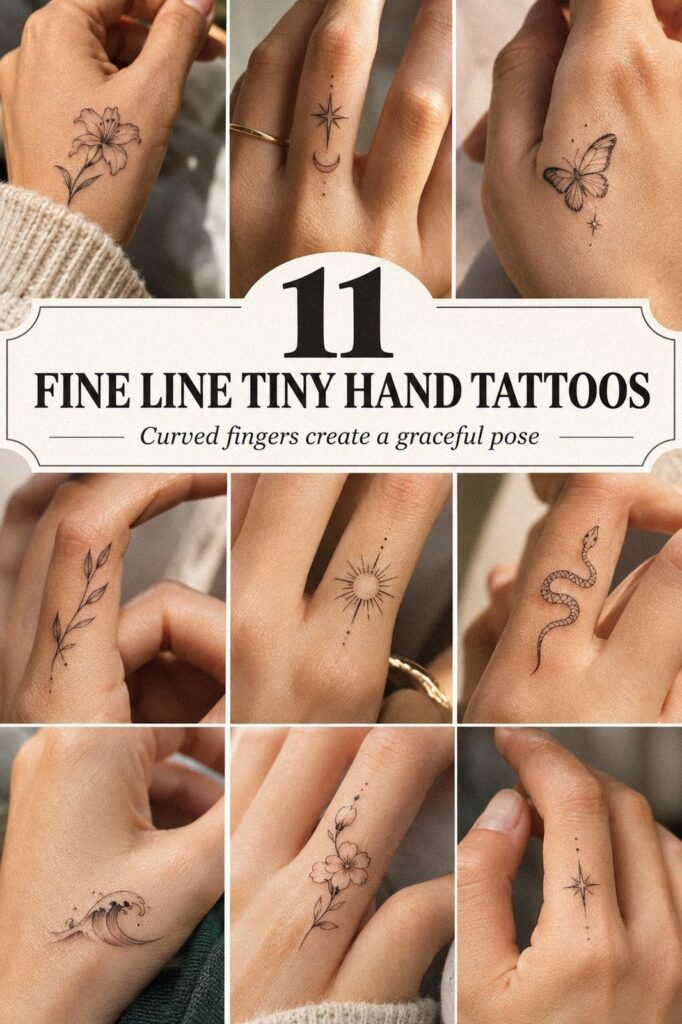
Fine line tiny hand tattoos mean more when you choose the private symbol before the pretty sketch, then test placement, healing, and longevity with an artist. I’ve learned that a small mark can carry a meaningful memory. Start personal, keep the shape crisp, and let your hand guide the design. That’s the whole method!
- Start with small fine line hand tattoo ideas
- Pick unique symbolic designs for tiny hand tattoos
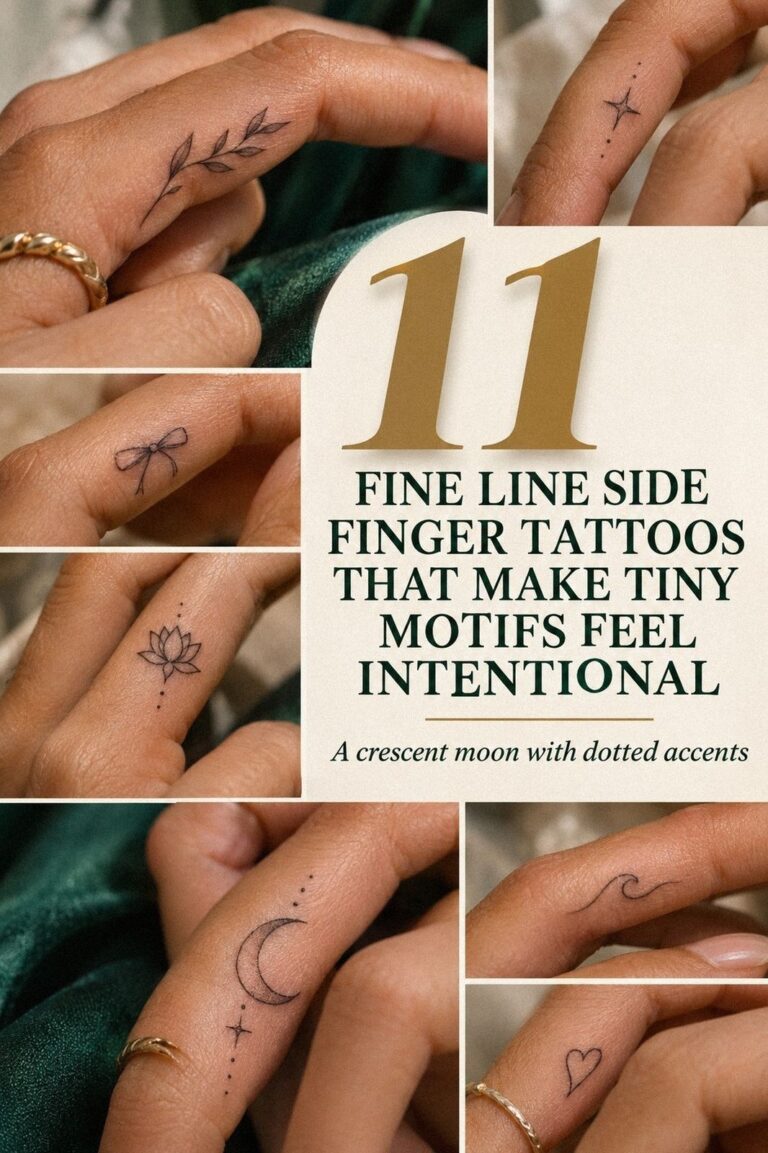
- Place delicate linework along the finger side
- Choose meaningful miniature symbols near the thumb
- Keep crisp botanical details visibly understated
- Plan graceful script around natural hand contours
- Test bold micro motifs beside the knuckles
- Match intricate celestial marks to your style
Before You Start: The Three-Sketch Rule
Before you book, draw three versions of the same idea. One should be minimal, one more intricate, and one reduced to its most symbolic shape. If you’re still drawn to the same mark after a few days, you may have found something personal rather than a passing visual.
You’ll also want a healed-ink portfolio, a clean stencil, and an artist who works confidently at tiny scale. Read this fine line tattoo guide before you choose a style, because hair-thin lines need thoughtful spacing. A design can look elegant on paper and lose clarity on moving skin.
Ask to see the stencil at its actual size. A line that looks fine on a phone screen may become crowded when it reaches the hand.
Use these as typical US planning references, not promises. Your artist’s region, experience, and minimum will change the final quote.
Your hand will be visible every day, so your choice deserves patience. Don’t rush because the design is small. Small does not mean effortless!
A Personal Brief Before You Choose a Motif
Write down the private definition of the tattoo before collecting references. It can be a person, a promise, a place, a boundary, or a moment you don’t want to explain publicly.
Then make a reference sketch from memory. It doesn’t need to be technically good. The point is to notice which shape keeps returning when you’re not copying someone else’s design.
Bring that note to the design consultation. Your artist can turn a broad idea into a readable symbol, but the emotional reason should come from you. That difference keeps the tattoo private instead of merely decorative.
Placement Is Part of the Meaning
A hand tattoo isn’t static. Moving skin changes shape when you grip, type, wash, or reach, so placement affects both the appearance and the story of the mark.
Study the finger creases with your hand relaxed, open, and curled. A symbol that looks balanced in one position may fold into a broken shape in another.
Ask for a stencil transfer before committing. Walk around with it for a few minutes, look at it under different lighting, and notice whether you still like the idea when it stops feeling new. Your hand is a visible canvas!
- Start with small fine line hand tattoo ideas
- Pick unique symbolic designs for tiny hand tattoos
- Place delicate linework along the finger side
- Choose meaningful miniature symbols near the thumb
- Keep crisp botanical details visibly understated
- Plan graceful script around natural hand contours
- Test bold micro motifs beside the knuckles
- Match intricate celestial marks to your style
- Consider fierce tiny icons for expressive contrast
- Protect delicate ink during hand tattoo healing
- Refresh timeless fine line tattoos with careful touchups
1Start with small fine line hand tattoo ideas
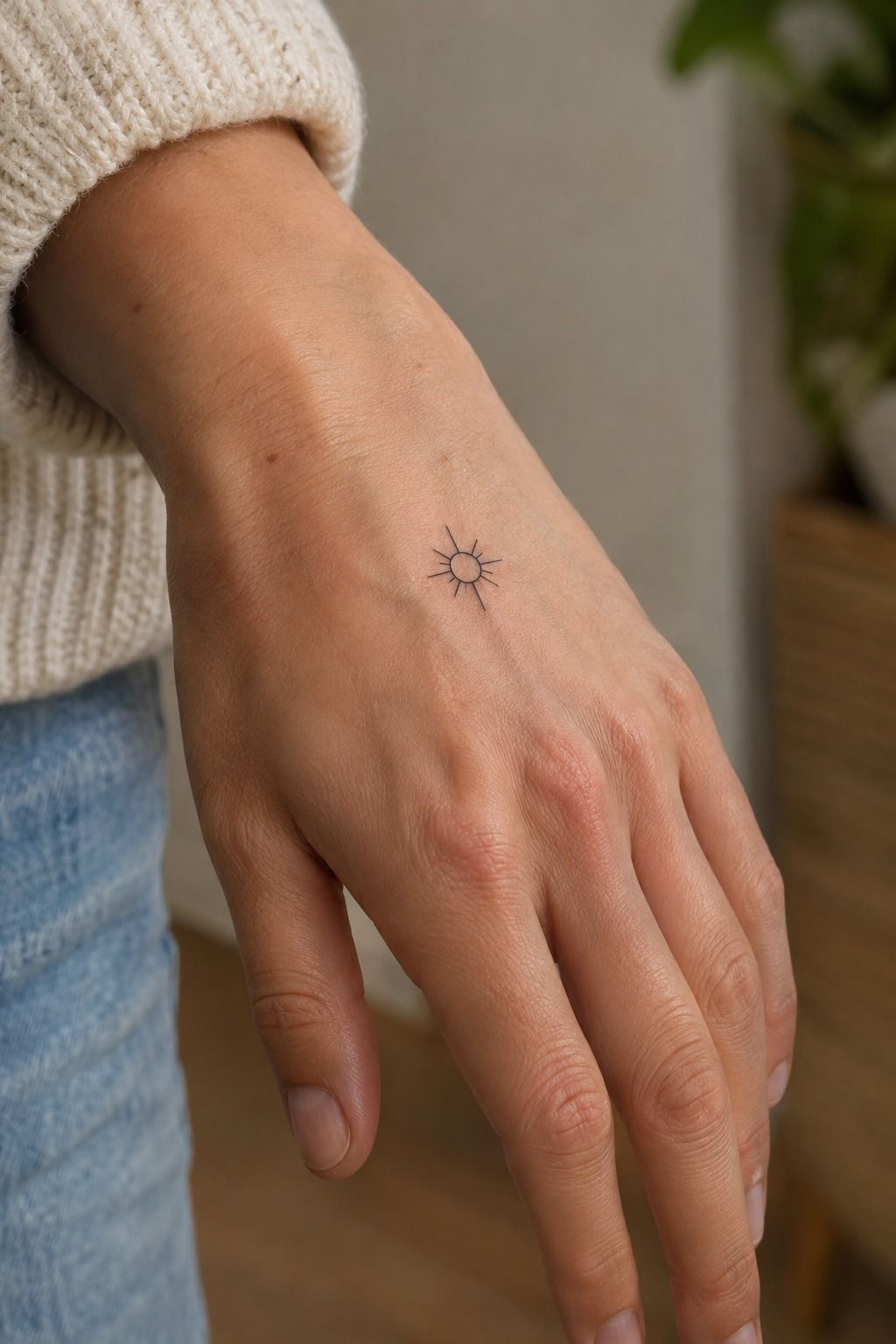
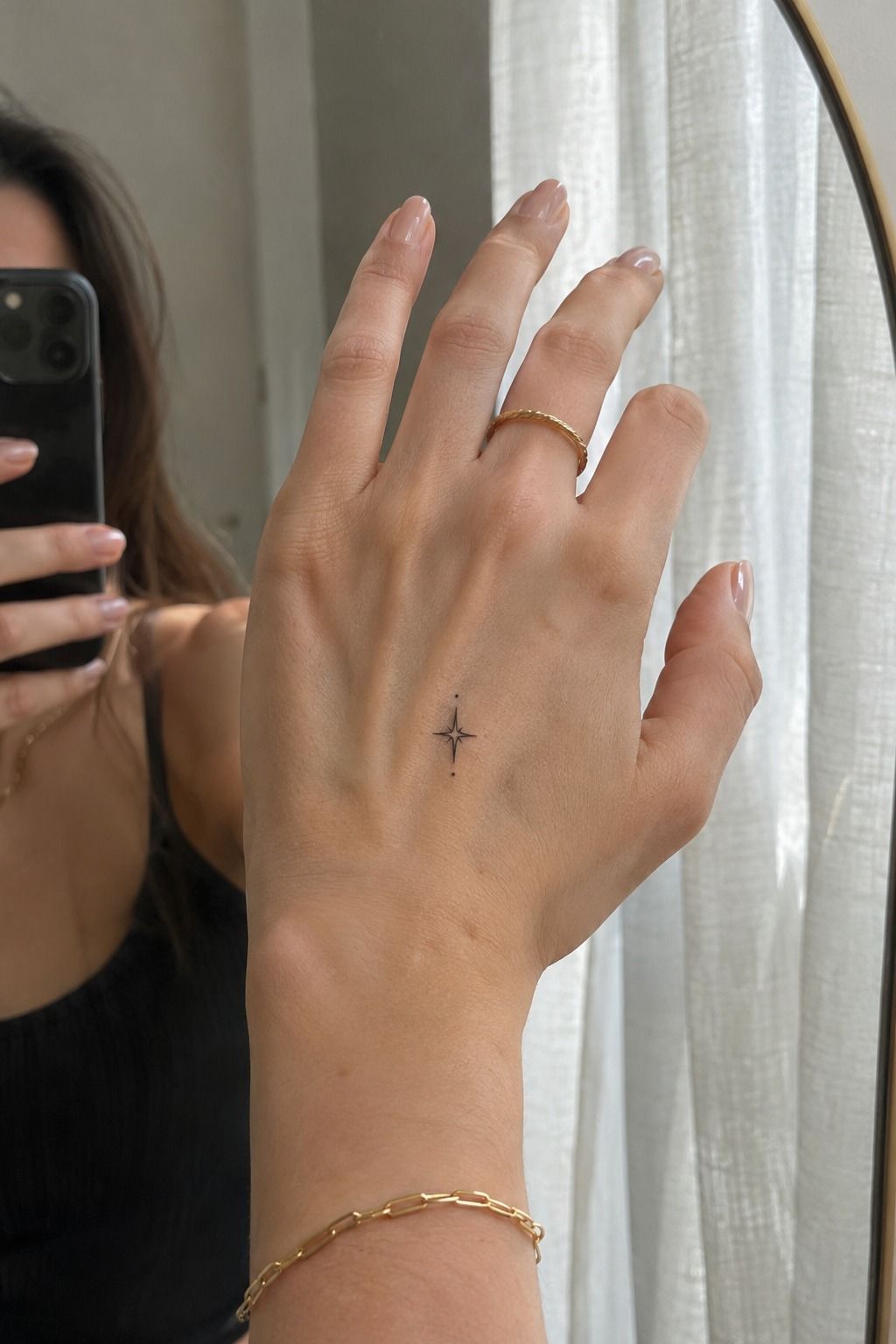
Begin with a visual memory, not a category. A few small stars can mean a specific night, a person, or a private promise. Different star sizes can suggest distance or movement without explaining anything to anyone.
On skin where contrast is subtle, black tattoo ink gives those marks a powerful outline while keeping the mood dainty. Your artist can adjust spacing and contrast rather than forcing the same reference to work unchanged.
Sketch the stars as separate points instead of one crowded cluster. You’ll want enough breathing room for each mark to remain readable as your hand moves.
Keep the pinhead scale realistic. I’d make the smallest star larger than a literal pinhead, because an overly tiny point can soften faster and lose its identity.
Try the design at the side of your hand, near a finger, and on the back of your hand. Do a daylight check, then look again under indoor light. The right version should still feel personal when you’re not staring at it.
If your sketch needs five symbols to explain one feeling, pause. One star might be more iconic than a busy constellation, and your artist can help you protect that quiet edge. If you’re unsure, wait a week before you commit.
Browse these small tiny hand tattoo ideas if you need placement references. Use them to compare proportions, not to copy a stranger’s meaning.
2Pick unique symbolic designs for tiny hand tattoos
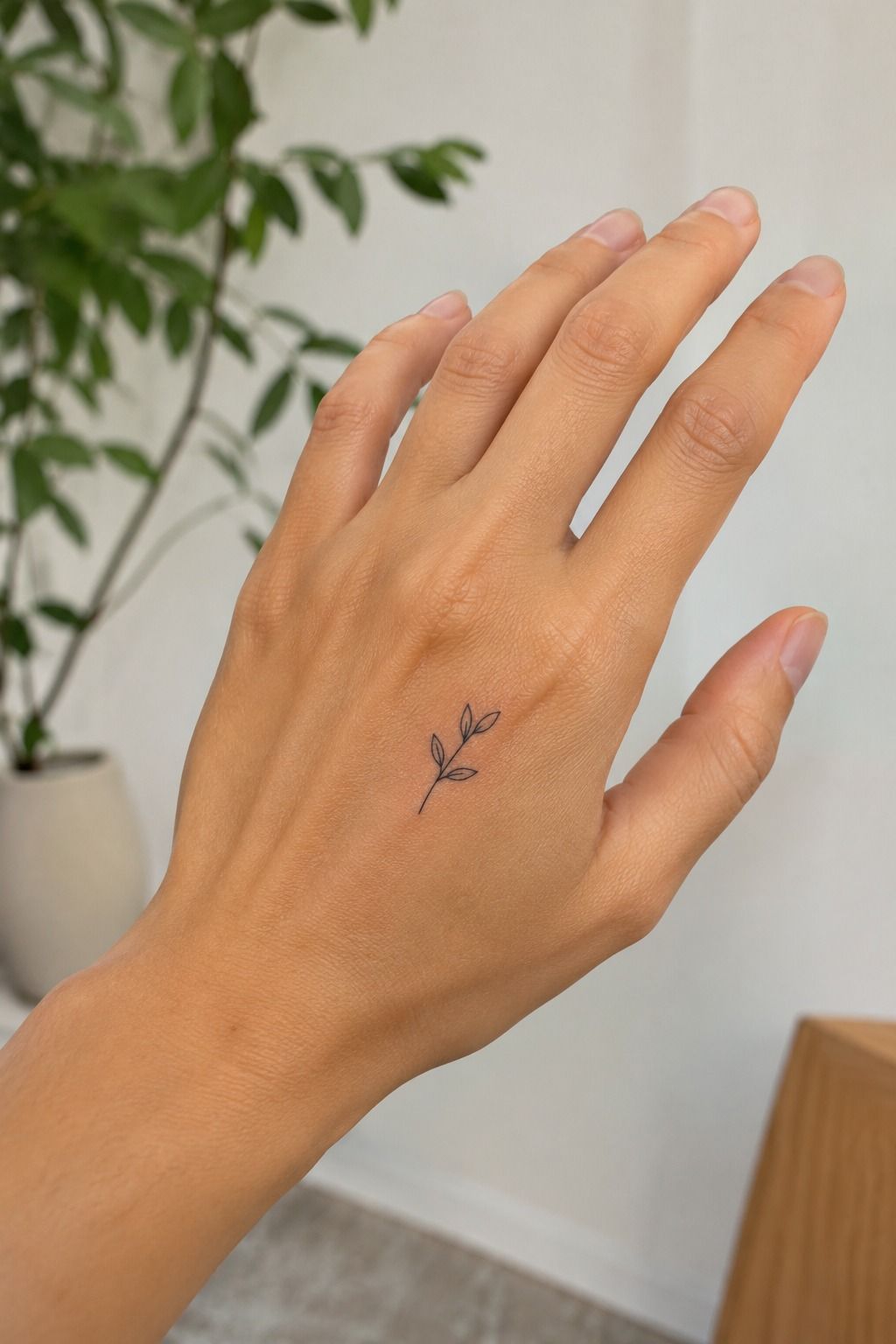
Choose one private symbol with a definition only you need to understand. A small key, open eye, crescent, thorn, or abstract wave can look simple to strangers while carrying a full story for you.
I prefer a symbolic design that works without a caption. Mystery can make the tattoo feel more personal and less borrowed, especially when the shape is understated without being trend-dependent.
For skin where contrast needs careful testing, ask your artist to show the stencil at actual scale. A single-needle configuration can create an intricate look, but the lines still need room between them.
If the curves touch when the stencil is small, the design isn’t ready. Your artist may remove one detail so the central symbol stays sharp.
Write the meaning in one sentence before you finalize the drawing. Then remove half the words. That exercise often reveals the real image.
You don’t need a literal portrait of the memory, and you won’t regret choosing the cleaner mark if it still makes you feel something. That’s where the meaning sentence helps.
Look through fine tiny hand tattoos for examples of restrained symbolism. The strongest options often feel understated at first glance, then become expressive once you know why they’re there.
3Place delicate linework along the finger side
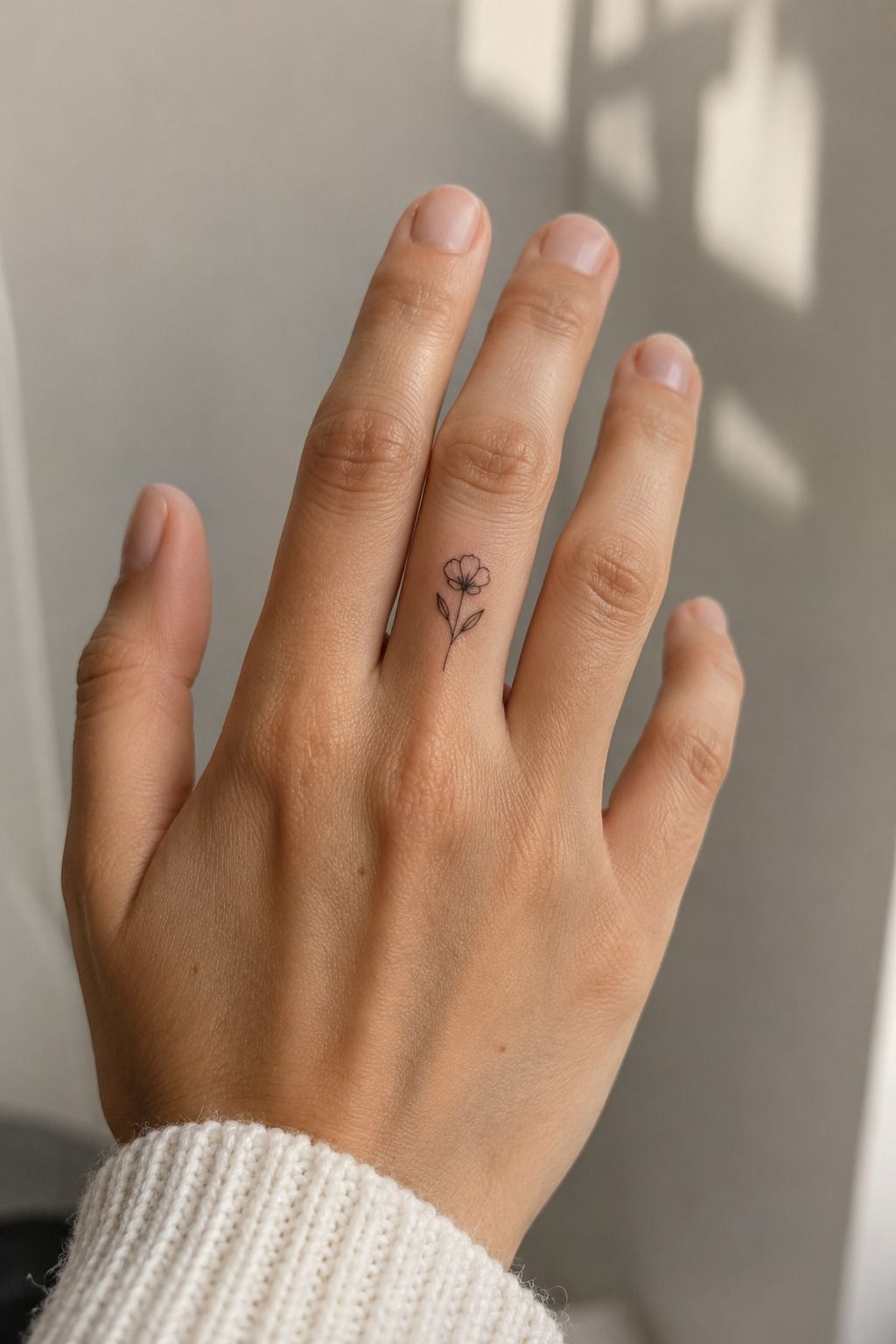
The side of a finger creates a narrow, intimate path for linework. A tiny vine, wave, phrase fragment, or row of dots can follow that edge without competing with the rest of your hand.
On skin where contrast can shift, black pigment can keep the design readable when the mark is placed between natural creases. Your artist should judge contrast on your skin rather than relying on a generic screen preview.
Ask your artist to rotate your hand while checking the side-finger placement. A design can look sleek when your palm is flat and awkward when your fingers curl.
You’ll want the line to follow the finger’s movement, not fight it. I’d avoid a long horizontal shape that crosses every crease, because repeated bending can blur its rhythm.
The side-finger area gets friction from washing, gripping, and daily contact. That doesn’t make it off-limits, but it does make those friction points important.
Your artist may shift the design a few millimeters toward a flatter section. That small change can protect the outline without changing the meaning.
For more examples, compare fine line side finger tattoos with broader hand placements. Don’t copy the exact angle. Use the finger-side reference to see how your own finger bends.
4Choose meaningful miniature symbols near the thumb
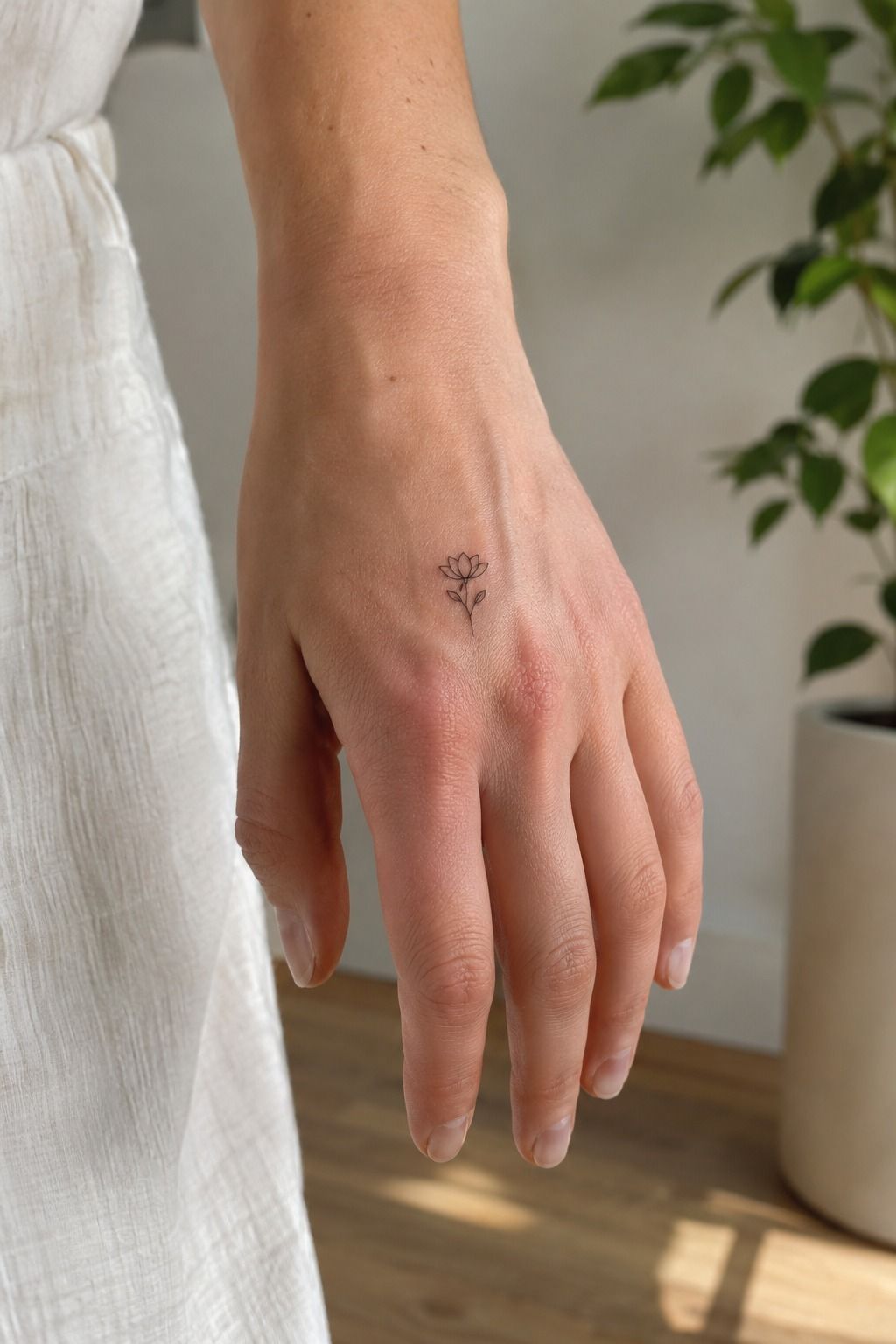
The thumb area gives you more visual weight than the finger side. A tiny sun, initial, leaf, or personal emblem can sit near the base of the thumb and still read as a deliberate mark.
On skin where contrast is naturally strong, fine black linework can create clean definition without needing heavy shading. A compact symbol may feel bold without becoming visually loud.
Place the stencil while your hand is relaxed, then check it while you pinch your fingers together. You’re testing how the symbol behaves in real life, not just in a posed reference.
That relaxed hand position can reveal whether the design folds into a crease. If it does, your artist can move it toward the outer curve while keeping the same meaning.
I’d choose a compact shape with one strong silhouette here. Detailed additions may look exciting on the stencil, but they can turn muddy as the thumb works through everyday motion.
A defined outer contour with one internal line is often more lasting than a miniature illustration packed with texture. Good restraint matters!
You can compare this area with tiny small wrist tattoos before deciding. Your wrist offers more stable skin, while the thumb gives you more visibility.
If you want a private mark you’ll see constantly, the thumb placement is daring and direct. Consider whether that visibility feels right before you decide the design is worth the cost.
5Keep crisp botanical details visibly understated
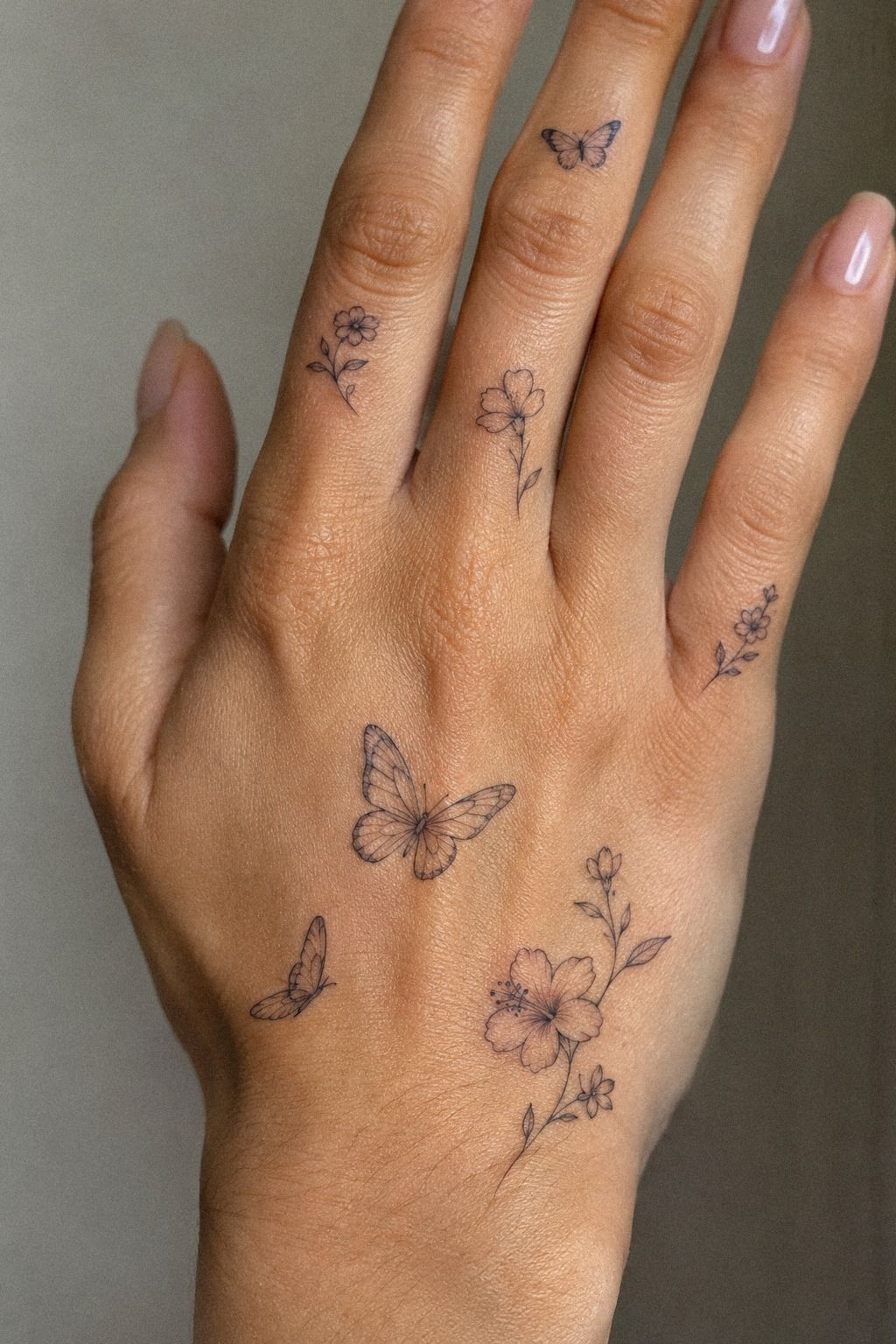
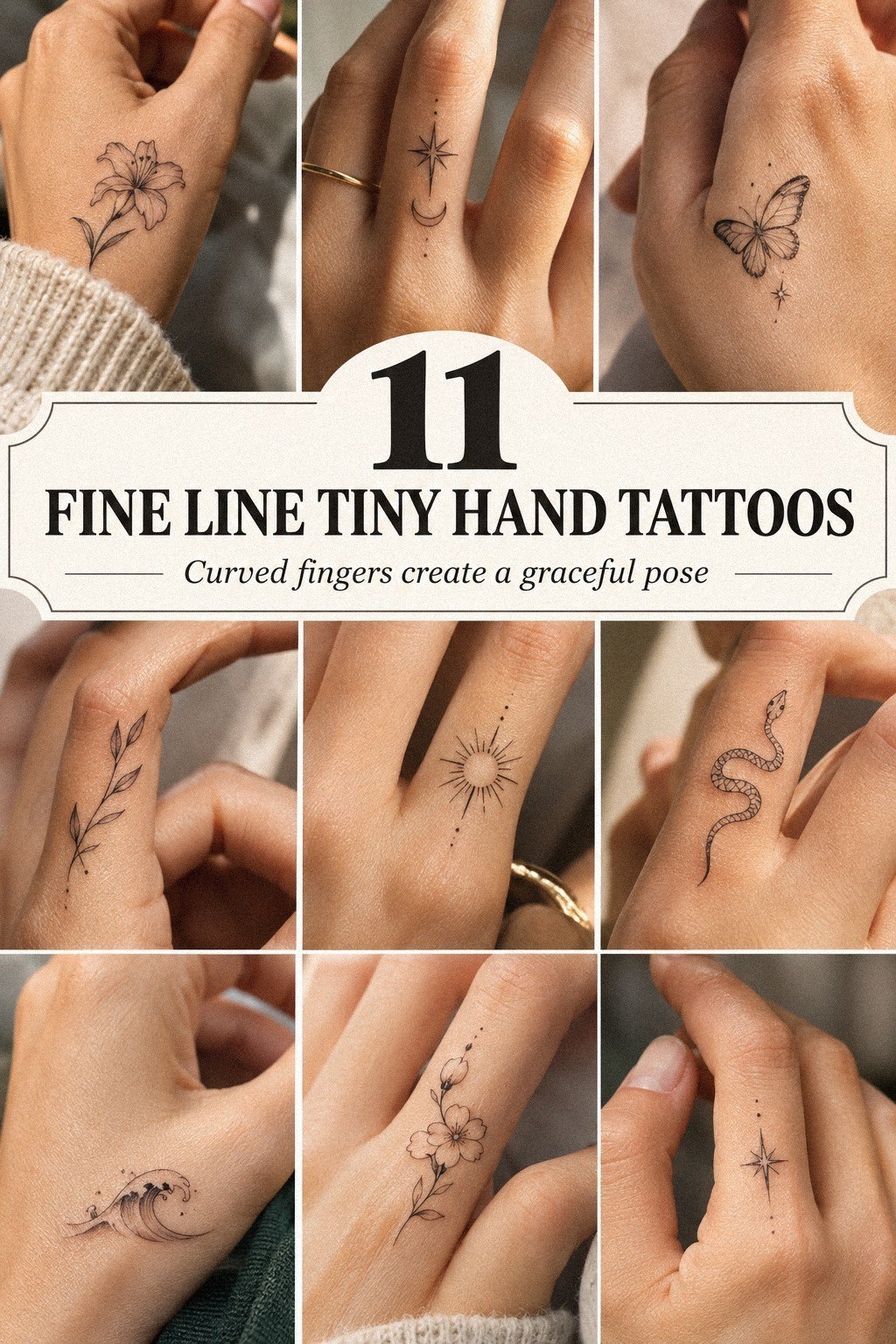
Use the flash sheet as a menu, not a contract. Small botanical designs such as a fern, olive branch, thorn, or single wildflower can become classic when their proportions are clear.
The aged flash paper may make a drawing feel vintage, but your final stencil should be clean enough to judge every line. Don’t let the charm of the reference hide a crowded structure.
Choose one botanical silhouette and remove anything that doesn’t help it read. A fine stem with three leaves can feel more expressive than a full bouquet squeezed into a tiny space.
You’ll want the negative areas to remain visible, especially if the design has narrow leaves or overlapping petals. A plant can feel sacred without needing every vein and curl.
A common mistake is choosing a leaf drawing with too many interior veins. It may look finished on paper and crowded on skin.
Now ask for one main contour, one or two internal marks, and no decorative dot unless it has a reason. The result can feel detailed in intention while staying visually controlled.
Explore fine line simple hand tattoos and fine geometric tattoos for cleaner botanical proportions. A restrained plant can feel personal, romantic, and quietly strong.
6Plan graceful script around natural hand contours
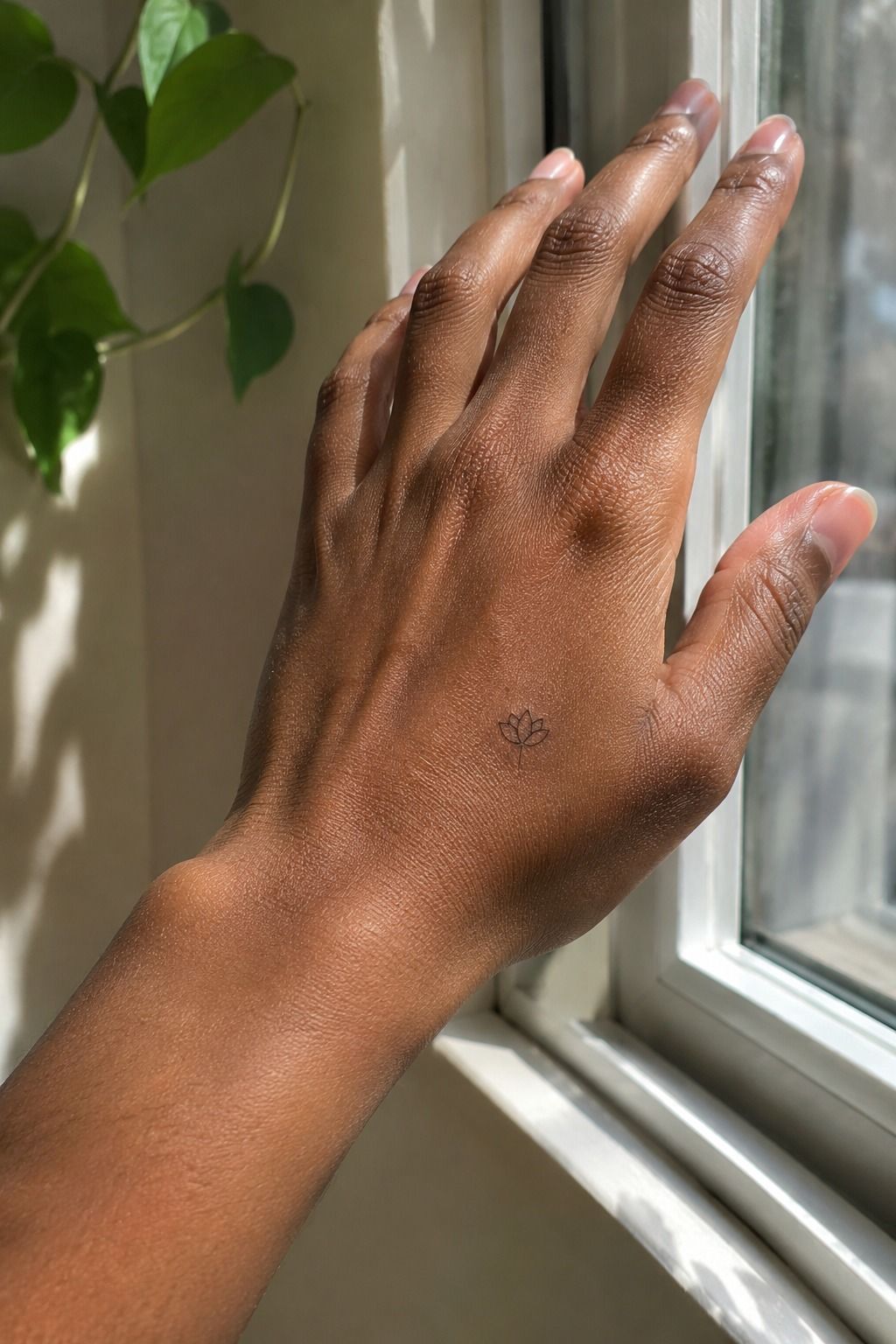
The word “soul” works because the lettering follows a flowing movement instead of sitting like a label. Short script can feel graceful when every letter has enough space.
On deeper skin tones, ask your artist to show the stencil in a strong black tone and check the spacing carefully. Stencil transfer paper should give you a clear preview before any needle touches the skin.
Keep the word short enough that each letter has room. Script that looks open on a screen may close up when reduced to hand scale.
You’ll want the first and last letters to breathe, especially near a knuckle or finger joint. I’d skip a long quote here. It usually becomes more about reading the sentence than feeling the word.
Try the stencil while your hand is open, relaxed, and slightly curled. Those three views reveal whether the letter spacing stays balanced.
If you’re choosing a word for someone else, make sure it still belongs to you when the relationship or season changes. That’s where private meaning matters.
Read more about what fine line tattoos involve before you approve script. Your artist can explain how line weight, spacing, and placement affect readability.
The most elegant lettering often looks almost too simple at first. Its value comes from recognition, not decoration.
7Test bold micro motifs beside the knuckles
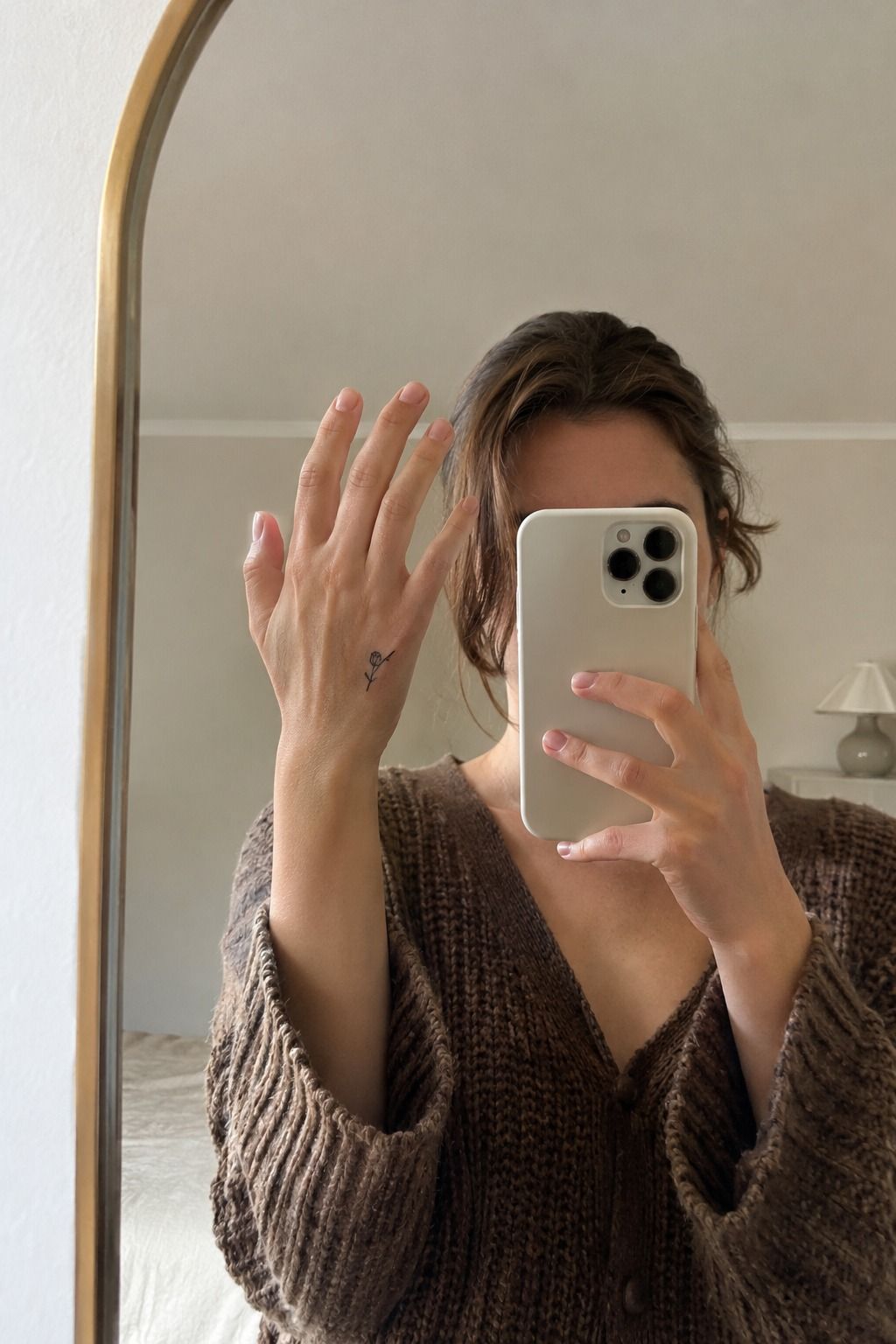
A small lightning bolt, crescent, eye, or pointed heart can sit beside a knuckle and create a sharp visual interruption. Test the micro motif with your fingers relaxed and curled so you know whether it remains readable during ordinary movement.
8Match intricate celestial marks to your style
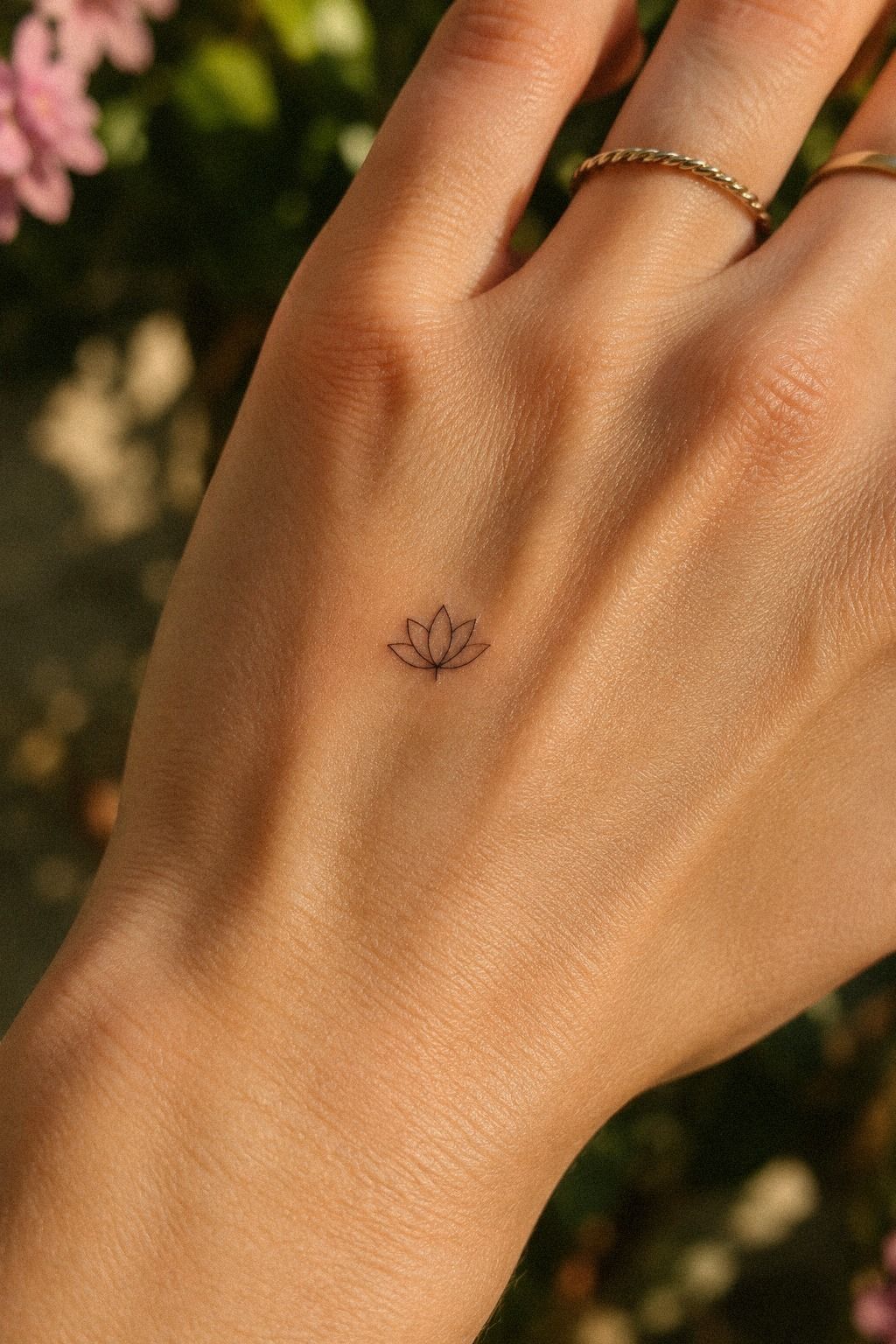
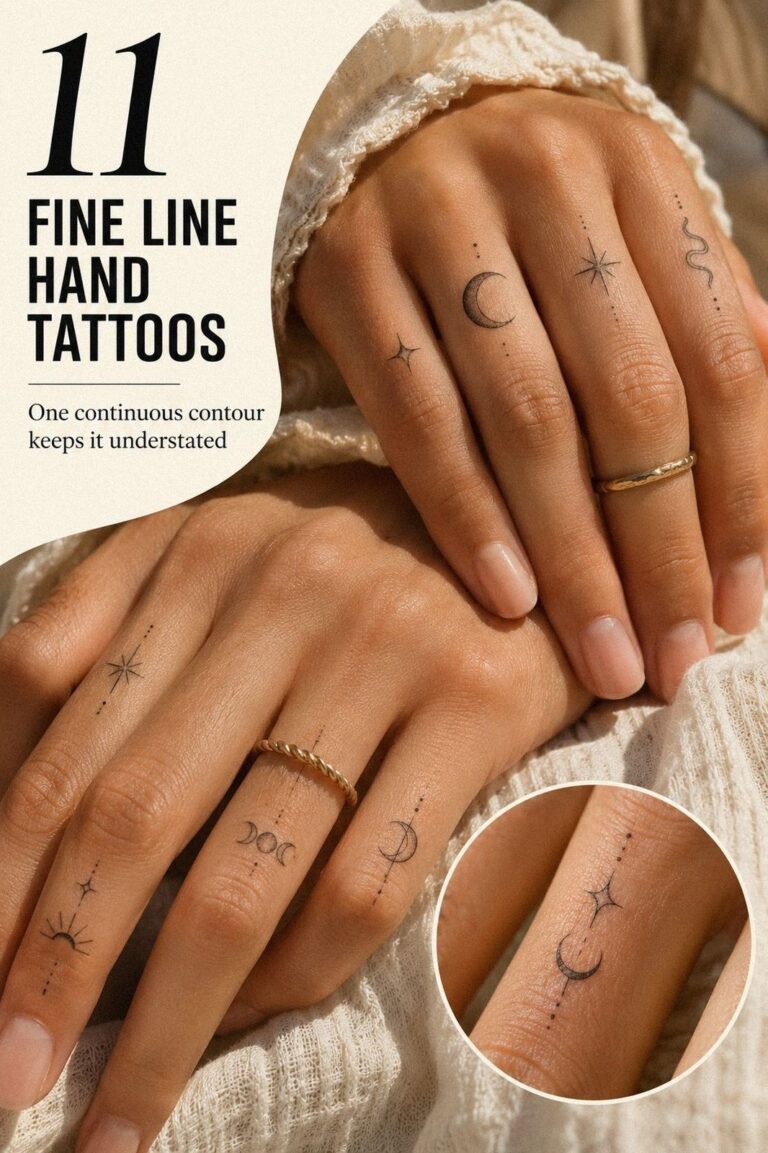
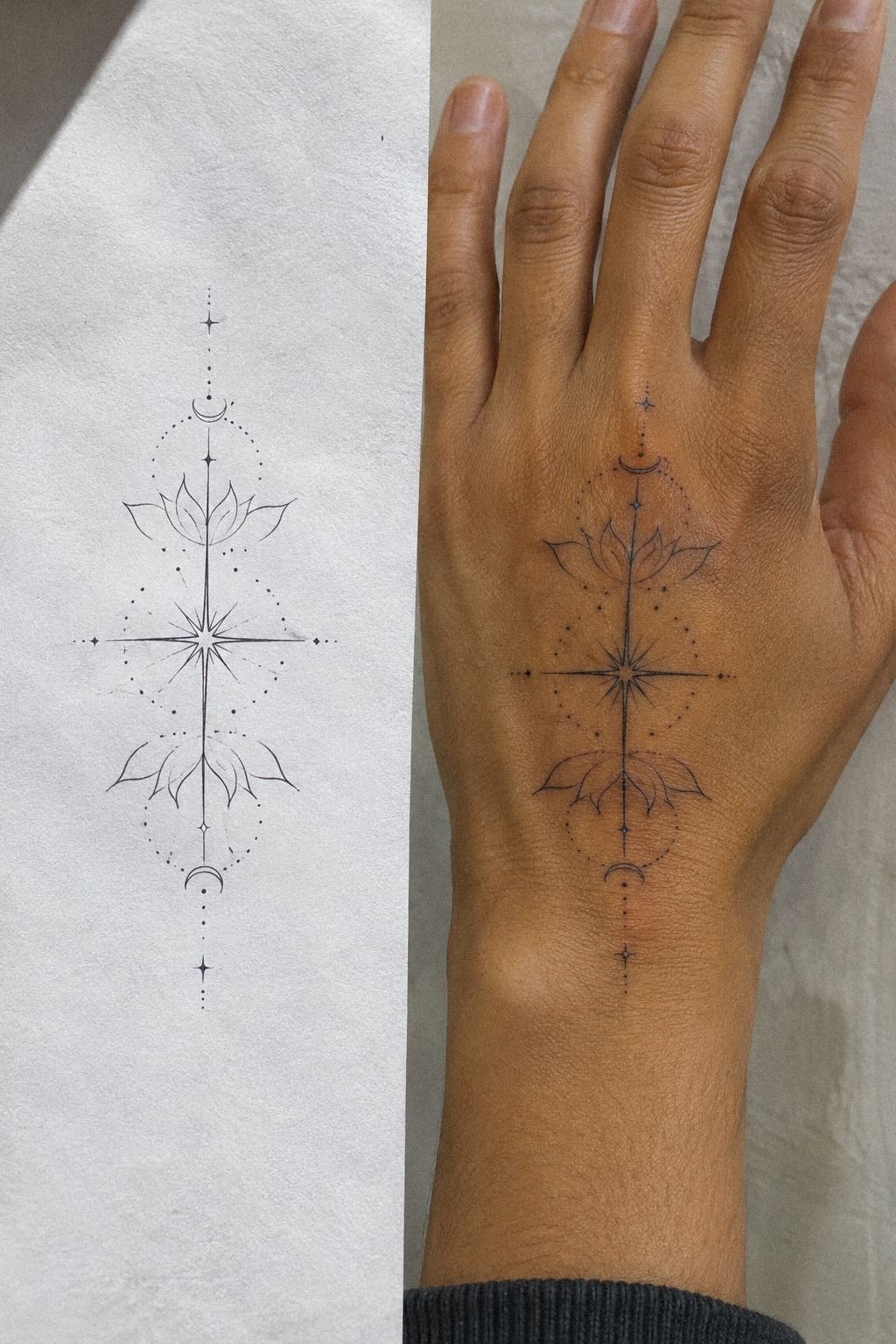
Celestial designs can be restrained or playful, so decide which direction fits your existing tattoos. A tiny moon with two stars feels understated. A moon with dots, rays, and orbit lines feels more dramatic.
On skin where contrast needs careful judgment, fine black ink can keep both options legible if the spacing is generous. Your artist may need to simplify the smallest circles.
Build the design from one anchor shape. Add a second mark only when it improves the story.
Your artist can place a small moon near the center and let the stars taper toward the finger, creating movement without filling the hand. That gradual rhythm can feel ethereal without becoming vague.
Ask yourself what the sky means to you. Is it a travel memory, a night shift, a spiritual idea, or simply a visual language you’ve always loved?
You don’t need to explain it publicly, and you can still choose a distinctive shape. A private meaning doesn’t have to look obscure.
Save a few references from fine line simple hand tattoos before your consultation. Keep the references varied, then tell your artist what repeats across them.
That repeated detail is usually your real style. It might be a crescent, a dot pattern, or a specific curve that feels recognizable and yours.
9Consider fierce tiny icons for expressive contrast
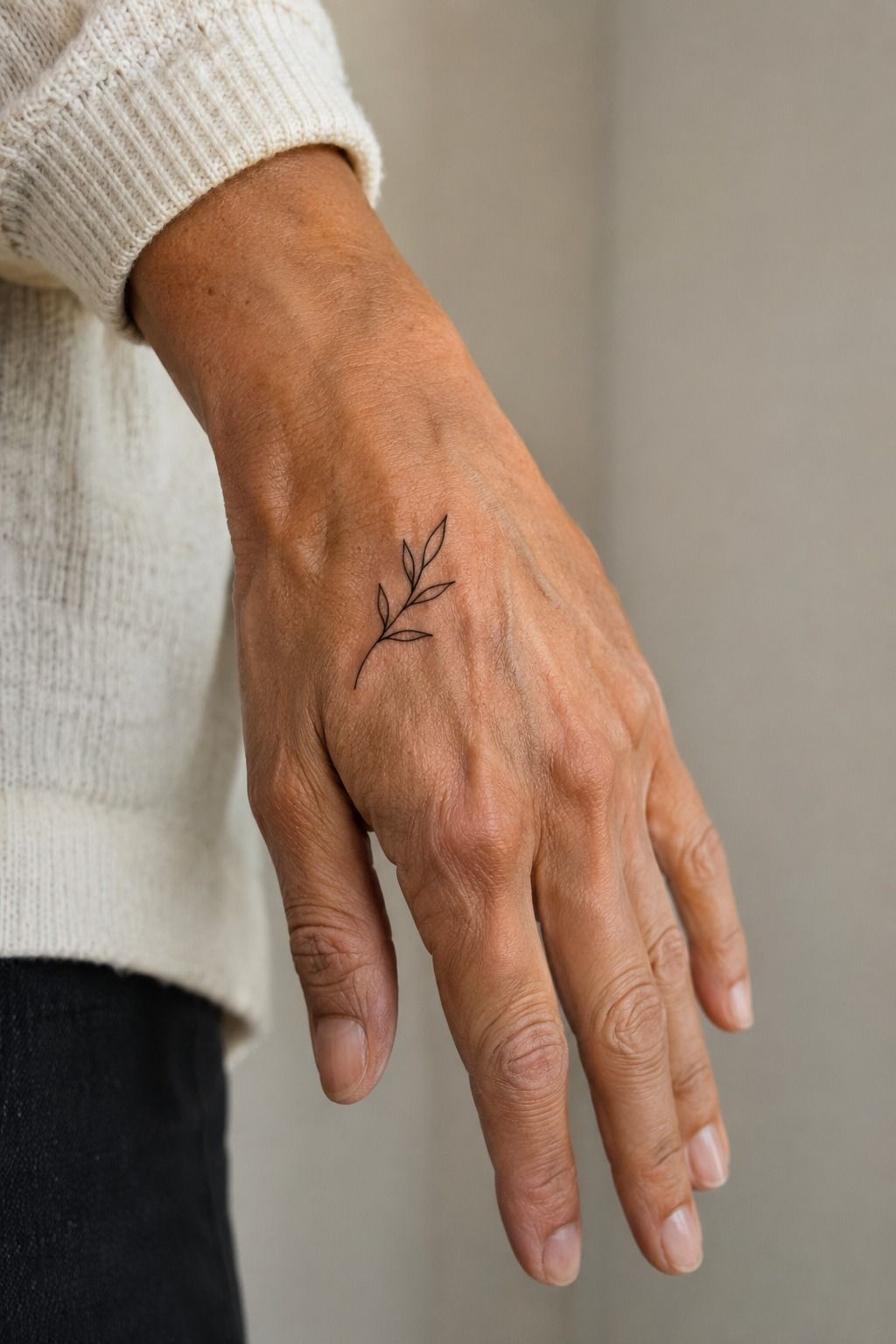
A tiny dagger, flame, match, or pointed heart can bring raw energy to a hand full of softer marks. On skin where solid contrast holds well, solid black fill can make one small icon stand apart from hair-thin linework.
Use that visual contrast carefully. One dark accent can look fierce, while several may overpower the finer designs.
Place the icon where it can act as punctuation. Beside a finger, near the thumb, or under a knuckle can all work, but each position changes how visible the mark feels.
You’ll want to test it with your hand at rest and while holding something. A grip test can show whether the symbol disappears around ordinary movement.
I’d choose the motif that makes you slightly nervous for the right reason. A fierce mark should feel honest, not selected just to look edgy in a reference.
If the icon connects to a hard-earned boundary, a private victory, or a person you protect, its meaning may outlast the trend. That can make the tattoo feel empowering rather than performative.
Compare that energy with fine tiny hand tattoos before you decide. The contrast can be effective when it’s deliberate and messy when every symbol competes to be the loudest.
What Your Budget Is Really Buying
A tiny tattoo can still require serious planning. The artist minimum often matters more than the amount of skin covered, especially when the design needs a consultation, stencil, and careful placement.
Ask whether the quoted hourly rate includes setup, drawing time, and touch-up policy. Those details change the real cost and help you judge whether the price is worth it.
Your budget should account for experience, healed examples, and the artist’s ability to simplify a design. The lowest price may not offer the best value if the mark needs correction later.
Have the budget conversation before the appointment. A clear limit gives your artist room to suggest a simpler option without making the consultation awkward.
When comparing two artists, consider the full value: healed work, communication, placement judgment, and the chance of preserving clarity. That’s what makes a small tattoo worth it.
10Protect delicate ink during hand tattoo healing
The first few days deserve more attention than the size of the design suggests. Follow your artist’s instructions closely, especially if the tattoo sits near a crease or receives frequent friction.
Aftercare Without Guesswork
Use a mild gentle cleanser and wash with clean hands. Pat the area dry instead of rubbing it, especially around fingers and creases.
Apply the recommended moisturizer in a thin layer if your artist advises it. More product isn’t automatically better, and heavy coverage can make the area feel uncomfortable.
Watch the balance between water, friction, and movement. Friction and water are ordinary parts of hand life, so the goal is sensible protection rather than panic.
Wait before judging whether you need a correction. Touch-up timing should come after complete healing, not during peeling or early dryness.
If something looks unusual or worries you, contact your artist or a qualified medical professional. Don’t diagnose a problem from a social media comment.
11Refresh timeless fine line tattoos with careful touchups
Touchups should solve a specific issue, not become an automatic appointment. On deeper skin with a warm undertone, healed black ink can still look crisp when placement and spacing were thoughtful.
Your artist should inspect the healed design before deciding whether anything needs refreshing. A responsible review considers the whole mark, not just one line that looks different under changing light.
Wait until the tattoo is fully healed before judging softened areas. Complete healing can take about 2 to 3 months, and your hand may settle at a different pace from another person’s.
Compare the original stencil, the healed record, and the current mark rather than relying on memory. That record gives you a clearer basis for discussing value and future care.
Some fine lines can widen with time, especially when they’re packed too tightly or exposed to repeated friction and UV. UV exposure is one reason sun protection remains important after healing.
Black solid elements and sensible placement tend to age better than extremely crowded details. I’d refresh one weak line instead of redrawing the whole symbol.
The restraint keeps the tattoo’s original character. A lasting mark doesn’t need to look frozen in its first week; it needs to remain recognizable as yours.
If you’re planning a future piece, study fine line hand tattoos with aging in mind. Ask your artist how the reference might change on your skin before you decide the cost is worth it.
The Private Symbol Rule: Why Does Fine Line Still Feel Personal?
I’ve become wary of choosing a hand tattoo only because of its reference appeal. Hands are already expressive, so a design doesn’t need to perform for anyone else.
The strongest pieces often have a quieter reason behind them: a star for a night nobody else remembers, a word that belongs to one person, or a tiny mark connected to a decision that changed everything. That private meaning gives the design weight.
That doesn’t mean the tattoo has to be obscure. It means the meaning should lead the styling. Black line pigment can make a symbol look crisp, but it can’t give an empty idea emotional weight.
You have to bring that part. If you’re choosing between two designs, use the compliment test: which one would you keep if nobody ever noticed it?
A personal tattoo can still be refined. You don’t have to choose a rough sketch to prove that the memory is real.
A clean crescent, a sharp little flame, or a quiet word can carry a direct story under a controlled surface. That tension is what makes fine line work so compelling.
Your hand will move through ordinary moments, and that’s where the meaning gets tested. You’ll see the mark while opening a door, washing a cup, typing a message, or reaching for someone’s hand.
If the symbol still feels like yours in those boring moments, it has earned its place. That kind of daily hand movement is a better test than a single compliment.
The Long-Term Value Check
Think of the tattoo as a tattoo investment, not just a small purchase. You’re paying for design judgment, clean application, placement advice, and a mark you’ll see every day.
The best value isn’t always the lowest quote. Long-term clarity may matter more than saving a small amount at the appointment.
Look for healed work before you book. Artist experience with hands and tiny linework gives you better information than a large collection of fresh portfolio examples.
Ask what the artist would simplify, where they’d place the stencil, and how they’d approach a future touchup. Their answers reveal more than a stylish portfolio alone.
A visible tattoo cost includes the emotional question too: will you still understand the symbol when the trend has moved on? If yes, the price may be worth it.
The Questions I Get Asked Most
How much does a fine line tiny hand tattoo usually cost?
A fine line tiny hand tattoo typically costs about $50 to $100 at a shop minimum, or around $100 to $250 per hour in the US, depending on the artist and region. Artist experience matters more than size alone. Bring a clear reference, but expect the final quote after placement and detail are discussed.
Are fine line tiny hand tattoos a good idea for a first tattoo?
Yes, they can be a good first tattoo if you’re comfortable with visible placement and consistent aftercare. Small black linework can feel manageable, but hands are exposed and may feel sharper than a forearm. You’ll want an artist with healed examples, not only fresh portfolio work.
How do I choose a tattoo artist for fine line tiny hand tattoos?
Choose an artist with a portfolio showing clean linework, healed results, and strong hygiene practices. Healed tattoo examples reveal whether spacing stays readable over time. Ask how often they tattoo hands, what line sizes they recommend, and whether they’ll simplify your design when the stencil looks crowded.
How much do fine line tiny hand tattoos hurt?
Hands, feet, ribs, and sternum can feel more sensitive because they have less padding, while the forearm, thigh, and shoulder may feel more tolerable. Numbing discussion belongs with your artist. Your session may feel sharp and brief, but everyone’s pain response differs.
How long does a fine line tiny hand tattoo take to heal?
The surface usually heals in about 2 to 3 weeks, while complete healing can take about 2 to 3 months. Gentle aftercare means washing carefully, using the recommended moisturizer, and avoiding sun and swimming while the surface heals. Don’t pick flakes or judge the final line too early.
What’s the best placement for fine line tiny hand tattoos?
The best placement depends on visibility, movement, and how much friction you can accept. Side-finger placement feels intimate but may fade or soften faster, while the back of the hand is more visible and exposed. A wrist or forearm can be easier to heal if you want longer-lasting clarity.
For more placement references, compare fine line side finger tattoos with tiny small wrist tattoos. Your artist can help you choose the area that fits your daily life and budget.
The One-Choice Rule, Fine Line Over More Ink
If I had to pick one step to start with, I’d choose the private symbol before the placement. A clear meaning gives your artist room to simplify without losing the point.
Save your favorite fine line tiny hand tattoos, sketch three versions, and let the one you still understand after seven days lead the session. That seven-day pause can show whether the design is truly personal or simply new.
The right mark can feel memorable, private, and honest depending on the story behind it. It can also carry a quiet edge without needing an explanation.
Choose the symbol that remains striking, daring, and honest when nobody else is looking. That’s where the tattoo becomes yours.