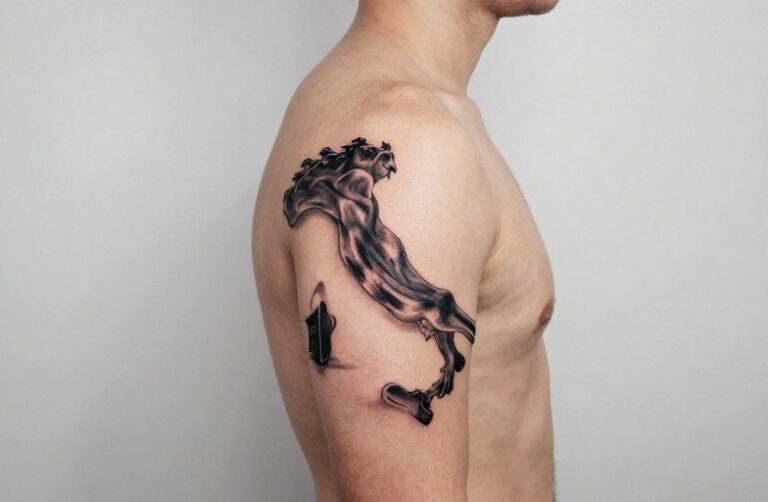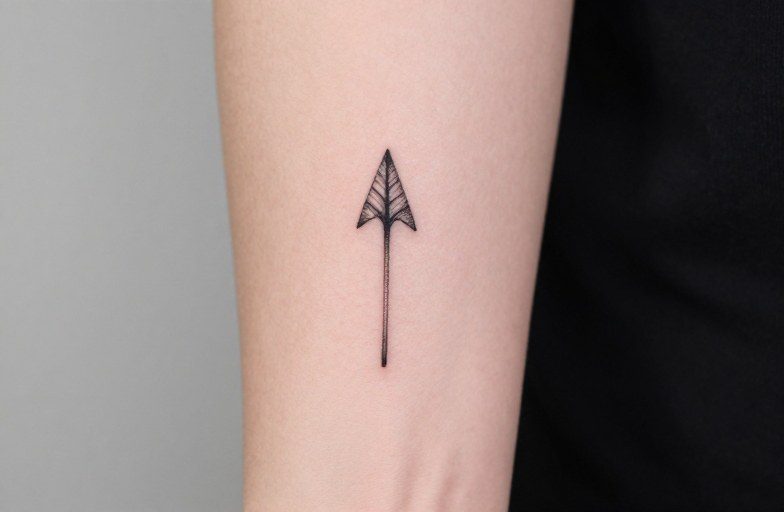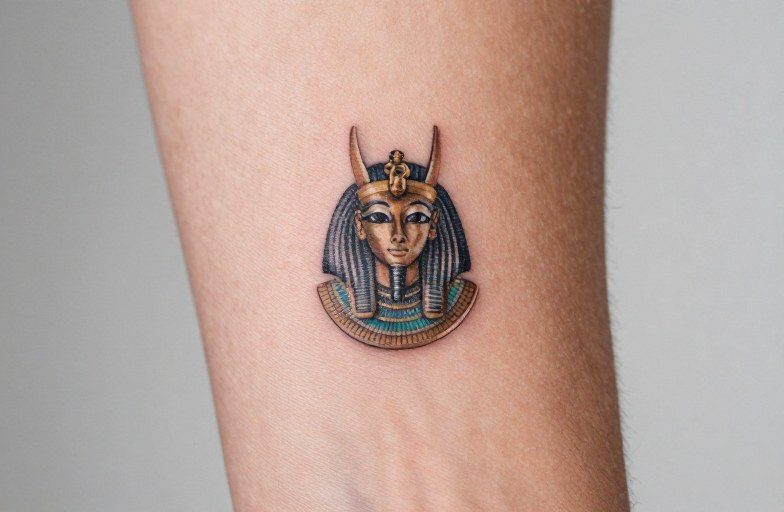
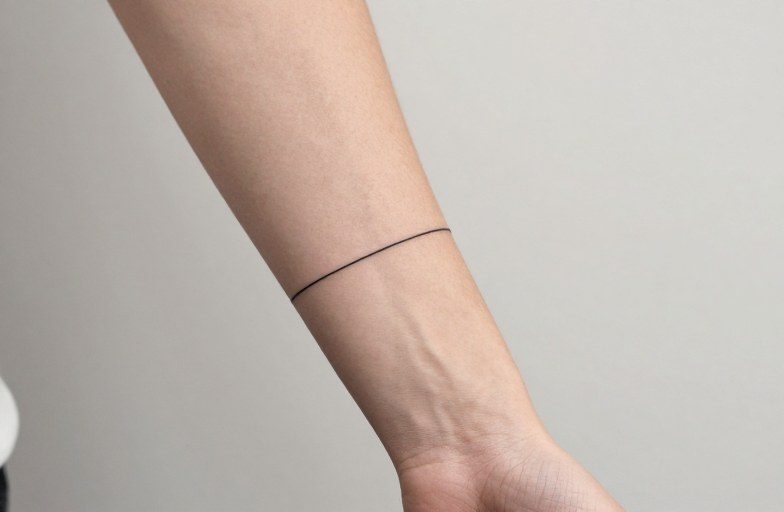
The forearm offers prime real estate for minimalist work: enough flat surface for clean lines, enough visibility to enjoy your own ink, and enough flexibility to hide or show as needed. A spare design here relies on precision, there’s nowhere for shaky linework or muddled concepts to hide. What follows is a practical breakdown of what actually works, what doesn’t, and how to make something small hold up over time.
Standout Design Ideas
Minimalist forearm tattoos succeed when they commit to one visual idea and execute it flawlessly. The best designs often come from unexpected sources: architectural drafting, botanical illustration, early computer graphics, or even the negative space in vintage printmaking.
Geometric and Line-Based Work
Single continuous lines that form faces, animals, or abstract shapes have dominated for good reason. When done with a consistent needle grouping, typically 3RL or 5RL, these hold their edges for years. The trick is line weight: too thin and it blurs within 2-3 years; too thick and the “minimalist” quality evaporates. A line weight between 0.5mm and 1mm typically hits the sweet spot for forearm skin, which sees moderate sun exposure and movement.
Consider these proven approaches:
- Single-line portraits: profile silhouettes with interior contour lines
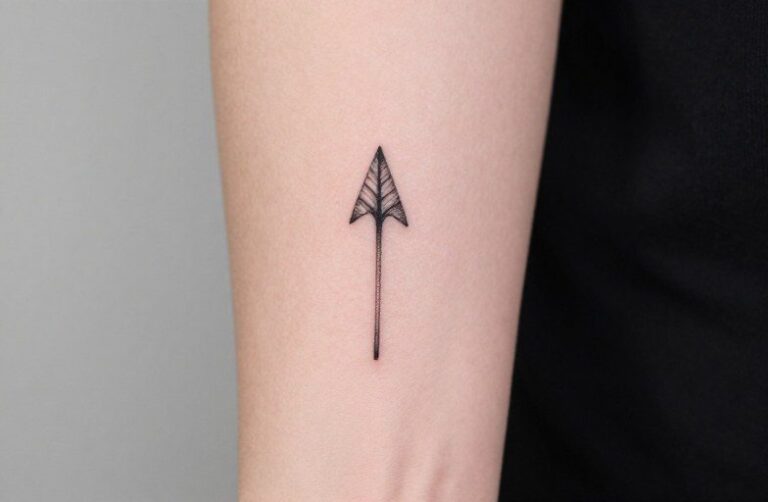
- Abstract angles: intersecting straight lines forming implied 3D shapes
- Constellation maps: dots connected by hairline lines, often placed on the inner forearm
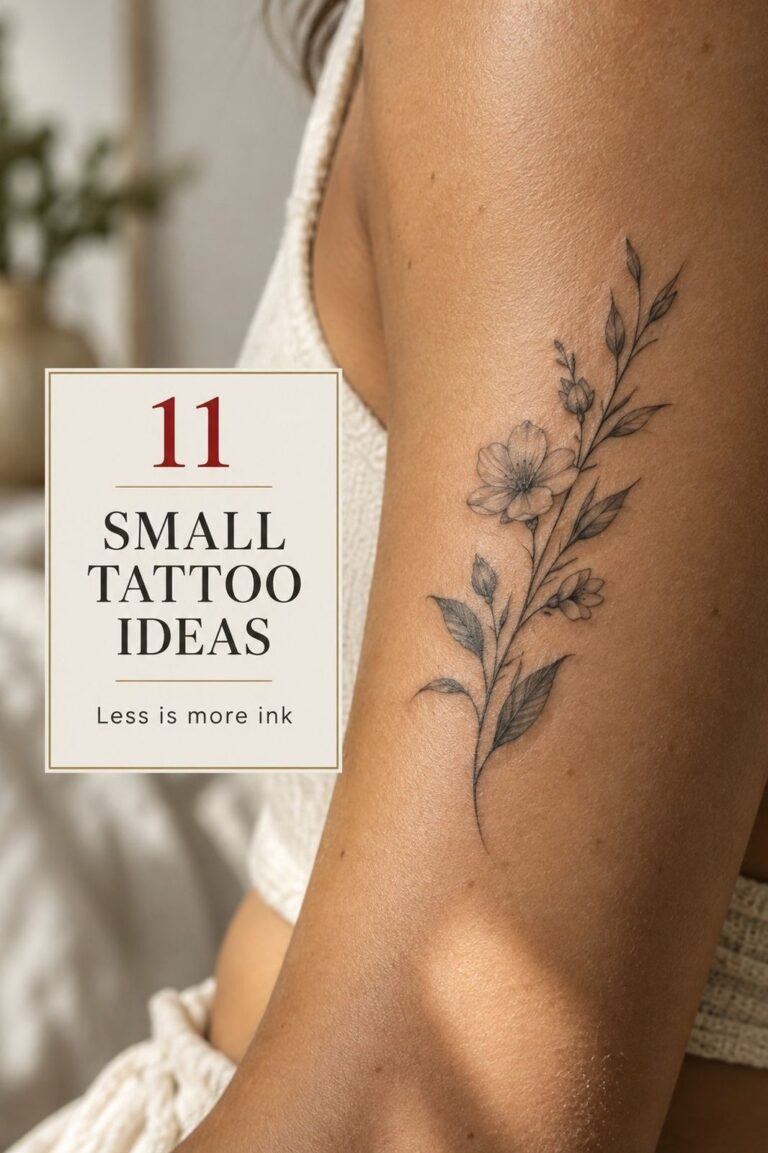
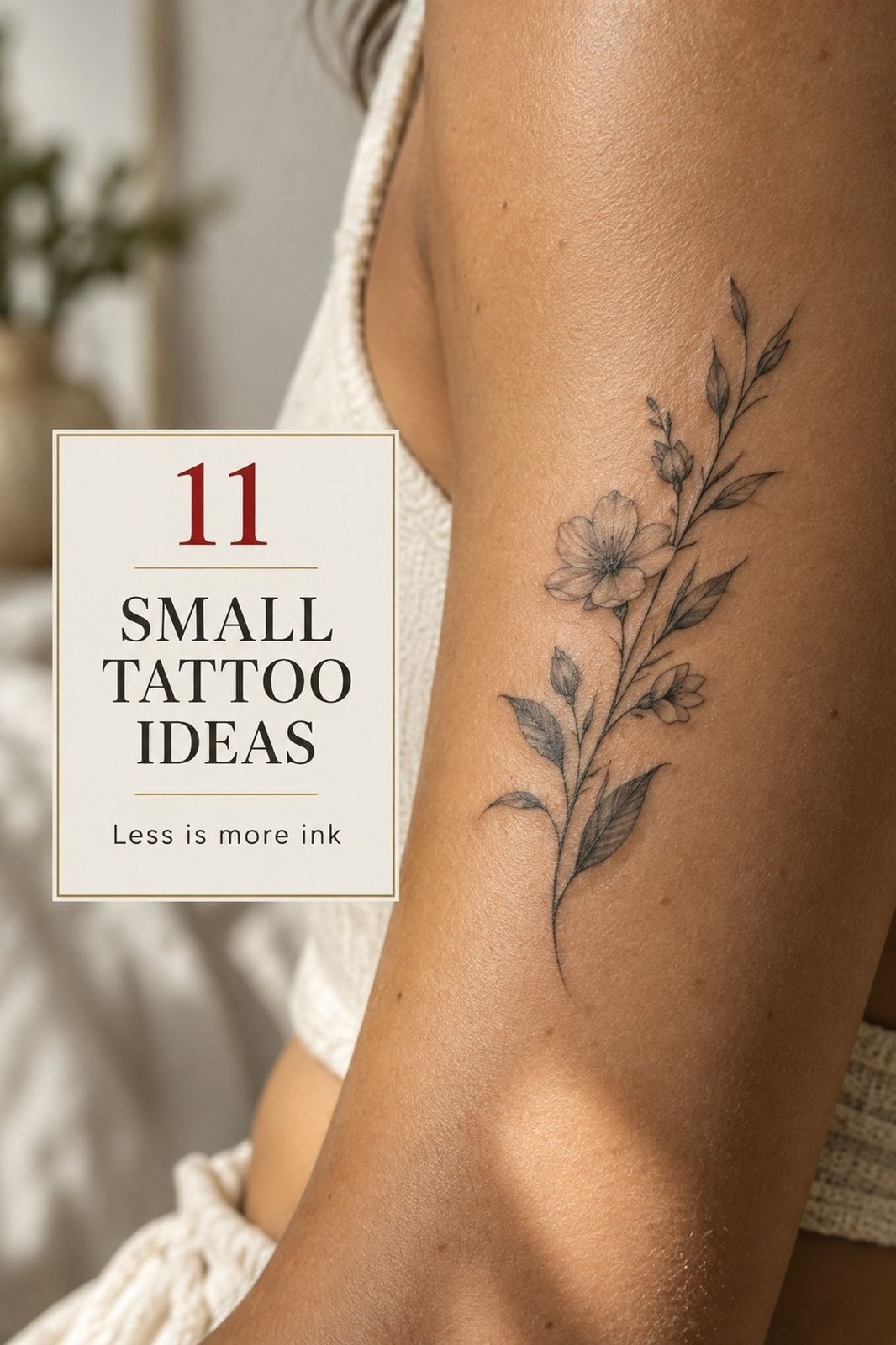
- Minimalist florals: one stem, two leaves, no shading, think botanical plate reductions
Text and Numerals
Small lettering on the forearm demands particular care. Sans-serif fonts with consistent stroke width outperform decorative scripts, which tend to bleed and blur. Keep character height above 8mm for longevity. Roman numerals, coordinates, and single words in typewriter-style fonts age gracefully because their letterforms contain minimal thin points that could collapse.
Trending Variations
What’s shifting in minimalist forearm work isn’t the aesthetic itself but the source material and execution techniques. The current wave pulls from several distinct visual languages.
Micro-Realism Meets Minimalism
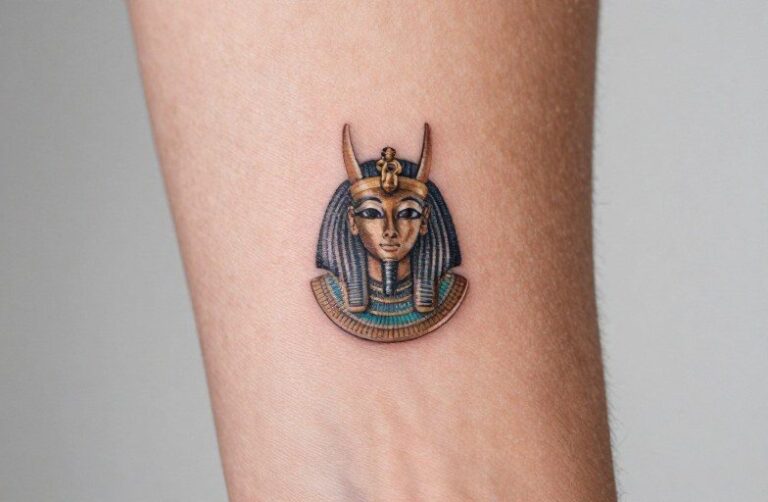
Some artists now combine extreme detail in tiny areas with vast empty space around them. A single hyper-detailed eye, 15mm across, placed in the center of the inner forearm with nothing else around it. This isn’t traditional minimalism, it’s selective density. The surrounding skin does the compositional work. These pieces require artists who specialize in micro-work; standard machines and needles won’t achieve the necessary precision.
Hand-Poked Revival
Hand-poked (stick-and-poke) minimalist designs have moved from DIY associations to respected studio work. The slight irregularity in line quality, when intentional and controlled, gives a warmth that machine work can struggle to replicate. Forearm skin takes hand-poking well, it’s relatively thin and vascular, allowing consistent ink deposit without excessive trauma. Healing tends to be gentler too, with less scabbing than machine work.
Matching & Pairing Ideas
Forearm minimalism lends itself to intentional pairing, whether with another body placement or another person.
For couples or close friends, split designs work better than identical copies. One person carries a crescent moon on their left inner forearm; the other carries the matching shadow or complementary phase on their right. When you press your forearms together, the image completes. This avoids the awkwardness of matching tattoos that look incomplete alone.
Solo pairing across your own body also succeeds. A small circle on the left forearm and a thin vertical line on the right creates visual rhythm when your arms hang naturally. The brain reads the relationship without explicit connection. Think of it as compositional spacing rather than literal matching.
Other effective pairings:
- Dot on wrist, arc on forearm: suggests orbit or trajectory
- Single word on each forearm in different languages
- Positive and negative space versions of the same simple shape
Color Choices
Minimalist forearm work lives or dies by color restraint. The most enduring pieces use one or two colors maximum, with black doing the heavy lifting.
Black and Gray
Carbon black on untanned forearm skin offers the sharpest contrast and slowest fading. Gray wash, when used, should be limited to subtle depth in geometric work, never for soft shading that mimics traditional tattooing. That softness contradicts the minimalist premise and ages poorly on the forearm, where sun exposure gradually pushes gray toward blue-green tones.
Single Accent Colors
A single small element in vermillion, ochre, or cobalt can anchor an otherwise black design. The key is placement: the colored element should be the visual anchor point, not scattered randomly. A thin black outline of a mountain with a tiny red sun at its peak. A black botanical stem with one leaf in muted green. These read as intentional rather than decorative afterthoughts.
Avoid watercolor-style color bleeding in minimalist work. The technique requires density to read properly; sparse color application looks like a mistake rather than a style choice.
Size & Scale
Forearm minimalism operates in a specific size range. Below 2cm, most designs lose legibility and risk blowout as ink naturally spreads in skin. Above 12cm, the “minimalist” label becomes questionable, you’re approaching standard tattoo scale.
The most successful sizes cluster between 3cm and 8cm for single elements. This allows:
- Clear visibility from normal social distance (1-2 meters)
- Enough line length for the artist to show steady hand control
- Room for the design to “breathe” with surrounding negative space
- Future expansion if you later want to build a larger composition
Scale should relate to your specific forearm dimensions, not generic templates. A 5cm design that looks balanced on a slender forearm can appear stranded and small on a larger limb. Bring reference objects to your consultation, coins, keys, actual printed sizes, to confirm scale before the stencil goes on.
Best Placements
The forearm isn’t uniform. Skin texture, hair density, movement patterns, and visibility all shift across its surface.
Inner Forearm
The classic placement: relatively protected from sun, flat when the arm rests naturally, visible to you when you work or read. Skin here is thinner and shows ink crisply, but also reveals any imperfection in line quality. The inner forearm suits designs you want to see regularly, personal reminders, coordinates, small symbols with private significance.
Healing requires attention: this area flexes constantly with wrist and elbow movement. Keep it moisturized but not suffocated, and avoid positions that stretch the skin during the first two weeks.
Outer Forearm and Side
The outer forearm gets more sun and sees more abrasion from sleeves, desks, and general contact. Designs here should be simpler, with bolder lines that can tolerate slight softening over time. The lateral side (pinky edge) offers an elegant vertical strip that’s visible in profile but not head-on, ideal for single words, thin vertical lines, or small stacked elements.
The “wrist fade zone” deserves mention: the 2-3cm nearest the wrist experiences the most movement and often shows faster aging. Keep critical detail out of this band; use it for extension lines or trailing elements that can soften without ruining the design.
Final Thoughts
A minimalist forearm tattoo succeeds through subtraction and precision. Every millimeter of line carries weight. Every empty patch of skin participates in the composition. The constraint of small scale forces clarity that larger, busier pieces can avoid.
Choose your artist based on their portfolio of healed, small-scale work, not their ability to render complex large pieces. Ask to see photos of their minimalist work at one year healed, not just fresh. The difference between a good minimalist tattoo and a mediocre one often doesn’t show up for months, when lines settle and spread reveals true technical control.
The forearm gives you daily access to your own tattoo. Make it something worth revisiting, a clean visual pause in the clutter of a typical day.
Frequently Asked Questions
How long does a minimalist forearm tattoo take to heal?
Most minimalist forearm pieces heal surface-level in 2-3 weeks, with full settling at 6-8 weeks. The inner forearm heals slightly faster than the outer due to less friction, but constant wrist movement means you’ll need to be more careful about flexing during the first week.
Do minimalist forearm tattoos fade faster than larger ones?
Thin lines can appear to fade faster because there’s less ink total, but the real issue is blur rather than fade, ink spreading slightly over years. Starting with slightly bolder minimum line weights and protecting from sun exposure keeps them crisp longer.
Can I get a minimalist forearm tattoo covered up later if I change my mind?
Small black minimalist work is actually easier to cover than dense, colorful pieces, but placement matters. Inner forearm spots near the wrist have limited cover-up options due to skin characteristics. Keep future flexibility in mind with your initial placement and scale.
How much should a quality minimalist forearm tattoo cost?
Minimalist work often costs more per square inch than traditional tattooing because it demands flawless technical execution with no room for error. Expect to pay for the artist’s precision and experience rather than just time in the chair. Consultations should be free and detailed.