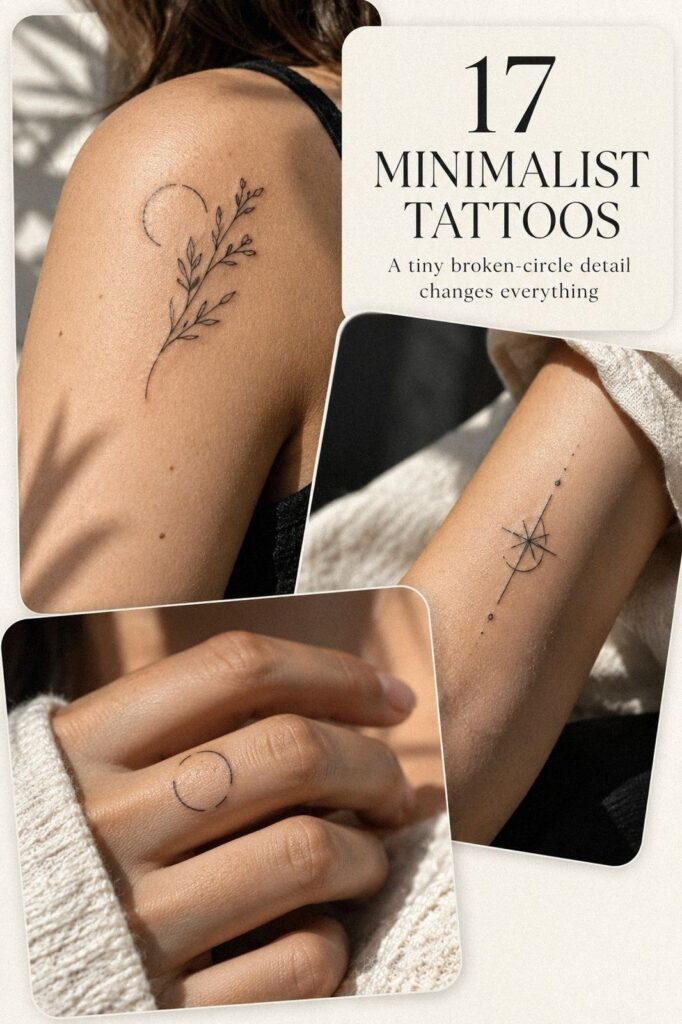
Minimalist tattoo ideas unique can stay discreet without feeling timid. I’ve learned to choose placement first before choosing the symbol, especially when sleeves, collars, and daily movement matter. The best designs feel personal, meaningful, and easy to reveal when you want them visible. These ideas make that decision easier!
Editor’s note: A hidden tattoo should still feel striking when it appears. Look for crisp lines, a sensible scale, and a placement that works with your routine. If the design feels right but the price feels high, ask for a clear quote before you commit.
Fine-Line Crescent Moon Behind the Ear
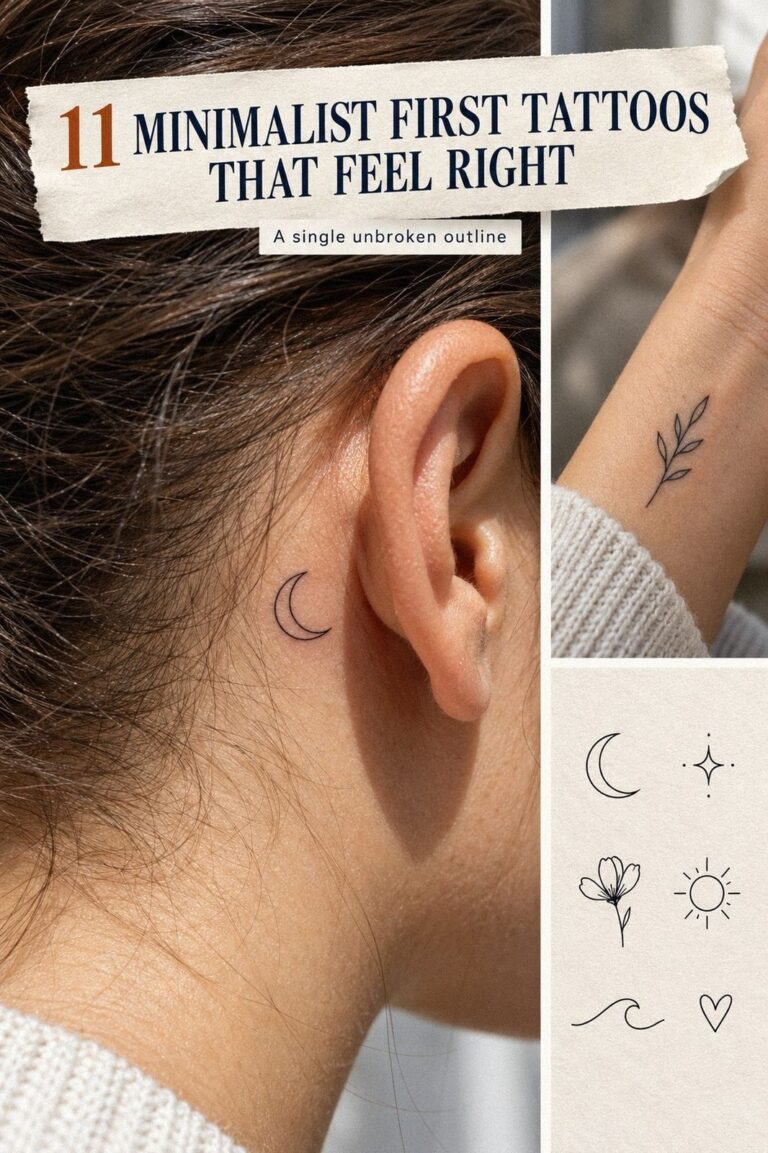
A crescent moon behind the ear is one of the easiest designs to keep private. Hair, a collar, or a loose strand can cover it. A tucked-back style reveals the fine-line crescent and its tiny stars.
I’d keep the curve crisp and the stars sparse. Crowded details can blur as the tattoo ages. A small amount of olive-toned ink can look more timeless than soft grey shading here.
You’ll want your artist to check the design while your head is turned. A tattoo that looks balanced while sitting still may shift when you move. The boldest choice is often the most understated one, and your ear already gives the design enough visual drama!
For more celestial direction, browse these unique moon tattoo ideas and save the shapes that still feel personal.
Tiny Botanical Stem Along the Collarbone
A tiny botanical stem along the collarbone can look delicate beneath an open neckline and disappear under a crew neck. One leaf, a narrow bud, or one curved branch can keep the design graceful and personal.
Ask your artist to follow the natural line of your collarbone. Don’t force the stem into a ruler-straight angle. The single-needle botanical should look as if it belongs to your anatomy, especially when your shoulder moves.
I’d skip heavy shading because it can make a small stem feel muddy. Crisp contours keep it expressive. You’ll also want to discuss how the line may soften over time and whether a slightly stronger outline offers better value.
– One curved stem. – Two or three leaves. – A small open bud. – Clean negative space.
If you like botanical symbolism, compare it with this minimalist water lily tattoo. The water lily feels more sacred and ornamental, while this stem stays quieter and easier to hide at work.
Geometric Finger Ring With Hidden Meaning
A geometric finger ring gives you symbolism without relying on text. A broken circle can represent resilience. Two joined angles can suggest partnership.
A tiny repeating mark can mean something only you understand.
The hidden-meaning geometry works best when the pattern has a reason behind it. You’re not choosing a random triangle because it looks modern. You’re giving your hand a private sign.
I’d avoid wrapping too much detail around the finger. Hands experience friction, washing, and sunlight every day. A solid plum ring mark may hold better than several hair-thin lines, but your artist should assess your skin and placement first.
Finger tattoos can be striking, but they’re less predictable than tattoos on the upper arm or thigh. If you’re comparing the investment, ask whether the design’s visibility and upkeep feel worth it before booking!
These small tattoo ideas unique may help you compare visibility before committing. Your meaning matters, but so does how often your hands are exposed!
Single-Needle Wave Across the Ankle
A curling ocean wave across the ankle feels flowing without demanding attention. Let the wave follow the ankle’s horizontal movement instead of making it a stiff emblem. That small decision makes the design feel more natural.
The line-weight ladder is useful here. Keep the main wave slightly stronger, the foam lighter, and the smallest marks minimal. You’ll want enough open skin between the details so the design doesn’t close into a dark stripe.
I’d skip a full ocean scene at this scale. A single curling wave is more iconic, more readable, and easier to cover with socks or trousers. It can also be a better budget choice than a larger design with many small details.
Ankle tattoos can feel more intense because there’s less cushioning near the bone. Feet, hands, ribs, and sternum are commonly more sensitive. The forearm, thigh, and shoulder are often more tolerable.
For placement comparisons, browse this minimalist tattoo artist guide before choosing your appointment.
Minimalist Zodiac Symbol on the Wrist
A zodiac symbol gives you a symbolic tattoo without needing a name or date. Stars, glyphs, circles, and small celestial marks can all work well when the design stays readable.
I’d use a zodiac idea as a starting point, not a final stencil. Your artist can adjust the emerald-toned zodiac glyph so it follows your wrist instead of looking stamped on.
The symbol should stay clear at a glance, especially if you want to cover it with a watch or cuff during work. You’ll want to ask whether the smallest internal spaces are wide enough to remain distinct after healing.
A wrist tattoo is visible, so it needs to feel meaningful months from now. I’d choose one clean symbol over a crowded constellation. The long-term value comes from recognition, not complexity.
If stars are more your language, save these minimalist star tattoo ideas and compare their spacing with your chosen design. The right mark should feel understated without feeling forgettable!
Micro Portrait Silhouette Below the Elbow
A micro portrait silhouette below the elbow can honor someone, an animal, or a memory without showing a detailed face. Choose a profile, a familiar hairstyle, or one unmistakable outline.
The forest-green silhouette contour will usually read more clearly than pale shading at this scale. Your artist should show healed examples on similar skin tones. That portfolio check matters because healed work can look different from fresh work.
The Silhouette Memory Method keeps the meaning strong by limiting the information. You’re asking the viewer to recognize a gesture, not inspect a portrait. That restraint can feel powerful.
Below-elbow placement can be easier to hide beneath sleeves. Movement may still affect how the silhouette reads. I’d avoid putting the most important point directly over the bend.
If you’re collecting small symbolic designs, these unique female tattoo designs offer more ideas for turning a memory into a crisp outline.
Delicate Constellation Across the Shoulder
A delicate constellation across the shoulder gives you space for movement without making the tattoo loud. Scattered dots and connecting strokes can create an ethereal rhythm.
I’d place the largest star near the shoulder’s natural curve. Let the smaller points trail outward. The fine constellation dots should be intentional, not filler.
You’ll want to move your arm during the stencil check. The spacing changes when your shoulder lifts. Too many connecting lines can turn an elegant design into a web, so keep the pattern sleek.
Shoulder placement is often easier to tolerate than ribs, feet, hands, or sternum. A soft neckline may cover it, while a tank top reveals the full design.
If you want a more symbolic variation, compare this with a minimalist semicolon tattoo and think about which mark carries more of your story.
Tiny Matching Symbols on Inner Forearms
Tiny matching symbols on inner forearms can represent friendship, siblings, partnership, or a shared promise. The strongest pairs don’t need to be identical. They need to share a visual language.
Choose symbols with the same line weight but slightly different meanings. A dot and crescent, two opposing arrows, or paired initials can feel connected without becoming predictable.
The paired black symbols should share a scale and general style. Each person can still choose a variation that feels personal. That balance makes the idea more empowering than copying the same design.
Inner forearms are often easier to live with than hands or fingers. Sleeves can cover them during work. Sunlight still matters, so follow your artist’s aftercare and avoid exposing fresh skin to strong sun or swimming.
If your pair prefers more playful imagery, these minimalist Spiderman tattoo ideas show how a recognizable subject can stay restrained.
Abstract Linework Heart Along the Rib
An abstract linework heart along the rib can feel romantic without becoming sugary. One unusual break in the contour can make the design feel expressive rather than generic.
Try an open corner or a looping point. The open heart outline needs enough spacing to remain legible after healing, especially if the line is intentionally delicate.
I’d skip tiny words inside the shape. They’ll compete with the outline and make the tattoo harder to read. A simple heart can have more emotional value than a crowded design.
Ribs can feel more painful because they sit close to bone. A small design may take less time than a large one, but the area can still feel intense. Include comfort in your appointment plan.
If you prefer a lighter placement, explore these small tattoo ideas unique before deciding.
Minimalist Animal Outline Behind the Arm
A minimalist animal outline behind the arm works because one continuous contour can suggest an entire creature. A fox tail, bird profile, cat ear, or small whale can remain recognizable with surprisingly few strokes.
I’d choose the animal by silhouette first. The healed animal outline should still read clearly after the fresh stage. Ask to see older work, not only bright appointment examples.
Behind the arm is discreet, but movement and sleeve friction may affect your experience. Avoid a design with several overlapping legs or whiskers. Those details can merge over time.
This idea can feel whimsical without becoming childish. It can also be a smart value choice when you want a recognizable design without paying for heavy shading.
For a more graphic subject, compare this approach with minimalist Spiderman tattoo inspiration and notice which shapes stay legible at small scale.
Small Sacred Motif at the Nape
A small sacred motif at the nape can feel intimate and quietly powerful. You might choose a tiny sun, protective eye, prayer symbol, or abstract mark connected to your family or spiritual practice.
The sacred black motif should have a clear central shape and enough open skin around it. Avoid adding a long quote. The nape works best when the meaning stays concise.
The Nape Balance Rule says the motif should sit with your hairline, not fight it. You’ll want to check how it looks with your hair up, down, and pulled to one side.
This placement is easy to cover with hair or a collar. It can feel haunting and edgy when revealed. Small doesn’t mean forgettable!
If your idea is celestial or protective, these unique moon tattoo ideas may help you find a more personal variation.
Choose Visibility Before You Choose the Symbol
Start with your workday. Which areas stay covered by your usual sleeves, collar, socks, or watch? Which areas become visible when you reach, bend, or lift your arms?
The visibility plan should come before the final symbol. A meaningful design can lose its appeal if you’re constantly adjusting clothing to hide it. Think about meetings, uniforms, sports, and warm weather.
Behind the ear, the nape, ribs, and upper thigh are usually more discreet. The wrist, fingers, and inner forearm are easier to see. Neither choice is automatically better.
I prefer a placement that gives you control. That control can make a bold symbol feel calmer and more practical. If privacy matters every day, the right coverage choice is worth more than a complicated design.
Quiet-Placement Rule: Reveal It on Your Terms
The Quiet-Placement Rule is simple: choose a spot that’s visible only when you decide it should be. Your tattoo can stay private without feeling timid.
Ask your artist to check the stencil while you move naturally. Turn your head.
Raise your arm. Bend your wrist.
The stencil check should reflect real movement, not one frozen position.
You’ll also want to consider friction. Waistbands, watch straps, tight sleeves, and frequent washing can affect certain placements. A discreet design still needs practical protection while it heals.
This is where minimal design earns its place. Fewer lines mean fewer problems when the tattoo needs to remain clear beneath clothing.
The goal isn’t to hide your personality. It’s to choose when people see it.
Keep Fine Lines Legible
Fine-line tattoos can look elegant, but they need enough room to breathe. Tiny details placed too close together may soften into one shape as the tattoo settles.
Ask your artist how wide the gaps should be. The line-weight plan can include one stronger contour, a few lighter marks, and open skin between them.
I’d be cautious with microscopic lettering. It can look crisp at first and become difficult to read later. Symbols usually give you more flexibility than words at this scale.
Sunlight and friction also matter. Use the aftercare your artist recommends. Once healed, protect the area from strong sun when possible.
If you’re comparing artists, don’t focus only on the lowest price. Healed work can offer better long-term value than a cheaper appointment with weak line control.
What Makes a Hidden Tattoo Worth It?
A hidden tattoo feels worth it when the meaning survives the trend, the placement suits your routine, and the design remains readable. Those three points matter more than collecting every detail you like.
I’d ask myself three questions before paying a deposit. Would I still want this symbol next year? Can I cover it without changing my whole workday?
Does the price match the artist’s healed portfolio?
The design decision should feel clear, not rushed. A smaller tattoo may cost less, but that doesn’t make it automatically affordable. A simple design can still require careful skill.
The best value comes from restraint. One timeless symbol with strong placement often gives more satisfaction than a busy concept that needs constant explanation.
Fresh Ink vs. Healed Lines
Fresh ink usually looks sharper and darker than healed work. Over time, the skin settles and the lines may soften. That change is normal.
The healed tattoo is the version you’ll live with. Ask your artist to show examples several months old, especially for fine lines, finger tattoos, and areas exposed to friction.
Don’t judge a design only by its appointment-day appearance. A softer result can still look classic and intentional. It may simply have less contrast than it had at first.
The healing process also affects your schedule. Surface healing often takes about 2 to 3 weeks. Complete healing can take about 2 to 3 months.
If you’re trying to keep the cost sensible, ask whether the placement needs a design adjustment before booking. A small change can protect the tattoo’s clarity.
Minimalist Meaning, Maximum Privacy
Privacy doesn’t require a boring symbol. A tiny mark can feel fierce, raw, or deeply personal when it connects to a real memory.
Consider a private date translated into dots. Use a family symbol.
Choose an animal outline that only you recognize. The design doesn’t need to explain itself to everyone else.
The private symbol should still work visually. Meaning can guide the idea, but placement and line strength determine how well it ages.
I’d avoid choosing something only because it’s trending. A vintage reference, a personal constellation, or a simple geometric sign may keep its appeal longer than a popular phrase.
The strongest hidden tattoos feel like private stories you chose to wear. They’re discreet, but they’re never empty.
Which Placement Fits Your Workday?
Behind the ear and at the nape are useful when hair or collars cover the design. The collarbone can stay hidden under higher necklines. The inner forearm is easier to cover with sleeves, but it becomes visible quickly in warm weather.
The workday placement should match your actual clothing. Don’t plan around an outfit you rarely wear.
Consider comfort, too. Ribs, feet, hands, and sternum may feel more sensitive. The shoulder, thigh, and forearm are often easier for many people, though everyone responds differently.
If you’re working with a fixed budget, ask for placement advice before finalizing the size. A slightly different location may protect the design and reduce future touch-up concerns.
Your best choice may be the one that gives you the most visibility control.
Why Do Tiny Tattoos Stay With You?
Tiny tattoos stay with you when the design has a clear reason, a workable placement, and enough visual strength for ordinary life. I’ve changed my mind about several minimalist ideas after looking at healed portfolios. That pause saved me from choosing a shape only because it looked appealing at first.
My strongest preference is for designs that remove one unnecessary detail. A moon doesn’t need a full night sky.
A botanical stem doesn’t need six leaves. A heart doesn’t need lettering inside it.
That restraint can feel daring because it asks the symbol to carry the meaning on its own. You’ll want to ask your artist how the design may soften, especially if the lines are extremely fine or placed where friction and sunlight are common.
There’s also a practical side. Surface healing usually takes about 2 to 3 weeks.
Complete healing can take about 2 to 3 months. Gentle washing, recommended hydration, and avoiding sun and swimming matter more than chasing a perfect result.
I’d rather see you choose a simple, meaningful mark with strong placement than a complicated design that loses its identity. The most memorable minimalist tattoos aren’t always the most ornate ones. They’re the ones that still feel personal when the trend has moved on.
The Questions I Get Asked Most
How much does a minimalist tattoo unique usually cost?
A small minimalist tattoo in the US commonly costs about $100 to $300, depending on the artist, region, placement, and detail. Some shops use a minimum of about $50 to $100, while hourly rates may run about $100 to $250. A clear quote protects your budget.
Are minimalist tattoo unique a good idea for a first tattoo?
Yes, minimalist tattoos can suit a first appointment because many designs use a small scale and simple subject. You’ll still want to choose placement carefully, since ribs, feet, hands, and sternum can feel more sensitive than the forearm, thigh, or shoulder. Meaningful simplicity helps you commit.
How do I choose a tattoo artist for minimalist tattoo unique?
Review a portfolio for clean linework, healed examples, and designs on skin tones similar to yours. You’ll also want to confirm that the artist specializes in minimalist work and follows strong studio hygiene. Healed examples matter more than fresh ink.
How much do minimalist tattoo unique hurt?
Pain varies by person and placement. Ribs, feet, hands, and sternum are often more sensitive because they sit near bone, while the forearm, thigh, and shoulder can feel more tolerable. Placement affects comfort more than size alone.
How long does a minimalist tattoo unique take to heal?
The surface usually heals in about 2 to 3 weeks, while complete healing can take about 2 to 3 months. Follow your artist’s aftercare, wash gently, hydrate as recommended, and avoid sun and swimming while the skin settles. Patience protects fine lines.
What’s the best placement for minimalist tattoo unique?
The best placement depends on visibility, comfort, and how the design may age. Behind the ear, the nape, collarbone, and inner forearm can be discreet, while the shoulder and thigh are often more tolerable. Discuss sunlight, friction, and line strength with your artist before you book.
Where I’d Start First
If I had to pick one, I’d start with the fine-line crescent moon behind the ear. It’s discreet, recognizable, and easy to reveal when you want a little symbolism in view.
That choice feels stylish without trying too hard. Pin the moon idea for later and compare it with these minimalist star tattoo ideas before booking.