Spiderman tattoos carry a specific kind of weight. The character has been around long enough that you’re not just getting a superhero image, you’re choosing a visual language that has to hold up as a tattoo, not just a comic panel. The web patterns, the dynamic poses, the mask itself: these elements translate differently to skin than they do to paper. Here’s what actually works, what doesn’t, and how to make sure your piece reads clearly in ten years.
Size & Scale
Small Pieces That Hold Up
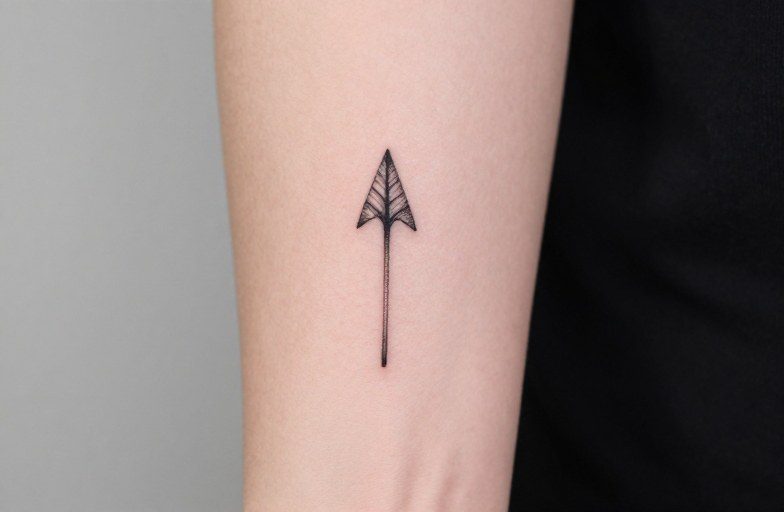
Minimalist Spiderman designs can work, but the threshold is higher than you’d think. A solid 2-inch minimum for the mask alone keeps the eyes from bleeding together into an unrecognizable blob. The classic red-and-black face, simplified to clean lines with no interior detail, ages best at this scale. Wrists, behind the ear, and ankle placements all accommodate this if your artist knows how to let negative space do the work. Avoid web lines below 3 millimeters, they spread and disappear.
Large-Scale Commitments
Full scenes, full-body Spiderman figures, or the mask integrated into larger compositions need real estate. A dynamic swinging pose reads properly starting at 5-6 inches tall; anything smaller compresses the limbs and loses the gesture. Thighs, ribs, and full upper arms give you the vertical or horizontal stretch for these. Back pieces allow for the most ambitious compositions, multiple characters, cityscape backgrounds, the full dramatic setup, but budget for multiple sessions and a healed touch-up.
Standout Design Ideas
The Mask as Icon
The eyes are everything. The specific shape, those sharp angular whites against the red field, carries instant recognition even without the rest of the face. Some of the strongest Spiderman tattoos isolate just the eyes, either as a standalone piece or emerging from shadows. This approach sidesteps the awkwardness of rendering a full human face in tattoo form, which ages poorly when small and requires exceptional technical skill when large. The mask also allows for symmetrical compositions: centered on the chest, mirrored on both forearms, or split across two hands (though hand tattoos fade fast and hurt more than most placements).
Action Poses vs. Static Portraits
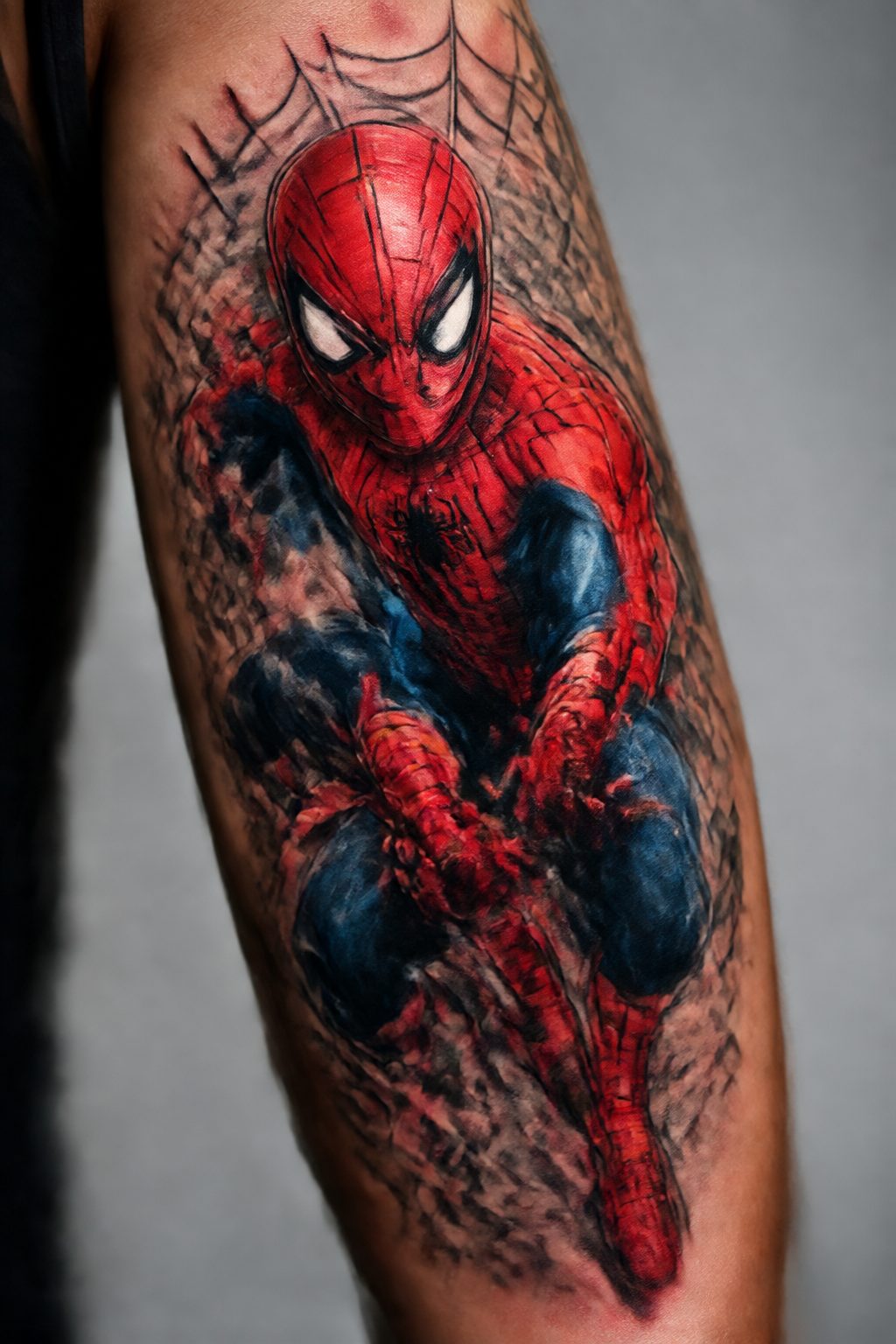
Dynamic poses, swinging, crouching on a gargoyle, mid-combat, leverage what tattoos do well: flow with the body’s movement. A crouching figure works with the curve of a shoulder or knee. A web-slinging diagonal composition follows the natural lines of a forearm or calf. Static portraits, the classic “head and shoulders” comic cover style, fight against the body. They work better as flat patches on broader surfaces: chest center, upper back, thigh front. Consider how the pose moves with you, not just how it looks on the stencil.
Popular Styles
Traditional and Neo-Traditional
Traditional American tattooing handles Spiderman surprisingly well. The bold black outlines, limited color palette, and graphic simplicity align with the character’s original 1960s design. Red, blue, black, yellow, no gradients needed. Neo-traditional allows for more detail in the webbing and more expressive eyes while keeping that structural backbone. These styles age predictably, which matters when you’re committing to a character whose appeal spans decades.
Blackwork and Dotwork
Stripping the color out changes the mood entirely. Blackwork Spiderman tattoos emphasize the graphic shape of the mask, the negative space of the eyes, the pattern of the web. Dotwork can render the texture of the suit or the atmospheric background of a city scene without the hard edges of traditional shading. These approaches suit placements where color might compete with existing tattoos or where workplace visibility is a concern. The tradeoff: you lose the immediate “Spiderman” recognition that the red-and-blue provides, so the design needs to be more iconic and less dependent on color coding.
- Black and grey realism: demands top-tier technical skill; the suit’s texture is hard to render without looking muddy
- Japanese-influenced: the spider motif fits naturally into existing iconography; works well as part of a larger sleeve or back piece
- Geometric/mandala: the web pattern translates directly; abstract but immediately readable to fans
- Trash polka: the chaotic energy matches the character; red and black splatter behind a clean mask silhouette
Color Choices
The Classic Palette
The specific red matters. True fire-engine red fades to pinkish-orange. Deeper crimson holds better but can read as brownish against some skin tones. Most experienced artists will mix a custom red, leaning slightly blue to account for the warm shift that happens during healing. The blue of the classic suit is equally specific, too bright and it competes with the red; too dark and it disappears into black. Test patches help, especially if you’re covering older work or working with melanated skin where color saturation behaves differently.
Alternative Colorways
The black suit (Venom/symbiote era) solves the color problem entirely, black and white, maybe a touch of silver highlight. Miles Morales’s black-and-red offers a modern variant that feels current without abandoning the core iconography. Spider-Gwen’s pink-and-white palette appeals to those wanting something outside the expected, though the lighter colors require more frequent refresh sessions. Iron Spider’s gold and red reads as premium but the metallic tones are notoriously hard to render in tattoo ink; what looks gold fresh often heals to mustard yellow.
For First-Timers
Placement That Makes Sense
First tattoo and you want Spiderman? The upper arm outer surface is your safest bet. Enough muscle and fat to sit well, easy to show or hide, and the cylindrical shape suits the mask or a small figure. Avoid ribs, feet, and hands for a first piece, the pain is sharper, the healing is fussier, and the long-term retention is worse. The forearm is popular but think about sleeve potential: a standalone Spiderman mask can anchor a future superhero-themed sleeve, or it can look isolated if you never expand.
What to Ask Your Artist
Bring reference from multiple eras of the character, not just one image. Ask specifically about line weight for the webbing, too fine and it disappears; too bold and it looks like a fishnet. Discuss how the red will heal on your particular skin tone. Request to see healed photos of similar color work from their portfolio, not just fresh tattoos. A good artist will push back on details that won’t translate; a bad one will stencil whatever you bring without that filter.
Trending Variations
Multiverse and Mashup Concepts
The multiverse explosion in film has opened design possibilities. Multiple masks overlapping, Tobey, Andrew, Tom, Miles, Gwen, create a generational piece that resonates differently depending on when you grew up with the character. The “spider-verse” glitch aesthetic, with its deliberate color separation and offset lines, translates to tattoo form as a technical challenge that skilled artists are actively exploring. These pieces work best at medium-to-large scale where the layering has room to read.
Negative Space and Integration
Some of the most interesting recent work integrates Spiderman imagery into larger compositions without making it the sole focus. The mask shape cut from a field of roses, the web pattern extending from an existing geometric piece, the eyes appearing in a smoke or cloud background. This approach suits collectors who want the reference without the “fandom tattoo” center-stage quality. It also ages more gracefully, the imagery becomes part of a larger visual vocabulary rather than a standalone piece that can feel dated if your relationship with the character shifts.
The Takeaway
A Spiderman tattoo that lasts starts with the eyes, literally and figuratively. The mask’s graphic power carries the design more than narrative detail ever could. Prioritize clean line structure over intricate rendering, choose color (or its absence) with healing in mind, and place it where your body will carry it well. The character has survived six decades of visual reinterpretation; your tattoo should be built to survive at least one.
Frequently Asked Questions
How much detail can I get in the web pattern before it blurs?
Keep web lines at least 2-3 millimeters thick, and space them wider than you’d think. The gaps between webs need to stay open after healing, which means the stencil version looks almost too sparse. Fine crosshatching in the web centers almost always disappears within two years.
Does the red ink really fade faster than other colors?
Red is actually one of the more stable tattoo colors, but the specific bright scarlet of Spiderman’s suit is tricky. It tends to warm-shift toward orange as it ages. A slightly deeper, bluer red mix heals closer to the intended color long-term.
Can I combine Spiderman with other Marvel characters in one piece?
Absolutely, but composition matters more than character selection. The visual weight of each figure needs balance, Spiderman’s red suit dominates, so pair with characters who have darker or simpler color schemes to avoid chaos. Black Panther, Daredevil, or Venom work better than Iron Man or Captain Marvel in the same frame.
What’s the most overrated placement for a Spiderman tattoo?
The hand. The mask on the back of the hand gets suggested constantly because of the “web-shooter” logic, but hand skin sheds and regenerates faster than almost anywhere else. You’ll be looking at a faded, patchy refresh within three years, assuming it heals well at all.