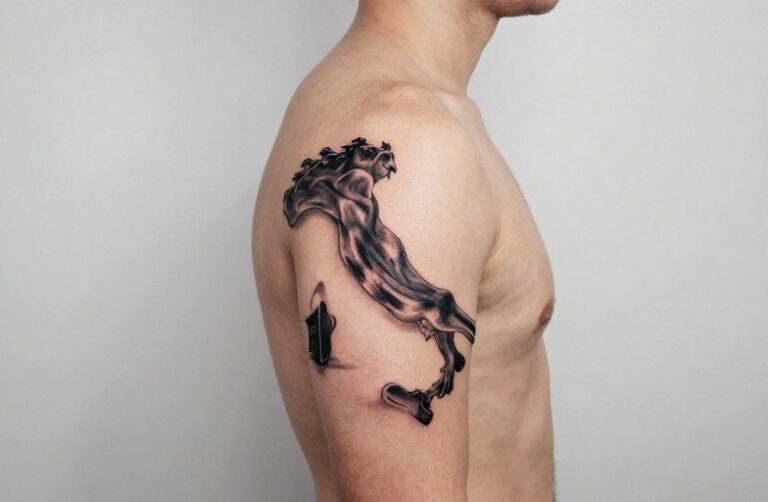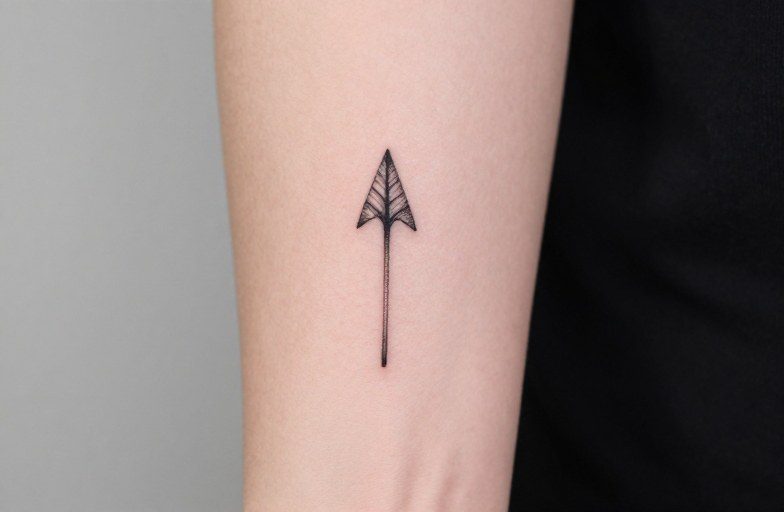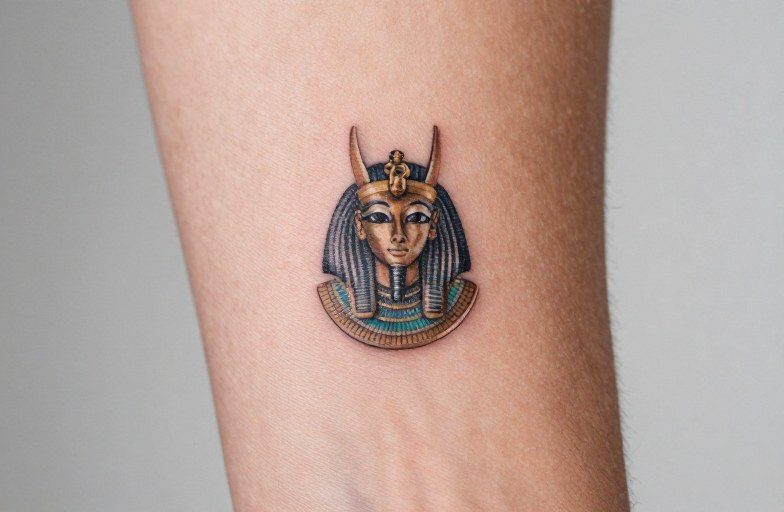
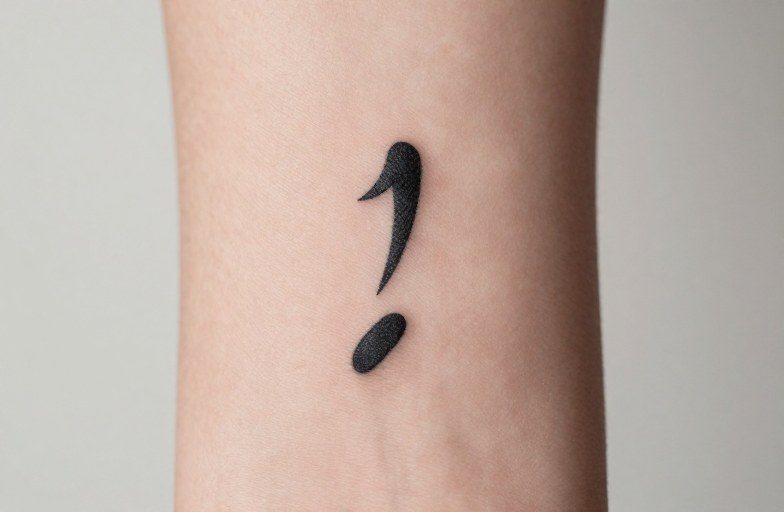
A minimalist semicolon tattoo strips the design down to its absolute essentials: a dot, a comma, and the space between. No flourishes, no heavy shading, just the punctuation mark itself in clean, deliberate ink. The appeal is obvious, it’s small, it’s readable at a glance, and it carries weight without shouting. But getting it right takes more thought than the simplicity suggests. Line weight, placement, and how that thin black ink will settle over five or ten years all matter more when there’s nowhere for errors to hide.
For First-Timers
Why This Design Works for Beginners
Minimalist semicolons are genuinely forgiving entry points. The session runs ten to twenty minutes, the pain stays manageable on most placements, and the cost rarely breaks the hundred-dollar mark at a reputable shop. You’re not committing to hours under the needle or weeks of healing a large piece. That said, the simplicity is a double-edged sword. Every line must be crisp because there’s no surrounding detail to distract from a wobble or blowout.
- Stick to black ink for your first, color adds variables you don’t need yet
- Book a consultation even for something this small; good artists will want to stencil and adjust
- Ask to see healed photos of their fine-line work, not just fresh tattoos
What the Symbol Actually Represents
The semicolon tattoo is often linked to Project Semicolon, a mental health awareness movement started in 2013. The grammatical metaphor, an author choosing to continue a sentence rather than end it, resonates broadly. Some wear it for personal survival, others for lost friends, others simply for solidarity. The meaning is genuinely varied, and that’s worth knowing before you field questions about yours.
Tips for Choosing
Finding the Right Artist
Not every tattooer excels at minimalist work. Bold traditionalists who blast solid saturation all day may not have the needle control or patience for hair-thin lines. Look for portfolios with healed fine-line pieces, consistent dotwork, and straight edges that haven’t blurred. Ask specifically how they handle the semicolon’s two distinct elements, the compact dot and the extended comma curve, since each requires slightly different technique.
Placement That Lasts
Fingers and sides of hands are popular but notoriously high-maintenance. The skin there sheds and regenerates rapidly, taking ink with it. Inner wrists hold better but see constant friction from desks and keyboards. Behind the ear, the nape of the neck, and the outer ankle offer cleaner canvas with less daily abrasion. For maximum longevity, consider the upper outer arm or the ribcage, areas with stable skin and minimal stretching over time.
- Avoid direct palm or sole placement; these reject ink almost universally
- Inner bicep ages well but may distort with significant muscle growth
- Collarbone and sternum look striking but hurt more due to thin skin over bone
Color Choices
Black remains the standard for good reason. Carbon-based black ink ages predictably, maintains contrast against all skin tones, and doesn’t shift hue as it settles. Some artists offer “warm black” or “cool black” variants, subtle undertones that read differently in natural light. These can work but require a light hand; oversaturated warm black can read brownish after healing.
Color semicolons exist, typically in soft watercolor backgrounds or as the mark itself in muted teal, lavender, or coral. These demand more technical skill and fade faster. If you want color, consider limiting it to a small gradient wash behind a black semicolon rather than coloring the symbol itself. White ink semicolons are essentially invisible on lighter skin and yellow unpredictably on darker complexions, generally not worth the gamble.
Trending Variations
Geometric and Structural Twists
Some artists are integrating the semicolon into minimalist geometry, thin triangles framing the mark, the dot replaced by a tiny hexagon, or the comma extended into a subtle crescent. These work best when the geometry serves the symbol rather than overwhelming it. A single unbroken line forming both semicolon and surrounding shape shows serious technical craft but requires an artist with steady hands and precise planning.
Floral and Nature Integration
Delicate stems emerging from the comma, tiny leaves replacing the dot, or the entire mark formed from a single continuous vine line. These hybrid designs retain the semicolon’s recognizability while adding personal visual interest. The key restraint: the punctuation must still read instantly. If someone needs to study it to identify the symbol, the integration has gone too far.
- Single-needle technique produces the finest lines but requires longer sessions
- Negative space designs, skin as the semicolon, ink as background, age poorly and blur unpredictably
- Micro semicolons under 1cm tall often blow out within two years; aim for at least 1.5cm in height
Size & Scale
There’s a persistent myth that smaller tattoos are easier. In reality, extremely fine lines demand more skill, not less. The semicolon’s dot must remain distinct from its comma; at too small a scale, the two merge into an unreadable blob as ink spreads naturally in the dermis. Minimum recommended height is roughly 1.5 centimeters, with 2cm offering safer longevity.
Scaling up has its own challenges. A large minimalist semicolon, say, 4cm or more, can look oddly isolated, like punctuation floating without a sentence. Some artists address this by adding subtle context: a whisper-thin baseline, faint paper-texture shading, or strategic placement where the body’s natural lines suggest continuation. The mark should feel intentional at whatever scale you choose.
Matching & Pairing Ideas
Complementary Symbols
Semicolons pair naturally with other literary or mental-health-adjacent imagery. A tiny open book, a single quotation mark, or a minimalist brain silhouette can create dialogue between tattoos without clutter. The ampersand is a frequent companion, symbolizing continuation and connection. Keep companion pieces in matching line weight and style, mixing a fine-line semicolon with a bold traditional ampersand creates visual dissonance.
Matching Sets
Couples, friends, or family members sometimes get matching semicolons, each with subtle individual variation: one in black, one in deep blue; one on the wrist, one on the ankle; one plain, one with a single leaf. The shared base connects the set while the variations honor individual identity. Be cautious with romantic partner matching, tattoos outlast many relationships, and the semicolon’s meaning can become complicated if the bond sours.
- Coordinate placement so the tattoos “face” each other when you’re together
- Consider getting them from the same artist in the same session for stylistic consistency
- Avoid adding names or dates; the semicolon already carries sufficient personal weight
The Bottom Line
A minimalist semicolon tattoo succeeds or fails on execution details invisible to most clients until it’s too late. The gap between dot and comma. The taper of the comma’s curve. The exact saturation that keeps black reading as black rather than gray after healing. Choose your artist with scrutiny disproportionate to the design’s apparent simplicity. Prioritize placement that respects how you actually live and move. Accept that even perfect fine lines will soften slightly over decades, that’s not failure, just the nature of living ink. What remains is the choice you made: to continue, to mark the pause, to carry the symbol forward.
Frequently Asked Questions
How much does a minimalist semicolon tattoo typically cost?
Most reputable shops charge between $80 and $150 for a small, clean semicolon, though minimum shop fees in major cities may push this higher. Price reflects setup, sterilization, and the artist’s time, not just the simplicity of the design.
Will a fine-line semicolon tattoo fade quickly?
Fine lines do soften faster than bold work, but proper placement on low-friction skin and consistent sun protection can keep a semicolon readable for many years. Expect a touch-up or refresh after five to eight years.
Can I get a semicolon tattoo if I haven’t personally struggled with mental health?
Many people wear semicolons in solidarity with loved ones or as general support for mental health awareness. The symbol has broadened beyond its original specific context, though being prepared to explain your personal connection is worthwhile.
What’s the best aftercare for a tiny minimalist tattoo?
Follow your artist’s instructions precisely, usually thin layers of fragrance-free moisturizer, no picking at scabs, and keeping it out of soaking water for two weeks. Small tattoos heal faster but are equally prone to infection if neglected.