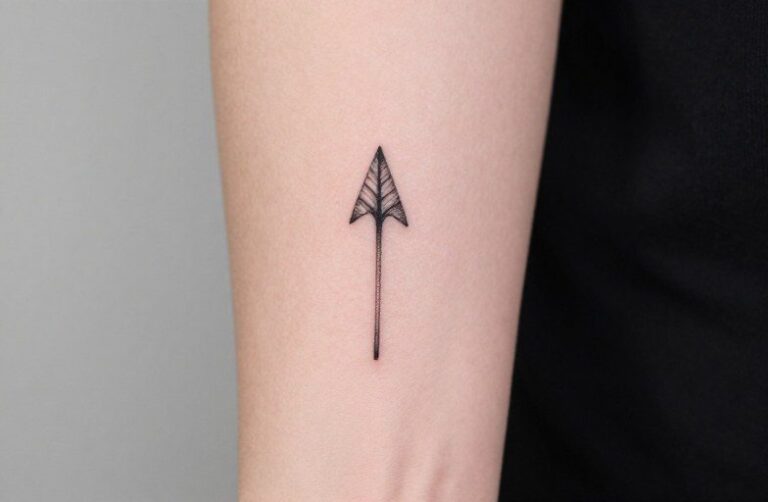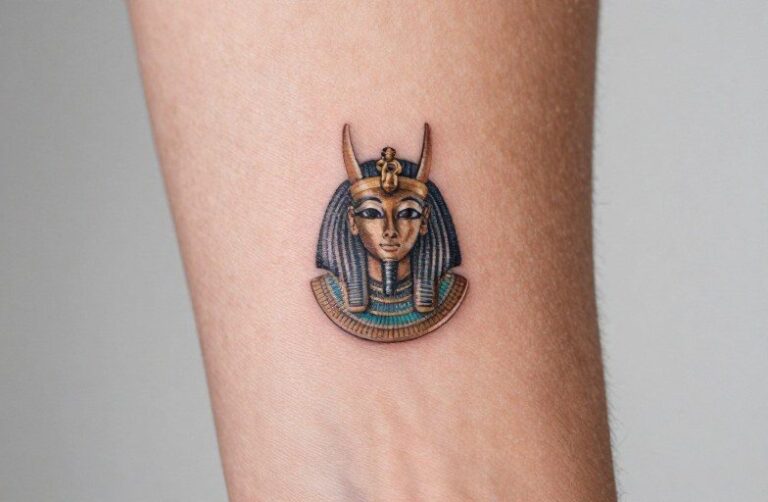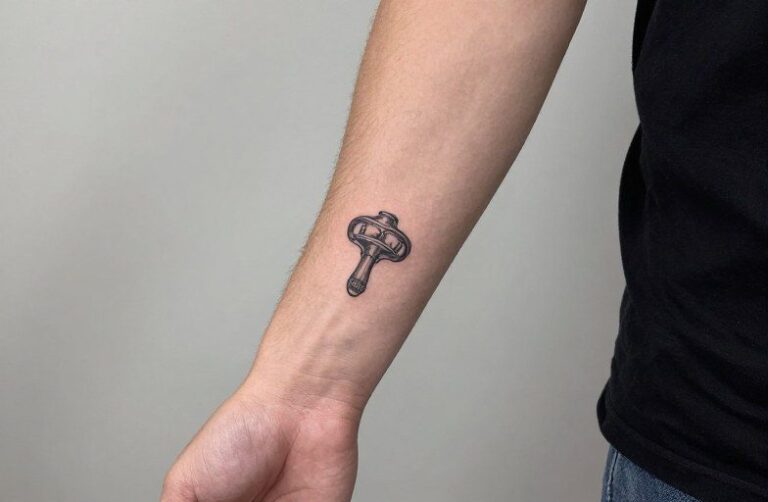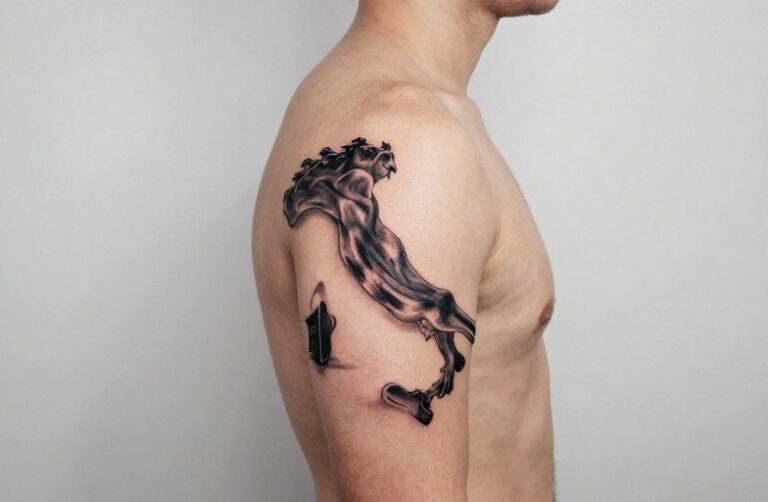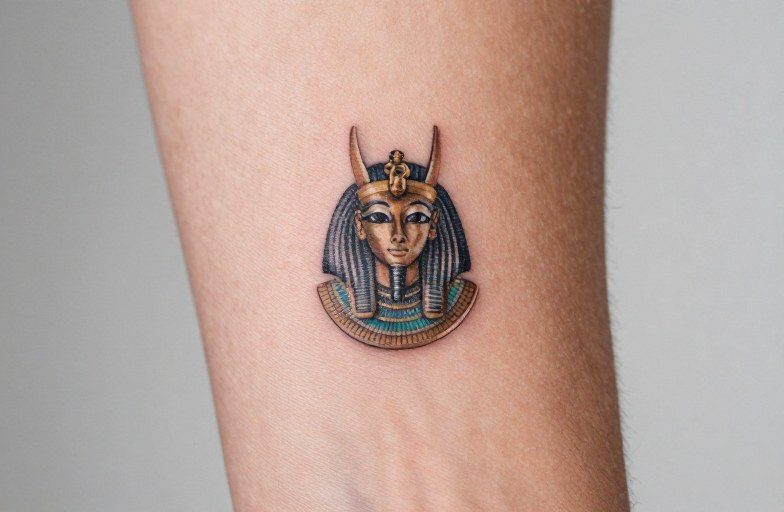
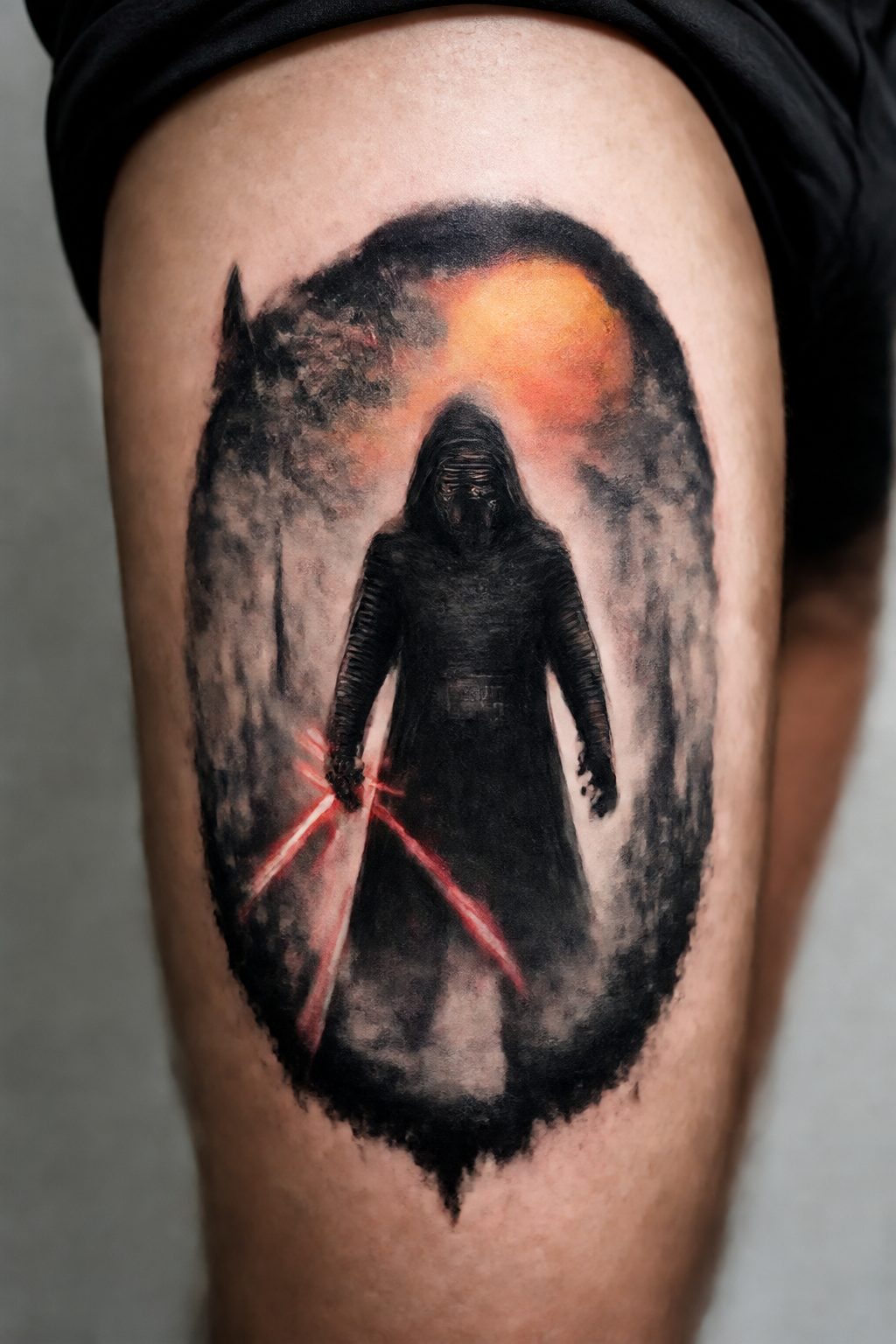
A Star Wars tattoo means whatever specific symbol you choose from the franchise’s visual language. The Rebel Alliance starbird signals resistance against oppression; the Jedi Order emblem represents discipline and moral struggle; the Mandalorian mythosaur skull speaks to belonging through creed rather than blood. These aren’t generic “fandom” marks, they’re shorthand for particular values that resonated across forty years of storytelling.
Who Chooses This Tattoo
Walk into any shop in a college town or convention city and you’ll spot Star Wars flash on the walls. The people who actually sit for these pieces usually fall into distinct camps, and the placement and style choices split cleanly between them.
The Lifelong Fans
Grown adults who grew up with the original trilogy or prequels tend to choose smaller, more integrated pieces. A Rebel starbird behind the ear, a lightsaber hilt running parallel to the forearm’s inner edge, the Imperial cog tucked into a larger sleeve. These collectors often want the symbol recognized by fellow fans without screaming “costume” to everyone else. They’ll ask for muted color palettes, weathered bronze, oxidized silver, the particular blue-grey of aged Rebel flight suits.
The New Generation
Younger clients drawn in by The Mandalorian or Andor gravitate toward different iconography. The mudhorn signet, the Mythosaur skull, the New Republic seal. These pieces often land on more visible real estate: outer forearm, calf, shoulder cap. The aesthetic leans cleaner, sharper lines, less faux-aging. There’s less concern about hiding the reference; the shows themselves have made certain symbols culturally legible beyond hardcore fandom.
Personal & Modern Meanings
Meaning in these tattoos operates through specific visual grammar, not vague “I like the movies” sentiment. Each symbol carries loaded associations that clients consciously activate.
- Rebel Alliance starbird: Resistance, underdog positioning, chosen opposition to institutional power. Often requested by people in activist circles, union organizers, or those who’ve left controlling family structures.
- Jedi Order emblem: Self-discipline, emotional regulation, service to something larger. Popular with recovering addicts, military veterans transitioning to civilian life, and martial artists.
- Imperial/First Order insignia: Order, structure, unapologetic ambition. Less common, but when chosen it’s usually by people in high-stakes competitive fields who want the aesthetic without the political baggage, though that baggage is real and worth considering.
- Mandalorian mythosaur: Found family, identity through action rather than origin, the creed above blood. Huge among adopted children, foster care alumni, and people who’ve built chosen families.
- Binary sunset / twin suns: Longing, the horizon as possibility, restlessness. Often paired with landscape elements, placed on ribs or thigh where the curve of muscle can suggest the arc of a planet.
The duality built into the franchise, light and dark, Empire and Rebellion, nature versus machine, lets people encode personal conflict without spelling it out. A split lightsaber, one blade blue and one red, can represent internal division without requiring explanatory text.
How It Ages on Skin
Star Wars iconography presents specific aging challenges that differ from floral or script work. The geometric precision that makes these symbols recognizable is also what betrays sloppy application or poor aftercare.
Line-Heavy Symbols
The Rebel starbird, Imperial cog, and Jedi emblem are essentially line drawings. Thin lines blur over five to ten years, especially on high-movement areas like wrists, inner biceps, or anywhere near a joint. A starbird done at single-needle weight on a wrist will feather into indistinct geometry within a decade. Better to start slightly bolder than you think, 0.35mm to 0.5mm minimum for symbols under two inches.
Shading and Color Saturation
Metallic effects, chrome lightsaber hilts, weathered Mandalorian armor, depend on contrast between black shading and negative space. That negative space closes up as skin changes. A “chrome” effect that reads brilliantly fresh will flatten to muddy grey in older work. The fix: heavier black anchors, more distinct highlight zones, accepting that the piece will read more “illustrated” than “photoreal” over time.
Blues and reds from the films age differently. The particular lightsaber blue tends to hold better than the Sith red, which often shifts toward brown or purple as the red pigment breaks down. Yellow and green saber colors are notoriously unstable; expect significant fading within three years without touch-ups.
Similar & Related Symbols
Star Wars iconography sits within a broader visual tradition of geometric resistance symbols and military insignia. Understanding these connections helps clarify what you’re actually asking for.
The Rebel starbird shares DNA with the phoenix rising, both signal rebirth through destruction, and with certain historical resistance emblems that used star or bird motifs. The Imperial cog echoes actual totalitarian design language from the 1930s, which is why it reads immediately as “oppressive force” even to people who’ve never seen the films. The Jedi emblem’s seven-winged star resembles certain contemplative religious orders’ symbols, which is almost certainly intentional in the design’s film development.
Clients sometimes cross these with unrelated symbols that share visual or thematic weight. The Rebel starbird paired with actual historical resistance imagery can work if the scale and style match. Mixing Star Wars geometry with organic Celtic knotwork usually fails, the design languages fight each other. The Mandalorian skull alongside actual Norse or Germanic runes reads as confused rather than layered; the visual registers are too similar but culturally distinct.
Design Tips & Pairings
Successful Star Wars tattoos succeed or fail on placement logic and scale discipline. These are designed symbols, meant to read at specific sizes in their original context.
Placement That Works
Symbols like the starbird or cog function as badges, chest over heart, shoulder cap, outer forearm. They need flat or gently curved canvas to preserve their geometry. The twin suns landscape needs horizontal real estate: across the upper back, wrapping the outer thigh, or spanning the chest. Lightsaber hilts work best running with the long axis of a limb, never across it; the cylindrical form collapses visually when compressed horizontally.
Complementary Elements
Text pairings are risky. “May the Force be with you” in script beneath a symbol reads as poster design, not tattoo. Better integration: Aurebesh (the written galactic language) as background texture, illegible to most viewers but meaningful to the wearer. Weathering effects, scratches, carbon scoring, patina, can ground a symbol in imagined history, but overdone they become busy noise.
Color restraint matters. A full-color X-wing dogfight makes a great painting, terrible tattoo at under six inches. Single-color saber glow with surrounding black and grey is the sustainable choice. The red-and-black Sith palette ages better than full Jedi color spectrum; limited palettes hold cohesion as pigments shift.
History & Cultural Roots
The symbols themselves have production histories that affect their tattoo afterlife. The Rebel starbird was designed by concept artist Joe Johnston for the original 1977 film, often linked to stylized bird-in-flight imagery from World War II squadron insignia. The Imperial insignia drew from actual fascist geometry, deliberately, to trigger immediate visual recognition of authoritarian threat.
The Mandalorian mythosaur skull emerged later, from expanded universe materials and then The Mandalorian series, where it became central to a culture defined by adoption and found identity. This gives it a different cultural weight than the film-era symbols, less nostalgia, more active contemporary meaning.
The Jedi emblem, seven wings radiating from a central point, is commonly associated with contemplative traditions and monastic orders across multiple cultures, though its specific film design is original. This layered recognition, familiar but not directly traceable, helps it function as a personal symbol without requiring explanation.
These symbols have moved through forty years of cultural appropriation, parody, and reclamation. What read as straightforward good-versus-evil in 1977 now carries more complicated associations: the Rebellion’s own moral compromises, the Jedi order’s failures, the Empire’s banality. Modern tattoos often activate this complexity rather than simple heroism.
The Bottom Line
A Star Wars tattoo works when you choose a specific symbol for its loaded meaning, place it where the geometry holds, and accept the aging characteristics of the style. It fails when treated as generic “fandom expression” without visual discipline. The franchise’s visual language is robust enough to carry genuine personal significance, resistance, discipline, found family, internal conflict, but only if you engage with the specific symbol, not the general idea of liking the movies. Pick the mark that names something real in your life, size it for the placement, and let the reference speak for itself without explanatory text.
Frequently Asked Questions
Will a Rebel Alliance tattoo be mistaken for a political statement?
The starbird reads immediately as Star Wars to anyone under fifty, but older viewers or those outside Western pop culture might not recognize it. If you work in politically sensitive environments, placement matters, visible wrist or hand placement invites questions that a shoulder or rib piece avoids.
How small can a lightsaber hilt tattoo be before detail is lost?
Below two inches, the activation switch, grip texture, and emitter details collapse into indistinct lines. For reference, a real lightsaber prop hilt is roughly eleven inches long; scaling below 20% of that loses readability. Three to four inches is the practical minimum for recognizable detail.
Can you mix Star Wars symbols with traditional tattoo styles like Japanese or American Traditional?
Mixing genres usually fails because Star Wars iconography is clean geometric design, while traditional styles rely on organic flow and established color rules. The mythosaur skull can work in American Traditional if simplified to bold lines and limited color, but detailed film-accurate symbols clash with traditional conventions.
Do color lightsaber tattoos need touch-ups more often than black and grey?
Red and blue hold reasonably well, but green and yellow fade significantly faster due to pigment chemistry. White highlights for saber glow almost always disappear within two to three years, requiring replacement with light grey or pale blue to maintain the effect.