Small side finger tattoos can look crisp for years when you choose a readable mark, respect the skin, and accept that fingers need more care than an arm. I’ve learned that after rushing a tiny piece and watching the line soften. These ideas keep the placement personal and expressive without turning a private symbol into a crowded statement.
- Small Side Finger Tattoos With Fine-Line Hearts: The Heartline Rule
- Draw a Botanical Stem With the Stemline Method
- Crescent Moon Side Finger Ink: Would You Keep It Private?
- Choose Initials Along the Finger Side
- Let a Snake Curve Through the Coilline Test
- Small Side Finger Tattoos With Tiny Stars: The Three-Point Rhythm
- Blackwork or Fine Line? Apply the Saturation Rule
- Match Meaning, Not Every Detail
If you’re deciding between a heart, moon, initial, or geometric mark, start with the symbol that still matters when nobody else sees it. You’ll find useful comparisons in these small inside finger tattoos before you book.
- Small Side Finger Tattoos With Fine-Line Hearts: The Heartline Rule
- Draw a Botanical Stem With the Stemline Method
- Crescent Moon Side Finger Ink: Would You Keep It Private?
- Choose Initials Along the Finger Side
- Let a Snake Curve Through the Coilline Test
- Small Side Finger Tattoos With Tiny Stars: The Three-Point Rhythm
- Blackwork or Fine Line? Apply the Saturation Rule
- Match Meaning, Not Every Detail
- Choose a Short Script Word With the Letterform Test
- From Stencil to Healed: Keep the Miniature Mark Readable
- Geometry With the Negative-Space Grid
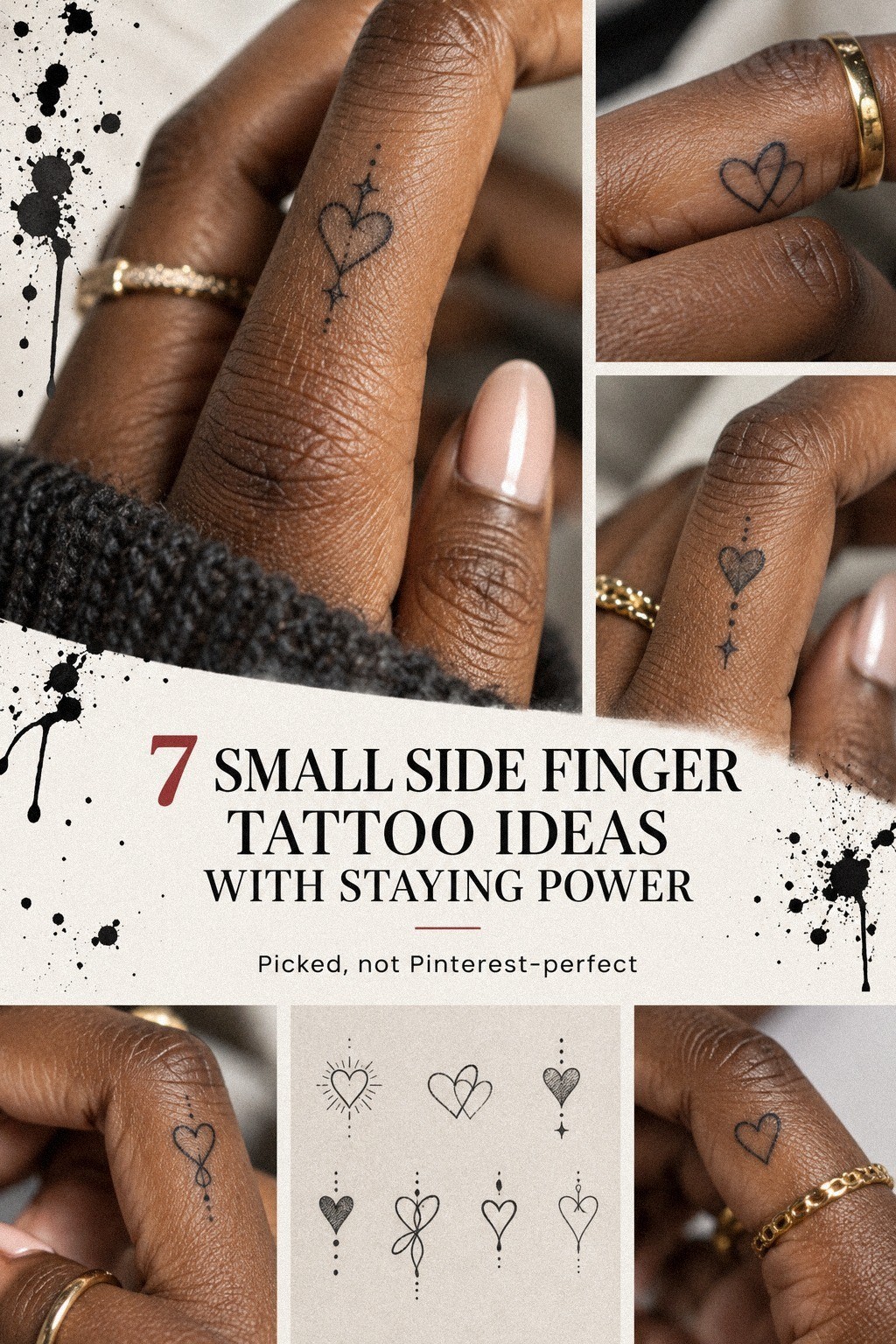
1Small Side Finger Tattoos With Fine-Line Hearts: The Heartline Rule
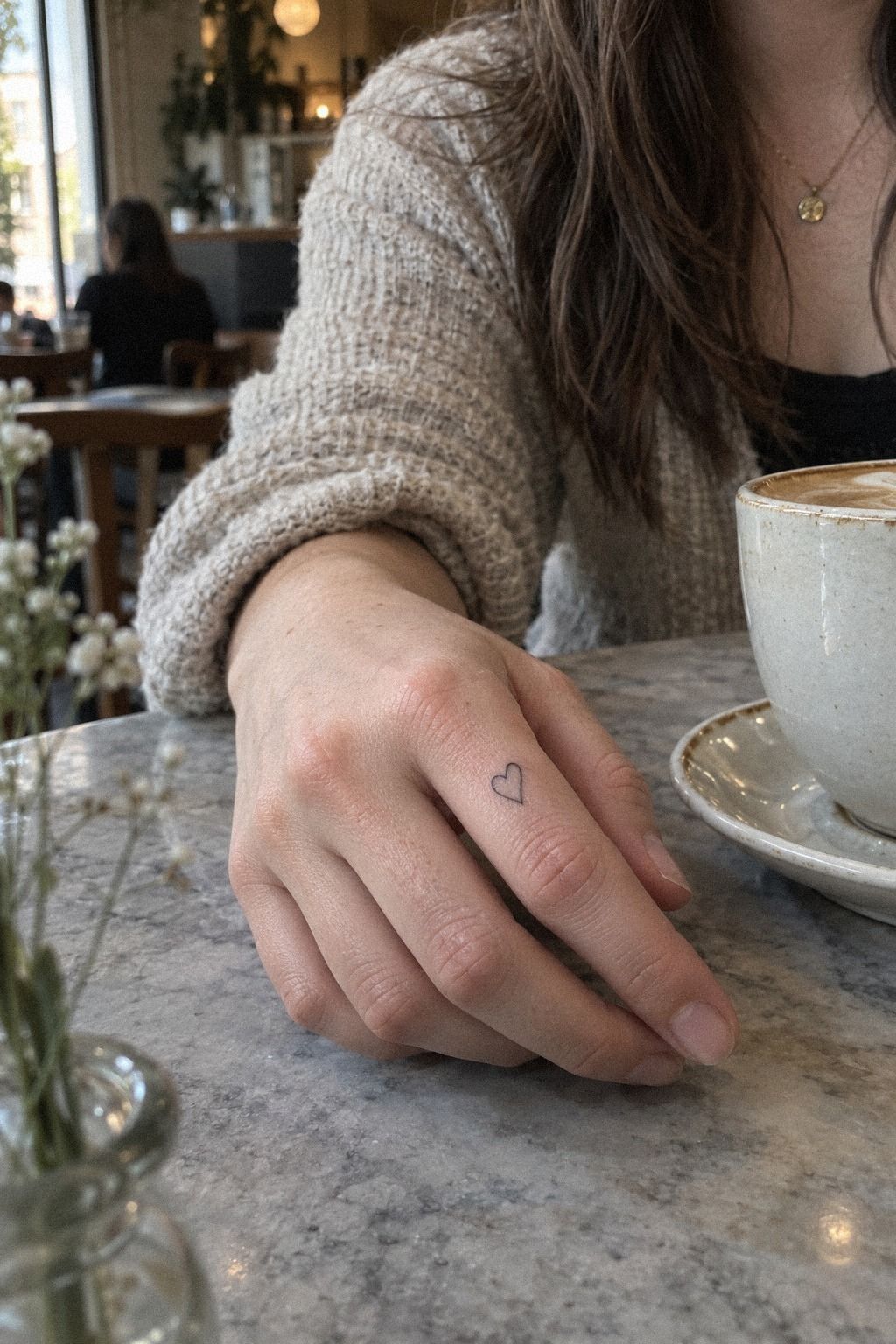
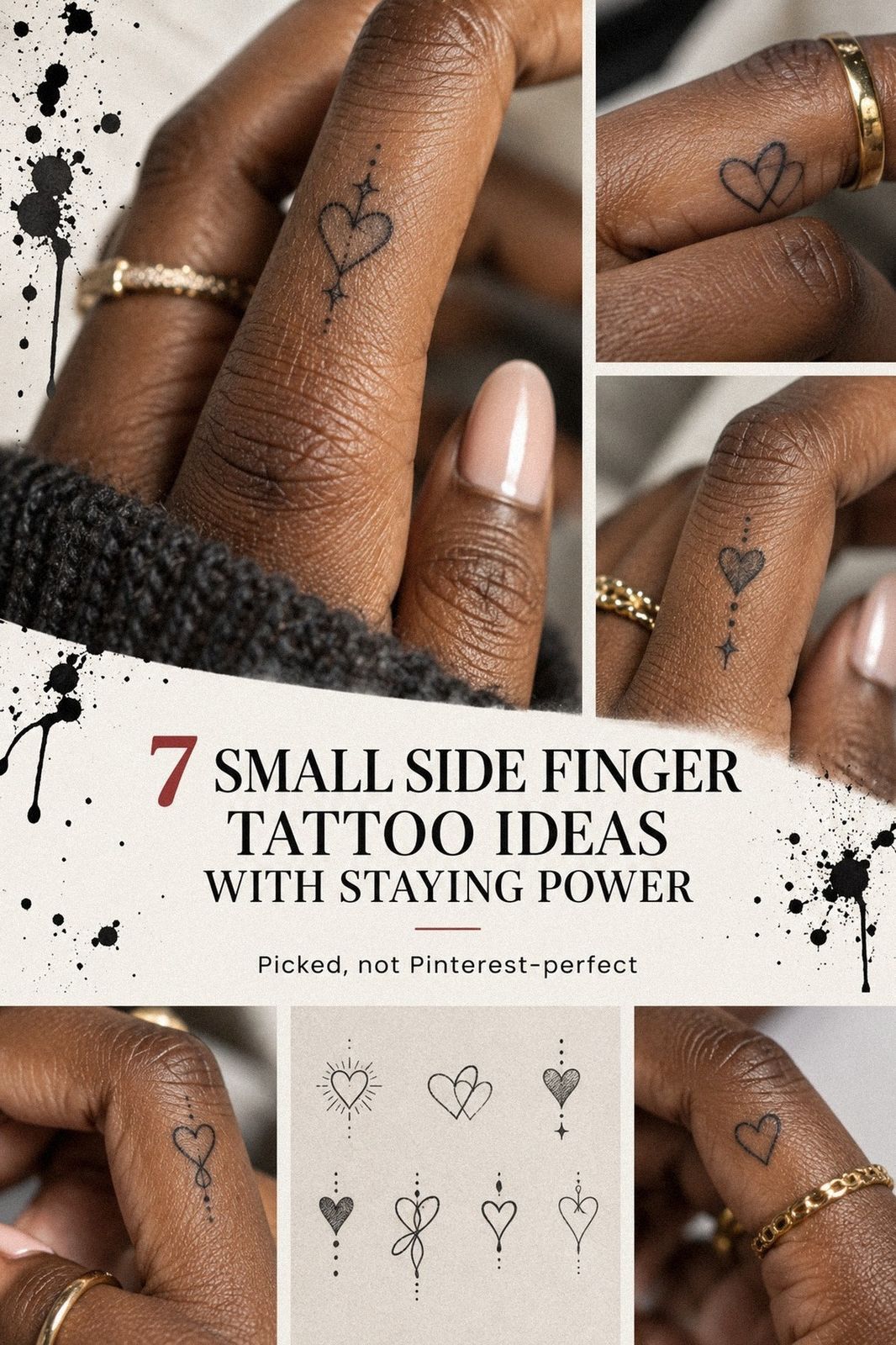
A fine-line heart is delicate without being vague, especially when the outline stays open and the shape has enough breathing room. You’ll want your artist to place it along the finger side rather than wrapping it too tightly, because your hands move constantly. A small heart can represent love, grief, friendship, or self-respect without spelling out the whole story.
My opinion is firm: skip a detailed heart with interior shading. It’ll become muddy faster than a clean outline, and you don’t need extra ink to make the symbol symbolic. One single-needle outline and a clean point at the base are enough to make the design feel intentional.
Keep your reference image close during the consultation, but let your artist redraw it for your finger. I’d ask for a stencil first, then check the angle with your hand relaxed and curled. If you’re comparing nearby placements, browse this guide to small tattoos with meaning before you decide.
The best version feels understated and romantic without needing a decorative border, bright color, or extra initials. A clean outline gives you a meaningful result without paying for detail that may not age well on moving skin.
Your artist may suggest a modest adjustment to the heart’s width or point, and you shouldn’t treat that as a loss. It’s how the mark stays readable when your skin bends. That little compromise is worth it!
2Draw a Botanical Stem With the Stemline Method
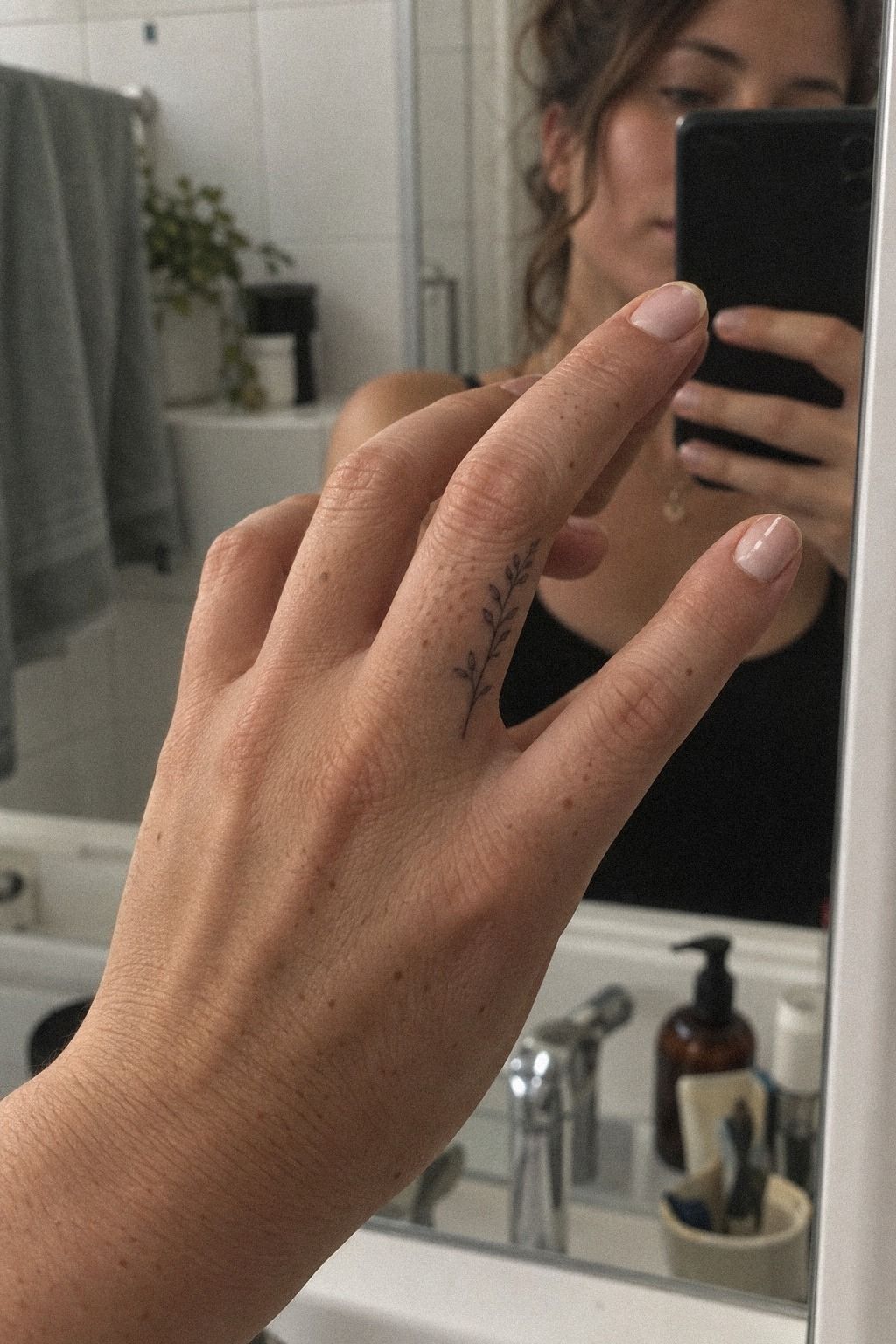
Tiny botanical ink works when the plant has a recognizable silhouette rather than a crowded collection of leaves.
3Crescent Moon Side Finger Ink: Would You Keep It Private?
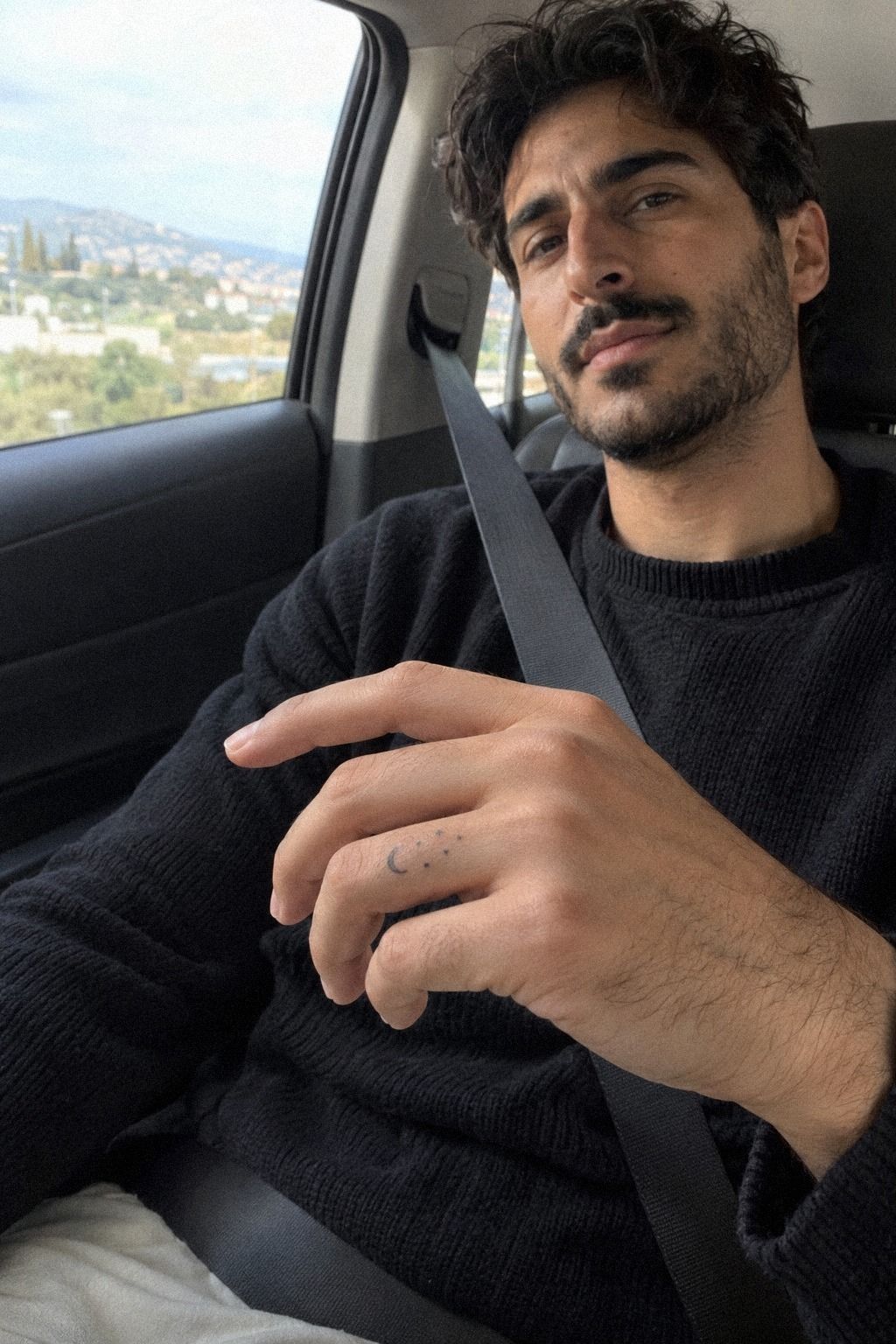
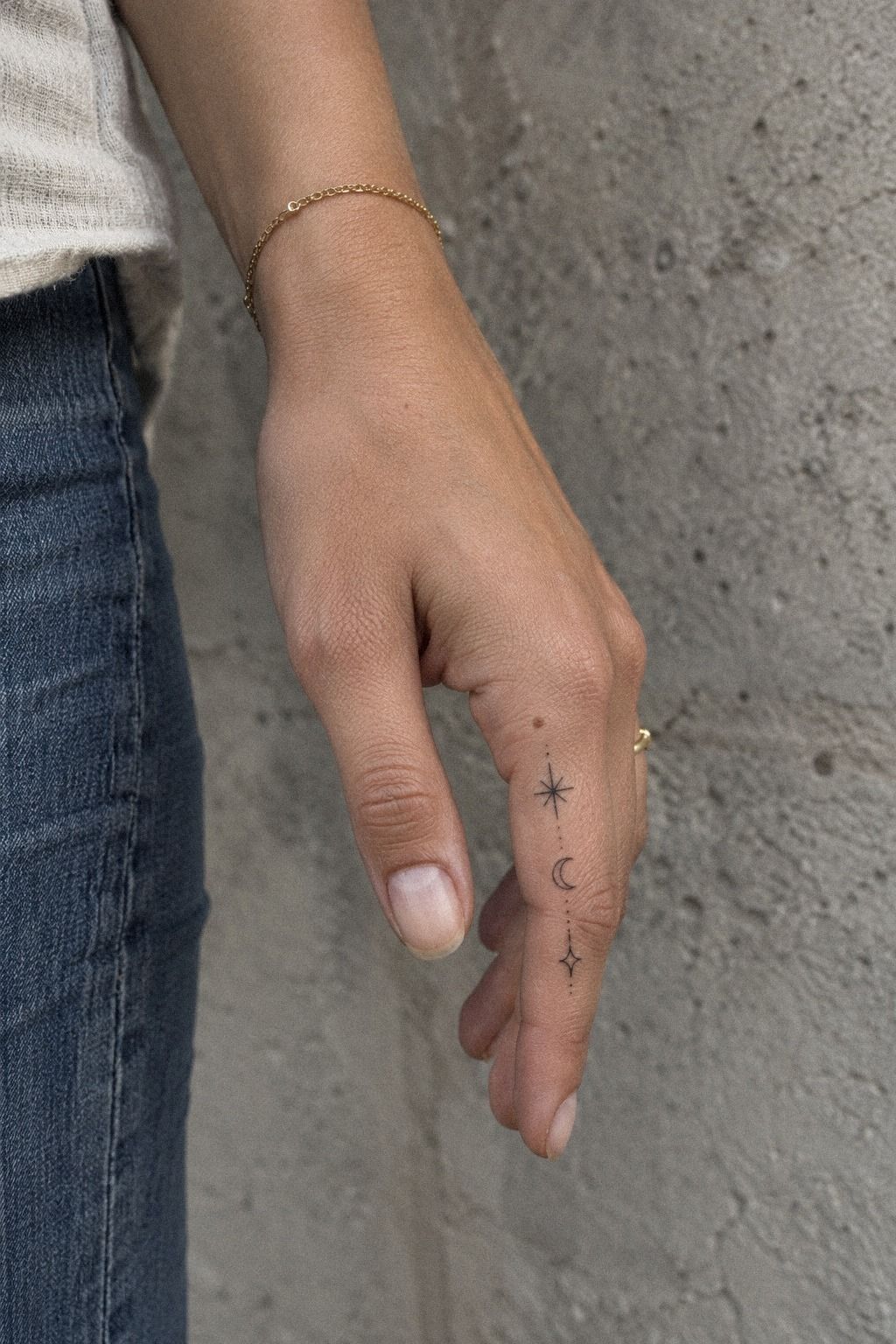
A crescent moon gives you a minimal symbol that still has movement. The side placement makes the mark feel almost hidden when your hand rests naturally. You’ll notice the design without having to announce it, which can make the choice feel more sacred and personal.
I’d keep the stars uneven in size and spacing. A perfectly repeated row can look stiff, while three or four varied points feel more expressive and celestial. The crescent stencil should follow the finger’s length, not sit sideways like a sticker.
Would you rather have every star visible, or let one fade into the curve? That’s the useful question. If you’re choosing between a moon and another small symbol, read this small tattoos meaning guide and notice which idea still matters when the trend disappears.
Don’t ask for pale gray just to make the tattoo seem softer. Black linework will usually give your artist a clearer structure, and the final mark can still look elegant. You can keep the design understated without making it fragile.
The artist may alter the star count after checking your finger in motion. That’s smart.
Your hand isn’t flat paper, and the negative space needs to survive both a relaxed pose and a clenched fist. If the design still feels meaningful after a few weeks of thought, it may be worth the price.
4Choose Initials Along the Finger Side
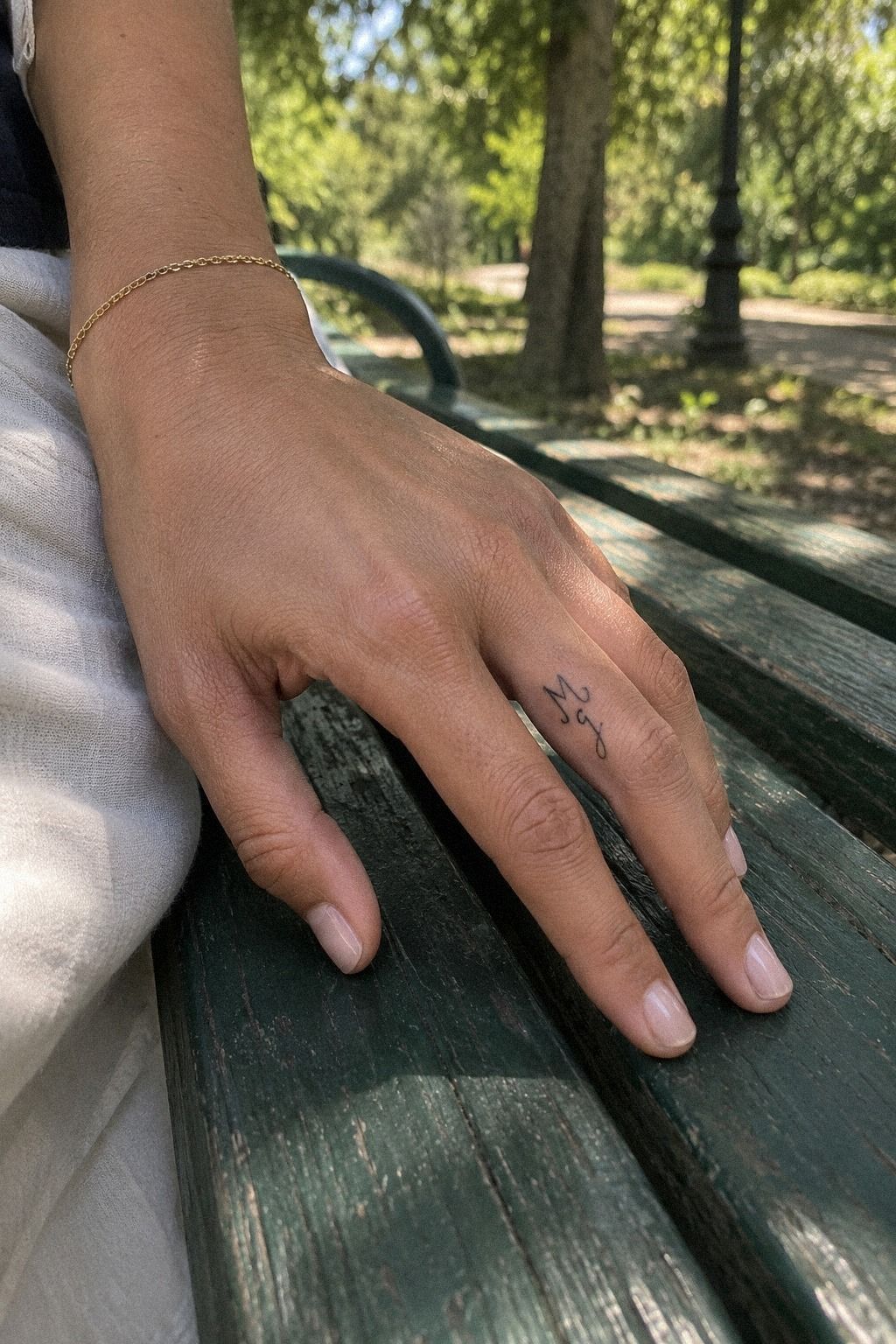
Initials are meaningful because they can belong to one person, several people, or a version of you that nobody else recognizes.
5Let a Snake Curve Through the Coilline Test
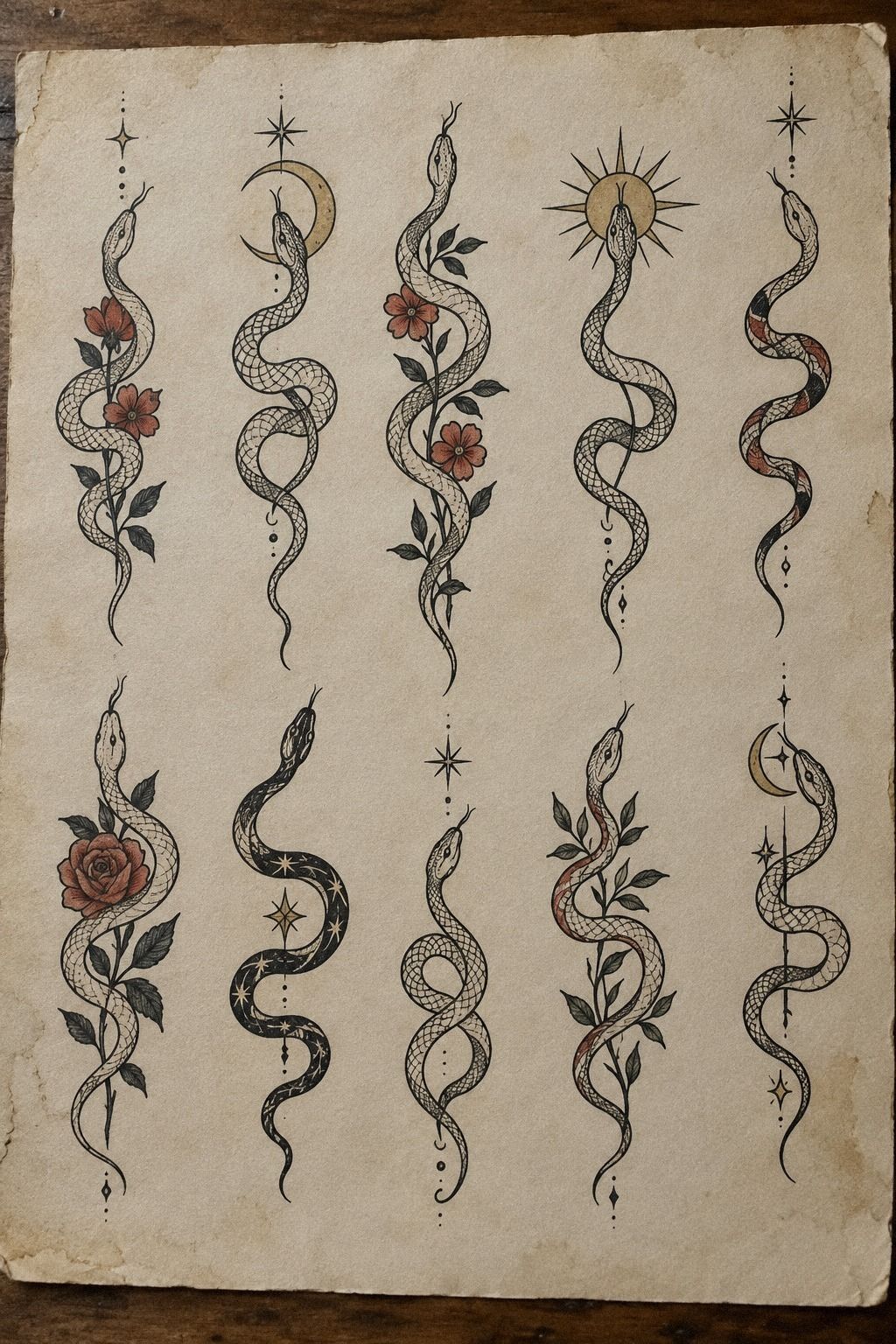
A snake works best when the body has one confident curve and the head remains readable. The design can feel fierce or edgy without needing scales across every inch. A curved snake line usually has better long-term value than a miniature illustration packed with texture.
I’d keep the body slightly open rather than forcing a complete coil around the finger. A closed loop may look clever in a stencil, but movement can compress the shape and make the head harder to identify. If you want more impact, enlarge the head slightly instead of adding more internal lines.
Ask your artist where the eye, jaw, and tail will land when your finger bends. Those landmarks matter more than decorative scales. A reference collection of small finger tattoo ideas can help you compare readable silhouettes before you commit.
The snake can look ornate through posture and line rhythm, even when the interior stays open. A forward-moving curve feels daring, while a resting curve feels more personal. I’d rather spend money on a strong silhouette than pay for detail that disappears during healing.
A short consultation should settle the direction. Your artist may redraw the head, open the coil, or shift the tail by a few millimeters. That’s a smart call when the mark has to move with you.
6Small Side Finger Tattoos With Tiny Stars: The Three-Point Rhythm
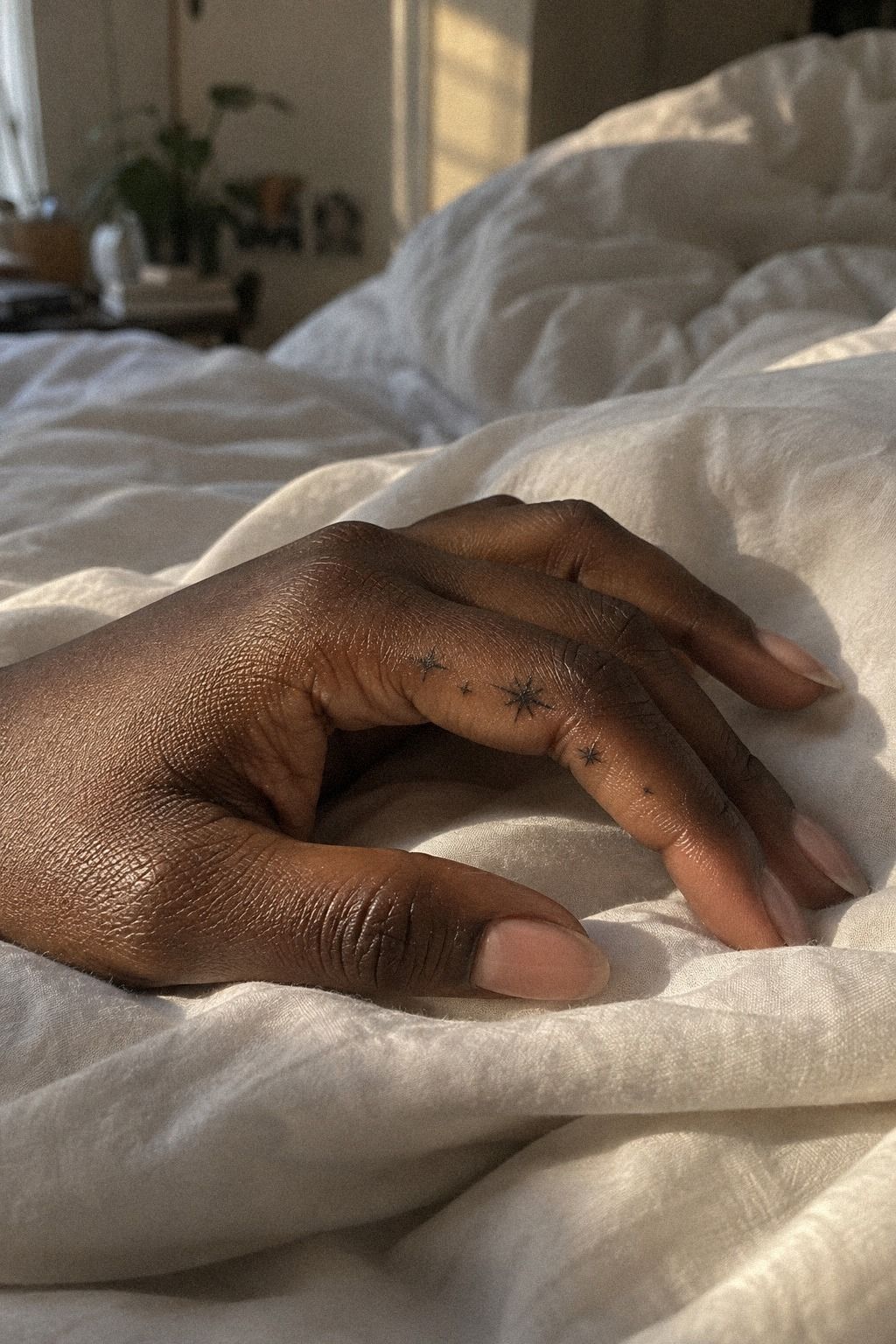
Tiny stars are playful when they’re arranged with purpose. Three or four marks with a clear scale change will feel more intentional than a cloud of dots. A black star cluster can hold its shape better than a barely-there gray mark, especially in a placement that sees frequent hand movement.
I’d avoid scattering stars randomly. Give each point its own breathing space, then check whether the group still reads when your finger curls. The strongest version often uses one larger star and two smaller companions.
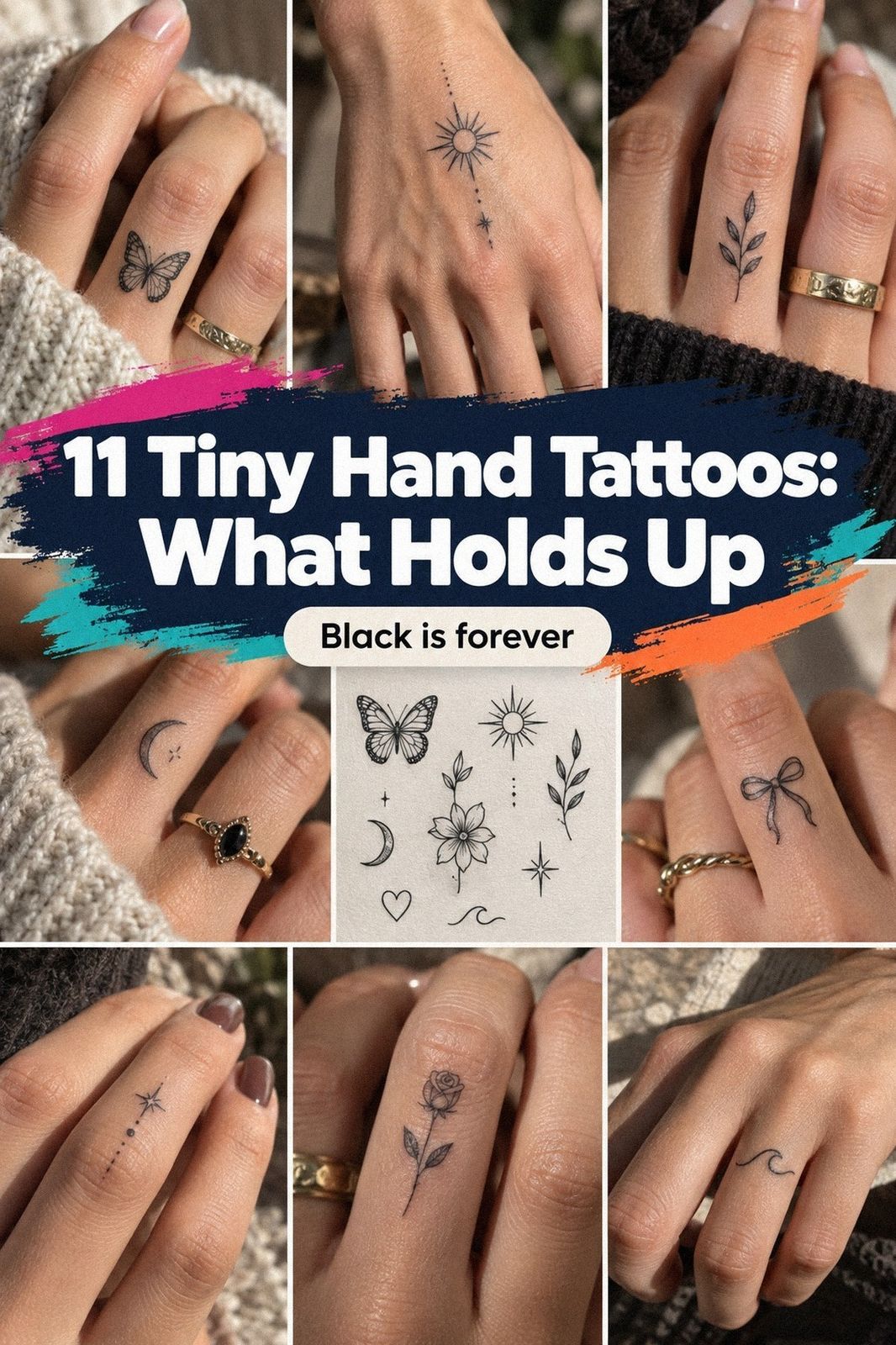
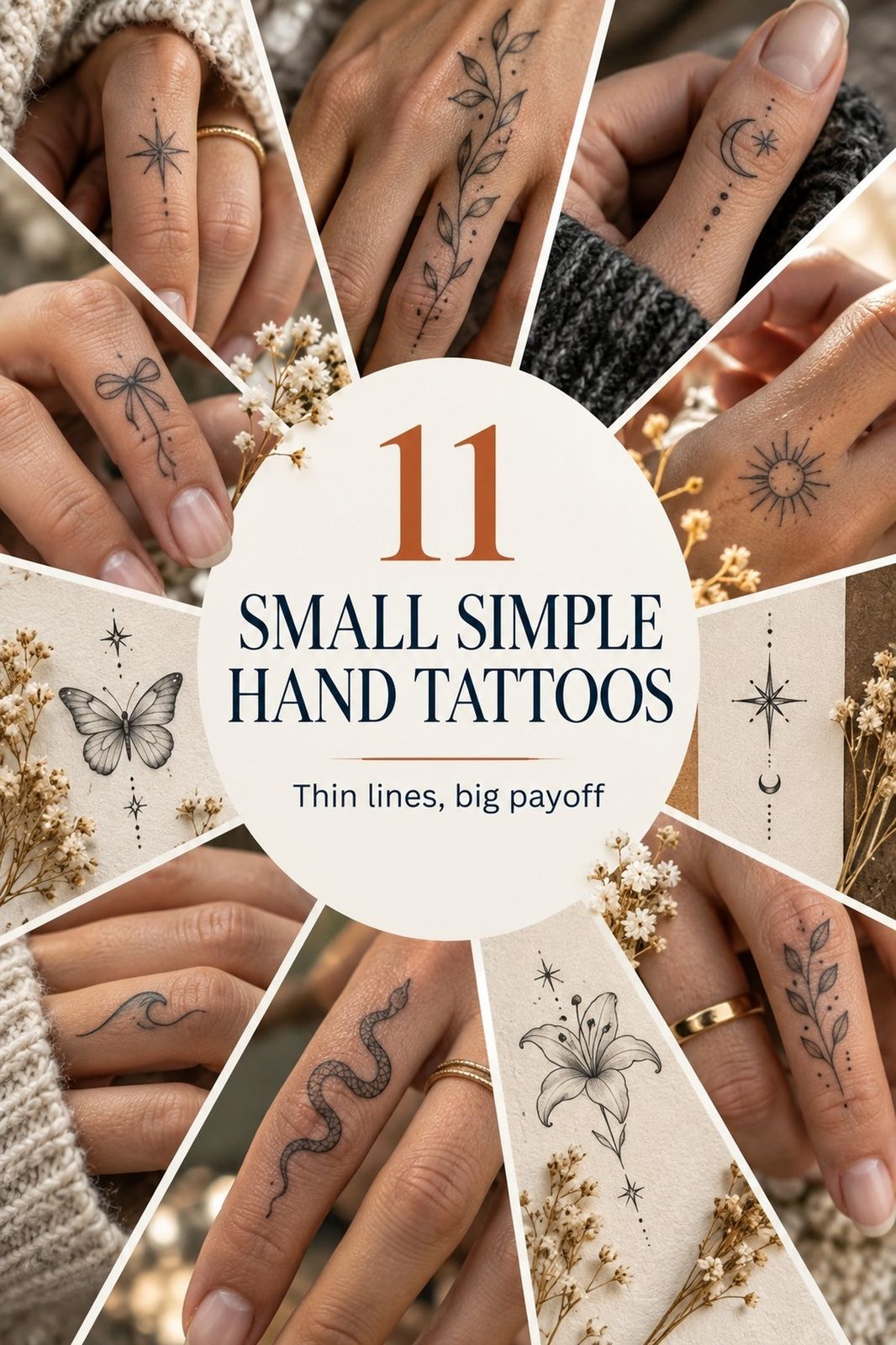
Ask to see the stencil with your hand relaxed and slightly bent. The stars may look perfectly spaced on a flat print, then bunch together when your finger curls. If you’re drawn to other simple placements, compare these small simple hand tattoos before you lock in the arrangement.
You can make the idea dainty or whimsical without changing the basic symbol. Larger points feel bold, while smaller ones create a more intimate reading. Your artist can vary the angle so the design doesn’t look mechanically stamped.
Keep the aftercare practical. You’ll want to protect the area from strong sun once it has healed, because ultraviolet exposure can make black ink look less vibrant over time. Finger tattoos demand attention, but the result can stay sharp when your habits support it!
7Blackwork or Fine Line? Apply the Saturation Rule

Bold blackwork is the clearest contrast to hair-thin ideas.
8Match Meaning, Not Every Detail
Matching tattoos can be meaningful without being identical. Two people might share a small arc, a paired star, half a symbol, or the same line placed on opposite fingers. A paired fine-line mark can carry the connection while still belonging to each wearer.
I’d skip matching names unless both people have already lived with the idea for a long time. Names can feel romantic, but a shared symbol gives each person more freedom. If the relationship changes, the mark should still hold a meaning that belongs to you.
Talk through visibility before booking. You and the other person may want the tattoo shown in photos, hidden during work, or revealed only when your hands meet. This guide to small hand tattoos for women can help you compare more private placements.
Choose matching line weight, not necessarily matching size. Fingers differ, and one person may need a slightly larger version for the same symbol to stay readable. Your artist should adapt the matching stencil instead of forcing symmetry.
There’s something empowering about a matching piece that doesn’t require constant explanation. It can be romantic, personal, or quietly funny. You’ll get better value when both people choose a symbol they’d still want alone.
9Choose a Short Script Word With the Letterform Test
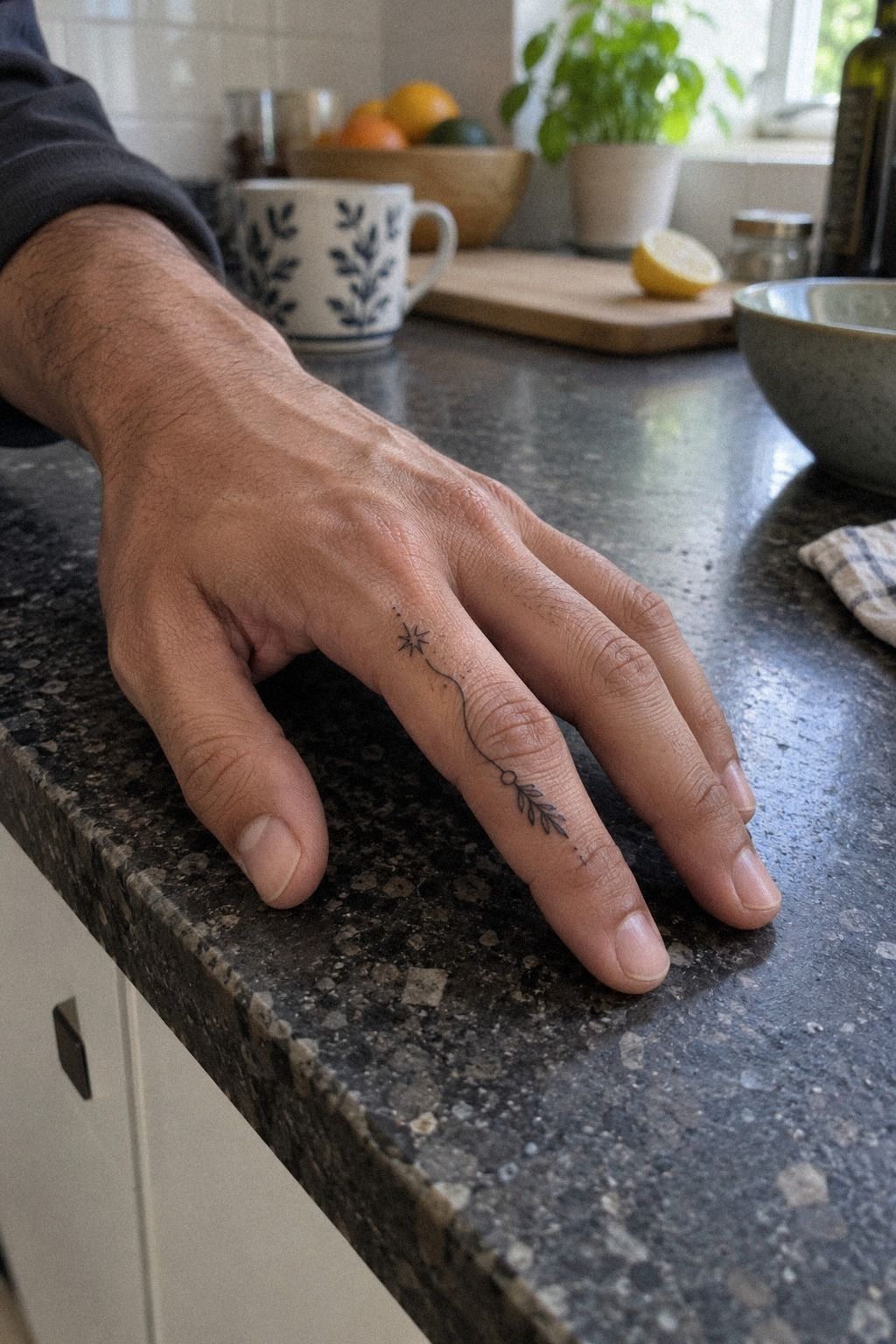
Script along the finger edge can look daring when the word is short and the letters have enough separation. You’ll want to choose language that still reads when your finger bends. A short script word with one controlled flourish can feel expressive and intentional.
I’d avoid long quotes. They often require compressed lettering, and compressed lettering is where a good idea starts losing clarity. If your budget allows only one consultation priority, spend it on spacing and legibility.
Ask your artist to show healed examples of script, not only fresh work. You’re checking whether loops stay open and whether thin connections remain visible. If you’re deciding between lettering and a symbol, this guide to small tattoos with meaning for men may clarify what you want the tattoo to communicate.
Your word might feel haunting because it carries a memory, but don’t choose a phrase just because it looks attractive in a font preview. You’ll live with the meaning longer than the lettering style.
Script needs a little skin around it. If the word feels crowded in the stencil, your artist can remove a flourish or adjust the letter spacing. That’s a better solution than hoping the ink will somehow become easier to read after healing.
10From Stencil to Healed: Keep the Miniature Mark Readable
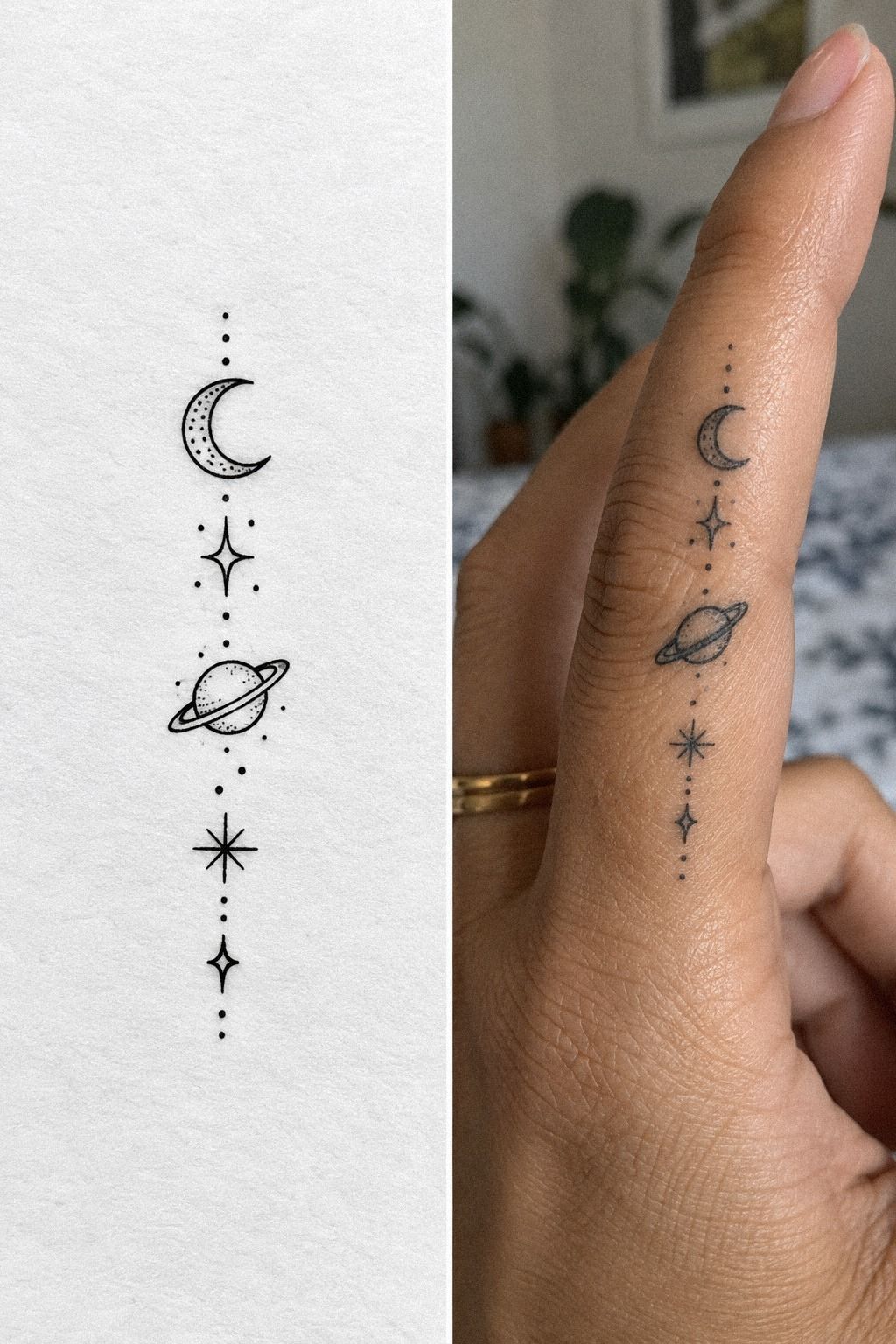
A miniature side-finger tattoo should make sense at every stage, from the first stencil to the healed result. Start with a simple stencil that lets you inspect the outline, spacing, and placement before any ink enters the skin.
I’d avoid judging the design only from a straight-on photograph. Rotate your hand, curl the finger, and look at the mark while gripping something. A design that seems stylish in one pose may look distorted in another.
Ask how the design is expected to change during healing. Fresh ink can look dark and vibrant, while the healed mark may settle into a softer finish. If you’re comparing scale, this collection of small hand tattoos for women can help you see how different ideas use limited skin.
The best miniature tattoos are understated but not forgettable. They have one clear gesture, one readable focal point, and enough skin showing around the mark. That restraint can make the design feel classic instead of unfinished.
Finger tattoos may need a touch-up, especially when friction affects a small section. Ask about the studio’s policy, expected price, and healing timeline before you book. Knowing the full cost helps you decide whether the appointment is worth the money.
11Geometry With the Negative-Space Grid
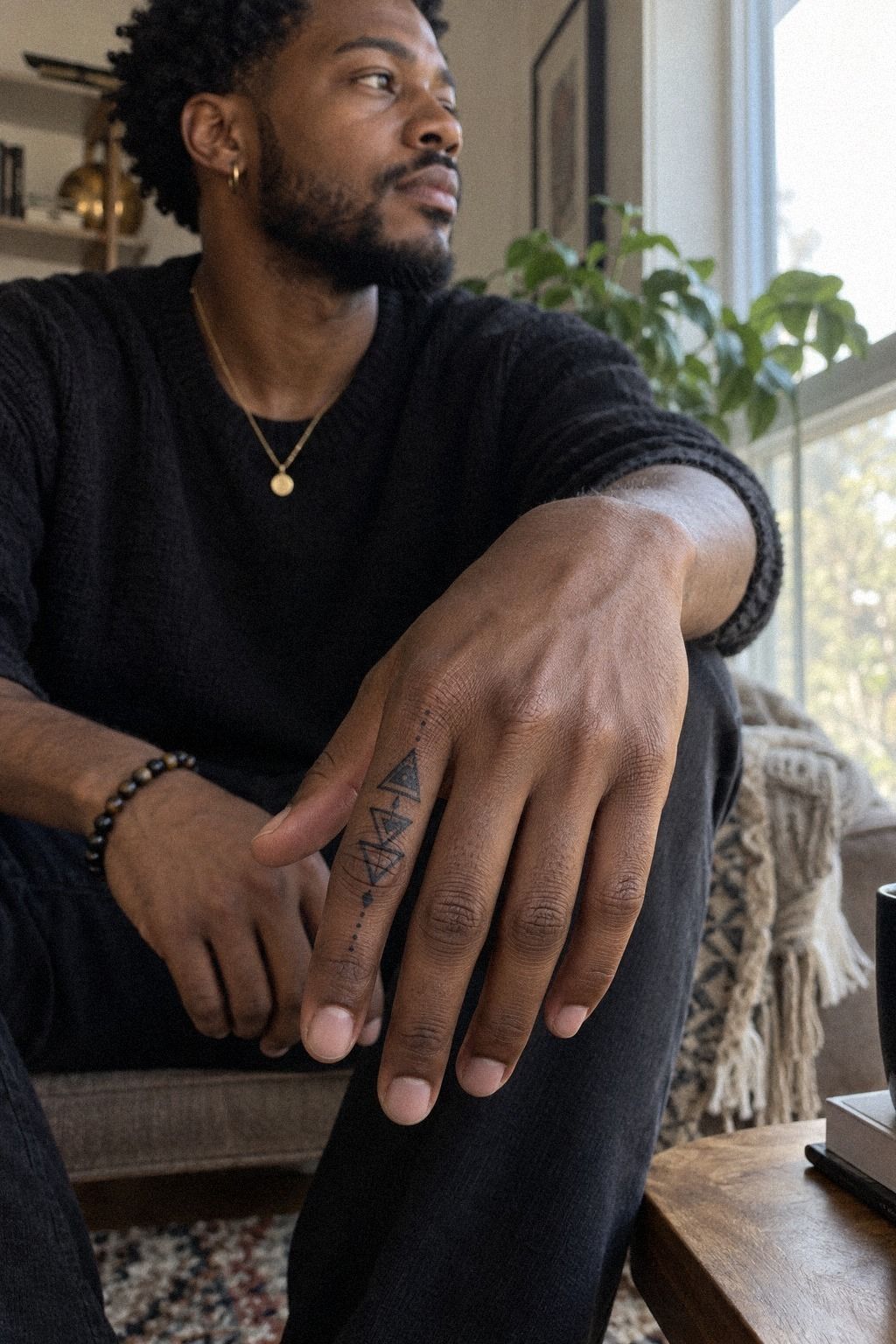
Geometric ink gives you a more intricate direction, but the pattern needs restraint. You’ll want a shape that survives movement rather than a tiny maze. A geometric stencil should show its main pattern from several feet away, not only under a phone camera.
My opinion is simple: choose one geometric unit and repeat it sparingly. Too many nested triangles or circles can lose their sharp quality as the lines age. A single open diamond may feel calmer than a filled symbol, while a compact grid can look iconic without becoming crowded.
Ask your artist whether the lines will remain open after healing. If a gap is very narrow, the marks may visually merge over time. For a broader comparison of small placements, look through this geometric hand tattoos guide before you commit to a side-finger design.
You can make the tattoo vintage through proportion rather than extra decoration. Your artist’s spacing decisions matter more than adding complexity. If the pattern needs a long explanation before anyone can recognize it, it may be too busy for the location.
Geometric tattoos reward patience. You’ll need to review the stencil from different angles, ask about expected healing, and follow aftercare carefully.
Sun protection matters after healing, and your artist may recommend a touch-up later if the hand placement needs it. Keep the structure clean!
A Small Symbol Still Needs a Serious Decision
I’ve changed my mind about tiny finger tattoos more than once. At first, I wanted the smallest possible mark because small sounded safer. Then I watched a delicate line lose definition after careless placement, and I understood the real issue: size isn’t the whole decision.
Finger skin movement matters every time you grip, wash, type, or reach.
The side of a finger can feel private, but it isn’t an easy canvas. Your hands meet sunlight, water, friction, and daily contact. That doesn’t mean you should avoid the placement.
It means you’ll want an artist who can explain what may soften, what can stay crisp, and what deserves more breathing room.
I also think people overvalue novelty. A striking symbol that still means something to you will outlast a clever shape you saved last week.
You’re allowed to choose a classic heart, a meaningful initial, or a simple moon. The design doesn’t need to prove that you’re original.
My own rule is to judge the tattoo twice: once as a fresh image and once as a future memory. If you’d still want the mark after the trend shifts, it has staying power.
A personal design can be understated or expressive, but it should feel like yours before the appointment begins. For planning, compare it with these small forearm tattoos with meaning.
The Practical Check Before Booking
Before you book, write down the symbol, the exact finger, the preferred side, and the smallest detail you refuse to lose. That list gives your artist a clear starting point and keeps the consultation focused. A written design brief can also stop you from changing direction because of a last-minute trend.
Look at the mark with your hand relaxed, curled, and gripping something. If the design only works in one pose, it may need more width or a different angle.
This moving-hand check can save you from an expensive correction later. Compare similar placements in these small inside finger tattoos before you decide.
Think about visibility at work, during family events, and in photographs. Side-finger ink can feel private, but it may still show whenever you gesture. Choose the placement because it fits your life, not because it looks hidden in one reference picture.
Finally, confirm the studio’s licensing, hygiene process, minimum charge, and touch-up policy. A lower price isn’t good value if the artist lacks healed examples or rushes the stencil. Your safety and the long-term result are part of the cost.
What the Price Should Include
A small tattoo may take only a short appointment, but the price can reflect the artist’s experience, design time, studio minimum, and sanitation setup. Ask whether the quote includes consultation, stencil adjustments, and a possible touch-up. An itemized quote is more helpful than choosing the cheapest number you see in small hand tattoos.
In the United States, a studio minimum may be around $50 to $100, while an hourly rate can be about $100 to $250. Prices vary widely by city and artist. I’d rather see you simplify the mark than choose an artist solely because the initial number is low.
If your budget is tight, simplify the design before switching to an inexperienced artist. One clean symbol can last more confidently than a complicated mark executed without enough control. A simplified design is often the better investment.
You can also ask whether the artist charges a separate touch-up fee. Finger tattoos sometimes need one because hands experience friction, washing, and sun exposure. That possibility doesn’t make the tattoo a bad purchase, but it belongs in your full price calculation.
A Healing Plan Worth Following
The surface may heal in about 2 to 3 weeks, but complete healing can take about 2 to 3 months. You’ll follow your artist’s instructions, wash gently, avoid picking, and keep the area away from pools during early healing. Gentle aftercare protects the line.
These small simple hand tattoos also show how much readable design depends on restraint.
Don’t panic when the tattoo looks slightly dull or uneven during healing. Skin can flake, tighten, and soften before the final result settles. If something seems unusual, contact your artist rather than applying random products from a social media recommendation.
After the tattoo heals, protect it from strong sun. Ultraviolet exposure can make black ink look less vibrant and may soften fine details over time. A sun-protection habit helps preserve the design.
Judge the final tattoo after the healing period, not during the first few days. That’s when you can decide whether a touch-up is genuinely needed. Patience costs nothing, and it gives you a more honest view of the result.
The Worth-It Test for a Private Mark
Ask yourself whether you’d still choose the design if nobody else could see it. That question separates a personal symbol from a passing visual obsession.
If the answer stays yes after several weeks, the tattoo may be worth the money. More ideas appear in these cute small tattoos with meaning.
Next, ask whether you like the design at actual size. A mark that looks impressive when enlarged on a screen can become confusing when reduced to a finger. Your artist should show you a realistic stencil before you approve it.
Consider whether the symbol has more than one layer of meaning. A moon can represent change, a snake can suggest renewal, and an initial can hold a private connection. That extra meaning can give the tattoo stronger long-term value than a purely decorative choice.
You don’t need the most original design in the studio. You need one that feels meaningful, readable, and comfortable with your daily life. A lasting mark can matter more than an elaborate idea you’ll outgrow.
The Questions I Get Asked Most
How much does a small side finger tattoo usually cost?
A small side finger tattoo typically costs about $50 to $100 for a studio minimum, while an hourly rate may run about $100 to $250 in the United States. The final price varies by artist, region, detail, and appointment policy, so I’d ask for a quote before booking.
Are small side finger tattoos a good idea for a first tattoo?
Yes, they can be a good first tattoo if you’re comfortable with visibility and careful aftercare. A readable small design gives you a focused decision, but hands can be more sensitive than an upper arm or thigh. I’d choose a licensed artist whose healed work still looks clear.
How do I choose a tattoo artist for small side finger tattoos?
Choose an artist with clean linework, healed photographs, and strong hygiene practices. A healed portfolio tells you more than fresh close-ups. I’d ask about their experience with hands, how they simplify tiny designs, and whether their studio follows local health requirements.
How much do small side finger tattoos hurt?
Pain varies, but hands, feet, ribs, and sternum are commonly more sensitive areas, while the forearm, thigh, and shoulder are often more tolerable. Your personal tolerance matters, and I’d expect a short session to feel manageable even when the placement is sensitive.
How long does a small side finger tattoo take to heal?
The surface usually heals in about 2 to 3 weeks, while complete healing can take about 2 to 3 months. Gentle aftercare means washing as directed, moisturizing appropriately, avoiding pools during early healing, and protecting the healed tattoo from strong sun.
What’s the best placement for small side finger tattoos?
The outer side and inner side can both work, depending on how private or visible you want the mark to be. Placement affects aging, so I’d ask your artist to check the design with your finger relaxed, bent, and moving before you approve the stencil.
Where should I buy or book small side finger tattoos?
You shouldn’t buy a tattoo from a marketplace or use an unlicensed setup. The artist’s skill should lead the decision, especially when the placement may need future care. I’d book with a reputable local studio after reviewing healed work, hygiene information, and consultation policies.
Where I’d Start First
If I had to pick one, I’d start with the fine-line heart. Its open outline stays readable, carries personal meaning, and doesn’t need extra detail to work. Pin the heart idea for later and compare it with these small forearm tattoos with meaning before you book.
I’d also keep the moon, initial, and compact star cluster on the shortlist. They’re personal and flexible enough to suit different lettering, line weights, and visibility preferences.
If you’re still weighing the meaning, revisit these cute small tattoos with meaning before making the final call. Start there!