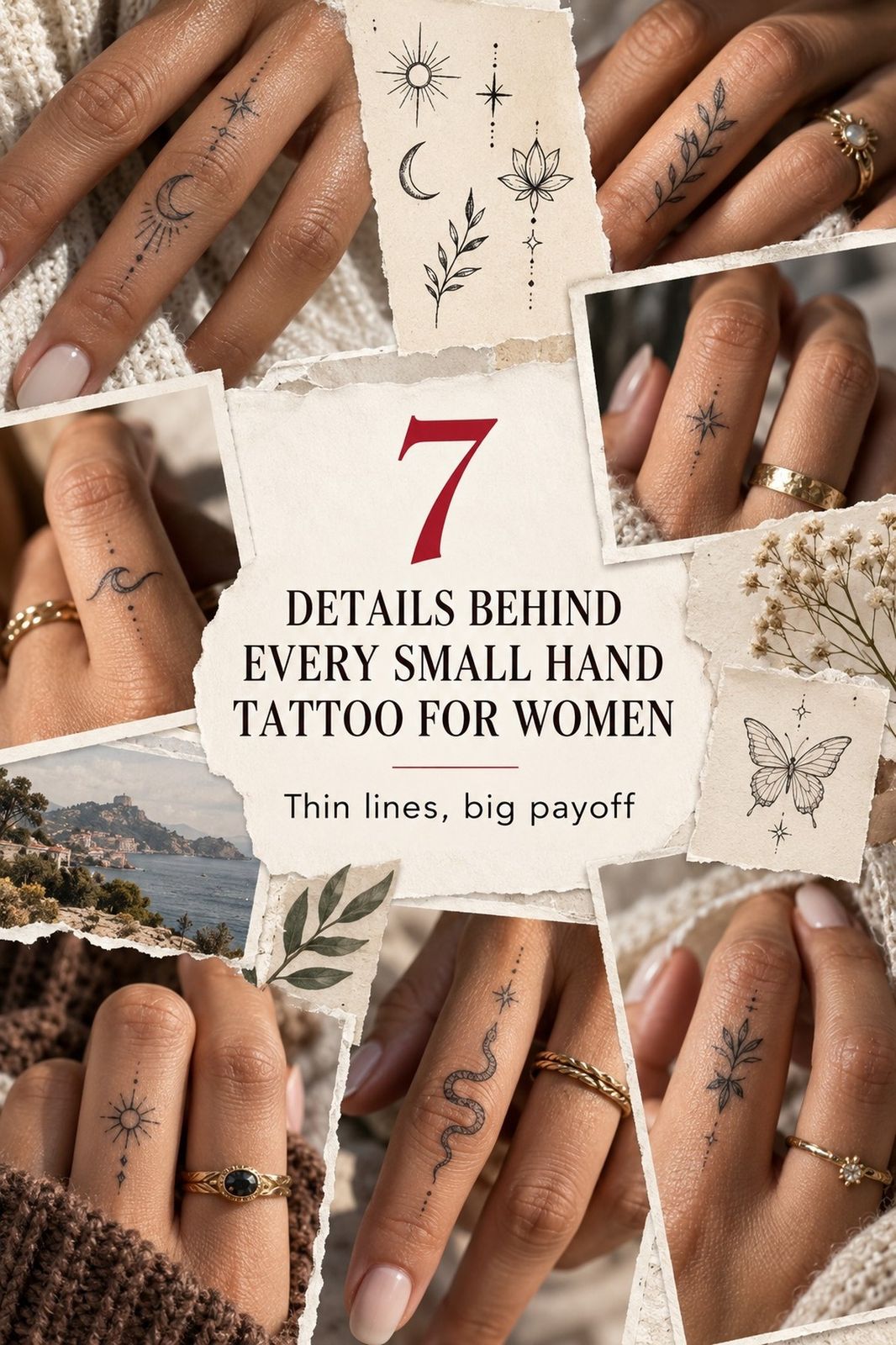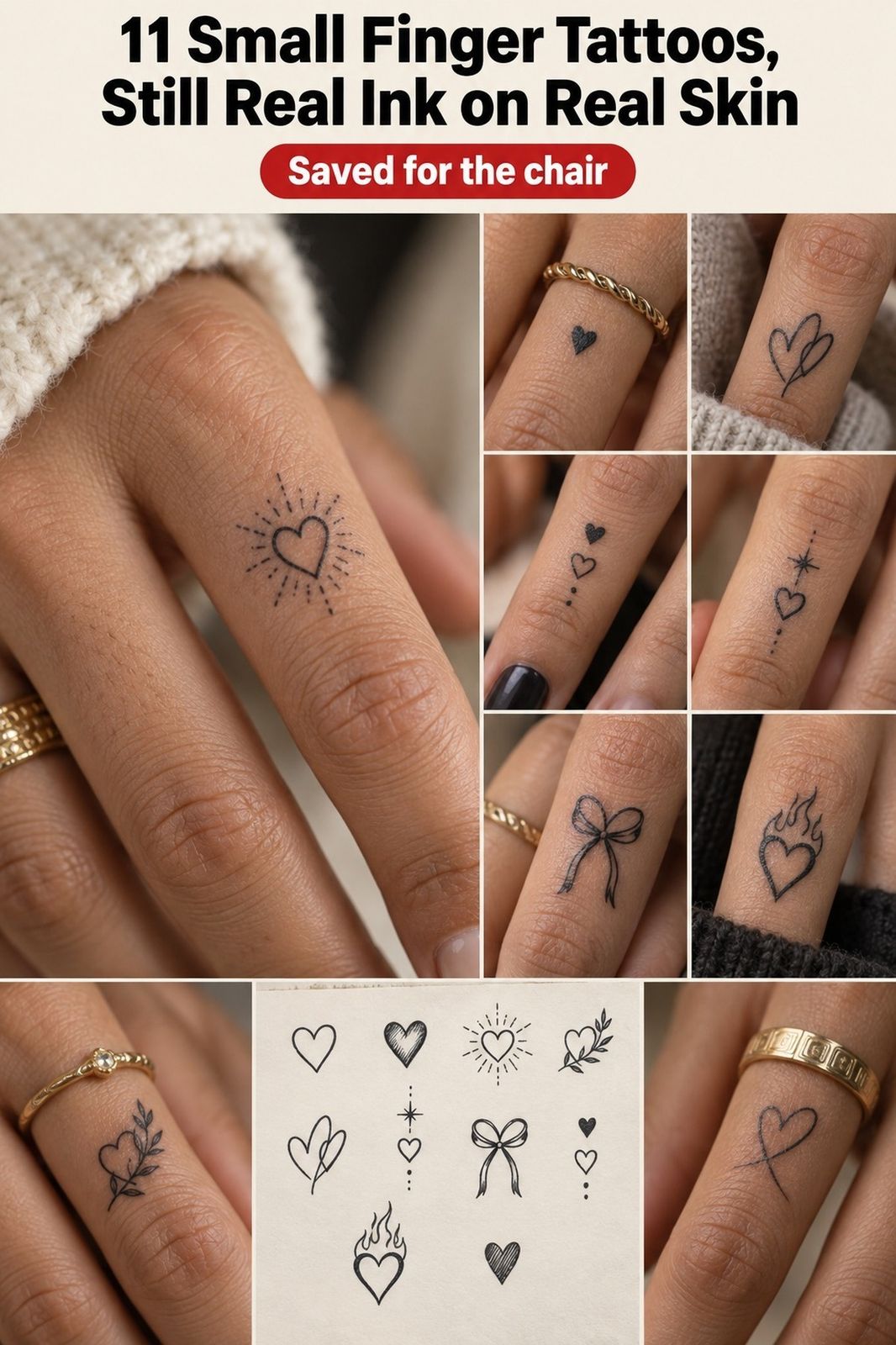
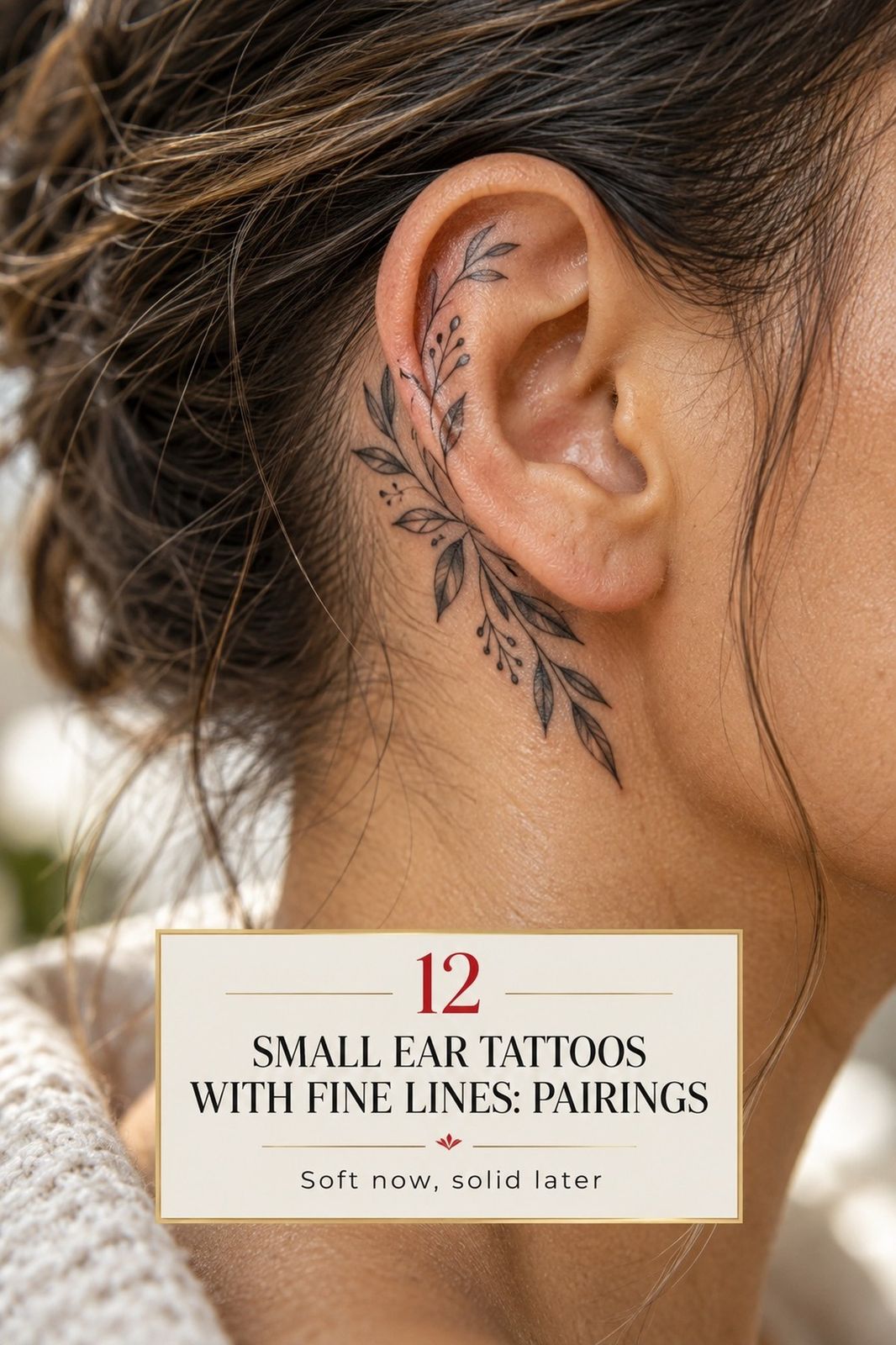
Small ear tattoo ideas can stay crisp for years when you choose a readable shape, leave enough negative space, and respect healing. The real challenge is fitting a meaningful design behind your ear without shrinking every line into a blur. I’ve learned that placement matters as much as style. Start here!
- Start With Tiny Botanical Ear Tattoos
- Pick Crisp Crescent Moon Linework
- Place A Dainty Star Behind Your Ear
Quick answer: choose a readable silhouette, test it at its actual size, and let your artist simplify anything that looks crowded. That small step can protect both the design’s value and your budget.
Before You Start: The Crisp Line Rule
A small tattoo needs fewer details than you think. Your artist should be able to read the design from a short distance, even when the skin moves or the lines soften with age. I’d choose black tattoo ink and clean spacing over a crowded miniature scene every time.
The first planning question is simple: will your chosen symbol still look crisp when it’s only a few millimeters wide? If you’re unsure, print the reference at its intended size and look at it from arm’s length. That quick test can save you from an intricate design that won’t hold its shape.
You don’t need to book the cheapest appointment. You need an artist whose portfolio shows healed portfolio work, not only fresh photographs. For more price context, compare these small tattoo prices before you choose a studio.
Before you pay a deposit, ask what the studio minimum includes and whether the quoted cost changes with placement or detail. A slightly higher price can be worth it when the artist’s healed results show consistent spacing and a polished finish.
How Do You Choose A Placement That Ages Well?
Behind the ear gives you a discreet, elegant canvas, but it isn’t one flat surface. The curve changes how a crescent, initial, or star will read. Ask your artist to mark the spot with a transfer stencil, then turn your head, tuck your hair back, and check the shape from several angles.
Your placement should follow the ear’s natural line instead of fighting it. A flowing symbol can follow the curve below the lobe, while sharp geometry usually works better on a calmer patch of skin. If you want something more visible, compare the idea with small hand tattoo ideas to see how exposure changes the decision.
Pain varies, and you shouldn’t pretend otherwise. Osseous areas such as ribs, feet, hands, and sternum are often more painful, while the forearm, thigh, and shoulder tend to be more tolerable. Behind the ear can feel intense because the area is sensitive and close to bone, so consider your own pain threshold before deciding.
If you’re comparing two placements, think about daily visibility, hair movement, headphones, and sun exposure. The most stylish option isn’t automatically the most practical one, but a discreet position can be worth it when privacy matters to you.
The One-Artist Portfolio Rule
Choose an artist who has done the style you want, rather than asking a generalist to improvise. For fine linework, you’re looking for consistent spacing, smooth curves, and healed photographs.
A fresh tattoo can look sharp on everyone. The healed result is what tells you whether the artist’s technique is reliable.
I’d skip a portfolio filled only with giant saturated pieces if you’re requesting a delicate symbol. That work may be impressive, but small ear tattoo ideas need a different kind of restraint. Ask how the artist handles single-needle linework, how they plan the size, and whether they’ll simplify a crowded reference.
Hygiene should be non-negotiable. Your studio should use fresh gloves, sealed needles, clean barriers, and clear aftercare instructions. You can also review small traditional tattoo ideas if you’re deciding whether a heavier, more durable style suits your taste better.
The best value is not always the lowest quote. Look for clean healed work, a clear consultation, and an artist who can explain why a design needs fewer lines. That combination is usually more useful than choosing by cost alone.
- Start With Tiny Botanical Ear Tattoos
- Pick Crisp Crescent Moon Linework
- Place A Dainty Star Behind Your Ear
- Keep Minimal Initials Along The Helix
- Plan A Symbolic Tiny Heart Design
- Choose Intricate Micro Florals For The Lobe
- Try A Playful Tiny Lightning Bolt
- Match A Sharp Geometric Ear Tattoo
- Add Meaningful Coordinates Behind The Ear
- Explore Whimsical Miniature Animal Silhouettes
- Select An Elegant Birth Flower Tattoo
1Start With Tiny Botanical Ear Tattoos
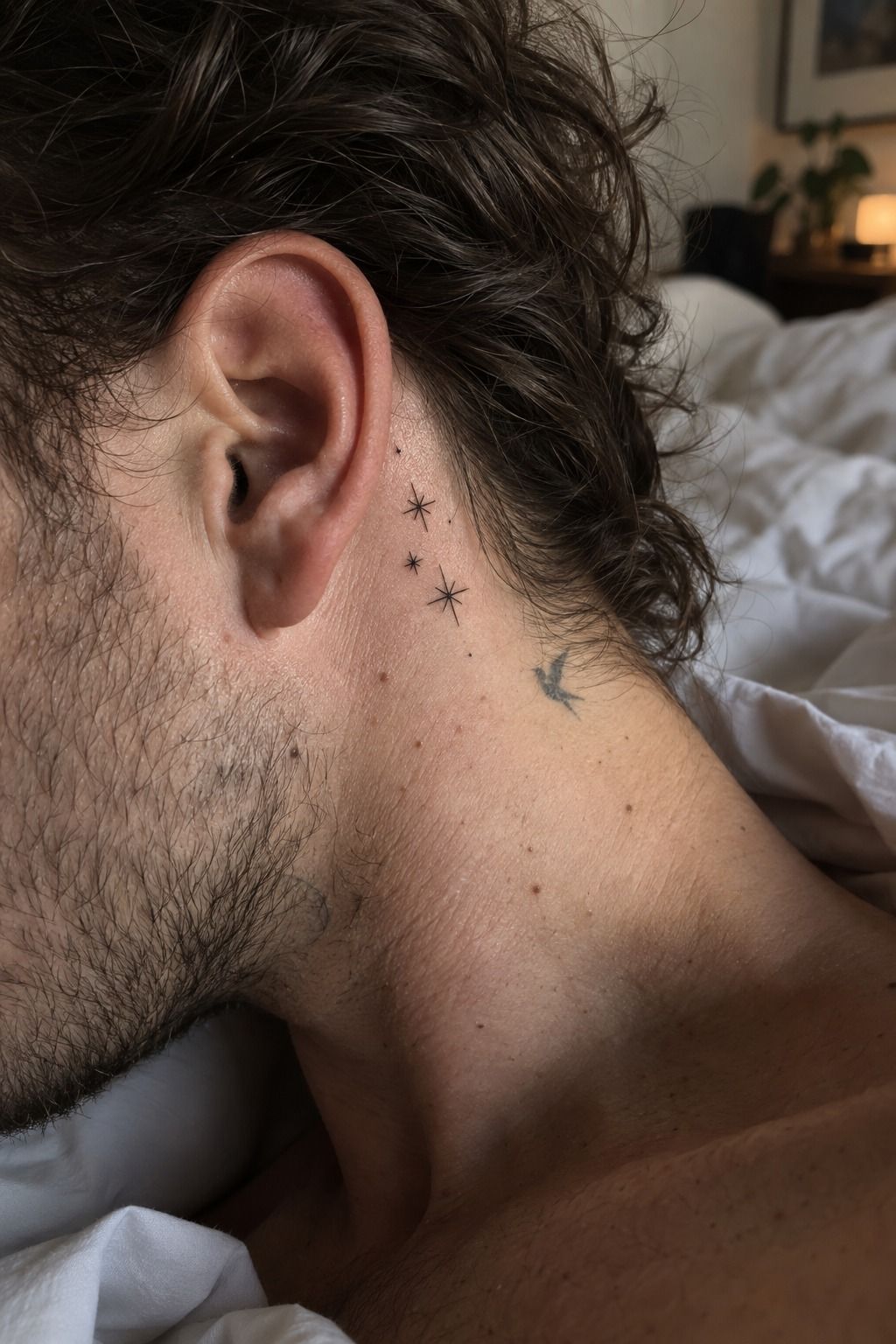
A few small stars behind the ear can form a delicate botanical-style cluster, and the spacing is the lesson. Treat the design like a star cluster: one visual anchor, two smaller marks, and enough skin showing between them. The result feels delicate, personal, and crisp instead of crowded.
Your artist can vary the star sizes without adding shading or extra texture. I’d keep the largest star slightly separated from the others so your eye can read the grouping immediately. A fine-line cartridge keeps the marks light, while a small amount of solid fill gives the central star a more powerful silhouette.
This is a good choice if you want something symbolic without a literal object. The stars can suggest direction, memory, or a private milestone, yet the design still looks understated when your hair is down. You won’t need a large appointment for a few carefully placed marks, which makes the idea practical for a tighter budget.
Before you commit, compare the spacing with other small tattoo designs and ask yourself whether you prefer a neat cluster or one isolated star. I’d choose the isolated star for very small ears because it leaves more breathing room and is less likely to merge over time.
If you’re wondering whether the simpler version is worth it, I’d say yes. A single bold point can stay recognizable longer than a crowded constellation, and it still feels expressive.
2Pick Crisp Crescent Moon Linework
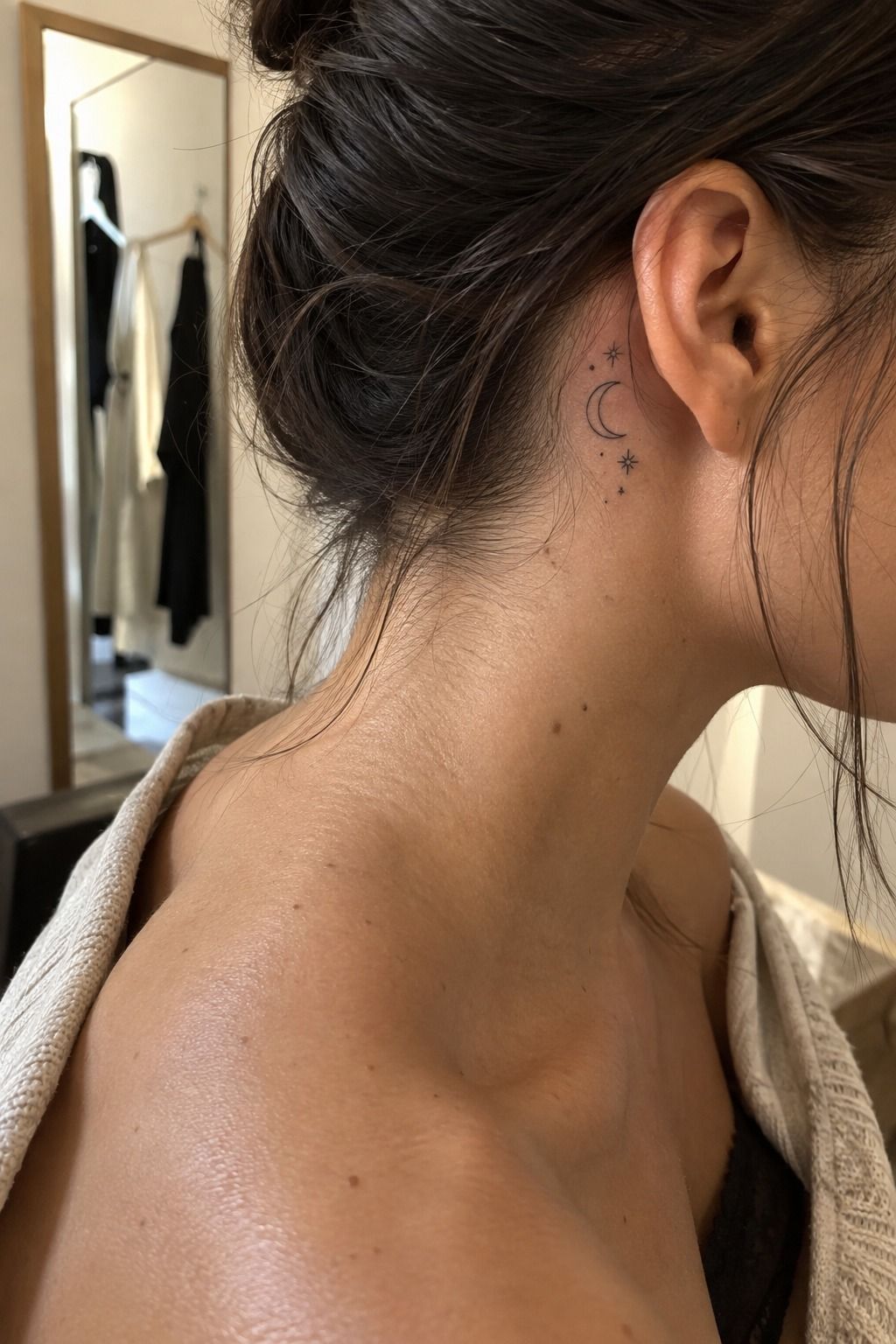
A crescent moon with a few stars gives you a classic, meaningful composition that can follow the curve behind the ear.
3Place A Dainty Star Behind Your Ear
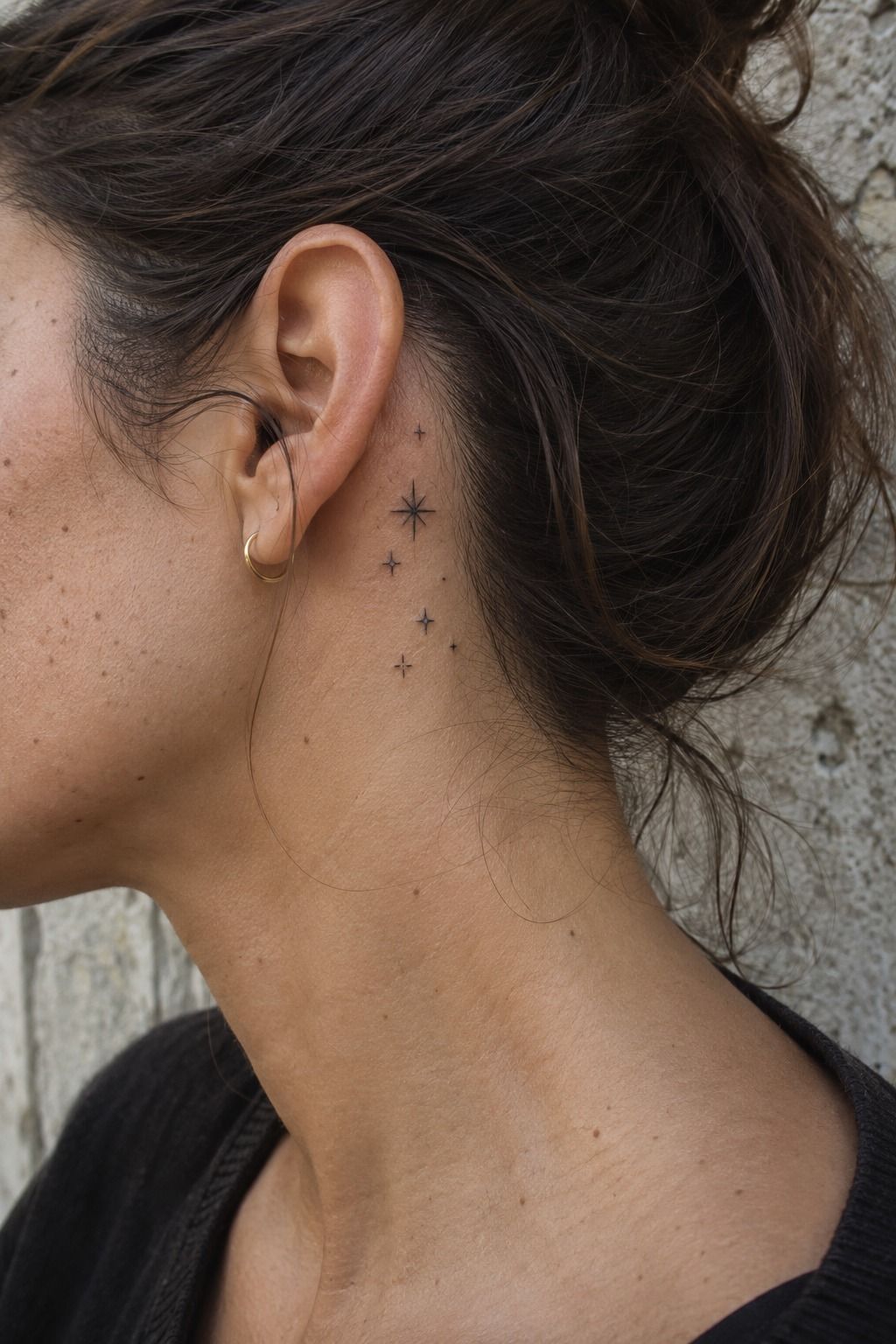
A few stars of different sizes create a playful, feminine arrangement without needing words or initials. Use one crisp central star and smaller companions to keep the group balanced. The finished design can feel vibrant without requiring color.
Don’t let every point touch the same imaginary line. Slight changes in angle make the arrangement feel organic, while evenly spaced stars can look too stamped. I’d ask for solid black star points with no gray wash because a clean silhouette is more durable than tiny interior shading.
This option works well for a first tattoo because you can keep the design minimal and still make it personal. You’re choosing the rhythm, not just the symbol. If you’re comparing discreet placements, look at small finger tattoo ideas and notice how limited space changes the amount of detail you can keep.
Your artist may suggest moving one star closer to the hairline or lower toward the neck. Listen to that advice if it improves the flow. You shouldn’t squeeze five stars into a space that comfortably holds three.
If you want a bolder result, enlarge one point rather than adding more stars. That keeps the tattoo striking while protecting its clarity.
4Keep Minimal Initials Along The Helix
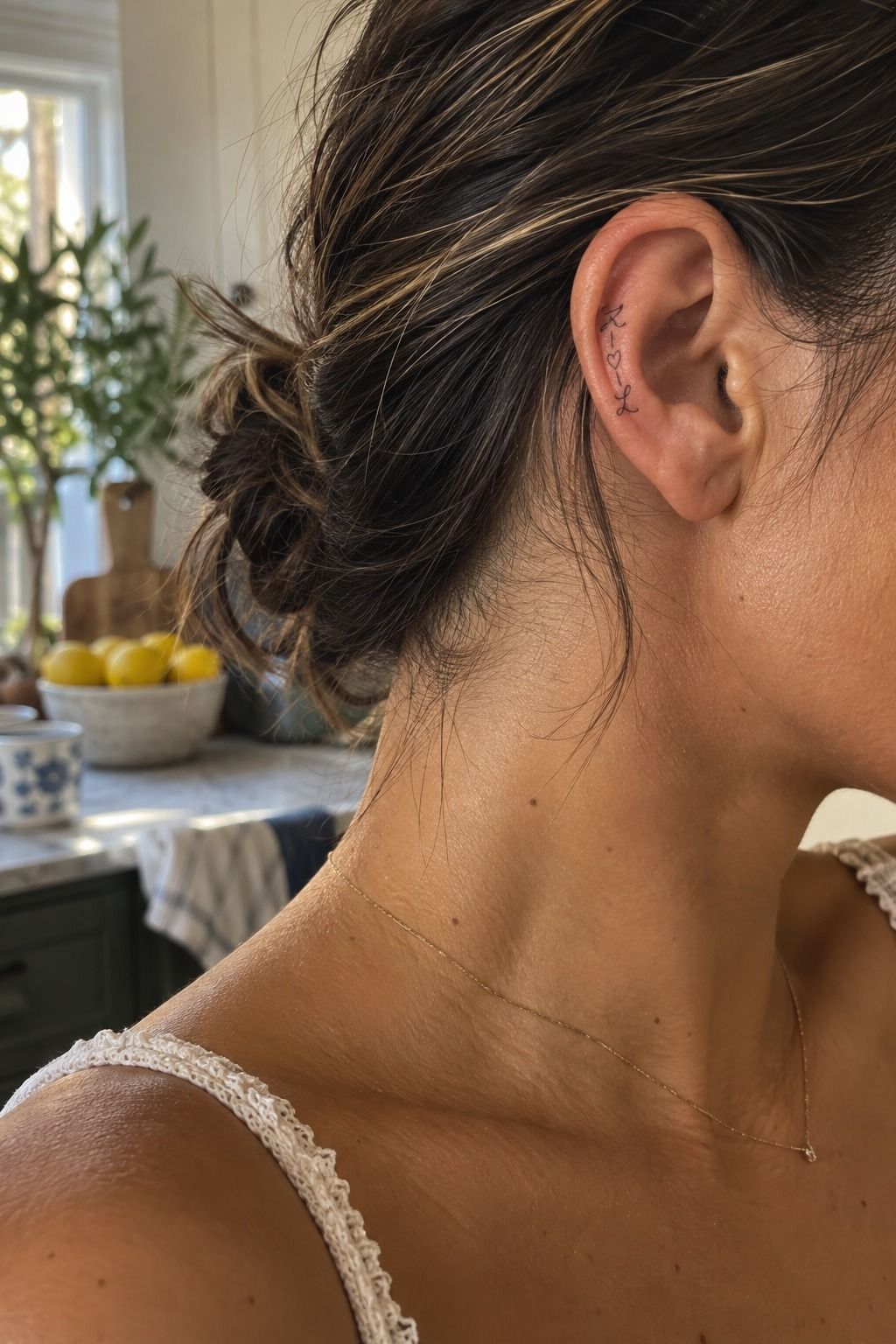
Initials are meaningful because they can point to a person, place, or private chapter without explaining themselves. Along the helix, your lettering needs to follow the ear’s curve while staying readable. I’d use one or two letters, not a full phrase disguised as a tiny mark.
Ask your artist to show both uppercase and lowercase versions using a single-needle lettering stencil. Some fonts look graceful on paper but collapse once they’re reduced. A crisp serif may feel classic, while a simpler form can look sleek and more reliable.
Your initials should have enough separation around each stroke. If the letters touch, the design can become a dark knot instead of an elegant symbol. I made that mistake with a tiny script sample once, and the answer was simple: fewer curls, more open space.
If you’re considering another discreet placement, browse small hand tattoo ideas for examples of readable initials and symbols. I wouldn’t copy a hand-sized letter directly behind your ear. Your artist should redraw it for the smaller, curved surface.
Lettering can be worth the extra consultation because a tiny correction before ink costs nothing, while a crowded tattoo may require an expensive touch-up later. Check every letter twice.
5Plan A Symbolic Tiny Heart Design
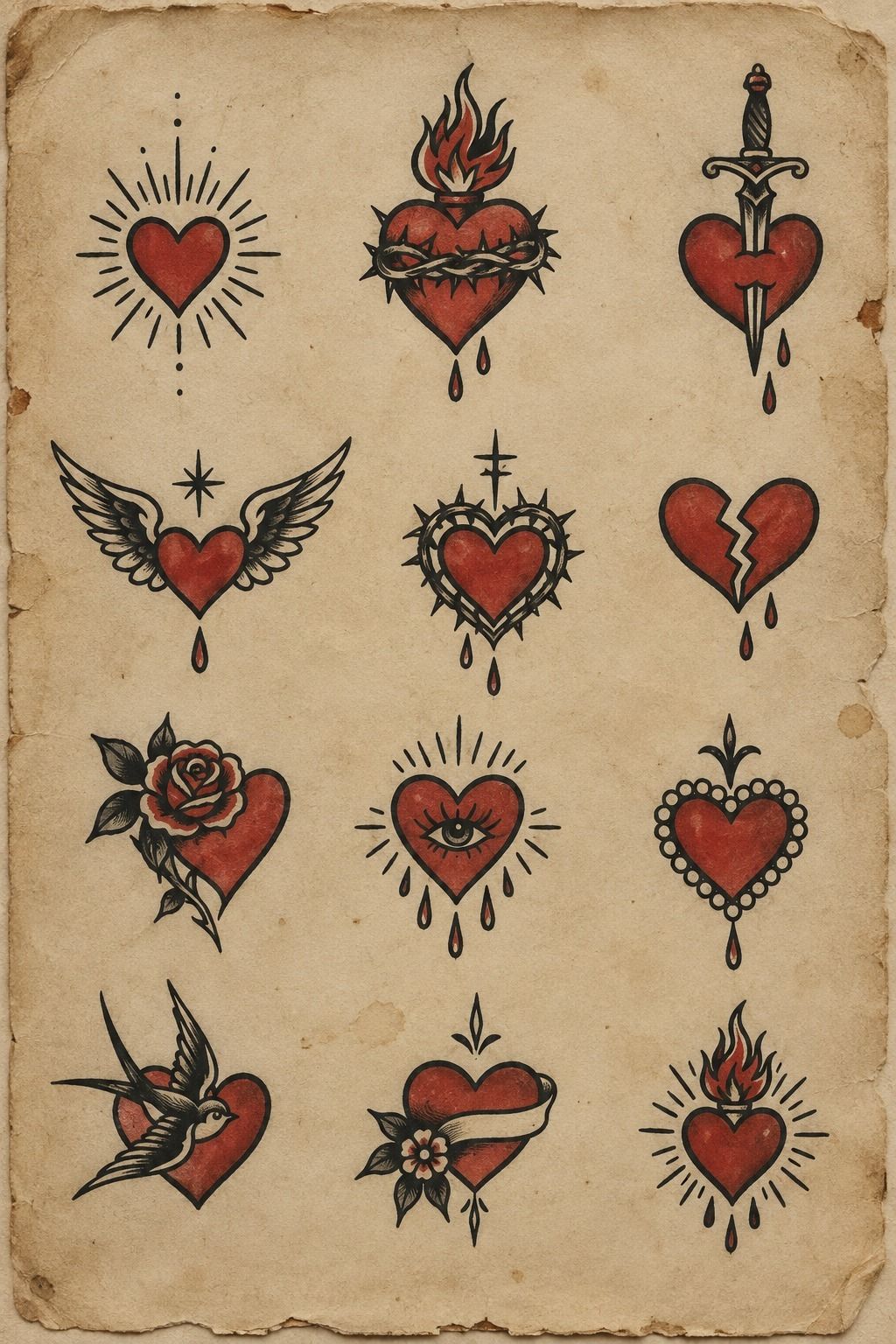
Compare a plain outline, a slightly pointed heart, and a heart with a small break. Your favorite may be the simplest design once you see it at actual size. A heart outline can remain iconic even when it is only a few millimeters wide.
A tiny heart can feel romantic, sacred, or quietly empowering depending on the shape. I’d skip excessive shading and decorative flourishes because the outline carries the meaning on its own. Use a black transfer drawing and ask your artist to remove any line that doesn’t improve recognition.
Several versions can help you compare moods without inventing a design from nothing. You’ll notice quickly whether you prefer an iconic heart or something more raw and uneven. That choice says more about your taste than adding another symbol beside it.
If you want a symbol with more cultural history, compare the heart with small Egyptian tattoo ideas. You can also read about small arrow tattoo meaning before you settle on a direction. Your best choice is the one you’ll still explain comfortably years from now.
For a limited budget, a clean heart is often better value than a custom miniature filled with tiny details. It can still look personal, polished, and powerful.
6Choose Intricate Micro Florals For The Lobe
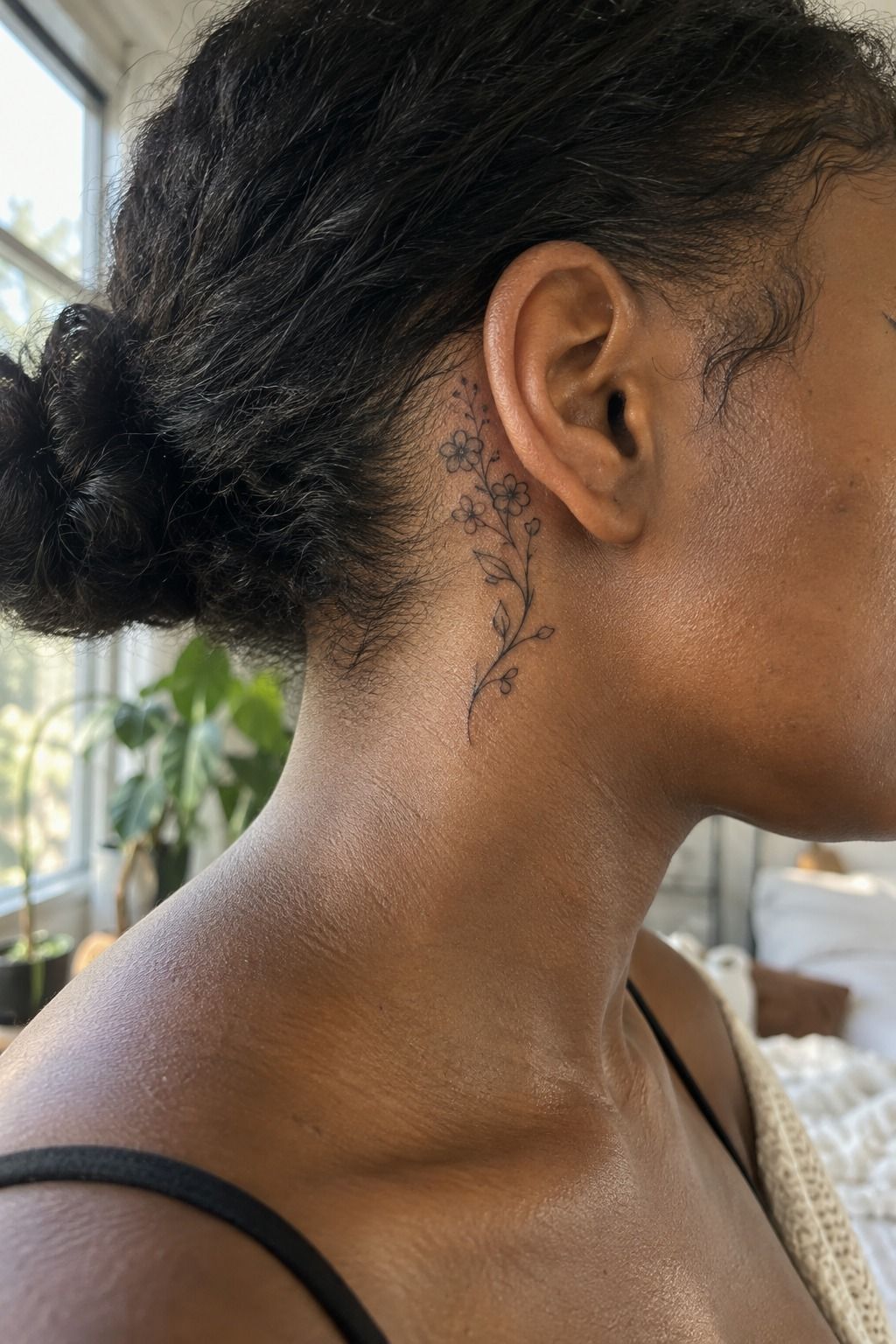
A delicate wildflower sprig can follow the lobe with graceful movement, but the design needs a clear beginning and ending.
7Try A Playful Tiny Lightning Bolt
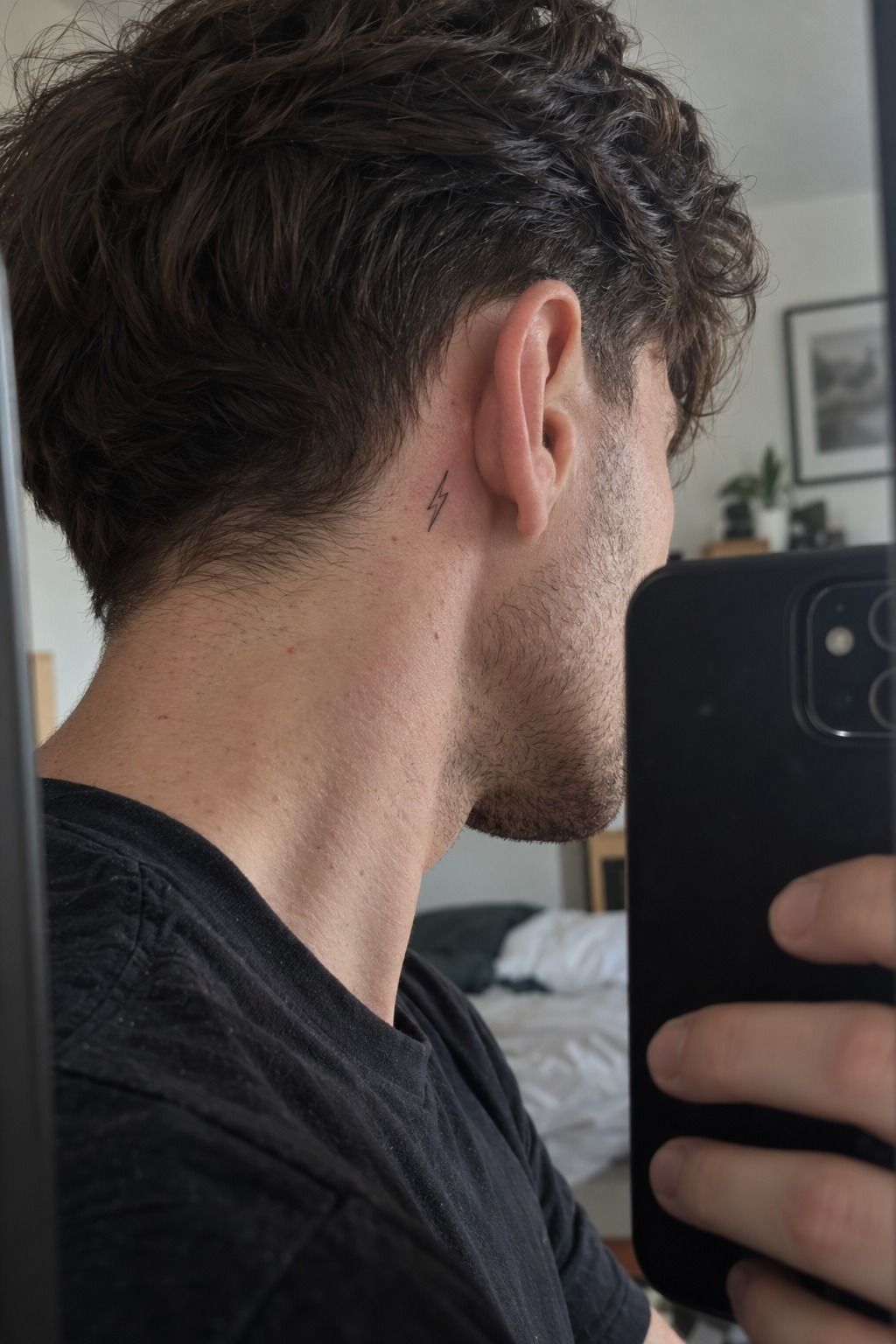
A lightning bolt is bold because its silhouette does all the talking. Behind the ear, the sharp zigzag can look edgy and energetic without needing color or heavy shading. Your artist should make the angles deliberate, with enough open skin around the bolt to preserve its identity.
I’d choose black outline ink and avoid adding miniature sparks around it. Those extra marks may look whimsical on a large drawing, yet they can make a small tattoo look cluttered. One strong bolt usually offers better value than a crowded group of symbols.
This is the design for someone who wants a little attitude without a large visible piece. It’s playful, expressive, and easy to recognize. If you’re worried that a lightning bolt feels too common, personalize the angle or pair it with one tiny dot instead of adding a whole scene.
You can compare the discreet placement with small hand tattoo ideas and small finger tattoo ideas. Behind the ear gives you more privacy, and that difference matters!
If the design feels too sharp for your style, soften the angle slightly while keeping the outer shape clear. A small adjustment can make it feel more personal without increasing the cost.
8Match A Sharp Geometric Ear Tattoo
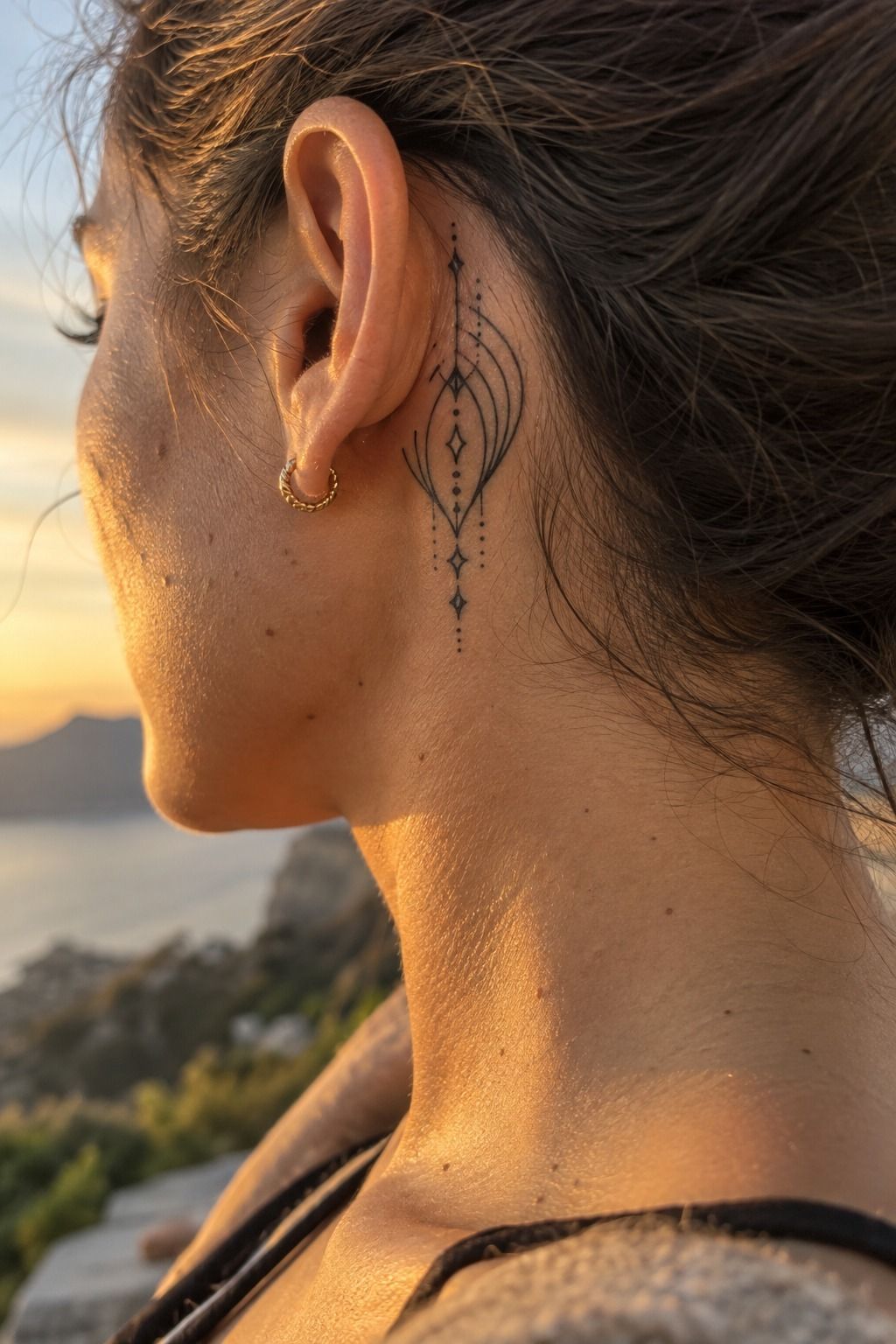
Geometric work depends on precision, so your artist should build the design with measured lines instead of drawing freehand from memory. The geometric stencil should show the full shape before the needle touches your skin.
A simple triangle, diamond, or intersecting line can feel modern and powerful. I’d avoid mixing too many shapes in a tiny area because each corner needs room to remain sharp. If your design uses circles, ask how the curve will sit when your ear bends or your head turns.
This style works especially well when you like understated tattoos with a crisp edge. It can feel masculine, sleek, or quietly daring depending on scale. You don’t need heavy blackwork to make geometry visible, but you do need measured lines and consistent spacing.
If you’re drawn to symbolic geometry, compare this idea with small Egyptian tattoo ideas. Look for symbols that remain readable at a small scale. A detailed emblem may be captivating on paper and unreadable behind your ear, so let clarity win.
For a higher-cost geometric design, ask whether the extra lines actually add meaning. If they don’t, the simpler version may be the smarter budget choice.
9Add Meaningful Coordinates Behind The Ear
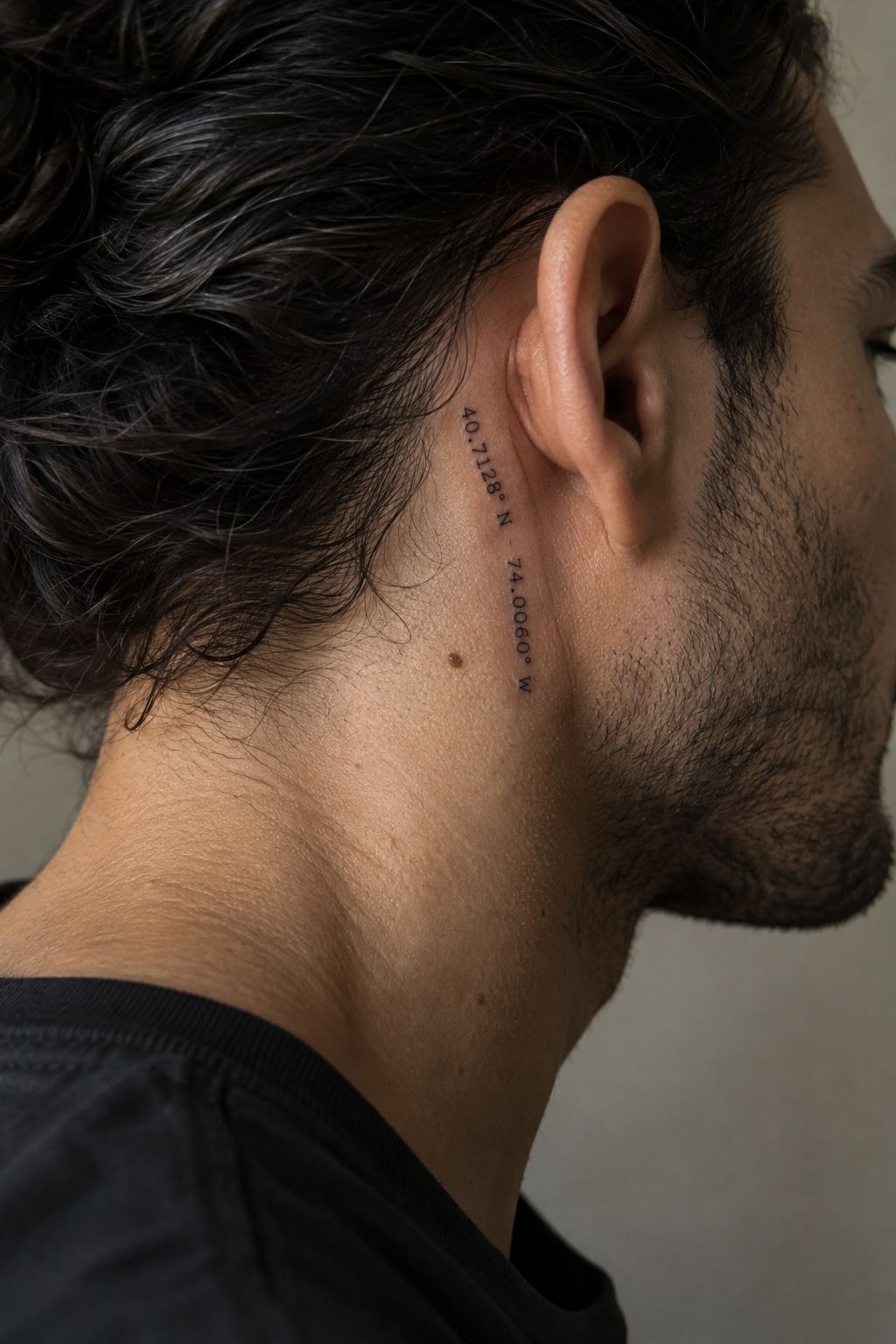
Coordinates give you a personal tattoo without spelling out the location. The numbers must remain legible, so ask your artist to space the digits generously and show the full sequence before you approve it. A coordinate sequence needs clarity more than ornament.
You’ll want to double-check every number before the appointment. This is one of the few tattoo ideas where a tiny transcription error changes the entire meaning. Use sterile stencil paper for the final placement and read the coordinates aloud from the reference you provided.
I’d keep the typeface crisp and slightly plain. Ornate script can feel elegant, but it’s a poor choice when your design already contains several small characters. A clean line of numbers can feel sacred, haunting, and deeply personal without announcing its story to everyone.
If you’re comparing symbols with hidden meaning, read small arrow tattoo meaning before you decide. Your coordinates don’t need a second icon beside them. The location itself is enough, and the restraint makes the tattoo more meaningful.
Coordinates can be worth the consultation time because accuracy matters more than speed. A careful stencil protects the value of the idea before the needle starts.
10Explore Whimsical Miniature Animal Silhouettes
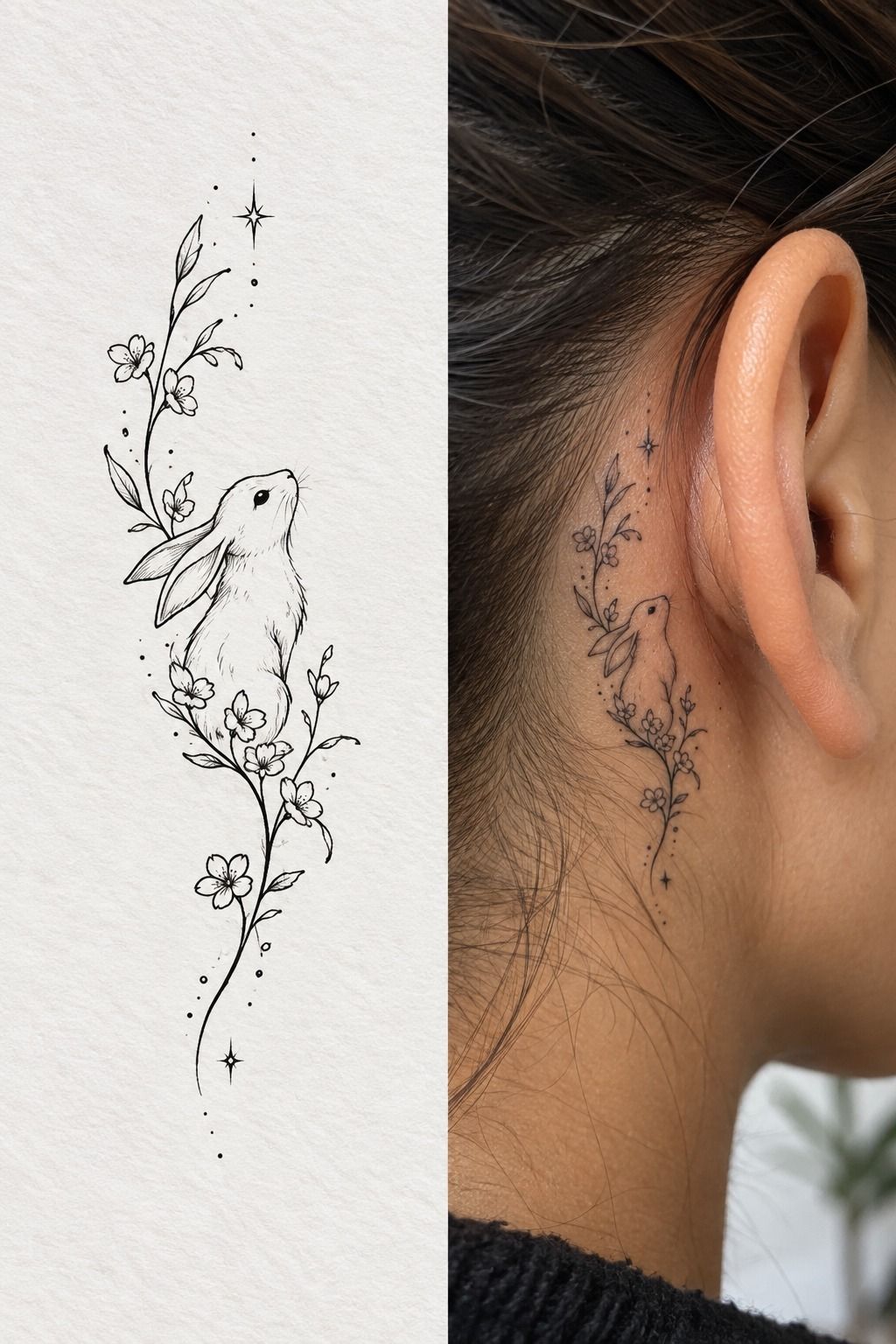
A tiny animal can work beautifully behind the ear when you focus on the outer profile rather than facial detail.
11Select An Elegant Birth Flower Tattoo
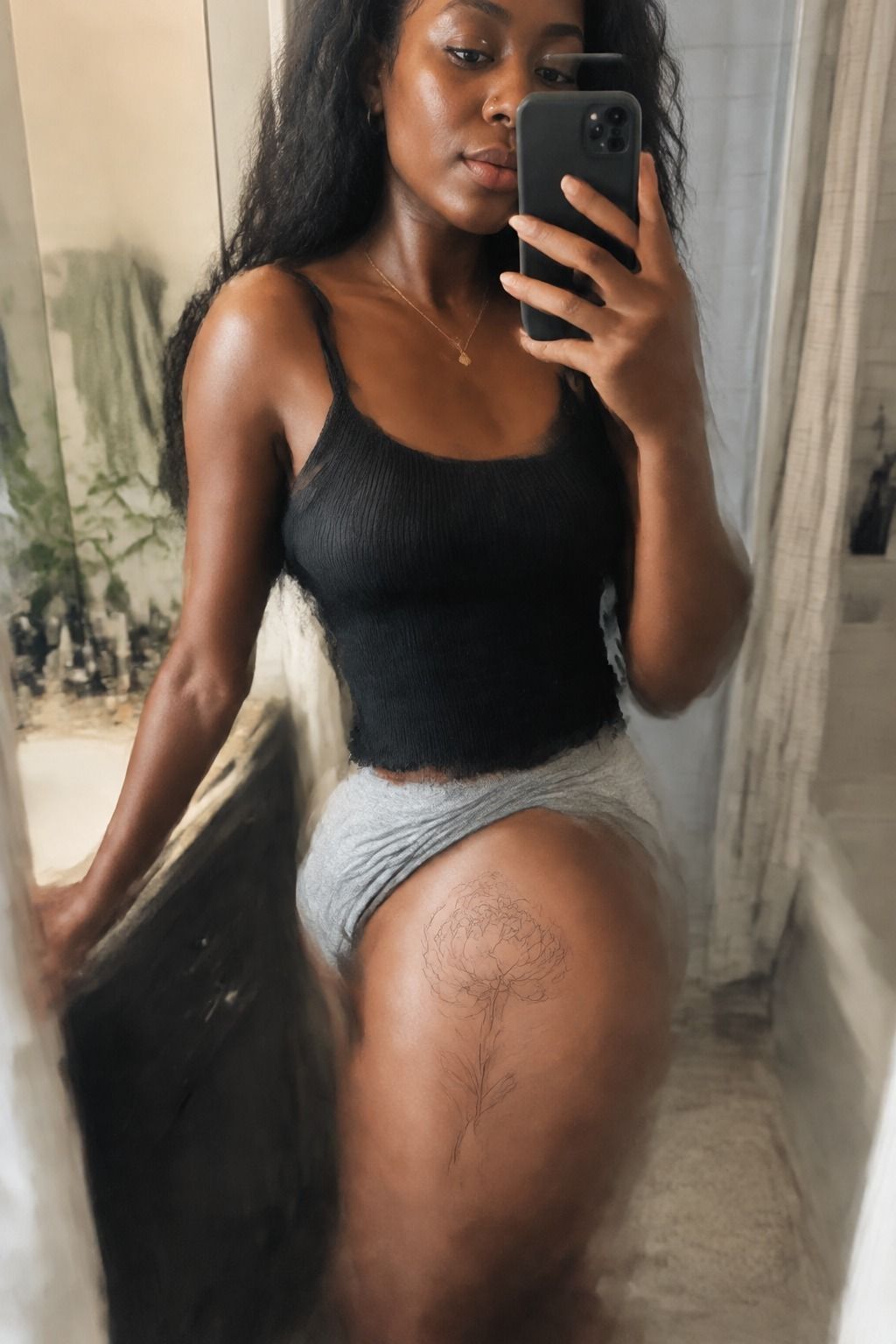
Choose the birth flower for its meaning, then simplify it until the bloom remains readable. A birth flower can mark a birthday, family connection, or private milestone without requiring a name or date.
A black floral outline may age more cleanly than fine interior petals, especially when the design is small. I’d rather see three strong leaves than ten lines that merge during healing. That cleaner approach can also keep the appointment within a sensible budget.
This can be an elegant, personal choice for a birthday, family connection, or private milestone. It’s more expressive than a generic flower because the symbol carries a story. You don’t need to add a date or name unless those details still matter to you after the design is reduced.
Ask your artist to show the flower on paper at the exact intended size. If the stem disappears or the petals become a dark knot, simplify again. Your final tattoo should feel delicate and polished, not overworked.
If you’re unsure which flower has the right mood, compare a few options before booking. The most stylish bloom isn’t necessarily the most meaningful one, and personal meaning is what makes the cost feel worthwhile.
What Healing Really Changes
Your surface healing will usually take about 2-3 weeks, while complete healing can take about 2-3 months. During that period, wash gently, moisturize as directed, and avoid unnecessary sun or swimming. You’ll need patience because a crisp tattoo can look temporarily dull or flaky before it settles.
Use the artist’s aftercare instructions rather than layering on random products. A fragrance-free cleanser is often part of a gentle routine, but your studio should tell you exactly what to use. Don’t pick at flakes, and don’t judge the final line quality during the first few days.
Fine lines can widen over time, especially when the design is too crowded or exposed to repeated UV. Solid black shapes and sensible placement tend to age more reliably than fragile detail. If you’re choosing between more detail and more negative space, I’d protect the negative space.
Aftercare is part of the tattoo’s value. Even a striking design can lose clarity if you rush healing, ignore instructions, or expose fresh skin to unnecessary irritation.
The Three Checks I Use Before Ink
First, check recognition. Can you identify the star, moon, flower, heart, or animal without the reference beside it? This is the recognition check, and it catches weak designs quickly.
Second, check spacing. Does every line have room to remain separate?
Third, check meaning. Would you still want this symbol if nobody else ever saw it?
Your artist can help you make those decisions, but you’re the person who has to live with the result. Bring the reference, the intended placement, and any concerns about visibility. A printed design proof makes the conversation clearer than pointing at a phone screen.
I’d also ask what happens if the design needs to be simplified. That isn’t a failure.
It’s often the difference between a striking tattoo and a muddy one. A bold, readable shape may feel less ornate at first, yet it usually gives you more confidence after healing.
If the artist can explain the tradeoff between detail, cost, and longevity, you’re having the right consultation. Trust that conversation more than a viral design.
The Ear Is a Small Canvas, Not a Small Decision
I’ve changed my mind about tiny tattoos more than once. At first, I wanted the most intricate design possible because it looked enchanting on a screen.
Then I saw the same artwork reduced to its real size and understood the problem. Detail only helps when the skin can hold it.
The best small ear tattoo ideas have a clear silhouette, a little breathing room, and a reason for being there. I’m drawn to delicate stars, clean crescents, and single-stem flowers because they don’t need a paragraph of explanation. They can be symbolic without becoming precious.
I’d also choose a strong artist over a complicated concept. A refined three-line design from someone who understands healed work will serve you better than an ornate miniature from someone who only shows fresh tattoos. That’s where your money matters.
The studio minimum may be about $50-$100, and hourly rates may be about $100-$250, but the cheapest quote shouldn’t make the decision.
Compare the quote with the artist’s healed results and the amount of consultation included. The best value is the tattoo you’ll still like after the novelty fades, not simply the lowest price.
Finally, let the tattoo remain personal. You don’t need to follow every viral placement or add a second symbol to prove the first one matters.
A crisp mark behind your ear can be quiet, expressive, and timeless. That restraint is what makes the design feel like yours.
The Questions Worth Answering First
How much does a small ear tattoo usually cost?
A small ear tattoo often falls around a studio minimum of $50-$100, while hourly pricing may run about $100-$250 in the US. Your artist, region, design detail, and placement will affect the quote. Ask for the minimum before booking so you’re not surprised.
Are small ear tattoos a good idea for a first tattoo?
Yes, small ear tattoos can be a good first choice because the design stays limited and the placement can be discreet. Simple linework gives you a clear result, especially when you choose a symbol that feels personal rather than copying a trend. Absolutely!
How do I choose a tattoo artist for small ear tattoos?
Review healed photos, not only fresh work, and look for consistent linework at small sizes. Your artist should explain placement, hygiene, stencil approval, and aftercare clearly. Choose someone who regularly tattoos delicate symbols, letters, florals, or geometric designs.
How much do small ear tattoos hurt?
Pain varies by person and placement, but bony areas such as the ribs, feet, hands, and sternum are often more painful than the forearm, thigh, or shoulder. Behind-the-ear sensitivity can feel sharp, so tell your artist if you need a pause.
How long does a small ear tattoo take to heal?
The surface usually heals in about 2-3 weeks, while complete healing takes about 2-3 months. Wash gently, moisturize as instructed, avoid picking, and protect the tattoo from sun and swimming while it settles.
What’s the best placement for a small ear tattoo?
Behind the ear and along the outer helix are practical choices because they can be discreet while still following the ear’s shape. A clear stencil helps you judge visibility, pain, and line flow before the artist begins.
Where I’d Start First
If I had to pick one step, I’d start with the crisp line test. A tiny crescent or star survives because its shape reads instantly, even after fine lines soften.
Print it at size, check the spacing, then book an artist with healed examples. Save that reference for your appointment.