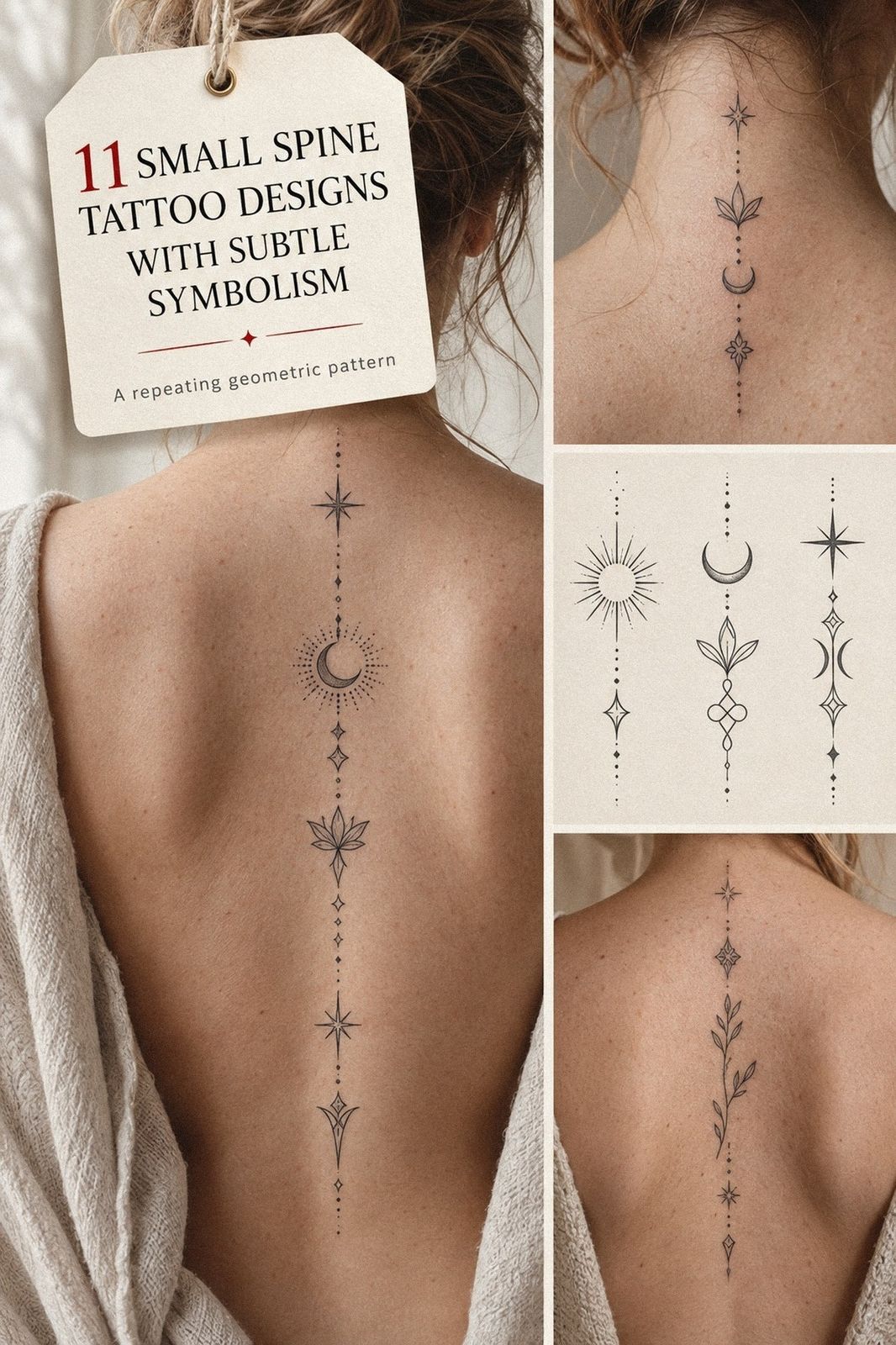
Small spine tattoo designs can cost about $100 to $300 in the US, depending on the artist, region, size, and session time. I chose mine after months of saving the idea, editing the lines, and asking whether I’d still want it hidden at thirty. I did. More than I expected.
My one rule: the design had to feel personal before it looked striking. If you’re considering one, start with meaning, then let the placement, spacing, and scale make the tattoo yours. My small fine line spine tattoo references helped me notice what actually held my attention.
Here’s what it looked like before
The patch of skin had no mark, no old ink, and no dramatic story written across it. It was simply a narrow strip between my shoulder blades that I’d been saving for an idea personal enough to stay mine.
I kept changing my mind. I wanted terracotta and olive ink, but I didn’t want a design so faint that it would disappear as the years passed. If you’re starting with untouched skin, give yourself time to notice what keeps returning in your sketches.
My artist asked me to bring a reference folder, then asked me to remove half of it. That was the first useful edit! The final direction became more delicate, more intricate, and far less crowded.
I’d rather have one crisp mark with meaning than ten small details competing for attention. A small tattoo needs a clear visual idea, especially when it follows the spine’s narrow vertical path.
I Chose a Delicate Vertical Linework Spine Design
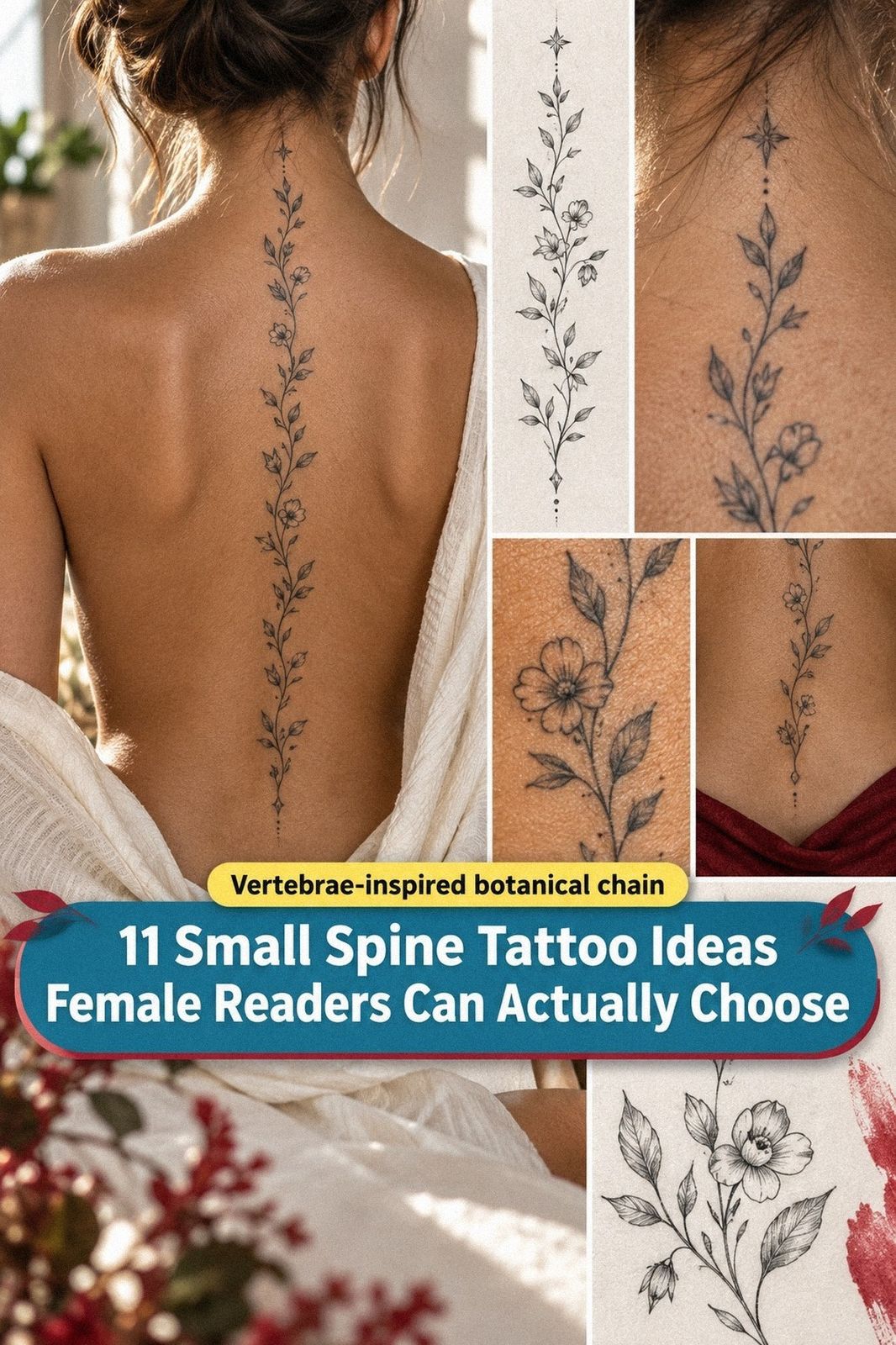
I started with a single-needle line, following the natural vertical path of my spine instead of forcing a perfectly straight column. The muted terracotta looked striking without feeling harsh, while the olive accents created a flowing line down my back.
You’ll want to check how the tattoo reads as your body moves because your spine curves when you stand, bend, and twist. I asked for the center point to sit between my shoulder blades, with the lower detail stopping well above my waist.
That kept the piece minimal and balanced. The tattoo didn’t need to cover the full back to create a powerful, graceful flow.
The first sketch had too many loops. I cut them. The cleaner version felt stronger because it left small pockets of skin untouched.
I chose terracotta tattoo ink with olive accents because I wanted the main shape to remain readable. Faint wash can look elegant on the first day, but I’d skip a design that depends entirely on whisper-soft pigment.
You can compare that approach with these small fine line spine tattoo references, especially if you’re drawn to delicate work that still has a clear silhouette.
Your tattoo should still have a visual spine of its own. Good. The tattoo had a job!
I Mapped Small Botanical Details Along My Spine
The second pass brought in a botanical sprig with tiny clay-toned leaves spaced along the center line. I liked the way the warm marks stayed sharp against my skin without needing heavy fill.
I didn’t want a generic flower. I chose narrow leaves and one small curved stem because they felt symbolic without explaining themselves to everyone who saw them.
You can use a plant connected to a date, person, or place, but your meaning doesn’t have to be obvious from across a crowd. In fact, I prefer an understated symbol that reveals itself slowly.
I kept the details separated. Closely packed leaves can blur into a dark stripe as fine lines soften, so I asked for visible breathing space between each element.
The artist used negative space as part of the design, not as leftover skin. That choice made the final piece feel more expressive.
My first draft looked too symmetrical and polished. The revised version had one leaf angled slightly away from the center. That tiny irregularity made it feel more human and timeless.
If you’re collecting references, these small tattoo designs show how a restrained motif can carry more feeling than a crowded composition.
I Compared Symbolic Small Spine Tattoo Ideas
I considered a tiny crescent, a vertical phrase, a moth, and a simple constellation before choosing the botanical route. Each idea had potential, but not every meaningful symbol felt right to me.
You’ll probably have several ideas that sound powerful at first. Write down what each one represents, then ask whether you’d still connect with it if nobody else understood it.
That question removed most of my options. The best design wasn’t the most ornate one. It was the one I kept returning to after the excitement faded.
The crescent was romantic, but it felt borrowed from other designs I’d saved. The moth was bold and expressive, yet it needed more width than I wanted. The constellation had a whimsical quality, but it didn’t belong to my story.
A botanical line gave me a quieter, more classic answer. I’d choose meaning over trend every time, especially for a placement you won’t see easily.
I also asked to see healed examples, not only fresh work. Healed plum-and-gray ink can reveal softened edges and faded gaps that a new tattoo hides.
You can explore more tattoo pattern designs before your appointment, but your final sketch should be edited until every mark earns its place.
I Tested Placement Between My Shoulder Blades
Before the appointment, I used a temporary stencil between my shoulder blades and wore a loose cotton shirt over it. The stencil looked centered when I stood still, but it shifted slightly when I raised my arms.
That test mattered. You’ll want to check the placement while standing, sitting, reaching, and turning your neck.
Your shoulder blades move more than you may expect, and a design that looks centered in one position can sit differently on your body. I’d rather discover that before the appointment.
My artist moved the top point lower by a small amount and kept the bottom detail away from the strongest crease. I preferred that choice to placing the entire piece directly over the most prominent bones.
The centered version looked sleek, but the adjusted version moved more naturally with me. That small change made the tattoo feel less rigid.
If you’re comparing upper-back placement with shoulder placement, these women’s shoulder tattoo designs can help you judge how much movement you want.
I Selected Meaningful Minimal Script for My Spine
I nearly chose a short word, then changed my mind. The emerald-and-gold script I studied made me realize that lettering can look personal on paper but generic once it’s placed on skin.
My chosen phrase became a small symbol instead. It was easier to keep the idea private, and it gave the artist more control over spacing.
If you want script, bring the exact type style, letter height, and reference for how the word should curve. Your artist can tell you whether the letters have enough room to remain readable.
I’d avoid squeezing a long sentence into a narrow vertical space. A fine-line script sample may look elegant at full size, but letters can merge if they’re reduced too far.
My artist printed the design at the intended scale, and I lived with that paper version for several days. I kept looking at it during ordinary moments, which made the decision feel more honest.
That pause helped. I kept touching the paper to see whether I missed the words. I didn’t.
The symbol stayed, and the lettering went. Sometimes removing the explanation makes the tattoo more meaningful.
You can compare script, symbols, and other tattoo pattern designs before deciding which direction still feels like yours after the novelty wears off.
Black Ink or Gray Wash?
This was the contrast I kept coming back to: bold enough to remain readable, delicate enough to retain its dainty character.
Gray wash can create a romantic, ethereal effect, but it may soften more quickly than a confident colored line. I didn’t want the design to depend on barely visible shading.
At the same time, I didn’t want a heavy block of pigment. A narrow charcoal accent gave me enough contrast without overpowering the vertical flow.
If your design uses gray, ask how the artist expects it to heal on your skin tone. A daring idea can still need practical spacing and strong structure.
I chose color because the stronger contrast made the central idea easier to read. The palette wasn’t the whole personality of the tattoo, but it gave the smaller marks somewhere to begin.
I Refined an Intricate Celestial Spine Tattoo Design
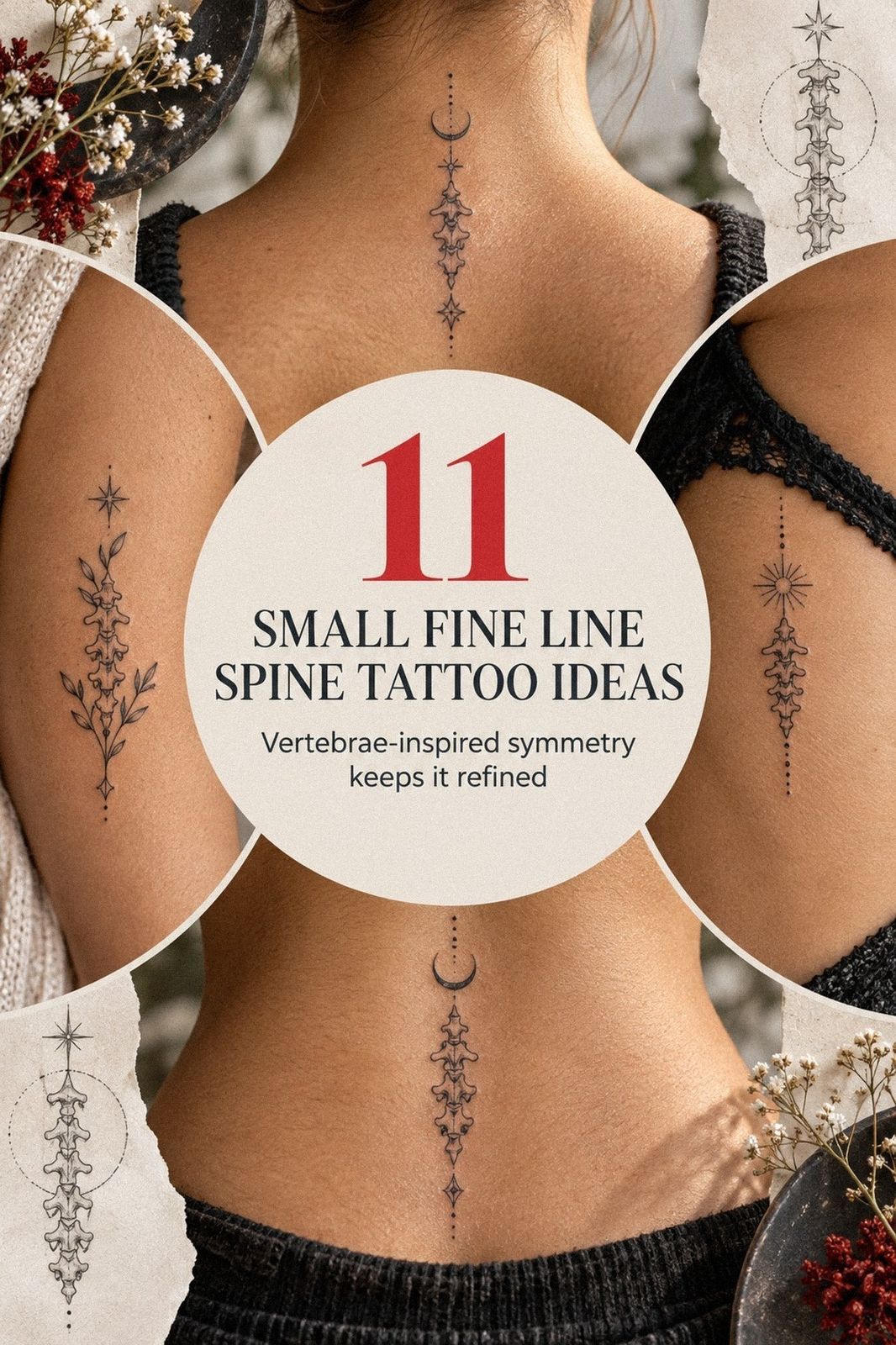
For the celestial version, I tested a moon and star grouping with fine rust-colored dots between the main lines. I wanted the design to feel intricate without becoming dense.
You’ll want your artist to explain how each mark will read on your skin tone, especially if the sketch relies on tiny dots or very light shading.
A forest-green central line can anchor smaller details and keep the whole design legible. That anchor matters when the tattoo is narrow.
The first celestial sketch had seven stars. I removed four. The remaining three felt more intentional, and the open skin around them made the piece feel ethereal without becoming overly ornate.
I’d rather see three strong points than a field of dots that loses its rhythm. An iconic symbol doesn’t need every possible detail.
My artist also showed me a healed forest-green dotwork detail from a previous client. That example calmed me because it showed the expected softening instead of pretending every line would stay brand-new.
If you’re considering a celestial variation, these top rated tattoo designs can help you compare scale and line density.
I Balanced Bold Ink With a Dainty Scale
The hardest decision was scale. I wanted a feminine tattoo, but I didn’t want it so small that the lines had nowhere to settle.
You can keep a tattoo visually small without shrinking every part equally. I enlarged the center symbol slightly, then left the surrounding lines thin and open.
That made the design feel polished rather than fragile. The contrast between the central mark and the lighter details gave it a sharper silhouette.
But I refused a heavy charcoal block. Solid fill would have made the piece more dramatic, yet it would also have changed the gentle quality I wanted.
The finished drawing used charcoal accents only where the eye needed direction. Your artist should be able to point out the visual anchor before the needle touches skin.
A fierce tattoo doesn’t have to be large. It can be quiet in scale and still carry real force.
I Personalized a Unique Small Spine Tattoo
The warm white and camel palette I considered helped me think about personalization beyond initials and dates. I chose a custom botanical symbol based on a plant that appeared in a family keepsake.
You can personalize a small piece through shape, spacing, and placement. Your artist might adjust one curve to match your body, turn a leaf toward the shoulder, or remove a detail that won’t age clearly.
Those edits aren’t a loss of meaning. They’re how the idea becomes yours. That’s where a generic concept can become genuinely personal.
I brought the keepsake, but I didn’t ask for an exact botanical portrait. A literal copy would have required too many tiny marks.
The final symbol was more vibrant than my first sketch, and I liked that it held the reference without announcing it. It felt meaningful without becoming explanatory.
I kept one imperfect curve from the original sketch. It gave the design a raw, human quality.
Custom fine-line artwork should look deliberate, not mechanically perfect. You can browse unique female tattoo designs for ideas, but your final reference should begin with your own story.
My Artist’s Edit
The most important change wasn’t a new symbol. It was removing three small leaves, one extra loop, and a line of dots that had seemed clever on paper.
My artist called the remaining shape edited linework. I liked that phrase because it treated restraint as a choice, not a limitation.
A tattoo can be feminine, masculine, or neither depending on the marks you choose. Mine became more stylish when I stopped trying to make every reference visible.
That edit also protected the design’s future readability. Fine lines need room, and the skin needs enough separation for each mark to stay distinct.
I’d rather have a crisp, meaningful tattoo with one edgy irregularity than a technically impressive piece that says too much. The quiet version won.
What I Asked My Artist to Change
I asked for the upper stem to move slightly left, the lower leaf to turn outward, and the smallest dot to disappear. Those changes were subtle, but they gave the composition more balance.
The design edit also made the symbol easier to read at a glance. Nothing felt crowded, and the central mark remained the first thing I noticed.
I’d bring your artist specific questions about line weight, spacing, and healed results. A fresh tattoo can look perfect while hiding how close details may become after the skin settles.
I also asked whether the narrowest gaps would remain visible over time. That conversation helped me understand that a strong tattoo isn’t only about the appointment-day result.
The final version had fewer marks, more air, and a clearer rhythm. That was the moment it stopped feeling like a collection of references and started feeling like mine.
You can save more small spine tattoo ideas while editing, but don’t let a large reference folder make the final design larger than it needs to be.
I Prepared for the Spine Tattoo Session
I chose a clean stencil transfer and asked to see it from behind before agreeing. The top looked centered, the bottom followed my natural line, and the spacing felt intentional.
You’ll want loose clothing, a full meal beforehand, water, and a plan for getting home without rubbing the fresh tattoo.
I wore a loose button-front shirt so I wouldn’t need to pull fabric over the placement. Small choices like that made the session feel calmer.
I also asked about hygiene, needle setup, and aftercare before the appointment. A reputable studio should answer without acting irritated.
If you’re still comparing artists, look for clean linework, healed examples, and a portfolio that includes work on different skin tones. An elegant portfolio isn’t enough if the healed results aren’t clear.
My session was shorter than I feared, but I didn’t assume that would be true for every design. Single-use tattoo needles and careful setup matter more than rushing.
You can save your reference folder beside these small spine tattoo ideas and bring both to the consultation.
I Managed Pain During Fine Line Tattooing
For me, the spine felt sharper over the bony areas and easier where there was more soft tissue. Pain varies, but ribs, feet, hands, and sternum are often more intense than the forearm, thigh, or shoulder.
You’ll want to tell your artist if you need a pause. There’s no prize for pretending your body isn’t giving you information.
I focused on slow breathing and kept my shoulders loose. Tensing made each pass feel more pronounced.
But I didn’t treat discomfort as a test of toughness. A fierce design doesn’t require you to pretend the session is effortless.
The fine line moved quickly, although repeated passes over one section felt hotter. I brought water and wore clothes that didn’t press against the stencil.
Fresh tattoo film protected the area afterward, and I left with clear instructions rather than guessing. No heroics!
I Protected My Spine Tattoo Through Healing
I paid attention to aftercare because fresh terracotta linework needs protection while the surface settles. A tattoo can look sharp at first, then appear slightly dull before the skin finishes recovering.
You’ll usually see surface healing in about 2 to 3 weeks, while complete healing can take about 2 to 3 months. That timeline varies by body, placement, and care.
I washed gently, patted the area dry, used the recommended moisturizer, and avoided picking. The routine was simple, but I had to stay consistent.
I also kept it out of direct sun and skipped swimming during the early stage. If your artist gives different instructions based on the products used, follow those instructions.
I took progress notes under the same conditions instead of judging the tattoo every hour. The early stage looked sharper, then slightly duller, then clearer again.
Fragrance-free cleanser was all I needed for washing. The calm approach worked better than constant checking. That was enough!
How Much It Cost
I didn’t want the budget to be vague, so I planned around typical US tattoo pricing rather than pretending every studio charges the same amount.
A shop minimum may sit around $50 to $100, while an hourly rate commonly falls near $100 to $250. Small spine tattoo designs often land around $100 to $300, depending on the artist, region, detail, and time.
My planning number was $180 for a small fine-line session, with extra room in case the artist’s minimum or consultation changed the total. That figure is a planning example, not a universal quote.
Your artist should confirm the price before the appointment. Studio consultation time is part of the value because placement and scale can prevent a disappointing result.
I’d spend more on a proven linework artist than on extra detail. You can compare more classic tattoo designs while checking whether the artist’s healed work matches your expectations.
Visibility or Privacy?
A spine tattoo can be private under a shirt while appearing clearly with swimwear or an open-back top. That balance was one of the reasons I chose the placement.
If you want something more visible, forearm placement may feel empowering. If you want the design to remain yours first, the spine offers a quieter alternative.
I didn’t need the tattoo to perform for anyone. Its hidden quality made the meaning feel more intimate.
You can still choose a vibrant design for a private placement. Visibility and intensity aren’t the same thing.
Why the Hidden Spine Rule Matters
I used to think a meaningful tattoo had to be visible to matter. I don’t believe that anymore. My private spine tattoo works because I don’t see it every morning, and nobody else gets to turn it into a conversation before I’m ready.
The hidden placement changed how I judged the design. I stopped asking whether the line felt right against my body and started asking whether I would still choose it years from now.
That shift made the final piece more elegant and less dependent on outside approval. I didn’t need constant reminders for the symbol to remain important.
I’ve also learned that small tattoos need stronger editing than large ones. Every line has a job. Every gap affects the rhythm.
A delicate piece can be expressive, but only if the artist has enough space to make the marks distinct. That’s why I’d rather simplify early than request a repair later.
Would I choose the same design again? Yes, though I’d keep the slightly uneven leaf and the open spacing around the center.
Those are the details that make it feel honest rather than stamped on. If you’re weighing privacy against visibility, browse unique small tattoo designs and notice which ideas still interest you without a dramatic presentation.
The Questions I Get Asked Most
How much does a small spine tattoo usually cost?
A small spine tattoo usually costs about $100 to $300 in the US, though a shop minimum may be $50 to $100 and hourly rates may be $100 to $250. A clear quote before booking helps you plan around the artist, region, detail, and session time.
Are small spine tattoo designs a good idea for a first tattoo?
Yes, they can be a good first tattoo if you choose a manageable design and understand the placement. Clean linework and a personal symbol can feel meaningful without requiring a large piece. You’ll still want to discuss pain, movement, healing, and visibility with your artist.
How do I choose a tattoo artist for small spine tattoo designs?
Review a portfolio with healed examples, clean linework, and work on skin tones similar to yours. A fine-line tattoo specialist should explain scale, spacing, hygiene, and aftercare clearly. You can also compare their vertical designs with these small fine line tattoo examples.
How much do small spine tattoo designs hurt?
Pain varies, but bony areas can feel sharper than areas with more soft tissue. Ribs, feet, hands, and sternum are often more painful, while the forearm, thigh, and shoulder may feel more tolerable. Slow breathing and honest breaks helped me more than trying to act fearless.
How long does a small spine tattoo take to heal?
The surface often heals in about 2 to 3 weeks, while complete healing can take about 2 to 3 months. Gentle washing, light moisturizing, and sun protection support the process. Follow your artist’s specific instructions if they differ.
What’s the best placement for a small spine tattoo?
The upper spine between the shoulder blades offers privacy and a strong vertical path, while a lower placement can create a longer, more dramatic flow. A centered design with open spacing usually reads clearly, but your artist should test the stencil while you stand and move.
Where I’d Start First
If I had to pick one, I’d start with a delicate vertical linework spine design. The open spacing gives fine lines room to age without turning the tattoo into a dark stripe.
Pin that idea for later, then let your artist edit it to your body. The most meaningful version may be the one with fewer marks, stronger spacing, and one sacred detail nobody else needs to understand.
You can also revisit these top rated tattoo designs or classic tattoo designs when you’re comparing symbols, but your final choice should still come back to your own story.