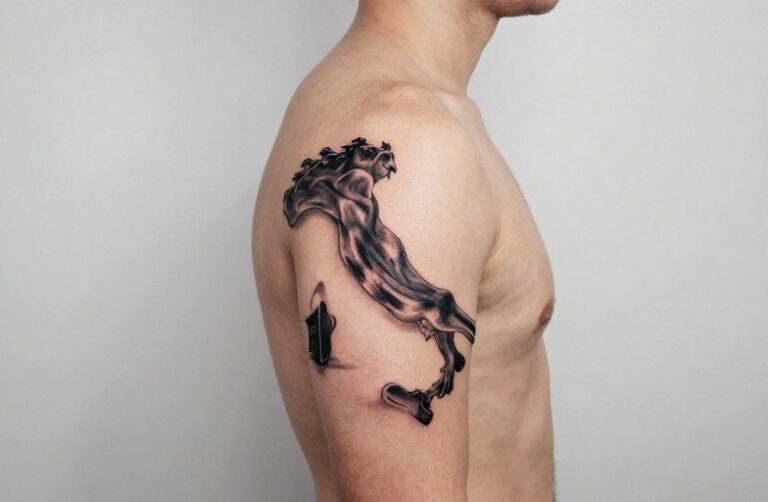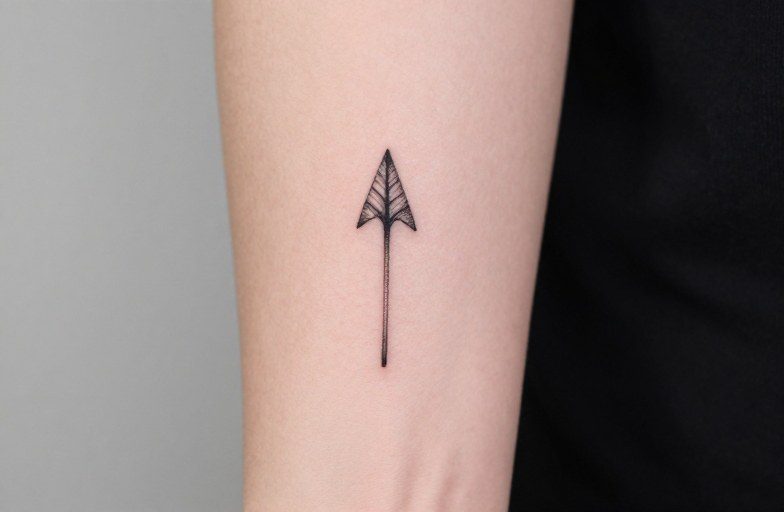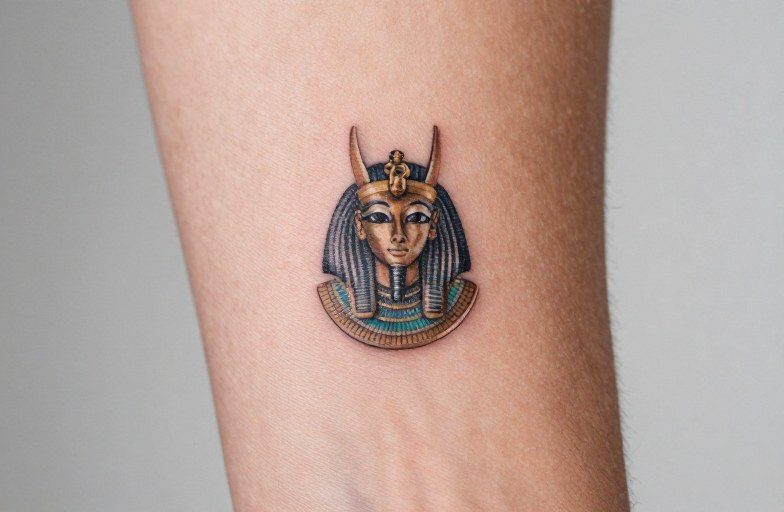
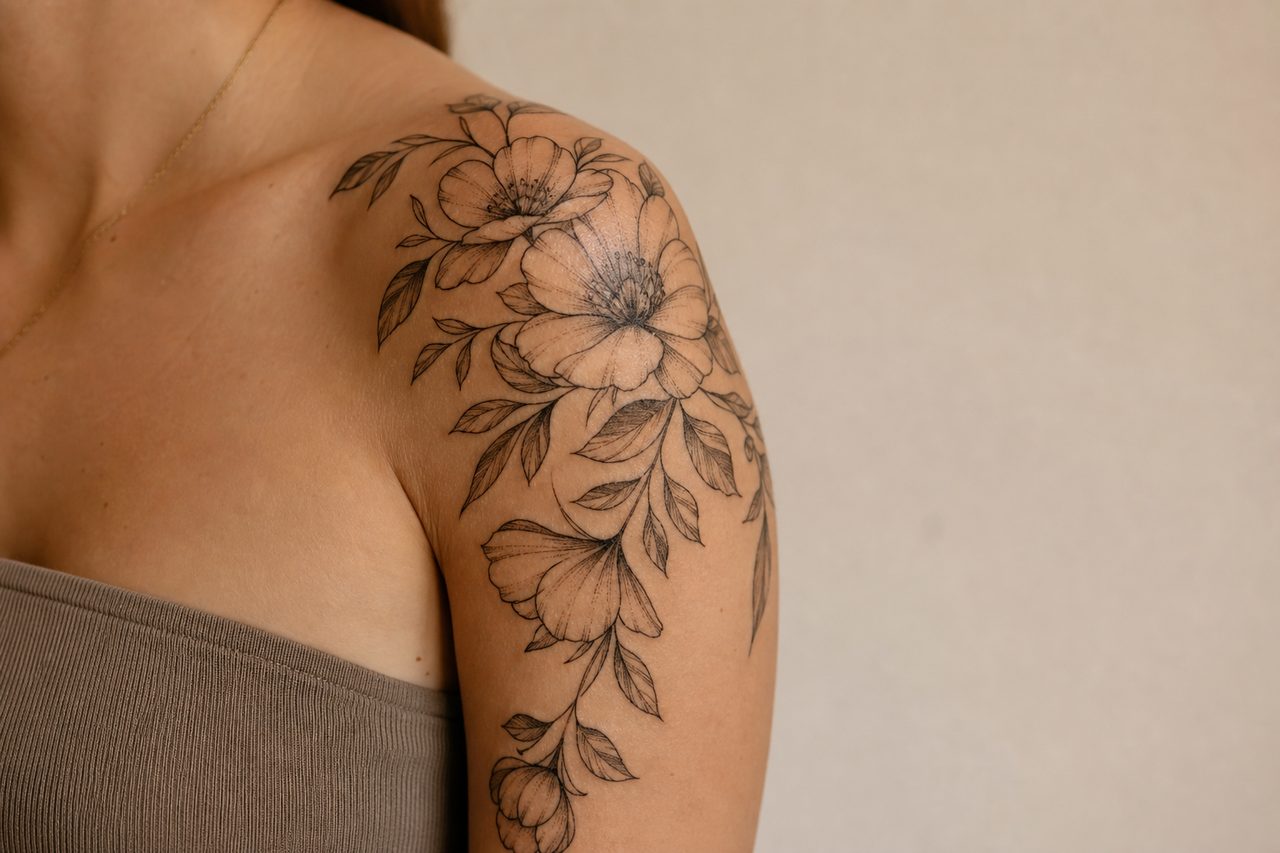
The shoulder offers one of the most versatile canvases on the body for women. The natural curve from collarbone to deltoid creates movement, the skin holds ink well over time, and coverage options range from a thumb-sized accent to a piece that wraps onto the upper arm or back. Whether you want something visible in a tank top or easily hidden under a sleeve, the shoulder delivers without the commitment of a full sleeve or back piece.
Trending Variations
Botanical Work
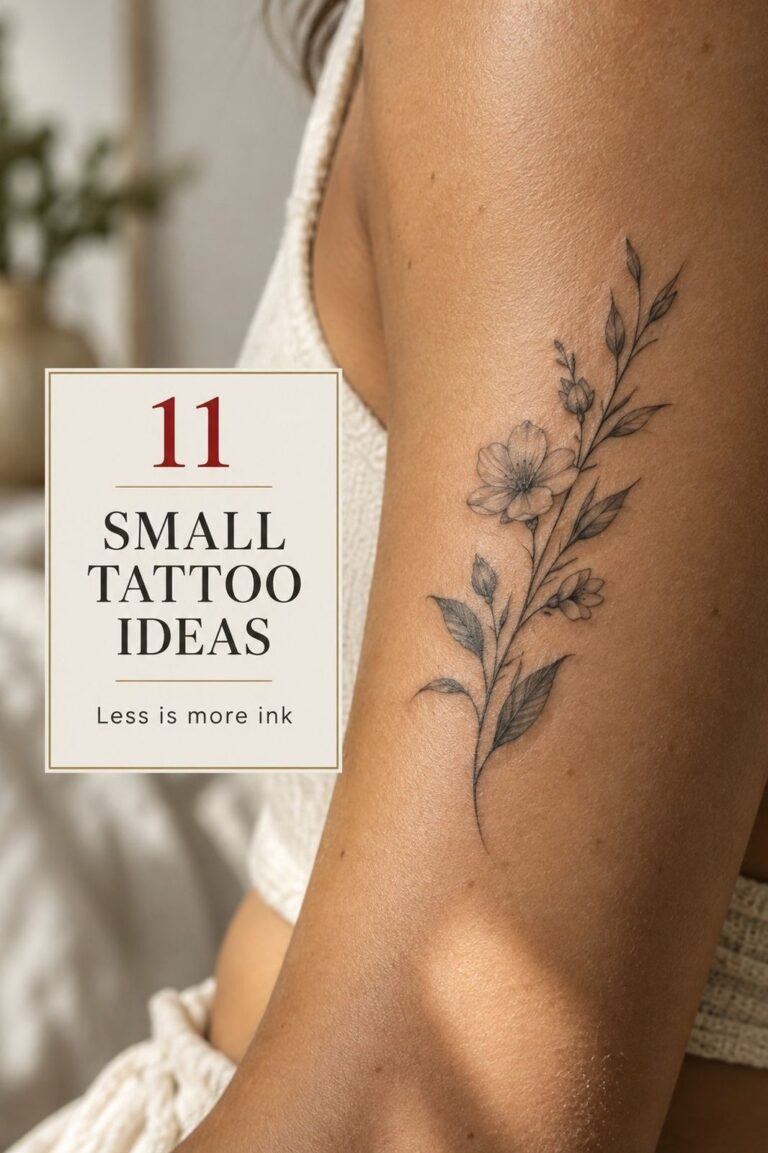
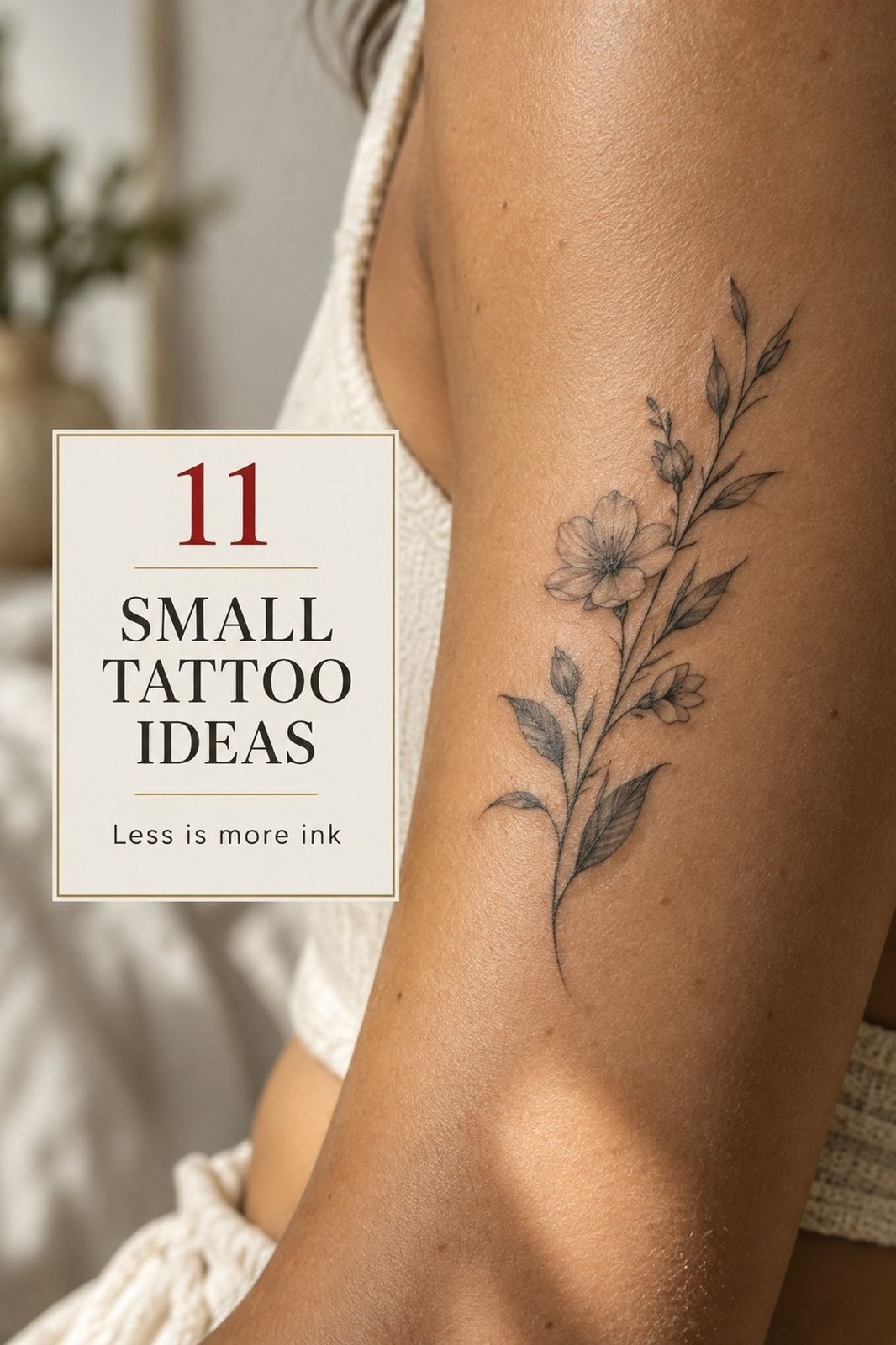
Flowers on the shoulder aren’t going anywhere, but the approach keeps evolving. Single-stem pieces running from the collarbone toward the deltoid edge read as elegant rather than decorative. Peonies, anemones, and wildflowers dominate because their layered petals translate beautifully to the rounded surface. Fine-line work with selective dot shading ages better than heavy black fill here, since the shoulder sees sun exposure and the subtle gradients soften rather than blur into muddy blobs.
Abstract and Ornamental
Jewelry-inspired bands wrapping the shoulder cap, negative-space mandala fragments, and flowing abstract lines that follow muscle contour have gained serious traction. These designs often skip black outlines entirely, relying on varied needle groupings to create texture. The result reads as contemporary and avoids the “sticker” look that can happen with more traditional illustrative work on this placement.
- Single-needle fine line: delicate, ages faster, requires touch-ups
- Whip-shaded traditional: bolder, holds longer, less detail at small sizes
- Blackwork ornamental: high contrast, striking from distance, limits future options nearby
Standout Design Ideas
Some concepts simply work better on the shoulder than anywhere else. A crescent moon tucked at the front of the shoulder cap catches light differently throughout the day as you move. Birds in flight migrating from shoulder toward back or chest capitalize on the natural plane change. Script following the collarbone curve demands precise letter spacing; too tight and it blurs within years, too loose and it looks like a mistake.
Creatures and Figures
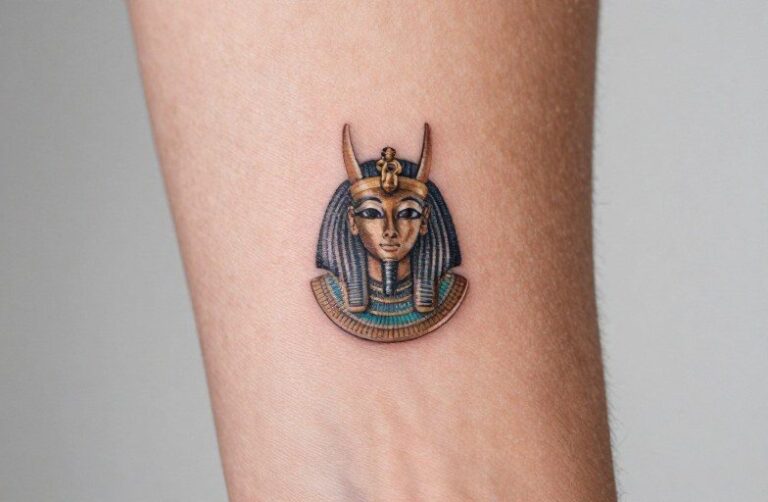
Snakes coiling over the shoulder work with the anatomy rather than fighting it, the curve of the deltoid becomes the snake’s body. Butterflies with wings extending onto the upper chest or back can feel dimensional without needing photorealistic rendering. Small portraits or faces placed on the flat plane of the shoulder cap (not the rounded edge) hold detail better than you’d expect, though they demand an artist experienced in that specific scale.
Geometric and Sacred Geometry
Metatron’s cubes, flower of life fragments, and dotwork mandalas centered on the shoulder cap or trailing toward the blade create optical effects as the body moves. These pieces require steady hands and long sessions; the precision can’t be faked. The payoff is a design that looks intentional from every angle, something that freehand organic work sometimes misses.
How to Personalize It
Start with the structure, not the symbol. A birth flower means more when it’s drawn from your actual month, not a generic Google result, January’s carnation looks nothing like June’s rose. Coordinates of a meaningful location work as tiny numerals along the collarbone edge, or as larger integrated elements within a larger composition. Handwritten notes from family members can be traced for script, preserving the actual pressure and variation of the original pen.
Combining Elements
The shoulder connects to enough territory that you can build outward later. A small floral cluster on the cap can eventually extend into a half-sleeve or across the upper back. Planning for this from the start means leaving negative space and avoiding designs that “dead end” awkwardly at the edges. Ask your artist about flow, how the eye moves across the piece and where natural continuation points sit.
- Integrate existing tattoos by matching the black saturation level
- Choose motifs that can be mirrored or repeated for future symmetry
- Consider scar coverage or stretch marks as part of the design flow, not obstacles
For First-Timers
The shoulder ranks among the more manageable spots for a first tattoo. The outer cap has substantial muscle padding, making the sensation a dull vibration rather than sharp sting. The inner shoulder near the armpit and the collarbone edge itself are different stories, thin skin over bone means you’ll feel every needle grouping distinctly. Most shoulder pieces heal without the friction issues that plague foot or hand tattoos, though bra straps and backpack seams can irritate fresh work on the cap or blade.
What to Expect
A palm-sized shoulder tattoo typically takes two to three hours. Larger pieces extending toward the back or chest might require multiple sessions, especially if color saturation is involved. The healing timeline runs about two weeks for surface closure, longer for complete settling of the ink. During that window, sleeping on your back helps, as does wearing loose, clean tops that don’t rub the fresh surface.
Best Placements
Not all shoulder real estate behaves the same. The front cap, visible in a tank top, easy to check yourself, works for pieces you want to see daily. The back of the shoulder blade hides under most work and casual tops, surfacing only with specific cuts. The collarbone edge offers a narrow strip that reads as refined but limits design complexity. The “deltoid flat,” the relatively even plane on the outer arm-facing surface, holds detail well and ages evenly.
Extension Options
A shoulder piece can stay isolated or travel. Down the outer arm becomes a half-sleeve. Across the upper back becomes a back piece or chest panel. These transitions need planning; a design that looks complete on its own but can grow keeps options open. The worst shoulder tattoos are the ones that clearly wanted to be bigger but stopped arbitrarily, leaving floating elements with no grounding.
Tips for Choosing
Look at your actual shoulder in a mirror, not just reference photos of other people’s tattoos. Note your freckle patterns, moles, and skin texture, these affect how ink reads. Pale skin shows fine-line detail longer; darker skin benefits from bolder contrast and slightly larger scale to maintain readability as the ink settles. Consider your wardrobe necklines; a collarbone piece you never see because you wear crewnecks wastes the placement.
Finding the Right Artist
Shoulder anatomy varies enough that an artist who understands how designs distort with arm movement produces better results. Check portfolios for healed photos, not just fresh work. Ask specifically about how they handle the curve of the cap versus the flat of the blade. Specialists in ornamental work, botanical illustration, or black-and-gray realism will each bring different strengths to this placement.
- Request a stencil session to see how the design moves when you lift your arm
- Verify that line weight will hold at your chosen scale
- Discuss how the piece will look at 10 years, not just 10 days
Final Thoughts
The shoulder rewards patience and planning more than most placements. Its visibility means you’ll live with the decision in mirrors and photos constantly. Its connection to the arm, back, and chest means it can anchor larger work or stand alone as a deliberate statement. The best shoulder tattoos for women aren’t the ones that follow trend cycles, they’re the ones that fit the specific body, the specific movement, and the specific life that carries them. Take time finding the right design, the right artist, and the right spot on your particular shoulder. The canvas isn’t going anywhere.
Frequently Asked Questions
How painful is a shoulder tattoo compared to other placements?
The outer shoulder cap is one of the easier spots, with muscle padding that dulls the sensation. The collarbone edge and inner shoulder near the armpit hurt significantly more due to thin skin over bone and nerve clusters.
Will a shoulder tattoo stretch if I build muscle or gain weight?
The shoulder cap and deltoid handle moderate changes well due to muscle density. Major weight fluctuations or pregnancy can affect pieces extending onto the upper chest or back more than isolated cap work.
Can I wear a bra after getting a shoulder tattoo?
For cap or blade placements, a soft wireless bra is usually fine once the initial bandage comes off. Avoid underwire or tight straps directly on fresh ink for at least a week to prevent irritation and ink loss.
How do I keep a shoulder tattoo looking good long-term?
Sunscreen is non-negotiable; shoulder skin gets constant exposure. Moisturize regularly, and consider a touch-up at 5-10 years to refresh lines that naturally soften with age and UV exposure.