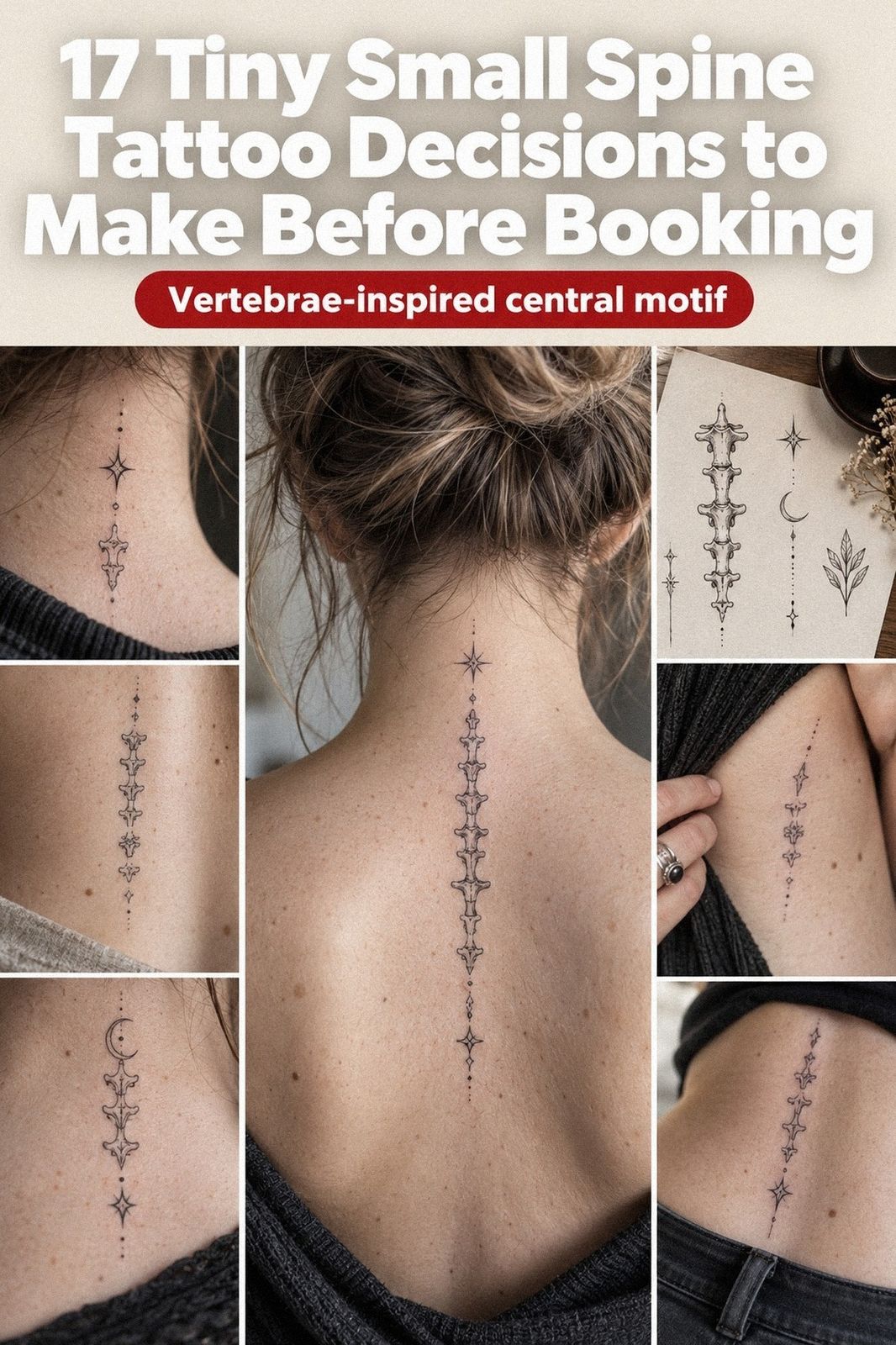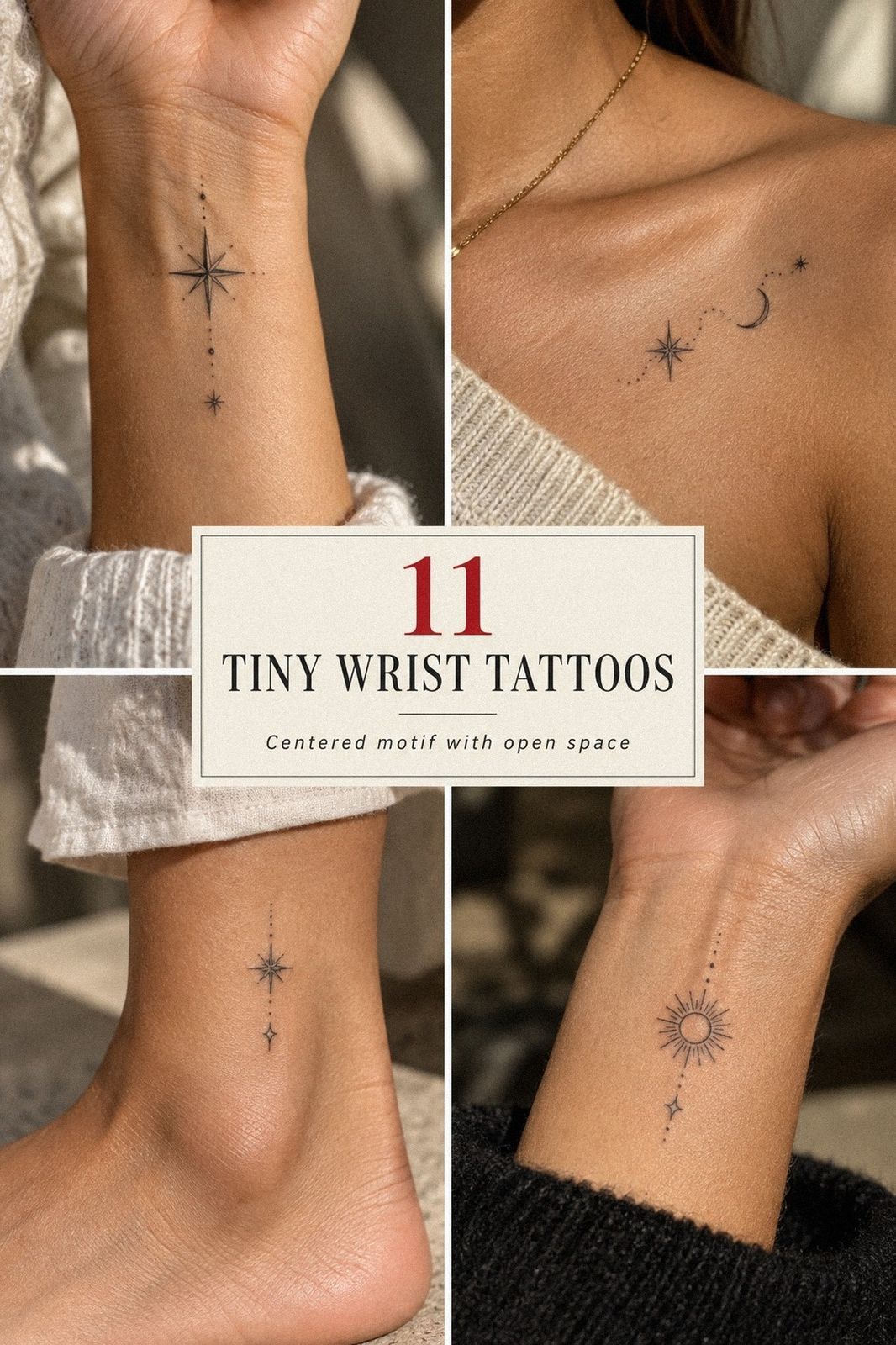
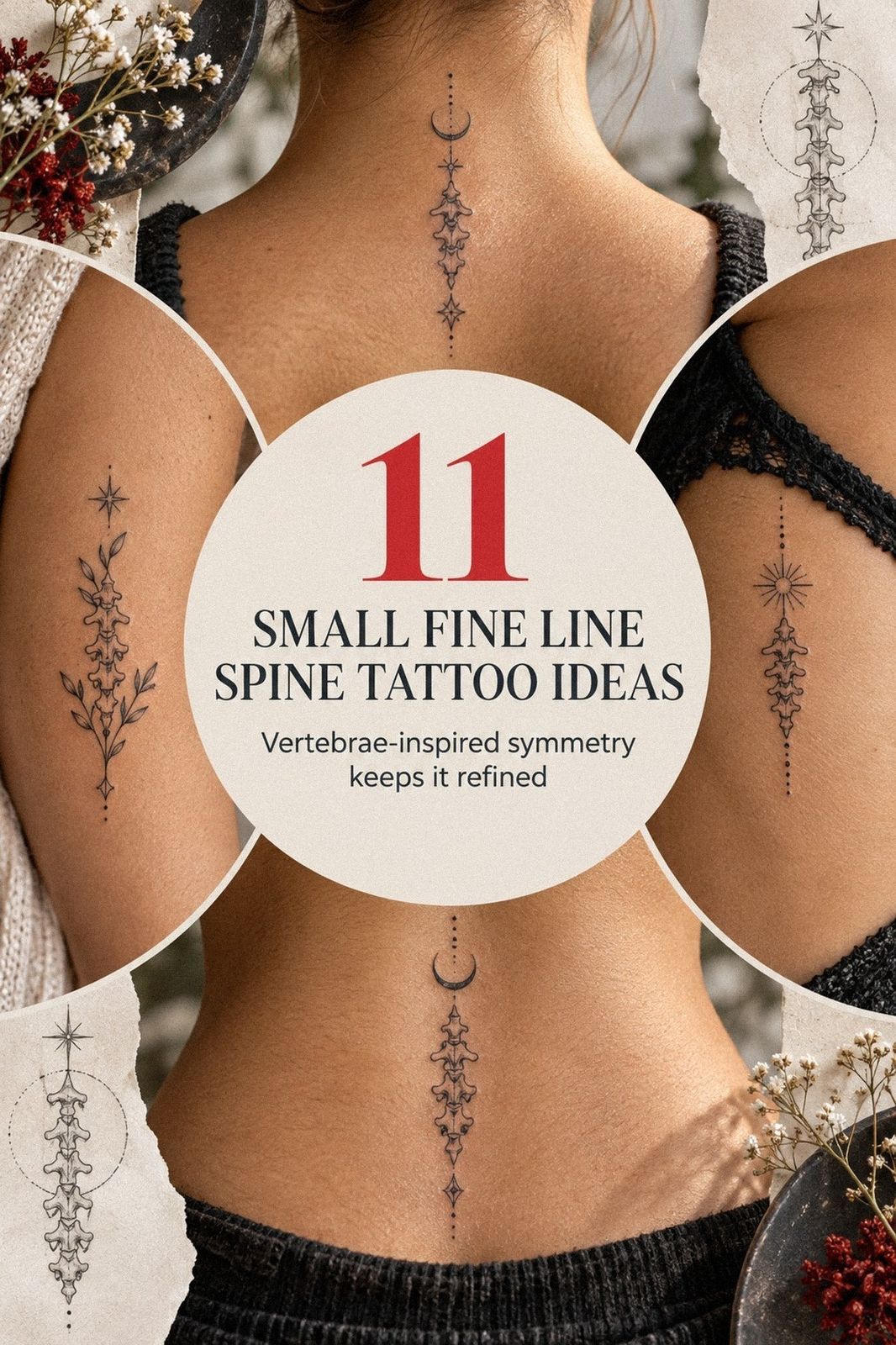
A small fine line spine tattoo feels personal when you begin with one private symbol, follow your natural anatomy, and leave enough open skin around it. You’ll need a clear sketch, a patient artist, and realistic expectations about healing and longevity. The result can be delicate and crisp without becoming anonymous.
Quick answer: choose one meaningful idea, test the stencil at its actual size, review healed work, and set a realistic budget before you book. A private tattoo doesn’t need to explain itself to anyone else!
- Start With a Minimal Spine Symbol
- Botanical Lines, Private Meaning
- What Should the Lettering Say?
- Place Tiny Ink Along Your Spine
- Your Anatomy Gets the Final Vote
- Crisp Lines or More Detail?
- The Three-Point Orbit
- Where Should the Center Sit?
- Dainty Details, Bold Meaning
- Before You Book a Sensitive Spine Session
- Protect the Fine Line During Healing
1Start With a Minimal Spine Symbol
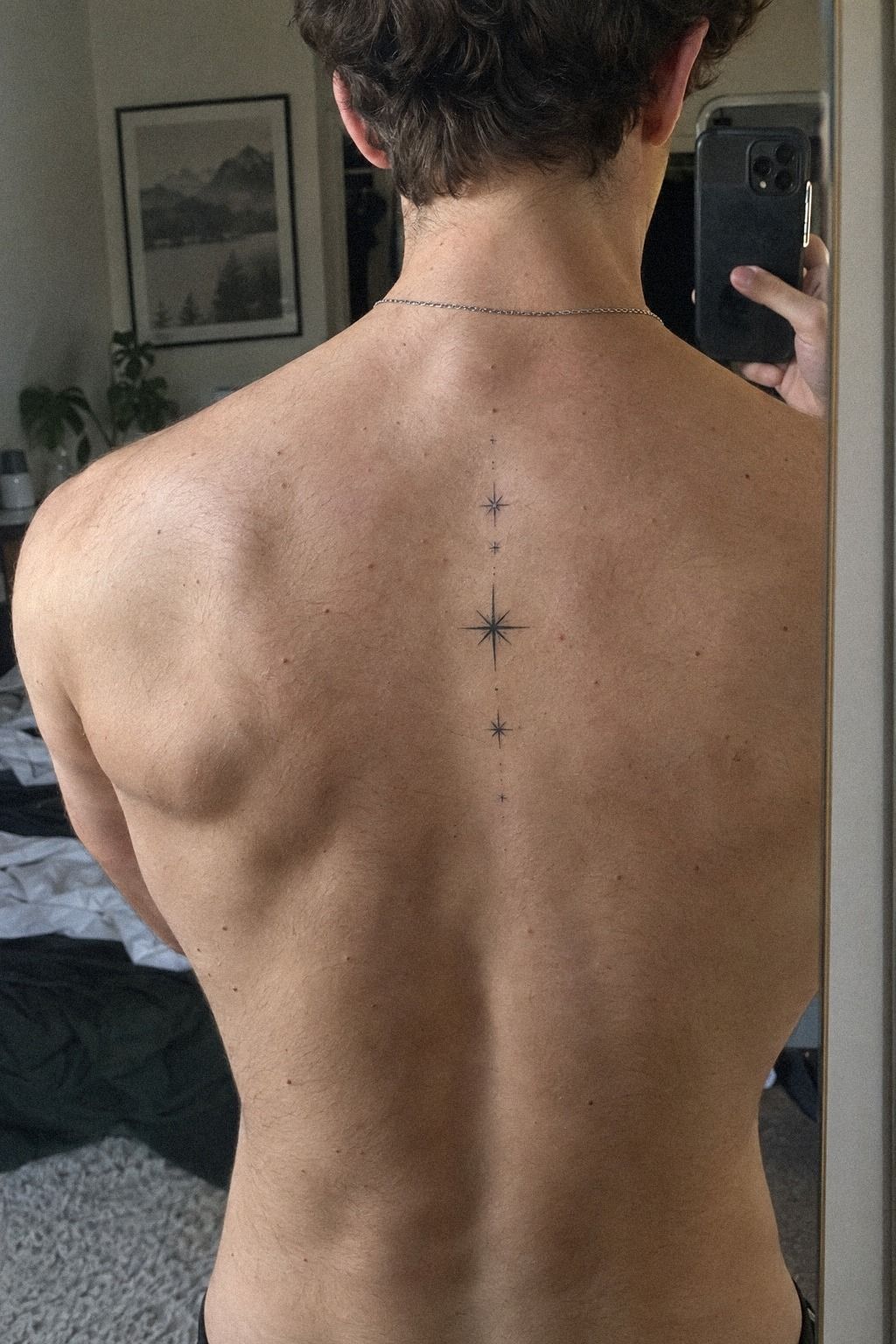
For small fine line spine tattoo ideas, begin with one image that already carries a memory. A few stars, a tiny key, a seed, or a single wave can hold more meaning than a crowded collection of symbols.
That star cluster feels minimal and symbolic because the marks stay separate instead of becoming one heavy shape. Ask yourself what you’d still understand if nobody else could see it.
Your artist can vary the star scale so the design follows the natural rhythm of your vertebrae. A 3RL needle grouping may create a hair-thin appearance, but your artist should choose the needle configuration and black ink depth after seeing your skin in person. A striking outline with open space will usually age more clearly than a crowded constellation.
The private meaning can stay private. You don’t need a quote, date, or obvious emblem for the tattoo to feel meaningful. A single star might mark a person, a place, or a decision only you can name.
If you’re comparing scale and placement, browse these tiny small spine tattoos before you finalize your sketch.
Don’t let the word “small” push you toward microscopic detail. If the points are too close together, they can blur into dark pinpricks over time.
I’d choose three to five stars with breathing space between them. That open spacing matters!
Look at healed examples before you commit. Fresh work can seem vibrant and sharp, while settled lines reveal the artist’s real control. A personal symbol should remain readable after the skin has finished changing.
2Botanical Lines, Private Meaning
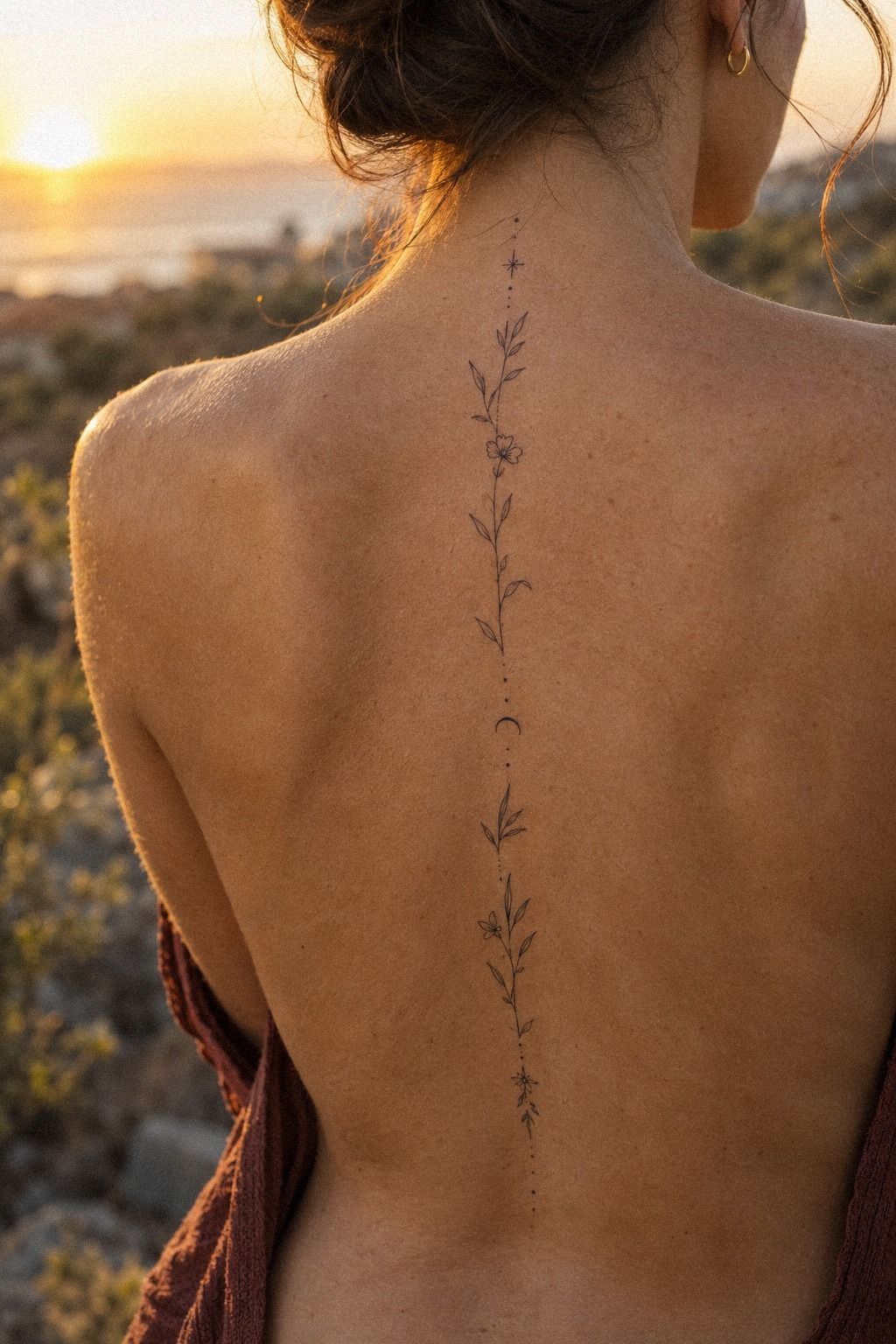
A botanical design gives your unique small fine line spine tattoo a flowing direction without making the meaning obvious.
3What Should the Lettering Say?
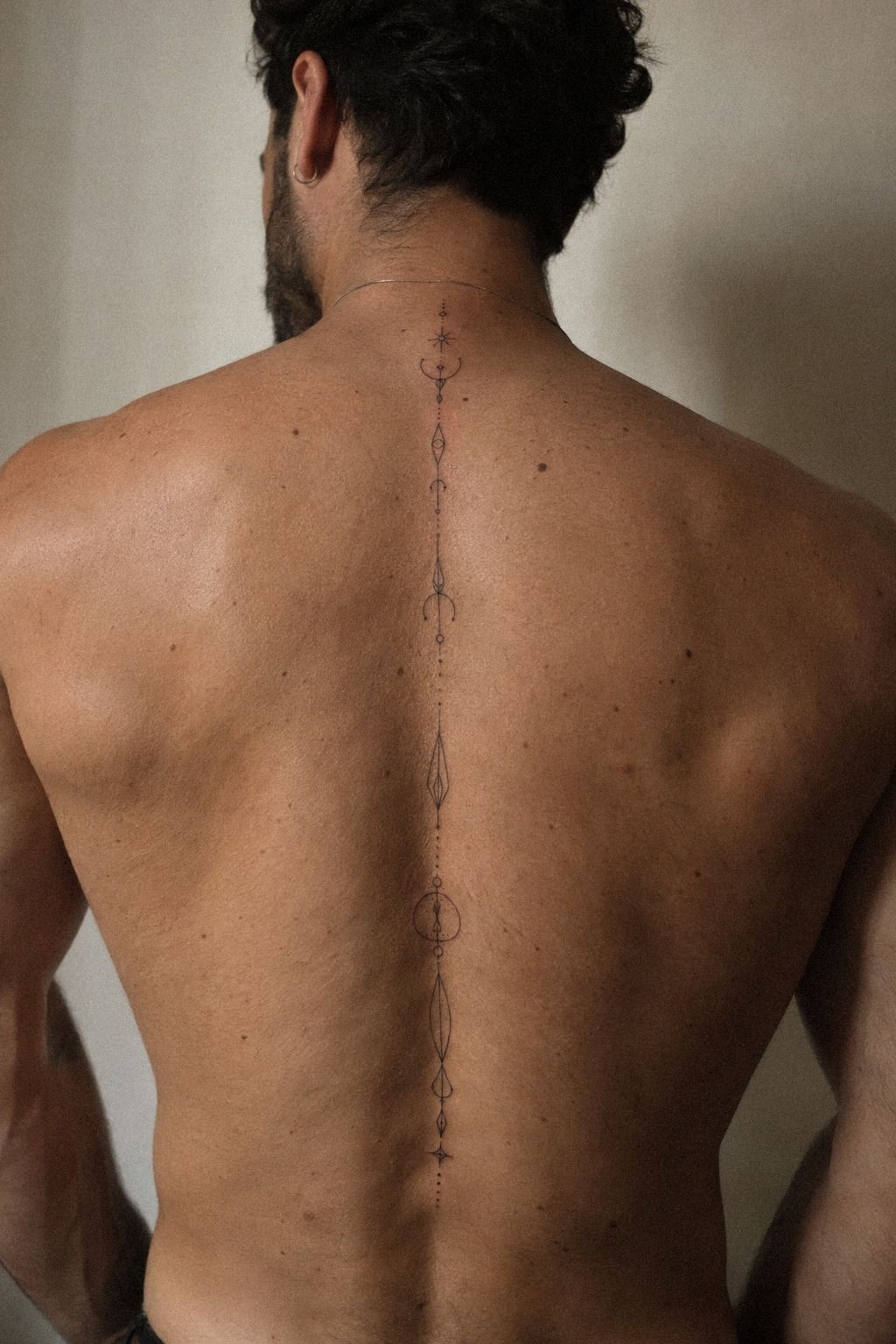
Vertical lettering can make small fine line spine tattoo ideas feel like a private message rather than a decorative mark. Choose one word, an initial, or a short date that you can read even when the tattoo is hidden beneath clothing. The most meaningful choice may be something ordinary to everyone else.
Your artist should test the lettering at the intended size with a stencil before tattooing. Stencil transfer paper lets you see whether the characters remain legible along the curve of your back. I’d avoid a long sentence.
Tiny text looks elegant at first, yet the letters need enough separation to remain readable as the lines soften.
Ask whether the word should run from the neck downward or from the lower back upward. Letter direction changes the emotional feeling.
A word moving upward can feel empowering and hopeful. A word moving downward may feel grounded or reflective. Both can work, but you should choose one deliberately.
What would you want to read on a difficult morning? That question usually reveals more than a trend board.
If you’re unsure whether text is right for your first piece, compare it with these small fine line tattoos. Your final choice should sound like you, not like a caption.
A short word can also feel more timeless than a phrase tied to one moment. Try writing your options by hand. The one you keep returning to may have the strongest emotional pull.
4Place Tiny Ink Along Your Spine
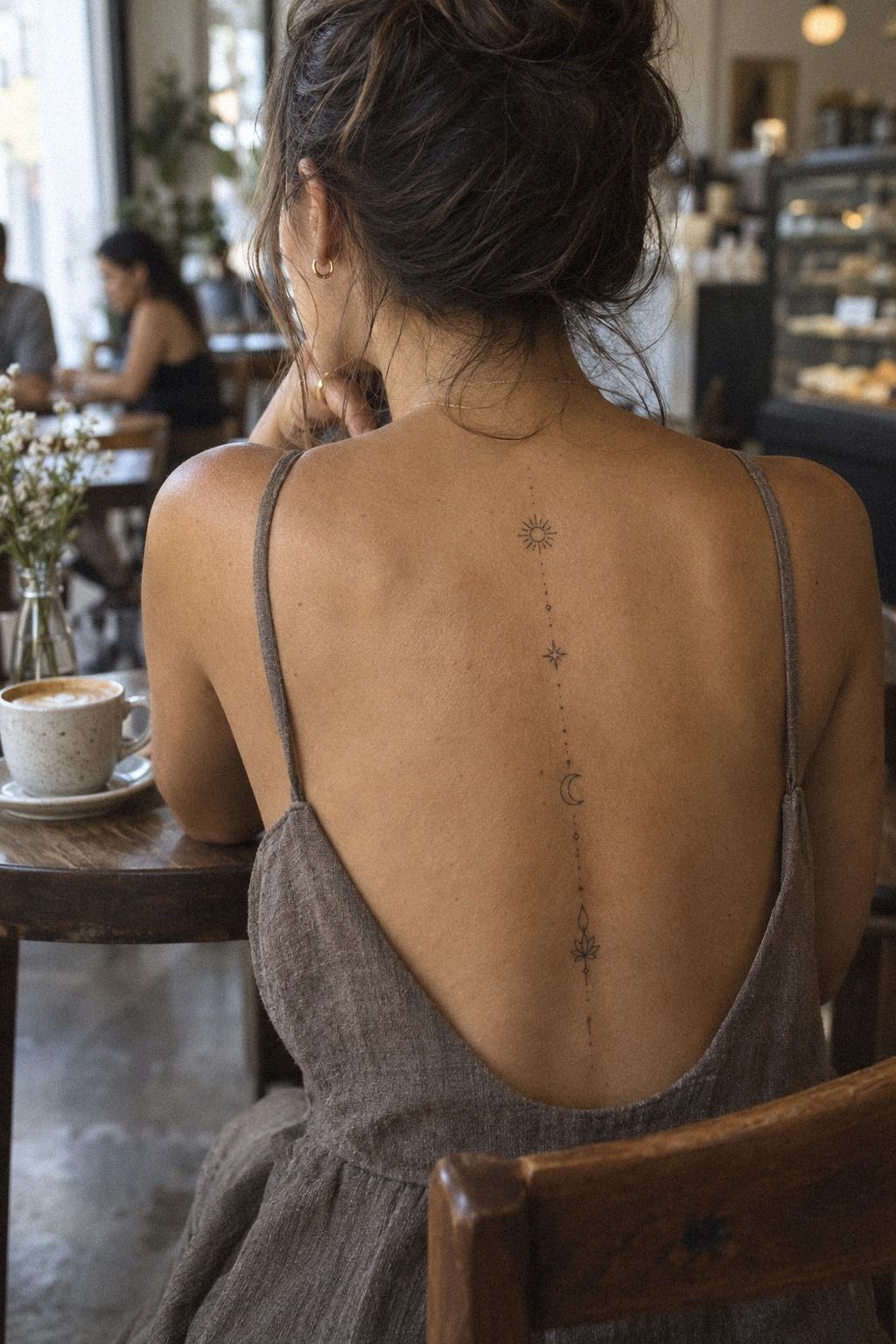
A tiny spine tattoo can be dainty without becoming forgettable when its placement has a clear reason. You might place it high between the shoulder blades, directly through the center, or lower toward the waist. Each position changes how often you’ll see it and how easily other people will notice it.
Ask your artist to mark several stencil positions while you stand naturally. Stencil alignment matters because a design that looks centered while you’re twisted can appear off-center when you relax. Check it from a few angles, then move your shoulders and bend slightly before deciding.
A higher mark can appear with an open-back top, while a lower one can stay private beneath everyday clothing. If visibility matters, think about the clothing you actually wear rather than the outfit in a saved reference. A discreet placement can still feel bold when the meaning belongs entirely to you.
The best placement isn’t always the most dramatic one. It’s the point that supports your story, your comfort, and your daily life.
If you’re weighing options, compare these small tattoo ideas unique with these small wrist tattoo ideas. Different locations can reveal how scale changes the mood.
Before you approve the stencil, sit, stand, reach, and turn. A spine design needs to look right while your body moves, not only while you’re holding still.
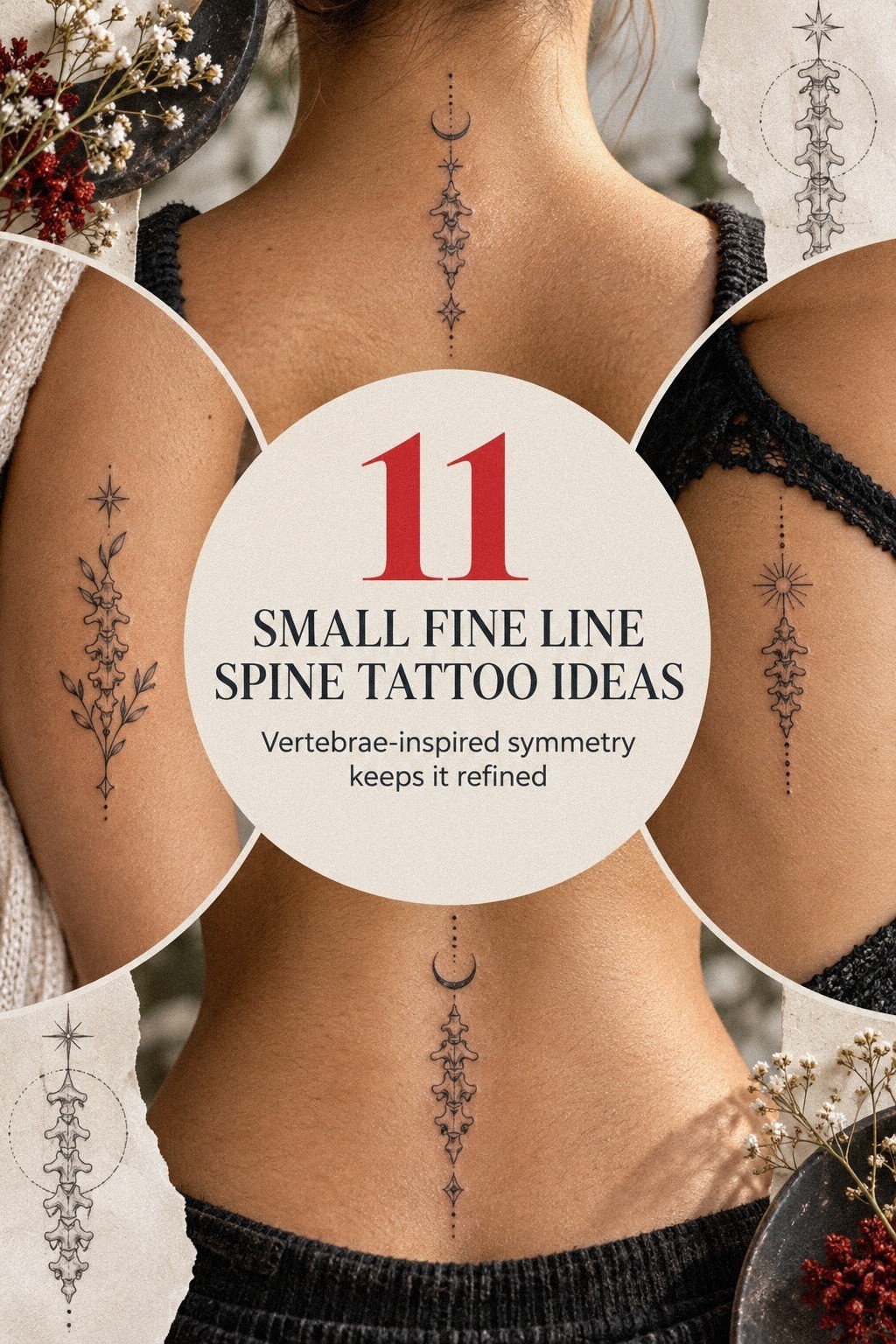
5Your Anatomy Gets the Final Vote
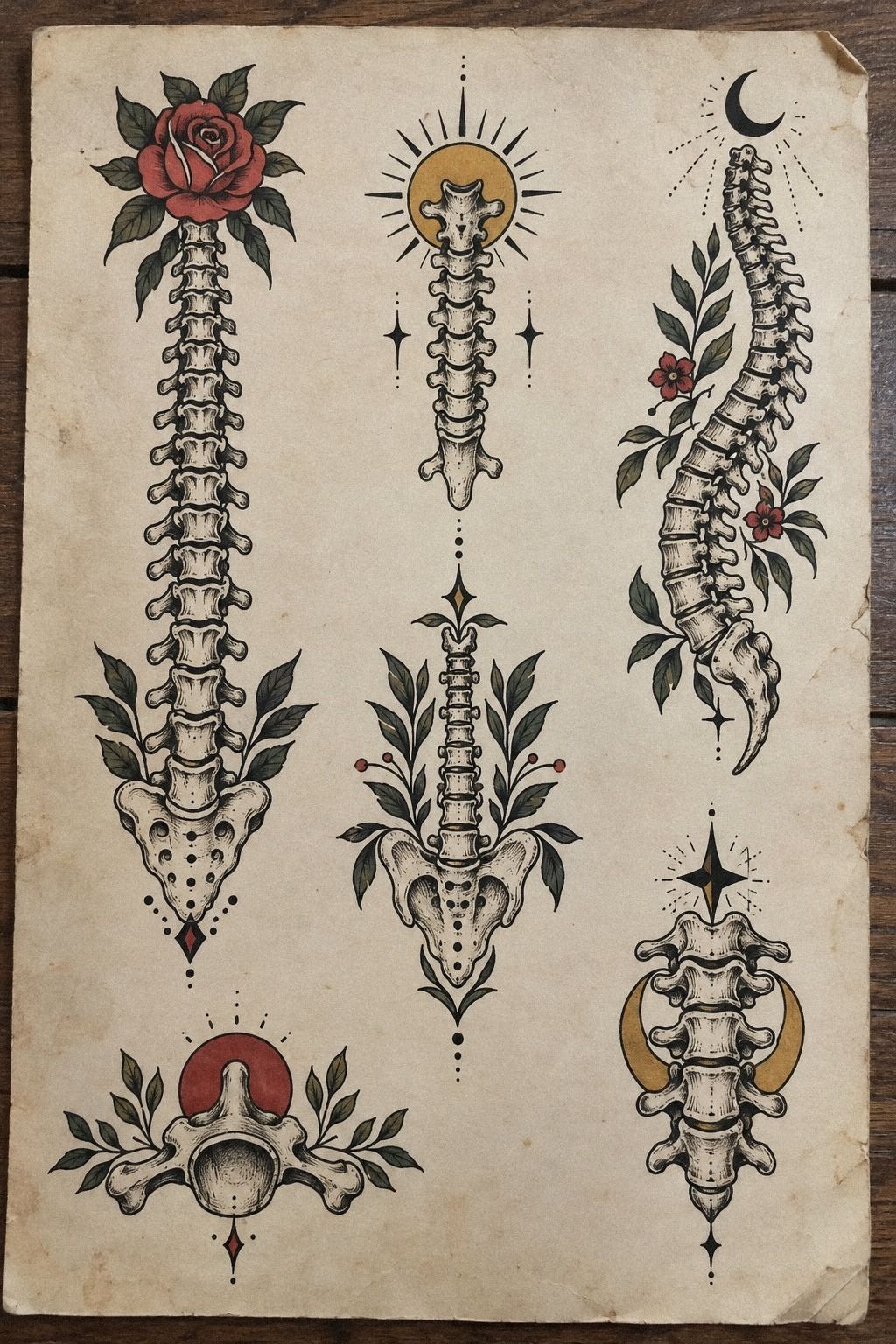
Your small fine line spine tattoo should fit your body rather than sit like a sticker placed on top of it.
6Crisp Lines or More Detail?
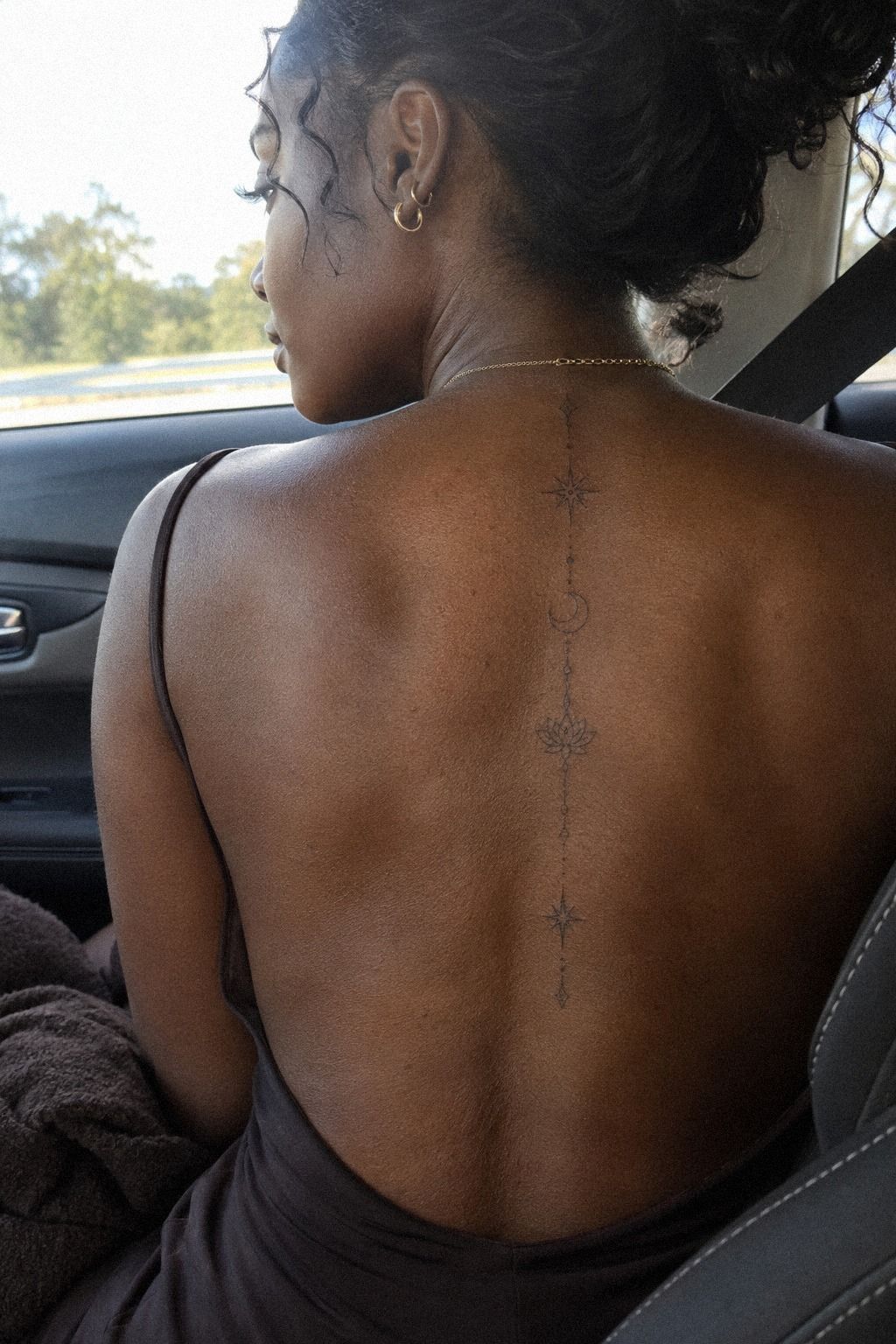
On deep ebony skin, fine line work depends on clean spacing and strong visual decisions. Your artist should explain how the black tattoo pigment will contrast with your skin and how the work may look while healing.
The goal isn’t maximum darkness everywhere. It’s readable shape, controlled placement, and an expressive outline.
Keep the design crisp by removing details that don’t carry meaning. A small moon doesn’t need six interior textures if the outer crescent already tells the story. I’d skip excessive shading in a narrow spine tattoo.
It can look polished in the first week but may make the settled result feel heavier than you intended.
Your aftercare matters just as much as the appointment. Follow the artist’s aftercare instructions for washing, moisturizing, sun protection, and clothing.
Don’t compare your healing process with someone else’s online update, because skin response varies. If you’re planning a geometric version, this fine line geometric tattoo guide can help you judge spacing.
Give your artist room to say no to an unsafe or unreadable scale. That conversation may feel inconvenient, but it protects the long-term design.
A sharp, understated mark with fewer lines usually has more staying power than an intricate miniature illustration. Good!
Ask to see healed photos rather than judging only from fresh work. A tattoo can look vibrant immediately after the appointment and softer later. You’re choosing the artist’s judgment as much as the visual style.
7The Three-Point Orbit
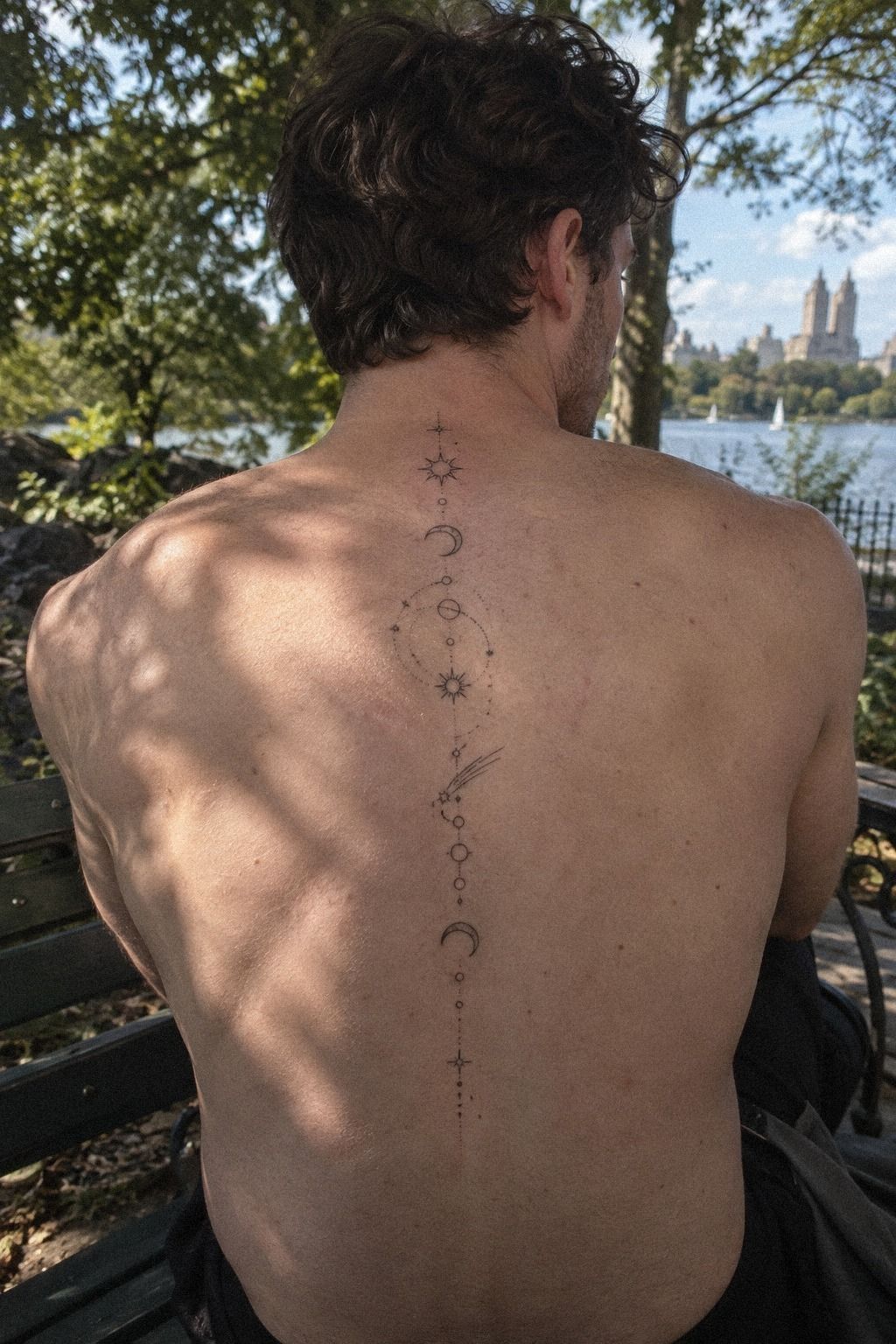
A celestial motif can turn a small fine line spine tattoo into something ethereal and quietly expressive.
8Where Should the Center Sit?
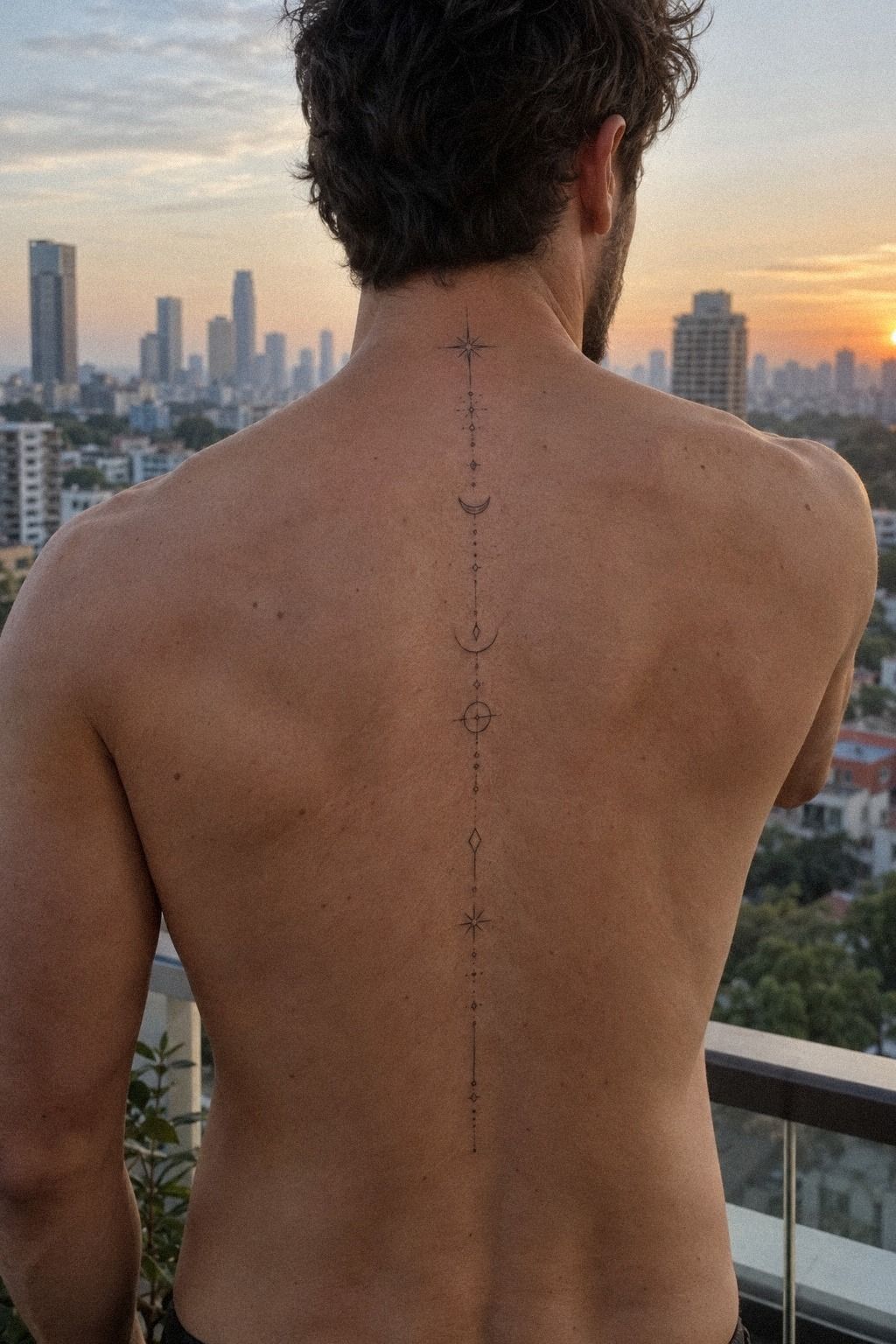
The central spine placement gives a tattoo a bold vertical presence while keeping the individual lines hair-thin. A clean single-needle stencil can help you see whether the design sits naturally between the shoulder blades or lower along the back. Your artist should check alignment while you stand, breathe, and move.
Use the placement to control how visible the tattoo feels. A higher mark may appear when you wear an open-back top, while a lower one can stay private under everyday clothing. I’d choose the point that matches your reason for getting tattooed, not the point that photographs best online.
The spine can be more sensitive than areas with more soft tissue, particularly near bony sections. You’ll want to discuss session breaks, posture, and how long the appointment may take.
A fierce design doesn’t require you to prove your tolerance. A shorter, focused session can still produce an iconic result.
What do you want the placement to say before anyone reads the symbol? That answer can guide your decision. If your first idea feels too centered, compare it with these small wrist tattoo ideas to understand how visibility changes the emotional effect.
A bony spine may also make posture more important during the appointment. Ask whether you’ll lie down, lean forward, or change position during the stencil check. Your comfort can help the artist work more accurately.
9Dainty Details, Bold Meaning
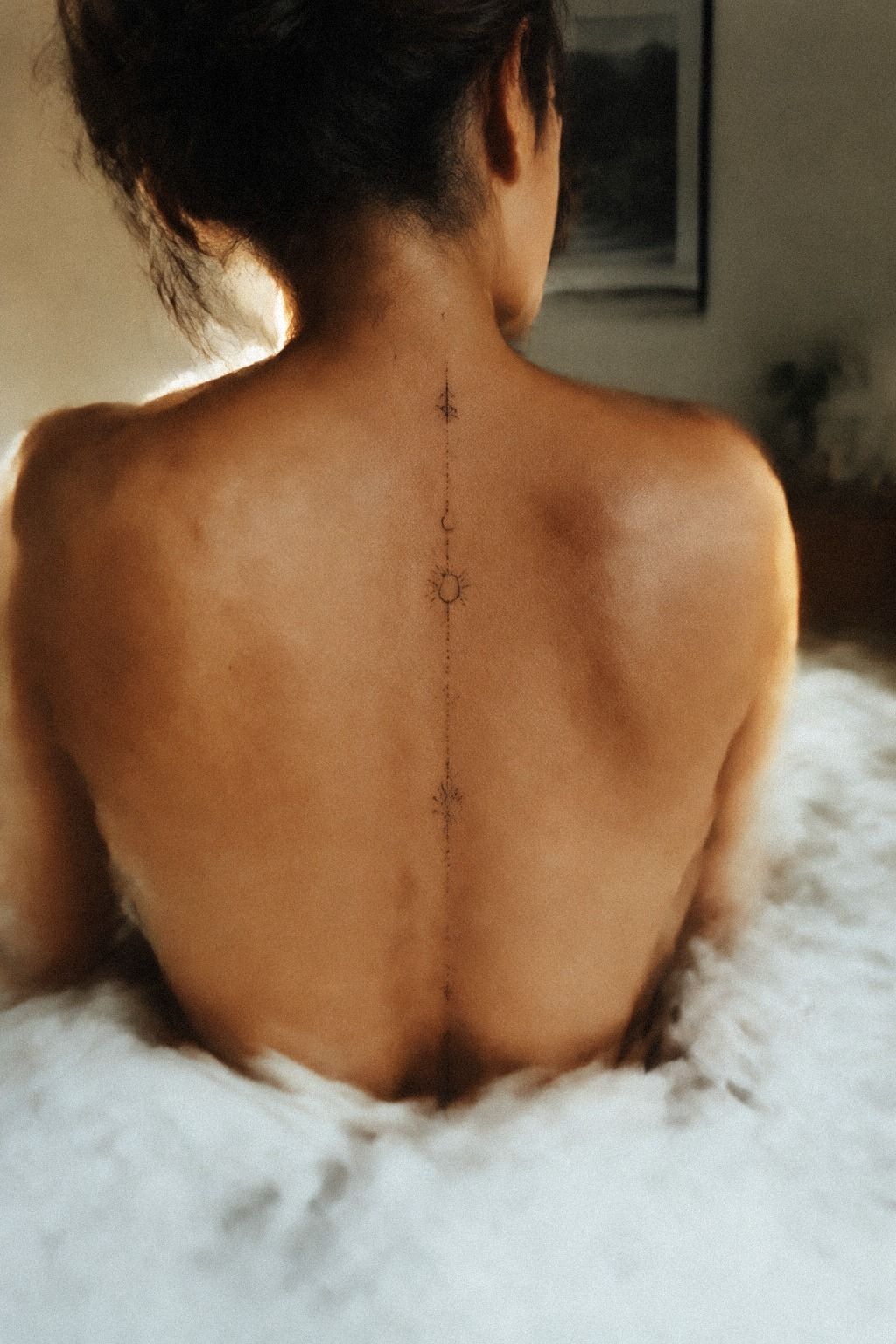
For your small fine line spine tattoo, choose one meaningful feature that gets the visual emphasis. It might be a darkened center, a larger initial, or a single solid accent among lighter lines. The rest of the design should support that focal point rather than compete with it.
This is the One Anchor Rule: every delicate detail should support one unmistakable anchor. Without it, the tattoo can feel scattered.
I’d rather see one fierce symbol with two quiet supporting marks than nine tiny icons competing for attention. The bold part should be intentional, not simply the result of adding more ink.
Your artist can discuss whether a small amount of saturated black will help the design age with more clarity. Saturated black can create contrast, but it shouldn’t replace thoughtful spacing. Fine lines may spread or soften over time, and ultraviolet exposure can speed visual fading.
Ask to see healed examples, especially work photographed after several months rather than immediately after the appointment. Ultraviolet exposure can change the appearance of delicate lines, so ask how the artist thinks about placement and sun protection.
You’ll know the design is working when the meaning still reads after you remove half the details. That test is surprisingly useful.
For more unusual concepts, browse these unique small tattoo ideas. A personal tattoo can be romantic without becoming sentimental, and empowering without announcing itself.
10Before You Book a Sensitive Spine Session
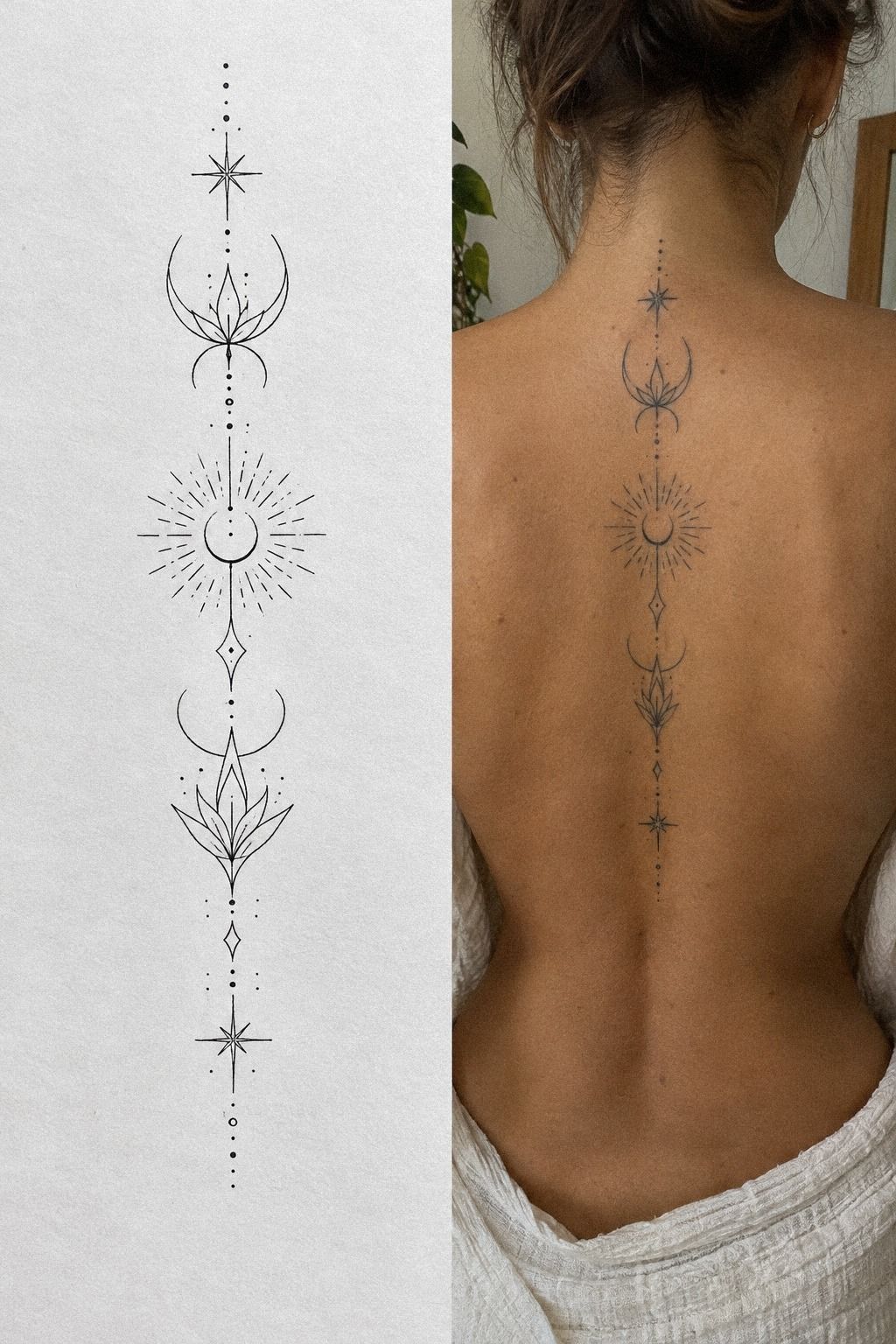
Before booking, ask how the artist handles sensitive areas, stencil alignment, breaks, and aftercare. You can also ask whether their portfolio includes healed fine line work on skin tones similar to yours.
I’d choose a specialist with calm, specific answers over a fast appointment with vague promises. A polished consultation is part of the process.
Your consultation checklist should include the design size, placement, needle approach, healing guidance, and touch-up policy. Write the answers down if you tend to forget details during an exciting appointment.
Typical US pricing varies by artist and region. A small piece may cost around $100 to $300, while a shop minimum can sit near $50 to $100.
Artists who charge hourly may use rates around $100 to $250. These are broad reference points, not a quote for your design, so the project cost is worth confirming before you reserve a date.
A clear budget helps you compare value instead of chasing the lowest number. A daring concept still needs a practical plan, and you shouldn’t choose an artist solely because the cheapest quote is available.
Read this small tattoo prices guide before your consultation. The right artist may cost more, but strong design judgment can be worth it.
Your budget range should also include travel, aftercare products, and a tip if that’s customary where you live. Don’t borrow money for a tattoo you’re not ready to afford. A meaningful idea can wait while you save.
Ask whether the price includes a consultation, stencil changes, and a touch-up policy. You’ll want to know what happens if the artist recommends a slightly larger scale for legibility. That small adjustment may improve the final result and make the cost feel more worthwhile.
The artist minimum may apply even when your tattoo takes less time than a standard appointment. Ask about it early. Clear pricing keeps the consultation relaxed and prevents an awkward surprise at checkout.
11Protect the Fine Line During Healing
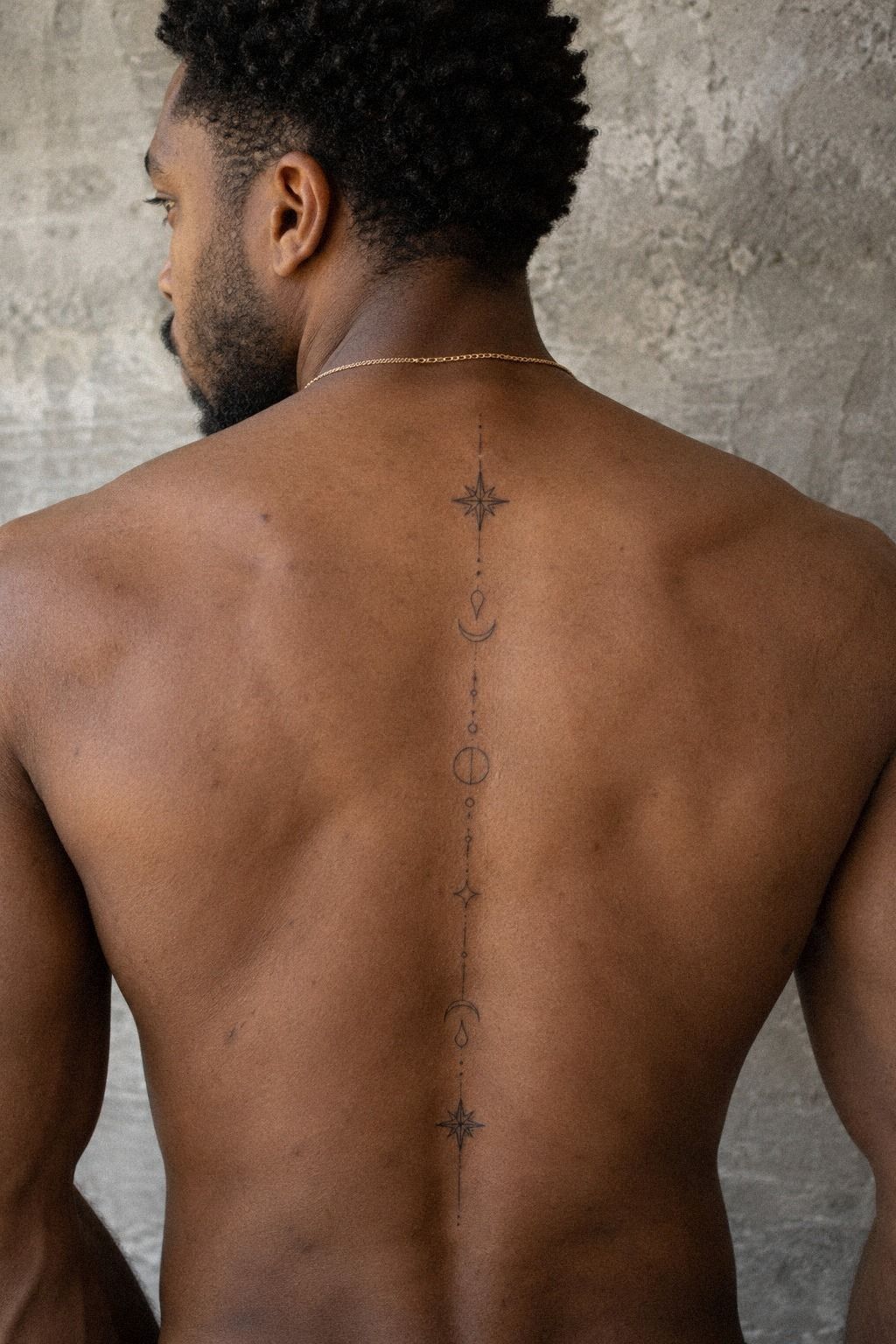
The first glossy hours aren’t the final appearance. A fresh tattoo can look darker, sharper, or more dramatic than it will after the skin settles. Your healed tattoo reference should guide your expectations more than an immediate studio photograph.
Follow your artist’s instructions for gentle washing, recommended moisturizing, sun protection, and clothing. Don’t pick at flaking skin, soak the area before you’re cleared to do so, or judge the lines during the earliest healing stage. Your aftercare routine can influence how crisp the result remains.
Surface healing often takes around two to three weeks, while complete settling can take two to three months. The timeline varies with your skin, placement, line density, and aftercare. If redness, swelling, or discomfort seems unusual, contact a qualified medical professional rather than guessing from social media.
Sun exposure can fade black pigment and soften delicate details over time. Once the tattoo has healed, consistent broad-spectrum sunscreen can help preserve the contrast.
A timeless symbol still needs practical care. That’s part of owning it.
Don’t compare your healing timeline with a stranger’s post. Skin can look calm one day and slightly dry the next. Follow the instructions you were given and ask the artist when something seems unclear.
The Private Rule I Keep Returning To
I used to think meaning had to be obvious for a tattoo to feel important. I’ve changed my mind.
The most personal spine pieces I’ve seen often look understated at first: three stars, one crooked leaf, or a single letter that nobody else can decode. The private meaning lives in the choice, not in the amount of explanation.
A private symbol can be more powerful than a detailed scene. It gives you room to remember the story without turning your back into a public explanation.
I also learned that fine line work rewards restraint. A client may arrive with a reference crowded with moons, flowers, dates, and tiny words. We’ll remove half of it, then the tattoo suddenly has room to breathe.
That can feel disappointing for ten minutes, but it usually produces a more elegant result. Your skin isn’t a page that needs filling.
Bring a reference sheet with the elements you love, then mark the parts you’d remove. This makes the consultation more useful than showing ten unrelated images and hoping the artist guesses your intention.
The hard conversation is longevity. A delicate tattoo can be expressive and refined, but it isn’t frozen in time.
Lines may soften, black can fade with ultraviolet exposure, and placement affects how the design changes. I’d skip any artist who promises that a hair-thin line will look untouched forever. Honest expectations make the finished piece more satisfying.
Pay attention to line spacing during that conversation. Good spacing won’t stop every change, but it can give softened marks enough room to remain distinct.
I’m especially drawn to the contrast between feminine and masculine visual language because the spine can hold either without needing to announce a category. A graceful botanical line can feel fierce.
A sharp geometric star can feel tender. Your symbol should carry your memory first, while style remains the tool that gives it form.
That visual language can be sleek, raw, classic, or edgy. You don’t have to choose a category before you understand the feeling you want.
If you’re still undecided, make two sketches: one that explains the story and one that only preserves the feeling. The second is often more powerful.
A personal tattoo doesn’t need to perform its meaning for strangers, and it doesn’t need to follow the most popular flash design. It needs to remain honest when the trend has moved on.
Put those two sketches somewhere you’ll see them for a week. The idea that keeps feeling right after the excitement fades deserves another look.
Cost, Value, and the Question of Worth It
The cheapest tattoo isn’t automatically the best value, and the most expensive artist isn’t automatically the right fit. You’re paying for artist judgment, hygiene, placement skill, consultation time, and the ability to create a readable design at a small scale. Ask what you’re actually receiving for the quoted price.
A small tattoo can still require careful planning. If the artist recommends fewer details, a slightly larger stencil, or an extra consultation, that may be worth the cost because it protects the design’s clarity. I’d rather spend more on a thoughtful, polished result than save money on a piece that needs correction later.
A stencil revision may feel like a delay, but it can reveal problems before the needle touches your skin. Good artists don’t rush a design simply because you’re ready to start.
Your budget should include the artist’s minimum, possible travel, aftercare products, and a tip if that’s customary where you live. Don’t borrow money for a tattoo you’re not ready to afford. A meaningful idea can wait while you save.
Remember to price the aftercare products before the appointment. They’re a small part of the total, but having them ready can make the first days easier.
A Portfolio That Shows the Real Skin
Look for healed work, not only fresh tattoos. Healed portfolio examples reveal how the artist’s lines settle, how black pigment holds on different skin tones, and whether tiny lettering remains readable. Fresh work can look vibrant and sharp even when the long-term design decisions weren’t strong.
Study several examples with a similar scale and placement. A talented artist may create beautiful large pieces but still lack experience with narrow vertical scale. You’re looking for evidence, not just a stylish feed.
Ask direct questions about hygiene, stencil placement, needle choices, and touch-ups. A professional answer should be calm and specific. If the artist dismisses your concerns or refuses to discuss healed work, that’s a clear warning.
Review hygiene protocol before you book. The studio should be willing to explain its preparation, sterile supplies, and disposal practices without making you feel difficult for asking.
For more questions to take into your consultation, review these small fine line tattoos and compare the design scale with your own idea. A polished portfolio is useful, but conversation matters too.
Some people want a spine tattoo that appears only in private moments. Others want it visible with swimwear, open-back clothing, or a cropped top.
Neither choice is more daring or more meaningful. Your placement should reflect your life, not somebody else’s definition of confidence.
Think about open-back clothing, swimwear, work uniforms, family events, and the way you dress most often. A striking tattoo can remain discreet if it sits lower on the back. A tiny symbol between the shoulder blades can become visible more often than you expect.
Consider your work schedule before choosing a high placement. Dress codes, uniforms, and movement can affect how practical the tattoo feels during healing.
You don’t need to justify a private placement. You also don’t need to make the tattoo hidden if showing it feels right. The most empowering decision is the one you can live with comfortably after the novelty fades.
A private placement can still feel bold because you know exactly where it is. Privacy isn’t a lack of confidence. It’s simply one way to own the meaning.
If you’re comparing discreet designs with more visible placements, save these small tattoo ideas unique and notice which proportions keep returning to you. Your repeated reaction is useful information.
Fine Line Longevity Has Conditions
Fine line tattoos can remain elegant, but they aren’t maintenance-free or permanently frozen. Skin changes, sun exposure, friction, placement, pigment, and line spacing all affect the result. A timeless idea still needs a realistic plan.
The design has a better chance of staying readable when the lines aren’t packed too tightly. Open spacing gives softened marks somewhere to settle without turning into one dark patch. That’s why removing a few details can be a powerful, practical decision.
Ask your artist whether the design may need a future touch-up. A touch-up isn’t necessarily a failure. It can be part of maintaining a delicate, meaningful tattoo as your skin and lifestyle change.
Make a touch-up plan part of the consultation. Ask when the artist evaluates settled work and whether their policy covers minor adjustments.
If longevity is your main concern, read this fine line geometric tattoo guide and compare how different shapes rely on spacing. Clean structure usually has more staying power than decorative clutter.
The Questions Worth Answering First
How much does a small fine line spine tattoo usually cost?
A small fine line spine tattoo typically costs about $100 to $300 in the US, depending on the artist, region, design, and placement. Typical project range is only a reference, so ask for a quote after the artist sees your final stencil.
Some shops use a minimum of about $50 to $100, while hourly artists may charge around $100 to $250. Your design’s detail and consultation time can affect the total, so confirm the full price before you decide whether it’s worth it.
For another pricing comparison, read this small tattoo prices guide and bring your questions to the consultation.
Are small fine line spine tattoos a good idea for a first tattoo?
Yes, they can be a good first tattoo if you’re comfortable with the placement and understand fine line aging. A focused design gives you a manageable concept, while the spine can keep it private when needed.
The area may still feel sensitive, especially near bone. Start with a clear symbol, choose an artist with healed examples, and don’t select a tiny size that sacrifices legibility. If you’re unsure, a consultation is valuable before you spend anything.
How do I choose a tattoo artist for small fine line spine tattoos?
Review a portfolio showing clean linework, healed photographs, and work on skin tones similar to yours. A healed portfolio tells you more than a fresh tattoo because it shows how lines settle.
Ask about hygiene, stencil placement, needle choices, and aftercare. Your artist should answer clearly and discuss whether your requested scale is realistic. A confident recommendation to enlarge or simplify the design can be a sign of good judgment.
How much do small fine line spine tattoos hurt?
Pain varies, but ribs, feet, hands, sternum, and bony spine areas are often more sensitive than the forearm, thigh, or shoulder. Your comfort level depends on placement, posture, breathing, session length, and personal sensitivity.
Tell your artist if you need a pause. A calm session is more useful than trying to appear tough, especially when precise placement matters. You can ask how the artist structures breaks before the appointment.
How long does a small fine line spine tattoo take to heal?
The surface usually heals in about two to three weeks, while complete healing can take about two to three months. Proper aftercare includes gentle washing, recommended moisturizing, sun avoidance, and staying out of pools until the skin is ready.
Follow your artist’s instructions because coverings and products vary. Don’t pick flaking skin or judge the final lines during the earliest healing stage. The settled result is the one you should evaluate.
What’s the best placement for a small fine line spine tattoo?
The upper spine between the shoulder blades and the central lower spine are common choices because they create a clear vertical path and can remain discreet beneath clothing. Central placement works best when the stencil follows your natural alignment.
Your artist should check the stencil while you stand normally. Placement affects visibility, sensitivity, and how the tattoo’s lines may age, so choose the location for personal reasons rather than a photograph alone.
Where I’d Start First
If I had to pick one step, I’d start with a personal symbol. A small star or leaf can carry more meaning than a crowded quote, and it leaves your skin room to age with you. Pin these small fine line spine tattoos for later and return when your sketch feels ready.
Before you book, make one clean sketch, one simplified sketch, and one version with the symbol removed from its surrounding details. The strongest option may be the one that still feels meaningful without explanation. Start there!
Your final design should be personal, readable, and realistic for your anatomy, budget, and future self. That combination is worth protecting.