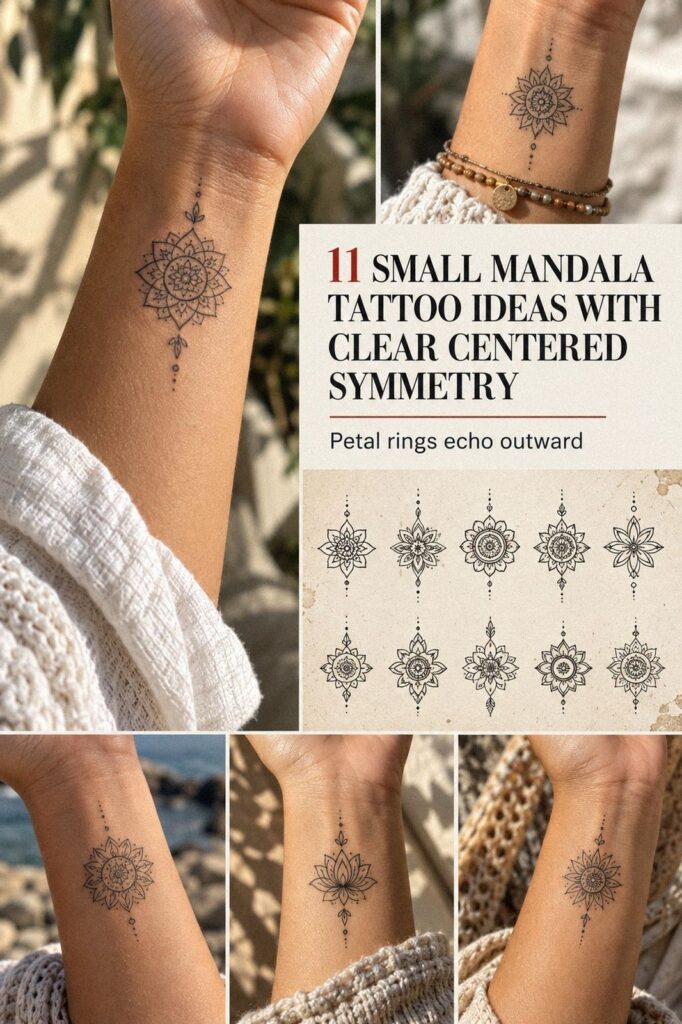
Small mandala tattoos can feel gentle in one sitting, especially on the forearm, shoulder, or ankle. I learned that placement matters more than size after choosing a bony spot for my first piece. You’ll want clean spacing, a meaningful symbol, and an artist whose healed work looks crisp and expressive.
My short version: choose an open-spaced mandala design, then match it to your pain tolerance, daily routine, and budget. A delicate tattoo can still feel powerful when every line has a purpose!
- Fine Line Small Mandala Tattoos on Wrists
- What Makes Small Mandala Tattoos Behind the Ear Work?
- Bold Blackwork Small Mandala Tattoos on Fingers
- Choose Dainty Small Mandala Tattoos for Ankles
- Why Sacred Geometric Small Mandala Tattoos Suit the Sternum
- Minimal Small Mandala Tattoos Along Collarbones
- Let Ornate Small Mandala Tattoos Shine on Forearms
- Tiny Dotwork Small Mandala Tattoos on Ribs
- When a Shoulder-Back Mandala Feels Feminine
- The Nape as a Symbolic Place for Small Mandalas
- Color or Restraint? Upper-Arm Mandalas
1Fine Line Small Mandala Tattoos on Wrists
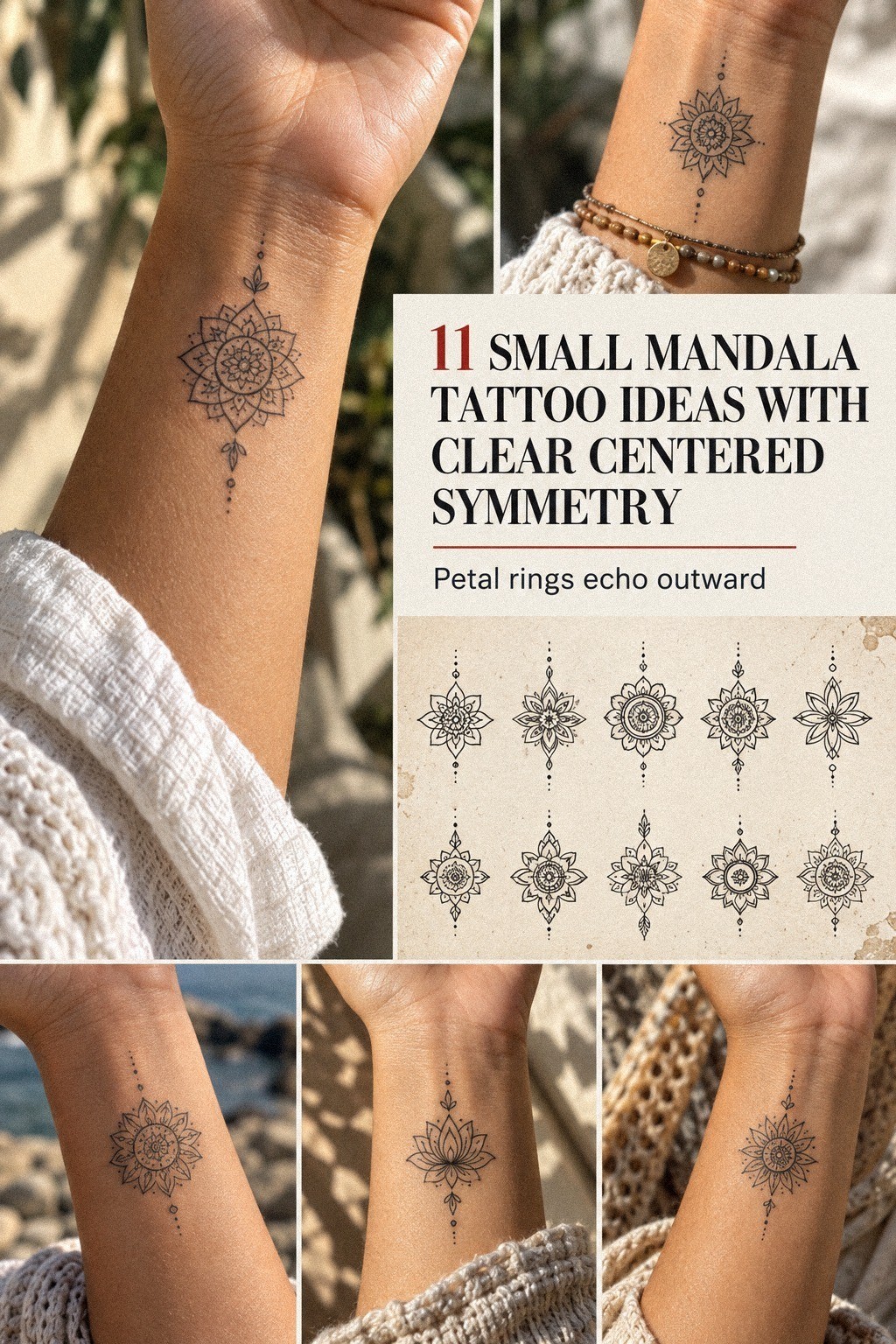
A fine-line mandala on the wrist looks delicate because the circle stays compact and the lines remain hair-thin. Terracotta, stone gray, and muted olive accents can create a crisp contrast without making the design feel heavy. I’d keep the outer ring open and let four or six petals carry the pattern.
Ask your artist for a single-needle cartridge and a design that measures at least a small coin’s width. Too many tiny spokes will blur together as your skin changes.
That’s where the negative-space center matters. It gives your eye somewhere to rest and helps the mandala remain recognizable.
The wrist can feel fierce during a session because the skin is close to bone and moves constantly. You’ll probably tolerate it better on the inner forearm side than directly over the wrist crease.
I’d skip a dense black circle here. It’s bold, but it can look visually cramped once the fine details soften.
Your aftercare needs to stay simple. Wash gently, pat dry, and follow the artist’s moisturizer instructions.
A clear protective film can keep clothing from rubbing the fresh tattoo during the first day. If the design feels worth it, compare this placement with our tiny small wrist tattoos before booking.
2What Makes Small Mandala Tattoos Behind the Ear Work?
Behind-the-ear mandalas are discreet until you turn your head, which gives them a playful reveal. A clay-toned design with muted cream and aged-brass accents can feel symbolic without becoming visually crowded.
3Bold Blackwork Small Mandala Tattoos on Fingers
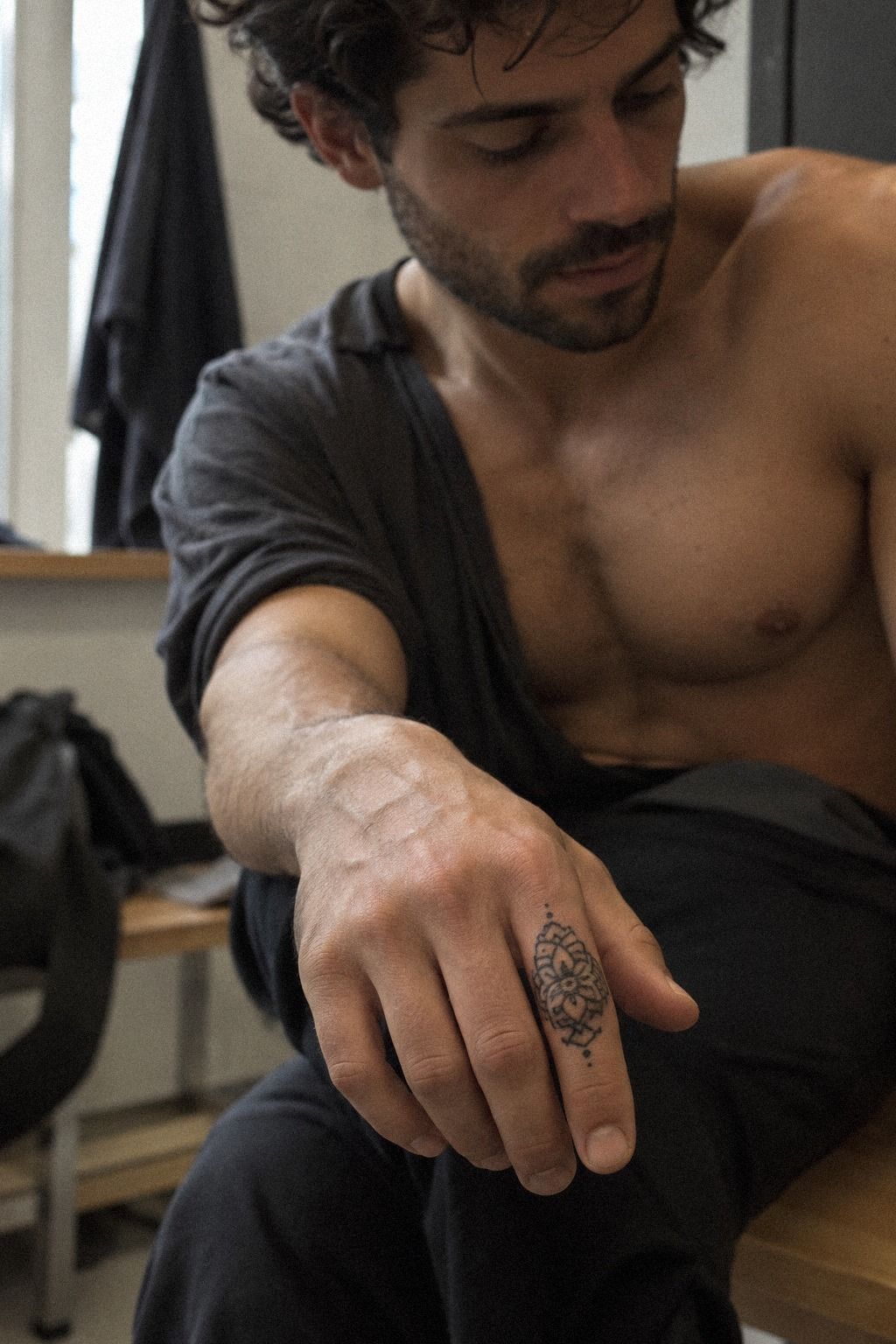
Finger mandalas need commitment because the skin gets washed, rubbed, and exposed constantly. A plum-gray palette with rose-gold accents can make blackwork feel bold and graphic, especially when the design uses a central diamond with four short petals. I’d choose a daring symbol over delicate detail here.
Your artist should work with solid black pigment and enough open skin around it to prevent the design from becoming a dark dot. Fingers often need touch-ups, and that isn’t a failure.
The placement simply works harder than a protected area. You’ll want to ask about the artist’s healed finger portfolio before booking.
A single finger session can feel hot and sharp, especially along the sidewall. The top of the finger is usually easier to tolerate than the crease or pad.
But the real issue is longevity. I’d skip a tiny dotwork mandala on the finger because constant friction can erase the softest points first.
Keep the tattoo out of prolonged sunlight once it’s healed. A fragrance-free balm may be recommended during the early stage, but you should follow your artist’s instructions rather than layering products. If your budget includes future touch-ups, look through these small tiny hand tattoos for comparison.
4Choose Dainty Small Mandala Tattoos for Ankles
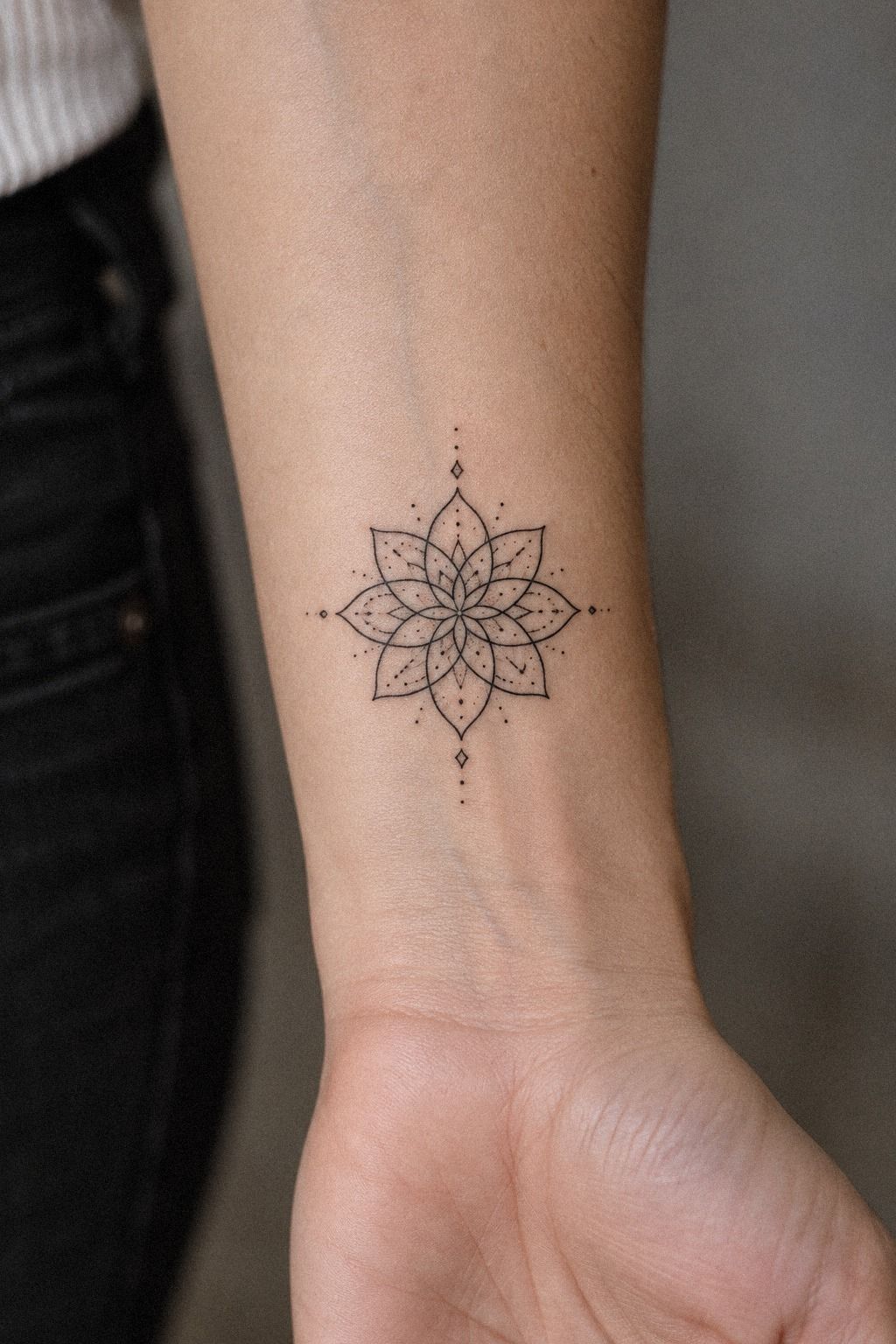
An ankle mandala can look dainty without disappearing, especially when precise geometric lines follow the curve above the bone. Deep navy, warm white, and brown accents can give the design a graceful, graphic presence. I like this placement when you want something personal that can still hide beneath a sock.
Ask for a fine transfer stencil that shows the full circle before the machine starts. Your artist should check how the mandala sits when your foot is relaxed and when you stand. That small adjustment can keep the design from appearing tilted while you walk.
The ankle has a sharper feeling than the upper arm because there isn’t much cushion over the bone. You’ll probably manage a small piece in one sitting, but your tolerance is personal.
I’d avoid wrapping the design too far around the ankle. A front-facing circle keeps the linework clearer and makes future touch-ups easier.
Wear loose footwear during the first few days. Tight straps can rub the surface and make your skin feel irritated. And don’t judge the final color while the tattoo is fresh.
If you’re comparing value across placements, this tiny small wrist tattoos reference has a similar scale, but the ankle needs more attention to movement and friction.
5Why Sacred Geometric Small Mandala Tattoos Suit the Sternum
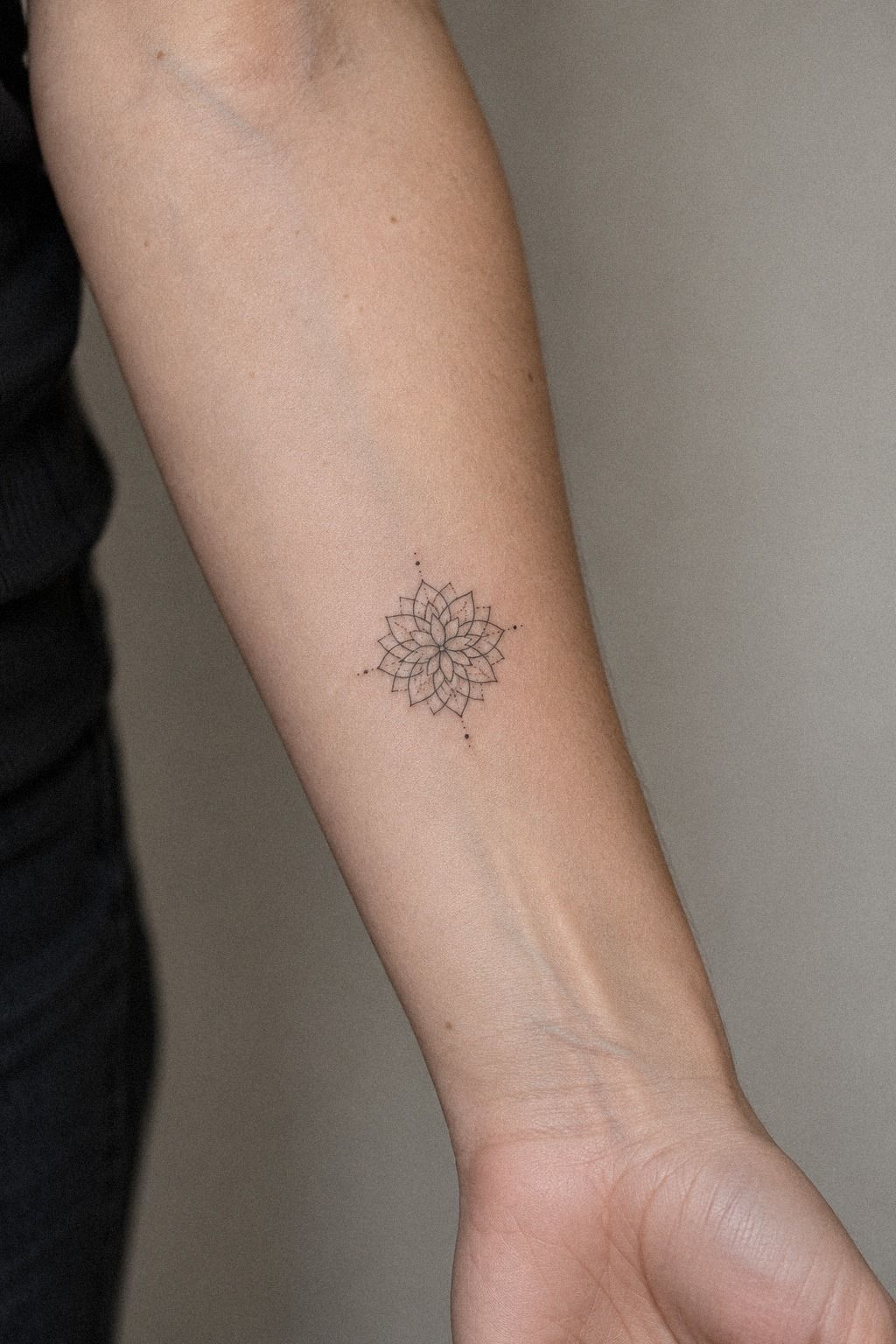
A sternum mandala can feel sacred because the center of the design follows the body’s natural middle line. Hand-drawn circles, pointed petals, and strong symmetry give this placement a classic, tactile character.
Emerald, gold, and cream accents can make the center feel especially intentional. You’ll want the stencil centered carefully.
Bring a reference that shows the redrawn stencil clearly, but let your artist adapt it to your anatomy. A sternum isn’t a flat page. Your chest rises, your ribs shift, and the shape can look different when you sit.
I’d choose an intricate outline with small open spaces rather than dense shading.
This placement is often more intense than the forearm or shoulder because the skin is thin and the bone sits close underneath. It can still be manageable in one appointment if the tattoo stays small. Who wants a sacred design that has to be rushed because the artist packed in too much detail?
Wear a loose shirt and avoid heavy pressure while the area heals. Your artist may recommend a simple healing ointment for the first stage, followed by light moisturizing. If you’re comparing the cost of central placements, our tiny small spine tattoos show how symmetry changes along a different body line.
6Minimal Small Mandala Tattoos Along Collarbones
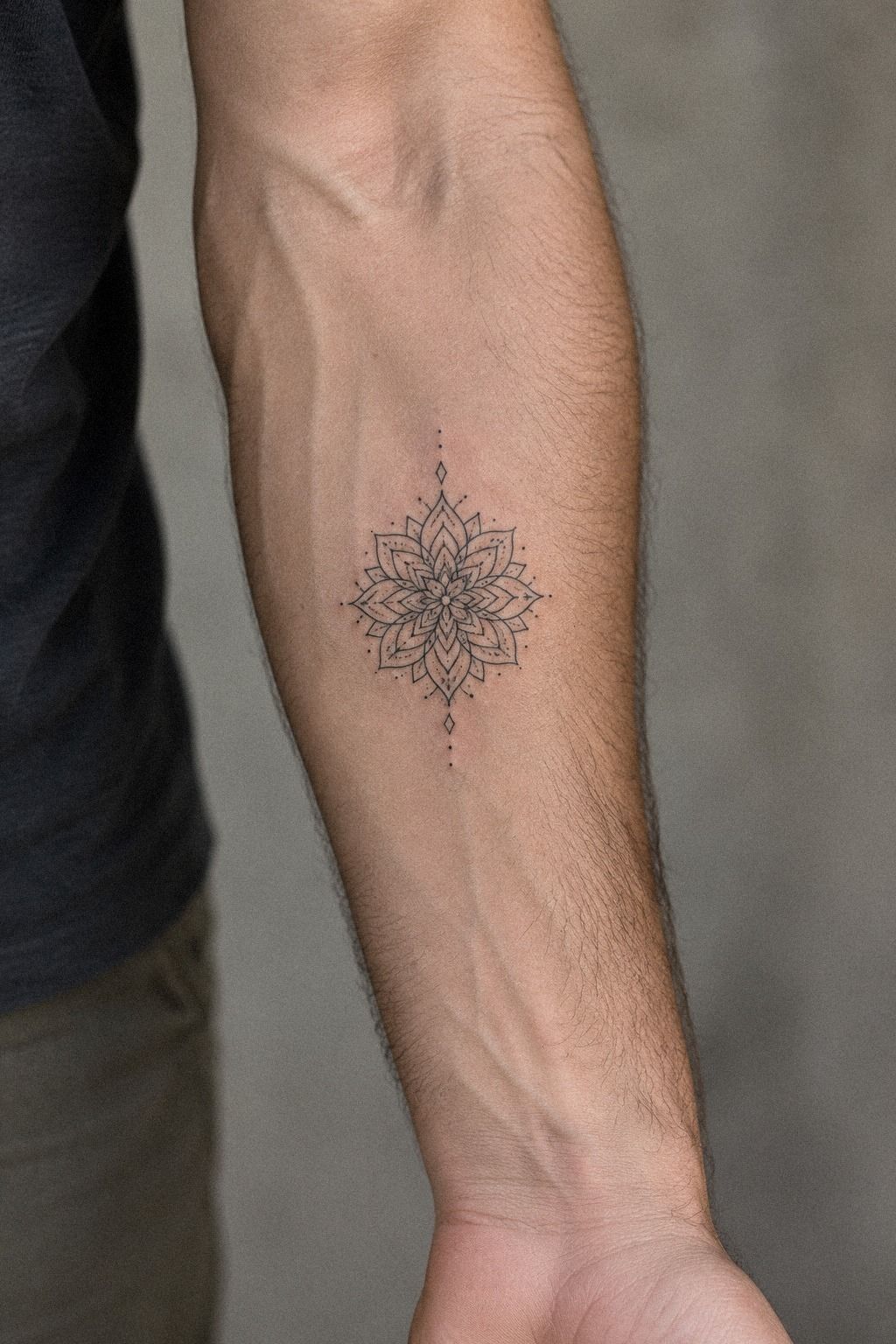
A collarbone mandala looks minimal when the circle sits just below the bone instead of trying to stretch across the entire chest. Forest green, rust, and warm brown accents can feel elegant and strong when the artist leaves enough untouched skin between each petal. I’d keep the design centered on one side.
The best stencil will show the relationship between your collarbone and the mandala’s outer ring. Ask your artist to place the white transfer paper while you stand naturally. A design that looks centered while you’re lying down may shift once your shoulders settle.
The collarbone can feel raw during tattooing, but the appointment doesn’t need to be long. You’ll have a more comfortable experience with four to eight clear sections than with a crowded floral wheel.
And if you’re choosing between symmetry and a single focal point, I’d pick the single focal point. It feels personal and ages with less visual noise.
Keep backpack straps and rough fabric away from the fresh area. Your skin needs room to settle, especially if the tattoo sits where a neckline moves. If you’re deciding whether the placement is worth it, browse these small single line tattoos for a restrained direction.
7Let Ornate Small Mandala Tattoos Shine on Forearms
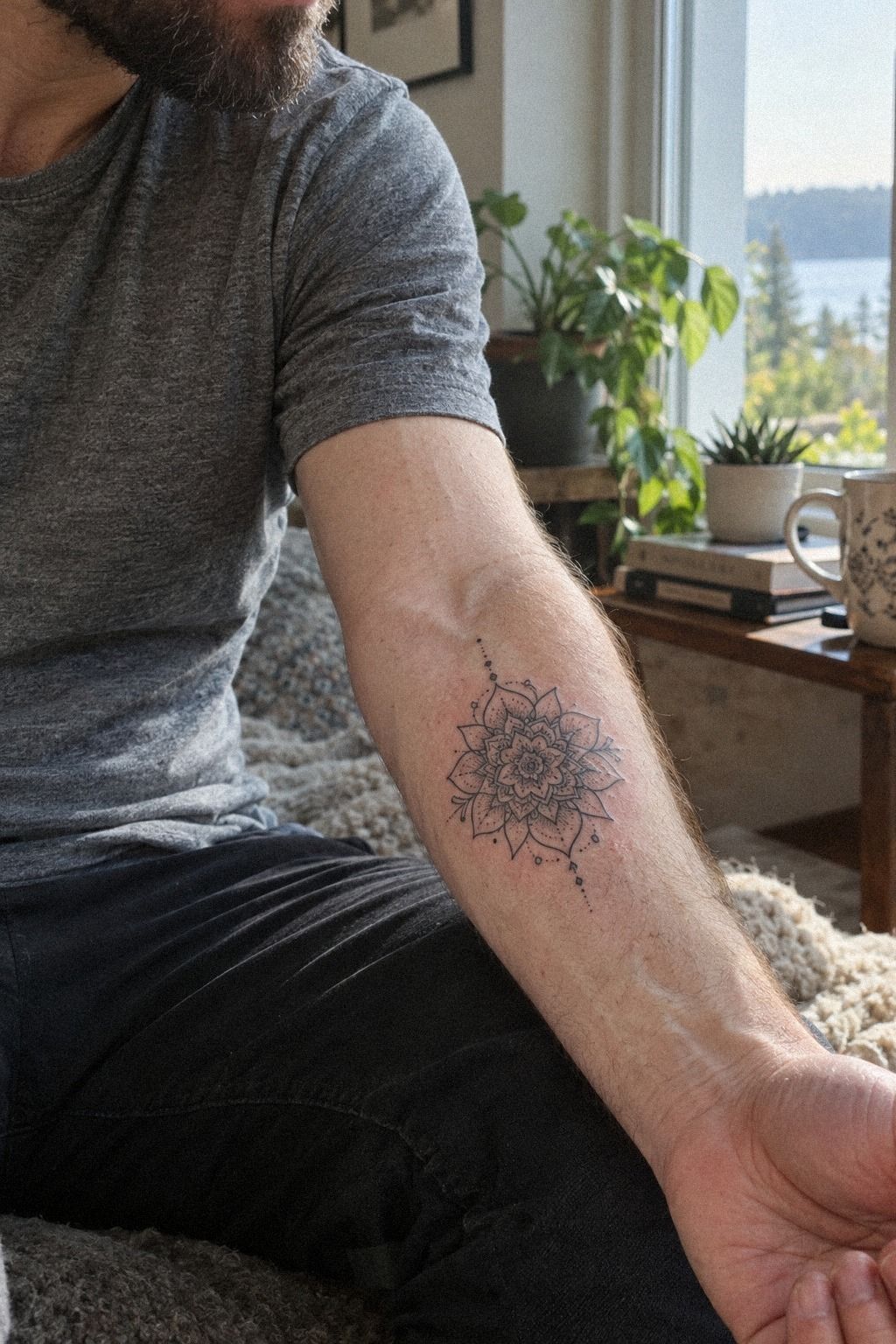
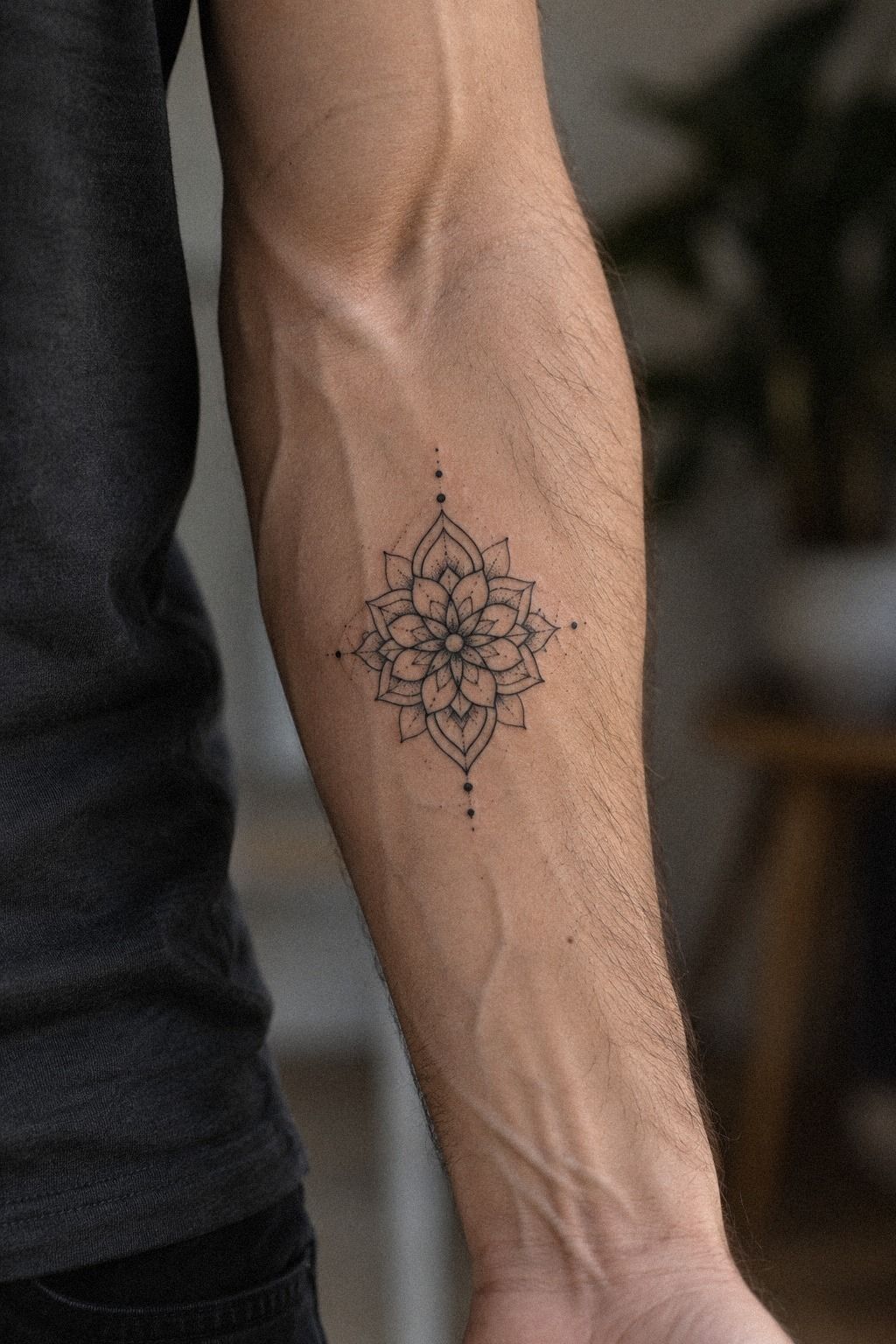
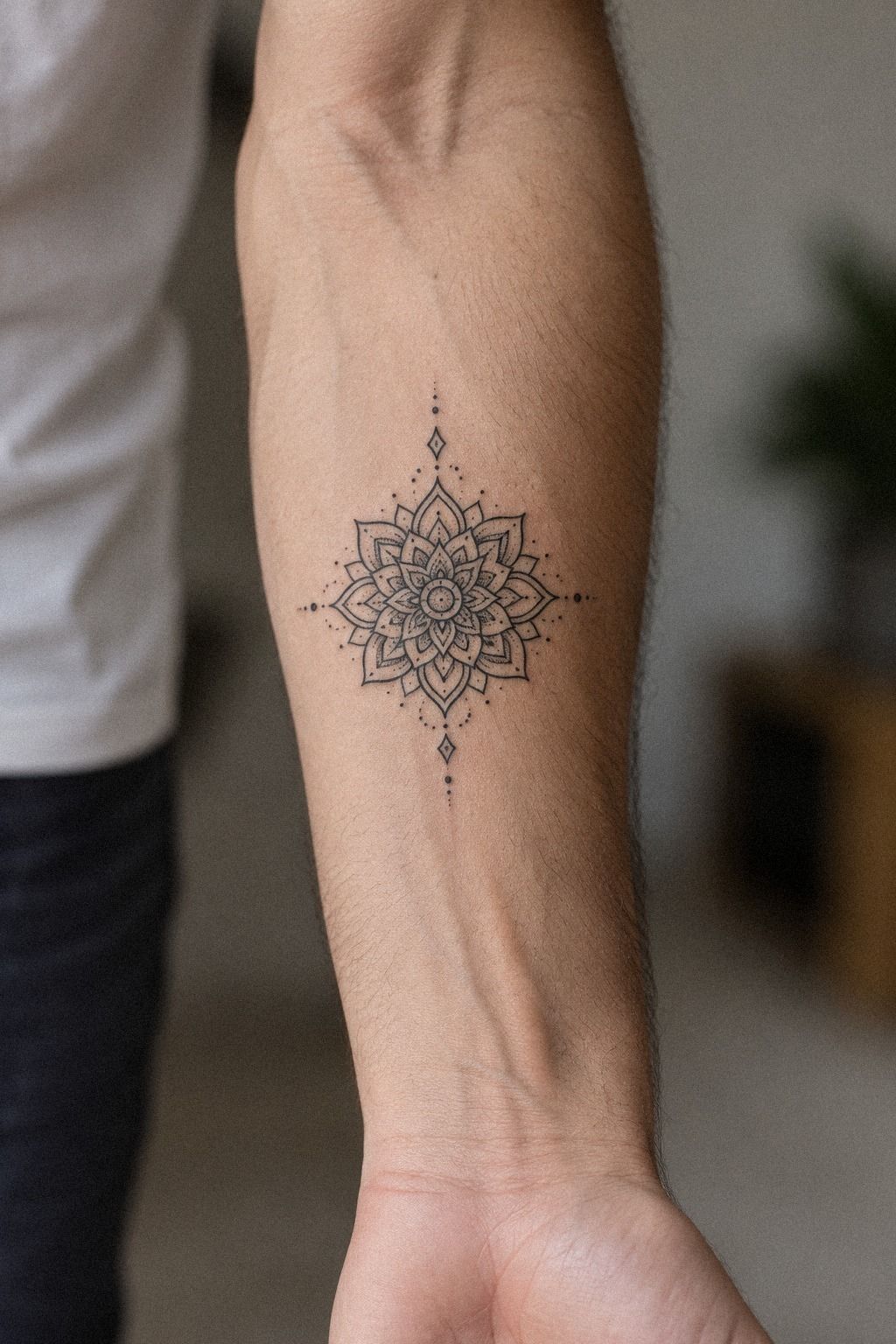
The forearm gives an ornate mandala enough flat space to show its structure without demanding a large tattoo. Dusty rose, charcoal, and brass accents can add dimension while the central geometry stays readable. I’d use this placement when you want visible detail without pushing every line too close together.
8Tiny Dotwork Small Mandala Tattoos on Ribs
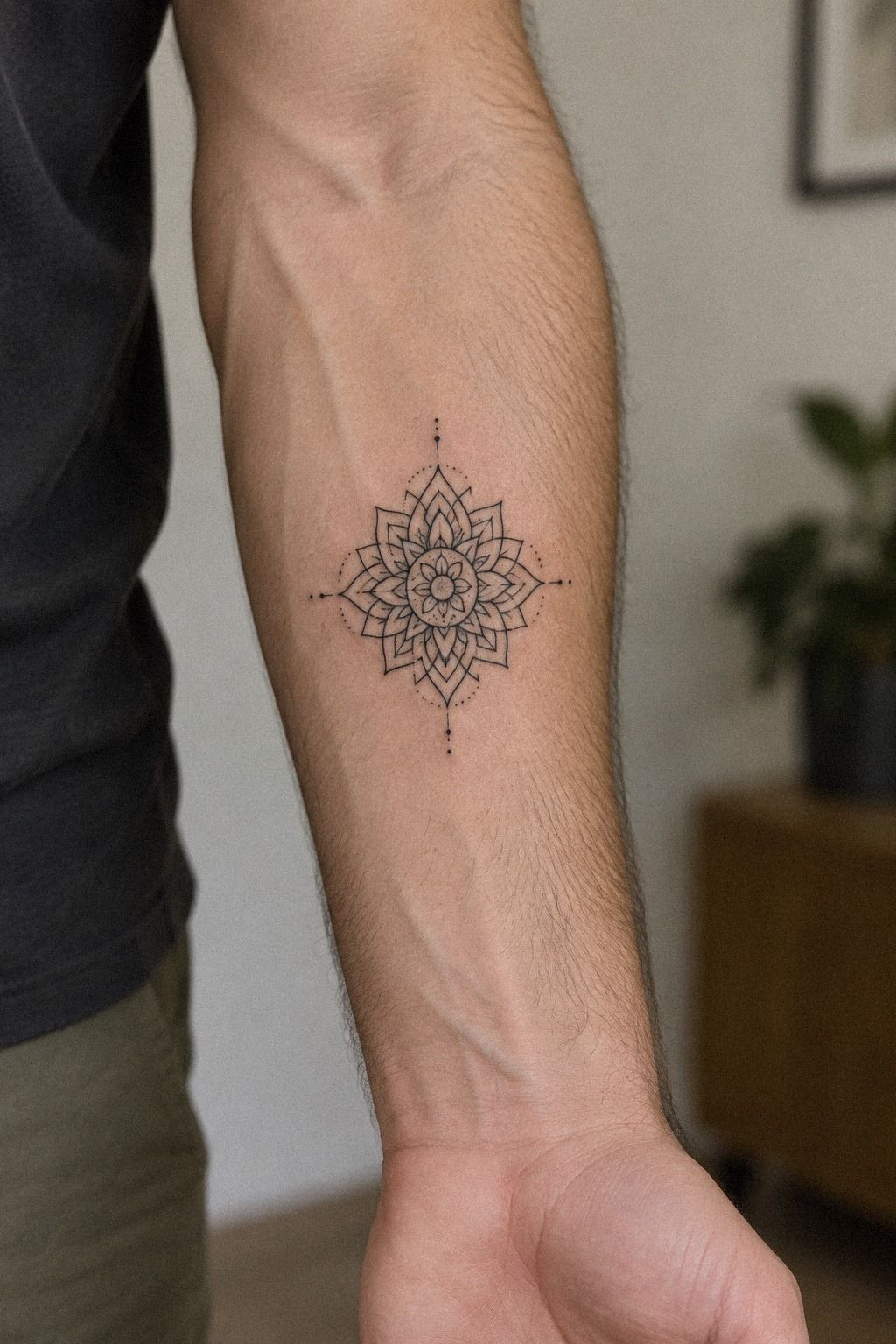
Tiny dotwork on the ribs can look haunting and soft because the shading is built from individual points rather than solid blocks. Warm white, camel, and black accents create an expressive transition from dark center to open edge. I’d use dotwork sparingly here.
The artist should control the spacing with a fine dotwork cartridge, keeping the points close in the center and lighter toward the border. You’ll want the design large enough for those dots to remain distinct. If the mandala is too tiny, the dots can merge and lose their rhythm as the tattoo settles.
Ribs are among the more painful placements because the skin is thin and the body moves with every breath. A short session can still feel intense.
But a compact tattoo gives you a clear stopping point, and you can ask for a break whenever your body needs one. There’s no prize for pretending you’re comfortable.
Wear a soft, loose shirt and avoid swimming while the surface heals. Typical surface healing takes about 2 to 3 weeks, while complete healing can take roughly 2 to 3 months. The artist’s aftercare plan comes first, but this small sunflower tattoos collection may help if you want to compare dot-based texture.
9When a Shoulder-Back Mandala Feels Feminine
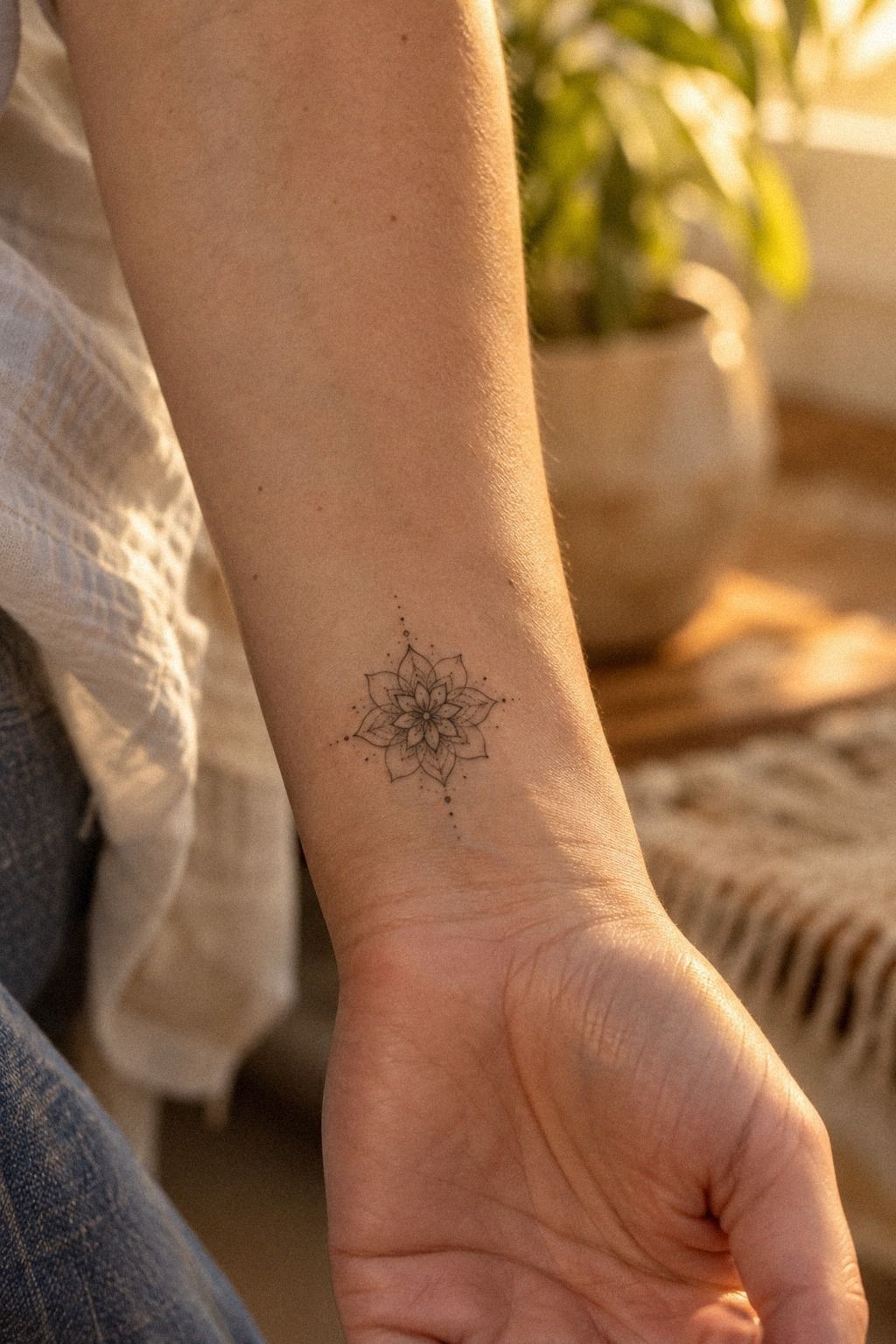
A shoulder-back mandala can feel feminine without relying on flowers or excessive curves. Midnight blue, copper, and ivory accents create a romantic direction when the center stays open and the outer petals remain measured.
10The Nape as a Symbolic Place for Small Mandalas
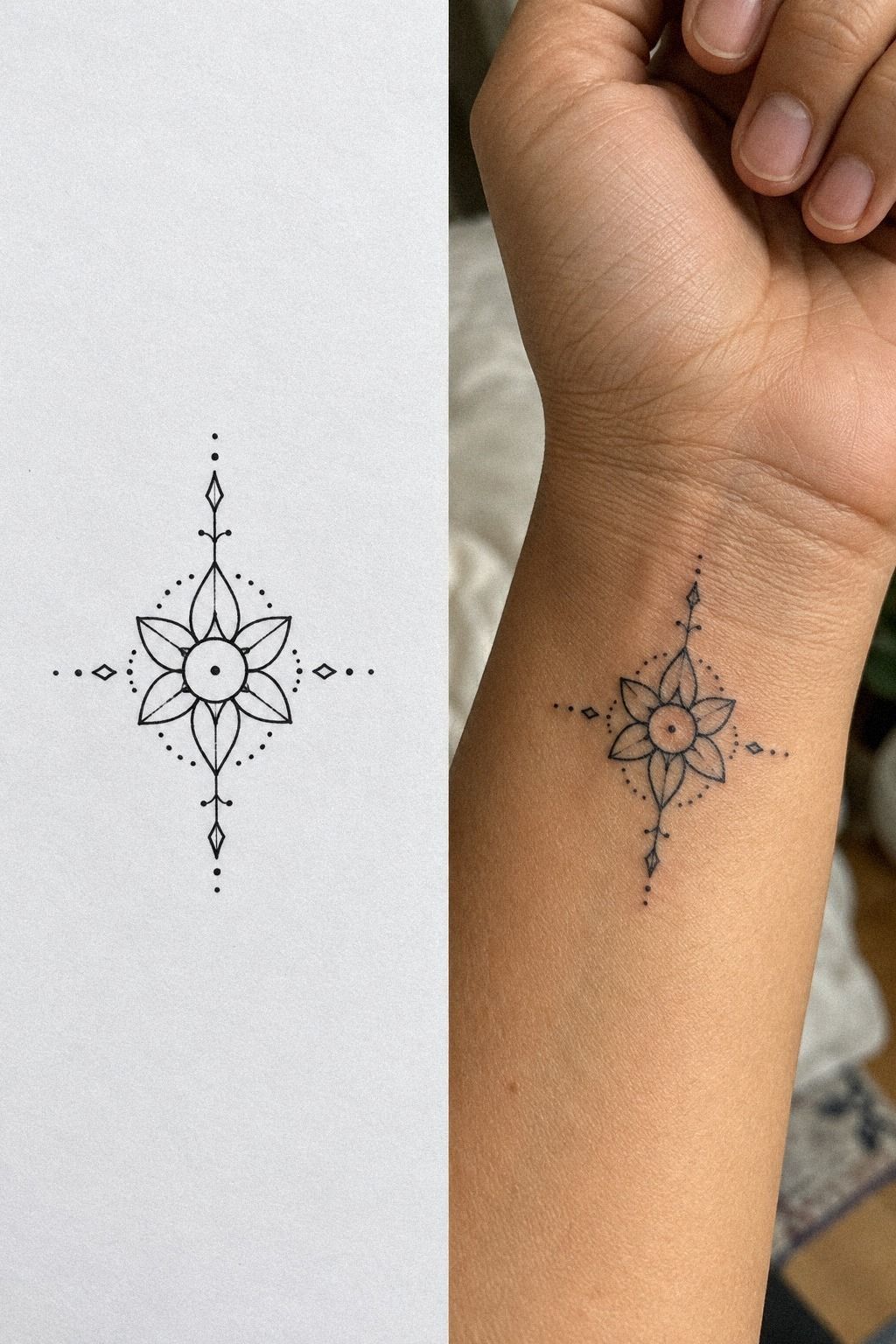
A nape mandala works beautifully as a symbolic mark because the design can stay hidden beneath hair or appear with a short collar. Sage green, warm cream, and brown accents can keep the result striking while preserving the mandala’s central meaning.
I’d choose a healed black line as the reference rather than judging only the fresh stencil. Your artist should show healed work in the same style and scale. A small mandala with six broad sections will usually remain more readable than one packed with narrow spokes.
The nape can be sensitive because the skin is thin and the machine vibration feels close to the neck. Still, the appointment is often brief. I’d skip bright white details in the center.
They may look striking at first but can fade quickly, leaving the symbolism less clear.
Keep hair products, collars, and necklaces away from the area while it settles. Your artist may advise covering the tattoo briefly, but you’ll want the surface clean and undisturbed afterward. If the placement appeals to you, save this guide to small mandala tattoos ideas before choosing a symbol.
11Color or Restraint? Upper-Arm Mandalas
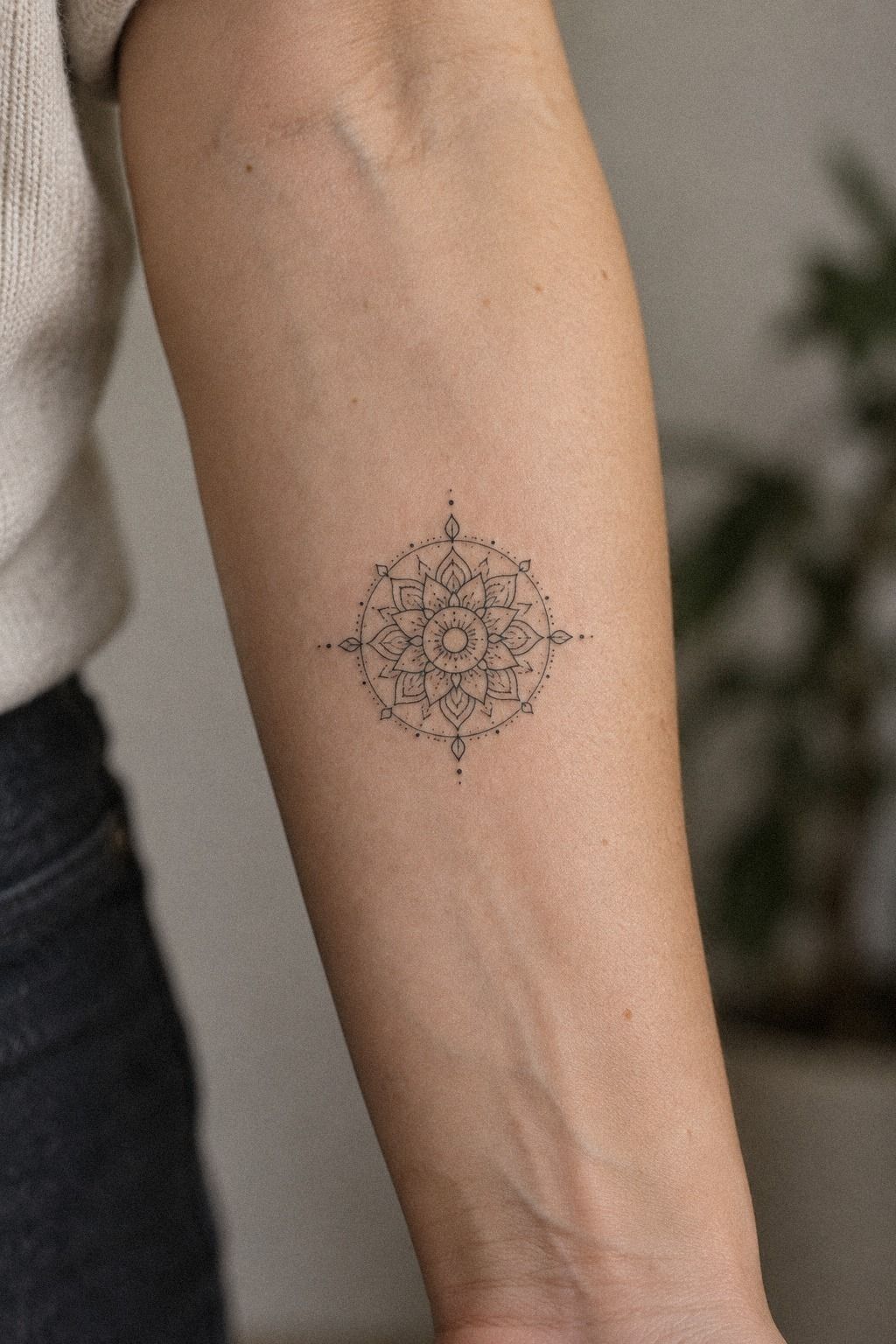
A colorful upper-arm mandala gives you room to experiment with a vibrant center while keeping the overall tattoo small. Terracotta, stone gray, and olive accents can feel playful around a black geometric outline. I’d keep the palette limited to two or three colors.
Ask your artist how each color pigment performs on your skin tone after healing. Saturated ink may look different once the skin settles, and a clear black outline helps the mandala stay readable. You’ll want the color to support the geometry rather than cover every open section.
The upper arm is usually one of the more tolerable placements, especially on the outer area. It’s a practical choice for a first tattoo because clothing can protect it from sun during healing.
I’d skip a fully packed rainbow effect. It can feel playful in the sketch but muddy when the circle is only a few inches wide.
Choose loose sleeves and follow your artist’s washing instructions. After the surface closes, protect the tattoo from UV exposure with clothing or sunscreen.
Your artist’s color-healing examples matter more than a bright fresh result. The small side hand tattoos reference shows how scale changes visual impact, but the upper arm lets you preserve more color separation.
The Detail-to-Size Test
Before you approve the stencil, count the major shapes rather than admiring the overall silhouette. A visible negative-space gap between petals is more valuable than another decorative spoke. If the circle only reads when viewed from a distance, it may be too intricate for its final size.
I’d print or sketch the design at its intended scale and inspect it from arm’s length. The smallest readable detail should still have breathing room. That simple test can save you from paying for a touch-up later.
A dainty tattoo isn’t automatically a bargain. You’re buying the artist’s judgment, clean execution, and the chance that the healed pattern remains expressive. If the work feels worth it, a slightly larger design can offer better value than an ultra-tiny one.
When Does Color Earn Its Place?
Color earns its place when it strengthens the meaning instead of filling every open area. A limited pigment palette of two or three shades can make the center feel vibrant while preserving the mandala’s structure.
Ask how the color is expected to settle on your skin tone. A daring red center may look romantic and vivid at first, while a muted shade may feel timeless after healing. Your artist should explain that difference honestly.
I’d avoid choosing color only because it looks striking in a reference design. Skin tone, sun exposure, placement, and the artist’s technique all affect the result. A polished black-and-gray mandala can be just as expressive as a colorful one.
Fresh Ink or Healed Character?
Fresh ink is crisp, saturated, and often more dramatic than the finished tattoo. Healed work shows the real character. Look for healed portfolio examples where the lines remain readable and the spacing still feels intentional.
You’ll want to compare pieces with similar size, placement, and detail. A large forearm mandala doesn’t prove that an artist can execute a tiny finger design. Ask direct questions.
Good art earns that trust!
The most meaningful result isn’t always the sharpest first-day result. Sometimes a softened line gives the tattoo an ethereal quality, while careful spacing keeps the symbol classic and recognizable.
A Budget Check Before You Book
Ask for the shop minimum, the estimated appointment length, and the likely touch-up policy before you reserve a date. A written tattoo quote helps you compare the actual cost rather than guessing from the design’s tiny size.
A low quote isn’t automatically a bargain! The better value may come from an artist with strong healed work, careful hygiene, and a clear explanation of what the design needs. Your budget should include aftercare products and possible maintenance.
I’d also ask whether the price changes with color, placement, or custom drawing time. You’ll feel more confident when the final number reflects the whole appointment instead of only the machine time.
The Small Circle Rule I Trust
After looking at hundreds of mandala references, I’ve become convinced that the smallest design isn’t always the easiest design. I once chose a circle because it looked dainty in a small reference, then realized the inner spokes were too close together for real skin.
The healed result wasn’t terrible, but it wasn’t the crisp, timeless mark I wanted. Your body needs breathing room.
The rule I use now is simple: choose the smallest size that still leaves visible gaps between the major shapes. That might mean a slightly larger forearm mandala or a less detailed finger piece. I’d rather see six deliberate petals than sixteen cramped ones.
Your artist should explain what will remain readable after the surface swelling fades.
Placement is the second decision. Forearms, upper arms, shoulders, and thighs tend to be more tolerable.
Ribs, feet, hands, sternums, and areas close to bone can feel sharper. The right choice depends on your pain tolerance, daily clothing, sun exposure, and how often you want to see the tattoo.
I also care about the artist’s healed portfolio more than a perfect fresh result. Fresh ink looks rich and defined; healed ink tells you whether the lines spread, whether the color stays balanced, and whether the mandala still feels symbolic. If you’re planning your first piece, use this healed-work comparison and the small tattoos meaning guide to decide what the circle should represent.
The session itself may last less than an hour for a small, simple design, but timing varies with placement, detail, and the artist’s pace. You’ll want to ask about the session length before booking.
A lower price doesn’t mean better value if the portfolio doesn’t show clean, healed work. That’s the part worth taking seriously!
A Few Things Worth Answering
How much does a small mandala tattoo usually cost?
A small mandala tattoo in the US commonly falls around $100 to $300, though a studio minimum may be about $50 to $100 and hourly rates may run about $100 to $250. Your artist, region, placement, and detail level will change the final quote. Compare healed portfolios before comparing prices.
Are small mandala tattoos a good idea for a first tattoo?
Yes, small mandala tattoos can suit a first session because you can choose a tolerable placement and finish within one sitting. A clear design with open spacing is easier to understand as it heals.
Your first tattoo should feel personal, not merely dainty or fashionable. See these small single-line tattoos for similar restraint: small single line tattoos.
How do I choose a tattoo artist for small mandala tattoos?
Choose an artist with clean geometric linework, healed examples, and strong studio hygiene. Ask to see work in your preferred size and placement, not only large custom pieces.
You’ll want an artist who explains spacing honestly and won’t promise that ultra-fine lines stay unchanged forever. Start with these healed examples as a style comparison: tiny small spine tattoos.
How much do small mandala tattoos hurt?
Pain varies, but ribs, feet, hands, and sternums often feel more intense because the skin is thin or close to bone. Forearms, thighs, and shoulders are usually more tolerable. Your session may still feel sharp in sensitive spots, so take breaks and tell your artist what you need.
Your pain tolerance matters more than anyone else’s experience.
How long does a small mandala tattoo take to heal?
The surface usually heals in about 2 to 3 weeks, while complete healing can take roughly 2 to 3 months. Wash gently, moisturize as directed, and avoid swimming and strong sun during early healing. Your artist’s instructions should guide the exact products and timing.
What’s the best placement for small mandala tattoos?
The outer forearm is often the best balance of visibility, tolerable pain, and line longevity. The wrist, fingers, ribs, and sternum can look striking but may need more maintenance or feel sharper. You’ll make a better choice after considering your work, clothing, and sun exposure.
Browse these small hand tattoo ideas if hand placement is still on your list: small tiny hand tattoos.
Where I’d Start First
If I had to pick one, I’d start with the small forearm mandala. It gives fine lines enough space, usually feels manageable, and stays visible while you judge how the design heals. A thoughtful forearm piece can offer strong value without sacrificing meaning.
Pin the small mandala tattoos guide for later and take the stencil decision seriously. That’s worth it!