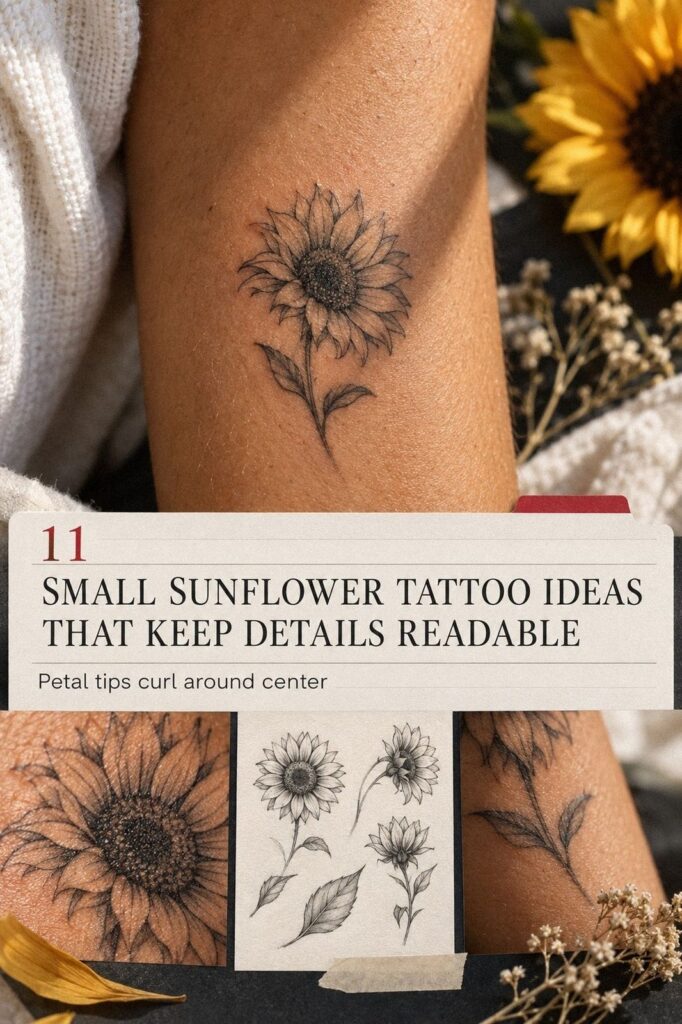
I got my first small sunflower tattoo years ago, and it still reads clearly because I chose shape before decoration. The design was black ink, one stem, layered petals, and enough breathing space to survive daily movement. I nearly made it busier. I’m glad I didn’t.
Here’s what it looked like before:
Before the appointment, I had a patch of blank skin I’d been saving for the right idea. I kept opening sketches, closing them, and wondering whether a tiny flower could feel personal instead of generic. The answer came when I stopped chasing detail and started studying the flower’s outline.
The final reference was a single sunflower with a narrow stem, a compact center, and petals that didn’t touch each other. My transfer stencil looked almost too plain on paper, but that restraint mattered. If you’re choosing from small sunflower tattoo ideas, look at the silhouette first, then ask whether the surrounding skin still has space to breathe.
Before You Book, Test the Silhouette
I reduced the sketch until it was no larger than a thumbnail, then viewed it from arm’s length. That quick test showed whether the flower still looked recognizable at scale. It did.
The smaller version felt more elegant than the crowded draft.
I also printed the design in three sizes and placed each one against my intended skin area. The largest looked ornate, but the center was losing clarity.
The smallest was dainty and understated, though the stem needed a little more length. That little test surprised me!
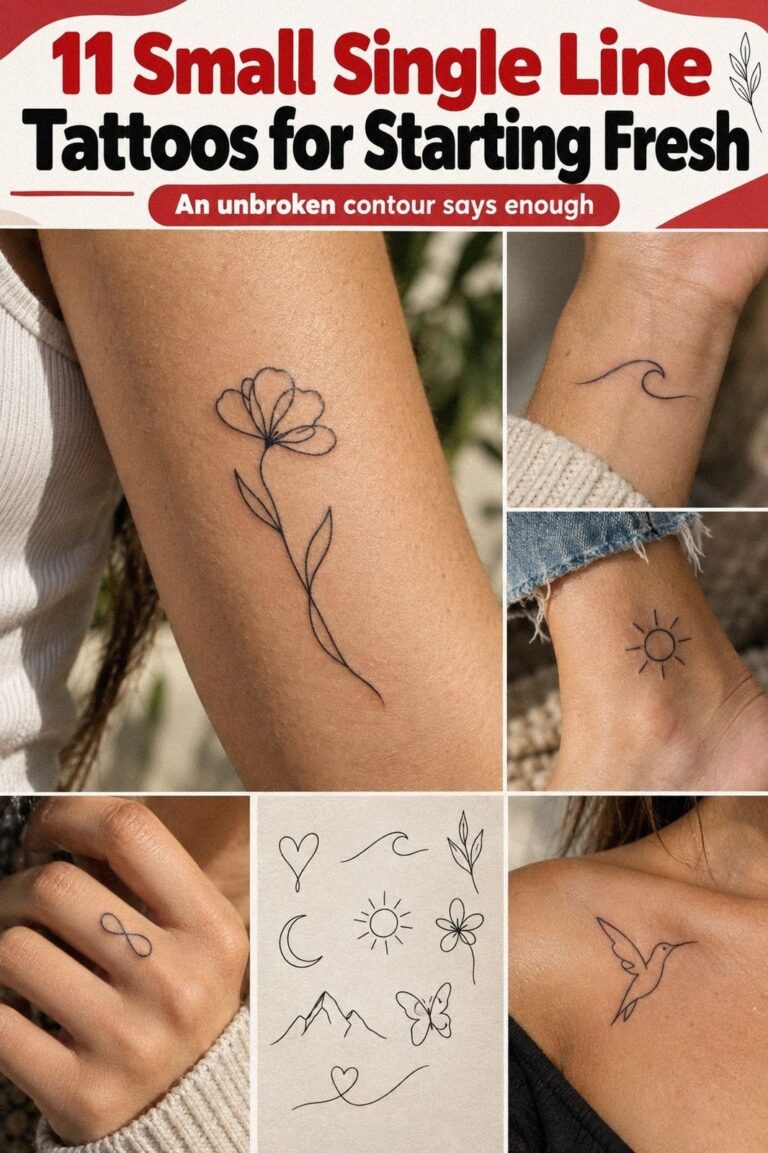
If you’re comparing references, save the version that remains visually clear without relying on tiny interior marks. A striking outline can carry more personality than a complicated drawing. You can browse small single line tattoos for ideas, then ask your artist to redraw the concept for your own proportions.
- I Sketch My Small Sunflower Tattoo First
- Fine Line or Bold Petals?
- The Meaningful Stem Detail
- I Test Small Sunflower Tattoo Placements
- Wrist Versus Flash: Which Design Wins?
- Let Tiny Leaves Stay Open
- What Makes a Small Sunflower Tattoo Unique?
- Delicate Linework: Comfort or Compromise?
- I Follow the First Week Healing Routine
- The Aging Margin
- I Make the Final Tattoo Feel Personal
1I Sketch My Small Sunflower Tattoo First
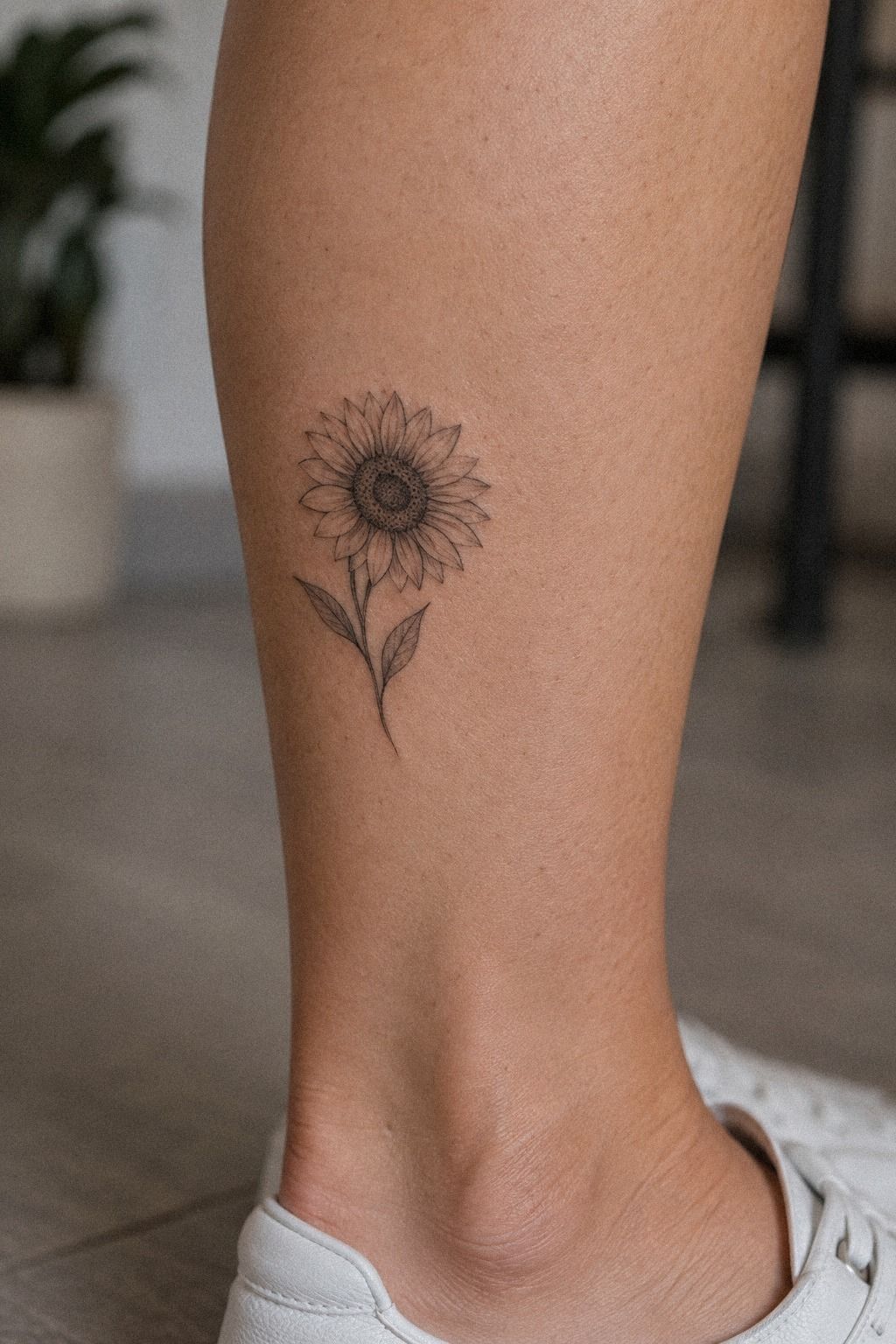
I started with the inner forearm because I could see the shape without twisting my wrist. The terracotta, stone-gray, and olive palette in my reference gave the single stem a striking vertical pull. I’d keep the sketch minimal here, because extra petals would crowd the center.
My first draft had too many lines. It was intricate, sure, but it looked fussy when reduced to a small scale.
I removed two petals and widened the gaps around the center. That small edit made the design more elegant, and you can test the same change by shrinking your reference on your phone.
The Petal-Read Rule
The rule I use is simple: each petal should read as its own shape from a normal viewing distance. Terracotta linework can look delicate when fresh, but your artist still needs clear spacing. If you’re comparing small sunflower tattoos, save the sketch that remains recognizable at thumbnail size.
And don’t confuse more detail with more meaning. A fine outer contour, a dark center, and one graceful stem can feel more expressive than a packed botanical drawing. I’d choose that version every time, especially if your first idea includes tiny dots, miniature veins, and several overlapping leaves.
For a related placement reference, compare your sketch with these small single line tattoos. The examples helped me notice how terracotta line weight changes the entire mood, even when the flower itself stays almost identical.
2Fine Line or Bold Petals?
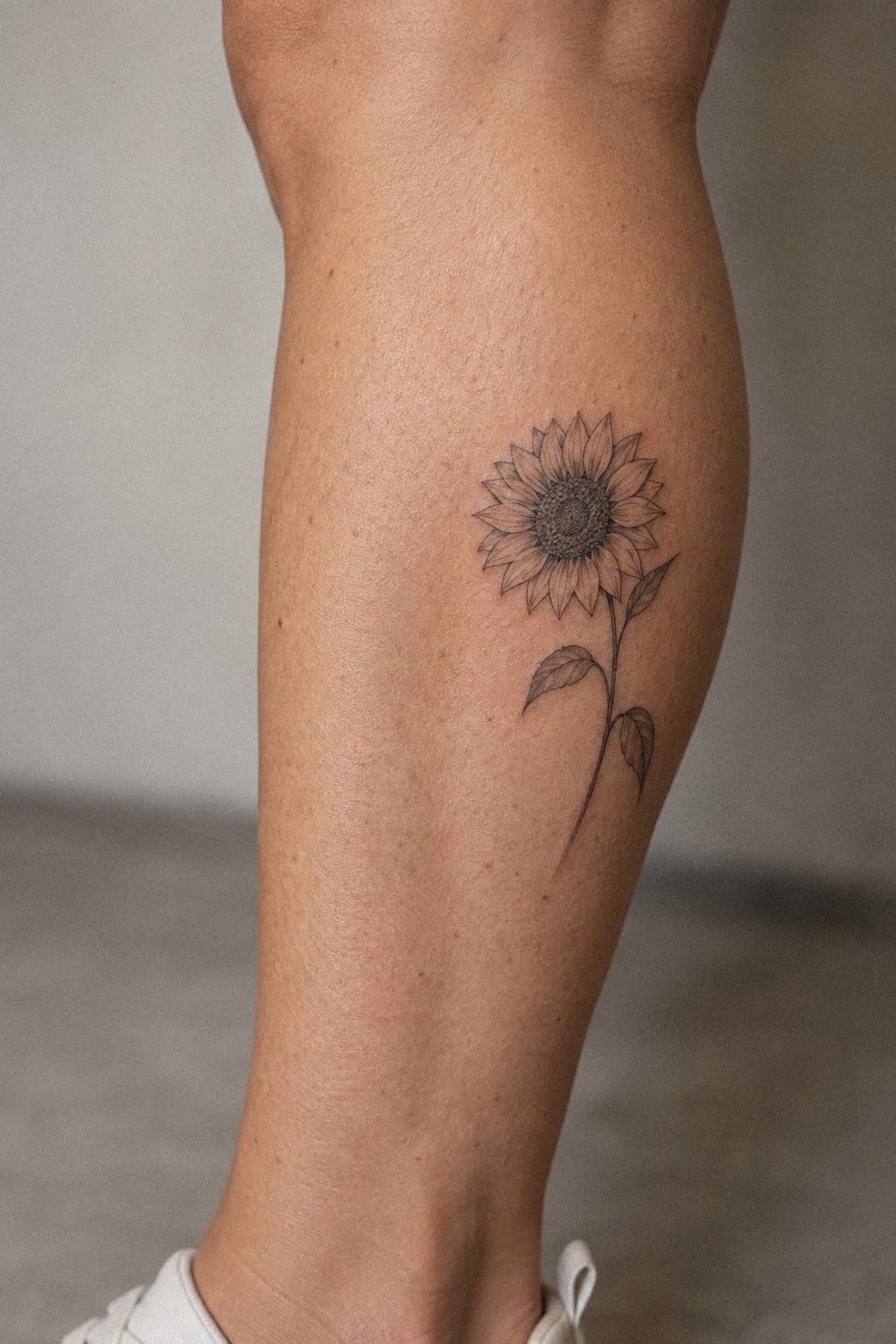
The fine-line version uses a narrow clay-colored outline and open petal gaps, while the bolder version gives the aged-brass center more visual weight. Linen-colored skin breaks keep the flower from feeling crowded. I prefer the sleek fine-line option when the design needs to stay discreet, but the bolder version feels more iconic from a distance.
3The Meaningful Stem Detail
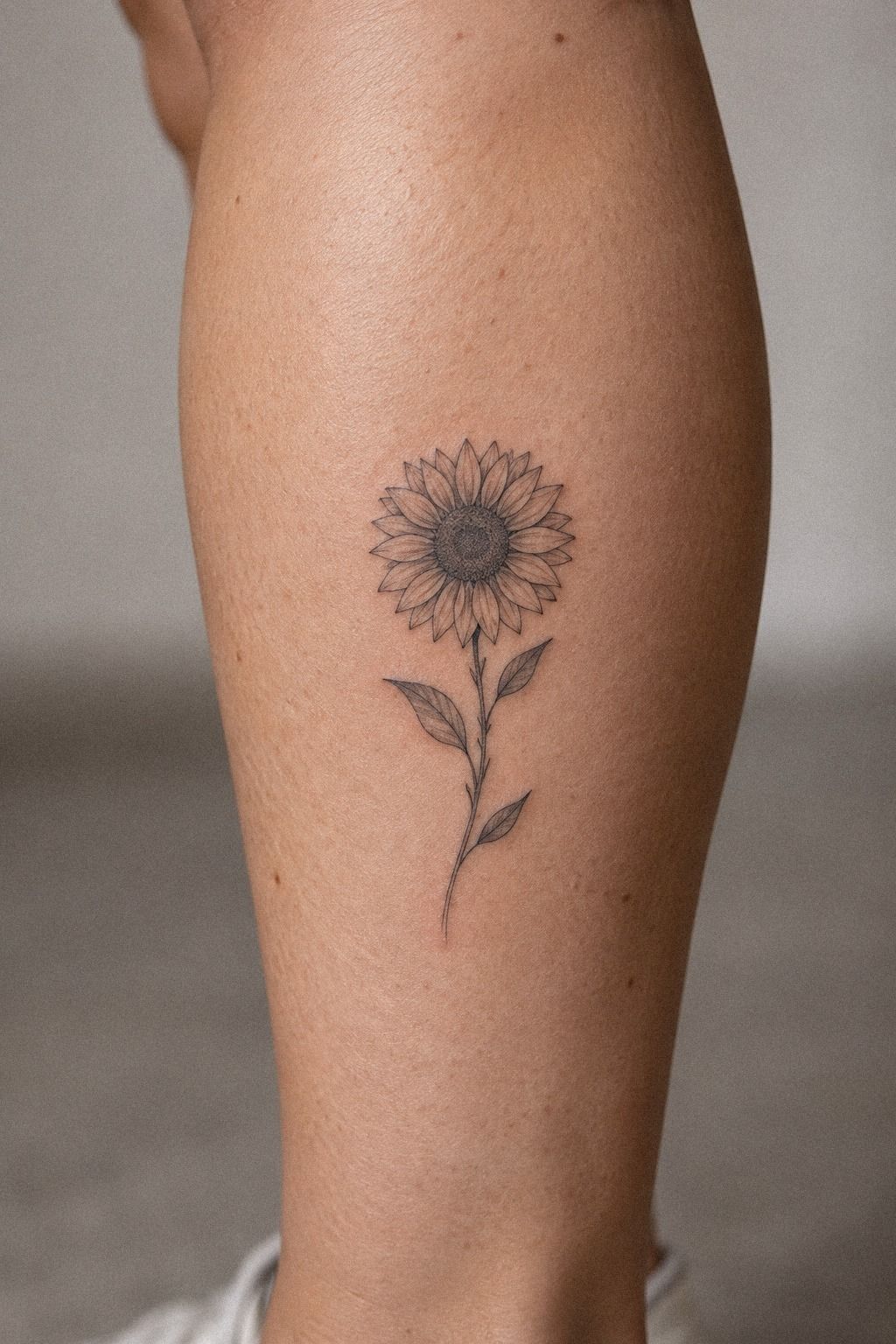
The stem carries more emotion than people expect. A sunflower can symbolize optimism, remembrance, or a person who helped you grow, but the detail needs to belong to you. I chose one slight bend in my plum-gray stem contour, touched with a muted rose-gold accent, to represent resilience after a difficult year.
It wasn’t obvious to anyone else, and that’s what made it personal. If you’re collecting unique small sunflower tattoos, give your artist one meaningful detail instead of attaching a complicated explanation to every mark.
The Stem-Meaning Test
Ask yourself what you’d miss if the tattoo became only a flower head. If the answer is “nothing,” keep the stem simple. If you connect with a specific memory, let the curve, leaf, or direction hold it.
I’d rather see one symbolic choice than a cluster of extra marks.
You can explore ideas in a small tattoos meaning guide before your consultation. I found that writing three sentences about the memory helped me edit the drawing. Your artist doesn’t need a dramatic backstory, but you should know why the design belongs on your skin.
And leave space around the leaves. Negative space keeps the rib design crisp, especially when the stem follows the body instead of sitting perfectly straight. A crowded leaf pair may look ornate at first, but it can turn muddy when the tattoo is viewed from an angle.
4I Test Small Sunflower Tattoo Placements
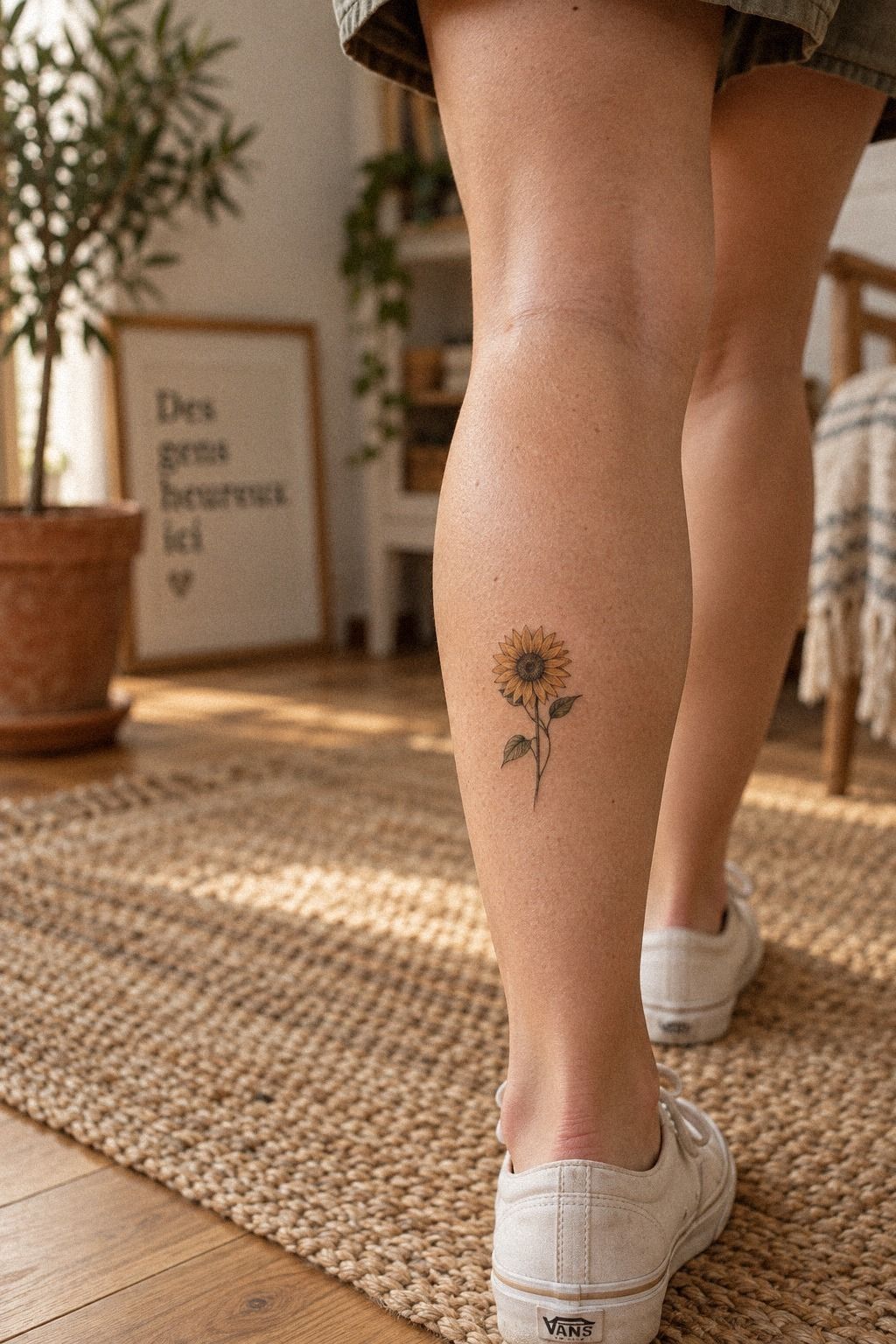
The wrist is visible, direct, and easy to read, but it also moves constantly. I tested my placement with a skin-safe stencil marker before booking because a flower can feel different when it follows a joint. The design needs a clean axis and a center that won’t disappear in a fold.
I tried the outside wrist, inner forearm, shoulder, and upper arm. The wrist won for visibility, but the forearm gave the petals more breathing space. If you want a discreet choice, the upper arm is more forgiving.
I’d avoid deciding from a flat reference alone.
My temporary test used a washable marker, and I left it on through a normal day. I washed my hands, carried bags, and checked the flower under direct sunlight. That little trial showed me where the stem direction looked strongest and where the design twisted.
For more placement comparisons, look through tiny small wrist tattoos and tiny small spine tattoos. The wrist feels immediate and personal; the spine feels more hidden and graceful. Your best placement depends on visibility, movement, and how much sun the area receives.
I’d also consider whether you’ll enjoy seeing the tattoo during ordinary routines. A visible placement can feel empowering, while a covered one may feel more sacred and private. Neither choice is better.
Your habits should decide.
The navy, white, and walnut-brown reference also showed me how much color changes the mood. Navy linework feels sharper than black, while white skin breaks keep the petals open. I’d use that palette only after discussing how each pigment behaves on your skin.
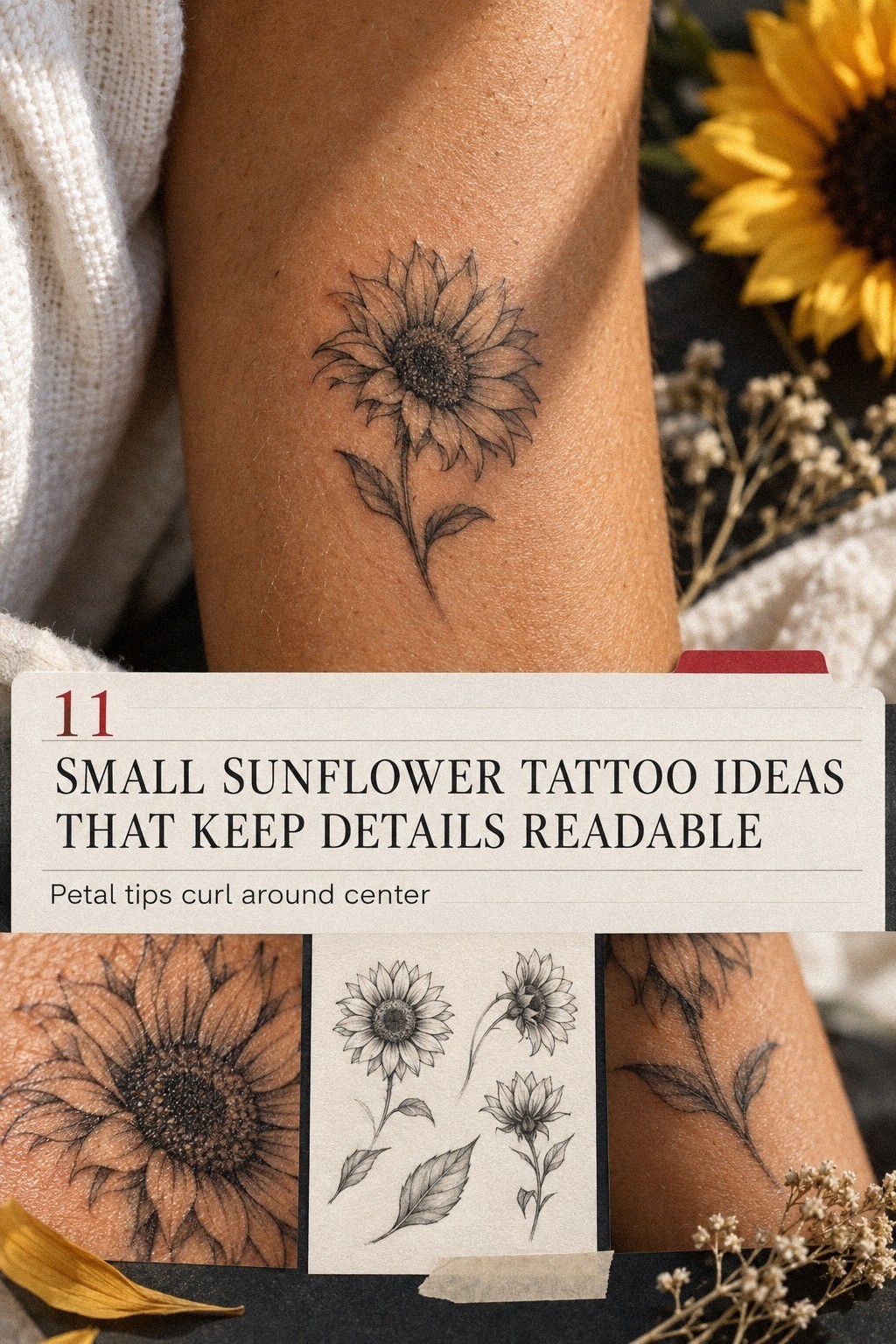
5Wrist Versus Flash: Which Design Wins?
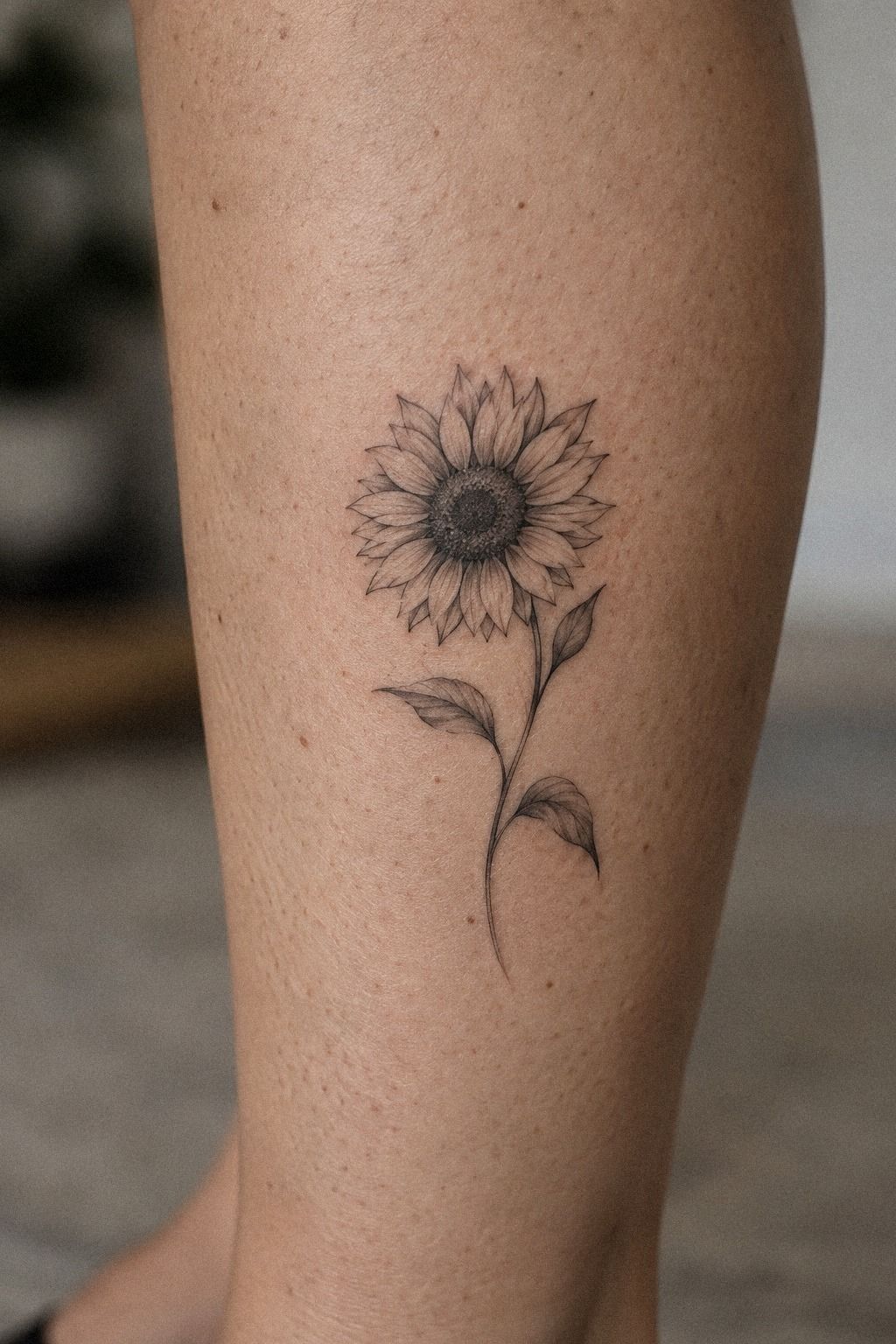
The flash version forced a decision. I could see the artist’s natural proportions instead of endlessly adjusting a digital drawing, and the compact flower head made the aged-paper flash sheet feel classic rather than generic.
My wrist needed a design with a stem that didn’t run into the hand. I chose two open petals rather than the denser bloom. It looked less ornate, but the shape felt more polished once held against my skin.
The emerald, gold, and cream reference made the wrist feel vibrant without adding more petals. Gold ink accents can look romantic beside emerald leaves, but I’d keep them limited so the sunflower remains readable.
If you’re choosing among small sunflower tattoos, place the paper design on your wrist and rotate it slightly. A vertical flower can look formal, while a gentle diagonal can feel more playful. I’d avoid copying a flash design without checking the scale first, because “small” means something different on every wrist.
One useful question is this: will you still recognize the sunflower when your wrist is relaxed and your hand is turned sideways? That test caught my weakest option. The cream skin break survived every angle, while the pale accent color vanished quickly under ordinary light.
6Let Tiny Leaves Stay Open
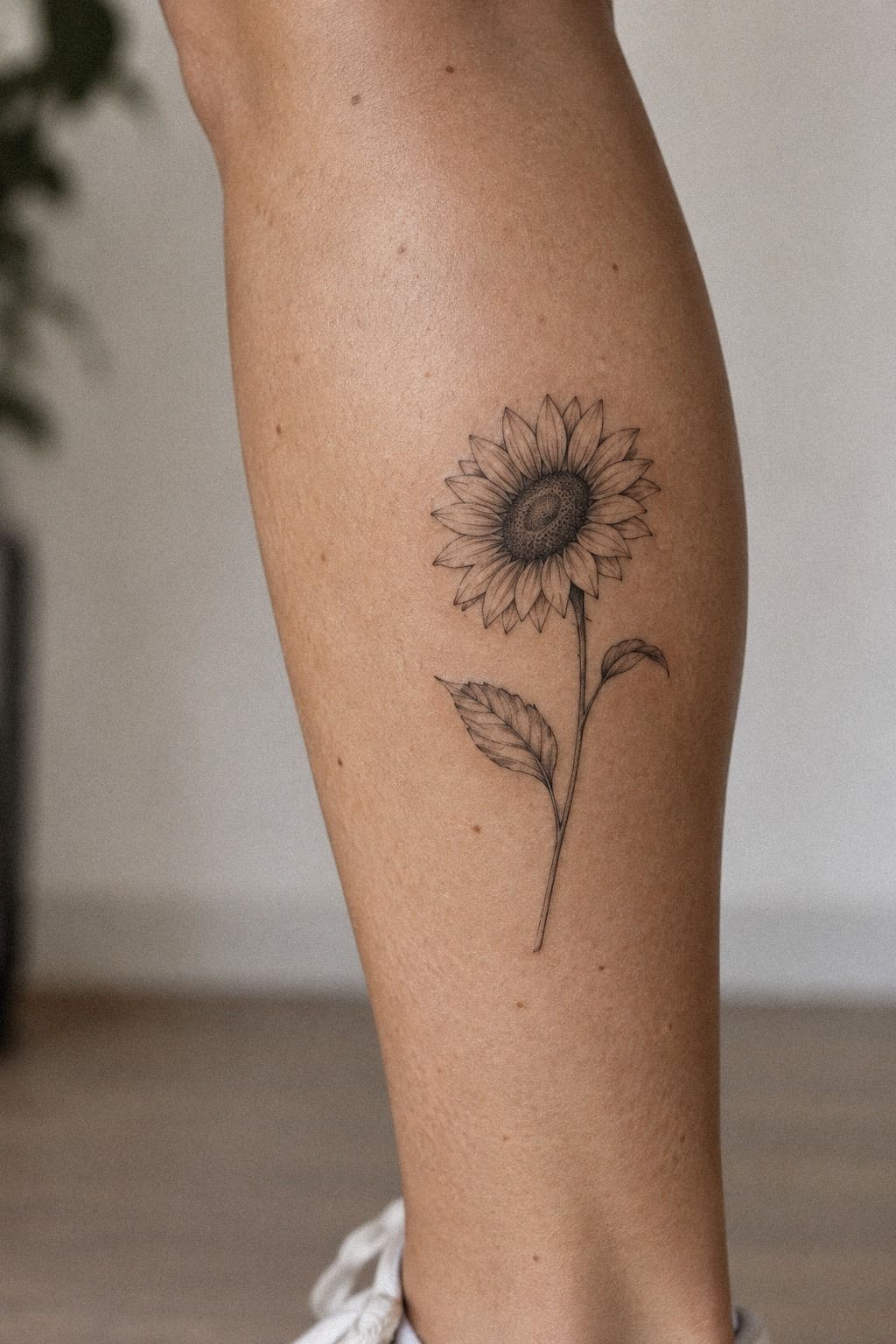
The upper-back placement gave the flower a graceful, high-contrast presence. I’d keep the leaves open and slightly larger than instinct suggests. Tiny leaves can look whimsical on a screen, then collapse into dark marks after healing.
I tested three versions of the forest-green leaf outline before choosing two leaves with simple pointed ends and a small rust-colored center. The first version had interior veins, but they made the stem feel busy. If you want a more intricate look, let the outer contour do most of the work and keep the inside nearly empty.
Your artist should check how the ink will contrast with your skin tone in the finished placement, not only in a digital mockup. That doesn’t mean the design needs to be bold everywhere. It means your line weight and spacing should respect the skin you’re tattooing.
And don’t let anyone treat deep skin as a limitation. A crisp black design can look powerful, timeless, and expressive when it’s planned with care. I’d choose strong shape and thoughtful contrast over pale details that won’t carry the same visual weight.
The natural-brown stem in my reference also helped the green leaves feel grounded without making them heavy. Rust and forest-green accents can be daring, but they need enough skin between them to remain distinct.
If you’re unsure how much detail to keep, compare small single line tattoos at your intended size. The most successful references usually have one dominant idea, not five competing ones.
7What Makes a Small Sunflower Tattoo Unique?
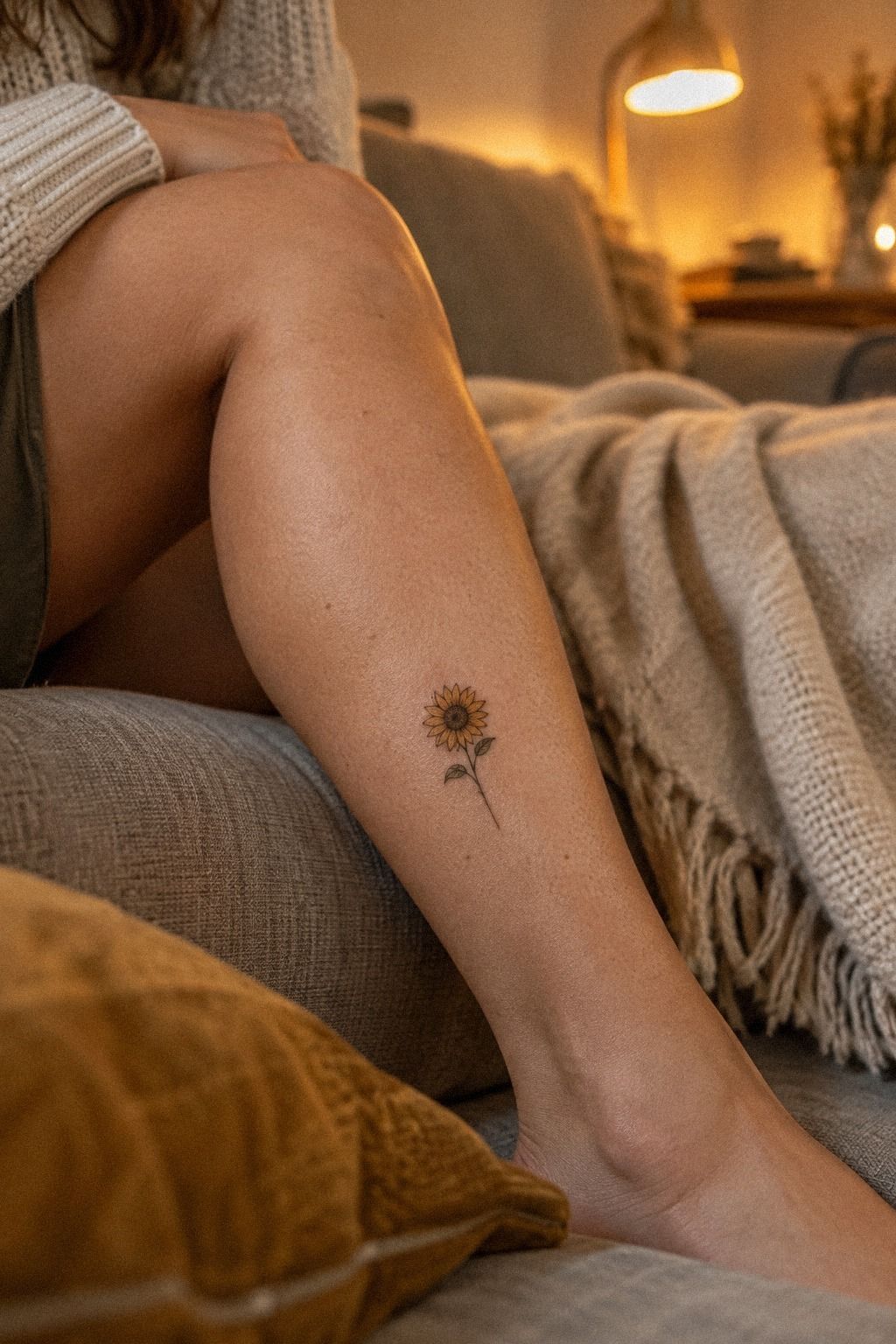
The answer isn’t always an unusual petal arrangement. A dusty-rose bloom with charcoal linework and a restrained brass accent can feel more distinctive than an overloaded design. The unusual part may be the color relationship, the stem direction, or one personal mark.
8Delicate Linework: Comfort or Compromise?
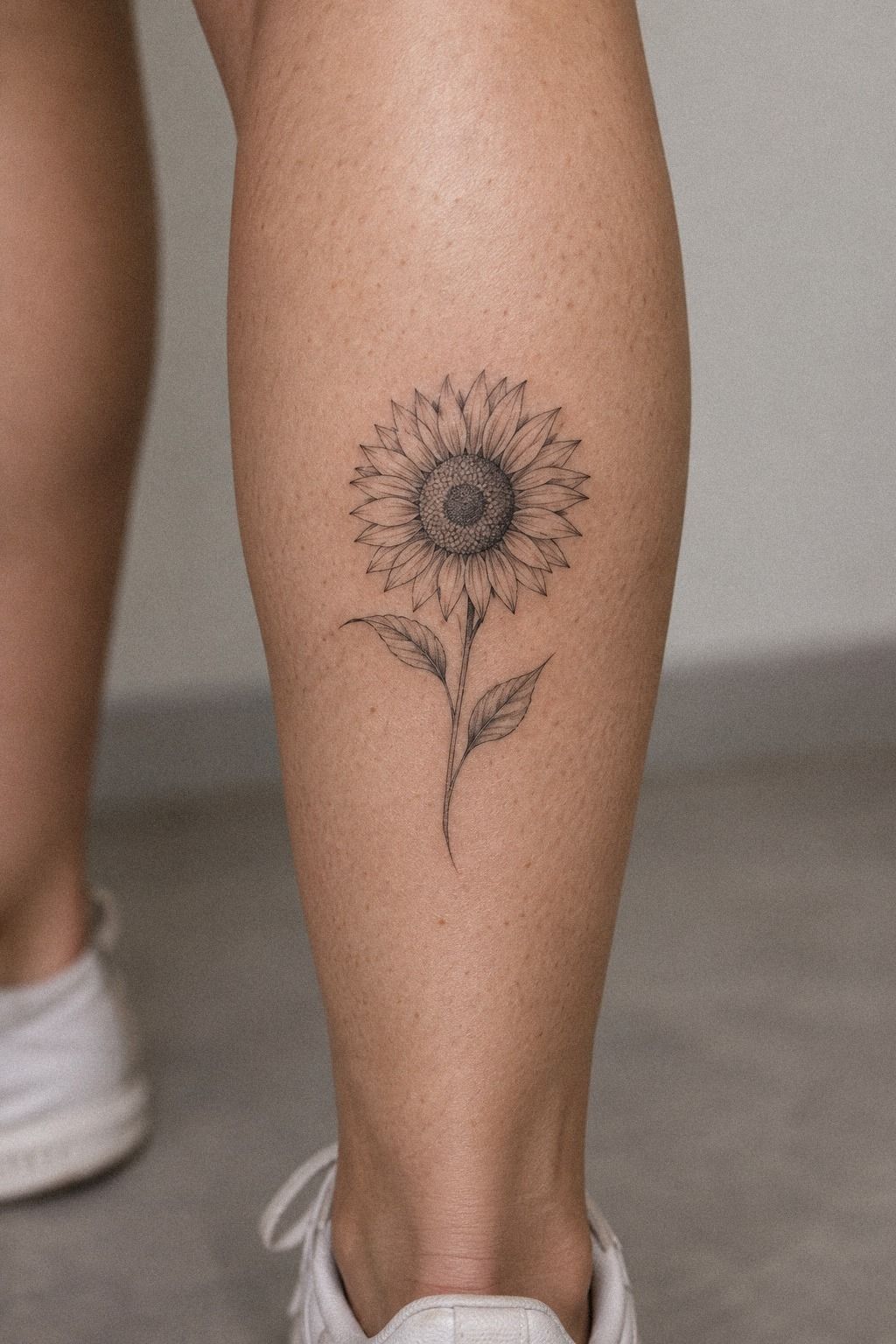
For me, the shoulder felt more tolerable than the ribs or sternum. Pain varies, but bony zones such as ribs, feet, hands, and sternum often feel sharper. The location matters, though it shouldn’t be the only thing driving the decision.
I brought water, ate beforehand, and wore clothing that wouldn’t rub against the fresh tattoo area. That preparation didn’t erase discomfort, but it kept me calm. You’ll have an easier time judging the artist’s work if you aren’t also dealing with hunger, tight fabric, or a rushed schedule.
The session itself was short because the design stayed compact. Ask your artist whether your piece should fit into one brief appointment or whether extra time is needed for stencil placement and careful linework. I’d rather pay for patient setup than hurry a delicate flower.
Pain shouldn’t be the only reason you choose a location. The shoulder can be comfortable and easy to cover, while the wrist can be more visible and more exposed to sun. Your decision should balance sensation, meaning, visibility, and how the healed outline may age.
The warm-white, camel, and black reference reminded me that contrast doesn’t have to feel harsh. A soft neutral field can make black accents look fierce, while the camel tone adds a raw, understated quality without changing the placement.
If you want more placement context, compare tiny small wrist tattoos with tiny small spine tattoos. The contrast between visible and hidden placement can clarify what you actually want.
9I Follow the First Week Healing Routine
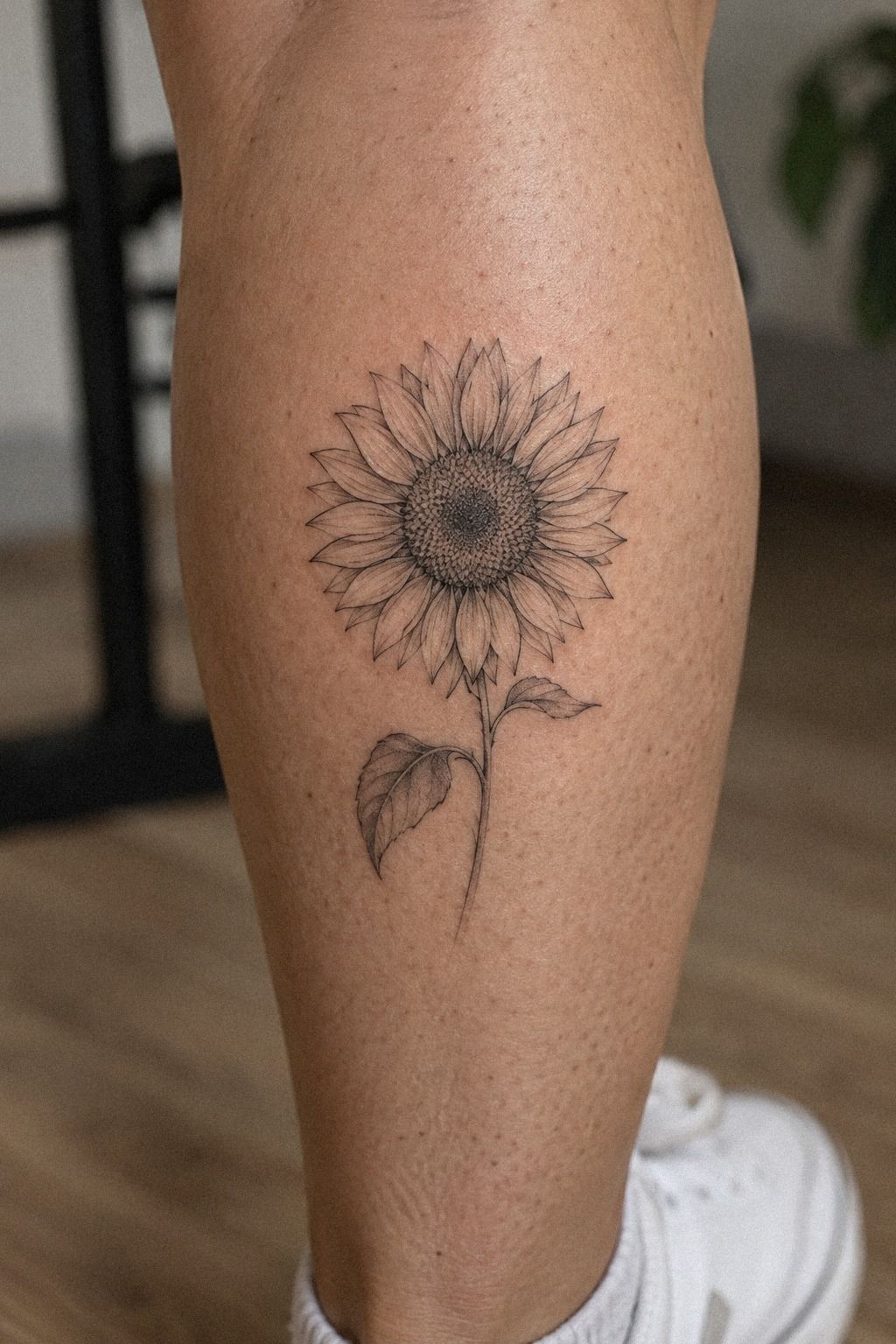
During the first week, I treated my tattoo like a healing wound, not a finished accessory. I followed my artist’s instructions, washed gently, and avoided picking at peeling skin. That routine felt simple, but consistency mattered.
Surface healing usually takes about 2 to 3 weeks, while complete healing can take roughly 2 to 3 months. Your tattoo may look darker, duller, or slightly uneven during that period. That shift doesn’t mean something went wrong.
My aftercare wash was mild and fragrance-free, followed by a thin layer of the product my artist recommended. I kept the area away from pools and unnecessary sun. You don’t need a complicated routine, but you do need consistency.
Don’t judge the final linework while the skin is still changing. I took notes at regular intervals instead of inspecting it under harsh light. If you notice unusual heat, spreading redness, or worsening pain, contact a medical professional rather than guessing from online advice.
That first week also taught me patience. I wanted to inspect every petal, but the skin needed time before I could evaluate the healed result fairly. A temporary dull phase is normal, and it doesn’t erase the design’s meaning.
10The Aging Margin
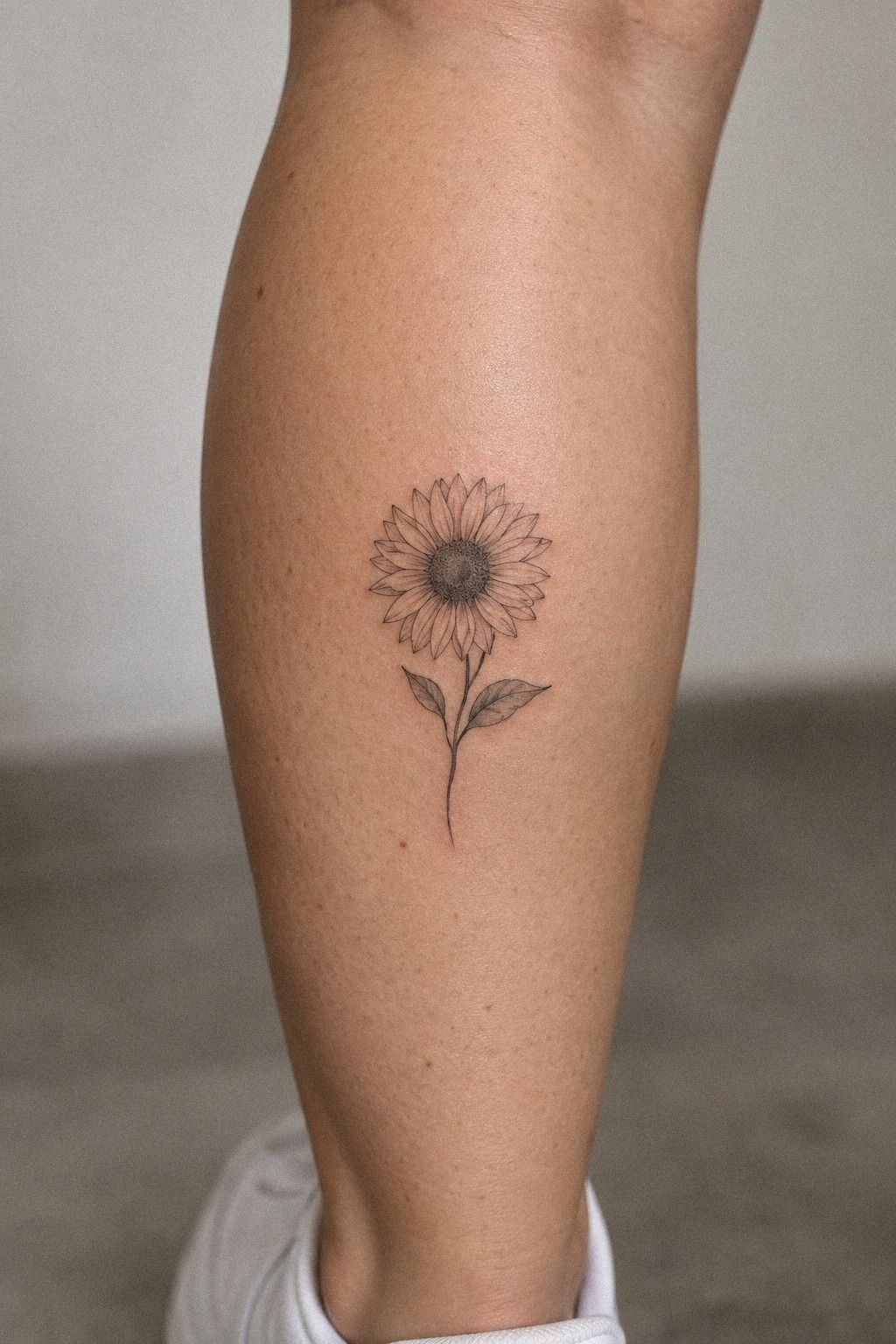
A fresh stencil is not the finished tattoo. I studied the healed result for spacing, softened edges, and how the center held its shape. That comparison helped me understand why a little extra space is such a powerful design decision.
Very fine lines can widen over time, especially when placement, sun exposure, and skin movement work against them. Solid black sections generally hold their presence better than extremely delicate marks, but too much black can close a small flower. Your design needs a margin for change.
The Aging Margin Rule
I call that balance the aging margin: leave enough space that a softened line won’t erase the petal’s identity. My healed blackwork still reads because the center is defined and the outer petals aren’t packed together. I’d choose that structure over a miniature copy of a highly detailed botanical plate.
The sage-green, warm-cream, and natural-brown reference made the aging lesson especially clear. Sun exposure can shift soft colors sooner than a strong black outline, so ask your artist which accents are worth keeping at a small scale.
Ask to see healed examples from your artist, not only fresh appointments. A portfolio with consistent linework, clear sanitation practices, and healed work tells you more than a filtered detail image. You can also compare small tiny hand tattoos for examples of how exposed placements change over time.
Sun protection matters after healing. I use sunscreen when the tattoo will be exposed, because UV can fade ink and soften contrast. You’ll still see natural aging, but protecting the skin gives your sunflower outline a better chance to stay crisp.
11I Make the Final Tattoo Feel Personal
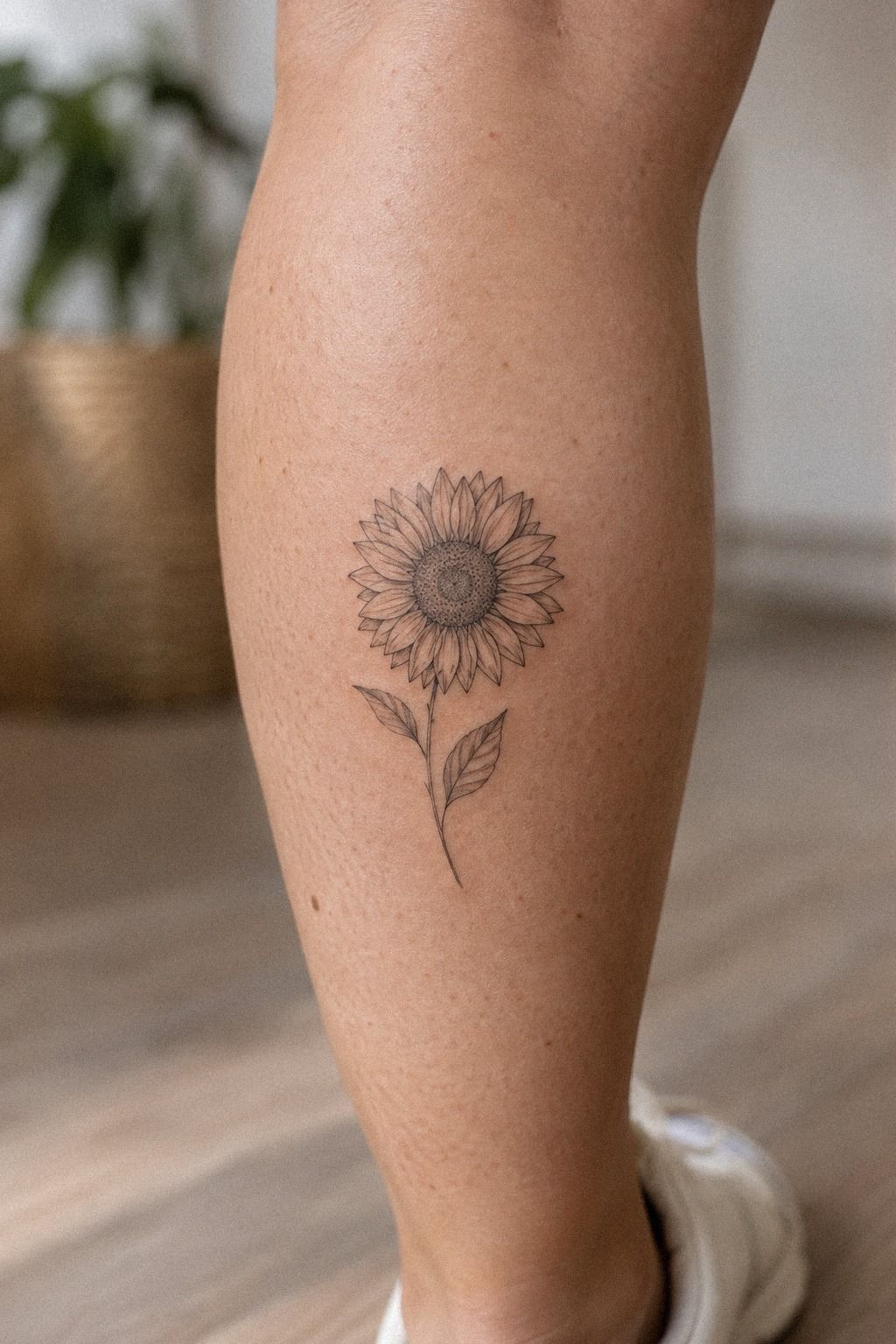
The terracotta, stone-gray, and olive palette feels romantic without becoming overly sweet. The flower is feminine without being delicate in a weak way, and the grounded outline gives it a bold center. That combination still feels meaningful to me years later.
I added one small change to my final stencil: the lower leaf points toward me when my arm rests naturally. Nobody else notices it, but I do. If you’re choosing from small sunflower tattoo ideas, make one decision that only you can identify.
That private detail matters more than adding initials or a date just to fill space. A meaningful tattoo can be understated, symbolic, and still visually sharp. I’d keep the design open, because the skin around the flower is part of its identity.
Before you approve the stencil, check the spelling of any text, the direction of the stem, and the placement from several angles. Take one quiet minute before the needle starts. You’re choosing something lasting, so the final feeling should be calm, certain, and personal.
The strongest version feels empowering because the color, stem, and petal spacing all belong to the same idea. Terracotta and olive accents give mine a vintage warmth, while the stone-gray breaks keep it crisp. This is the detail I’d protect!
How Much It Cost
My small sunflower tattoo fell within the typical US range for a compact piece, but the price depended on the artist, region, placement, and shop minimum. A boutique minimum is often about $50 to $100, while hourly rates commonly sit around $100 to $250.
The design source can affect the price too. A prepared custom sunflower stencil may take less drawing time than a fully original composition, but consultation, placement, and setup still matter. I wouldn’t choose an artist solely because the quote is lowest.
If you’re budgeting, bring a clear reference and know your preferred placement before the appointment. That makes the conversation faster and helps your artist estimate the work honestly. You’ll want to keep extra money available for a tip if that’s customary where you live.
For another placement comparison, browse tiny small wrist tattoos before you ask for a quote. A tiny wrist piece may need more careful placement than its size suggests, especially if the center and stem must remain readable.
What I Learned From Keeping Mine Small
I used to think a small tattoo had to carry its meaning through extra symbols. Years later, I’ve changed my mind.
The flower itself became more meaningful because I gave it space to exist. Its narrow stem reminds me of a specific season in my life, but the tattoo doesn’t need to narrate that season to everyone who sees it.
The strongest small sunflower tattoos I’ve seen aren’t reduced versions of huge botanical pieces. They’re designed for their final scale from the beginning. That means the artist chooses the petal count, line weight, and negative space with the healed result in mind.
Purpose-built linework beats a miniature copy every time.
I also learned that placement changes the personality of the same drawing. On the wrist, it feels direct and visible.
Along the ribs, it becomes intimate and almost hidden. On the upper back, it can feel graceful and private.
If you’re torn between locations, ask which version you’ll enjoy seeing on an ordinary Tuesday.
And there’s a practical side people skip. Exposed skin sees more sunlight, friction, and hand washing. A sheltered placement may preserve delicate lines more gently, while a visible placement gives you more daily connection.
Neither choice is morally better. Your life should decide.
My only regret was spending too long trying to make the design impressive to strangers. The moment I chose the simple black flower, the tattoo became mine. That’s the decision I’d repeat, even if I were starting over today.
The color options taught me something too. A sleek navy flower feels different from an edgy charcoal one, while plum, rose gold, dusty rose, or forest green can make the same silhouette more personal. Choose the color story that still feels like you when the novelty fades.
For a final idea check, save small tattoos meaning guide and small single line tattoos. Compare the symbolism and the silhouette separately. That makes it easier to keep the design personal without overloading it.
A Small Sunflower Tattoo Checklist
Before booking, decide whether you want the flower to feel minimal and delicate or bold enough to read instantly. Both directions can work, but the artist needs to know which visual priority matters most to you.
Test the stencil at your intended size and move the skin naturally. Check the wrist while your hand is relaxed, the ribs while you breathe, and the upper arm from the position you’ll actually see. A polished sketch can behave differently once it follows the body.
Ask for healed examples, discuss line weight, and confirm the aftercare routine. If your skin tone or placement raises questions, bring them up before the appointment. A confident consultation should leave you feeling informed, not rushed.
Finally, keep one private detail for yourself. It might be a slight stem bend, an inward-facing leaf, or a petal count connected to a memory. That quiet choice is often what turns a pretty flower into an empowering tattoo.
Keep that detail!
What People Always Want to Know
How much does a small sunflower tattoo usually cost?
A small sunflower tattoo usually costs about $100 to $300 in the US, with boutique minimums near $50 to $100 and hourly rates around $100 to $250. Tattoo pricing varies by artist, region, placement, size, and detail, so request a quote before booking.
Are small sunflower tattoos a good idea for a first tattoo?
Yes, small sunflower tattoos can be a strong first choice because they offer manageable placement options and a clear silhouette. Readable linework ages better than crowded detail. Your forearm, shoulder, or thigh may feel more tolerable than ribs, feet, hands, or sternum.
How do I choose a tattoo artist for small sunflower tattoos?
Review healed portfolio photos, clean linework, and the artist’s experience with fine-line flowers. Healed portfolio work builds confidence before you book. Check studio hygiene, ask how the artist approaches your skin tone, and confirm that the reference style matches their regular work.
How much do small sunflower tattoos hurt?
Pain depends on placement and your own tolerance. Ribs, feet, hands, and sternum are often more painful, while the forearm, thigh, and shoulder tend to feel more tolerable. Placement comfort matters, but preparation helps too, so eat beforehand and wear easy clothing.
How long does a small sunflower tattoo take to heal?
Surface healing usually takes about 2 to 3 weeks, while complete healing can take about 2 to 3 months. Gentle aftercare supports healing: wash softly, moisturize as directed, avoid pools, and protect the tattoo from sun while the skin recovers.
What’s the best placement for small sunflower tattoos?
The forearm offers strong visibility and usually tolerable sensation, while the upper arm gives delicate lines more protection from daily friction and sunlight. The best placement fits your routine, so consider visibility, movement, pain, and whether you’ll consistently protect the skin.
Where I’d Start First
If I had to pick one, I’d start with the inner forearm. It gives a small sunflower enough length to breathe, stays readable from most angles, and makes the stem feel intentional instead of cramped. Pin the idea for later, then let your artist redraw it for your skin.
If you prefer something more hidden, compare tiny small spine tattoos with small tiny hand tattoos before deciding. The right placement should match your routine, your comfort level, and the kind of connection you want with the design. That’s the whole point!