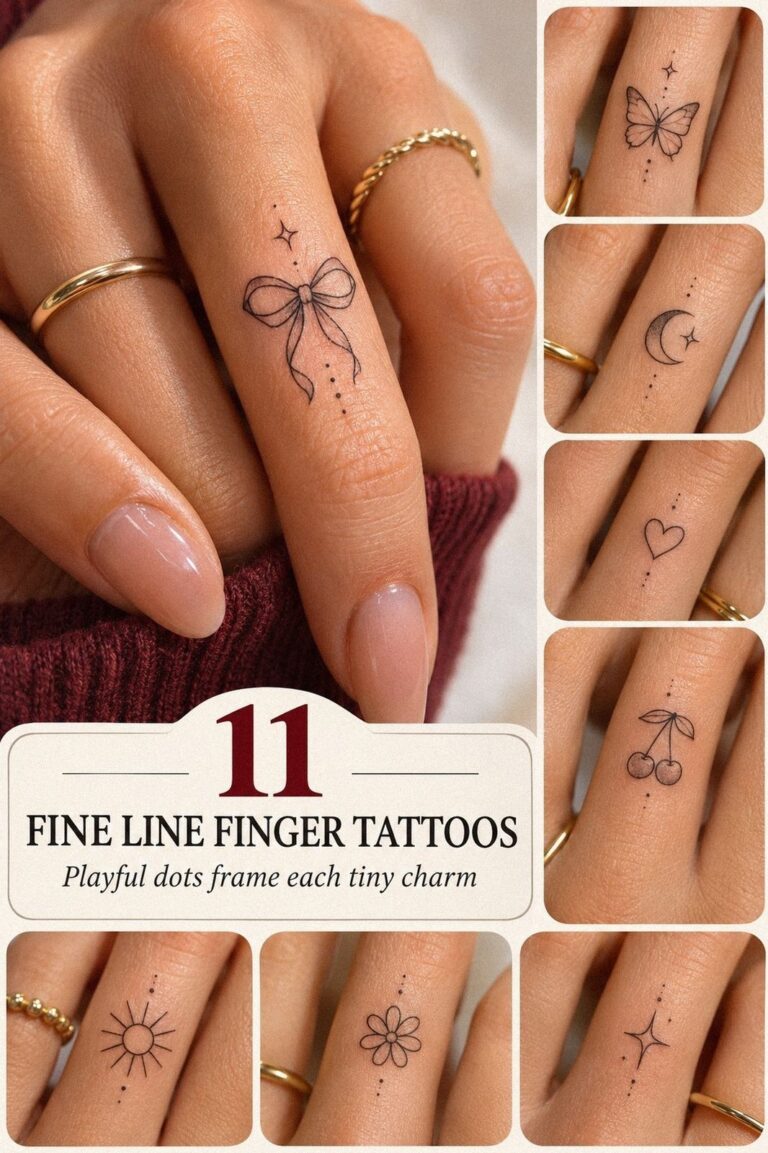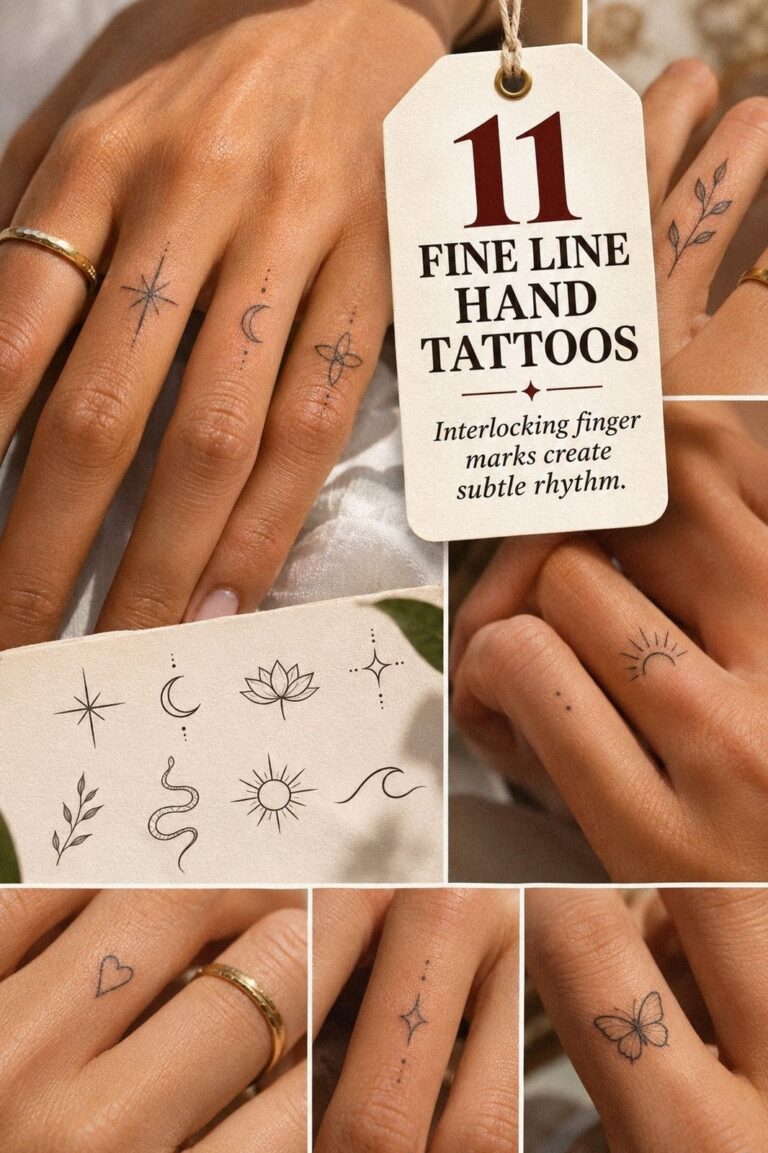
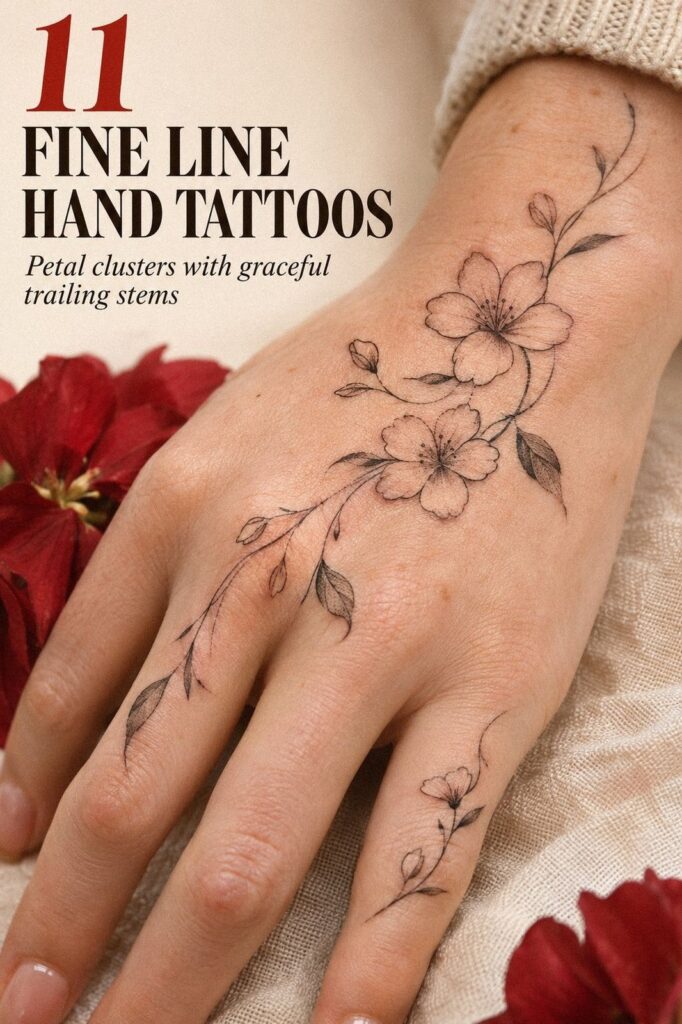
Fine line hand tattoo ideas can age well for decades when you choose a readable design, a sensible placement, and an artist whose healed work looks crisp. I’ve seen tiny symbols blur because the plan ignored friction, sunlight, and skin movement. You don’t need a huge piece. You need a deliberate one. Start here!
The best result usually comes from a simple idea, thoughtful spacing, and realistic expectations about maintenance. A hand tattoo is visible, active, and personal, so the right choice has to work beyond the first photograph. Long-term readability matters more than a perfect fresh outline.
- Start With Small Botanical Fine Line Hand Tattoos
- Which Symbolic Finger Tattoo Still Feels Meaningful?
- Place Fine Line Ink Along Your Hand’s Natural Flow
- How Can You Keep Tiny Designs Crisp and Readable?
- Flash Sheet or Your Story: How Do You Plan Unique Ideas?
- Choose Delicate Knuckle Motifs With Personal Meaning
- What Makes a Bold Fine Line Hand Tattoo Work?
- Match Wrist Placement to Flowing Linework
- Botanical or Celestial: Which Design Has the Stronger Silhouette?
- Pain vs. Longevity: Consider Finger Placement Carefully
- Protect Your Tattoo During Healing
1Start With Small Botanical Fine Line Hand Tattoos
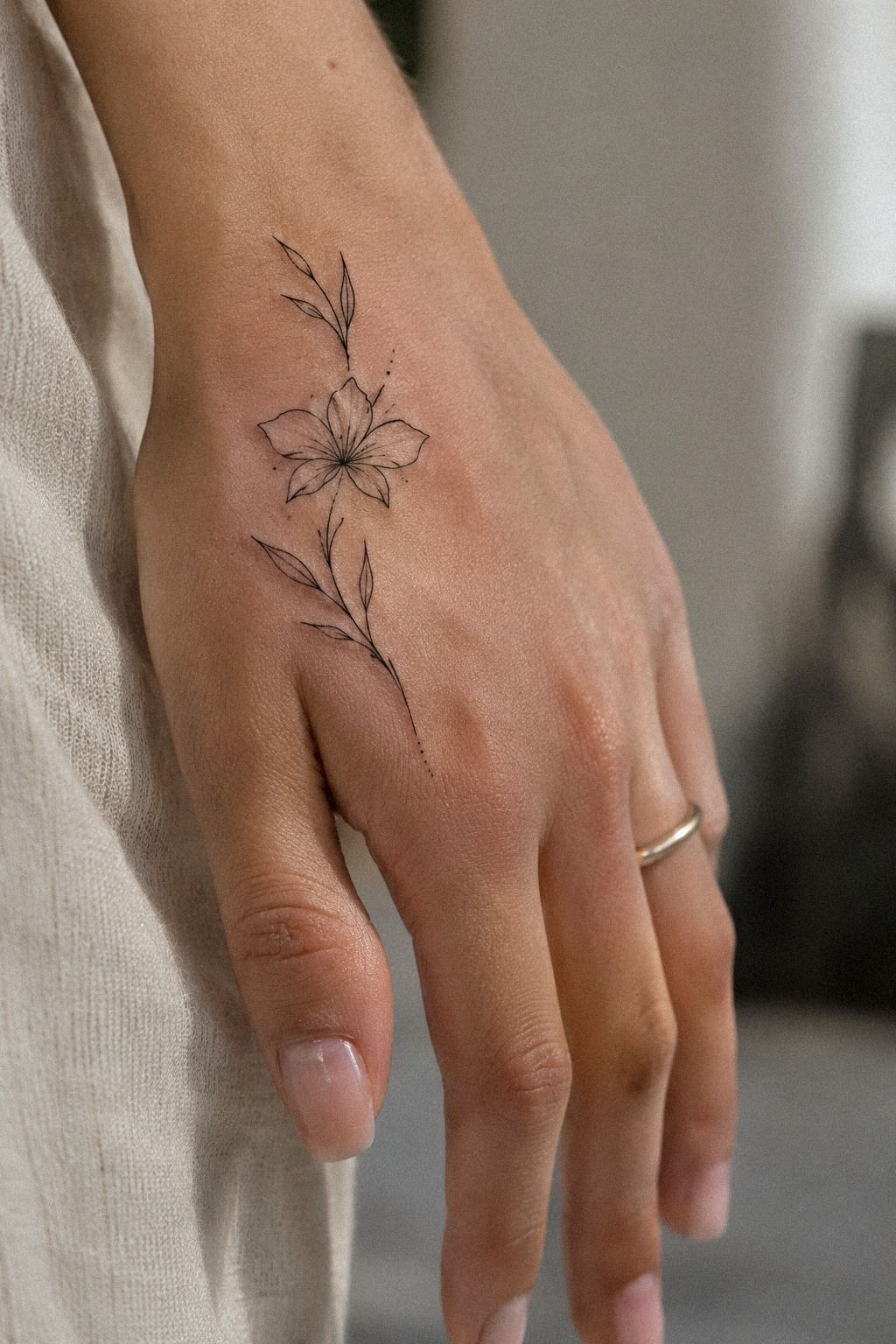
Begin with a small botanical or celestial shape that has enough open skin around it to stay readable. On any skin tone, tiny stars can feel delicate and ethereal, but they still need separation.
If you’re choosing several stars, vary their sizes and leave visible space between them. A cluster that looks charming on a screen can become a dark speck after years of movement.
I’d start by comparing your idea with this guide to what is fine line tattoo. You’ll want to see how line weight, negative space, and placement work together before you commit. A few black ink stars can look crisp when the design is restrained.
More stars won’t automatically make the result more expressive.
Keep your first sketch simple. I’d rather see three readable stars than nine crowded ones, especially on the back of your hand where washing, rubbing, and sun exposure happen daily.
And if you’re tempted to copy every tiny mark from a reference image, remove half of them first. The remaining shape will usually look more minimal, more personal, and easier to live with.
Ask your artist to show you healed examples of similarly small work, not only fresh photographs. Your skin won’t stay swollen and sharply outlined forever.
A fresh tattoo can look striking, while a healed tattoo proves whether the spacing was practical. Save your favorite reference, but let your hand shape decide the final arrangement.
If you’re weighing several small concepts, ask which one would still make sense if one interior detail softened. That question protects the design’s identity and helps you see whether the idea has real symbolic strength. A small sprig, star, or crescent can carry more feeling than a crowded miniature scene.
2Which Symbolic Finger Tattoo Still Feels Meaningful?
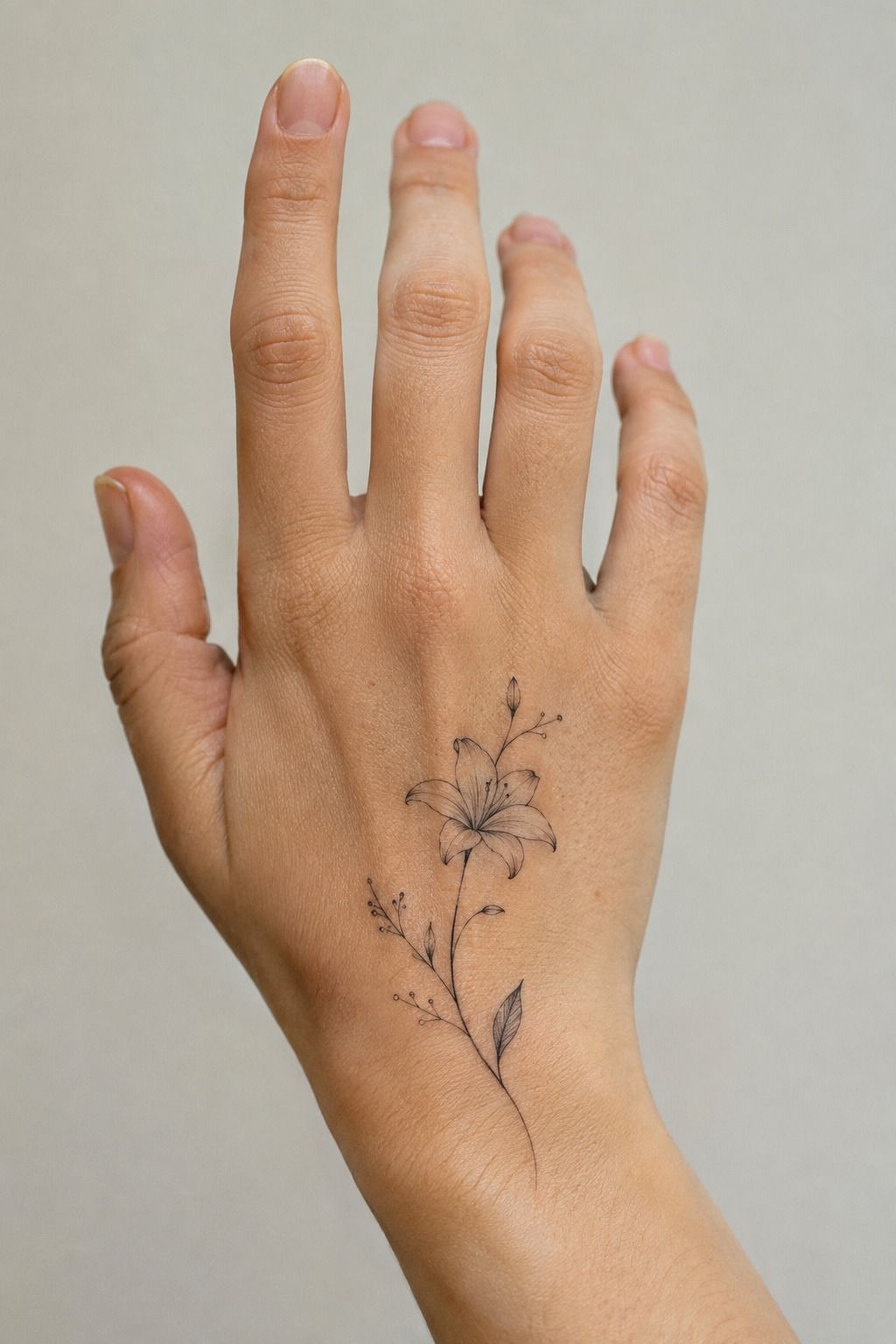
Choose a symbol that you can still explain without needing the surrounding decoration. A hair-thin single-needle mark has to do more work than heavy shading, so the idea should remain clear on its own. A single-needle line can feel meaningful and quietly sacred, but it shouldn’t depend on five micro-details that may soften.
But don’t place a complicated symbol on a finger just because it looks intricate in a flash sheet. Fingers bend, crease, wash, and meet hard surfaces all day.
If your design includes a moon, letter, or tiny botanical form, ask which portion must remain clear if the thinnest line widens slightly. That answer should guide your final stencil.
I like using a symbol with one dominant outline and one supporting detail. You’ll get a more timeless result from a small open eye, star, or curved botanical mark than from a miniature illustration packed with texture. Look through these fine line tiny hand tattoos for examples of how restraint can still feel personal symbolism.
Your meaning matters, but your habits matter too. If you work with tools, wash your hands constantly, or wear rings that scrape the sides of your fingers, tell the artist before placement. A black line tattoo on the side of a finger may fade faster than one on the top.
You’ll make a better choice when the symbolism and your daily life agree.
A finger symbol also needs to fit your daily visibility. It may feel sacred and private to you while remaining obvious to everyone else. I’d choose a mark you can explain calmly, even if your reason is deeply personal and you don’t want to share every detail.
3Place Fine Line Ink Along Your Hand’s Natural Flow
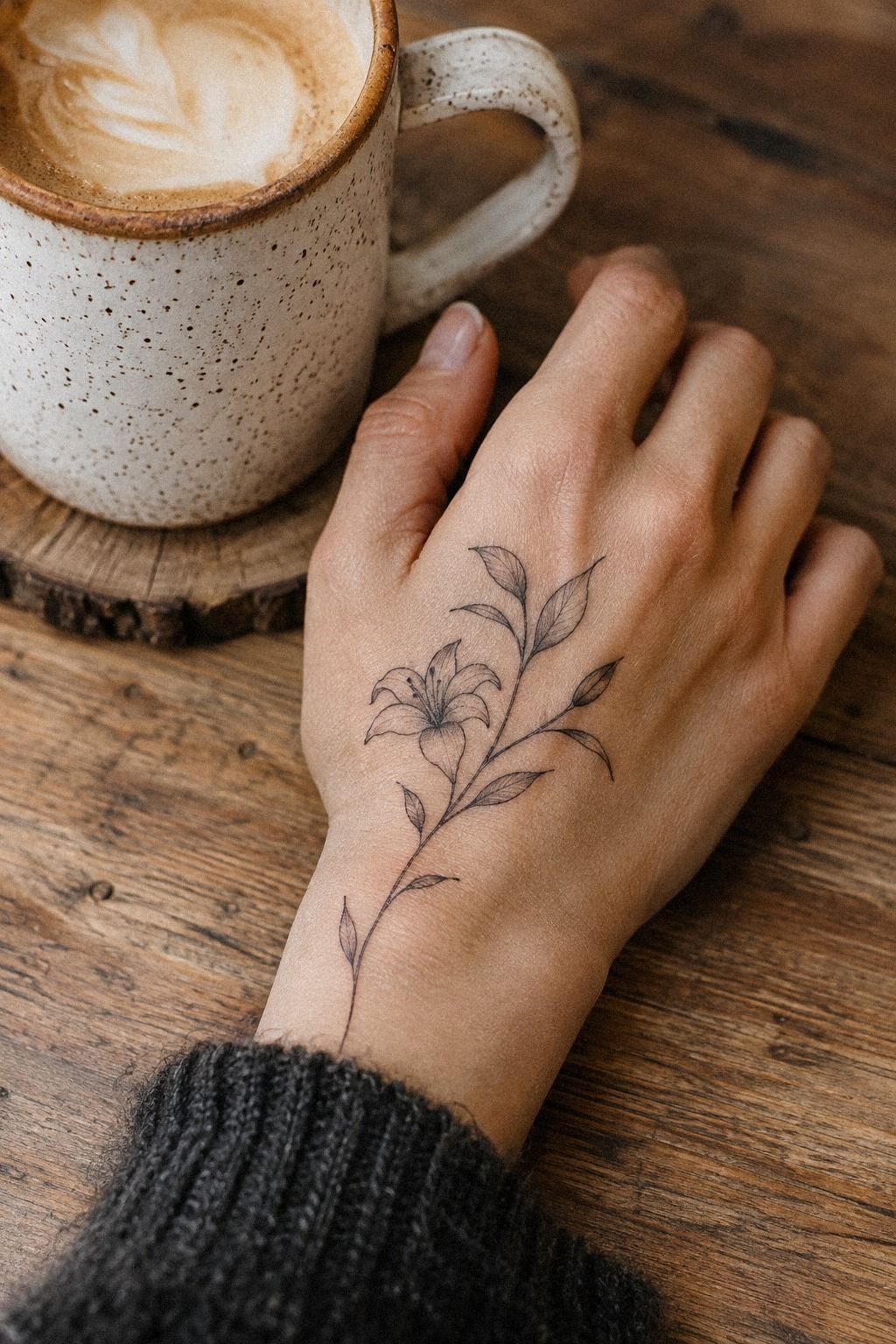
Use the natural direction of your hand as a guide. Fine lines that follow the long movement of the hand can look graceful, sleek, and understated when their axis follows your anatomy. I’d avoid forcing a horizontal design across a busy fold.
Before you approve the stencil, move your hand through several positions. Make a fist.
Spread your fingers. Turn your palm upward.
You’ll notice how the design compresses and stretches, and that preview can prevent a placement that looks polished only when your hand is flat. A transfer stencil is useful because you can watch the design move before any ink is involved.
For more placement references, compare your idea with these fine line simple hand tattoos. You’ll see why a clean, open contour often survives better than a crowded patch of detail.
The goal isn’t to make every inch of skin say something. It’s to give your eye one clear path to follow.
I once preferred a tiny horizontal mark because it looked balanced in a reference photo. On a real hand, it felt interrupted every time the fingers curled. That taught me to trust movement over a flat image.
Your hand isn’t a sheet of paper, so your flowing linework should be tested in motion before you call it finished.
When you test movement, notice where the design disappears from your own view. That may be acceptable for a private mark, but it matters if you want a consistently visible tattoo. A directional design should have a clear beginning and ending, not an accidental stop at the busiest crease.
4How Can You Keep Tiny Designs Crisp and Readable?
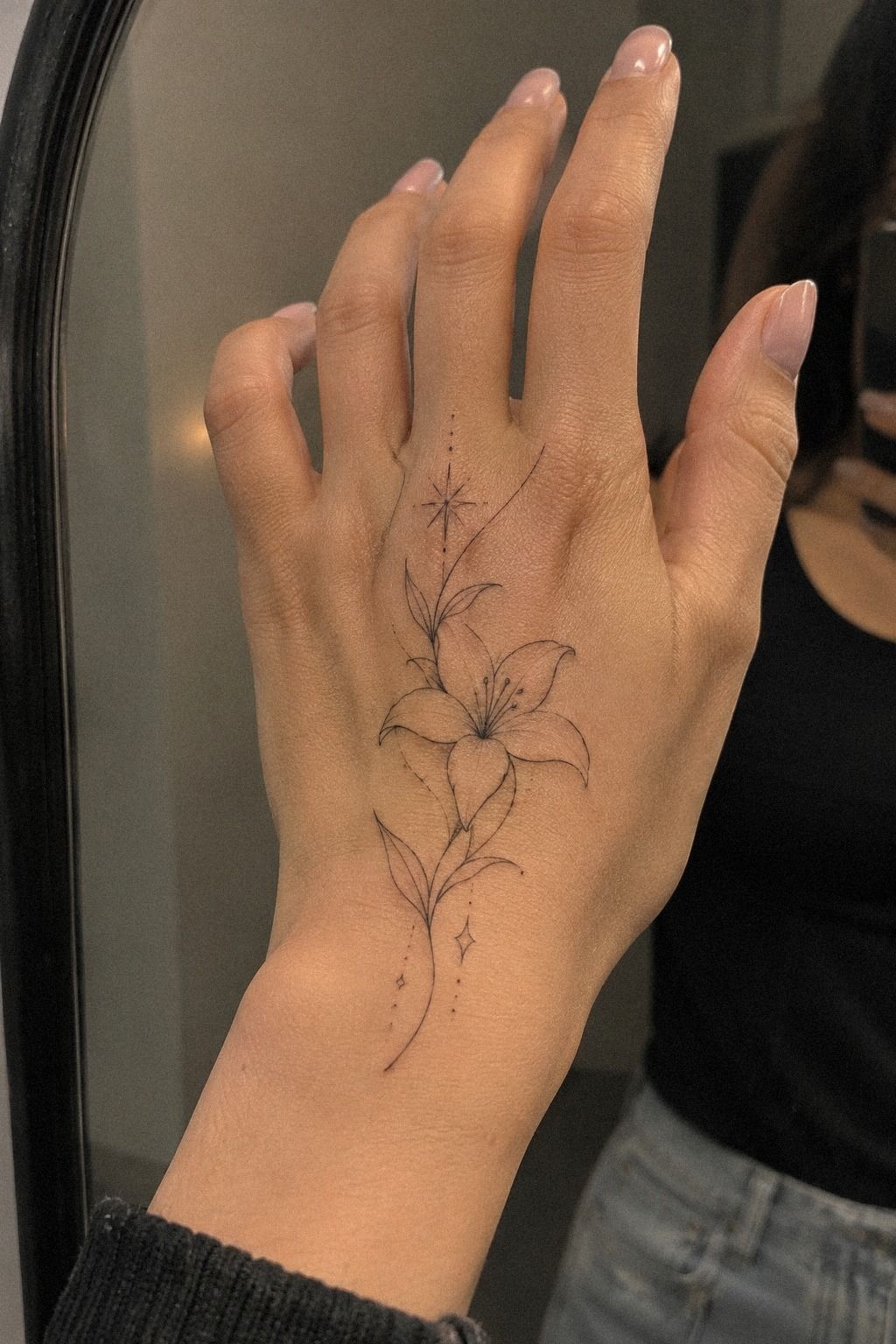
Protect readability by limiting the number of separate features in a tiny design. A crisp outline can look sharp and polished when the design has a clear silhouette, but small interior marks can merge as the tattoo settles.
Ask your artist which detail is least important. That question sounds basic, yet it gives you a hierarchy. If a tiny leaf vein disappears, the leaf should still read as a leaf.
If the center of a star softens, the outer shape should still look intentional. Your strongest contour deserves the most space and the cleanest placement.
I’d skip heavy micro-shading on the hand. It may look bold and vibrant in a fresh photograph, but it can turn a small design muddy when the skin experiences years of light and friction. Instead, choose one black contour, a small open area, and a single accent only if it improves recognition.
You can compare the structure with these fine line tattoo designs. Look for designs that remain legible from a normal viewing distance, not only when enlarged on your phone.
And remember that a tattoo doesn’t need to display every thought you had during planning. A readable mark will serve you longer than a crowded one!
Line thickness should support the design rather than compete with it. A readable silhouette gives the eye something stable to recognize when tiny accents become softer. If your favorite concept only works under magnification, it probably needs editing before you book.
5Flash Sheet or Your Story: How Do You Plan Unique Ideas?
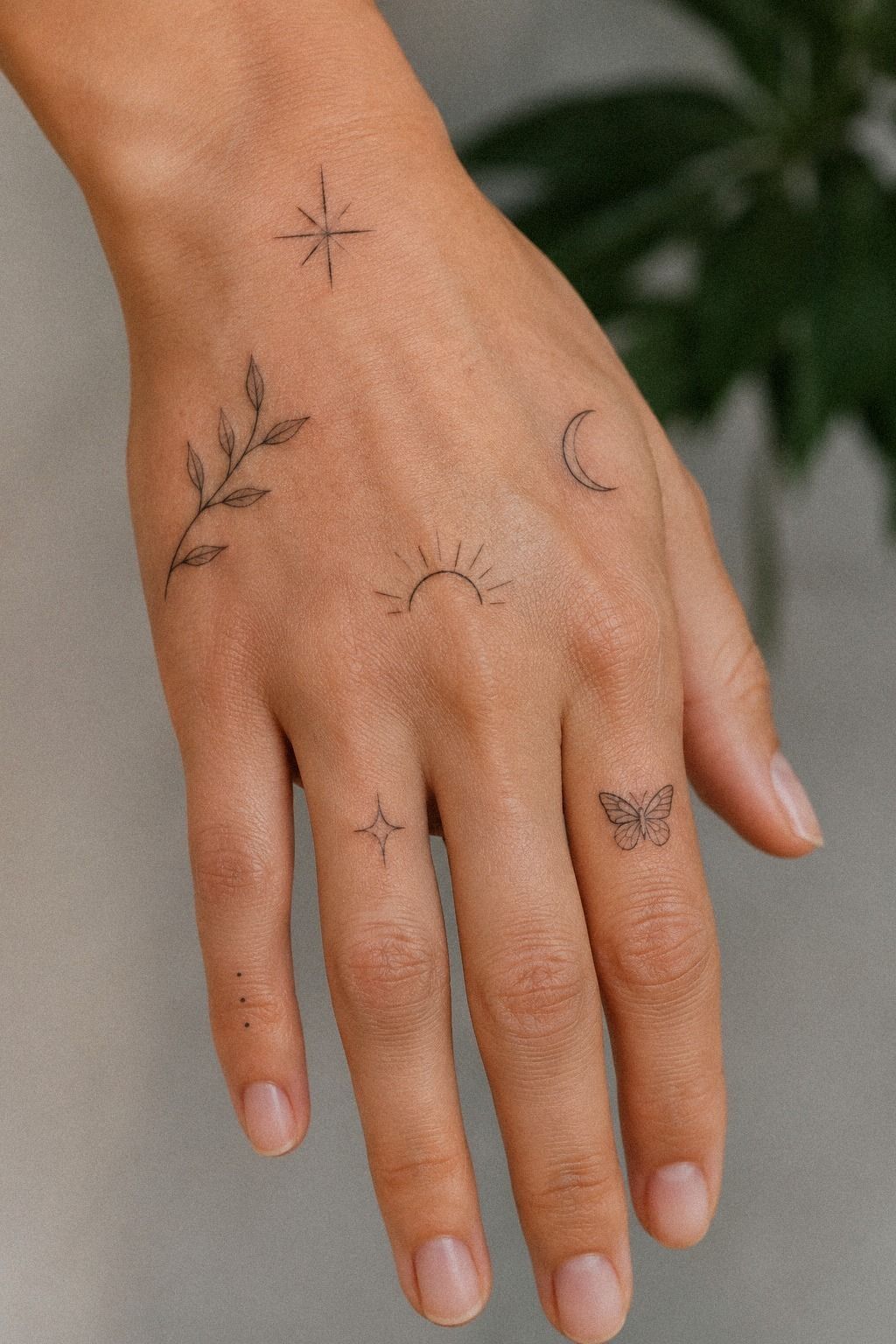
Treat the flash sheet as a starting point, not a menu you have to copy. A familiar motif can have a vintage or iconic feeling, but your hand may need a different scale or direction. Circle the references that keep pulling your attention, then ask yourself what they share.
I’d choose one visual language for the first draft. Maybe it’s celestial stars, botanical stems, or small symbolic objects.
Mixing all three can feel playful, but it can also make your hand look like a collection of unrelated marks. Your ideas can remain whimsical motifs and expressive without competing for attention.
Write down the meaning beside each reference. You’ll notice which image has real emotional weight and which one only looked good because of the photograph.
Then show your artist the short list and let them redraw it for your anatomy. A paper flash sheet is useful for inspiration, yet it can’t predict how your knuckles and tendons will change the composition.
And don’t dismiss a familiar symbol too quickly. A crescent, flower, or star can become more personal through proportion, placement, or one unusual line.
Browse these fine line tattoo designs before you decide that originality requires complexity. Often, the most personal choice is the one you can still recognize years later.
Your first idea doesn’t have to be the final idea. I’d rather see you refine one expressive motif than combine five unrelated references because each one seemed exciting in isolation. A tattoo becomes more yours through decisions, not sheer novelty.
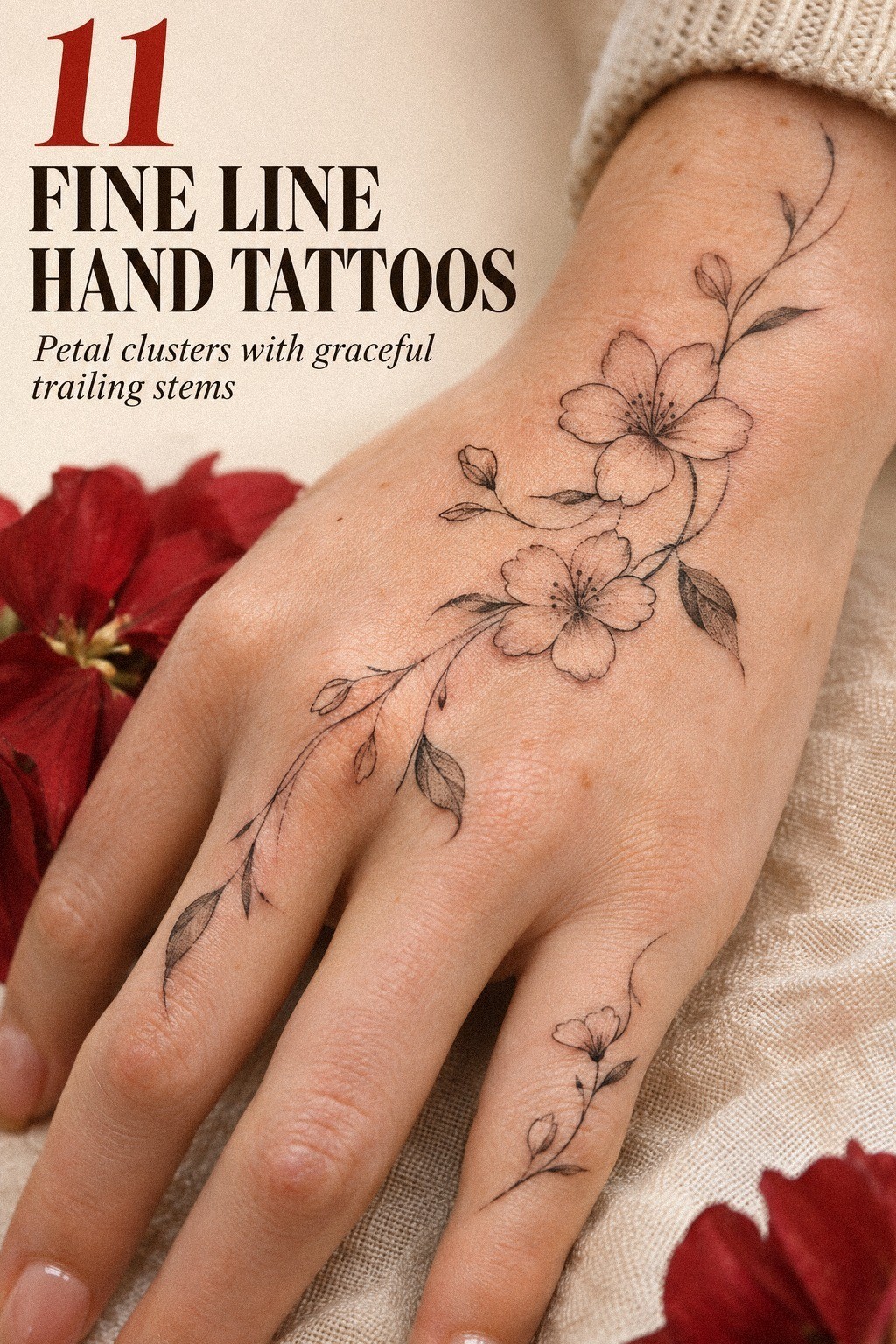
6Choose Delicate Knuckle Motifs With Personal Meaning
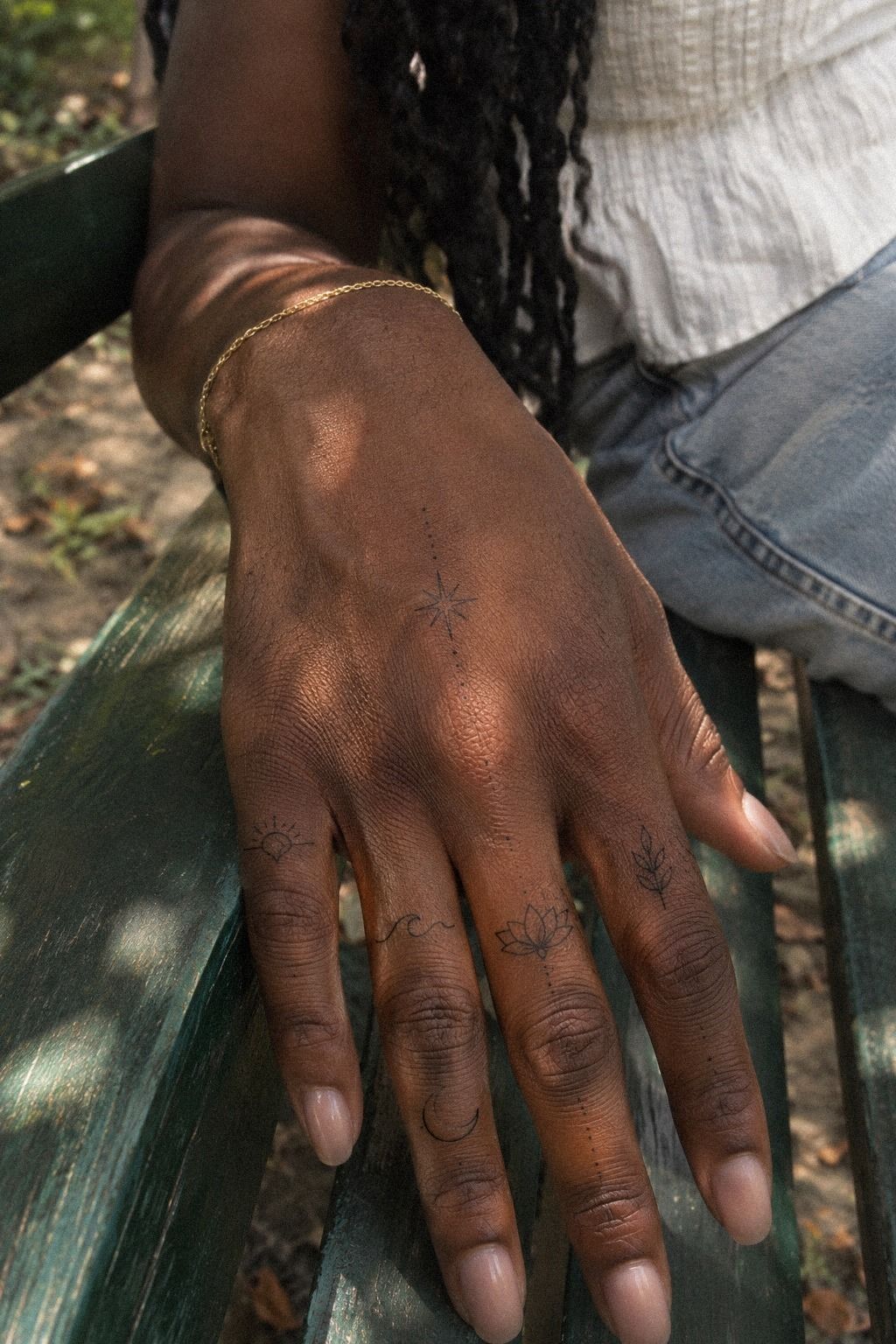
Plan knuckle motifs around repetition and spacing. Fine line details need a strong silhouette and thoughtful contrast on every skin tone.
A black ink motif can look fierce, elegant, and daring when each mark has a job. If every knuckle carries a different dense symbol, your eye may lose the rhythm.
Use matching scale when you want a connected set. Four small botanical marks can feel intentional when their visual weight is similar, even if the shapes differ.
If you prefer one focal point, keep the neighboring knuckles quieter. Your hand will look more balanced when one design leads and the others support it.
I’d be cautious with lettering across individual knuckles. Letters can be edgy and emotionally direct, but the spacing has to work in both a relaxed hand and a closed fist.
Ask to see the stencil while your hand is bent. If the words break awkwardly at the creases, choose a symbol instead or move the lettering to a less active area.
The fine line side hand tattoos page can help you compare side placement with knuckle placement. You’ll want to think about visibility, work requirements, and friction before you book. A healed tattoo photograph tells you more than a fresh close-up, particularly when you’re considering a placement that moves constantly.
A connected knuckle set can be powerful without being oversized. Repetition gives the eye a pattern, while small differences keep the result from feeling mechanical. If your work or family setting makes hand tattoos complicated, consider whether a quieter side placement gives you the same meaning with less daily pressure.
7What Makes a Bold Fine Line Hand Tattoo Work?
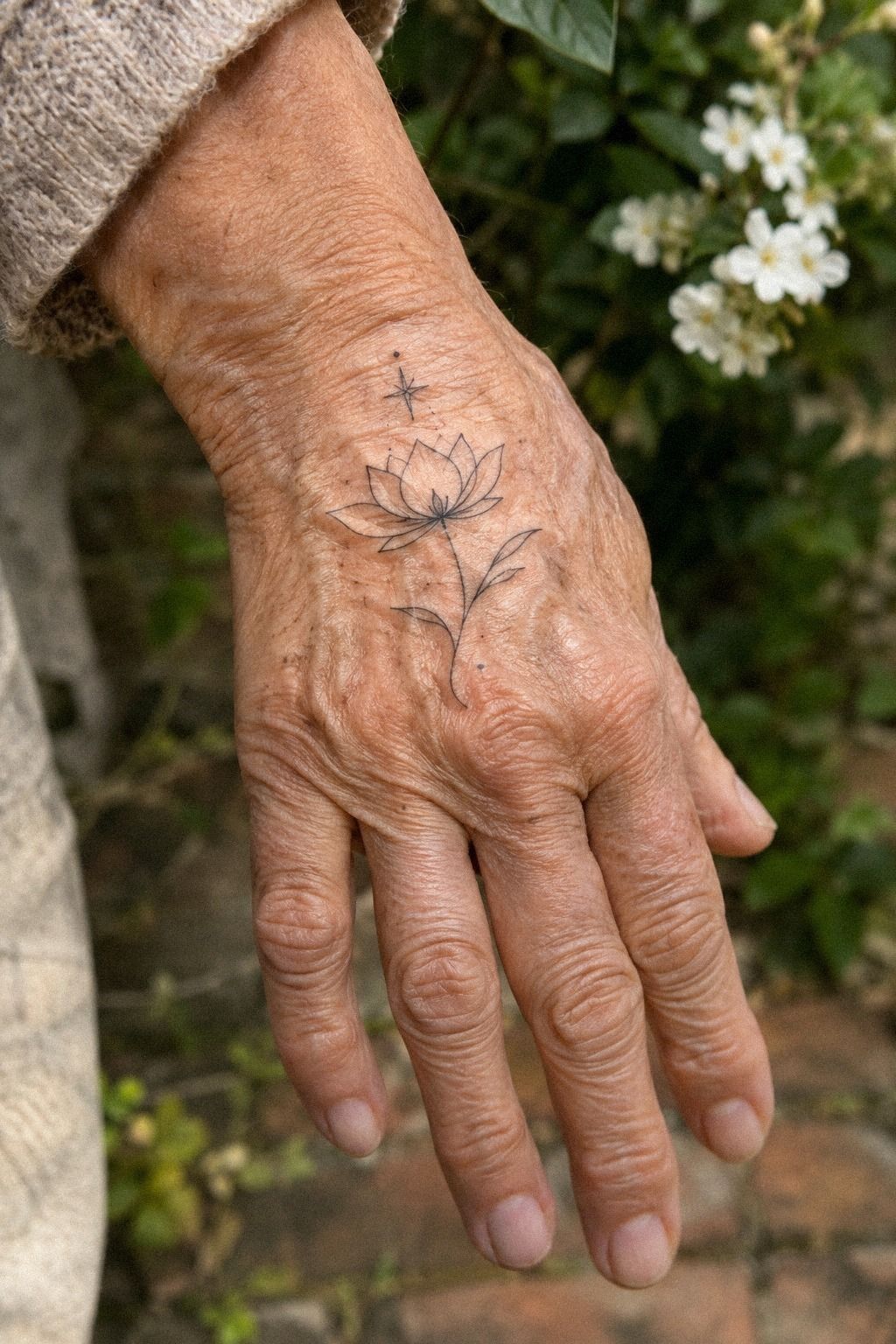
Make a bold fine line idea bold through shape, not through unnecessary density.
8Match Wrist Placement to Flowing Linework
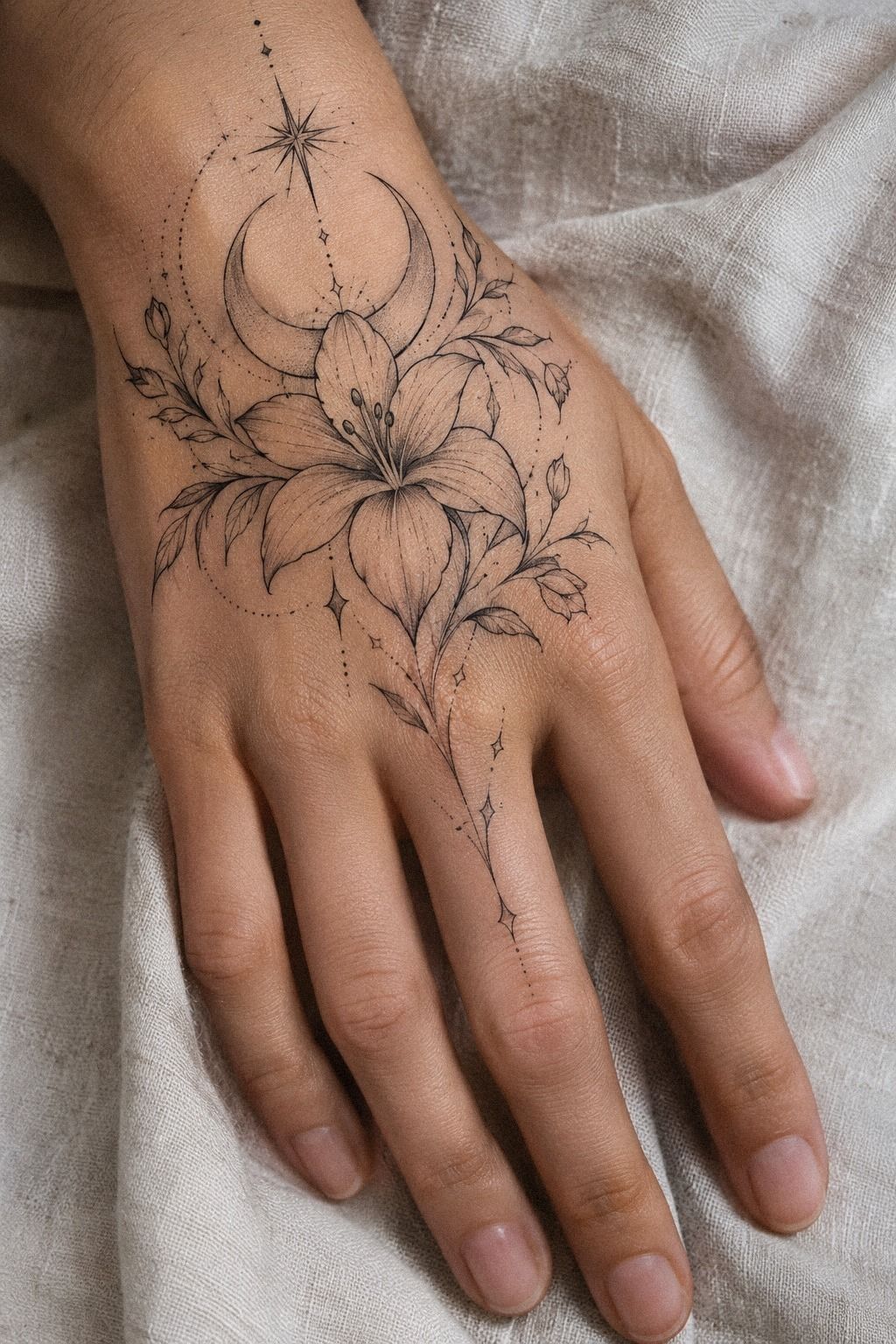
Extend the design toward the wrist only when the transition feels intentional. A continuous black line can look flowing, romantic, and quietly captivating when it follows the arm’s direction.
Test the border between hand and wrist with a stencil. You’ll want to know whether the design remains balanced when your wrist turns, not just when your arm lies flat.
A botanical stem, small chain of stars, or narrow symbolic form can create a graceful path. I’d avoid adding a second unrelated motif just to fill a gap.
If you’re considering a larger composition, study these small fine line spine tattoo ideas for examples of directional planning. Spine placement isn’t the same as hand placement, but the lesson about rhythm still applies. Your line should lead the eye somewhere instead of ending without a visual reason.
I’d also compare it with minimalist fine line spine tattoo layouts before you finalize the direction. They show how open space can make a narrow design feel intentional. The wrist is visible and active, so your understated composition should be easy to read from more than one angle.
A wrist extension can feel romantic when the line travels naturally instead of stopping at an arbitrary point. Still, don’t extend a design only because the empty skin makes you nervous. The best stopping point is where the symbol feels complete and the movement remains comfortable.
9Botanical or Celestial: Which Design Has the Stronger Silhouette?
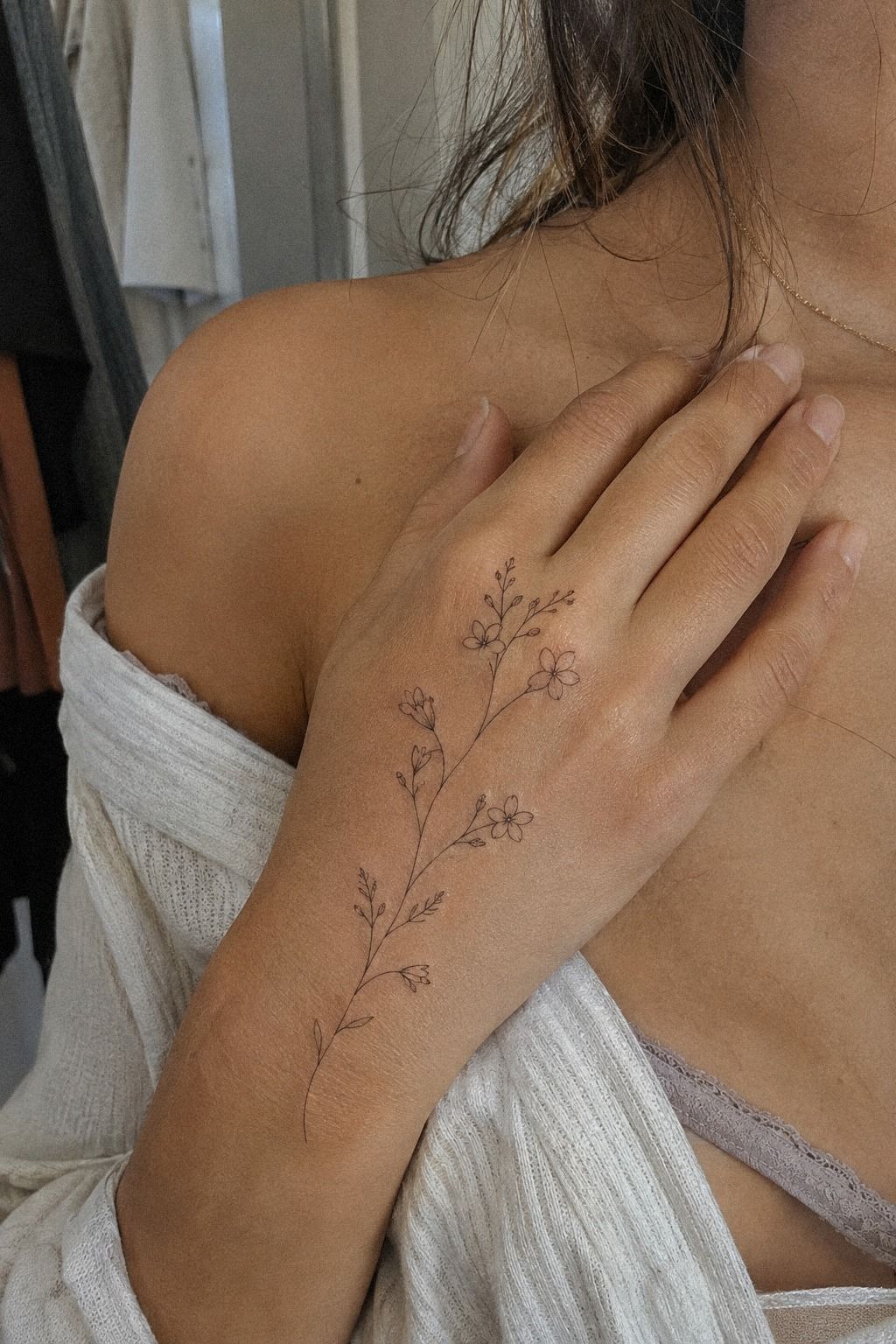
Compare floral and celestial references by asking which one has the stronger silhouette on your skin.
10Pain vs. Longevity: Consider Finger Placement Carefully
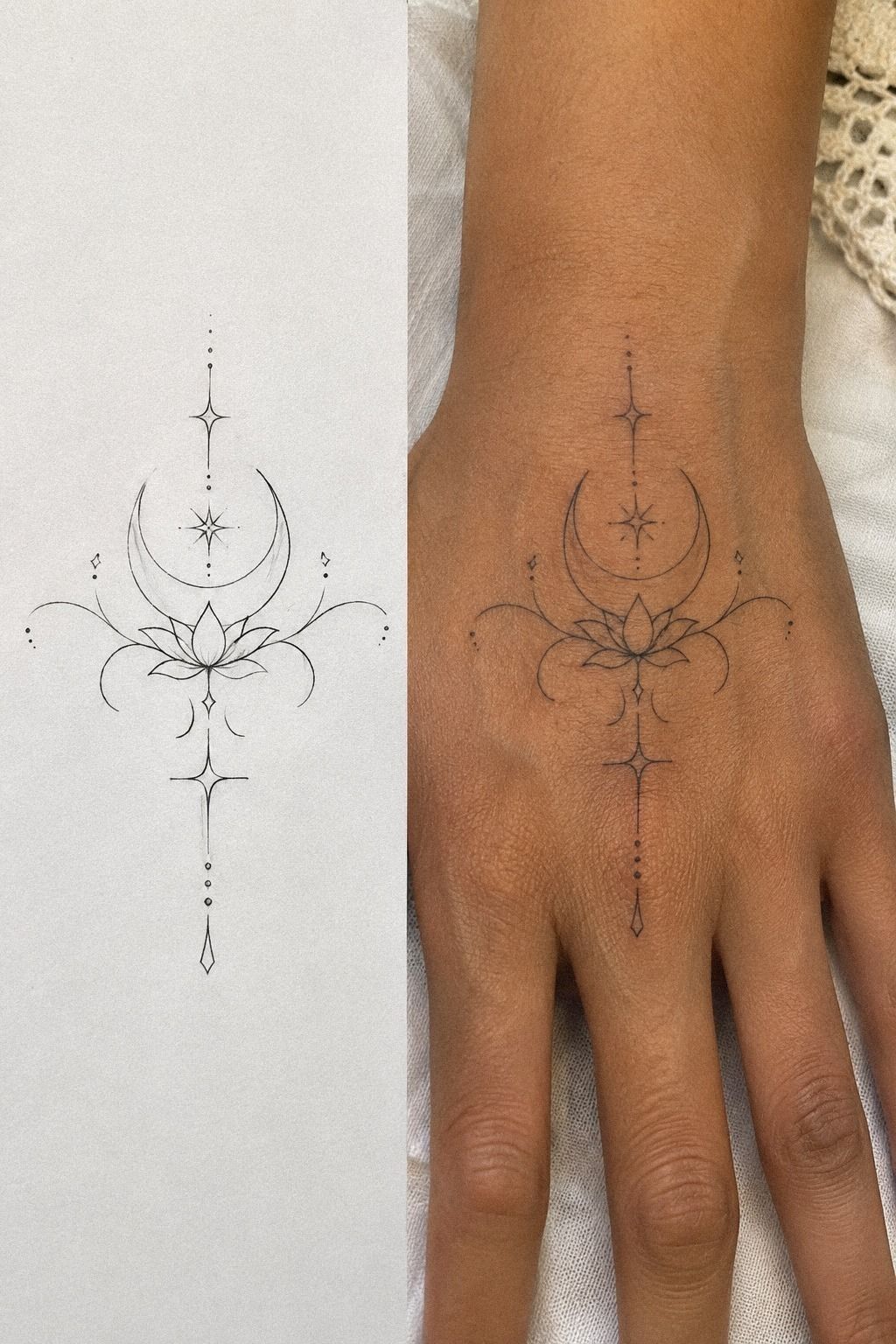
Compare pain and longevity before you decide where the tattoo belongs. Hands, feet, ribs, and sternum are commonly more painful areas, while the forearm, thigh, and shoulder are often more tolerable. A fresh design can look dramatic before it settles, so comfort and healing deserve equal attention.
Finger placement can be quick, but quick doesn’t mean painless. Skin over bone and areas with constant movement may feel sharper, and your comfort can vary from one finger to another. You’ll make a calmer choice if you tell the artist about previous tattoos, sensitivity, and how long you can sit comfortably.
Typical US reference points are useful when you’re planning the appointment:
Those figures vary by artist and region, so treat them as planning ranges rather than a promise. You can compare line quality and healed results in what is fine line tattoo. I’d choose a skilled specialist over the lowest quote, because a healed black line tells you more than a bargain price.
If your budget is tight, ask what the artist would simplify rather than choosing a less experienced person automatically. Removing fragile shading can protect the tattoo’s lasting value while keeping the central idea intact. A lower cost isn’t useful if the result needs an early correction.
11Protect Your Tattoo During Healing
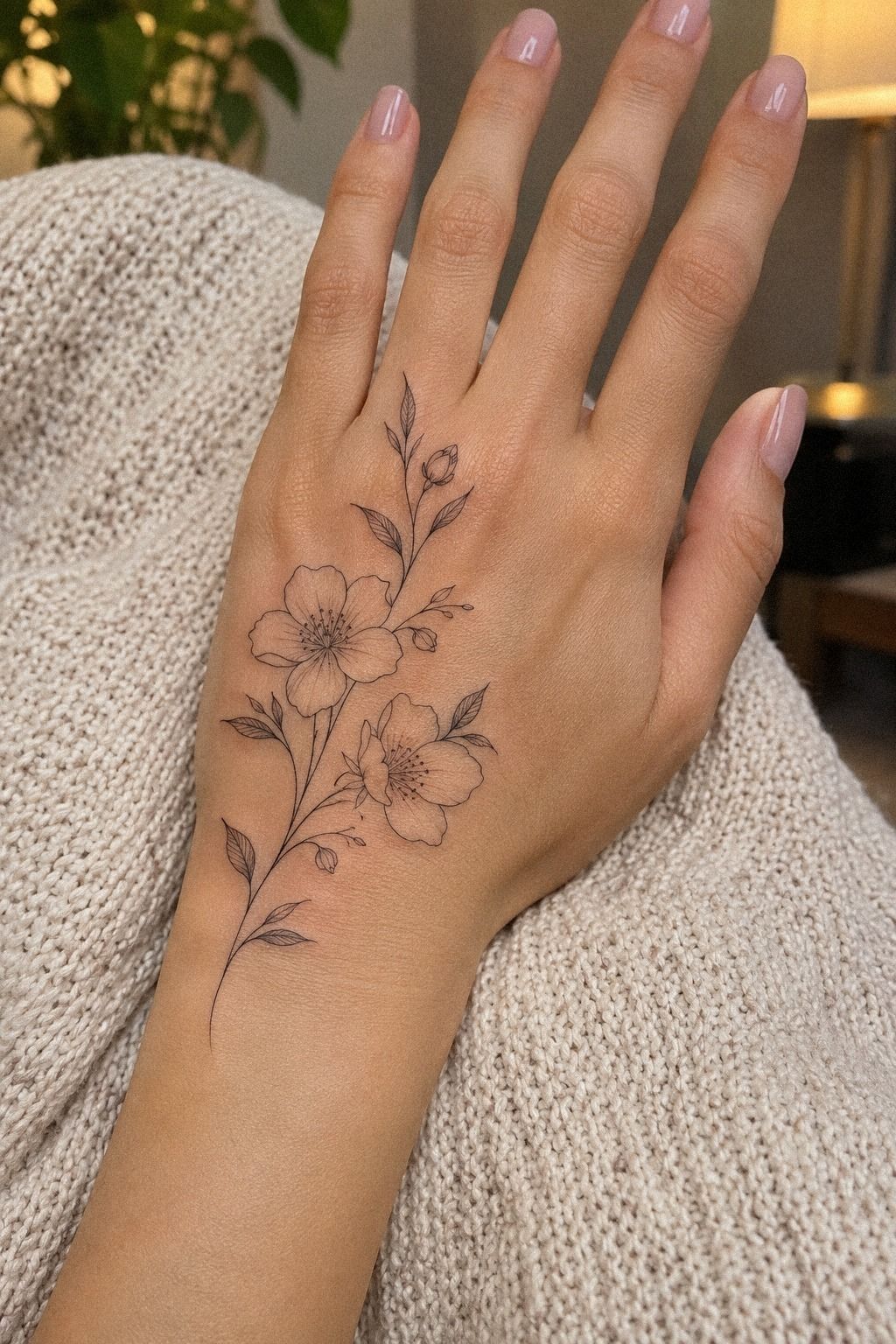
Protect the tattoo by following the artist’s aftercare instructions closely. Wash with a mild cleanser, pat dry, and use the recommended moisturizer sparingly. Your goal is clean, calm skin, not a thick layer of product.
Gentle aftercare gives the surface a better chance to settle evenly.
For roughly 2 to 3 weeks, avoid swimming, soaking, and unnecessary sun exposure. Complete healing can take about 2 to 3 months, even when the surface looks settled sooner.
You’ll want to keep friction low and avoid picking at flakes. A healing schedule is easier to follow when you plan around work, travel, and exercise.
And don’t judge the final tattoo during the first few days. Redness, swelling, and surface changes can make a fresh tattoo look sharper or darker than it will later.
If you’re worried about peeling or uneven color, contact your artist rather than improvising a new routine. Calm aftercare is more useful than constant inspection.
Use sunscreen once the tattoo has fully healed, especially on the hands, where sunlight reaches the skin often. UV exposure can soften fine lines and fade black ink over time. The fine line simple hand tattoos collection can help you compare readable designs, but your long-term result depends on placement, skin, healing, and daily protection.
If a line looks softer after healing, don’t assume the tattoo has failed. Some settling is normal, while a true readability problem deserves a professional opinion. A healed assessment will tell you whether the design needs patience, a small touch-up, or a larger rethink.
Before You Book a Hand Tattoo
Before booking, save three to five references that share a similar scale and line quality. Your artist can compare them more easily when you aren’t presenting unrelated styles at once. A focused reference set makes the consultation shorter and more useful.
Ask whether the artist regularly tattoos hands and fingers. Experience with active placements matters because the stencil, line weight, and spacing may need adjustment. You’re not only paying for the drawing; you’re paying for judgment about hand-specific placement.
Bring questions about healed work, touch-ups, aftercare, and expected longevity. A confident artist won’t promise that a fine line tattoo will look untouched forever. They should explain what the design can realistically do and what maintenance might cost later.
How Sun and Friction Change the Plan
Hands experience frequent washing, rubbing, bending, and sunlight. That doesn’t make a hand tattoo impossible, but it does make design discipline more important. A friction-aware design leaves enough open space for the mark to remain legible.
If you work outdoors or use your hands heavily, mention that before the stencil is drawn. Your daily routine may make one placement more practical than another. The most realistic plan is the one that fits your life rather than pretending your habits won’t change.
Sunscreen can help protect healed tattooed skin, but it can’t reverse every effect of exposure. I’d rather account for the tattoo’s visibility and maintenance from the start than feel surprised later. That expectation is part of the long-term cost.
What Is the Value of Healed References?
Fresh photographs show the moment after the appointment. Healed photographs show how the artist’s decisions survived ordinary life. When you’re comparing portfolios, look for consistent spacing, clean contours, and a readable healed portfolio.
Ask how long the examples have been healed if the artist can share that information. You don’t need a dramatic before-and-after story; you need evidence that the artist understands fine line work after the initial sharpness fades.
A healed reference can also reveal whether the artist uses enough breathing room. If every tiny design has become a dark cluster, the issue may be the original planning rather than your skin. That’s why a readability check is worth your time.
How Should You Set a Fine Line Tattoo Budget?
Set a budget that includes the consultation, appointment, aftercare supplies, and a possible future touch-up. The cheapest quote may not represent the best overall value if the artist’s healed work is inconsistent.
Ask whether the studio has a minimum and whether the quote covers the design process. Prices can vary by region, experience, size, placement, and appointment length. A clear question about total cost is better than guessing from a single hourly rate.
I’d also protect a little room in the budget for patience. Waiting for the right artist may mean postponing the appointment, but rushing a visible tattoo can create a more expensive problem later. That delay can be a smart design investment.
When Does a Simple Mark Win?
A simple mark wins when it keeps its identity without relying on fragile details. That might mean one crescent, one flower, or one abstract line with enough open skin around it. The result can feel understated while still carrying genuine meaning.
You don’t have to make a tattoo complicated to make it personal. Proportion, direction, and placement can change a familiar symbol completely. A controlled edit often creates a more stylish result than adding another layer.
If you’re unsure, remove one detail and look again. The remaining shape may feel clearer, stronger, and more honest. That’s the kind of restraint I’d choose when the goal is decades of readability.
What I’d Ask at the Consultation
I’d ask to see healed hand tattoos in several sizes and placements. I’d ask how the artist adjusts line weight for a finger, knuckle, or wrist.
I’d ask what details they’d remove if the design were too crowded. Those answers reveal the artist’s technical judgment.
I’d also explain my work, hobbies, sun exposure, and tolerance for visibility. You’re allowed to ask whether a placement makes sense for your actual routine. A tattoo consultation should feel like a practical conversation, not a race toward a deposit.
Finally, I’d ask what the artist considers a successful result after one year. The answer should include readability, healed texture, and how the design fits your movement. That broader definition of tattoo quality matters more than a perfect appointment-day photograph.
What I Learned About Fine Line Hand Tattoos
I used to think the most important decision was the symbol itself. Now I think placement wins.
A fine line hand tattoo can be timeless or frustrating depending on whether the design respects movement, friction, and visibility. I’ve seen people spend hours perfecting a reference image, then discover that the stencil looks cramped once their hand is relaxed.
The second lesson is that “tiny” doesn’t mean easy. Small work demands clean spacing and a confident artist.
If you’re comparing portfolios, ask for healed photographs and look for consistent contours, readable negative space, and designs that haven’t collapsed into gray marks. A healed portfolio is more persuasive than a dramatic fresh photograph.
I also wouldn’t choose a hand tattoo simply because it’s visible. Visibility can be empowering, but it can also affect work, family reactions, and how often you think about the design.
My favorite pieces are the ones with a clear reason behind them. They’re expressive without needing to announce themselves every second.
Finally, I’d rather see a simple symbol placed well than an ambitious miniature scene placed badly. That sounds obvious, but it’s easy to forget when a flash sheet looks exciting.
Your hand already has a personal story written into how you use it, move it, and present it. The best tattoo works with that story instead of competing with it.
The Questions Worth Answering First
How much does a fine line hand tattoo usually cost?
A fine line hand tattoo usually costs about $100 to $300 in the US, although small studio minimums may be about $50 to $100 and hourly rates may run about $100 to $250. Artist experience, region, size, and placement affect the quote. Ask for a healed-work portfolio before booking.
Are fine line hand tattoos a good idea for a first tattoo?
Yes, they can be a good first tattoo if you choose a readable design and accept the visibility. A small piece may be manageable, but hands can be more sensitive than the forearm or thigh. A meaningful, open design is easier to live with than a crowded trend piece.
How do I choose a tattoo artist for fine line hand tattoos?
Choose an artist who shows healed fine line work, clean contours, and consistent spacing. Ask about studio hygiene, hand placement, and how they adjust designs for movement. Healed portfolio photographs should be part of your decision, not an optional extra.
You can also review fine line tattoo designs before your consultation.
How much do fine line hand tattoos hurt?
Hands and fingers can hurt more than the forearm, thigh, or shoulder because they have less cushioning and more sensitive areas. Ribs, feet, and sternum are also commonly painful zones. Pain varies by person and placement, so discuss your concerns with the artist before the session.
How long does a fine line hand tattoo take to heal?
The surface usually heals in about 2 to 3 weeks, while complete healing can take about 2 to 3 months. Wash gently, moisturize as directed, and avoid swimming and strong sun during early healing. Patient aftercare gives the lines the best chance to settle cleanly.
What’s the best placement for fine line hand tattoos?
The best placement depends on visibility, movement, friction, and the design’s direction. The top of the hand may offer a clear area, while the side or finger can be more active and prone to fading.
A readable placement matters more than copying a reference exactly. Compare fine line side hand tattoos before you decide.
Where I’d Start First
If I had to pick one step, I’d start with healed portfolio research. Fresh ink can hide weak spacing, while healed photographs show whether the lines remain readable after real life.
Save your favorite references, then book the artist whose healed work still looks crisp. Your hand deserves that patience. Pin this guide for later!