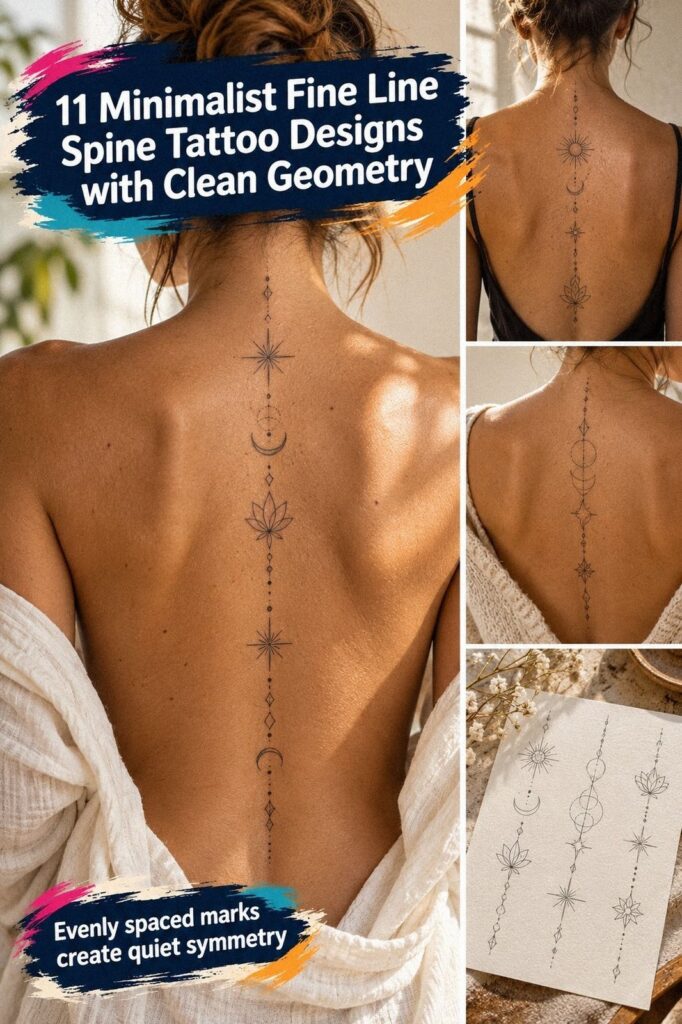
A minimalist fine line spine tattoo can keep crisp linework when the design has breathing room, careful placement, and realistic aftercare. I learned that after choosing detail that was too tiny. Your spine gives you an elegant vertical path, but it won’t forgive crowded marks. These 11 ideas keep the result personal, sharp, and wearable!
- ✓ Small Minimalist Fine Line Spine Tattoo Ideas
- ✓ Why Botanicals Follow the Spine So Well
- ✓ Let the Celestial Symbols Breathe
- Small Minimalist Fine Line Spine Tattoo Ideas
- Why Botanicals Follow the Spine So Well
- Let the Celestial Symbols Breathe
- What Should Vertical Script Say?
- Build a Geometric Spine Tattoo Around One Shape
- Choose a Unique Symbol With Private Meaning
- Keep a Delicate Design Genuinely Minimal
- The Sacred Symbol That Still Feels Like You
- Which Birth Flowers Belong on Your Spine?
- Let Abstract Lines Carry the Emotion
- Place a Meaningful Tattoo Where It Can Live
1Small Minimalist Fine Line Spine Tattoo Ideas
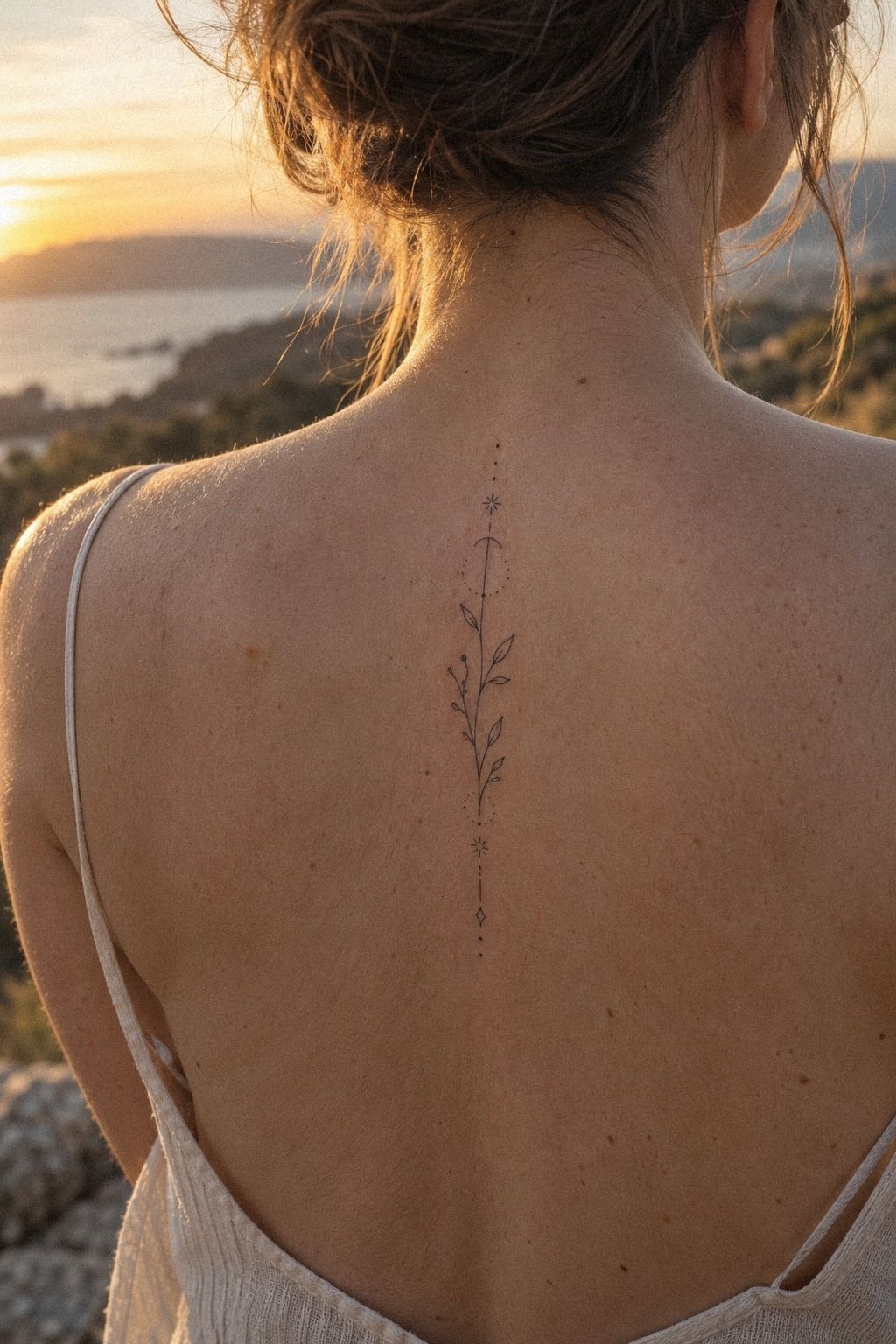
A small spine tattoo works best when one clear symbol carries the design. Think of a tiny moon, a narrow heart, or a single expressive star placed along the center line. The skin around it should remain visible.
That negative space makes the tattoo look deliberate rather than unfinished.
For fair cool-pink skin, black ink can create a striking contrast without heavy shading. Ask your artist to show the stencil at its actual size before starting. My guide to small fine line spine tattoos can help you compare spacing and scale.
The most successful small designs aren’t packed with five separate meanings. I’d choose one symbolic mark and let its position do the emotional work.
A dainty crescent near the upper spine feels intimate. A tiny arrow lower down can feel more daring and directional.
Your drawing should show the line weight, not just the subject. Clean single-needle linework, a narrow vertical gap, and one personal symbol are enough.
If you’re choosing between a tiny detailed illustration and a simpler emblem, take the emblem. It’ll remain readable longer as your skin changes.
2Why Botanicals Follow the Spine So Well
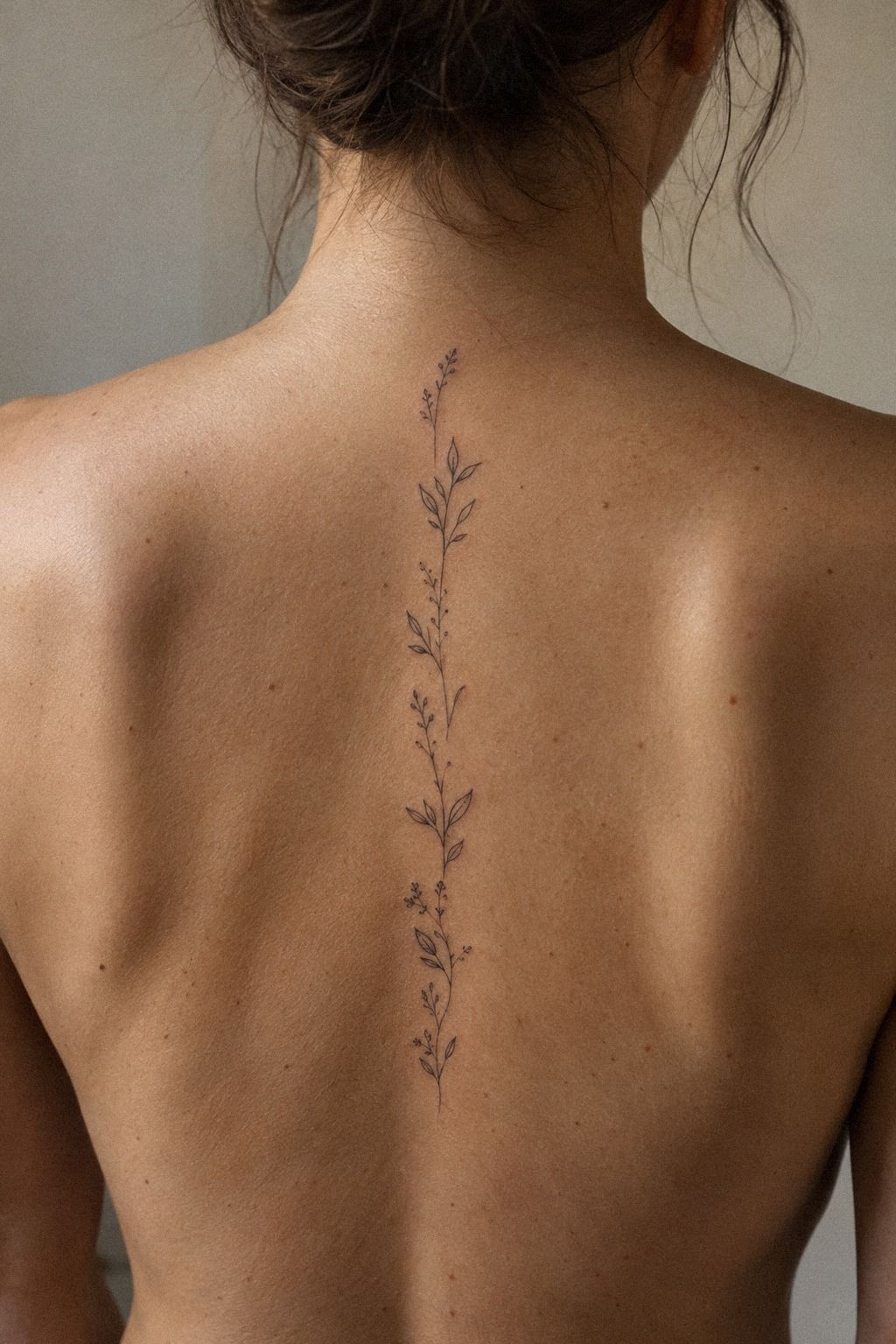
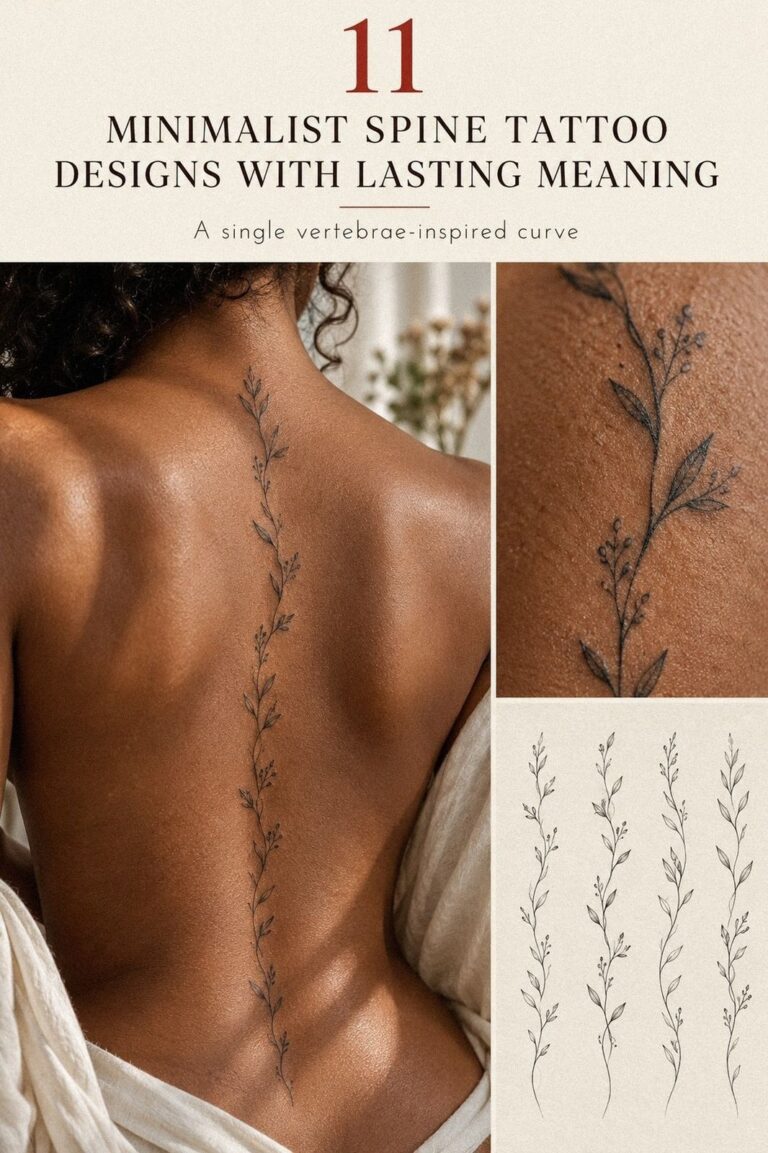
A botanical spine tattoo brings flowing stem direction to the body’s natural vertical line. A single branch, fern, vine, or wildflower can follow the spine without making the design feel crowded.
The best version usually has one main stem and a few carefully spaced leaves. Keep each leaf distinct. A graceful curve can look more intentional than a straight botanical chain with too many tiny details.
Before booking, ask to see healed botanical work. Fresh lines may look delicate and exact, while healed lines can soften.
A tattoo that still reads clearly after healing is the one worth considering. The result can feel flowing and alive!
3Let the Celestial Symbols Breathe
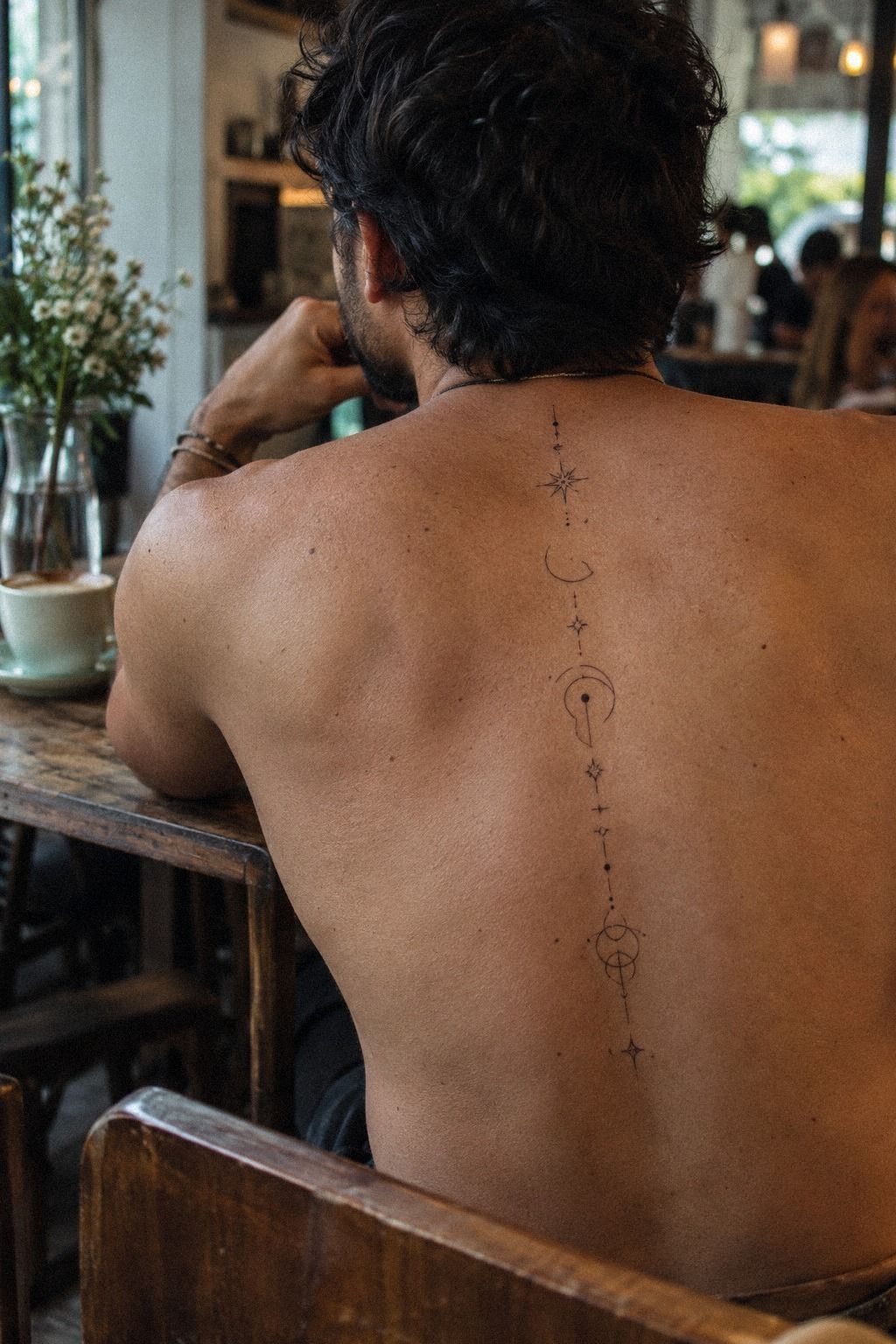
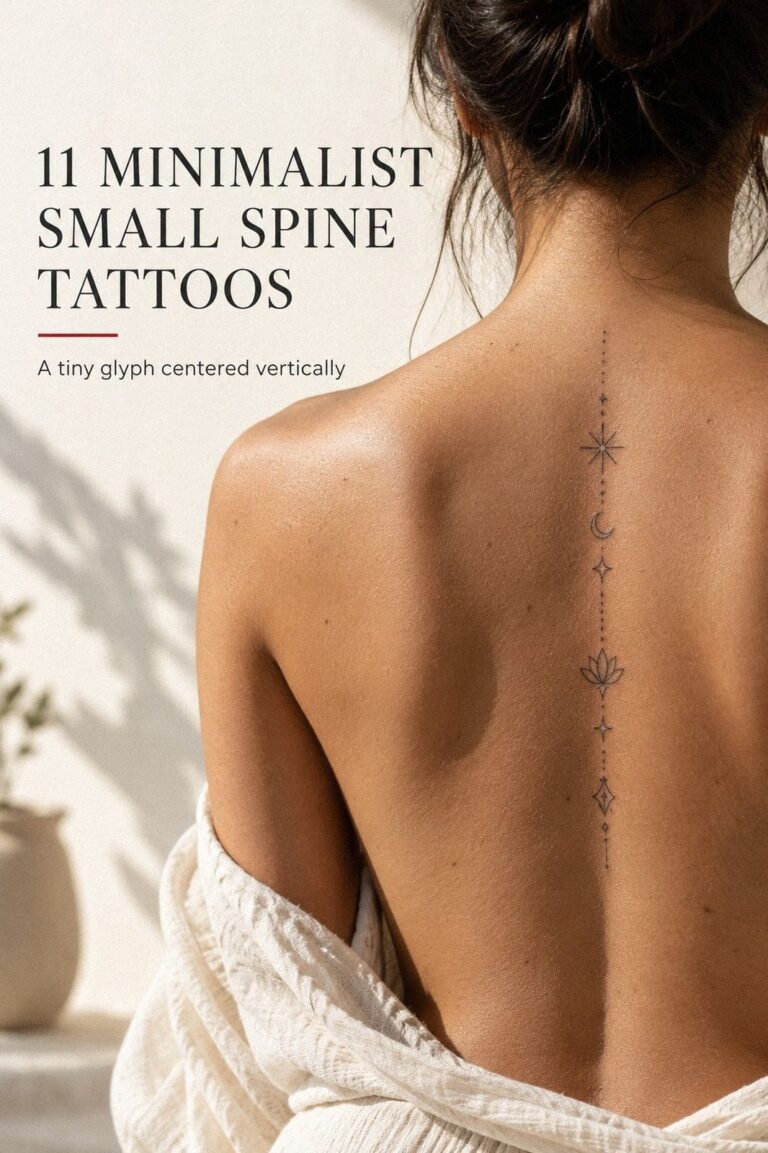
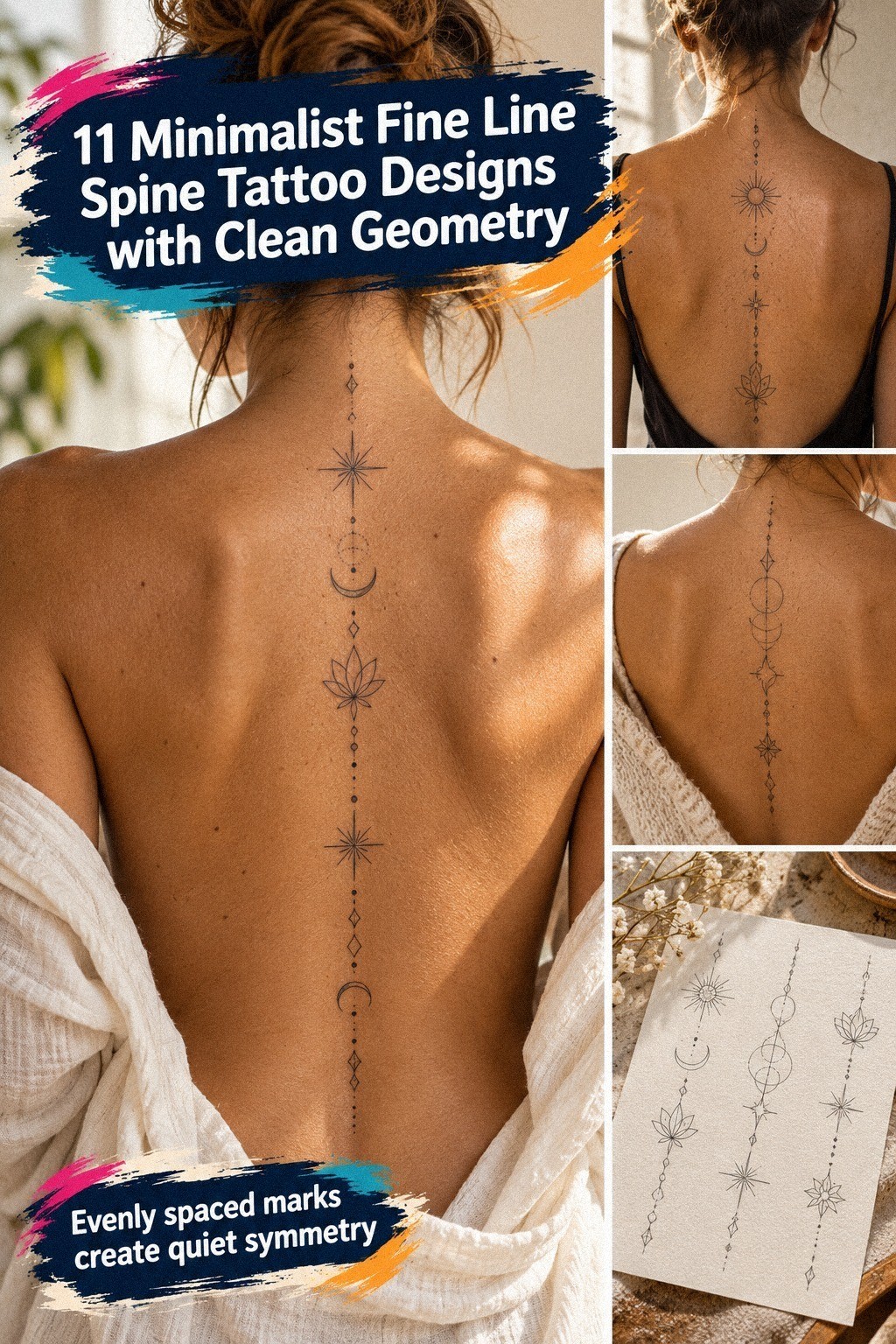
Celestial symbols suit the spine because they can be arranged like a quiet vertical constellation. A crescent moon, a small sun, and several sharp stars give medium olive skin a moody rhythm without requiring dense blackwork. Your spacing matters more than the number of symbols.
The strongest version uses one dominant shape as the main symbol. I’d make the crescent the focus, then keep the stars varied in size. A crowded celestial chain can look playful on paper but messy once it follows your actual spine.
You’ll want to ask for healed examples of fine dotwork and tiny points. Fresh ink can look sharp.
Softened dots may lose their edge during healing. The what fine line tattoo means guide explains why line weight, placement, and aftercare affect the finished result.
Could your design still make sense if one tiny star softened? That’s the right question. If the answer is no, simplify it before your appointment.
A meaningful moon with restrained detail will usually age better than an intricate sky full of fragile marks.
For your consultation, bring one drawing with the exact stencil order you like. Your artist can adapt the proportions to your body instead of tracing a design made for someone else. That adjustment makes the final tattoo feel symbolic, polished, and genuinely yours.
4What Should Vertical Script Say?
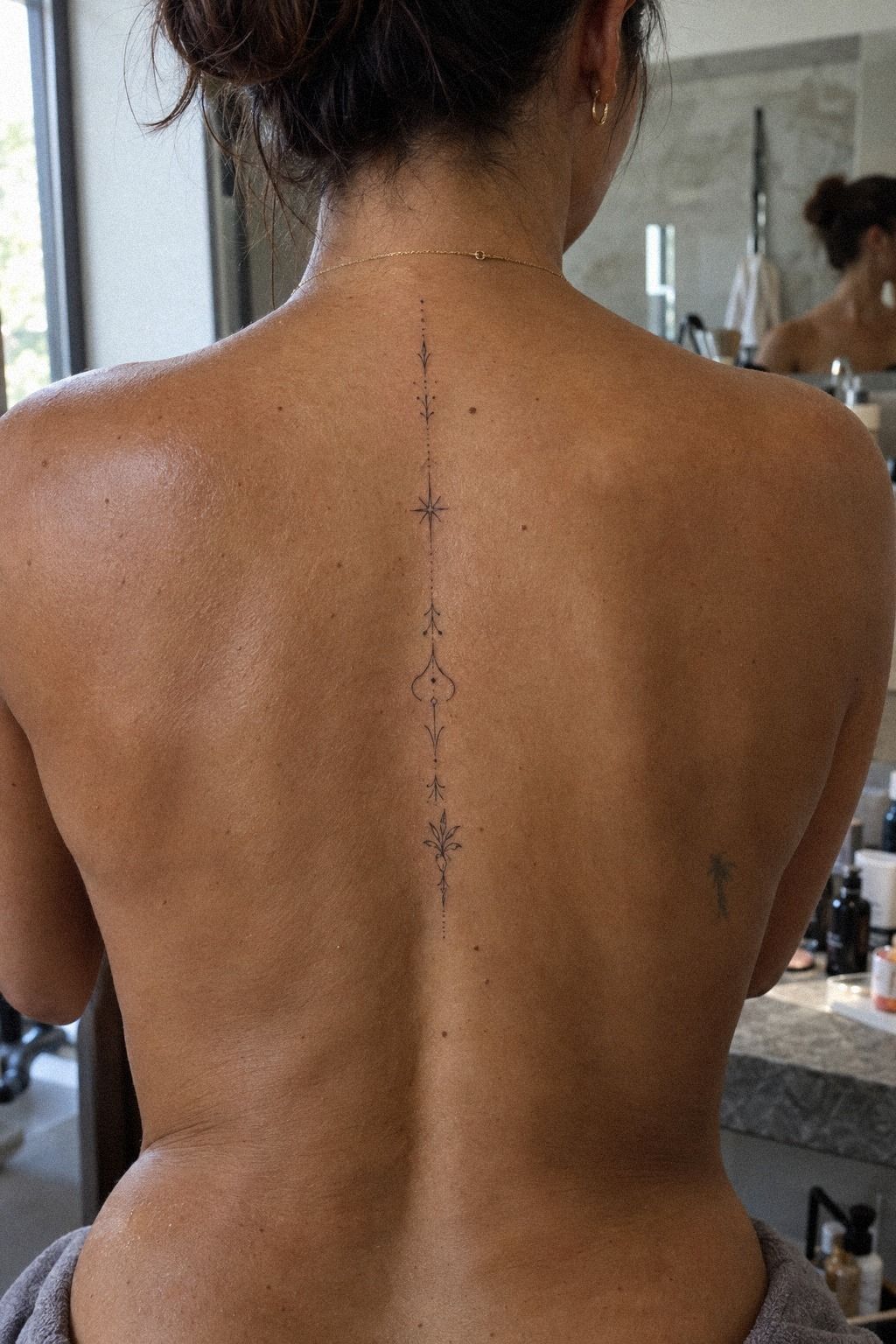
Vertical script can be elegant, personal, and surprisingly demanding. The words need enough separation to remain readable, especially when they travel beside the natural curve of your spine.
Choose a short phrase, a name, or one meaningful word rather than a full paragraph. A romantic line can feel timeless. A single family name may carry more emotional weight than decorative lettering.
Ask your artist about letter spacing before you commit. Thin script may look sleek and graceful at the appointment but lose clarity if the characters sit too close together. If you’re weighing text against a symbol, the fine line geometric tattoo guide can help you compare open structures and compact marks.
5Build a Geometric Spine Tattoo Around One Shape
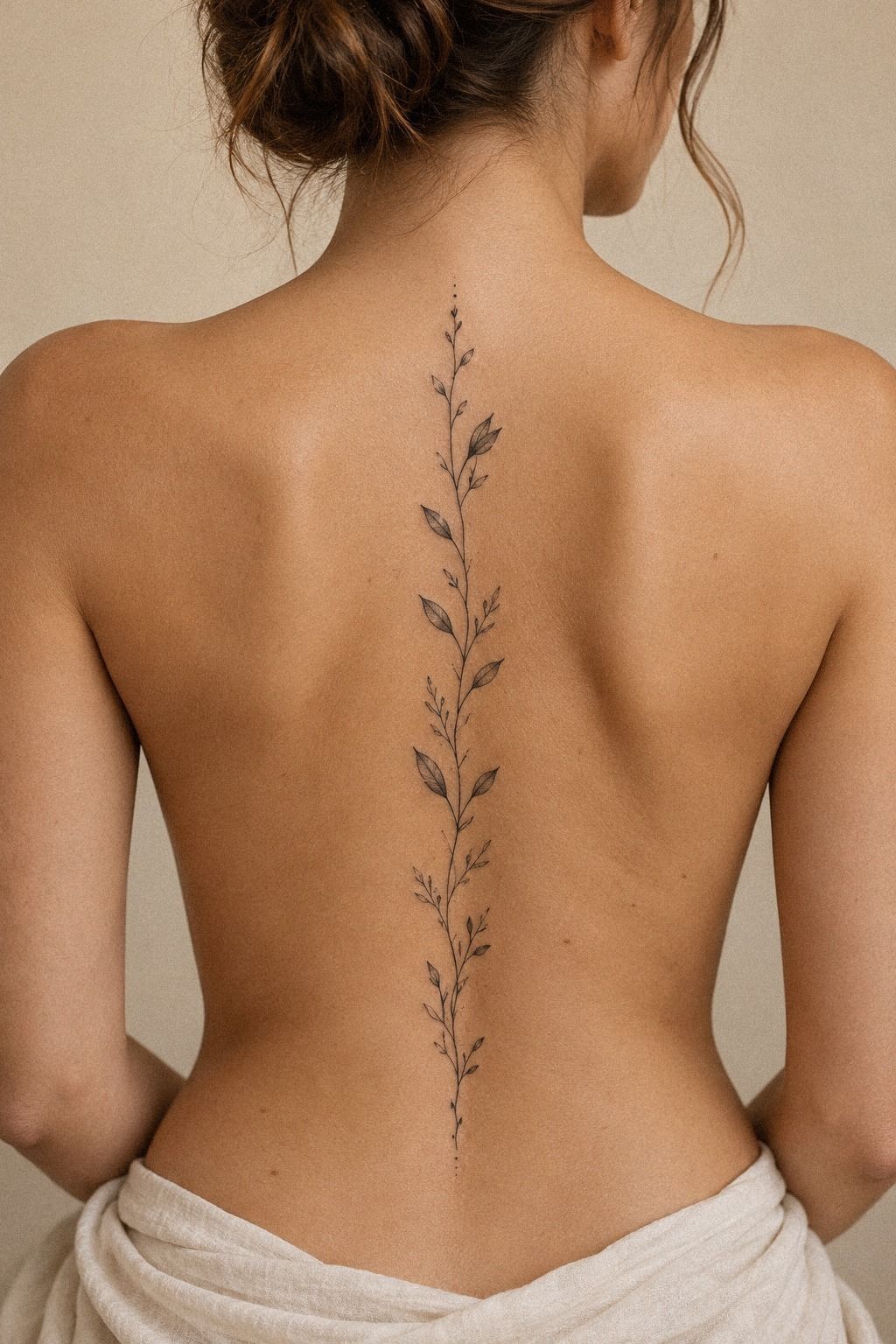
A geometric spine tattoo can use circles, triangles, arcs, or intersecting lines to create a sharp vertical structure. Look for the design with the clearest central shape, not the one with the most detail.
The best geometric tattoo isn’t the one with the most angles. It’s the one whose spacing stays calm when your body bends. A narrow diamond, linked circles, or simple symmetrical grid can look iconic without becoming visually heavy.
Ask your artist to test the geometry on a temporary stencil first. You’ll see whether the center line follows your anatomy or drifts to one side. The fine line geometric tattoo guide offers more comparisons between open shapes and dense patterns.
I’d skip a design that relies on several microscopic line intersections. Those marks may look intricate while fresh, but they can merge as lines soften. A bold outer contour with restrained interior detail gives you stronger structure and a more timeless finish.
Symmetry on paper won’t always appear symmetrical on a living body. Your spine has curves, shoulder movement, and changing posture.
A skilled artist will adjust the stencil to your shape, not force your shape to obey the drawing. That decision makes the tattoo feel crisp instead of rigid.
6Choose a Unique Symbol With Private Meaning
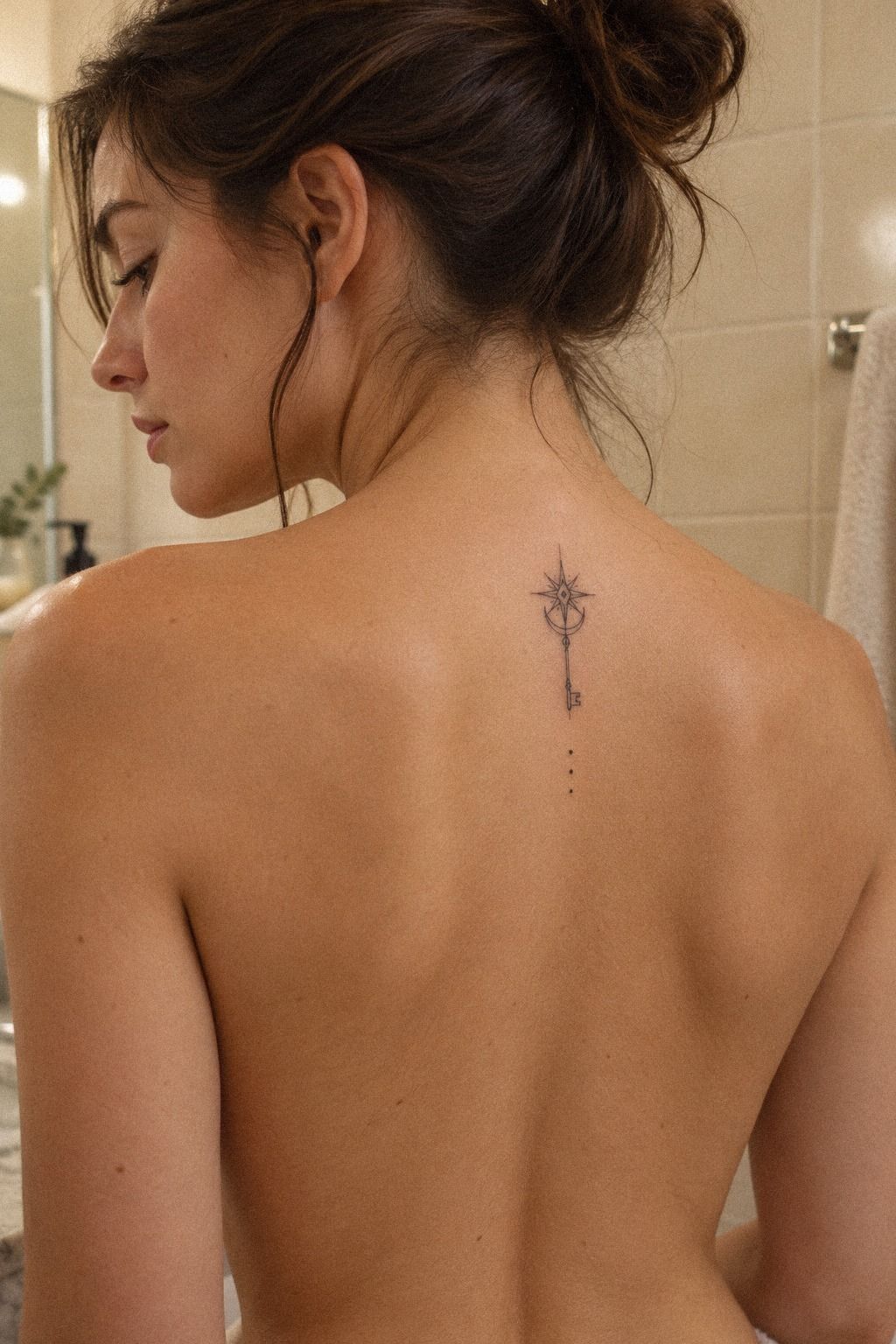
Unique symbols work beautifully when you want your tattoo to feel personal without explaining everything. On deep ebony skin, a clean black symbol can create a powerful, understated mark when its silhouette stays open.
Consider a key, an abstract compass, a tiny protective eye, or a symbol you’ve drawn yourself. Your artist can refine the shape while preserving the imperfect detail that gives it meaning. The goal isn’t to make the symbol generic or overly polished.
You’ll want to discuss contrast and healed visibility during your consultation. Ask to see healed work on skin tones close to yours, not only newly completed tattoos. The small fine line tattoo ideas collection can help you gather references.
I’d choose one unusual emblem over a row of familiar icons. A personal symbol becomes more meaningful when you know why it belongs there. It might represent recovery, family, faith, or a private turning point that doesn’t need a caption.
Keep your reference sketch simple. One clear drawing. One explanation of the meaning.
One decision about placement. If you bring twelve unrelated symbols, your consultation can lose direction.
A focused idea gives your artist room to create something expressive, sharp, and truly individual!
7Keep a Delicate Design Genuinely Minimal
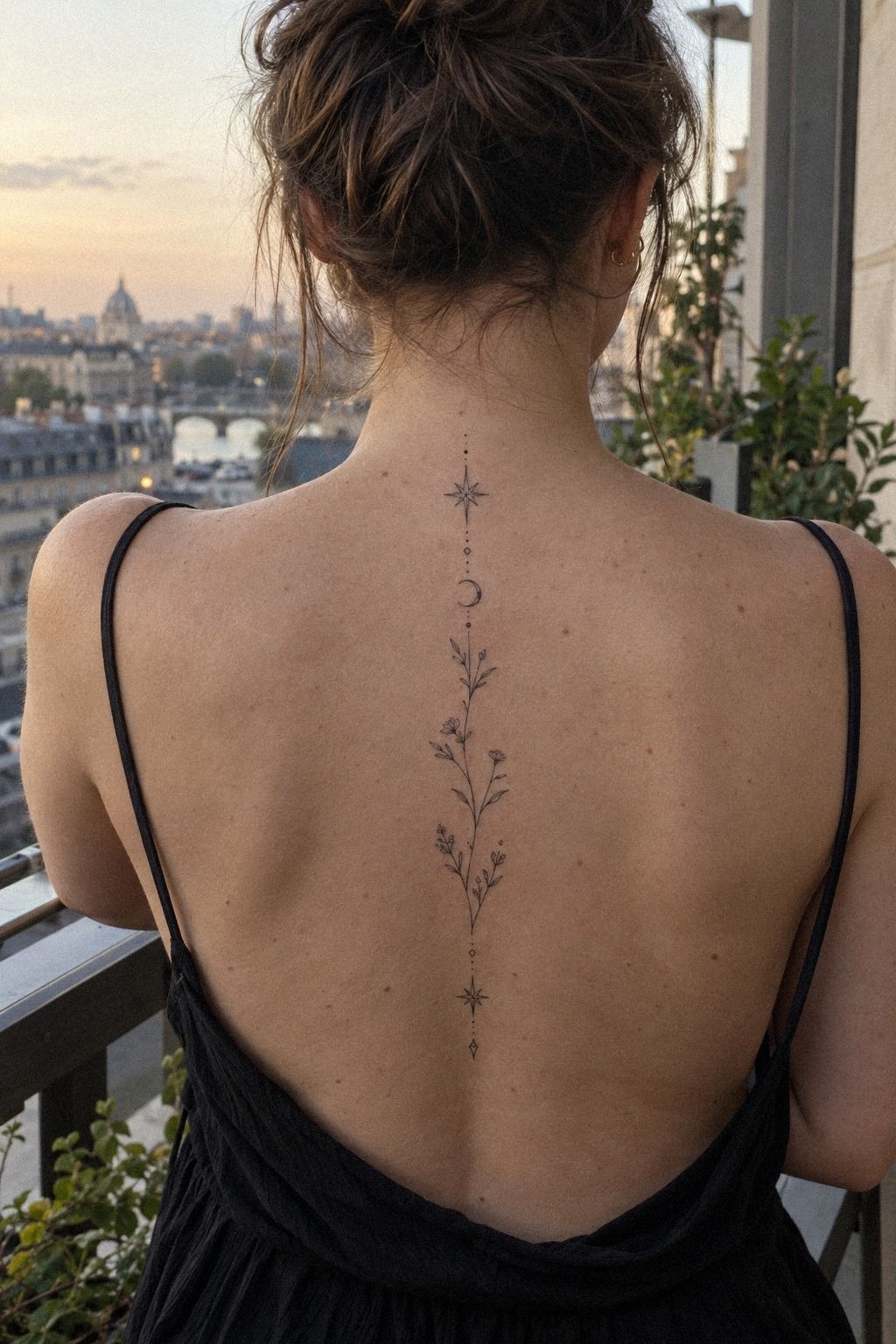
A delicate spine tattoo depends on restraint, not endless detail. Choose one delicate motif, such as a fine leaf, slim crescent, tiny ribbon, or narrow line of stars.
Every extra mark competes with the spine’s natural movement. I’d rather see three beautifully spaced elements than fifteen fragile ones pressed together.
Ask how your artist will protect the line weight during stencil placement. Fine marks can appear different when the body twists, stretches, or relaxes.
A graceful design may include one flowing curve and a few intentional breaks. Those breaks create rhythm while keeping the tattoo readable.
If you want something feminine, romantic, or understated, keep the structure open. A dainty tattoo can still feel fierce when the idea behind it is personal.
8The Sacred Symbol That Still Feels Like You
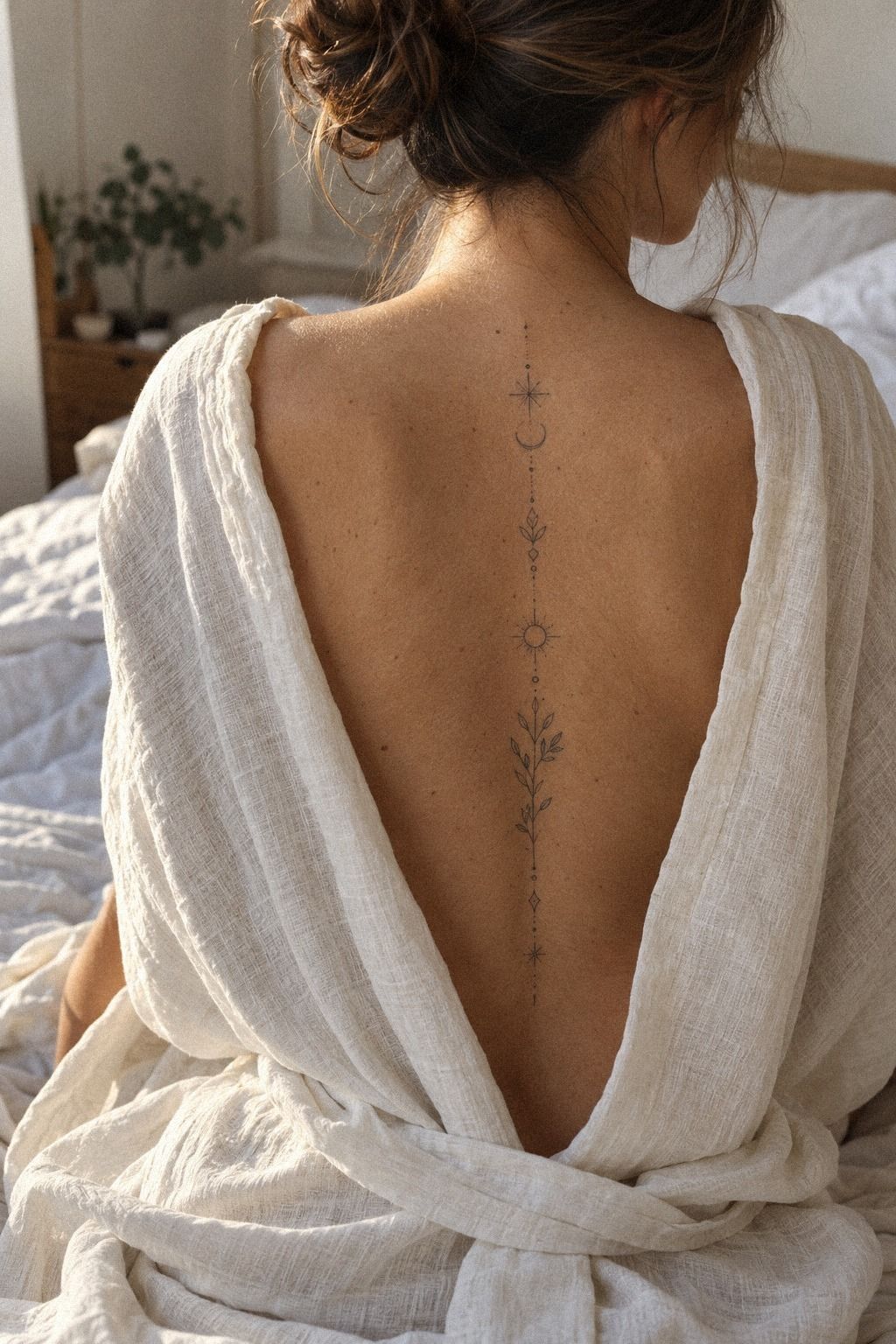
A sacred spine tattoo can combine a small mandala, halo, eye, sun, or symmetrical emblem with meaningful vertical placement. On medium warm ivory skin, the result can feel sacred, expressive, and quietly powerful without thick shading.
Choose symbols you understand before choosing symbols that appear stylish. If your design draws from a living religious or cultural tradition, learn the context and speak with respect. Your artist can help with structure, but the responsibility for meaning begins with you.
I like a central religious symbol followed by two or three smaller marks. The minimalist water lily tattoo guide offers another way to think about symbolism, symmetry, and open linework.
Ask yourself what the tattoo should remind you of on an ordinary day. Is it protection, devotion, rebirth, or balance?
That answer can guide the shape better than a mood board. A crisp, understated symbol often carries more emotional force than an ornate design with no personal anchor.
Sacred doesn’t have to mean solemn. Your version can be playful, feminine, bold, or slightly edgy if that reflects your story.
The placement gives the tattoo gravity, but your interpretation gives it life. Keep the symbolic structure clear, and let the meaning remain yours!
9Which Birth Flowers Belong on Your Spine?
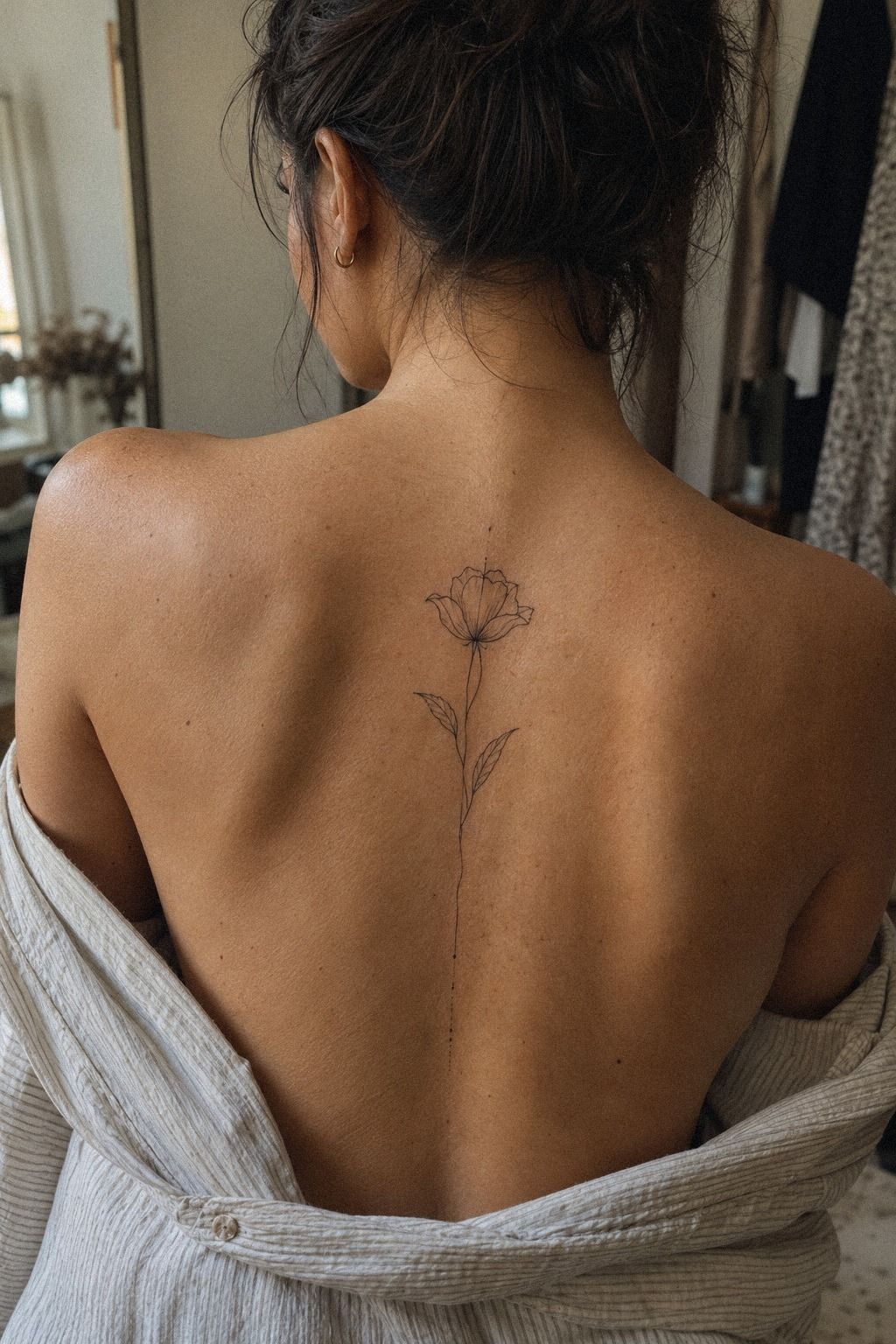
A birth flower spine tattoo gives you a natural way to honor yourself, a child, a partner, or several important dates.
Start with one flower before adding a whole family arrangement. A single stem can feel meaningful, elegant, and easy to read along the spine.
If you’re honoring multiple people, use birth flower symbolism to decide which blooms deserve emphasis. They don’t all need identical size or placement.
A flower with a strong outline may remain clearer than one built from many microscopic petals. Ask your artist which details will survive healing on your skin.
You can add tiny dates, initials, or a small moon, but I’d keep the supporting marks quiet. The flower should remain the emotional center.
A single-stem design can feel romantic and personal without becoming overly ornate. It’s an empowering choice when you want a tattoo that carries family meaning without explaining every detail.
10Let Abstract Lines Carry the Emotion
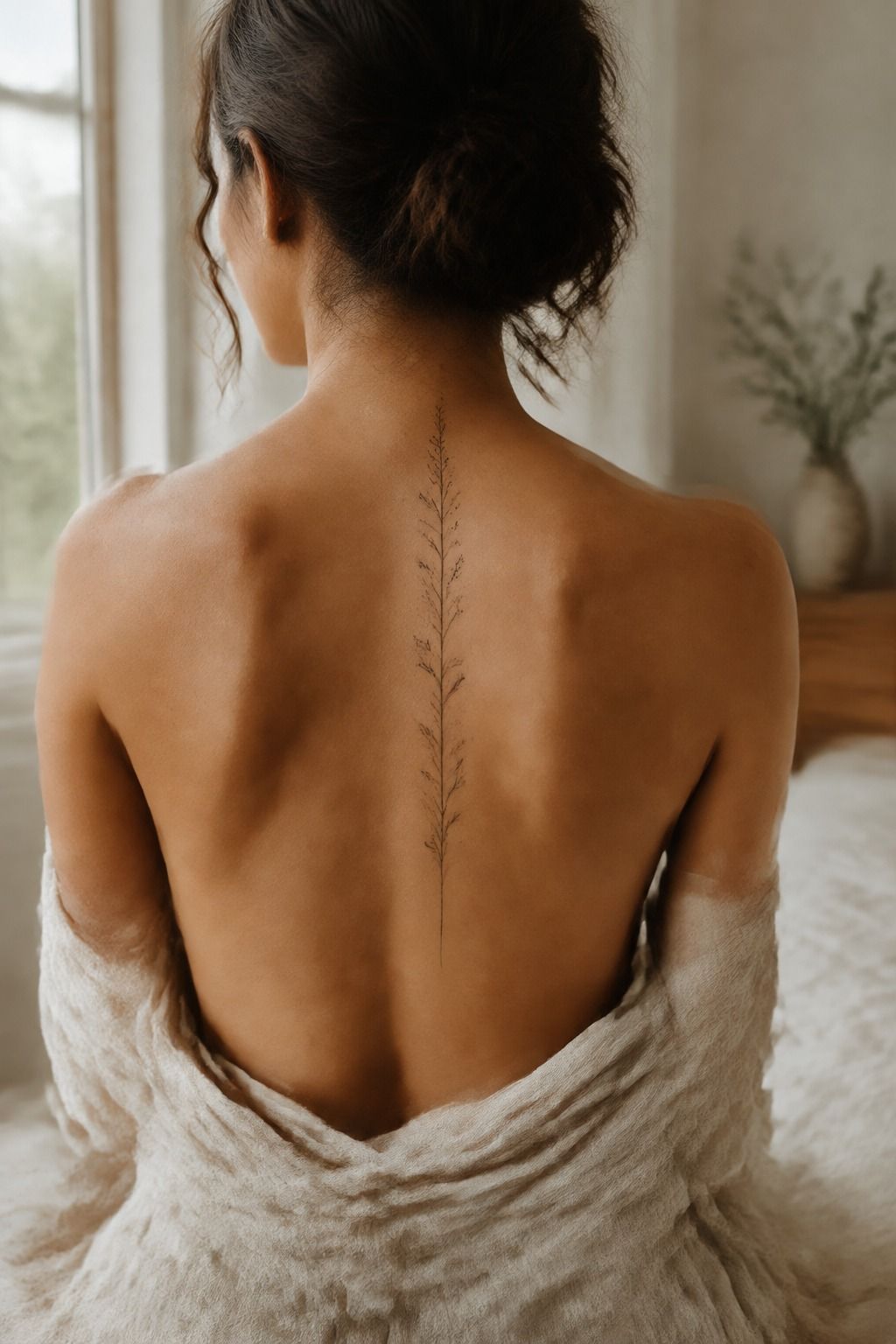
An abstract spine tattoo gives you room to choose movement over literal imagery. Look for open curves, broken circles, uneven arcs, or a shape that suggests motion without naming one object.
On the body, abstract work can feel raw and modern when the lines have a clear direction. Your artist should explain which marks are structural and which are optional. A few open curves can say more than a dense pattern.
I’d study healed work longer than newly completed tattoos. The fine line tattoo guide can help you understand why some lines soften more noticeably than others.
Could you describe the emotion without describing the object? That’s often the best test for abstract work.
Maybe your piece feels haunting, hopeful, or quietly daring. If every curve needs a paragraph of explanation, the design may be too complicated.
Don’t chase perfect symmetry in an abstract piece. A little imbalance can make the design feel personal and lively.
Keep the major contour crisp, protect the negative space, and accept that the healed version will look softer than the fresh lines. That change is normal.
11Place a Meaningful Tattoo Where It Can Live
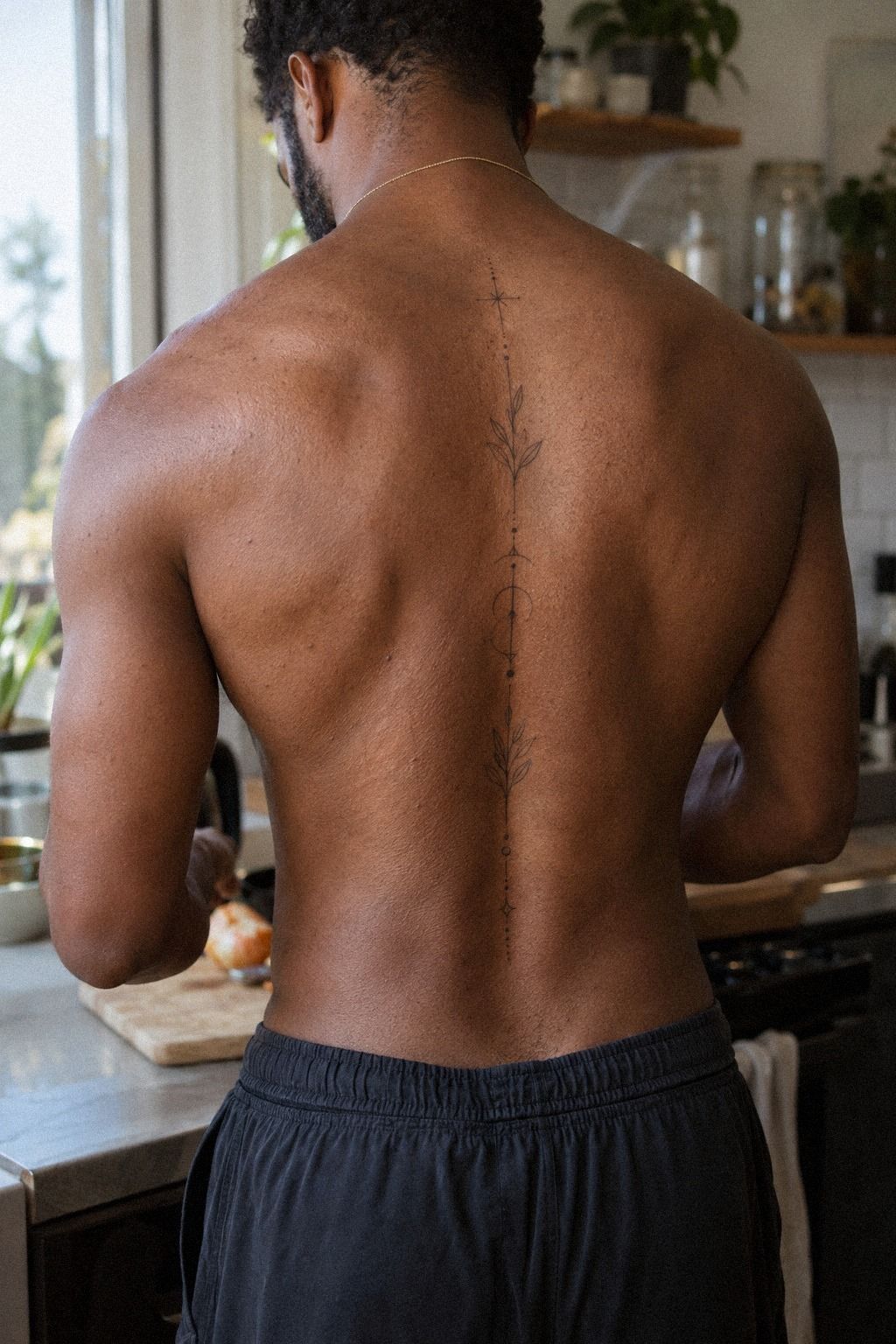
Meaningful placement can turn a simple tattoo into a personal ritual.
The upper spine can make a small symbol feel intimate and centered. The middle spine gives a vertical design more room to breathe, while the lower spine may offer a private location with a stronger sensual quality.
Think about clothing, movement, sun exposure, and your comfort with visibility. Placement should support the meaning rather than compete with it.
A tattoo can be personal without being hidden. An iconic mark between the shoulder blades may feel empowering when you know it’s there, even if other people rarely see it.
Ask your artist to check the stencil while you stand naturally. Posture changes the way the design travels down the body, so a polished drawing still needs an anatomical adjustment.
Before You Book a Fine Line Spine Tattoo
Start with the design you’d still want if nobody else could see it. A tattoo can be stylish, but personal meaning gives it staying power.
Bring one focused concept to your design consultation. Your artist can develop the drawing more effectively when you’re clear about the symbol, placement, and mood.
If you’re comparing artists, look for healed examples, consistent line weight, and work on skin tones similar to yours. That healed portfolio evidence is worth more than a dramatic newly completed tattoo.
A single reference drawing is usually enough. Save extra ideas for later. Too many unrelated references can blur the decision you’re trying to make.
How Skin Tone Changes Your Planning
Skin tone affects how contrast appears, but it doesn’t decide whether fine line work is possible. Your artist should evaluate the design, pigment, placement, and healed results together.
Ask to see healed work on skin close to yours. That gives you a more realistic sense of healed contrast than a freshly completed tattoo.
A thoughtful artist may adjust line weight or spacing for clarity. That isn’t a limitation. It’s part of choosing the right pigment choice for an expressive result that remains readable over time.
What Makes Fine Line Work Worth It?
Fine line work can be worth it when you value subtle detail, open spacing, and a personal symbol over sheer size. The result is often elegant without demanding constant attention.
The value comes from planning. A clear consultation, a suitable placement plan, and an artist who understands how lines settle can protect your design from avoidable problems.
If the cost feels high, ask what the quote includes. Careful planning may save you from paying later for cover-up work, reshaping, or correction.
A Budget Check Before Your Appointment
Set a budget that includes the studio minimum, consultation, session, tip, and aftercare supplies. You’ll make a better decision when you know the complete cost.
Here’s a practical planning range for a minimalist fine line spine tattoo:
A low price can look attractive, but skill, hygiene, and healed results matter more than a bargain. The right artist may cost more and still offer better long-term value.
Ask whether the studio charges by the hour or by the piece. You’ll also want to know whether revisions, deposits, and touch-ups are included in the appointment price.
Keep a small amount aside for aftercare supplies. You won’t want to improvise once the appointment is over.
Questions to Ask Your Tattoo Artist
Ask how the artist handles stencil placement on a curved spine. You should understand how the design will move with your posture before the needle touches your skin.
Ask to see healed fine line work and discuss how the artist expects your chosen design to age. You’ll learn more from five healed examples than from fifty newly completed tattoos.
Finally, ask about hygiene, deposits, aftercare, and touch-up policy. Clear answers make the appointment feel empowering and help you judge whether the studio is worth your budget.
Ask whether the artist would change the size or spacing. A confident professional won’t avoid that conversation.
When a Simpler Design Has More Value
A simpler design often gives each mark more room to breathe. That can make a symbolic mark easier to read years later.
You don’t need to fill the entire spine to make the placement feel intentional. One iconic shape can carry more emotional force than a long chain of unrelated details.
If you’re unsure, remove one element and reassess. The small spine tattoo designs collection can spark ideas, but your final design should remain personal.
A shorter spine length can suit one compact emblem. A longer spine may support a flower, phrase, or sequence of symbols.
Ask your artist to show the final stencil while you stand and sit naturally before the appointment begins. That small check can reveal crowded spacing early.
The Spine Rhythm Rule I Trust
I used to think a spine tattoo succeeded because the drawing was pretty on paper. I was wrong.
The body moves, breathes, bends, and changes under the design. The strongest pieces have spine rhythm.
Your eye should travel from one mark to the next without getting trapped in a crowded patch. That’s why I’d choose spacing before decoration.
A bold central symbol with two quiet supporting marks can feel more sophisticated than a full chain of tiny images. If your artist removes a detail to protect the spacing, listen. I’ve watched a delicate design become far more striking after one unnecessary line disappeared.
The second rule is to ask for healed tattoo examples. Newly completed ink can look crisp, vibrant, and dramatic. Healed examples tell you what your skin and the artist’s technique will do over time.
Finally, treat personal meaning as a filter, not an excuse to add everything. Your tattoo can be sacred, romantic, fierce, or playful, but it doesn’t need to explain your entire life. One symbol placed with care will usually feel more timeless than a collection of references assembled in one rushed appointment.
The Questions I Get Asked Most
How much does a minimalist fine line spine tattoo usually cost?
A minimalist spine tattoo commonly falls around $100 to $300 in the United States. The price depends on the artist, region, size, and session time.
Small studio minimums may run about $50 to $100. Hourly rates often sit around $100 to $250. Ask for a quote after your artist sees the design and placement.
Are minimalist fine line spine tattoos a good idea for a first tattoo?
Yes, they can be a meaningful first tattoo when you choose a clear design and realistic placement. Your spine may feel more intense than a forearm or thigh.
A small, crisp symbol can be manageable. Pick an artist with healed fine line examples, and don’t rush the consultation.
How do I choose a tattoo artist for minimalist fine line spine tattoos?
Choose an artist whose portfolio shows clean linework, healed results, and work on skin tones similar to yours. Review the artist’s healed portfolio before booking.
Ask about hygiene, stencil placement, and how the artist plans for lines to soften. You’ll learn more from five healed examples than from fifty newly completed tattoos.
How much do minimalist fine line spine tattoos hurt?
Spine tattoos can feel moderate to intense because the area sits close to bone. Pain varies with placement and your own tolerance.
Ribs, feet, hands, and sternum are often more sensitive. The forearm, thigh, and shoulder may feel more tolerable. Your artist can pause when you need it.
How long does a minimalist fine line spine tattoo take to heal?
The surface usually heals in about two to three weeks. Complete healing can take roughly two to three months.
Wash gently, moisturize as directed, and avoid strong sun and swimming during early healing. Don’t scratch peeling skin, even if the tattoo feels itchy.
What’s the best placement for a minimalist fine line spine tattoo?
The upper spine works well for small visible symbols. The middle or lower spine gives longer designs more vertical space.
Your choice should balance privacy, pain, and how the lines may age. A little extra spacing usually helps fine line work remain readable.
Can I design a minimalist fine line spine tattoo myself on a budget?
Yes, you can sketch the concept yourself, but the final stencil and technical sizing should come from a professional. Your home sketch is a starting point, not the finished stencil.
Keep your drawing simple, bring one clear reference, and ask about the studio minimum before booking. You’ll save money by refining the idea before the appointment, not by skipping expertise.
Where I’d Start First
If I had to pick one, I’d start with the single-stem birth flower. It’s meaningful, vertical, and open enough to age without becoming a dark strip. Compare it with minimalist fine line spine tattoo references before you book!