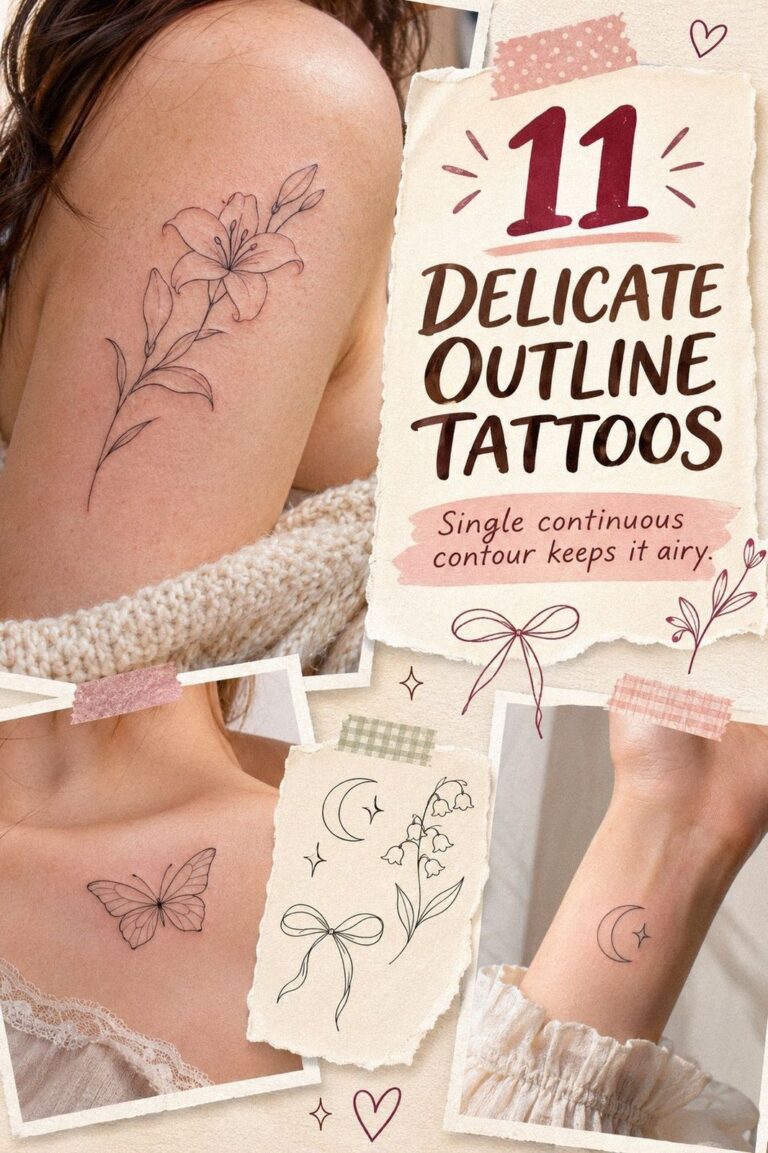
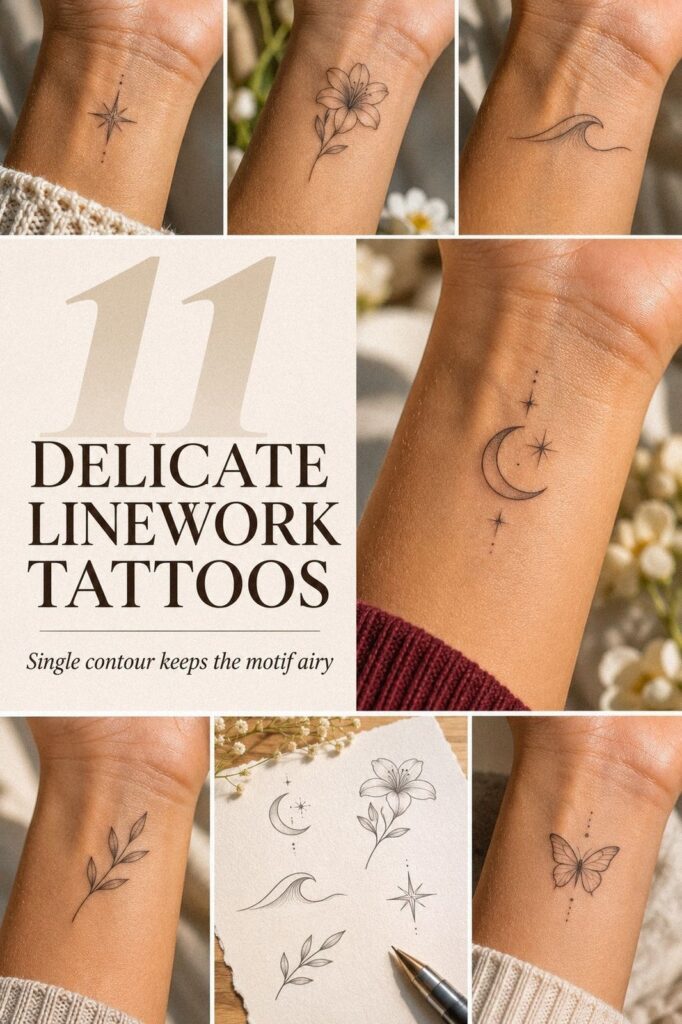
Delicate linework tattoos can hold a private memory without announcing it. Placement, movement, skin tone, and meaning all matter. Your tattoo can stay quiet and still feel powerful.
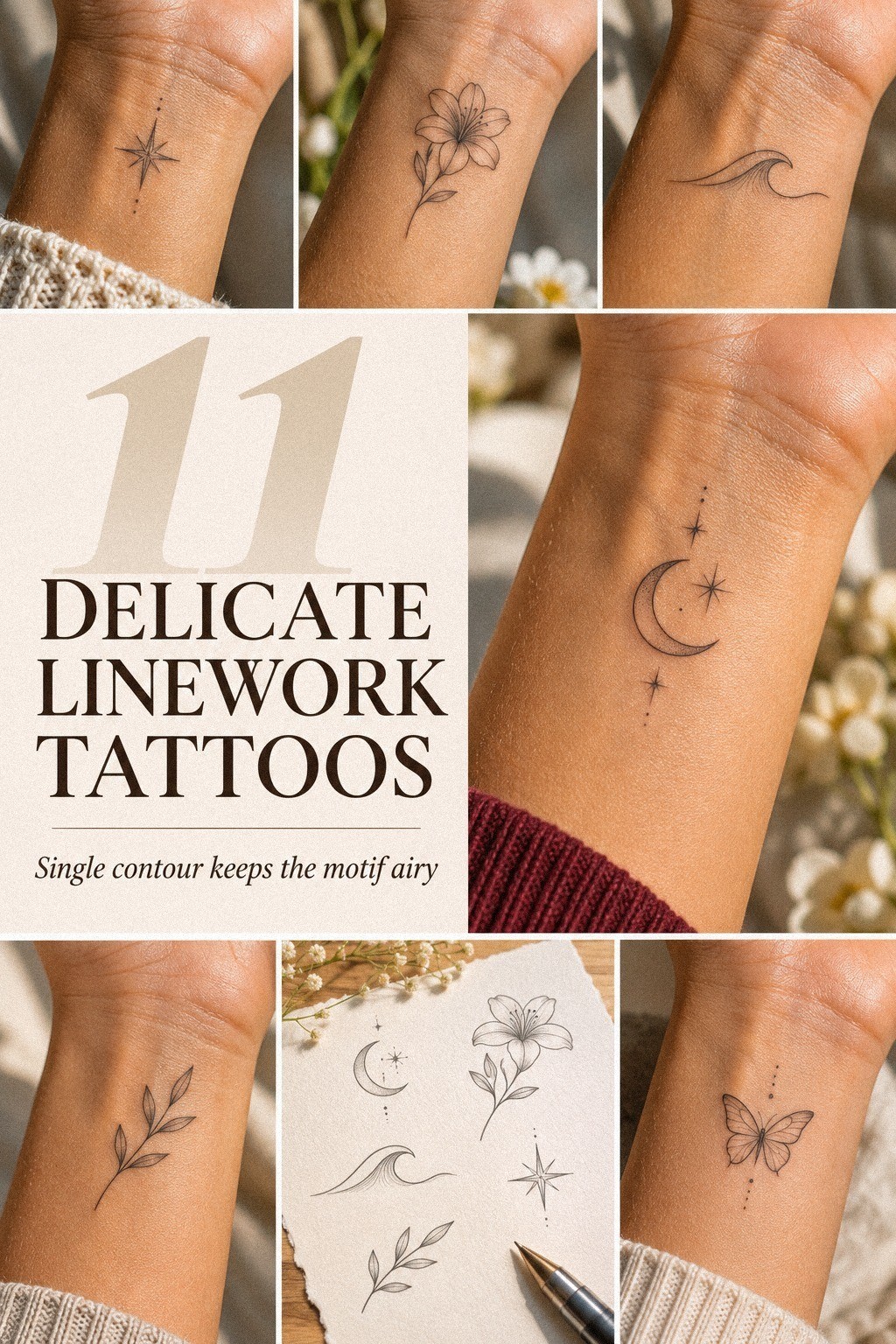
- Small Delicate Linework Tattoos for Wrists: The Wrist Whisper Rule
- Botanical Delicate Linework Tattoos on Forearms: Let the Stem Lead
- Celestial Delicate Linework Tattoos Behind Ears: Why Does Small Still Read?
Editor’s note: Start with the idea, then test its scale, visibility, cost, and long-term value on your own skin.
- Small Delicate Linework Tattoos for Wrists: The Wrist Whisper Rule
- Botanical Delicate Linework Tattoos on Forearms: Let the Stem Lead
- Celestial Delicate Linework Tattoos Behind Ears: Why Does Small Still Read?
- Unique Delicate Linework Tattoos with Fine Shading: Keep the Center Quiet
- Delicate Linework Tattoos Inspired by Ocean Waves: Trace Movement
- Minimal Delicate Linework Tattoos on Fingers: Forest Ink Over Pale Detail
- Symbolic Delicate Linework Tattoos with Hidden Meaning: Build a Private Code
- Delicate Linework Tattoos Featuring Tiny Animals: Give the Silhouette Room
- Geometric Delicate Linework Tattoos on Ribs: Structure Over Decoration
- Feminine Delicate Linework Tattoos with Floral Details: Edit the Bloom
- Delicate Linework Tattoos Designed for Collarbone Placement: Follow the Bone
1Small Delicate Linework Tattoos for Wrists: The Wrist Whisper Rule
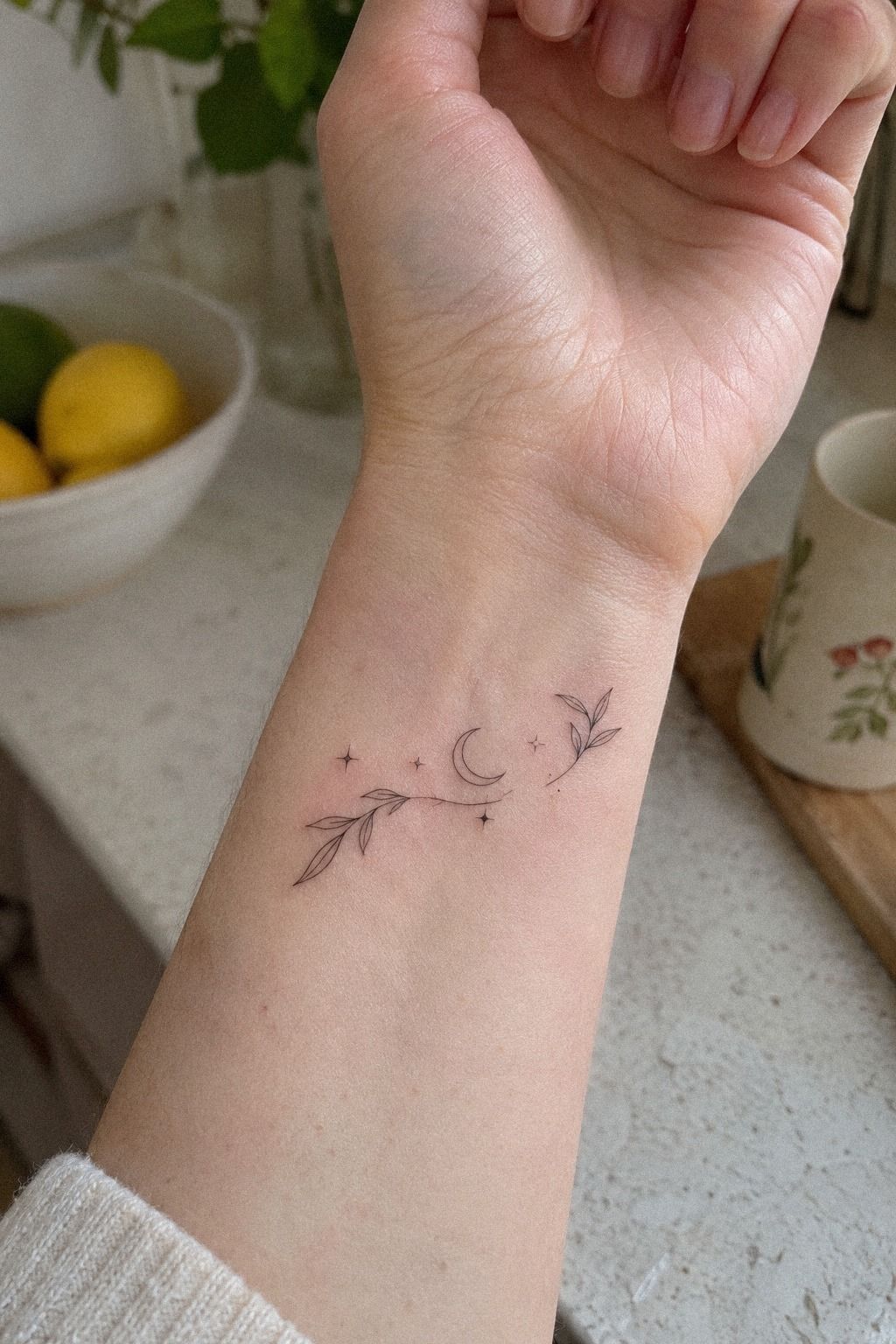
A wrist design works best when your idea has one clear symbol and enough breathing room. Single-needle linework can read as a fine, personal mark instead of a dense block. I’d keep your design narrow and crisp if you want a minimal look that won’t compete with bracelets or a watch.
The olive-black ink should stay consistent from the first line to the smallest curve. Your artist can use a tiny crescent, initial, date, or botanical stem. You shouldn’t combine every meaningful symbol into one crowded piece.
One symbol often feels more personal than five explanations.
If your wrist gets regular sun, think about long-term care before booking. UV exposure can soften contrast over time, especially when a design uses very fine lines.
Choose sunscreen after healing, and ask how the tattoo may change on your skin. That question can protect your budget!
I call this the Wrist Whisper Rule: your tattoo should be legible from a few inches away, but it doesn’t need to explain itself across a room. A 3RL needle can create delicate detail, but the final result depends on placement, technique, and your skin’s response.
If you’re collecting small pieces, compare this look with these delicate small wrist tattoos, small linework tattoos, and small tattoos with meaning. They can help you decide whether your idea needs more scale or less.
2Botanical Delicate Linework Tattoos on Forearms: Let the Stem Lead
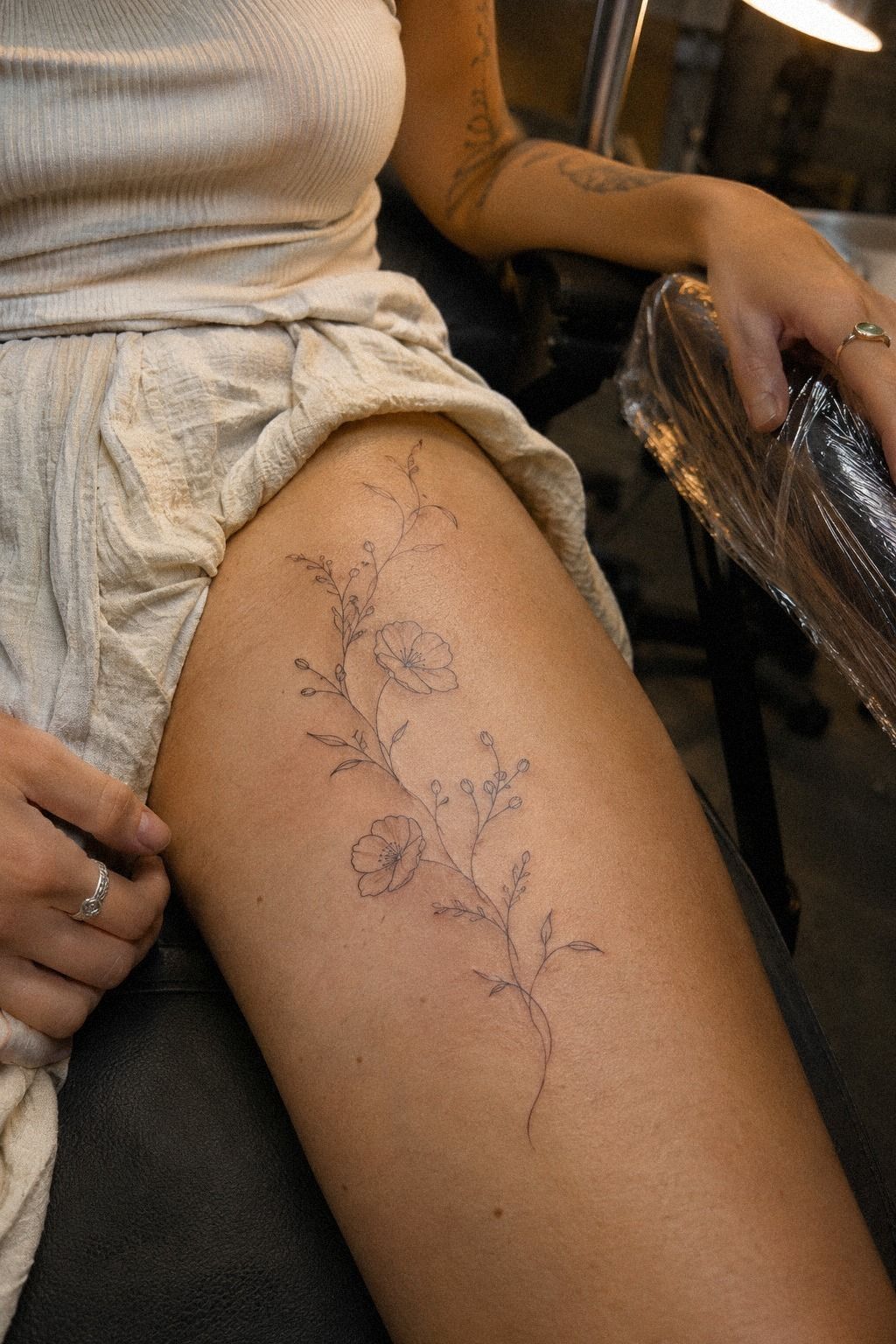
Botanical designs suit the forearm because the placement gives a flowing idea room to breathe. Forearm movement can make a stem, fern, or tiny branch feel graceful without requiring a crowded composition.
3Celestial Delicate Linework Tattoos Behind Ears: Why Does Small Still Read?
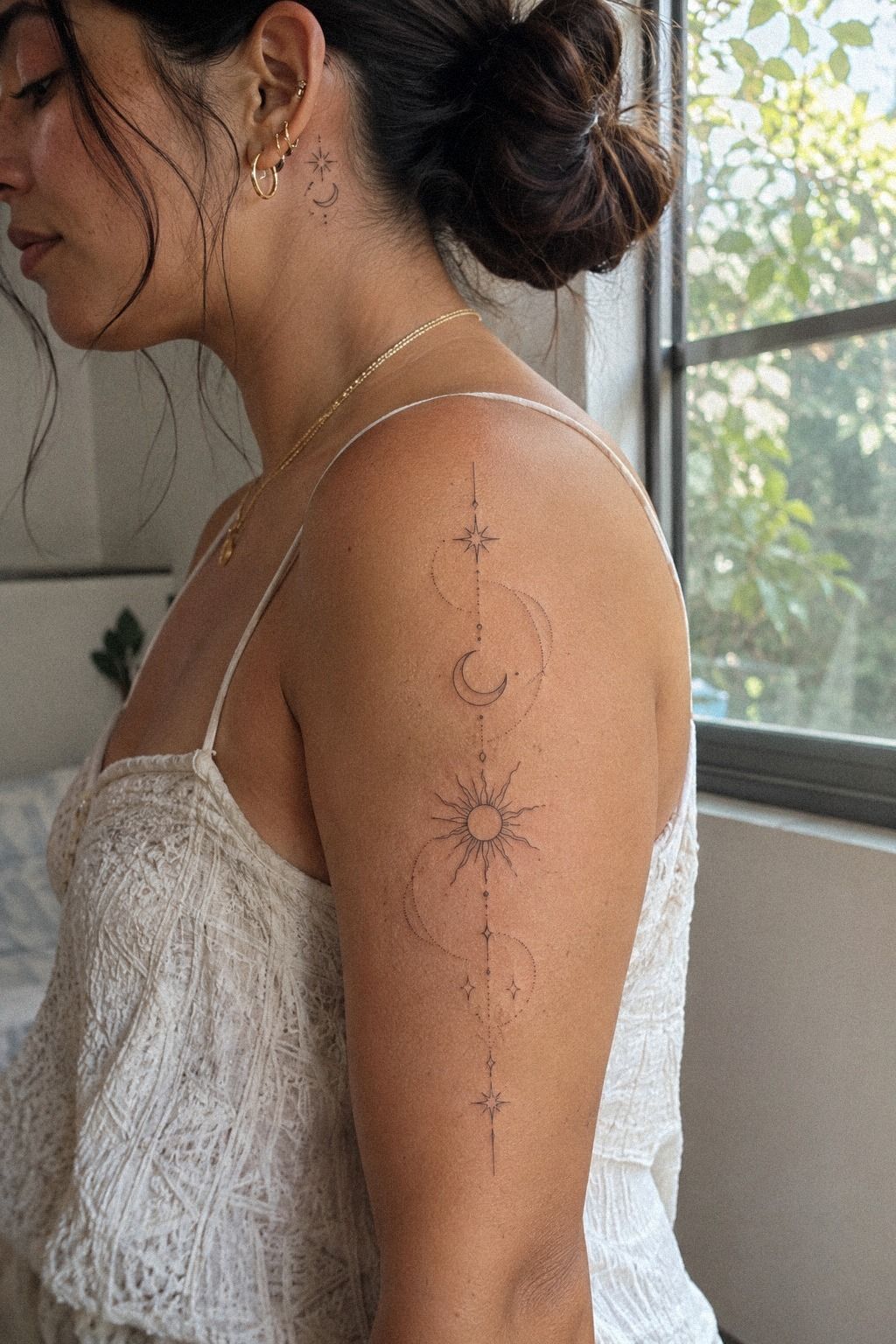
A small moon can feel symbolic without becoming obvious. Add a single star, a thin orbit, or one tiny dot, and you’ll get an ethereal mark with enough open skin to keep it clear. What do you want to remember when nobody else can read it?
The Three-Point Constellation is a simple approach: one central shape, two supporting dots, and no extra decoration. It feels sacred and understated at once. I’d skip a crowded galaxy because the smallest marks are the first to lose their definition.
Behind-ear tattoos move, curve, and receive friction from hair, headphones, and collars. Behind-ear placement means your artist will need to simplify the design for the location.
That doesn’t make the result less meaningful. It makes the design more deliberate.
Your skin tone matters, too. Solid plum-black can create a sharp outline, while grey-plum shading may need careful testing to remain visible.
Ask to see healed work on skin close to yours. Don’t settle for a portfolio that only shows one complexion!
Behind-ear work can be sensitive, so plan a calm aftercare routine. Keep hair products and tight collars away from the area while it settles. For more small placement references, look through delicate tiny hand tattoos, delicate simple hand tattoos, and small simple hand tattoos.
4Unique Delicate Linework Tattoos with Fine Shading: Keep the Center Quiet
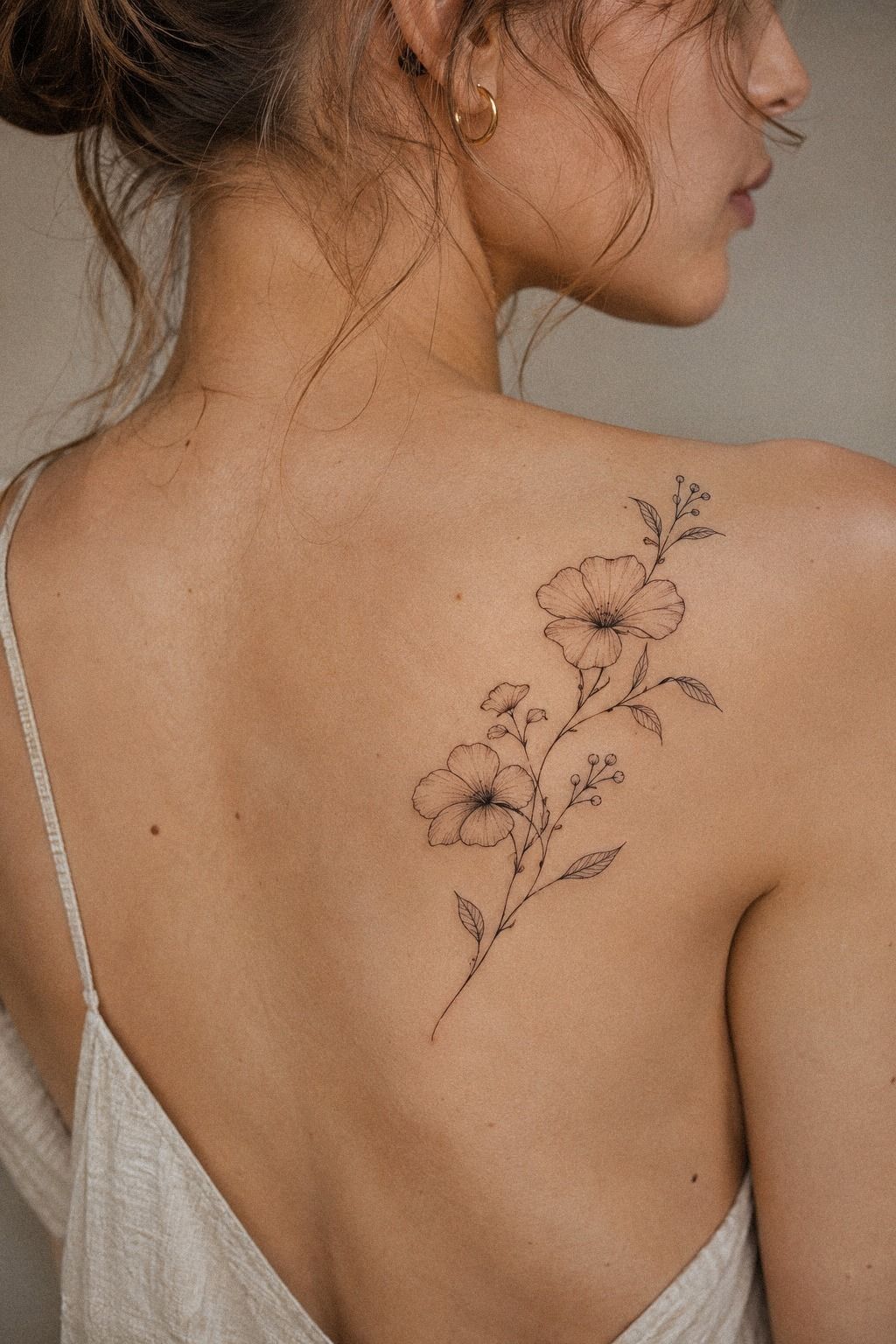
Fine shading can give a small tattoo depth, but it shouldn’t fill every open area. Start with one focal shape and let the surrounding skin support it. A vertical design along the spine, sternum, or upper arm can feel polished when the spacing stays measured.
The best fine shading is often restrained. It suggests atmosphere without turning the design muddy.
A small shadow beneath a symbol may be enough. More texture isn’t automatically more value.
Ask your artist whether grey wash, stippling, or open skin will age best for your placement. Each choice changes the final contrast. If the design only works when every tiny mark remains perfect, it may be too complicated.
A raw, expressive tattoo can still have control. I like designs that leave one area almost untouched. That pause gives the eye somewhere to rest and makes the central symbol feel more intentional.
5Delicate Linework Tattoos Inspired by Ocean Waves: Trace Movement
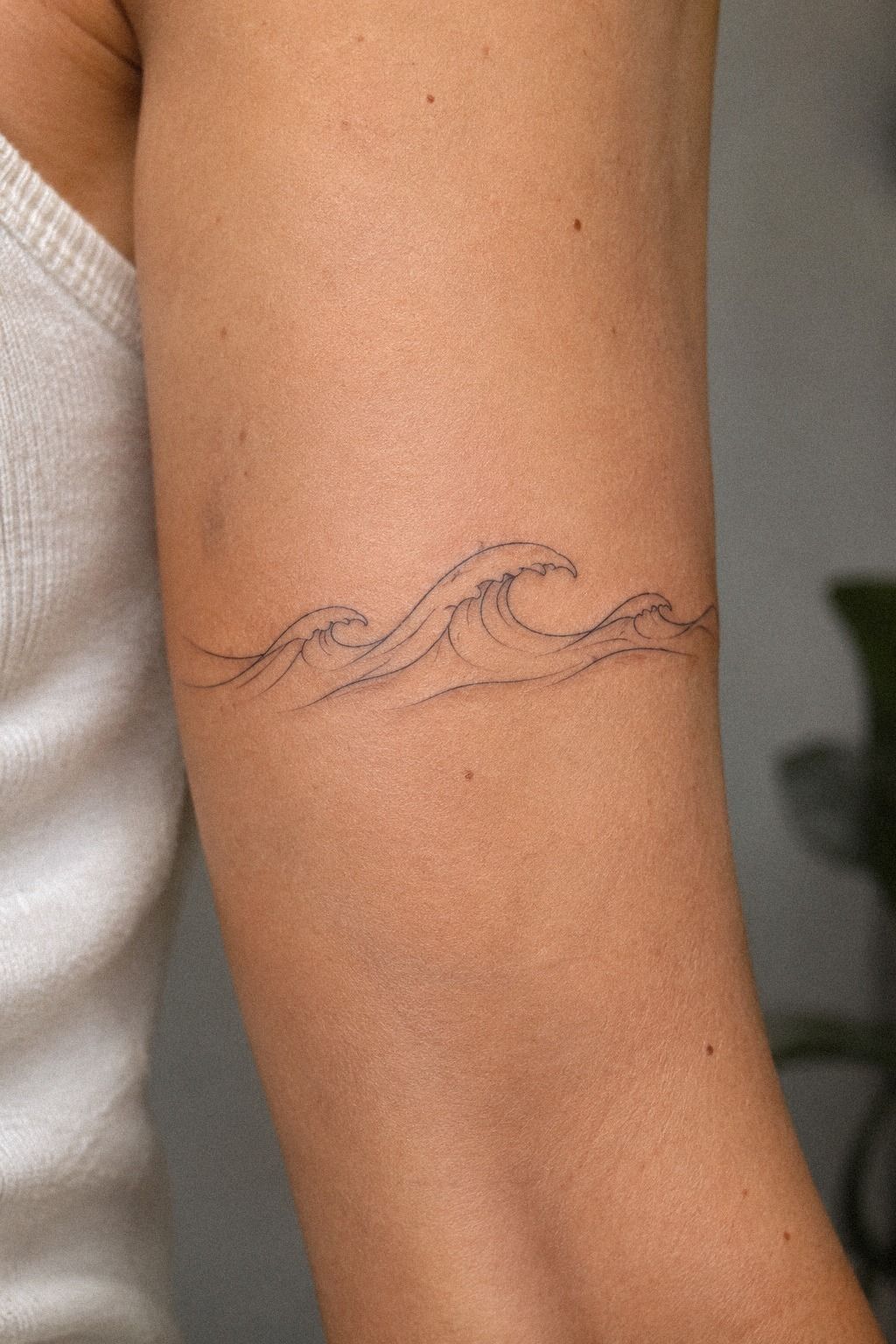
The best wave designs show movement through a few confident curves, not a pile of tiny lines. Your final tattoo should feel bold enough to read, even if the design stays small. One curling wave can look whimsical, while a horizon line with a rising sun feels timeless.
A wave contour needs a beginning, a crest, and an ending. If you can’t follow the line with your eye, the tattoo may be too busy. The most vibrant version usually has one strong contour and one supporting detail.
You can add a shell, compass point, or tiny figure beneath the wave, but you don’t need all three. That restraint keeps the piece playful rather than ornate. It also gives your artist more room to create clean spacing around the supporting detail.
Consider how the wave will work with your body’s movement. A forearm can make the line feel directional.
A rib placement can make it feel more private and flowing. A collarbone can give it a sleek horizontal rhythm.
If you’re comparing references, browse small linework tattoos and minimalist linework tattoos. Save a concept, then ask for a version that fits your body instead of borrowing someone else’s proportions.
Before you book, ask what the artist charges for a custom redraw. The price may include consultation time, stencil changes, and placement adjustments. Knowing the custom redraw cost helps you set a realistic budget.
6Minimal Delicate Linework Tattoos on Fingers: Forest Ink Over Pale Detail
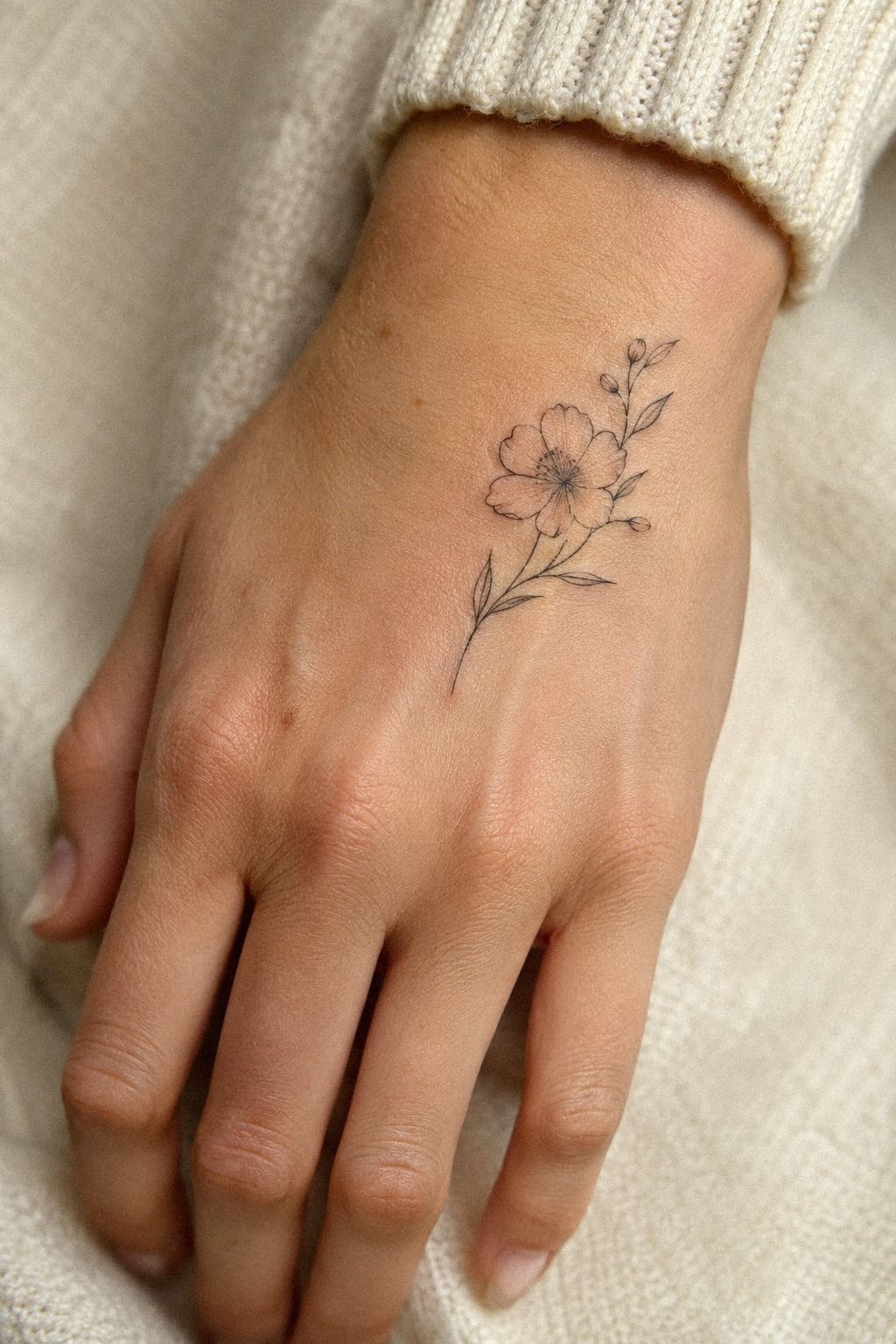
For finger tattoos, I’d choose clean forest-green ink over pale grey detail because hands receive friction, washing, and sunlight every day. Minimal marks tend to hold their shape better than tiny shaded scenes. The result can feel sleek without demanding constant attention.
The Forest-Over-Pale Rule is simple: keep the main symbol solid enough to read, then remove any detail that doesn’t help its meaning. A crescent, small band, dot cluster, or letter can feel dainty when the edges remain sharp.
But fingers aren’t forgiving. Lines may soften or fade faster there, and touch-ups can become part of the plan. Your artist should explain that before you book, especially if you want a tattoo that looks consistent for years.
I’d skip a detailed animal or miniature landscape on a finger. Your hand moves constantly, and the smallest interior marks may merge. A tiny open circle or angular symbol will usually age more gracefully than a complicated illustration.
Finger work may be worth it when the meaning matters more than perfect permanence. It may not be the best value if you want a low-maintenance tattoo. Keep the tradeoff clear before you pay a deposit.
If you’re comparing finger placements, save these delicate side finger tattoos, delicate side hand tattoos, and minimalist finger tattoos. You’ll see how direction changes the entire look!
7Symbolic Delicate Linework Tattoos with Hidden Meaning: Build a Private Code
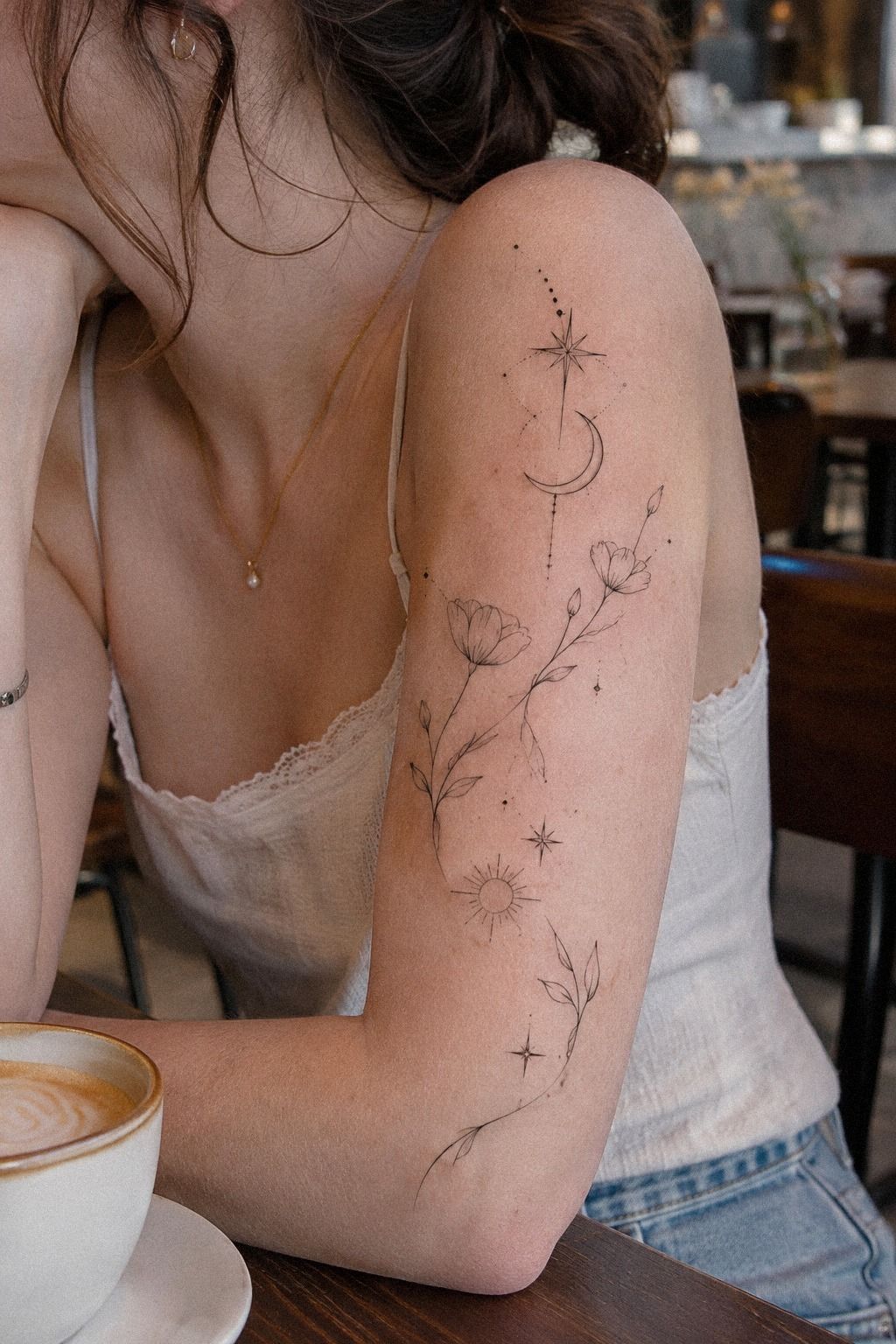
Private symbolism works because your tattoo can hold a full story while showing only a small part of it. You don’t need a caption beneath the design. Private symbolism can remain personal, even when other people notice it.
Try building your symbol from three references that matter to you. A line from a map, the shape of a birth flower, and one number can become a single expressive mark. I’d rather see one well-edited symbol than a collection of obvious icons.
Your design can be empowering without being loud. Consider a broken circle for change, an interrupted line for survival, or a small key shape for a choice you made. The meaning becomes stronger when the broken circle doesn’t explain everything immediately.
Here are useful planning notes before you send the sketch:
– One private reference, a meaningful date, or a symbolic curve. – One dominant line, two supporting details, and no crowded border. – Charcoal ink, measured spacing, a clean stencil transfer, and gentle aftercare.
The right artist will ask what you want the piece to communicate, then help you remove anything unnecessary. A custom stencil should clarify the idea before the appointment. If the drawing feels crowded at that stage, it won’t become clearer on skin.
For more ideas, compare delicate simple hand tattoos with minimalist linework tattoos. Your final code should feel personal, not like a symbol chosen from a generic list.
8Delicate Linework Tattoos Featuring Tiny Animals: Give the Silhouette Room
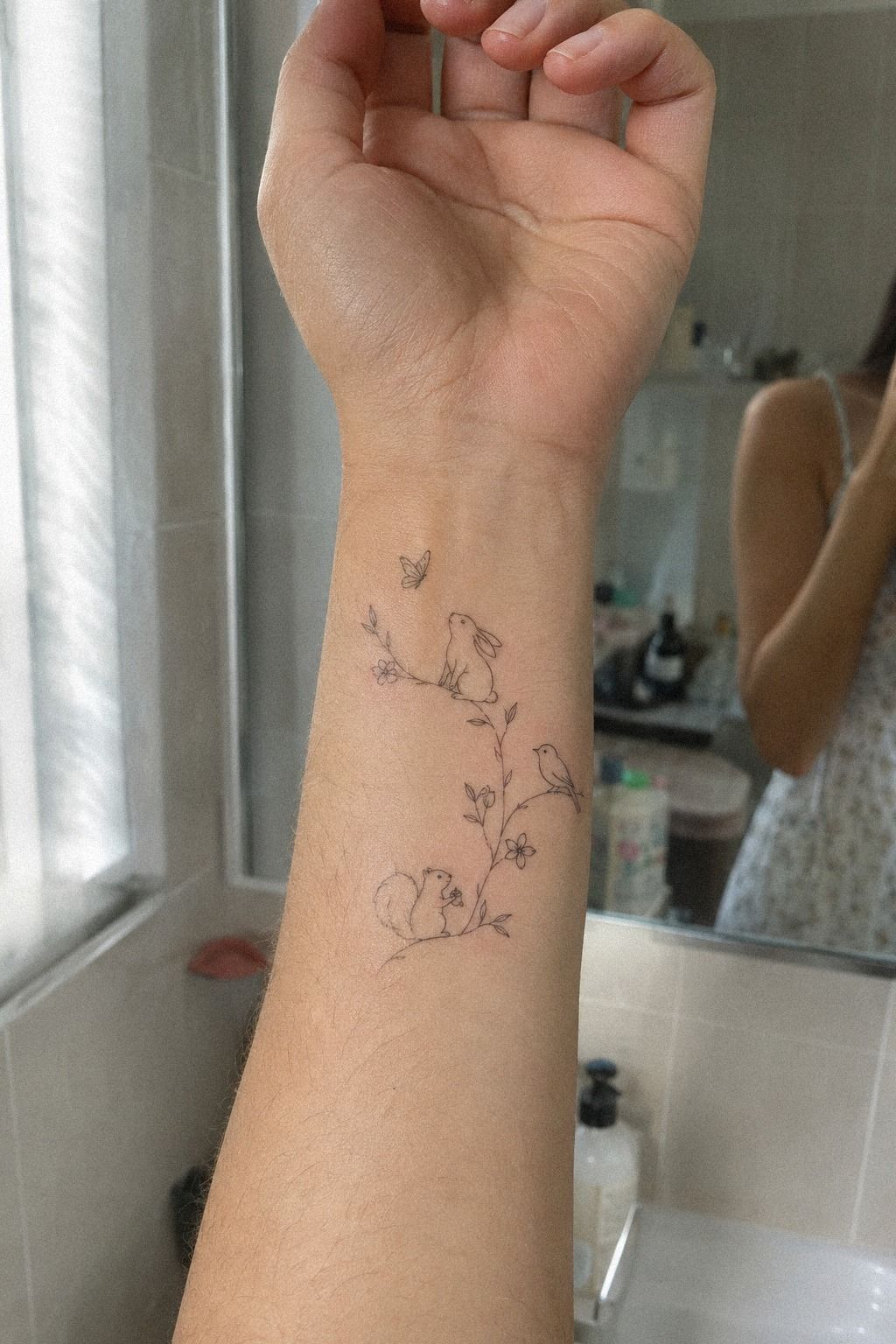
Tiny animals work best when the silhouette does most of the talking. A fox, swallow, cat, moth, or rabbit can remain recognizable with only a few decisive marks. The design should feel personal before anyone asks what it means.
A small animal silhouette needs open space around the body. Avoid adding every whisker, feather, or patch of fur. A strong ear, tail, wing, or posture may communicate more than intricate interior detail.
Think about the animal’s gesture. A curled fox can feel playful.
A rising bird can feel daring. A quiet moth can feel haunting.
Those choices make the tattoo expressive without making it literal.
Placement changes the mood. A tiny animal on the wrist feels visible and conversational.
Behind the ear feels private. Along the ribs feels more hidden.
Ask yourself whether you want the symbol discovered or immediately understood.
The final cost often depends more on custom drawing time than on the amount of ink. Ask whether revisions are included. That detail can change the value of a low initial quote.
9Geometric Delicate Linework Tattoos on Ribs: Structure Over Decoration
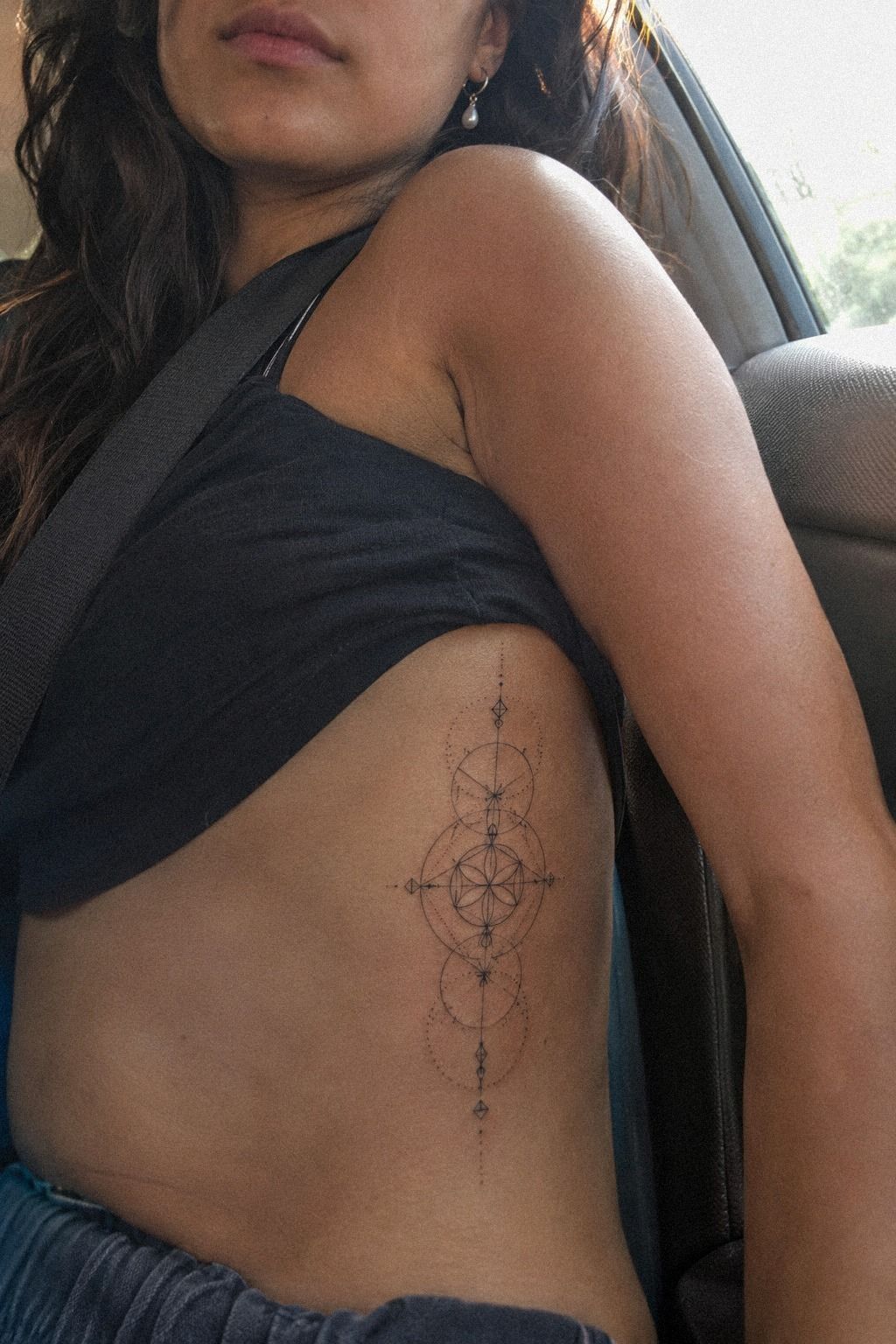
Rib tattoos need a steady stencil and careful alignment. Geometric spacing matters more than extra ornament, especially when a crisp midnight-blue or charcoal line follows the body’s natural movement.
10Feminine Delicate Linework Tattoos with Floral Details: Edit the Bloom
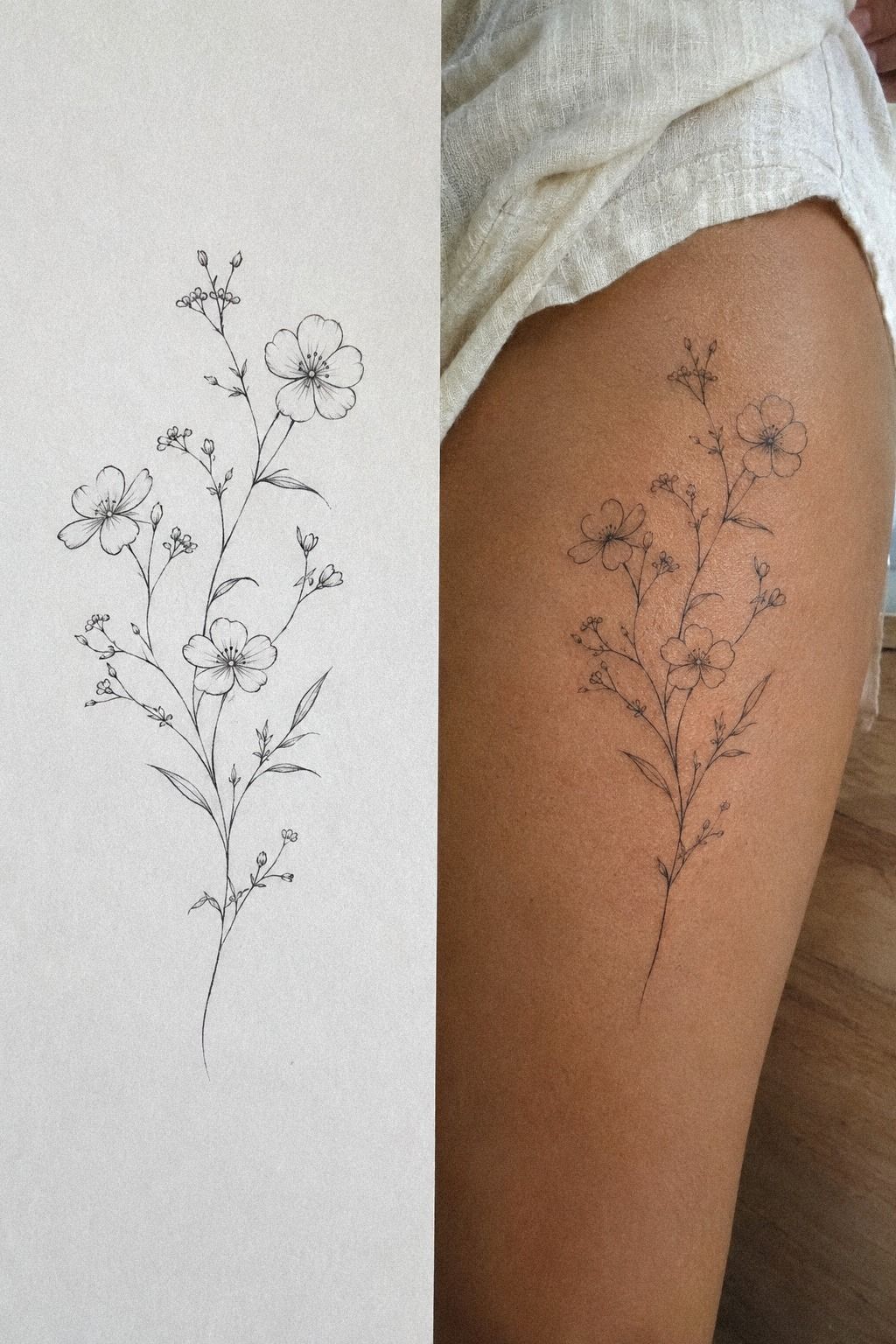
Floral tattoos don’t have to be soft or predictable. A single stem can feel feminine, while a thorn, broken petal, or unusual angle can make the piece edgy. The strongest concept usually has one flower and one clear reason for being there.
Start with the bloom’s outline, then decide whether the leaves support the meaning. Floral linework can become ornate quickly when every petal gets an interior mark. Remove anything that doesn’t improve recognition or emotion.
A dainty flower may suit the wrist or ankle. A larger, flowing branch may suit the rib or collarbone.
The scale should match the shape of the plant. A wide peony squeezed into a tiny space may lose the qualities that make it recognizable.
Ask your artist to show the stencil at the intended size. Fresh paper references can make delicate details seem easier than they are. An intended tattoo size gives you a chance to check the balance before the appointment.
If you want a feminine tattoo with more force, choose a sharp stem, asymmetrical bloom, or dark central line. Elegant doesn’t have to mean timid. Personal taste should guide the design, not a fixed idea of what floral tattoos are allowed to be.
11Delicate Linework Tattoos Designed for Collarbone Placement: Follow the Bone
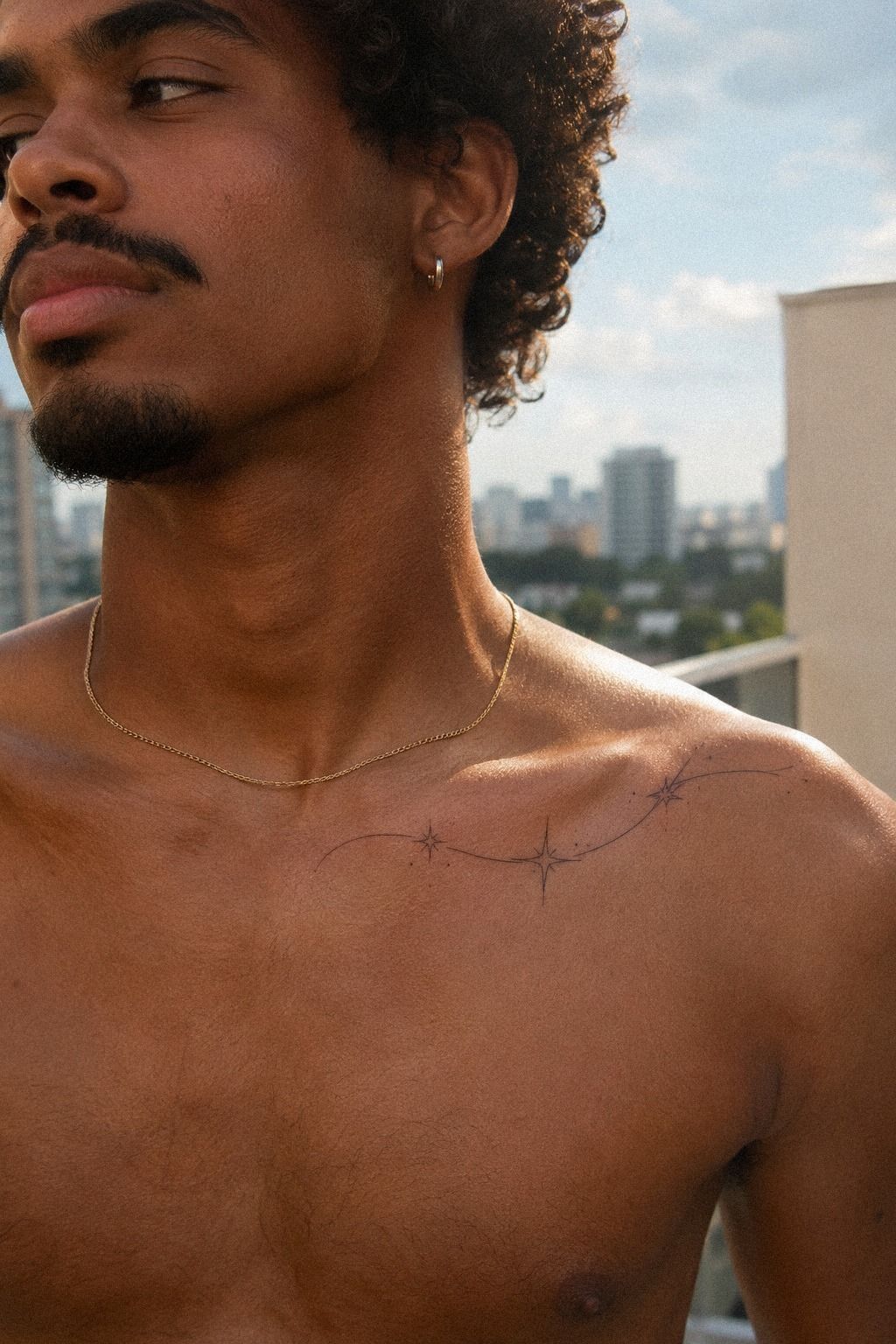
A collarbone design works best when it follows your anatomy instead of sitting like a separate sticker. Collarbone placement can give a terracotta, olive, or charcoal line a graceful direction without forcing the design into a rigid shape.
Readability Before Detail
The most striking delicate tattoos aren’t the ones with the most marks. They’re the ones that remain readable at their intended size. Before you approve the design, step back and ask whether the central idea is still clear.
Your artist may suggest removing a border, widening a gap, or simplifying a curve. Those edits can feel disappointing at first. They’re often what makes the final tattoo crisp instead of muddy.
A placement stencil lets you test the scale, angle, and visibility. Move your arm, sit down, and check how the design shifts with your body. Don’t approve a position only because it looks good while you’re standing still!
What Will It Cost?
Tattoo cost depends on the artist, region, placement, size, detail, and appointment length. A tiny design may still meet a studio minimum. A custom drawing may also add planning time before the session.
Ask for the full expected price, deposit rules, touch-up policy, and revision limits. A clear answer helps you compare value. The lowest quote isn’t always the lowest final cost if you need major edits or an early touch-up.
Your budget should include aftercare supplies and possible maintenance. Fine-line work can be durable, but fingers, hands, feet, and high-friction areas may need more attention. Plan for the whole experience, not only the initial number.
Is Fresh Ink the Finished Result?
Fresh ink often looks darker and sharper than healed work. The surface can settle over several weeks, while deeper skin continues recovering longer. That’s why healed tattoo photographs matter when you’re choosing an artist.
Look for healed examples with similar line weight, placement, and skin tone. Ask how the artist handles fading, spreading, and touch-ups. A realistic answer is a sign of professionalism, not a reason to panic.
Aftercare should follow your artist’s instructions. Wash gently, avoid picking, protect the area from friction, and wait until the surface heals before using sunscreen or swimming. Keep the routine simple!
Your Placement Has a Voice
Placement changes how a symbol feels. A wrist tattoo can be open and visible. A rib tattoo can feel private.
A collarbone tattoo can feel elegant and direct. The same drawing won’t communicate the same way everywhere.
Think about work, clothing, movement, sun exposure, and how often you want to see the tattoo. Daily friction can affect hands and fingers more than protected areas. That practical detail belongs in the creative decision.
You don’t need to choose the most hidden or most visible spot. Choose the placement that supports the meaning. A personal tattoo can be seen every day, or it can remain yours alone.
The Quiet Ink Principle
Delicate linework tattoos aren’t judged by how much detail they contain. They’re judged by whether the detail has somewhere to go.
A design can look thoughtful on paper but feel nervous on skin when it has no clear focal point. I’d remove half of it if every mark competed for attention.
The pieces I keep noticing are the ones with a strong decision behind them. One small animal.
One imperfect flower. One line that refers to a place only the wearer remembers.
That kind of restraint isn’t timid. It’s powerful because you’re trusting the viewer not to receive the whole story.
Artists should talk honestly about aging. Fine lines can spread, especially with sun exposure, friction, and difficult placements.
That doesn’t make the style a bad choice. It means you should ask for healed photographs, discuss scale, and understand that your tattoo will become part of your living skin.
Your skin tone, body movement, and daily routine matter as much as the reference design. A crisp mark on paper may need fewer interior lines on your hand.
A soft grey detail may need stronger contrast in another placement. There’s no universal formula, and that’s good.
If I were choosing today, I’d pick the smallest design that still carries the full feeling. Not the smallest possible tattoo, but the smallest one that remains readable, personal, and expressive after the novelty fades. That’s where delicate linework becomes timeless instead of merely trendy.
The Questions Worth Answering First
How much does a delicate linework tattoo usually cost?
A delicate linework tattoo usually costs about $50 to $100 at a boutique minimum, while hourly rates often run about $100 to $250 in the US. Your final price depends on the artist, region, size, placement, and detail. Ask for a written estimate before paying a deposit.
Are delicate linework tattoos a good idea for a first tattoo?
Yes, delicate linework tattoos can suit a first appointment because smaller designs and placements such as the forearm, thigh, or shoulder may feel more manageable. A clear symbol can also help you choose something meaningful without committing to a large composition. Start with an artist who explains scale and aftercare clearly.
How do I choose a tattoo artist for delicate linework tattoos?
Choose an artist by reviewing healed portfolio images, clean linework, and work on skin tones similar to yours. Healed photographs matter because fresh tattoos can look sharper than they will after recovery. You should also ask about studio hygiene, deposits, revisions, and the artist’s preferred style.
How much do delicate linework tattoos hurt?
Pain varies by placement, but ribs, feet, hands, and sternum are often more sensitive than the forearm, thigh, or shoulder. Your comfort level matters too, so tell your artist if you need a pause and avoid scheduling when you’re exhausted. Eat beforehand and follow the studio’s preparation advice.
How long does a delicate linework tattoo take to heal?
The surface usually heals in about 2 to 3 weeks, while complete healing can take about 2 to 3 months. Gentle aftercare means washing carefully, moisturizing as directed, and avoiding sun and swimming while the surface is healing. Contact your artist if anything seems unusual.
What’s the best placement for delicate linework tattoos?
The forearm, thigh, shoulder, and upper arm are practical choices because they’re often more tolerable and easier to protect from friction. Your best placement depends on visibility, movement, sun exposure, and whether you want the design to remain private. The right location should support both meaning and maintenance.
Where I’d Start First
If I had to pick one, I’d start with the small wrist constellation. It stays personal, reads clearly with minimal detail, and gives you an easy way to test the design before committing to a larger piece. Pin it for later and browse these delicate small wrist tattoos for a cleaner direction.