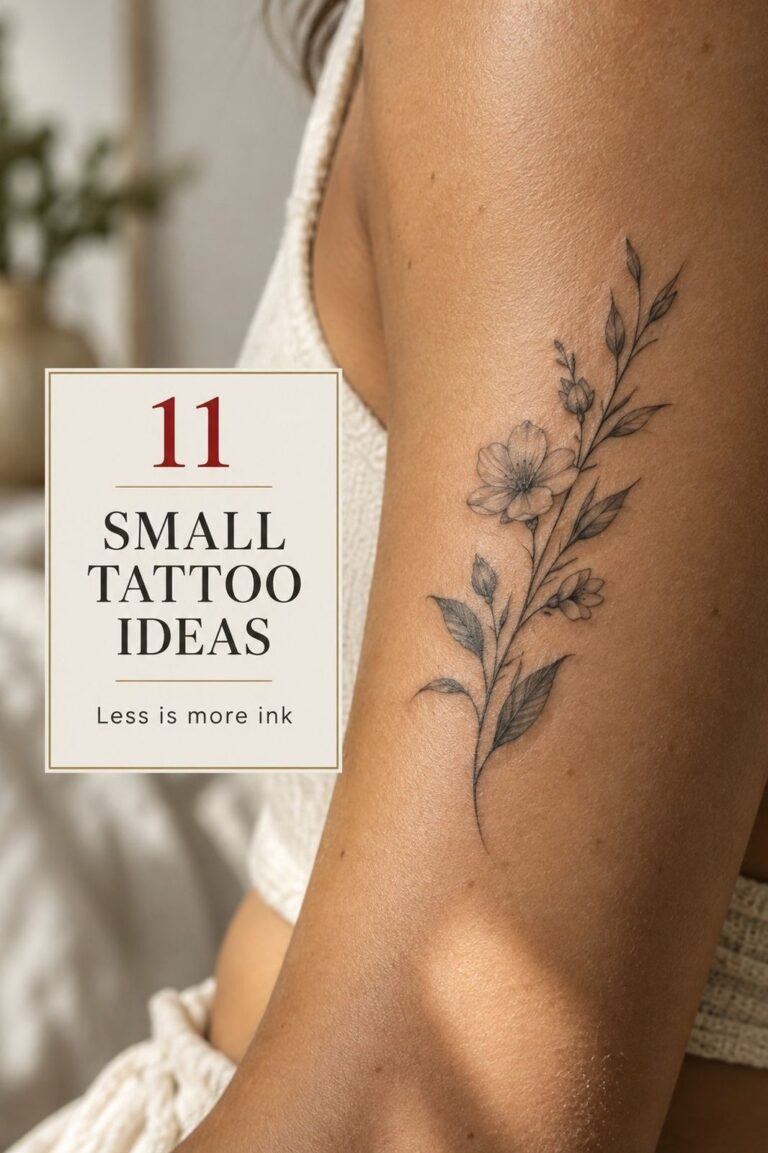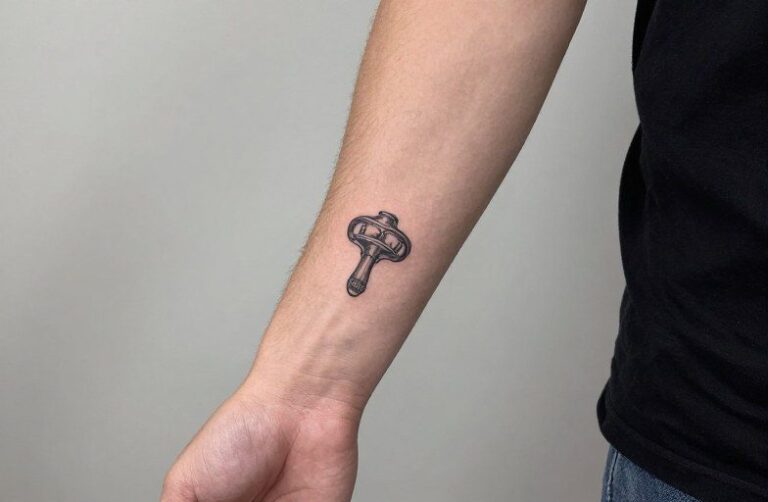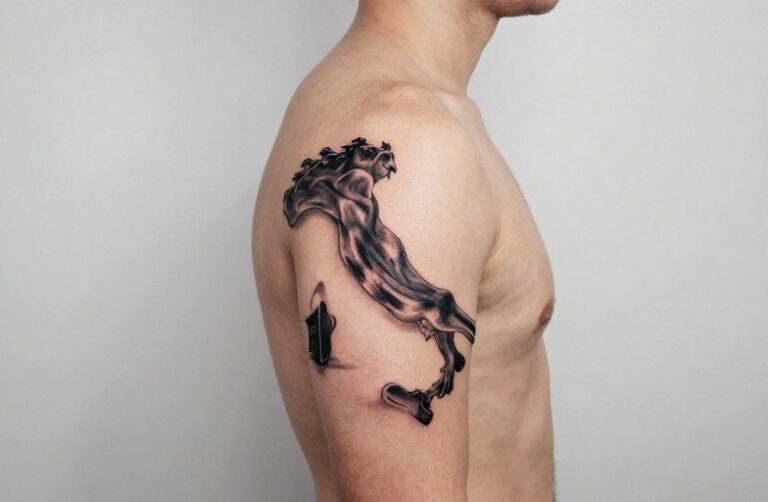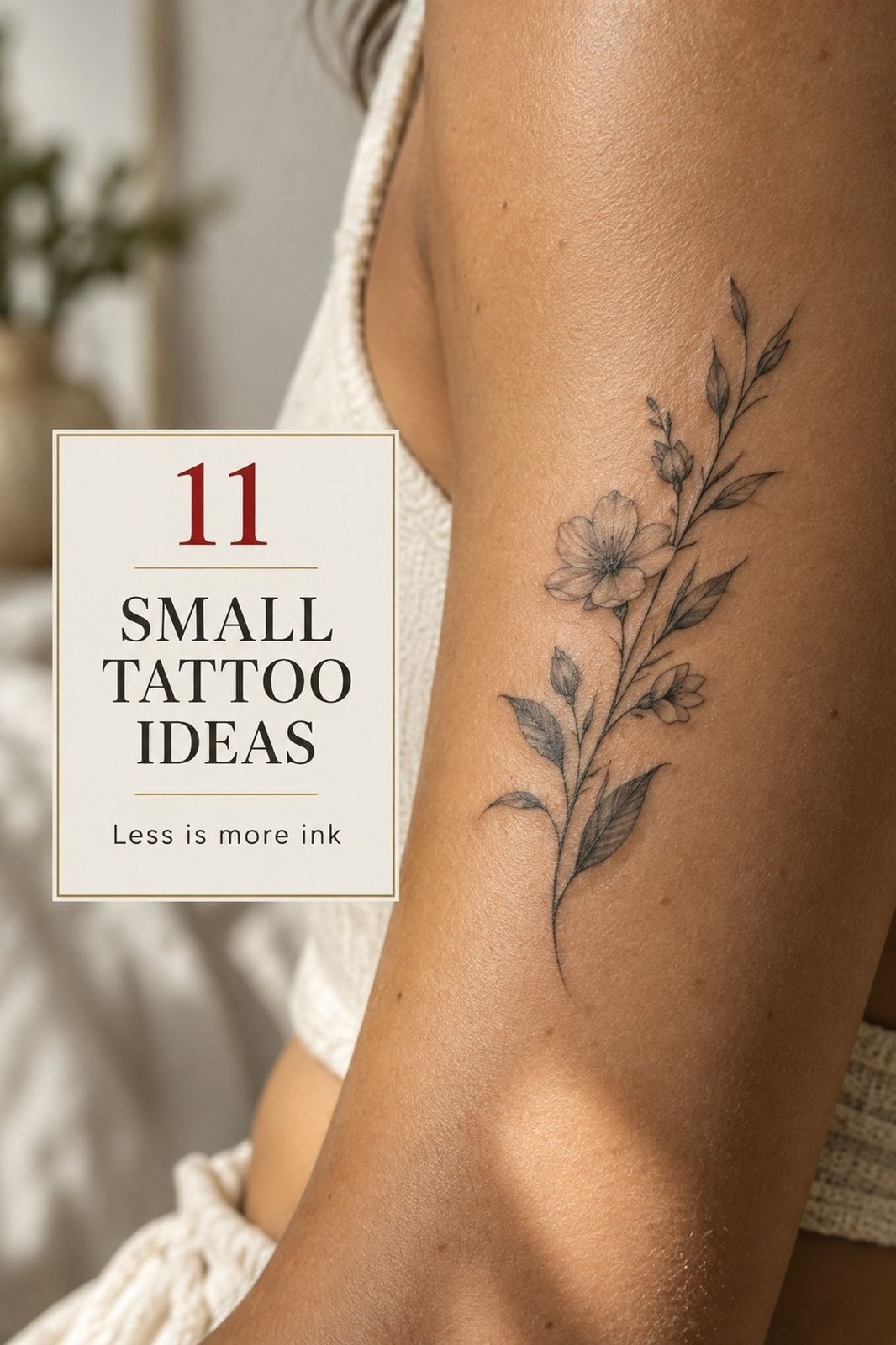
Minimalist tattoos strip away the noise. For men, that restraint works because it forces every line to carry weight. A single needle tracing a mountain ridge on a forearm, a Roman numeral tucked behind the ear, a geometric wolf reduced to triangles on the ribs, these designs read as intentional, not unfinished. The challenge is not finding something simple. It is finding something simple that will not blur into a smudge or look like a stock image in five years. What follows covers what works on male skin, where to place it, and how to keep the design yours.
Choosing the Right Placement
Flat Skin Holds Fine Lines
Small tattoos need stable surfaces. The outer forearm, upper chest just below the collarbone, the side of the calf, and the upper back between the shoulder blades hold fine lines better than fingers, feet, or the inside of the wrist, where constant flexing accelerates blowout. The ribs work for minimalist work only if you commit to touch-ups; the skin there shifts significantly with breathing and movement. For a first piece, the outer bicep or forearm gives you the cleanest heal and the easiest aftercare access.
Think About Visibility Over Decades
A tattoo on the hand or throat announces itself immediately. That is fine at twenty-five. At fifty-five, in a professional context, the same placement may feel different. Minimalist work has the advantage of being easier to conceal, but placement still shapes how the piece ages in your life. The upper arm, back, and ribs stay hidden in standard dress. The forearm and calf offer partial control. Choose based on the life you are building, not just the mirror you are standing in front of now.
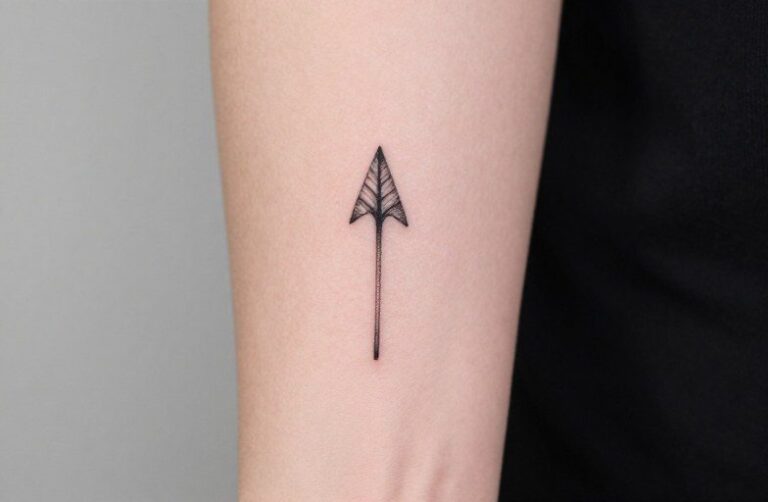
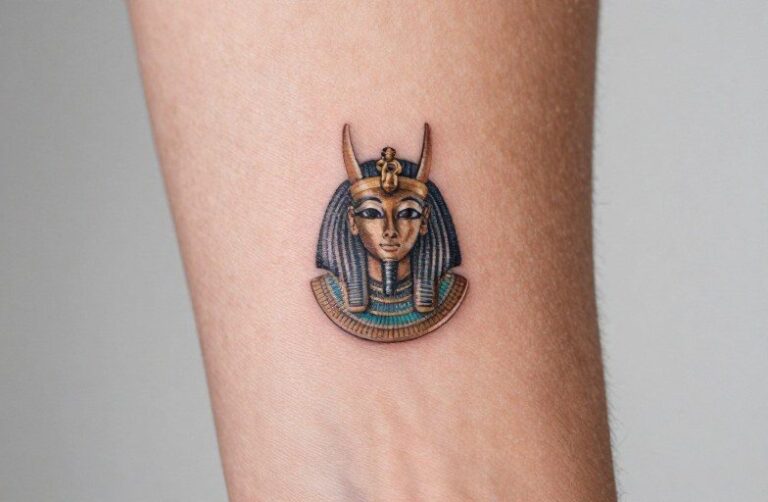
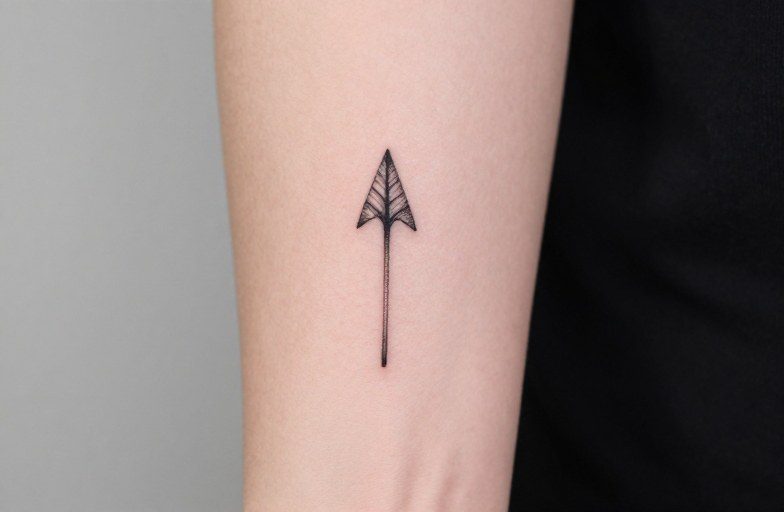
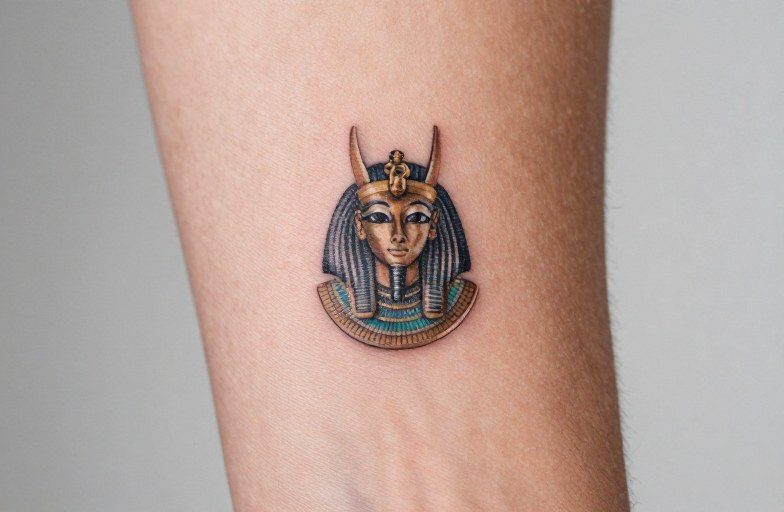
Related reading: minimalist forearm tattoo | mens small tattoos with meaning | small arrow tattoo meaning | small Egyptian tattoo ideas
Designing for Longevity
Line Weight Matters More Than You Think
Single-needle tattoos look crisp on day one. The problem is longevity. Lines below roughly 0.5mm tend to spread and soften over time, especially on oilier skin or areas with sun exposure. Ask your artist to build minimal designs with a mix of line weights, hairline details supported by slightly heavier outlines that anchor the composition. A geometric animal, for instance, needs those outer triangle edges at 0.7mm or above while internal details can stay fine. This is not about going bold. It is about engineering the tattoo to age the way the design intends.
Black First, Color Later
Color minimalist tattoos exist, but black holds its saturation longer and heals more predictably. A first piece should remove as many variables as possible. Black line work on light to medium skin tones shows the truest contrast. On darker skin, the same principle applies but with adjusted line weight, slightly heavier to ensure visibility as the tattoo settles. Discuss this explicitly with your artist. Experienced practitioners adjust needle depth and pigment load for melanin-rich skin rather than applying the same formula universally.
When Color Becomes Necessary
Some subjects need color to read correctly. A minimalist rose without red loses its identity; it becomes a generic flower. If you commit to color, limit the palette to two tones maximum. A red accent on an otherwise black design draws the eye without fragmenting the composition. Blue works for water imagery, for nautical pieces, for certain geometric work that references technical drawing. Green tends to be more unpredictable in small scale; some formulations spread or shift tone over time. Ask your artist which specific pigments they use and how those have healed in their previous work.
Making It Personal
Coordinates Over Symbols
Anyone can get an airplane. The coordinates of the airport where you first landed alone, rendered in clean sans-serif numerals along the inner forearm, that is specific without being literal. Birth dates in non-Gregorian calendars, the exact time of day in 24-hour format, Morse code for a name: these formats let you carry private meaning in publicly readable form. The key is choosing a typeface that matches the mood. Monospace fonts read technical and modern. Hand-drawn lettering, even when minimal, softens the edge.
Abstract the Familiar
A family dog becomes a single continuous line drawing that captures the ear shape and tail angle. A childhood home reduces to its roofline silhouette. Your grandfather’s handwriting, traced from an actual letter, becomes a three-word phrase on the ribs. The personalization lives in the source material, not in explaining it to everyone who asks. The best minimalist tattoos for men operate on two levels: immediately readable as clean design, privately loaded for the wearer.
Matching Without Mirroring
Brother tattoos, father-son pieces, or matching ink with a partner work best when the connection is structural rather than identical. Two brothers might share the same constellation rendered at different scales, one across the shoulder, one wrapping the wrist. Father and son could get the same latitude line, his birth location and yours, placed on corresponding ribs. For couples, avoid the puzzle-piece approach. Try matching line weights and visual rhythm instead of matching images: his a vertical arrow, hers a vertical feather, both drawn with identical stroke weight and equal negative space.
Placement pairing also matters. A forearm piece and a calf piece will not photograph together naturally. If you want the option of revealing both simultaneously, mirror placements work better, left ribs and right ribs, or both outer forearms. For hidden matching, the upper inner arm and the side of the torso both stay covered in standard work attire.
Specific Design Directions
Continuous Line Work
A face rendered in one unbroken stroke, usually profile view, requires an artist who specializes in this specific technique. Not every minimalist tattooer has the confidence or the understanding of negative space to execute it well. The line cannot hesitate. The weight cannot vary unintentionally. Ask to see healed examples, not just fresh photos, before committing.
Negative-Space Landscapes
A mountain range or city skyline formed by the gap between solid black shapes reads as bold from distance and reveals its technique up close. These work best at medium scale; too small, the gaps close during healing. Too large, the minimalist intention dissolves. The upper back or outer thigh gives enough room without demanding excessive detail.
Scientific and Technical Imagery
Chemical structures for meaningful compounds, caffeine, serotonin, dopamine, drawn at small scale with recognizable bond angles. Gear teeth, piston cross-sections, circuit traces. These appeal to men who want technical imagery without the heavy shading of biomechanical style. The rib cage or upper back carries these well. Verify with your artist that they understand the actual geometry; a tattooed molecule is symbolic, but its proportions should still look considered rather than guessed.
Abstracted Fauna
A bear reduced to five triangles. A raven as a single curved beak line with negative-space eye. These carry symbolic weight without literal illustration. The reduction is the art. A wolf made of three lines should still read as wolf, which means the artist must understand the animal’s actual anatomy well enough to abstract it successfully.
Avoid the overdone: infinity symbols with feathers, paper airplanes, compasses with bannered text underneath. The design’s simplicity should come from intelligent reduction, not from choosing the first result on a Pinterest board.
Working With Your Artist
Check Healed Work, Not Just Fresh Photos
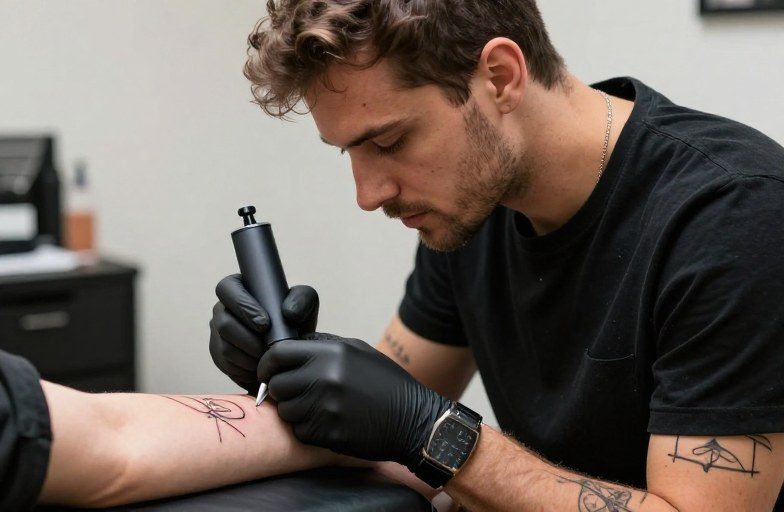
Minimalist tattoos succeed or fail on precision. A single crooked line in a large traditional piece gets lost in the composition. In a minimalist design, that same flaw dominates. Research your artist’s healed work. Instagram and shop portfolios show the best day; healed results, often found in reviews or by asking directly, show the real skill. Ask specifically about pieces two to five years old. Ask about touch-ups. An artist who never sees their work age has incomplete knowledge.
Discuss Skin Tone Explicitly
Your natural undertone affects how black ink reads. Warm undertones can make black appear slightly brownish as it heals; cool undertones keep it truer blue-black. This is not a flaw, just a variable to discuss during consultation. Some artists mix custom blacks with small amounts of blue or violet to counteract warmth. Others lean into the warmth intentionally. The point is intentionality, not defaulting to standard ink out of the bottle.
Ask About Cost Structure
Minimalist work is often priced by the piece rather than hourly, because the session may be short but the concentration required is high. Clarify this before booking. A ninety-minute session of intense focus is not necessarily cheaper than three hours of relaxed work. The skill is in the steadiness of the hand, not the time on the clock.
Aftercare and Aging
Aftercare for minimal work follows standard protocol but with extra attention to sun protection. Fine lines blur faster under UV exposure. Plan to keep the piece covered or SPF-coated for the first year, then maintained with sunscreen long-term. Touch-ups should be expected, not feared. Most minimal pieces benefit from a single refresh at the two-to-three-year mark, especially if placed on high-movement areas.
Moisturize the surrounding skin, not just the tattoo itself. Healthy skin holds ink better. Dry, damaged skin accelerates the fading that makes minimal work look tired. This is basic maintenance, not obsessive care.
What to Remember
Minimalist tattoos for men reward patience in design and honesty about placement. The piece that looks effortless required the most effort to conceive. Start with what matters to you. Reduce until only the essential remains. Then find the hand that can render it without tremor. The result should look complete, inevitable, like it could not have been drawn any other way. That confidence comes from the process, not from the size.
Frequently Asked Questions
Do minimalist tattoos fade faster than detailed ones?
Fine lines spread and soften over time, but smart design slows this. Mixing line weights and avoiding high-friction placement helps minimalist work age comparably to bolder pieces. Touch-ups every few years are normal and should be planned for, not feared.
What is the best font for a minimalist text tattoo?
Sans-serif fonts with consistent stroke width tend to age most cleanly. Monospace fonts read technical and modern. Hand-drawn custom lettering softens the edge. Avoid overly thin weights and decorative serifs that blur together as the tattoo heals. Your artist should be able to adapt or redraw a typeface to suit tattoo application.
How much should a minimalist tattoo cost?
Minimalist work is often priced per piece rather than hourly, because short sessions demand intense concentration. Expect to pay for the artist’s precision and experience, not just their time. A small, clean piece from a specialist may cost more than a larger, simpler design from a generalist. Consultation should clarify pricing before the needle touches skin.
Can minimalist tattoos be covered up later?
This is a significant risk. Light, fine-line work leaves little pigment to work with, making cover-ups challenging. A skilled artist may need to incorporate the existing lines into a darker, bolder design rather than truly hide them. Think of minimalist tattoos as permanent in a way that heavy traditional work is not; there is less room to reverse or redirect.