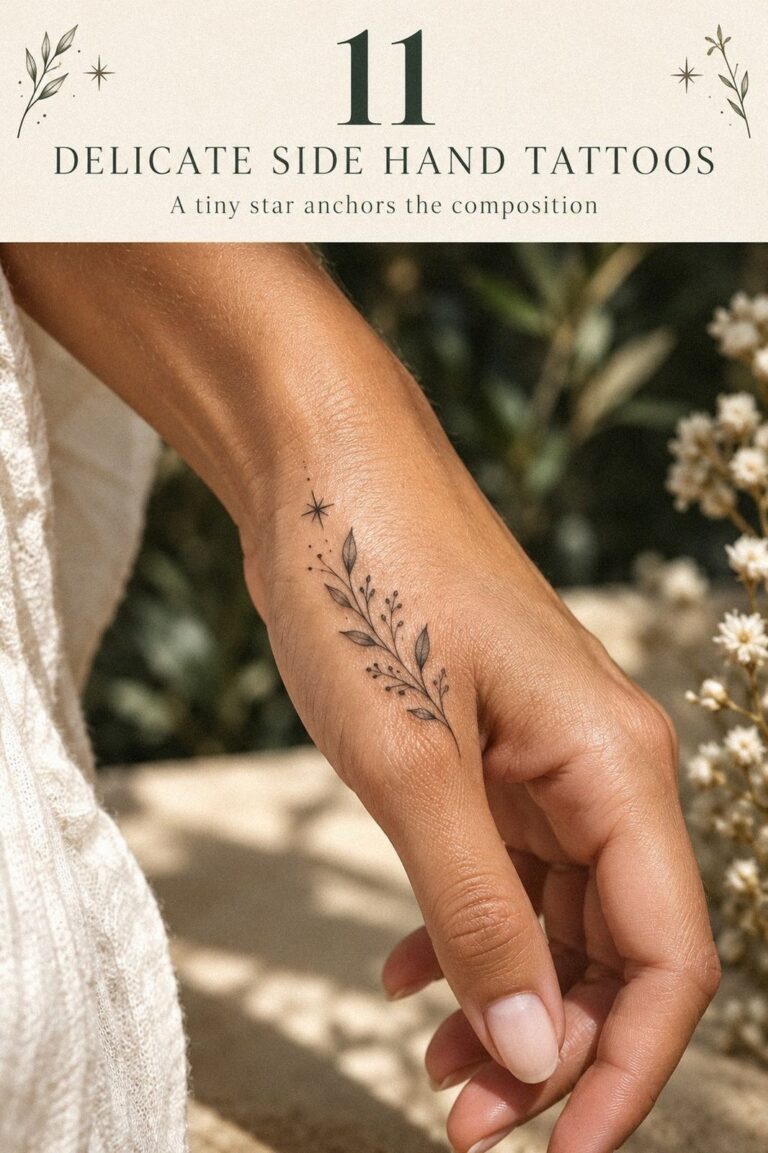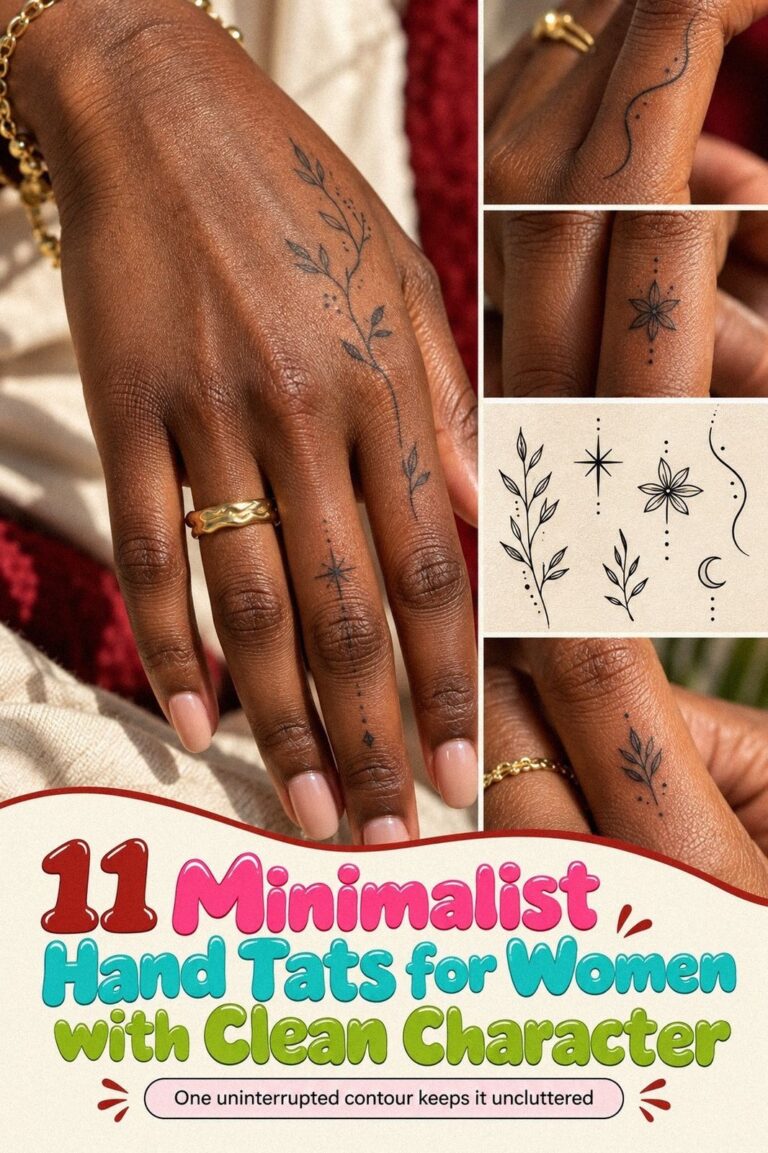
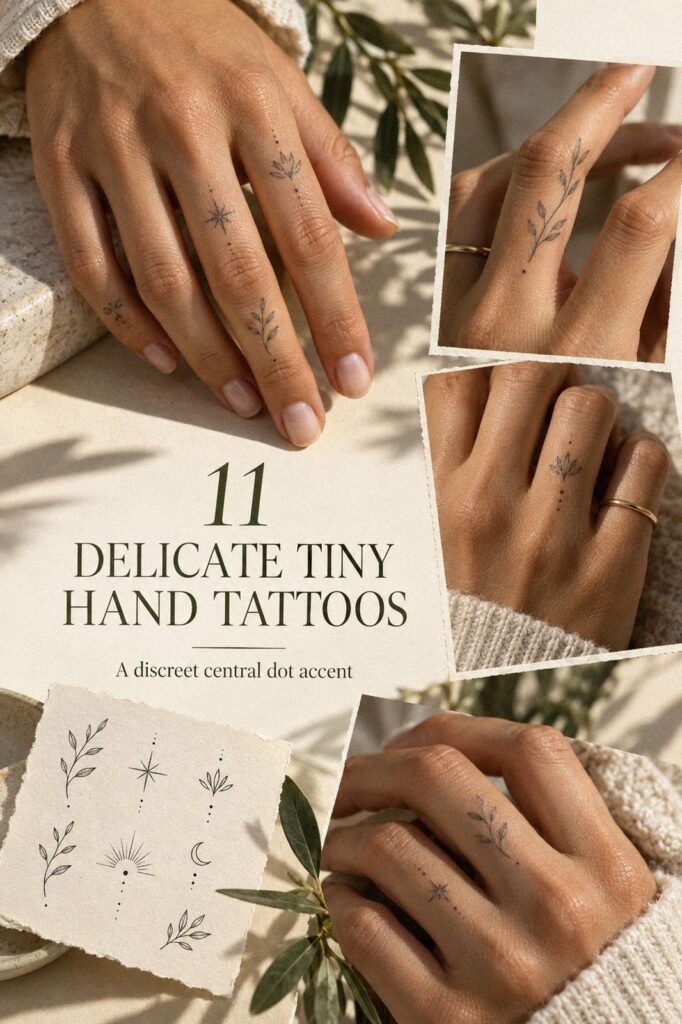
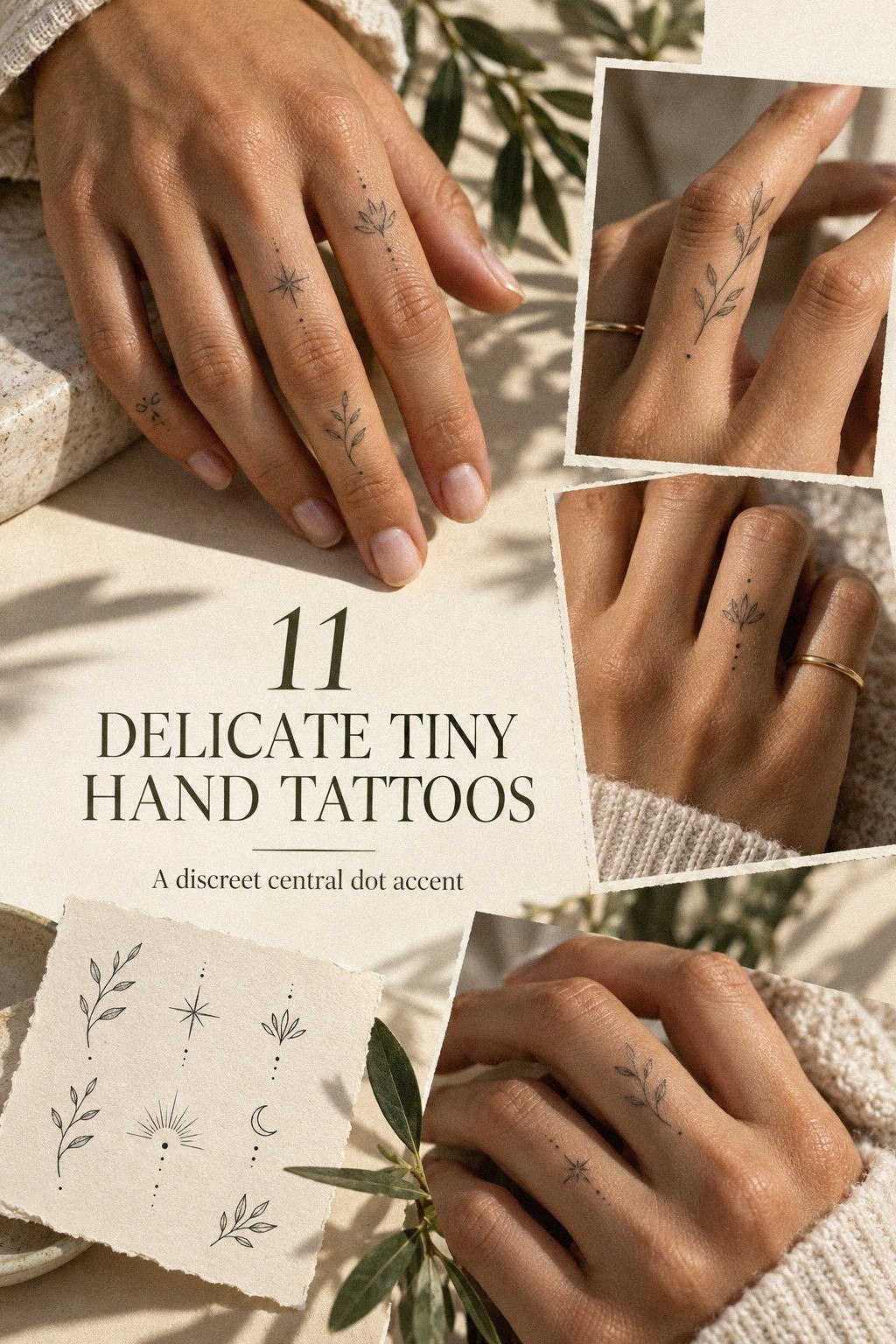
Delicate tiny hand tattoos can look crisp for years when placement, line weight, and aftercare work together. I learned that after choosing a meaningful design that was too intricate for its size. Your first piece can still feel striking, personal, and easy to live with. Start smaller in concept, not in care.
- Start With Tiny Finger Linework
- How Should Handwriting Sit on the Hand?
- Choose a Minimal Botanical Symbol
- Knuckle Symbols: One Mark, Four Decisions
- Build Soft Texture With Dotwork
- Wrist Edge or Center Hand?
- Let Celestial Symbols Stay Simple
- Why Micro Mandalas Need More Room
- An Initial With a Private Meaning
- Color or Blackwork on the Side Hand?
- Matching Marks, Separate Meanings
1Start With Tiny Finger Linework
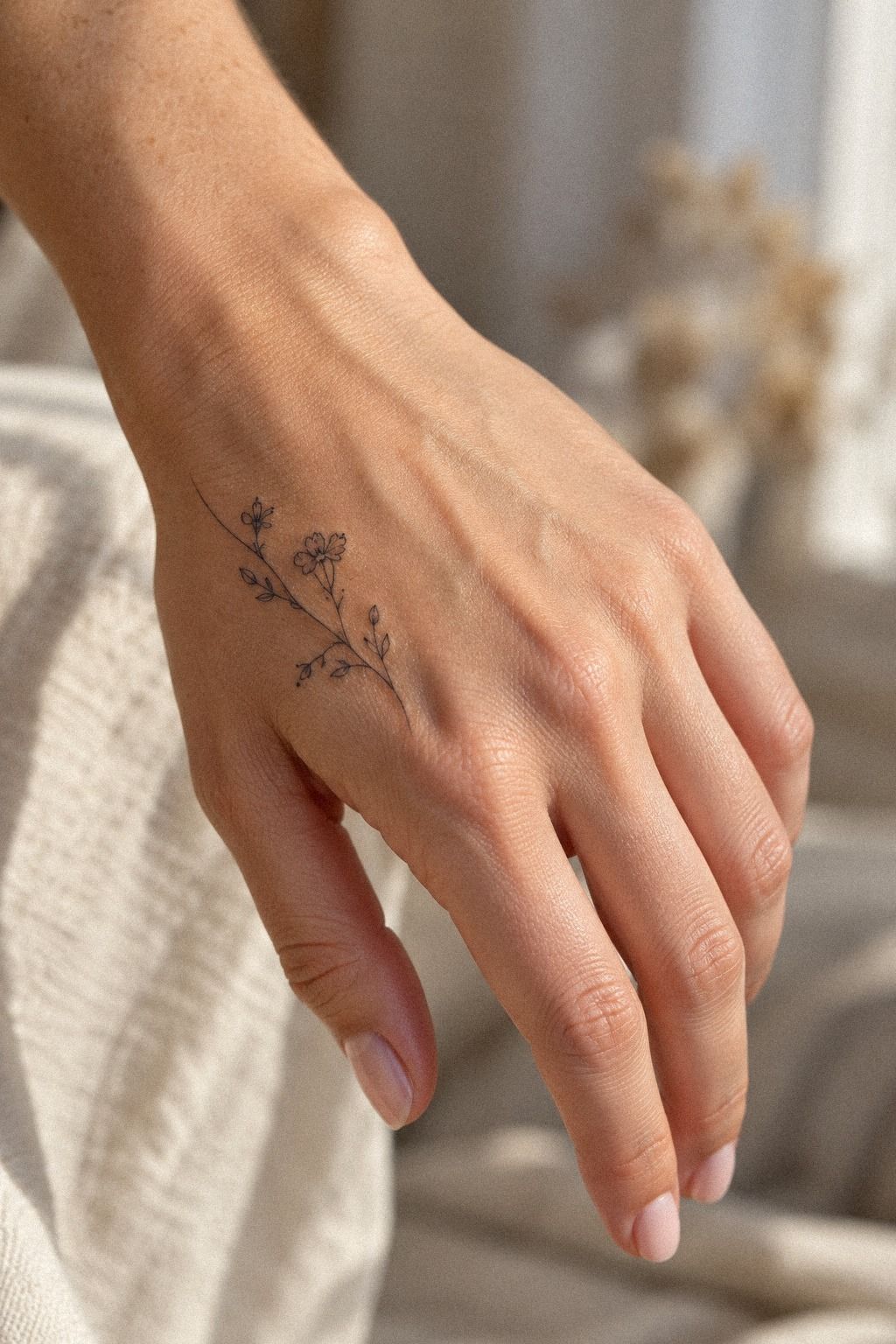
Tiny finger linework is a strong first choice when you want something understated but visible. Ask your artist to keep the design simple, with fine single-needle lines and enough open skin around each mark. A single-needle cartridge can create a sleek result, but your artist should still explain how fine lines may soften as they heal.
You’ll want to choose the side or top of the finger carefully. The side feels more discreet, while the top reads more clearly when your hands are relaxed.
I’d skip a dense symbol here because the narrow placement can make delicate details blur together. A crisp crescent, tiny olive leaf, or short terracotta wave has more staying power.
A finger tattoo also needs a realistic maintenance conversation. Frequent washing, friction, sunlight, and everyday movement can affect how the design settles. Your artist should explain whether a touch-up may be needed later, especially if the finger placement sits on a high-friction area.
Look at healed examples, not only fresh studio work. Your skin may be pink and tender at first, then settle over roughly two to three weeks on the surface.
The complete settling process can take about two to three months, so patience matters. A healed portfolio tells you much more than fresh appointment-day work.
For more small delicate tiny hand tattoos, compare your favorite scale with these small tiny hand tattoo ideas. Bring your reference image, but let your artist adjust the spacing for your hand. That small change can keep the result graceful instead of crowded!
2How Should Handwriting Sit on the Hand?
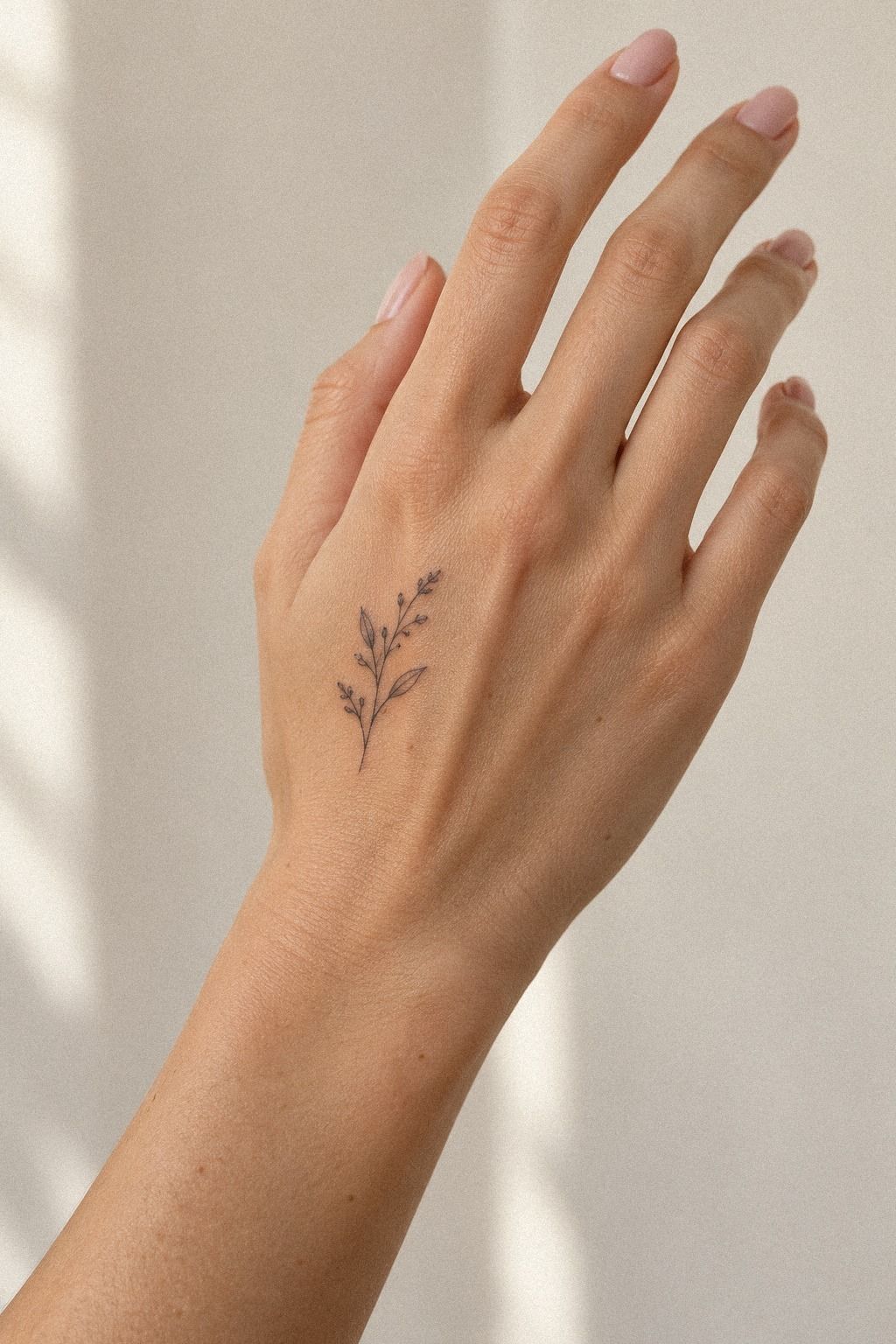
Handwriting tattoos feel intimate because the mark can carry a real voice. A name, date, or short word works best when your artist preserves the irregular rhythm of the original handwritten reference. Typed fonts often look polished, but they can lose the personal quality you’re chasing.
You might place the writing along the side of the hand, across one finger, or near the wrist edge. I’d avoid a long sentence. A single initial, two-word phrase, or copied signature will look more expressive and readable than several tiny lines competing for space.
Before you book, ask to see healed handwriting work on skin with a similar tone and texture to yours. That matters more than a bright social-media post. Your artist should also check whether every loop and letter has enough breathing room, especially if your reference includes thin strokes.
A warm-clay pigment choice can’t rescue lettering that was too cramped from the beginning.
A short phrase can be romantic, empowering, or quietly personal without explaining itself to everyone. I’d choose words you’ll still respect if your style changes. The best value comes from a phrase that means something to you, not one selected only because it looks stylish.
Your hand is visible during ordinary moments, from opening a cup to typing a message. If you want more delicate simple hand tattoos with personal placement ideas, browse this simple hand tattoo guide before deciding. Compare the side-hand placement with the top of the hand before you commit.
3Choose a Minimal Botanical Symbol
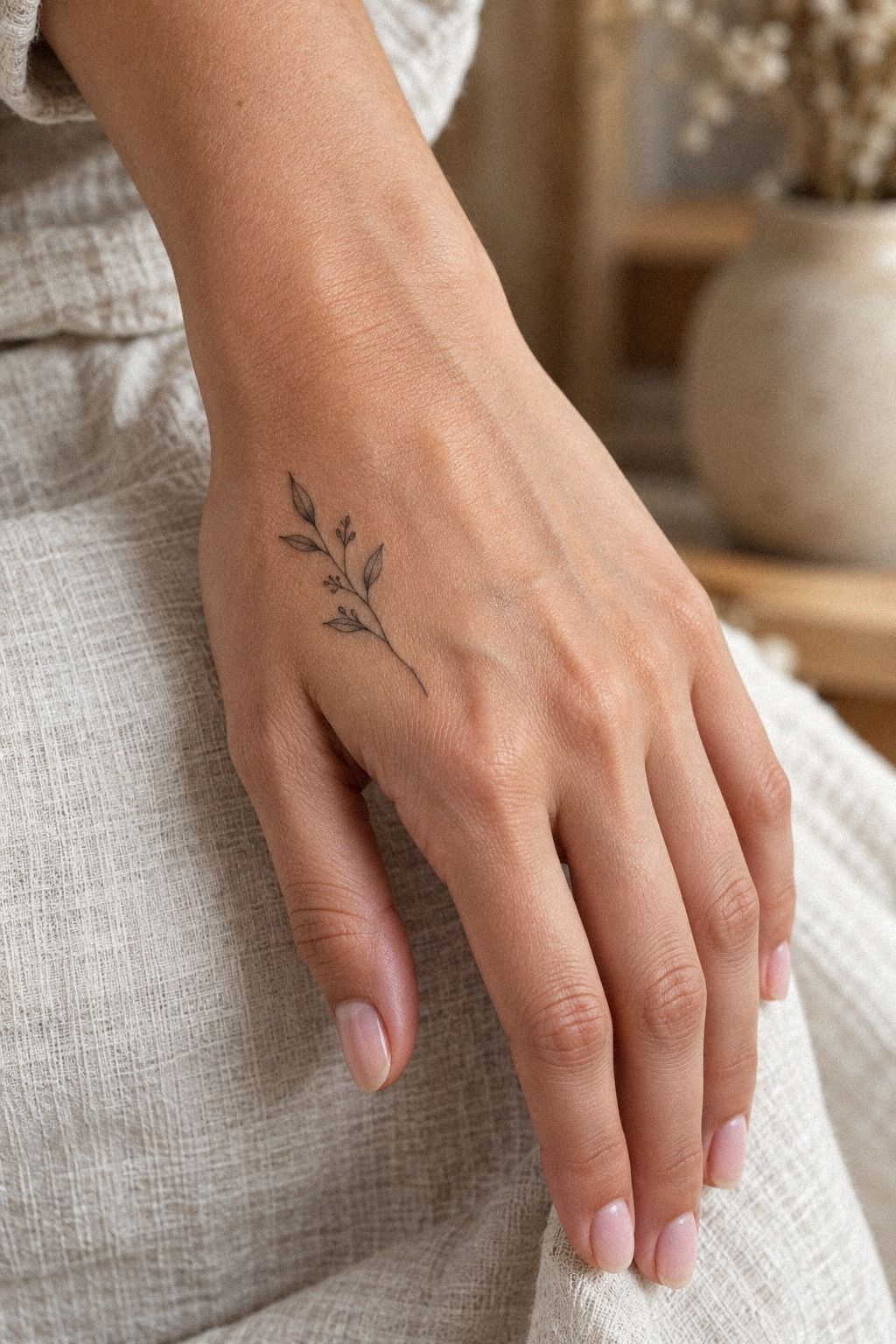
Minimal botanical tattoos give you a symbolic image without requiring heavy shading. A small olive branch, fern, wildflower, or curved leaf can look organic and expressive when the artist leaves the interior mostly open. Deep plum linework keeps the design sharp, while a few grey or rose-gold details can suggest texture.
Your skin tone should guide the contrast and spacing, not limit the design. On medium olive skin, clean plum marks can look bold and elegant when the shape is uncomplicated.
I’d avoid copying an ornate bouquet at miniature scale because the stems and petals can merge into a dark patch. A thoughtful skin tone consultation helps your artist choose stronger proportions.
Choose a plant with a reason behind it. A fern might represent resilience, a sprig might recall a place, and a single flower can carry a personal memory without becoming obvious to everyone. That meaning will keep the tattoo relevant after the novelty fades.
The best botanical design has one focal point. It might be a curved stem, a pointed leaf, or one expressive bloom. If every petal receives equal attention, the result can lose its graceful rhythm.
Open spacing is what keeps the symbol delicate rather than busy.
You’ll still need to protect the result from strong sun, especially because fine lines can widen or soften over time. Your artist can recommend tattoo aftercare, and you’ll want gentle washing, light hydration, and no swimming while the surface heals.
For more options, see these small simple hand tattoos with similar open spacing. A small botanical mark is often worth the cost because its identity survives even when you remove extra decoration. That kind of restraint feels timeless.
4Knuckle Symbols: One Mark, Four Decisions
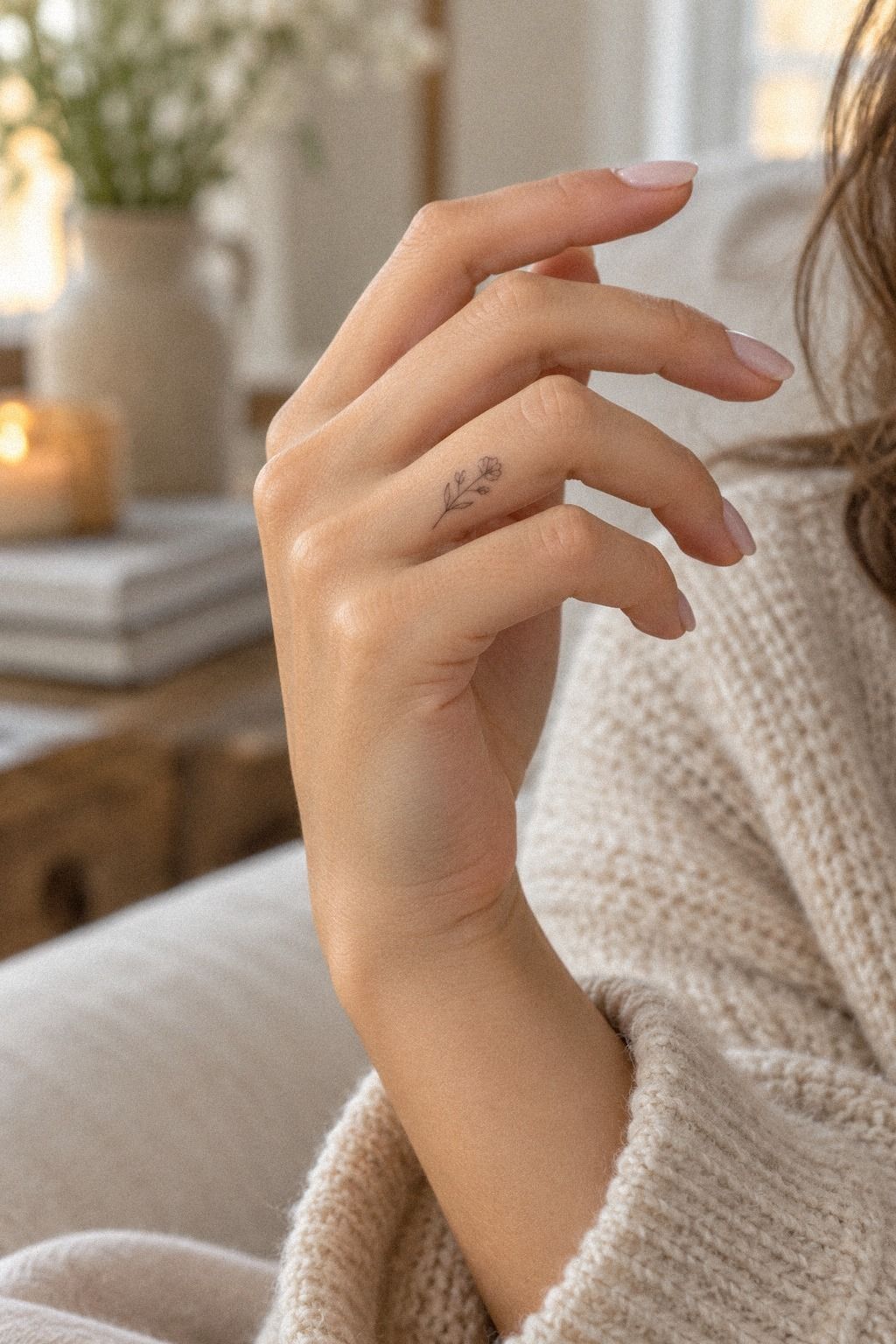
Knuckle symbols work when each finger receives one small mark that feels complete on its own. A navy star, white crescent, or walnut-toned symbol can feel personal without making the four marks look overly coordinated.
5Build Soft Texture With Dotwork
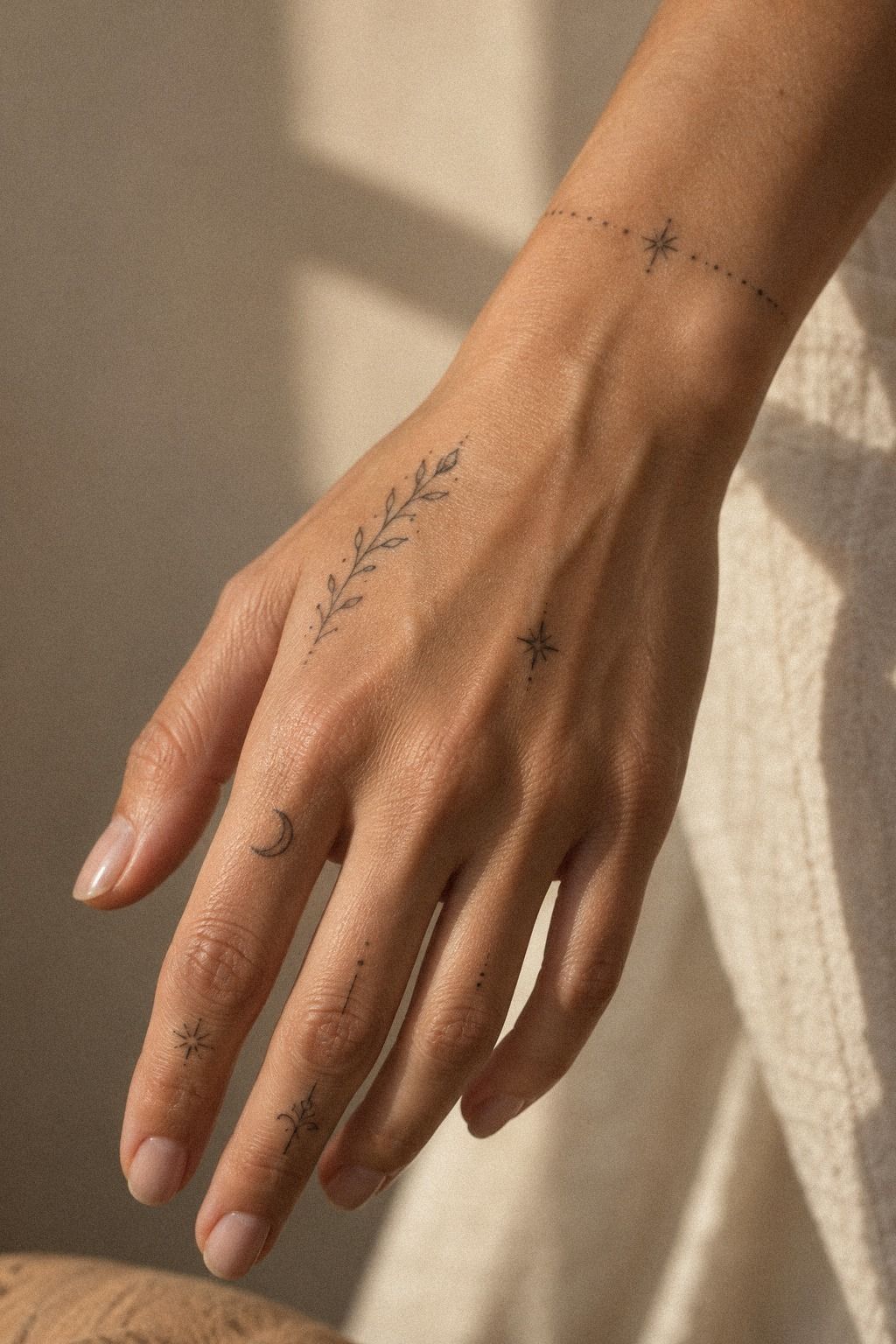
Fine dotwork gives a tiny tattoo a soft, textured quality without filling every inch with solid pigment. A small moon, eye, or flower can feel intricate without looking heavy when the artist uses controlled spacing. Deep emerald dotwork is especially effective when a restrained gold accent supports one clear shape.
You’ll want to ask how the dots may appear after healing. A cluster that looks airy on paper can appear darker on skin, especially when the design is very small. My preference is a clean outline with dot shading used only in one area, such as beneath a crescent or inside a petal.
A tiny flash design can make your first appointment feel less intimidating. Choose something already composed, then ask whether the artist can remove one detail or open one gap.
That creates a more minimal result and gives the skin space to settle naturally. A flash design can still feel personal when the proportions suit you.
Don’t mistake a flash sheet for a finished stencil. Your artist should adapt the symbol to your hand, skin tone, and chosen placement. The design needs to sit correctly when you move, not only when your hand is still.
The stencil adjustment is often where a good idea becomes a graceful one.
If you’re weighing the price of a custom drawing against a prepared design, ask what the fee includes. A prepared design may fit a smaller budget, while a custom mark can offer more personal value when the symbolism matters. The custom drawing should solve a placement problem, not add detail just to seem special.
For more references, look through these delicate simple hand tattoo designs. Keep your favorite three marked, then choose the one you’d still recognize without its color accent. That’s usually the boldest decision.
6Wrist Edge or Center Hand?
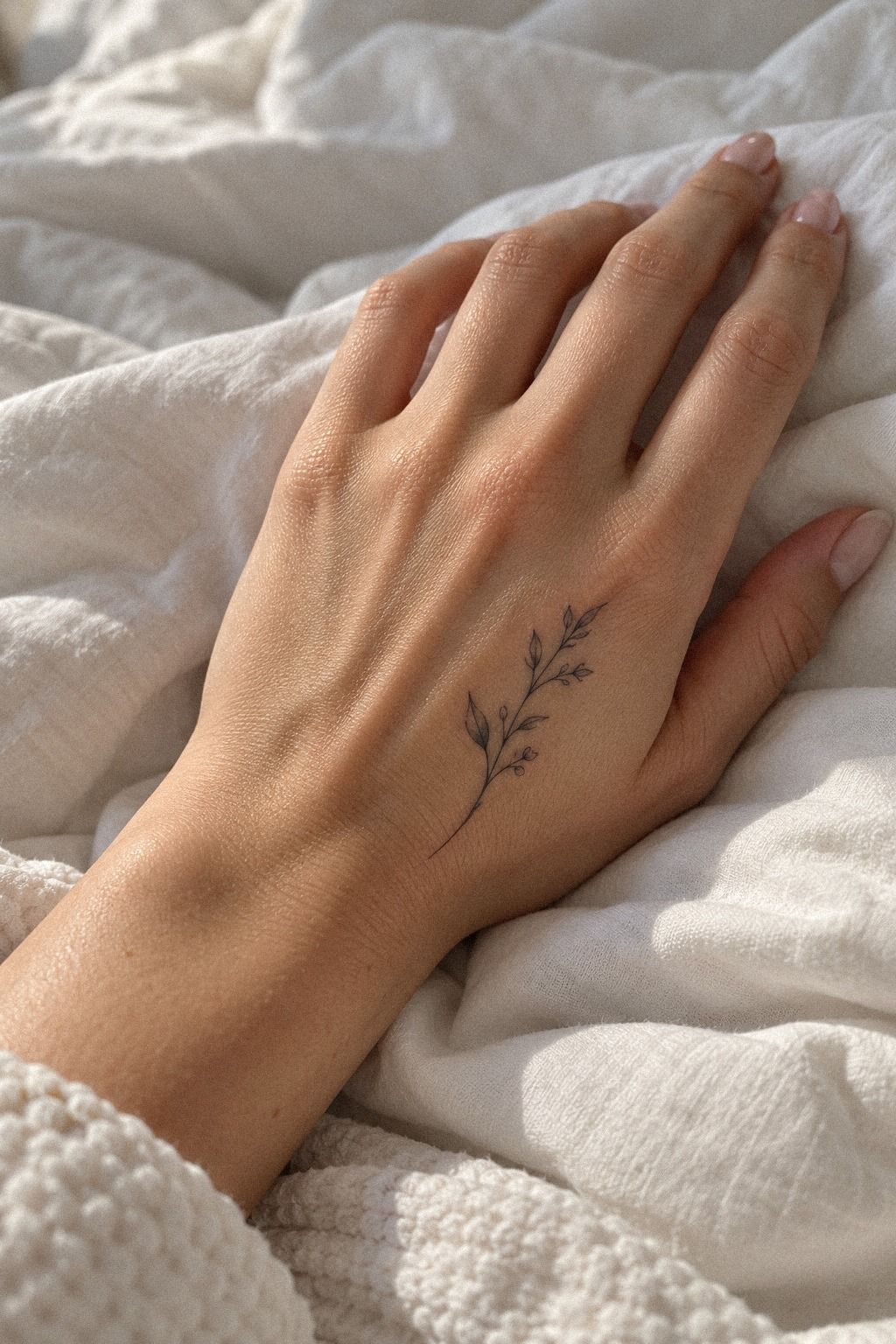
A wrist-edge tattoo offers visibility without putting the design directly across the center of your hand. Fine lines can look graceful here when the design follows the natural edge instead of fighting it. Wrist-edge placement also lets you control how often other people see the mark.
You’ll want to decide whether the tattoo should face you or face outward. A tiny star facing your wrist feels private, while a short forest-green botanical mark facing outward reads more like personal ornament. I’d choose the inward orientation for a first tattoo because you’ll see it during everyday gestures without making it the first thing everyone notices.
Keep the design short enough to avoid wrapping too far around the wrist. A flowing stem, narrow constellation, or small initial can remain elegant with a little open skin. Too much detail makes the edge look busy, especially when bracelets or sleeves move across it.
Wrist skin can experience friction from clothing, watches, and repeated movement. Ask whether the artist recommends a slightly stronger line than they would use on a protected area. Those friction points can affect how long the crisp character lasts.
Your aftercare still matters. Wash gently, moisturize as advised, and avoid sun and swimming while the surface is healing.
If you’re comparing wrist and hand placement, these tiny small wrist tattoos can help you decide which visibility level feels right. A small healing balm may also be part of the studio’s instructions.
7Let Celestial Symbols Stay Simple
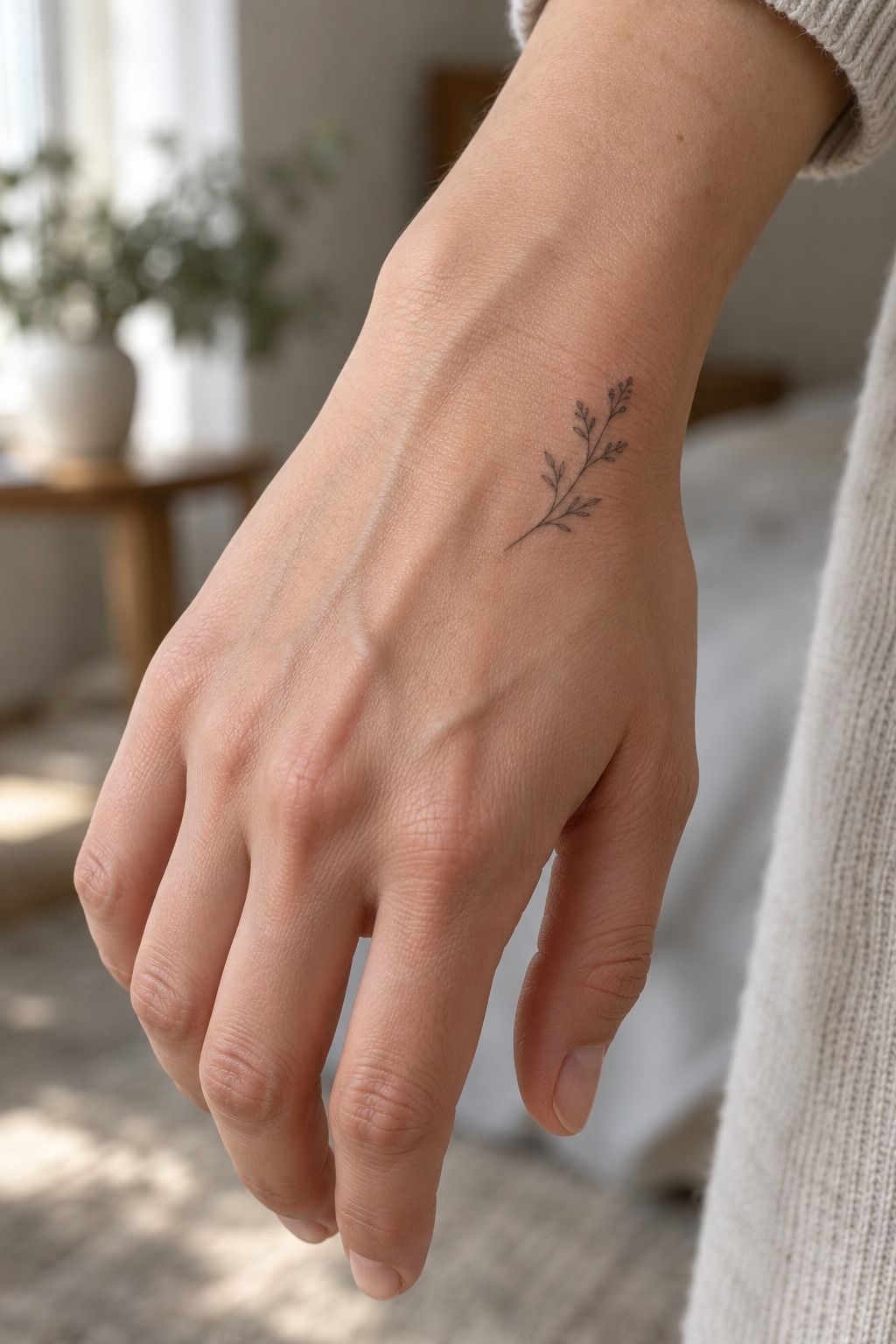
Celestial designs are naturally symbolic, and they can be scaled down without losing their identity. A dusty-rose moon, charcoal star, or small brass-toned sun can feel ethereal while remaining clear.
8Why Micro Mandalas Need More Room
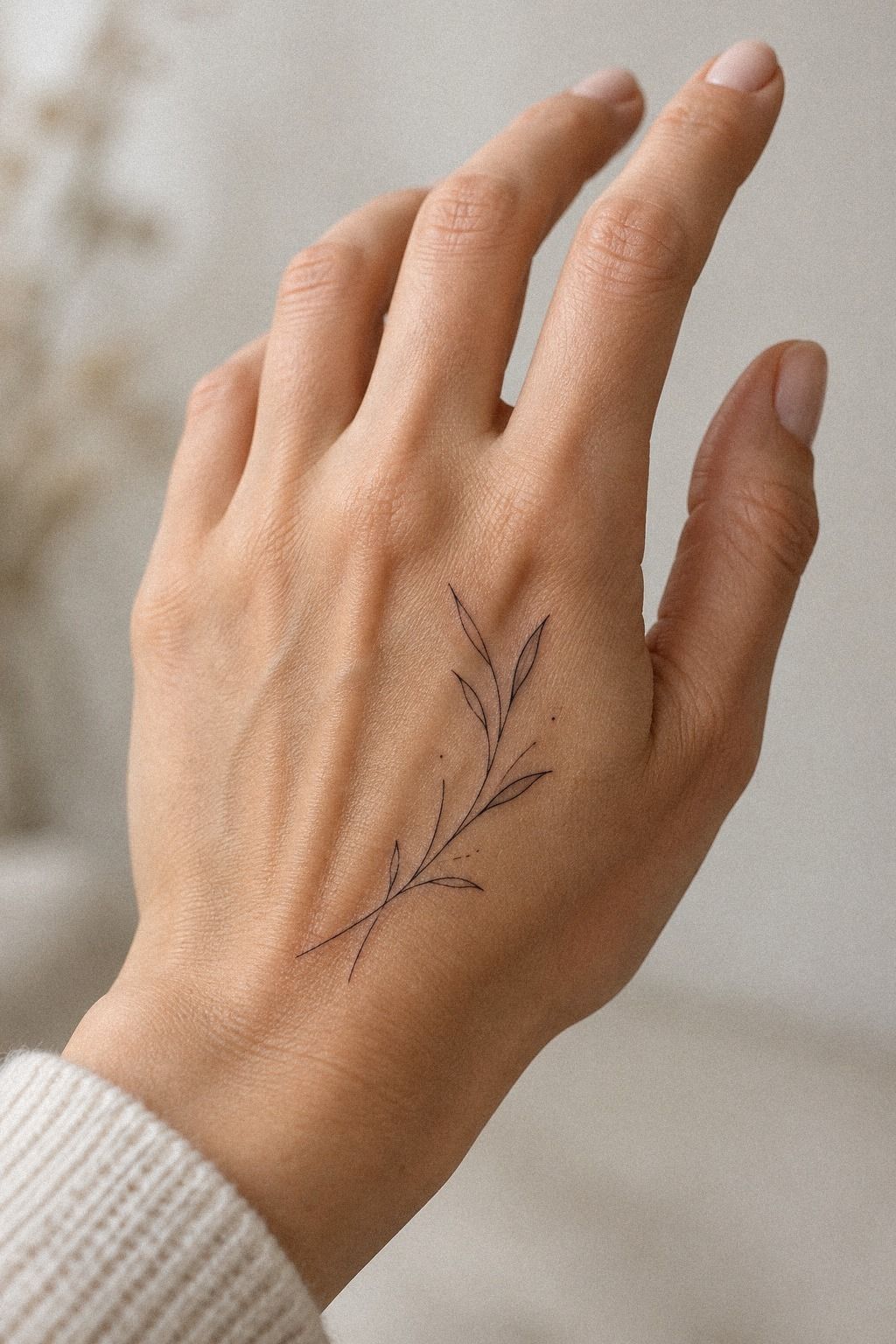
Micro mandalas need more planning than their size suggests. Repeated shapes, circles, and points can look ornate, but they need enough scale for the structure to remain distinct after healing. Geometric blackwork can look powerful when the artist protects the spaces between each layer.
Choose the center first. A tiny mandala near the thumb or wrist edge may need a simpler outer ring than a design placed on a broader area of the hand.
I’d rather see three clear layers than six cramped ones. The design should feel intricate because of its structure, not because every available gap is filled.
Ask your artist how they’ll keep the circle balanced against natural hand movement. I went back and forth on a mandala once because the reference looked flawless on paper but felt too rigid on skin.
The better version had fewer points and a slightly softer outer shape. That center point made the whole design feel more graceful.
A mandala can feel sacred without becoming visually heavy. Give the center one strong shape, leave the surrounding skin open, and let the geometry do the work. That restraint is what keeps the tattoo refined.
Look for exact lines, steady spacing, and healed examples several months old. If you’re drawn to symmetrical designs, compare them with these tiny small spine tattoos for ideas about rhythm, repetition, and vertical balance. Ask how the healed mandala has changed, not just how it looked on appointment day.
9An Initial With a Private Meaning
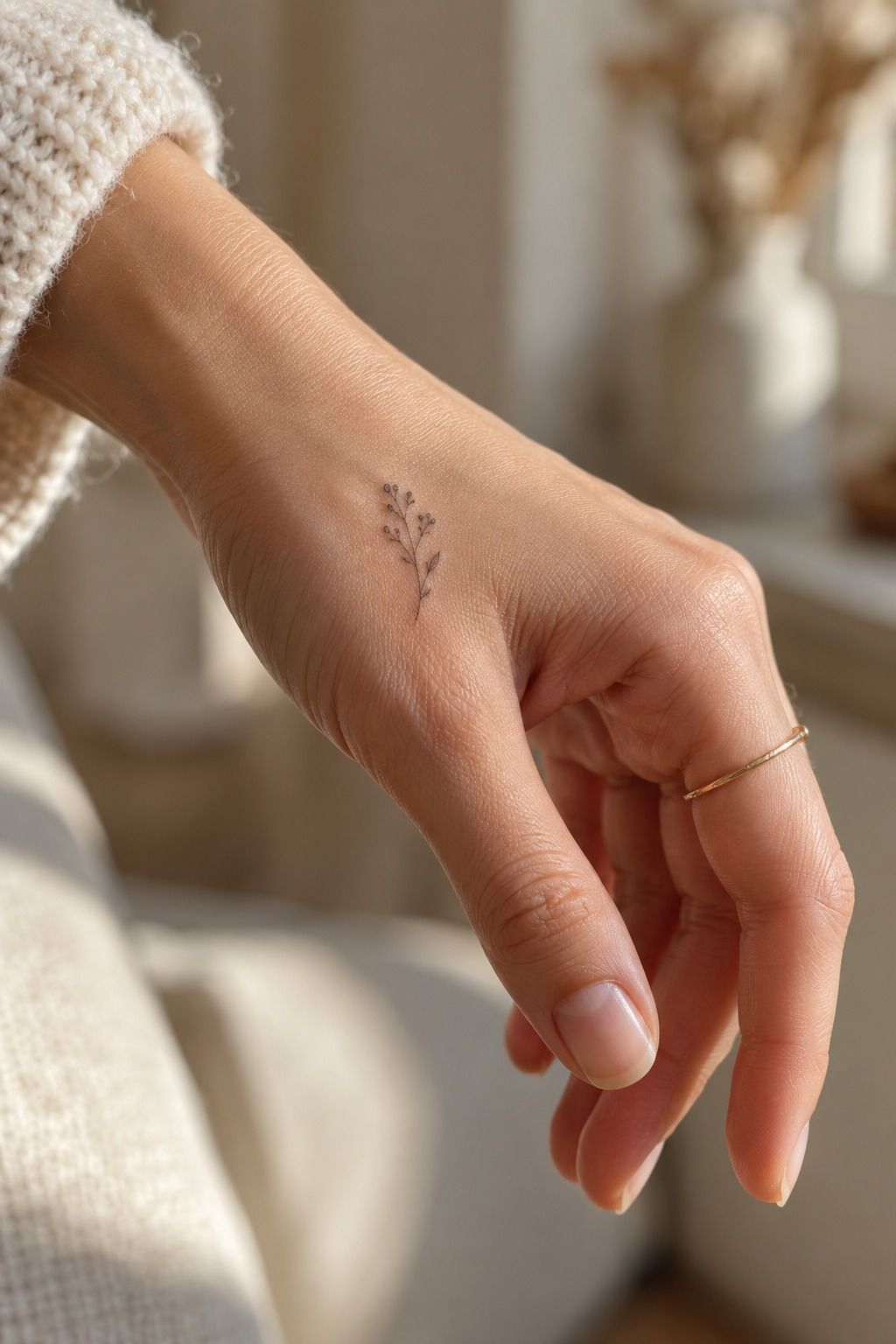
An initial is one of the easiest tiny tattoos to make personal without making it obvious. You can use your own first letter, someone else’s, or a monogram connected to a place or memory. Hand-drawn lettering gives the mark warmth, while a crisp serif or simple script can keep it classic.
Choose the letterform before choosing the placement. A rounded initial may suit the side of a finger, while a sharper letter can sit neatly near the thumb or wrist. I’d skip a complicated calligraphy style if the letter has several loops because small counters can close over time.
Your artist can also turn the initial into a symbol. A tiny leaf through the stem, a small star above the letter, or a restrained circle around it may make the tattoo more expressive.
Keep one detail as the focal point, though. Too many additions can make a meaningful idea look generic.
Think about whether you want the letter to be immediately readable. A deliberately abstract initial can feel edgy and private, while a clear letter may be more direct.
Both can work if the choice is intentional. The private initial doesn’t need to explain itself.
Don’t feel pressured to explain the initial. A personal tattoo can remain private even when it’s visible. If you want more placement ideas, browse these small hand tattoos for women and compare how different letters sit on the skin.
Save references that show the letterform clearly.
10Color or Blackwork on the Side Hand?
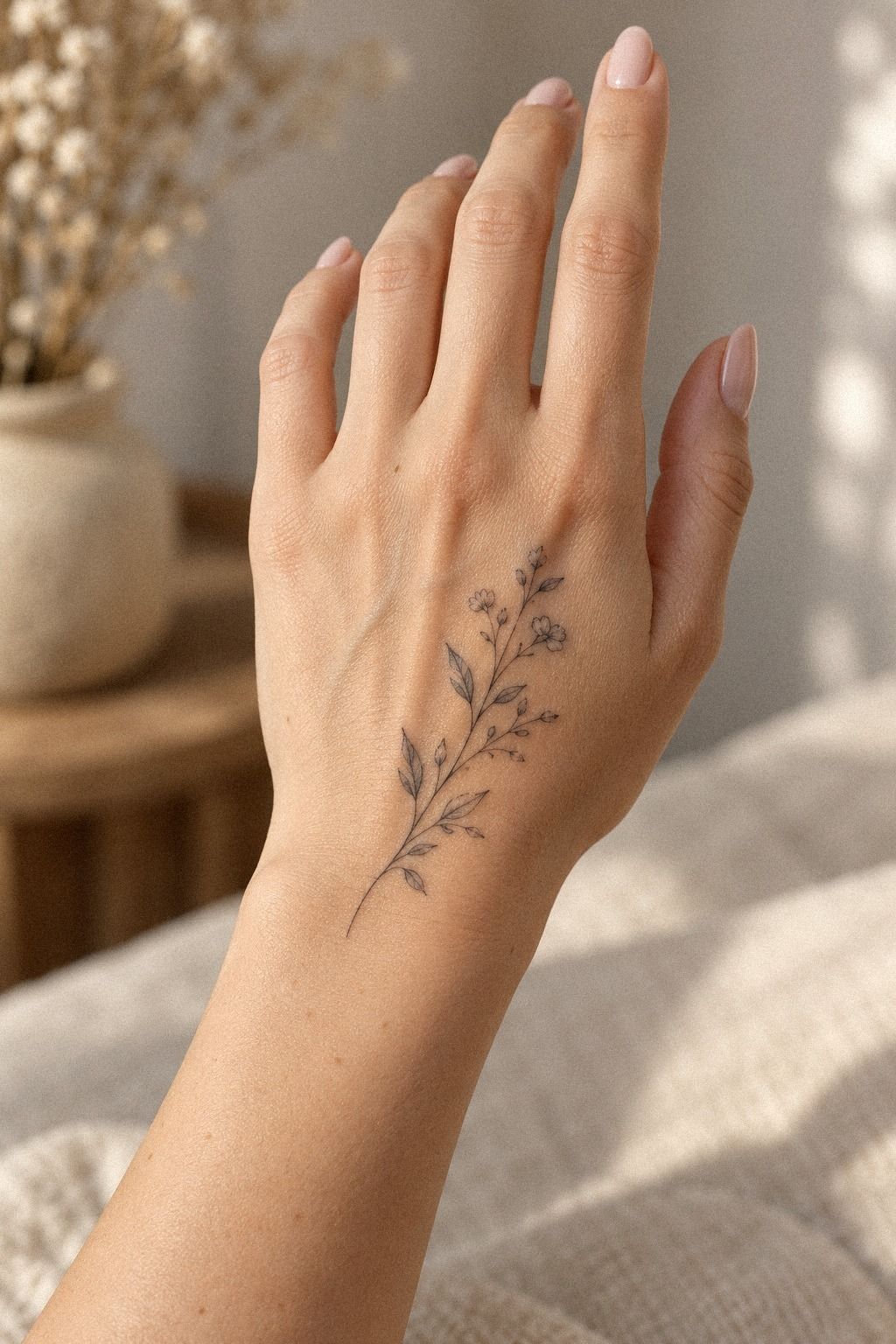
A small sage-green or warm-cream accent can make a delicate hand tattoo feel vibrant without turning it into a saturated piece. A natural-wood brown detail may add contrast while keeping the design understated.
11Matching Marks, Separate Meanings
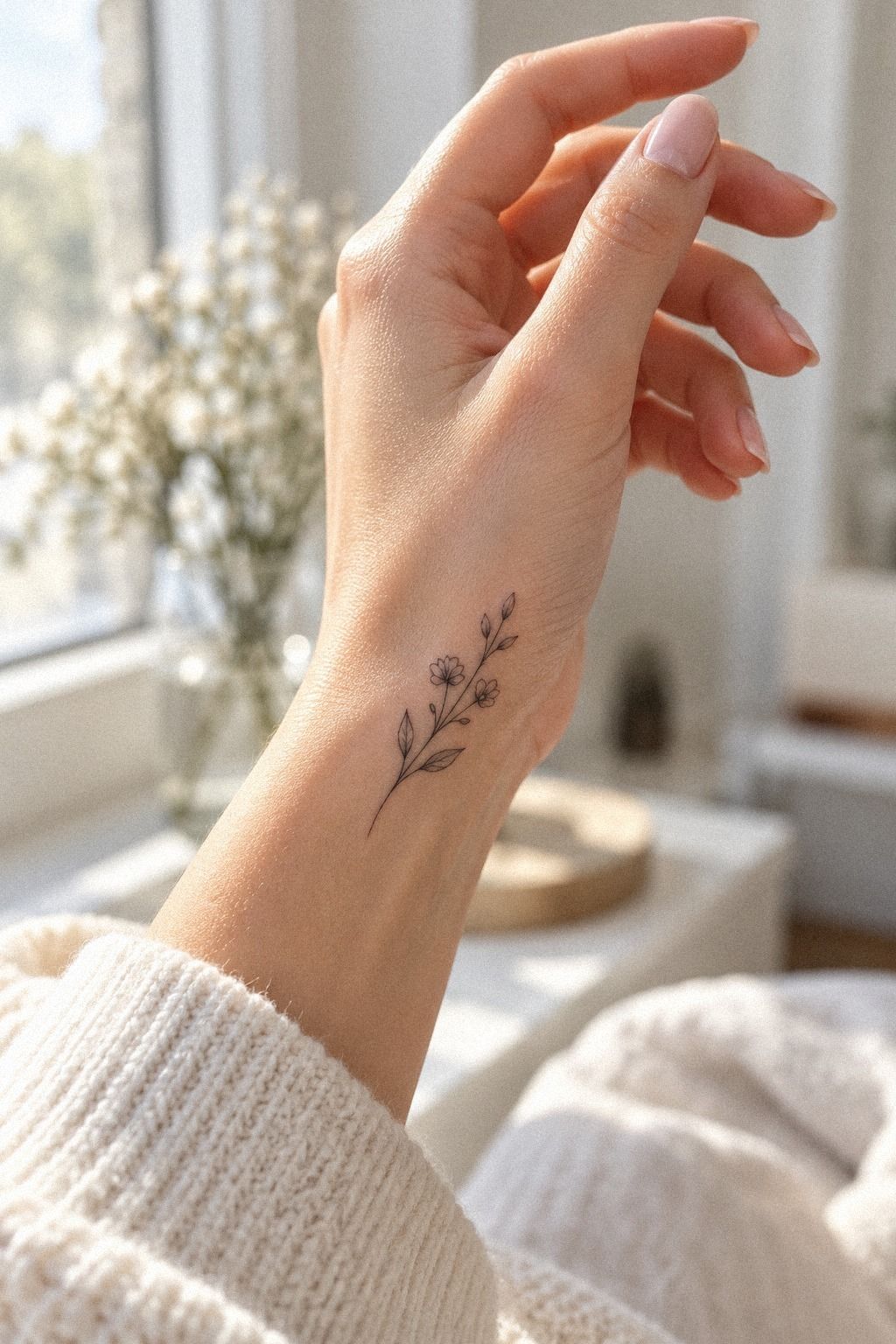
Matching tattoos don’t have to be identical. Couples can share a symbol, split one image across two hands, or choose related marks with different details. Terracotta-and-olive accents keep the pairing elegant, while a small difference makes each tattoo feel personal instead of copied.
Agree on the meaning before you agree on the design. One person might prefer a tiny initial, while the other wants a symbol or short line. I’d skip a large matching phrase because it can limit both placements and make the tattoos feel less individual.
A romantic pairing could use two halves of a star, two connected leaves, or a small sun and moon. The strongest options are expressive but understated, so each tattoo still works when seen alone. Your artist can help with the scale adjustment if your hands have different shapes or skin tones.
You don’t need the same pain tolerance, placement, or level of visibility. If one of you wants something discreet, compare these small simple hand tattoos before booking the same design.
Matching ink should feel like a choice you both still own. That’s what makes the pairing meaningful rather than merely coordinated.
If the relationship changes, the tattoo should still carry a personal meaning for each of you. A matching tattoo can be shared without becoming your entire identity.
What I’ve Learned About Tiny Hand Ink
I used to think a tiny tattoo was automatically an easy tattoo. It isn’t.
The smaller the design gets, the more every decision matters, from the gap between two lines to the direction a letter faces when your hand rests naturally. I’ve seen a striking reference become muddy because someone tried to preserve every detail at miniature scale.
I’ve also seen a minimal symbol become more powerful after half the decoration was removed.
My strongest opinion is simple: choose the artist before you choose the exact picture. Look for healed work, clean line control, and examples on skin tones close to yours.
Fresh work can look crisp, but healed artist work shows whether the artist understands spacing, pigment, and the way fine lines settle. Your first tattoo deserves evidence, not just a polished feed.
I’d also take hand placement seriously. Hands, feet, ribs, and sternum are commonly described as more sensitive zones, while the forearm, thigh, and shoulder are often more tolerable. That doesn’t mean you can predict your experience exactly.
It means you should ask for a realistic session plan and avoid treating discomfort like a test of courage. A clear hand placement plan keeps the appointment grounded.
The cost can vary by artist and region, and many US studios work from a minimum or hourly rate. You may see a boutique minimum around $50 to $100, while hourly pricing often falls around $100 to $250.
Your design may take less time than the minimum, so ask before booking. A clear conversation is part of a good tattoo experience!
The studio minimum may matter more than the number of minutes spent tattooing. Ask whether the quote includes the stencil, consultation, aftercare guidance, and a possible touch-up.
Before You Book Your First Hand Tattoo
Start by writing down the design’s meaning in one sentence. If you can’t explain what makes the idea personal, give it more time. A meaningful tattoo doesn’t need a dramatic story, but it should have a reason beyond copying a striking post.
Next, collect examples that show line weight, placement, and scale. Don’t send twenty unrelated references and expect the artist to guess the common thread. Choose three or four examples that share the same design language.
Check the artist’s healed portfolio before comparing the price. Fresh work can look polished even when the lines later soften or the spacing closes.
Healed evidence is the clearest way to judge whether the appointment will be worth the cost. A healed portfolio is your strongest filter.
Ask about minimums, deposits, touch-ups, and payment timing. A lower quote isn’t always better value if the artist has little experience with hand placement. A transparent deposit policy can prevent stress before the appointment.
You should also ask what happens if you change your mind during the consultation. A thoughtful artist can simplify a design without making you feel difficult.
That flexibility is part of the service you’re paying for. The consultation plan should leave space for honest questions.
If you’re still collecting ideas, these delicate hand tattoo ideas can help you compare symbols before choosing a direction. Save the references that feel personal, not merely fashionable. A focused reference board will help your artist understand your taste.
How Do You Test a Tiny Design Before Booking?
I’d test the design at its actual intended size. Print it, place it on your hand, and wear it for a day. That won’t perfectly predict a tattoo, but it can reveal whether the scale feels too visible, too hidden, or simply not like you.
A temporary actual-size stencil makes this test more honest.
Look at the mark in different positions. Check it with your fingers relaxed, curled, spread, and holding a cup. Placement testing can reveal awkward angles that aren’t obvious when your hand is flat.
Read every letter at arm’s length. If a phrase becomes a dark stripe, shorten it.
If a symbol disappears completely, enlarge the main shape rather than adding more internal detail. The arm’s-length check is quick and surprisingly useful.
Ask someone you trust whether the design still looks balanced when they see it casually. You don’t need their permission, but a fresh perspective may identify a crowded corner or unclear silhouette. A temporary transfer can make that conversation easier.
I’d also wait through one full month of changing your mind. If you still want the design after the initial excitement fades, it has a better chance of feeling timeless.
That pause costs nothing and can save you from an impulsive appointment. Treat the design pause as part of the process.
The Cost, Value, and Budget of Tiny Hand Tattoos
A tiny hand tattoo may take only a short appointment, but studios often charge a minimum. The studio minimum can matter more than the number of minutes spent tattooing, especially for a small first piece.
In the United States, a minimum around $50 to $100 is common, while hourly rates may sit near $100 to $250. These numbers are only a starting point.
Location, reputation, demand, and specialization can shift the final price. Ask how the hourly rate applies to a short session.
Custom drawing may add to the quote. I think that cost can be worth it when the artist is translating a personal idea into a design that fits your hand.
A prepared flash design may offer better value when you already love its proportions. The custom drawing should improve the fit, not simply increase the bill.
Ask whether the consultation, stencil changes, aftercare guidance, and touch-up policy are included. A clear price estimate helps you compare artists fairly. Two quotes may look similar until you understand what each one covers.
Don’t choose an artist purely because they’re the cheapest. Hand tattoos require placement judgment, line control, and honest advice.
The best budget decision is usually the one that reduces the chance of paying for a rushed correction later. Check the touch-up policy before you leave a deposit.
For another set of small tattoo references, compare these small hand tattoo ideas with your saved designs. You’ll often notice which concepts need custom work and which already have strong proportions.
When Is Color Worth the Extra Cost?
Color is worth considering when it carries meaning or gives the design a clear focal point. A terracotta thread, blue star, or sage leaf can make a symbolic mark feel more expressive.
It shouldn’t be added only because the black outline feels empty. A restrained color palette usually feels more timeless.
Ask how the chosen shade has healed on skin similar to yours. Some colors can soften or lose intensity faster than others, especially with regular sun exposure. Your artist should explain whether future color touch-ups are likely.
A restrained accent can be more elegant than a full palette. One vibrant detail may give the tattoo a playful or daring note while keeping the overall design understated. Strong blackwork should still carry the design if the color fades.
If your budget is tight, blackwork can be the better investment. Strong shape and spacing will carry a tattoo farther than several colors placed inside a weak outline.
I’d rather spend on the right artist than stretch the budget for pigment I don’t need. A clean black outline is often enough.
You can always ask for a black version and a color version during the consultation. Compare which one still feels personal when you remove the novelty. That answer usually makes the decision easier!
What Healed Portfolios Tell You
Healed portfolios show whether an artist’s delicate work remains readable after the skin has settled. Look for consistent line weight, open counters in lettering, and symbols that still have a sharp silhouette. Healed tattoo examples are more useful than perfect fresh work.
Pay attention to skin tone variety. An artist doesn’t need to show your exact complexion to be skilled, but they should be comfortable explaining how contrast, pigment, and line weight interact across different skin. A useful skin tone record shows care and experience.
Notice whether the artist posts complete results rather than only isolated details. A hand tattoo needs to work with the shape and movement of the whole hand.
Placement is part of the design, not an afterthought. Look for a complete hand view.
You can also ask how long the examples have been healed. A few weeks may show surface recovery, but several months can reveal whether fine lines have softened or small gaps have closed. That timeline gives you a clearer picture of line retention.
If the portfolio only contains dramatic, ornate pieces, ask whether the artist enjoys minimal work too. A delicate, dainty tattoo requires restraint. The artist should be able to make fewer marks feel intentional.
The Questions Worth Answering First
How much does a delicate tiny hand tattoo usually cost?
A delicate tiny hand tattoo usually costs about $50 to $300 in the US, depending on the artist, region, placement, and studio minimum. Many studios charge a minimum around $50 to $100, while hourly rates often sit near $100 to $250.
Your best move is to ask for the studio minimum before sending a deposit. A clear price estimate keeps the appointment simple and helps you decide whether the design is worth it.
Are delicate tiny hand tattoos a good idea for a first tattoo?
Yes, they can be a good first tattoo if you understand the visibility, sensitivity, and healing needs. A clean symbol with open spacing can feel manageable and personal, especially when your artist shows healed work.
You’ll want to choose a design that still reads without tiny interior details. Simple linework gives you space to learn how your skin responds.
How do I choose a tattoo artist for delicate tiny hand tattoos?
Choose an artist with clean fine-line work, healed portfolio photos, strong hygiene practices, and experience with hand placement. Ask to see examples on skin tones similar to yours and discuss how the design may settle.
Your artist should answer questions without rushing you. Healed references matter more than a perfect-looking fresh tattoo.
How much do delicate tiny hand tattoos hurt?
Hands, ribs, feet, and sternum are commonly more sensitive areas, while the forearm, thigh, and shoulder are often more tolerable. Your experience will vary with placement, session length, and personal sensitivity.
Ask your artist whether the design can be completed quickly. A shorter session may feel easier for your first appointment.
How long do delicate tiny hand tattoos take to heal?
The surface usually heals in about two to three weeks, while complete settling can take about two to three months. Wash gently, moisturize as advised, and avoid strong sun and swimming during surface healing.
Don’t judge the final look too soon. Patient aftercare gives the lines time to settle before you evaluate the result.
What’s the best placement for delicate tiny hand tattoos?
The side hand, wrist edge, finger, and top of the hand are useful placements, depending on how visible you want the tattoo to be. The side and wrist edge can feel more discreet, while the top of the hand reads more clearly.
You’ll also want to consider sensitivity and long-term line clarity. Open spacing is usually more valuable than extra detail.
Where I’d Start First
If I had to pick one, I’d start with the tiny botanical linework. It’s meaningful without needing an explanation, and the open leaves give fine lines space to breathe as they settle. Pin that idea for later, then compare it with these delicate hand tattoo ideas before you book.
If botanical designs aren’t your style, I’d choose a single initial or a tiny celestial symbol next. Both can feel personal without requiring a large commitment. Keep the silhouette clear, choose an artist with healed work, and let the design stay smaller in detail rather than smaller in legibility.
The strongest first tattoo isn’t necessarily the most intricate, colorful, or daring. It’s the one that still feels like you after the appointment becomes an ordinary part of your day.