
Delicate rose tattoos feel most personal when the meaning guides the design before the needle does. You’ll choose the rose, placement, linework, and symbols in an order that protects the small details. I’ve seen one wrong decision blur an otherwise graceful idea. Start smaller, think longer, and let every line earn its place.
- Start with a small delicate rose tattoo
- Pick intricate linework for delicate rose petals
- Place delicate rose tattoos along the collarbone
- Keep stems crisp for lasting fine-line detail
- Plan unique delicate rose tattoos with birth flowers
- Choose symbolic thorns beside a delicate rose
- Match delicate rose tattoos to your wrist shape
- Add understated shading beneath each rose bloom
- Test delicate rose tattoos before committing permanently
- Protect graceful petals during tattoo healing
- Balance meaningful roses with minimal botanical details
1Start with a small delicate rose tattoo
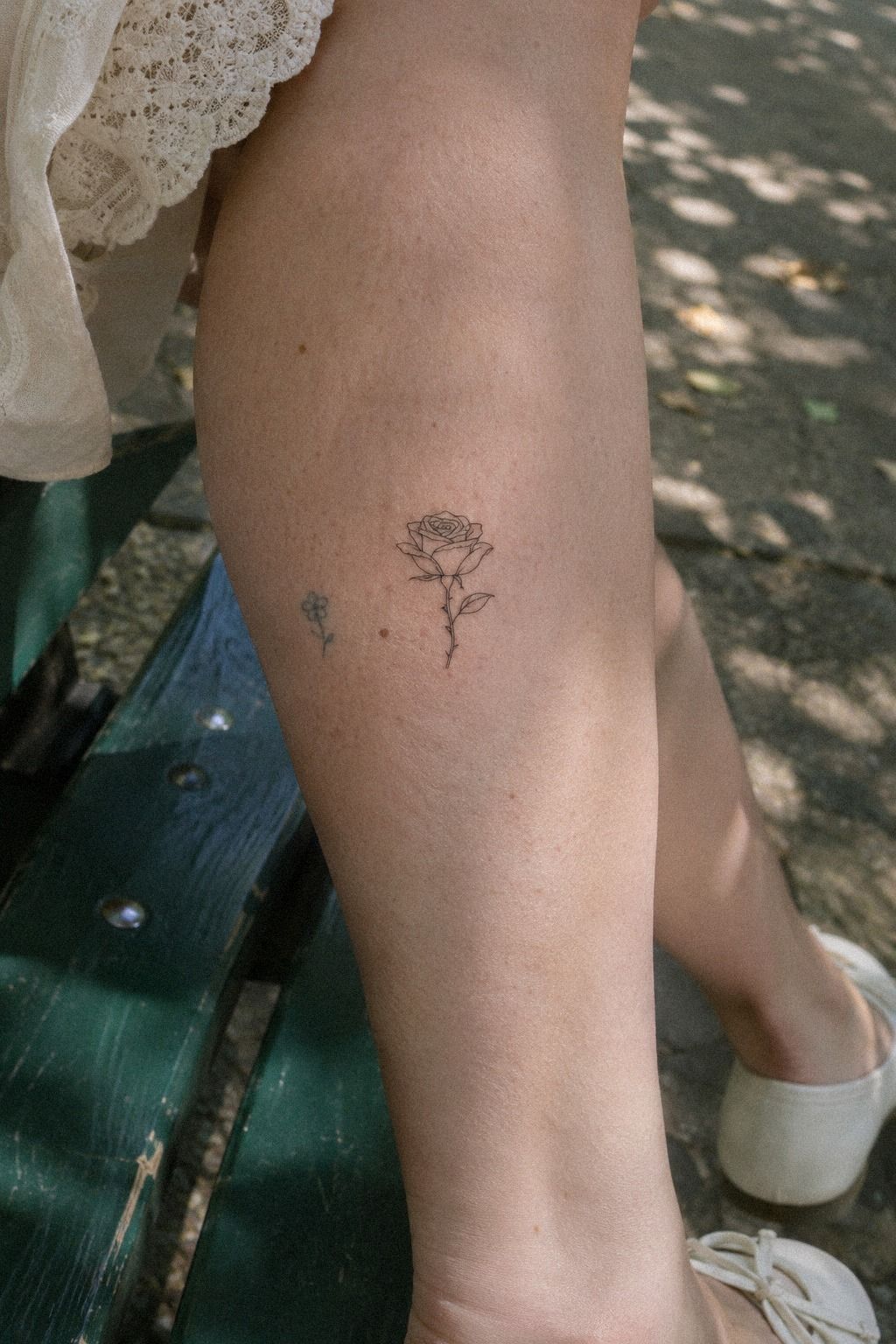
Begin with one rose, not a bouquet. A single profile bloom with layered petals and a short stem keeps fine-line terracotta ink crisp while letting the flower carry personal meaning without extra symbols crowding it.
Ask yourself what you want to remember when you see it. You’ll get a stronger design from one clear answer than from five unrelated references. A rose for resilience might have a tighter bloom and sharp outer edges, while a rose for love can stay flowing and open.
I’d choose a dainty profile rose before a full frontal bloom for a first piece. It’s easier for your artist to control the petal spacing, and the side view gives your eye a natural path from bloom to stem. The calf also offers a more forgiving place than the ribs or foot.
Keep your reference set narrow. Save three to five examples, then compare the petal count, stem length, and overall mood. My small rose tattoo ideas guide can help you notice which details repeat across designs and which ones feel personal to you.
Your artist can sketch the rose at a size that still reads clearly from a few feet away. That matters. A tiny tattoo shouldn’t become a faint dot with a stem attached, especially if you’re choosing a meaningful rose tattoo you’ll want to recognize years from now!
2Pick intricate linework for delicate rose petals
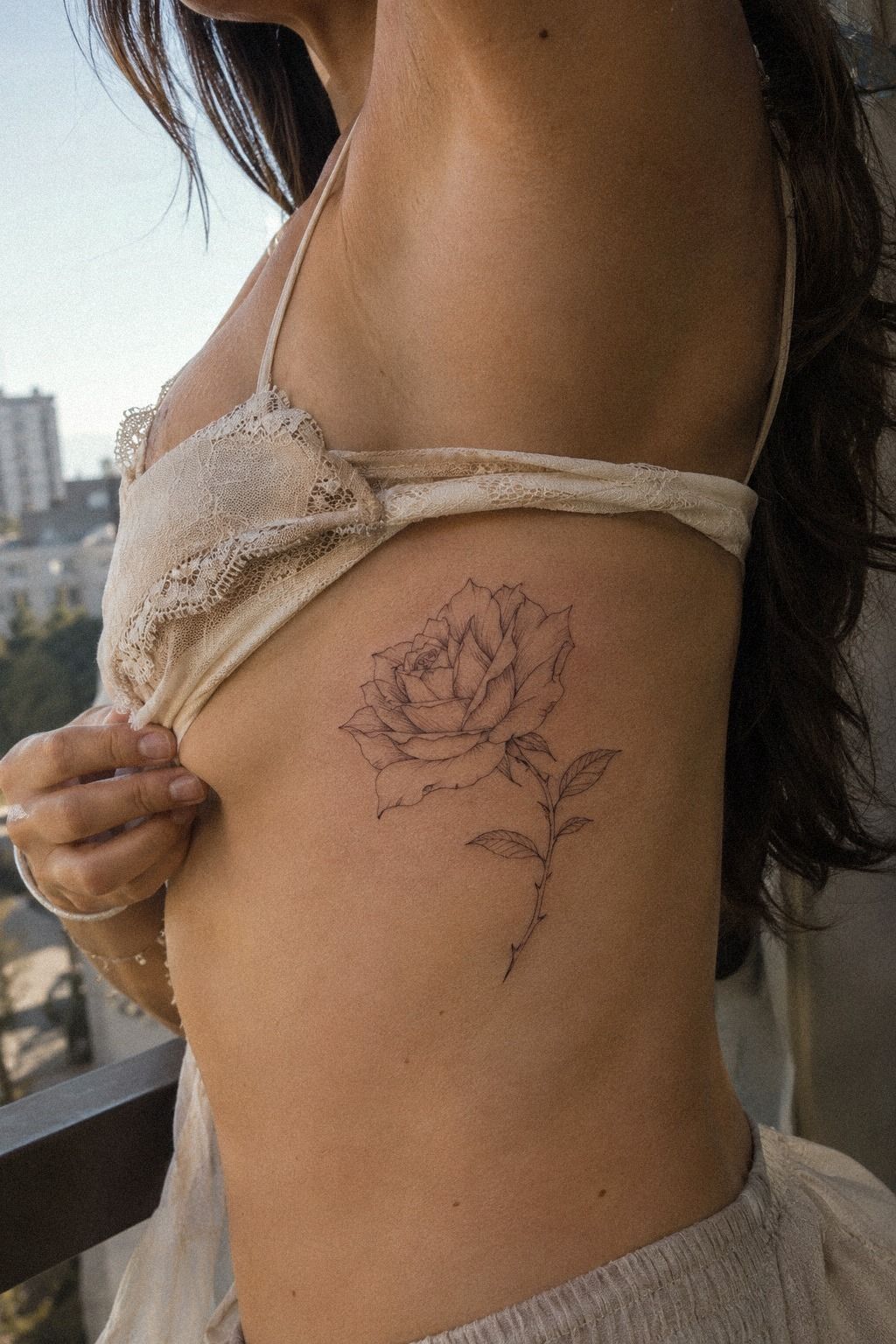
Choose linework that follows the structure of a real rose. Single-needle linework can describe overlapping petals, with the inner curves packed more closely than the outer edges. That contrast makes the bloom feel intricate without turning it dark or heavy.
Your artist should vary pressure and spacing rather than drawing every fold with the same weight. You’ll want the central petals to feel crisp, while the outer petals can fade into lighter contours. If every line is equally sharp, the rose may look technical instead of expressive.
The ribs are a striking placement, but they’re less forgiving during an appointment. The skin moves with your breathing, and you’ll feel the needle more strongly near the bone. I’d skip an oversized design here.
A compact rose with open negative space can age more gracefully than a crowded botanical panel.
Don’t confuse delicate with weak. Clay-toned linework, enough breathing room, and a thoughtful stem can create a bold image with very little pigment. Look through minimalist rose tattoos when you’re deciding whether your idea needs more decoration or simply better spacing.
Bring your artist a reference with visible petal layers, not a filtered social-media image. You can also ask to see healed tattoo examples. Fresh lines often look impossibly sharp, while healed work tells you whether the artist’s delicate marks remain readable on real skin.
3Place delicate rose tattoos along the collarbone
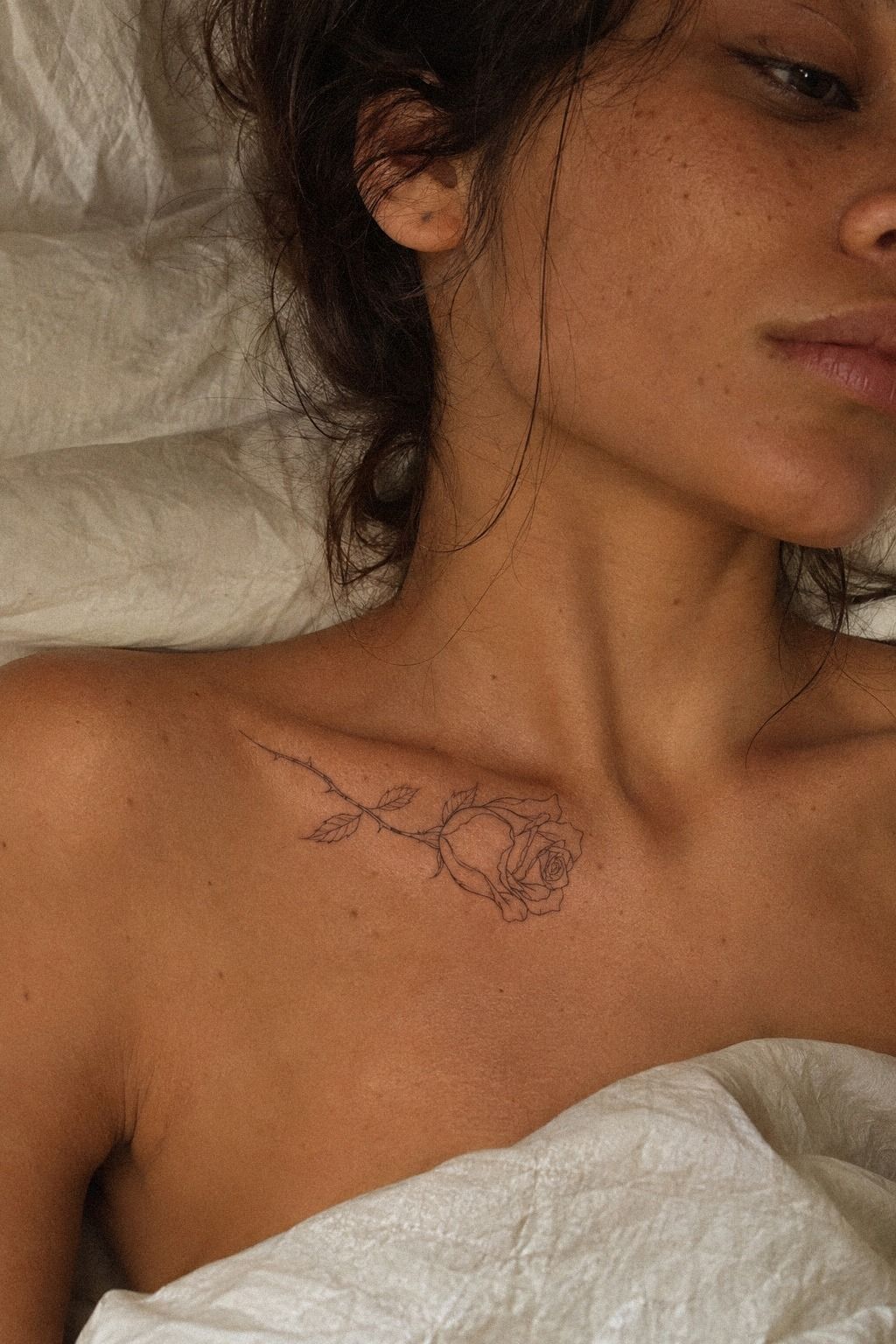
Use the collarbone when you want the rose to feel visible, elegant, and slightly intimate. A single profile rose beneath the bone can follow the natural horizontal line without crossing too far toward the shoulder.
Your artist should place the bloom where the bone creates a gentle visual anchor, then angle the stem with your body rather than forcing it perfectly vertical. You’ll want to check the design while standing and with your arm relaxed. Skin shifts when your posture changes, and that can alter the balance.
The collarbone can feel sharp during a session, especially near the center and toward the shoulder. I’d choose a graceful, open design here instead of a dense shaded rose. The negative space keeps the tattoo from looking cramped beneath clothing.
A collarbone placement also gives you control over visibility. It can sit beneath a neckline, appear with a tank top, or stay partly hidden depending on the exact position. If you prefer a smaller mark, compare it with these delicate small spine tattoos for another slender placement idea.
Think about the direction of the flower. A rose facing inward can feel personal and reflective, while one facing outward can look more daring and declarative.
Neither is automatically better. Your body position and the meaning you attach to the bloom should decide.
4Keep stems crisp for lasting fine-line detail
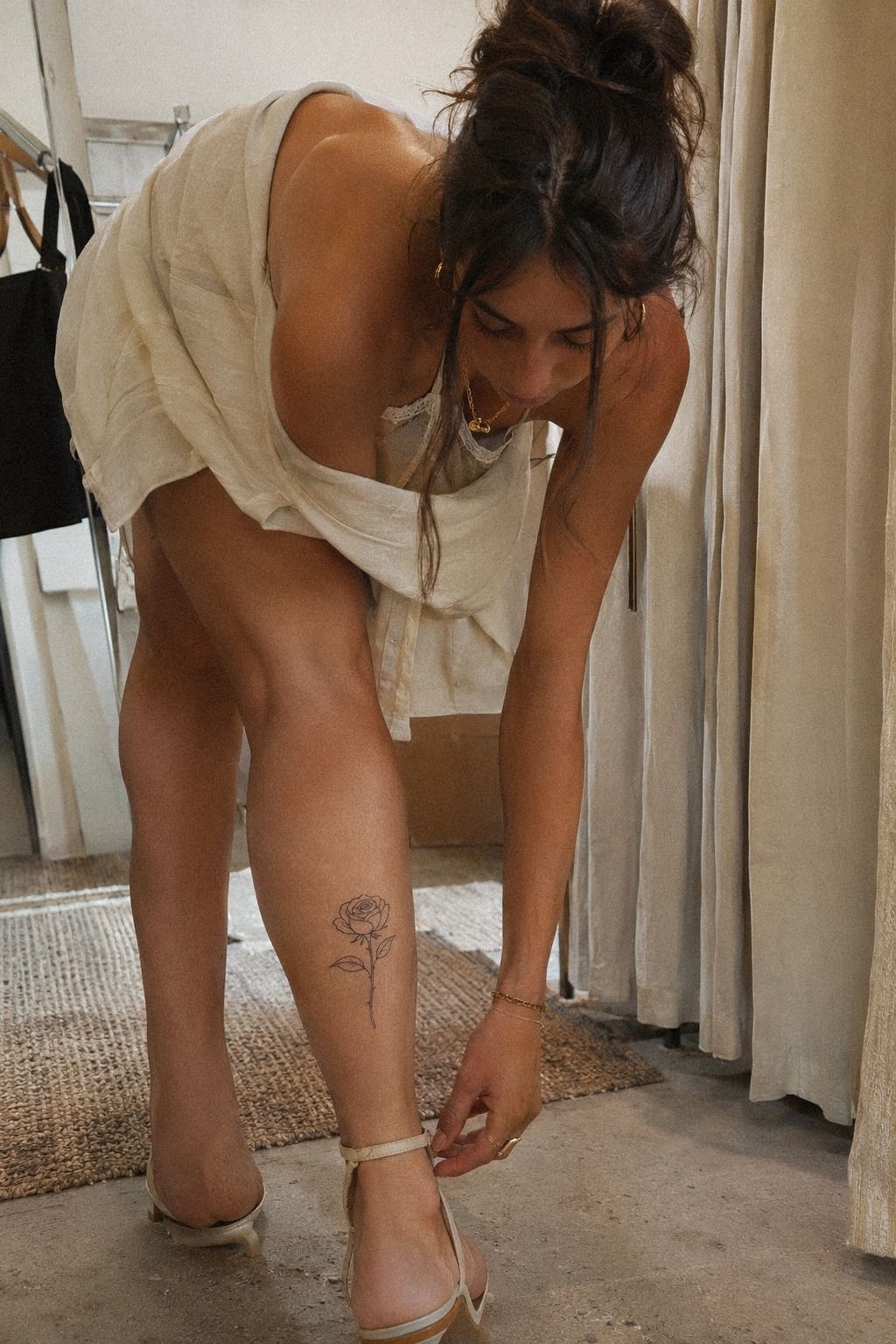
Treat the stem as part of the meaning, not an afterthought. A profile rose with layered petals and a clean, narrow stem gives the flower a sharp finish. That line can connect the bloom to your story, whether it represents growth, grief, or endurance.
Ask your artist how they’ll keep the stem from becoming too thin. A stem needs enough pigment to remain readable as the tattoo settles, but it shouldn’t overpower the petals. You’ll want a slight curve or a controlled taper instead of a perfectly rigid line.
The calf is a practical placement for a first delicate rose. It’s easier to keep still, generally more tolerable than ribs or feet, and large enough for your artist to preserve open details. I’d avoid placing the stem directly over a strong crease, because repeated movement can make the design look less crisp.
Your reference should show a 3RL-style fine line only if your artist uses that configuration and believes it suits your skin. Needle choice isn’t a design guarantee. Line depth, hand control, placement, and aftercare all matter more than a label you saw online.
Protect fresh work from unnecessary sun. Fine lines can spread over time, while navy pigment and sensible placement tend to age better. You’ll give the stem a better chance if you follow the studio’s care instructions and don’t treat sunscreen as optional once the tattoo has healed!
5Plan unique delicate rose tattoos with birth flowers
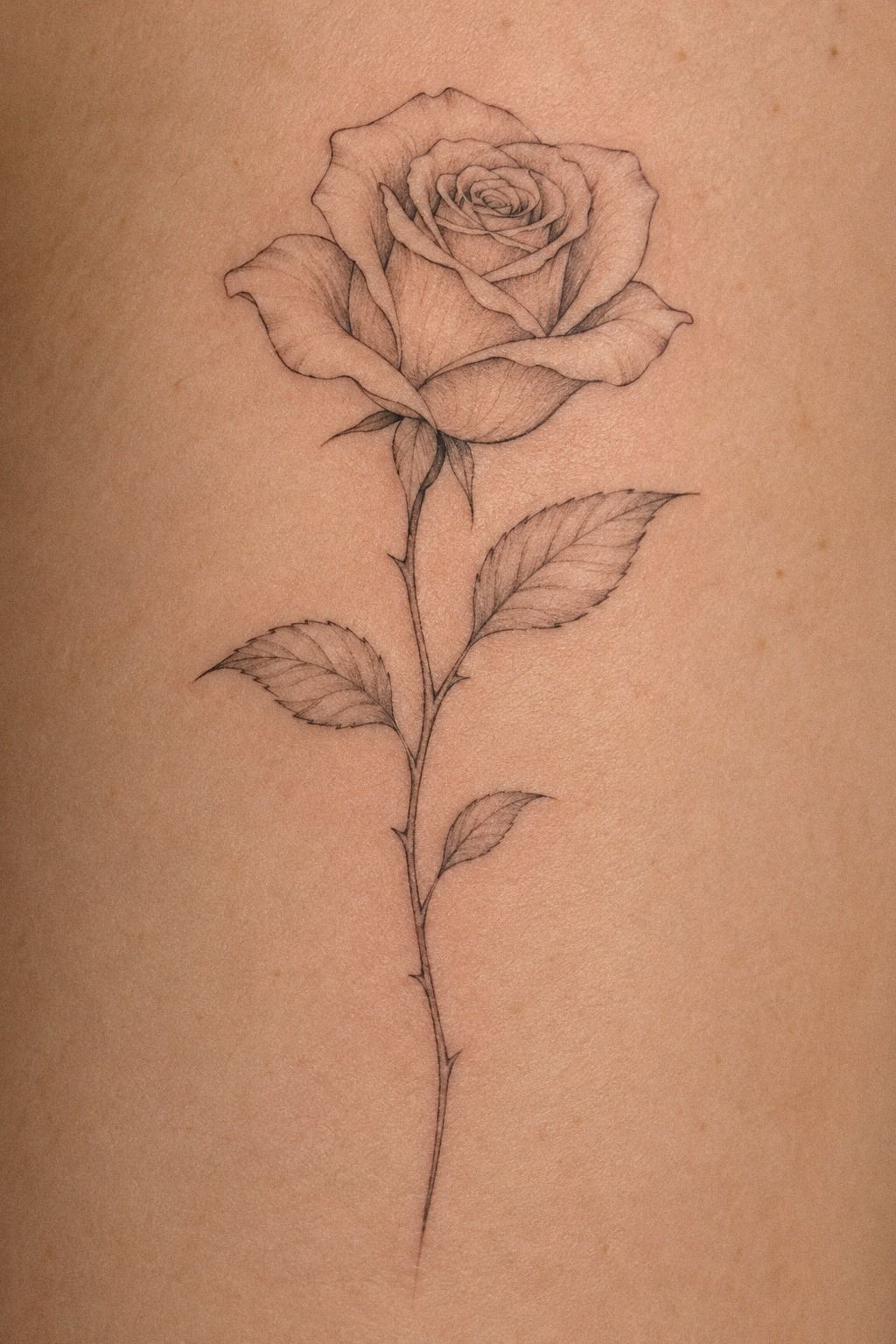
Use a birth flower when the rose needs a second layer of meaning. A botanical collection can help you compare a rose with a small companion flower before you commit to one arrangement.
Your birth flower can appear as a tiny side bloom, a leaf shape, or an emerald-and-gold stem detail rather than a second full flower. That keeps the design personal without making it ornate. You’ll want the rose to remain the visual focus, especially if the tattoo is going on the wrist, collarbone, or forearm.
I’d choose one companion flower at most. Two or three can sound meaningful during brainstorming, but the final image may become busy and less delicate. A botanical flash sheet helps you see the difference between a symbolic addition and a collection of pretty marks that don’t relate.
Write down the person, date, or memory behind each plant before your appointment. You don’t need to show the whole explanation to anyone else. Your artist only needs to know which element should lead, which should support it, and whether the overall feeling should be romantic, sacred, or raw.
Keep your references honest. If you love the slender feeling of delicate simple hand tattoos, say so, but explain that your chosen placement may need a different scale. Your artist can preserve the mood without copying a design made for another body area.
6Choose symbolic thorns beside a delicate rose
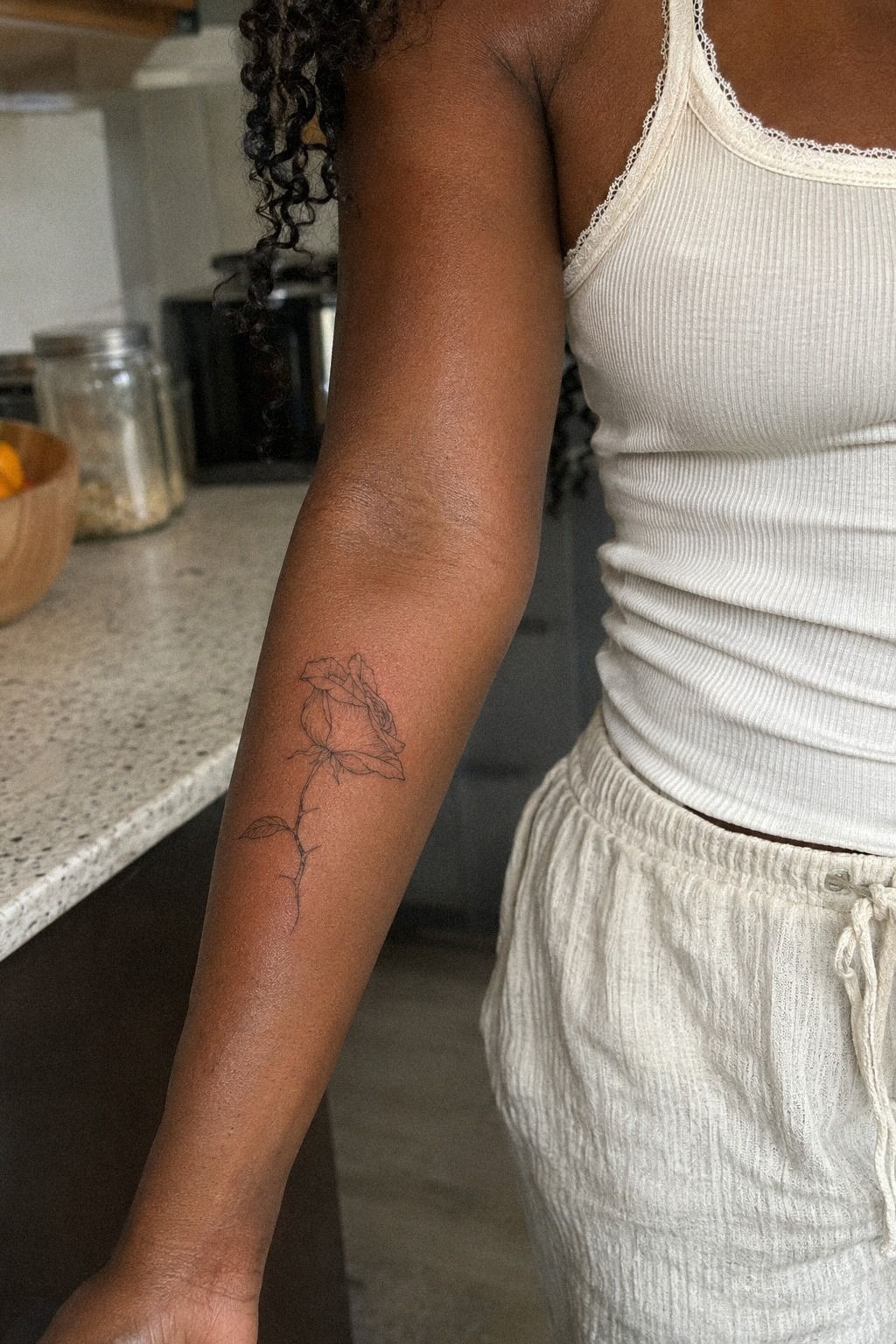
Add thorns when the rose needs tension. A single profile bloom with a few sharp points along the stem can create a fierce contrast against soft petals.
Your thorns should have a reason and a rhythm. One thorn can mark a difficult season, while several evenly spaced thorns may represent protection, boundaries, or survival. You’ll want them angled with the stem so they look intentional rather than scattered.
A forearm is a visible, readable placement, which makes it useful for a personal symbol you’re comfortable carrying openly. The skin can show strong contrast with black linework, while forest-green or rust accents can add symbolic depth without making the rose oversized.
I’d skip random thorns added only because they look edgy. They can change the emotional message quickly. A rose with one controlled thorn feels symbolic; a rose covered in spikes may become aggressive when your original idea was gentle and meaningful.
Consider the value of a blackwork thorn accent if you want the symbol to hold up clearly. It doesn’t need heavy shading across the whole bloom. Your artist can keep the petals delicate, then use a slightly stronger point on each thorn to create visual emphasis.
Your skin tone should never be treated as a problem to solve. Ask to see healed linework on a range of skin tones, including deep skin when relevant to your own body. You deserve a portfolio that shows confident, polished work across real clients, and that preparation is worth it.
7Match delicate rose tattoos to your wrist shape
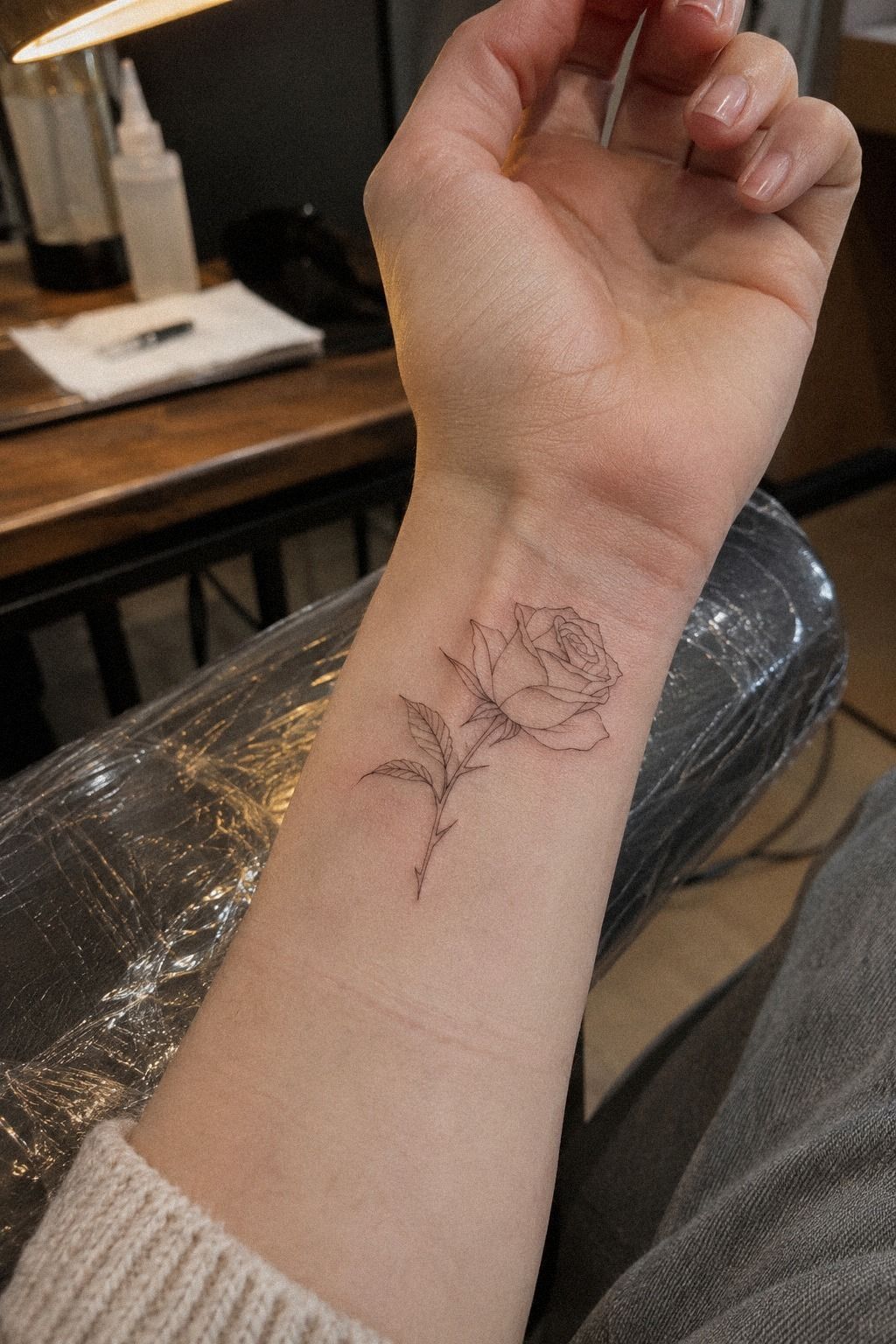
Fit the rose to your wrist instead of forcing a standard flash shape onto it. A small profile bloom with the stem following the narrow vertical space between the hand and forearm can feel balanced and personal.
Your artist should measure the available area while your hand is relaxed. You’ll want to see how the design sits from the palm side, the back, and the side edge. A rose that looks balanced from one angle can appear tilted when your wrist turns.
Wrist tattoos are visible and expressive, but they also face frequent washing, friction, and sunlight. I’d keep the outer contour crisp and avoid too many pale interior marks. A small wrist rose with dusty-rose and charcoal accents will usually read more clearly than a crowded miniature bouquet.
If you’re unsure about the placement, compare it with delicate small wrist tattoos and delicate tiny hand tattoos. You’ll notice how small changes in direction affect both visibility and the amount of detail an artist can reasonably include.
Remember that the wrist isn’t the same as the forearm. Your skin moves constantly there, and the design may need a little more breathing space than you expected. Your artist can make the rose appear fuller by widening the petal gaps, not by adding more lines.
8Add understated shading beneath each rose bloom
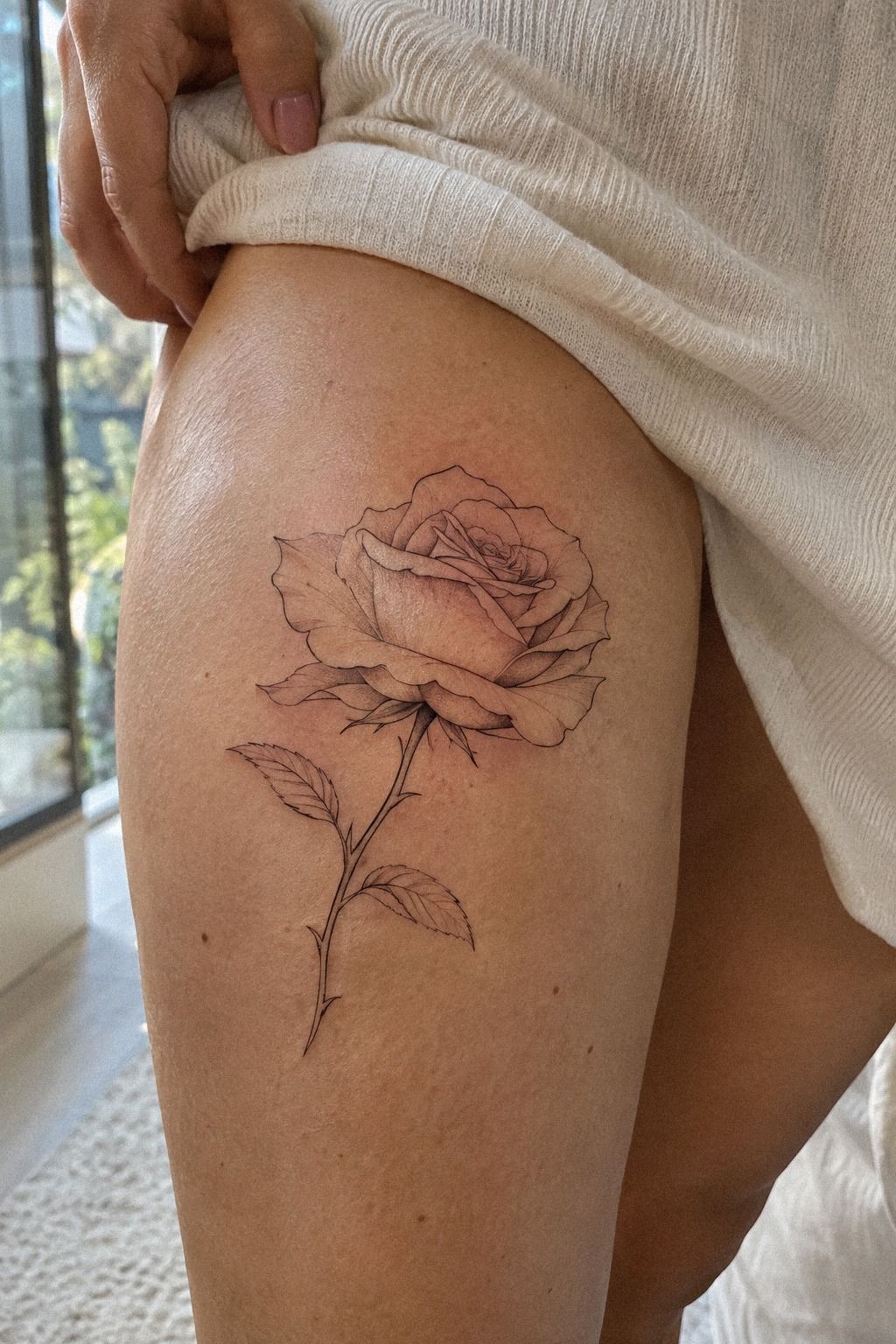
Use shading as quiet support for the outline. A delicate rose with understated gray shading beneath the bloom can gain depth while keeping the linework in charge.
Your artist can shade the lower petals more than the upper ones, which creates a natural sense of overlap. You’ll want the darkest area close to the center and the lightest area near the outer edges. That gradient makes the flower feel dimensional without turning it into a heavy traditional rose.
The thigh offers enough space for controlled shading and is generally more tolerable than the ribs, feet, hands, or sternum. I’d choose soft stippling or a restrained camel-gray wash instead of solid black beneath every petal. The latter can swallow the intricate structure you liked in the reference.
A soft gray wash should remain subordinate to the outline. Ask your artist how the shade will look after healing, not only on appointment day. Fresh gray can appear darker before the skin settles, and your final design should still feel elegant when the surface is calm.
Don’t add shading just to make the tattoo seem more finished. If your meaning is minimal and understated, plain linework may say more.
You can test both versions on paper and hold them against your skin before choosing. That small pause can save you money and make the final result feel more personal!
9Test delicate rose tattoos before committing permanently
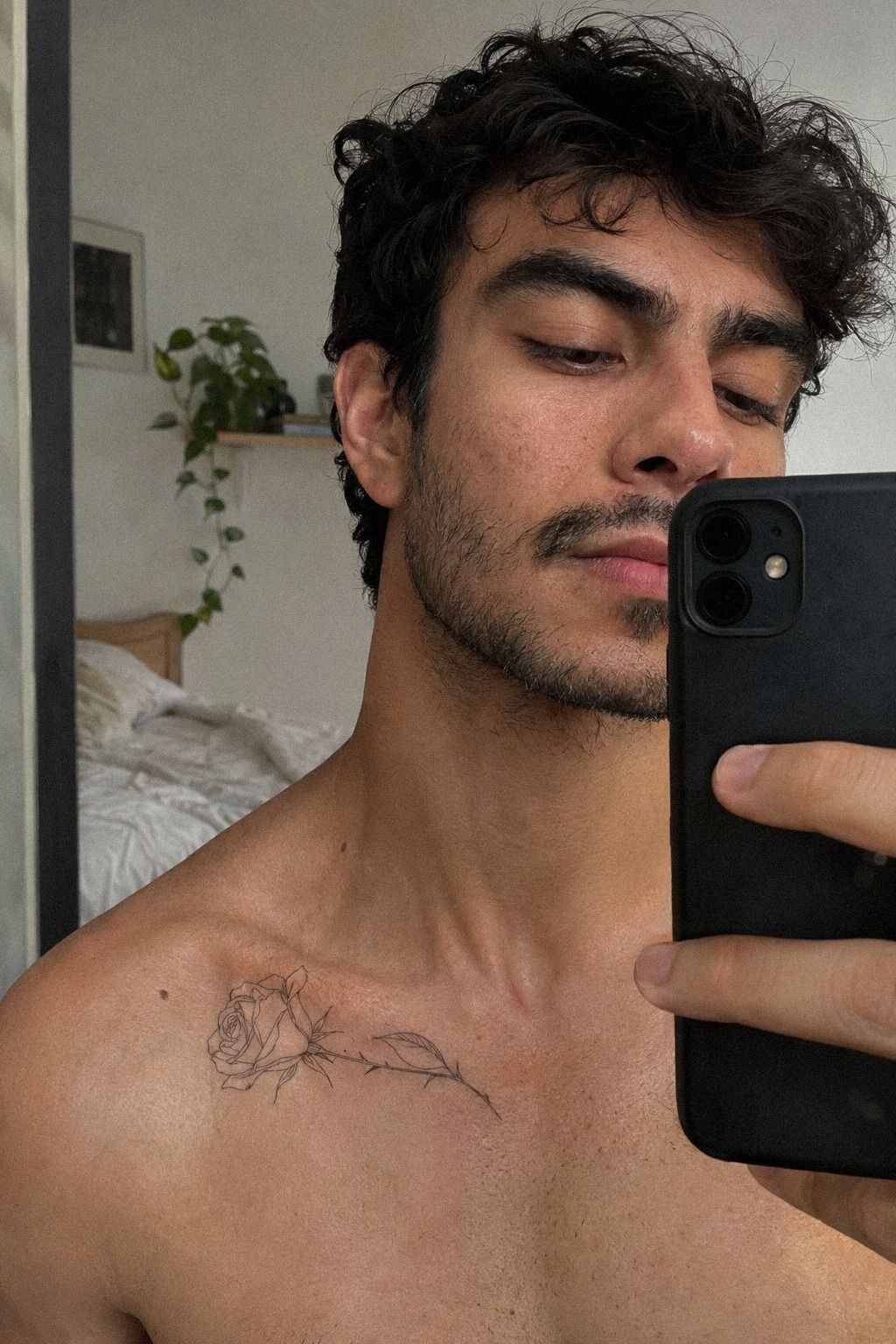
Test the rose at its real scale before your appointment. Placement changes the feeling of the same flower, even when the drawing stays exactly the same.
Print or sketch the design at the intended size, then hold it against your body while standing, sitting, and moving your arm. You’ll see whether the bloom looks too small, too low, or too close to a crease. A paper stencil can reveal problems that a phone screen hides.
Use a temporary version for a day if your artist offers one. Notice how often you look at it, whether clothing rubs against it, and whether the direction still feels right after the first excitement fades. That pause is useful, especially for a permanent choice.
Here are practical US reference points for planning:
The table gives you a starting point, not a quote. Your artist may charge by piece, by hour, or by a studio minimum. You’ll make better decisions when you ask about tattoo cost, timing, revisions, and aftercare before the appointment begins.
Take healed photos seriously. If a portfolio only shows fresh work, ask for examples that are at least several weeks old. Fine lines can widen, and UV exposure can soften details, so your decision should be based on the artist’s long-term results and overall value.
10Protect graceful petals during tattoo healing
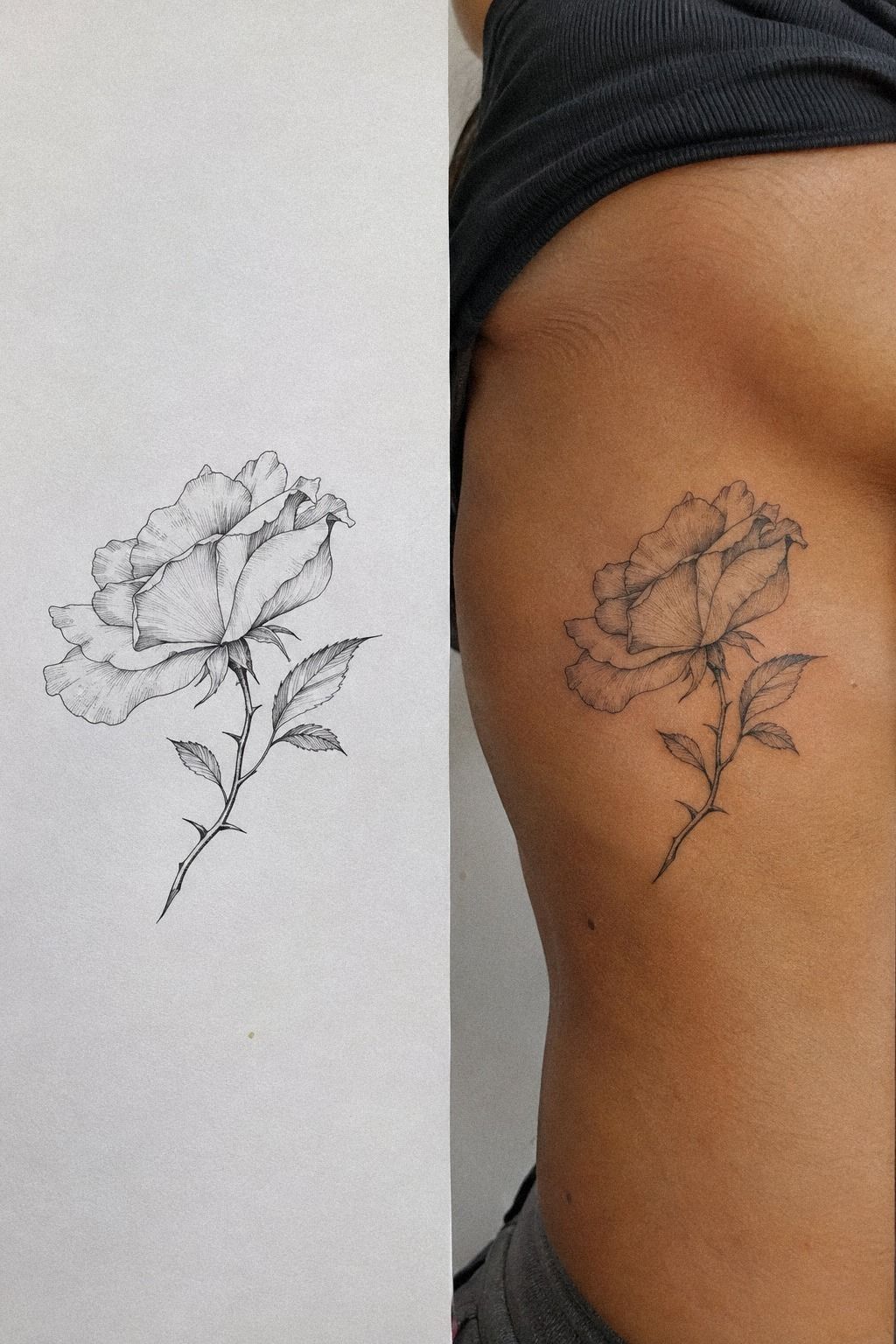
Follow aftercare as part of the design process. Keep the fresh tattoo clean, use the product your artist recommends, and avoid picking at flakes or scabs.
A tattoo healing routine should also protect the sage-green and cream details from strong sun while the skin settles. Skip pools, soaking, and unnecessary friction until your artist says the tattoo has healed.
If redness, swelling, or discomfort seems unusual, contact your tattoo artist or a medical professional. Careful healing gives the petals their best chance to remain readable and graceful!
11Balance meaningful roses with minimal botanical details
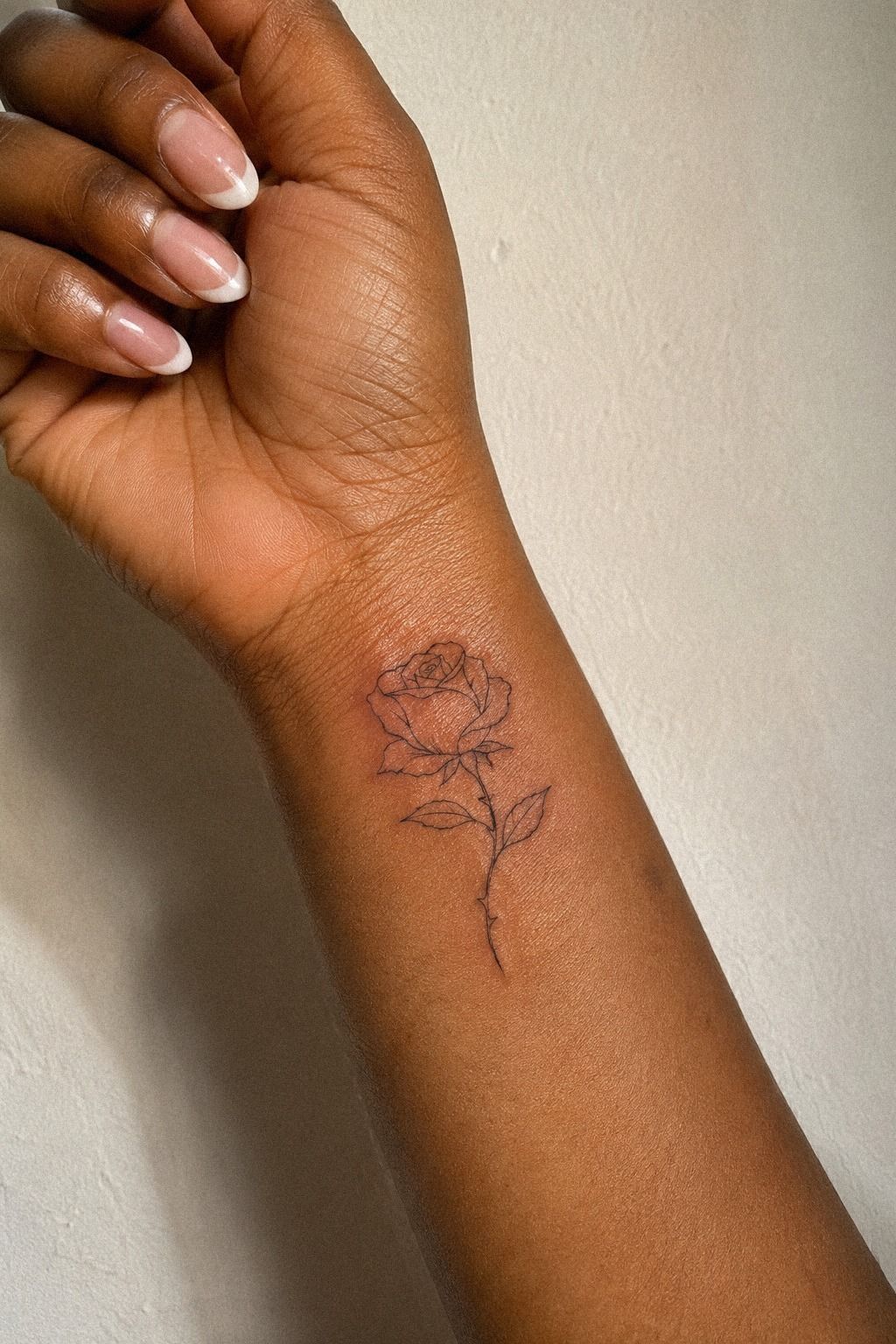
Finish by removing anything that doesn’t strengthen the rose. A single profile flower with minimal botanical details can feel expressive without a wreath, quote, date, and constellation all competing around it.
Your final sketch should have one clear focal point, one supporting detail, and enough untouched skin to let both breathe. You’ll know the balance is working when your eye lands on the bloom first, then travels naturally to the stem or small leaf.
A minimal botanical accent might be one leaf, a tiny dot cluster, or a short line that marks a date without spelling it out. I’d choose that over a second decorative element when the rose already carries a strong memory.
Use your body’s natural shape as part of the composition. A wrist may favor a vertical stem, a collarbone may suit a gentle horizontal angle, and a forearm can handle a longer flowing line. The design should look intentional when your body is relaxed, not only when posed for a photograph.
Let your artist edit you. You’re hiring their hand for judgment as well as execution. If they suggest opening a petal, shortening a stem, or moving the rose away from a crease, listen to the reason before deciding.
The most personal tattoo may be the one that looks restrained to everyone else. Your healed delicate rose tattoo can stay meaningful without explaining itself, and that quiet quality is often what makes the image timeless.
The Two-Layer Meaning Test
I don’t think a meaningful rose tattoo needs a long explanation attached to it. The best designs I’ve seen usually have two layers: the image reads immediately, then the private reason arrives later. A single rose can look elegant to a stranger and still carry grief, devotion, recovery, or a promise that only you understand.
When I’m deciding whether a detail belongs, I ask two questions. Does it change the emotional meaning, or does it only make the sketch busier?
Does it help the rose suit your body, or is it borrowed from a reference because the empty space feels uncomfortable? Those questions sound simple, but they save you from collecting symbols that never become a coherent tattoo.
I learned to be careful with tiny words and miniature dates. They can feel powerful during planning, yet they often force the artist to shrink the flower or crowd the stem.
A thorn, leaf, or birth flower can carry the same message more quietly. That’s where an expressive design gains strength, because the viewer sees a complete image before noticing every private clue.
I also think placement should match the kind of meaning you’re carrying. A wrist makes a personal reminder easy to see.
A collarbone placement can feel romantic and visible. A calf or thigh gives you more control over privacy and scale.
There isn’t one correct answer, but there is a correct answer for your daily life and comfort.
If you’re still changing the design every day, wait. You don’t need to rush a permanent decision because a trend is moving quickly. Save your favorite references, speak plainly with your artist, and let the rose become simpler if simplicity makes the meaning clearer.
When Color Earns Its Place
Black and gray aren’t the only options, but color should support the story rather than compete with the rose. A muted red can feel romantic, while a deep burgundy may create a more haunting, vintage mood.
Ask your artist how color behaves on your skin and how much maintenance the design may need over time. A muted red pigment can look vibrant when fresh, then settle into a softer tone. That change should be part of your decision, not a surprise.
Color can also make a small tattoo feel less understated. If you want a minimal result, a tiny colored detail in one petal or thorn may be enough. If you want something more daring, a bolder wash can make the rose feel iconic without adding extra symbols.
The cost and value of color depend on the artist, pigment, size, and technique. Ask for a clear estimate before booking, especially if the design requires a second appointment. The choice can be worth it when color carries meaning, but it shouldn’t be added just because the black-and-gray version feels too quiet.
What Healed Work Can Teach You
Fresh tattoos are persuasive. The lines look crisp, the pigment looks intense, and the skin may still be slightly swollen. Healed work gives you the more honest view.
Ask to see healed examples that are several weeks or months old, particularly for fine-line roses. You’re looking for readable petals, controlled stems, and a design that still has a sharp silhouette after the initial brightness fades.
A healed tattoo portfolio can also show how an artist works across different skin tones and placements. Pay attention to consistency rather than searching for one perfect rose. Their repeatable skill matters more than a single striking image.
This step protects your budget and your expectations. A lower quote isn’t always better value if the lines don’t age well, while a higher rate may be worth it when the artist’s healed results are consistently polished.
A Note from the Studio Conversation
The best consultation is specific. Bring a few references, explain the meaning in plain language, and tell your artist what you don’t want. You don’t need to arrive with a finished drawing.
Discuss petal spacing, stem length, placement, scale, color, and how visible you want the rose to be. Ask what they would simplify if the design became too small. Their answer can reveal whether they understand the delicate balance you’re after.
You should also discuss the studio minimum, hourly rate, deposit, revisions, and expected appointment length. A clear cost conversation protects both sides. It’s easier to decide whether the piece is worth it when you know what the quote includes.
Trust matters, but you’re still allowed to ask questions. A polished artist won’t be offended by a thoughtful conversation about technique, healed results, hygiene, and aftercare.
If You’re Choosing Between Visible and Private
A visible rose can become a daily reminder, while a more private placement can protect the meaning from casual questions. Neither choice is more meaningful. The right answer depends on how you want the tattoo to meet your life.
The wrist and forearm make the design easy to see and share. The calf, thigh, or upper arm can give you more control over when it appears. A private placement may also give your artist more room for open petals and a longer stem.
Think about work, family, clothing, movement, and how often you want to explain the tattoo. You’re choosing more than a location. You’re choosing the relationship you’ll have with the design every day.
If you’re weighing visibility against comfort, compare delicate small wrist tattoos with delicate small spine tattoos. Both can feel personal, but they create very different rhythms in daily life.
A Few Things Worth Answering
How much does a delicate rose tattoo usually cost?
A delicate rose tattoo typically costs about $50 to $100 at a shop minimum or around $100 to $250 per hour in the US. Your final tattoo price depends on the artist, region, size, placement, and session length, so ask for a quote before booking.
Are delicate rose tattoos a good idea for a first tattoo?
Yes, delicate rose tattoos can be a strong first choice when you select a tolerable placement and a clear design. A simple profile rose gives your artist enough structure to work with, while the subject can remain personal, symbolic, and easy to understand.
How do I choose a tattoo artist for delicate rose tattoos?
Review a portfolio with healed fine-line work, clean petals, and consistent stems. Healed examples matter because fresh tattoos can look sharper than settled ones. Confirm the artist specializes in this style and that the studio follows careful hygiene practices.
How much do delicate rose tattoos hurt?
Pain varies by placement, but ribs, feet, hands, and the sternum are often more sensitive than the forearm, thigh, or shoulder. Your placement affects comfort as much as the design does, so discuss breaks and session length with your artist.
How long does a delicate rose tattoo take to heal?
The surface usually heals in about 2 to 3 weeks, while complete healing can take around 2 to 3 months. Gentle aftercare means washing as directed, moisturizing lightly, avoiding pools and strong sun, and leaving flakes alone.
What’s the best placement for delicate rose tattoos?
The forearm, calf, thigh, and shoulder are practical choices when you want more comfort and room for readable lines. A collarbone or wrist can feel more visible and intimate, but those areas may experience more movement, friction, or sensitivity.
Where I’d Start First
If I had to pick one step, I’d start with a single profile rose on the calf. You’ll have enough space for crisp petals, the placement is more forgiving, and the meaning won’t get buried under extra symbols.
Save a few references, sit with the scale, and ask your artist what they’d simplify. The best design may not be the largest, most ornate, or most expensive option. It may be the one with a clear bloom, a flowing stem, and one meaningful detail that still feels like you years later.