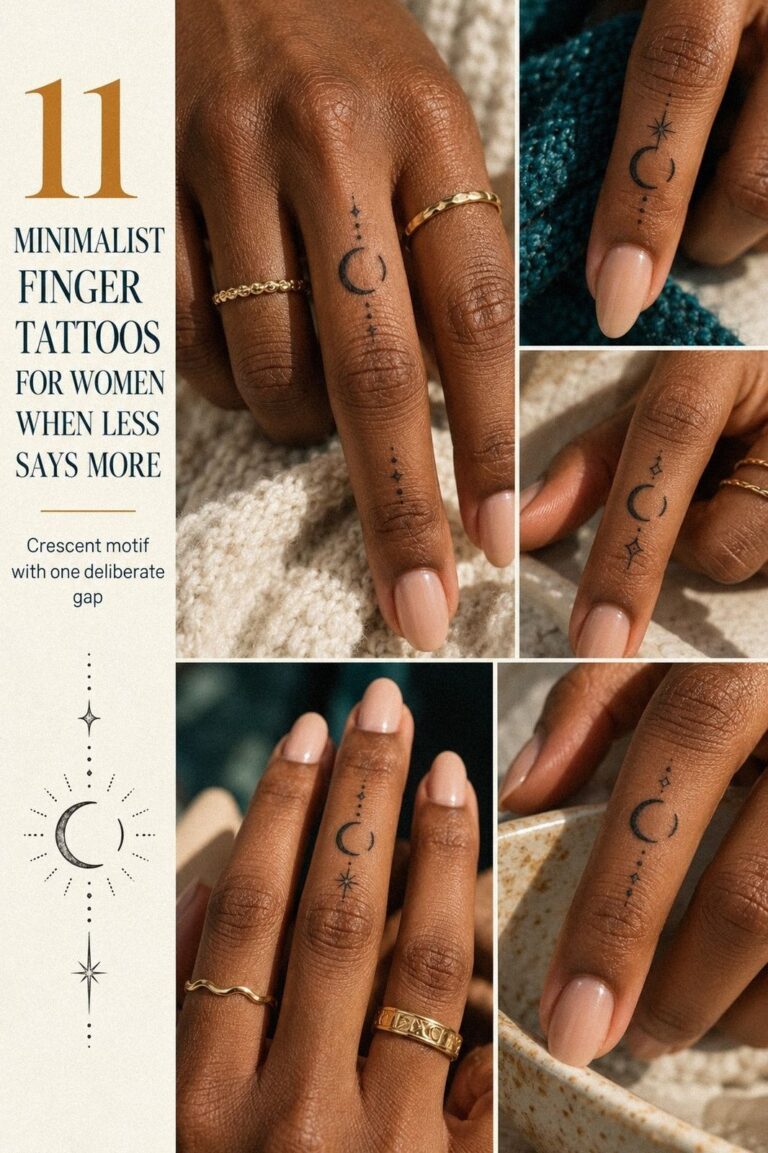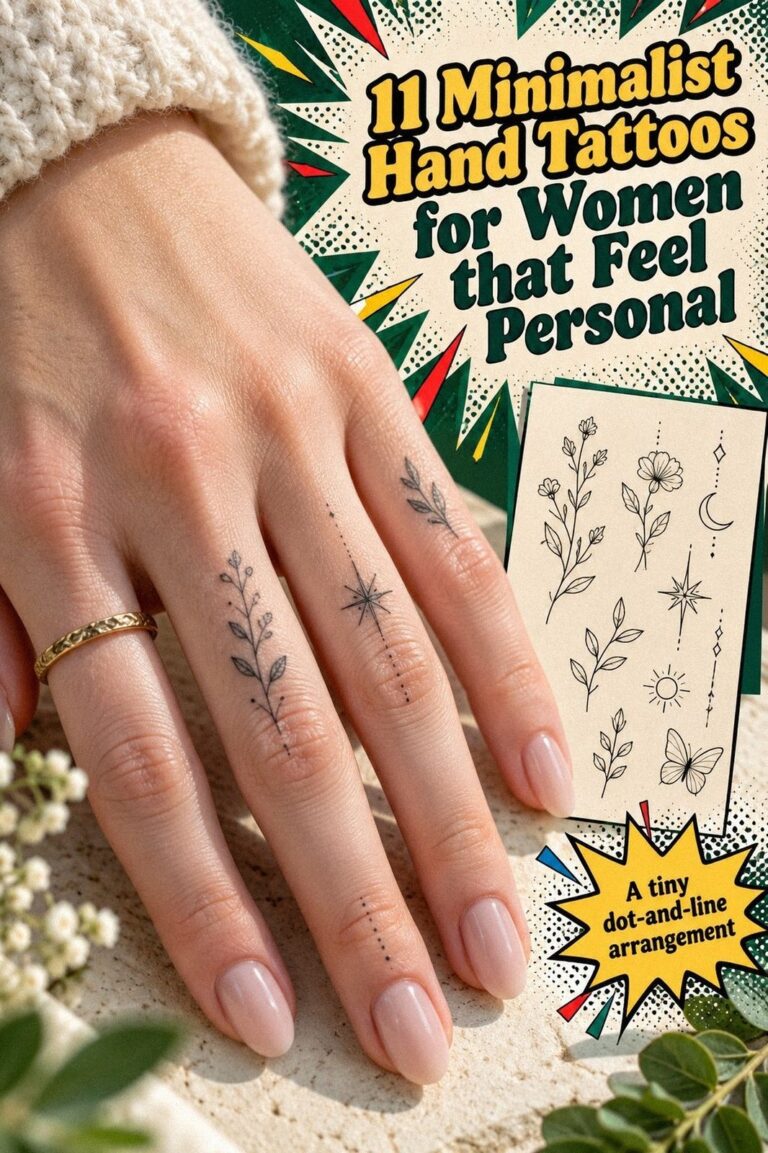
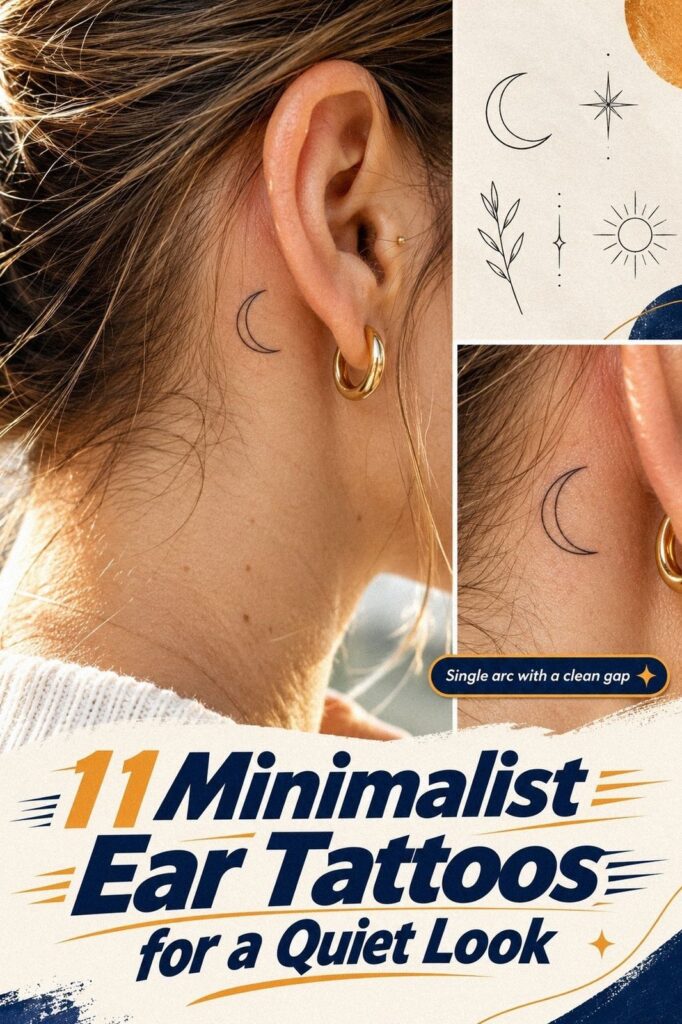
*Minimalist ear tattoos can feel subtle without becoming forgettable. I’ve learned that the strongest designs usually have one clear idea, enough breathing room, and a placement that respects the shape of your ear. These symbolic, personal concepts cover delicate curves, celestial marks, botanical details, and tiny statements that can still feel meaningful years later. Small doesn’t mean timid!
Don’t overthink: Single-Needle Star on the Helix.
A Quick Editorial Note Before You Choose
My honest take: start with a single-symbol design before adding decorative extras. A crescent, initial, wave, or tiny heart often carries more presence than a crowded cluster that tries to explain everything at once.
Ask to see healed portfolio work during your consultation. Fresh tattoos can look darker and sharper than they’ll appear once the surface settles. You’re choosing a mark for your real life, not just for the appointment day.
Placement matters just as much as the idea. The curve behind your ear, the lobe, the helix, and the inner fold all create different visibility, friction, and spacing questions. If you’re still comparing proportions, browse these small ear tattoo ideas before narrowing your shortlist.
- Tiny Crescent Behind the Ear Linework
- Single-Needle Star on the Helix
- Delicate Botanical Ear Fold Tattoo
- Minimalist Moon Phase Lobe Tattoo
- Fine-Line Snake Following the Ear Curve
- Tiny Initial Behind the Earlobe
- Abstract Wave Along the Ear Rim
- Dainty Lightning Bolt on the Tragus
- Minimalist Constellation Across the Upper Ear
- Small Sacred Symbol Behind the Ear
- Negative-Space Heart on the Inner Ear
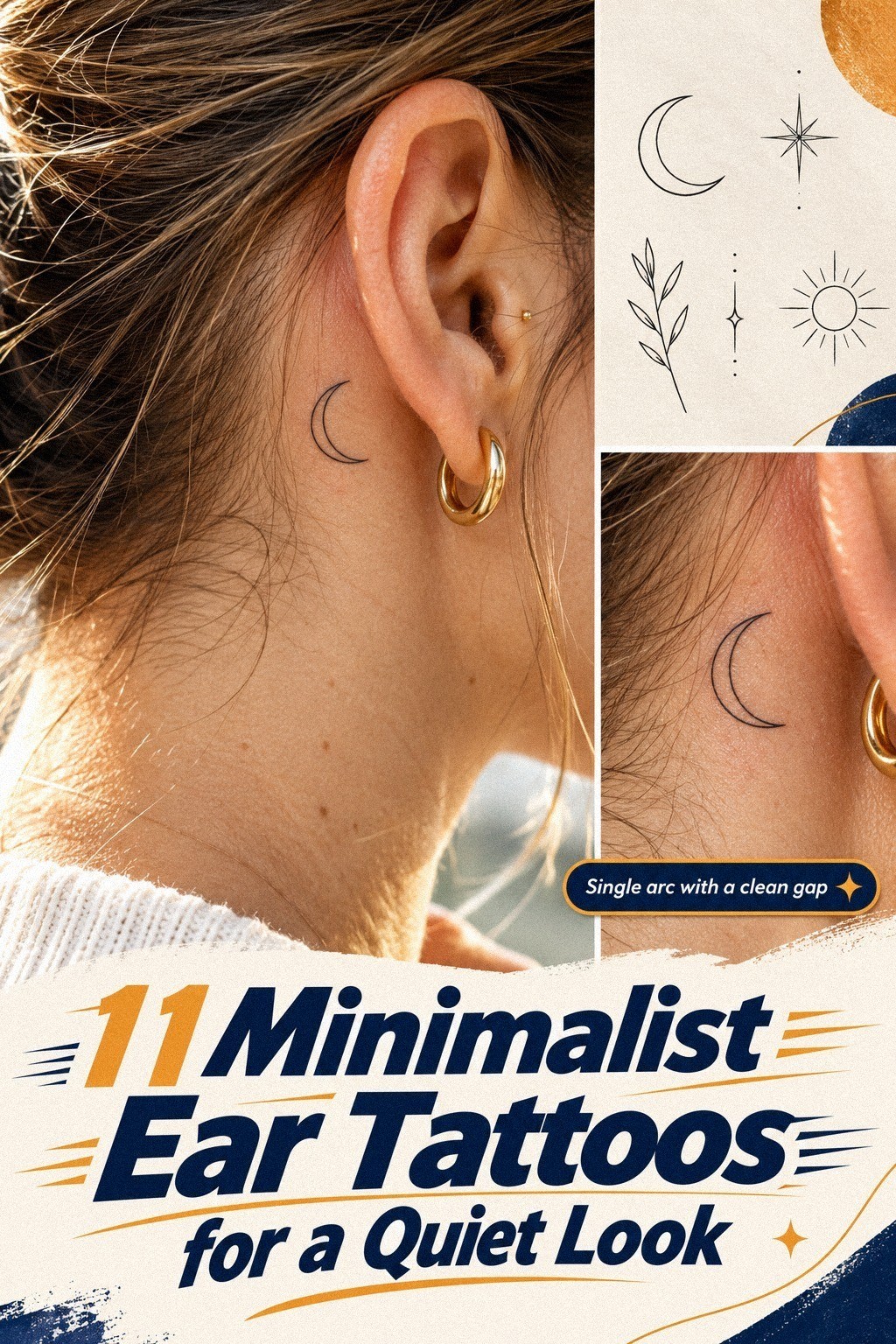
1Tiny Crescent Behind the Ear Linework
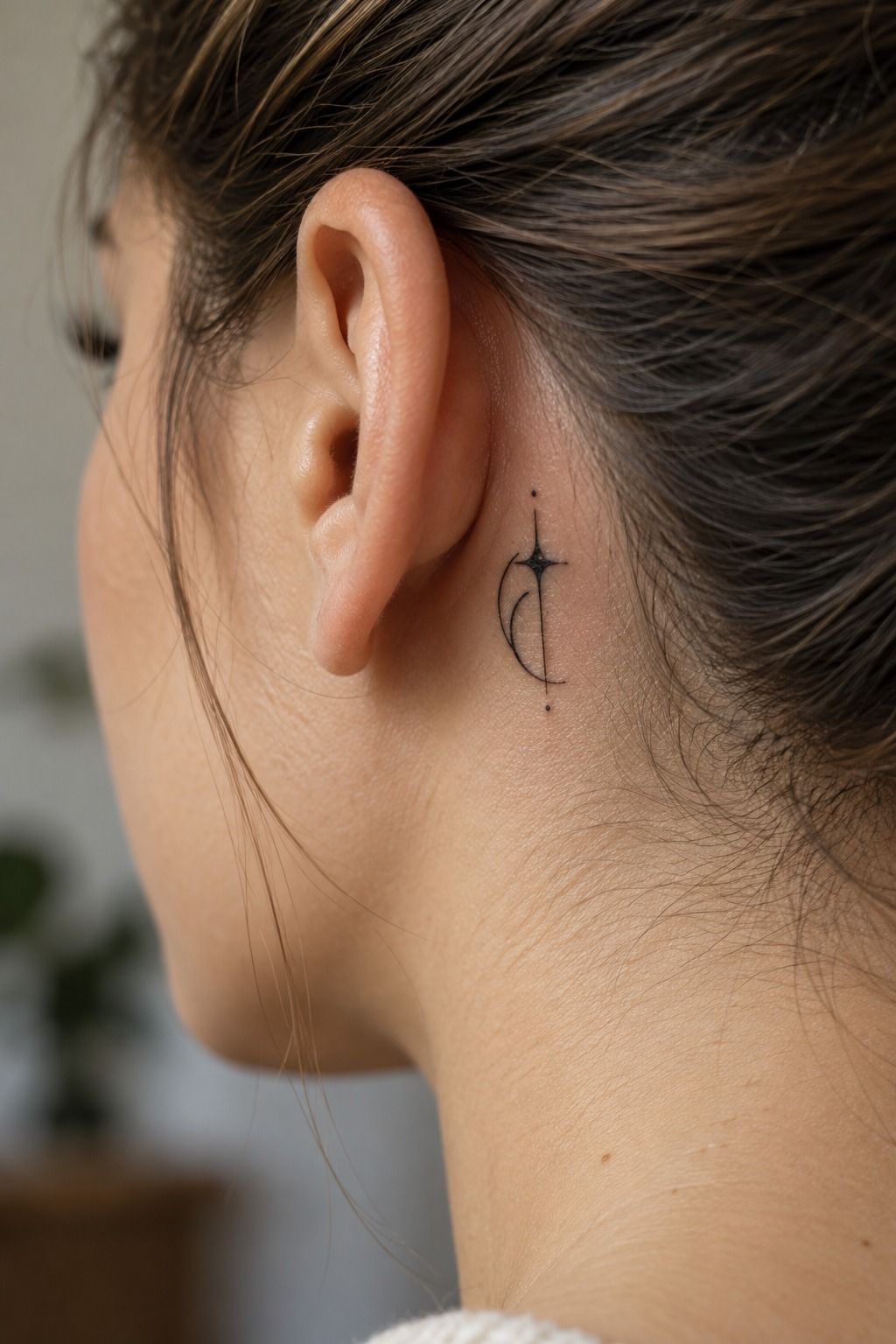
A tiny crescent behind the ear has a quiet, symbolic pull. It can feel delicate, understated, and personal without trying to announce itself. The simple arc also gives your artist a clear shape to adapt to your anatomy.
The quality of the black ink matters more than adding extra stars or texture. I’d rather see one confident curve than a crowded moon packed with details that may become harder to read as the skin changes.
Think about how the crescent turns when your head moves. A slightly open curve can follow the natural fold while keeping a clean pocket of skin inside it. That open space gives the design its ethereal character.
I’d place it slightly outside the deepest fold rather than hiding it completely in the crease. You’ll still get discretion, but the design should remain visible when your hair moves. Compare that position with other options in the small ear tattoo ideas guide.
Follow your artist’s aftercare instructions closely, especially while the surface is settling. Gentle washing, appropriate moisturizing, and patience matter more than constant checking. A crisp, romantic crescent needs time before you judge the final result!
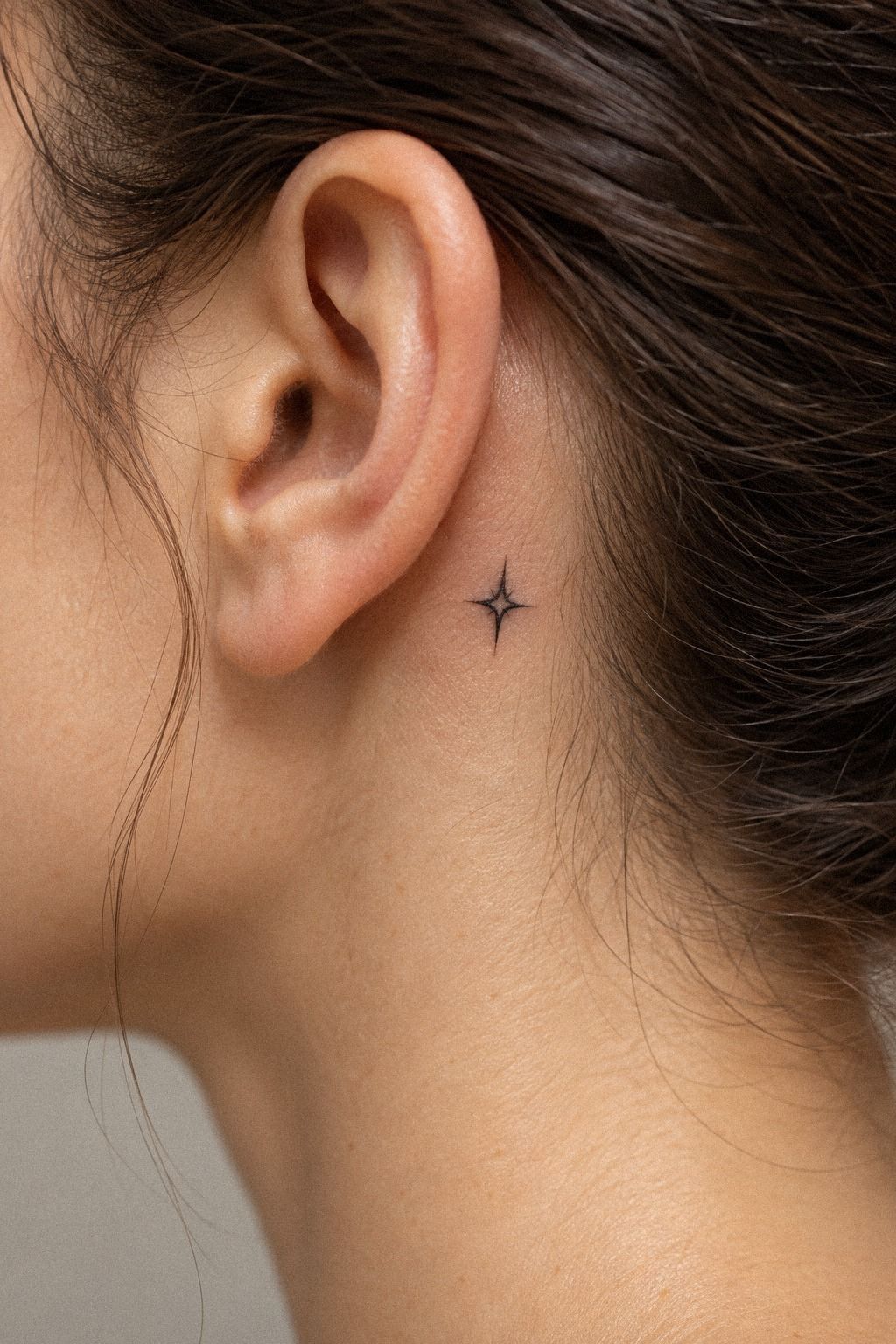
2Single-Needle Star on the Helix
A small single-needle star on the helix can feel playful without becoming childish. One clear star and a tiny supporting dot create an expressive rhythm without crowding the outer rim.
The helix is visible, so your design has to work with the natural curve of your ear. A star near the outer edge may feel bold and iconic, while one tucked slightly behind the curve will read as more understated.
Before approving the stencil, think about your daily routine. Headphones, glasses, hair, and jewelry can all change how much attention the area receives. A striking design won’t feel effortless if your usual accessories constantly rub against it.
You don’t need a complete celestial chart. Browse this minimalist star tattoo guide for spacing ideas, then let your artist redraw the star around your anatomy rather than copying a flat reference.
During surface healing, redness and swelling can make small marks look heavier than expected. Try not to evaluate the spacing too quickly. The final balance becomes easier to see once the skin calms down!
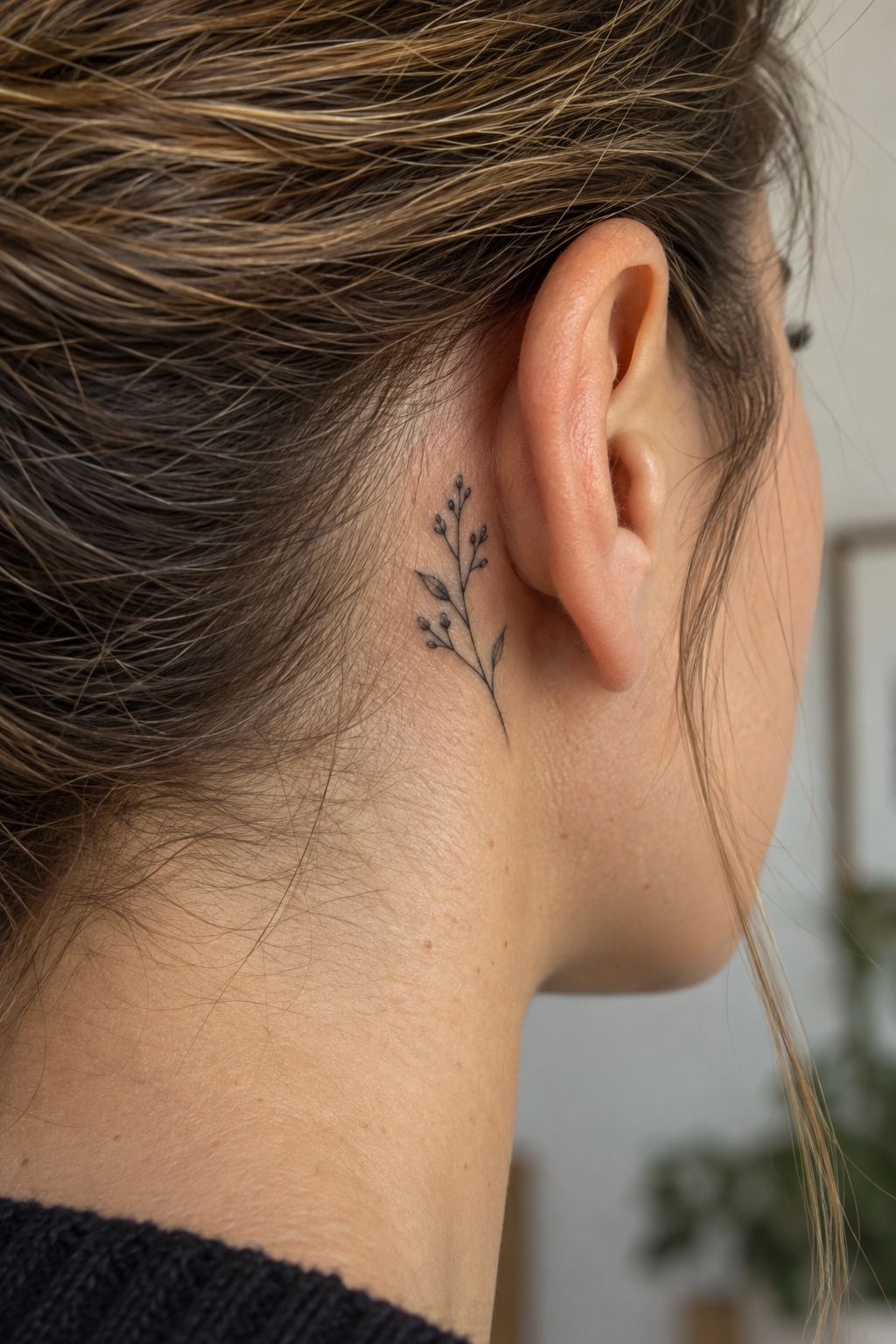
3Delicate Botanical Ear Fold Tattoo
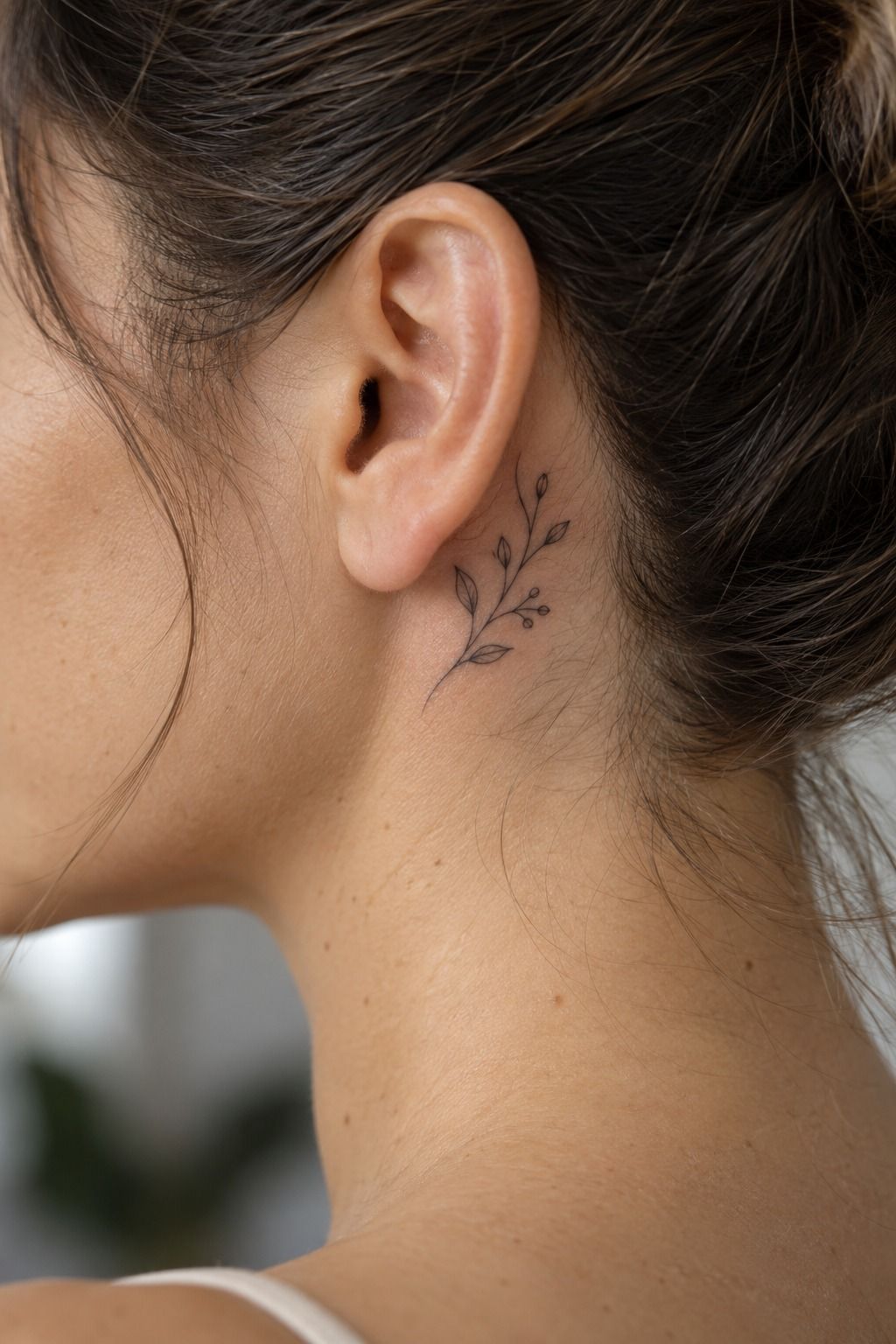
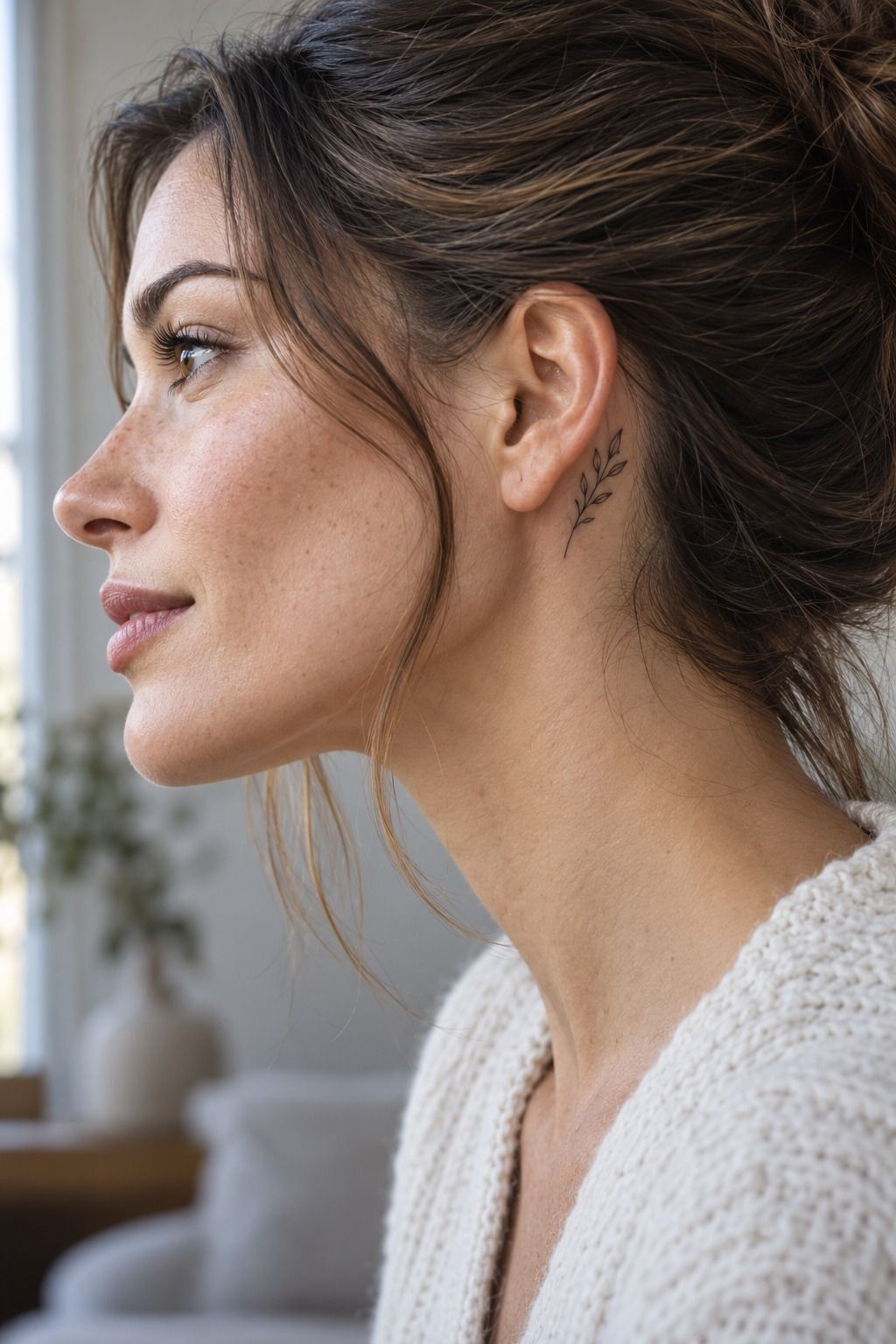
A sprig following the ear fold can be graceful, flowing, and more expressive than a generic leaf mark. Botanical linework gives you a chance to choose a plant connected to a person, season, place, or private memory.
I’d choose one clear plant instead of mixing several species. An olive branch feels classic, a fern can look intricate and organic, and a tiny wildflower may feel whimsical. The strongest option is the one whose silhouette still works at a small scale.
Ask your artist to check the design while your ear is relaxed and your hair is tucked back. The ear fold can hide part of a stem as your head moves, so a small adjustment before tattooing may make the final mark much more readable.
If you like the idea of leaves but aren’t sure about the direction, compare different stem shapes in this minimalist olive branch tattoo inspiration. You can borrow the spacing without copying the exact arrangement.
A little black anchor at the base of a leaf can help the shape stay legible, but restraint is important. Don’t chase the thinnest possible line. A delicate mark still needs enough definition to remain expressive.
4Minimalist Moon Phase Lobe Tattoo
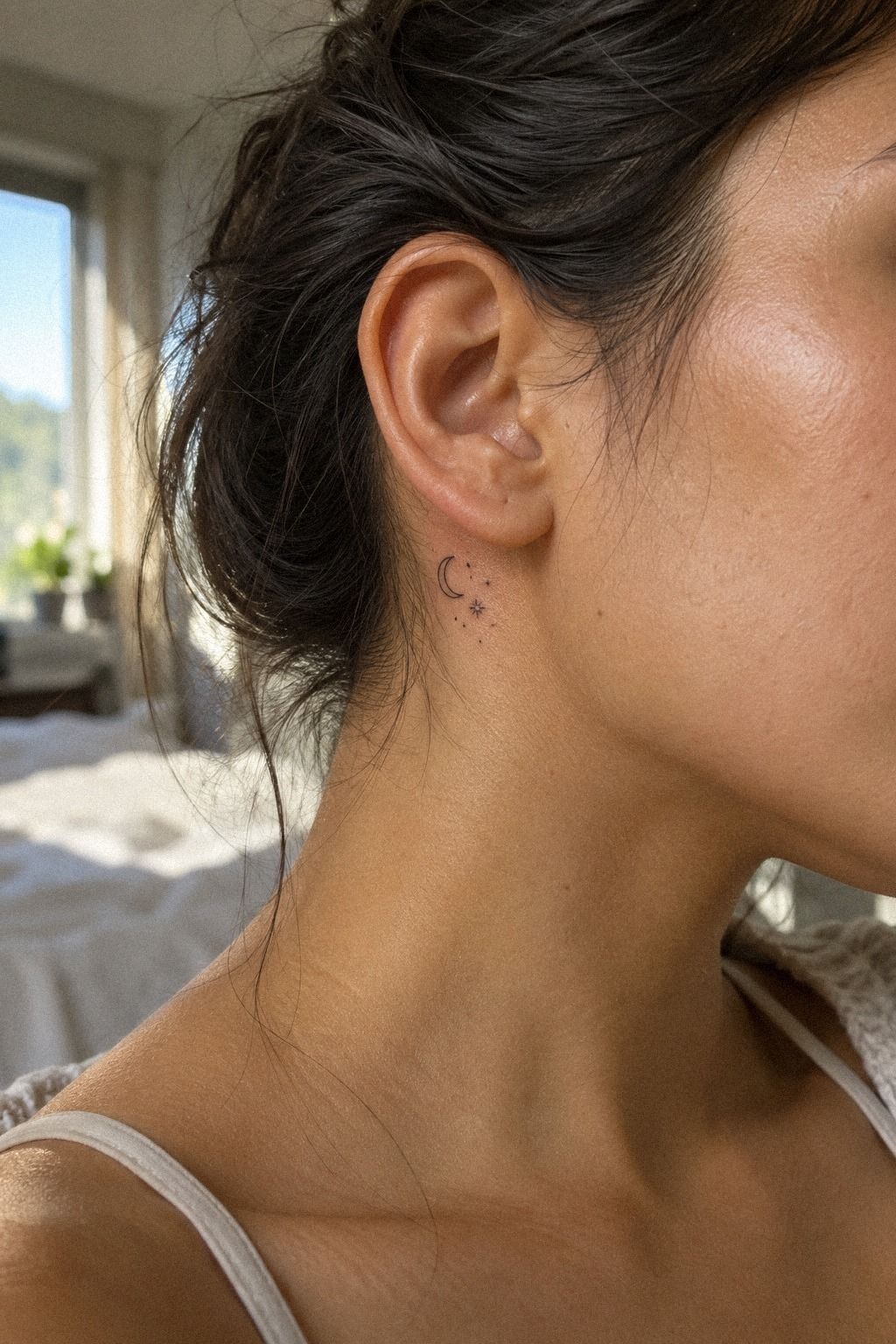
A row of moon phases on the lobe can feel meaningful, timeless, and slightly mysterious. The moon phase sequence gives the design structure, while the lobe offers enough room for the marks to remain separate.
The lobe placement is usually easier to see than an inner-ear tattoo, especially if you wear your hair up. It can also make a practical first tattoo location because the surface is relatively straightforward to inspect during healing.
I’d make one phase the visual anchor and keep the others lighter or smaller. A solid black crescent can give the design contrast, while open circles or small dots keep the rest from becoming visually heavy.
For more variations, compare the rhythm in these minimalist moon tattoo ideas. Your artist can adjust the sequence to the width of your lobe and the jewelry you normally wear.
Once the tattoo heals, sun protection can help preserve contrast. Follow your artist’s instructions during the healing period, and don’t pick at flakes just because the design looks uneven for a few days. The romantic finish takes patience!
5Fine-Line Snake Following the Ear Curve
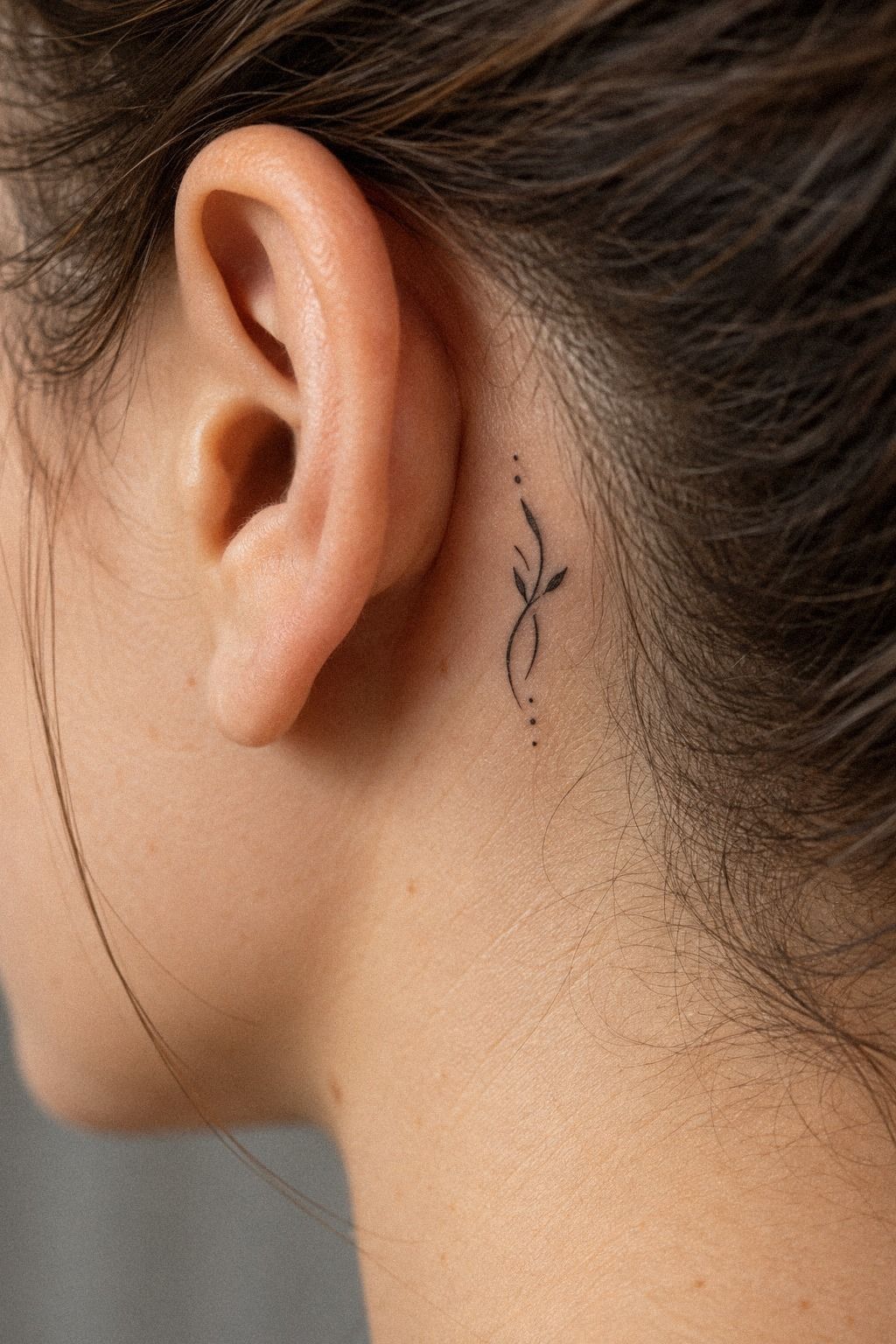
A snake can be fierce, edgy, and daring while still remaining minimal. The snake works especially well when its body follows one continuous curve instead of trying to display every scale and anatomical detail.
Start with the snake silhouette. A readable head, one elegant bend, and a controlled tail usually say more than a heavily detailed body. Tiny scales may be difficult to keep distinct at this size, so I’d prioritize movement over decoration.
A printed flash sheet can help you compare proportions, but your ear isn’t flat paper. Your artist may need to redraw the curve, shorten the tail, or shift the head so the design follows your anatomy naturally.
Ask to see the stencil while your head is relaxed and your hair is moved away. Custom stencil work is especially useful here because a snake can look graceful in one position but awkward when it disappears into the cartilage fold.
For pricing, a small tattoo may fall within a studio’s minimum or hourly structure rather than having a universal fixed price. Some U.S. studios quote roughly $100 to $300 for a tiny piece, but location, artist experience, and consultation time can change that. This small tattoo prices guide is a useful reference point.
6Tiny Initial Behind the Earlobe
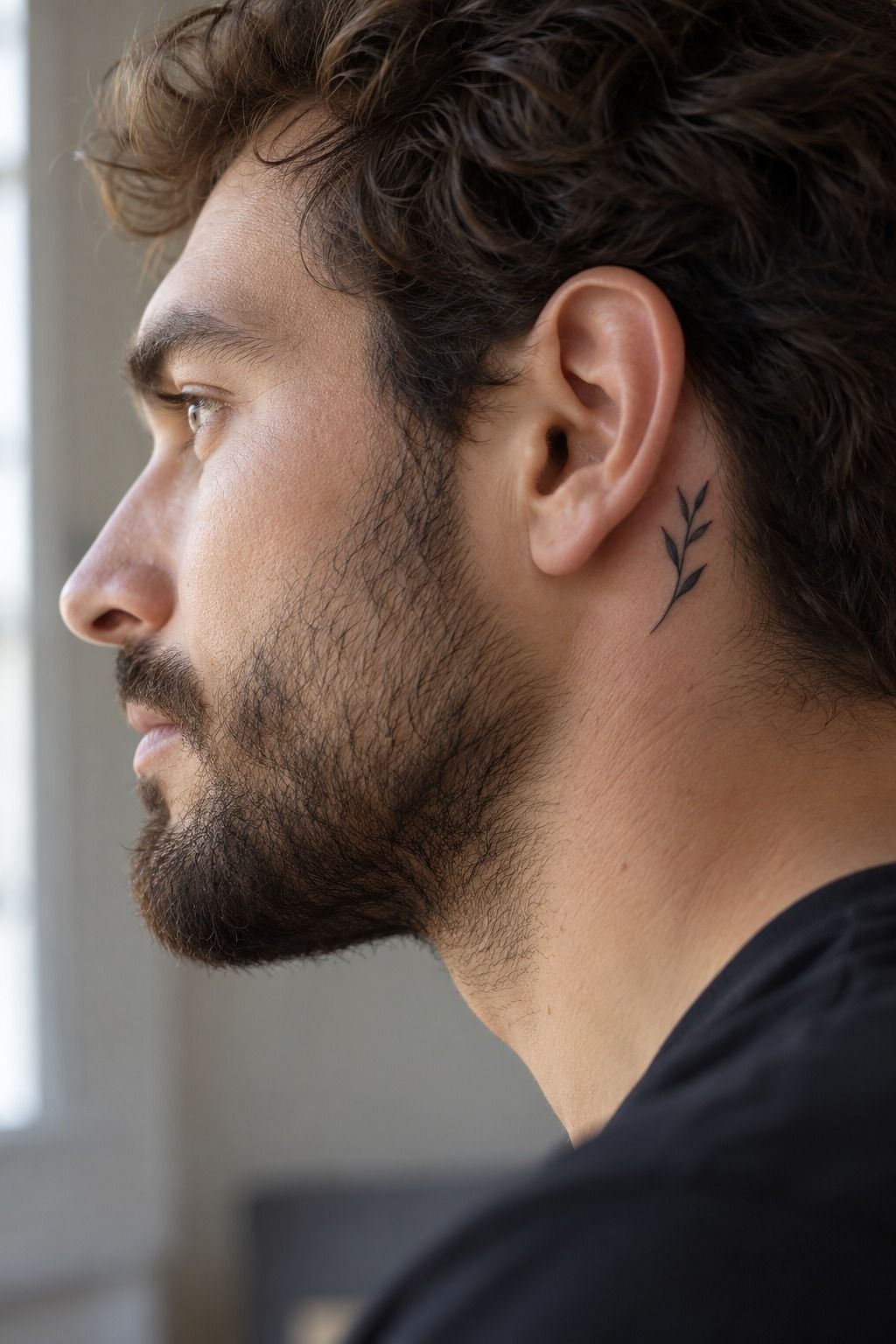
A tiny initial tattoo behind the earlobe can feel personal without becoming overly decorative. It’s a compact way to honor a person, place, or private chapter while keeping the design discreet.
The letterform should be attractive on its own. A narrow serif may feel classic, while a rounded handwritten shape can look feminine, playful, or romantic. I’d avoid an ultra-thin script whose counters may become difficult to read later.
Think about what the letter looks like when you see it in a mirror. Earrings and hair may partly cover the area, but friction and daily movement still matter. Your artist can help position the mark away from spots likely to become irritated.
If an initial feels too direct, a symbol may carry the same emotional weight. You could compare that idea with this minimalist semicolon tattoo reference before deciding whether a letter or abstract mark feels more natural.
The best personal mark isn’t necessarily the most elaborate one. It’s the shape you’d still choose if nobody else could see it. That private confidence gives a tiny tattoo its empowering quality.
7Abstract Wave Along the Ear Rim
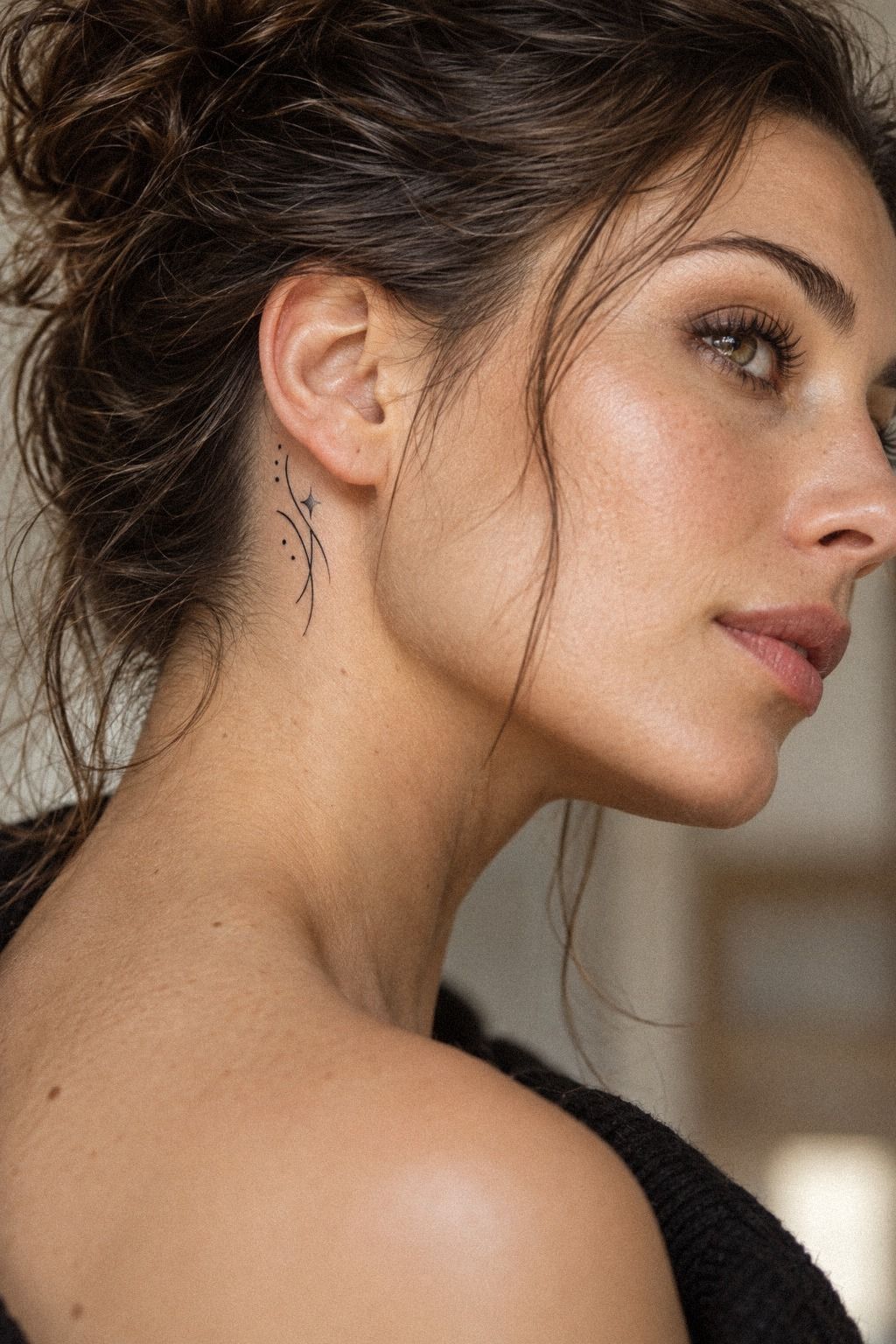
An abstract wave can look raw, flowing, and expressive when it follows the outer curve of the ear. The wave doesn’t need to resemble a literal ocean scene. A few controlled bends can suggest motion, travel, resilience, or a specific shoreline.
Keep the foam marks secondary. One or two small accents may add energy, but several tiny bubbles can turn the design into a dark knot once the available skin gets narrow.
The open skin between each stroke creates the sense of movement. That negative space is doing real visual work, so don’t fill every gap just because the design feels unfinished on the stencil.
If you prefer a botanical direction with the same open feeling, look through these minimalist water lily tattoo ideas. You may find a petal rhythm that translates beautifully to the ear.
The ear rim can feel sensitive, and the skin may vary around the curve. Your artist might work slowly and make small placement adjustments. That careful pace supports a polished, striking result!
8Dainty Lightning Bolt on the Tragus
A tiny lightning bolt on the tragus has sharp, dainty energy. Its angular shape can feel bold without needing shading, color, or additional symbols.
The tragus is compact, so the interior should stay open enough for the bolt to remain recognizable. I’d rather see a slightly stronger outline than a line so thin that the corners lose their definition.
Check the stencil while your ear is relaxed and while you’re wearing your usual headphones. If the device presses directly on the proposed placement every day, you may want to shift the design or choose another part of the ear.
When selecting an artist, review a portfolio with healed work and ask how they approach small cartilage placements. This minimalist tattoo artist guide can help you prepare useful questions before booking.
Pain varies widely, and cartilage can feel sharper or more intense than the lobe for some people. Your artist should explain the process without promising a universal experience. Follow their aftercare instructions and avoid unnecessary touching while the surface settles!
9Minimalist Constellation Across the Upper Ear
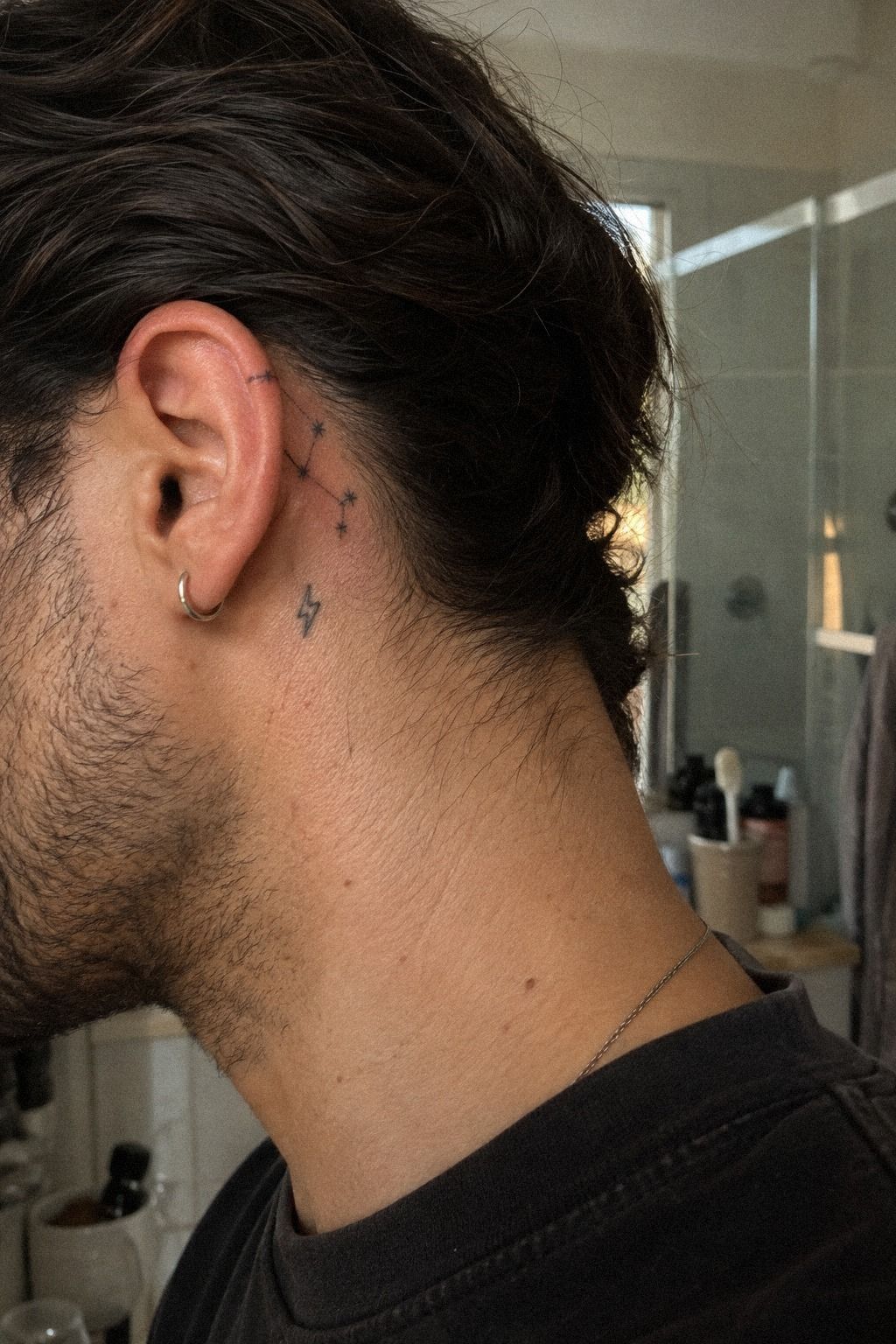
A small constellation across the upper ear can feel intricate and iconic without becoming ornate. Dots and short connecting lines give you a graphic idea that can be adapted to the shape of your ear.
Choose one recognizable star pattern or create a private arrangement from meaningful points. You don’t need a complete astronomical map. A few deliberate marks often feel more vibrant than a crowded field.
Ask your artist whether filled dots or open circles suit the scale. Solid dots may remain easier to read as tiny marks soften, while open circles can create a lighter and more understated effect.
For more spacing references, compare this idea with the minimalist constellation tattoo guide. Bring your favorite direction to a consultation, then let the artist adapt it to your ear rather than treating the reference as a rigid template.
Once healed, UV exposure can gradually affect contrast. Use the sun-care approach recommended by your artist, particularly if the upper ear receives frequent daylight. A little prevention helps protect the timeless quality of the design.
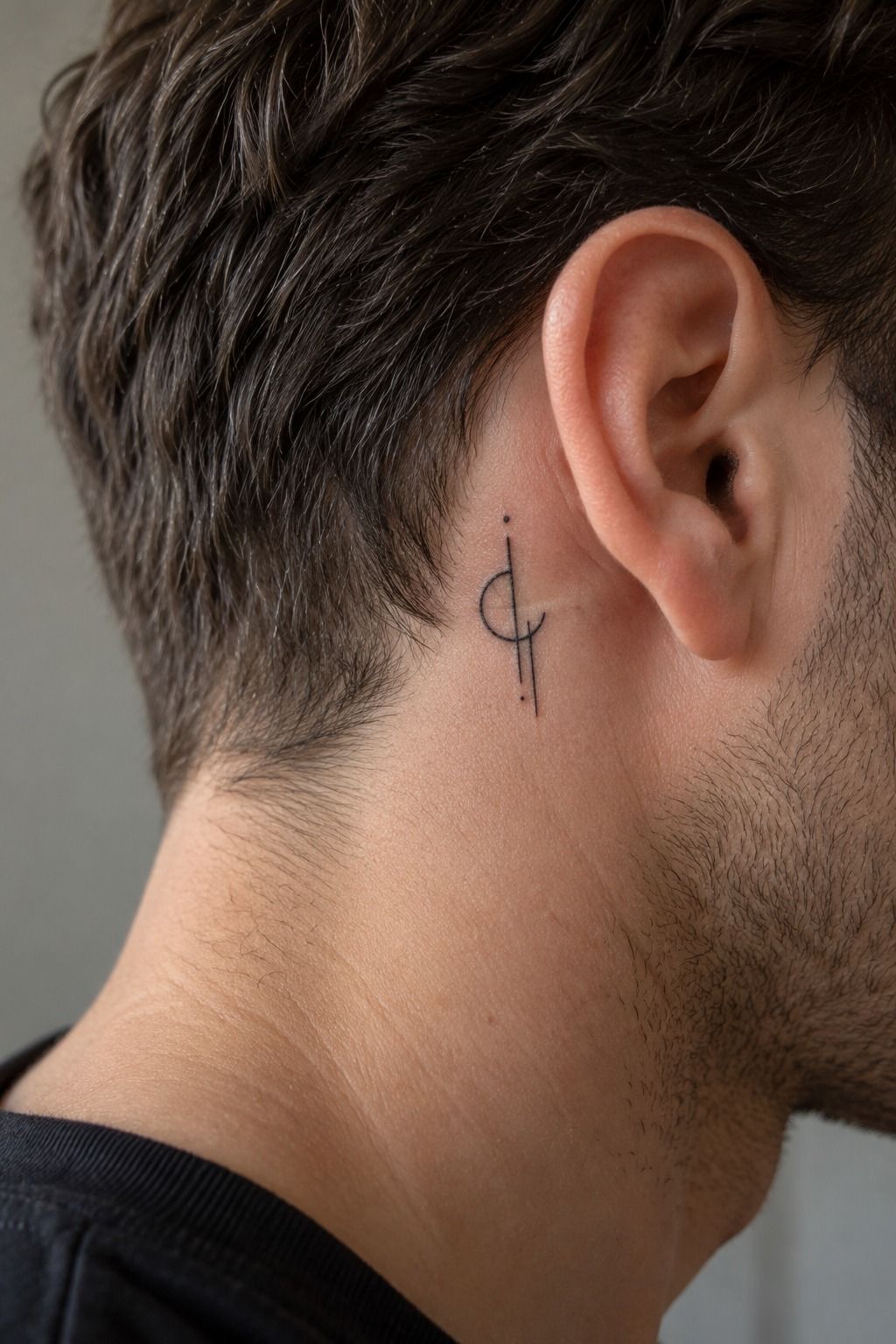
10Small Sacred Symbol Behind the Ear
A small sacred symbol behind the ear can feel powerful, meaningful, and discreet at the same time. The best versions have a strong outer shape that remains readable without relying on tiny interior details.
Fresh and healed tattoos can look noticeably different. A healed tattoo may appear softer than it did on appointment day, but softness isn’t automatically a problem if the shape remains clear.
Ask to see a healed portfolio during your consultation, especially for similar placements. You’ll learn more from settled work than from fresh ink, where redness and surface swelling can exaggerate contrast.
Be thoughtful with a cultural symbol. Research its meaning, understand whether it belongs to a living tradition, and avoid borrowing sacred imagery casually. A personal emblem can be just as meaningful without taking something that isn’t yours.
Behind the ear is discreet, but it isn’t completely protected from sunlight. Follow the studio’s healing guidance and avoid soaking the area until it has recovered. A powerful, polished mark deserves patient care.
11Negative-Space Heart on the Inner Ear
A negative-space heart uses the skin itself as part of the design. Instead of filling the shape, your artist creates a small outline or surrounding mark that lets the center remain open.
The heart outline should be simple enough to read at a glance. A slightly asymmetrical shape can feel personal and expressive rather than perfectly geometric.
The inner ear has limited room, so your artist may recommend a tiny shift in scale or placement. That’s where the inner ear becomes part of the design rather than just a surface to fill.
You could keep the heart classic, sharpen its point, or connect it to one meaningful symbol. Browse other minimalist heart references during your research, but let the final version respond to your anatomy and jewelry.
Before booking, bring the stencil to your artist consultation and move your head naturally. If the shape disappears during ordinary movement, edit it. A personal tattoo should still communicate something when you’re living normally.
Which Minimalist Ear Tattoo Would I Trust Most?
I’ve changed my mind about ear tattoos after watching delicate marks settle in real life. The thinnest line isn’t automatically the most refined choice. A striking design needs enough spacing, sensible placement, and a shape that doesn’t fight the anatomy.
My own early mistake was choosing a design from a paper reference without checking how it would bend around the ear. It looked elegant on paper and awkward on skin. Now I ask for a stencil while moving my head, tucking my hair back, and imagining my usual jewelry.
I also care about healed tattoos more than appointment-day drama. Fresh work can look crisp and decisive, while settled work reveals whether the artist understands restraint. That’s where you see if the lines remain readable and whether the composition still feels balanced.
The stencil should be treated as a conversation, not a final command. You can ask for more open skin, a shorter tail, a softer curve, or a different position. Small edits often make the difference between a merely cute tattoo and one that feels genuinely personal.
Pay attention to line weight without assuming there is one perfect thickness for every ear. Your artist should consider the design, placement, skin, and long-term readability together. I’d be wary of anyone who guarantees that a line will never soften.
Cartilage can also change the experience from person to person. The cartilage may feel sharper or more intense than the lobe for some clients, but pain is personal and technique varies. A thoughtful artist will explain possibilities without turning them into promises.
For artist selection, look for a healed artist portfolio, clear hygiene practices, and examples of small work on varied skin tones. Ask how they approach placement, what healing may look like, and when they would simplify your idea.
Here are the reference points I’d keep nearby:
You don’t need the loudest symbol. You need one that still feels meaningful after the novelty wears off. That’s where a polished, understated, and personal ear tattoo earns its place.
The Questions I Get Asked Most
How much does a minimalist ear tattoo usually cost?
A minimalist ear tattoo may cost around $100 to $300 in the United States, but that’s only a rough reference. The artist, location, studio minimum, placement, and consultation can all affect the estimate. Ask for the full price before booking, and review this studio pricing guide for broader context.
Are minimalist ear tattoos a good idea for a first tattoo?
They can be a good first tattoo because the designs are compact and easy to personalize. I’d still choose an artist who can explain placement, healing, and realistic line weight. A meaningful first tattoo doesn’t need to be large to feel important.
How do I choose a tattoo artist for minimalist ear tattoos?
Look for clean linework, healed examples, clear hygiene practices, and an artist who knows when to simplify an idea. Review this minimalist tattoo artist guide before your consultation. A healed portfolio matters more to me than a feed filled only with fresh tattoos.
How much do minimalist ear tattoos hurt?
Pain varies by person and placement. The lobe may feel more tolerable for some people, while cartilage areas can feel sharper or more intense.
Your artist can explain what clients commonly report, but no one can guarantee your personal experience. Your comfort level still matters.
How long does a minimalist ear tattoo take to heal?
The surface often settles in about 2 to 3 weeks, while deeper healing can take 2 to 3 months. Follow your artist’s instructions, avoid picking, and keep the area away from unnecessary friction while it recovers. Good aftercare supports clearer results.
Where can I find minimalist ear tattoo inspiration?
Collect references from artist portfolios and reliable design guides, then bring a few favorites to your consultation. Don’t copy a design without adapting it to your ear. This minimalist constellation tattoo guide may help if you’re drawn to symbolic spacing and small celestial marks.
Where I’d Start First
If I had to pick one, I’d start with the tiny crescent behind the ear. Its simple curve leaves enough open skin to stay readable as the design settles, and it won’t compete with your jewelry. Pin the crescent for later, then ask your artist for healed examples before booking.