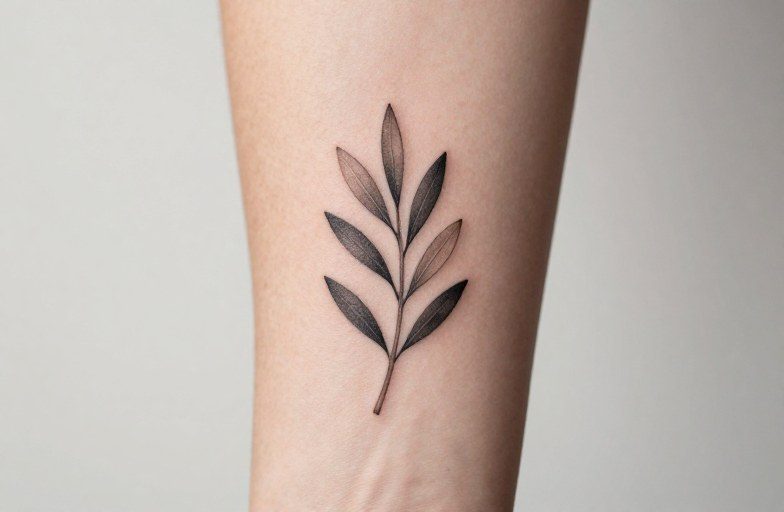
Olive branches carry weight without shouting. Peace, endurance, growth, these ideas compress into a few elegant lines when you strip away the ornamental excess. The minimalist approach suits this motif especially well because the branch’s natural silhouette already reads clearly at small sizes. What separates a striking minimalist olive branch from a forgettable one comes down to line confidence, negative space, and knowing exactly where the design earns its keep on your body.
Tips for Choosing
Line Weight and Longevity
Single-needle work looks exquisite fresh, but olive branches demand careful line weight to survive. Too thin, and the leaves blur into indistinct blobs within three to five years. Too thick, and you lose the delicate quality that makes minimalism work. Ask your artist to vary the pressure: slightly heavier lines for the main stem, lighter strokes for leaf details. This hierarchy helps the eye read the branch even as finer elements soften with age.
Black Ink vs. Subtle Tones
Classic black remains the safest bet for longevity. Some artists offer charcoal or diluted black for a softer effect, but understand the trade-off, those tones fade faster and can turn muddy. If you want a whisper-quiet piece, consider stippling or dotwork for texture rather than gray wash, which holds crisper edges over time.
- Check your artist’s healed portfolio, not just fresh photos
- Bring reference images that show the specific leaf shape you prefer, some olives have slender leaves, others broader
- Decide upfront if you want the branch curved, straight, or wrapping, this changes everything about flow
Standout Design Ideas
Minimalism doesn’t mean boring. The most memorable olive branches do one unexpected thing.
Broken Stem with New Growth
A clean break in the lower stem, with a single new shoot curling upward. The visual reads as resilience without needing explanation. Placement matters here, this version works best where the break aligns with a natural joint or crease in your body, like the wrist or elbow ditch.
Single Leaf Falling
Most olive branch tattoos show the full cluster intact. One leaf detaching, rendered as a simple outline drifting away, introduces motion without clutter. Keep the falling leaf small, no more than fifteen percent of the total design, or the composition unbalances.
- Two branches crossing at a sharp angle, forming an abstract X or subtle nod to the Greek letter chi
- Branch wrapping a thin crescent moon, both elements sharing the same line weight
- Olive branch paired with a single word in a typeface that matches the line quality, sans-serif for clean branches, serif for more classical stems
Best Placements
Where Detail Survives
The inner forearm offers flat, stable skin that ages predictably. Olive branches run naturally along the bone, following the arm’s length without fighting the body’s geometry. Behind the ear works for truly tiny pieces, think three to four leaves maximum, but expect touch-ups as that area sees friction from hair and pillow contact.
Flow and Movement
Ribcage placement lets a longer branch curve with the body’s contour. The downside: this area stretches significantly with breathing and weight fluctuation, so keep the design simple enough that distortion won’t destroy the reading. Collarbone pieces sit beautifully but hurt more than most expect; the skin there is thin and the bone close.
- Ankle and foot: high visibility, but ink fades fast from shoe friction and sun exposure
- Finger: olive branches wrap the phalanges elegantly, but expect near-annual touch-ups
- Upper arm, inner bicep: protected from sun, good for medium-sized pieces with slightly more detail
Trending Variations
The core motif stays constant, but contemporary artists are pushing how it’s rendered.
Botanical Accuracy vs. Stylization
Some clients now request species-specific leaves, Olea europaea has a particular gray-green narrow leaf with a slight curve. Tattooed in pure black, this specificity reads as a subtle flex of botanical knowledge. Others go the opposite direction, reducing the branch to three lines and seven dots, almost abstract enough to be any plant until you know.
Negative Space Leaves
Instead of drawing each leaf, the artist outlines the branch and leaves the leaf shapes as untouched skin within the black stem structure. This technique requires confident, even saturation around the negative spaces. Done well, it’s striking; done poorly, it looks like a coloring book someone abandoned.
- Micro-realism olive branches: technically impressive, but question whether the detail will hold at under two inches
- Branches emerging from existing tattoos: growing out of a previous piece’s edge, continuing a narrative without crowding
- Dual branches, one fresh and one bare: seasonal contrast in minimal form
Popular Styles
Minimalism isn’t one uniform look. These approaches each deliver different energy.
Fine Line
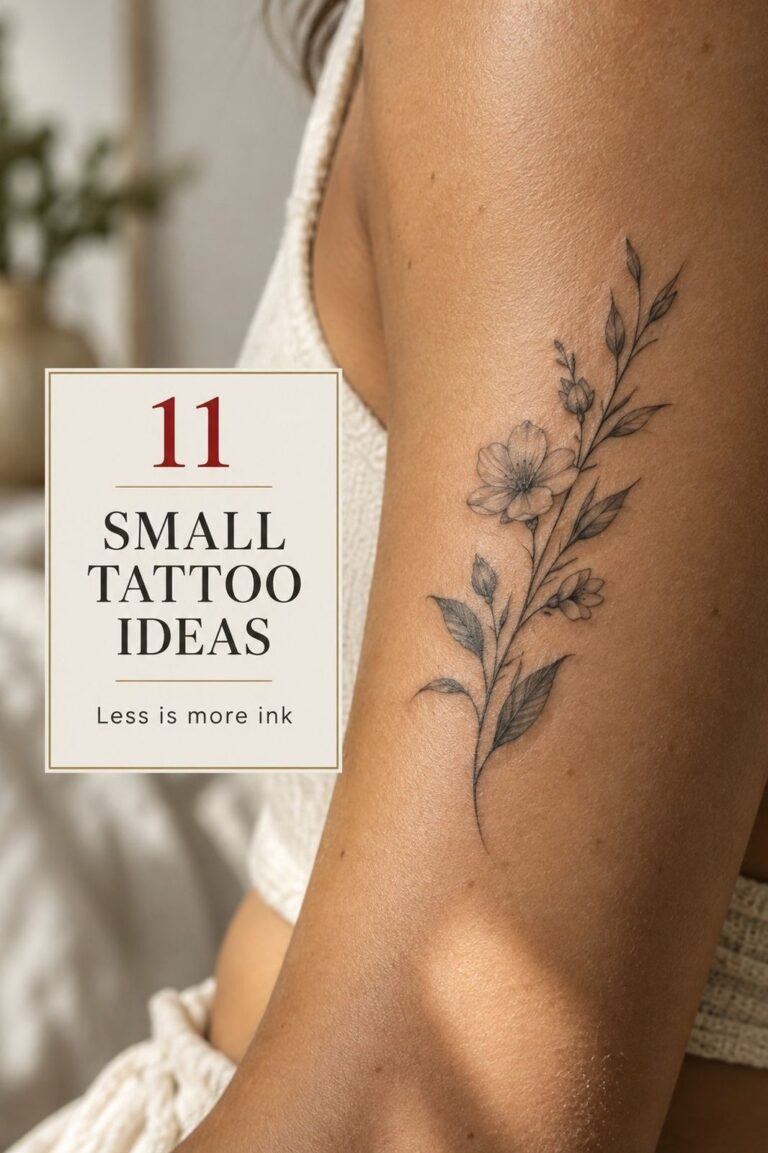
Hair-thin continuous lines, often done with single needles or tight three-round liners. The result is ethereal, almost drawn-on. Fine line olive branches suit people who want the tattoo to feel incidental rather than declared. Risk: lines can spread, so choose an artist with demonstrated healed fine work.
Illustrative Minimal
More deliberate than fine line, with clear variation between outline and sparse internal detail. Maybe three leaves get a single central vein line; the rest stay pure silhouette. This style photographs well and ages more forgivingly than ultra-thin approaches.
- Hand-poked: irregular, organic edges that echo the plant’s natural imperfection
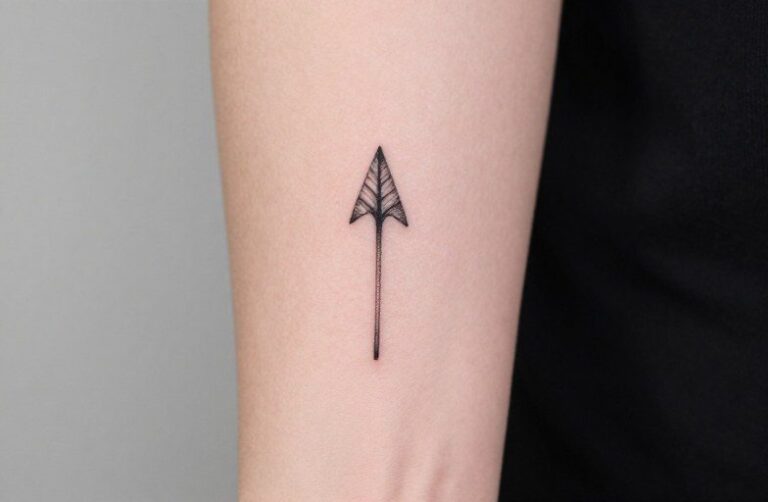
- Geometric reduction: stem as straight line segments, leaves as simple triangles or diamonds
- Brushstroke: one confident sweep suggesting the branch rather than delineating it
How to Personalize It
The olive branch accepts modification without losing its identity.
Number and Arrangement of Leaves
Seven leaves might reference a specific date or personal significance. Three leaves clustered tight, then a gap, then two more, this rhythm becomes yours alone. Discuss this with your artist; they can adjust spacing so the pattern feels intentional rather than arbitrary.
Companion Elements
A single olive fruit, small as a grain of rice, changes the reading from abstract peace to harvest and sustenance. A tiny bird footprint near the branch suggests the dove narrative without illustrating it literally. These additions work best when they share the same visual language, if your branch is pure line, don’t drop a shaded fruit beside it.
- Coordinate with existing tattoos: matching line weight to pieces you already wear
- Orientation: upward growth versus downward hang significantly shifts emotional tone
- Scale relative to your body: a four-inch branch on a large frame reads differently than the same design on a smaller one
Final Thoughts
The minimalist olive branch succeeds because restraint forces every mark to justify itself. Before committing, live with a sharpie version sketched on your chosen spot for a few days. Notice when you stop seeing it, that’s the level of integration you’re aiming for. The best versions of this tattoo don’t announce themselves; they settle into your skin like something that was always meant to grow there. Choose an artist whose healed work proves they understand how minimal lines age, trust the negative space, and let the branch do its quiet work.
Frequently Asked Questions
How small can a minimalist olive branch tattoo be before it blurs?
Generally, keep it at least two inches in length for the main stem. Leaves can be tiny fresh, but ink spreads slightly over time; leaves under a quarter inch risk becoming solid black blobs within five years.
Does an olive branch tattoo work for cover-ups?
Not typically as the primary cover element, minimalist designs lack the density to hide old ink. However, a bolder olive branch with added fruit or companion flowers can work alongside other cover techniques.
How much does placement affect pain for this design?
The forearm and outer upper arm rate mild for most people. Ribcage, ankle bone, and finger placements hurt significantly more due to thin skin or proximity to bone, though sessions are usually short for minimalist work.
Can color be added to a minimalist olive branch without ruining the aesthetic?
A single olive fruit in muted green or a subtle blue-gray wash on select leaves can work, but restraint is key. Most successful color additions use no more than ten percent of the total design area.