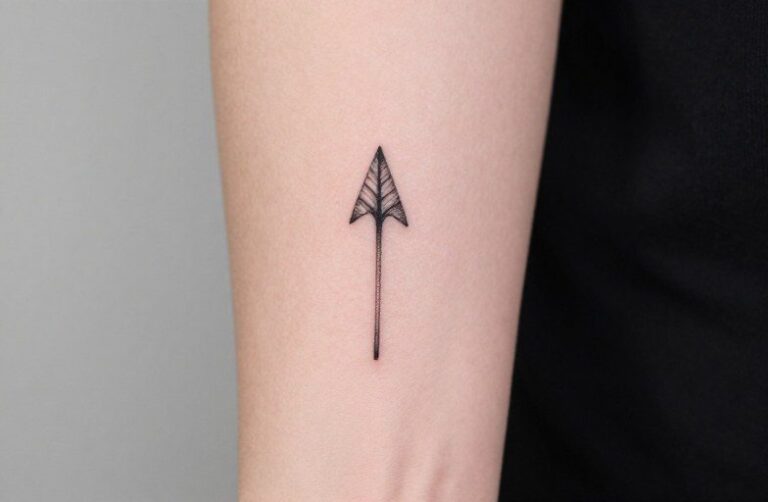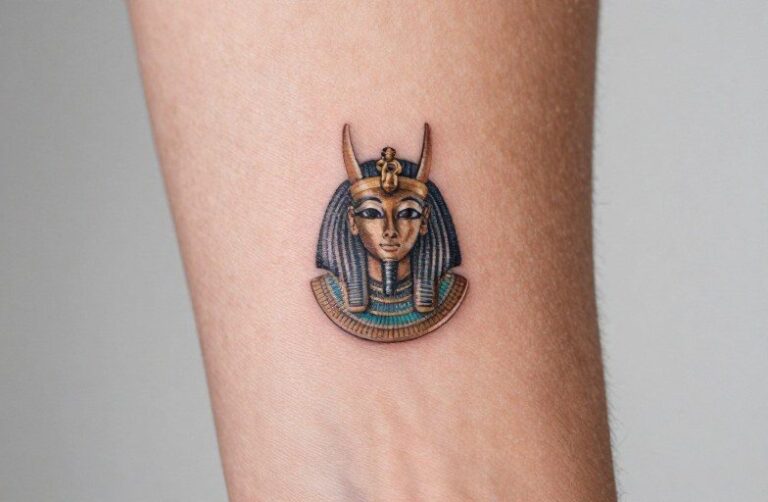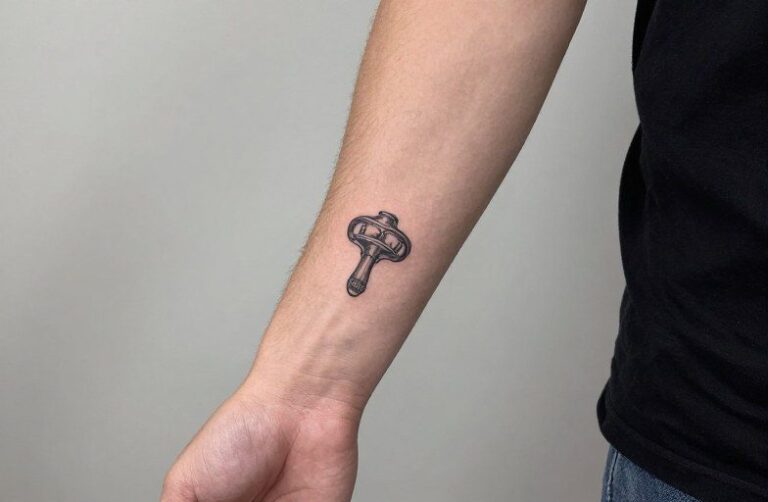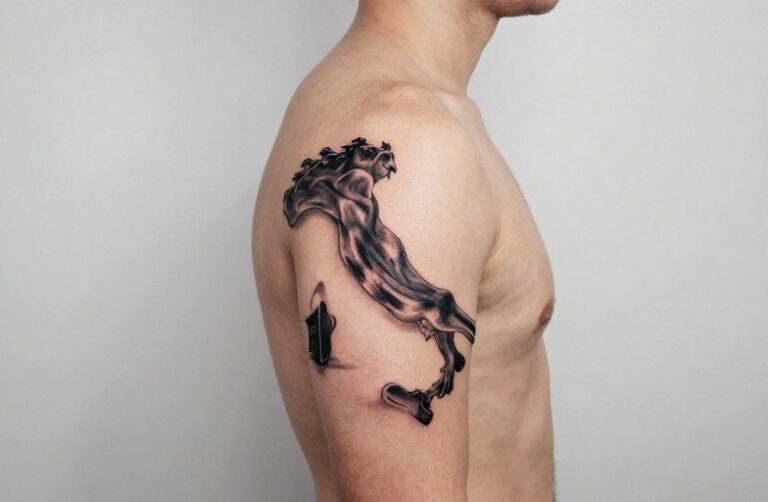
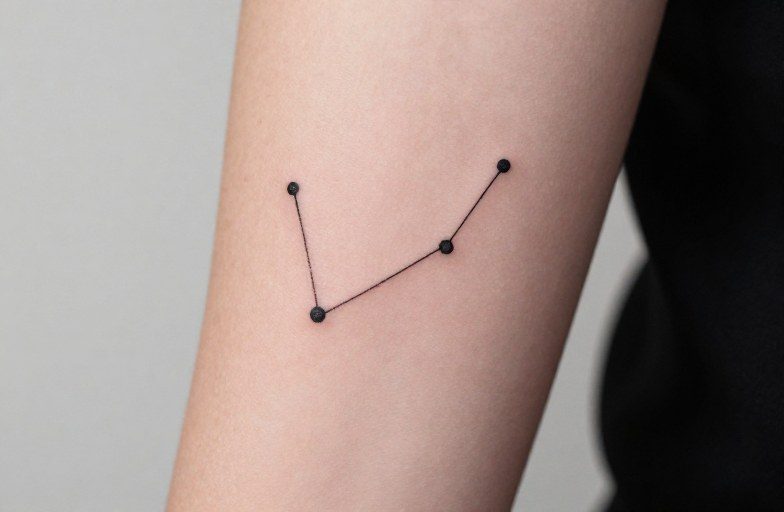
Minimalist constellation tattoos strip celestial mapping down to its bones: a few dots, thin connecting lines, and the negative space between them. No ornate flourishes, no heavy black fill. The appeal is in restraint, how little ink it takes to render Orion’s belt or Cassiopeia’s W recognizable to anyone who has looked up at night. These designs work because constellations are already abstract. The ancients connected dots; your tattoo does the same, just smaller and more permanent.
Color Choices
Black Ink and Its Longevity
Nearly all minimalist constellation tattoos live in black. Single-needle or fine-line black ages with more grace than color in this specific context, thin lines stay readable, and the dot-work that represents stars resists the blurring that fatter, more saturated pieces suffer. A constellation in black looks intentional five years out, not like a faded guess. Some artists will use a slightly heavier black for the connecting lines and a lighter gray or stippled dot for dimmer stars, creating subtle depth without breaking the minimalist rule.
When Color Actually Works
Color enters the conversation in two ways. One: a single accent, maybe one star in your birthstone hue, or a tiny gradient shift in a specific point of light. Two: white ink highlights on darker skin tones, where they can suggest stellar brightness without adding visual weight. Pastel constellations exist, but they read as decorative rather than astronomical, and they demand more frequent touch-ups. If you want color, commit to the maintenance; otherwise, stay in black.
Best Placements
Flat Surfaces for Accuracy
Constellations are geometric. Distort them across a curved or mobile area and the proportions suffer. The inner forearm, outer bicep, upper back between shoulder blades, and the flat plane of the ribs all hold the shape true. The collarbone area works for smaller pieces, Orion’s seven main stars fit neatly along its length. Avoid spots with heavy flexion if the lines are extremely fine; the inner wrist sees enough movement that detail can soften faster than you’d want.
Hidden and Revealed
Behind the ear, the nape of the neck, the side of the ribcage, these placements keep the tattoo personal, revealed only when you choose. Constellations suit this intimacy well; they’re literally maps of the sky, but most people won’t recognize a specific grouping without prompting. A minimalist piece in a hidden spot becomes a private reference point, something you check in on rather than display.
Tips for Choosing
Start with the actual sky, not Pinterest. Stellarium, SkySafari, or even a printed star chart will show you how a constellation really looks, where the bright stars sit, where the dim ones fade, how the lines connect in official astronomical diagrams versus popular interpretations. Many “zodiac” tattoos online take creative liberties that would make an astronomer wince. Decide if accuracy matters to you, or if you’re after the general shape and feeling.
- Check whether your birth constellation is visible from your hemisphere, southern hemisphere natives sometimes find their zodiac sign’s constellation never rises in their home sky.
- Consider the asterism versus the full constellation. The Big Dipper is an asterism, a recognizable pattern within Ursa Major. It’s seven stars instead of dozens. Much easier to render minimally.
- Think about orientation. A constellation tattooed upright on your arm will appear rotated if you raise that arm to point at the actual sky. Some people flip the design intentionally; others accept the disconnect.
Size & Scale
The Lower Limit
There’s a floor to how small a constellation can go and still read as stars rather than a random scatter of dots. For most designs, two to three inches in the longest dimension preserves the relationship between points. Go smaller and the lines between stars risk becoming indistinguishable from skin texture or freckles. Single-needle work can push smaller, but it requires an artist with genuine fine-line specialization, not someone who just owns a tight liner.
Scaling Complex Constellations
Some constellations contain dozens of stars. Hydra, the largest, sprawls across 100 degrees of sky. Rendering it minimally means selecting which stars to include, which to drop. A good artist will edit ruthlessly, keeping the shape recognizable through maybe eight to twelve points. This is where the minimalist approach earns its keep: the constraint forces clarity. Larger scales allow more stars, more connecting lines, but they also shift the piece from minimalist toward illustrative. Know which side of that line you want to occupy.
For First-Timers
Minimalist constellation tattoos are genuinely forgiving as first pieces. The sessions are short, often under an hour. The pain tends to be moderate because the work is dot-and-line, not heavy saturation or shading. Healing is straightforward: the skin trauma is minimal, and aftercare follows standard protocol without special complications.
- Choose an artist whose portfolio shows clean, consistent fine lines and healed results, not just fresh photos. Fresh fine-line work always looks sharper; the healed version reveals whether the artist actually understands how skin holds detail.
- Expect the lines to soften slightly. A hair-thin connector that looks crisp on day three will settle into something slightly more diffuse by month six. This is normal, not poor work. Plan for it in the initial design.
- Don’t get too small. First-timers often want invisible, and invisible doesn’t age. Trust the artist’s minimum size suggestion for the specific constellation you want.
Standout Design Ideas
Beyond the Standard Connect-the-Dots
The most striking minimalist constellation tattoos find one variation and commit. One approach: render only the stars, no connecting lines, letting the viewer’s eye complete the pattern. Another: use the negative space of your existing freckles or moles as stars, tattooing only the lines between your natural marks. Some people add coordinates, right ascension and declination, in tiny type beneath the constellation, grounding the abstraction in real data.
Hybrid and Personal Elements
A constellation can frame another minimalist element: a single word, a tiny mountain silhouette, a wave shape that echoes the curve of the star pattern. The key is keeping both elements equally restrained. One heavy piece and one light piece creates imbalance; two light pieces in dialogue with each other creates something more interesting than either alone. I’ve seen a Cassiopeia tattoo where the W shape’s final point becomes the mast of a tiny sailboat, specific, personal, not replicable by anyone else.
The Takeaway
Minimalist constellation tattoos succeed when they respect the source material and the limitations of skin. They’re not about cramming the night sky into a tiny space; they’re about selecting which stars matter, which connections hold meaning, and letting everything else fall away. The best ones feel inevitable, like the pattern was always waiting to be found on that particular patch of body. Find an artist who edits as well as they draw, bring them real astronomical reference, and give the design enough size to survive the years. The sky has been up there a long time. Your tattoo should last a respectable fraction of that.
Frequently Asked Questions
Do constellation tattoos have to be astronomically accurate to look good?
No. Plenty of beautiful constellation tattoos take liberties with star placement or connectivity. The question is whether accuracy matters to you personally, some people want the real sky mapped on their skin, others want the general feeling of a pattern they connect with.
Will the connecting lines between stars blur together over time?
Very fine lines can soften and appear slightly thicker as they age, but well-executed minimalist work with adequate spacing between points typically stays readable for years. The key is starting with enough gap between lines and not going too small.
Can I combine multiple constellations in one minimalist tattoo?
Yes, but it requires careful editing. Two or three small constellations can share space if you vary their scale or use one dominant and others as subtle accents. Too many full constellations in one area loses the minimalist quality and becomes cluttered.
How do I find my exact constellation pattern for a specific date?
Use planetarium software like Stellarium (free) or apps like SkySafari to input your date, time, and location. This shows how the constellation actually appeared on that night, which may differ from generic zodiac symbols or popular tattoo templates.