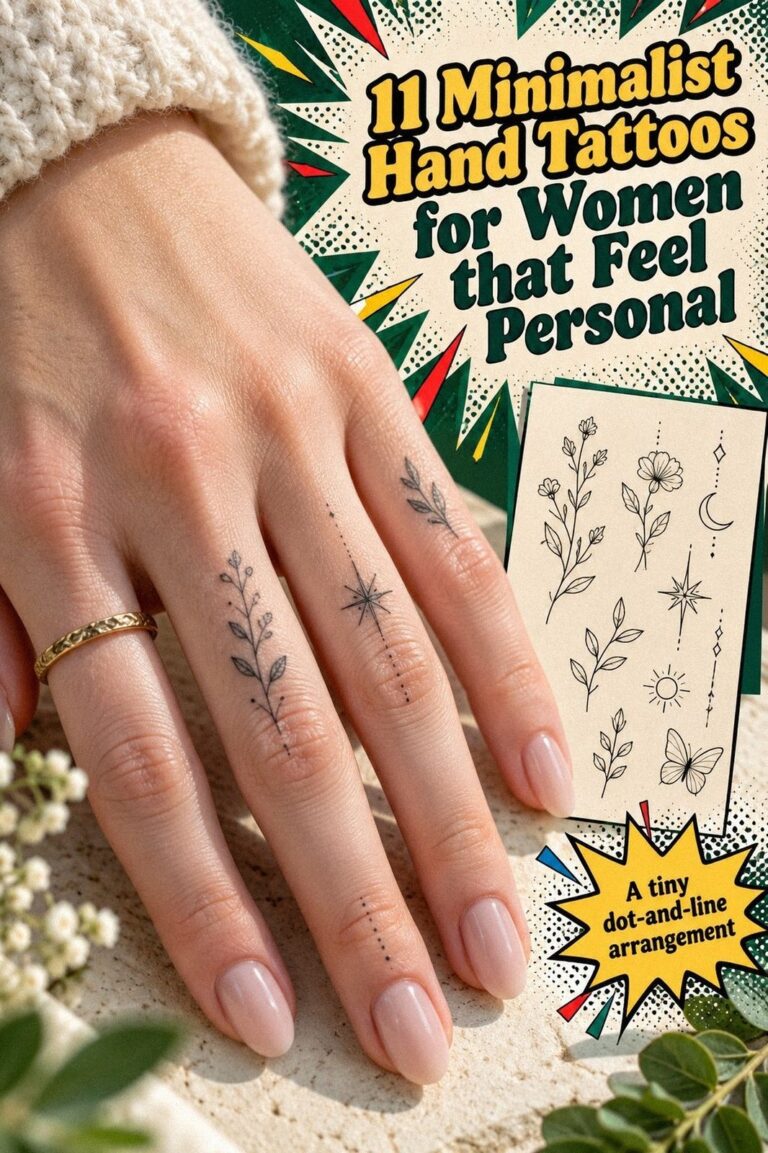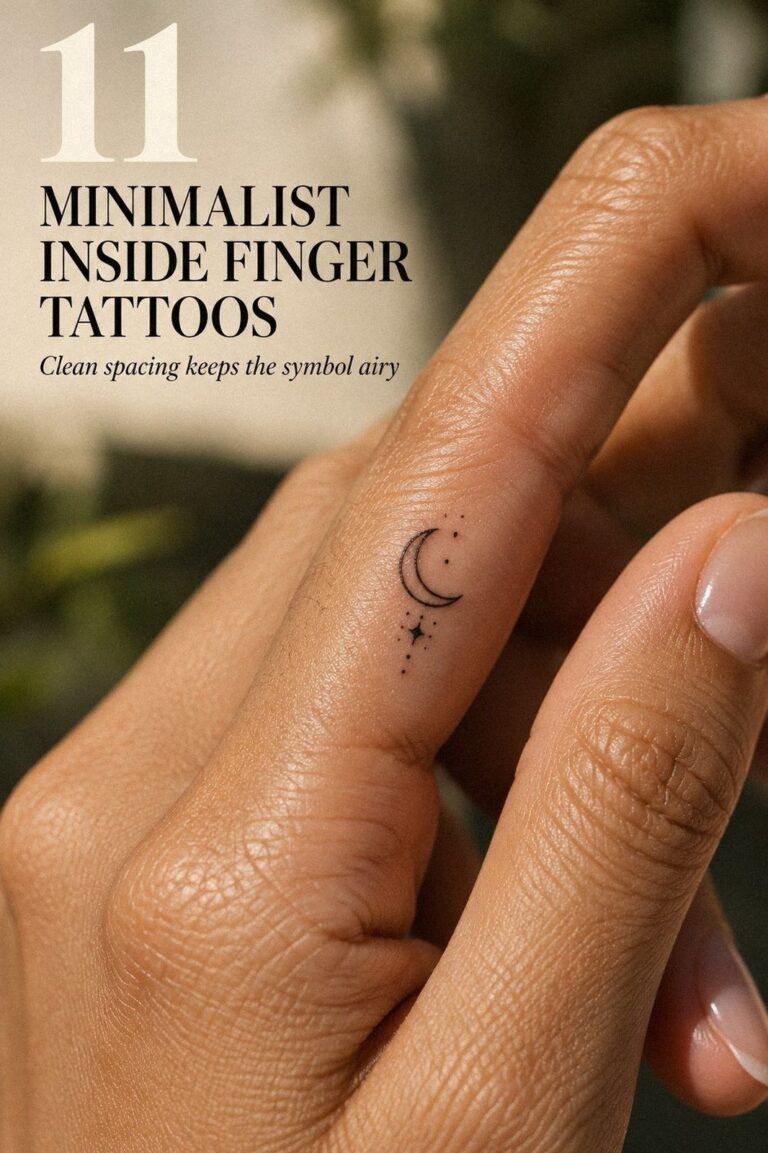
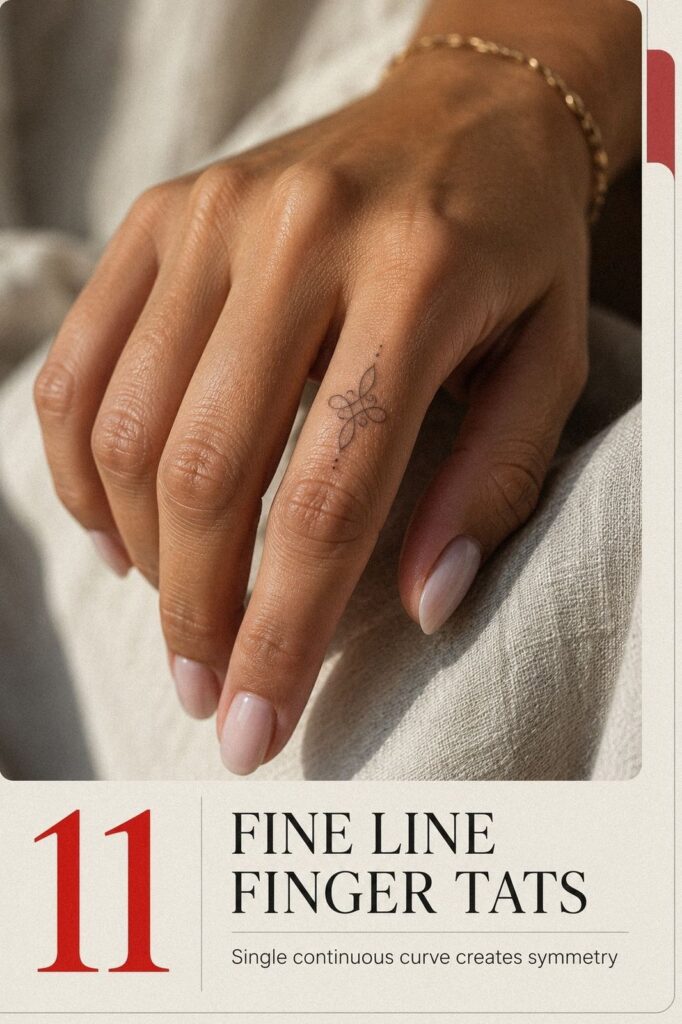
Fine line finger tats can be an easy first tattoo when the design, placement, and artist all make sense together. I once chose a tiny mark without thinking about fading, and I regretted the placement before the appointment ended. Your best pick will be personal, crisp, and built for real hands.
Start here!
1Start With Tiny Initials
Initials give you a personal tattoo without forcing a large symbol onto your hand. For your first piece, ask for one or two letters in a clean, hair-thin style, preferably on the side of a finger or above the first knuckle. I like one or two initials because your eye reads them instantly, and you won’t need a long explanation every time someone notices them.
Your artist should draw the letters at the size they can safely tattoo, not the size you first imagined on your phone. Tiny loops can blur, especially where your skin bends and rubs. If you’re comparing approaches, this guide to what fine line tattoo means will help you understand why spacing matters.
I’d skip ornate script here. It can look romantic in a stencil and become muddy after healing. A single-needle black ink initial can feel understated, meaningful, and timeless without losing its identity.
– Crisp serif letter with generous spacing. – Personal initial pair from a parent, partner, or child. – Small black mark placed away from the deepest crease.
And if you’re nervous, ask for a temporary stencil first. Look at your hand while typing, washing, and holding a cup. Your choice should still feel meaningful when you aren’t trying to show it off.
2Why Birth Flowers Work
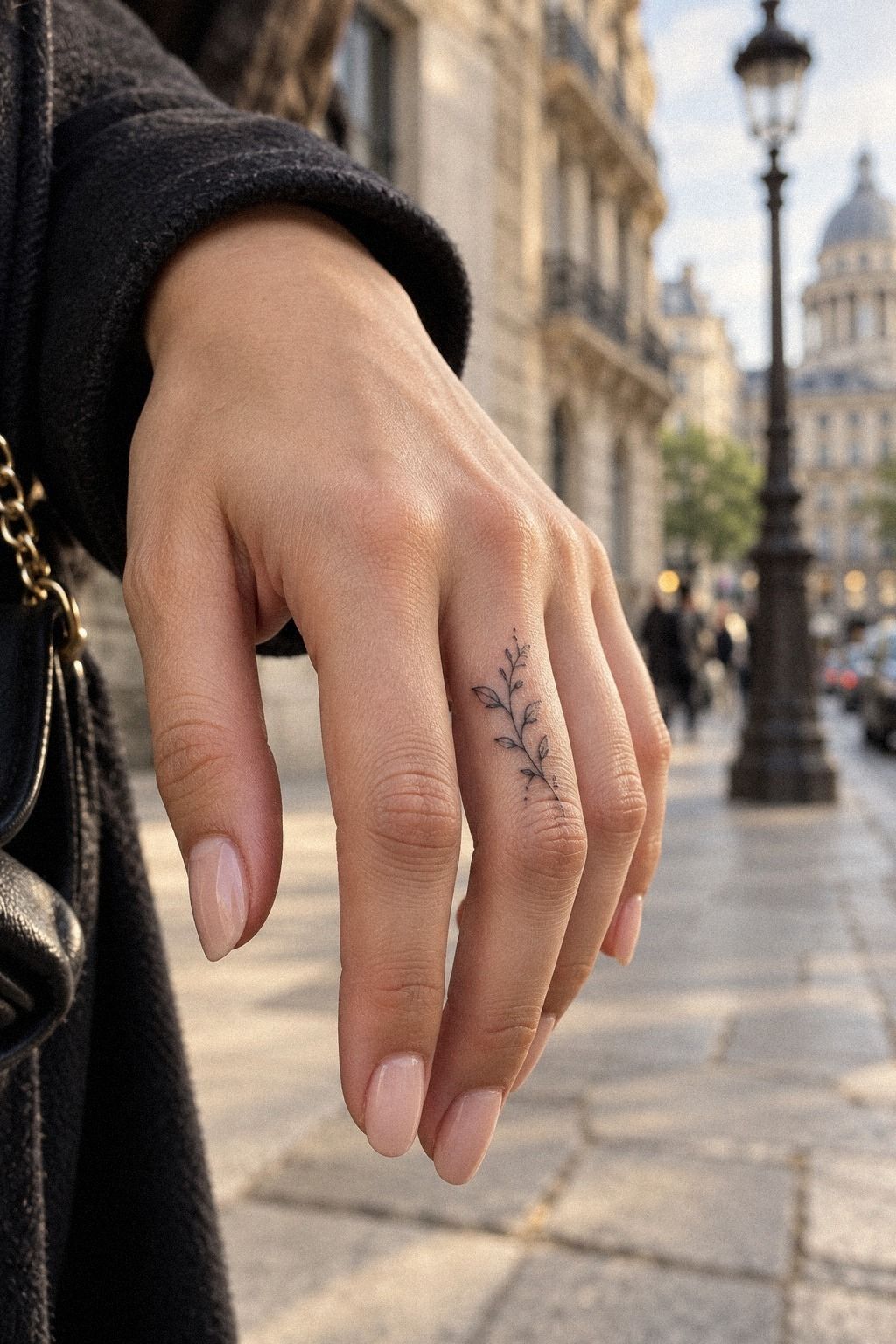
A birth flower gives you symbolism without making the tattoo feel obvious. Choose one slender stem, a few petals, and enough open skin around the design for every line to breathe. I prefer one birth flower over a crowded bouquet because your flower will remain readable as the ink settles.
Bring your artist a reference that shows the flower from the angle you want, then let them simplify it for your finger. A daisy, violet, or poppy may need different petal spacing, and your artist will know which details can survive. You don’t need to copy one image exactly.
If you want more examples, browse small fine line tattoos before you book. The right design can feel delicate, expressive, and quietly personal without becoming generic.
– Single stemmed flower with two or three leaves. – Birth-month reference kept symbolic rather than literal. – Black botanical outline with restrained detail.
But don’t choose a flower only because it seems striking at first. Ask yourself what you’ll still connect with years from now. That answer will make your tattoo meaningful, even if the final design stays minimal and dainty.
3Match Meaning, Not Lines
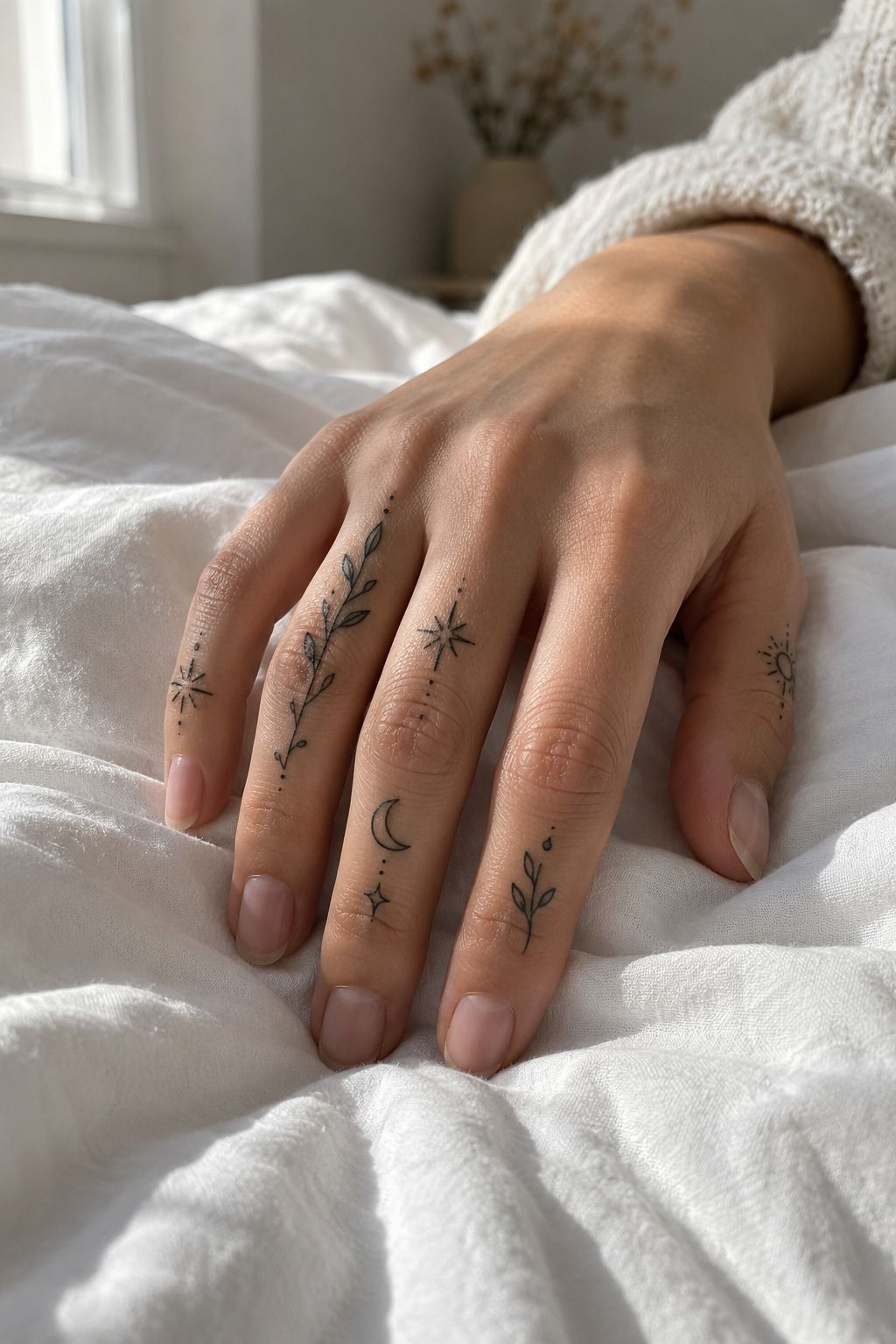
Matching tattoos work best when they share an idea instead of copying every line. You might choose two halves of one shape, paired stars, or the same tiny symbol in different placements. A matching black ink symbol keeps the design sleek while giving each person room to make a separate choice.
I recommend testing both stencils before you schedule the appointment. Your finger shapes may differ, and one placement might suit you better than your partner. I’ve seen couples rush this part, then discover that the same mark looks balanced on one hand and cramped on the other.
If you like restrained designs, compare ideas in small single line tattoos. The goal is a shared meaning, not a forced mirror image. That distinction can make the difference between a stylish choice and a regrettable one.
– Paired crescent marks with slightly different curves. – Two connected lines that meet only when hands touch. – Matching dot and star symbols in the same ink weight.
Would you both still want the design if the relationship changed? It’s an uncomfortable question, but it protects you from choosing a tattoo that depends entirely on one moment. A symbolic, personal idea gives your matching piece a stronger future!
4Make Tiny Symbols Count
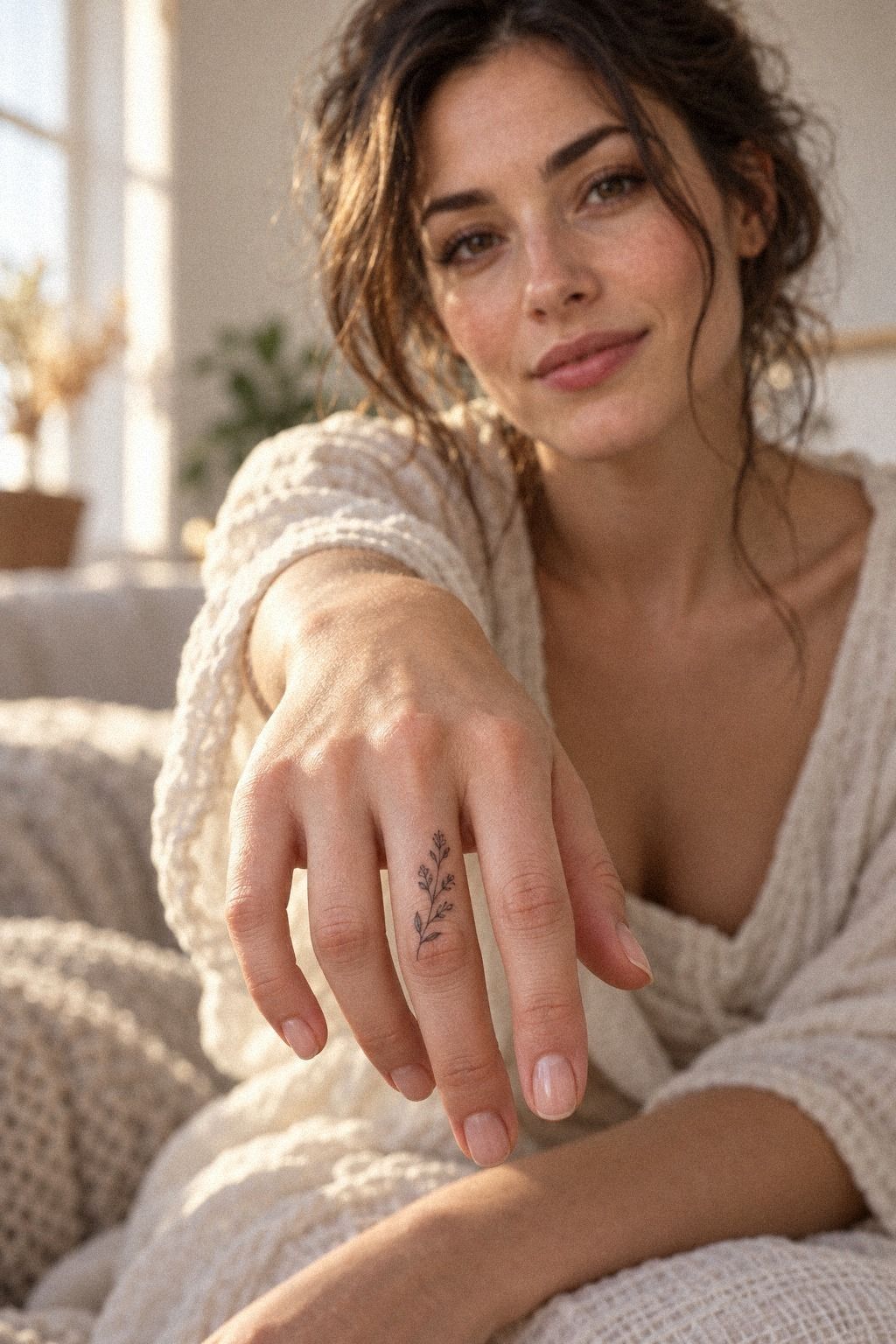
Tiny symbols let you say a lot with very little ink. A minimal symbol can be fierce, sacred, or playful depending on the meaning you attach to it. Keep the shape recognizable, leave breathing room around it, and avoid details that only work at a much larger size.
5White Ink or Black?
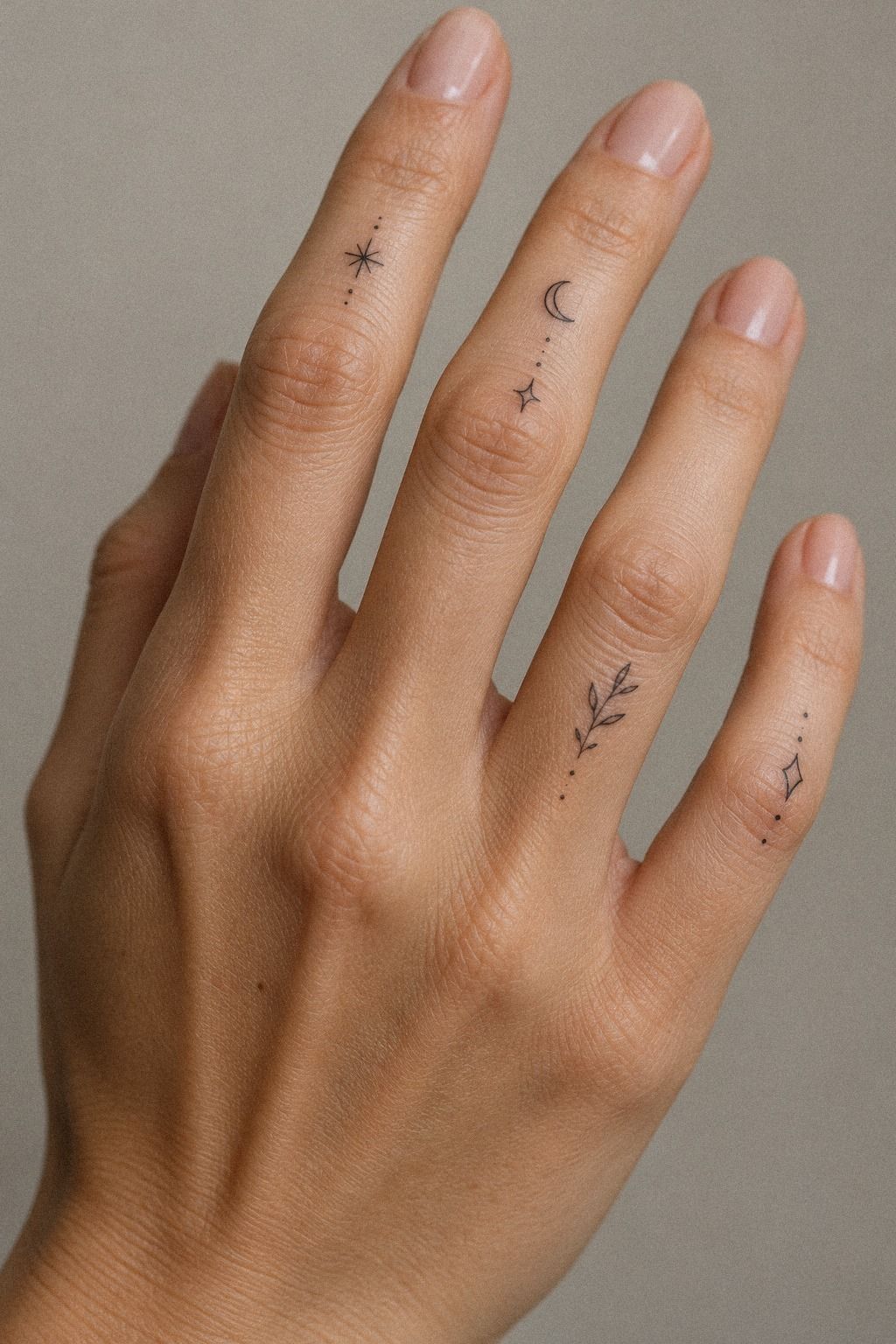
White ink can look ethereal on some skin tones, but it requires realistic expectations. It may appear soft, subtle, or nearly invisible after healing, and its final look depends on your skin, placement, and how the pigment settles. A white ink crescent can feel unique, though it won’t give you the same visual strength as black ink.
This idea works well as a flash-sheet choice because you can compare several marks before committing. Ask your artist about white ink suitability for your skin and the specific location you want. I wouldn’t choose it simply because it feels different.
If you want the clearest long-term outline, black ink is usually the stronger value. Browse fine line geometric tattoo ideas to see how spacing and contrast affect small designs. A vibrant white detail can be beautiful, but it may not be worth the uncertainty for your budget.
– White ink star outline with open interior space. – Pale botanical mark on a less exposed area. – Black-and-white contrast symbol with black lines doing the structural work.
Your artist should explain how the design may soften, and you should listen closely. A daring choice can be elegant, but it needs to match your expectations rather than surprise you later!
6Trace the Side of Your Finger
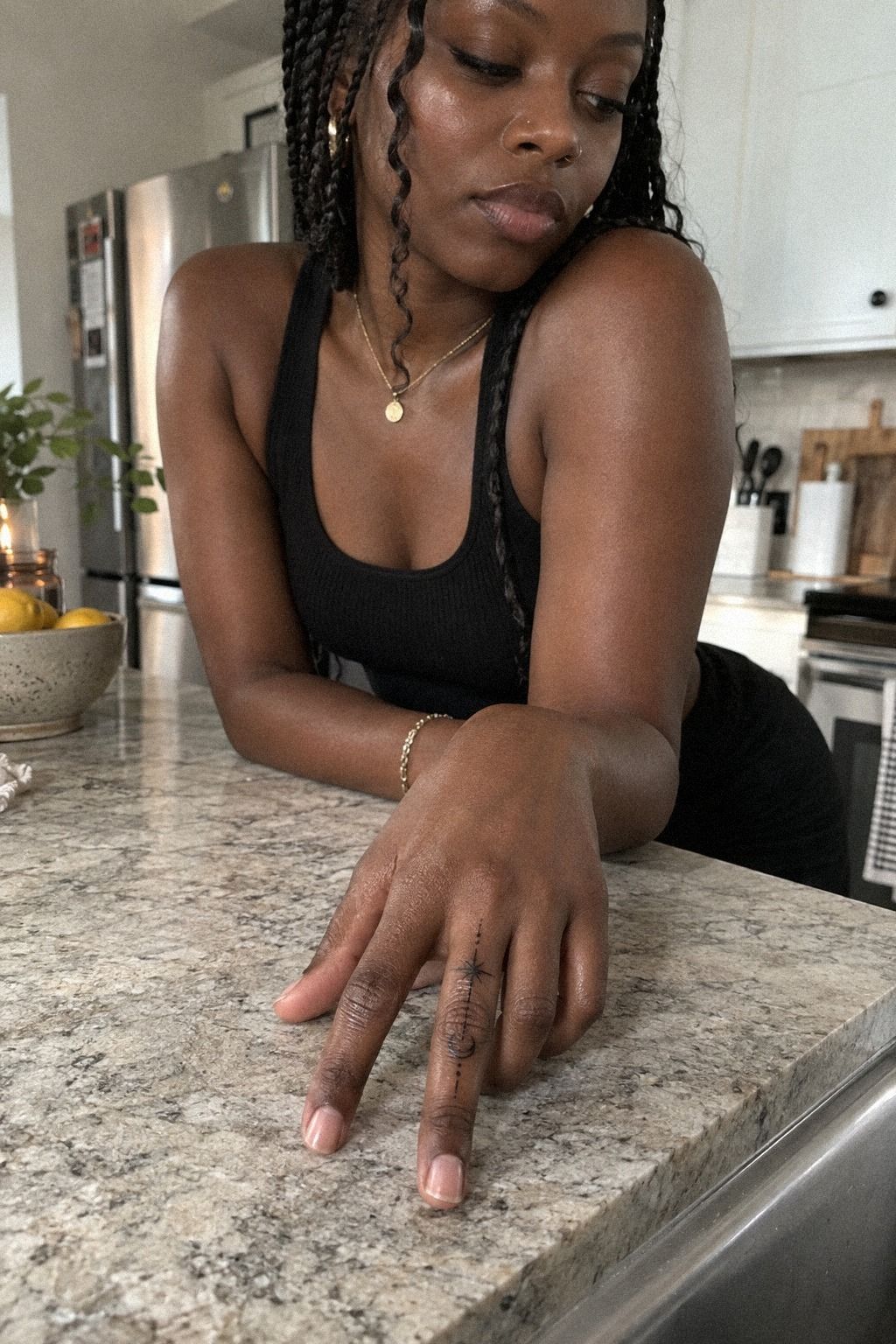
Side-of-finger placement feels personal because the tattoo appears when you turn your hand, not every second you look down. It suits narrow symbols, short words, tiny stems, and one clean line that follows the finger’s natural direction. A side-of-finger placement can look graceful and modern without competing with your rings or daily gestures.
The tradeoff is friction. Your hands touch water, soap, fabric, and hard surfaces constantly, so side placement may fade or soften sooner than a more protected area. Your artist can help you choose the least troublesome side, and you should ask how the line will move when your finger bends.
The small finger tats guide has more placement ideas if you’re still comparing options. Read it before booking so you can decide whether the location is worth it for your routine.
– Vertical botanical line along the outer finger. – Tiny word fragment with wide letter spacing. – Slim crescent outline kept clear of the deepest crease.
I made the mistake of treating a finger like a flat canvas. It isn’t.
Your hand moves all day, and the best design follows that movement instead of fighting it. Choose a sharp, understated concept with enough open skin.
7Letter a Name Carefully
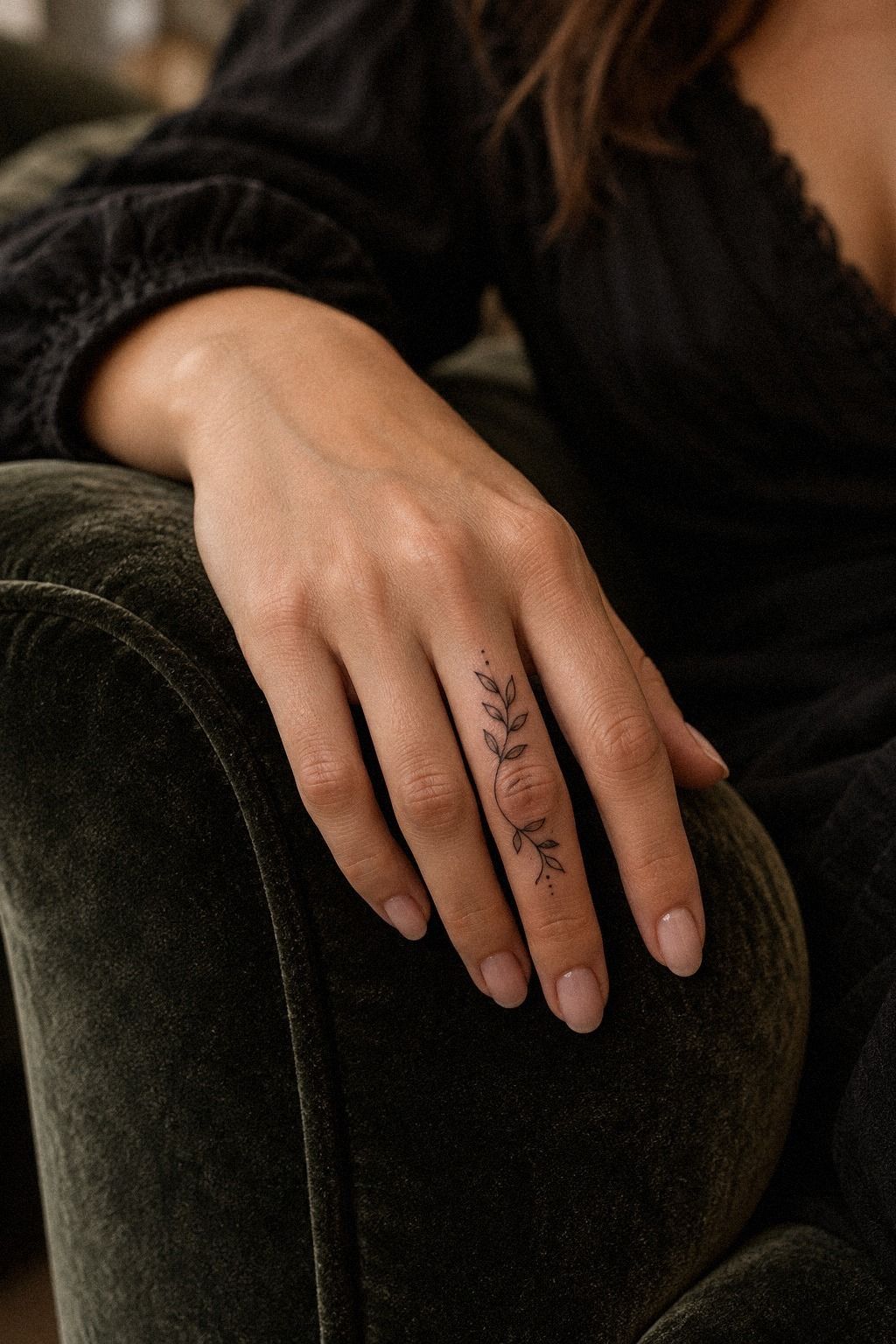
A name can be one of the most meaningful choices, but lettering needs extra care on a small surface. Choose a short name, nickname, or single initial, then let your artist create a custom version that remains readable. A short handwritten name can feel romantic and expressive without becoming a full statement across your hand.
Your reference font is only a starting point. Some scripts have loops that close too quickly, while block letters may look cleaner after healing. Ask to see the stencil in your preferred placement and move your finger naturally before you approve it.
If you’re choosing a feminine variation, compare small finger tats for women for placement inspiration, not direct copies. Your artist should show you how the letters will respond to movement and fading.
– One meaningful nickname in crisp black ink. – Initial and tiny dot instead of a crowded full name. – Short name with open letterforms and balanced spacing.
But don’t let sentiment override readability. If your name requires six tiny letters squeezed into one crease, it may be better as an initial or a slightly larger design. Your tattoo can stay personal while becoming more timeless.
8Let Celestial Motifs Speak
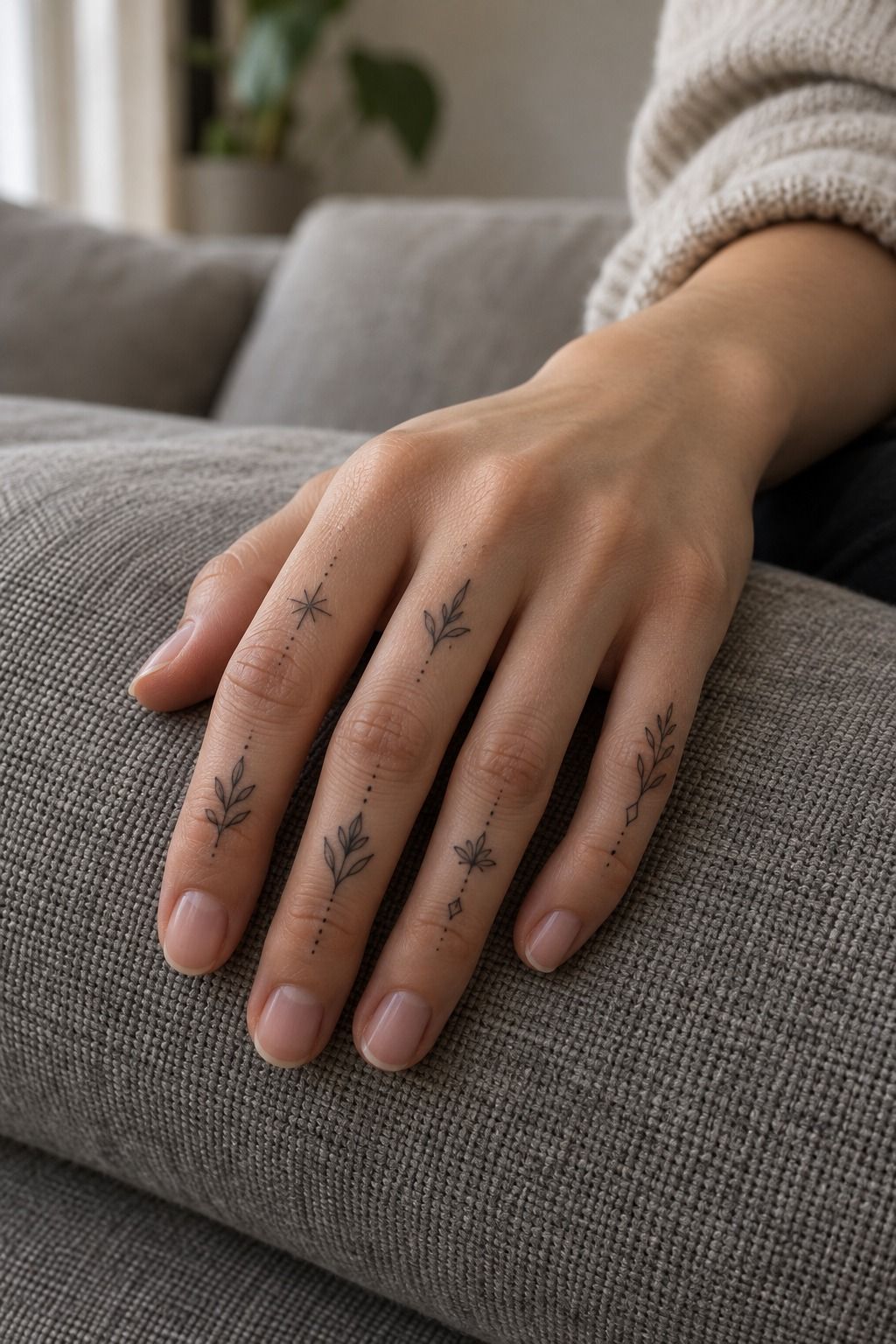
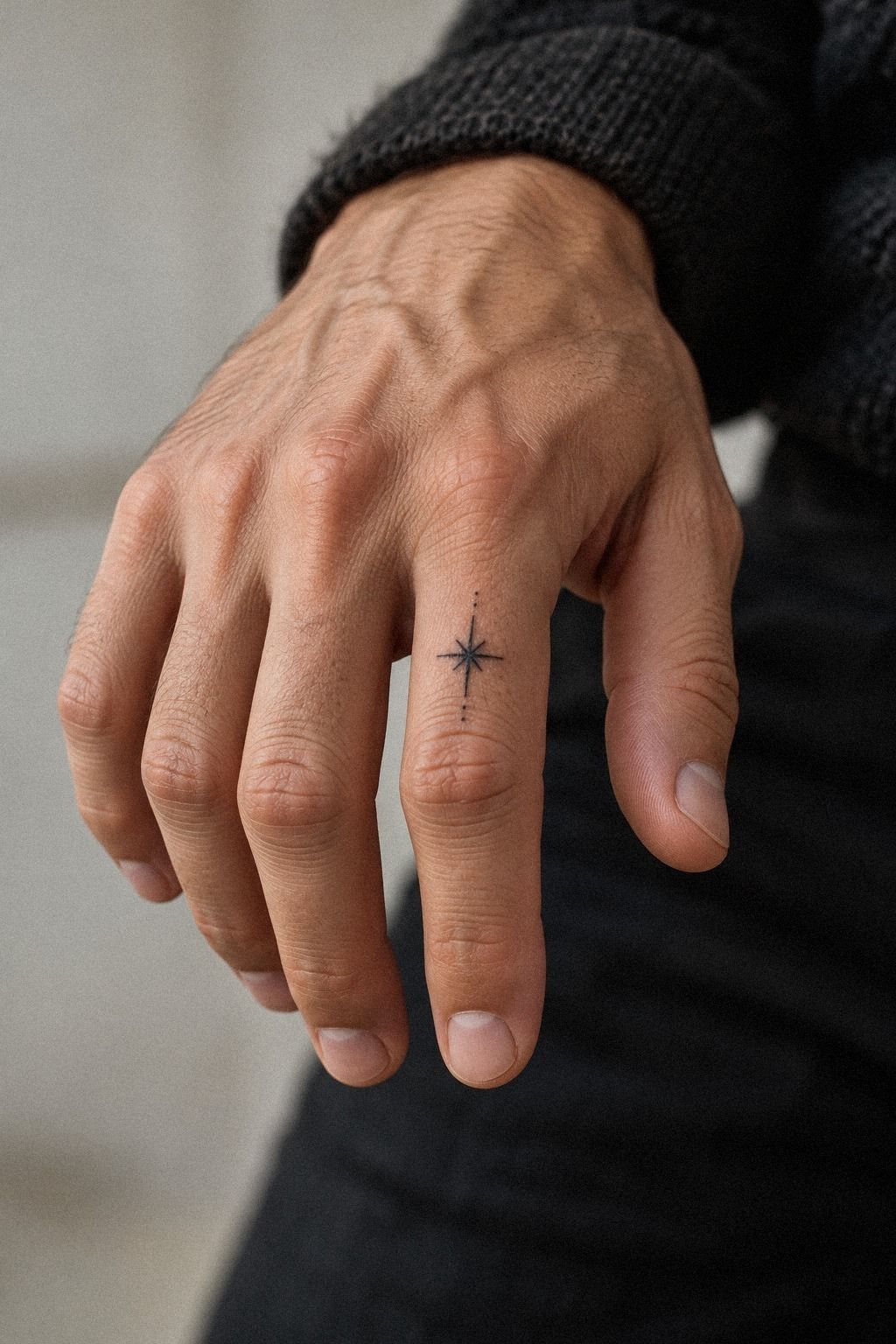
Celestial motifs bring a little mystery to a finger without needing heavy shading. A small celestial symbol can feel haunting, iconic, or empowering when the shape remains simple. Moons, stars, and tiny constellations need enough separation to keep their identity after healing.
9Choose Knuckle Contrast
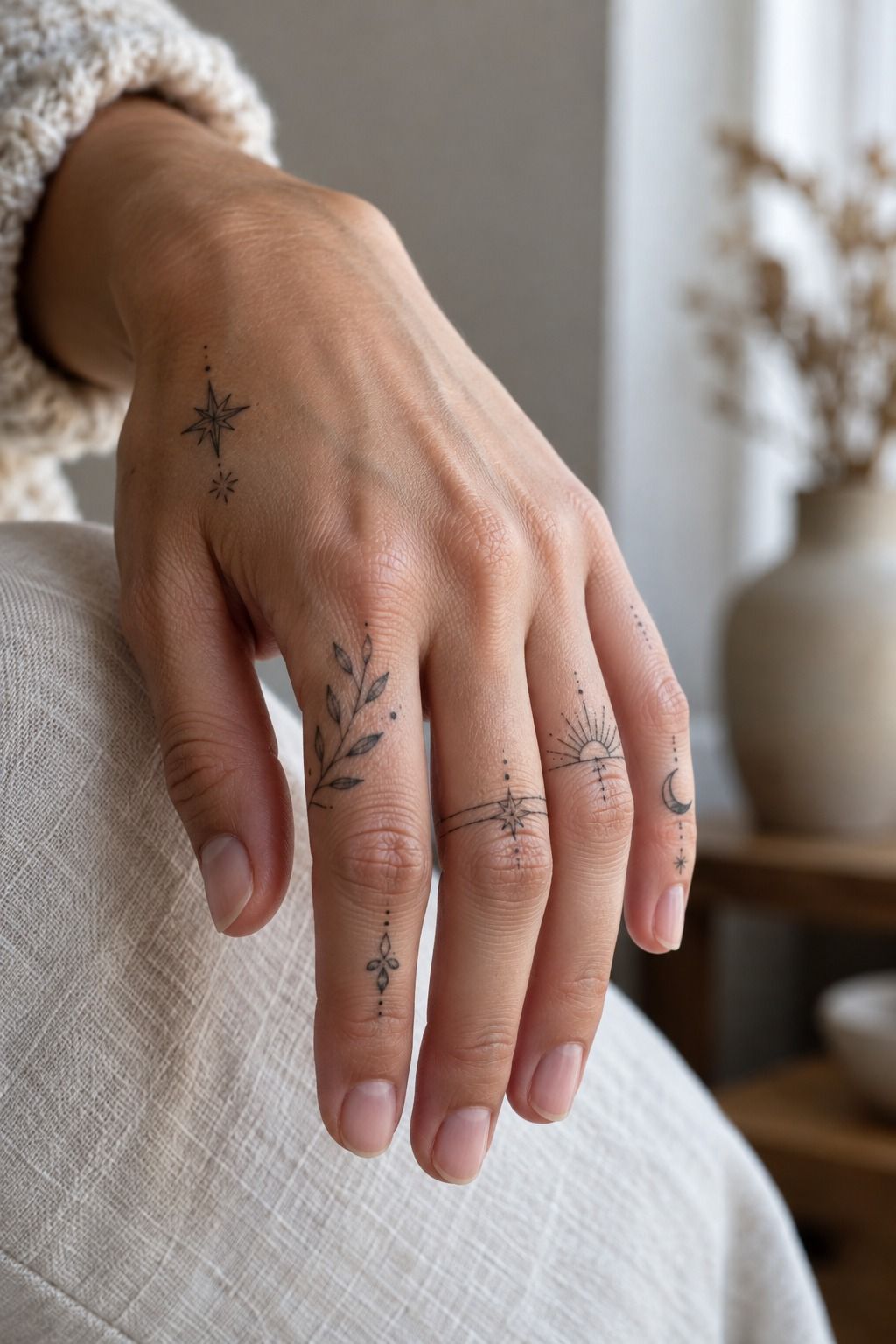
Knuckle placement gives a fine line design more visibility, so your choice should have a strong silhouette. A small diamond, letter, flame, or abstract mark can look striking when the lines remain deliberate. A blackwork diamond creates enough contrast to read from a distance while keeping the overall tattoo compact.
Your knuckles bend, stretch, and collect friction, so the artist needs to consider how the design changes when your hand closes. Ask for a stencil with your fingers relaxed and curled. I’ve found that a slightly larger symbol often looks sharper than a detailed mark forced into a tiny space.
You can compare more ideas in small fine line tattoo designs. A bold design may be worth the cost when it remains legible, but a dense one can offer poor value if it needs frequent correction.
– Strong diamond outline with one open center. – Single letter mark with clean block geometry. – Small flame symbol with two confident curves.
Would you rather have a softer design that disappears in daily life, or a crisp design that keeps its identity? I’d choose the second. Your knuckle tattoo needs visual structure, not extra decoration.
10Follow a Botanical Line
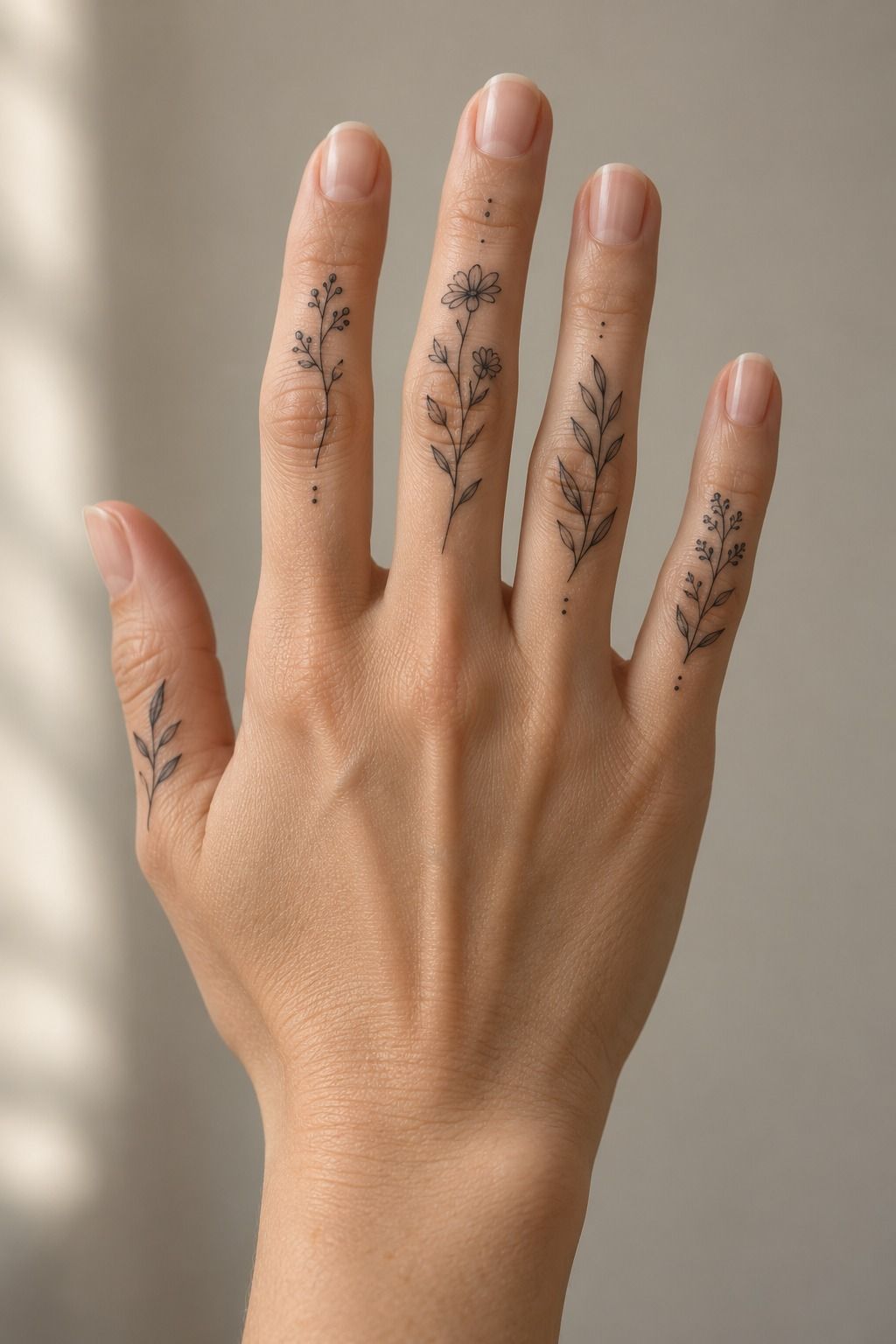
Botanical details can be delicate without becoming fragile-looking. A thin stem, one leaf, and a small bud give your artist enough structure to create a graceful design that follows the finger. A single-needle olive branch feels organic and refined, especially when the leaves stay separated.
This is also a smart idea for comparing stencil and healed references. Ask your artist to show healed work, not only fresh results, because the lines may soften as your skin settles. A healed portfolio is worth more than a dramatic new tattoo.
If you want a longer, more continuous design, look through small single line tattoos for ideas about flow. Your branch should have a clear beginning and end, with enough space for each leaf to remain crisp.
– Olive stem with three open leaves. – Tiny fern detail with crisp repeating marks. – Graceful wildflower line with one curved stem.
I’d skip a dense bouquet on a finger. It may look ornate on paper, but the design can lose its rhythm once the lines sit close together. Your best botanical tattoo will feel flowing, sharp, and timeless.
That clarity is powerful!
11Keep Meaning Minimal
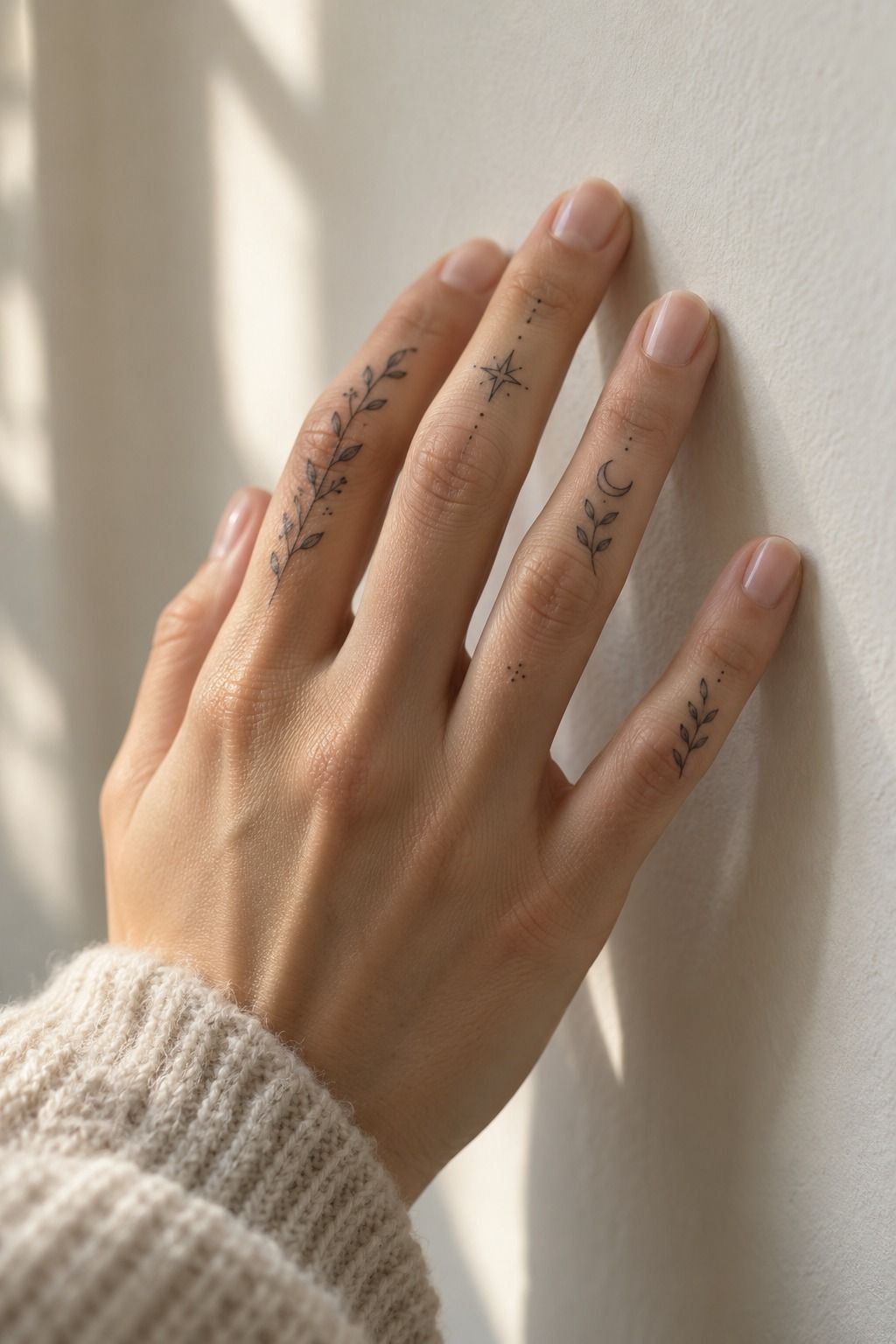
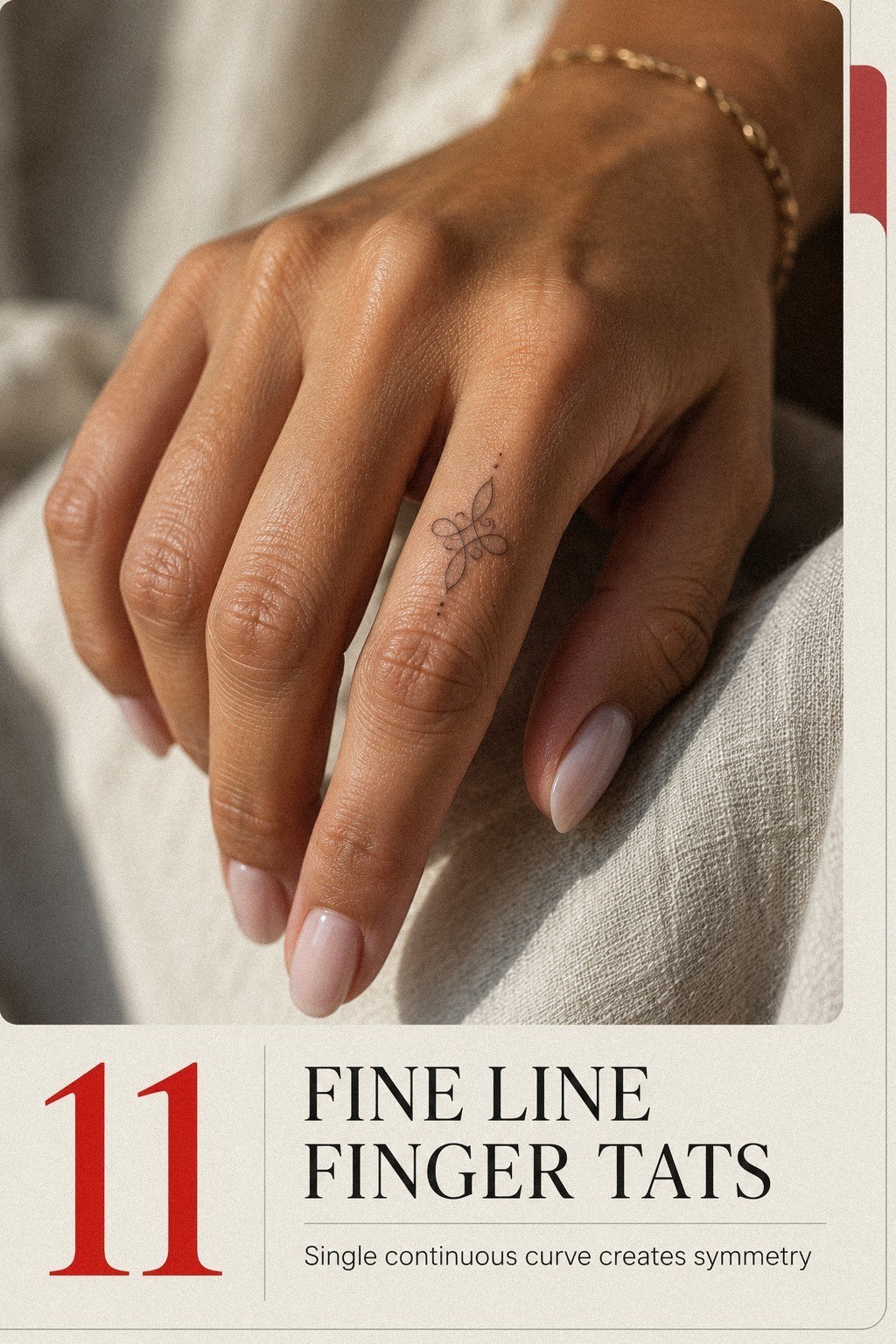
A meaningful moment doesn’t need a complicated image. A minimal symbolic mark can feel elegant, personal, and quietly powerful when every line has a reason. Choose the smallest design that still communicates what matters to you.
A Quick Finger Placement Test
Before you book, ask your artist to place the stencil where you think you want it. Keep your hand relaxed, curl your fingers, type a message, hold a cup, and wash your hands. The placement stencil may shift visually when the finger bends.
Check whether the design crosses a crease or sits directly where your skin rubs. A relaxed-hand stencil gives you better information than a straight-finger view. If the mark looks cramped in either position, simplify it before the appointment.
Your work routine matters, too. If you wear gloves, lift weights, wash dishes, play an instrument, or work outdoors, friction may affect longevity. A discreet side placement may be more practical than a visible knuckle mark.
Save one or two alternatives from small finger tats before the consultation. You don’t need to arrive with a final answer, but you should know what you’re willing to change.
The Budget Before the Appointment
A fine line finger tattoo may be small, but the artist’s skill still determines the value. The artist’s precision matters more than the size of the mark. The cheapest quote isn’t always the best deal if the design needs correction, a cover-up, or repeated touch-ups.
Ask for a complete estimate before you pay a deposit.
These are planning figures, not a promise. Region, artist experience, design complexity, and studio policy can change the final cost. A written quote is worth requesting because it protects your budget and prevents awkward surprises.
A simple design can offer excellent value when the artist has strong healed work. If your preferred artist costs more, ask whether the precision, consultation, and aftercare support justify the price. That answer matters more than chasing the lowest number.
For more cost questions, use this guide to small tattoo prices before you contact a studio. You’ll sound prepared, and you won’t be pressured into deciding on the spot.
What Healed Work Reveals
Fresh tattoos often look darker, sharper, and more polished than healed tattoos. Ask to see examples shown several weeks or months after the appointment. You want to judge line spread, fading, spacing, and how the design looks during normal hand movement.
Look for healed black ink with consistent line weight and readable details. A portfolio full of fresh work doesn’t tell you enough about long-term results. Your artist should be comfortable discussing fading and realistic touch-up expectations.
You can also ask how the artist handles designs that are too small. A skilled professional may recommend a larger mark, fewer details, or another placement. That advice can save money and protect the final result.
I’d rather see three honest healed examples than thirty polished fresh tattoos. The healed work may look less dramatic, but it tells you what the tattoo is actually likely to become.
What I’d Check Before Booking Fine Line Finger Tats
I used to focus on the design first, then search for an artist who could squeeze it into the placement. That order is backwards. Your artist’s healed portfolio matters more than a perfect reference image, especially for finger tattoos where friction and movement can change the result.
Look for clean edges, sensible spacing, and consistent line weight. Ask direct questions about aftercare, touch-ups, and how the artist handles fading. Fine lines can widen over time, and UV exposure can make that change more noticeable.
Black ink with sensible placement generally gives you the strongest chance of a readable result. You don’t need a dramatic promise. You need an artist who will tell you when your idea is too small.
I’d also ask how the studio handles hygiene and stencil approval. Your appointment should never feel rushed. If you’re still learning the vocabulary, small tattoo prices can help you prepare better cost questions.
Your personal tattoo deserves a calm decision, not a hurried one. If the quote feels unclear, ask again. If the artist dismisses your questions, keep looking.
The Fine Line Finger Tats I’d Choose Personally
If I were choosing again, I’d pick a small botanical symbol with one strong curve and no extra shading. I’ve tried designs that looked intricate on a screen but felt cramped once they reached the stencil. The better option was always the one with fewer lines, more open skin, and a clear silhouette.
Your skin tone, hand shape, work routine, and tolerance for visible ink all matter. A bold black mark may read beautifully on one person and feel too intense on another. A white ink piece may seem subtle now but soften more than you expect.
I’d rather choose an understated black symbol that stays recognizable than chase a fleeting style. That choice may not be the most daring, but it offers stronger long-term value and a better chance of feeling timeless.
There’s a reason finger tattoos keep attracting people who want something personal. They’re close, visible, and easy to connect with every day. But they’re also demanding.
Your artist needs to understand placement, your design needs enough space, and you need to follow aftercare instructions for the full healing window. I’d wait before judging the final result. Your surface may look healed after about 2 to 3 weeks, but complete healing can take about 2 to 3 months.
During that time, wash gently, moisturize as directed, and avoid soaking, pools, and strong sun. That patience protects the sharp, classic quality you wanted.
A Few Things Worth Answering
How much does a fine line finger tattoo usually cost?
A fine line finger tattoo usually costs about $100 to $300 in the US, though a shop minimum may run about $50 to $100 and hourly rates may be about $100 to $250. Your artist, region, size, and placement all affect the quote. Ask for the full price before booking.
Are fine line finger tats a good idea for a first tattoo?
Yes, they can be a good first tattoo if your design is simple and your expectations are realistic. A small symbolic design keeps the session manageable, while a visible placement helps you stay engaged with aftercare. Read small finger tattoo ideas before choosing your final mark.
How do I choose a tattoo artist for fine line finger tats?
Choose an artist with clean healed examples, consistent line weight, and strong hygiene practices. Your best evidence is a portfolio showing healed black ink, not only fresh work. Ask how the artist handles touch-ups, fading, and designs that may be too small for the placement.
How much do fine line finger tats hurt?
Finger and hand tattoos can feel sharper than tattoos on the forearm, thigh, or shoulder because those areas are generally more tolerable. Ribs, feet, hands, and sternum are often more sensitive zones. Your session may be short, but you should still plan for sensitivity.
How long do fine line finger tats take to heal?
The surface usually heals in about 2 to 3 weeks, while complete healing can take about 2 to 3 months. Wash gently, moisturize as instructed, and avoid direct sun, swimming, and soaking during recovery. Your artist’s aftercare instructions should guide the details.
What’s the best placement for fine line finger tats?
The side of the finger works well for narrow designs, while the top or knuckle gives a symbol more visibility. A side finger botanical line can look discreet, but movement and friction may affect fading. Ask your artist to test the stencil with your hand relaxed and bent.
Where I’d Start First
If I had to pick one, I’d start with a single botanical symbol on the side of the finger. Its open shape gives fading less visual damage, and the curve follows your hand naturally. Pin fine line finger tats ideas for later and sit with the stencil before booking.
You can also compare the more delicate options in small fine line tattoos once you’ve settled on the placement. Give yourself a few days to consider the design, the placement, and the cost.
If it still feels personal after the initial excitement fades, you may have found the right first tattoo. That kind of decision is quiet, clear, and worth keeping!