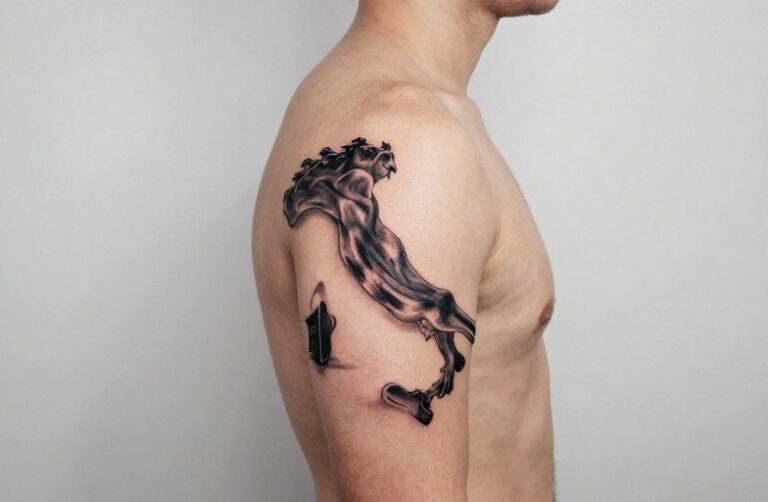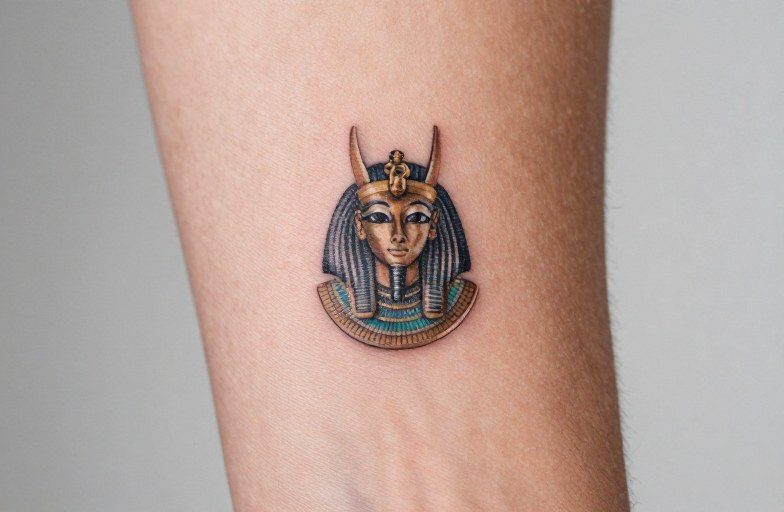
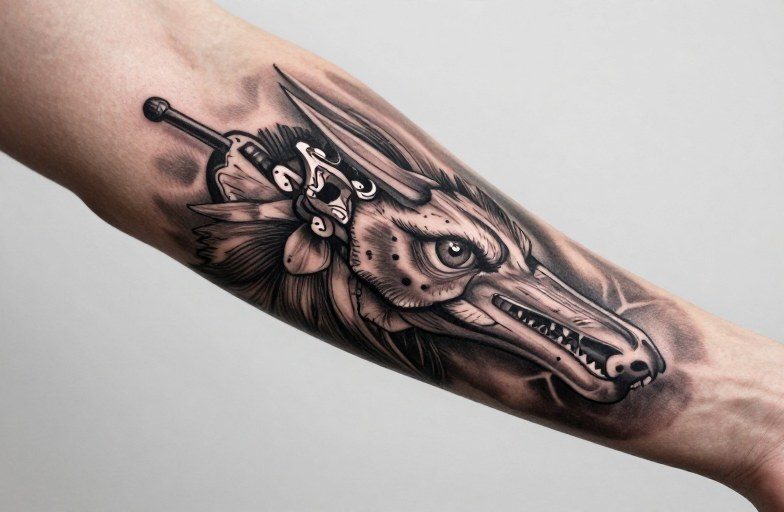
Everyone wants a tattoo that means something. The trick is picking a design that still carries weight ten years from now, not just on the day you walk out of the shop. Meaning can come from lineage, a specific memory, a private symbol, or even the visual language of a particular style. What matters is how the design lives on your skin, how it ages, how it reads from a distance, and whether the symbolism stays legible as the lines soften and spread.
For First-Timers
Your first meaningful tattoo doesn’t need to be small and hidden, but it should probably be something you won’t outgrow. First pieces often work best with imagery that’s personal but not tied to a fleeting moment, a relationship that just started, a pop culture reference, a slogan that felt deep at nineteen.
Start With Symbols That Transcend Trends
Animals carry meaning across nearly every culture: wolves for loyalty, bears for strength, owls for watchfulness. Botanicals do too, laurel for victory, olive branches for peace, poppies for remembrance. These symbols have centuries of visual history behind them. That history gives them staying power. A wolf rendered in clean blackwork reads differently than a photorealistic portrait of your actual pet, but both can hold meaning. The symbolic version tends to age more gracefully.
Placement Affects Meaning More Than You Think
A chest piece sits close to the heart, literally. A forearm piece faces outward; it’s for others as much as for you. Ribs and thighs stay private. The same rose design reads as bold statement or quiet reminder depending on where it lives. For first tattoos, the outer upper arm and the calf offer flat, stable skin that heals predictably and holds detail well. Avoid fingers, palms, and the sides of feet for meaningful work you want to last; those spots blur fast and require frequent touch-ups.
Tips for Choosing
Meaning isn’t always literal. A lighthouse doesn’t have to mean “I guide others.” It can mark a specific coastline you grew up on, a night you survived, or simply the geometry of something tall against water. The best designs layer personal meaning onto universal imagery.
- Test your idea’s durability: Write it down, wait six months. Still resonate? Still specific enough to matter?
- Consider the visual language: A dagger through a rose carries different weight in American traditional (betrayal, beauty and pain) than in fine-line single needle (fragility, romantic melancholy).
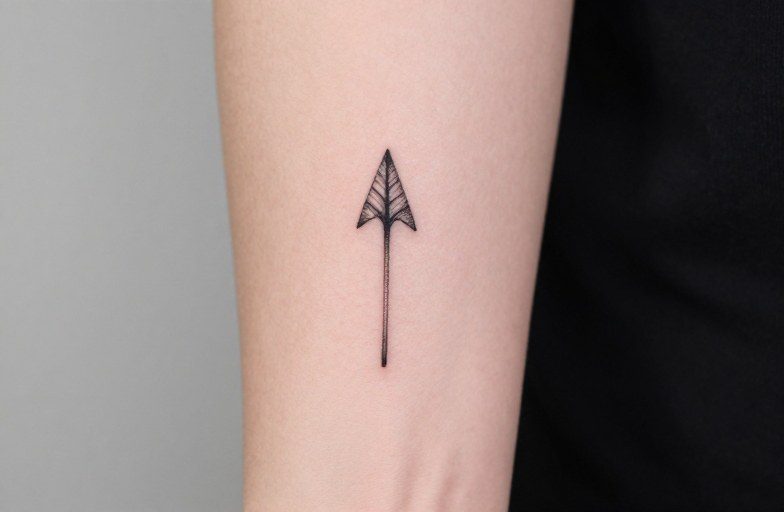
- Abstract isn’t safer: Geometric shapes and fine-line ornamental work can feel meaningful in the moment but often read as decorative later. Anchor them to something concrete if you want lasting significance.
- Text ages poorly: Lettering spreads, especially small or script fonts. If words matter most, keep them bold and limited. Visual symbols outlast quotes.
Popular Styles
Certain tattoo styles carry built-in symbolic weight through their history and visual conventions. Choosing a style is partly an aesthetic decision, partly a semantic one.
American Traditional
Bold black outlines, limited color palette, iconic imagery. Eagles, anchors, pin-up figures, banners with lettering. This style emerged from sailor and military culture, each image carried specific meaning within those communities. A swallow meant 5,000 nautical miles traveled. A pig and rooster on the feet meant drowning wouldn’t claim you. Today, the style retains that sense of earned symbolism, of marking something completed or survived.
Japanese (Irezumi)
Koi swimming upstream transform into dragons at the waterfall. Cherry blossoms fall at the peak of beauty, symbolizing the impermanence central to Buddhist thought. Tigers ward off evil. The back piece, the full sleeve, these aren’t just placements, they’re narrative compositions with specific rules about direction, pairing, and season. The meaning is embedded in the arrangement, not just the individual elements.
Blackwork and Sacred Geometry
Heavy black ink, dotwork, mandala-derived patterns. Often associated with spiritual practice, meditation, or mathematical precision. The meaning here is frequently process-based: the tattoo as ritual, as endurance, as transformation through sustained discomfort. These pieces can cover scars, mark sobriety milestones, or simply represent a commitment to order and pattern.
Trending Variations
Some newer approaches to meaningful design are worth considering, others are already showing their limitations.
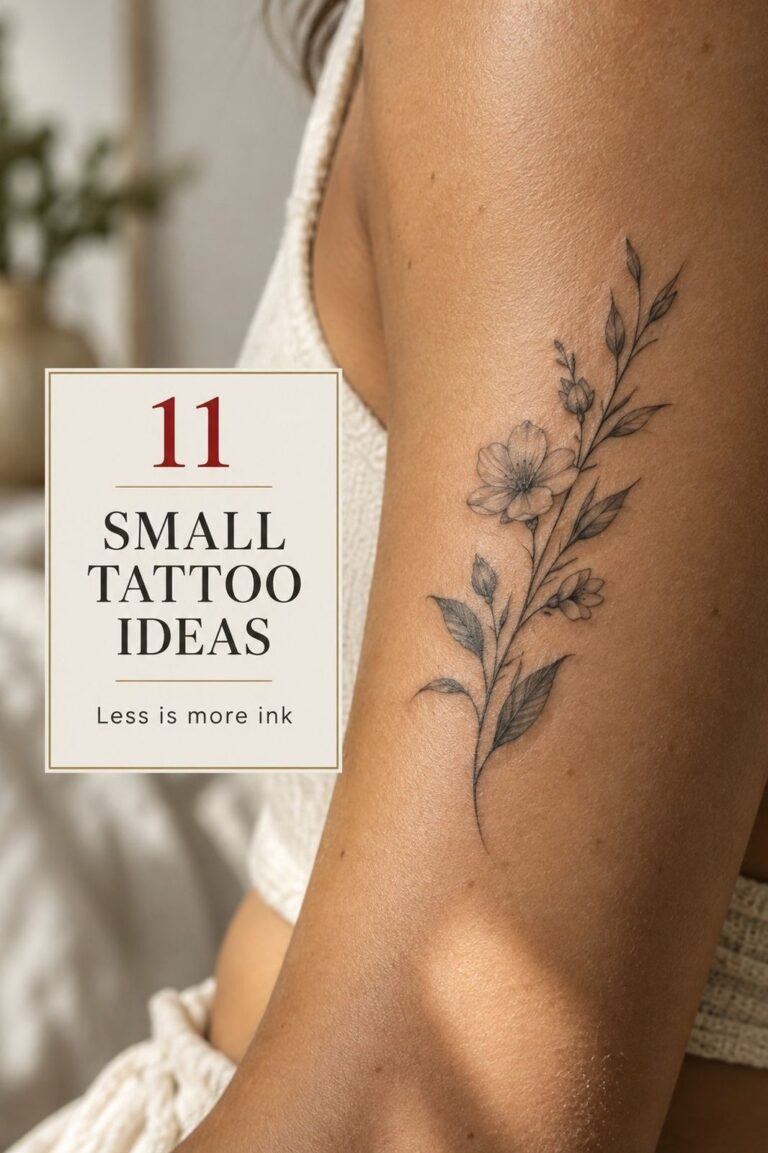
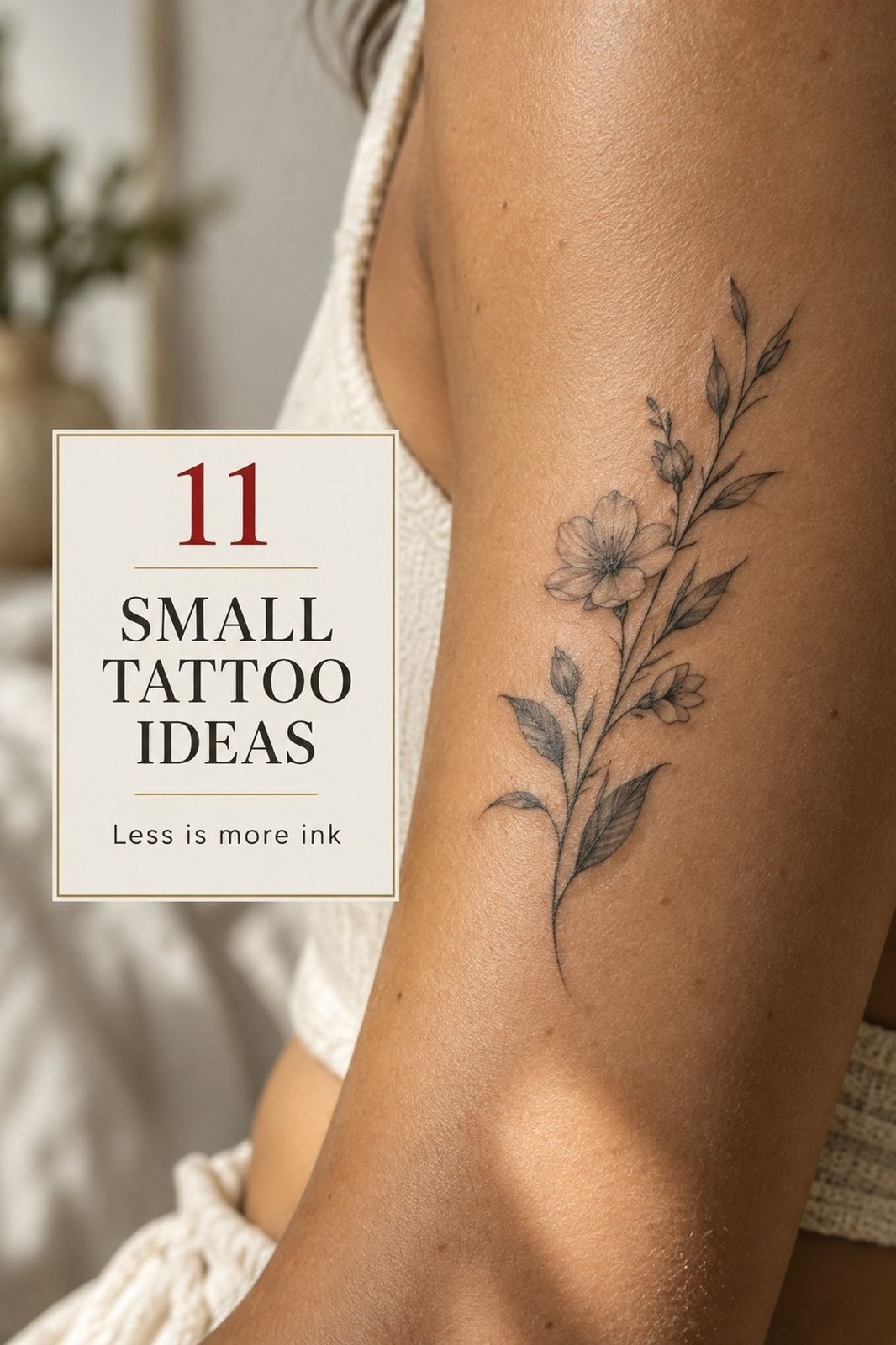
Botanical illustration style, fine-line, scientifically accurate, often paired with handwritten labels, has surged. It works well for native plants, memorial flowers, or species tied to specific places. The detail is beautiful but requires a skilled hand; too fine and it’ll blur within five years.
“Patch” tattoos, designs that mimic embroidered fabric, complete with stitched borders, offer a nostalgic, craft-oriented aesthetic. Meaning often comes from the object depicted: a parent’s favorite jacket patch, a scout badge, a band logo from formative years. The dimensional illusion holds up surprisingly well if the artist understands how to build the effect with line weight.
Stylized pet portraits continue to evolve. The most durable versions aren’t photorealistic but interpretive: a cat rendered in the negative space of a moon, a dog’s silhouette filled with landscape from a favorite trail. These keep the emotional connection without fighting the reality that fine fur detail doesn’t survive aging.
Color Choices
Color carries meaning culturally and practically. Black ink ages most predictably. It stays crisp, doesn’t shift hue, and maintains contrast against skin as it settles. Color adds dimension but requires maintenance.
- Red: Often associated with passion, sacrifice, warning. In Japanese work, it’s frequently the only color accent, drawing the eye to the most significant element. Red also fades fastest in sunlight; plan for touch-ups if the meaning demands longevity.
- Blue: Stability, water, depth. Cobalt and navy hold better than lighter sky tones. Blue ink can take on a greenish cast in some skin undertones, test with your artist.
- Yellow and white: High visibility on dark skin when fresh, but both fade substantially. White ink often becomes invisible or yellows. Use sparingly for highlights, not core meaning.
- Green: Growth, nature, envy. Forest and emerald greens age well; neon or lime greens break down unpredictably.
Monochrome designs force the viewer to read shape and composition. Color invites emotional response. For meaning that relies on recognition, a medical alert symbol, a specific flag, a sports team with personal history, color accuracy matters. For abstract or symbolic meaning, black and grey often carries more weight, more timelessness.
Matching & Pairing Ideas
Matching tattoos with partners, family members, or friends carry obvious meaning but demand careful planning. The most successful ones aren’t identical copies but complementary designs: two halves of a whole that function independently.
Sibling and Family Pairings
Birth flowers for each sibling, rendered in the same style but different compositions. Constellations visible on the night of a shared significant date. Coordinates in the same typographic treatment but different locations. The connection reads without requiring the two people to stand side by side.
Couple Designs That Survive Breakups
Soundwave tattoos of a shared phrase, each person carries the wave, the phrase itself remains private. Complementary animals from the same ecosystem (wolf and raven, for instance, both scavengers and hunters). These retain individual meaning even if the relationship ends. Avoid names, portraits, or puzzle pieces that become nonsense alone.
Key Takeaways
Meaningful tattoos last when the symbolism is layered, personal significance built on imagery with broader cultural recognition. Test your concept against time, placement, and style. Black ink endures; color demands commitment. Matching work should stand alone. The most powerful designs often say something to you that they don’t say to everyone who sees them. That’s the point. A tattoo that means something doesn’t need to explain itself.
Frequently Asked Questions
How do I know if my tattoo idea will still feel meaningful in 10 years?
Test it by waiting six months and checking if it still resonates. Avoid references to current relationships, recent trends, or pop culture. Lean toward symbols with broader historical or personal significance rather than specific moments.
Do fine-line tattoos hold their meaning as they age?
Fine-line work blurs faster than bold traditional pieces. If the meaning depends on precise detail, choose slightly heavier line weight or a placement with less movement and sun exposure, like the upper arm or thigh.
Is it better to get a meaningful tattoo in color or black and grey?
Black and grey ages more predictably and reads as more timeless. Use color when the specific hue carries meaning, birthstone shades, national flags, medical alert symbols, or when the style tradition demands it, like Japanese or American traditional.
What if I want a matching tattoo but worry about future regret?
Choose complementary rather than identical designs. Each piece should function as a complete, meaningful tattoo on its own. Avoid names, direct portraits, or imagery that only makes sense when paired with the other person’s tattoo.