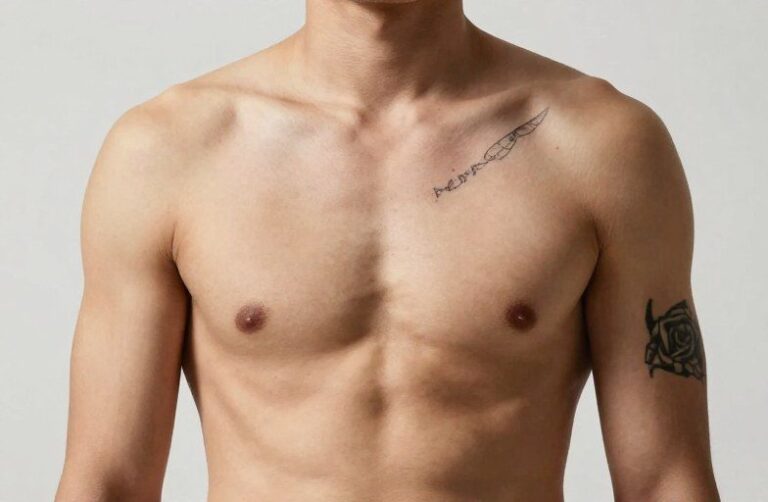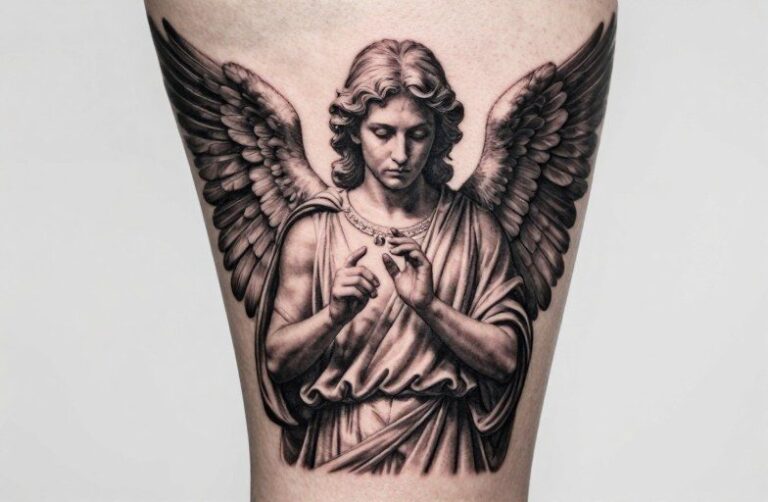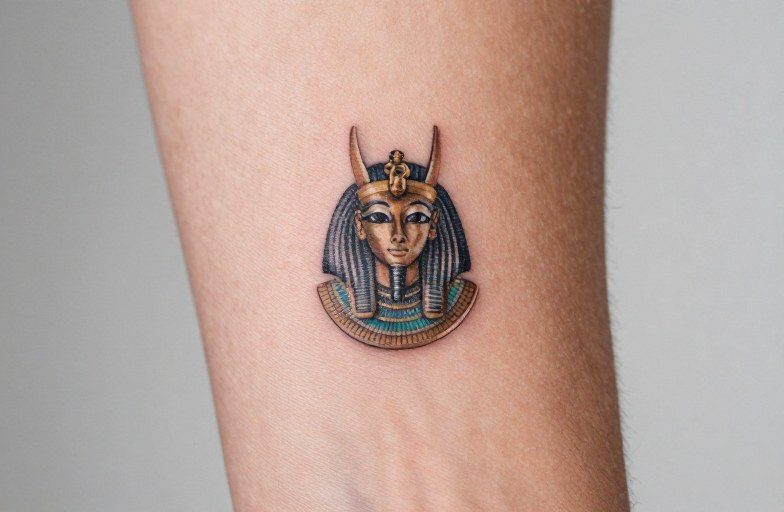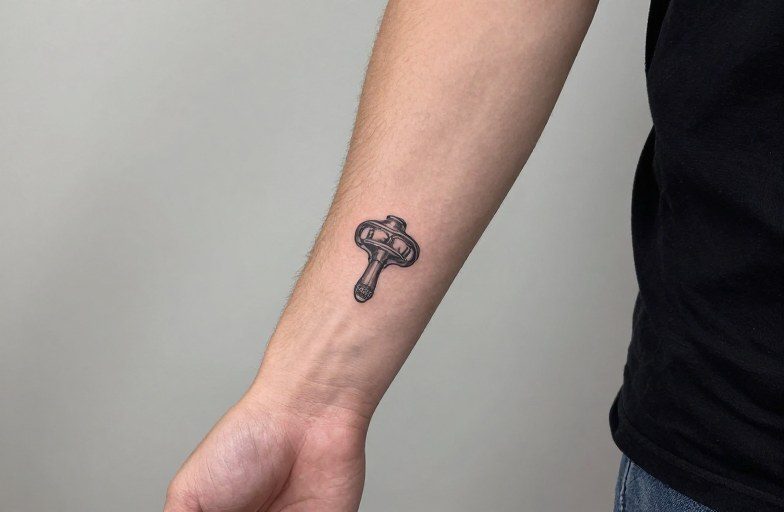
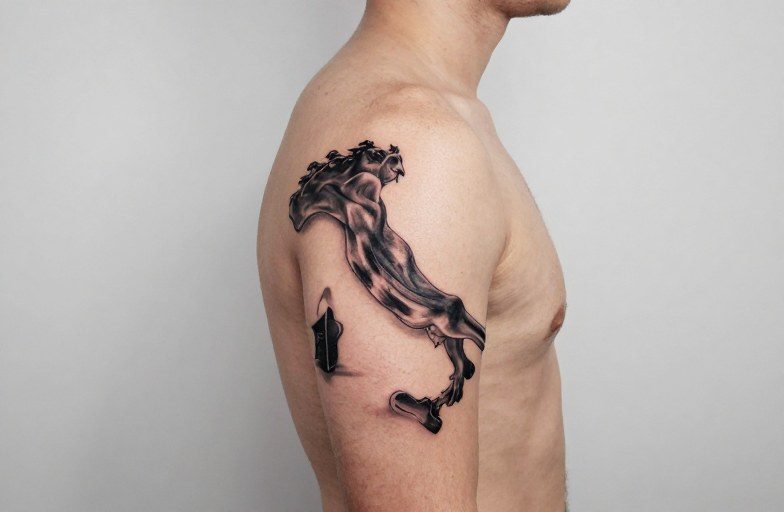
Italian heritage tattoos carry weight because the source material is already visually striking, Roman lettering, architectural detail, regional symbols, and Catholic iconography that predates modern tattooing by centuries. For guys, the challenge isn’t finding something Italian; it’s choosing what will hold up as skin ages and what fits your actual body. Here’s how to get it right.
Trending Variations
Classical and Roman Motifs
Roman numerals remain the most requested Italian-adjacent design for men, but the execution separates good from forgettable. Birthdates and anniversaries work best when scaled large enough for the serifs to stay crisp, think inner bicep or outer forearm, not behind the ear where they blur into solid black within five years. Some guys go deeper: SPQR stamps, legionary eagles, or the she-wolf nursing Romulus and Remus. These demand skilled linework; the wolf’s negative space and the eagle’s feather layers are unforgiving.
Architectural elements, columns, arches, partial domes, translate surprisingly well to ribs and thighs where the body’s curve mimics the structure’s sweep. The Pantheon’s coffered ceiling, rendered in dotwork or fine lines, makes a strong chest piece or upper back center.
Regional and Family Heritage
Sicilian trinacria (the three-legged Medusa head), Venetian lion, or Florentine fleur-de-lis variation connect to specific places rather than generic “Italian” identity. The trinacria’s wheat ears and winged snakes require a medium-to-large scale to read; as a small bicep piece, it becomes mud. Family coats of arms, if you have documented lineage, work best simplified, full heraldic detail rarely survives under skin.
- Sicilian trinacria: best at 4+ inches, avoid heavy black fill on the wheat
- Venetian lion: the book and sword versions read differently; know which your family connection uses
- Florentine giglio (lily): clean linework ages better than shaded versions on hands and wrists
Best Placements
High-Visibility Areas
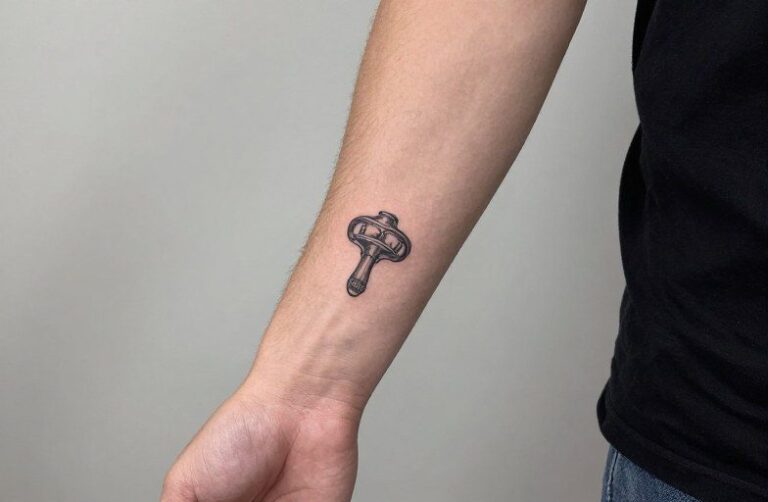
Forearms carry Italian lettering and Roman numerals with immediate readability. The outer forearm’s flat plane suits long phrases, Dante excerpts, family mottos, while the inner wrist-to-elbow track fits vertical designs like columns or stacked numerals. For a closer look at how forearm placement decisions play out in practice, small forearm tattoos for men covers line weight, placement zones, and what ages cleanly. One practical note: the inner forearm sees more sun and friction from desks, so black ink softens faster here than on the outer surface.
The chest anchors larger pieces. A Vesuvius silhouette rising over Naples, or a full Roman eagle with spread wings, uses the pectoral shelf and sternum gap naturally. Chest skin stretches with age and muscle change; designs with central symmetry handle this better than off-center compositions.
Hidden or Contained Placements
Ribs and flanks suit Italian text especially well because the body’s vertical strip breaks long phrases into readable lines. “Per aspera ad astra” or a stanza from the Inferno flows with the rib direction. Pain is significant here, and the skin’s constant flexing means touch-ups are common.
Calves offer a stable cylinder for wrapping designs, gladiator helmets, wine vine scrolls, or regional flags stylized into geometric bands. The muscle’s movement adds life without distorting the image.
For First-Timers
Start with something that doesn’t require perfect aging to remain meaningful. A single Italian word in clean serif type, “Fiducia,” “Coraggio,” “Famiglia”, on the upper arm or shoulder cap lets you learn how your skin heals and holds ink. Avoid fine-line architectural details for your first piece; your body hasn’t shown you how it scars or how aggressively your immune system fades pigment.
Script and lettering heal more predictably than heavy black fills. The skin trauma is distributed, and there’s less risk of blowout from saturation pressure. If you’re set on a regional symbol like the trinacria or a saint’s image, choose placement with low friction (avoid the belt line, inner finger, or foot arch) and commit to the touch-up.
Size & Scale
Small Pieces That Survive
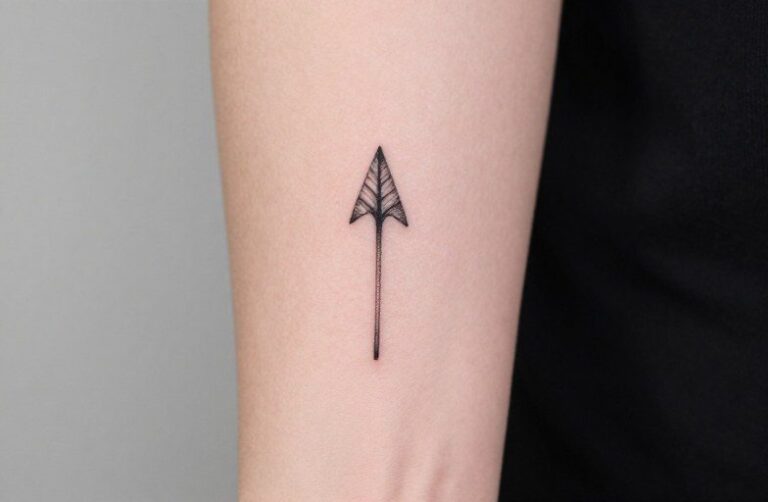
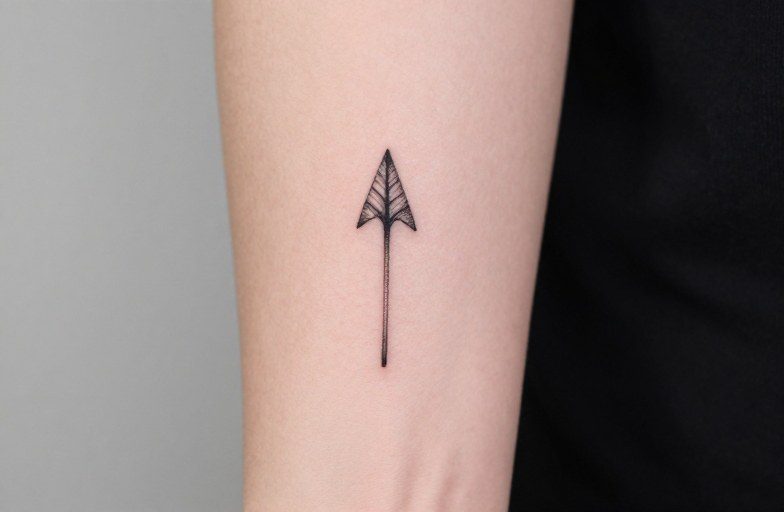
Italian coin reproductions, the boot shape in minimal outline, or a single Roman numeral (V, X, L) can stay legible at 2-3 inches if the design prioritizes negative space. The lira’s coin imagery, olive branches, scales, stylized heads, has built-in historical reference without needing explanation. These work on the wrist side, ankle, or behind the arm above the elbow. Simple symbols like arrows follow similar design logic; small arrow tattoo meaning explains how a minimal form carries layered symbolism at that scale.
Large-Scale Commitments
Full sleeves built from Italian themes need visual hierarchy. A common successful structure: architectural elements (columns, arches) as the background geometry, with a central figure or text as focal point. Michelangelo’s Creation of Adam hands, simplified to linework, bridge the gap between recognizable art and personal meaning without requiring full color reproduction. The Sistine ceiling’s color palette is notoriously hard to replicate in skin; the line drawing translates better and ages cleaner.
Back pieces allow for maps, Italy’s boot shape, a specific region’s topography, or religious tableaux. The skin’s relative stability and large canvas suit detailed black-and-gray work that would crowd a smaller area.
Tips for Choosing
Research Beyond the Obvious
Every guy with Italian roots considers a flag, a map, or “Made in Italy” text. Dig into your actual family’s origin region. Piedmont’s bull symbol, Lombardy’s rose cross, or Campania’s cornucopia offer specificity that reads as personal rather than tourist. If you don’t have documented lineage, choose based on aesthetic preference rather than invented heritage, there’s no shame in choosing Roman numerals because you like how they look.
Artist Selection
Lettering specialists and black-and-gray realists handle different aspects of Italian-themed work. For script, look at an artist’s healed photos of serif fonts, not just fresh work, sharp edges soften, and you want to see how their Roman numerals look at six months. For architectural or figurative pieces, an artist with classical art training or European apprenticeship often composes better spatial relationships than one working purely from tattoo convention flash.
- Ask to see healed photos of any lettering work, especially fine serifs
- Black-and-gray realism requires different needle groupings than color; confirm your artist works regularly in the style
- Regional symbols need accurate reference; bring source material, not Pinterest screenshots
Color Choices
Italian flag green-white-red is the most requested palette, and the most problematic. The green ink commonly shifts blue-green as it ages; the white rarely stays visible on skin tones lighter than the ink itself. If you want flag reference, consider using only the green and red as accent lines or a single stripe, letting skin tone carry the “white.”
Black-and-gray dominates serious Italian heritage work for good reason. Renaissance chiaroscuro, the dramatic light-dark contrast of Caravaggio or Titian, translates to skin through solid blacks and smooth gray washes. Sepia and ochre tones can suggest aged marble or fresco without the commitment of full color. Gold ink exists but heals inconsistently; most artists simulate metallic effects through warm yellow highlights against cool gray shadows.
Red alone, as in cardinal’s robes or wine imagery, holds better than green and carries Catholic association without full flag literalism. A single red rose with Italian text, or a red wax seal effect behind a family initial, uses color purposefully rather than decoratively.
The Takeaway
Italian tattoo ideas for guys work best when you respect the material’s inherent visual weight, classical proportions, strong silhouettes, text with historical typefaces. The body placement should match the design’s natural geometry: vertical phrases on vertical body areas, round compositions on curved surfaces, large detailed work where skin stays stable. Choose specific regional or historical reference over generic Italian signifiers, and prioritize how the ink will look at ten years over how it photographs fresh. The best Italian heritage tattoos feel earned, not worn.
Frequently Asked Questions
Do Roman numerals blur faster than regular numbers?
Serif edges soften over time like any fine detail, but well-spaced Roman numerals actually age better than dense regular numbers because the negative space between characters prevents them from bleeding together. Scale matters more than the numeral type itself.
Can I get an Italian family crest if I’m not sure it’s authentic?
Many family crests sold online are invented or merged. If you can’t verify through regional heraldic records, consider using a symbolic element from the crest rather than the full shield, or design something original inspired by your actual family’s region and profession.
How do Italian architectural tattoos hold up on curved body parts?
Columns and arches actually benefit from body curves when the design follows the natural flow rather than fighting it. Straight horizontal lines across ribs or shoulders distort with movement; vertical elements that track with muscle direction age more gracefully.
Is it better to get Italian text in English or the original language?
Latin and Italian phrases carry different visual and cultural weight. Latin reads as classical and permanent; Italian feels personal and spoken. Choose based on what you want the tattoo to signal, not what you think sounds more impressive to others.