Religious imagery carries weight. For guys considering a faith-based tattoo, the decision usually comes down to how visible you want that commitment to be, and how the specific image will hold up as skin changes and ink settles. The cross on a forearm reads differently than the same cross tucked against the ribs. A praying hand composition that works at four inches falls apart at twelve if the line weight isn’t planned for the scale. This guide breaks down the practical decisions that separate a religious tattoo you’ll keep from one you’ll want to rework.
Best Placements
Placement shapes how a religious tattoo functions in your daily life, whether it’s a private anchor or a public declaration. These spots tend to suit different intentions.
Visible Territory: Forearms, Hands, and Neck
Forearms remain the standard for crosses, verse references, and saint portraits. The flat canvas lets lines stay crisp, and the area heals relatively predictably. Hands and fingers, though, demand caution: fine-line scripture here blurs within a few years as the skin on the back of hands is thin and mobile. If you’re set on hand work, bold black letterforms or simple line crosses age better than detailed imagery. The neck, particularly the front and sides, carries obvious social weight, employers see it, family sees it. A small cross behind the ear or a verse in script along the side can read as personal without dominating every interaction.
Concealed and Contoured: Chest, Back, and Ribs
The chest over the heart remains classic for crosses, sacred hearts, and angelic figures. Muscle movement here adds dimension to the tattoo when you’re in motion. The full back offers space for narrative compositions, think Michael defeating the dragon, or a Stations of the Cross sequence, but requires a committed sitting schedule and a budget to match. Ribs hurt more than most spots, and the skin stretches with breathing, so simple bold designs outperform intricate detail work. Many guys choose the ribs specifically for concealment: the tattoo stays yours until you choose to show it.
Color Choices
Color in religious tattoos isn’t merely decorative, it carries liturgical and cultural associations that affect how the piece reads.
Black and Gray Realism
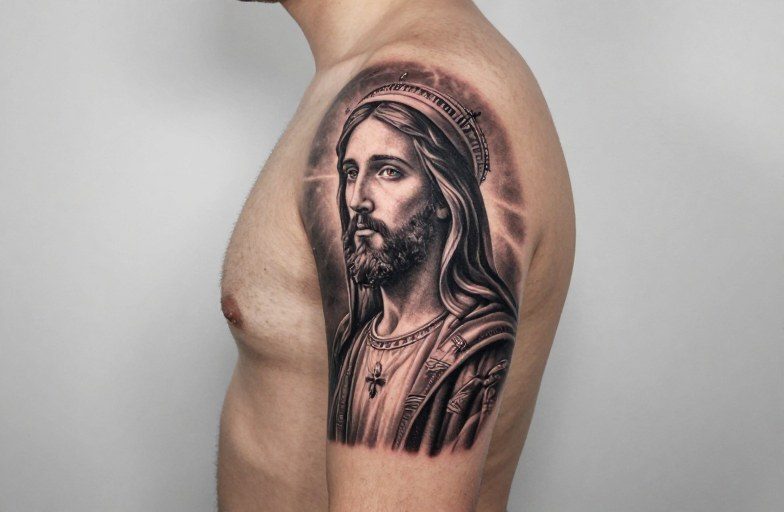
The majority of religious work done on men stays black and gray. This isn’t about playing it safe. Grayscale shading builds the chiaroscuro that makes crucifixion scenes, weeping Madonnas, and saint portraits feel dimensional. The technique also ages gracefully: black ink holds, and gray wash fades into softer tones rather than muddying like some colors. For guys who want a timeless look, black and gray with careful white highlights for halos or tears remains the reliable choice.
Strategic Color Accents
When color appears, it usually carries specific weight. The red of the sacred heart, the blue of Mary’s mantle in Catholic tradition, the gold of halos, these aren’t arbitrary choices. A single red heart in an otherwise black and gray chest piece draws the eye immediately. Full-color angel wings across a back can look extraordinary fresh but require maintenance; the yellows and light blues in wing feathers tend to fade faster than darker pigments. If you want color, commit to touch-ups every few years or accept the softening as part of the piece’s life.
How to Personalize It
Stock flash crosses and praying hands have their place, but most guys want something that connects to their specific story without becoming illegible or dated.
Integrating dates, births, deaths, sobriety anniversaries, into the scrollwork beneath a cross grounds the image in lived experience. Coordinates of a meaningful church or pilgrimage site, rendered small beneath the main image, add specificity without clutter. Some choose to incorporate a parent’s or child’s handwriting for a verse reference, which works beautifully when the original sample is dark and consistent enough to translate to skin.
Family crests or national symbols merged with crosses can honor heritage and faith simultaneously, though the composition needs careful balancing so neither element overpowers the other. The key restraint: one or two personal elements maximum. Religious tattoos that try to include every significant name, date, and symbol become unreadable within a decade as ink spreads slightly with age.
Size & Scale
Scale determines technique, sitting time, and how the tattoo ages. A cross the size of a quarter on a bicep will blur into a soft black blob over fifteen years. The same design at three inches tall maintains its structure because the lines have room to breathe.
Small religious tattoos work best in high-contrast, simple forms: a fish symbol, a chi-rho, a minimal line cross. These read clearly at one to two inches. Medium pieces, three to six inches, allow for basic shading and limited detail: a cross with a banner, a single praying hand, a small saint portrait. Large work, anything over eight inches in any dimension, opens space for full scenes, multiple figures, and atmospheric background. The trade-off is sessions, cost, and the commitment of prime real estate.
One practical note: text scales poorly. A verse reference like “John 3:16” needs to be large enough that the numbers don’t merge into indistinguishable marks. As a rule, lettering shouldn’t drop below half an inch in height for body text, three-quarters for thinner scripts.
Matching & Pairing Ideas
Religious tattoos often sit within larger collections or complement existing work. Thinking about how pieces relate prevents the scattered, accidental look that comes from getting whatever seems meaningful in the moment.
Building Around a Central Piece
Many guys start with a cross or verse on the chest or shoulder, then build outward. The style established in that first piece should guide what follows. A black and gray realistic sacred heart on the chest pairs poorly with a traditional bright-color cross on the forearm unless you’re deliberately mixing genres. More cohesive: extending the same grayscale approach into sleeve work, adding roses, doves, or angelic figures that share the original’s shading technique and mood.
Symmetrical and Complementary Pairs
Matching crosses on both forearms, or praying hands on one side and a verse on the other, create balance. The content doesn’t need to be identical, complementary works better. A cross with a banner on the left forearm and a date or name in matching script on the right ties together without mirroring. For chest pieces, a sacred heart on one pectoral and a depiction of a relevant saint on the other frames the torso symmetrically.
Trending Variations
Styles shift, and religious imagery adapts with them. What’s currently showing up in shops reflects both technique evolution and changing attitudes toward faith expression.
Single-Needle and Fine-Line Approaches
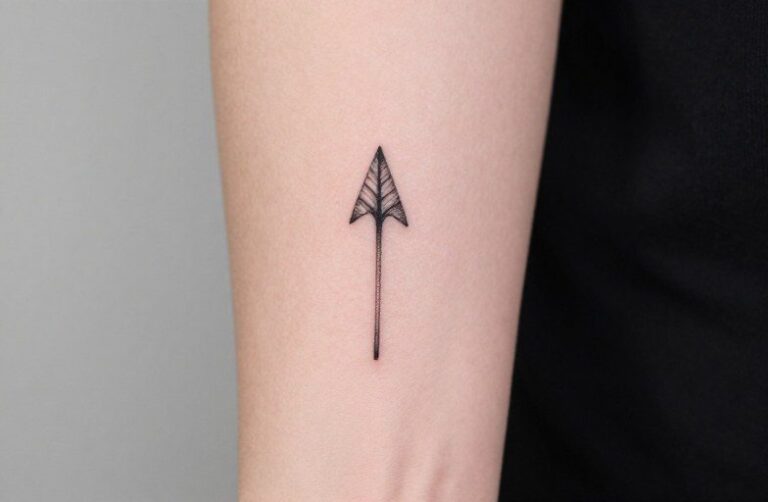
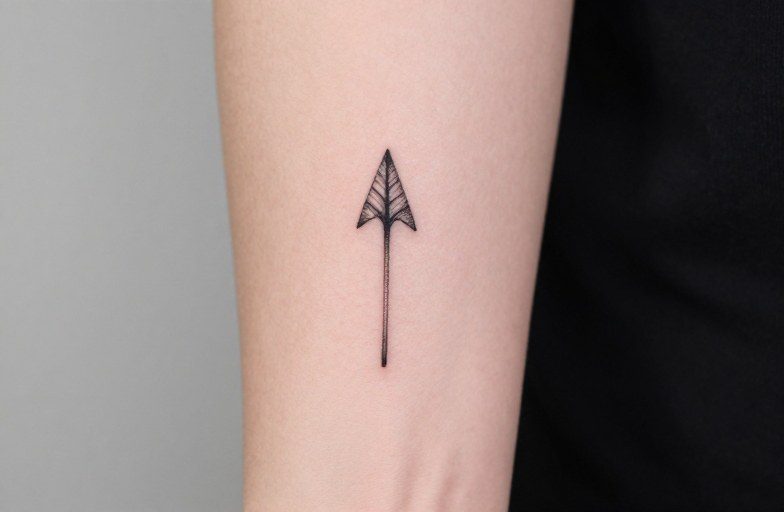
Delicate line crosses, tiny script verses, and minimalist ichthys symbols have gained ground, particularly among guys getting first tattoos. The technique requires a skilled hand, wobbly lines in fine work can’t be hidden by bold weight. These pieces demand excellent aftercare since thin lines are more vulnerable to sun damage and fading. They suit placements with less movement and sun exposure: inner biceps, upper ribs, behind the ear.
Reconstructed Traditional and Neo-Traditional
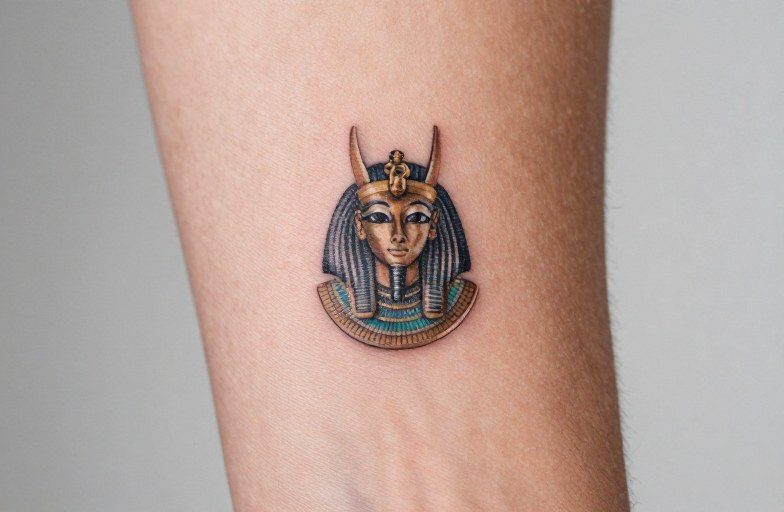
Bold black outlines, limited but saturated color palettes, and stylized forms are seeing renewed interest. The traditional praying hands, cross with roses, and angel heads translate well to this approach because the imagery was already established in the traditional canon. Neo-traditional allows more detail and softer shading while keeping the graphic punch that reads across a room. These pieces age well because the bold structure survives fading better than delicate alternatives.
Scriptural Lettering as Primary Image
Some guys are moving away from figurative imagery entirely, choosing instead extended passages in custom lettering as the tattoo itself. This works when the typography is treated as design, varying scale, weight, and flow across the composition. A full verse wrapping a forearm or running down a ribcage becomes the visual focus, not an afterthought beneath an image. The artist needs actual lettering skill, not just the ability to trace a font.
Final Thoughts
A religious tattoo is a long-term decision about how you carry your beliefs. The best pieces result from honest conversations with your artist about placement, scale, and how you want the work to function in your life. Bring reference images that show the mood you’re after, not just the specific subject. Trust the technical guidance on what will hold up, even when it means adjusting your initial idea. The tattoo that lasts is the one planned with both conviction and patience.
Frequently Asked Questions
How long does a detailed religious sleeve typically take to complete?
A full black and gray religious sleeve with figures, background, and script usually requires 25-40 hours across multiple sessions, spaced at least three weeks apart for healing. Color work adds time for saturation and detail passes.
Will a cross tattoo on my forearm affect job prospects?
Visible religious tattoos can limit opportunities in conservative fields like finance, law, and some corporate environments. Many guys choose the upper arm or chest for this reason, keeping the option to cover with short sleeves.
What’s the best way to combine a memorial element with a religious tattoo?
Dates, names, or small portrait elements integrate cleanly into banner scrollwork beneath crosses or within the rays of a sacred heart. Keep the memorial text in the same script style as any verse work to maintain visual unity.
How do I find an artist who specializes in religious imagery?
Look through portfolios for healed photos of crucifixion scenes, saint portraits, or scriptural pieces, not just fresh work. Religious tattooing demands understanding of anatomy, drapery, and facial expression; an artist strong in realism or neo-traditional usually translates well to this subject.