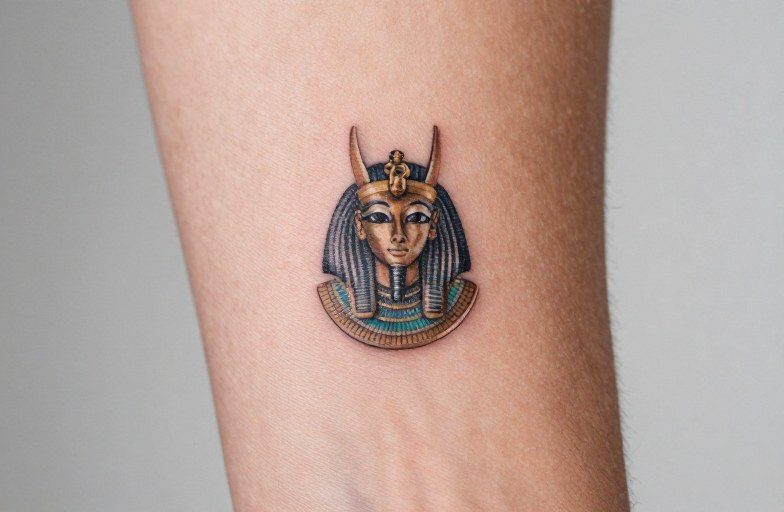
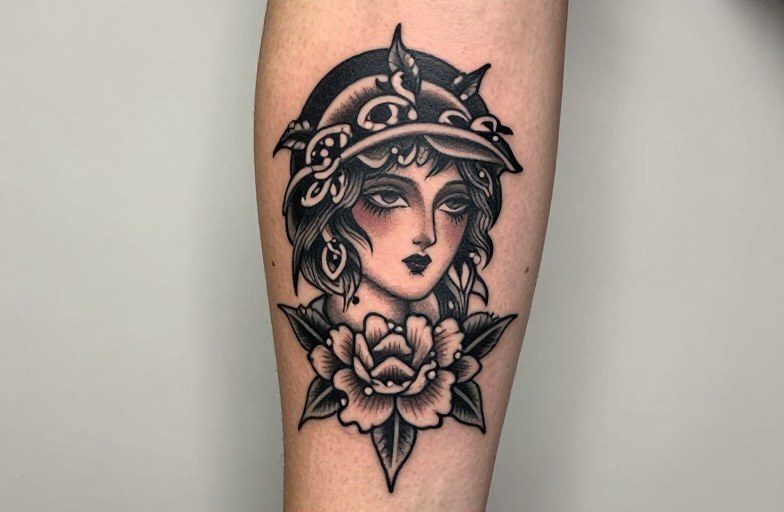
Neo traditional tattoos sit at a crossroads that few styles navigate as cleanly: the bold, readable foundations of American traditional work, loosened up with more detail, more color range, and more room for personal symbolism. Think of it as the difference between a 1940s Sailor Jerry anchor and a modern piece that keeps that anchor’s thick black outline but adds jewel-toned shading, ornamental filigree, or a snake coiled through the ring. The style has become a go-to for people who want the longevity of traditional tattooing without its stricter visual vocabulary.
Popular Styles
Within neo traditional, certain approaches dominate shop portfolios for good reason, they age well and photograph clearly.
Animal Portraiture
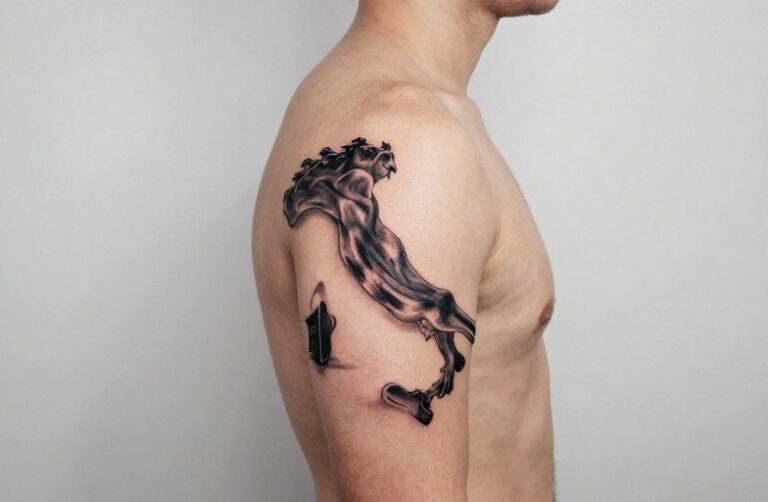
Wolves, owls, snakes, and big cats translate exceptionally well. The style’s heavier line weight keeps facial features readable even as color saturation softens over years. Unlike realism, which can blur into muddy ambiguity, neo traditional animals rely on stylized fur patterns, exaggerated eye shapes, and decorative background elements (moons, florals, geometric frames) that maintain their structure. A neo traditional wolf on a forearm will still read as a wolf at twenty feet in ten years.
Feminine Figures and Mythology
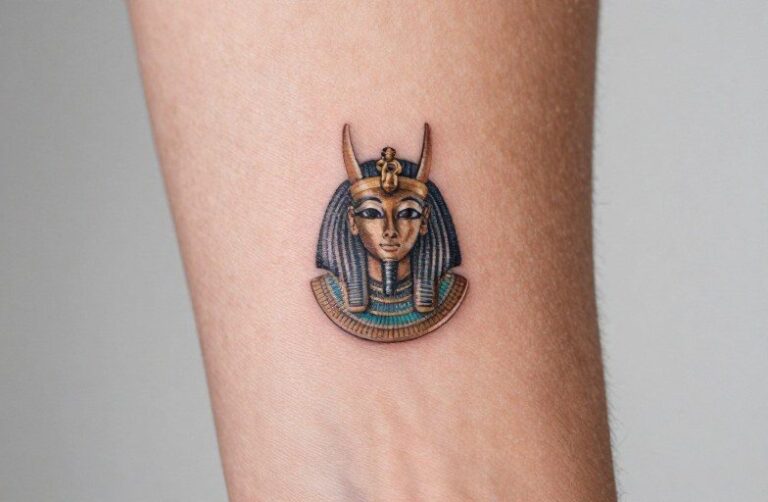
Portrait-style women, often depicted as sirens, priestesses, or unnamed faces framed by elaborate hair and botanical elements, are a neo traditional staple. The style allows for more facial detail and expression than traditional pin-ups while avoiding the uncanny valley of photorealistic portraiture. These pieces work particularly well on thighs, ribs, and upper arms where the elongated canvas suits vertical compositions.
Botanical and Natural Elements
Peonies, roses, wildflowers, and mushrooms appear constantly, but with a twist: jewel-bright color schemes, heavy black contrast leaves, and often a macabre element (a skull nestled in petals, a snake threading through stems). The botanical approach suits collectors building larger cohesive pieces, as flowers integrate smoothly with other imagery.
Tips for Choosing
Not every idea suits neo traditional execution. The style demands commitment to certain visual rules.
- Check the artist’s healed work. Neo traditional lives or dies on how color holds. Fresh photos look bold; five-year-old pieces reveal whether those purples and teals actually stayed. Ask to see healed examples in the color palette you want.
- Consider your pain tolerance against placement. The bold outlines require steady, deliberate passes. Ribs, sternum, and ditch (inner elbow) placements hurt more with this style than with fine-line work because the needle grouping is larger and the saturation deeper.
- Match complexity to your lifestyle. A half-sleeve of neo traditional imagery reads as a deliberate aesthetic choice. A single small piece on a large canvas can look stranded or unfinished.
Researching Your Artist
Look for line confidence in their portfolio, wobbly outlines kill this style instantly. The best neo traditional artists show consistent line weight, smooth color gradients without blotching, and compositions that feel balanced from a distance. Social media makes this easier than ever, but prioritize healed results over fresh, saturated photos.
How to Personalize It
The style’s flexibility is its main draw, but personalization requires understanding what neo traditional can and cannot absorb.
Meaningful objects work better than abstract concepts. A pocket watch with your grandmother’s actual time of birth visible on the face, a dagger wrapped with your home state’s specific wildflower species, a ship with hull markings referencing a real vessel, these concrete details ground the piece without requiring the artist to invent visual metaphors. The style’s decorative nature means almost any object can be framed, draped, or accompanied by ornamental elements that feel personal rather than stock.
Consider combining two unexpected subjects. Neo traditional thrives on juxtaposition: a delicate moth emerging from a mechanical coffin, a traditional heart pierced by a specifically modern tool (a tattoo machine, a chef’s knife from your profession). The visual language supports these combinations without feeling forced.
Integrating Existing Tattoos
Neo traditional’s heavy black makes it excellent for covering or connecting older work. If you have a small traditional piece that needs expanding, a neo traditional artist can build outward, adding detail and color range while maintaining the original’s readability. The transition between styles feels natural rather than patched.
Size & Scale
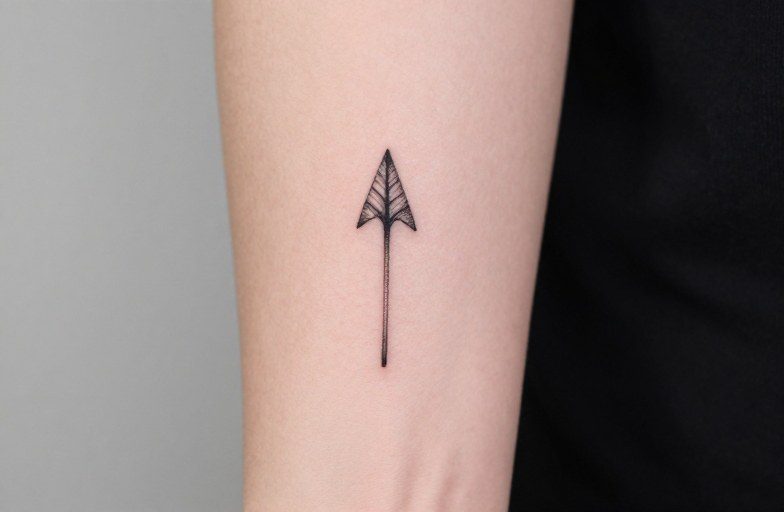
This style has a minimum effective size. Below about three inches in any dimension, the color gradients flatten and the detail work becomes indistinguishable from traditional tattooing. You’re essentially getting the pain of heavier saturation without the visual payoff of the style’s complexity.
Medium pieces, four to eight inches, often hit the sweet spot. A neo traditional raven on a shoulder cap, a dagger through a rose on a forearm, a framed portrait on a calf. These sizes allow the ornamental framing and background elements that distinguish the style from its predecessor.
Large work (sleeves, back pieces, thigh compositions) lets artists build full scenes with depth layering: foreground subject, mid-ground decorative elements, background atmospheric color. The style’s relatively limited realism means these large pieces read as cohesive murals rather than collage-like patchwork.
Color Choices
Neo traditional’s palette is broader than traditional tattooing, but it’s not unlimited. Certain colors perform predictably; others are gambles.
- Reliable staples: Deep teals, burgundies, mustard yellows, muted purples, olive greens, and dusty roses. These saturate well and fade gracefully into muted versions of themselves rather than turning muddy or gray.
- High-risk choices: Bright reds can pinken unpredictably depending on skin undertone. Pastels (light blues, soft pinks, pale lavenders) often disappear entirely on medium to deep skin tones or wash out to near-invisibility on anyone within five years.
- Black and gray variants: Some artists work exclusively in black and gray with neo traditional compositions. The style translates surprisingly well, ornamental framing and bold subjects don’t require color to function, but this approach reads as more graphic and less decorative.
Skin tone fundamentally affects color choice. What reads as bold on pale skin may need to be punched darker to achieve equivalent visibility on deeper skin. Experienced neo traditional artists adjust their palette rather than applying the same colors universally.
Standout Design Ideas
For collectors seeking something beyond the common flash subjects, several directions offer fresh territory within the style’s constraints.
Architectural and Object Studies
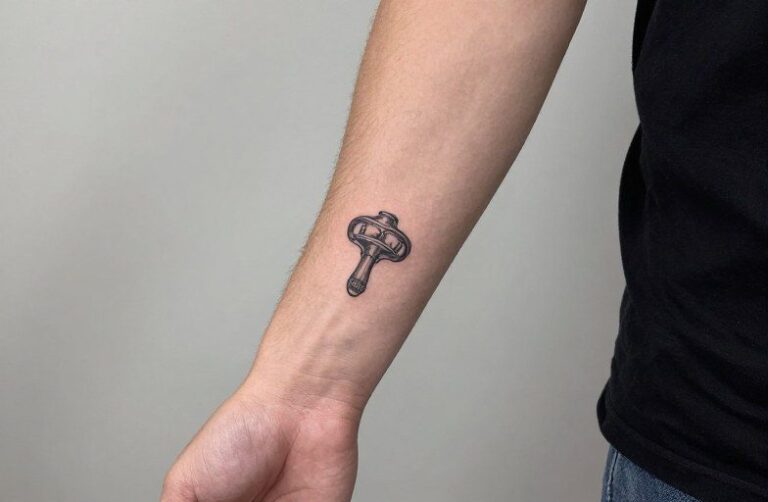
Antique lanterns, ornate mirrors, apothecary bottles, and vintage keys carry the weight and detail that neo traditional handles well. These objects allow for transparent or reflective surfaces rendered with stylized highlights rather than realistic glare. A broken mirror with a face in one shard, empty in others, provides narrative suggestion without requiring literal storytelling.
Macabre and Darker Themes
Skulls remain common, but expanded approaches include memento mori compositions (hourglasses with specific sand levels, extinguished candles with smoke rendered as faces), plague doctor figures, or anatomical hearts with botanical overgrowth. The style’s decorative nature prevents these from reading as purely grim, they become beautiful objects that happen to reference mortality.
Regional and Cultural Specificity
Japanese neo traditional hybrid work has gained significant traction: koi fish or kitsune masks rendered with the bolder outlines and color palette of neo traditional rather than the softer shading of irezumi. Similarly, Nordic and Celtic ornamental patterns can frame subjects in ways that feel personal to heritage without claiming cultural tattoo traditions that aren’t the artist’s or collector’s to engage.
The Takeaway
Neo traditional tattoos succeed when they honor the style’s structural requirements, bold outlines, readable silhouettes, controlled color, while pushing beyond the repetition of classic flash imagery. The best pieces feel contemporary without being trendy, personal without being obscure. They age into softer versions of themselves rather than collapsing into unrecognizable blur.
Choosing this style means committing to a specific visual language, one that rewards research and punishes shortcuts. Find an artist whose healed work you can verify, bring concrete reference rather than vague concepts, and give the piece the skin real estate it needs to breathe. The result occupies a rare position in tattooing: immediately legible as belonging to a tradition, yet unmistakably specific to the person wearing it.
Frequently Asked Questions
How long does a neo traditional sleeve typically take to complete?
A full sleeve in this style usually requires 25-40 hours across multiple sessions, depending on complexity, color saturation, and how your skin takes ink. Plan for six months to a year of healing time between appointments.
Will neo traditional tattoos blur over time like old sailor tattoos?
All tattoos spread slightly as skin ages, but neo traditional’s heavier line weight and solid color packing age more gracefully than fine-line work. The bold outlines maintain definition even as internal color softens.
Can neo traditional work cover up an old tribal tattoo?
Often yes, the style’s dense black and saturated color can incorporate or mask older dark work. Success depends on the existing tattoo’s size, location, and ink density; a consultation with flash photos helps determine feasibility.
What’s the price difference between neo traditional and regular traditional tattoos?
Neo traditional generally costs more due to longer session times, more complex color mixing, and higher detail density. Expect to pay for the artist’s specialized skill in balancing decorative complexity with long-term readability.